Hogmanay for first-timers: what to expect in Edinburgh
Scotland’s greatest party — and what it actually involves
The word Hogmanay comes from the Scots and possibly Gaelic for the last day of the year, and Scotland’s New Year celebrations have always been more elaborate than England’s. Historically, Christmas was not widely celebrated in Scotland (it was a working day in Scotland until 1958, and a public holiday only from 1974) — so the energy that goes elsewhere into Christmas went here, into Hogmanay.
Edinburgh’s Hogmanay programme runs over several days at the turn of the year and draws visitors from across Scotland, the UK, and internationally. For first-timers, it can be bewildering. Here is what the event involves and how to approach it.
| Dates | 29 December to 1 January |
| Event tickets | Prices shown on the official Edinburgh’s Hogmanay website |
| Free option | Fireworks visible from Calton Hill and other viewpoints |
| Book by | Check the official website for the ticket on-sale date; September for accommodation |
| What to wear | Thermals, multiple layers, windproof outer, waterproof boots |
The Torchlight Procession (29 December)
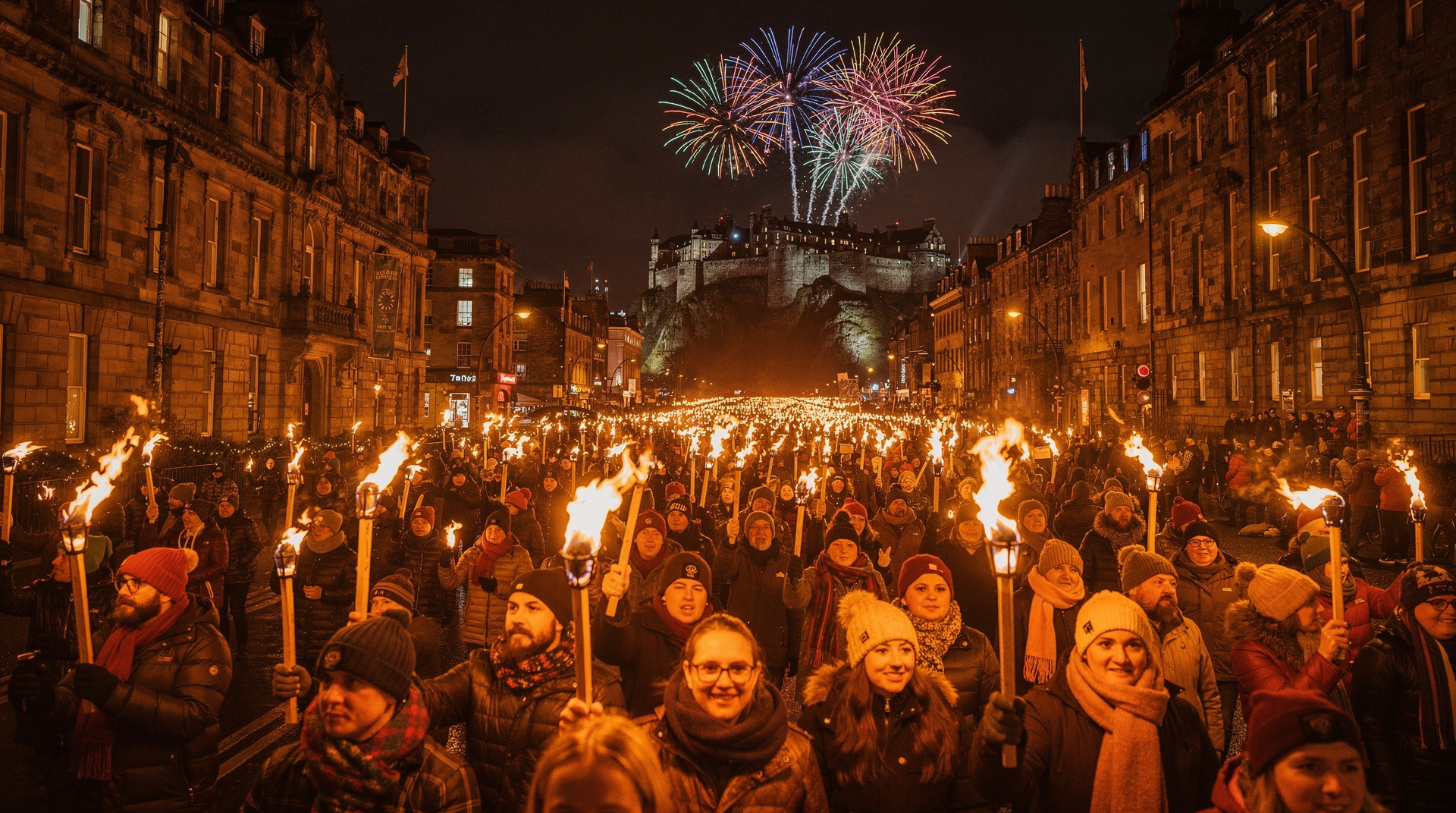
The Hogmanay season traditionally opens with the Torchlight Procession on the evening of 29 December. A procession of torch-carriers starts at the Meadows and snakes through the Old Town. It is one of the most atmospheric events in the Edinburgh calendar.
Tickets: Check the official Edinburgh’s Hogmanay website for torch prices and booking details; spectating from the pavements along the route is free.
What to wear: Multiple warm layers, waterproof boots, hat and gloves. The procession is an outdoor event that involves standing and walking for one to two hours at night in December conditions.
Street Party and Concert in the Gardens (31 December)
The centrepiece of Edinburgh Hogmanay is the New Year’s Eve street party on Princes Street — the Hogmanay Street Party. Tickets are required and sell out well in advance; the street party is ticketed and policed, with entry zones around Princes Street and the Gardens.
The Garden Concert (separately ticketed, held in Princes Street Gardens with a stage and headline musical act) runs from around 9pm. The street party itself fills Princes Street from approximately 9pm to beyond midnight with DJs, live performances, and a compressed atmosphere of 45,000 people.
Tickets: Prices are shown on the official Edinburgh’s Hogmanay website, which is also where to check the on-sale date. Book as soon as tickets go on sale.
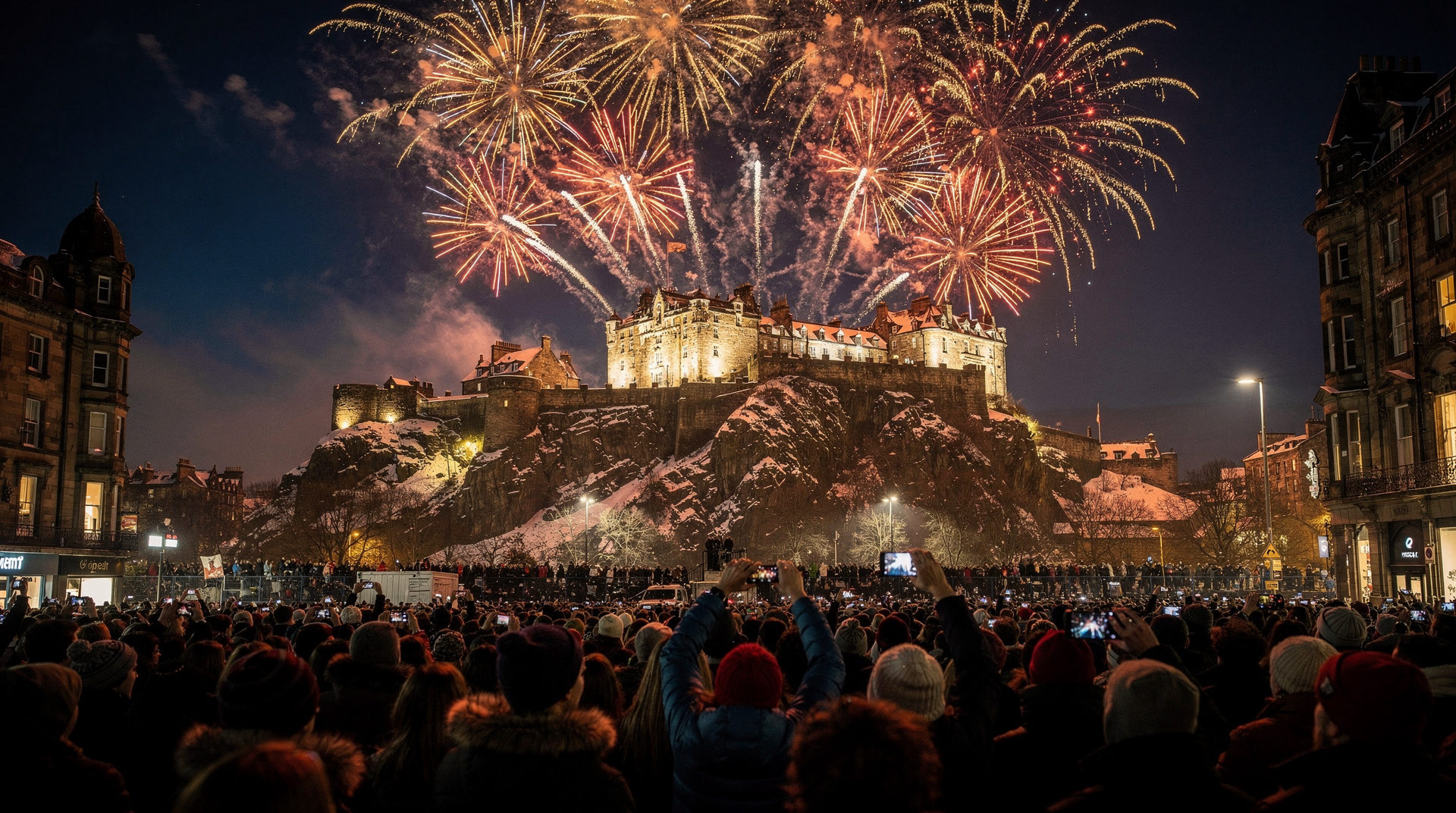
Midnight: The fireworks display from Edinburgh Castle at midnight is genuinely spectacular from anywhere in central Edinburgh. The fireworks are the largest New Year’s display in Britain and are visible from miles around. You do not need a street party ticket to see the fireworks — any elevated viewpoint works, including Calton Hill, the Crags, and Blackford Hill.
Ceilidh events
Scottish ceilidh dancing — energetic, social, and requiring no prior experience — runs at multiple venues throughout the Hogmanay period. The Assembly Rooms on George Street hosts one of the more formal Hogmanay ceilidhs; various pubs and community halls run more accessible versions throughout the Old Town. A ceilidh requires no prior knowledge: the caller explains each dance before it begins.
The Loony Dook (1 January)
On New Year’s Day, hundreds of Edinburghers and visitors plunge into the Firth of Forth at South Queensferry in a traditional new-year sea swim. The Loony Dook is free to participate in (register in advance), involves elaborate fancy dress, and takes place under the Forth Bridge at around midday. It is exactly as cold as it sounds, and the post-swim warm-up has a reliably convivial atmosphere. Non-swimmers can watch from the shore — it is an entertaining spectacle regardless.
First-footing: the Scottish tradition
The tradition of first-footing — being the first person to cross a friend or neighbour’s threshold after midnight, ideally bringing gifts of coal, bread, salt, and whisky — is less commonly practised in cities than in rural Scotland, but you may still encounter it or be invited to participate. The gifts symbolise warmth, food, flavour, and prosperity for the coming year. Whisky is always welcome.
Practical advice for Hogmanay visitors
Accommodation: New Year accommodation in Edinburgh is difficult and expensive. Book as soon as you know your dates — ideally by September for December travel. Prices for 31 December run roughly double the normal rate.
Transport: Public transport runs extended services on Hogmanay night but the city centre is effectively closed to road traffic. Walk if you are near the centre; trains from Waverley run late but check schedules in advance.
Stay warm: Hogmanay in Edinburgh is a cold outdoor event. The temperatures on 31 December typically range from -2°C to 5°C, often with wind. Wearing the right clothing is the single most important practical preparation. Thermals, multiple layers, hat, gloves, windproof outer layer.
Security: The street party is professionally managed with security staff throughout. Bags are searched at the entry gates. It is a generally safe event; the main crowd-related issue is congestion around Princes Street at midnight when people leave simultaneously.
A quiet Hogmanay alternative
Not everyone wants 45,000 people and fireworks. A quieter Hogmanay option: find a local Edinburgh pub (outside the tourist zone — Bruntsfield, Marchmont, Stockbridge), watch the midnight fireworks from Calton Hill, and experience the transition to the New Year in a genuinely local atmosphere rather than a managed event.
The Edinburgh Hogmanay three-day itinerary builds a plan covering both the main events and quieter alternatives. For the full event programme and booking guidance, see the comprehensive Hogmanay guide.
A walking tour of the Old Town on 30 or 31 December, before the street party, is a good way to understand the history of the city that is celebrating around you.
The history behind Hogmanay
Hogmanay’s elaborate character is not a modern invention. Scotland’s New Year celebration was amplified historically because Christmas was not a public holiday in Scotland until the mid-twentieth century — it was an ordinary working day well within living memory. The Presbyterian Kirk, dominant in Scottish religious life from the Reformation, disapproved of Christmas as a Catholic festival and effectively suppressed its celebration for centuries. New Year, by contrast, carried no such religious stigma and became the major winter celebration.
The specific traditions — first-footing, the coal and bread and salt gifts, the requirement to finish all the whisky in the house before midnight (on pain of bad luck in the coming year, according to some versions of the tradition) — date from before the twentieth century and are still practised in more traditional households. Visitors who encounter them should understand they are participating in something with genuine roots, not a heritage experience manufactured for tourism.
The Edinburgh Hogmanay programme, which grew substantially in the 1990s as the city’s tourism infrastructure developed, has professionalised the celebration considerably. The fireworks from the castle, the Torchlight Procession’s scale, and the managed street party are all recent additions to an older tradition. The underlying Scottish New Year customs predate all of it.
Hogmanay in Edinburgh vs the rest of Scotland
Edinburgh’s Hogmanay is the largest and most internationally visible, but it is not the only significant New Year celebration in Scotland. Stonehaven holds a traditional fireball ceremony — locals swing lit fireballs through the streets on the end of chains — that predates the Edinburgh programme and remains deeply authentic. Inverness and Glasgow both have substantial local Hogmanay events.
For visitors specifically interested in the authentic Scottish celebration rather than the large managed event, Stonehaven’s fireball ceremony (two hours from Edinburgh by train) is worth serious consideration. The contrast with Edinburgh’s commercial Hogmanay is stark and illuminating.
Where to watch the fireworks without a ticket
The Edinburgh Castle fireworks display at midnight on 31 December is visible from many parts of the city without a Hogmanay ticket. The best free viewpoints:
Calton Hill: The classic elevated view of the fireworks above the castle, accessible freely and usually well-populated with locals who do not want the Princes Street crowds. Arrive early — the hill fills by 10pm on New Year’s Eve.
Arthur’s Seat: For the serious — the view from the summit is extraordinary but it is dark, cold, and requires a proper torch and sturdy footwear. The approach takes 45 minutes.
Blackford Hill: Further from the centre but rarely crowded. A residential Edinburgh experience of Hogmanay.
The Water of Leith walkway, Stockbridge: The rockets from the castle are visible from the open sections of the walkway. More intimate than Calton Hill.
After midnight: first-footing in Edinburgh
If you are staying with Edinburgh residents or have made connections in the city, you may be invited to go first-footing — calling on neighbours and friends after midnight with the traditional gifts. This is a genuine tradition in residential Edinburgh, less practised than in rural Scotland but still very much alive in the older residential areas: Stockbridge, Morningside, Bruntsfield.
If you are in a hostel or hotel, the common areas of Edinburgh’s better-run hostels will usually have something happening at midnight. The social nature of Hogmanay means that strangers in Edinburgh on New Year’s Eve are rarely left out if they are in the right spaces.
Getting home after Hogmanay
Public transport runs extended services on New Year’s Eve but the city centre is heavily congested. Taxis and rideshares are expensive and slow in the immediate post-midnight period. The most reliable strategy: walk (if your accommodation is within twenty minutes) or wait for the crowds to disperse before trying to hail transport.
Waverley Station has extended ScotRail services on 1 January morning for visitors departing early. Check the ScotRail website for Hogmanay timetable changes before travel.
The three-day Hogmanay itinerary covers how to structure the full programme across the 29 December to 1 January period.
Hogmanay with children
Hogmanay is not primarily a family event, but parts of it work well with children. The Torchlight Procession, watched from the pavement rather than participated in, is manageable for older children with warm clothing, though the crowds and lit torches make it less suitable for toddlers. The Loony Dook on 1 January is genuinely entertaining to watch as a family spectacle, fancy dress and all, without needing to get in the water yourselves. The street party itself, with its late hours and dense crowds, is realistically an adults’ event.
Combining Hogmanay with the Christmas markets
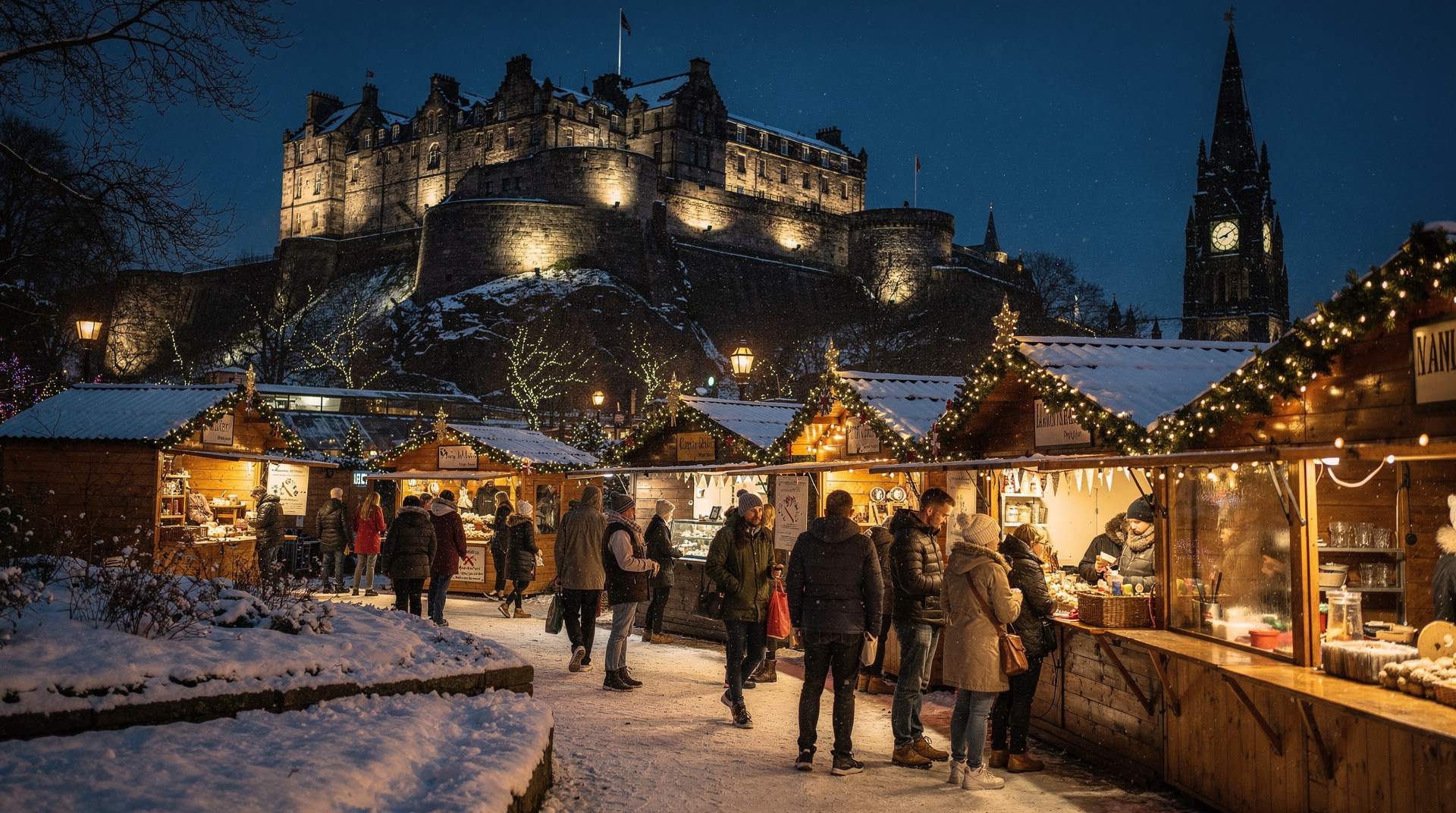
Many first-time visitors extend their trip to cover both Edinburgh’s Christmas markets and Hogmanay, since the two overlap in December. The Christmas guide covers the market period separately, but the practical point for planning is that accommodation gets progressively tighter and pricier as 31 December approaches — booking a stay that spans both means securing rooms considerably earlier than for either event alone.
Filling the days around the main events
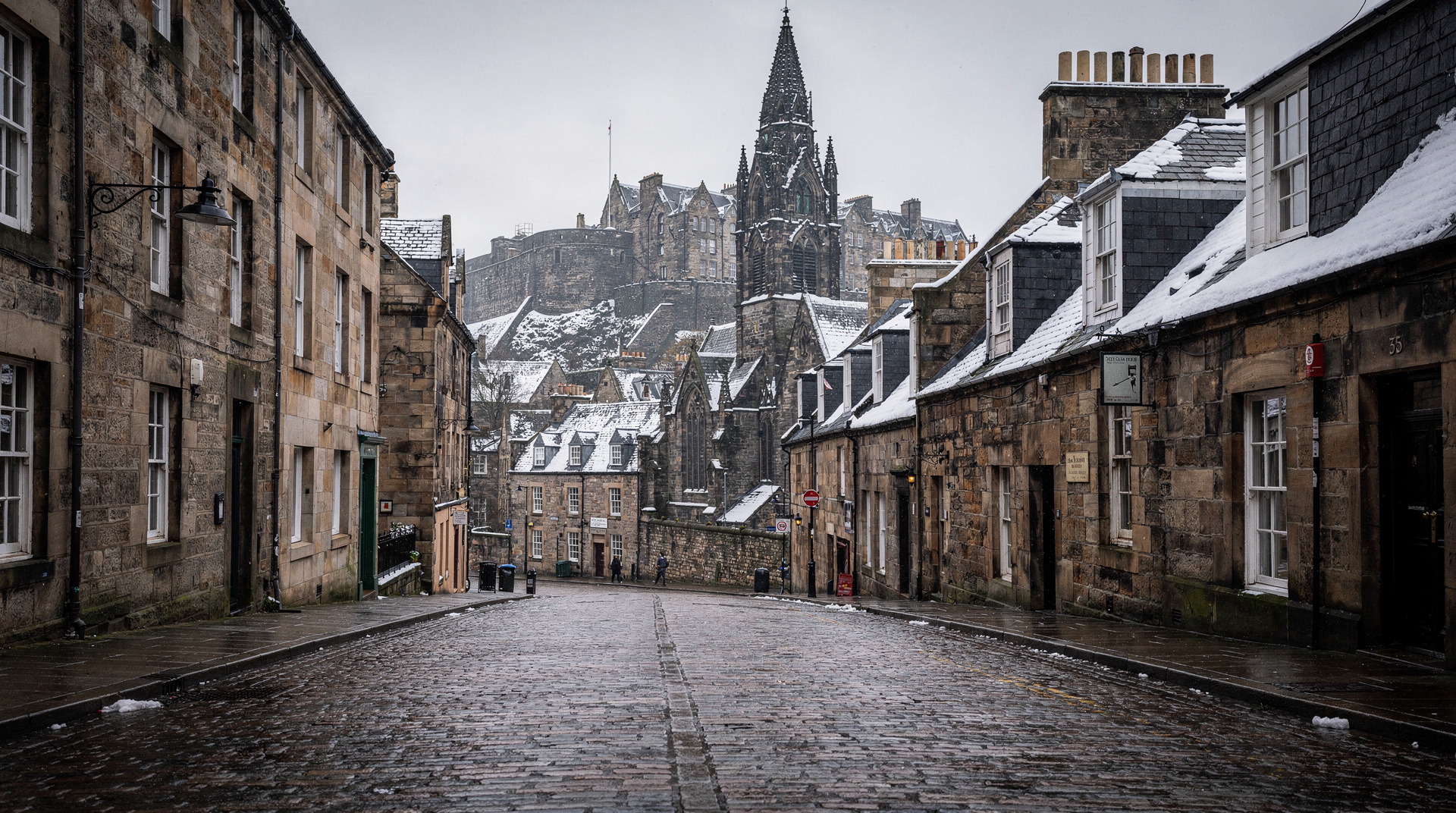
Hogmanay is a few big evenings with plenty of daylight hours between them, and it is worth planning those hours rather than leaving them to chance. The Old Town and the Royal Mile are the natural base, since the Torchlight Procession passes through it and the whole area is easy to cover on foot. Our Royal Mile guide explains what is worth stopping for and what to walk past.
The castle that provides the midnight backdrop is also worth seeing up close in daylight. The Edinburgh Castle guide and the castle destination page cover the visit, and a guided visit to the castle makes the fireworks feel more meaningful once you know the story of the rock they are fired from.
If the weather allows and you want the hill rather than the crowd, the Holyrood Park and Arthur’s Seat page and the Arthur’s Seat hiking guide set out the routes. Winter light and wet ground change the walk, so a guided hike across Holyrood Park is a sensible choice if you would rather not navigate it yourself.
Eating, drinking and keeping warm
Hogmanay is easier when you are fed and warm. The traditional Scottish food guide is a good starting point for a proper meal before a long night outside, and where to eat in Edinburgh helps you pick somewhere sensible rather than defaulting to the nearest tourist restaurant. For somewhere to settle in with a drink away from the street party, see the best pubs in Edinburgh and the best whisky bars. The quieter neighbourhoods mentioned above, such as Stockbridge, reward an unhurried evening.
Planning the trip around Hogmanay
Because everything books early, a few other pages help you lock the basics in. The where to stay guide covers areas and options, and getting around Edinburgh explains how the city moves when its centre is closed. The Edinburgh weather guide and the winter guide help you pack, and the best views in Edinburgh article lists more places to look out over the city, including Calton Hill, the best-known fireworks viewpoint.
Frequently asked questions about Hogmanay in Edinburgh
Do I need a ticket for anything at Hogmanay? Only for the Street Party, the Garden Concert, and the Torchlight Procession torches. The midnight fireworks, the Loony Dook (as a spectator), and most ceilidh venues do not require Hogmanay-specific tickets, though some ceilidhs charge their own entry.
Is Hogmanay worth it if I don’t like crowds? The main street party is genuinely crowded — 45,000 people — so if that is not for you, the quiet Hogmanay alternative outlined above (a local pub, Calton Hill for the fireworks, a residential neighbourhood) gives the atmosphere without the density.