Edinburgh Hogmanay guide
Edinburgh: Spirit of Scotland show with 4-course dinner
What happens at Edinburgh Hogmanay and do I need tickets?
Edinburgh's Hogmanay (29 Dec-1 Jan) includes a torchlight procession, a ticketed street party on 31 December, and fireworks over the castle. The Hogmanay street party requires a wristband purchased in advance via the official Edinburgh's Hogmanay website, which also shows the prices. The torchlight procession and some other events are separate events. Check the official website for the on-sale date and book early.
| Where | Old Town, Princes Street, Calton Hill; Loony Dook at South Queensferry |
| Cost | event prices are shown on the official Edinburgh’s Hogmanay website |
| Time needed | 3 nights minimum (29 Dec–1 Jan) |
| Getting there | train or flight into Edinburgh; walk within the city, avoid driving on 31 Dec |
| Best time | book wristbands and accommodation 6-12 months ahead |
Scotland’s New Year: why Hogmanay matters
Hogmanay is not simply a Scottish word for New Year’s Eve. It is a distinct cultural tradition with its own rituals, its own etiquette, and — in Edinburgh — its own multi-day festival that has grown into one of the most celebrated New Year events in the world. Understanding the difference between Hogmanay the cultural practice and Hogmanay the Edinburgh festival is the starting point for planning a visit.
Scots celebrate New Year with an intensity that reflects the historical importance of the winter solstice in northern cultures where the return of the light is genuinely significant. The tradition of “first-footing” — being the first visitor to cross a friend’s threshold after midnight, bringing coal, whisky, shortbread, and salt as symbols of warmth and sustenance — is still widely practised. The warmth and hospitality that characterise Scottish New Year feel genuine in a way that many visitors find surprising and moving.
The Edinburgh Hogmanay festival, run commercially as a major events programme since 1993, has added scale, organisation, and ticketing to these traditions. It is a very successful event. It is also, by late December, very expensive and very crowded.
The programme: what Hogmanay involves
29 December: Torchlight procession
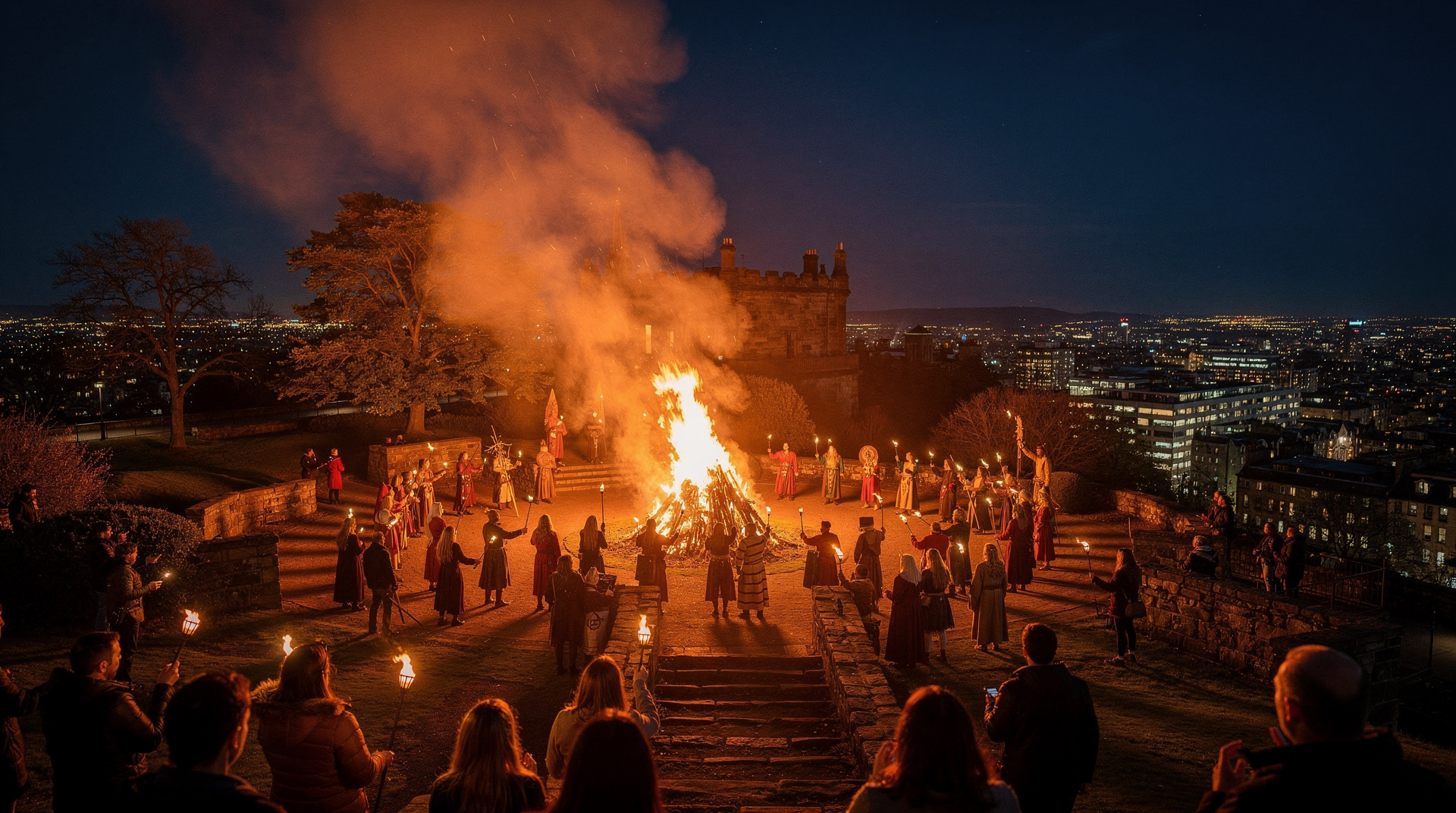
The Hogmanay festival traditionally begins on 29 December with a torchlight procession through the Old Town. Thousands of people, each carrying a torch, march from the Meadows through the Old Town. The visual of several thousand lit torches moving through Edinburgh’s medieval streets at night is spectacular and not easily forgotten.
Tickets for the torchlight procession are sold separately; the price is shown on the official Edinburgh’s Hogmanay website. This is often the most genuinely atmospheric part of the Hogmanay festival — more participatory and less commercially packaged than the street party.
31 December: The street party and Hogmanay concert
Edinburgh’s Hogmanay street party takes over the city centre on 31 December, with stages and entertainment on Princes Street. Access requires a wristband, sold via the official website. The street party areas include music stages, food and drink stalls, and culminates with the midnight fireworks over the castle.
The crowd at the street party is enormous — 45,000 people in a defined area. The experience is electric or overwhelming depending on your temperament. Practicalities:
Wristbands go on sale months in advance and sell out completely. Do not expect to get one at short notice. Check the official Edinburgh’s Hogmanay website for the on-sale date and the price.
Access the street party early. The wristband areas fill as the evening progresses and the best positions — near the stage for the midnight countdown, with sightlines to the castle for the fireworks — go to those who arrive before 22:00.
The fireworks. Edinburgh’s midnight fireworks are fired from the castle rock and are visible from large areas of the city well beyond the wristband zones. The Calton Hill viewpoint, the South Side, the Pentland Hills foothills, and many residential streets in the New Town all offer views of the fireworks without any ticket or crowd. If you want to see the fireworks without the street party experience, this is a legitimate and often more pleasant option.
1 January: Loony Dook and recovery
The Loony Dook — a traditional post-Hogmanay dip in the Firth of Forth at South Queensferry — takes place on New Year’s Day morning. Hundreds of people in fancy dress wade into the very cold Forth estuary at South Queensferry as a communal act of celebration, suffering, and solidarity. It is a ticketed event (proceeds to charity) and an unmistakably Scottish experience. The water temperature on 1 January is approximately 7-8°C.
What Hogmanay actually costs
Hogmanay is Edinburgh’s most expensive time to visit, and that is saying something given that August is already premium-priced. A realistic budget:
Accommodation: Edinburgh hotels and self-catering flats during Hogmanay charge 3-5 times their standard rates. A hotel room in the city centre that costs £100 in November will typically cost £350-500 for 31 December. Book 6-12 months in advance and expect to commit to non-refundable rates. Consider accommodation in the suburbs (Portobello, Morningside, Bruntsfield) for lower prices and a 20-30 minute bus journey.
Event tickets (street party wristband, torchlight procession): the price is shown on the official Edinburgh’s Hogmanay website.
Restaurants: Hogmanay menus at Edinburgh restaurants typically cost £60-100 per person for dinner on 31 December. Booking months in advance is essential for any decent restaurant. The alternative is to eat early (before 18:00) from a more ordinary menu at a lower price.
Total for two people for three nights (29-31 Dec): Expect £500-1,000 for accommodation, plus meals and event tickets (see the official website for prices). This is a realistic minimum for a comfortable Hogmanay trip.
Is it worth coming to Edinburgh for Hogmanay?
Honestly, it depends. For visitors who want the full event experience — torchlight procession, street party, midnight fireworks with 45,000 people on Princes Street, the Loony Dook — Edinburgh Hogmanay is unique and genuinely extraordinary. The combination of the setting (the castle on its rock, lit at midnight, with fireworks), the Scottish cultural context, and the sheer scale creates a New Year’s Eve that most participants describe as one of the best of their lives.
For visitors who want a warm, atmospheric New Year without paying Edinburgh’s peak prices: consider spending Hogmanay in a Scottish pub in a smaller town, where the first-footing tradition, the friendliness, and the whisky are all present without the logistical and financial pressure. Hogmanay in Edinburgh is a spectacular event; Hogmanay in Scotland is a warm cultural tradition. They are different experiences.
Practical Hogmanay logistics
Getting to Edinburgh for Hogmanay. Train from London (Avanti/LNER, approximately 4h30, book months ahead) is the most comfortable option. Edinburgh Airport handles significant volume around 31 December; book transfers in advance. Driving into Edinburgh on 31 December is inadvisable — road closures for the street party affect large areas and parking is virtually impossible.
Getting around during the festival. Lothian Buses run extended services on Hogmanay night, and taxis are theoretically available but practically very scarce at midnight. Walking between accommodation and the city centre is the most reliable option; plan within walking distance if possible.
Warmth. Edinburgh in late December is cold. Temperatures typically range from 1-7°C; wind chill on exposed esplanades and hill viewpoints makes it feel significantly colder. Thermal underlayers, a good waterproof, a warm hat, and gloves are not optional — they are the difference between a spectacular night and a miserable one.
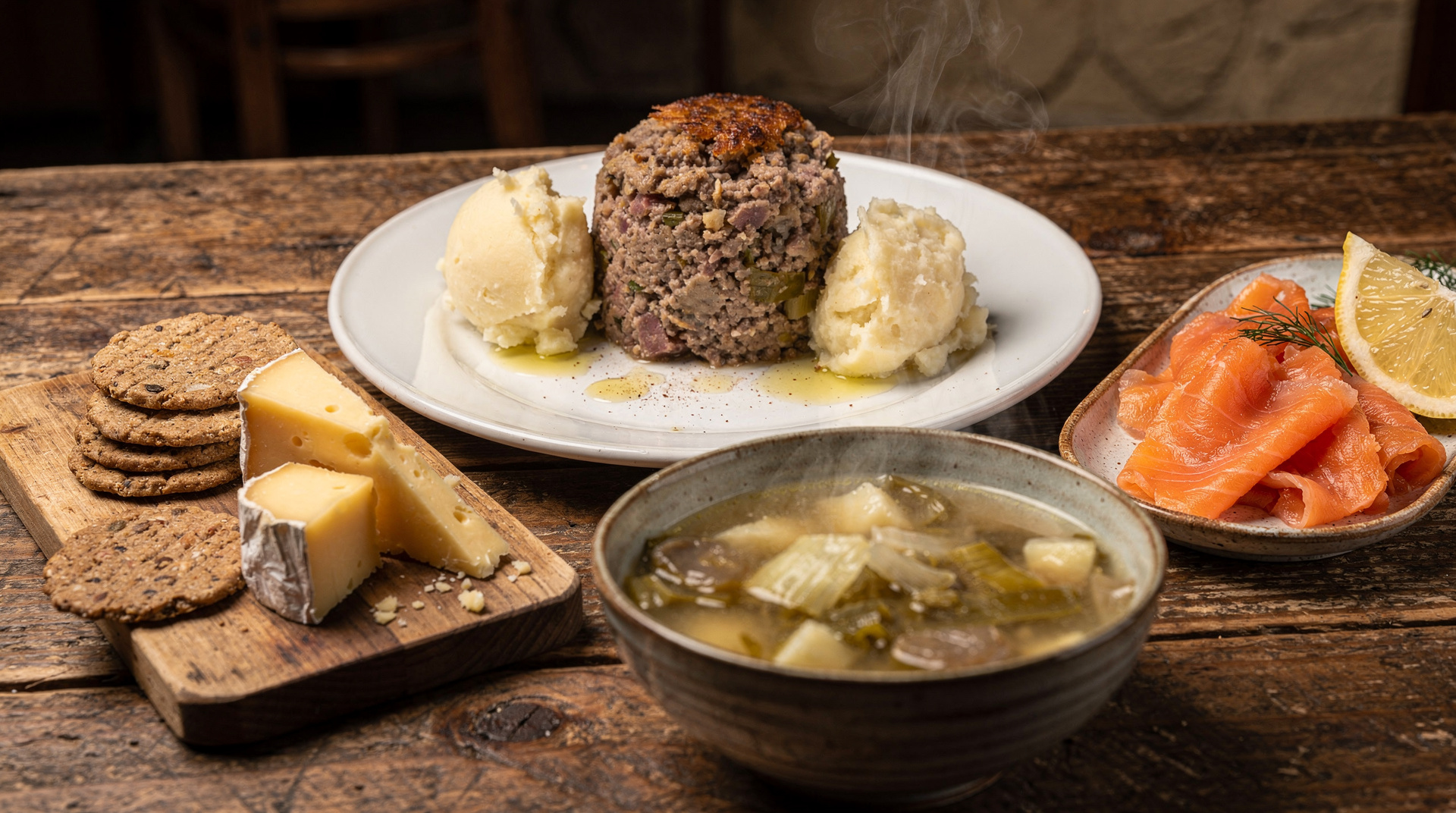
An Edinburgh Spirit of Scotland show with four-course dinner is an excellent choice for the evening of 29 or 30 December — combining Scottish cultural performance with dinner in the days before the main event, when restaurants are less frantic and prices are lower.
Hogmanay versus Christmas markets
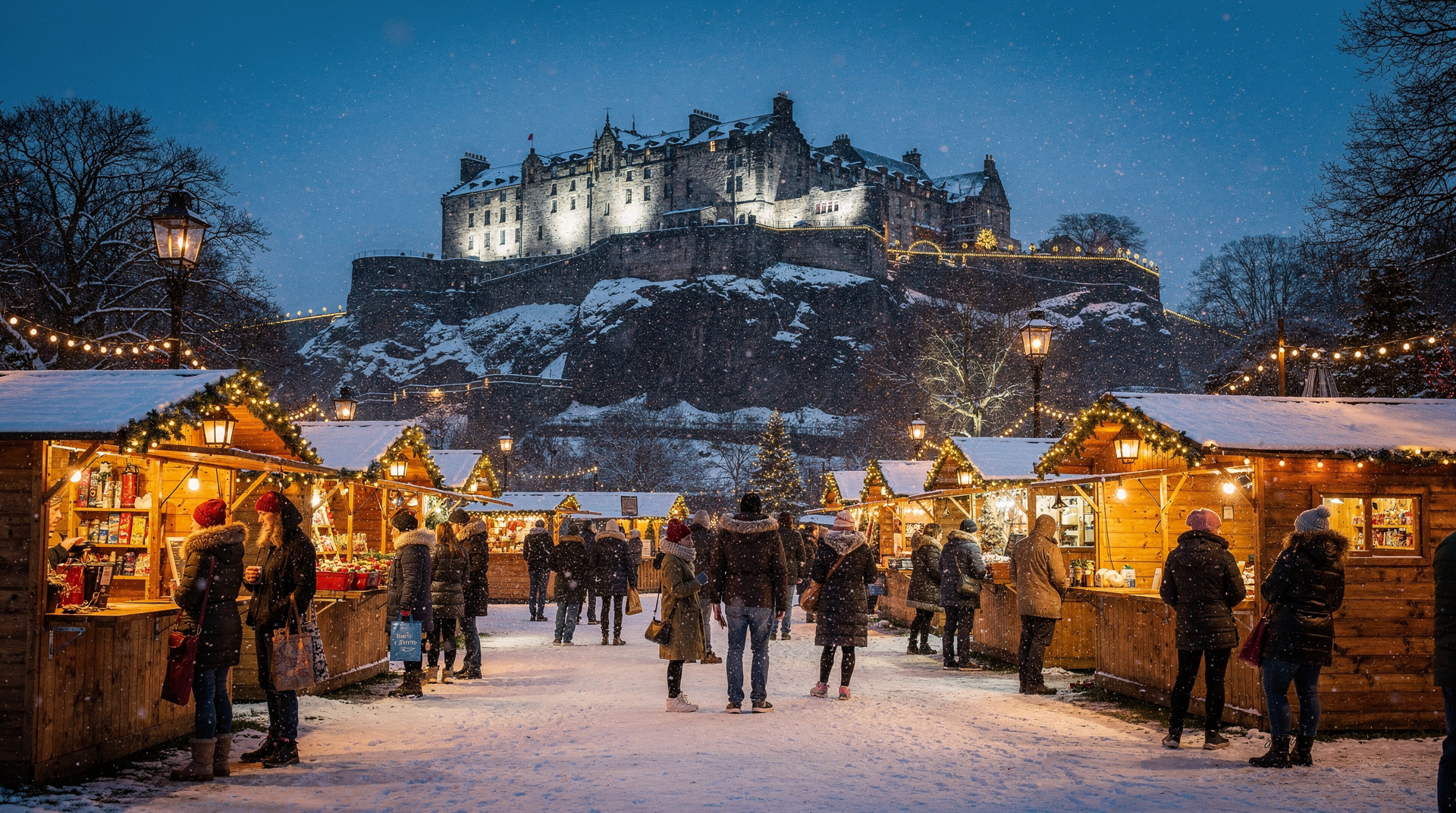
Edinburgh’s Christmas markets run through November and December and are often a more relaxed alternative to Hogmanay itself for visitors who want the winter festival atmosphere without the New Year pressure. The markets in Princes Street Gardens and St Andrew Square are attractive, well-priced (by Edinburgh standards), and much easier to visit without elaborate advance booking.
For visitors choosing between a Christmas visit and a Hogmanay visit: Christmas markets (November-December) are pleasant, accessible, and moderately priced. Hogmanay (31 December) is spectacular, expensive, and requires months of planning. See the best time to visit Edinburgh for a full month-by-month breakdown.
Frequently asked questions about Edinburgh Hogmanay
Do I need tickets for the Hogmanay street party?
Yes. The street party requires a wristband that must be purchased in advance via the official Edinburgh’s Hogmanay website. Without a wristband you cannot access the designated street party zones on 31 December. Wristbands sell out months in advance. The fireworks are visible from many locations outside the wristband zones, but the music stages, atmosphere, and midnight countdown require a ticket.
When do Hogmanay tickets go on sale?
Check the official Edinburgh’s Hogmanay website for the on-sale date, which has not been announced yet for 2026/27. Wristbands often sell out within days of going on sale.
What is first-footing and should I participate?
First-footing is the Scottish tradition of being the first person to cross a friend’s threshold after midnight on New Year’s Day, bringing symbolic gifts. If you are invited to a Scottish home for Hogmanay and asked to participate in first-footing, bring a small gift (a bottle of whisky is traditional) and expect to be welcomed with warmth. This is one of the most genuinely hospitable Scottish traditions and accepting the invitation is always worthwhile.
Is Edinburgh Hogmanay safe?
Yes. The event is professionally managed with extensive security presence and medical teams. Large crowd events always carry some risk but Edinburgh Hogmanay has a strong safety record. The main practical risks are cold (dress appropriately), alcohol-related issues in the crowd (dress code is enforced and ID may be required for alcohol purchase), and pickpocketing in very dense crowds.
Can I see Edinburgh’s Hogmanay fireworks without a ticket?
Yes. The fireworks are fired from the castle and are visible from numerous points across the city that do not require any ticket. Calton Hill, the Meadows, Bruntsfield Links, and the higher streets of the South Side all offer views of the fireworks display without any charge or crowd control. Arriving early to secure a good viewpoint is advisable.
What is the Loony Dook?
The Loony Dook is a charity fundraising event on New Year’s Day morning at South Queensferry (about 12km from Edinburgh city centre). Participants in fancy dress wade into the Firth of Forth at the foot of the famous Forth Bridge. The water is approximately 7-8°C and the immersion is deliberately brief. It is a spectator sport as much as a participation event, and the scene of hundreds of brightly dressed, slightly hungover Scots cheerfully entering freezing water is both baffling and charming.
Is Hogmanay better than the Fringe for a first Edinburgh visit?
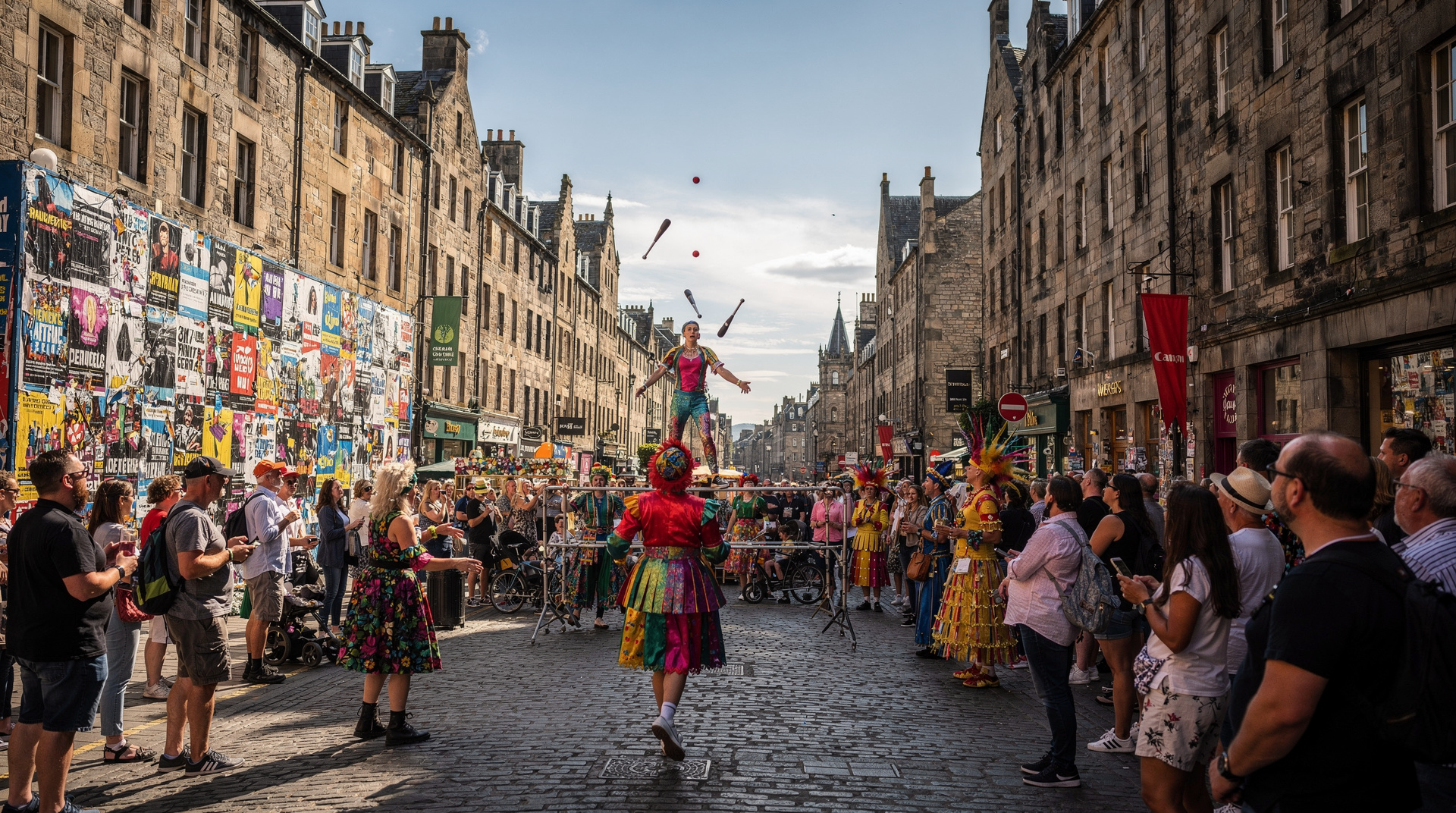
They are not really comparable. The Edinburgh Festival Fringe is about breadth and warm-weather exploration over weeks; Hogmanay is about one enormous, cold, tightly ticketed night. If this is your only Edinburgh visit ever, the Fringe generally gives a fuller sense of the city; if you specifically want the New Year spectacle, nothing else compares to Hogmanay.
Can I do Hogmanay on a smaller budget?
Yes, with adjustments. Skip the street party wristband and watch the fireworks free from Calton Hill or the Meadows, book accommodation in Portobello or Morningside rather than the city centre, and eat dinner early from a standard menu rather than a £60-100 Hogmanay set menu. You lose the stage entertainment and the closest sightlines, but the fireworks and the atmosphere are still genuinely available at a fraction of the cost.
Hogmanay around Scotland
Edinburgh’s Hogmanay festival is the largest and most internationally famous celebration of the Scottish New Year, but it is not the only one. Hogmanay traditions are observed across Scotland in ways that are sometimes more intimate and more authentically connected to the traditional first-footing culture:
Stonehaven Fire Festival on the High Street of Stonehaven (near Aberdeen) involves residents swinging large balls of fire on wire as they parade through the town on 31 December. This tradition predates the Edinburgh commercial festival and is thought to be connected to pre-Christian rituals of purification. The visual is extraordinary: a procession of fire-swinging figures with the town behind them. Stonehaven is about 2.5 hours from Edinburgh by car or train.
Biggar Hogmanay Bonfire in the small Lanarkshire town of Biggar is reputed to be the largest Hogmanay bonfire in Scotland, lit at midnight and maintained through the night. The community atmosphere of a small-town Scottish Hogmanay around a bonfire has a very different character from Edinburgh’s large-scale commercial event.
Comrie Flambeaux Procession in Perthshire, where villagers carry burning torches through the streets at midnight in a tradition that dates from at least the nineteenth century and connects to similar fire processions across Highland communities.
These alternatives illustrate that Hogmanay is a culturally alive tradition rather than a single event. Visitors with mobility and time who prefer a more intimate Scottish New Year experience might consider these as genuine alternatives to Edinburgh.
The Hogmanay cultural context: why Scotland celebrates New Year so intensely
The intensity of Scottish New Year observance has complex roots. Christmas was suppressed in Scotland for centuries after the Reformation — the Presbyterian church considered Christmas celebrations papist and therefore banned them, a prohibition that held in various forms until Christmas Day became a Scottish public holiday only in 1958. Without Christmas as a major mid-winter celebration, Hogmanay accumulated much of the social and communal energy that Christmas holds in other cultures.
The tradition of first-footing — crossing a friend’s threshold first after midnight, bringing symbolic gifts — embodies the values of warmth, generosity, and community in the face of winter. The traditional first-footer was dark-haired (fair-haired visitors were associated with Viking raiders in Scottish folk memory); a dark-haired stranger crossing the threshold brought luck. This belief persists in attenuated form today.
The Scottish Hogmanay tradition of “Auld Lang Syne” — Robert Burns’ poem set to a traditional Scottish melody — has spread globally as the standard New Year song. The song’s theme of maintaining connections across time and distance (“we’ll tak a cup o’ kindness yet, for auld lang syne”) has a particular resonance in a country with a long history of emigration. Scots in Canada, Australia, New Zealand, and across the diaspora sing it on 31 December with an awareness of distance and belonging that the words carry implicitly.
Planning a multi-day Hogmanay trip
For visitors coming to Edinburgh specifically for Hogmanay, a minimum of three nights is recommended to cover the key events without excessive rushing:
29 December: Arrive, settle in, evening torchlight procession. 30 December: Edinburgh sightseeing, pre-book restaurant dinner. 31 December: Daytime exploring (the city is festive but not yet overwhelmed), early dinner at a pre-booked restaurant, street party wristband zone from 21:00, fireworks at midnight. 1 January: Recovery morning, Loony Dook at South Queensferry (optional), afternoon decompression.
The Edinburgh Hogmanay three-day itinerary provides a more detailed suggested programme. The where to stay in Edinburgh guide covers accommodation options with notes on which areas are best for Hogmanay.
Hogmanay for solo travellers
Hogmanay is a particularly good time for solo travellers. The culture of first-footing, pub camaraderie, and collective celebration creates a social openness that Edinburgh does not always have at other times of year. Showing up alone at a pub on 31 December and engaging the people around you in conversation is entirely acceptable; showing the slightest interest in someone’s Hogmanay plans typically results in invitation.
The street party wristband zone requires stamina rather than company — the crowd itself creates the social environment. Solo travellers at the Tattoo (for visitors who combine the two events) find that the shared experience of the performance and the post-show dispersal creates natural conversation with strangers.
For solo visitors interested in meeting Edinburgh residents rather than other tourists, staying in a neighbourhood pub (the Stockbridge area has several excellent local pubs with mixed resident/tourist clientele) on the nights of 29-30 December, before the street party on 31, is a good way to experience Hogmanay from the inside rather than as a purely ticketed event.
Hogmanay and Scots abroad
Hogmanay has a particular resonance for the Scottish diaspora — the millions of Scots and people of Scottish descent in Canada, Australia, New Zealand, the United States, and elsewhere for whom 31 December carries cultural weight beyond the universal New Year. For visitors who have a Scottish heritage connection and are spending Hogmanay in Edinburgh for the first time, the experience of celebrating New Year in the city that gave the tradition its name has an emotional dimension that is worth acknowledging.
The first-time Edinburgh visitor guide covers the broader context of Edinburgh’s relationship with the Scottish diaspora, including the cultural institutions and local experiences that give a first visit to Scotland depth beyond tourism.
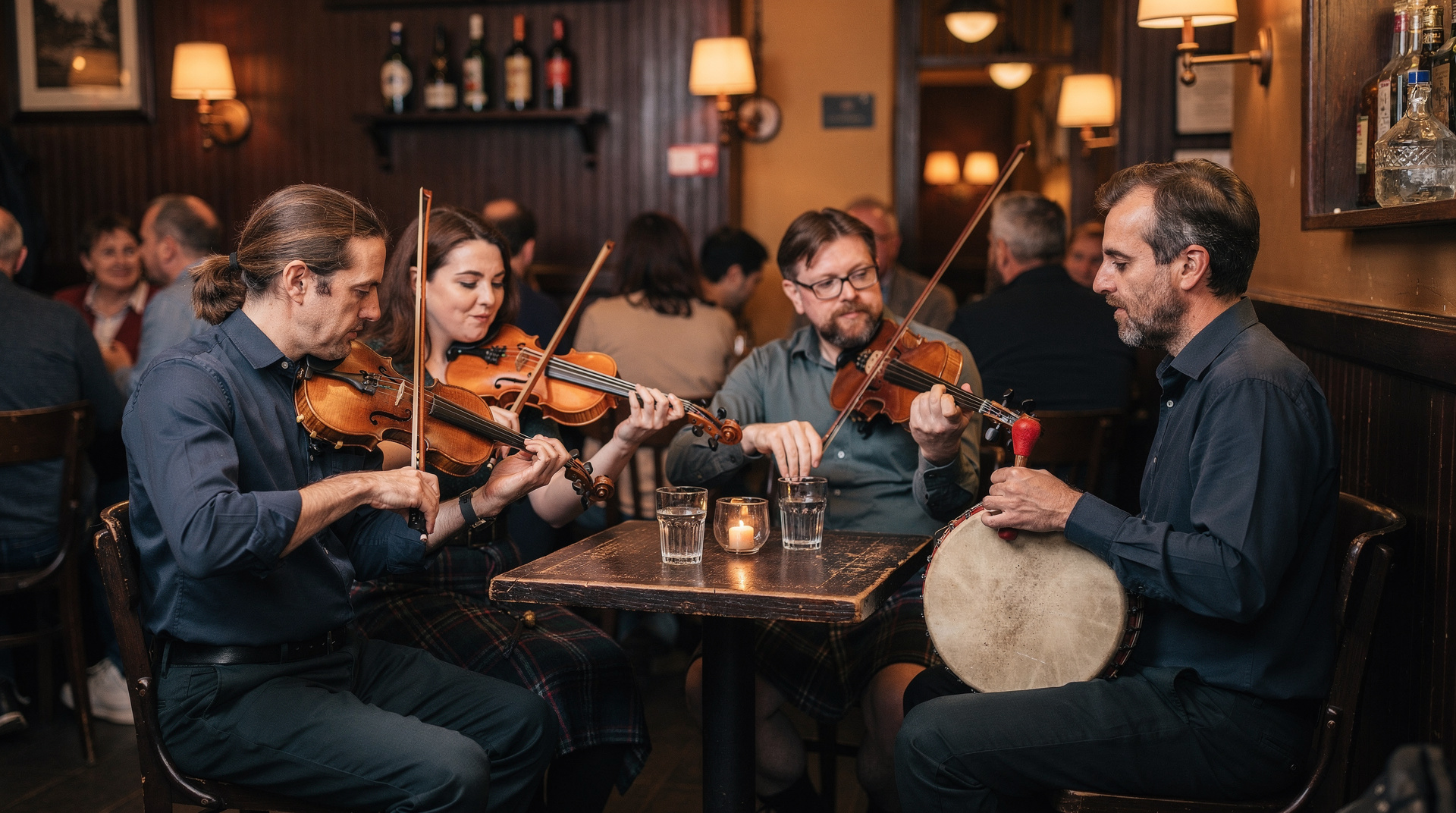
An Scottish music and four-course meal at the Edinburgh Corn Exchange is an excellent choice for the evening of 29 or 30 December — a celebratory dinner with live music that captures the festive spirit without the street party crowds.
Booking timeline: when to secure what
Planning Hogmanay well means acting on a clear timeline rather than leaving decisions until December. Around ten months out (February–March), start watching accommodation rates in the city centre; the best-located flats and hotels are booked out well before the crowds realise it. Check the official Edinburgh’s Hogmanay website for the on-sale date of torchlight procession and street party tickets, since popular zones can sell out within days.
By October, restaurant bookings for 31 December dinner should be locked in at any venue you actually want; by November, most remaining accommodation options are either far from the centre or priced at a premium reflecting scarcity rather than quality. Arriving at Hogmanay planning in December generally means paying the most for the least choice.
Hogmanay day-by-day at a glance
| Day | Focus | Booking needed |
|---|---|---|
| 29 Dec | Arrival, torchlight procession | procession ticket, price on the official website |
| 30 Dec | Sightseeing, pre-booked dinner | restaurant booking essential |
| 31 Dec | Street party, midnight fireworks | wristband, price on the official website |
| 1 Jan | Recovery, optional Loony Dook | Loony Dook charity entry |
Whisky and Hogmanay: a natural pairing
Whisky is deeply embedded in Hogmanay tradition — it is the classic first-footing gift, the toast at midnight, and the drink most associated with “a cup o’ kindness” from Auld Lang Syne. Visitors wanting to understand the whisky side of the tradition properly, rather than just drinking it, have several structured options. The Scotch Whisky Experience tour on the Royal Mile runs its full programme through the Hogmanay period and is a good daytime activity on 29 or 30 December, before the evening events begin — it explains the regions and production methods that make the New Year dram more than just a ritual gesture.
Filling the quieter hours around the big nights
The big events take up only a few hours of each day, and the rest of a Hogmanay trip needs some thought. Daytime on 30 December is the best moment for sightseeing: the Royal Mile and the Old Town are festive without being at their most crowded, and the Edinburgh Castle guide helps you decide whether to go inside the rock that will later frame the fireworks. If the weather turns, the National Museum of Scotland is a sensible indoor option, and the winter in Edinburgh guide covers how to dress and plan around the short days.
For evenings that are not the procession or the street party, Edinburgh’s live music scene and the pubs worth your time are the natural places to feel the season the way locals do. Calton Hill has its own destination page with the walk up and the views, and it is worth knowing before you stand there in the dark. For a quieter recovery on New Year’s Day, the Leith area has plenty of places to sit down over a slow lunch.
If you are weighing how many nights to stay, the how many days in Edinburgh guide and the Hogmanay first-timer blog post give a useful second opinion. Getting between the airport, the station and your accommodation is simpler once you have read about Edinburgh’s trams and buses, particularly on a night when so much of the centre is closed to traffic. For something warm and entertaining on the evening before the main event, the Scottish dinner with live folk music is another gentle way to enjoy the days that surround the street party.
Top experiences
Bookable activities with verified prices and instant confirmation on GetYourGuide.