Edinburgh New Town
Discover Edinburgh's Georgian New Town: Princes Street, Charlotte Square, independent shops, whisky bars, and the best walking routes.
Edinburgh: walk Dean Village, New Town & Royal Botanics
Quick facts
- Best time to visit
- Year-round; Christmas market in December
- Days needed
- Half day
- Getting there
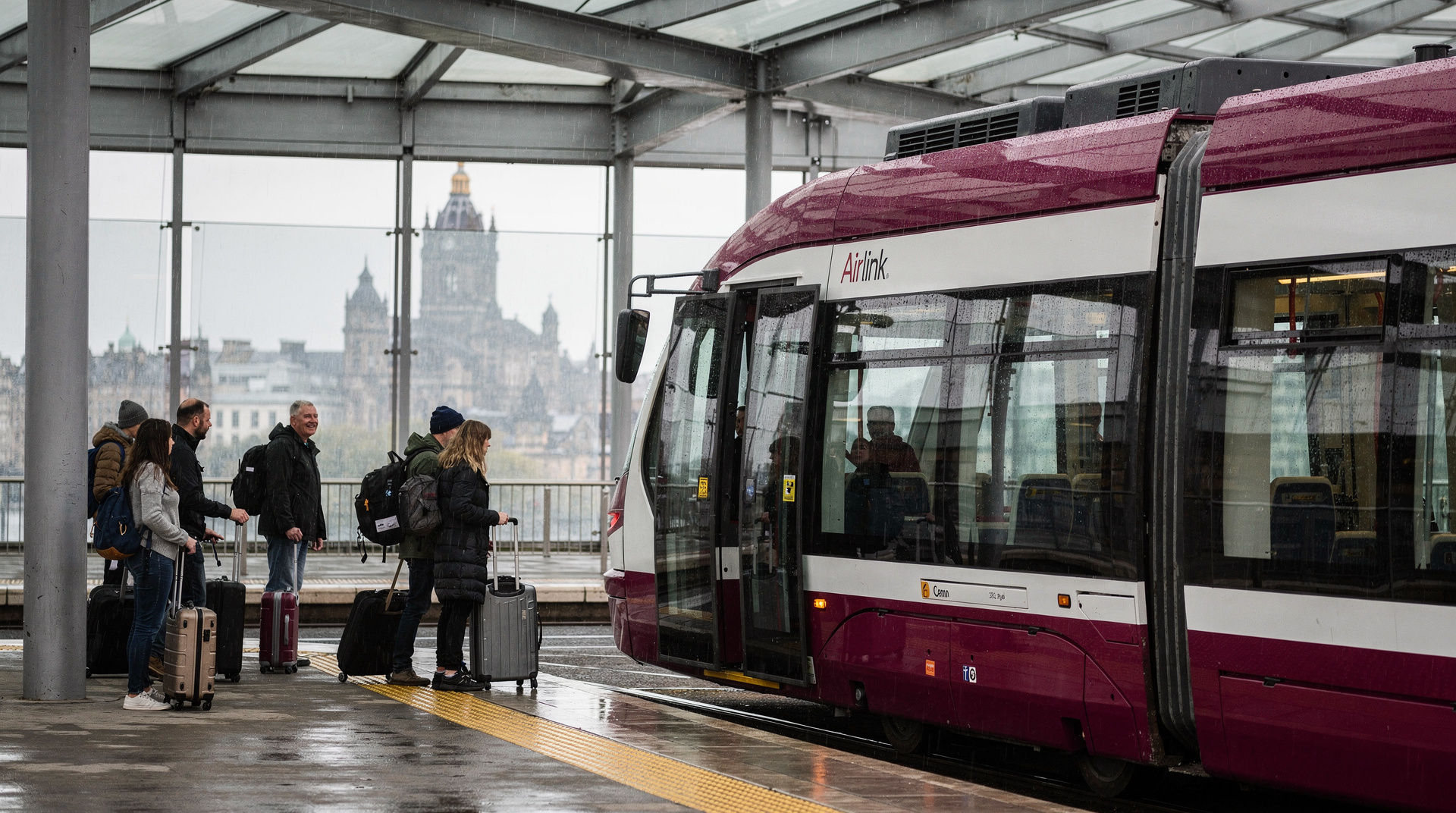
- Tram to Princes Street or 5-min walk from Waverley
- Budget per day
- Free to walk; shops and restaurants £15–£60+
Edinburgh’s other half — the planned city that changed how Europe built
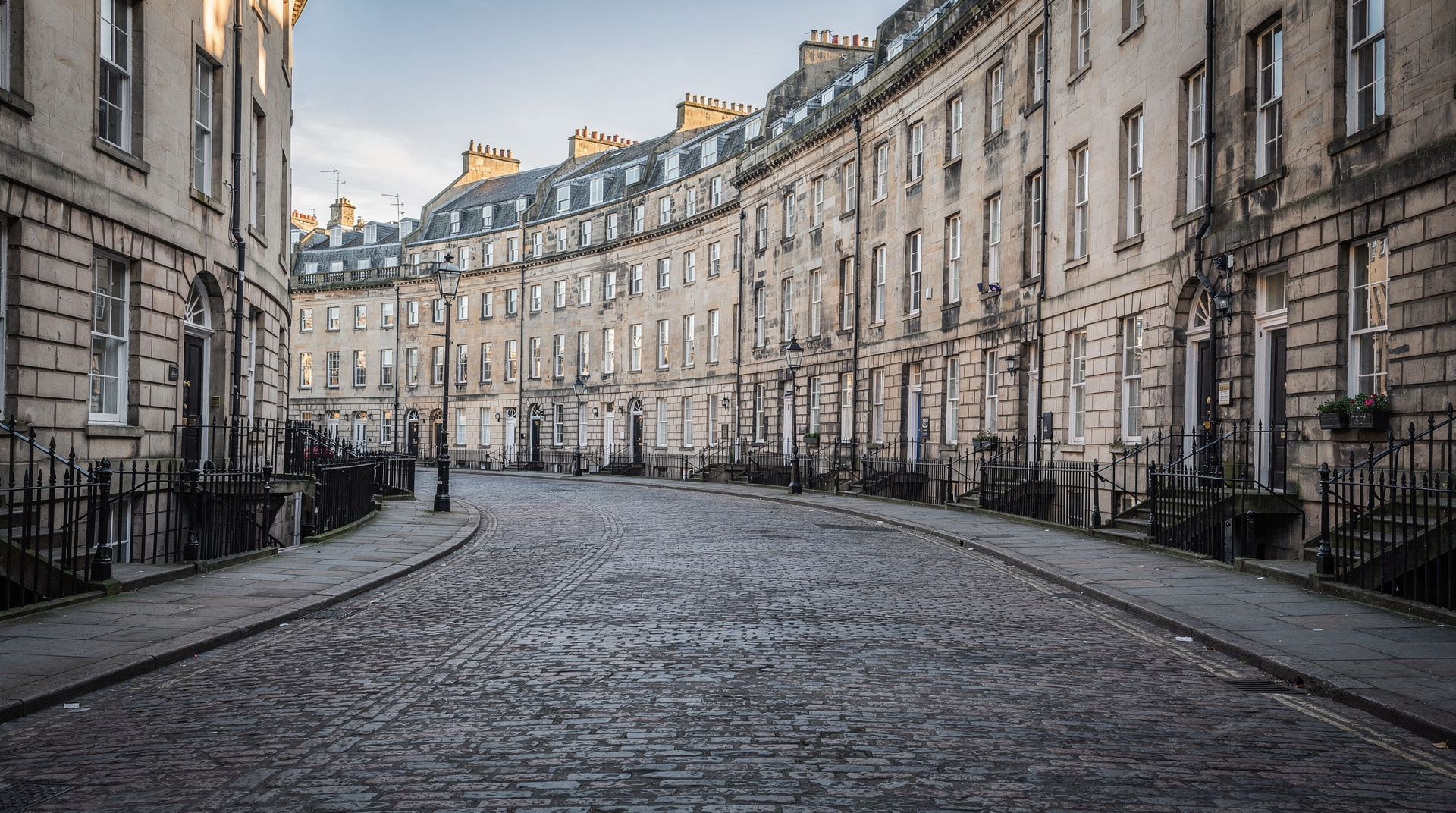
Edinburgh’s New Town is one of the finest pieces of Georgian urban planning anywhere in Europe, and it sits just across a valley from the medieval Old Town with the kind of compositional drama that few cities can match. Where the Old Town grew organically, constrained by geology and walls, the New Town was designed on a grid — wide streets, elegant squares, and unified stone facades that expressed Enlightenment confidence in reason, order, and civic ambition.
The contrast is the point. The UNESCO World Heritage inscription that Edinburgh received in 1995 covers both the Old Town and the New Town together, recognising that their relationship — visible most clearly from Princes Street, where the Georgian terraces face the volcanic medieval ridge — is what makes Edinburgh’s cityscape unique.
This guide focuses on getting the most from half a day in the New Town: what to look for architecturally, where to eat and drink without being ripped off, and the best walking routes through the grid.
| At a glance | |
|---|---|
| Where | North of Princes Street Gardens, central Edinburgh |
| Time needed | Half a day for the core streets; a full day with Stockbridge added |
| Getting there | Tram to Princes Street, or a 5-minute walk from Waverley Station |
| Typical cost | Free to walk; Georgian House £13.50; whisky experience £20–£35 |
| Best time | Weekday mornings for quiet streets; December for the Christmas market |
| Do not skip | Charlotte Square’s north side and Circus Lane in Stockbridge |
The plan and the grid
The New Town was built in phases from the 1760s onward, following a design competition won in 1767 by a 23-year-old architect named James Craig. His original plan was a simple grid of three parallel streets — Princes Street, George Street, and Queen Street — connected by cross streets and anchored at either end by two squares: St Andrew Square to the east and Charlotte Square to the west.
Subsequent phases extended northward over the following decades, adding a second New Town and then a third, reaching as far as the Water of Leith at Stockbridge. The result is an area of roughly one square kilometre of largely intact Georgian architecture, with terraces, crescents, and circuses that were built for the Edinburgh professional class fleeing the density of the Old Town.
Walking down any of the residential streets north of George Street — particularly Heriot Row, Great King Street, or Ann Street in Stockbridge — gives a clear picture of the domestic scale the New Town was designed at. These are quiet, leafy streets of stone-fronted terraced houses that feel entirely different from the commercial bustle of the main tourist areas.
Princes Street and what lies below it
Princes Street itself is a peculiarity. One side — the north side — is commercial, a succession of shops from Waverley Mall to the West End that has been consistently rebuilt and modernised over two centuries. The south side is blank: no buildings, just the long wall of Princes Street Gardens, which drop into the valley between Old Town and New Town where the Nor’ Loch was drained in the 1760s.
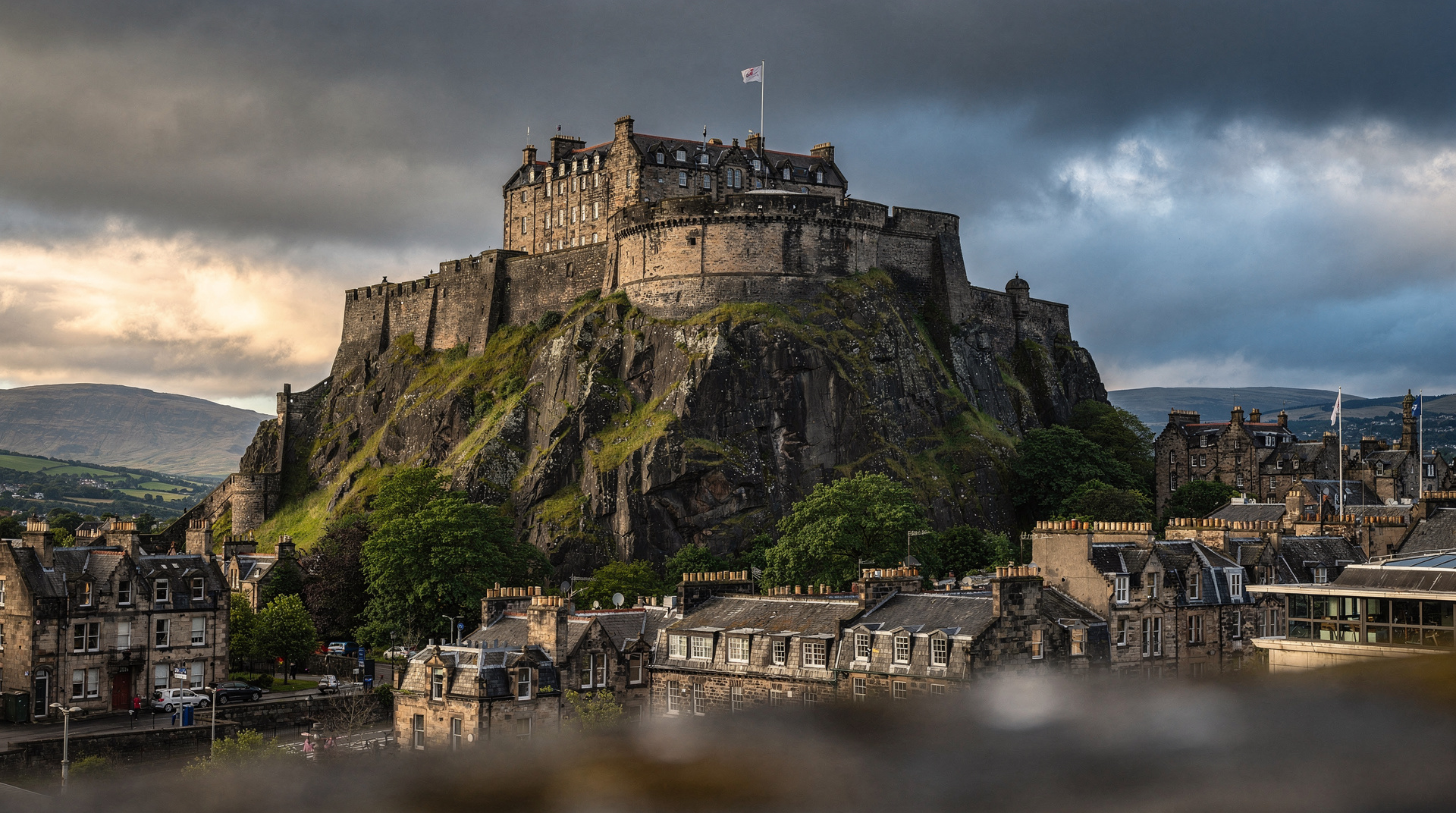
The gardens are free to enter and are one of Edinburgh’s great public spaces. The view from the gardens of the castle on its rock is the defining Edinburgh postcard image, and it is spectacular in any season. The Ross Bandstand at the western end of the gardens hosts outdoor performances in summer. The Christmas market that fills the gardens from late November to early January is genuinely well done — considerably better than most UK city Christmas markets, with an ice rink, food stalls, and the spectacle of the castle lit above.
Princes Street as a shopping destination is functional rather than characterful — the usual major retail chains. For anything more interesting, move north to George Street or the streets between, particularly Thistle Street, which has some of Edinburgh’s best independent boutiques.
George Street and the squares
George Street is the social and commercial spine of the New Town. The buildings along it are of uniformly high quality — wide-fronted Georgian facades, some still residential or office use, others converted to restaurants, bars, and flagship shops. The Assembly Rooms at number 54 is the grandest surviving public building on the street, built in 1787 and used for balls and concerts during the Edinburgh Festival and Hogmanay season.
Charlotte Square at the western end of George Street is the most architecturally complete space in the New Town. The north side, designed by Robert Adam in 1791, is considered one of the finest examples of Georgian civic architecture in the world. Bute House on the north side is the official residence of the First Minister of Scotland. The National Trust for Scotland’s Georgian House is at number 7 and is open to visitors — a fully restored Georgian townhouse that gives a detailed picture of how the upper-middle class lived in 1800.
St Andrew Square at the eastern end is more commercial in character, with the Melville Monument at its centre and Harvey Nichols occupying the eastern corner. But the square itself is pleasant, and the statue-lined gardens in its centre are used for events during the Fringe and Hogmanay.
Whisky and coffee in the New Town
The New Town has a significantly higher density of genuinely good independent whisky bars than the Old Town. Bramble on Queen Street is widely regarded as one of the best cocktail bars in Scotland. The Voodoo Rooms, below the Assembly Rooms, is a theatrical Victorian space with a serious whisky selection. The Bon Vivant on Thistle Street is excellent for both cocktails and food.
For whisky specifically, the Johnnie Walker Signature Experience on Princes Street is the most polished commercial whisky attraction in the New Town — a high-production immersive tour through the history and production of Scotch whisky with multiple tasting options. It is more entertainment than education at the top tier, but the standard experience is genuinely well done and appropriate for whisky beginners and enthusiasts alike.
The Edinburgh whisky guide covers the best independent bars, tastings, and experiences across the city.
Walking the New Town
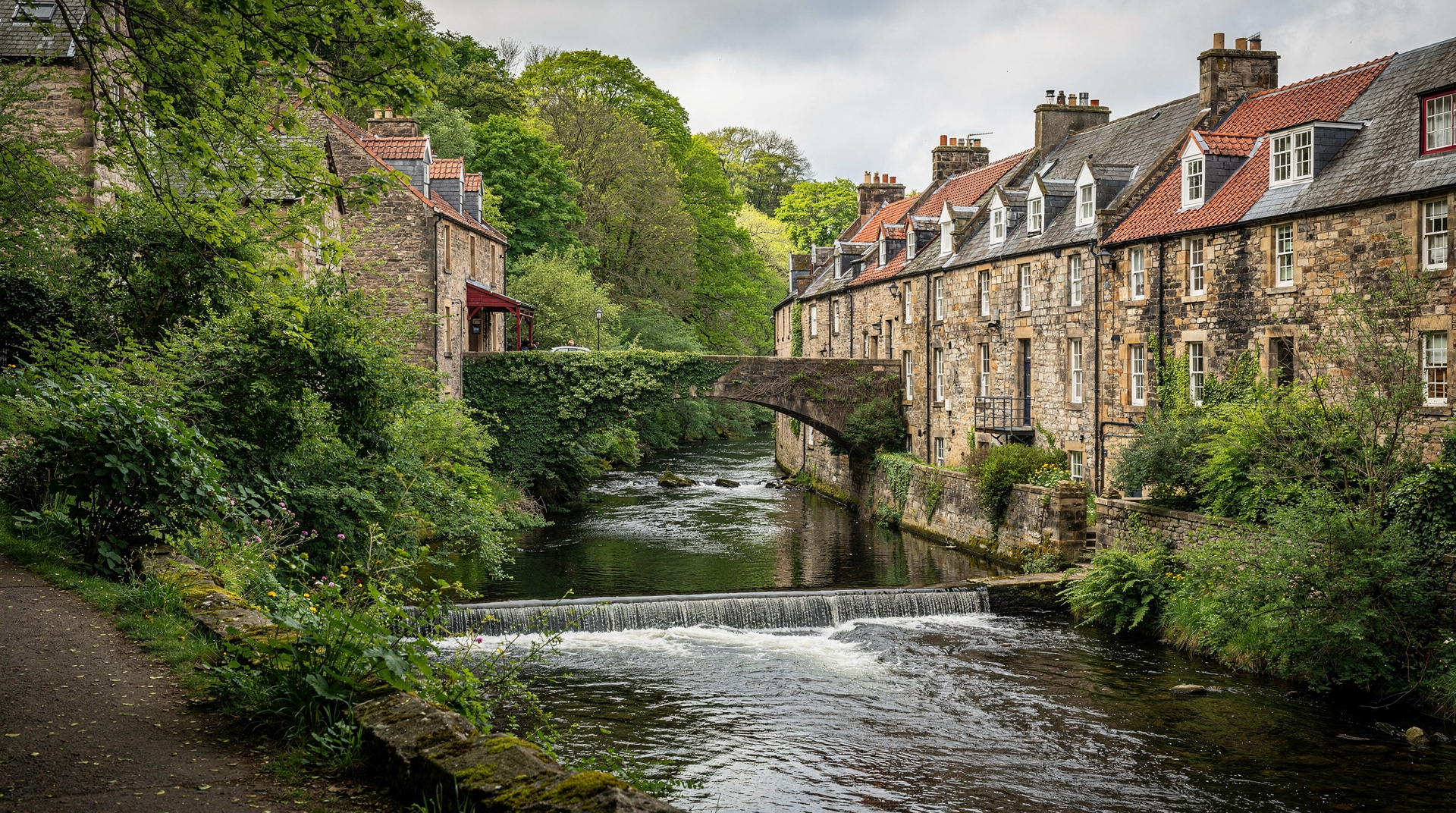
The best way to experience the New Town is to walk it. The New Town, Dean Village, and Circus Lane walking tour covers the architectural highlights with a guide who can explain the planning history and the social context of the Enlightenment city. It typically takes around two hours and includes Circus Lane — one of the most photographed streets in Edinburgh, a cobbled mews lane behind the Royal Circus that is popular for its flower pots and pastel-painted facades.
If you prefer to walk independently, a simple route that covers the key areas: start at Charlotte Square (north side, Robert Adam facade), walk east along George Street to St Andrew Square, then north on Dundas Street to see the residential New Town, loop back along Heriot Row (where Robert Louis Stevenson grew up at number 17), then south via the Moray Place circus to the Dean Valley. Allow two to three hours for this loop.
The New Town walking tour and exploration game is a good option for families or groups who want some interactivity along with the architecture.
The Scottish National Portrait Gallery
On Queen Street, the Scottish National Portrait Gallery is housed in a dramatic Victorian Gothic building from 1889 — the first purpose-built public gallery in the United Kingdom. The collection covers portraits of significant Scots from Mary Queen of Scots to modern figures, and is displayed across multiple floors with genuinely strong context. Entry is free and the building alone is worth seeing: the main hall has a painted frieze depicting Scottish history along its upper level.
For contemporary art, the Scottish National Gallery of Modern Art is 15 minutes on foot from the New Town, along the Water of Leith below Dean Village.
Edinburgh’s Enlightenment heritage
The New Town was built during and immediately after the Scottish Enlightenment, the extraordinary period of philosophical, scientific, and literary production that made Edinburgh one of the most intellectually significant cities in Europe between roughly 1740 and 1830. The Old Town’s universities and medical schools produced much of this intellectual output; the New Town provided the physical space in which the ideas were published and debated.
The Old Town history guide covers the intellectual context in more detail. The connection is not incidental — the New Town was physically the expression of Enlightenment ideals about reason, order, and civic improvement.
Adam Smith, who published The Wealth of Nations in 1776, lived much of his later life in Edinburgh. David Hume, the philosopher, spent his last years in St David Street (named with ironic affection, given his famous scepticism about religion). James Hutton, the geologist whose Theory of the Earth established the principles of modern geology, was a New Town resident. Joseph Black, who discovered carbon dioxide and developed the concept of latent heat, taught at the university while the New Town was being built.
Walking the New Town with this intellectual history in mind gives the architecture a different meaning. The ordered streets and coherent planning were not merely aesthetic choices but ideological ones — a physical embodiment of the belief that human reason could improve human environments. The contrast with the organic, congested medieval Old Town below was entirely deliberate.
The second New Town: Moray Place and the northern extension
North of George Street, the second New Town (built largely from the 1820s) contains some of Edinburgh’s most ambitious urban compositions. Moray Place is a twelve-sided circus of substantial Georgian townhouses, each with a communal garden at the centre and a uniformity of facade that creates a powerful enclosed space. It is rarely visited by tourists despite being one of the finest pieces of urban architecture in Scotland.
The Earl of Moray commissioned this development as a private residential estate on his land north of the original New Town, and the result was a series of interlinked streets, circuses, and crescents that extended the New Town ideal northward while maintaining the standards of the original. Moray Place leads through Doune Terrace to Ainslie Place — a smaller circus — and then to Great Stuart Street, all of them maintaining the same level of architectural ambition.
Walking through this area is a 20-minute detour from the main New Town tourist circuit but gives a much clearer sense of what the New Town project actually produced at its peak.
Heriot Row and literary Edinburgh
Heriot Row, on the south side of the Queen Street Gardens between the central New Town and Stockbridge, is where Robert Louis Stevenson spent much of his childhood. The house at number 17 is marked with a plaque, and the gardens across the road — communal gardens for the residents of the terrace — are where the young Stevenson played. He later described them in Treasure Island as the basis for the children’s garden through which Jim Hawkins moves. The connection is impossible to verify but entirely plausible.
The New Town has broader literary connections. Sir Walter Scott, who did more than anyone to create the modern romantic image of Scotland, lived at 39 Castle Street before building Abbotsford in the Borders. Arthur Conan Doyle, creator of Sherlock Holmes, was born at 11 Picardy Place in Edinburgh (the house no longer exists, replaced by the roundabout at the top of Leith Walk). The model for Holmes is generally held to have been Dr Joseph Bell, a surgical teacher at Edinburgh University whose diagnostic precision inspired the character.
Connecting New Town to the rest of Edinburgh
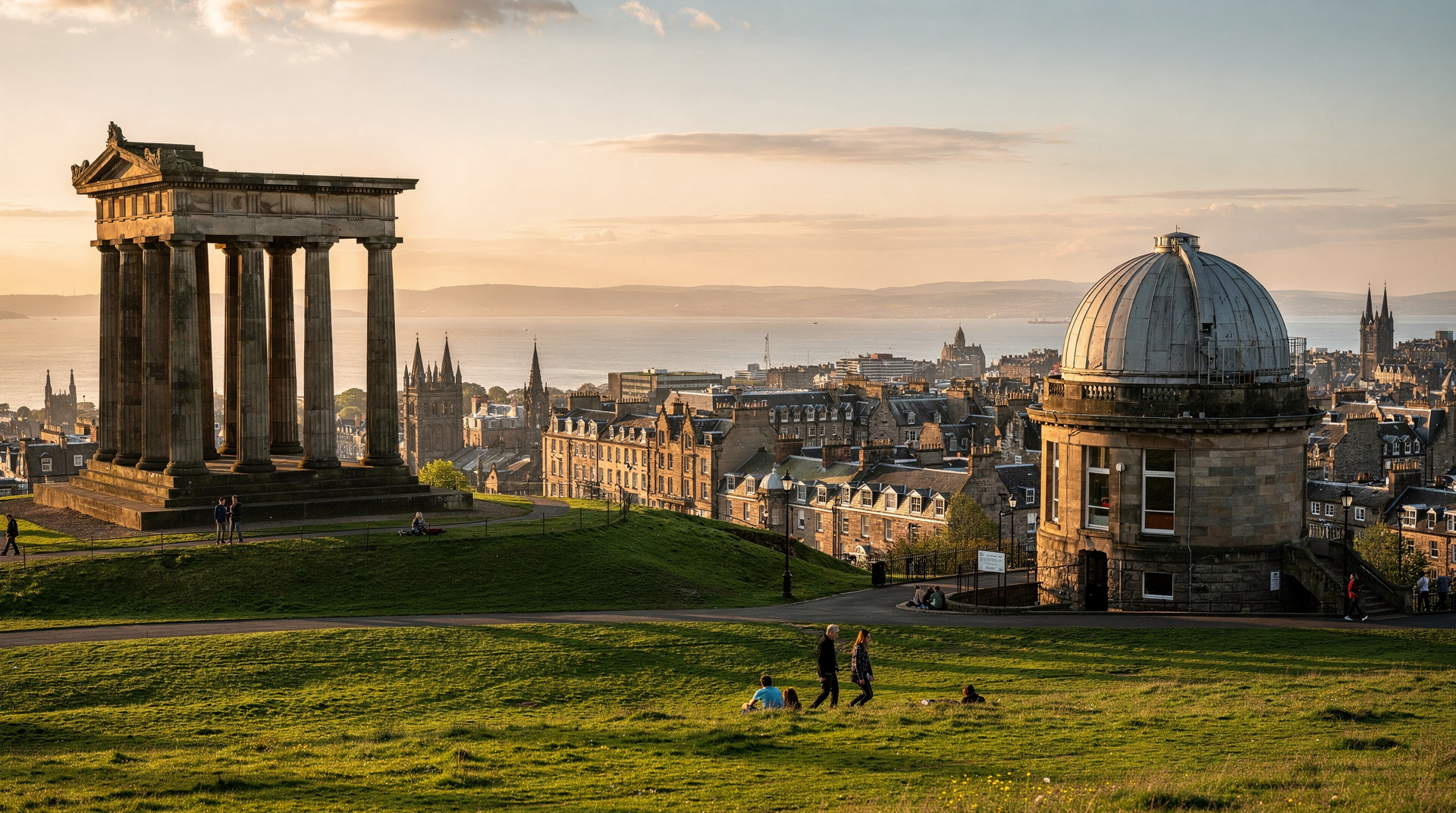
The New Town connects naturally to several other areas. Stockbridge is immediately to the north, down the hill from the New Town, and is worth exploring for its independent restaurants, Sunday market, and the Water of Leith walkway. Dean Village is 15 minutes on foot along the river from Stockbridge. Calton Hill is a 10-minute walk east from St Andrew Square.
The West End lies beyond Charlotte Square to the west, with the Johnnie Walker experience, the Usher Hall, and the descent to Dean Village via Dean Bridge. The Old Town is immediately south across the Princes Street Gardens valley.
For a full-day itinerary that incorporates New Town, see the two-day Edinburgh itinerary, which uses day two for New Town, Stockbridge, and Leith. For a longer visit, the three-day itinerary allows a more relaxed pace through all the main areas.
Planning a New Town visit
For first-time visitors to Edinburgh, the New Town is most naturally visited on day two, after the Old Town and castle. The contrast between the medieval organic city and the Georgian planned city makes more sense when you have experienced both. Allow half a day for a thorough New Town walk that includes Charlotte Square, George Street, the residential streets, and the Scottish National Portrait Gallery.
If you are staying in Edinburgh for three days or more, combining the New Town with a morning at Stockbridge and an afternoon in Leith makes an excellent full day in Edinburgh’s northern and coastal areas. The three-day Edinburgh itinerary covers this sequence in detail.
The New Town is also the best base for day trips — day trips to the Highlands depart from Waverley Station, which is five minutes from the New Town, and the Edinburgh day trips guide covers all the options. For a longer Scotland visit that extends beyond Edinburgh to Stirling or the Isle of Skye, the New Town’s hotel options and transport links make it a practical base.
New Town versus Old Town: which to prioritise first
Visitors with limited time sometimes ask which half of Edinburgh’s World Heritage Site deserves the morning and which deserves the afternoon. There is no wrong answer, but the comparison helps with planning:
| New Town | Old Town | |
|---|---|---|
| Character | Ordered, Georgian, spacious streets | Dense, medieval, vertical closes |
| Best for | Architecture, shopping, whisky bars, calm walking | Castle, Royal Mile, ghost tours, atmosphere |
| Crowds | Lighter, even in August | Heaviest in the city, especially on the Mile |
| Time needed | Half a day | A full day |
| Pace | Relaxed, self-directed | Benefits from a guided tour for context |
Most first-time visitors do the Old Town and castle first, then use the New Town as a calmer counterpoint on day two — the contrast between the two townscapes is genuinely part of the point, and doing them back to back makes the planning logic of both clearer.
Frequently asked questions about Edinburgh New Town
Why is the New Town a UNESCO World Heritage Site?
The New Town was designated as part of the Old and New Towns of Edinburgh World Heritage Site in 1995. The designation recognises both areas together as an outstanding example of two contrasting types of urban development: medieval organic growth (Old Town) and Enlightenment planned expansion (New Town). The New Town is specifically recognised for the quality and completeness of its Georgian architecture, the coherence of its street plan, and its influence on urban planning across Europe and beyond.
What is the best street in the New Town for architecture?
Charlotte Square’s north side is the single most architecturally significant space, but for atmosphere, Circus Lane in Stockbridge (technically the northern extension of the New Town) is the most photographed. Heriot Row has the most complete residential Georgian terrace. Great King Street, in the second New Town, gives the best sense of the scale and uniformity of the Georgian domestic vision.
Is Princes Street worth shopping on?
For major retail chains, yes. For anything distinctive or characterful, no. Thistle Street, one block north of George Street, has Edinburgh’s best concentration of independent boutiques — jewellery, clothing, homewares — in a New Town setting. The Edinburgh shopping guide covers the best areas by category.
How long does it take to walk the New Town?
A focused walk covering the main streets and squares takes 90 minutes to two hours. Adding Stockbridge and a walk along the Water of Leith extends that to three to four hours. If you want to explore the residential streets and the Scottish National Portrait Gallery as well, allow a full half-day.
What is the Georgian House and is it worth visiting?
The Georgian House at 7 Charlotte Square is a National Trust for Scotland property, open to visitors, that reconstructs a complete Georgian townhouse interior from around 1800. Entry costs £13.50 for adults. It gives an excellent picture of upper-class life in early New Town Edinburgh, with period furniture, kitchen equipment, and explanatory material. It is well done and genuinely informative rather than merely decorative — worth an hour, particularly if Georgian history or architecture is an interest.
Top experiences
Bookable activities with verified prices and instant confirmation on GetYourGuide.