Isle of Skye
Isle of Skye from Edinburgh: honest guide to the 5-hour journey, the Quiraing, Fairy Pools, Old Man of Storr, and which multi-day tours are worth booking.
Edinburgh: 3-day Isle of Skye and the Highlands tour
Quick facts
- Best time to visit
- May–June and September; avoid July-August peak crowds
- Days needed
- 2-3 days minimum; 1 day is not enough
- Getting there from Edinburgh
- ~5 hrs by car (A82 via Glencoe, A87 to Skye Bridge); multi-day tours recommended
- Budget per day
- £80–£150 on a guided tour; £60–£100 self-drive (excluding accommodation)
The honest case for Skye — and why one day is never enough
The Isle of Skye has become, in the past decade, Scotland’s most-visited destination after Edinburgh. This has produced a predictable result: the most famous viewpoints — the Fairy Pools, the Old Man of Storr, the Quiraing — are busy to the point of car park overflow from June through August, and the road network, designed for a working island of 13,000 people, struggles with tourist traffic volumes it was never meant to handle. None of this makes Skye less extraordinary. It is still one of the most dramatic landscapes in Europe. But managing expectations about the experience — and timing — is now as important as understanding what to see.
The fundamental constraint for Edinburgh visitors is distance. Skye is approximately 200 miles from Edinburgh, and the driving time is at minimum five hours — longer in summer with traffic through the Highlands. This means Skye is not a day trip in any meaningful sense. You need to stay at least one night on the island, or take a structured multi-day tour that handles the accommodation and driving logistics. Anyone trying to do Skye in a single long day from Edinburgh is not experiencing Skye — they are experiencing an exhausting motorway sprint that happens to end near some impressive scenery before reversing the same route in the dark.
With two nights, you can do Skye properly: arrive afternoon day one, full day on the island day two, return day three. With three nights, you can take the northern peninsula (Trotternish) and the southern peninsula (Sleat, Glenbrittle) at a sensible pace. This guide covers the key landscapes, the best routes, and which guided multi-day tours give the best value.
Getting from Edinburgh to Skye
By car: The standard route is A9 north from Edinburgh, A82 south of Inverness through the Great Glen (passing Loch Ness), then west on the A87 through Glen Shiel to Kyle of Lochalsh, across the Skye Bridge to Kyleakin. This is approximately 200 miles and takes 5 to 5.5 hours in light traffic. In summer, add 30-60 minutes for congestion at Loch Ness and around Glencoe. The alternative southern route via Crianlarich, Glen Coe, Fort William and along the Road to the Isles (A830) to Mallaig, then a short ferry to Armadale, is longer but covers the Glenfinnan Viaduct.
By train: The Caledonian Sleeper from Edinburgh to Kyle of Lochalsh is the most atmospheric option, arriving at the ferry terminal across the water from Skye. It runs Sunday to Friday. Standard tickets are available but sleeping berths need advance booking and carry a premium.
By guided tour: For most Edinburgh visitors without cars or confidence in Highland driving, a structured multi-day tour is by far the most practical approach. Operators like Rabbie’s, Timberbush, and Highland Explorer run 3-5 day tours that handle accommodation, driving, and guided interpretation throughout. The 3-day Isle of Skye and Highlands tour from Edinburgh is the flagship option: three days that combine Glencoe, Loch Ness, and a full day on Skye with accommodation included. This is the option that makes Skye genuinely accessible without a car.
The Trotternish Peninsula: Quiraing and Old Man of Storr
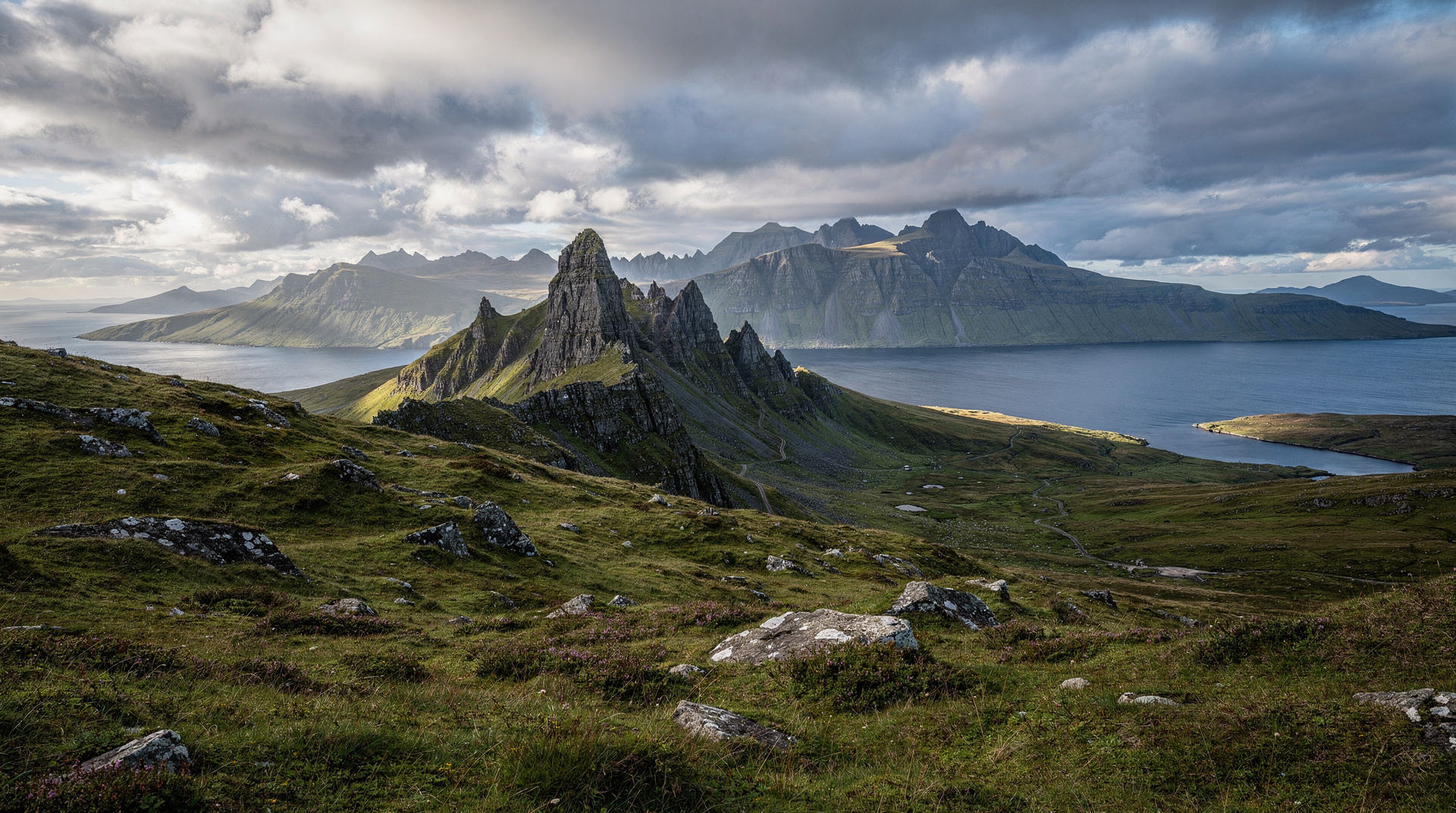
The Trotternish Peninsula in the north of Skye contains the island’s two most famous geological features, both formed by the same ancient landslip process that shaped the peninsula’s distinctive serrated ridgeline.
The Old Man of Storr is a 50-metre pinnacle of rock visible from the A855 road north of Portree. The walk from the car park to the base of the Storr rock formation takes about 45 minutes each way on a well-maintained path, climbing about 200 metres. The views from the top are exceptional — down Loch Leathan, across the Sound of Raasay, and on clear days to the mainland mountains. In morning light, the mist often sits in the valley below the Storr while the pinnacles stand clear above it. This is when you want the photograph. The car park fills by 9am in July-August — arrive before 8am or after 5pm.
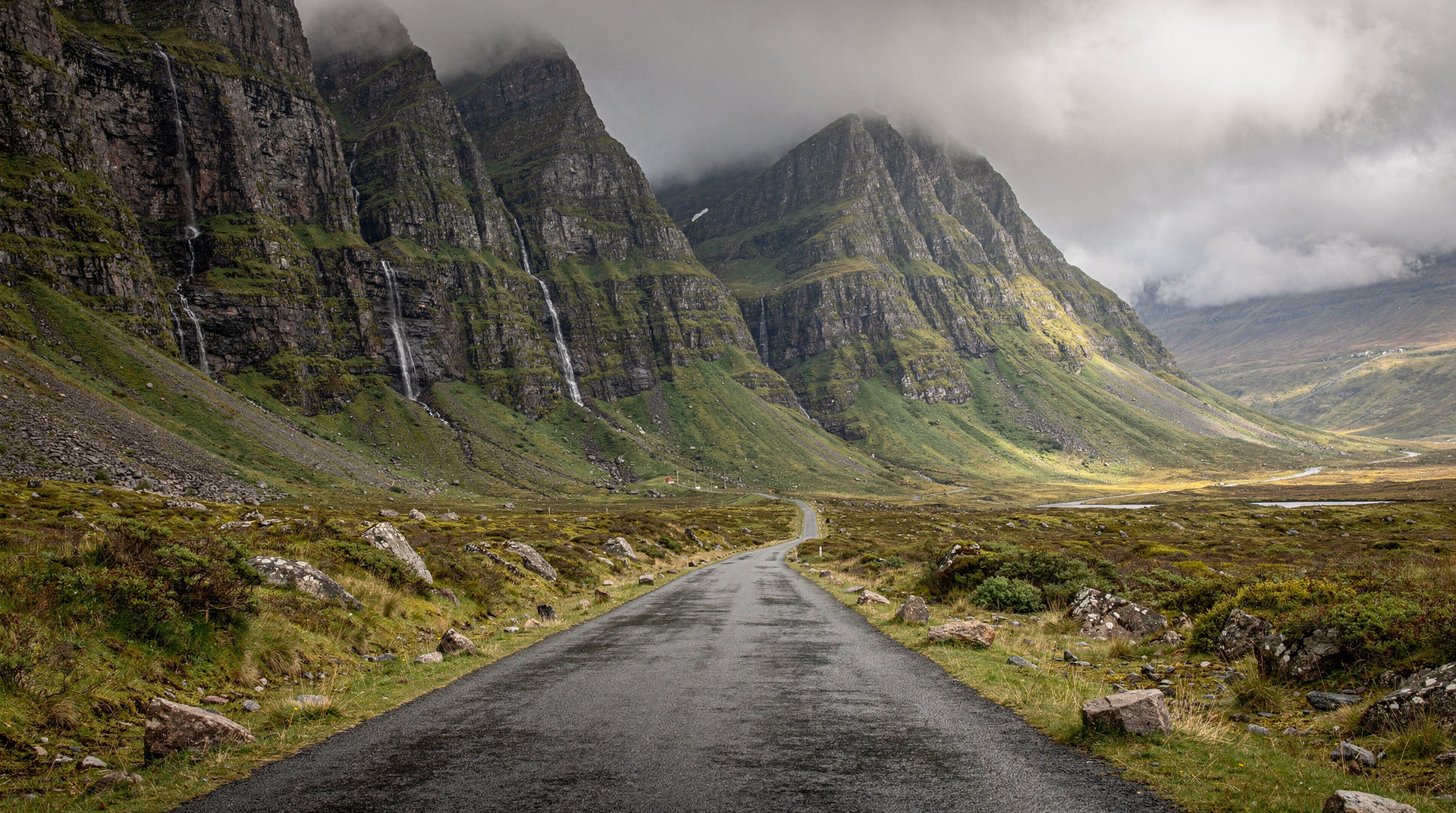
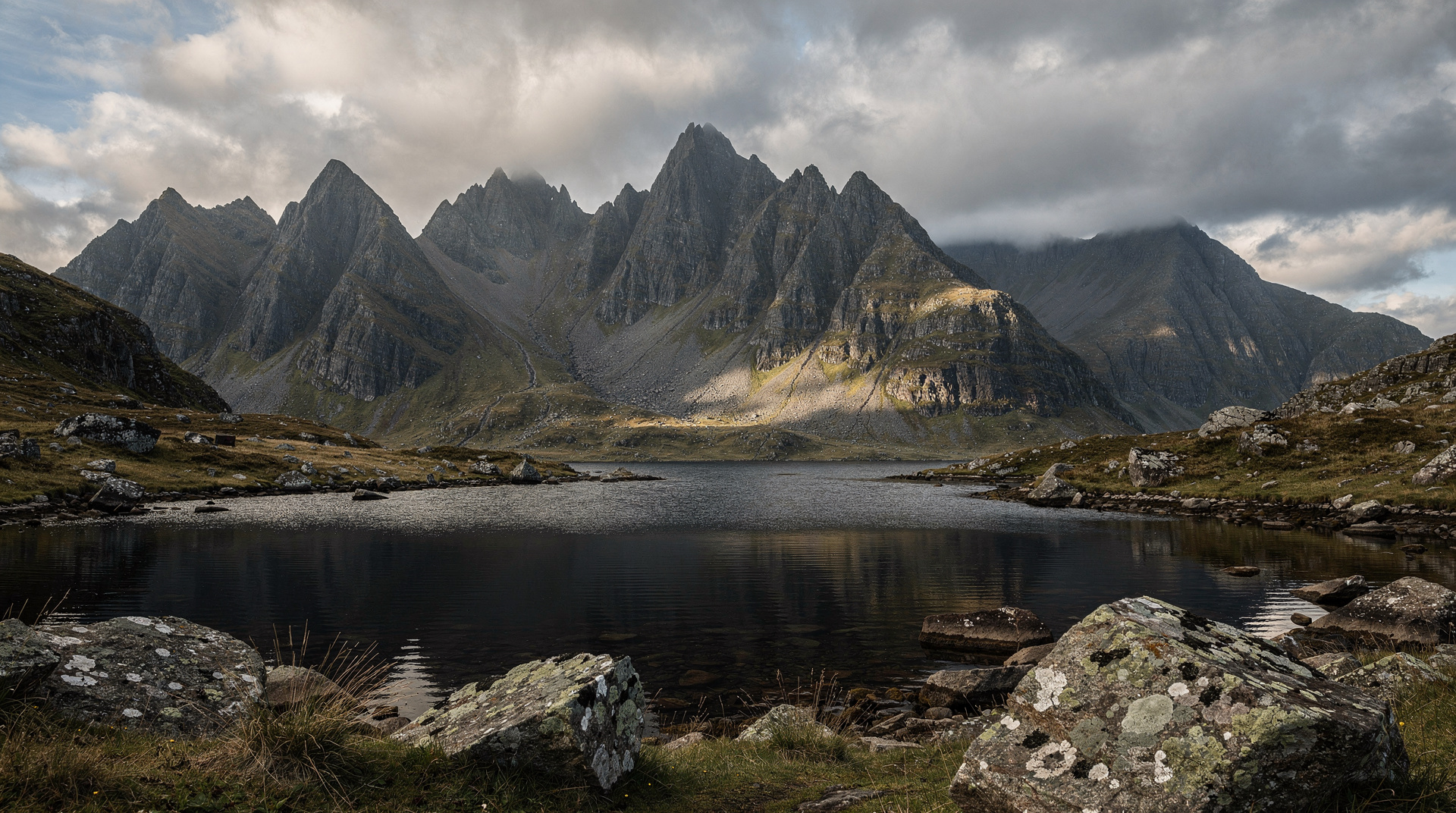
The Quiraing is the larger and wilder of the two landscapes, on the northern plateau of the Trotternish Ridge. The road from Staffin to Uig crosses the ridge at a dramatic pass with layby parking. From here, a circular walk of about 7 kilometres follows the foot of the cliffs through a series of features: the Needle, the Table (a hidden flat plateau above the main cliff face), and the Prison (a freestanding rock formation). The Quiraing is quieter than the Old Man of Storr, slightly harder to reach, and in many ways more impressive. In low cloud, the whole landscape becomes almost otherworldly. Allow 2.5-3 hours for the full walk.
The Trotternish Peninsula also includes Kilt Rock (a cliff face of columnar basalt above the sea, with a waterfall dropping directly off the headland), Duntulm Castle ruins (a MacDonald stronghold at the northern tip), and the Skye Museum of Island Life at Kilmuir, which gives context to island history in a cluster of traditional thatched cottages.
The Fairy Pools and the Cuillin
The Fairy Pools at Glenbrittle on the southern Skye coast are a series of crystal-clear pools and small waterfalls fed by the burns coming off the Black Cuillin mountains. The water, filtered through black volcanic rock, is genuinely translucent blue-green in certain light. The walk from the car park to the main pools is about 3 kilometres on a good path, taking 45-60 minutes. The pools themselves are beautiful and the Cuillin ridge above forms one of the most dramatic mountain backdrops in Britain.
The catch: the Fairy Pools have become severely overcrowded in peak summer. In July-August, the car park overflows by 9am, the path is busy with hundreds of people, and the experience has lost much of the solitude that made it famous. Early morning (before 8am) or late afternoon (after 5pm) in summer is the only way to see them without serious crowds. In May-June or September, the difference is significant and the experience is far better.
The Black Cuillin — the volcanic ridge that dominates the southern Skye skyline — is serious mountain terrain. The main ridge traverse is one of the hardest and most committing long-distance walks in Britain, requiring technical climbing experience and full mountain equipment. Several individual peaks and corries are accessible to confident hill walkers; Sgurr na Banachdich and Sgurr Dearg (which involves a short scramble to the Inaccessible Pinnacle) are among the classic approaches. If you want to explore the Cuillin properly, hire a local mountain guide through Skye Guides or a similar operator.
Portree and the island’s practicalities
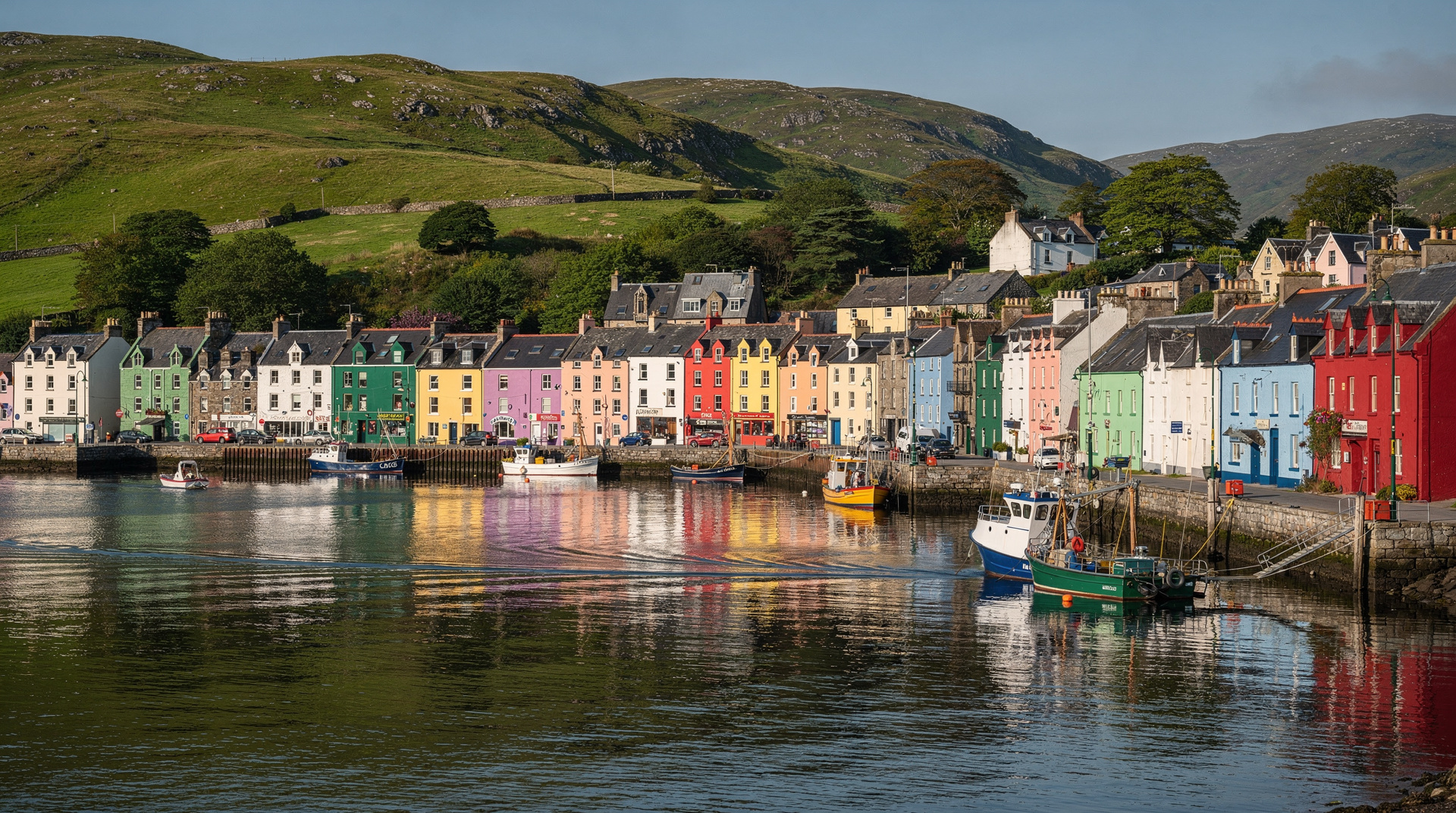
Portree is Skye’s main town and the base for most visitors — it has the island’s best concentration of accommodation, restaurants, and shops. The coloured harbour frontage is the standard Skye postcard view. The town is pleasant but not large; an hour walking around it is sufficient.
For food on Skye, the quality of local seafood is the standout: langoustines, oysters, crab, and scallops landed directly from local boats. The Harbour View restaurant in Portree is consistently recommended; Three Chimneys at Colbost in the west of the island is the high-end Skye dining experience (book months ahead, particularly for summer). Skye Pie in Portree is a good budget option; the various seafood trucks and cabin restaurants at the harbour are worth investigating. Prices on Skye are higher than Edinburgh equivalents for equivalent quality — supply chains are longer, and the tourist premium is real.
Accommodation: Portree has most options. Book well ahead for any summer visit. Prices for mid-range B&Bs and small hotels run £100-£200 per room in July-August. Self-catering cottages (booking.com, Airbnb, Sykes Cottages) are often better value for groups.
Which multi-day tour is right for you
The 3-day Isle of Skye and Highlands tour is the standard recommended option: three days including Glencoe, Loch Ness, and a full day on Skye, with accommodation included. It gives a complete Highland circuit from Edinburgh at a manageable price. Group sizes are typically 16 people maximum — confirm with the operator when booking.
For those wanting to extend the trip, the 4-day Isle of Skye and West Highlands tour adds a day on the West Highland mainland, covering Fort William, Glenfinnan, and Glencoe more thoroughly. This is the better choice if you want to see the Glenfinnan Viaduct (the Hogwarts Express viaduct) alongside Skye.
The 5-day Skye, Loch Ness and Inverness steam train tour incorporates the Jacobite steam train from Fort William (the actual train used as the Hogwarts Express in the Harry Potter films) and is the premium Highland experience tour from Edinburgh. Worth it for film fans and those who want the most complete Highland itinerary.
For private travel — couples or small groups who want a personal itinerary — the Skye private tour options allow custom routing and pace. These cost considerably more but give access to quieter corners that group tours cannot reach.
Self-drive on Skye: what to expect
Skye is driveable with a hire car and confidence on single-track roads. Most of the island’s secondary roads are single carriageway with passing places — you pull into the passing place to let oncoming traffic through. This requires patience but is not technically difficult. The main A87 from the bridge to Portree is a standard two-lane road. Summer congestion on the main road is real; some passing-place backups in July-August on the Trotternish Peninsula can take 20-30 minutes to clear.
Petrol stations are in Portree and Broadford; fill up before venturing into the north or west of the island. There are no services whatsoever on most of the island’s remote roads.
Hire car from Edinburgh for three days costs roughly £120-£180 for a small car in 2026 (excluding fuel). The Edinburgh to Skye and back fuel cost adds approximately £80-£100 for a typical petrol car. Compare this against guided tour prices (around £200-£350 per person including accommodation for three days) when deciding.
Practical information for 2026
Best months: May and June for fewer crowds and good walking conditions; September for late summer light and noticeably quieter roads. July and August are the busiest and most expensive months on the island.
Midges: From late May through September, Highland midges are active on Skye in still conditions, particularly near lochs and in the evenings. Bring DEET repellent. The Quiraing and Glenbrittle are both midge hotspots on calm evenings.
Mobile coverage: Patchy across much of Skye. Download offline maps before leaving the main road. EE and Vodafone have the best coverage on the island.
UK ETA: Many visitors require a UK Electronic Travel Authorisation to enter Great Britain. See the UK ETA guide for details.
For Highland planning context, see the Isle of Skye from Edinburgh guide and the multi-day Highland tours guide. Related destinations: Loch Ness, Glencoe, Mull and Iona.
Frequently asked questions about the Isle of Skye
Can I visit Skye as a day trip from Edinburgh?
Not meaningfully. The journey is around five hours each way, leaving barely three hours on the island before you need to turn back. A day trip to Skye from Edinburgh is a waste of the journey. You need a minimum of two nights — one night to arrive, a full day on the island, and the journey home on day three.
What is the best time to visit Skye?
May-June or September. The landscape is accessible and weather is reasonable. Crowds are significantly lower than July-August, prices are lower, and the midges are less aggressive. July-August is the peak season: overflowing car parks, roads slower from traffic, and accommodation booked up months in advance.
Do I need hiking experience to see the best of Skye?
Not for most of the famous spots. The Old Man of Storr, Fairy Pools, and Quiraing car-park-to-viewpoint walks are on maintained paths suitable for anyone with reasonable fitness and appropriate footwear. The Cuillin mountains require proper hillwalking or climbing experience and should not be attempted without them.
How long should I spend on Skye?
Two nights minimum for a basic visit covering Trotternish, the Fairy Pools, and Portree. Three nights allows a more relaxed pace and the possibility of seeing lesser-visited areas like the Sleat Peninsula or Point of Sleat coastal walk. Four nights is comfortable if you want to do any serious walking.
Should I take a guided multi-day tour or drive independently?
Guided tours offer accommodation, driving, and interpretation in a single package at a reasonable cost — the best value for visitors without a car or those unfamiliar with Highland driving. Self-drive gives flexibility and access to quieter corners that coaches cannot reach. If you have never driven on single-track Highland roads, the tour removes that challenge.
What should I see in one full day on Skye?
A sensible one-day Skye circuit from Portree: Old Man of Storr in the morning (arrive before 8:30am), drive the Trotternish loop through Quiraing, lunch in Portree, Fairy Pools in the afternoon (before 4pm in summer), drive back through Sligachan with the Cuillin view at golden hour. This is roughly 80 miles of driving with stops — achievable in a full day.
Is Skye suitable for young children or wheelchair users?
Partially. Portree, Dunvegan Castle’s ground floor, and roadside viewpoints along the Trotternish loop are accessible without significant walking. The famous walking spots — the Old Man of Storr, Fairy Pools, and Quiraing — all require walking on uneven, sometimes rocky paths that are not wheelchair-accessible and are challenging for very young children. See the accessibility section above for more detail on planning around this.
Should I choose Skye or Mull and Iona for a Scottish island trip?
Skye offers more dramatic mountain scenery but suffers from serious summer overcrowding at its famous spots; Mull and Iona are quieter, add genuine historical depth through Iona Abbey, and are easier to enjoy without the crowd-timing planning Skye now demands. See the comparison section above for the full breakdown.
The Sleat Peninsula: Skye’s quieter south
The Sleat Peninsula — the southernmost part of Skye, accessible via the Armadale ferry from Mallaig on the mainland — is the least-visited section of the island and, by some accounts, the most beautiful. It is sometimes called the “Garden of Skye” because the sheltered peninsula has notably milder conditions than the exposed northwest, supporting woodland and gardens not found elsewhere on the island.
Armadale Castle and Gardens (the ruined seat of the Macdonald clan chiefs, now operated as the Clan Donald Visitor Centre) has good museum collections on the Lordship of the Isles and the history of the Macdonalds. The gardens are particularly good in May-June with rhododendrons and woodland flowers. Entry around £10 for adults.
The coastal road from Armadale north through Isleornsay toward Broadford is quieter than the main Portree routes and gives views across the Sound of Sleat to the Knoydart peninsula on the mainland — one of the least-accessible parts of the Scottish Highlands, only reachable by boat or a long hill walk. On a clear day the view takes in the entire mountain wall of Knoydart with no habitation visible in either direction. This is the kind of Skye view that the popular tourist routes do not easily access.
Dunvegan Castle and the western Skye
Dunvegan Castle, on the west coast of Skye above Dunvegan Loch, is the seat of the Clan MacLeod and is claimed to be the oldest continually inhabited castle in Scotland. The castle has been occupied by the MacLeod chiefs for over 800 years. It is open to visitors (entry around £17) and the interior reflects centuries of accumulated MacLeod history, including the Fairy Flag — a faded silk relic that clan tradition says was given to the MacLeods by fairies and protects the clan in battle. The fairy story is one of several on Skye where the dividing line between history and legend is usefully blurred.
The Talisker Distillery at Carbost, nearby on the west coast, is the only distillery on Skye and produces a heavily peated, coastal-influenced single malt with a distinctive character. Tours run daily; the visitor centre is well-presented. Talisker is one of the more distinctive single malts — powerful and maritime, not a beginner’s whisky but an interesting one. Entry for basic tour around £15. See the broader Scottish distilleries guide for context on Skye whisky in the wider landscape.
Neist Point, at the far western tip of Skye beyond Dunvegan, has the island’s most photographed lighthouse and one of its best sunset viewpoints — a dramatic headland with cliffs dropping to the sea and, on clear evenings, views across the Minch to the Outer Hebrides. The walk from the car park to the lighthouse takes about 20 minutes each way on a paved but steep path. It is further from Portree than the Trotternish sights (about an hour’s drive) but rewards the detour, particularly for photographers willing to time a visit around sunset.
Skye’s history: MacLeods, MacDonalds, and the Clearances
Skye’s history beyond the tourist highlights is one of clan conflict, Jacobite allegiance, and the Highland Clearances of the 18th-19th centuries. The island was a Jacobite stronghold — Bonnie Prince Charlie fled to Skye after the defeat at Culloden in 1746, with the assistance of Flora MacDonald (who dressed him as her maid servant to disguise his identity). A monument to Flora MacDonald stands in Portree.
The Clearances of the 18th and 19th centuries forcibly displaced much of the Skye population to make way for sheep farming — an economic rationalisation imposed by absentee landlords that emptied communities and drove emigration to Canada, Australia, and the United States. The Skye landscape, vast and apparently timeless, conceals the ghost villages of cleared townships visible as grass-covered foundations in the moorland above the roads. The Skye and Lochalsh Council has produced a series of heritage panels at cleared township sites that give context to these ruins.
For visitors with a particular interest in the Jacobite period, the connection between Skye and the ‘45 is covered in the Jacobites and Edinburgh guide, which gives the Edinburgh end of the story.
Skye with children and accessibility
Skye can work well for families, but the famous walks require realistic planning. The Old Man of Storr and Fairy Pools paths are on maintained but uneven ground with some steps and rocky sections — manageable for most children aged seven or eight and up with sturdy shoes, but not pushchair-friendly beyond the first few hundred metres. The Quiraing circuit is longer and more exposed, better suited to older children and confident walkers. Portree itself is flat and easy for all ages, and the harbour, with its boat traffic and seals sometimes visible in the bay, keeps younger children entertained without any walking required.
For wheelchair users and visitors with limited mobility, Skye is a genuinely difficult island: almost all of the famous viewpoints require walking on rough terrain to be seen properly, and there is very little step-free access to the dramatic landscape beyond roadside views. Portree, Dunvegan Castle’s ground floor, and the roadside viewpoints along the Trotternish loop (without walking to the Storr or Quiraing themselves) are the most realistic options. Armadale Castle’s gardens have some accessible paths. Contact tour operators directly if specific access needs must be accommodated on a multi-day tour.
Skye compared with Mull and Iona
Visitors deciding between Skye and the Isle of Mull and Iona are choosing between two different kinds of island experience. Skye offers more dramatic mountain and coastal scenery in a larger, more varied landscape, but suffers from serious overcrowding at its famous spots in July and August.
Mull and Iona are quieter, offer a genuinely different historical dimension through Iona Abbey, and are generally easier to enjoy without the crowd-management planning that Skye now requires. For a first Scottish island experience prioritising landscape drama, Skye wins; for a quieter, more contemplative island trip with strong wildlife and history, Mull and Iona are the better choice. Doing both, as described in the combining section above, gives the fullest picture.
Top experiences
Bookable activities with verified prices and instant confirmation on GetYourGuide.