The Jacobites and Edinburgh: history, sites, and Outlander connections
Edinburgh: Outlander, palaces, and Jacobites day trip
What is the connection between Edinburgh and the Jacobites?
Edinburgh was at the centre of the 1745 Jacobite Rising: Bonnie Prince Charlie marched into the city in September 1745, was received at Holyroodhouse, and held court there for six weeks before the campaign turned south toward England. The key Jacobite sites are the palace, the Holyrood area, and the battlefield of Prestonpans (25 minutes from the city).
Scotland’s most romantic lost cause — and where to find it in Edinburgh
The Jacobite movement — the attempt to restore the Stuart dynasty to the throne of Britain after the Glorious Revolution of 1688 — is one of the most emotionally resonant chapters of Scottish history. The final Jacobite Rising of 1745, led by Charles Edward Stuart (Bonnie Prince Charlie), came closer to success than any other, captured Edinburgh briefly, and ended in the catastrophe of Culloden in April 1746. The consequences for Highland Scotland were devastating. The mythology that grew from the defeat shaped Scottish cultural identity for the following two centuries.
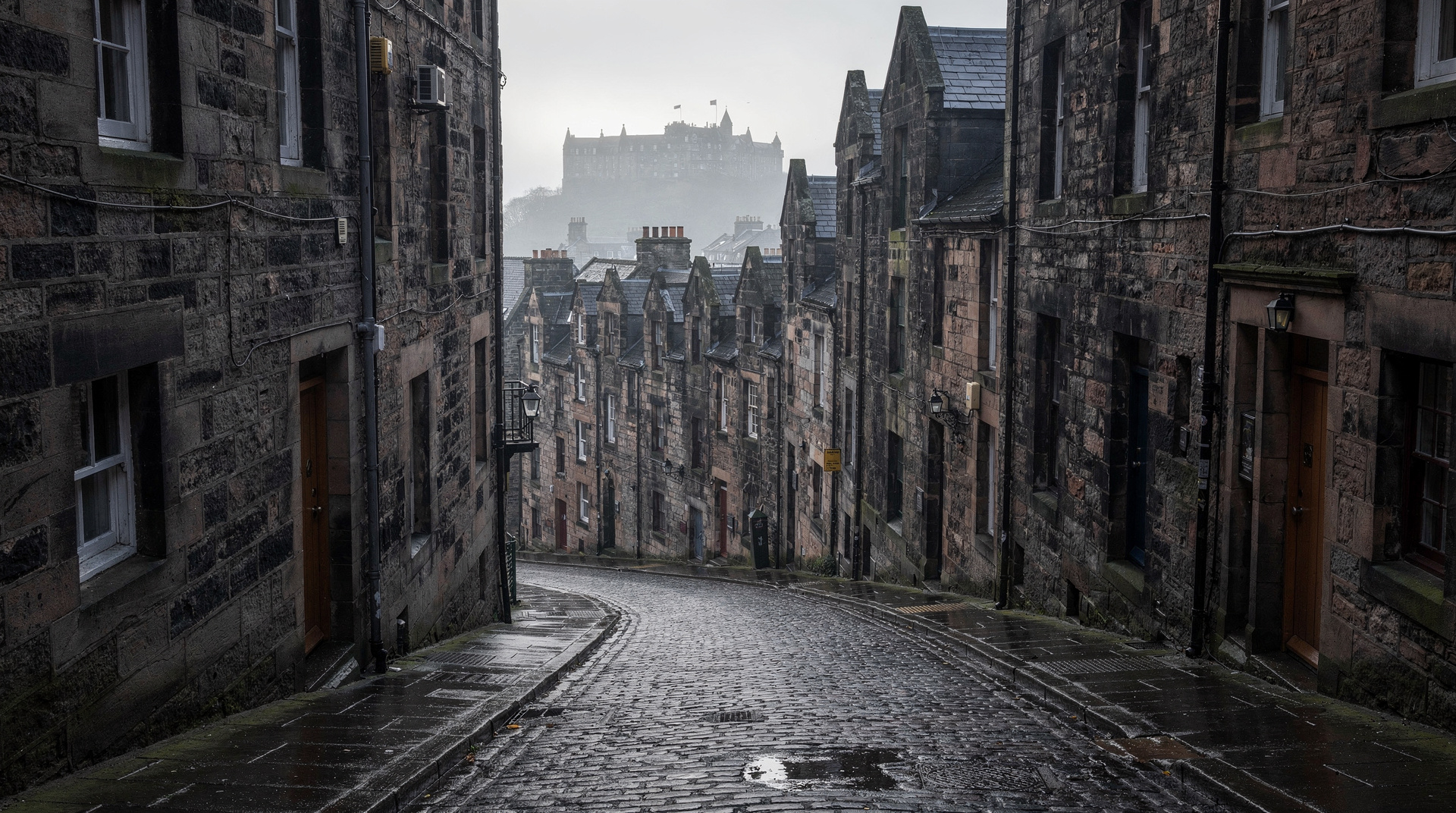
Edinburgh was not merely a bystander to these events. The city was occupied by Jacobite forces in September 1745, and Bonnie Prince Charlie held court at the Palace of Holyroodhouse for six weeks. The decision to march south toward England — made at Holyrood — set in motion the chain of events that led to Culloden. The history is complicated, the mythology is vast, and the sites in and around Edinburgh make the story tangible.
| Where | Palace of Holyroodhouse, Canongate, Prestonpans (25 min from Edinburgh) |
| Cost | Free (Canongate walk) to around palace admission fees for Holyroodhouse |
| Time needed | Half a day for the Edinburgh sites; add a day for Culloden near Inverness |
| Getting there | Holyrood and Canongate on foot; Prestonpans by a 15-minute train |
| Best for | History enthusiasts and Outlander fans |
The Jacobite story is easiest to follow alongside the wider history of the capital. The Old Town and the Royal Mile are the stage for most of what happened here, and the Edinburgh Old Town history guide gives the longer background to the streets you will be walking. If you are still planning the rest of your trip, the Edinburgh first-time travel guide puts a Jacobite half-day in context.
The historical background: who were the Jacobites?
After William of Orange replaced James VII of Scotland (James II of England) in 1689, the deposed Stuart dynasty retained supporters — Jacobites, from Jacobus, the Latin form of James — who opposed the Hanoverian succession. There were rising attempts in 1715 (the Fifteen, led by the Earl of Mar on behalf of James VIII, the Old Pretender) and 1719 (a Spanish-backed attempt that ended at Glenshiel). Both failed. The Fifteen got as far as Perth but never took Edinburgh.
The Forty-Five, launched in August 1745 by Charles Edward Stuart (the Young Pretender, grandson of James VII), was different in character. Charles landed on the west coast of Scotland with a small French force and gathered a Highland army. The government forces under Sir John Cope were defeated at Prestonpans on 21 September 1745 in a battle that lasted perhaps ten minutes. Edinburgh was undefended.
Edinburgh in 1745: Bonnie Prince Charlie at Holyrood
Bonnie Prince Charlie entered Edinburgh on 17 September 1745 through the Netherbow Port (the gate that once stood on the High Street, now marked by a brass outline in the pavement). The city did not resist — the provost and town council were paralysed; the Castle garrison, under General Preston, held the fortress for the government but could not prevent the occupation of the town.
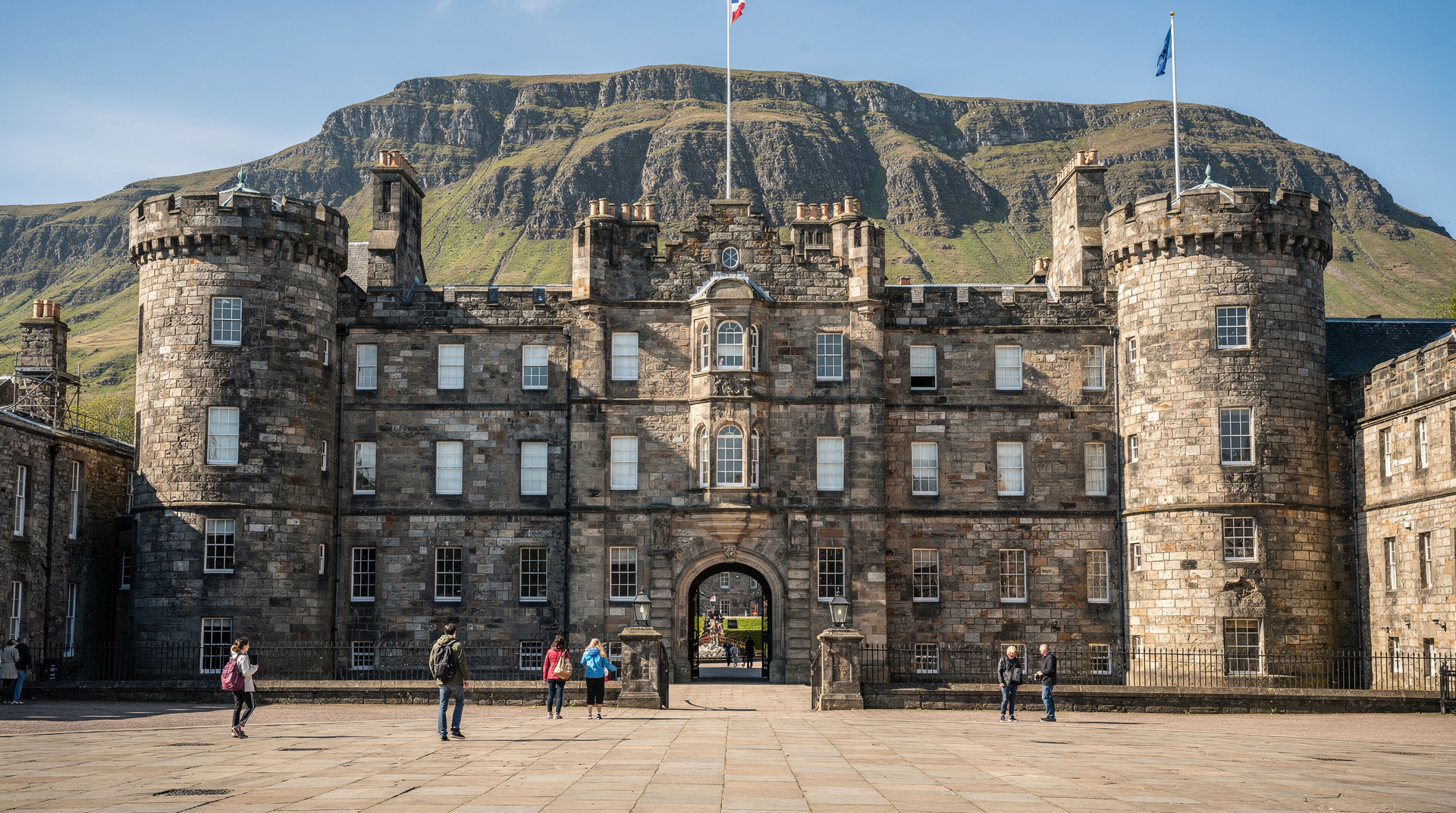
Charles established his court at the Palace of Holyroodhouse, which had been the Stuart royal residence. The six weeks he spent at Holyrood were arguably the high point of the Forty-Five: balls were held in the palace, Highland chieftains and Lowland sympathisers attended court, and for a brief moment it appeared that a Stuart restoration might be genuinely possible.
The decision to march south into England was debated fiercely at Holyrood. Some commanders argued for consolidating control of Scotland first; Charles and his more optimistic advisors argued that speed was essential and that English Jacobites would rise in support. They marched south in October 1745, got as far as Derby (within 200 kilometres of London), and then turned back when the anticipated English risings did not materialise.
The retreat north ended at Culloden on 16 April 1746, where Cumberland’s government forces destroyed the Jacobite army in less than an hour. Charles fled; the reprisals against Highland Scotland that followed — the Clearances, the banning of Highland dress, the systematic dismantling of the clan system — were more destructive than the battle itself.
Key Jacobite sites in and around Edinburgh
The Palace of Holyroodhouse
The palace is the central Jacobite site in Edinburgh. The apartments where Charles held court in 1745 are part of the standard palace visit. The Great Gallery, with its 110 portraits of Scottish monarchs, provided the political backdrop for his court. Booking an advance Palace of Holyroodhouse entrance ticket is recommended for summer visits.
Edinburgh Castle
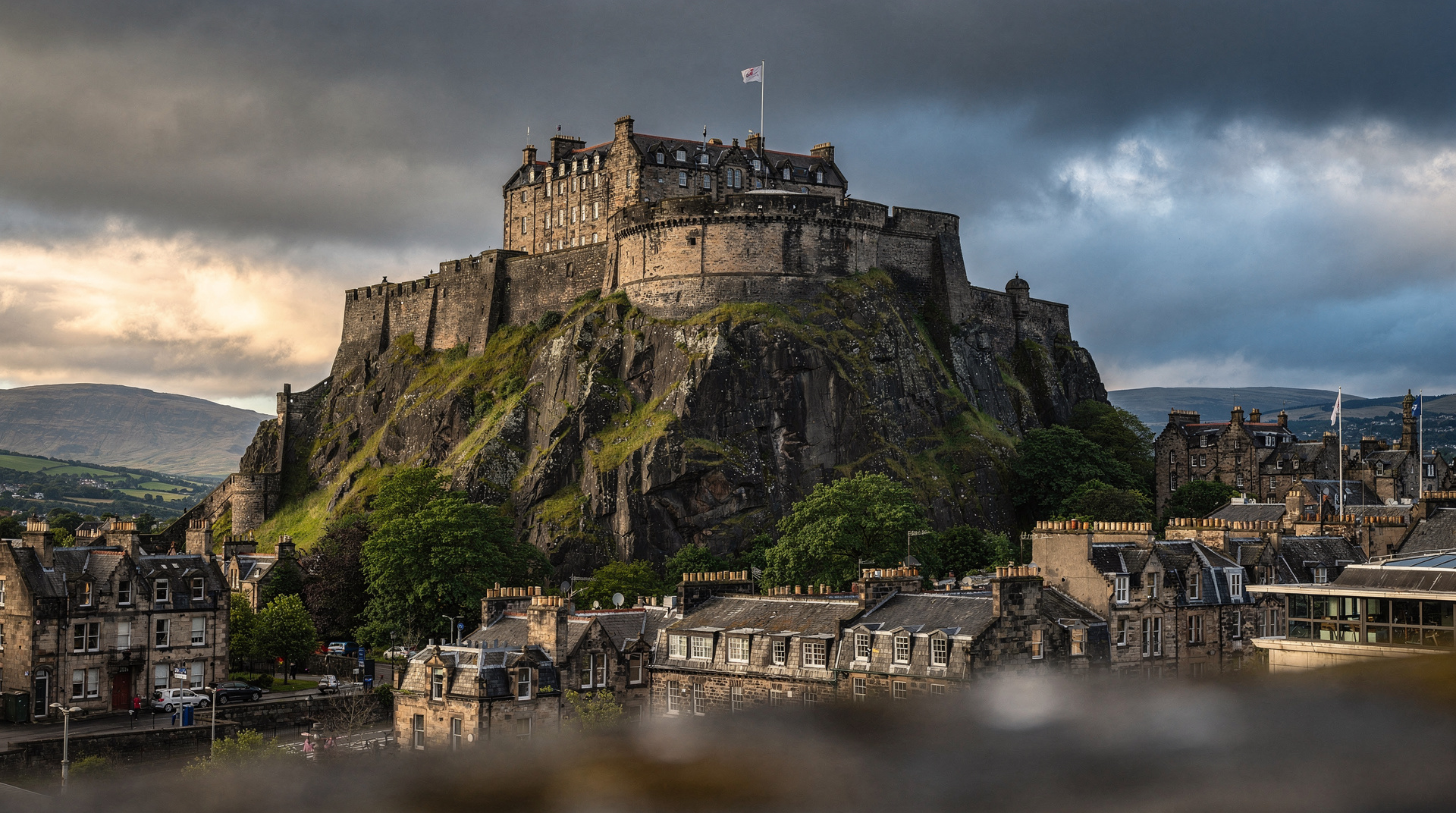
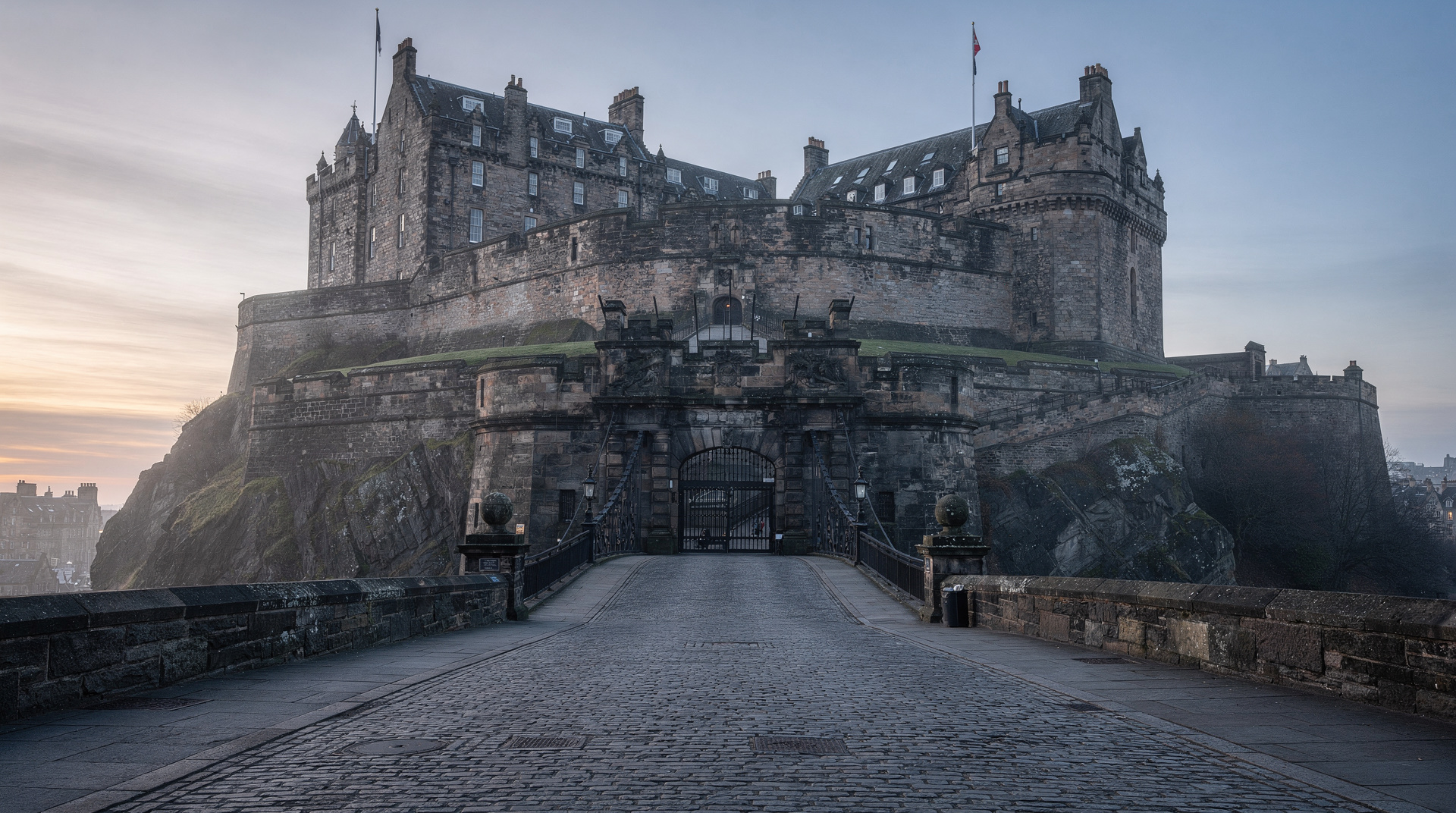
Edinburgh Castle was held for the government throughout the 1745 occupation of the city. Charles made no serious attempt to take it — he lacked the heavy artillery required for a siege, and a long siege would have cost him momentum. The castle’s role in the Forty-Five is therefore primarily as the thing that Charles did not capture, which limited his ability to claim full control of Edinburgh.
The castle’s history of Jacobite connections predates 1745: an earlier rising in 1715 briefly threatened the castle, and there are Jacobite prisoners’ inscriptions in the castle vaults from the aftermath of various risings.
Prestonpans battlefield
Twenty-five kilometres east of Edinburgh, the battlefield of Prestonpans — where the Jacobites defeated Cope’s government army in September 1745 — is one of the best-preserved and most accessible eighteenth-century battlefields in Scotland. The battlefield heritage centre and the cairn marking the site can be reached by train from Edinburgh (Waverley to Prestonpans, about 15 minutes) and a short walk. Guided tours of the site run seasonally.
The Canongate and the High Street
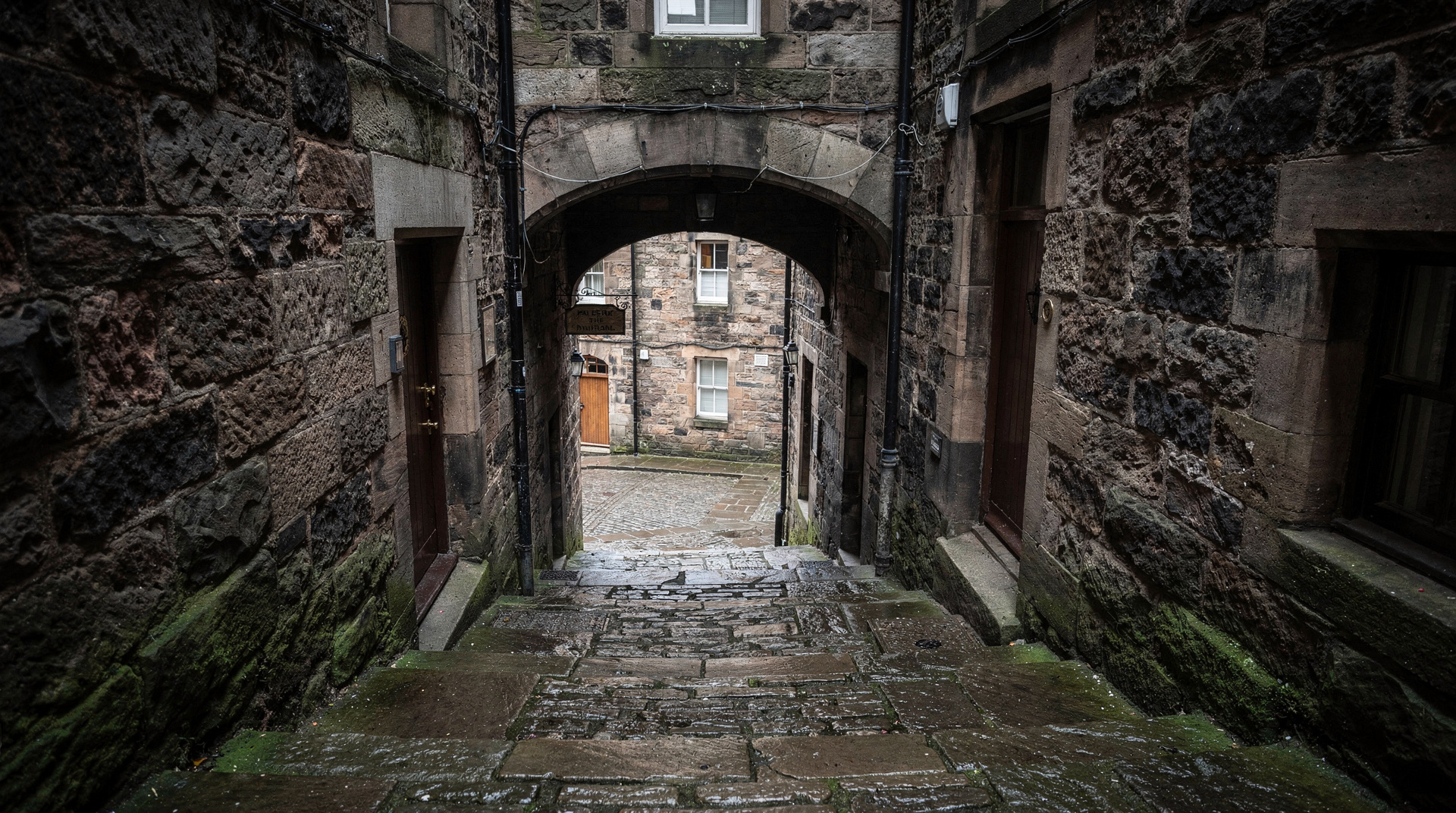
The Netherbow Port — the city gate where Charles entered Edinburgh — stood at the junction of the High Street and Canongate. The gate itself was demolished in 1764, but the outline is set in the pavement. The Canongate, which was a separate burgh from Edinburgh proper in 1745, shows the route of the Jacobite army’s entry.
For the fortress itself, the Edinburgh Castle guide and the Edinburgh Castle destination page cover what to see inside, and Stirling Castle offers another Stuart-era fortress if you want to compare. The Holyrood and Arthur’s Seat area rewards time beyond the palace walls, and a visit to the palace pairs well with the Palace of Holyroodhouse guide. If you prefer to see the palace and castle on one booking, a combined castle and palace ticket keeps the two main Jacobite-era sites together.
The Outlander connection: truth versus fiction
The television series Outlander, based on Diana Gabaldon’s novels, is set partly in the Jacobite period and uses Bonnie Prince Charlie as a character. Several episodes are set in Edinburgh, at Holyroodhouse, and on the nearby landscapes. The series has significantly increased interest in Jacobite history and in the specific locations.
The Outlander, palaces, and Jacobites day trip from Edinburgh covers both the fictional filming locations and the actual historical sites, making it a good option for visitors who come to Scotland through the series and want the historical context alongside the film connection.
The more broadly focused Outlander one-day experience tour covers a wider range of Outlander filming locations across Central Scotland. The Outlander locations guide covers the specific filming sites in detail.
Fans who want more can also read the Outlander day trips guide, and the Glenfinnan destination page and Inverness page point to the Highland end of the story. Visitors drawn to the darker side of the Old Town can combine this with a walking tour of Old Town history and tales, or fold it into the two-day Edinburgh itinerary.
Jacobite Edinburgh in the wider context: Culloden and the Highlands
The Jacobite story does not end in Edinburgh. The campaign moved north, the defeat at Culloden happened in Inverness-shire, and the consequences — the destruction of the clan system, the Highland Clearances, the depopulation of the glens — were experienced in the Highlands rather than in Edinburgh. For visitors who want to trace the full story, a Highland day trip that covers the route of the retreat and the landscape associated with the Forty-Five completes what Edinburgh begins.
The Loch Ness and Glencoe day trips from Edinburgh pass through landscapes directly connected to the Jacobite period. Glencoe, where the Massacre of 1692 killed thirty-eight MacDonalds (a Crown-authorised atrocity against a clan with Jacobite sympathies), is two to three hours from Edinburgh. The Glencoe day trip guide covers the history of the massacre alongside the landscape.
The Jacobite mythology: why it still matters
The appeal of the Jacobite cause in retrospect — and it has always been understood in retrospect rather than at the time — is partly the romance of lost causes and partly the connection it provides to a Scotland that was comprehensively destroyed in its aftermath. The Highland culture that Bonnie Prince Charlie relied on for his army was dismantled within a generation of Culloden. The fact that he personally was a vain, self-deceiving figure who spent his later years drunk in Rome is largely irrelevant to the mythology; the people who followed him and suffered for it are the actual subject of the emotional response.
For visitors who find themselves affected by this story more than they expected to be, the National Museum of Scotland — five minutes’ walk from the Royal Mile, free to enter — has an outstanding collection of Jacobite material including personal objects associated with Bonnie Prince Charlie and the aftermath of Culloden.
A half-day Jacobite walking route in Edinburgh
For visitors who want to trace the 1745 occupation on foot without a guided tour, a logical route takes about half a day:
- Start at the Netherbow Port site, marked by a brass outline in the High Street pavement, where Charles entered the city on 17 September 1745.
- Walk down the Canongate toward Holyrood, following the route the Jacobite army took into the lower town.
- Visit the Palace of Holyroodhouse, where Charles held court for six weeks — allow at least 90 minutes for the state apartments and grounds.
- Walk up to Edinburgh Castle esplanade to see the fortress Charles never captured, and consider the strategic position it held over the occupied city below.
- Finish at the National Museum of Scotland, five minutes from the Royal Mile, for the Jacobite artefact collection that gives the objects behind the story.
Prestonpans in more detail
The battlefield at Prestonpans deserves more attention than it typically gets from Edinburgh-based visitors, given how easy it is to reach. The government army under Sir John Cope was routed in a battle that lasted perhaps ten minutes — one of the most one-sided engagements of the entire Jacobite period, achieved partly through a night march along a path the government forces believed impassable.
The heritage centre at the site interprets the battle in detail, and the cairn marking the location is a short, flat walk from Prestonpans train station. Combined with the 15-minute train journey each way, a Prestonpans visit fits comfortably into an afternoon and pairs naturally with the Edinburgh sites covered above, since it completes the story of how the Jacobites took control of the region before marching on the city itself.
Jacobite sites beyond a single Edinburgh visit
For visitors with more time, the Jacobite story extends well beyond what a single Edinburgh trip covers. Culloden Battlefield near Inverness, where the Forty-Five ended in April 1746, is the single most important Jacobite site in Scotland and around three hours from Edinburgh. Glenfinnan, where Charles first raised his standard in August 1745, is further north still but reachable as part of a longer Highlands itinerary.
The multi-day Highland tours guide covers itineraries that combine these more distant Jacobite sites with the wider Highland landscape, and the Edinburgh to Highlands guide gives the practical transport detail for reaching them independently.
Frequently asked questions about the Jacobites and Edinburgh
What was the Jacobite Rising of 1745?
An attempt by Charles Edward Stuart (Bonnie Prince Charlie, grandson of James VII) to reclaim the British throne for the Stuart dynasty. The rising began in the Western Highlands, captured Edinburgh in September 1745, advanced as far south as Derby, then retreated north and was destroyed at the Battle of Culloden in April 1746.
Can I visit the sites associated with Bonnie Prince Charlie in Edinburgh?
The Palace of Holyroodhouse, where he held court in autumn 1745, is the primary site. The Canongate, where he entered the city, is accessible as part of a Royal Mile walk. The National Museum of Scotland has significant Jacobite collections. The battlefield of Prestonpans is 25 minutes from Edinburgh by train.
What happened to Bonnie Prince Charlie after Culloden?
He spent five months as a fugitive in the Scottish Highlands and islands, evading government troops with the help of local supporters. The support of Flora MacDonald, who helped him escape to Skye disguised as a woman’s maid, became one of the most celebrated episodes of the Rising. He eventually escaped to France in September 1746 and spent the rest of his life in European exile, dying in Rome in 1788.
Is Outlander historically accurate about the Jacobites?
Broadly, the historical background is handled with reasonable accuracy — the locations, the social structure, the political situation, and major events are recognisable. The specific characters and plots are fictional. Diana Gabaldon’s novels are based on solid historical research, and the television adaptation maintains this. The emotional character of the Forty-Five — the highland loyalty, the eventual catastrophe — is captured with more honesty than much historical fiction.
How long does a Jacobite-themed visit to Edinburgh take?
A focused half-day covers the Palace of Holyroodhouse, the Canongate route, and the National Museum of Scotland’s Jacobite collection. Adding Prestonpans battlefield extends this to a full day. To trace the fuller story to Culloden and Glenfinnan requires a separate Highlands trip of at least one additional day.
Where can I see Jacobite artefacts?
The National Museum of Scotland (free, on Chambers Street) has a strong collection. The Palace of Holyroodhouse has objects associated with the 1745 occupation. Culloden Battlefield visitor centre (near Inverness, about 3 hours from Edinburgh) has the most concentrated collection of battlefield artefacts and the most complete historical narrative.
Top experiences
Bookable activities with verified prices and instant confirmation on GetYourGuide.