Palace of Holyroodhouse: the complete visitor guide
Edinburgh: Palace of Holyroodhouse entrance ticket
Is the Palace of Holyroodhouse worth visiting?
Yes, particularly for the historic apartments associated with Mary Queen of Scots, the extraordinary tapestries, and the ruins of Holyrood Abbey attached to the palace. Allow two hours. Check opening dates before visiting — the palace closes when the Royal Family is in residence, typically for two weeks in late June.
The official Scottish residence of the monarch — and much more
The Palace of Holyroodhouse sits at the foot of the Royal Mile, tucked against the base of Arthur’s Seat and the dramatic volcanic cliffs of Salisbury Crags. It is the official Scottish residence of the monarch, used for state ceremonies and for the Royal Family’s annual summer stay in Edinburgh. But for most visitors, the palace is primarily a venue for Scottish history at its most vivid — particularly the story of Mary Queen of Scots, who lived here during the most turbulent years of her reign.
This guide covers what to see inside, how to book tickets, when the palace is open, and how to combine a palace visit with the rest of Holyrood Park and Arthur’s Seat.
| Where | Foot of the Royal Mile, at the base of Arthur’s Seat |
| Cost | £22 adults when booked in advance, £26 on the day (2026) |
| Time needed | Around 2 hours; 2.5 with the Queen’s Gallery |
| Getting there | 25-minute walk from Waverley, or bus 35 |
| Best time | Weekday mornings, outside the late-June closure |
Key things to know before visiting
When the palace is closed: Holyroodhouse closes to the public when the Royal Family is in residence, typically for about two weeks in late June each year. It also closes on a small number of additional days for state events. Always check the Royal Collection Trust website for the exact closure dates before booking.
Ticket prices (2026): Adults £22 when booked in advance, £26 on the day. For concession and child prices, see the official Royal Collection Trust site. A Palace of Holyroodhouse entrance ticket includes entry to all the historic apartments and Holyrood Abbey. Combination tickets with Edinburgh Castle are available and represent reasonable value if you are visiting both on the same trip.
Time needed: Allow around two hours to see the palace properly. If you are combining it with a walk up Arthur’s Seat, add two to three hours for the hill.
What to see inside the Palace of Holyroodhouse
The historic apartments of Mary Queen of Scots
The palace’s most historically significant rooms are the apartments on the second floor of the James IV Tower — the oldest part of the palace, dating from around 1500. These are the rooms where Mary Queen of Scots held court during the 1560s, and they are furnished to give an impression of the period.
The most important room is the small outer chamber just off Mary’s bedchamber — this is where her secretary and confidant David Rizzio was stabbed 56 times in March 1566 by a group of conspirators that included Mary’s husband Lord Darnley. Mary herself was present, reportedly restrained by one of the conspirators while Rizzio was dragged from her presence and killed in the adjoining room. A brass plaque marks the site. The intimacy and smallness of the room make the event feel immediate in a way that a larger, more ceremonial space would not.
The Great Gallery
The longest room in the palace, the Great Gallery is lined with 110 portraits of Scottish monarchs — real and legendary — painted by Jacob de Wet in the 1680s. Charles II commissioned them as a political statement about the continuity of Scottish royal lineage. De Wet clearly struggled to paint that many portraits in the time allowed and many of the faces have a near-identical look, which is either charming or disconcerting depending on your perspective. The scale of the project and the political intent behind it make the gallery genuinely interesting beyond the paintings themselves.
The royal apartments
The state rooms used for royal visits — including the Morning Drawing Room, the Throne Room, and the Evening Drawing Room — are furnished to show the interiors as they appear during royal use. The collection of paintings, tapestries, and silverware in these rooms is from the Royal Collection and includes some outstanding pieces. An audio guide (included in the ticket price) provides commentary on the principal objects.
Holyrood Abbey ruins
Attached to the north tower of the palace, the roofless ruins of Holyrood Abbey are one of the most romantic architectural fragments in Edinburgh. Founded by David I in 1128, the abbey served as one of the principal royal residences and religious centres in medieval Scotland. The nave roof collapsed in 1768 after lead was stripped from it, and the ruins have been left as they fell. Walking through them at dusk, with Arthur’s Seat rising behind, is one of Edinburgh’s most atmospheric experiences. Entry is included with the palace ticket.
The Queen’s Gallery
A purpose-built gallery at the entrance to the palace precincts holds changing exhibitions from the Royal Collection. Exhibitions in 2025-2026 have included royal jewellery and portraits. A separate ticket is required for the gallery (see the official Royal Collection Trust site for prices), or it can be combined with the palace ticket.
Combining Holyrood with Edinburgh Castle: the Royal Mile day
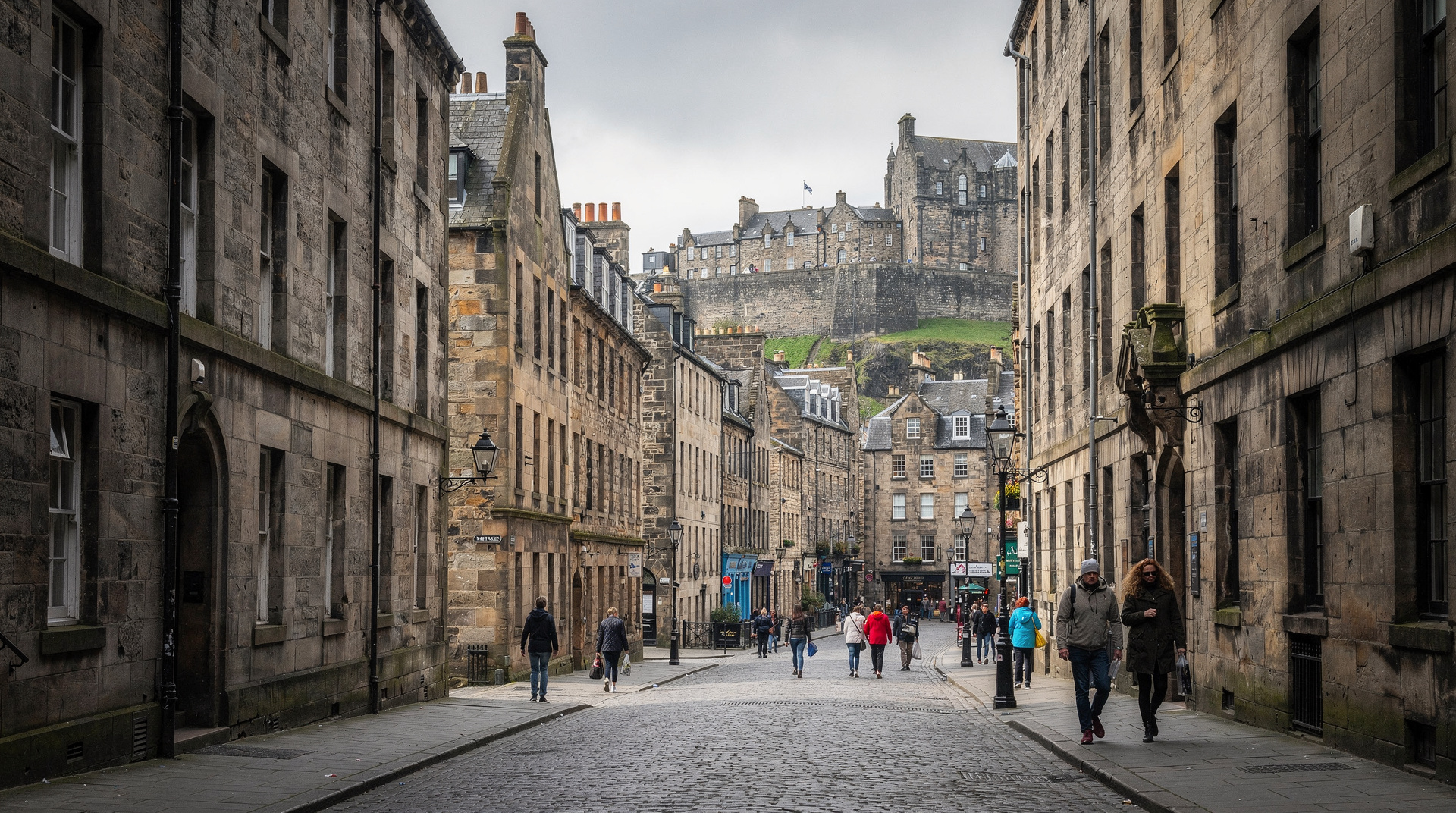
The classic Edinburgh first-day structure is to begin at Edinburgh Castle at 9:30am opening time, walk down the full length of the Royal Mile over two to three hours, and arrive at Holyroodhouse in the early afternoon. This gives you the key anchors of the historic city in a single long day without needing transport.
The Edinburgh Castle guided tour with Holyrood Palace ticket covers both attractions and is the most cost-effective way to visit both on the same day, particularly if you benefit from a guided tour at the castle and prefer to do Holyrood independently with the audio guide.
Holyroodhouse and Harry Potter
The grounds of Holyroodhouse appear in several scenes from the Harry Potter films, and the palace features in the Edinburgh Harry Potter tour with Palace of Holyrood entry — a tour that combines the fictional Edinburgh locations associated with J.K. Rowling’s books with the actual palace visit. This is a genuinely popular option for visitors who want to cover both interests without separate bookings.
After the palace: Arthur’s Seat and Holyrood Park
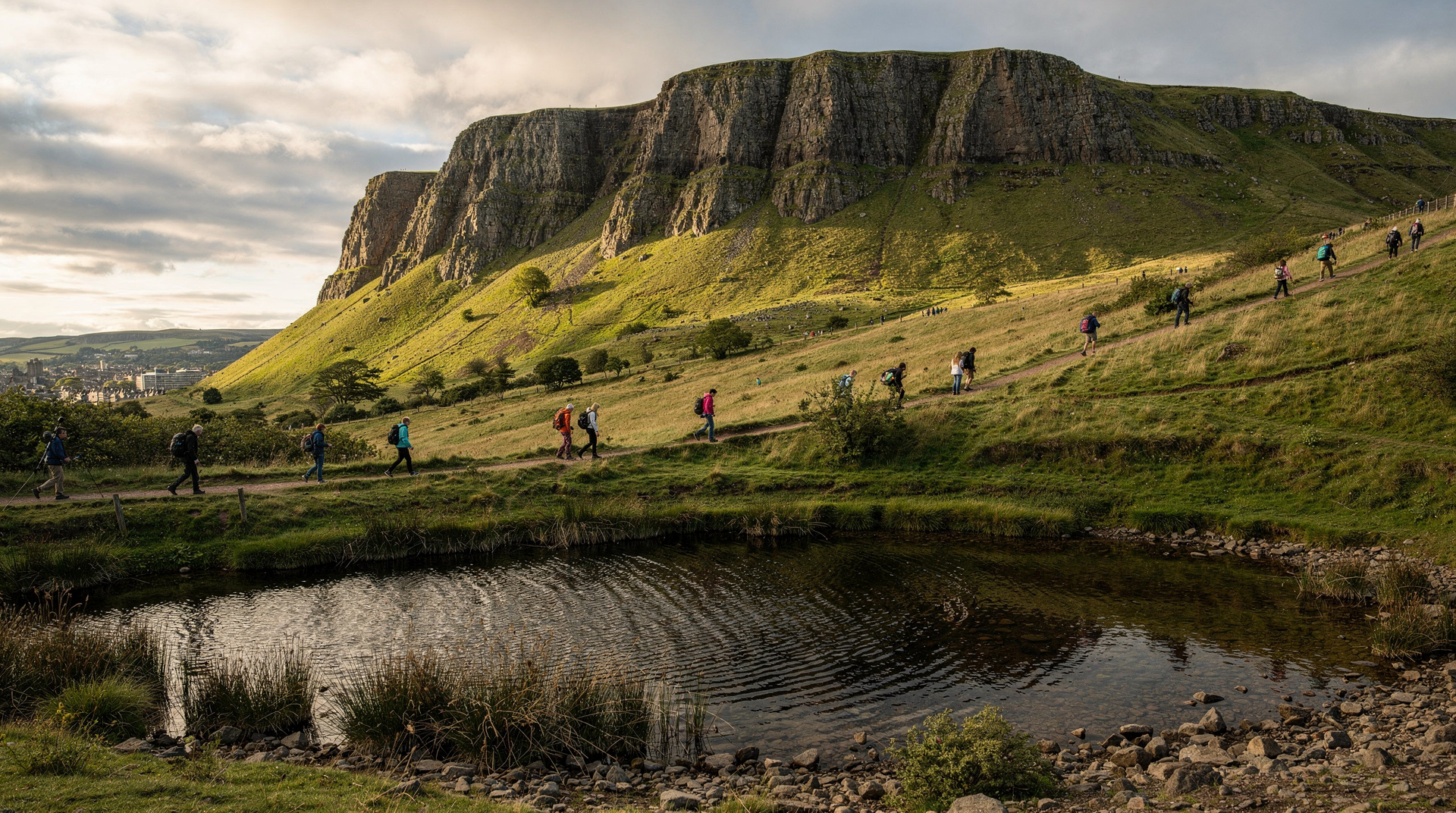
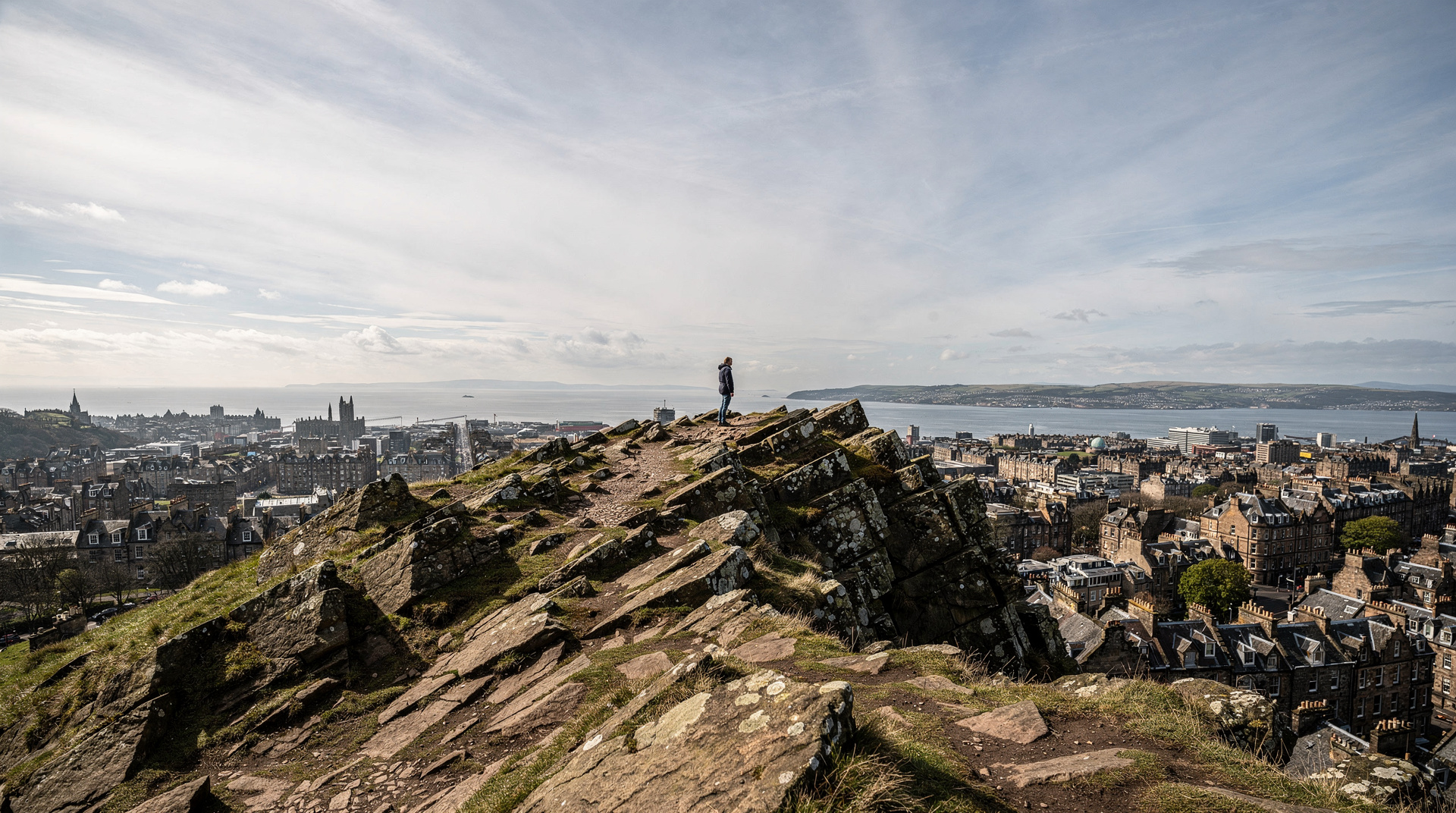
The approach to Arthur’s Seat begins directly behind the palace, making the combination of a palace visit and a hill walk natural. The full summit route from the Holyrood Park entrance takes about 45 minutes each way and is a proper hill walk with some steep sections — walking shoes and a waterproof layer are essential. The Arthur’s Seat hiking guide covers the routes and what to expect.
The more gentle option is to walk along Queen’s Drive (the road that circles the park) and take the path to St Anthony’s Chapel ruins — a ruined fifteenth-century chapel on a ridge above Duddingston Loch with excellent views toward Arthur’s Seat and the city. This walk takes about 30 minutes each way from the palace and is significantly less demanding than the summit.
Getting to Holyroodhouse
The palace is at the foot of the Royal Mile, about a 25-minute walk from Waverley station or a short bus ride (Lothian Buses route 35 or the City Sightseeing hop-on hop-off bus stops nearby). There is no parking immediately adjacent to the palace but the Palace of Holyroodhouse car park opens for visitor use when the Royal Family is not in residence.
If you are still deciding how to get around the rest of the city, the guide to getting around Edinburgh and the trams and buses overview explain the options, though the palace itself is easiest reached on foot down the Royal Mile.
Fitting the palace into a wider Edinburgh trip
The palace works best as one stop among several rather than a standalone outing. For the historical thread it belongs to, the history of the Old Town gives useful background, and the St Giles’ Cathedral guide covers another major stop on the walk down the Royal Mile. Mary’s story continues in other places too, so it is worth reading the Royal Mile guide before you set off to decide which stops deserve your time.
If this is your first visit to the city, the first-time Edinburgh travel guide helps put the palace in context, and the two-day Edinburgh itinerary shows how to give it a relaxed slot rather than squeezing it in at the end of a tiring day. For a guided overview of the surrounding streets before or after your visit, a walking tour of the Royal Mile and Old Town adds stories the palace rooms do not cover.
What to see just outside the palace gates
The palace forecourt itself is worth a slow look before you go in: the wrought-iron gates and the fountain (a copy of the one at Linlithgow Palace) frame the view back up the Royal Mile toward the castle, one of the more photographed sightlines in Edinburgh. Directly across the road, the Scottish Parliament building’s modern architecture makes a deliberate contrast with the palace’s older stonework — worth a few minutes even if you do not go inside. The Dynamic Earth attraction is a two-minute walk further along Holyrood Road, a useful pairing on a day when the weather turns and you want an indoor option for the rest of the afternoon.
Best photography and quiet moments
The abbey ruins at dusk, described above, are the single best photograph in the palace precinct — but they require good timing, since the grounds close well before dark for most of the year. During the day, the cleanest exterior shot of the palace is from the small rise just inside the Holyrood Park gates, looking back across Abbey Strand.
Inside, photography is permitted in most rooms but not in the Throne Room or where indicated by staff; check current signage, as policy is occasionally updated for specific exhibitions in the Queen’s Gallery. Visiting on a weekday morning, ideally within the first hour of opening, gives the clearest run of the historic apartments before coach parties arrive — the Great Gallery in particular is far more atmospheric without a crowd moving through it.
Visiting with children
The palace is not designed with children in mind, but it works reasonably well for school-age children with an interest in history — the Rizzio murder story and the Great Gallery’s 110 near-identical portraits both tend to hold attention. The audio guide has a slower, more formal pace than a typical family attraction, so younger children may need adult narration alongside it rather than relying on it directly.
Pushchairs are permitted in most of the ground-floor rooms but not on the stairs to the state apartments; a baby carrier is more practical for very young children. The abbey ruins and the surrounding grass are the best spot for children to run off energy after the indoor rooms, and they are free to visit if you only want the ruins rather than the full palace ticket during a Royal Family residency closure.
Frequently asked questions about the Palace of Holyroodhouse
When is the Palace of Holyroodhouse closed?
The palace closes to visitors when the Royal Family is in residence, typically for around two weeks in late June. It also closes on occasional days for state functions. Check the Royal Collection Trust website before booking — the closure dates are published well in advance.
How long does a visit take?
Allow approximately two hours for the palace and abbey ruins. If you add the Queen’s Gallery, allow 2.5 hours. If combining with a walk up Arthur’s Seat, the full programme takes a half day.
Is the audio guide included?
Yes. An audio guide narrated by HRH The King is included in the standard ticket price. It covers the principal rooms and objects and runs to about 75 minutes if followed in full.
Can I visit Holyrood Abbey separately?
No. The abbey ruins are within the palace grounds and entry is included with the palace ticket only. You cannot visit the abbey without buying a palace ticket.
Is it worth combining Edinburgh Castle and Holyroodhouse on the same day?
Yes, if you have a full day in Edinburgh. The two attractions anchor the opposite ends of the Royal Mile, and a walk between them covers the most historically significant part of the city. The combined ticket with a castle guided tour is the most efficient way to do both. See the one-day Edinburgh itinerary for a practical route.
What is the Mary Queen of Scots connection?
Mary lived at Holyroodhouse from 1561 to 1567, during the most consequential years of her reign. The murder of her secretary Rizzio in her apartments in 1566, her marriage to Lord Bothwell in the abbey in 1567, and her eventual forced abdication later that year were all centred here. The rooms associated with her are the most historically resonant part of the palace visit.
Is the palace worth it if I’ve already seen Edinburgh Castle?
Yes — they cover different ground. Edinburgh Castle is a fortress with a military and national-treasury character; Holyroodhouse is a lived-in royal residence with an intimate, domestic history centred on Mary Queen of Scots. Visitors who found the castle’s crowds and scale overwhelming often prefer the palace’s quieter, more contained rooms. If you can only choose one, the castle has the bigger “must-see” reputation, but the palace’s apartments and the abbey ruins are arguably more atmospheric.
Can I bring a pushchair or wheelchair into the palace?
Most of the ground floor and the abbey ruins are accessible by wheelchair and pushchair, but the historic apartments on the upper floor of the James IV Tower are reached by a stair with no lift, which limits access to that specific section. Staff can advise on the best route on arrival, and the Royal Collection Trust website publishes a detailed accessibility guide before you book.
Top experiences
Bookable activities with verified prices and instant confirmation on GetYourGuide.