The Royal Mile: a street-by-street guide
Edinburgh: Royal Mile Old Town walking tour
What is worth seeing on the Royal Mile and what should I avoid?
Worth seeing: Edinburgh Castle, St Giles' Cathedral, the closes and wynds off the main street, Real Mary King's Close, and the Palace of Holyroodhouse at the foot. Avoid: the souvenir shops selling identical tartan-tat, the tourist restaurants with laminated menus, and the street performers on commission.
One street, a thousand years of Scottish history
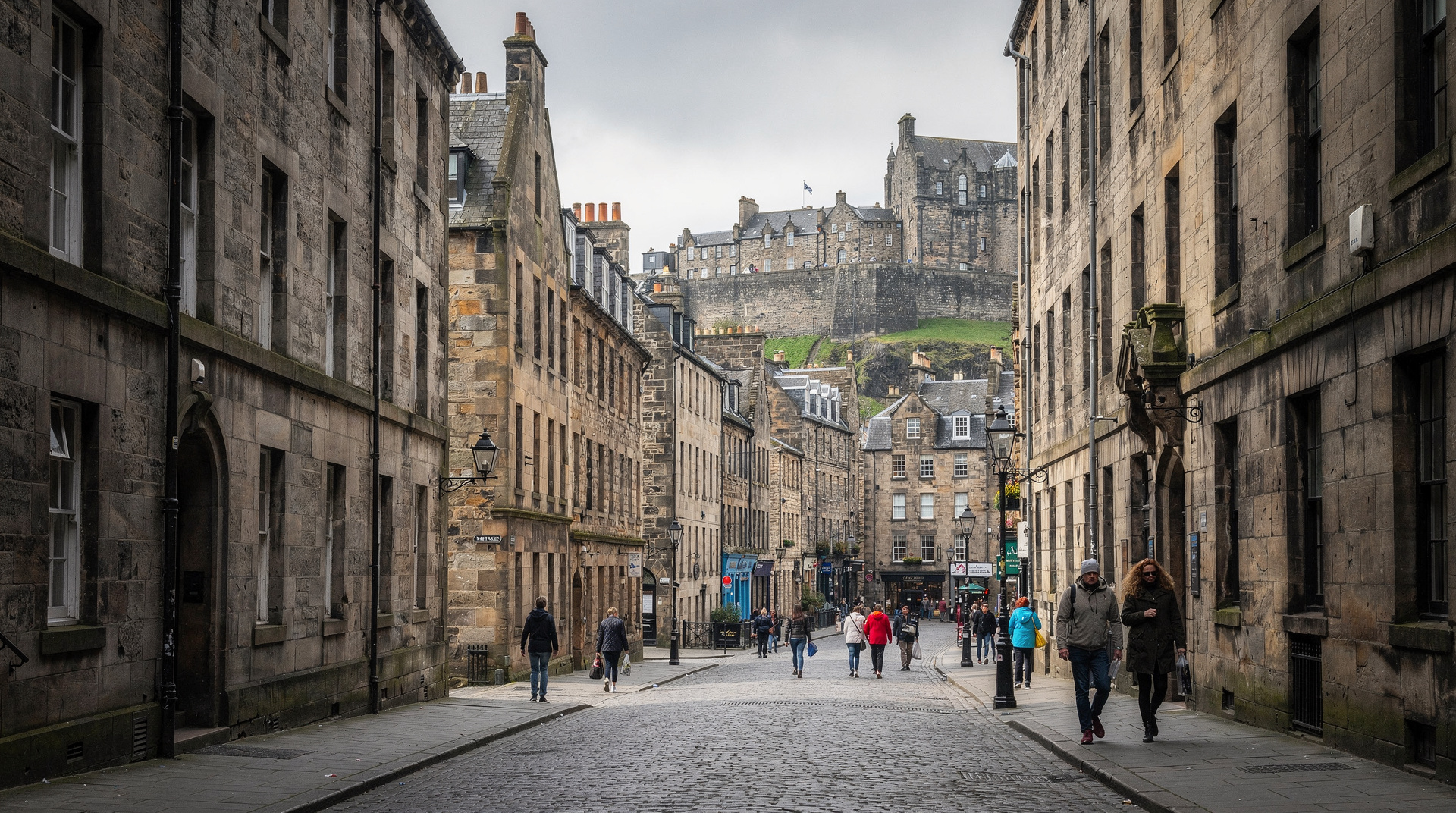
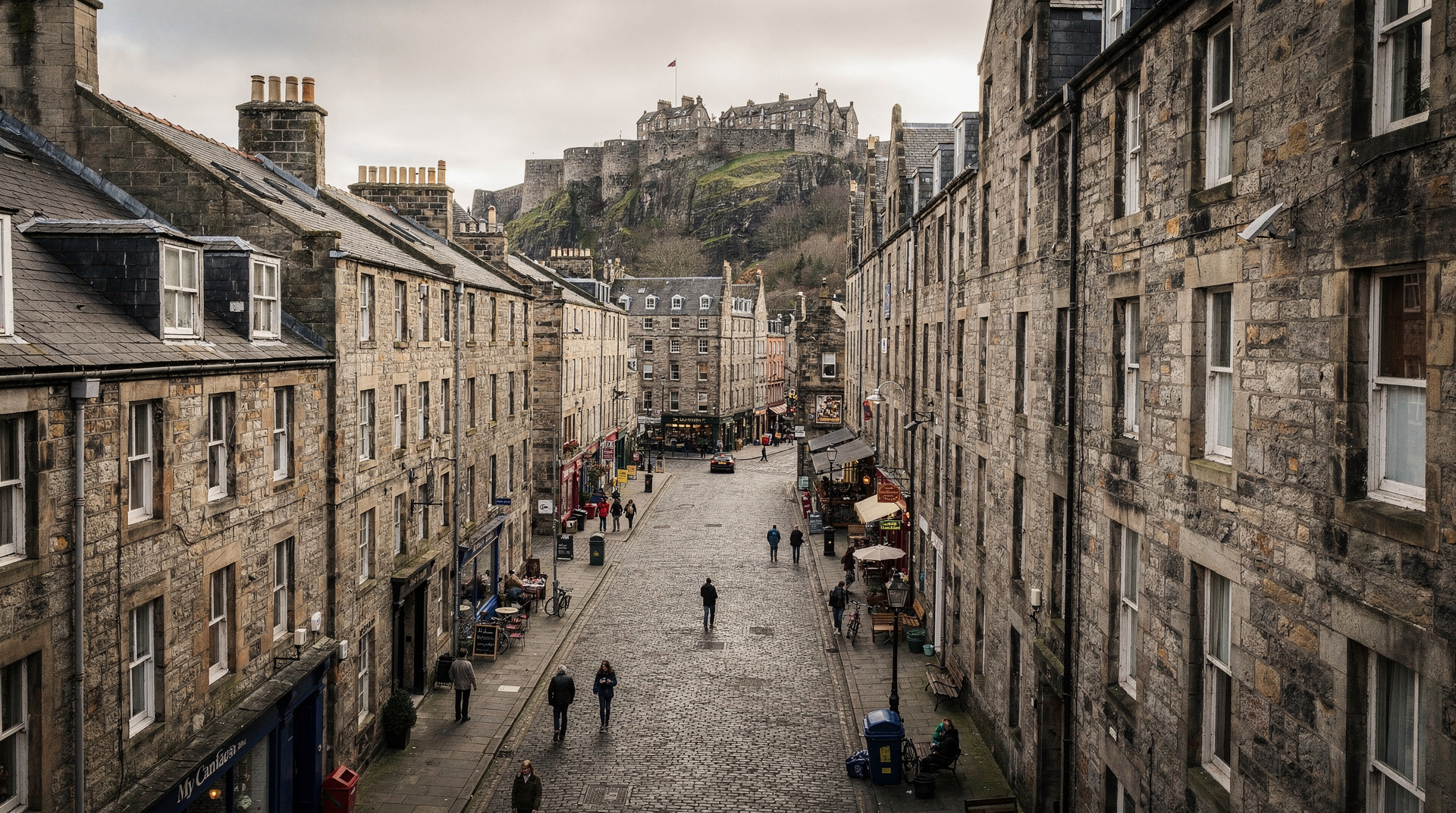
The Royal Mile is not actually one mile long — it measures 1.1 miles by the old Scots measurement — but “Royal Mile” has been the informal name for this chain of connected streets since at least the nineteenth century. Running from the esplanade of Edinburgh Castle at the top to the gates of the Palace of Holyroodhouse at the bottom, it passes through Castlehill, the Lawnmarket, the High Street, and Canongate in sequence, forming the spine of the medieval Old Town.
This is where the tourists come. On a summer Saturday in August, the Royal Mile is genuinely overwhelming — street performers, tour groups walking four abreast, and hundreds of souvenir shops selling the same tartans, whisky miniatures, and Nessie soft toys. But underneath the commercial layer, this is also one of the most historically significant streets in the world. The trick is knowing what to look for.
| Where | Castle Esplanade to Palace of Holyroodhouse, Old Town |
| Cost | free to walk; individual sights £8-£20 |
| Time needed | 20 minutes to walk, 2-3 hours to explore properly |
| Getting there | central Old Town, all Lothian Buses and trams stop nearby |
| Best time | before 9:30am for a quiet walk |
The upper Royal Mile: Castlehill and the Lawnmarket
Edinburgh Castle esplanade
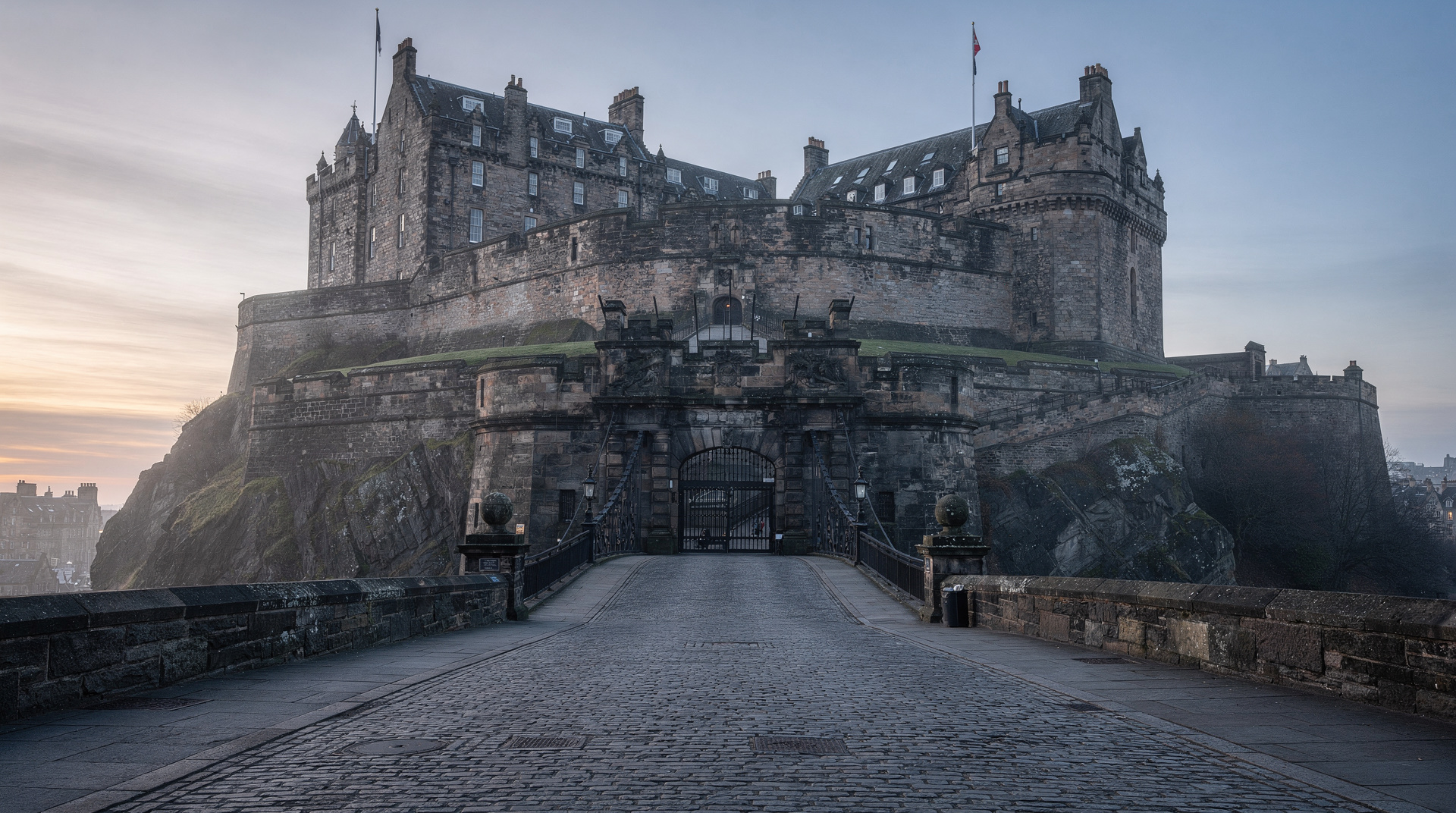
The cobbled esplanade at the top of the Mile is the official starting point — or ending point, depending on which direction you are walking. The views from here toward the New Town and the Firth of Forth give an immediate sense of the city’s geography. The esplanade itself is used for the Royal Edinburgh Military Tattoo during August; outside festival season it is freely accessible.
The Camera Obscura, which sits in a Victorian tower immediately to the right as you descend from the esplanade, is one of Edinburgh’s genuinely entertaining family attractions — see the Camera Obscura review before deciding whether to queue.
The closes and wynds
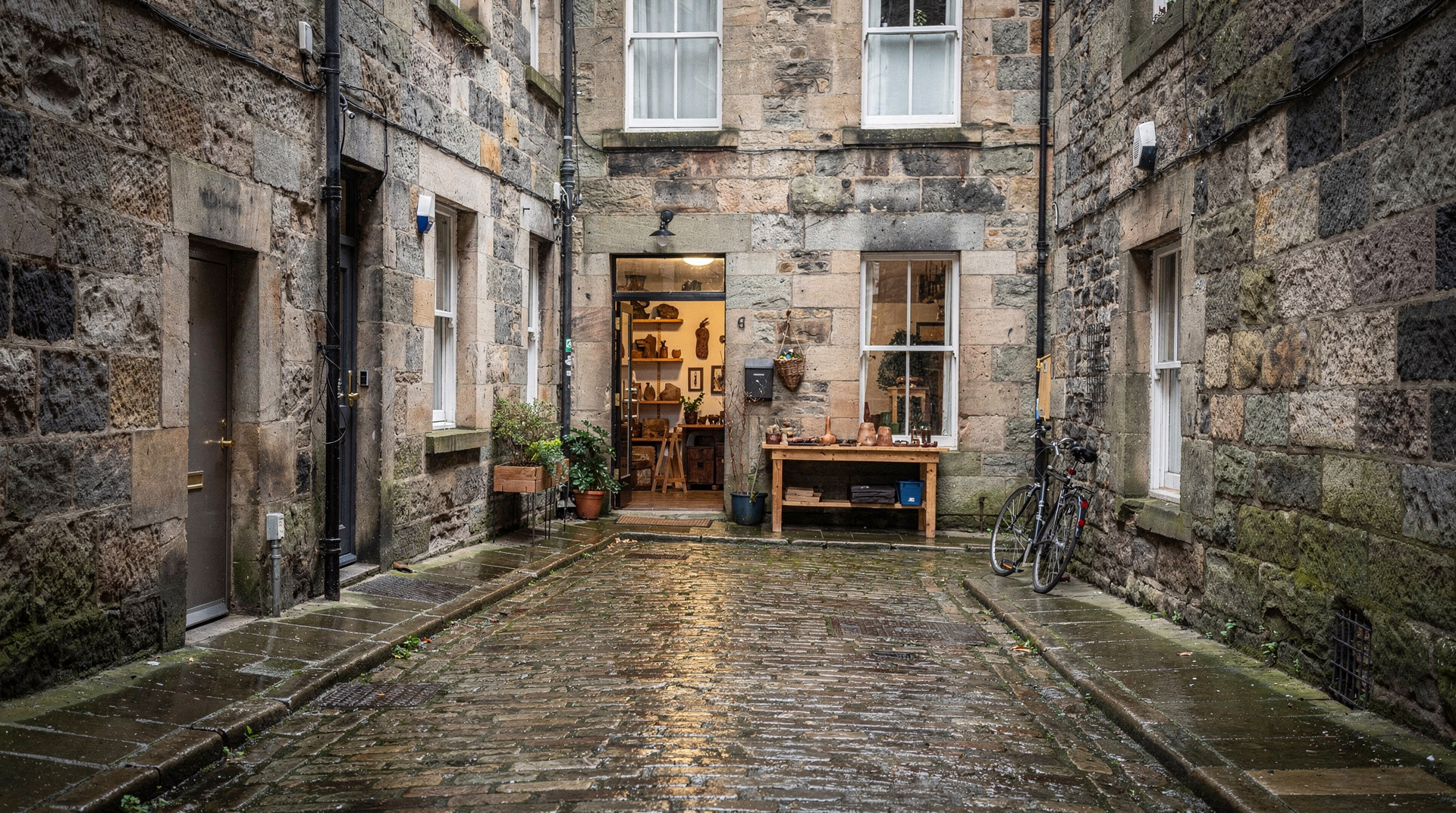
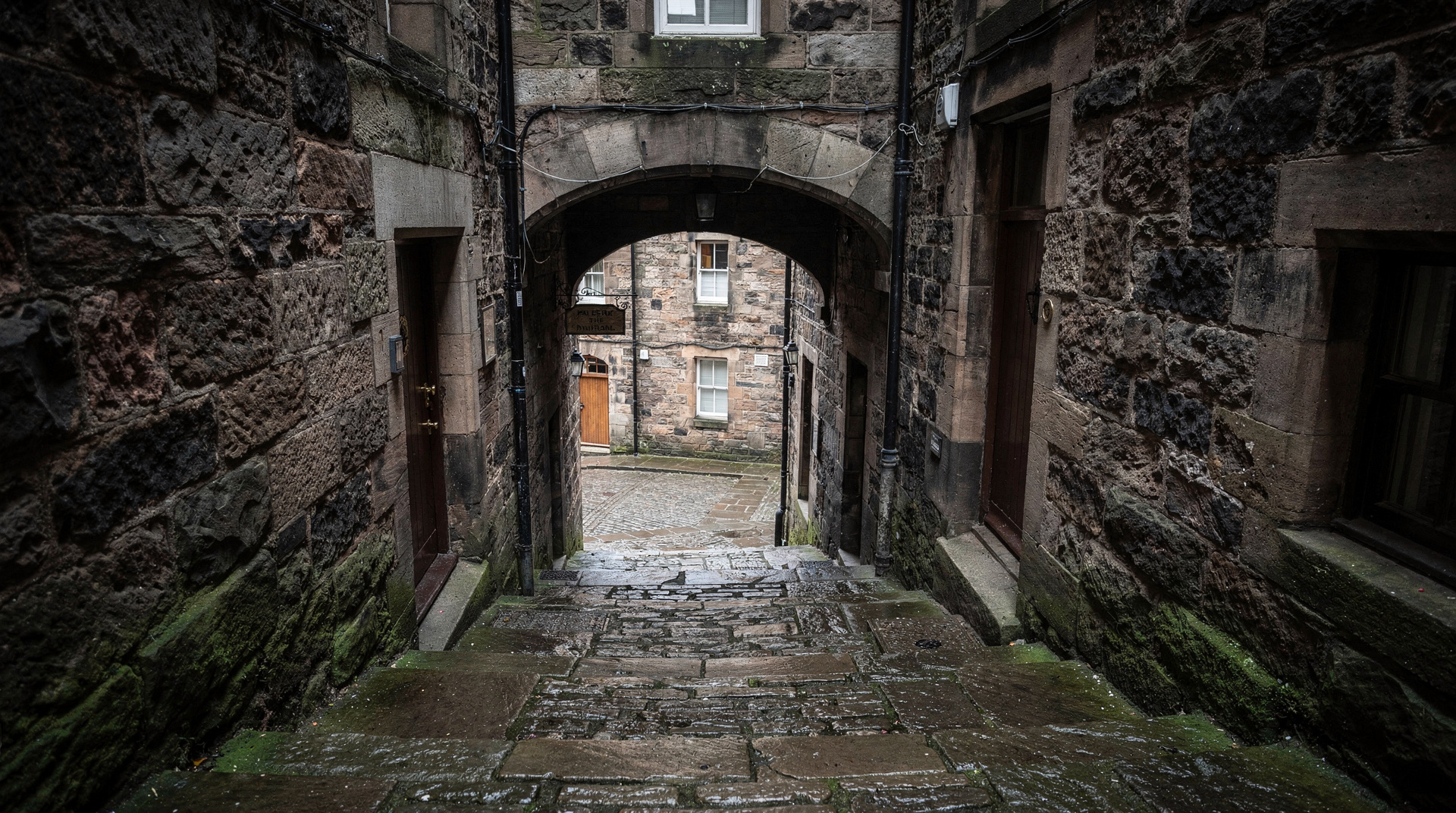
The most rewarding thing to explore on the Royal Mile is not the main street itself but the narrow alleys — called closes or wynds — that run off it at right angles, typically leading down steep steps to the lower streets of the Old Town. These were the daily environments of Edinburgh’s medieval population, many of which were crammed with tenement buildings ten or twelve storeys high in an era before lifts.
Brodie’s Close (just below the castle) is named after the original Deacon Brodie — the respectable city councillor who moonlighted as a burglar and inspired Robert Louis Stevenson’s Strange Case of Dr Jekyll and Mr Hyde. Riddle’s Court, further down the Lawnmarket, has a late sixteenth-century courtyard that is one of the best-preserved examples of Old Town domestic architecture. Lady Stair’s Close leads to the Writers’ Museum, which holds manuscripts and objects associated with Robert Burns, Sir Walter Scott, and Robert Louis Stevenson — and is free to enter.
Gladstone’s Land
At the Lawnmarket end of the Mile, Gladstone’s Land is a seventeenth-century merchant’s tenement building preserved by the National Trust for Scotland. The painted ceilings and period furnishings give the best sense available anywhere in Edinburgh of what life in the Old Town actually looked like in the 1600s. Entry is around £8 for adults; allow 45 minutes.
The heart of the Mile: St Giles’ Cathedral and Parliament Square
St Giles’ Cathedral
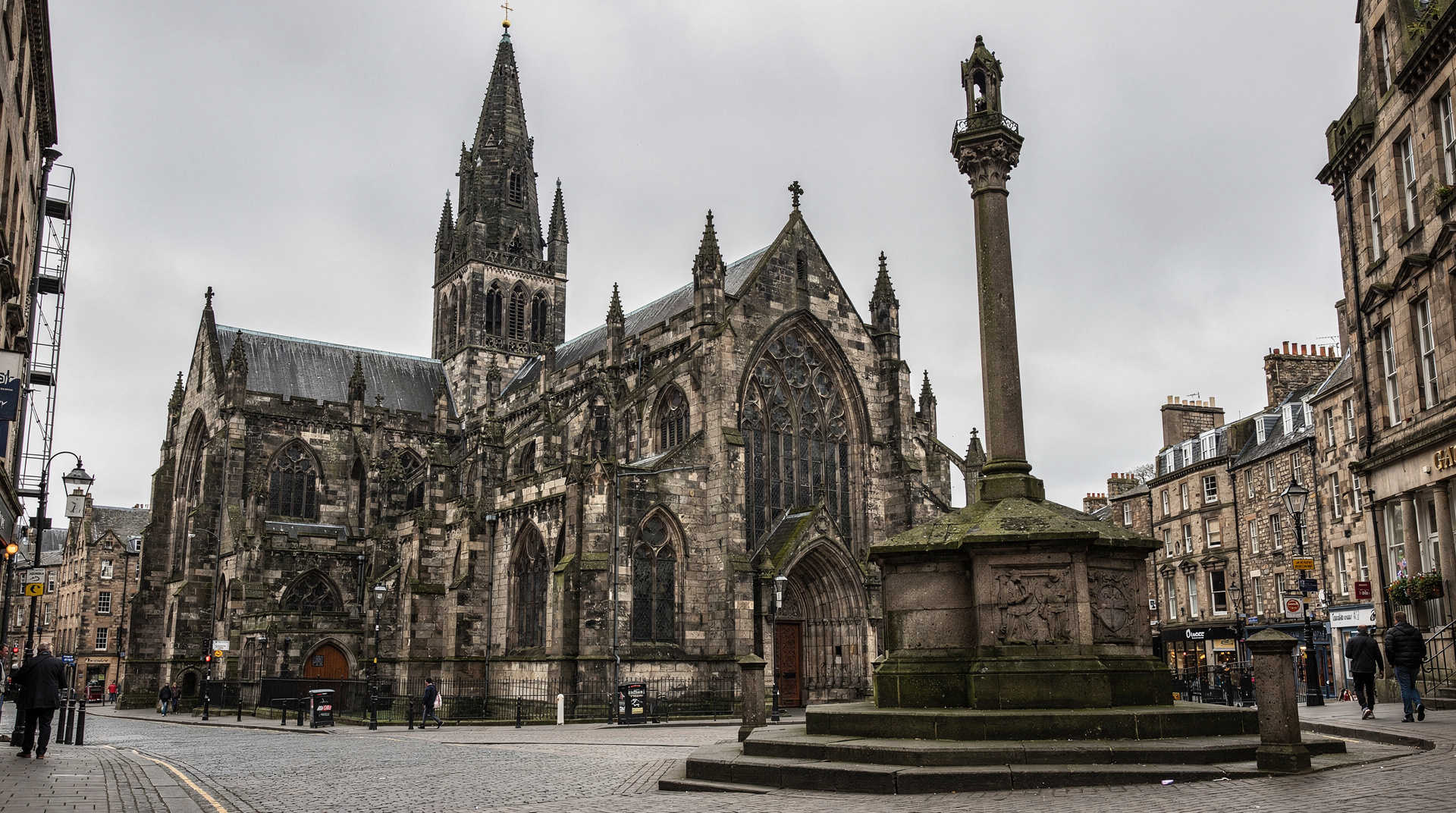
The High Kirk of Edinburgh is the most architecturally significant building on the Royal Mile, with a medieval crown spire that has defined the Old Town skyline for over five hundred years. Inside, the Thistle Chapel — added in 1911 and containing the stalls of the Knights of the Thistle, Scotland’s highest order of chivalry — is one of the finest examples of early twentieth-century decorative craftsmanship in Scotland. Entry to the cathedral is free, though a suggested donation is requested. See the St Giles’ Cathedral guide for what specifically to look for inside.
In Parliament Square outside the cathedral, look for the Heart of Midlothian — a heart-shaped mosaic of cobblestones that marks the entrance to the old Tolbooth prison. The local custom (and it is a real one, not a tourist invention) is to spit on the heart for luck. The Old Parliament House, accessible from Parliament Square, was the seat of the Scottish Parliament before the Acts of Union in 1707 and now serves as the Supreme Courts — visitors can sometimes observe court proceedings from the public gallery.
The Real Mary King’s Close
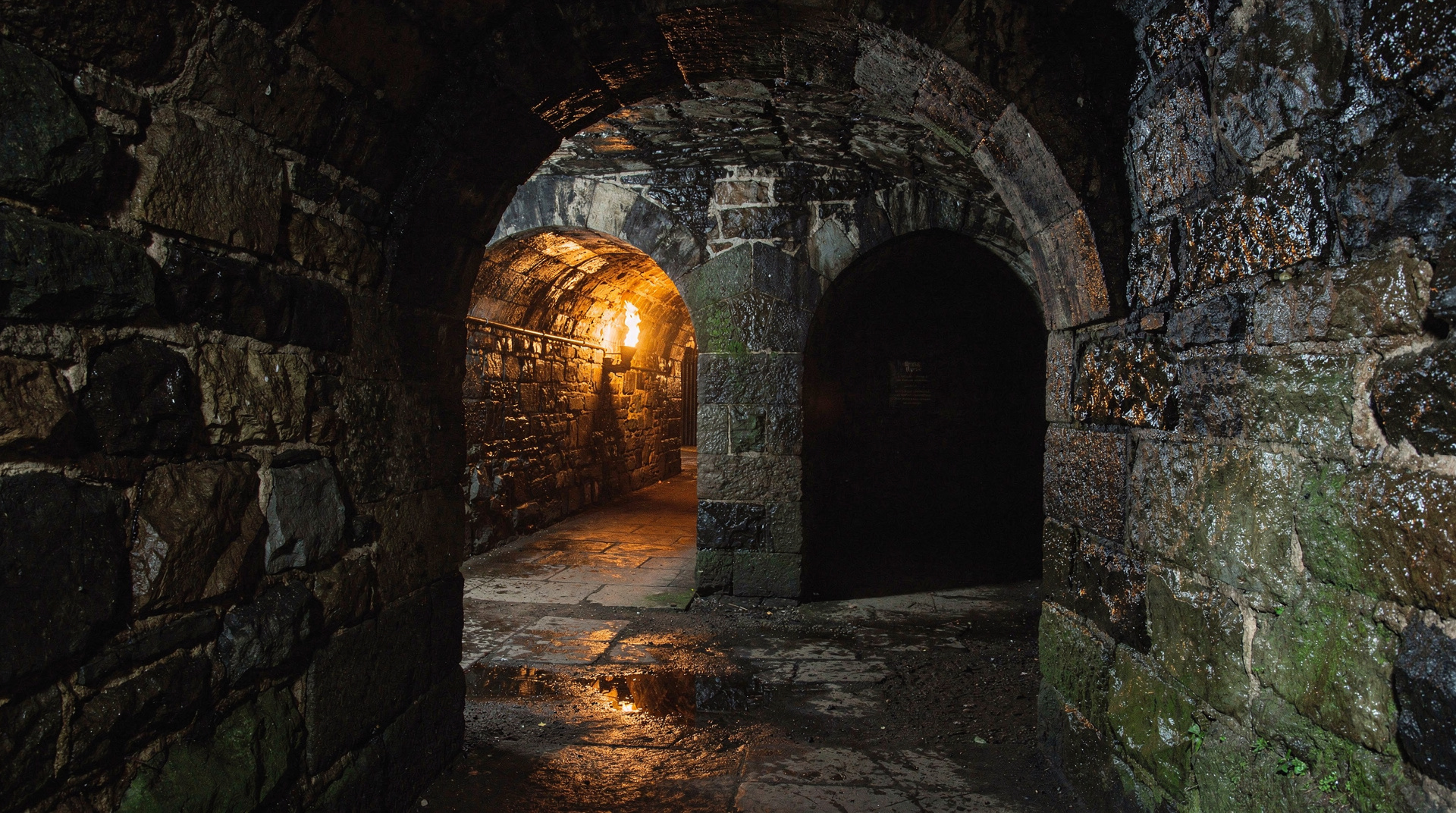
Just below St Giles’, a narrow entrance leads down into the buried street network beneath the Royal Mile. Real Mary King’s Close is a preserved section of the seventeenth-century closes that were built over rather than demolished when the Royal Exchange (now the City Chambers) was constructed in the 1750s. The guided tour takes about an hour and covers the history of plague, urban poverty, and the layered centuries of life underground. Book in advance — this is one of Edinburgh’s most popular attractions and tickets sell out, especially in summer.
The lower Royal Mile: Canongate
Canongate Kirk and graveyard
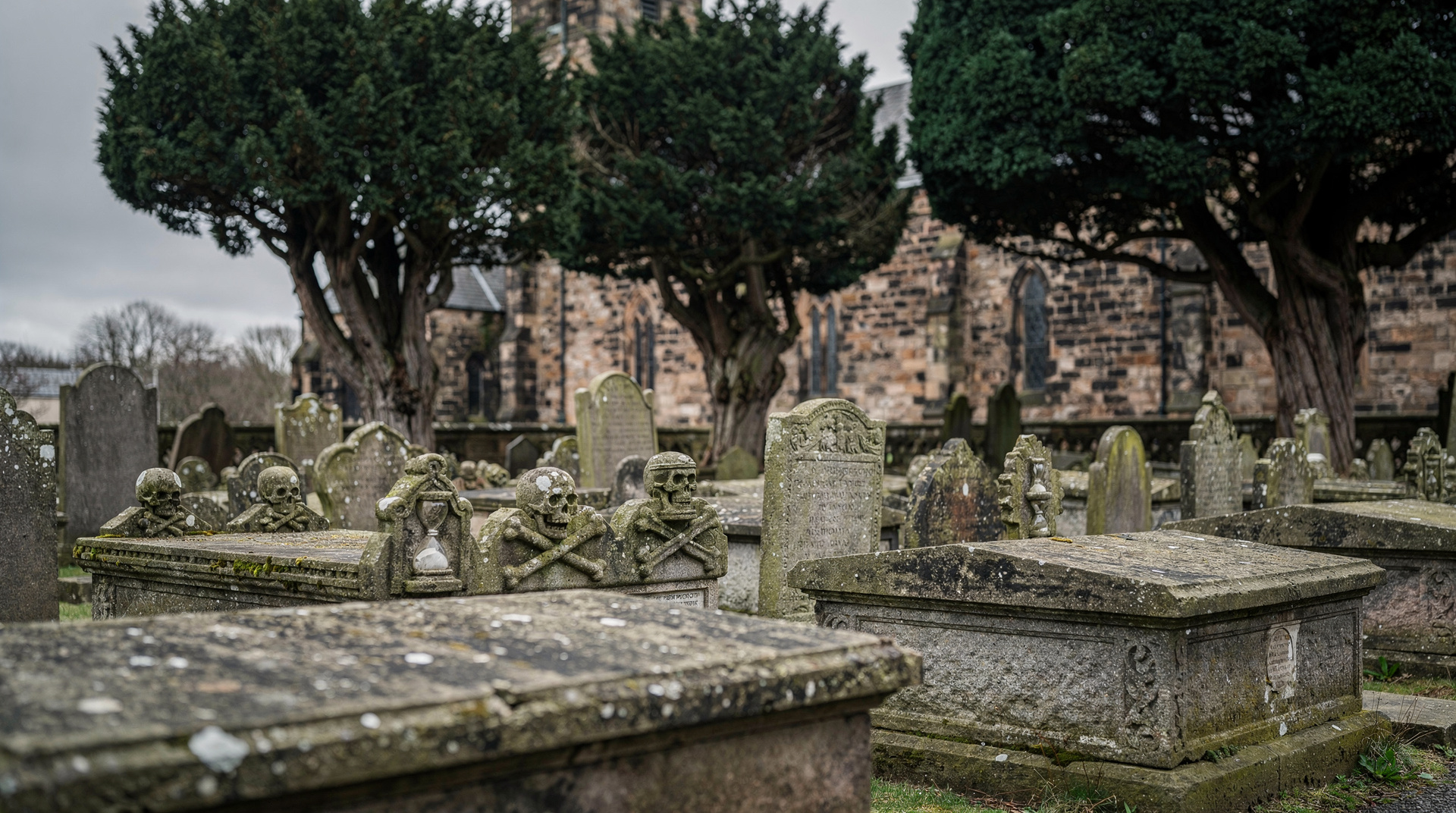
Halfway down Canongate, the Kirk is the parish church of the Palace of Holyroodhouse and the Queen’s official church when in Edinburgh. The graveyard holds the graves of Adam Smith (economist and author of The Wealth of Nations), Robert Fergusson (the poet who influenced Robert Burns and who died in poverty aged 24), and several prominent figures from Edinburgh’s Enlightenment. Free to enter.
The Museum of Edinburgh
At the foot of Canongate, the Museum of Edinburgh is a free local history museum housed in Huntly House, a sixteenth-century tenement. The collection is eclectic and genuinely absorbing — it includes the original National Covenant of 1638, Greyfriars Bobby’s collar, and a range of objects documenting Edinburgh’s social and industrial history. Often overlooked by tourists focused on the bigger-ticket attractions.
The Palace of Holyroodhouse
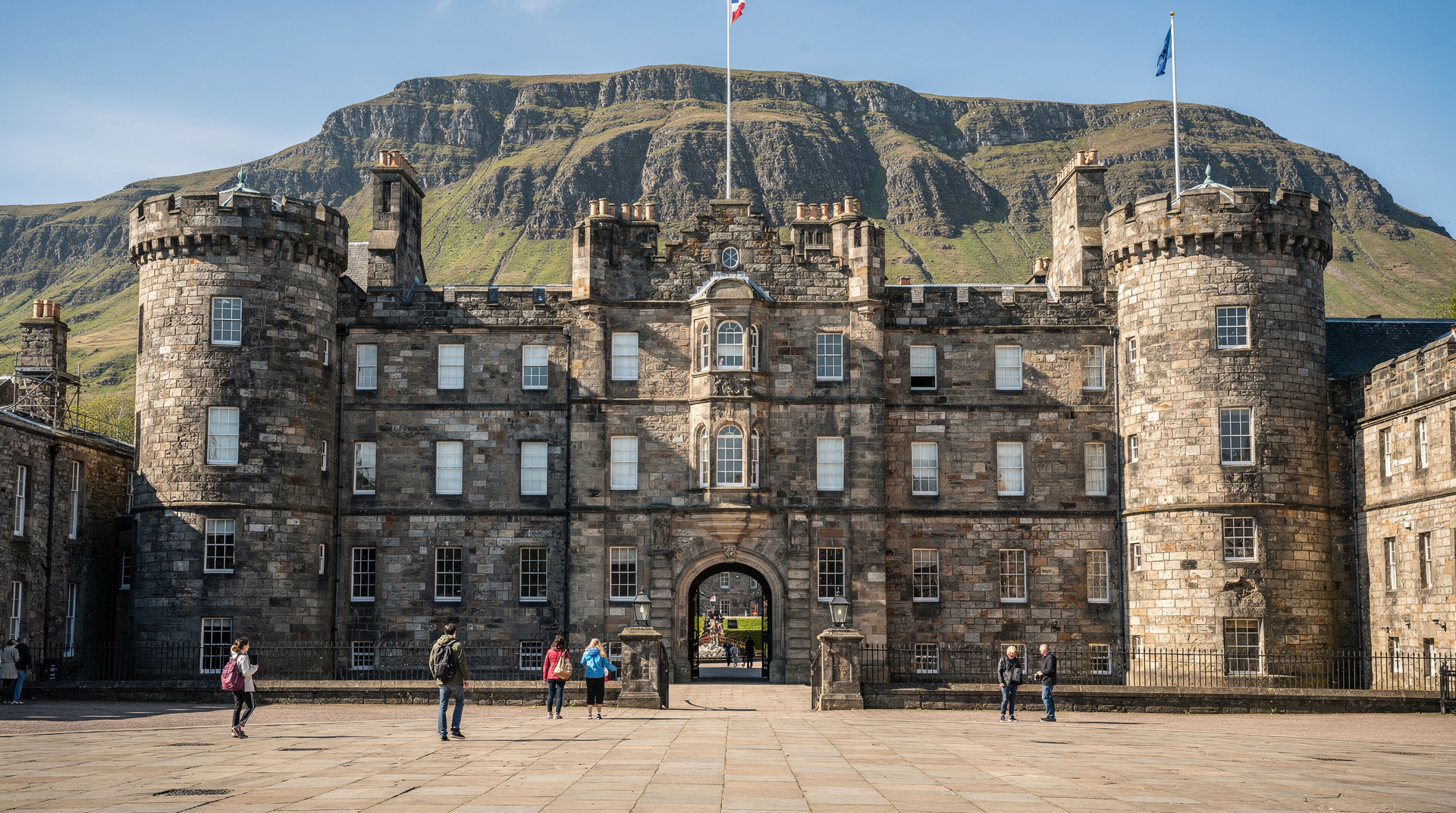
The Royal Mile ends at the Palace of Holyroodhouse, the official Scottish residence of the monarch. The palace is open to visitors when the Royal Family is not in residence (check the calendar before visiting). The historic apartments associated with Mary Queen of Scots — including the small chamber where her secretary David Rizzio was stabbed in front of her in 1566 — are the centrepiece of any visit. See the Palace of Holyroodhouse guide for full details on what to see and how to book.
The honest guide to tourist traps on the Royal Mile
The Royal Mile has more souvenir shops per square metre than almost any street in Britain. Most of them sell identical merchandise at identical prices — tartan scarves made in China, whisky miniatures with branded labels, Nessie toys, and “genuine Scottish” cashmere that is rarely genuine and often not Scottish. The Royal Mile shopping guide covers how to identify the real thing.
The restaurants along the Royal Mile proper — the ones with menus mounted outside and tartan signage — are, almost without exception, overpriced and underwhelming. The food is not bad; it is simply not worth £20 for a bowl of Cullen skink that a pub three streets away would serve for £12. For genuine Edinburgh eating, walk to the Grassmarket, cut through to the Cowgate, or take the 20-minute walk down to Leith. The where to eat in Edinburgh guide covers the actual good options.
Ghost tours depart from multiple points along the Mile every evening. Quality varies enormously. The best ghost tours Edinburgh guide reviews the operators honestly.
Getting the most out of a walking tour
A good walking tour of the Royal Mile will show you things you would miss entirely on your own — the architectural details, the inscriptions above doorways, the historical connections between buildings that look unrelated. A secrets of the Royal Mile walking tour covers the lesser-known stories and hidden details that most visitors walk past. The Royal Mile Old Town walking tour is the standard overview and is well-reviewed for general visitors.
For visitors whose primary interest is the darker chapters of Edinburgh’s history — plague, public execution, body-snatching — the dark history Canongate walking tour covers that material specifically. And if you have already booked an Edinburgh Castle ticket and want to combine it with a walk down the Mile, the castle and Royal Mile combo tour is the most efficient use of a morning.
The Royal Mile is usually told as a medieval street, yet its most consequential century was the eighteenth, when Hume and Smith were writing a few closes apart: a Royal Mile Scottish Enlightenment walking tour reads the same stones through that period instead.
Walking the Mile: practical information
The Royal Mile runs slightly downhill from the castle to Holyrood. Walking from top to bottom without stopping takes about 20 minutes; with stops at the key sights and closes, allow two to three hours. The cobblestones are uneven in places — comfortable walking shoes are essential. Accessibility on the main street is reasonable, but the closes and steps off it are typically inaccessible for wheelchairs.
Public toilets are available at Castlehill (near the Camera Obscura) and at various points along the street. The closest Lothian Buses stops are on Chambers Street (for the middle section) and at the bottom of the Mile near the Scottish Parliament.
For the best photography of the street, early mornings in spring and autumn are significantly better than midday in summer — the light is softer, the crowds are absent, and the atmospheric grey-stone character of the Old Town is at its most visible.
Victoria Street and the closes near the top
Just below Gladstone’s Land, Victoria Street curves away from the Lawnmarket down toward the Grassmarket — a row of colourful, independently owned shopfronts that is one of the most photographed streets in the city. Its curved, tiered design is widely cited as a possible visual influence on Diagon Alley in the Harry Potter films, and the Victoria Street Diagon Alley guide covers the connection and the shops worth a look. It is a useful detour if the Royal Mile itself feels too crowded, since the crowds thin noticeably once you step off the main thoroughfare.
A little further along, Greyfriars Kirkyard — home to the famous statue of Greyfriars Bobby and the reputed inspiration for several Harry Potter surnames on its gravestones — makes a natural pairing with a Royal Mile walk. The Greyfriars Kirkyard guide has the full history, including the darker Covenanters’ Prison stories that the standard walking tours often only touch on briefly.
The Royal Mile during festival season
Every August, the Royal Mile becomes the beating heart of the Edinburgh Festival Fringe: street performers claim pitches from early morning, flyering teams line both sides of the High Street, and the ordinary walk from castle to Holyrood can take three or four times as long simply because of the volume of people.
It is a genuinely exciting atmosphere if you have the patience for it, but a poor time to try to actually see the historic closes and courtyards in any depth — save that for a quieter morning and treat the August Mile as a separate, purely atmospheric experience. If your August trip also includes the Royal Edinburgh Military Tattoo, the castle end of the Mile is where the crowds are thickest in the evening as audiences arrive and disperse.
Connecting the Royal Mile to the rest of Edinburgh
The Royal Mile is most rewarding as part of a full Old Town day rather than a standalone visit. The Edinburgh Old Town history guide provides the deeper context for the street and its surroundings. The one-day Edinburgh itinerary uses the Mile as the main route of a first-timer day, anchored by the castle in the morning and Holyrood in the afternoon.
For visitors with more time, the two-day Edinburgh itinerary spreads the Mile’s sights across two calmer mornings rather than one rushed day. The common Edinburgh tourist mistakes guide also flags a few Royal Mile-specific pitfalls worth reading before you go.
Frequently asked questions about the Royal Mile
How long does it take to walk the Royal Mile?
The walk itself, without stops, takes about 20 minutes from the castle to Holyrood. With proper exploration — dipping into closes, visiting St Giles’, looking at the closes and courtyards — allow two to three hours for a thorough walk. A guided walking tour typically takes 90-120 minutes and covers the highlights more efficiently than self-guided exploration.
What are the best closes to explore off the Royal Mile?
Riddle’s Court for courtyard architecture, Brodie’s Close for the Jekyll-and-Hyde connection, Lady Stair’s Close for the free Writers’ Museum, and Bakehouse Close (near the foot of Canongate) for a more atmospheric, less-visited example. Many closes that look closed are actually public throughways — push the gate or door; most are not locked.
Where should I eat near the Royal Mile?
Not on the Royal Mile itself, where prices are high for tourist-focused menus. The Grassmarket (a five-minute walk south through Victoria Street) has more reliable options at lower prices. Cockburn Street, which runs between the High Street and Waverley station, has independent cafes and restaurants that are better value.
Is there a free way to experience the Royal Mile?
Most of the historic closes are free to explore. Canongate Kirk and graveyard are free. The Museum of Edinburgh is free. St Giles’ Cathedral charges £12 for visitors aged 16 and over (free for under-16s and Scottish residents). Writers’ Museum is free. The paid attractions — Real Mary King’s Close, Camera Obscura, Edinburgh Castle — are the exceptions rather than the rule.
What is the best time of day to visit?
Early morning, before 9:30am, is when the Royal Mile feels most like the historic street it actually is. Most tourists are still at breakfast; the closes are quiet; the light on the stone buildings is at its best. By 11am in summer it is busy; by 1pm it is genuinely crowded. If you are planning a full day on the Mile, start early.
Is the Royal Mile worth it if I’ve seen photos and it looks touristy?
Yes, but manage expectations for the main street itself, which genuinely is touristy — that part of the photos is accurate. What photos rarely capture is the network of closes and courtyards one step off the street, which retain the atmosphere the main thoroughfare has lost. Treat the paved street as the route between destinations rather than the destination itself.
Can I do the Royal Mile without a guided tour?
Yes, entirely — it is a public street and most of its highlights (the closes, Canongate Kirk, the Museum of Edinburgh) are free and self-explanatory with a map. A guided tour adds context and stories about specific buildings that are not obvious from the outside, which is the main reason to book one rather than a practical necessity.
Top experiences
Bookable activities with verified prices and instant confirmation on GetYourGuide.