Royal Edinburgh Military Tattoo guide
Edinburgh Castle: guided walking tour with entry ticket
When is the Royal Edinburgh Military Tattoo and how do I get tickets?
The Tattoo performs on the Edinburgh Castle Esplanade throughout August (same dates as the Fringe). Shows run Monday to Friday at 21:00 and twice on Saturdays at 19:30 and 22:00. Tickets go on sale in December for the following year via edintattoo.co.uk. Popular sections sell out quickly; book 6-12 months ahead.
The Tattoo: is it worth the fuss?
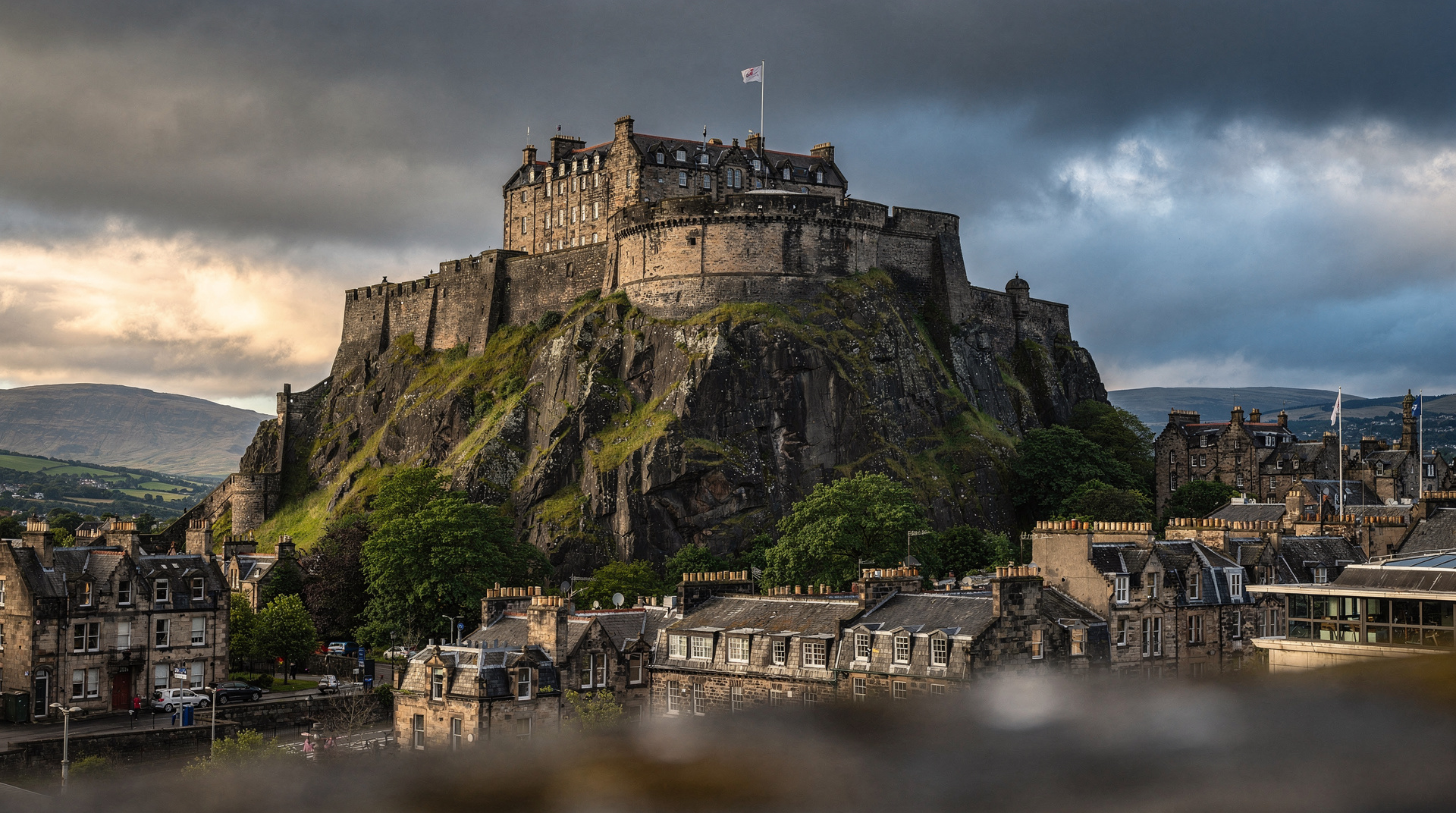
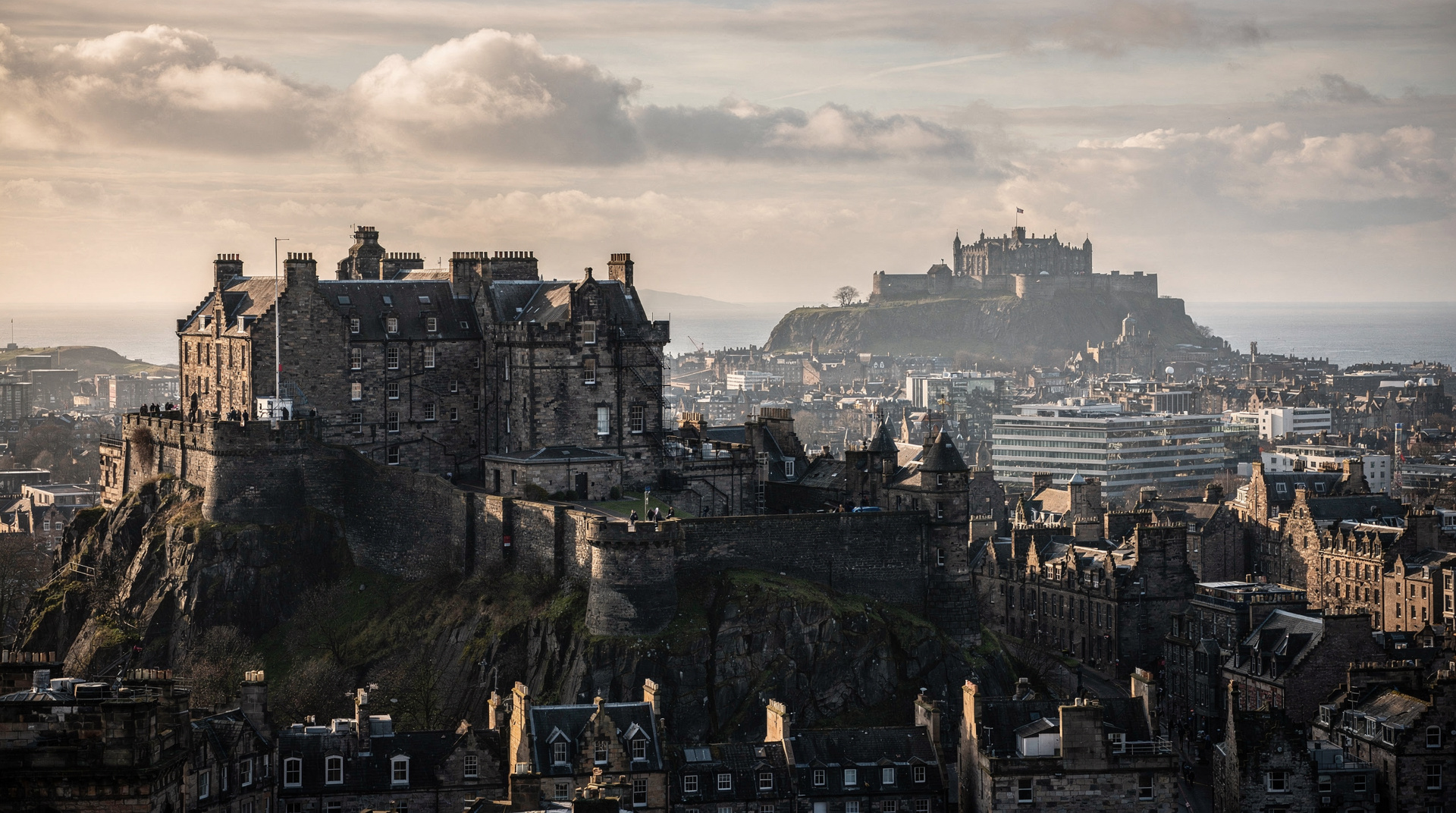
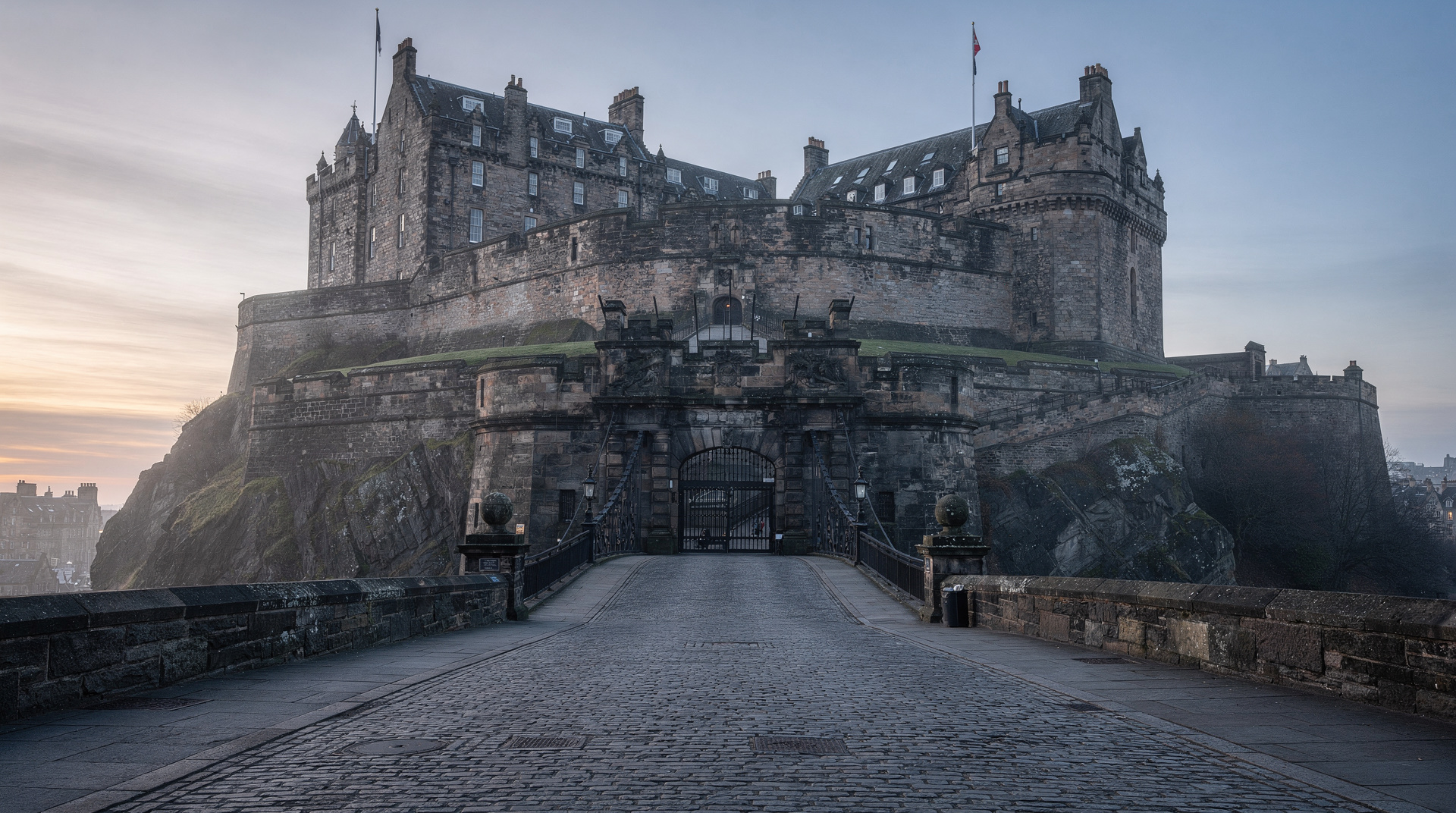
The Royal Edinburgh Military Tattoo is one of the most spectacular outdoor events in the world. This is not marketing copy — it is an honest assessment shared by most of the 200,000 people who see it each year, regardless of whether they came expecting to enjoy military pageantry or not. The show takes place on the Edinburgh Castle Esplanade, which means the castle rock rises directly behind the performers, lit against the August night sky, and the atmosphere is genuinely extraordinary.
The word “tattoo” here derives from the seventeenth-century Dutch phrase “doe den tap toe” — roughly “turn off the taps,” meaning close the beer taps and return to barracks. The Edinburgh Tattoo has its roots in the same tradition: a signal that the evening’s military duties are over. The modern show bears almost no resemblance to this origin; it is an elaborate spectacle of massed bands, international guest performers, pipes and drums, acrobatics, and theatrical lighting that runs for about 90 minutes without an interval.
| Where | Edinburgh Castle Esplanade, top of the Royal Mile |
| Cost | around £28 (Garrison) to £120 (Premium West Stand) |
| Time needed | about 90 minutes, plus 60 minutes pre-show arrival |
| Getting there | 15-minute walk from Waverley Station and Princes Street |
| Best time to book | tickets released each December for the following August |
What actually happens during the show
The Tattoo follows a roughly consistent structure that has evolved over its seventy-plus year history:
Massed Pipes and Drums open the show, with multiple Scottish pipe bands marching in formation. The sound of several hundred pipers playing simultaneously on an exposed esplanade backed by a floodlit castle is what most people describe as the moment they understood what the Tattoo is about.
International performers from armed forces and cultural groups around the world make up the middle section of the show. In past years performers have come from New Zealand (the Maori Haka is a regular highlight), India, the United States, Australia, Canada, China, and across Europe. The international content varies each year.
A narrative or themed section ties the show together thematically — recent years have had themes including Scotland’s Year of Coasts and Waters, the NHS centenary, and celebrations of Scottish cultural traditions.
The lone piper is the emotional centrepiece of the entire evening. A single piper appears high on the castle battlements, lit in a single spotlight against the dark sky, and plays a lament. The esplanade falls completely silent. This moment, more than any other, explains why people who attend the Tattoo describe it as genuinely moving regardless of their prior relationship with Scottish culture or military tradition.
Fireworks bring the show to its conclusion, with the castle as the backdrop.
Tickets: how to buy and what to choose
Tickets for the 2026 Tattoo go on sale in December 2025 via the official website (edintattoo.co.uk). The most popular sections — central covered seating in the West Stand, and the Premium seating with the best views — sell out within days of going on sale. Do not wait.
Seating sections:
The esplanade is divided into several stands. The key distinction for most visitors is between covered and uncovered seating and between the various viewing angles.
- West Stand (covered): The premium choice for most visitors. Covered against rain (which matters in August Scotland), central viewing angle, and the best seats in terms of sight lines to the performance area. These go first.
- East Stand (partly covered): Slightly oblique angle, but a good viewing experience at a lower price point.
- North Stand (covered): Side-on view of the performance area, less ideal for watching the formations but still spectacular for the castle backdrop.
- Garrison (uncovered): The cheapest tickets and the exposed end of the esplanade. Fine in good weather, uncomfortable in rain. Ponchos are available but sitting in cold August rain for 90 minutes tests commitment.
Prices in 2026 run from approximately £28 for Garrison tickets to £80-£120 for Premium West Stand seats. Family tickets provide modest savings.
| Stand | Cover | View | Approx. price |
|---|---|---|---|
| West Stand | Covered | Central, best sight lines | around £80-£120 |
| East Stand | Partly covered | Slightly oblique angle | around £50-£75 |
| North Stand | Covered | Side-on to the performance | around £45-£65 |
| Garrison | Uncovered | Exposed end of the esplanade | around £28-£40 |
For a first Tattoo visit, the West or East Stand is the safer choice — the Garrison’s savings can be undone by a wet, cold 90 minutes if the weather turns, which in Edinburgh in August is a real possibility. Check the Edinburgh weather guide if you are weighing up how much risk the uncovered seats carry.
A practical note on the show time: The standard Monday-Friday show begins at 21:00 and ends after 22:30. The Saturday shows are at 19:30 and 22:00. August evenings are long (sunset at around 21:15 in early August, falling to 20:30 by the end of the month), so the opening of the show — which works best in darkness — improves as August progresses.
What to wear and bring
The Castle Esplanade is exposed. Even in August, Edinburgh nights can be cold and wet. This is not a concern to be minimised: the experience of sitting in cold rain in inadequate clothing for 90 minutes ranges from miserable to memorable, and not in the good way.
Pack: a warm layer (a fleece or light down jacket), a waterproof top layer, and something to sit on (a small cushion improves the experience on the hard seating). The Tattoo’s atmosphere is helped by arriving in good spirits and the weather contributes significantly to mood.
The Tattoo provides ponchos for sale if rain develops. They are better than nothing but an actual waterproof is better.
Getting to and from the Esplanade
The Castle Esplanade is at the top of the Royal Mile, about a 15-minute walk from Waverley Station and Princes Street. It is not accessible by vehicle (other than for registered disabled visitors with pre-booked spaces). Walk from your accommodation or take the Lothian Buses or tram to the city centre and walk up.
After the show, the Old Town streets fill quickly with approximately 8,800 audience members dispersing simultaneously. The main routes down the Royal Mile and via the Lawnmarket become congested. Having dinner plans or a late drink planned nearby (rather than trying to get a taxi immediately) makes the post-show dispersal much less stressful. The pubs on the Grassmarket, a short walk downhill, are a good option, and the Edinburgh pub crawl guide covers the wider Old Town options if you want to make a longer evening of it.
Public transport (Lothian Buses and the tram) keeps running late through August to handle the post-Tattoo and post-Fringe crowds, and is generally a more predictable option than hailing a taxi in the immediate post-show crush. See the Edinburgh trams and buses guide for routes and night-time frequency.
Combining the Tattoo with Edinburgh’s August programme
The Tattoo takes place during the same weeks as the Edinburgh Festival Fringe. A standard August Edinburgh festival trip might combine:
- Daytime Fringe shows (afternoon slots are plentiful)
- Dinner in the Old Town or Grassmarket area
- Royal Edinburgh Military Tattoo in the evening (21:00)
- Late-night Fringe comedy shows (midnight slots at Gilded Balloon and others)
This is a genuinely good day out but requires stamina. The Fringe guide (Edinburgh Festival Fringe guide) covers the daytime programme.
For visitors who come to Edinburgh specifically for the Tattoo and not the Fringe, the August atmosphere pervades the entire city regardless — street performers, outdoor events, and the general festival energy are inescapable. See the August in Edinburgh survival guide for accommodation strategy and managing August crowds.
An Edinburgh Castle guided tour during the day before a Tattoo evening show makes excellent use of August in Edinburgh: seeing the Esplanade where the Tattoo performs, in daylight, gives a useful scale reference for the evening’s spectacle.
Solo visitors and first-time Scotland travellers
The Tattoo works well as a solo experience — many single tickets are sold, and the atmosphere is communal rather than couples- or group-oriented; strangers in adjacent seats routinely end up chatting during the pre-show wait. For a first-time visitor to Scotland, it also functions as a fast, condensed introduction to several strands of Scottish identity at once: the pipe and drum tradition, the castle as a national symbol, and the country’s history of military service, all compressed into 90 minutes on a single dramatic stage.
Combined with a walk down the Royal Mile beforehand and a stop in Old Town pubs afterwards, it gives a newcomer a strong first impression of the city that a purely daytime itinerary would not.
Frequently asked questions about the Royal Edinburgh Military Tattoo
When do Tattoo tickets go on sale?
Tickets for the following year’s Tattoo go on sale in December. The official website (edintattoo.co.uk) opens the box office and most popular sections sell out within 48-72 hours. If you want covered seating at a reasonable price, set a calendar reminder for the December sale opening.
What happens if it rains during the Tattoo?
The show goes on. The Tattoo has been performed in virtually every August weather condition including heavy rain and blustery wind. Covered seating keeps most of the audience dry; uncovered seats do not. The production team is experienced with wet conditions and the lighting, sound, and the performance itself are not significantly affected by rain. Audiences in covered sections who have dressed appropriately generally enjoy rain performances — there is something about the Scottish setting and the commitment of the performers that makes wet weather feel appropriate.
Is the Tattoo suitable for children?
Yes, from about age 5 upward. The show is visually spectacular, the noise levels are high (particularly during the massed pipes and the fireworks), and younger children may find the length and the late evening timing challenging. The Saturday 19:30 show is typically recommended for families as it ends earlier. Check the official website for family ticket pricing.
Is the Tattoo wheelchair accessible?
Yes, with pre-booked accessible seating. Contact the Tattoo box office directly when booking to request accessible positions. The Esplanade is cobbled and uneven; designated accessible viewing areas have better surfaces. Disabled blue badge parking is available on a pre-booking basis.
How early should I arrive at the Esplanade for the Tattoo?
Doors open approximately 90 minutes before the performance. Arriving 60 minutes early allows time to find your seat, buy a programme, and settle without rushing. The pre-show atmosphere on the Esplanade is part of the experience — pipes and drums warm up, the castle is lit, and the crowd settles in. Arriving at the last minute means missing this, and the seating can take longer to navigate than expected.
Are there other shows during August if I cannot get Tattoo tickets?
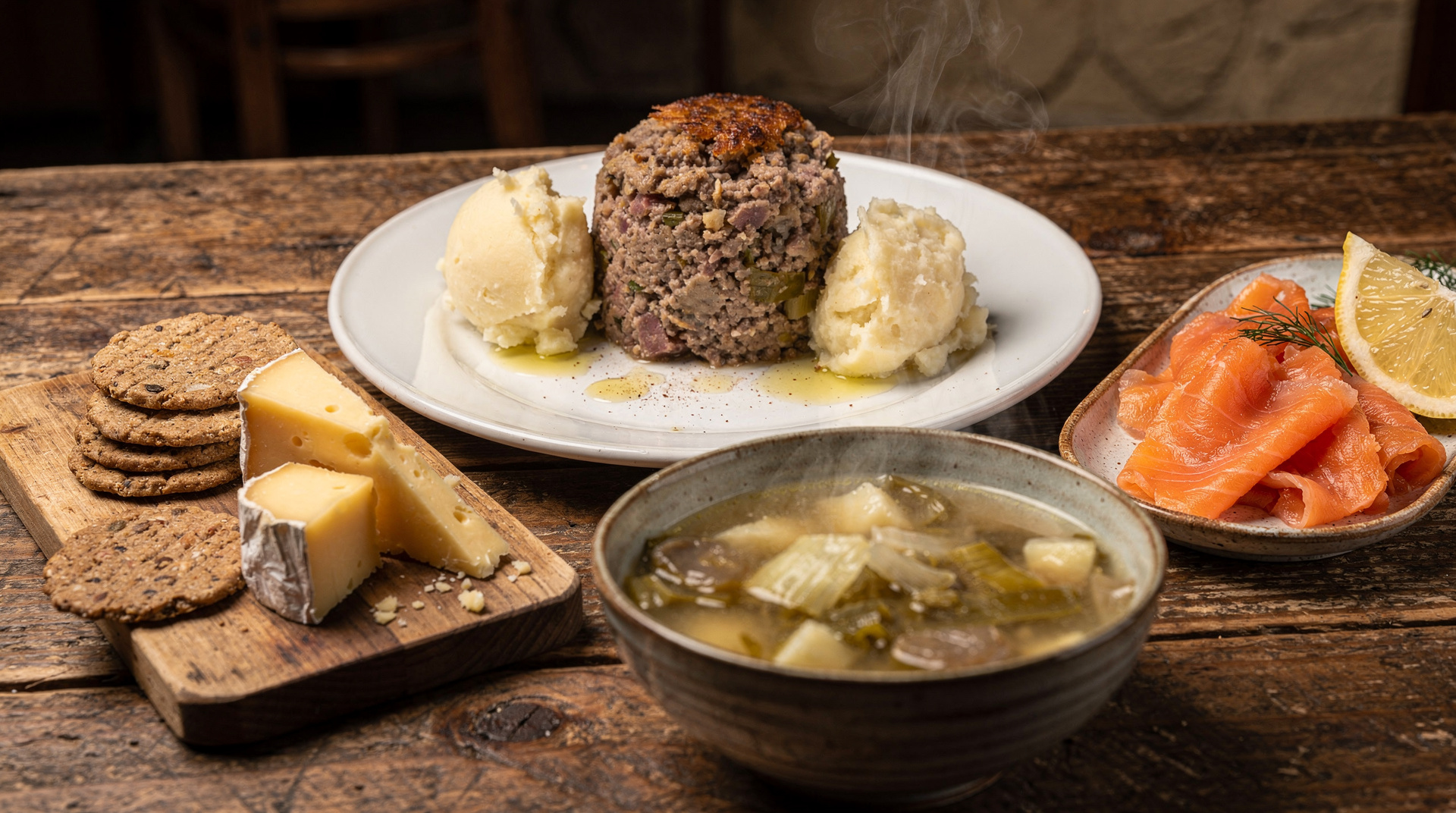
The Fringe has 3,500+ shows throughout August. The Edinburgh International Festival offers classical music and theatre at the highest level. For Scottish cultural evening entertainment year-round (not just August), the folk and haggis Scottish dinner and folk music evening provides an excellent alternative that can be booked at much shorter notice than the Tattoo.
Which stand should I choose if I’ve never been before?
The West Stand is the safest first-timer choice: covered, central, and with the best sight lines to the performance area. It is also the most expensive and sells out fastest. If budget is a concern, the East Stand offers a good compromise between price and view; reserve the uncovered Garrison seats for visitors confident about the weather or attending later in August when rain risk (while never zero) is marginally lower on average.
Can I get a refund or exchange if I can no longer attend?
Tattoo tickets are generally non-refundable, though the official box office sometimes allows date exchanges subject to availability, for a fee. Check the terms at the time of booking and consider event insurance if your travel dates are uncertain months in advance.
The history of the Tattoo
The Royal Edinburgh Military Tattoo has been staged on the Castle Esplanade every August since 1950, though its roots go deeper. The word “tattoo” in this military sense derives from the seventeenth-century Dutch warning signal “doe den tap toe” — literally “turn off the tap,” meaning close the pub taps and return soldiers to barracks for the night. By the eighteenth century the British Army had adapted this into an evening ceremony involving buglers or drummers marching through a garrison town.
The Edinburgh Tattoo emerged from the post-war context: a city recovering from wartime, a new arts festival (the Edinburgh International Festival had launched in 1947), and an awareness that the Castle Esplanade was an unrivalled dramatic stage. The first modern Tattoo was performed on 22 August 1950 with 6,000 spectators. It was a modest affair compared to today’s scale but established the core elements: massed pipes and drums, the castle backdrop, and the lone piper at the close.
Since 1950 the Tattoo has been performed every August without interruption except for 2020 and 2021 (COVID). It has toured internationally — performing in Australia, New Zealand, Canada, and Hong Kong — and has been broadcast on television worldwide. The annual audience at the live event is around 220,000 over the month, with television audiences in the hundreds of millions.
The pipes and drums: what you are hearing
The massed pipe bands are the sonic heart of the Tattoo. Most visitors, unless they are Scottish or deeply familiar with Highland culture, encounter the sound of massed pipes at full volume for the first time here. The experience is physical as much as musical — the volume fills the esplanade at a level that is genuinely surprising, and the organised chaos of a pipe band in full march, where individual pipes are weaving in and out of melody, produces a sound texture that has no equivalent in any other musical tradition.
The Great Highland Bagpipe is a relatively recent instrument in historical terms — the form that dominates the Tattoo emerged in roughly its present state in the nineteenth century, developed for military use. The smaller Scottish smallpipe, used in chamber and folk music, is older. The Tattoo has introduced occasional smallpipe and border pipe performances in recent years for visitors curious about the instrument’s diversity.
The drums — particularly the bass drums that anchor the pipe band rhythm — deserve specific attention. The visual spectacle of a corps of drummers in precise formation, combined with the physical impact of bass drum beats at close range, is part of what makes the massed pipe band performance so viscerally effective.
Visiting Edinburgh Castle the morning of the Tattoo
An Edinburgh Castle guided walking tour with entry in the morning of a Tattoo evening provides an ideal complement to the evening performance. Seeing the esplanade in daylight — where the seats are set up, where the lone piper’s battlements are — gives a spatial understanding of the evening’s spectacle that significantly enhances the experience. The castle’s own military history (the One O’Clock Gun, the National War Museum, the Honours of Scotland) provides context for the martial tradition the Tattoo celebrates.
Booking a morning castle tour for the same day as an evening Tattoo is a common strategy among experienced Edinburgh visitors and one that is well worth the planning.
The Tattoo and Scottish culture
Critics of the Tattoo sometimes argue that it presents a romanticised and militarised version of Scottish culture — tartan, pipes, and martial display — that ignores the complexity and diversity of modern Scotland. This is a legitimate observation. The Tattoo is not a comprehensive portrait of Scottish culture; it is a celebration of a specific tradition within that culture, one with deep roots in Highland military service and the Romantic-era revival of Highland identity.
Held on that understanding, the Tattoo is honest about what it is: a spectacular celebration of pipes, drums, and military precision, set against one of the most dramatic backdrops in the world. It does not claim to be more than that. For visitors who engage with it on those terms, it is close to unmatchable as a live experience.
The international dimension: guest performers
The Royal Edinburgh Military Tattoo has hosted guest performers from over 50 countries since 1950. This international dimension is one of the Tattoo’s defining characteristics — alongside the Scottish pipe and drum tradition that forms its core, each year brings performers whose cultural context is entirely different.
The New Zealand contingent, including Haka performers from the New Zealand Army, has been a regular Tattoo highlight for decades. The contrast between the controlled precision of Scottish pipe bands and the fierce intensity of the Haka — performed at maximum intensity, close up, on the castle esplanade — is one of those Tattoo moments that audiences describe long afterwards.
Indian Army bands, Chinese dragon performers, Australian mounted cavalry, Swiss gymnasts, Norwegian royal guards, American drum corps: the Tattoo has presented all of these and more in recent years. The international programme changes each year and is announced with the full Tattoo schedule in spring.
For visitors from countries that have previously performed at the Tattoo, seeing their own nation’s military or cultural performers in the Edinburgh Castle setting has a particular emotional dimension. The Tattoo’s website archives past performances, and checking whether your country’s performers have featured in recent years (or are included in the coming year’s programme) adds a personal angle to the experience.
Planning the perfect Tattoo day
A Tattoo day in Edinburgh works best when you treat the performance as the evening centrepiece around which the rest of the day is structured:
Morning: Visit Edinburgh Castle to see the Esplanade in daylight (where the evening’s performance will take place), understand the castle’s history, and see the Crown Jewels. This makes the evening performance considerably more meaningful — you understand the space and its history.
Afternoon: The Royal Mile walk from the castle to Holyrood, exploring closes and kirks along the route. This is easier and more interesting in the afternoon when the morning rush has eased slightly.
Pre-show dinner: The Grassmarket (below the castle on the western side) has numerous restaurants and pubs within easy walking distance of the Esplanade. Aim for dinner at 18:30-19:30 to allow time before the 21:00 show. The where to eat in Edinburgh guide has recommendations across price ranges if you want more than the closest option to the castle.
Pre-show arrival at the Esplanade: Allow 60 minutes before the performance. The pre-show atmosphere, with pipe bands warming up and the castle lit against the fading sky, is part of the event.
Post-show: The pubs on the Grassmarket and the late-night venues of the Cowgate (Fringe season) are within 10 minutes’ walk as the Esplanade disperses. Walking is faster than any vehicle. If your evening isn’t over, the live music in Edinburgh guide has options for a late set after the Tattoo finishes.
Top experiences
Bookable activities with verified prices and instant confirmation on GetYourGuide.