Edinburgh International Festival guide
Edinburgh: Spirit of Scotland show with 4-course dinner
What is the Edinburgh International Festival and how is it different from the Fringe?
The Edinburgh International Festival is a curated, high-budget classical arts festival — opera, orchestral concerts, international theatre — running concurrently with the Fringe in August. It selects its performers and commands world-class artists. Tickets cost more (£15-£100+) but the production quality is significantly higher and consistently reliable.
| Where | Usher Hall, Festival Theatre, Royal Lyceum, King’s Theatre |
| Cost | around £15–£100+ per ticket, £30–£60 typical for a good orchestral seat |
| Time needed | one evening per event; a week covers a full programme |
| Getting there | walkable Old Town/West End venues; Lothian Buses to all main sites |
| Best time | book from April when the programme and tickets go on sale |
The original Edinburgh festival: what most visitors miss
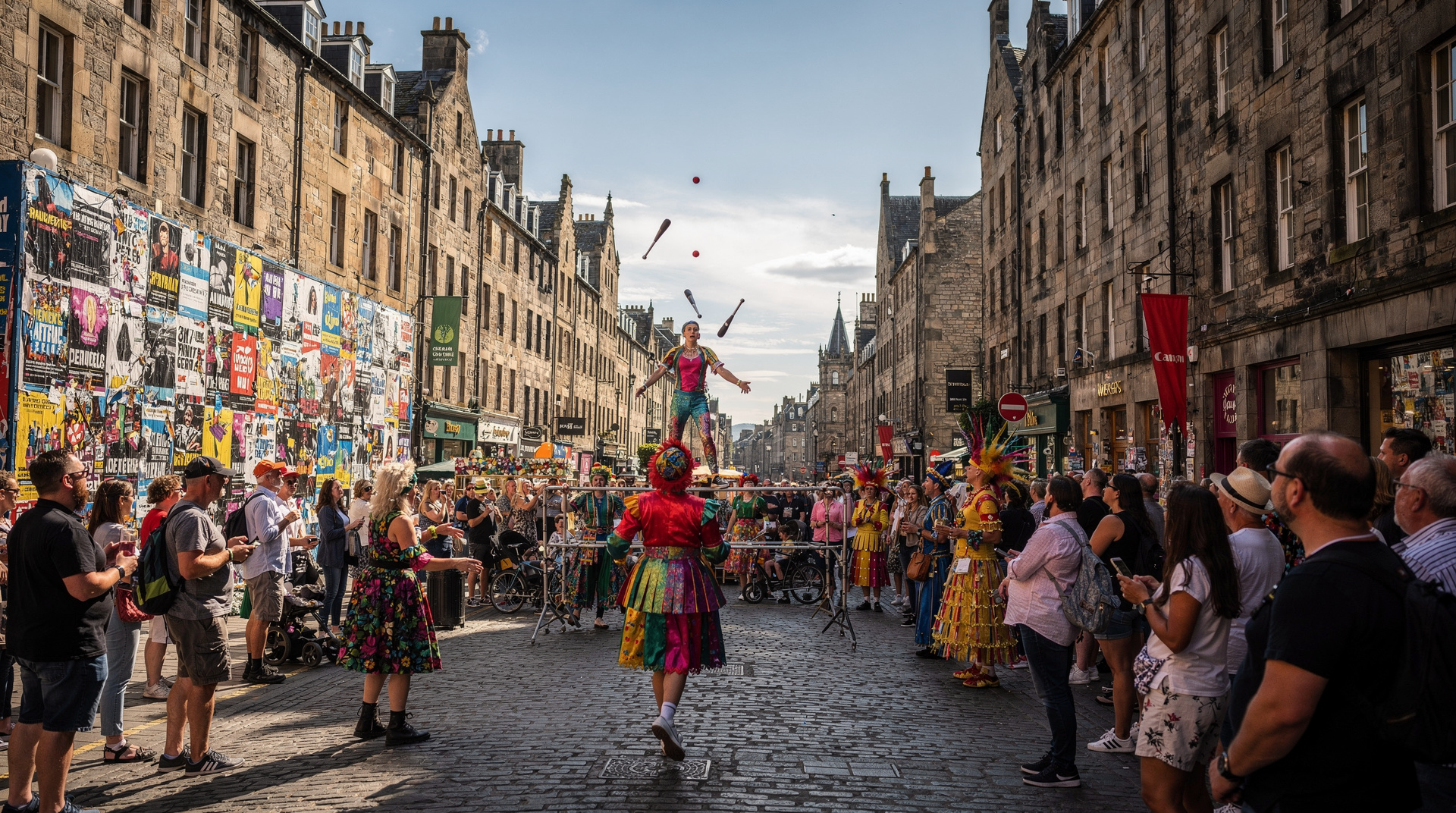
Every August, the Edinburgh Festival Fringe receives most of the world’s attention. Over 3,500 shows, a million visitors, the world’s biggest arts festival — the numbers are attention-grabbing. Meanwhile, the event that started everything in 1947 — the Edinburgh International Festival — quietly hosts some of the finest classical music, opera, and international theatre in the world, in venues a short walk from the Fringe chaos, to smaller and more focused audiences.
The International Festival is what many sophisticated arts visitors to Edinburgh come for, and what many tourists entirely overlook. This guide explains what it is, why it matters, and how to get the most from it.
What the Edinburgh International Festival is
The Edinburgh International Festival was founded in 1947 by Rudolf Bing, the general manager of Glyndebourne Opera, as a post-war celebration of the arts. The founding vision was to bring the best of international arts — opera, classical music, theatre, and dance — to an accessible northern European city. The first year included performances from the Vienna Philharmonic, the Orchestre des Concerts Colonne, and major theatre companies from across Europe.
That ambition remains intact. The International Festival in 2026 will present world-class orchestras, leading opera companies, internationally significant theatre productions, and dance from major companies. Every programme is curated by the festival’s artistic director; nothing performs at the International Festival without invitation. This distinguishes it completely from the Fringe, which accepts any company that books a venue.
The result is a festival where the quality floor is consistently high. A show at the International Festival will be professionally produced, well-rehearsed, and performed by artists at the top of their careers. You may dislike a particular production — aesthetic judgements are personal — but you will not see a show that falls apart technically or collapses from inadequate preparation.
Dates and programme (2026)
The Edinburgh International Festival 2026 runs for three weeks in August, beginning on the first Friday of the month and running to the last Sunday — typically 7-31 August. Dates align almost exactly with the Fringe and the Royal Edinburgh Military Tattoo.
The programme is announced in April and tickets go on sale shortly afterwards. Major events — particularly opening night, the closing fireworks concert, and anything featuring globally prominent artists — sell out quickly. The festival publishes its programme at eif.co.uk.
Key venues and event types
Usher Hall
The Usher Hall on Lothian Road is Edinburgh’s premier concert hall, seating 2,900 and hosting the festival’s major orchestral concerts. The building’s distinctive circular shape and excellent acoustic make it one of the best concert hall listening environments in Scotland. Most of the International Festival’s orchestral programme takes place here.
Edinburgh Festival Theatre and Royal Lyceum Theatre
Larger-scale opera and dance productions use the Festival Theatre (1,900 seats), the primary opera venue during the festival. The Royal Lyceum is a beautiful Victorian theatre used for mid-scale theatrical productions.
The Hub
The festival’s nerve centre and ticket office on the Royal Mile (in a converted Victorian church) is where you buy tickets, collect programmes, and attend some smaller events. The Hub café is a good place to escape the August crowds.
King’s Theatre
The Victorian King’s Theatre is used for some theatrical productions — its 1,300-seat auditorium suits mid-to-large theatre companies.
The Opening Event and Fireworks Concert
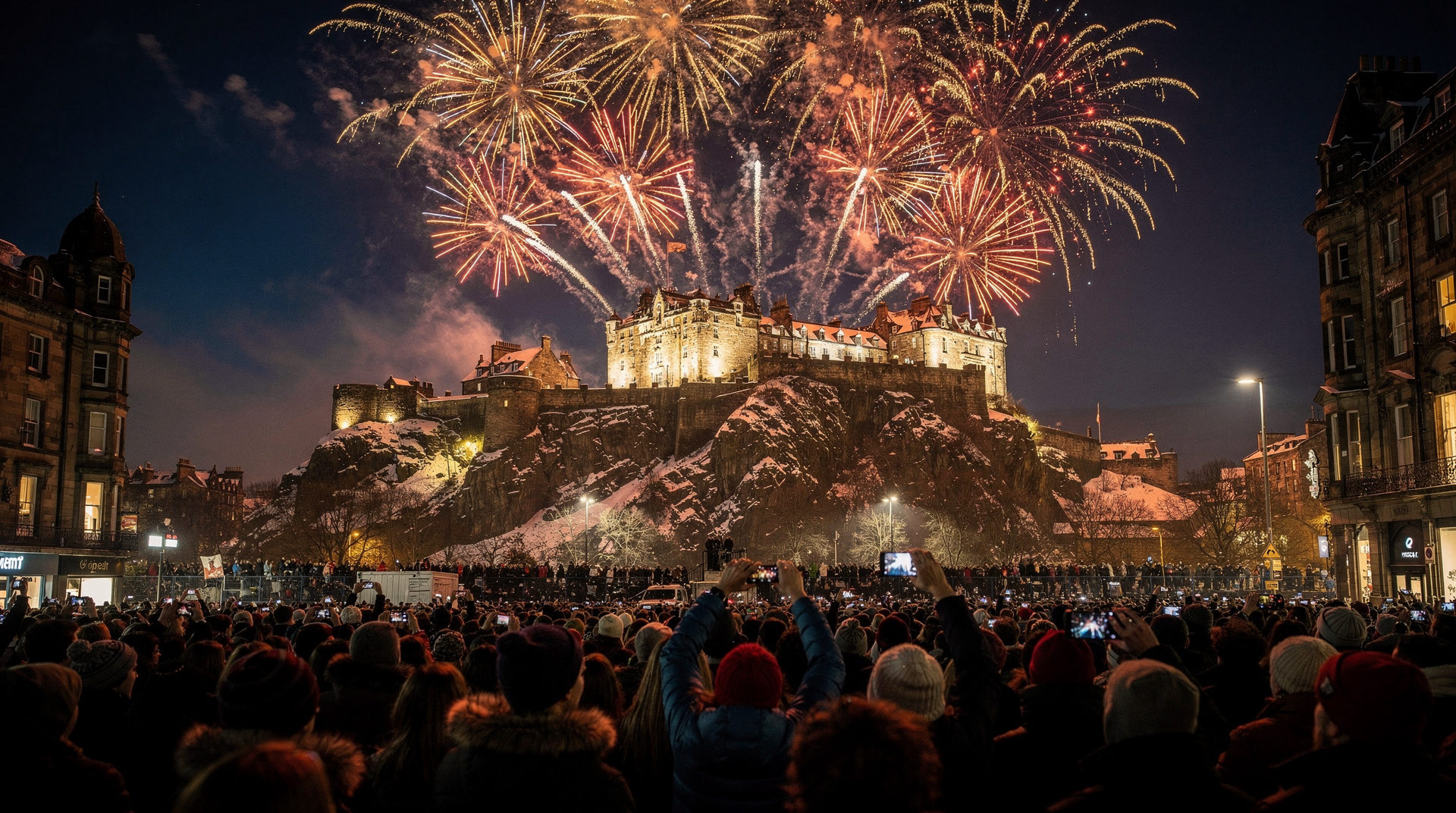
The International Festival traditionally opens with a major outdoor event in Princes Street Gardens and closes with the Edinburgh International Festival Fireworks Concert, which combines a final classical concert with a fireworks display over the castle. The closing concert is broadcast live on BBC television and radio and is typically the International Festival’s most watched event. Tickets sell out quickly; the fireworks are visible from across the city.
How to approach the International Festival as a visitor
The International Festival rewards preparation. The programme is published in April; identifying specific events you want to attend and booking promptly avoids disappointment.
For classical music enthusiasts: The orchestral programme is the International Festival’s crown jewel. Major ensembles — the Berlin Philharmonic, the Vienna Philharmonic, leading American orchestras — appear regularly. If there is a world-class orchestra you have always wanted to hear live, check whether they feature in the programme.
For opera visitors: The International Festival’s opera choices typically include a mix of major productions from leading European companies and occasionally new commissions. Standards are high and the Festival Theatre’s acoustic is good.
For theatre visitors: The International Festival’s theatre programme is more limited than the Fringe but the productions are typically from national companies — the National Theatre of Scotland, Chekhov from major Russian or European companies, Shakespeare productions of international significance. If theatre quality matters more than theatrical risk-taking, this is the right programme.
For dance: The International Festival consistently presents significant contemporary dance companies and, occasionally, classical ballet. For visitors with a specific interest in dance, the August programme is worth examining closely.
The International Festival versus the Fringe: which to choose?
The answer is not binary — most visitors with a full week in August can sample both. The practical distinction:
International Festival: Higher prices (£15-£100), guaranteed quality, specific scheduled performances, requires advance booking, concentrated in major venues. Best for classical music, opera, and major theatrical productions. Older, more international, more formally dressed audience.
Fringe: Lower prices (£0-£25), wildly variable quality, hundreds of shows daily, many available last-minute, spread across 300+ venues. Best for comedy, discovering new work, and the randomness of the festival experience. Younger, more diverse, more casually dressed audience.
A well-planned August Edinburgh week combines both: one or two International Festival events (booked months ahead) alongside Fringe sampling (using a combination of advance bookings and last-minute discoveries). The Fringe guide covers the Fringe-specific planning in detail.
Practical logistics during International Festival season
August Edinburgh is extremely busy and expensive regardless of which festival you attend. See the August in Edinburgh survival guide for the full picture on accommodation, transport, and managing the August crowds.
For International Festival events specifically: the main venues (Usher Hall, Festival Theatre) are all within walking distance of the city centre and served by Lothian Buses. Dress code is smart casual to formal for major orchestral events; the audience skews toward formal eveningwear for opening night and high-profile operatic performances.
Edinburgh’s Leith restaurant scene and the better Old Town restaurants are excellent for pre-concert dinners, but book weeks in advance for August. The alternative — early dinner at 18:30 before a 20:00 concert — is the most reliable strategy.
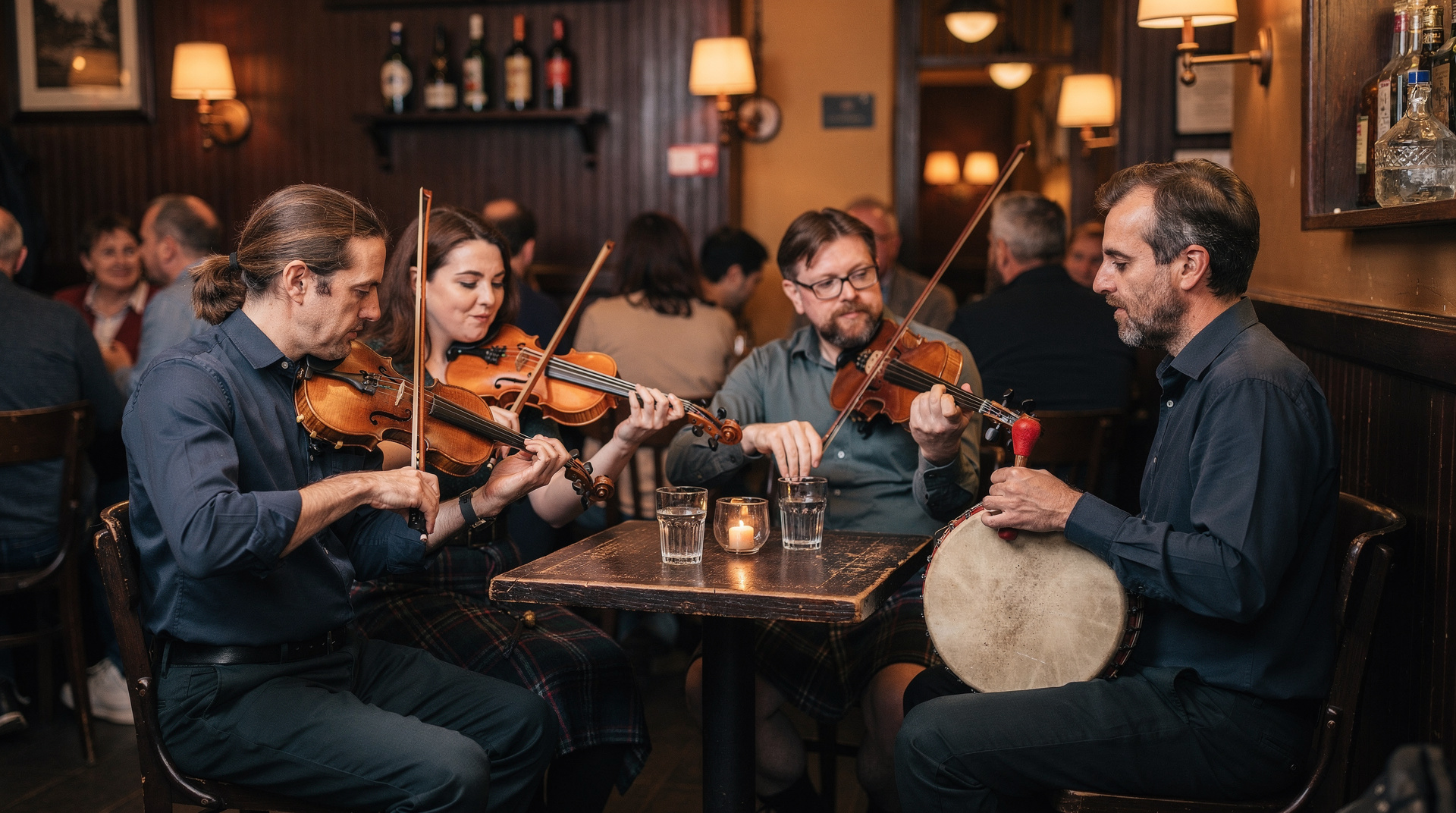
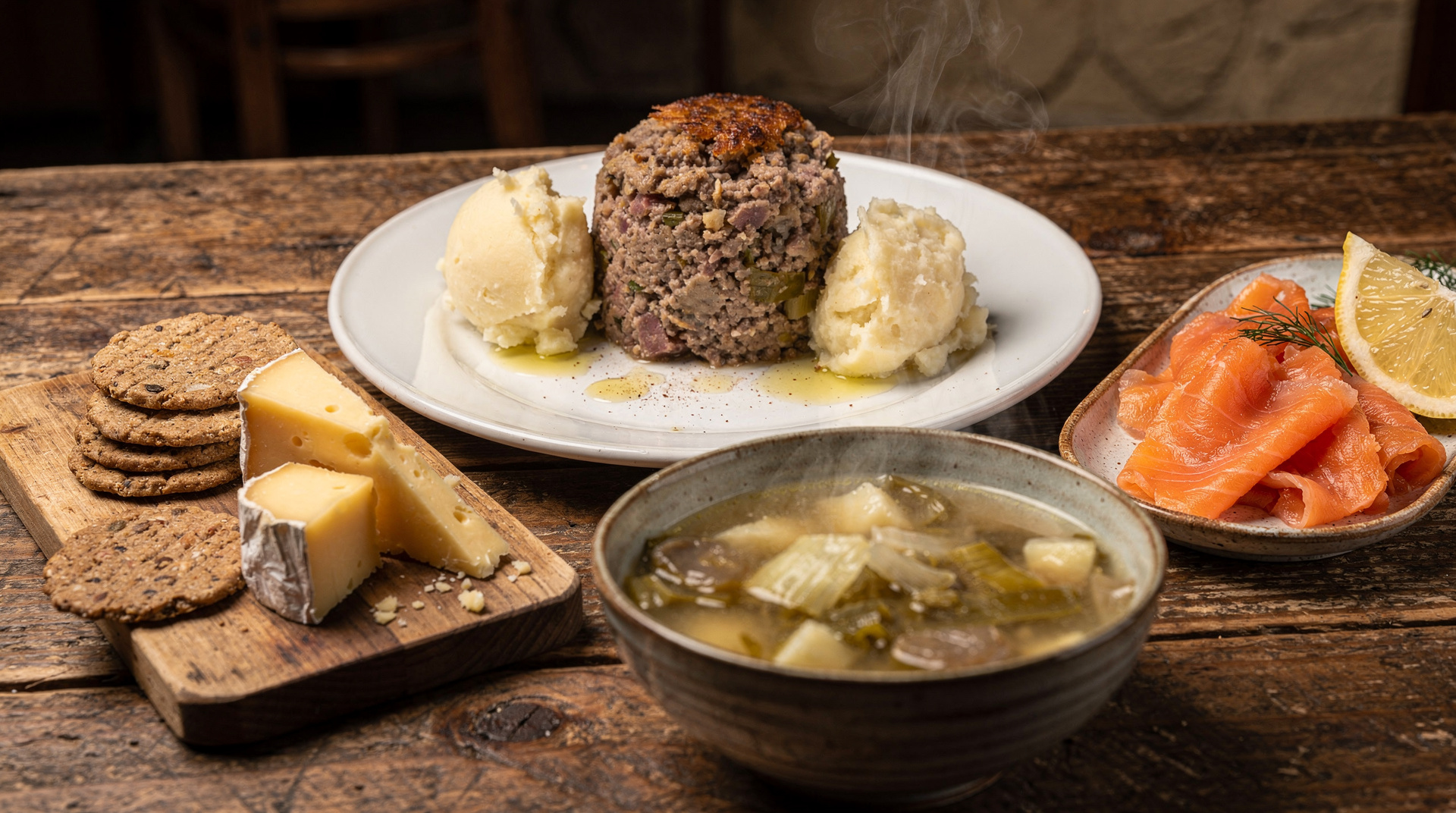
An Edinburgh Spirit of Scotland show with four-course dinner provides an excellent alternative evening entertainment for nights when International Festival tickets are unavailable or too expensive.
Frequently asked questions about the Edinburgh International Festival
How does the Edinburgh International Festival differ from the Fringe?
The International Festival is a curated, selection-based programme with invited artists; the Fringe is open-access with any company that books a venue. The International Festival focuses on classical music, opera, dance, and major theatre companies. The Fringe covers every genre with enormous quality variation. Both run simultaneously in August and share Edinburgh’s August festival atmosphere.
When do Edinburgh International Festival tickets go on sale?
The programme is announced in April and tickets typically go on sale at the same time, via eif.co.uk. Opening events and anything featuring globally prominent artists sell out quickly. Most mid-programme events remain available for weeks after the initial sale.
How expensive is the International Festival?
Ticket prices range from approximately £15 for smaller events to £100+ for premium seats at major orchestral and operatic performances. The average price for a good seat at a major orchestral event is around £30-60. This is significantly more expensive than Fringe tickets but comparable to similar events in London or other major European cities.
Is the Edinburgh International Festival suitable for people who do not normally attend classical concerts?
The International Festival is programming that assumes an audience with some existing interest in classical arts. If you have never attended an orchestral concert or opera and are curious, an International Festival concert is an excellent introduction — the quality is very high and the productions are often more accessible than their classical reputations suggest. The Usher Hall’s atmosphere and acoustic make even an unfamiliar programme an interesting sensory experience.
Can I attend both the International Festival and the Fringe on the same day?
Yes, easily. Many experienced August Edinburgh visitors combine a daytime Fringe programme with an evening International Festival concert. The venues are close — the Pleasance Courtyard (Fringe) is about 20 minutes’ walk from the Usher Hall (International Festival). Allowing enough time for dinner between the two is the main logistical consideration.
What is the Edinburgh International Festival Fireworks Concert?
The closing concert of the International Festival — typically on the last Sunday of August — combines a live orchestral performance at the Ross Bandstand in Princes Street Gardens with a fireworks display over the castle, synchronised to the music. It is broadcast live on BBC Radio 3 and often BBC Two television. Attendance tickets sell out; the fireworks are visible from much of Edinburgh without tickets.
Should I choose the International Festival or the Fringe if I can only pick one?
Choose based on what you actually want from a night out. If guaranteed quality, a specific world-class orchestra or opera company, and a more formal evening appeal, choose the International Festival. If you want breadth, discovery, comedy, and the unpredictable energy of hundreds of shows a day, choose the Fringe. Most visitors with more than two or three days in August find room for at least one of each.
Is the International Festival worth it outside of August?
The Edinburgh International Festival itself runs only in August, but the venues it uses — Usher Hall, the Festival Theatre, the Royal Lyceum — host concerts and productions year-round at lower prices and without the August crowds. If the venues and the calibre of performance interest you more than the festival atmosphere specifically, checking their year-round programmes is a good lower-cost alternative.
The International Festival’s founding story
The Edinburgh International Festival’s founding in 1947 is one of the more extraordinary cultural events of the post-war period. Rudolf Bing, the Austrian-born impresario who would later lead the Metropolitan Opera, proposed the festival to Edinburgh City Council in 1944, while the Second World War was still underway. His vision: a celebration of European arts in a neutral, beautiful city as a statement that culture had survived the war intact.
The first festival, in August 1947, was received with a mixture of civic pride and bewilderment — Edinburgh’s Conservative and Presbyterian establishment had not entirely expected the city to host the Vienna Philharmonic and the Ballets des Champs-Elysées. The presence of eight uninvited theatre companies performing on the fringes of the official programme (the origin of the Fringe) was entirely unexpected. Bing left Edinburgh after three years and the festival continued under a succession of artistic directors who have shaped its character.
The 1947 context matters. Post-war Europe was exhausted, physically and spiritually. The argument for putting artistic resources into a festival, when there was rebuilding to do and food rationing in force, required making the case that culture was not a luxury but a necessity. The Edinburgh International Festival is, at its root, a statement that this argument was right.
Edinburgh’s other August festivals
The International Festival and the Fringe are not Edinburgh’s only August events. Several other festivals run concurrently:
The Edinburgh Art Festival presents contemporary visual art across Edinburgh’s galleries and museums, with commissions, exhibitions, and temporary installations throughout August. Many of these are free. The programme is available at edinburghartfestival.com.
The Edinburgh International Book Festival takes place in Charlotte Square Gardens, presenting several hundred author events, readings, debates, and workshops over 18 days. It is the world’s largest public celebration of books and ideas, and like the International Festival, it is curated and selection-based. Tickets from £10-15 for most events; some are free.
The Edinburgh International Film Festival has historically run in August (and more recently at varying dates) presenting new films from across the world alongside retrospectives and industry events. Check the current year’s programme for timing.
Together, these events make August Edinburgh the most concentrated cultural moment in Britain. The challenge for visitors is not finding things to do but choosing among them. A useful August Edinburgh strategy is to decide which festival is your primary focus — International Festival orchestral concerts, Fringe comedy, the Book Festival — and build around that priority rather than trying to sample everything simultaneously.
The International Festival and Scottish national identity
The Edinburgh International Festival is not specifically a Scottish festival. Its programming is deliberately international, and in its founding vision Edinburgh was a venue for international arts rather than a celebration of Scottish culture specifically. This has sometimes created tension with Scottish cultural organisations who feel the International Festival has been insufficiently invested in Scottish work.
The current festival programming reflects an ongoing negotiation between international ambition and Scottish identity. Recent programmes have included productions by the National Theatre of Scotland, commissions from Scottish composers and writers, and increasing emphasis on work that speaks specifically from Scottish perspectives. The Fringe, ironically, has probably done more to develop Scottish performance culture than the International Festival, simply by providing a platform for all Scottish artists to perform.
Visitors who want specifically Scottish cultural content — traditional music, contemporary Scottish theatre, Scottish literature — will find more of it at the Fringe and the Book Festival than at the International Festival. Visitors who want world-class classical performance at the highest international level will find it at the International Festival. Both are legitimate and valuable; they are different things.
Staying in Edinburgh for the full August programme
Visitors who commit to a full week or more in August can structure a genuinely exceptional cultural programme combining International Festival concerts, Fringe shows, Book Festival author events, and Art Festival exhibitions. The geography is compact enough that attending a morning book event in Charlotte Square, an afternoon Fringe show in the Pleasance, and an evening International Festival concert at the Usher Hall involves no more than 30 minutes of walking total.
For visitors planning a multi-day August Edinburgh trip, the Edinburgh Fringe four-day itinerary provides a suggested programme covering both the Fringe and the International Festival.
The International Festival’s role in Edinburgh’s economy
The Edinburgh August festivals contribute approximately £300 million to the Scottish economy annually, of which the International Festival is a significant component. The festival employs hundreds of people, fills Edinburgh’s hotels and restaurants, and generates media coverage that extends Edinburgh’s global reputation as a cultural destination throughout the year.
The International Festival is the oldest and, in terms of prestige, still the flagship element of Edinburgh’s festival cluster. Its founding ambition — to bring the world’s finest arts to Scotland — has been consistent for over seventy years, and the festival’s capacity to attract the Berlin Philharmonic, major opera companies, and internationally significant theatre to Edinburgh each August gives the city a cultural weight that is out of proportion to its size.
For the wider Scottish creative economy, the festival’s international visibility has created a platform that benefits Scottish artists throughout the year. Connections made at the International Festival — between Scottish companies and international touring circuits, between Scottish composers and major orchestras, between Edinburgh venues and global arts organisations — extend well beyond the August programme.
Attending the International Festival as a budget visitor
The International Festival’s ticket prices are higher than Fringe tickets but there are strategies for attending on a restricted budget:
Rush tickets: Many International Festival performances release unsold tickets at reduced prices on the day of performance, typically available from the box office (The Hub on the Royal Mile) from 10am. Premium events rarely have day-of availability; smaller chamber concerts and some theatre events often do.
Usher Hall standing tickets: Some orchestral concerts at the Usher Hall have a limited allocation of standing tickets sold at significantly reduced prices. Comfortable for most of a concert; know your limits.
The Fireworks Concert broadcast: The closing concert is broadcast live on BBC Radio 3 and often BBC Two — watching it on television or listening on the radio while standing in Princes Street Gardens (where the fireworks are visible) gives the essential experience without the sold-out ticket barrier.
Free events: The International Festival’s programme includes some free outdoor events, particularly at the opening and in the Fringe-adjacent areas of the programme. Check the website for the free component of the current year’s programme.
An Scottish music and four-course meal at the Edinburgh Corn Exchange offers quality Scottish musical entertainment with dinner during August at a price point more accessible than premium International Festival tickets.
What a first-timer’s evening at the International Festival actually looks like
For visitors who have never attended, the practical shape of an evening is worth spelling out. Doors typically open 30-45 minutes before the performance; arriving with time to find your seat and settle in matters more here than at a Fringe show, since latecomers are sometimes held until a natural pause in the programme rather than seated immediately. Programmes (printed, usually a modest additional charge) give background on the pieces and performers that is genuinely worth reading beforehand if the repertoire is unfamiliar.
Intervals at the Usher Hall and Festival Theatre run 20-25 minutes, long enough for a drink pre-ordered at the bar before the performance began — a habit worth adopting, since the interval queue without a pre-order can eat most of the break. Applause conventions are the standard classical ones: hold until the end of a full symphonic work rather than between movements, though opera and ballet audiences applaud more freely at set pieces. None of this is intimidating in practice — Edinburgh’s International Festival audience is generally welcoming to newcomers who are visibly enjoying themselves rather than performing expertise.
International Festival versus the Fringe: quick comparison
| International Festival | Fringe | |
|---|---|---|
| Selection | curated, invited artists | open-access, any company |
| Price | £15–£100+ | £0–£25 |
| Quality floor | consistently high | highly variable |
| Booking | months ahead for headline events | often last-minute |
| Audience | older, more formal | younger, more casual |
Where the International Festival fits in a wider Edinburgh trip
If August itself doesn’t suit your schedule, the best time to visit Edinburgh guide sets the International Festival’s cultural intensity against calmer, cheaper months. For visitors who specifically want August’s festival cluster but are weighing it against Edinburgh’s other major event, the Hogmanay guide covers the city’s equivalent winter spectacle — different in every practical respect but comparable in scale of advance planning required. Whichever month you choose, where to stay in Edinburgh has notes on which neighbourhoods keep you close to the main festival venues without August’s steepest price premiums.
Building a festival evening around the venues
The International Festival is easiest to enjoy when the rest of the evening is planned as carefully as the performance. Many of the main venues sit close to the Old Town and the West End, so a pre-show wander is easy. If you have time before an early concert, the Royal Mile guide and the Old Town destination page suggest where to walk, while the Edinburgh Castle guide is worth reading if you want to see the building that frames the closing fireworks. Just keep the Royal Mile tourist traps in mind when choosing where to eat before a show.
After a concert, the choice is between a quiet drink and something livelier. The best pubs in Edinburgh and the live music guide cover different moods: a calm pub close to the venue suits an audience still absorbing a long symphony, while the comedy scene suits anyone who wants to laugh off the formality. A stand-up comedy night is a useful contrast to a serious classical programme, and anyone interested in a more Scottish evening can add a dinner with traditional folk music on a night without International Festival tickets.
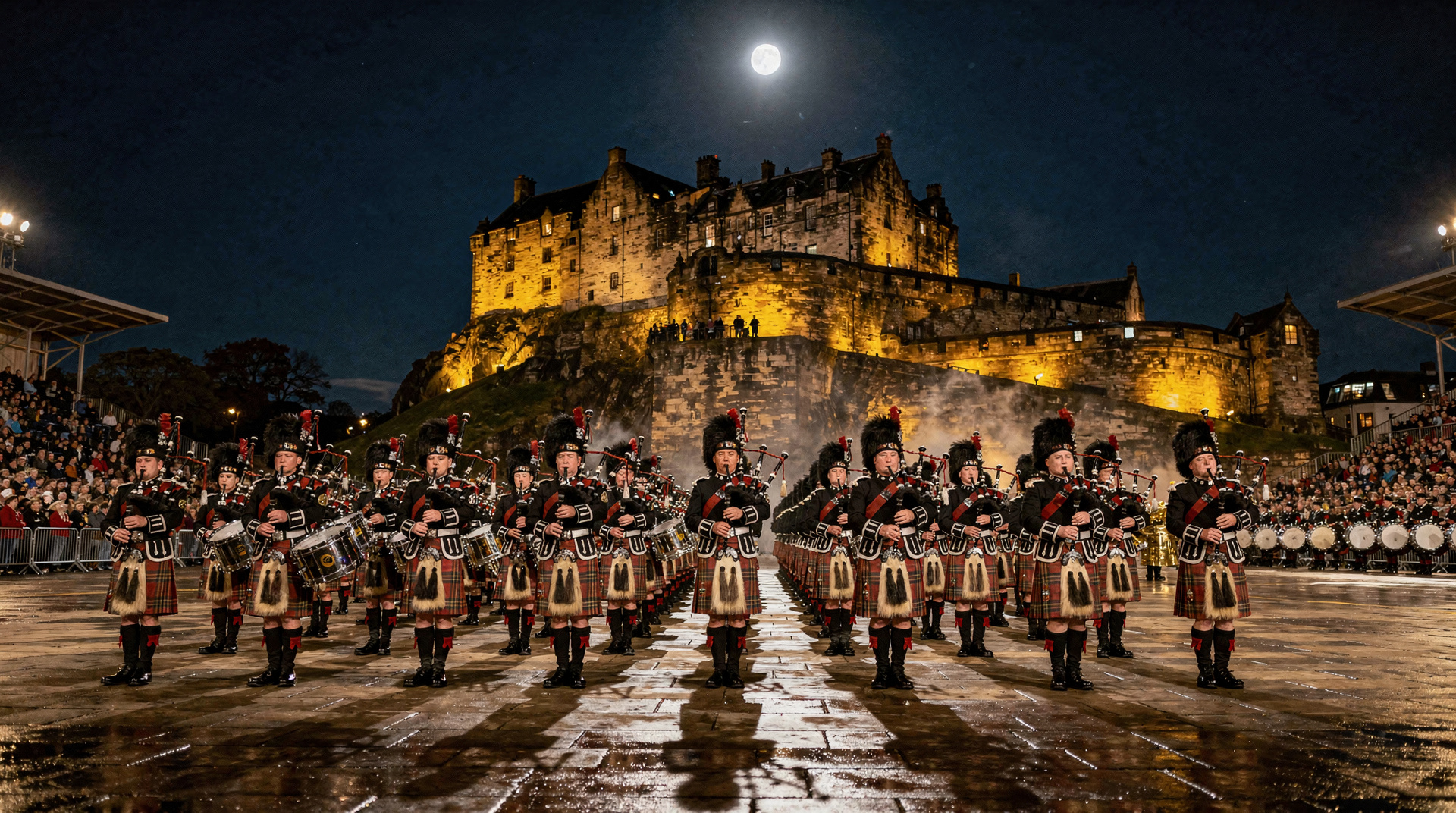
If you are travelling with a mixed group, some of whom care little for opera, the first-time visitor guide and the Edinburgh in summer guide help balance the week so that nobody spends every evening in a concert hall. The Royal Edinburgh Military Tattoo can share a week with your concerts too, as long as you leave room for meals and rest.
Top experiences
Bookable activities with verified prices and instant confirmation on GetYourGuide.