Edinburgh Festival Fringe guide
Edinburgh: stand-up comedy show
When is the Edinburgh Festival Fringe and how do I get tickets?
The Fringe runs for 25 days in August (typically the first weekend of August through to late August). Tickets go on sale in June via the Fringe Box Office (edfringe.com). Many popular shows sell out within days of going on sale; free shows, street performers, and last-minute tickets are available throughout the festival.
| Where | Old Town venue clusters — Pleasance, Gilded Balloon, Assembly, Underbelly, Summerhall |
| Cost | free street shows to around £25 per ticket |
| Time needed | a single day works, 3-4 days lets you see the range |
| Getting there | walk between Old Town venues; buses slower than walking in peak hours |
| Best time | book accommodation 6-12 months ahead; visit the middle two weeks for a calmer festival |
The world’s biggest arts festival — an honest guide
The Edinburgh Festival Fringe is the largest arts festival in the world. In a typical August, over 3,500 different shows perform across more than 300 venues over 25 days, attracting audiences of over 2.5 million. The numbers are almost abstract. The experience is vivid, exhausting, extraordinary, occasionally brilliant, and frequently chaotic — and it requires some preparation to navigate well.
This guide is honest about what the Fringe is, what it costs, and how to get the most out of it without spending a fortune or burning out before the end of the first week.
What the Fringe actually is
The Fringe began in 1947 when eight theatre companies turned up uninvited to perform alongside the official Edinburgh International Festival. The spirit of that gate-crashing is still embedded in the Fringe’s open-access model: any company that can book a venue can perform at the Fringe. There is no selection panel, no curated programme. This means the quality varies enormously — from genuinely groundbreaking new work to performances that would not get past an amateur dramatic society audition — and finding the good stuff is part of the skill.
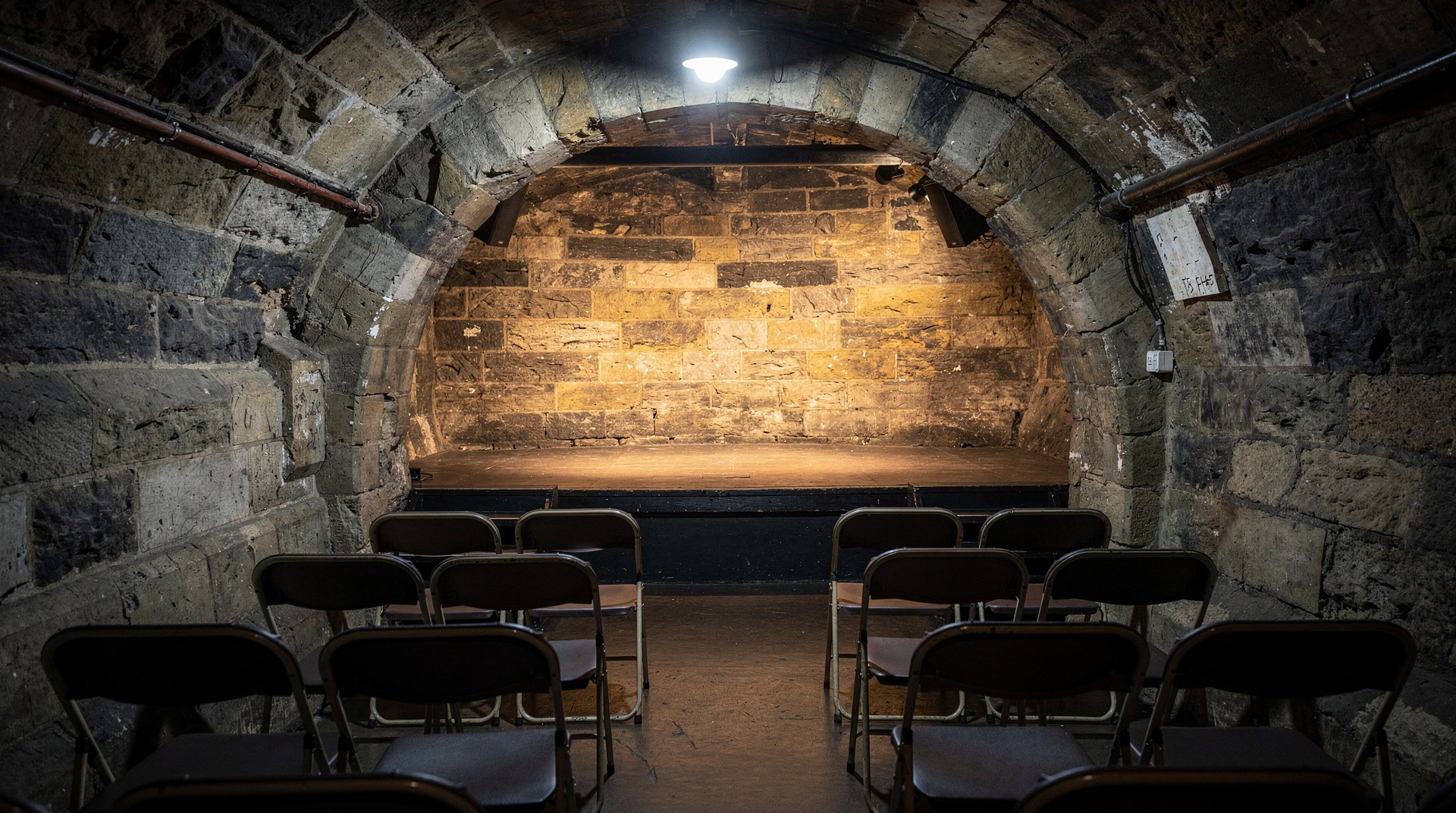
The Fringe encompasses theatre, comedy, dance, circus, cabaret, opera, children’s shows, spoken word, magic, and categories that resist easy description. Comedy dominates commercially, with the major comedy venues producing the biggest names and the most scrutinised shows. But the best Fringe experiences are often in smaller venues — a 50-seat room, a converted church hall, a room above a pub — where the intimacy between performer and audience creates something that cannot happen in larger formats.
Dates and timing (2026)
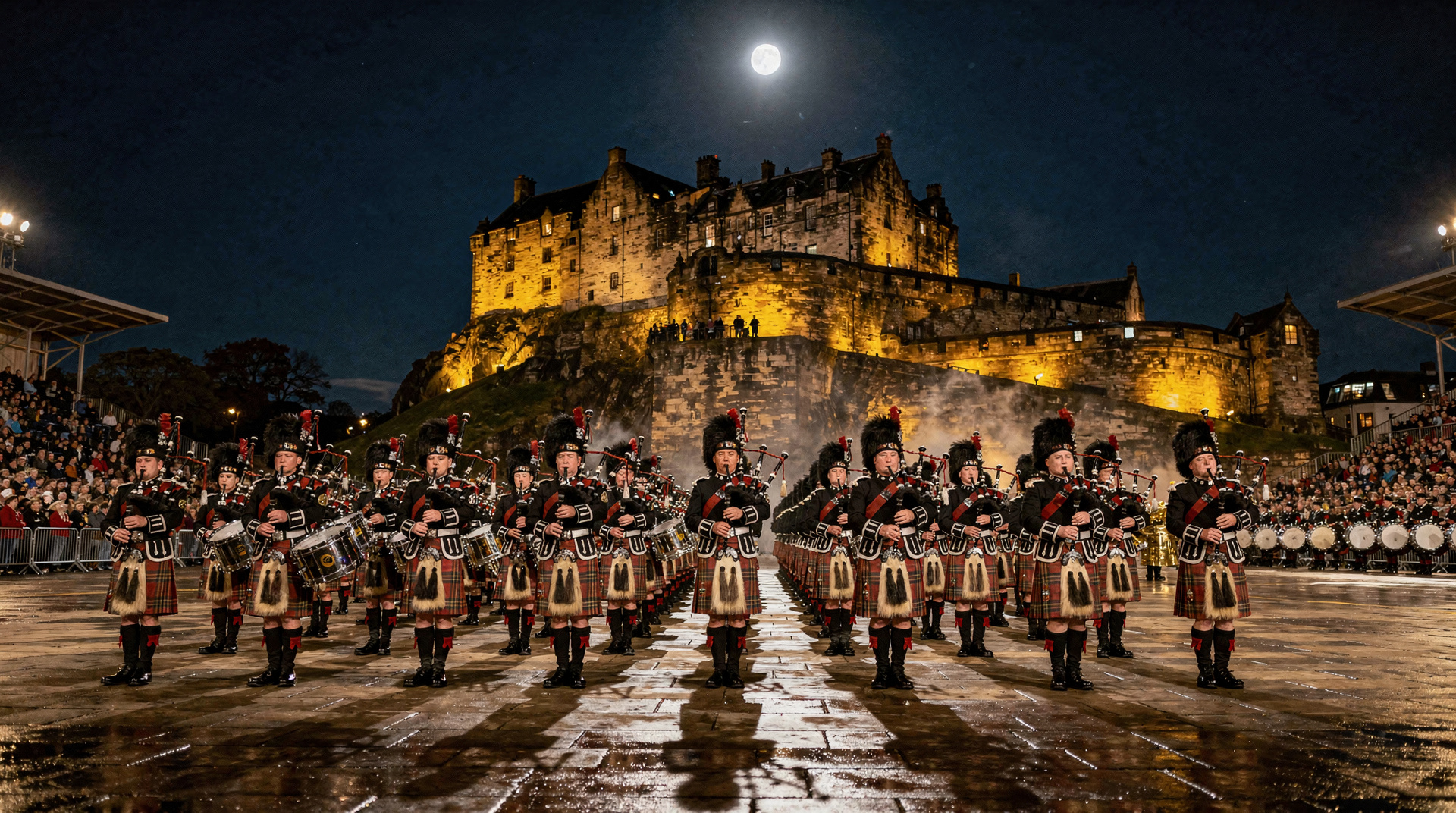
In 2026, the Fringe runs from 7 August to 31 August. The Edinburgh International Festival (the “official” festival — classical music, opera, theatre) runs concurrently. The Royal Edinburgh Military Tattoo performs on the Castle Esplanade throughout August. This convergence means August is Edinburgh’s absolute peak — hotel prices quadruple, transport is strained, and the Old Town in particular is extremely crowded. See the August in Edinburgh survival guide for the full logistical picture.
Buying tickets: strategy and reality
Official box office: edfringe.com is the primary ticket platform. Tickets for the Fringe 2026 went on sale in early June. The most popular shows — established comedians, productions with Olivier Award buzz, shows that transferred from London or have international reputations — sell out within days. If you have specific shows in mind, monitor the box office from opening day.
What to book in advance: Shows with fixed seat numbers in venues where demand consistently exceeds supply. Main venues like the Pleasance Courtyard, Gilded Balloon, Assembly Rooms, and Underbelly have structured programming where popular acts can sell out weeks ahead.
What not to bother booking in advance: Free shows (the Fringe has a large free festival on the Royal Mile and at the Big Four venues), street performers, drop-in improv, and most shows in very small venues where tickets are sold on the door. Much of what makes the Fringe special is not bookable in advance — it is the conversation that leads you to a show you had never heard of, or the flyer pressed on you by a performer on the street.
Last-minute tickets: The Fringe Half Price Hut on the Mound sells tickets for many shows at half price on the day of performance, from around noon. The queue is long on busy days but moves quickly. This is a legitimate and smart way to see good shows at reasonable prices.
Understanding costs
The Fringe is expensive. There is no way around this. A standard show ticket in a main venue costs £10-£20. Accommodation in August is 3-4 times the normal price. Restaurants near the Fringe venues (principally the Old Town area around the Pleasance, Cowgate, and Royal Mile) capitalise heavily on demand — budget at least £15-25 for a meal, significantly more for anything resembling quality.
The free alternatives: The Fringe Free Festival operates free shows throughout August with no ticket required. These are pay-what-you-can at the end of the show. Quality ranges from very poor to genuinely good; the format produces a particular kind of energetic, risk-taking performance that is sometimes more interesting than polished ticketed shows.
Street performance: The High Street and the Mound are performing spaces throughout August, with street artists ranging from simple buskers to elaborate theatrical spectacles. This is entirely free, and on a good afternoon the street programme alone is more entertaining than many ticketed shows.
Where the Fringe happens: the key venues
The Fringe is spread across Edinburgh with venues clustered around the Old Town. The main venue complexes:
Pleasance Courtyard (Pleasance) — the largest and most prestigious venue cluster, with over 20 spaces in a converted industrial yard. The courtyard itself is a social hub where performers and audiences mix throughout the day.
Gilded Balloon (Teviot, Bristo Square) — particularly strong for comedy; the Late ‘n’ Live midnight show is a Fringe institution.
Assembly Rooms (George Street, and multiple other sites) — mid-scale to large productions, a mix of comedy and theatre.
Underbelly (Cowgate, and other venues) — large mixed programme in the atmospheric vaulted spaces beneath the George IV Bridge.
Summerhall (Summerhall, near the University) — probably the most adventurous and interesting programming: contemporary performance, visual art, and the unexpected, in a former veterinary school building with excellent bars.
Outside these main clusters, hundreds of smaller venues — church halls, pub rooms, basements — operate across the city. These smaller venues are where new work happens and where discoveries are made.
Navigating the programme
The Fringe programme contains over 3,500 shows. Reading it in full is not a useful strategy. Approaches that actually work:
The Scotsman Fringe supplement publishes daily reviews throughout August. A three-star review in a mainstream publication is a reliable signal that something is professionally competent; four and five stars mean significant quality. The reviews are not infallible — some excellent shows are undersold and some mediocre ones are over-praised — but they filter the 3,500 down to a manageable shortlist.
Word of mouth. Other audience members and performers are the Fringe’s best algorithm. Talk to people in the venue bar; ask what they have seen; take recommendations seriously.
The Fringe website’s programme search. Filter by venue, category, time, and price. If you are staying at a particular end of the city, filtering by venue cluster reduces travel time between shows — which adds up over a day of show-hopping.
Getting around during the Fringe
The Old Town becomes very congested during the Fringe. Walking between venues is often the fastest option during the day. The Pleasance, Gilded Balloon, and Underbelly are all within 10-15 minutes’ walk of each other. Summerhall is about 20 minutes’ walk from the Pleasance.
Lothian Buses run with increased frequency during August but services on the Royal Mile itself are often slower than walking due to pedestrian volumes. Allow significantly more time than you think you need for any journey.
Comedy, dinner shows, and experiences during Fringe season
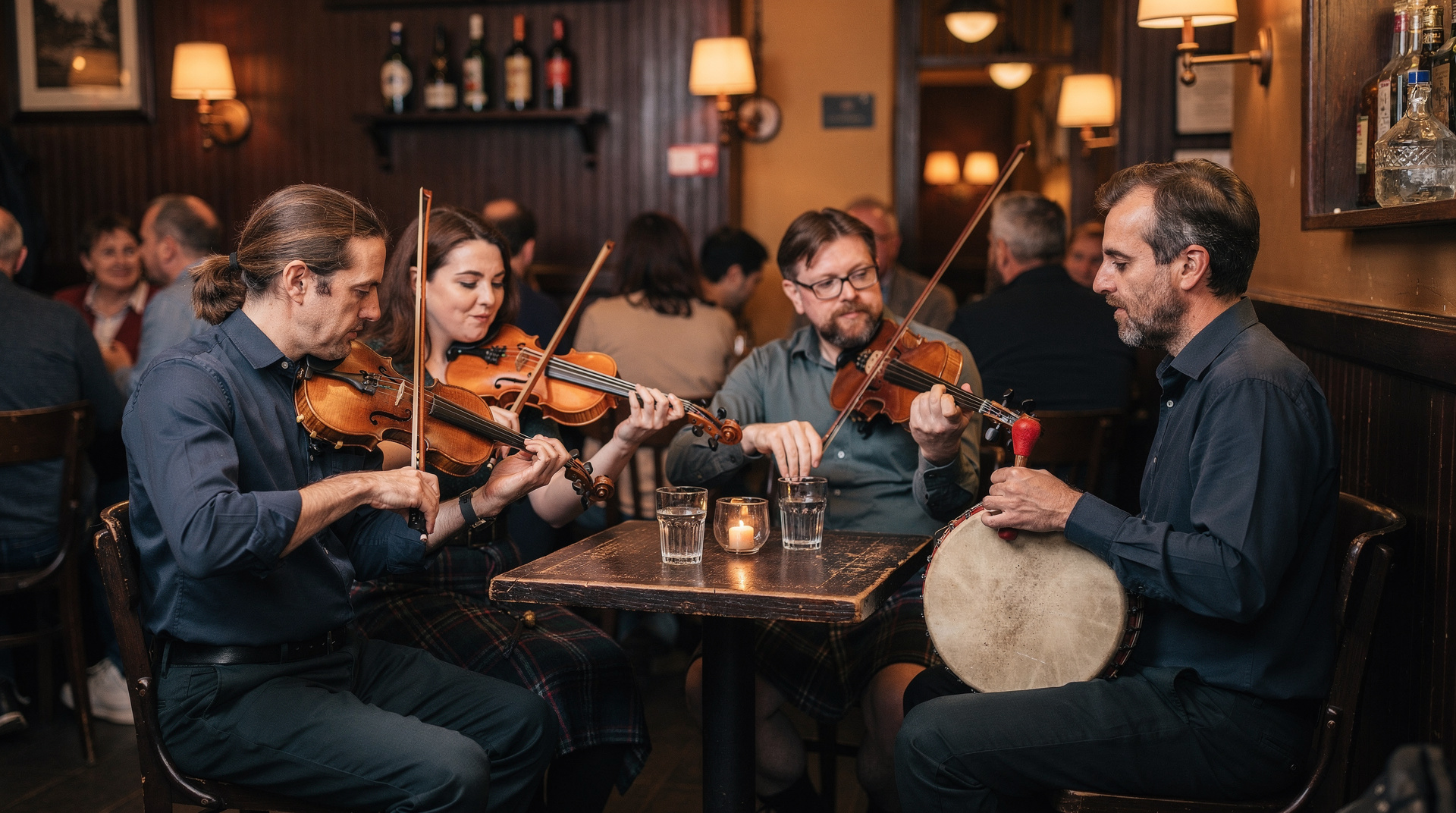
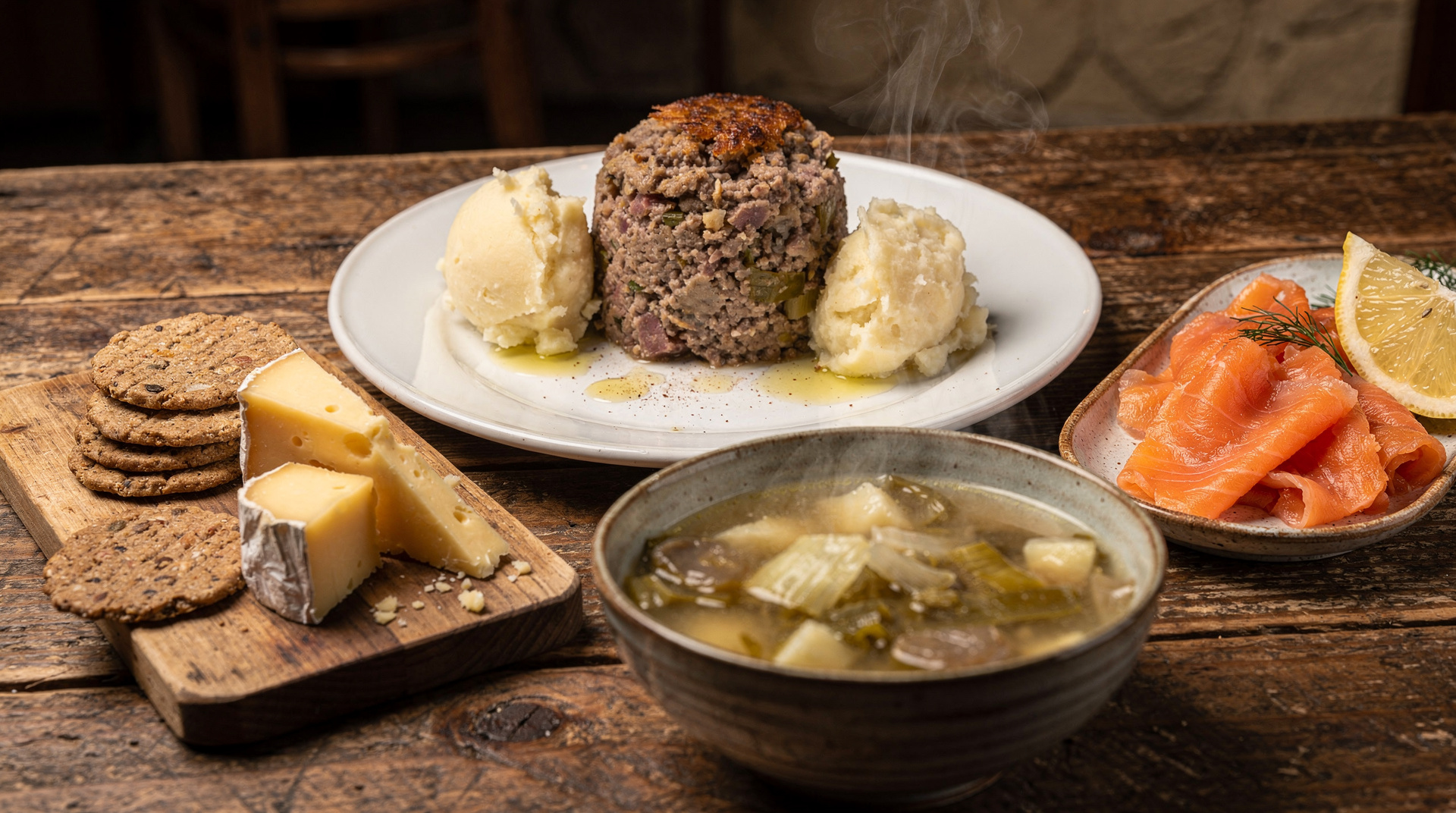
For visitors who want the festival atmosphere without the complexity of booking individual Fringe shows, several year-round Edinburgh experiences are particularly atmospheric during August. An Edinburgh stand-up comedy show provides the comedy atmosphere of the Fringe in a more structured setting. The Spirit of Scotland show with four-course dinner offers an evening’s entertainment with Scottish cultural content during the festival period.
For the most Fringe-adjacent experience that does not require navigating the programme, the Royal Edinburgh Military Tattoo is performed throughout August on the Castle Esplanade and is one of the finest events of the entire festival season — spectacular, atmospheric, and very reliably good.
Frequently asked questions about the Edinburgh Festival Fringe
How far in advance should I book accommodation for the Fringe?
For August stays during the Fringe, 6-12 months in advance. This is not an exaggeration. Budget accommodation within 30 minutes of the city centre is typically sold out by January for the following August. Mid-range hotels on the Royal Mile area sell out by March. If you are reading this in July and want to attend the Fringe, expect to pay premium prices for whatever remains, or look at accommodation in the suburbs with a bus connection.
Are there free events at the Edinburgh Fringe?
Yes, significantly. The Free Festival operates throughout the month with hundreds of shows that are pay-what-you-can. Street performance on the High Street and the Mound is entirely free. Many venues have courtyard or foyer areas where performers advertise their shows with mini-performances throughout the day. A determined Fringe visitor can have an excellent experience spending very little on tickets.
What is the difference between the Fringe and the Edinburgh International Festival?
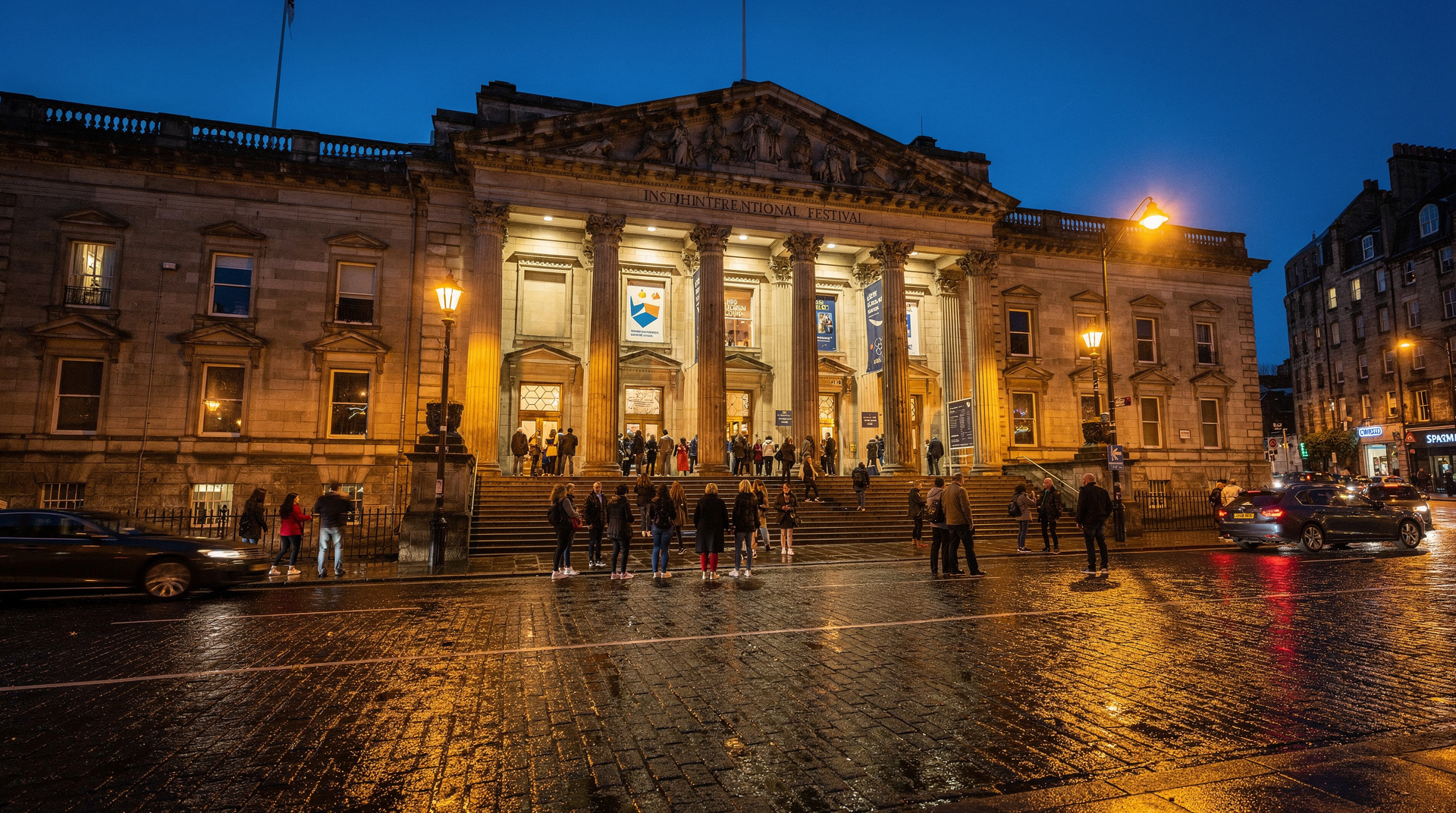
The Edinburgh International Festival is the curated, classical programme — opera, orchestral concerts, theatre from major national companies, world music. It has a selection process and high production values. Tickets are typically £20-£80. The Fringe is open-access with no selection, covering every genre, with tickets from free to £25. Both run simultaneously in August. Most visitors focus on the Fringe; the International Festival suits classical music and theatre enthusiasts.
Is the Fringe appropriate for families with children?
There is a substantial children’s programme at the Fringe, mainly in the afternoon slots. The Fringe website’s programme search allows filtering by “suitable for children.” Be aware that much Fringe comedy and theatre is adult content — check age recommendations carefully. The street performance on the High Street is generally family-friendly.
What should I wear to Fringe events?
The Fringe is casual. Jeans and a layer are appropriate for most venues. Some evening shows in the Assembly Rooms’ grander spaces attract slightly more formal dress but this is rare. Practical footwear for walking between venues is important — you may cover several miles between the morning’s first show and the late-night finale.
When is the Fringe at its absolute busiest?
The first and second weekends (opening and closing) are the most intense. The middle two weeks of August are busy but not overwhelming — queue times at venues are manageable and the street atmosphere is at its peak. The final weekend has a valedictory energy as performers and audiences mark the end of the season.
How do I find out about shows that are worth seeing?
The Scotsman’s Fringe supplements, Chortle (for comedy), and The Guardian’s Edinburgh coverage are the most useful mainstream sources. The Fringe’s own aggregated reviews on the website are also useful. Social media — particularly Twitter/X during August — carries a real-time commentary on which shows are generating buzz.
Is the Fringe worth visiting if I don’t like crowds?
Be honest with yourself here. August is Edinburgh at its most crowded by a significant margin, and the Old Town in particular can feel overwhelming even to visitors who normally cope well with busy cities. If crowds are a genuine problem for you, the best time to visit Edinburgh guide has calmer alternatives that still show off the city well.
How does the Fringe compare to Hogmanay for a first Edinburgh visit?
They are very different trips. The Fringe is warm-weather, outdoor-friendly, and about volume and discovery; Hogmanay is cold, concentrated around New Year’s Eve, and about one enormous shared event rather than thousands of small ones. Neither is objectively better — choose based on whether you want breadth (Fringe) or a single unforgettable night (Hogmanay).
The economics of the Fringe: who actually makes money?
Understanding the Fringe’s economics helps explain both its extraordinary vitality and some of its persistent problems. The basic situation: venues make money (they charge performers for room hire), the Fringe Society makes money (registration fees and box office commission), performers generally do not. The average Fringe performer spends significantly more to be at the Fringe than they earn from it.
A typical mid-scale Fringe show in a 100-seat venue in 2026 might spend £3,000-5,000 on venue hire for the run, £2,000-3,000 on accommodation, £1,000-2,000 on marketing and printing, and £500-1,000 on travel. Against this, average ticket revenue for a show that sells 50% capacity across 25 shows at £10 a ticket is roughly £3,250. The deficit is carried by the performers — often recent graduates using savings, parental funding, or crowd-funding.
The scale of performers’ financial sacrifice is one reason Fringe audiences sometimes undervalue what they are watching. The comedian doing 25 shows in a 50-seat room, working on a new hour of material that they have spent a year writing, is investing considerably more in the art than the audience member who paid £12 and checks their phone during the show. Treating the Fringe with generosity — clapping properly, reviewing shows positively when they deserve it, tipping the buskers who gave you fifteen minutes of pleasure — is the minimum that audiences owe.
The Fringe’s effect on Edinburgh
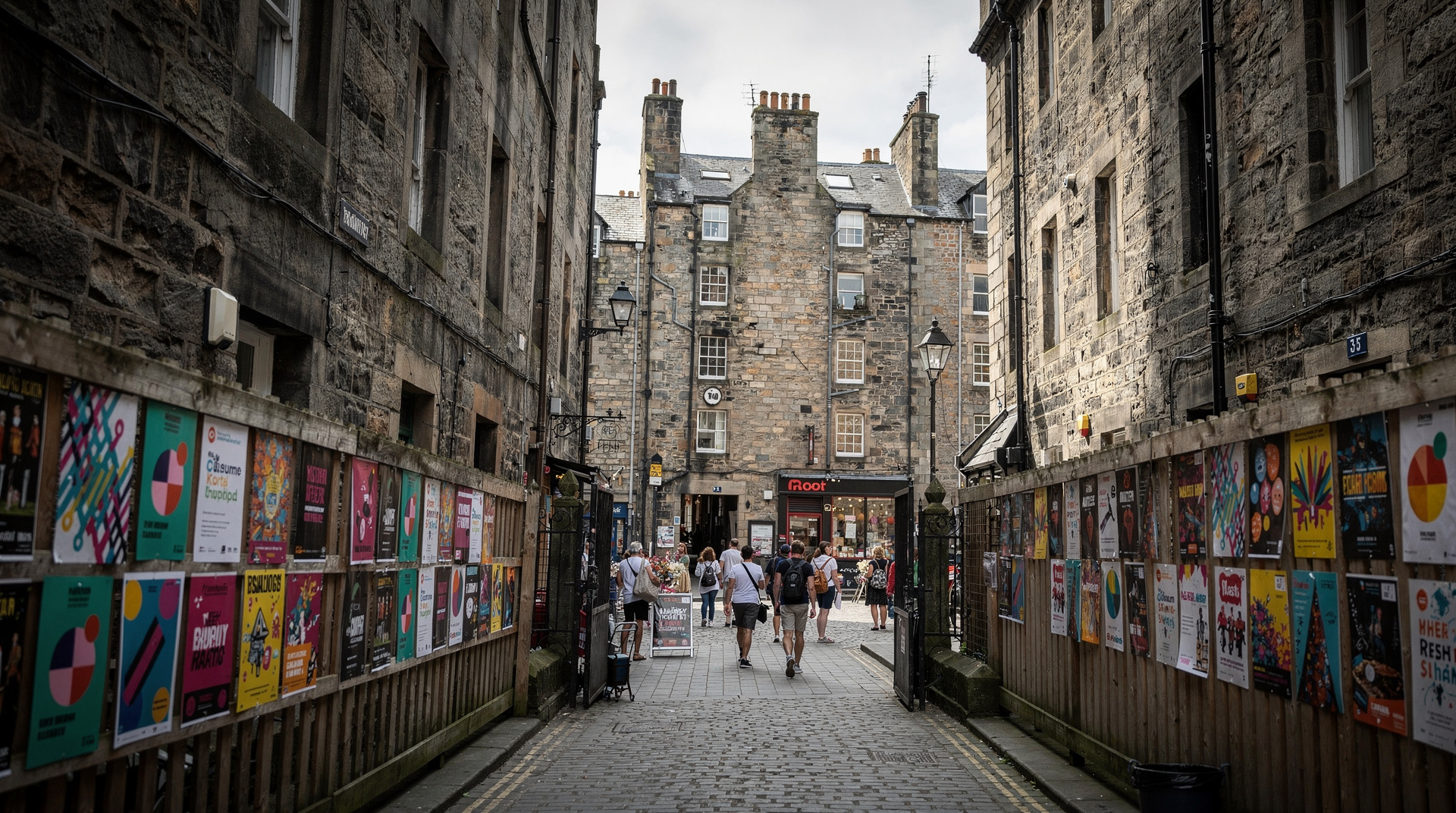
Edinburgh during the Fringe is Edinburgh transformed. The Old Town becomes a twenty-four-hour creative zone in which every pavement and courtyard is potentially a performance space. Street performers range from elaborately staged theatrical presentations to individual musicians who have set up on a corner. The concentration of creative energy is unlike any other city experience in the world.
This transformation is not without cost. Edinburgh’s residents who do not embrace the Fringe have their city colonised every August — Princes Street becomes impassable, Old Town restaurant queues extend to 45 minutes, and the normal rhythms of urban life are suspended. The overflow of accommodation into residential neighbourhoods brings its own tensions. Some Edinburgh residents leave the city in August.
The Fringe’s relationship with Edinburgh’s resident population is complex and ongoing. The city benefits economically and culturally; it also absorbs substantial disruption. Visitors who are aware of this complexity tend to behave more considerately — keeping noise reasonable in residential areas, leaving venues promptly at closing time, and treating the city as a place people live rather than a temporary theme park.
Discovering the Fringe as a first-time visitor
For first-time Fringe visitors, the scale is initially overwhelming and then gradually navigable. A useful first-day strategy:
Morning: Walk the Royal Mile between 10am and 12pm. Watch the street performers, collect a handful of flyers from shows that catch your attention, and get a sense of the Old Town’s festival geography.
Lunchtime: Pick up a Scotsman at a newsagent and read the day’s Fringe reviews with a coffee somewhere away from the main thoroughfare (the back streets of the Grassmarket are quieter).
Afternoon: Attend one show you have pre-booked and one free show you have chosen based on the morning’s flyers or the Scotsman review.
Evening: Allow the evening to find its own shape — a conversation with another audience member, a comedian’s flyer that promises something specific, the Half Price Hut on the Mound for a discounted last-minute ticket to something well-reviewed.
This approach — structured enough to ensure you see something, flexible enough to follow the unexpected — captures what the Fringe does best.
The Fringe and Edinburgh’s year-round comedy scene
The Fringe has generated a year-round comedy infrastructure in Edinburgh that persists beyond August. The Edinburgh comedy scene guide covers the permanent venues, regular club nights, and monthly showcases that run throughout the year. For visitors outside August who are interested in live comedy, Edinburgh has a very active scene centred on the Stand Comedy Club and several other regular venues.
The Edinburgh live Scottish stand-up comedy at Hoots provides a structured comedy evening that runs outside Fringe season — useful for visitors in any month who want the comedy atmosphere without navigating the August programme.
Fringe versus Edinburgh’s other August festivals
August is not just the Fringe. The Edinburgh International Festival runs the curated classical and theatre programme in the same weeks, and visitors comparing the two often ask which to prioritise — this guide’s companion piece breaks down the difference in tone, price, and audience in more depth. If your August visit is really about the winter equivalent, the Edinburgh Hogmanay guide covers the city’s other major festival period, five months later and considerably colder.
For visitors deciding when to come at all, the best time to visit Edinburgh guide weighs the Fringe’s energy against the calmer, cheaper alternative of visiting outside festival season. If you’re set on August regardless, where to stay in Edinburgh has notes on which neighbourhoods stay bookable and reasonably priced even during the festival crush.
Fringe evenings: pairing shows with the rest of the city
A Fringe day does not have to end when the last show does. The Old Town’s bar circuit stays busy well past midnight during August, and the Edinburgh pub crawl guide has routes that work well after a late show at the Pleasance or Underbelly. For visitors bringing children to daytime shows, the Edinburgh with kids guide covers which parts of the Fringe programme and the wider city work for families, and the Edinburgh with kids three-day itinerary builds a full visit around it.
Is a multi-day pass worth it during the Fringe?
Visitors sometimes ask whether a general Edinburgh sightseeing pass is worth adding to a Fringe trip. The honest answer is usually no — most Fringe spending goes on show tickets and the pass products are built around Edinburgh’s standing attractions (the Castle, Camera Obscura, and similar), which compete for the same limited August time. If you are combining a Fringe visit with more conventional sightseeing, it is worth reading the case independently rather than assuming festival season changes the value calculation.
Top experiences
Bookable activities with verified prices and instant confirmation on GetYourGuide.