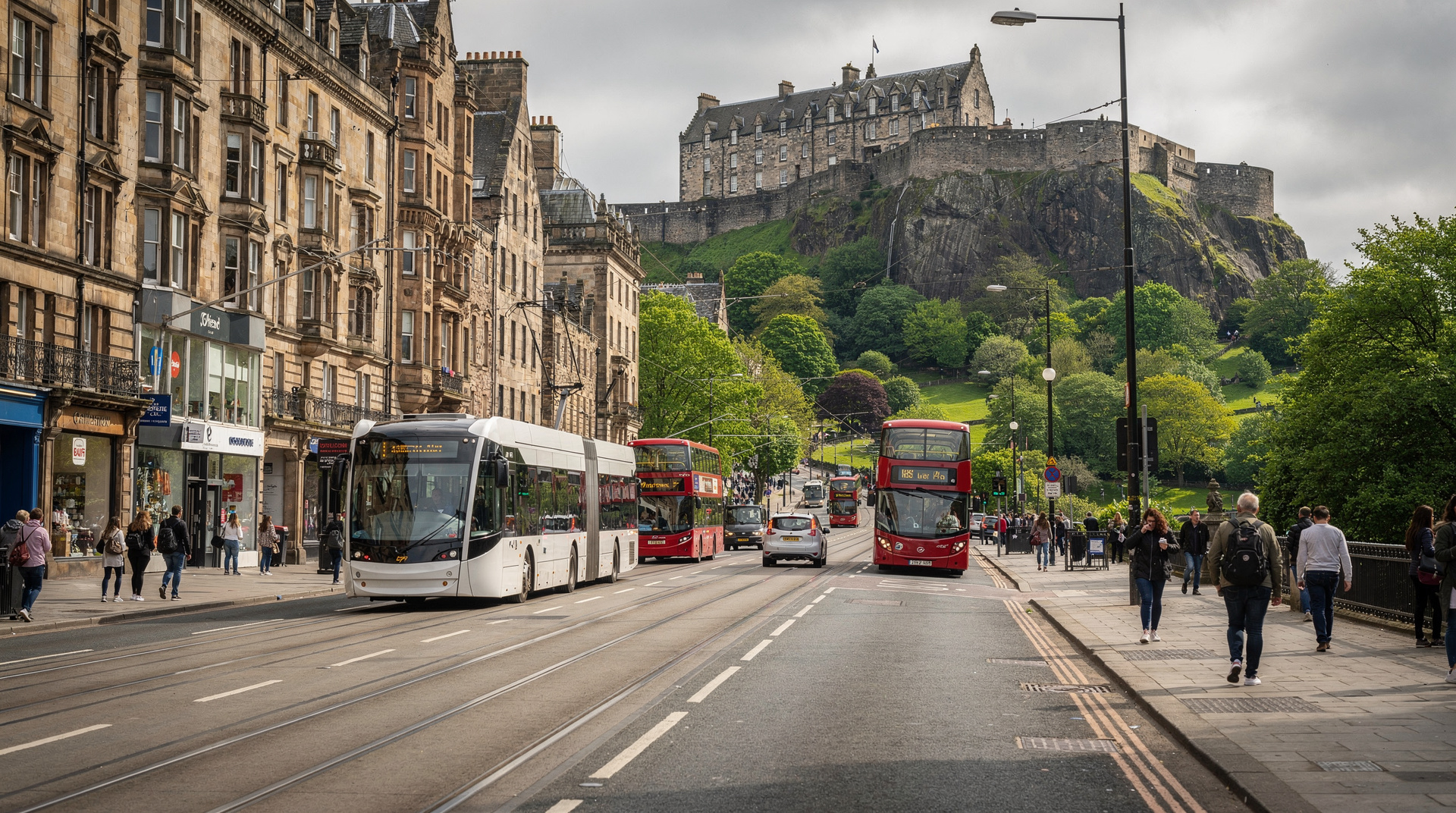
Where to stay in Edinburgh: neighbourhoods and honest advice
Edinburgh Castle: guided walking tour with entry ticket
What is the best area to stay in Edinburgh?
The Old Town (Royal Mile area) puts you closest to the main sights but is noisy and expensive. New Town is quieter, elegant, and a 10-minute walk from everything. Stockbridge and Bruntsfield offer a more local feel at better prices. Leith is cheaper still and has Edinburgh's best restaurants.
Choosing where to stay in Edinburgh: the honest picture
Edinburgh is a compact city and the decision of where to stay is less about access and more about noise, price, and atmosphere. Every neighbourhood listed in this guide is within 20-30 minutes of the main attractions by foot or public transport. The differences are in what you pay, how much noise you hear at night, and what kind of Edinburgh you experience outside the tourist circuit.
This guide gives the honest assessment of each area — including the downsides that most accommodation sites omit.
| Where | Old Town (central) to Leith (25-30 min bus) |
| Cost | Around £70-200/night double, peak season |
| Best for first-timers | Old Town or New Town |
| Best value | Stockbridge, Bruntsfield, Leith |
| Book ahead | 6-12 months for August, 4-6 months for Hogmanay |
Old Town (Royal Mile and surroundings)
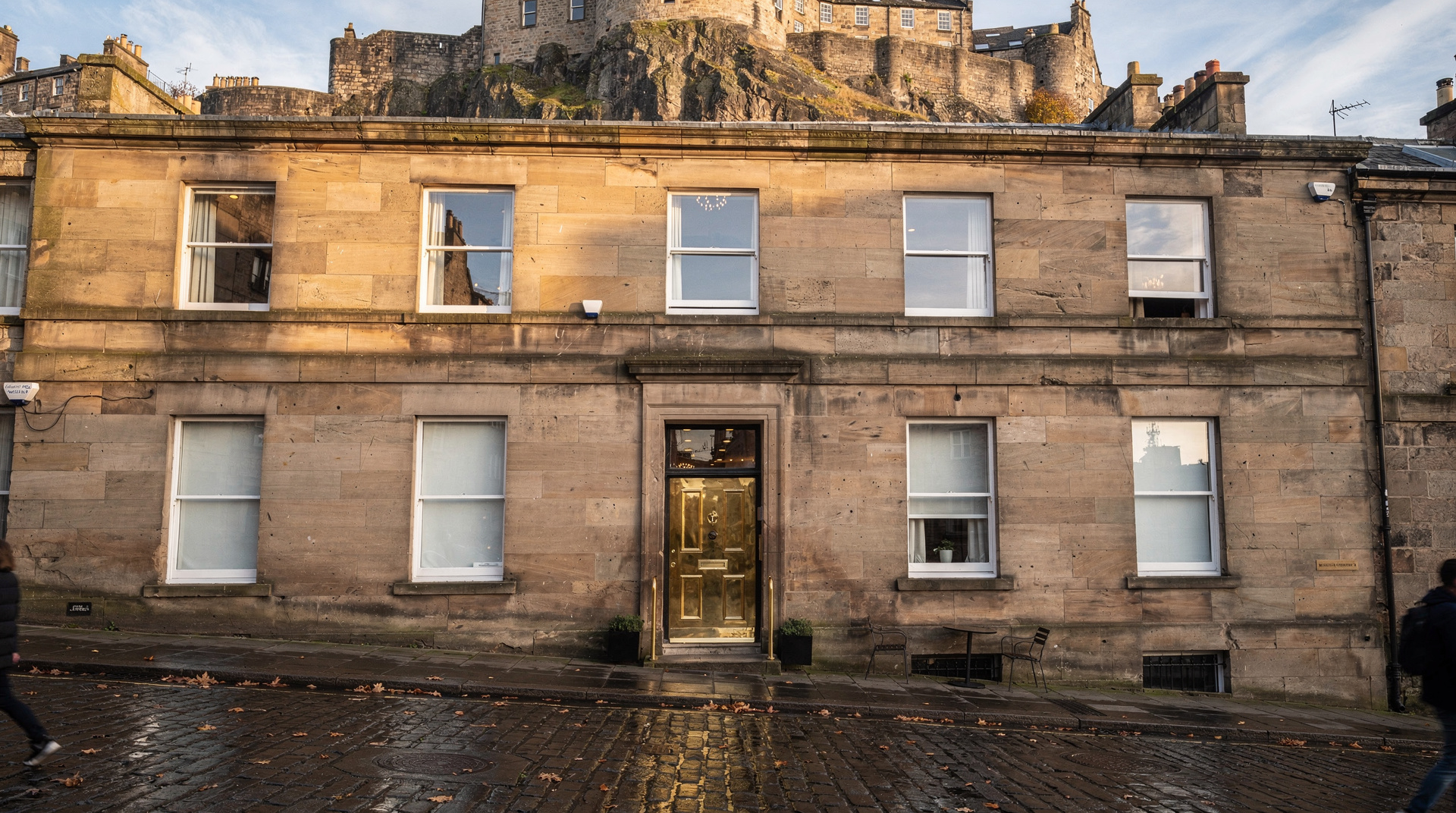
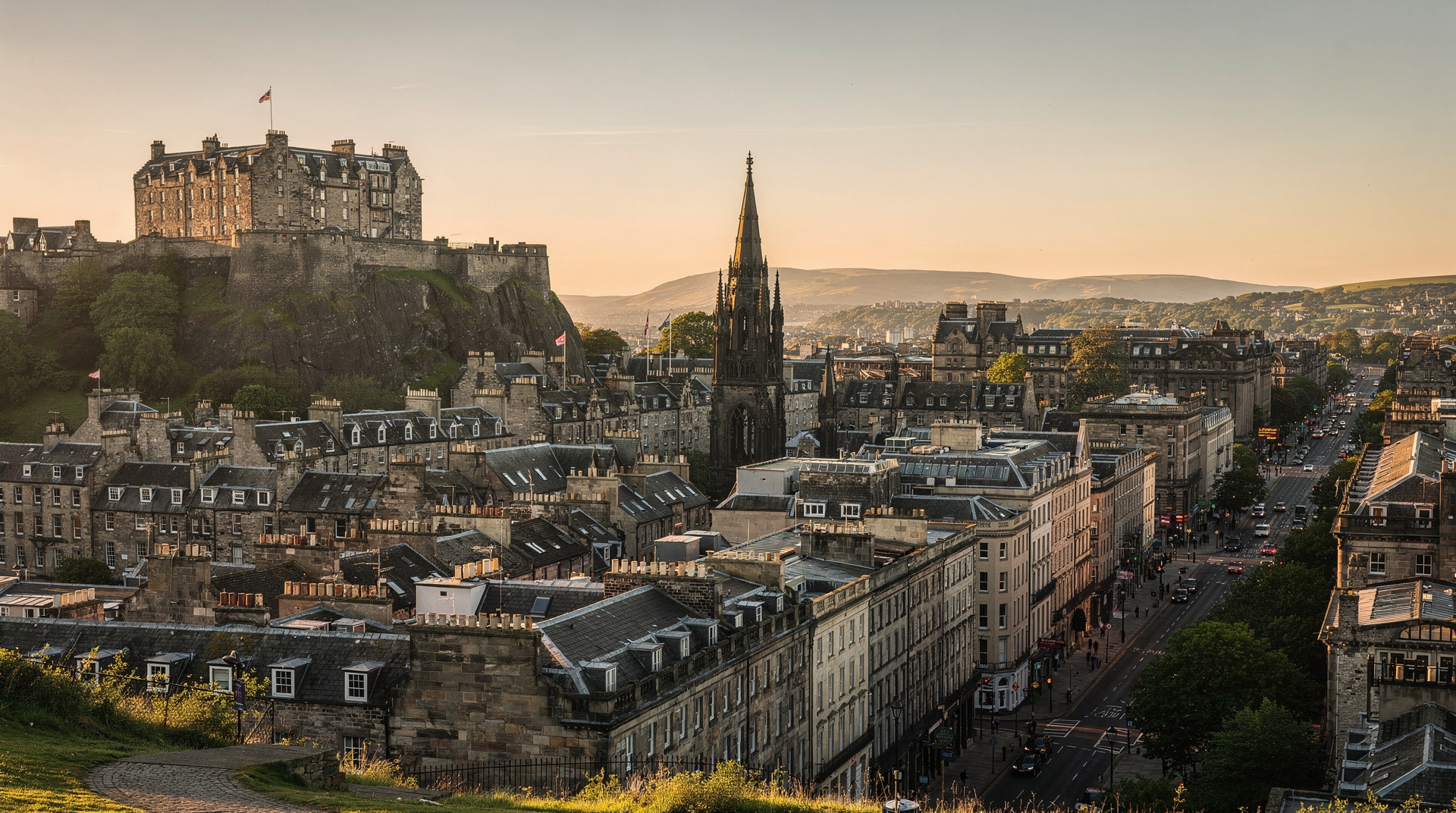
The appeal: Maximum convenience. The Royal Mile puts you within five minutes’ walk of Edinburgh Castle, the underground vaults, Greyfriars, and most of the major tourist sights. You can be at the castle at opening time (9:30am) without rushing. The area looks extraordinary at night, with the closes and closes lit and the castle above.
The honest caveat: The Old Town is noisy. The Royal Mile itself is primarily a tourist thoroughfare and the bar noise, restaurant noise, and foot traffic in high season — particularly July and August — carry into the night and into guesthouses and hotels on the main strip. Accommodation directly on the Royal Mile tends to be expensive relative to quality. Some of the best-known Old Town hotels occupy beautiful historic buildings that have thin walls, steep stairs, and no lifts — fine for some visitors, problematic for others.
Prices: Expect to pay £120-200 per night for a decent mid-range double in peak season (July-August, Hogmanay), £70-130 in shoulder season. Some Royal Mile guesthouses come in cheaper but read reviews carefully for noise and building quality.
Best for: First-time visitors who want to be walking distance from everything and do not mind paying a premium. Visitors staying for two or three nights who want maximum efficiency.
Not ideal for: Light sleepers, families with young children, those on tighter budgets.
If you do base yourself here, the location makes it easy to fold a structured visit into your first morning, such as a guided visit to the castle with entry arranged in advance, before the day-trippers fill the esplanade. The Edinburgh Castle guide and the Old Town destination page show what is within easy reach, and the Royal Mile guide explains which stretches are worth your time and which are best skipped.
For specific hotel recommendations in the Old Town, see the best hotels Edinburgh Old Town guide.
New Town (Georgian Edinburgh)
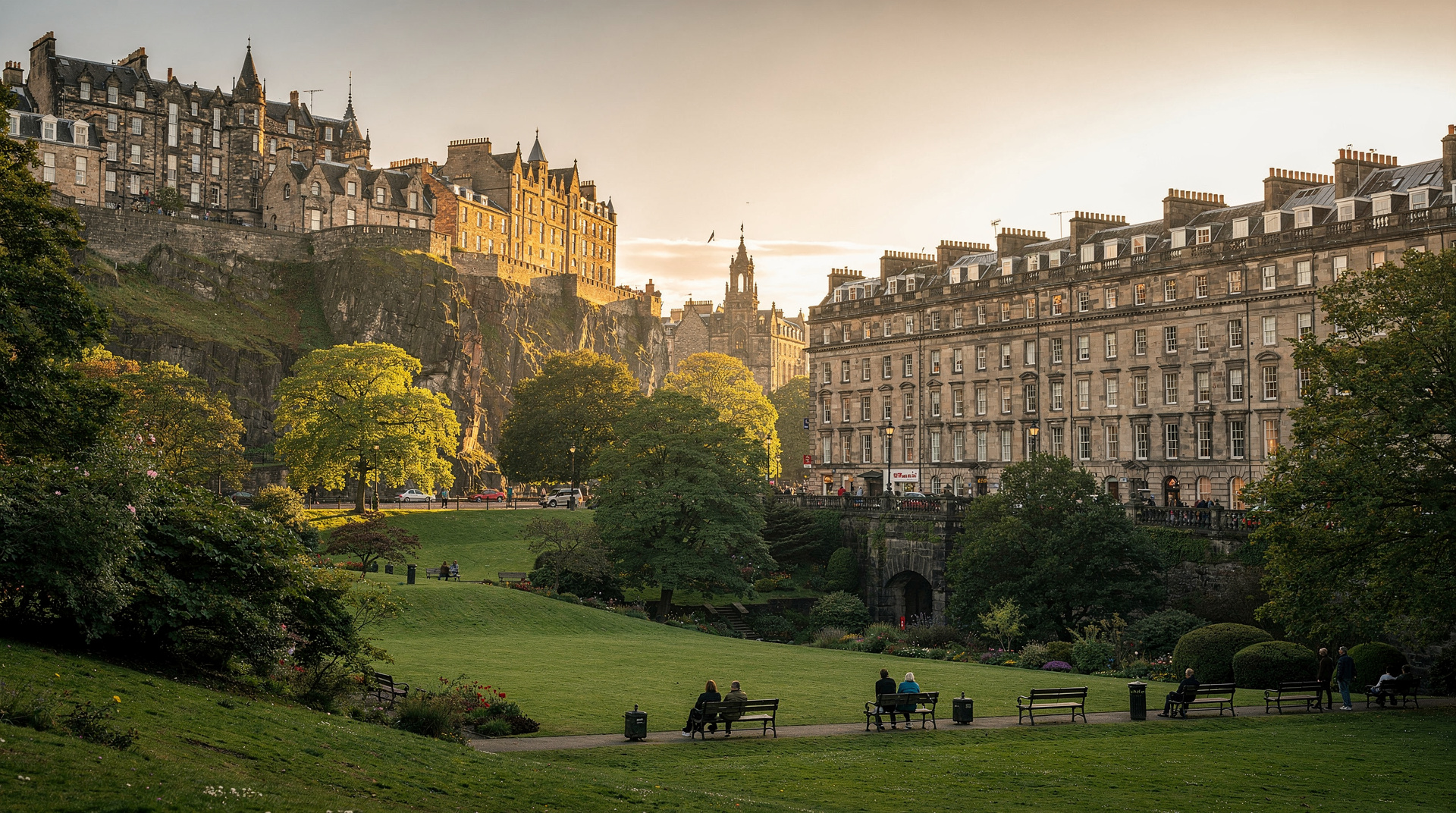
The appeal: The New Town — Edinburgh’s Georgian grid north of Princes Street — is architecturally one of the most beautiful planned urban neighbourhoods in the world. Streets like Heriot Row, Moray Place, and Drummond Place are genuinely stunning. Accommodation in New Town tends to occupy Georgian town houses that are well-maintained and quieter than the Old Town. You are 10-15 minutes from the castle on foot, but the walk down the Mound or along Princes Street is straightforward.
The honest caveat: New Town is less atmospheric in the evening than the Old Town — it is a largely residential area and quieter at night, which for some visitors is exactly what they want. The nightlife is limited unless you specifically seek it out. Some Georgian buildings have top-floor flats with no lifts that involve long stair climbs.
Prices: Similar to the Old Town for quality accommodation — £100-180 per night in peak season — but you often get more space and quieter streets for the money.
Best for: Couples, visitors staying four or more nights who want a base that feels like living in Edinburgh rather than touring it, those who value Georgian architecture and quieter streets.
Staying here also gives you a head start on exploring the neighbourhood itself. Many visitors enjoy a walking tour through the New Town and down to Dean Village on a first morning, which doubles as an orientation to the Georgian grid. The New Town destination page and the Dean Village page cover the area on your own terms, and the Water of Leith Walkway guide is a pleasant way to connect the two with Stockbridge.
For a comparison of the two areas, see the Old Town vs New Town guide.
Stockbridge
Stockbridge is a village-like neighbourhood about 15 minutes’ walk from Princes Street, following the Water of Leith northwest from the city centre. It has Edinburgh’s best independent food culture — independent cafes, a Sunday farmers’ market, good delis, and restaurants that are popular with locals rather than tourists.
Accommodation: Mostly B&Bs, guesthouses, and self-catering flats rather than large hotels. Prices run £70-120 per night for a double in peak season, somewhat cheaper than the central areas.
Best for: Visitors who want a more local Edinburgh experience, foodies, those staying more than a week, couples on a second or third visit who already know the tourist circuit.
Getting to the sights: Flat walk to New Town (10 minutes), then the Mound or Princes Street to the Old Town (another 10-15 minutes). Very walkable.
If you stay here, you can still give your first day some structure with a guided walk through the Old Town highlights, then retreat to Stockbridge’s quieter streets in the evening. The Stockbridge destination page and the where to eat in Edinburgh guide are useful for planning meals nearby.
Bruntsfield and Morningside
The south side of Edinburgh — Bruntsfield, Morningside, and Marchmont — is a residential area with excellent independent cafes, good bookshops, and a Tenement-style urban character that feels genuinely Scottish rather than tourist-oriented. Bruntsfield is about 25 minutes’ walk from the Royal Mile but has direct bus links to the centre.
Accommodation: B&Bs, small hotels, and self-catering flats. Prices tend to run 10-20% cheaper than equivalent quality in the Old Town.
Best for: Visitors who have been to Edinburgh before and want to see beyond the tourist circuit, those with a longer stay, budget-conscious visitors who are comfortable with a bus commute.
Leith
Leith, Edinburgh’s historic port district, has transformed significantly in the past decade. It now has Edinburgh’s best restaurant scene, excellent coffee shops, and a genuine neighbourhood identity that is independent of the tourist circuit. The Royal Yacht Britannia is moored here.
Accommodation: Mainly boutique hotels, self-catering flats, and a growing number of high-quality guesthouses. Prices are typically 10-30% lower than equivalent Old Town options.
Getting to the sights: 25-30 minutes by bus or Lothian tram to the city centre. Not walking distance for most people, which is the main drawback.
Best for: Foodies, visitors staying a week or more, those primarily focused on the Britannia and Leith’s own attractions, visitors who prefer local neighbourhoods to tourist zones.
The Leith neighbourhood guide covers the area in more detail.
Haymarket and Dalry
Haymarket, just west of the city centre, is a useful option for visitors arriving and departing from Waverley or Haymarket rail stations — the area is well-connected and has a range of budget-to-mid-range accommodation. It lacks the character of Stockbridge or the Old Town but has good bus and tram links and is genuinely convenient.
West End
The West End, immediately west of the New Town around Shandwick Place and Melville Street, is a quieter and slightly more upscale option than Haymarket while keeping the same convenience for rail travellers. Georgian terraces here have been converted into boutique hotels and serviced apartments, and the tram runs directly through it towards the airport. The West End neighbourhood guide has the detail on what’s nearby.
Best for: Visitors who want New Town-style architecture at a slightly lower price, and anyone connecting to or from the airport by tram.
Portobello: the seaside alternative
Portobello, Edinburgh’s Victorian seaside suburb, is an unconventional but genuinely rewarding base if you don’t mind a 20-25 minute bus or tram-and-walk journey into the centre each day. The wide sandy beach, the promenade cafes, and a growing wild-swimming and paddleboarding scene give it an atmosphere unlike anywhere else on this list. The Portobello guide covers the beach and the neighbourhood in more depth.
Accommodation: Mostly Victorian guesthouses, self-catering flats, and a handful of seafront Airbnbs. Prices run noticeably lower than the Old Town — often £60-100 per night in peak season.
Best for: Longer stays, visitors travelling with a car who want a change of pace from the tourist centre, and anyone who wants a beach walk as part of the daily routine. Not ideal if you plan to be out late in the Old Town every night, since the last buses back thin out after midnight.
August and Hogmanay: booking strategy
During the Edinburgh Festival Fringe (entire month of August) and Hogmanay (29 December-1 January), accommodation across Edinburgh prices surge dramatically and availability is limited. During August, prices can be 40-80% higher than the shoulder season equivalent. Book six to twelve months in advance for August. Book four to six months in advance for Hogmanay.
Outside these periods, booking four to eight weeks in advance is generally sufficient for mid-range options. Last-minute booking in Edinburgh is possible but expensive in peak season and carries real risk of being left with limited options.
For timing advice, see the best time to visit Edinburgh guide.
Self-catering vs hotels
Edinburgh has a large self-catering market through Airbnb and comparable platforms, particularly in the New Town and Stockbridge where Georgian town houses have been divided into large flats. Self-catering typically offers better value for groups of three or more and for longer stays. Families with young children often find self-catering more practical than hotels for the flexibility of meal times and space.
Hotels concentrated in the Old Town and Haymarket are easier for short stays where you want services without the logistics of managing a flat. Boutique hotels in the New Town offer the best combination of service and atmosphere.
Budget accommodation options
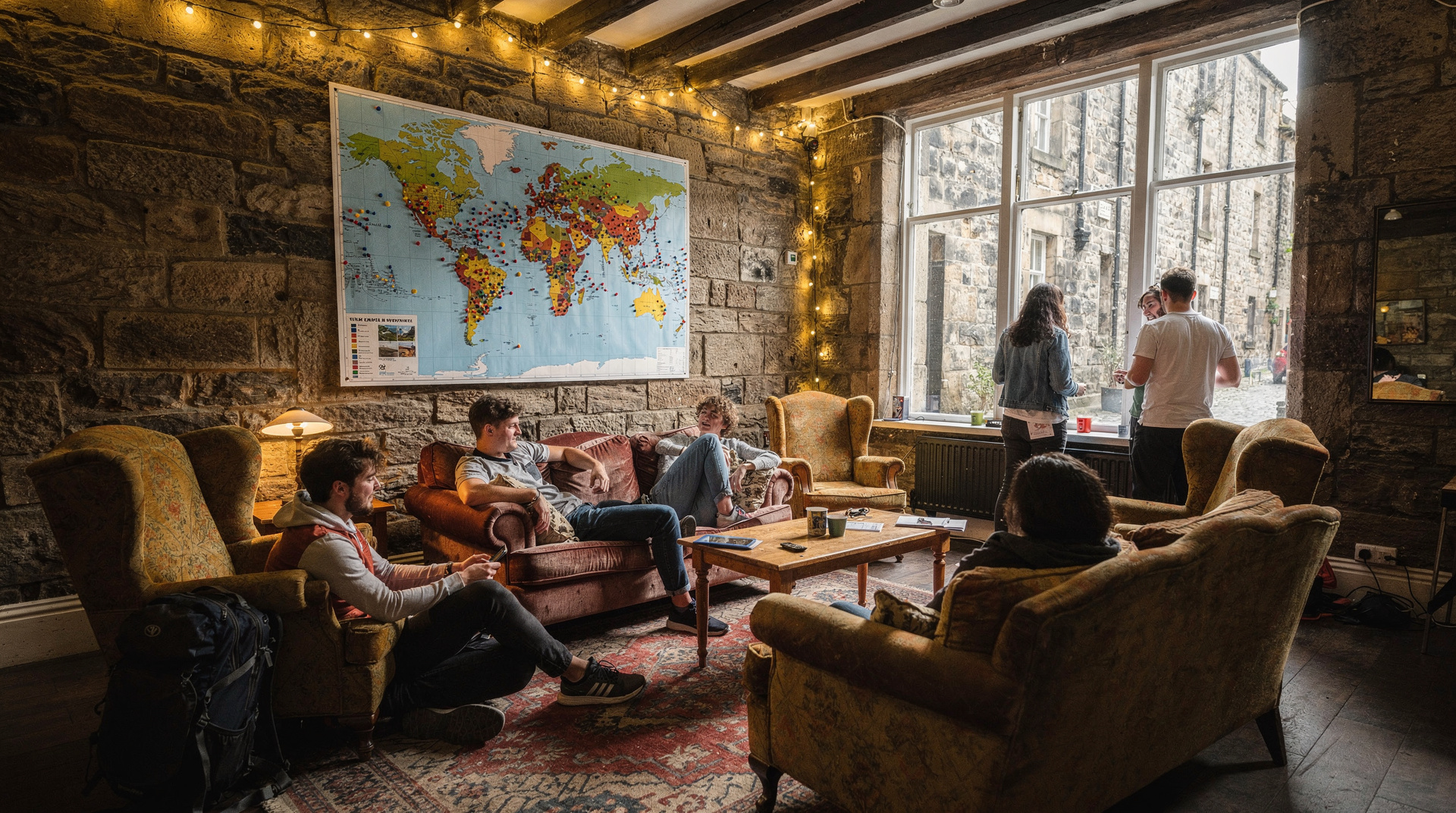
See the budget accommodation Edinburgh guide for hostels, budget guesthouses, and money-saving strategies. Edinburgh has several excellent hostels in the Old Town that offer private rooms as well as dormitories, which can be good value for solo travellers and young couples. The Edinburgh on a budget guide covers broader cost-saving strategies.
Edinburgh’s emerging accommodation neighbourhoods
Beyond the traditional Old Town and New Town areas, several neighbourhoods have developed significant accommodation infrastructure worth considering:
Tollcross and Bruntsfield: Immediately south of the Old Town, these areas are genuinely local in character with excellent independent food and coffee culture. The bus links to the centre are fast (10-15 minutes on multiple routes). Accommodation tends to be Victorian guesthouses and B&Bs at prices 15-20% lower than Old Town equivalents. For visitors who want a local neighbourhood feel without the Old Town noise, this is an increasingly popular choice.
Abbeyhill and Easter Road: East of Holyrood, bordering the east side of the park, Abbeyhill has a cluster of new boutique guesthouses and Airbnb properties at competitive prices. The Holyrood Park is walkable (five minutes) and the city centre is 20-25 minutes on foot or 10 minutes by bus. A genuinely good option for visitors focused on Holyrood Park and Arthur’s Seat.
Gorgie and Dalry: West of the Haymarket area, these traditional working-class residential neighbourhoods have growing budget accommodation options. Less atmospheric than the Old Town or Stockbridge, but convenient for Haymarket Station and with good bus connections to the centre. Suitable for visitors primarily using Edinburgh as a logistical base.
What to know about Scottish hospitality conventions
Edinburgh accommodation has specific conventions worth knowing before arrival:
“Full Scottish breakfast”: Most Edinburgh guesthouses and B&Bs offer this as a substantial morning meal. A proper full Scottish includes: bacon, square sausage, fried or scrambled eggs, black pudding, haggis, baked beans, grilled tomato, and toast. Porridge is typically available as an alternative. The quality of a guesthouse breakfast is often the most reliable indicator of overall quality — proprietors who cook well are usually also proprietors who maintain their properties well.
Check-in times: Standard check-in is 3pm at most Edinburgh properties. If you arrive on a morning flight or early train, most properties will hold your luggage in a secure room and contact you when your room is ready. This typically requires pre-arrangement. Many budget hotels charge £15-25 for guaranteed early check-in.
Tipping conventions: Unlike restaurants, tips are not expected at guesthouses and B&Bs in Scotland. A verbal compliment about the breakfast or the room is more conventional than a cash tip. In restaurants, 10% is standard for good service; 12.5% service charges are increasingly added automatically (check the bill before adding more).
Practical things to check when booking Edinburgh accommodation
Noise: The key underrated factor in Edinburgh. The Royal Mile, the Grassmarket, Cowgate, and the area around George Street (New Town nightlife) all generate late-night noise on weekends. If noise is a concern, specifically check reviews for the property’s sound insulation and street-facing position, not just the general star rating. Properties on interior courtyards, in residential streets off main thoroughfares, and in the Southside or Stockbridge areas are systematically quieter.
Steps and lifts: Edinburgh is built on volcanic rock and the historic buildings have narrow stairwells and no lifts. This matters for families with pushchairs, visitors with heavy luggage, and anyone with mobility considerations. Many Old Town properties cannot accommodate luggage wheels on their stairs. Check specifically for lift access if this is relevant to your group.
Breakfast: Scottish hotel and guesthouse breakfasts are generally good quality. Full Scottish breakfasts (bacon, eggs, sausage, haggis, black pudding, beans, toast) are a reasonable daily start and included in most B&B rates. Hotel breakfasts tend to be more expensive (typically £12-18 if not included in the room rate) and the quality does not always justify the price. If your accommodation rate does not include breakfast, the Stockbridge, Bruntsfield, or Leith cafe scenes offer better quality for lower prices than most hotel breakfast rooms.
Parking: Edinburgh’s Old Town and New Town have very limited parking. If you are arriving by car, accommodation with its own parking is worth a premium, particularly for extended stays. Alternatively, park at a Park and Ride (various locations on the Edinburgh periphery, with bus connections to the centre) and use public transport. Driving into the Old Town and parking on the Royal Mile is not possible without reserved accommodation parking.
Wi-Fi: Almost all Edinburgh accommodation has Wi-Fi. Speed varies with the age of the building’s infrastructure — older Old Town properties occasionally have thin walls and inconsistent coverage.
Check-in times: Most Edinburgh hotels and guesthouses have standard check-in from 3pm. If you are arriving significantly earlier (e.g., on an early morning flight or train), most properties will hold your luggage and confirm your room is ready when they can. Some allow early check-in for a small charge (£15-25) — worth considering if you need to freshen up before an afternoon of sightseeing.
Neighbourhood comparison at a glance
| Neighbourhood | Typical price (peak) | Noise at night | Walk to Royal Mile | Best for |
|---|---|---|---|---|
| Old Town | £120-200 | High | 0-10 min | First-timers, short stays |
| New Town | £100-180 | Low-moderate | 10-15 min | Couples, longer stays |
| Stockbridge | £70-120 | Low | 15-20 min | Foodies, repeat visitors |
| Bruntsfield/Morningside | £80-140 | Low | 20-25 min | Budget-conscious, repeat visitors |
| Leith | £70-130 | Low-moderate | 25-30 min (bus) | Foodies, week-long stays |
| Haymarket/West End | £80-150 | Moderate | 15-20 min | Rail and airport connections |
| Portobello | £60-100 | Very low | 20-25 min (bus) | Longer stays, families with a car |
Solo travellers, families, and travelling with a car
Solo travellers generally do well in the Old Town for the first night or two — it’s the easiest area to meet people and orient yourself — then can move to Stockbridge or Bruntsfield for a quieter, more local few days if the trip runs longer. Edinburgh’s hostel scene, several with private rooms as well as dorms, is concentrated in the Old Town. See the solo travel Edinburgh guide for more on this.
Families with young children are usually better off in New Town, Stockbridge, or Portobello than in the noisier parts of the Old Town, where late-night bar traffic can disturb light sleepers. Self-catering flats give more flexibility around nap times and meals than a hotel room. The Edinburgh with kids guide has broader trip-planning advice.
Travelling with a car changes the calculus significantly, since the Old Town and central New Town have very limited parking. Most visitors are better off without a car in Edinburgh itself — see the do you need a car in Edinburgh guide — but if you’re combining the city with a Highlands road trip, a Haymarket, West End, or Portobello base with off-street parking is usually easier to manage than a central hotel with none.
Arriving by plane or train: Edinburgh Airport connects to the city centre by tram (about 35 minutes to the West End and Princes Street) or bus. Waverley Station sits right in the centre of town, a short walk from both the Old Town and New Town. The airport to city centre guide and the getting around Edinburgh guide cover the practicalities of reaching your accommodation from either.
Edinburgh’s most distinctive accommodation types
Historic building guesthouses: Edinburgh’s Old Town and New Town are full of buildings with extraordinary bones — medieval tower houses, Georgian town houses, Victorian tenements — that have been converted to guesthouses. Staying in a genuinely historic Edinburgh building is a different experience from a modern hotel and can be one of the most memorable parts of an Edinburgh trip. Look for guesthouses with properties on Circus Lane (Stockbridge), in Charlotte Square (New Town), or in the Grassmarket area. The trade-off is usually in modern amenities — older buildings have character but sometimes lack contemporary insulation and soundproofing.
Boutique hotels: Edinburgh’s boutique hotel scene has grown significantly in the past decade. Properties like the Nira Caledonia in Stockbridge, the Witchery suites near the castle, and several New Town town house hotels offer genuinely personalised service and distinctive rooms. Prices start from around £150 per night in shoulder season and rise significantly in peak periods, but the experience is substantively better than a chain hotel at similar prices.
University accommodation: Edinburgh University and Heriot-Watt University make accommodation available during vacation periods (approximately late June through August, and Christmas-Easter). En suite rooms in student residences near the Old Town and Southside are available from around £40-60 per night and are clean, functional, and well-located. Not luxurious, but genuinely good value for the location.
Glamping and rural options: For families or visitors who want to include some non-urban Scotland in their Edinburgh base, Airbnb and similar platforms list rural cottages and yurts in the Pentland Hills and Lothian countryside within 30-45 minutes of the city. These work well for car-based visitors on longer stays.
The Edinburgh accommodation market in context
Edinburgh’s accommodation supply is large — over 40,000 beds in the city and immediate surroundings — but demand in August and at Hogmanay genuinely exceeds supply. This is not a rhetorical travel industry claim; it is reflected in the real price spikes and the genuine difficulty of finding rooms within budget during peak periods.
Outside these windows, Edinburgh’s accommodation market is competitive and prices reflect value reasonably well. A mid-range hotel in September in Edinburgh is priced at a level that represents fair value — better, per pound spent, than an equivalent hotel in London or Paris.
The most important single piece of advice for Edinburgh accommodation is timing. Visiting in May or June (or September for equal value) rather than August will typically save a family of four £200-400 on a three-night accommodation bill while delivering an equal or better experience of the city. See the best time to visit guide.
Frequently asked questions about where to stay in Edinburgh
Is the Royal Mile a good place to stay?
It depends on what you want. The Royal Mile is extremely convenient for the sights but loud at night and expensive. If this is your first time in Edinburgh and you want to be immediately in the heart of things, it works well for two to three nights. If you are a light sleeper, have young children, or are staying more than three nights, you will likely be happier slightly off the main drag.
How close do you need to be to the main sights?
Edinburgh is small. From New Town to the castle esplanade is about 20 minutes on foot. From Stockbridge to Greyfriars is about 20 minutes on foot. The city is genuinely walkable and proximity to the sights is less critical than in a larger city. A good rule of thumb: if you are within 30 minutes’ walk of Waverley Station, you are well-placed for everything.
When should you book Edinburgh accommodation?
For August (Fringe): six to twelve months in advance. For Hogmanay: four to six months. For May-June and September (the best value periods): four to eight weeks is usually enough. For October-April (excluding Hogmanay): two to four weeks, or even last-minute in the quietest months. See the best time to visit guide.
Is it worth staying near Edinburgh Zoo?
Not specifically. The zoo is in Corstorphine, 30 minutes by bus from the centre. Unless you have a particular reason to be in that area, staying in Corstorphine means a long journey to every other attraction. It is more practical to stay centrally and take the bus to the zoo.
What is the difference between Old Town and New Town accommodation?
Old Town: central, atmospheric, steep and cobbled streets, tends to be noisier, varied quality, generally expensive. New Town: Georgian architecture, wider streets, quieter, tends to be better built, similar prices to Old Town but often better value for quality. For a deeper comparison, see the Old Town vs New Town guide.
Is Leith or Stockbridge better for a first visit?
Neither is ideal for a very short first visit, since both require a bus or tram journey into the centre rather than a walk. If you’re staying three nights or fewer and it’s your first time, the Old Town or New Town will save you time. If you’re staying a week or more, or you’ve visited Edinburgh before, both Leith and Stockbridge offer a better neighbourhood experience and lower prices — Leith for restaurants, Stockbridge for a village feel and easier walking access.
Do I need a car if I’m staying outside the centre?
Not usually. Portobello, Leith, Bruntsfield, and Haymarket all have frequent bus or tram connections into the centre, typically running every 10-15 minutes during the day. A car adds parking cost and hassle without saving meaningful time for city-centre sightseeing; it only becomes useful if you’re also planning day trips into the Highlands or Borders where public transport is limited. See the do you need a car in Edinburgh guide.