Best hotels in Edinburgh's Old Town: honest picks for 2026
Edinburgh: Old Town history and tales walking tour
What are the best hotels in Edinburgh's Old Town?
The Old Town has a wide range from five-star to budget. The Witchery by the Castle suites are the most atmospheric splurge. The Inn on the Mile is a reliable mid-range option. For budget, St Christopher's Inn and Smart City Hostel offer decent private rooms. All are within five minutes of the main sights.
Honest expectations for Old Town hotels
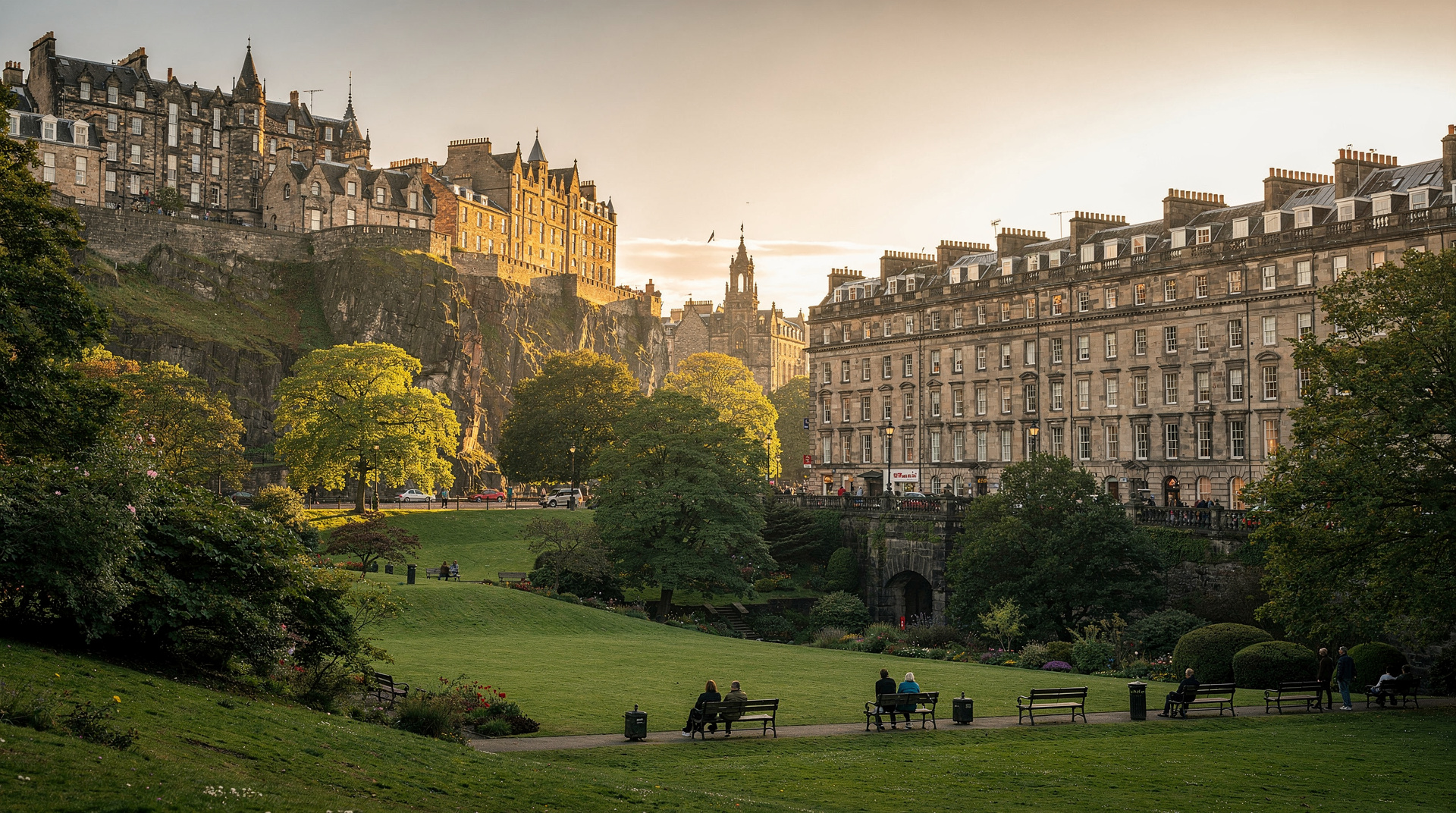
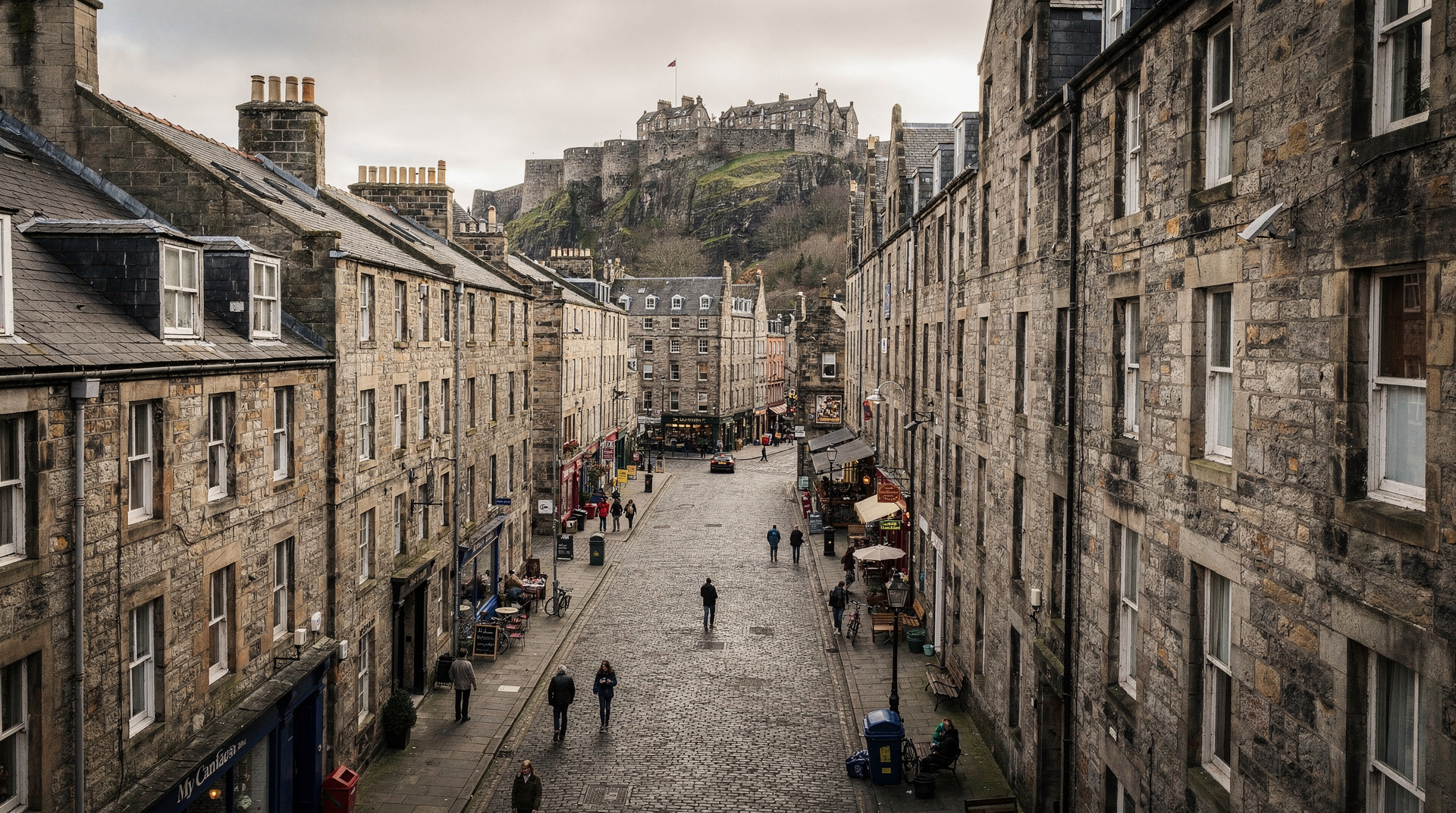
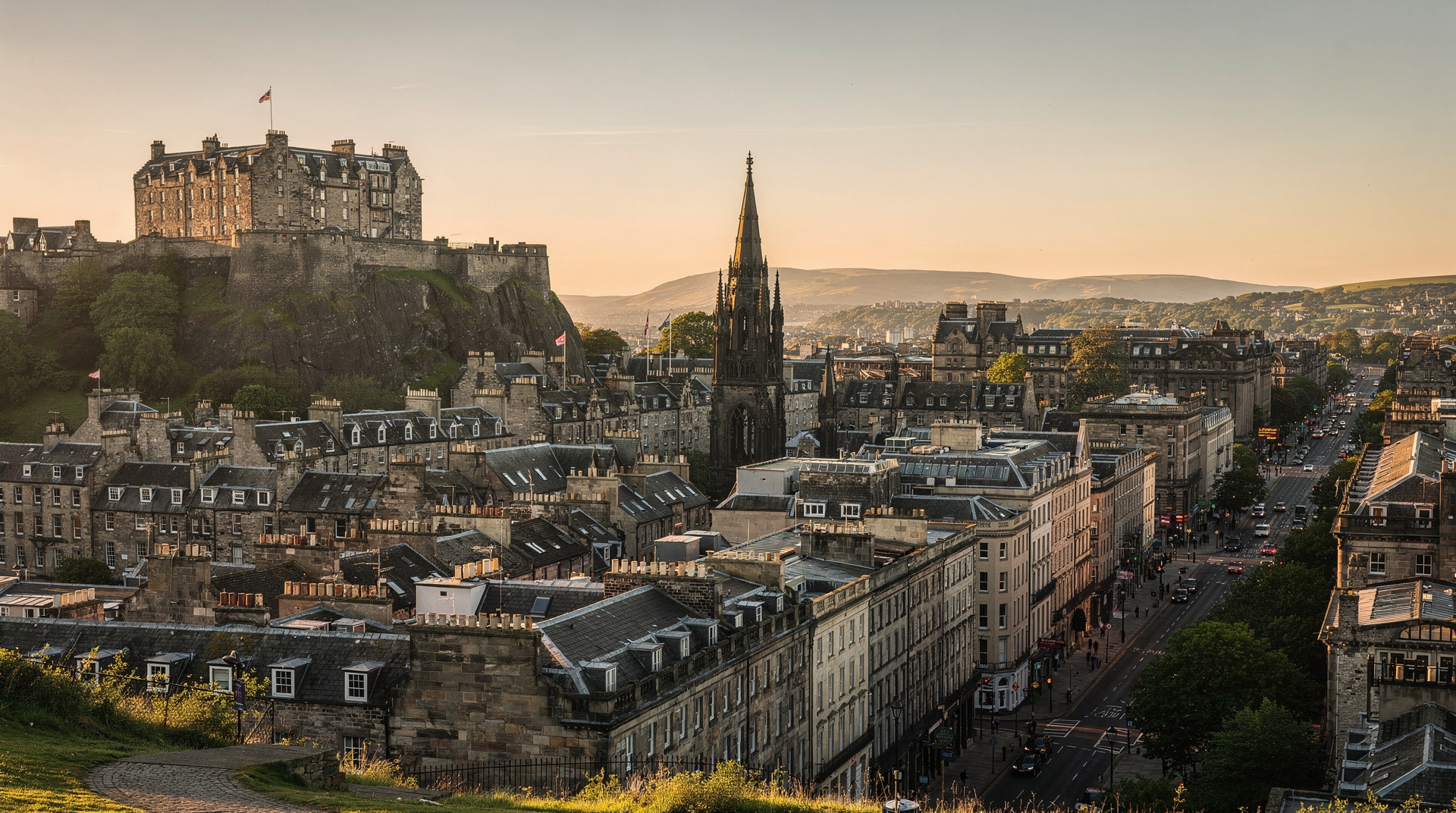
The Old Town is Edinburgh’s most atmospheric neighbourhood for accommodation — the closes, the medieval buildings, the castle above — but it is also where you need to go in with the most realistic expectations. Old Town hotels occupy historic buildings that were not designed for modern hotel standards. Stairs are steep, lifts are absent or small, walls are thin, and street noise from the Royal Mile carries until late at night.
The trade-off is proximity. No neighbourhood in Edinburgh puts you closer to the main sights. You can be at Edinburgh Castle’s gates at 9:30am when they open, back for lunch, and exploring the vaults in the afternoon without using any transport at all.
This guide gives honest assessments of what to expect at each price point, rather than simply listing properties by category. Prices are indicative for peak summer 2026 — they can be 30-40% lower in spring and autumn.
| Where | Royal Mile, Grassmarket, Cowgate, Southside — all within the Old Town core |
| Cost | Around £60-100 budget, £120-200 mid-range, £250-600 splurge per night |
| Best for | First-time visitors on a 2-3 night stay who want to walk to the castle |
| Watch for | Steep stairs, no lifts, street noise until midnight or later |
| Booking | 4-8 weeks ahead normally; 6 months ahead for August Fringe |
The honest issue with Royal Mile accommodation
Accommodation on the Royal Mile itself is a mixed bag. The street runs from the castle down to Holyrood and is lined with tourist shops, restaurants, and pubs that generate noise until at least midnight in the summer. Rooms facing the street get this noise. Rooms facing interior courtyards or back closes are quieter.
If you are booking a Royal Mile hotel or guesthouse, always look for rooms that face away from the main street, or check reviews specifically for noise. A beautiful period room in a historic building is much less enjoyable if you are woken by stag parties at 1am.
Splurge options (£250-600 per night)
The Witchery by the Castle on Castlehill (the top of the Royal Mile, immediately below the castle esplanade) is the Old Town’s most distinctive accommodation. The seven theatrical suites are individually decorated in an over-the-top Gothic style — think four-poster beds, canopied baths, tapestries, and deep velvet. The restaurant beneath is one of Edinburgh’s best for a special dinner. This is not a hotel for minimalists or those who want a good night’s sleep in a quiet room — it is a theatrical experience for two people who want to feel they are sleeping in a Gothic novel. Prices run £350-550 per suite per night. Pre-booking is essential; these seven suites book out months in advance.
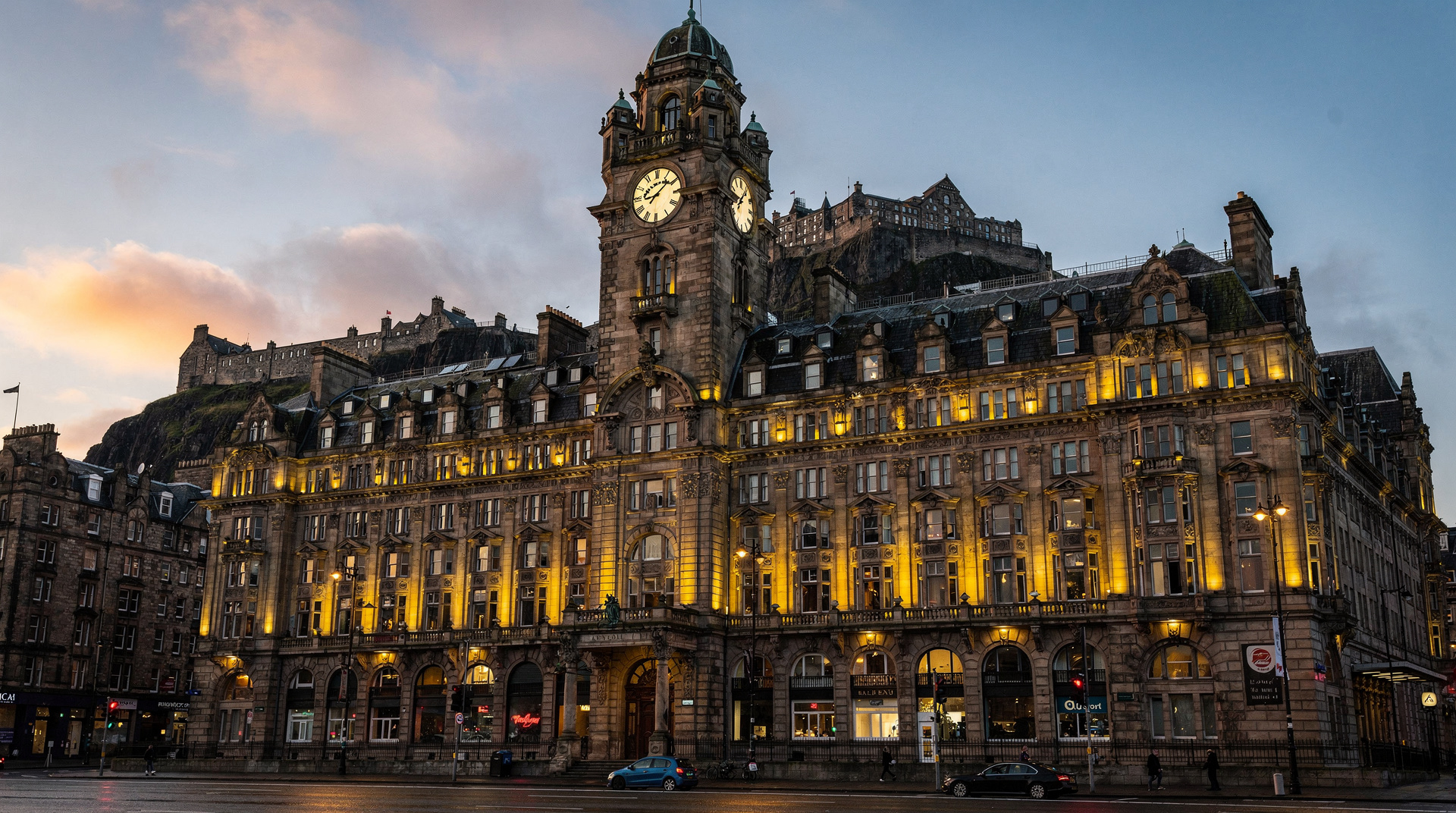
The Scotsman Hotel on North Bridge, in the former premises of The Scotsman newspaper, is a five-star hotel with a dramatic atrium and marble staircase. The location is excellent — on the bridge connecting the Old Town to the New Town, with easy access to both. Rooms are large and well-finished. Prices run £180-350 in peak season.
Old Town Chambers (various properties under this brand on the Royal Mile and nearby streets) offer serviced apartments that combine hotel service with the space and kitchen facilities of self-catering. These work particularly well for families or small groups. Prices run £200-350 per night for a two-bedroom apartment in peak season.
Mid-range options (£100-200 per night)
The Inn on the Mile, on the Royal Mile itself, is a reliable mid-range option in a building that has been sensitively converted from a bank. Rooms are well-proportioned by Old Town standards, the breakfast is good, and the staff are helpful with local recommendations. Expect to pay £120-170 for a double in peak season. Noise from the Mile is present in street-facing rooms — ask for a courtyard-facing room when booking.
The Royal Mile Apartments (various operators) offer self-catering flats in Old Town closes and tenement buildings. Quality varies considerably by operator and specific property — read recent reviews carefully. The best ones offer genuinely good value: a full Edinburgh flat experience with kitchen, living room, and two or three bedrooms for the price of two hotel rooms. The worst ones are poorly maintained and inadequately sound-insulated. Look for operators with specific good reviews from the past 12 months.
Ten Hill Place Hotel, on the Southside just off the Cowgate, is a four-star hotel run by the Royal College of Surgeons and offers very good quality at reasonable prices. It is technically slightly outside the Old Town core but within easy walking distance of the Royal Mile. Quiet location, excellent rooms, good breakfast. Prices around £130-180 in peak season.
Budget options (£50-100 per night for a private room)
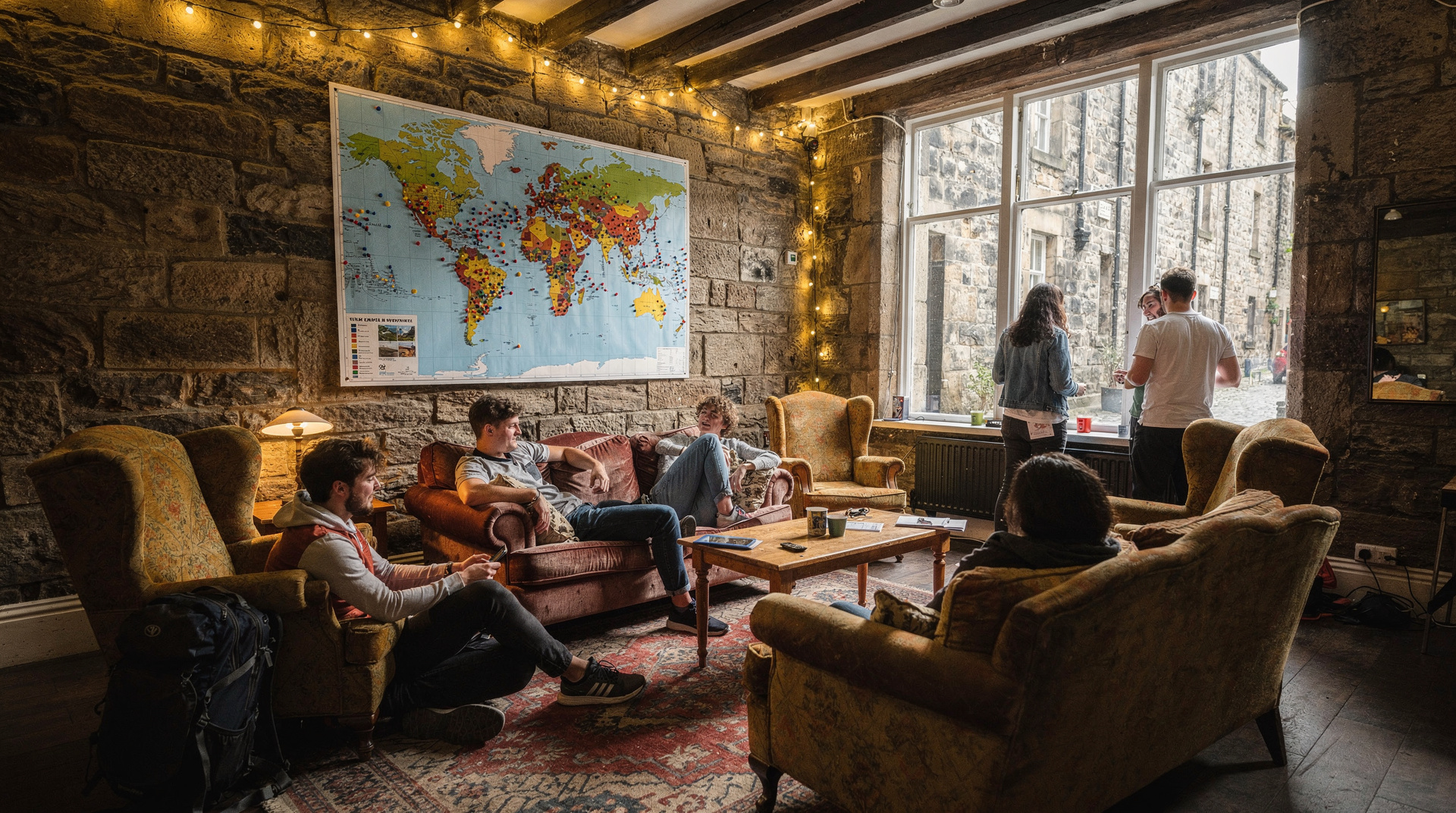
Smart City Hostel on Blackfriars Street (off the Royal Mile, very central) offers both private rooms and dormitories. The private rooms are small but well-maintained, and the location is genuinely excellent. Private doubles in peak season run £70-95, dormitory beds from £25. It is one of the better-quality budget options in the Old Town.
St Christopher’s Inn at the lower end of the Royal Mile offers budget accommodation with a bar and social area below. Good for younger travellers who want to be near the action; less good for those who need quiet. Private rooms from about £60-80 in peak season.
Various guesthouses on Victoria Street, Grassmarket, and the Cowgate offer B&B accommodation at £65-90 per night in peak season. Quality is variable but the streets themselves are attractive and slightly quieter than the Royal Mile. The Grassmarket in particular has several good independent guesthouses; just note that the Grassmarket area also has several bars and can be noisy at weekends.
What to watch out for when booking Old Town accommodation
Check for lifts: Many Old Town buildings have no lift and steep stairs. If this is an issue for mobility reasons, confirm with the property directly — not all booking platforms clearly indicate the absence of lifts.
Read noise reviews specifically: General positive reviews do not tell you whether a room is quiet. Look specifically for reviews that mention noise levels, especially from visitors who stayed in high summer or during the Fringe.
Understand what “Old Town” means on booking platforms: Some platforms classify hotels in the South Bridge area, the Canongate, or even slightly further afield as “Old Town.” The closer to the castle and the upper Royal Mile, the higher the prices tend to be and the more central you are. The lower Royal Mile (near Holyrood) is genuinely a 15-minute walk from the main sights.
August surcharges: During the Edinburgh Festival Fringe, hotel prices in the Old Town can double or triple. If you are visiting in August, the City Centre or New Town may offer better value at equivalent quality — see the where to stay guide for neighbourhood comparisons.
Self-catering platforms: Airbnb and Booking.com have significant self-catering inventories in the Old Town. For three or more people, a self-catering flat is usually better value than equivalent hotel rooms and gives you more space. Read the specific property reviews carefully rather than relying on star ratings.
Getting the most out of an Old Town stay
The main advantage of the Old Town is that everything is walkable. The castle, Greyfriars, the underground vaults, the National Museum, and Holyrood are all within 15-20 minutes on foot. You do not need a bus or tram unless you are heading to Leith, New Town shopping, or out of the city.
The main disadvantage is the noise and crowds on the Royal Mile. The best strategy is to treat the Royal Mile as a thoroughfare rather than an amenity — walk down it, enjoy the architecture, but eat and drink on streets off it (the Grassmarket, Cowgate, and Candlemaker Row have far better quality and lower prices than the main strip). See the eating on the Royal Mile guide for what to avoid.
For a broader overview of Edinburgh accommodation options, see the where to stay in Edinburgh guide. For budget options across the city, see the budget accommodation guide.
The Old Town walking tour infrastructure is excellent. A Old Town history and tales walking tour is a good way to orient yourself on arrival and understand the neighbourhood you are staying in — most tours depart from the Royal Mile and cover the closes, wynds, and history of the streets you will be walking every day.
What the Edinburgh Old Town hotel review ecosystem misses
Standard hotel review platforms (Booking.com, TripAdvisor, Google Hotels) are systematically weak at capturing the specific variables that matter most for Old Town Edinburgh accommodation. The algorithmic ranking tends to reward volume of positive reviews over specific quality indicators. A hotel with 800 reviews averaging 4.2 stars may be systematically noisier or have harder beds than a guesthouse with 120 reviews averaging 4.7 stars.
What to look for in Old Town reviews specifically:
Reviews mentioning noise: Search specifically for reviews that use words like “noise,” “loud,” “pub,” “street,” “stag party,” or “quiet.” These are more informative than the star rating. A pattern of noise mentions in recent reviews (within the last 12 months) is a reliable indicator.
Reviews from solo vs group travellers: Solo travellers and couples typically review differently from groups. A property that works well for a group of friends on a stag weekend may be systematically worse for a couple wanting a quiet city break. Filter if the platform allows it.
Reviews mentioning stairs or lifts: Properties without lifts will occasionally generate negative reviews from guests who were not warned. If multiple reviews mention stairs as an issue, there are no lifts and the stairs are significant.
Reviews mentioning location accuracy: Some Old Town properties are marketed as “Royal Mile” accommodation when they are 10-15 minutes’ walk from the castle. Reviews from guests who arrived expecting something closer will flag this.
Specific Old Town streets: comparing character and noise levels
The Old Town is not uniformly noisy or uniformly atmospheric. The character varies significantly by street:
Royal Mile (High Street section): Maximum tourist density and maximum noise. The pubs along the High Street section — Deacon Brodie’s, various traditional pubs — are active until 11pm on weekdays and midnight-plus on weekends. The adjacent closes are quieter but some are used as shortcuts by the pub traffic.
Grassmarket: Edinburgh’s most notorious nightlife area for stag and hen parties. The pub density is very high. On Friday and Saturday nights, the Grassmarket can be extremely noisy until 1-2am. Beautiful during the day; difficult to sleep near on weekend nights without good soundproofing.
Victoria Street: The curved street leading from the Grassmarket to the George IV Bridge. Some bars but generally quieter than the Grassmarket itself. Good aesthetic character, slightly less intense noise.
Cowgate: Running below the South Bridge, the Cowgate has clubs and late-night bars at the Grassmarket end and is quieter at the Holyrood end. Accommodation near the Cowgate-Grassmarket junction will hear club music on weekend nights.
Canongate (lower Royal Mile): Generally quieter than the upper Royal Mile. The pubs here are fewer and less predominantly aimed at tourist stag parties. More residential character. Good choice for those who want Old Town location with slightly less noise.
George IV Bridge and Victoria Terrace: The streets connecting the Royal Mile to the Grassmarket and Southside. Mixed use, moderate foot traffic, generally quieter than the Mile itself.
Old Town architecture: what you are actually staying in
The Old Town’s buildings are not just aesthetic backdrops — they are the fabric you are physically occupying and their quirks directly affect your stay. Understanding the building types helps manage expectations.
The tenement: The classic Edinburgh residential form. Multi-storey buildings with a common stair accessed via a close. Pre-modern tenements were built without lifts and the stair design reflects a pre-elevator culture. Staircases are steep, narrow, and winding in the oldest buildings. Rooms are typically smaller than modern hotel rooms. Windows may be small. The views from upper-floor rooms — over closes and rooftops — can be extraordinary.
The conversion: Many Old Town buildings have been converted from their original commercial or ecclesiastical use. Banks, churches, printing houses, and coaching inns have all become hotels or guesthouses. Converted buildings often have unusual floor plans and large original rooms alongside converted service areas. The Scotsman Hotel (former newspaper HQ) and Radisson Blu (former Arches building) are notable examples.
The Victorian infill: The Old Town was substantially rebuilt in the Victorian era to clear slums. Many of the buildings along the Royal Mile that look historic from the outside date from the 1870s-1890s rather than the medieval period. Victorian buildings have better infrastructure than genuinely medieval ones but are still pre-lift and have some quirks.
The new build: Several Old Town hotels occupy purpose-built modern structures designed to fit within the conservation area. These have contemporary infrastructure (proper lifts, soundproofing, plumbing) but may lack the atmospheric character of older buildings. Trade-offs are clear.
Choosing between Old Town accommodation types
For families with young children: Self-catering apartments with a lift are the priority. Several operators specifically advertise family-appropriate Old Town apartments. Check the specific building’s lift access and stair height before booking.
For couples on a romantic break: The Witchery suites are the obvious option if budget allows. For those who cannot stretch to Witchery prices, a New Town Georgian town house guesthouse on a quiet street (Moray Place, Heriot Row area) often delivers more romantic atmosphere than a commercial Old Town hotel at similar prices.
For solo travellers: Smart City Hostel’s private rooms and similar hostel-with-private-rooms options give the best central location at budget prices. The kitchen and common areas of a good hostel also provide the social infrastructure for solo travel that hotel corridors do not.
For visitors with mobility considerations: New Town hotels with lifts are consistently more accessible than Old Town alternatives at similar prices. If you need ground-floor access or reliable lift availability, be explicit when booking and confirm with the property directly.
What makes an Old Town hotel worth the premium
Old Town hotels charge a location premium. The question is whether that premium is justified by the experience. The answer is yes for visitors who:
- Want to walk to the castle at 9:30am when it opens, without transit
- Plan to spend multiple evenings in the Old Town’s pubs, restaurants, and ghost tours without needing a bus at midnight
- Are visiting primarily for the Old Town’s historic character and want the atmosphere to begin from their hotel door
- Are on a short visit (two to three nights) where location efficiency genuinely matters
The premium is not justified for visitors who:
- Are spending most of their time in New Town, Leith, or on day trips
- Are primarily using Edinburgh as a base for Highland day trips (where transport to the coach departure points is the main need)
- Are sensitive to noise and will have trouble sleeping in the tourist district
- Have children who need reliable early-morning and late-night quiet
Room booking specifics: what to ask before confirming
When booking an Old Town hotel or guesthouse, the standard booking process does not ask the right questions. Consider asking:
- Does the room face the street or a courtyard? (Street rooms are noisier)
- Are there lifts to the room floor? If not, how many flights of stairs?
- What is the earliest practical check-in time? (Relevant if arriving on a morning flight)
- Is breakfast included, and what does it include?
- Are there luggage storage facilities if you arrive before the room is ready?
- What is the cancellation policy? (Edinburgh peak season demand means cancellation flexibility has value)
A realistic day using an Old Town base
The value of an Old Town hotel is best judged by what a normal day actually looks like from one, rather than by the room photos. A typical first full day might run: wake at 8am, walk five to ten minutes to Edinburgh Castle’s 9:30am opening without needing transport, spend 90 minutes at the castle before the mid-morning crowds peak, walk back down the Royal Mile browsing the closes, lunch off the main strip in the Grassmarket or Cowgate, an afternoon at Greyfriars Kirkyard and the National Museum, back to the hotel to freshen up, dinner nearby, then an evening ghost tour or whisky bar within walking distance, and back in bed by 11pm without a single bus, taxi, or tram journey.
That zero-transport day is the entire case for paying the Old Town premium — anywhere else in the city, at least two of those legs need a bus or a 20-30 minute walk each way.
The trade-off shows up at night rather than during the day: the same proximity that gets you to the castle in five minutes also puts you five minutes from the Royal Mile’s late pub traffic. Visitors who structure their day around this pattern — active by day, tolerant of some street noise at night — tend to be the happiest with an Old Town stay. Those who need a genuinely silent room every night are usually happier a short bus ride away; see the getting around Edinburgh guide for how easy that trade-off actually is in practice.
Old Town versus the alternatives: a quick comparison
If proximity to the Royal Mile is not a hard requirement, it is worth weighing the Old Town against its nearest rivals before booking. This is the honest trade-off in table form:
| Area | Noise level | Price vs Old Town | Best for |
|---|---|---|---|
| Old Town (Royal Mile) | High, especially weekends & August | Baseline | First-timers, 2-3 night stays, castle proximity |
| New Town | Low to moderate | Similar or slightly higher for equivalent quality | Quiet sleep, Georgian character, shopping access |
| Southside (Ten Hill Place area) | Low | Slightly lower | Value, quiet, still walkable to the Mile |
| Grassmarket/Cowgate | Very high at weekends | Similar to Old Town | Nightlife-focused visitors, budget guesthouses |
| Leith | Low | Lower, but 20 min from sights | Longer stays, foodie visitors, self-catering |
For a fuller neighbourhood-by-neighbourhood breakdown beyond hotels, the Old Town vs New Town guide and the Leith destination guide cover the wider trade-offs.
Orienting yourself before you check in
Arriving into the Old Town for the first time can be disorienting — closes, wynds, and the steep gradient between the Royal Mile and the Grassmarket confuse even confident city travellers on day one. A short guided introduction on arrival pays off quickly: it means you are not spending your first evening lost between your hotel and dinner. The Royal Mile and Old Town walking tour covers the closes, wynds, and key landmarks in around 90 minutes and works well as a first-afternoon activity straight off the train or flight, before you have properly unpacked.
For visitors staying near the castle end of the Mile specifically, pairing accommodation with a fast-track entry avoids losing a morning to queuing — see the Edinburgh Castle fast-track tour for a way to see the castle before the mid-morning crowds build.
Frequently asked questions about Edinburgh Old Town hotels
Is it worth paying extra to stay on the Royal Mile?
For a first-time visit of two to three nights, the convenience justifies a moderate premium. For longer stays, the noise and tourist-trap environment of the main strip outweighs the convenience. A New Town hotel at similar prices will typically give you better sleep and easier access to local Edinburgh life.
What is the best Old Town hotel for families?
Old Town Chambers or similar serviced apartments are the best family option — they provide kitchen facilities, separate bedrooms, and space that hotel rooms do not. Smart City Hostel has family rooms but is primarily aimed at younger travellers. For families with young children, being on a quieter Old Town side street rather than directly on the Royal Mile is important.
How much should you budget for accommodation in the Old Town?
In peak summer (July-August), budget £80-120 for a decent budget option, £130-200 for mid-range, and £200-400 for premium. In shoulder season (April-June, September-October), prices are 25-35% lower. In winter (November-March excluding Hogmanay), budget options can be found for £50-70 per night.
Are there quiet Old Town hotels?
Yes, but you need to look for them. Hotels on closes and wynds off the main Royal Mile tend to be quieter than those directly on the street. Ten Hill Place (Southside) and properties facing interior courtyards are reliably quieter. Always read reviews specifically for noise if quiet sleep is important to you.
Should you book Old Town hotels in advance?
Yes, particularly for August and Hogmanay. Book six months in advance for the Fringe period. For other peak weeks (bank holidays, May bank holiday weekends), book four to eight weeks in advance. For shoulder season, two to four weeks is usually fine. See the Edinburgh crowds guide for more on peak periods.