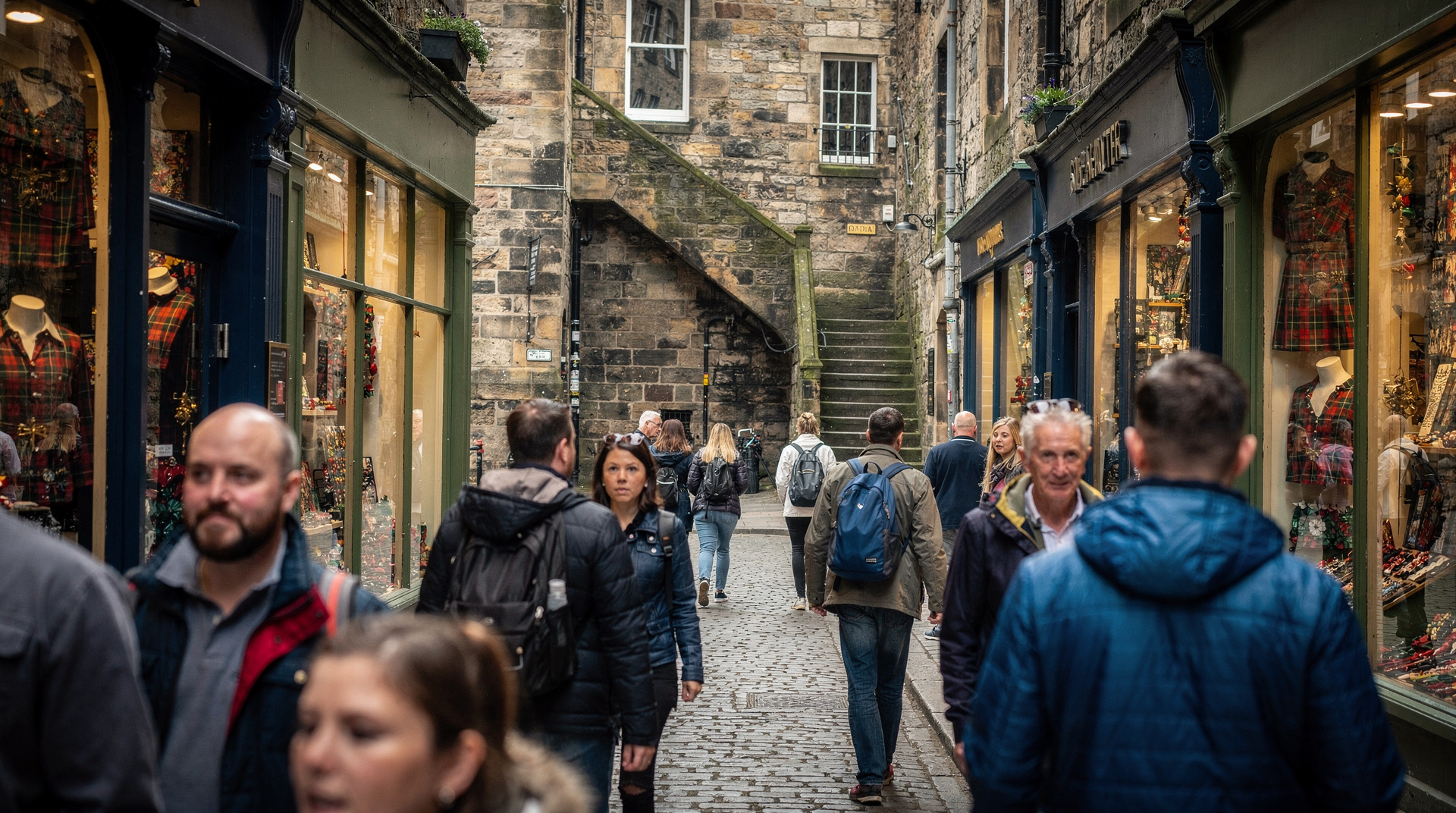
Eating on the Royal Mile: the traps and where to go instead
Edinburgh: food tour with Scotch, haggis, secret dish & more
Should you eat on the Royal Mile in Edinburgh?
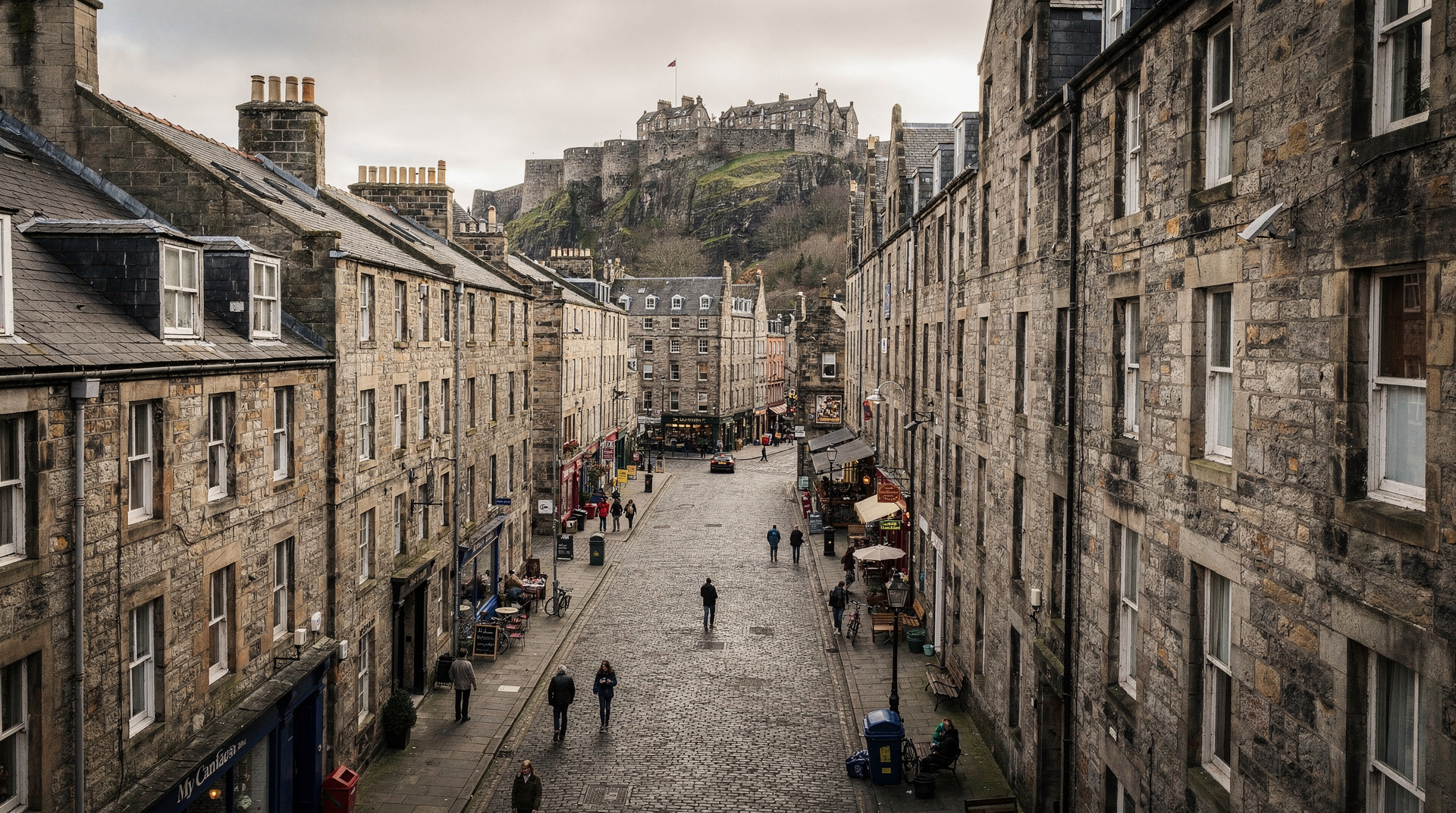
For most meals, no. Royal Mile restaurants charge tourist prices for average food. The exceptions are a few specific pubs and cafes. Better options — Grassmarket, Cowgate, George IV Bridge, Southside — are all within five minutes' walk. This guide tells you exactly where to go and what to avoid.
The Royal Mile restaurant problem
The Royal Mile has more restaurants per hundred metres than almost any comparable street in Scotland, and a lower average quality-to-price ratio than almost any street in Edinburgh. This is a structural problem, not a matter of a few bad operators. The rents on the Royal Mile are driven by tourist footfall, not by repeat local customers. Restaurants that depend on one-time visitors passing through have little competitive pressure to improve or price reasonably — new tourists replace the disappointed ones every day.
The result is a strip of restaurants that charge £14-24 for main courses that represent neither quality Scottish cooking nor value for money. A plate of haggis, neeps, and tatties — which costs £3-4 in ingredients and should be on a pub menu at £10-12 — appears on Royal Mile menus at £15-18. A bowl of cullen skink (smoked haddock soup) that costs a good chef £2 to make is £9-12 on the Mile.
This guide identifies the specific traps to avoid, the genuine exceptions worth patronising, and the better alternatives within a short walk. For the wider pattern of tourist traps beyond restaurants, see the Royal Mile tourist traps guide and the avoiding tartan tat shops guide.
| Where to avoid | ”Traditional Scottish feast” restaurants, laminated photo menus, doorstep touts |
| Typical Royal Mile mains | Around £14-24 for pub-standard food |
| Better options nearby | Grassmarket, Victoria Street, George IV Bridge, Cockburn Street — all under 5 min |
| Best value nearby | Mosque Kitchen, Lower Aisle cafe, Deacon Brodie’s Tavern |
| Worth the extra walk | Stockbridge and Leith, 10-25 minutes away |
Royal Mile prices vs. a short walk away
| Dish | Royal Mile tourist price | A short walk away |
|---|---|---|
| Haggis, neeps and tatties | Around £15-18 | Around £10-12 (Grassmarket pubs, Deacon Brodie’s) |
| Cullen skink | Around £9-12 | Around £6-8 (Stockbridge, Grassmarket) |
| Sit-down lunch, one course | Around £16-22 | Around £8-12 (Mosque Kitchen, Lower Aisle cafe) |
| Coffee and a pastry | Around £6-8 | Around £4-6 (independent coffee shops off-Mile) |
| Sit-down dinner, two courses | Around £35-50 | Around £22-35 (Stockbridge, Grassmarket, Leith mid-range) |
What to specifically avoid
The “traditional Scottish feast” restaurants
Several establishments on and immediately around the Royal Mile offer set menus or experiences marketed as “traditional Scottish dining” — often with bagpipe music, tartan decor, and combinations of haggis, smoked salmon, and Drambuie cream desserts. These typically charge £30-45 per person for food that a good Edinburgh pub would serve for £18-22, and often come with a performative element (Highland storytelling, a piper walking through) that adds theatre rather than culinary value.
If you want traditional Scottish food eaten in an authentic context, a good Edinburgh pub does it better and cheaper. See the guide to the best haggis in Edinburgh for specific recommendations.
Restaurants with photographs on menus outside
This is a near-universal indicator of tourist-targeted restaurants worldwide, and Edinburgh is no exception. Laminated menus with food photographs pinned in plastic cases outside the door, particularly if they feature shortbread tins, Nessie references, or clan crests in the decor, are almost always overpriced for what they deliver.
The doorstep touts
Some Royal Mile restaurants employ people to approach passing tourists and offer deals, vouchers, or invitations to “come and try our Scottish food.” In the competitive tourist restaurant market, reputable restaurants do not need to tout on the doorstep. If someone is physically trying to funnel you into a restaurant, this is a reliable warning sign.
”Authentic Scottish” at inflated prices
The word “authentic” on a Royal Mile menu often signals the opposite. Authentic Scottish pub food is simple, hearty, and cheap. Authentic Scottish fine dining exists in Edinburgh but is in restaurants like the Kitchin in Leith, Martin Wishart in Leith, or Restaurant Mark Greenaway — not in the tourist restaurants on the Royal Mile.
The exceptions: Royal Mile and immediate surroundings
Deacon Brodie’s Tavern (435 Lawnmarket)
A proper Scottish pub in a historic building at the top of the Royal Mile, named after the real Deacon Brodie who inspired Stevenson’s Jekyll and Hyde character. Lunch prices are reasonable — sandwiches and bar food at £8-13, main courses at £12-16. Food is pub standard rather than exceptional, but the prices are honest and the atmosphere is genuine. Good for a quick lunch between the castle and the rest of the Old Town.
The Witchery by the Castle (Castlehill)
At the opposite end of the price spectrum, The Witchery is a genuine fine dining restaurant in the atmospheric vault below the castle, with exceptional Scottish seafood and game and prices to match (£35-55 for mains, set menus from £55 per person). This is not a tourist trap — it is an expensive restaurant that delivers on its price. For a special occasion dinner, it is one of Edinburgh’s very best.
Cafe St Honoré (34 North West Thistle Street Lane, New Town)
Technically New Town rather than Royal Mile, but worth the five-minute walk from the top of the Mile. A proper French-Scottish bistro with daily-changing menus focused on Scottish produce. Lunch menus offer genuinely good value (two courses from around £22). One of Edinburgh’s more reliable restaurants.
The better alternatives: by walking distance from the Royal Mile
Five minutes or less
The Mosque Kitchen (Nicholson Square, Southside): The worst-kept secret in Edinburgh for good cheap food. An Edinburgh institution offering fresh, generous portions of Pakistani and Scottish food from a canteen-style kitchen. Mains run £7-10. This is the best value lunch within five minutes of the National Museum of Scotland. It is particularly good on Fridays when fresh curries are made for the post-prayer crowd.
Ondine (2 George IV Bridge): Edinburgh’s best seafood restaurant, on the bridge connecting the Royal Mile to the Cowgate. Shellfish from Scottish waters — langoustines, oysters, crab — prepared with skill and served in a comfortable room. Lunch set menus from around £22 for two courses represent good value. The dinner menu is more expensive but appropriate for the quality.
Elephant House (21 George IV Bridge): A large cafe famous for J.K. Rowling’s association with it during the writing of the early Harry Potter books. Food is decent cafe fare — good coffee, sandwiches, cakes. The prices are reasonable, the atmosphere is better than a Royal Mile cafe, and the back room has views over Greyfriars Kirkyard that are genuinely atmospheric.
Maison Bleue (36-38 Victoria Street): A long-running French-Moroccan restaurant on the beautiful curved Victoria Street (which most people know from the Harry Potter connection). Good-value set lunch, atmospheric evenings. One of the better options in the Old Town itself.
Ten to fifteen minutes
Stockbridge restaurants: Stockbridge has Edinburgh’s best neighbourhood restaurant scene — independent, locally owned, and not aimed at tourists. The Scran and Scallie (1 Comely Bank Road) is Tom Kitchin’s gastropub and offers excellent Scottish food at roughly half the price of his Leith flagship. The Caf Marlayne (76 Thistle Street, New Town end of Stockbridge) is a reliably good French bistro. Bell’s Diner (7 St Stephen Street) serves the best burgers in Edinburgh.
The Grassmarket: The Grassmarket, a five-minute walk from the Royal Mile down the Victoria Street steps, has several decent pubs and restaurants. Maxie’s Bistro (5b Johnston Terrace), The Last Drop pub, and Beehive Inn are all better value than Royal Mile equivalents and serve the same core pub food menu at better prices.
Leith: Edinburgh’s best food destination, 20-25 minutes by bus or 40 minutes on foot from the Royal Mile. The Kitchin (78 Commercial Quay), Restaurant Mark Greenaway (now relocated, check current address), and The King’s Wark pub (36 The Shore) represent different price points of genuinely excellent food. See the Leith restaurant guide and the Leith destination page for the wider neighbourhood.
Dietary needs: If you’re vegetarian, vegan, or gluten-free, the Royal Mile’s tourist restaurants are the least accommodating part of the city for it — the gluten-free and vegan Edinburgh guide points to kitchens across Stockbridge, Leith, and the Southside that handle dietary requirements properly rather than as an afterthought.
Food tours: the genuine alternative to bad tourist meals
An organised food tour from a reputable operator is one of the best ways to eat well in Edinburgh and learn about Scottish food culture simultaneously. These tours typically visit six to eight stops in different parts of the Old Town and Leith, combining small tastings with context about Scottish food traditions.
The better operators take groups off the Royal Mile and into the less visible parts of the city where genuine food culture operates. See the Edinburgh food tours compared guide for specific recommendations.
Edinburgh haggis and Scotch whisky food tour is a guided option that specifically routes around the Royal Mile’s worst offenders and pairs proper Scottish dishes with whisky tastings at a handful of genuine local spots.
If you would rather spend the morning on the history of the street before choosing where to eat, a guided walking tour of the Royal Mile and the Old Town is a sensible way to learn the lay of the land. You see the closes and side streets that lead away from the tourist corridor, which makes the walk to a better lunch spot feel natural rather than like a detour.
The budget lunch strategy
For visitors who want a good lunch near the main sights without paying tourist prices:
- The Mosque Kitchen (Nicholson Square, 5 min from National Museum): under £10 for a filling meal
- Deacon Brodie’s Tavern (top of Royal Mile): £10-16 for a reliable pub lunch
- Lower Aisle restaurant (beneath St Giles’ Cathedral, entered from the cathedral): Scottish church charity restaurant, honest pricing, good simple food, right on the Royal Mile
- Marks and Spencer Food Hall (Princes Street, 10 min from the castle): the gap between supermarket food and bad tourist food is enormous; M&S prepared foods eaten in Princes Street Gardens costs a fraction of a sit-down Royal Mile meal and the quality is significantly higher
The Edinburgh food scene: what makes it good
Edinburgh has a food scene that is significantly better than its tourist-facing restaurant strip suggests. The city has several Michelin-starred restaurants, a strong gastropub culture, an excellent farmers’ market, and neighbourhood food cultures in Stockbridge, Leith, and Bruntsfield that reflect genuine local food preferences rather than tourist expectations.
The mechanisms that suppress food quality on the Royal Mile are structural: high rents requiring high margins, one-time tourist customers providing no feedback loop for quality improvement, and the visibility premium that makes a Royal Mile address valuable for tourist capture regardless of food quality. None of these mechanisms operate in Stockbridge or Leith, where local customers return regularly and can choose between multiple competing options.
Understanding this helps set the right expectations. The Royal Mile restaurant problem is not about individual bad operators — it is about a market structure that does not reward quality improvement.
Scottish food culture specifically: Scotland has a genuine food culture that is worth engaging with. Haggis is genuinely good when properly made — a coarse, spiced offal sausage with a characteristic flavour that is nothing like the English sausage it superficially resembles. Cullen skink (smoked haddock soup with potato and cream) is excellent. Cranachan (oat, cream, whisky, and raspberry dessert) is worth seeking out. Arbroath Smokie (hot-smoked haddock from Arbroath, with protected geographical indication status) is extraordinary when fresh.
These genuinely Scottish foods exist on Royal Mile menus at tourist prices and in Stockbridge and Leith at fair prices. The food is the same; the margin is different. The only reason to pay the Royal Mile premium is convenience.
Coffee culture in Edinburgh
Edinburgh has developed an excellent independent coffee culture that is concentrated in Stockbridge, the New Town, and the Southside. The major chains (Starbucks, Costa, Pret) cluster on Princes Street and around Waverley Station. The interesting coffee is elsewhere.
Key independent coffee shops:
Cairngorm Coffee (41a Frederick Street, New Town): Founded in Edinburgh with beans sourced from small farms, consistently excellent espresso, excellent filter options.
Brew Lab (6-8 South College Street, near the National Museum): One of Edinburgh’s most respected third-wave coffee shops, in a converted Old Town space. Good alongside the National Museum visit.
The Milkman (7 Cockburn Street): On the steep street connecting Waverley Station to the Royal Mile, a good independent option for coffee while in the Old Town area.
Williams and Johnson (1 Shore, Leith): The best coffee in Leith, in a converted cooperage on the Water of Leith.
On the Royal Mile itself, coffee options are mostly chain or tourist-quality. The walk down Cockburn Street to Waverley takes five minutes and puts you near The Milkman, which is significantly better than anything directly on the Mile.
Where Edinburgh actually eats: beyond the tourist corridor
The gap between Edinburgh’s tourist restaurant circuit and where Edinburgh people actually eat is significant, and understanding it is the single most reliable path to better food at lower prices.
Edinburgh has a strong restaurant culture concentrated in several neighbourhoods that most visitors on short trips never reach:
Leith (The Shore and Commercial Street): Edinburgh’s unambiguous culinary capital. The Kitchin at 78 Commercial Quay (Michelin-starred, Tom Kitchin, expensive but extraordinary) sits at the high end of a neighbourhood that also includes excellent middle-range options: Fishers Bistro (seafood, excellent), The King’s Wark pub (proper Scottish pub food and ales), Roseleaf (cocktails and brunch in a wonderfully eccentric space), and a growing number of international restaurants. The Shore area has the density and quality that makes it worth the bus journey. See the Leith restaurant guide.
Stockbridge (Raeburn Place and Henderson Row): The Scran and Scallie (Tom Kitchin’s gastropub) is the anchor, but the wider Stockbridge restaurant scene on Raeburn Place includes consistently good options: The Caf Marlayne (French bistro, honest pricing), Hector’s (neighbourhood diner, good value), and Henderson’s (long-running vegetarian restaurant). The Sunday farmers’ market at Stockbridge adds a food culture dimension that the Royal Mile cannot replicate.
Bruntsfield (Bruntsfield Place): A long street of independent cafes and restaurants south of the Meadows. Less well-known than Leith or Stockbridge but with a good range. Montpeliers (cocktails, bar food), Apartment restaurant (good brunch), and several good independent cafes make this worth knowing about for visitors staying in the Southside.
The Meadows area: The area around George Square and the Meadows has strong independent food culture serving the university community. Kebab Mahal on Nicolson Street (below the Mosque Kitchen, same area) is an Edinburgh institution for late-night or post-concert food. The Clarinda’s Tea Room on Canongate is a proper Scottish tearoom with good scones and proper pots of tea.
Specific Royal Mile food decisions: what to do when you are already there
Sometimes you are on the Royal Mile and you are hungry and the effort of going elsewhere feels unreasonable. In that case:
Best options within two minutes of the Royal Mile:
- Lower Aisle cafe beneath St Giles’ Cathedral (accessed from within the cathedral or via a separate entrance on Parliament Square): honest Scottish charity-run cafe, reasonable prices, proper food
- Clarinda’s Tea Room on Canongate: proper scones, good teas, zero tourist-trap atmosphere, genuine
- Deacon Brodie’s Tavern (Lawnmarket): see above for honest assessment — best of the on-Mile options for a quick lunch
- For very quick and cheap: Gregg’s on the Royal Mile (yes, the chain bakery) is available and costs what it costs
Avoid under all circumstances:
Any restaurant that has costumed staff outside handing out vouchers. Any restaurant advertising a “Scottish Feast” or “Highland Dinner” as its main product. Any restaurant with photographs on the menu pinned outside in a laminated case. Any restaurant with the words “traditional,” “authentic,” and “Scottish” all in the same sentence on the board outside.
Edinburgh food culture: what makes it distinctive
Understanding Edinburgh’s food culture helps set expectations that the Royal Mile tourist circuit cannot meet.
Edinburgh has three food traditions that intersect:
Traditional Scottish cooking: Haggis, Scotch broth, cullen skink (smoked haddock chowder), Arbroath Smokies, Forfar Bridies (savoury pastries), venison, grouse, and salmon when in season. The best traditional Scottish cooking is found in gastropubs and local restaurants, not in tourist-oriented places. See the Scottish food guide.
New Scottish cuisine: From the 1990s onwards, Edinburgh developed a serious restaurant scene that applies French and international techniques to Scottish ingredients. Tom Kitchin, Martin Wishart, and several other chefs established Edinburgh as a credible fine dining city. This tradition is alive at the high end (Leith restaurants primarily) and in a broader range of mid-market places across the city.
International: Edinburgh has good Indian, Chinese, and Italian restaurants, particularly in the South Bridge, Nicholson Street, and Leith Walk areas. The Indian restaurant scene around Leith Walk is particularly strong — Khushis (16 Drummond Street) has been Edinburgh’s most consistently recommended curry house for decades.
For the full picture, see the where to eat in Edinburgh guide.
What locals actually order when they’re on the Royal Mile
Edinburgh residents do end up on the Royal Mile occasionally — meeting visiting friends, taking photos of the castle, walking through to the Cowgate — and the food choices they make when hunger strikes are instructive. Almost nobody sits down in a full-service restaurant on the Mile itself.
The default local move is one of: a takeaway roll from a bakery (Greggs or an independent baker), a quick trip down a side close to the Grassmarket, or simply waiting the ten minutes it takes to reach Victoria Street or George IV Bridge. This isn’t snobbery — it reflects a straightforward calculation that the Royal Mile’s sit-down restaurants offer worse value than almost anywhere else in the city, and locals who eat out regularly have learned exactly where the boundary is.
The same logic applies to visitors staying more than a couple of days: the first meal or two on the Royal Mile out of convenience is understandable, but by day two, walking the extra five to ten minutes becomes second nature once you’ve experienced the price difference directly.
Timing your meals to avoid the worst of it
Royal Mile restaurant quality and value both dip further during the two periods when footfall peaks: the height of summer (July-August, compounded by the Fringe) and the Christmas and Hogmanay period. During these windows, some restaurants reduce menus to the highest-margin items, service slows under volume, and prices in a handful of venues creep up further with “festival menus.” If your trip coincides with either period, the case for walking off the Mile is even stronger than usual — see the surviving the Fringe guide for the August-specific version of this advice, and the Christmas markets guide for the winter equivalent.
Outside these peak windows — a quiet Tuesday in March, for instance — Royal Mile restaurants are marginally less crowded and marginally more willing to seat you without a wait, but the underlying price-to-quality problem does not go away; it’s structural, not seasonal.
A practical way to protect your day is to plan the sightseeing and the meal together. If the castle is the main item on your list, a combined castle and Royal Mile visit keeps the morning structured, and you can then decide in advance where lunch will happen instead of grabbing the first free table when hunger hits. Deciding before you are hungry is the simplest defence against every trap described in this guide.
Frequently asked questions about eating near the Royal Mile
Are there any good restaurants directly on the Royal Mile?
Very few. Deacon Brodie’s Tavern at the top of the Mile is reliable for pub food at fair prices. The Witchery is excellent at fine dining prices. For the rest, the best eating is on streets off the Royal Mile — Victoria Street, George IV Bridge, the Grassmarket, and Cockburn Street (connecting the Royal Mile to Waverley Station) all have better options than the main strip.
Where should you eat haggis in Edinburgh?
The Scran and Scallie in Stockbridge serves haggis, neeps, and tatties as a proper main course at pub prices, well-made. The Grassmarket pubs offer it at reasonable prices. Avoid haggis on the Royal Mile unless you are specifically in Deacon Brodie’s. See the best haggis in Edinburgh guide for more recommendations.
Is there a good supermarket near the Royal Mile?
Marks and Spencer Food Hall on Princes Street is the closest quality option (10-minute walk from the castle). Co-op on Nicolson Street (bottom end of the Mile area) covers basics. For a proper supermarket, Sainsbury’s on St Andrew Square in the New Town is the nearest substantial option.
How much should you budget for food in Edinburgh?
For budget eating (supermarket food, Mosque Kitchen, pub lunches on side streets): £15-25 per day per person. For mid-range (one sit-down meal in a decent restaurant, light breakfast and lunch): £35-55 per day. For a day of eating well in good restaurants including dinner: £60-90 per day. The Royal Mile’s restaurants charge mid-range prices for budget-to-mid-range quality — avoiding them saves money without sacrificing eating experience. See the Edinburgh budget guide.
Is it ever worth eating on the Royal Mile out of pure convenience?
Sometimes, if the alternative is genuinely losing time you can’t spare — mid-castle-visit, for example, with a tight afternoon schedule. In that case, stick to the specific exceptions listed above (Deacon Brodie’s, Lower Aisle cafe, Clarinda’s Tea Room) rather than the first available table, and treat it as a practical compromise rather than a recommendation.
Are the tourist restaurant traps unique to the Royal Mile, or is this true elsewhere in Edinburgh?
The Royal Mile is the most concentrated example because of its sheer visitor footfall, but the same pattern — high rent, one-time customers, laminated photo menus — appears in a milder form near any major sight with heavy foot traffic. The principle holds generally: the closer a restaurant sits to a famous landmark, the more scepticism its prices deserve.