Traditional Scottish food: a visitor's guide to eating in Edinburgh
Edinburgh: food tour with Scotch, haggis, secret dish & more
What traditional Scottish foods should I try in Edinburgh?
Start with haggis, neeps and tatties — Scotland's national dish, earthy and satisfying. Then try cullen skink (smoked haddock chowder), Scotch pie, Scottish smoked salmon, cranachan dessert, and a square sausage roll. Avoid tourist-grade versions; head to Stockbridge, Leith, or a dedicated food tour for the genuine article.
What Scottish food actually is
Scottish cuisine gets a mixed reputation internationally — a reputation formed partly by the deep-fried Mars bar (a real thing, but not representative) and partly by the fact that its finest dishes are made from ingredients that don’t export well: smoked fish eaten within days of smoking, game shot that morning, vegetables pulled from soil an hour’s drive from Edinburgh. The food that travels is often the wrong food.
The traditional Scottish kitchen is built on what Scotland has in abundance: fish and shellfish from cold Atlantic waters, game from the hills, dairy from some of the UK’s best pastureland, oats that grow in climates where wheat struggles, and soft fruit — particularly raspberries and strawberries from Angus and Perthshire — that is among the sweetest grown anywhere in Europe. Understanding these ingredients is the key to understanding why eating well in Scotland means eating seasonally and eating locally.
Edinburgh sits at the junction of several of Scotland’s best food regions. Seafood comes up from the East Lothian coast and across the Firth of Forth; lamb and beef from the Borders; game from the nearby Pentland Hills and further north in the Highlands; vegetables from the fertile farmland of the Lothians. The city’s best restaurants have always been defined by proximity to these ingredients.
| Where to try it | Stockbridge, Leith, or a dedicated food tour rather than the Royal Mile |
| Cost | Pub lunch £12-18; a proper sit-down traditional dinner £25-45 per person |
| Time needed | An evening for a sit-down meal; half a day for a guided food tour |
| Best season | Game (Oct-Feb), soft fruit (Jun-Sep), Burns Night ceremonial haggis (25 January) |
| Booking | Not usually needed for pub-style traditional food; book ahead for a guided tour |
The essential dishes
Haggis, neeps and tatties
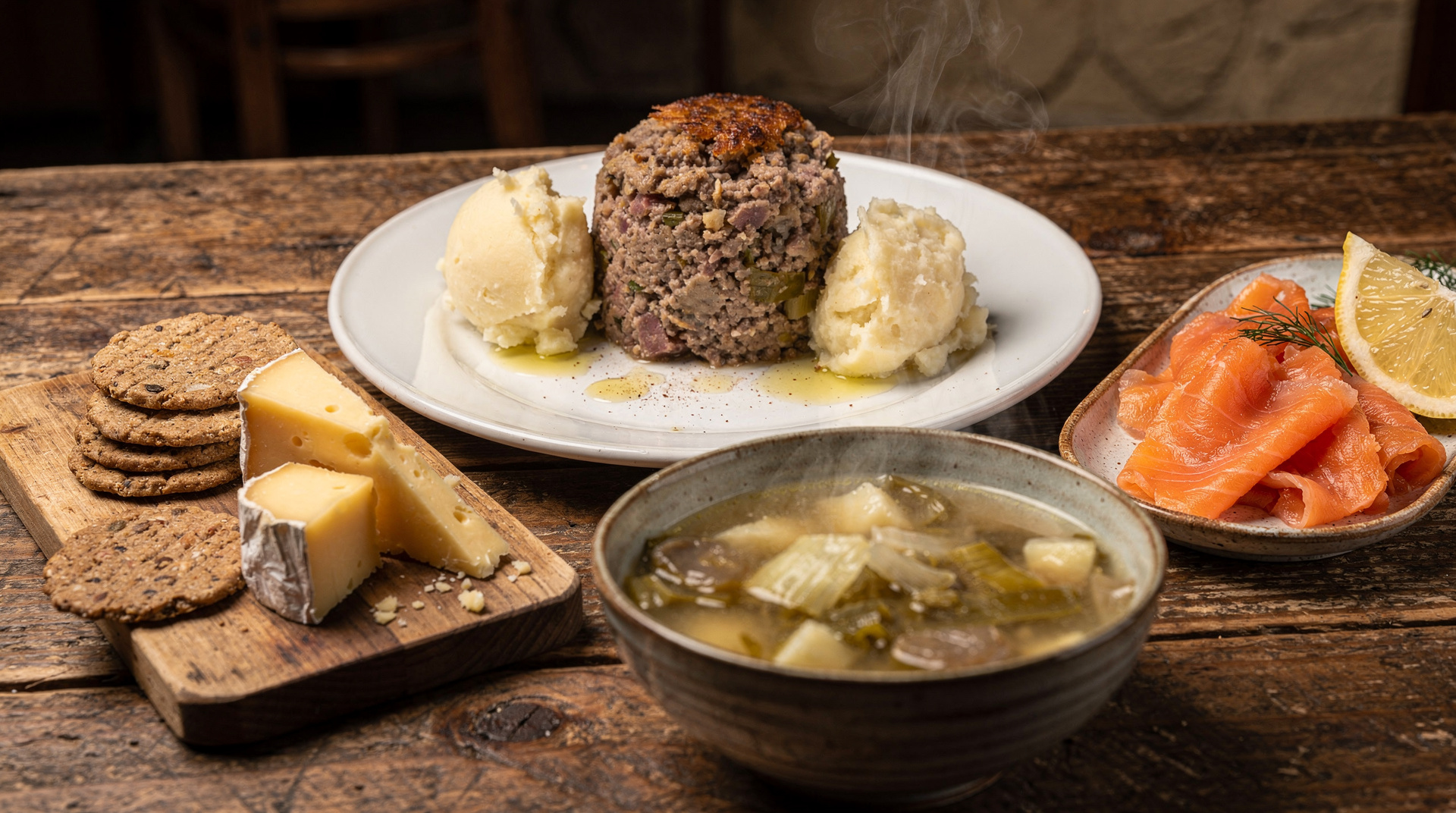
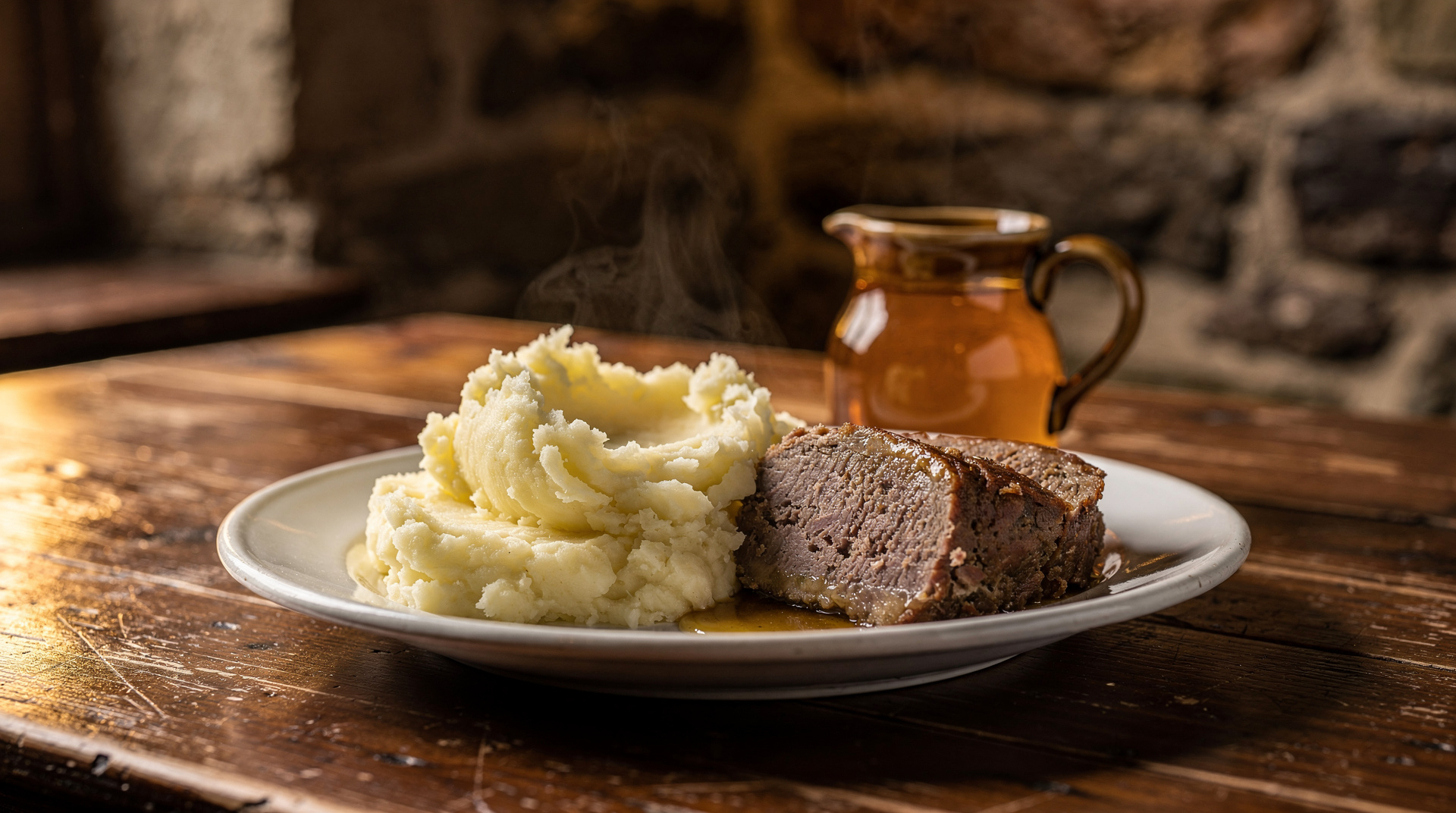
Scotland’s national dish needs no lengthy introduction here — the full account is in the best haggis in Edinburgh guide. What bears repeating is that well-made haggis is genuinely good food: offal minced with oatmeal and spices, traditionally cooked in a sheep’s stomach (now usually a synthetic casing), served with mashed turnip (neeps) and potato (tatties). The version you will encounter at most tourist restaurants has often been pre-made and reheated. The version at a serious restaurant — The Scran and Scallie in Stockbridge, Wedgwood on the Canongate — is a different dish entirely.
Cullen skink
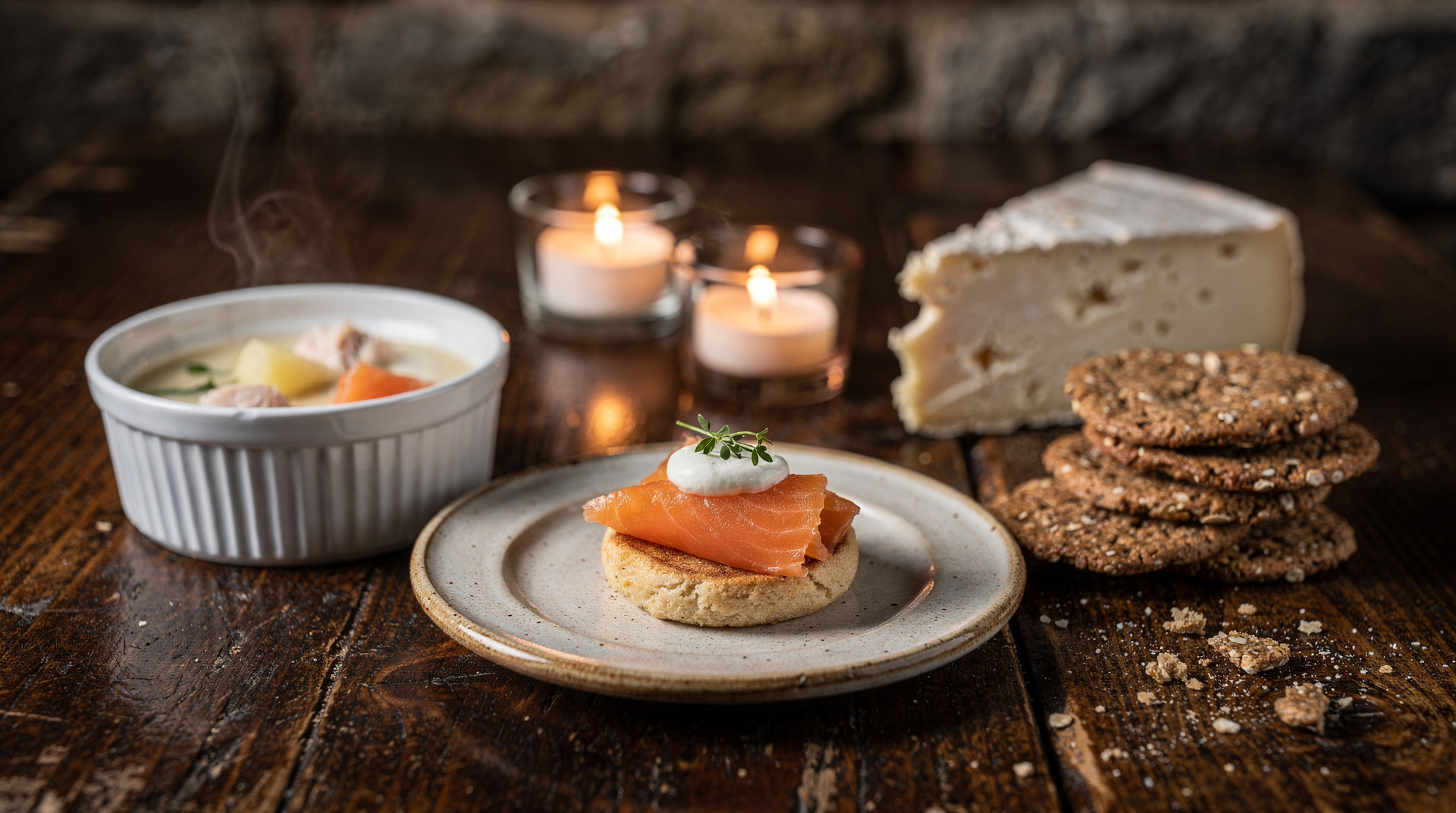
A thick, creamy chowder made from smoked haddock, potato, and onion, cullen skink (named after the fishing village of Cullen in Moray) is one of the great Scottish soups and massively underrated outside Scotland. The smoked haddock used in a good version should be proper undyed haddock — pale gold or cream-coloured — not the vivid yellow variety that has been artificially coloured. The best versions have a depth of smokiness from the fish without being overwhelmingly heavy. You will find it on menus across Edinburgh, but the quality varies enormously; the better gastropubs and fish restaurants in Leith are the most reliable.
Scotch broth
Barley, lamb (or mutton), root vegetables, and whatever else is available — Scotch broth is the peasant foundation of the Scottish kitchen and still excellent. A bowl of properly made Scotch broth on a cold Edinburgh November day is deeply comforting. Most pub lunch menus include a version; quality varies.
Smoked salmon
Scottish smoked salmon is among the world’s best, and in Edinburgh you are eating it in its country of origin. The difference between good Scottish smoked salmon and the version most people encounter outside Scotland is substantial. Look for salmon that is cold-smoked (not hot-smoked) with a silky texture and a clean, delicate smokiness. The Edinburgh Farmers’ Market (Castle Terrace, Saturdays) usually has at least one smoked fish stall; the Leith waterfront restaurants use it daily.
Arbroath smokie
A hot-smoked whole haddock with a distinctive, intense smokiness, Arbroath smokies have Protected Geographical Indication status — they can only be called Arbroath smokies if produced in the town of Arbroath using the traditional method. You will occasionally find them on menus in Edinburgh; they are also sold at the farmers’ market when producers make the journey south.
Cock-a-leekie
A traditional Scottish soup made from chicken, leeks, and prunes (in the original version), cock-a-leekie is gentler and more subtle than Scotch broth. It appears on traditional restaurant menus and Burns Night dinners but is less commonly found on everyday pub menus.
Venison
Scotland produces excellent venison from red deer that range freely across the Highlands. In Edinburgh’s better restaurants, venison appears as steaks, medallions, and in game pies. A venison haunch steak cooked medium-rare is one of the best things Scotland produces. The season runs roughly October to February, so autumn and winter are the best times to find it at its freshest.
Scottish beef
Aberdeen Angus beef is Scotland’s most famous cattle breed and the source of some of the best beef in the world. Look for restaurants that specify the provenance of their beef — many Edinburgh steakhouses now name the specific farm or region. The Grassmarket and Leith have several good steak restaurants.
Cranachan
The traditional Scottish dessert is made from toasted oatmeal, whipped cream, whisky, and raspberries. It is a simple dish that depends entirely on the quality of its components — the raspberries should be fresh and slightly tart, the whisky present but not dominating, the oatmeal adding a pleasing crunch. It appears on most traditional Scottish restaurant menus and on Burns Night dessert courses. A well-made cranachan is the best argument for Scottish dessert culture.
Clootie dumpling
A dense, moist pudding made from dried fruit, oatmeal, breadcrumbs, and spices, boiled in a cloth (the cloot), clootie dumpling is the Scottish equivalent of Christmas pudding and traditionally served at Hogmanay. It is increasingly rare on restaurant menus but occasionally appears as part of a traditional Scottish set dinner.
Scotch pie
A traditional double-crust mutton pie in a hot water pastry case, the Scotch pie is Edinburgh’s workaday snack food. Good versions are sold in bakeries (Greggs does a passable commercial version; local bakeries do better ones) and eaten warm, often at rugby and football matches. Not fine dining, but properly representative of how Scotland feeds itself.
The Scottish breakfast
The full Scottish breakfast — a variation on the full English — includes bacon, eggs, black pudding, white pudding, a Lorne sausage (a square-shaped pork sausage specific to Scotland), baked beans, grilled tomato, mushrooms, and toast. The distinguishing elements from the English version are the Lorne sausage and the addition of white pudding (a spiced oatmeal sausage).
Edinburgh’s hotel breakfasts range from excellent (the Balmoral) to perfunctory. If you want a good full Scottish outside your hotel, the independent cafés in Stockbridge and Bruntsfield do it better than the tourist-facing places near the castle. The Scran and Scallie (Stockbridge) does a notable weekend brunch.
Cheese: Scotland’s underrated dairy tradition
Scottish cheese has improved dramatically over the past two decades and is now genuinely world-class in some categories. The Edinburgh Farmers’ Market is the best place to explore it: look for Isle of Mull Cheddar (a raw-milk cheddar with enormous character), Anster from Fife (a buttery, crumbly cheese with a gentle flavour), and Crowdie (a traditional fresh cheese with a slightly sour, clean taste). The cheese crawl food tour is specifically designed around Edinburgh’s artisan cheese scene and is excellent for visitors with a serious interest.
Soft fruit and baking
Scottish raspberries, strawberries, and brambles (blackberries, known as brambles in Scotland) from Perthshire and Angus are among the best in the world. The season runs from late June through September, and during this period they appear in every context: at the farmers’ market, in desserts at serious restaurants, in jams and preserves sold in every deli and gift shop. Buying a punnet from a market stall in July and eating it walking through the Old Town is one of the simplest pleasures Edinburgh offers.
Scottish baking is strong. Shortbread, oatcakes, and tablet (a crumbly, intensely sweet Scottish fudge) are the most familiar. All are better bought from a proper baker or deli than from a tourist shop on the Royal Mile, where they are often packaged versions of mediocre products.
Where to experience Scottish food comprehensively
A food tour is the most efficient way to encounter traditional Scottish food in context, with a guide who can explain why each dish matters. The Edinburgh food tour with Scotch, haggis and more is organised around the classic dishes and pairings, including a dram of whisky with the haggis — which is genuinely the right combination. For a broader exploration, the best of Scottish gastronomy VIP food tour takes you into the premium end of Edinburgh’s food scene and includes producers you would not encounter otherwise.
For a traditional sit-down dinner with folk music, the folk and haggis Scottish dinner with folk music combines the canonical dishes with live traditional music in a format that captures the communal character of Scottish eating at its most celebratory.
Pairing food with whisky
Scottish food and Scotch whisky have a natural affinity that goes beyond the Burns Night ceremony. The peaty, smoky character of Islay malts cuts through the richness of smoked salmon and game in the same way that wine with high tannins works with red meat. The lighter, fruitier Highland and Speyside malts pair beautifully with cranachan and Scottish cheeses.
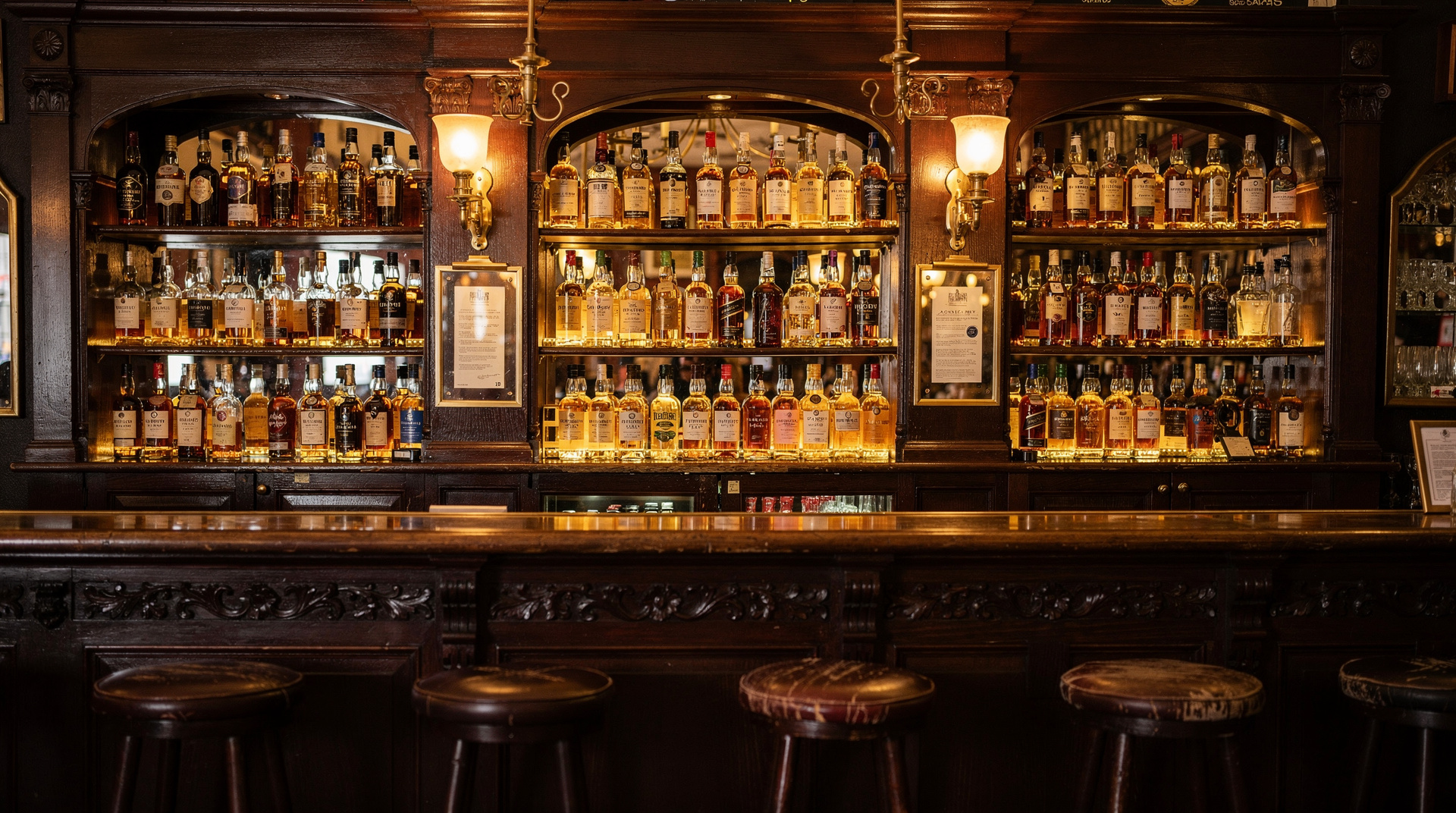
Edinburgh’s best whisky bars all have knowledgeable staff who will recommend pairings; see the best whisky bars in Edinburgh guide for specific venues. The whisky tasting guide covers the mechanics of choosing and tasting a dram if you are new to Scotch.
Scottish food by season at a glance
| Season | Best traditional dishes | Notes |
|---|---|---|
| Spring (Mar-May) | Smoked salmon, early soft fruit | Freshest smoked fish supply of the year |
| Summer (Jun-Sep) | Raspberries, strawberries, fresh seafood | Farmers’ markets at their fullest |
| Autumn (Oct-Nov) | Venison, game pies, wild mushrooms | Game season opens; best restaurant menus of the year |
| Winter (Dec-Feb) | Haggis, Scotch broth, cranachan | Burns Night (25 January) is the ceremonial highlight |
Practical notes on eating traditionally
When is Scottish food at its best? Game season (October to February) for venison and grouse. Summer (June to September) for soft fruit and fresh seafood. The smoked fish season is year-round but the supply is freshest in spring. Burns Night (25 January) for the full ceremonial haggis experience.
Where to shop for Scottish food: Edinburgh Farmers’ Market (Castle Terrace, Saturdays), Stockbridge Market (Sundays), I.J. Mellis Cheesemonger (Victoria Street and Stockbridge) for cheese, Valvona and Crolla (Elm Row) for Italian-Scottish deli items and an extraordinary cheese and deli counter that includes Scottish products.
See the where to eat in Edinburgh guide for the full landscape of restaurant options across every neighbourhood.
The Scottish kitchen through history
Scotland’s food history is inseparable from its geography and economics. A country of moorland, mountain, and coast, historically poor by the standards of southern England and northern France, built its cuisine around what could be grown in cold wet soil (oats, neeps, potatoes), what could be caught offshore (herring, haddock, salmon, shellfish), what could be raised on marginal land (sheep, cattle, game), and what could be preserved for long winters (salted fish, smoked meats, dried grain).
The poverty of much of Scottish food history is real, but it produced a cuisine of genuine character — one that values texture (the crunch of toasted oatmeal, the silkiness of smoked salmon, the bite of a well-aged cheese) and depth of flavour (the earthiness of haggis, the smokiness of Arbroath smokie, the sharpness of Scottish raspberry) over the delicacy and elaboration of richer culinary traditions.
The Enlightenment of the eighteenth century brought Edinburgh briefly to the centre of European intellectual culture, which had dietary consequences: the city’s literary and intellectual circles developed a taste for French wine and cuisine that overlaid the traditional Scots kitchen with Francophile aspirations. This tension — traditional vernacular food versus aspirational European refinement — is still visible in Edinburgh’s restaurant culture today.
The modern Scottish food revival
Since the late 1990s, Scottish food has undergone a sustained revival that has changed the country’s culinary reputation internationally. The movement is driven by several overlapping forces: a new generation of chefs (Tom Kitchin, Andrew Fairlie, Martin Wishart) trained in France who brought classical technique back to Scottish ingredients; a growing artisan producer community developing exceptional cheeses, cured meats, whisky, gin, and beers; the organic farming movement establishing a higher quality baseline for meat and vegetables; and the slow food movement’s influence on consumer taste.
The result, by 2026, is a Scottish food scene that can genuinely compete at the top international level while remaining distinctively rooted in local ingredients and tradition. Edinburgh’s restaurant scene is the most visible expression of this, but the change runs deep into farmers’ markets, artisan producers, and the basic quality of the ingredients available in ordinary supermarkets.
How to tell a good traditional restaurant from a tourist trap
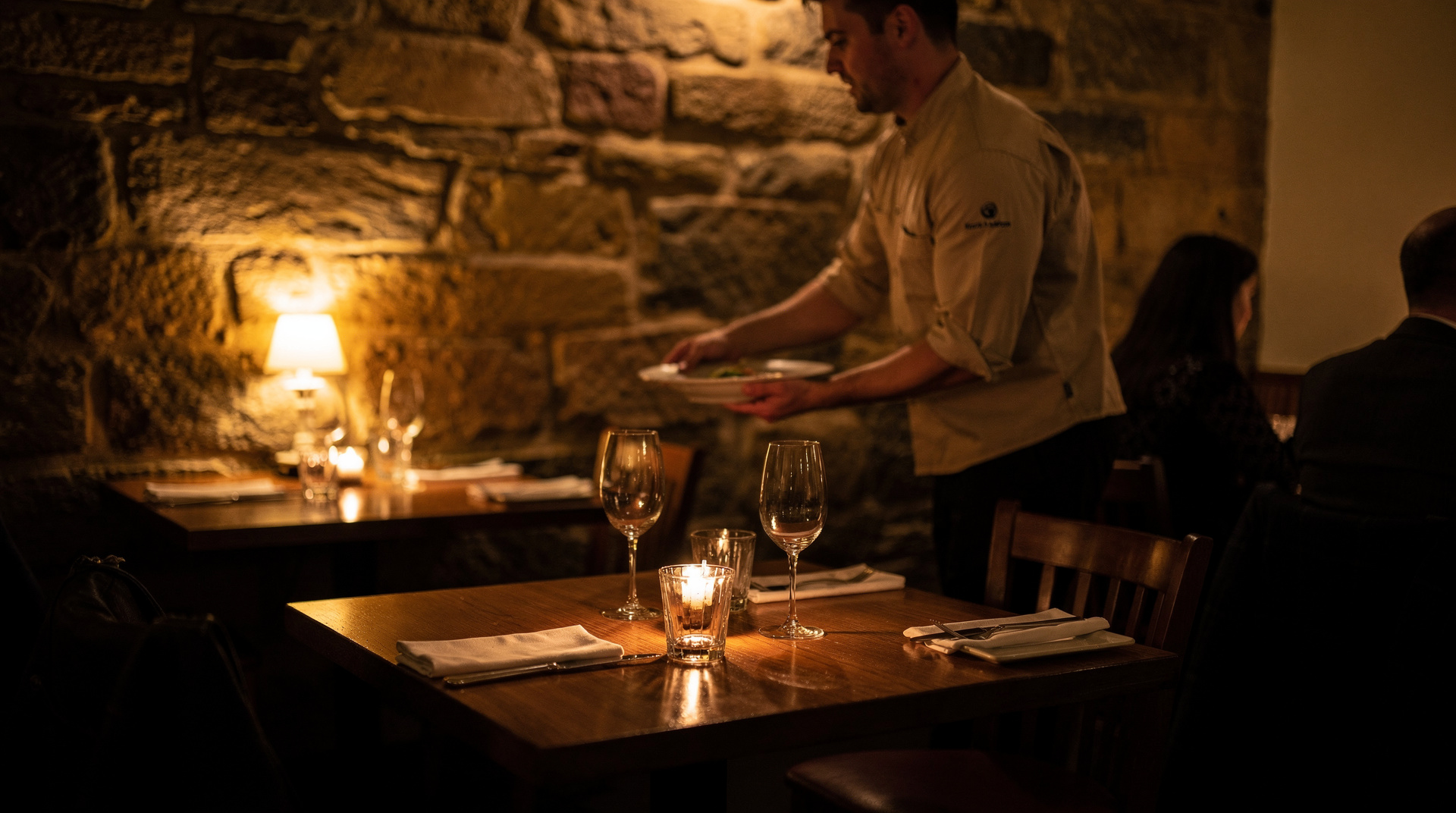
A few practical signals separate a kitchen that takes traditional Scottish food seriously from one coasting on tartan decor. Look for menus that name specific suppliers or regions (Aberdeen Angus, East Lothian lamb, Isle of Mull cheddar) rather than generic descriptions. Be wary of laminated multilingual menus with photographs of every dish — a sign the kitchen is optimised for turnover rather than quality.
Check whether haggis is described as house-made or from a named producer (Macsween’s is a well-regarded commercial supplier used by many good kitchens) rather than left unspecified — either is fine, but vague menu language (“traditional haggis”) without any further detail is often a sign the kitchen has not thought carefully about the dish.
Finally, a restaurant with a mixed local and visitor clientele, rather than one filled entirely with tour groups, is usually a better sign than location alone. None of these signals is infallible on its own, but two or three of them together are a reasonably reliable filter before you commit to a table, and applying them takes only a moment when reading a menu posted outside before you sit down, well before you have committed to a table and a wasted evening.
Wild food: foraging and game
Scotland is one of the best countries in Europe for wild food. The right to roam — enshrined in the Land Reform (Scotland) Act 2003 — gives foragers legal access to the countryside that does not exist in England or most of Europe. Chanterelles, ceps, and other wild mushrooms grow in the birch and pine forests of the Highlands; wild garlic carpets the woodland floor in spring; blackberries (brambles), elderberries, and rowan berries are abundant in hedgerows and woodland edges.
Game — red deer, roe deer, grouse, pheasant, partridge, woodcock — is freely available in season from Edinburgh’s better butchers and increasingly on restaurant menus. The game season runs roughly August (grouse) through February (most other game), and autumn is the best time to encounter the range in Edinburgh restaurants.
For visitors interested in experiencing Scottish wild food specifically, the VIP gastronomy food tour and some of the higher-end Edinburgh restaurants that work closely with their suppliers are the most direct access point.
Scottish drinks beyond whisky
Whisky is the most famous Scottish drink internationally, but Edinburgh has developed a broader drinks culture:
Scottish gin has exploded since around 2015. Edinburgh Gin (based in the city), Pickering’s Gin (Summerhall), and the Holyrood Distillery (Royal Mile) are all Edinburgh-made gins with distinct characters. See the distilleries near Edinburgh guide for the full picture.
Scottish craft beer has also developed substantially. Newbarns Brewery (Leith), Vault City Brewing (Leith), and Stewart Brewing (Edinburgh suburbs) are among the most interesting producers. Edinburgh’s pub culture (see the best pubs guide) is increasingly engaged with local craft beer.
Irn-Bru — the fluorescent orange carbonated drink that outsells Coca-Cola in Scotland — is a cultural artifact that deserves at least one tasting even if it is not to your taste. It is sold in every Scottish supermarket and fish and chip shop.
Frequently asked questions about traditional Scottish food
What is the difference between haggis and black pudding?
Haggis is made from lamb offal (heart, liver, lungs), oatmeal, onion, and spices, traditionally in a sheep’s stomach. Black pudding is a blood sausage made from pork blood, pork fat, oatmeal, and spices, made in a sausage casing. Both are strong-flavoured, both are used in Scottish breakfasts, and both repay eating in good versions rather than tourist-grade ones.
What is a Lorne sausage?
A Lorne sausage (also called a square sausage) is a flat, square pork sausage that is a defining feature of the full Scottish breakfast. It is cooked by slicing and frying, and fits perfectly in a morning roll (a soft bread roll). You will find it in every Edinburgh café that does a proper Scottish breakfast.
Is Scottish food only meat-based?
No. Scotland has excellent vegetables, cheese, fish, and fruit — the cuisine’s reputation as heavy and meat-dominated reflects a historical pattern that has shifted significantly. Leeks, neeps, tatties, and kale are all traditional staples. Vegetarian haggis is a genuine product. And the soft fruit from Perthshire and Angus is world-class.
What does cranachan taste like?
Cranachan tastes of toasted oats, cream, raspberries, and whisky — not in equal measure, but as a balanced whole. The texture alternates between the creaminess of the whipped cream and the crunch of the toasted oatmeal. It is not heavy or sweet in the way of a chocolate dessert; it is more like an elevated trifle with a distinctly Scottish character.
Can I find these dishes outside Edinburgh’s tourist centre?
Yes, and you should try to. Stockbridge, Leith, Bruntsfield, and the Southside all have independent restaurants and cafés that serve traditional Scottish dishes at lower prices and higher quality than the Royal Mile. The farmers’ market on Saturday mornings at Castle Terrace is the best introduction to Scottish food products if you have any self-catering capacity.
Is haggis actually good, or is it just a tourist ritual?
Well-made haggis is genuinely good food, not just a novelty to tick off — the combination of spiced offal, oatmeal, and the traditional casing produces a savoury, peppery dish that stands on its own merits. The tourist-ritual reputation comes mostly from mediocre reheated versions served on the Royal Mile; a version from a serious kitchen like The Scran and Scallie is a different, much better dish. See the best haggis in Edinburgh guide for where to find the good versions.
Which food tour is right for you
If time allows only one food experience, match it to your priorities: the Edinburgh food tour with Scotch, haggis and more is the best general introduction and pairs whisky with the classic dishes covered above; the food tasting tour with a local host suits visitors who prefer a smaller, more conversational format over a set itinerary. Both cover ground that this guide describes but add the tasting itself and a guide’s context, which no amount of reading substitutes for.
Top experiences
Bookable activities with verified prices and instant confirmation on GetYourGuide.