Where to eat in Edinburgh: the honest guide
Edinburgh: food tour with Scotch, haggis, secret dish & more
Where should I eat in Edinburgh without getting ripped off?
Avoid restaurants on the Royal Mile, which charge tourist prices for average food. Head instead to Leith for seafood, Stockbridge for neighbourhood dining, or Bruntsfield and Marchmont for independent cafés. Edinburgh has exceptional food — you just need to walk five minutes off the main tourist drag.
The honest version of Edinburgh’s food scene
Edinburgh has genuinely excellent food, but you would never know it if you stuck to the restaurants that line the Royal Mile between the castle and Holyrood. Those establishments cater almost entirely to the tourist tide: predictable menus, prices fifteen to twenty per cent above what you would pay two streets away, and a quality that rarely justifies the premium. The travellers who eat best in Edinburgh are the ones who walk slightly further, choose their neighbourhood deliberately, and trust local recommendations over the obvious proximity to the castle.
The truth is that Edinburgh punches above its weight for a city of 540,000. It has a serious fine-dining scene — three Michelin-starred restaurants, a growing natural wine culture, and a generation of chefs who are doing genuinely creative things with Scottish ingredients. It also has a thriving street-food market, outstanding fishmongers-turned-restaurants in Leith, excellent independent coffee shops, and a neighbourhood gastropub culture that competes with anything in the UK outside London. This guide maps the terrain honestly so you can make smart decisions with your time and money.
| Where to go | Leith for seafood, Stockbridge for neighbourhood dining, Southside for value |
| Cost | £14-22 mains at a decent restaurant; £8-12 casual; £80-120pp fine dining |
| Time needed | Book a week ahead for weekends; 2-4 weeks for Michelin-starred venues |
| Avoid | The Royal Mile’s tourist-priced strip between the castle and Holyrood |
| Best time to book | Well ahead during August (Fringe) and December/Hogmanay |
Where NOT to eat: the Royal Mile reality check
Before listing the good options, a brief word on the bad ones. The half-mile stretch of restaurants directly on the Royal Mile — Castlehill, Lawnmarket, High Street, and Canongate — is where Edinburgh’s tourist economy concentrates its energy. You will find haggis, neeps and tatties on laminated menus, glass-fronted whisky bars with upcharges on every dram, and fish and chips that costs twice what the same dish costs in a seaside chippy. Some of these places are acceptable. None of them represent Edinburgh’s actual food culture.
The Grassmarket, a few minutes’ walk south of the Royal Mile, is slightly better — more independent operators, lower prices, a livelier atmosphere — but it is still heavily tourist-facing. Use it for a pub lunch or a pint rather than a serious dinner.
The honest-planner guide to eating on the Royal Mile goes deeper on specific places to avoid and why.
Leith: Edinburgh’s most rewarding food destination
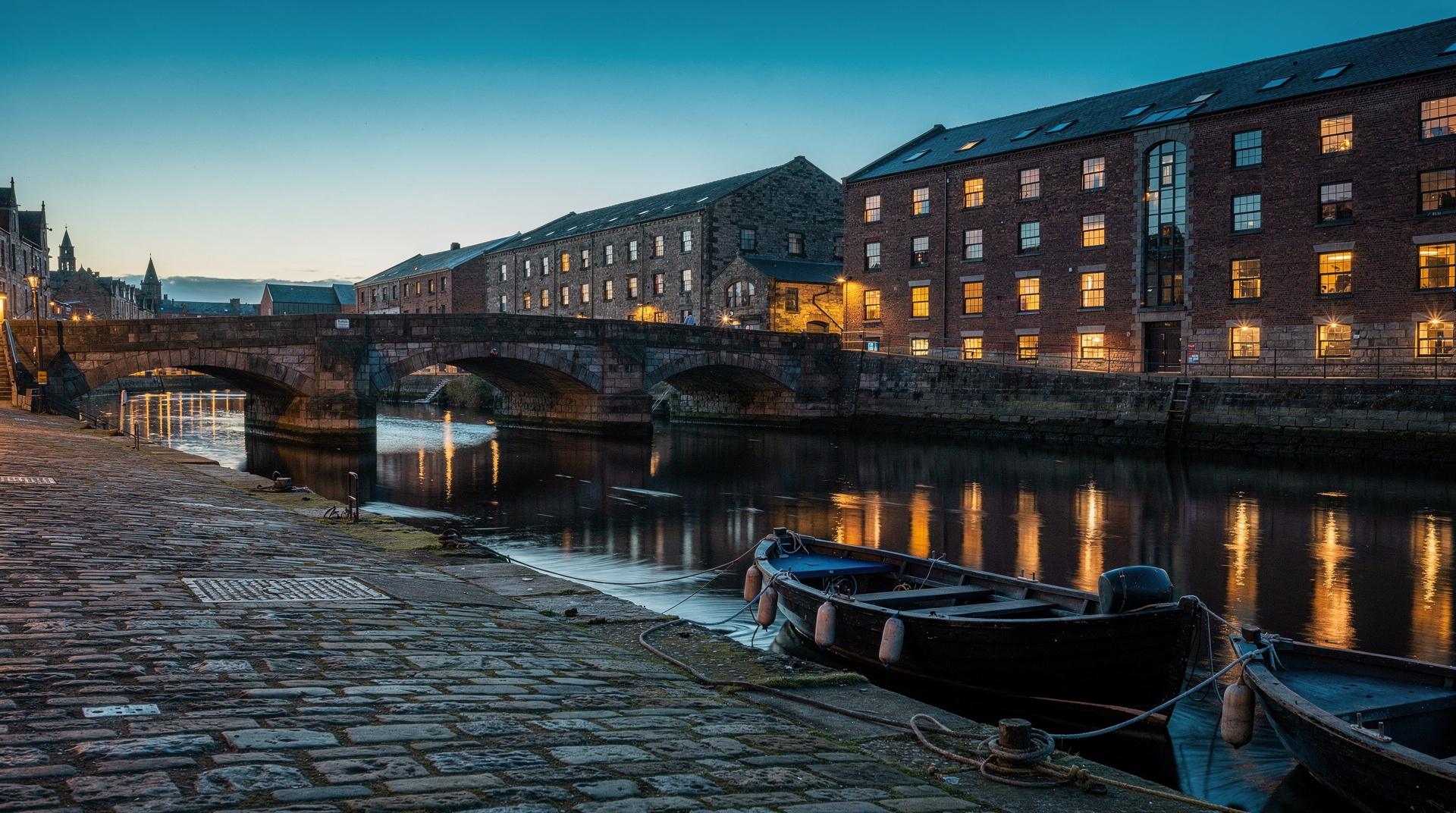
Leith, the port district two miles north of the Old Town, is where Edinburgh’s most serious restaurant culture has settled. The waterfront area around The Shore — a stone-paved street running along the Water of Leith near the docks — contains a concentration of quality independent restaurants that rivals anywhere in Scotland.
The Kitchin (78 Commercial Quay) remains the flagship: Tom Kitchin’s Michelin-starred restaurant has been the reference point for Scottish fine dining since it opened in 2006. Menus are seasonal, ingredient-led, and rooted in Scottish produce from named suppliers. A dinner for two with wine will cost £150–£220. Booking two to four weeks ahead is essential; further ahead for weekends.
Martin Wishart (54 The Shore) is another Michelin star, more classically French in its approach but with the same commitment to Scottish produce. Similar price point to The Kitchin; similarly essential to book.
Café St Honoré (34 NW Thistle Street Lane) — technically in New Town but worth including — is a more accessible French bistro that has been delivering reliable quality for over two decades. Main courses run £18–£28; the pre-theatre menu is good value at around £25 for two courses.
For something more relaxed, The Roseleaf (23 Sandport Place) does Edinburgh’s best brunch and is extremely popular on weekends. Fishers (1 The Shore) is a consistently good fish restaurant at sensible prices — mains around £18–£24 — in a small building that has been feeding Leith since 1991.
To explore Leith properly, the Leith neighbourhood guide covers the area on foot. There is also a dedicated guide to the best restaurants in Leith with more specific recommendations and booking tips.
Stockbridge: the neighbourhood for a relaxed dinner
Stockbridge, northwest of the New Town, is the neighbourhood that locals most consistently recommend to visiting friends. A village within the city, it has its own Saturday farmers’ market (Saunders Street, year-round), a genuine mix of independents and quality chains, and a residential quiet that makes it feel a long way from the castle crowds.
The Scran and Scallie (1 Comely Bank Road), Tom Kitchin’s gastropub, is the best place to eat Scottish food in a relaxed setting without Michelin prices. Mains run £15–£22 and the scotch egg — made with haggis — is one of the best things you can eat in Edinburgh. It gets busy on weekends; book ahead.
Hula Juice Bar and Gallery (103 West Bow) is not in Stockbridge itself but exemplifies the neighbourhood café culture that Edinburgh does well — good coffee, generous food, no tourist premium.
Graze (Comely Bank Avenue) is a Stockbridge wine bar that does small plates well. The wine list is interesting and the atmosphere is exactly what a city neighbourhood wine bar should be.
New Town: smarter dining west of Princes Street
The Georgian New Town, north of Princes Street, has a distinctly different restaurant culture from the Old Town. Here you find proper neighbourhood restaurants serving the office and residential population rather than visitors.
Dishoom (3A St Andrew Square) needs little introduction if you have been to one of the London branches — the Bombay café food is excellent and the Edinburgh outpost, which opened in 2022, has quickly become one of the city’s most popular bookings. Go early or accept that you will queue. Main dishes run £10–£18.
The Gardener’s Cottage (1 Royal Terrace Gardens) is a small, brilliant restaurant in a converted gardener’s hut at the foot of Calton Hill. The menu is set (£55 for dinner, £35 for lunch) and changes daily based on what is in season. It seats fewer than thirty people and books up quickly; check availability for the week after you arrive.
Noto (47a Thistle Street) is one of Edinburgh’s most talked-about recent openings — small plates, excellent natural wine, a focused menu that changes frequently. It has become a regular mention in best-restaurant roundups for good reason.
Grassmarket and Cowgate: the nightlife dining zone
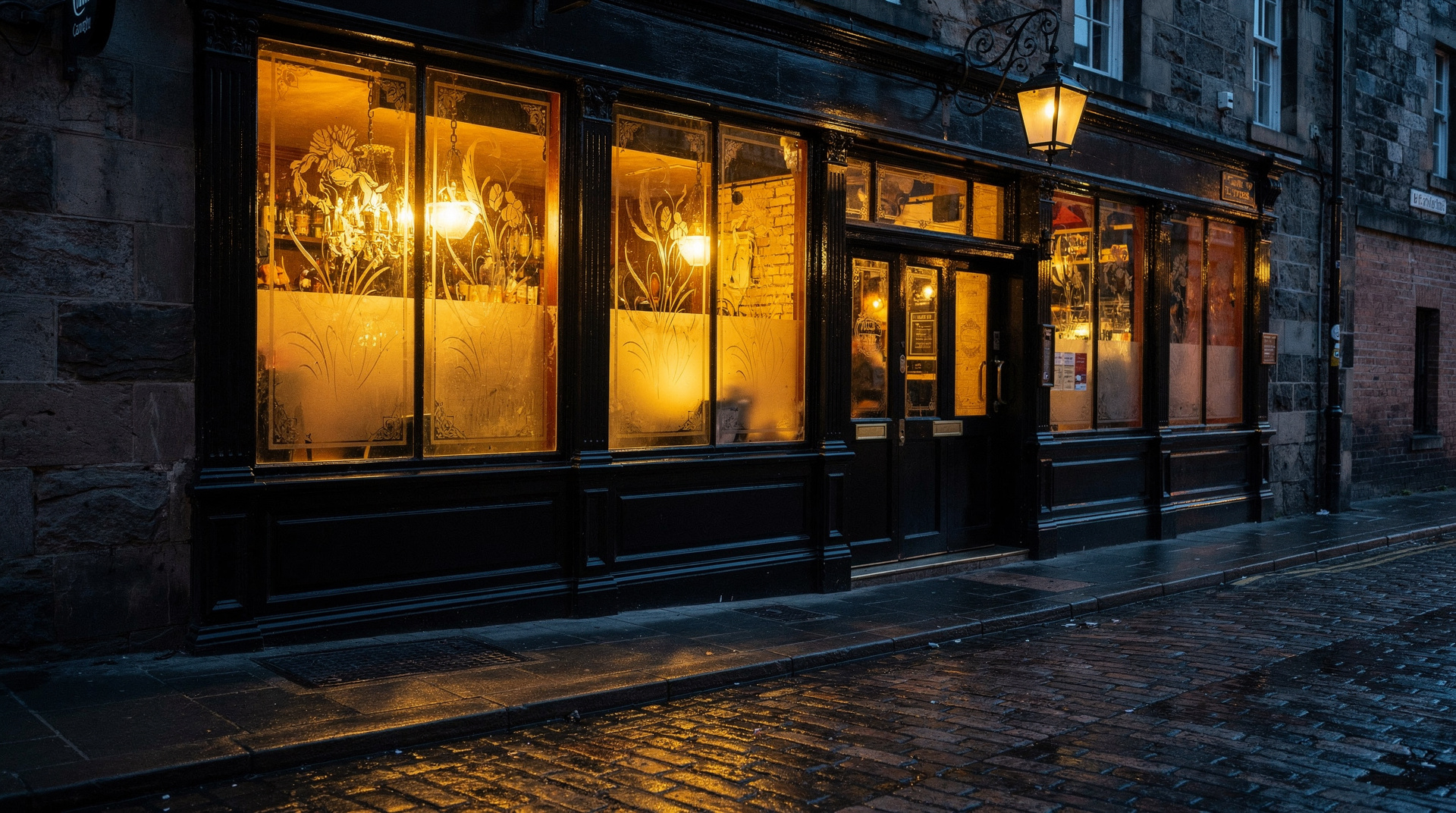
The Grassmarket’s eating options improve significantly as you move away from the tourist-facing shops and pubs toward the independent operators that cater to locals. La Favorita and Civerinos both do excellent pizza in this area. Illegal Jack’s (9 Marshall Street, Cowgate) is a better-than-average burrito spot. The Last Drop at 74-78 Grassmarket is one of the better pub-lunch options in the area, with honest food and a decent beer selection.
Old Town off the beaten path: Canongate and Southside
The Canongate end of the Royal Mile — the stretch closest to Holyrood Palace — is quieter and more residential than the upper section. A few worthwhile places have opened here in recent years, notably Howie’s (208 Canongate), a long-standing Scottish restaurant with sensible prices (two courses for around £22) that draws a local as much as tourist clientele.
The Southside, between the university and the Meadows, has a cluster of honest neighbourhood restaurants, notably Ting Thai Caravan (Teviot Place), which has been doing extraordinary Thai street food at outstanding value (£8–£12 for mains) for years, and Mosque Kitchen (31a West Nicolson Street), the city’s best-value lunch — enormous portions of curry for around £6–£8.
Food markets and street food
Edinburgh Farmers’ Market (Castle Terrace, Saturday mornings) is one of Scotland’s best and runs year-round. It is the place to buy artisan Scottish cheese, smoked salmon, venison jerky, game pies, and fruit. Even if you are not self-catering, walking through it and eating a toasted cheese sandwich from one of the hot-food stalls is a very good way to spend a Saturday morning.
Stockbridge Market (Saunders Street, Sundays) is smaller but strong on prepared food — the Punjabi food stall alone is worth the walk.
During August (Fringe season), several outdoor food markets pop up around the Meadows and Bristo Square, most of them very good.
Guided food experiences
If you want to explore Edinburgh’s food scene with someone who knows it deeply, a guided food tour is worth the investment. The Edinburgh food tour with Scotch, haggis and more covers the Old Town’s key food stops and is one of the most popular ways to get oriented quickly, combining eating with history. The 3.5-hour guided food and drink tour takes a broader cut through the city’s neighbourhoods and includes drinks alongside the food.
For something more upmarket, the best of Scottish gastronomy VIP food tour focuses on premium Scottish produce and gives you access to producers and restaurants that are harder to find independently.
The guide to Edinburgh food tours compared covers the main options with honest assessments of who each suits.
Budget eating in Edinburgh
Edinburgh is not a cheap city, but it is possible to eat well on a tight budget. The Mosque Kitchen (mentioned above) is the outstanding value option. Greggs on Princes Street does exactly what Greggs does everywhere. Marmite & Harissa (Cockburn Street) does excellent falafel wraps for around £6.
The university area around Teviot Row and Nicholson Street has several budget-friendly options that cater to the student population year-round: Thai, Indian, and Italian places where £10 buys a proper meal and a soft drink.
The Edinburgh on a budget guide covers the full picture for cost-conscious visitors, including free things to do around mealtimes.
Breakfast and brunch
Edinburgh does café culture well. The best all-round breakfast spots are in Stockbridge, Bruntsfield, and Marchmont, away from the Old Town entirely.
Lilium (2 Bruntsfield Place) does exceptional brunch in a light-filled space; expect to queue on weekends. The Pantry (1 North West Circus Place, Stockbridge) has been Edinburgh’s most respected brunch venue for several years — the waiting list on weekends is real, so either arrive at opening (9am) or accept a thirty-minute wait.
Söderberg bakeries (several locations, including Quartermile) do the best pastry in the city and very good sourdough sandwiches.
See the Edinburgh coffee guide for cafés with excellent filter coffee to match the food.
Afternoon tea
If you want the formal afternoon tea experience, Edinburgh delivers it very well — and at considerably lower prices than London.
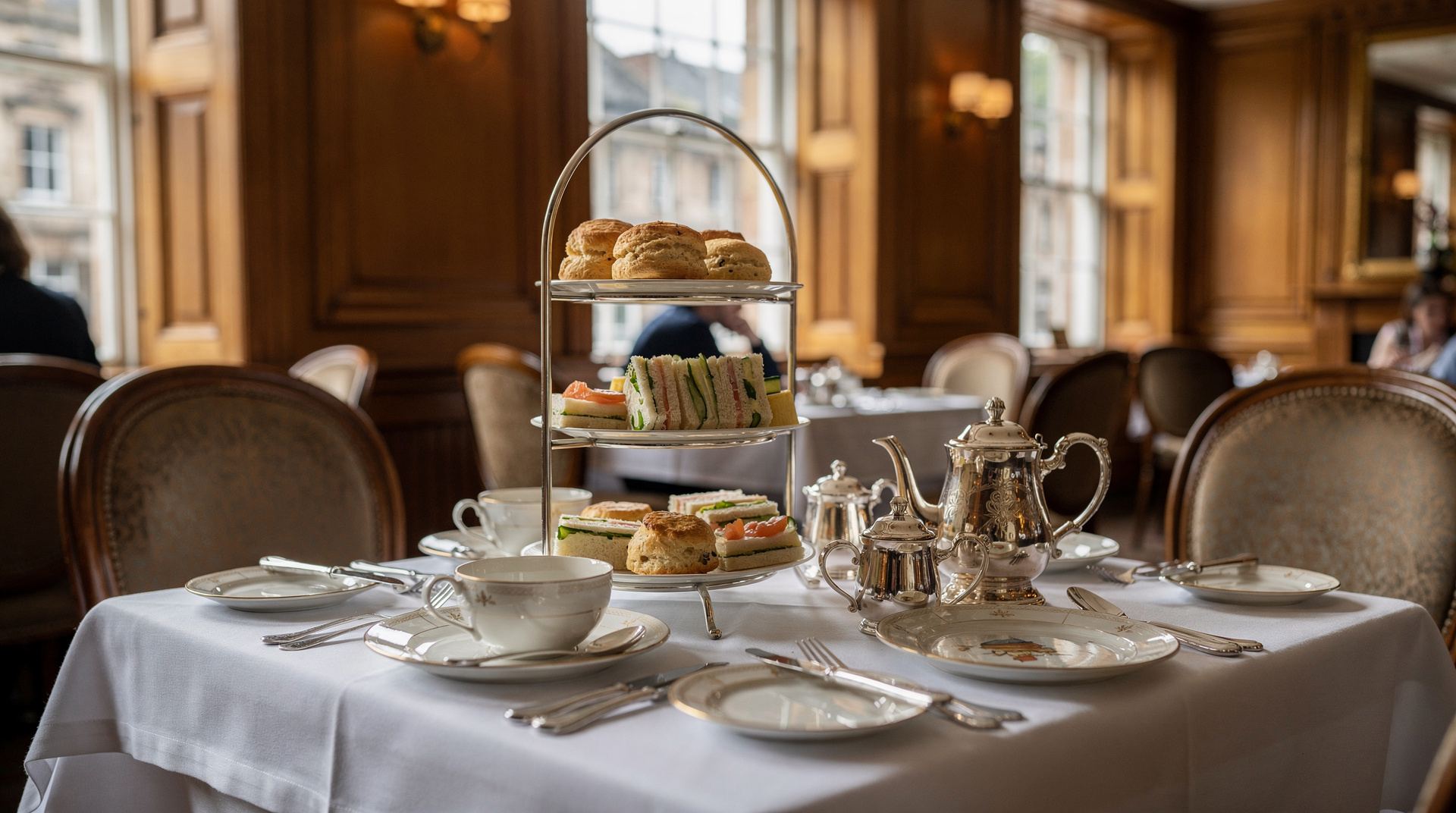
The best options are at The Balmoral (Princes Street, from around £55pp), The Caledonian Hotel (Rutland Street, from around £45pp), and the Colonnades at the Signet Library (Parliament Square, from around £60pp — they do a themed “Harry Potter” version for film fans). The experience at our afternoon tea guide covers all the main options in detail with booking tips.
Solo dining and counter seating
Edinburgh handles solo diners well, which is worth knowing if you are travelling alone. Several of the better restaurants — Noto and The Scran and Scallie among them — have counter or bar seating specifically suited to eating alone without feeling conspicuous, and both welcome walk-ins for one at quieter times. Wine bars including Graze in Stockbridge are also comfortable for solo visits, with staff generally happy to talk through the list for a single glass rather than a full bottle.
Booking as a solo diner at busier weekend slots can occasionally be trickier at very small restaurants like The Gardener’s Cottage, where tables are limited and larger bookings are sometimes prioritised — a weekday visit sidesteps this entirely. Food markets and casual food-hall style venues are also a reliably easy solo option, since there is no table etiquette to navigate and the format is built around individual orders rather than shared courses. Edinburgh’s overall attitude to solo diners is relaxed rather than remarkable — you are unlikely to feel out of place at any but the most formal, celebration-oriented restaurants on this list.
Dining with dietary requirements
Edinburgh has improved substantially for plant-based and gluten-free diners over the past five years. Most of the better restaurants now offer serious vegetarian and vegan options rather than token menu additions. See the gluten-free and vegan Edinburgh guide for venue-specific recommendations.
Practical tips
Booking: For anything above a casual dinner (i.e. most places on this guide), book ahead. Edinburgh is small but its best restaurants fill quickly, especially at weekends and during festival season (August, Hogmanay, and December markets). A week ahead is usually enough for most places; Michelin-starred venues need two to four weeks.
Pre-theatre: Many Edinburgh restaurants offer pre-theatre menus between 5pm and 6:30pm, typically two courses for £20–£28. This is excellent value. The Lyceum, Traverse, and Festival Theatre are all within easy walking distance of New Town and Grassmarket restaurants.
When in August: During the Fringe, many restaurants are packed beyond normal capacity and service can slow noticeably. Either book well ahead or eat at unusual hours — early lunches and late suppers (after 9pm) are significantly quieter. See the August in Edinburgh survival guide for broader Fringe logistics.
Edinburgh’s fine dining landscape
Edinburgh has one of the highest concentrations of Michelin-starred restaurants per capita of any UK city outside London. In 2026, the city holds:
The Kitchin (Leith) — one star, held since 2007. Tom Kitchin’s flagship.
Martin Wishart (Leith) — one star, held since 2001.
The Pompadour by Galvin (The Caledonian Hotel, West End) — the hotel’s fine dining restaurant, which won a star under chef Chris Galvin and has maintained high standards through subsequent chef changes.
Number One (The Balmoral Hotel, Princes Street) — one star, a long-established Edinburgh fine dining institution in the city’s most famous hotel.
Restaurant Martin Wishart (Leith) — covered above.
Beyond the starred restaurants, Edinburgh has a tier of serious unstarred restaurants — Noto, The Gardener’s Cottage, Café St Honoré — that would hold stars in a country with different award distribution. The quality of Edinburgh’s best restaurant cooking has risen substantially since 2010 and the city’s culinary ambition is no longer qualified.
Groups and large parties
Booking for a group of six or more in Edinburgh generally requires more lead time and often a pre-set menu rather than full à la carte choice, particularly at smaller kitchens like The Gardener’s Cottage or Noto where seating is tight. Gastropubs and larger New Town restaurants such as Dishoom are usually more flexible with larger walk-in groups, though even there a booking is strongly advised for parties above four. During festival season, large-group bookings should be made as far ahead as the restaurant’s system allows — some of the more popular Leith and New Town venues open their diaries three to four months out for August specifically.
Understanding Edinburgh menu pricing conventions
A few conventions are worth knowing before you order. Scottish restaurants generally include VAT in the menu price, so the number you see is what you pay before service. A discretionary service charge of 10-12.5% is often added automatically to the bill for larger groups or at busier restaurants — check before tipping separately on top, as double-tipping is a common visitor mistake.
Set lunch and pre-theatre menus are usually significantly better value than ordering the same dishes à la carte in the evening, and many of Edinburgh’s better restaurants, including some Michelin-starred ones, run genuinely good-value lunch menus that make an otherwise expensive kitchen accessible on a moderate budget. Corkage for bringing your own wine is rare in Edinburgh compared to some cities and generally not worth pursuing.
Eating in Edinburgh on a budget without sacrificing quality
The most useful advice for budget-conscious visitors is to seek out Edinburgh’s ethnic restaurant zones rather than the budget versions of Scottish food. The university area’s South Asian restaurants (Mosque Kitchen especially), the Chinese restaurants around Leith Walk, and the growing Stockbridge café scene all offer food of genuine quality at prices well below what the same quality would cost in a tourist-facing restaurant.
Mosque Kitchen (31a West Nicolson Street): mentioned earlier, worth repeating. Large portions of excellent vegetable and meat curries, daal, rice, and bread for under £8. Routinely described as the best cheap lunch in Edinburgh.
Hula Juice Bar (103 West Bow): good wraps, salads, and hot food at £6–£9.
Mums Great Comfort Food (4a Forrest Road): classic British comfort food — fish and chips, sausage and mash, bubble and squeak — at fair prices, served in a friendly neighbourhood setting. Mains around £10–£13.
Gregg’s and Subway are both present on Princes Street and the Old Town for those who need the familiar.
For a comprehensive approach, see the Edinburgh on a budget guide.
Eating late in Edinburgh
Edinburgh’s restaurant culture follows a relatively early-to-bed pattern by European standards. Most restaurants stop seating for dinner by 9:30pm or 10pm, even on weekends. For visitors arriving late from other cities or wanting to eat after a show, the options are:
The Waldorf Astoria Edinburgh (The Caledonian’s dining rooms) and the Balmoral Hotel’s Number One both serve until later than most Edinburgh restaurants. Most Leith restaurants stop taking orders by 9:30pm.
For genuinely late eating, the Cowgate area has several places that serve food alongside drinks until later — these are primarily bar food rather than restaurant dining, but reliable for a late-night hunger situation.
Chinese restaurants on Leith Walk often serve until midnight, particularly at weekends. This part of Edinburgh’s food culture is genuinely underused by visitors who do not know the area.
Seasonal eating in Edinburgh
Edinburgh’s restaurant menus change with the seasons more noticeably than in many cities because Scottish ingredient seasonality is real and pronounced. Key seasonal moments:
Spring (April–May): New season lamb from the Borders, wild garlic, asparagus (Scottish asparagus season is short but excellent), early soft fruits.
Summer (June–September): Scottish raspberries and strawberries, lobster and crab from Scottish waters, game birds from August (grouse season opens 12 August).
Autumn (October–November): Mushrooms (chanterelles from Scottish forests are extraordinary), venison, game season in full swing, root vegetables, Scottish apples and pears.
Winter (December–March): Shellfish (oysters, mussels, scallops), smoked fish, root vegetables, preserved and cured meats, the Burns Night haggis season in January.
The restaurants that make the most of this seasonality — The Kitchin, The Gardener’s Cottage, Noto — provide a meaningfully different experience in each season. If you visit Edinburgh in October and again in April, the best menus will have changed substantially.
Frequently asked questions about eating in Edinburgh
Is food expensive in Edinburgh?
Edinburgh is mid-range by UK standards. Expect to pay £14–£22 for a main course at a decent restaurant, £8–£12 at a casual spot. The tourist drag around the Royal Mile runs ten to twenty per cent above this. Budget £40–£60 per person for a good dinner with drinks; fine dining at Kitchin-level is £80–£120pp excluding wine.
What is the most famous Scottish dish to try?
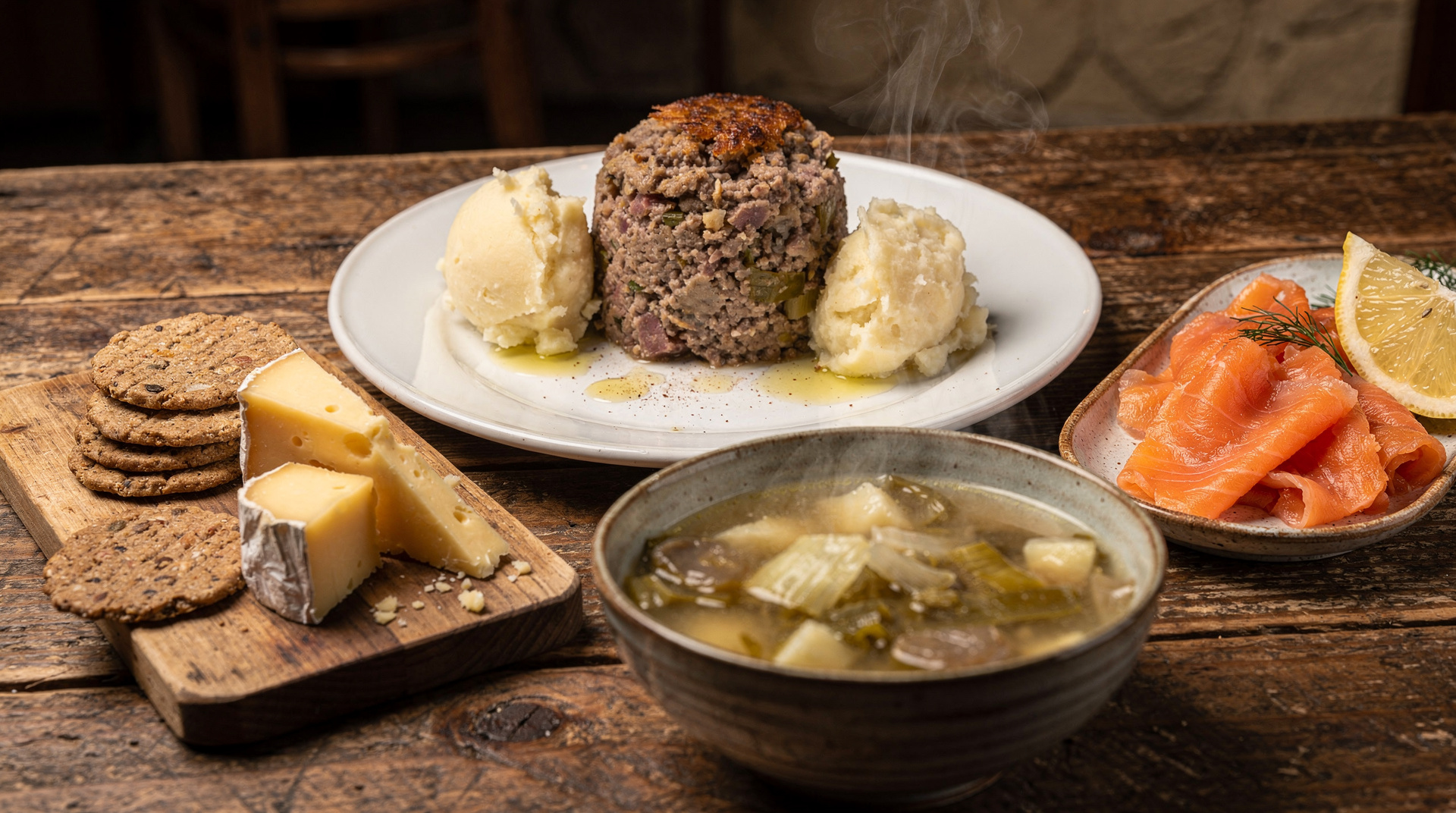
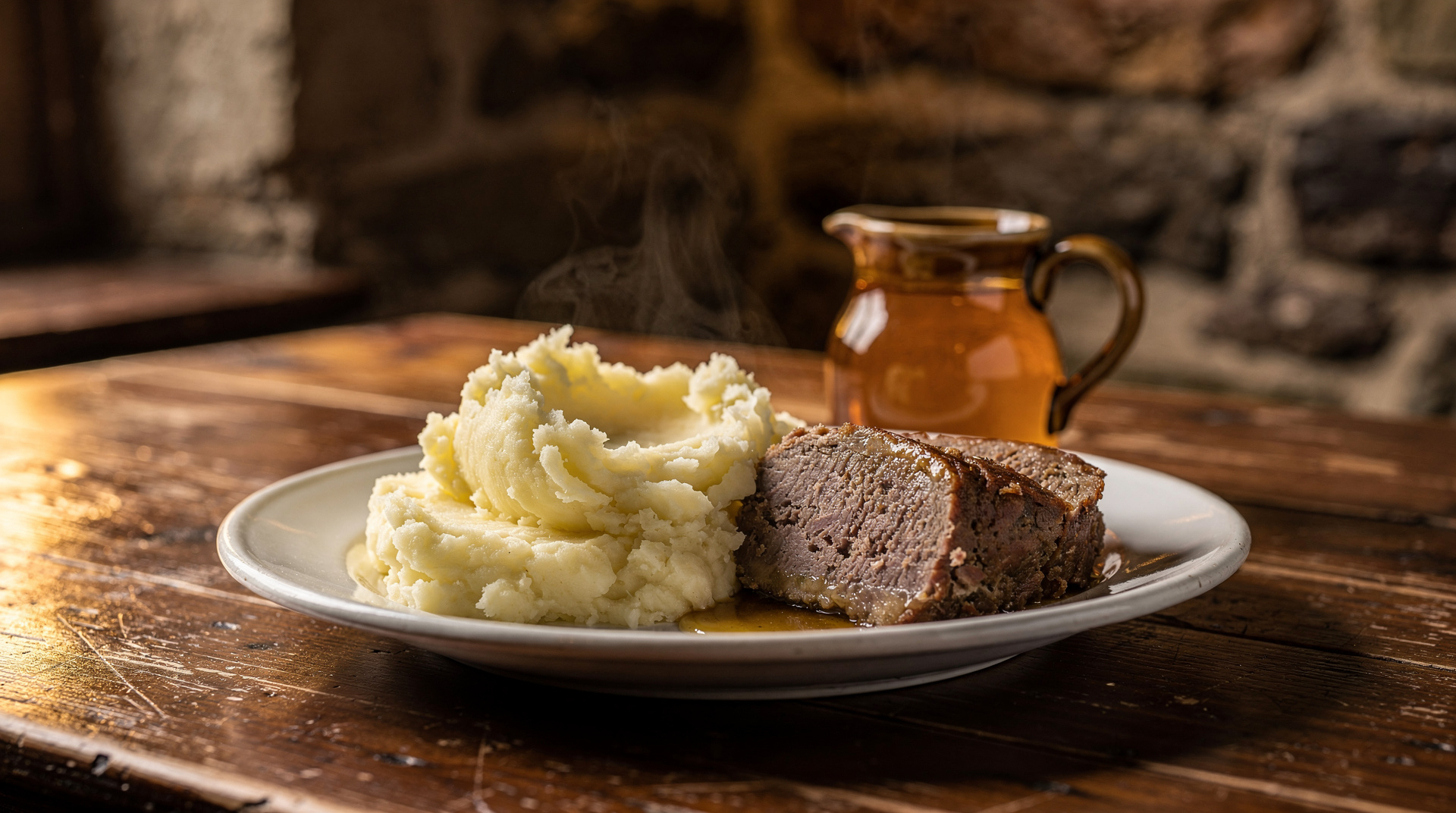
Haggis is Scotland’s national dish and worth trying at least once, even if the description puts you off. The best versions are well-seasoned and served with neeps (turnip) and tatties (potato) with a whisky cream sauce. The guide to the best haggis in Edinburgh covers where to find genuinely good versions rather than tourist-grade ones.
Are there good vegetarian and vegan options?
Yes, Edinburgh’s plant-based scene is now strong. Hendersons (25 Thistle Street) has been doing vegetarian food since 1962. David Bann (56 St Mary’s Street) is the Old Town’s best vegetarian restaurant. For specifics, see the gluten-free and vegan Edinburgh guide.
Is Leith worth travelling to from the Old Town?
Absolutely, if food is important to you. The journey takes about twenty minutes by bus or thirty to forty minutes on foot down Leith Walk. The concentration of quality restaurants along The Shore, combined with the atmosphere of the waterfront, makes Leith a genuinely worthwhile half-day food destination. See the Leith guide for the full picture.
Where do locals actually eat?
The honest answer is Stockbridge, Bruntsfield, Marchmont, and Leith. These residential neighbourhoods have the restaurants that Edinburgh people return to rather than places they take tourists. They are all a fifteen to thirty-minute walk (or short bus ride) from the Royal Mile.
When should I book?
For weekends at any quality restaurant, a week ahead. For Michelin-starred places at any time, two to four weeks. During August (Fringe), book as far ahead as possible for anywhere on this list — the city’s population roughly doubles and restaurants fill accordingly.
Is there a good food market?
Edinburgh Farmers’ Market on Castle Terrace (Saturday mornings, year-round) is genuinely excellent. Stockbridge Market on Sundays is good for prepared food. During festival season, the Meadows and Bristo Square often host pop-up markets with high-quality street food.
Which neighbourhood should I choose if I only have one dinner out?
If food is the priority for a single dinner, Leith wins for quality and atmosphere combined, particularly around The Shore. If convenience and a relaxed, less touristy setting matter more, Stockbridge is the better choice, with The Scran and Scallie as the standout. Both are a short bus or taxi ride from the Old Town.
Choosing a neighbourhood: quick comparison
| Neighbourhood | Best for | Typical price | Distance from Royal Mile |
|---|---|---|---|
| Leith | Fine dining, seafood | £18-45pp | 20-25 min by bus |
| Stockbridge | Relaxed neighbourhood dinner | £15-25pp | 15-20 min walk or bus |
| New Town | Smart casual, groups | £15-30pp | 5-15 min walk |
| Southside | Budget, ethnic food | £6-13pp | 10-15 min walk |
| Royal Mile | Convenience only | £18-28pp (overpriced) | On site |
For a guided, celebratory version of a single Edinburgh dinner out, the Scottish dinner with folk music combines a sit-down traditional meal with live music, which is a reasonable choice if you want the classic Edinburgh food-and-culture evening handled for you rather than booking a restaurant independently.
Top experiences
Bookable activities with verified prices and instant confirmation on GetYourGuide.