Gluten-free and vegan Edinburgh: the practical eating guide
Edinburgh food tour: devour Edinburgh like a local
Is Edinburgh a good city for vegan and gluten-free visitors?
Yes, Edinburgh has improved substantially for both dietary requirements. David Bann (Old Town) is an excellent vegetarian restaurant; Hendersons (New Town) has been veggie since 1962. For gluten-free, most quality restaurants now manage allergens well. Avoid busy tourist-season dining without booking — kitchens under pressure handle dietary requests less carefully.
| Best vegetarian/vegan | David Bann, Hendersons, Harmonium |
| Best coeliac-safe | Cellar No 1, the Witchery, Wagamama |
| Watch for | Oats in haggis, cranachan, oatcakes |
| Budget option | Mosque Kitchen, £6-8 mains |
| Riskiest period | August (Fringe kitchen pressure) |
| Best neighbourhoods | New Town, Stockbridge, Southside |
The honest state of play
Edinburgh has changed significantly for plant-based and allergen-conscious diners over the past decade. A city that once had limited options beyond uninspiring veggie burgers and soup now has dedicated vegan restaurants, serious plant-based menus at quality establishments, and a growing number of cafés and bakeries that approach gluten-free with genuine rather than token commitment.
The caveat is consistency. The best Edinburgh restaurants handle dietary requirements well because they are staffed by professionals who have been dealing with this for years. The tourist-facing places on the Royal Mile are less reliable — particularly during August when kitchen pressure is highest and substitutions are managed less carefully. This guide focuses on venues where the kitchen has demonstrated a genuine commitment rather than a compliance mentality.
Dedicated vegetarian and vegan restaurants
David Bann, Old Town
David Bann at 56 St Mary’s Street, just off the Canongate end of the Royal Mile, has been Edinburgh’s most respected vegetarian restaurant since 2002. It is not a health-food restaurant in the slightly earnest older sense — it is a proper restaurant with a committed wine list, attentive service, and a menu that treats plant-based cooking as a creative endeavour rather than a series of subtractions. The food is genuinely interesting: dishes draw on Mediterranean, Asian, and North African influences and change regularly with the seasons.
The menu is entirely vegetarian and largely vegan, with clear labelling. Most dishes can be made gluten-free with advance notice. Prices are mid-range (starters £7–£10, mains £14–£18). Booking is recommended at weekends.
Hendersons, New Town
Hendersons at 25 Thistle Street (and a second branch on Hanover Street) has been Edinburgh’s canonical vegetarian restaurant since 1962 — it predates the modern plant-based movement by decades and has its own character as a result. The food is hearty, wholesome, and nourishing rather than elaborate: salad bowls, vegetable bakes, soups, and daily changing hot dishes that reflect whatever is in season.
Hendersons is affordable (mains around £10–£14) and comfortable, with the lived-in atmosphere of a place that has been feeding people reliably for sixty years. The gluten-free options are clearly marked. A takeaway counter alongside the restaurant makes it useful for a quick affordable lunch.
Harmonium, New Town
Harmonium Bar and Kitchen on Lochrin Place (west of the Grassmarket) is Edinburgh’s best fully vegan restaurant. The menu is inventive and avoids the trap of excessive mock-meat: the focus is on whole ingredients, interesting spicing, and genuine cooking rather than attempts to simulate conventional dishes. Brunch on weekends is outstanding. Main courses run £12–£16.
The Baked Potato Shop, Old Town
A purely pragmatic option that deserves mention: the Baked Potato Shop at 56 Cockburn Street has been providing some of Edinburgh’s cheapest good-quality food for decades. Jacket potatoes with vegan-friendly fillings for around £4–£6 represent remarkable value in the middle of the Old Town. Not fine dining, but a genuinely useful option for budget vegan visitors. It sits a few minutes from the Royal Mile, making it a sensible stop between Old Town sights without paying tourist-strip prices.
Mainstream restaurants with serious plant-based menus
Most of Edinburgh’s quality restaurants now offer genuine vegan options rather than token menu additions. The restaurants below have made this a deliberate priority:
The Scran and Scallie (Stockbridge) runs a good vegan menu alongside its Scottish gastropub food; the kitchen is experienced at handling allergens.
Noto (New Town) has plant-based options that are given the same kitchen attention as the meat dishes — it is not an afterthought.
Cafe St Honoré (New Town) accommodates vegetarians and often vegans with the same seasonal French-influenced cooking it applies to everything.
Dishoom (St Andrew Square) has a well-developed vegetarian and vegan menu that has always been part of the Bombay café concept rather than an addition to it.
For a broader picture of Edinburgh’s restaurant scene beyond dietary-specific listings, see the where to eat in Edinburgh guide, which covers these and other venues by neighbourhood and price point.
Neighbourhood matters as much as the individual venue. Stockbridge and the New Town tend to reward a short walk with more considered menus than the busiest stretches of the Old Town, and Leith is worth knowing too, with more on its dining scene in the best restaurants in Leith guide.
Gluten-free Edinburgh: the practical reality
Gluten-free dining in Edinburgh requires the same approach as anywhere: more advance planning, more specific conversation with waiting staff, and more caution during high-pressure service periods. A few practical realities:
Oats are complicated. Traditional Scottish food uses oats extensively — haggis, cranachan, porridge, oatcakes, oatmeal in soups and stews. Standard oats in the UK are processed alongside wheat and are not safe for coeliacs unless specifically labelled gluten-free. Restaurants that take gluten-free seriously will know this and will use certified GF oats or alternatives; restaurants that do not may not realise it is an issue.
Haggis: Most commercial haggis contains oatmeal and is not gluten-free. Ask specifically about the recipe and oat sourcing before ordering.
Fish and chips: Edinburgh’s fish and chip shops fry in shared oil and coat fish in wheat-based batter. Dedicated gluten-free options are rare; ask whether the fryer is separate.
Most reliable for coeliac-safe dining
Cellar No 1 (43 West Bow) specifically markets itself as Edinburgh’s most coeliac-friendly restaurant, with dedicated fryers, strict kitchen protocols, and a menu clearly labelled for allergens. The food is straightforward Scottish-influenced bistro cooking rather than remarkable, but the safety commitment is genuine.
The Witchery (Castlehill) trains staff specifically on allergens and handles dietary requests in its more expensive bracket with the thoroughness that the price point implies. It is not cheap (dinners from £45pp) but it is reliable.
Wagamama (multiple Edinburgh locations) has well-developed gluten-free protocols across its pan-Asian menu and consistent allergen training — worth knowing for visitors who need certainty rather than adventure.
Scottish food that is naturally gluten-free
Several traditional Scottish dishes are naturally gluten-free or easily adapted:
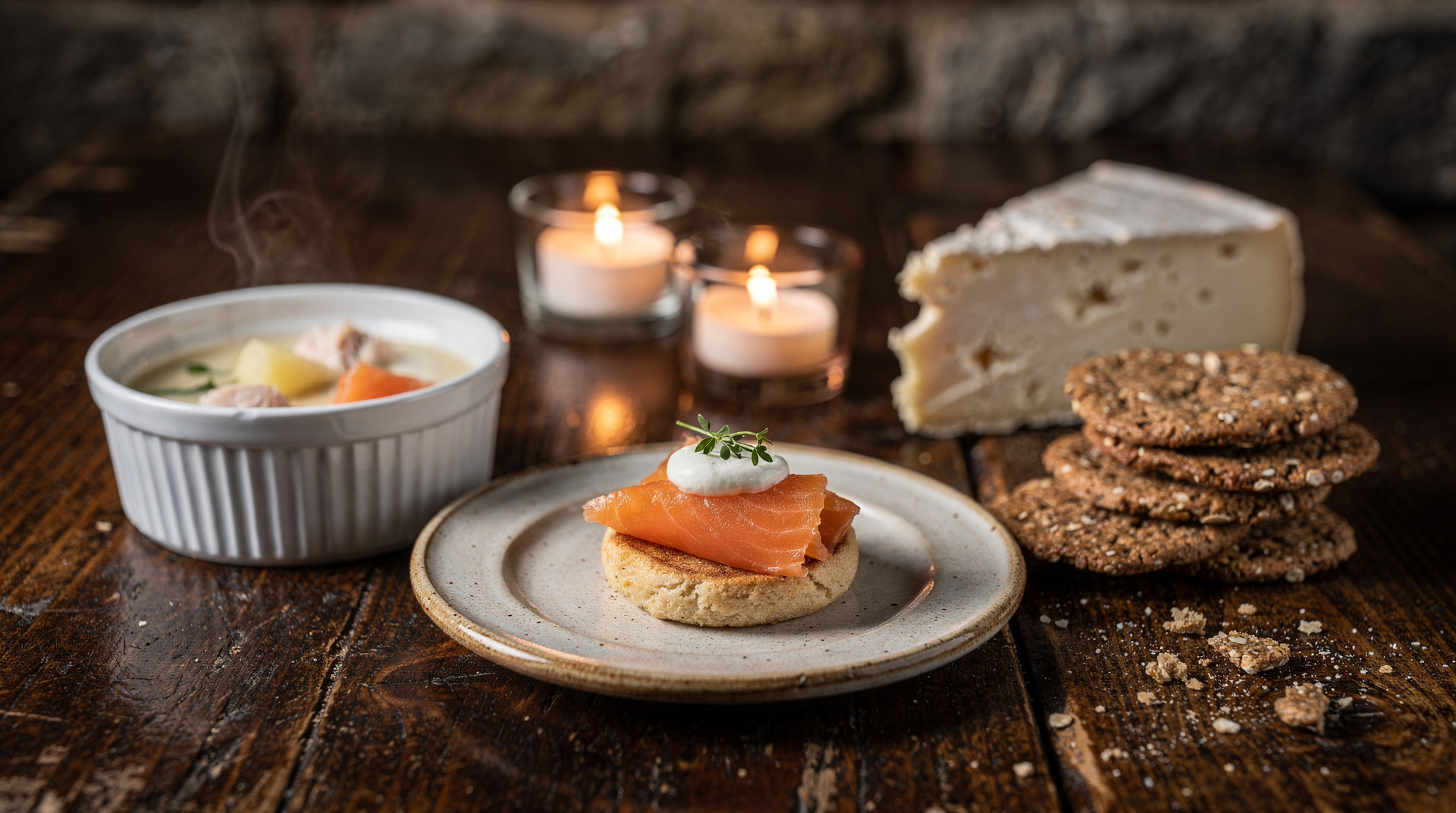
- Cullen skink (smoked haddock chowder) is typically made without flour thickening and is often naturally GF — confirm the recipe.
- Scottish smoked salmon with potato dishes (rösti, baked potato) is a reliable choice.
- Grilled or roasted Scottish venison or beef without sauce additions are naturally GF.
- Cranachan can be made gluten-free using certified GF oats.
- Scottish tablet and shortbread: tablet is naturally GF; shortbread is not (it uses wheat flour), but some bakeries make a GF version.
Food shopping for gluten-free and vegan visitors
Real Foods (37 Broughton Street and 8 Queensferry Street) is Edinburgh’s best health food shop and has the most comprehensive gluten-free and vegan product range in the city. It is the right answer if you are self-catering and need reliable specialty ingredients.
Waitrose (Morningside and Stockbridge) has a strong free-from aisle by supermarket standards.
Margiotta’s (multiple city centre locations) is a small Edinburgh chain of convenience stores that runs better than average free-from and vegan product ranges.
For visitors self-catering an Edinburgh apartment for a week or more, a single larger shop at Waitrose or a trip to Real Foods early in the stay is more efficient than repeated small top-ups at convenience stores, which carry a narrower free-from range at a higher price.
Food tours with dietary accommodations
Most Edinburgh food tours can accommodate gluten-free and vegetarian visitors with advance notice. Vegan accommodations vary by tour and stop — contact the operator before booking. The Edinburgh food tasting tour with a local is among the more flexible options, partly because the smaller group size allows the guide to tailor the stops. The 3.5-hour food and drink tour has also handled dietary requirements with good advance communication, according to visitor feedback.
August: allergen management under pressure
Edinburgh’s Fringe (August) brings the city’s dining establishments under extreme pressure. Kitchens that handle allergens carefully in quieter months may become less reliable when service is at maximum capacity and staff turnover is high. For coeliac visitors specifically, August is the time to book ahead, arrive at quieter hours (before 12:30 for lunch, before 6pm for dinner), and be more persistent about confirming allergen protocols at the start of service.
The same advice applies to other busy periods: December markets, bank holiday weekends. If your trip falls in the Fringe window, the Edinburgh Festival Fringe guide helps you plan meals around shows so you are not forced into a last-minute walk-in, and the Christmas markets guide is worth a look before you graze your way through the stalls.
For full August survival strategies, see the August in Edinburgh survival guide.
Fitting dietary-friendly eating into a food tour or day trip
Visitors combining a food tour with sightseeing should factor dietary logistics into the day’s pacing, not just the tour itself. If you are also planning a day out of the city, check ahead: the family day trips from Edinburgh guide and similar day-trip guides note that rural cafés and visitor centres have far more limited allergen-aware options than the city. Carrying emergency snacks (a GF flapjack, nuts, dried fruit) is sensible for any day trip outside central Edinburgh, where a dedicated GF or vegan option may simply not exist at the destination.
Vegan and gluten-free Edinburgh on a budget
Edinburgh can be expensive, but budget options exist for dietary-restricted visitors:
Mosque Kitchen (31a West Nicolson Street) serves large portions of vegetarian and vegan-friendly South Asian food for around £6–£8. Not all dishes are gluten-free (ask about specific items) but the vegetable curries and rice dishes typically are.
Hendersons takeaway counter (mentioned above) is consistently good value for vegetarian food.
Sainsbury’s, Tesco, and M+S Simply Food all have stores in or near the Old Town and New Town with good gluten-free and vegan sections for self-assembly meals.
For a comprehensive picture, see the Edinburgh on a budget guide.
Communicating dietary requirements in Edinburgh restaurants
The practical challenge for dietary-restricted visitors in Edinburgh — as in any city — is communicating requirements accurately without creating friction or receiving inadequate accommodations. A few specific tips for Edinburgh:
Use the booking stage. When you book a restaurant (by phone, email, or booking platform), state dietary requirements clearly at that point rather than arriving and explaining to a server. Restaurants can prepare properly when they know in advance; last-minute accommodations are harder to manage well.
Be specific, not categorical. “I am coeliac and cannot eat any gluten including oats, barley, and malt vinegar” is more useful to a kitchen than “I am gluten-free.” “I am vegan and cannot eat any animal products including honey, gelatine, and some food colourings” is clearer than “I am plant-based.”
Ask about kitchen cross-contamination. For coeliac visitors specifically, the difference between a kitchen that has a dedicated GF fryer and prep area and one that simply uses GF ingredients in a shared kitchen is medically significant. Edinburgh restaurants with genuine coeliac protocols will be able to answer this question directly; ones that cannot are not safe for coeliac diners however carefully they label the menu.
The August caveat. During the Fringe, kitchen staffing turns over faster than at other times, and new staff may not have been briefed on allergen protocols. This is Edinburgh’s highest-risk period for dietary requirement management. Regular customers and residents manage this by building relationships with specific trusted venues; visitors do so by choosing venues with documented allergen commitment (Cellar No 1, the Witchery, larger chains) rather than experimenting.
Edinburgh’s changing dietary landscape: the longer view
Edinburgh’s dietary landscape has changed more rapidly in the decade from 2015 to 2025 than in the previous generation. The combination of rising vegan and vegetarian populations (particularly among the student and young professional demographics that form a significant part of Edinburgh’s population), increased awareness of coeliac disease and non-coeliac gluten sensitivity, and the post-pandemic reassessment of what restaurants should offer has produced a food culture that is substantially more accommodating than it was even in 2019.
The drivers of this change are both demographic and economic. Edinburgh’s university population — over 70,000 students across multiple institutions — has a higher-than-average proportion of vegans and vegetarians. The food businesses that serve this population have adapted their menus accordingly, and those menu innovations have spread from the student-facing cafés and budget restaurants to the broader Edinburgh food scene. The result, by 2026, is that vegan options at quality Edinburgh restaurants are generally well-considered rather than token.
Dedicated allergen awareness restaurants
Beyond the standard dietary accommodations, Edinburgh has a small number of restaurants that have made allergen management a competitive differentiator — something they advertise and take seriously as a business proposition rather than a compliance obligation:
The Allergy-Friendly Kitchen concept has developed across Edinburgh primarily through pop-up events and market stalls rather than fixed premises, but several fixed venues now offer dedicated allergen-managed kitchen environments. Watch for these listings on the FindMeGlutenFree app.
Wildfire (several Edinburgh festival pop-up appearances; check current fixed location) has established a reputation for allergen-managed cooking across a broad range of dietary requirements, including multiple simultaneous restrictions (e.g., gluten-free and vegan, or nut-free and dairy-free).
Navigating haggis and traditional Scottish dishes
Traditional Scottish cuisine presents specific dietary challenges that visitors should understand before committing to a meal:
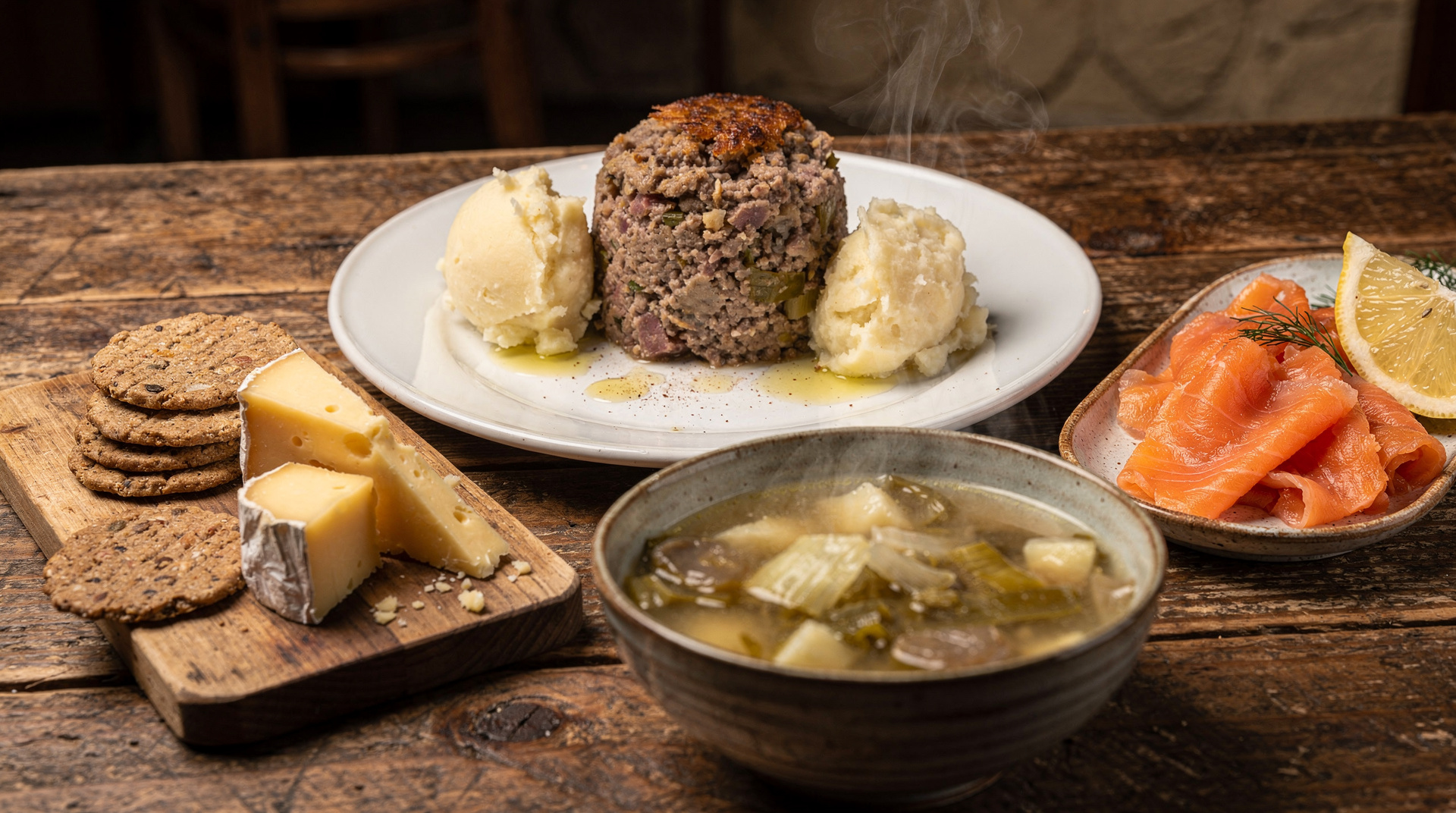
Haggis contains oatmeal (not safe for coeliacs without GF oats), lamb offal (not vegetarian), and often traces of allergens from shared production. Vegetarian haggis is available but is not automatically coeliac-safe without confirming the oat sourcing.
Cullen skink is often dairy-heavy (cream and butter) and may be thickened with flour in cheaper versions. It is neither vegan nor reliably gluten-free without checking.
Scotch broth is typically made with barley, which contains gluten and is not safe for coeliacs.
Cranachan contains oatmeal and dairy. Not vegan; not automatically coeliac-safe.
For a fuller picture of what these dishes are meant to taste like before you adapt them, the traditional Scottish food guide and the best haggis in Edinburgh guide explain the classics, which makes it easier to ask the right questions of a kitchen.
The general principle is that traditional Scottish food requires more careful navigation than modern restaurant food because the traditional recipes were developed without dietary restriction in mind. The best Edinburgh restaurants are well-informed about their ingredients; some tourist-facing places are not.
Vegan Scottish food: a growing tradition
The vegan equivalents of traditional Scottish dishes have developed alongside the broader vegan movement and are now sophisticated enough to constitute their own tradition:
Vegan haggis (using lentils, mushrooms, and oatmeal) is the most established. Vegan cranachan (using coconut cream and certified GF oats) is increasingly common. Vegan cullen skink (using plant-based cream and smoked seaweed or smoked tofu to replace the haddock) is more experimental but appears occasionally on creative menus.
The Scottish Borders and Highland regions are developing plant-based versions of game dishes — wild mushroom dishes that replicate the texture and umami depth of venison stews — that represent an interesting direction for the broader Scottish vegan food scene.
Edinburgh’s vegan and plant-based food market
The retail market for vegan and plant-based food in Edinburgh reflects the national trend but with a specifically Edinburgh character:
Real Foods (Broughton Street) is the best source of specialist vegan ingredients in Edinburgh — dairy alternatives, vegan cheese, specialist protein products, and a good range of vegan convenience food alongside fresh produce.
The Edinburgh Farmers’ Market regularly features producers selling vegan-friendly products: smoked nuts, vegan cakes and pastries, fermented vegetables, and plant-based spreads.
Forage and Chatter (various pop-up locations) does vegan cheese and charcuterie boards using Scottish and European artisan plant-based producers — an interesting option for visitors who want to explore the premium vegan food segment.
Coffee shops and cafés for dietary-restricted visitors
Edinburgh’s café culture has kept pace with the restaurant scene on dietary accommodation. Most independent cafés in Stockbridge, Leith, and the Southside now offer oat, soy, and almond milk as standard, and gluten-free cake or pastry is common rather than exceptional. The tourist-facing cafés directly on the Royal Mile are, predictably, less consistent — the same pattern as restaurants in the same area. The Edinburgh coffee guide highlights cafés with strong plant-milk and GF pastry options alongside genuinely good coffee, which is a more useful filter than simply searching for “vegan café” listings that may prioritise the label over the coffee quality.
Gluten-free baking in Edinburgh
Edinburgh has several bakeries that produce genuinely good gluten-free baked goods rather than the dry, crumbling alternatives that defined GF baking a decade ago:
Falko Konditormeister (455 Morningside Road, south Edinburgh; and 185 Bruntsfield Place) is a German-trained pâtissier who produces some of the finest cakes and pastries in Edinburgh, many of which are naturally gluten-free. The almond tortes and chocolate cakes are excellent. Worth a specific visit.
Lovecrumbs (155 West Port, near the Grassmarket) is a bakery-café with a strong GF range alongside their conventional baking. Their salted caramel brownie is one of Edinburgh’s best. Both bakeries are an easy stop if you are already exploring the Grassmarket area on foot.
See the Edinburgh coffee guide for cafés where good GF pastry accompanies excellent coffee.
Frequently asked questions about dietary requirements in Edinburgh
Is Edinburgh good for vegans?
Edinburgh is now genuinely good for vegans, particularly in the New Town and Southside areas. The options have expanded significantly since 2018. The honest advice is to do a little advance research rather than walking in off the street in the Old Town tourist zone where options are more limited.
How do I find gluten-free friendly restaurants in Edinburgh?
The FindMeGlutenFree app lists Edinburgh restaurants by GF safety ratings based on user reviews — useful for coeliac visitors who want community-sourced confidence rather than just menu claims. The Coeliac UK charity website also maintains a list of accredited venues.
Is haggis vegan or vegetarian?
Traditional haggis is neither — it contains lamb offal and oatmeal in a sheep stomach or synthetic casing. MacSween’s vegetarian haggis is genuinely vegan-friendly and widely available. It uses similar spicing with a vegetable and pulse base. Most Edinburgh restaurants that take dietary requirements seriously will offer it.
Are the Edinburgh Farmers’ Market and Stockbridge Market good for dietary-restricted visitors?
Both markets have a range of stalls catering to gluten-free and vegan requirements. Producers at these markets are generally more informed about their ingredients than restaurant staff and willing to discuss specific concerns. The Sunday Stockbridge Market is particularly good for vegan prepared food.
Should I mention dietary requirements when booking restaurants?
Always yes. Edinburgh restaurants can manage almost any dietary requirement given advance notice; the same requirement dropped on a Saturday evening during August is much harder to accommodate. When in doubt, call ahead rather than relying on the booking form notes — a phone conversation is harder to overlook than a text field.
Are Edinburgh pubs good for gluten-free or vegan diners?
Increasingly, yes. Many of Edinburgh’s better gastropubs, including venues covered in the best pubs in Edinburgh guide, now offer at least one properly considered vegan main and clear allergen labelling. Traditional pubs on the tourist circuit are more variable — ask specifically before ordering rather than assuming.
Can I get gluten-free or vegan whisky tastings in Edinburgh?
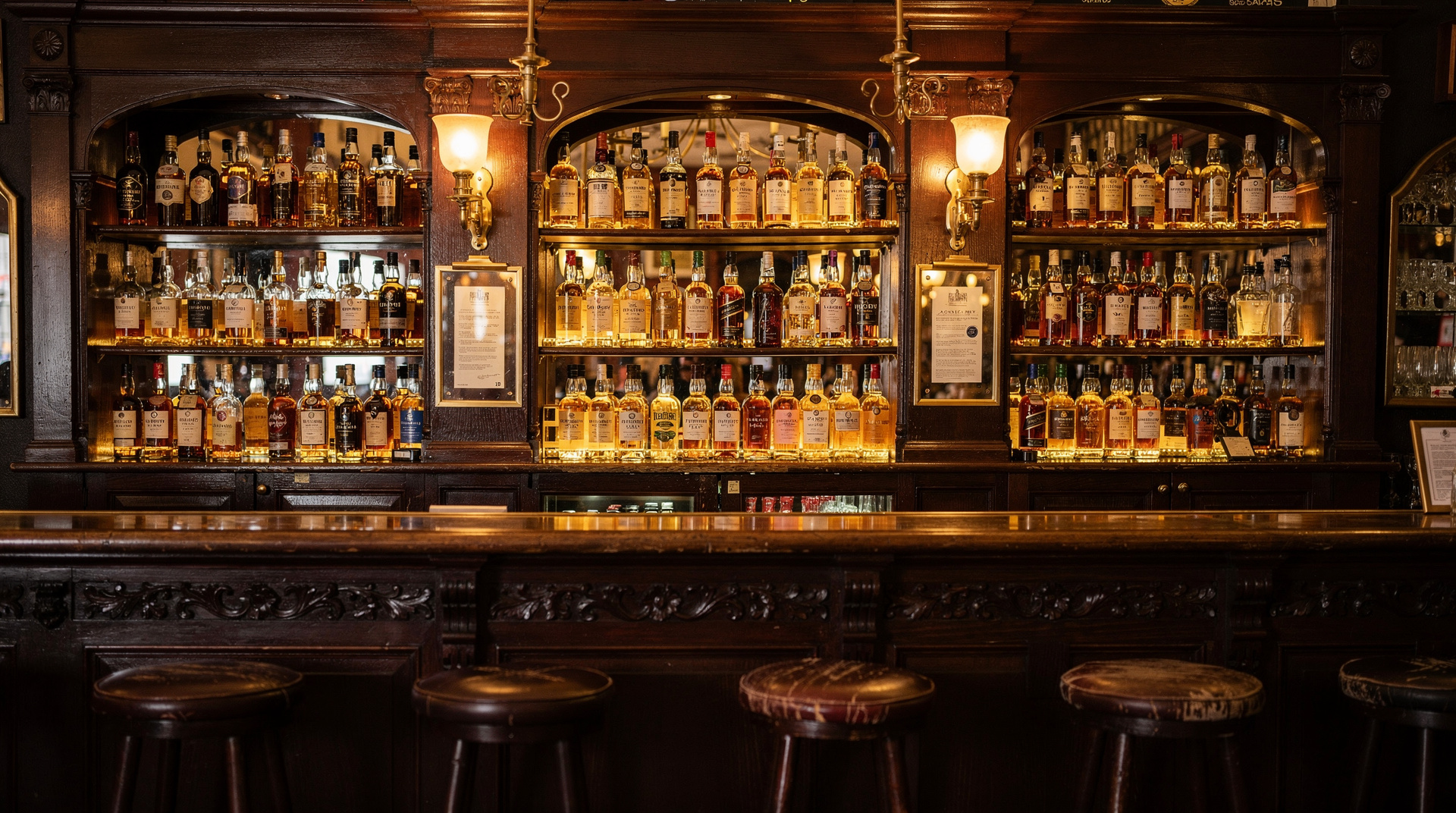
Whisky itself is naturally gluten-free (the distillation process removes gluten proteins) and vegan, which surprises many visitors. The main dietary consideration at a tasting is the accompanying food pairing, not the whisky. Confirm with the venue if snacks or pairings are included and whether they can adapt those specifically.
Top experiences
Bookable activities with verified prices and instant confirmation on GetYourGuide.