The Royal Mile
The honest guide to Edinburgh's Royal Mile: the best closes, genuine highlights, tourist traps to skip, and walking tours worth your time.
Edinburgh: Royal Mile Old Town walking tour
Quick facts
- Best time to visit
- Early morning or late evening; avoid August weekends
- Days needed
- Half day (2–4 hours walking)
- Getting there
- 10-min walk from Waverley; top at Edinburgh Castle, foot at Holyrood
- Budget per day
- Free to walk; guided tours from £15; avoid eating on the Mile itself
Edinburgh’s spine — and how not to waste a walk along it
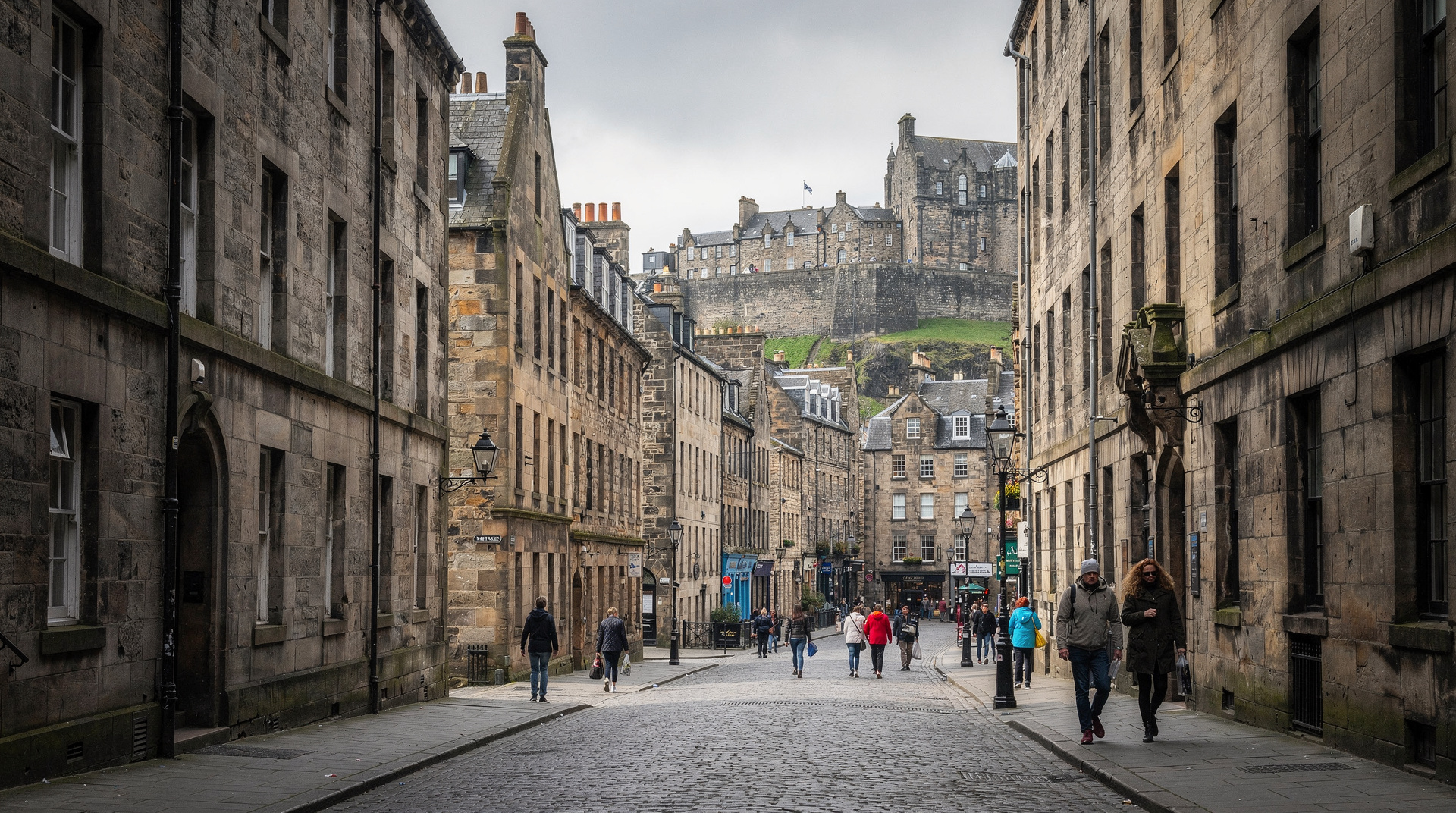
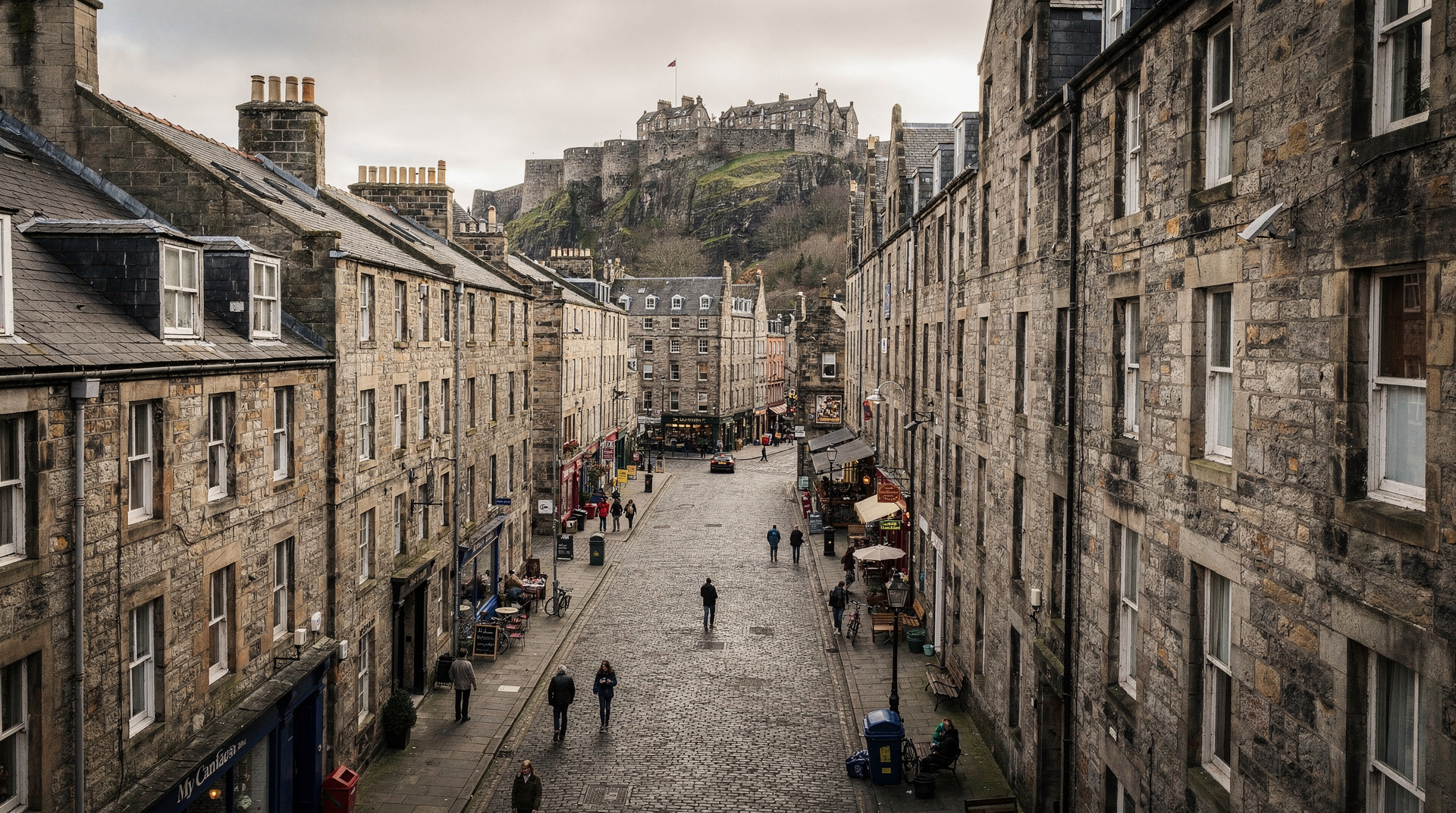
The Royal Mile is the oldest, most historic, and most misunderstood street in Scotland. It runs for almost exactly a Scots mile (roughly 1.8 kilometres) from the gates of Edinburgh Castle at the top to the gates of the Palace of Holyroodhouse at the foot, following the ridge of the volcanic rock that Edinburgh grew up on. It is simultaneously one of the greatest medieval streetscapes in northern Europe and one of the most tourist-saturated corridors in Britain.
Most first-time visitors walk its length without understanding what they are looking at, spend too much money on overpriced meals and identical tartan-tat shops, and come away with a vague impression of cobblestones and bagpipers. This guide is designed to prevent exactly that.
| At a glance | |
|---|---|
| Where | Castlehill to Holyrood, the spine of the Old Town |
| Time needed | 90 minutes to 2 hours with stops; half a day with attractions |
| Getting there | 10-min walk from Waverley; top at Edinburgh Castle |
| Typical cost | Free to walk; guided tours from £15; avoid eating on the Mile |
| Best time | Early morning or evening; avoid August afternoons |
| Do not skip | At least one close off the main street — Advocates’ Close or Dunbar’s Close |
What the Royal Mile actually is
The Royal Mile is not a single street but a series of connected streets, each with its own name and character. From top to bottom: Castlehill, Lawnmarket, the High Street (the longest section), Canongate, and finally Abbey Strand, which leads to the Holyrood gatehouse. You will not notice the transitions as you walk — it is one continuous experience — but the different sections have genuinely different histories and atmospheres.
The Lawnmarket was the area where cloth merchants traded (the name derives from “landmarket”). Canongate was until 1856 a separate burgh entirely, outside Edinburgh’s walls, with its own distinct identity and a population of craftspeople, diplomats, and — later — some of Edinburgh’s worst overcrowded tenements. The distinction still shows in the architecture: the Canongate stretch is quieter, less touristy, and contains some of the most interesting buildings on the whole route.
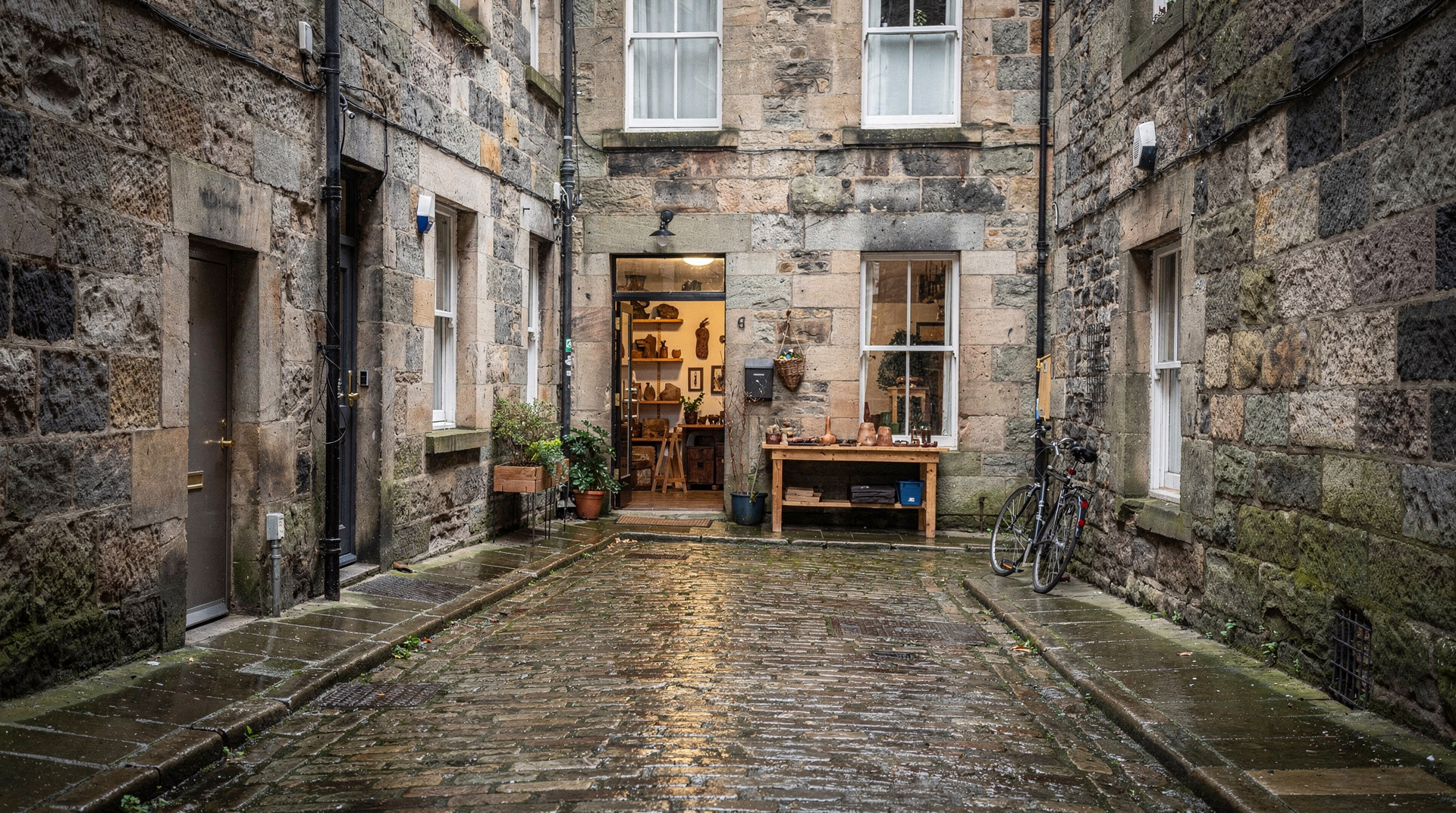
The closes and wynds that run off both sides of the Mile are where most of the history and character live. These narrow alleyways were Edinburgh’s original connective tissue — tens of thousands of people lived packed into these lanes in the sixteenth, seventeenth, and eighteenth centuries, stacked in tenements that reached six, seven, eight storeys. Many closes are named after the trades or families that dominated them: Advocate’s Close, Fleshmarket Close, Bakehouse Close. Walking into them is stepping off the tourist trail and into something much older.
The best closes and what to look for
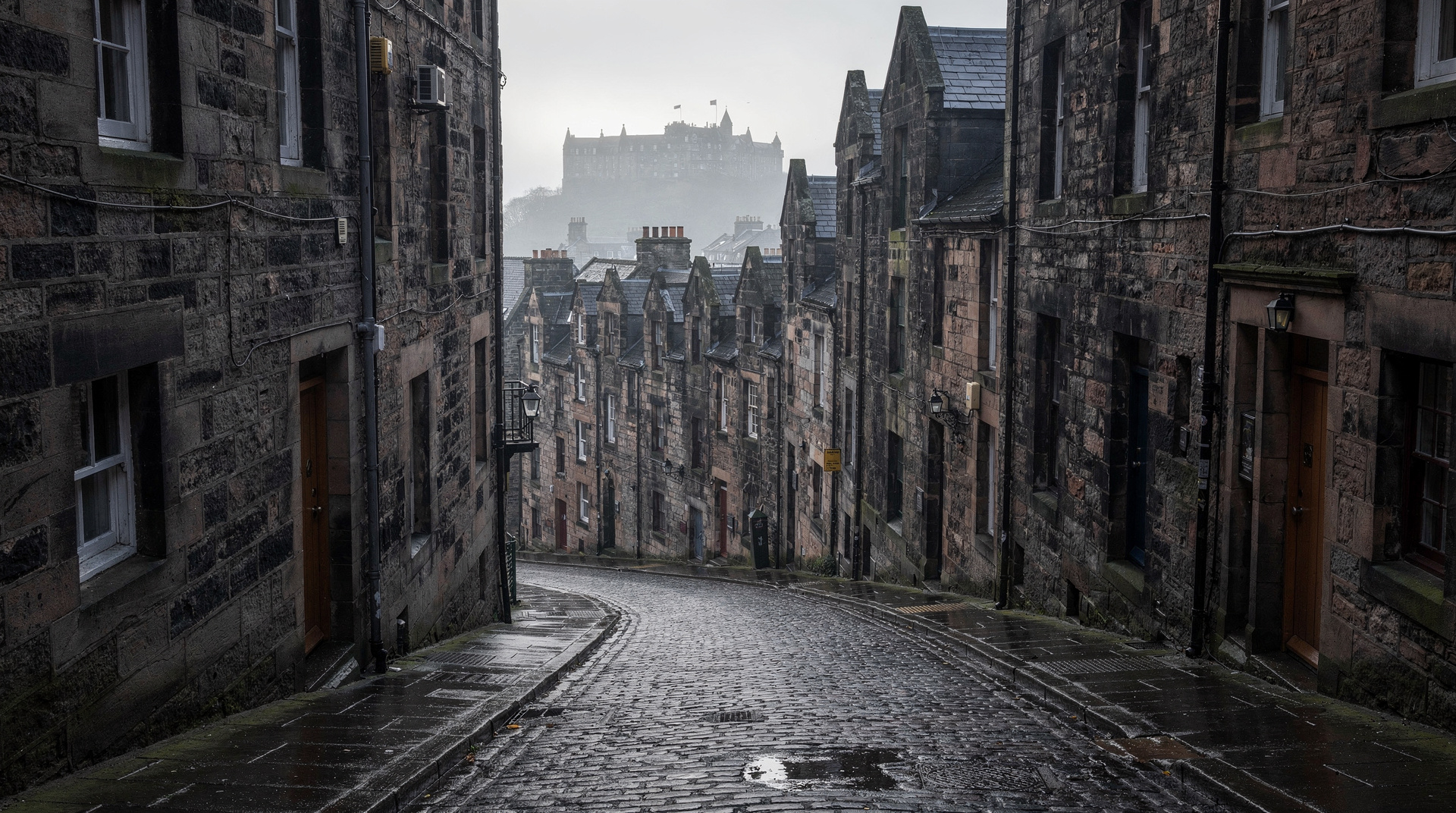
Advocates’ Close (off the High Street near St Giles) runs steeply downhill from the Mile to the Cockburn Street level below. At the top of the close, you can look directly across at a section of the city’s medieval layout that has barely changed in outline since the seventeenth century. This is one of Edinburgh’s most photogenic spots, particularly in early morning light.
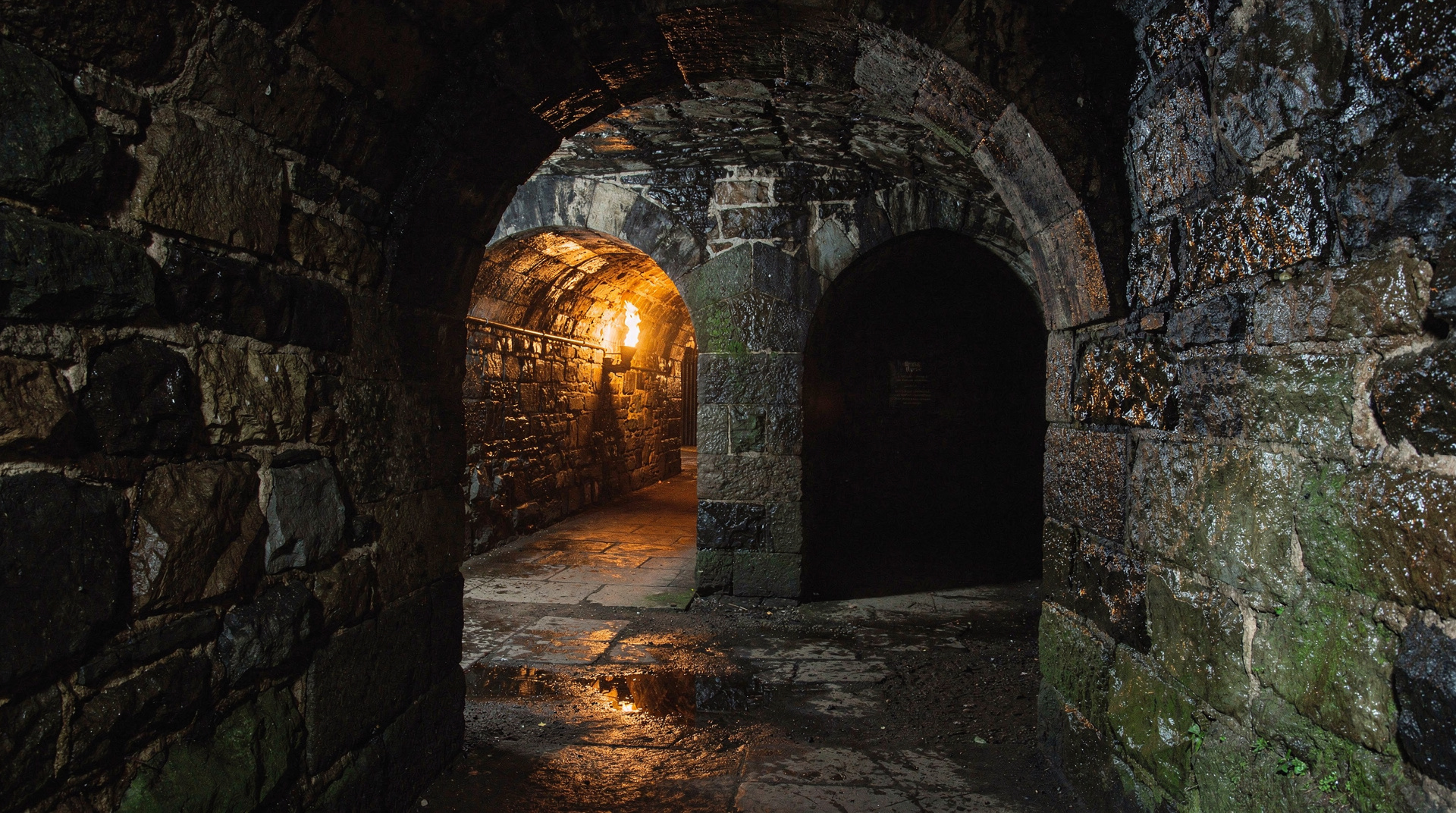
Mary King’s Close is now a commercial underground attraction rather than a freely explorable alley, but it is worth mentioning because the guided tour there is genuinely good. The close was built over in the 1750s when the Royal Exchange (now the City Chambers) was constructed above it, leaving the lower levels intact as a sealed historical record. The Real Mary King’s Close tour takes you through the preserved interiors with costumed guides and good historical detail — see the Mary King’s Close guide for an honest assessment of whether it suits your interests.
Bakehouse Close and Acheson House (off Canongate) are less visited than the upper Mile closes and give a better sense of what the area was like before the tourist economy took over. The Canongate Tolbooth adjacent is free to enter and contains the People’s Story museum, which focuses on the lives of ordinary Edinburgh residents through the centuries — underrated and often uncrowded.
Dunbar’s Close on Canongate has a restored seventeenth-century garden behind it, hidden from the street. It is small, usually quiet, and free. On a clear morning it is one of the nicest five minutes you can spend on the Royal Mile.
The honest tourist trap assessment
Let us be direct about what to avoid.
Eating on the Royal Mile itself is, with very few exceptions, a poor decision. The restaurants along the main strip charge tourist prices (expect £15-22 for a main course at a sit-down place, £12-15 for a mediocre pie and chips at a café) for food that ranges from adequate to disappointing. The good restaurants in Edinburgh’s Old Town are a short walk off the main drag — in the Grassmarket, on Victoria Street, or in the closes and side streets that tourists rarely enter. Walk two minutes in any direction from the Mile and your options improve dramatically. For an honest list of where to eat well near the Old Town, see the Edinburgh restaurants guide.
The whisky shops along the Mile are not the place to buy whisky. They stock a reasonable range but at inflated prices, and the staff are trained to sell rather than to educate. If whisky is a genuine interest, the Scotch Whisky Experience on Castlehill near the castle gates offers a structured tasting room and retail experience that is significantly more worthwhile. The whisky bars guide covers the best places to taste and buy.
The tartan shops are largely identical. If you want a genuinely made-in-Scotland souvenir, look for items with provenance — Harris Tweed is the easiest to verify, as the label is legally protected. Most of the mass-market items on the Mile are manufactured overseas. This is not a moral judgment; it is just useful to know before spending £45 on a “Scottish” item that has no connection to Scotland. See the honest shopping guide for specific advice.
Street buskers on the Mile range from excellent to exploitative. The bagpipers near the castle are a legitimate Edinburgh tradition and worth a small tip if you stop to listen. The roving buskers further down the street demanding payment for photos are less charming.
Guided walking tours: what you get that self-guided does not
Walking the Royal Mile on your own is free and gives you autonomy over pace. But the problem is that most of what makes the Mile interesting is invisible without context. You can see St Giles’ Cathedral and know it is old; a guide can tell you that it contains the Chapel of the Order of the Thistle, that John Knox preached here, that the medieval columns inside predate the Reformation, and point out the heraldic symbols that mark four centuries of Scottish history. The physical space becomes legible.
A Royal Mile and Old Town walking tour typically covers the full length of the street in about two hours with a knowledgeable local guide, stopping at the key closes, explaining the buildings that most walkers pass without registering, and providing the social history that makes the medieval streetscape make sense. Most tours start near the Mercat Cross on the High Street and run toward Canongate.
For visitors with a particular interest in the darker chapters of Edinburgh’s history — the witch trials, body-snatching, and medieval plague — the dark history Canongate walking tour focuses specifically on Canongate and covers some of the stories the standard tour glosses over. It suits visitors who have already done the main Royal Mile walk and want to go deeper on one section.
If you want to combine the walking context with castle entry to make a full morning of it, the Edinburgh Castle and Royal Mile combo tour does exactly that, handling the logistics of castle queues and walking the street on a single ticket.
St Giles’ Cathedral and other buildings worth entering
St Giles’ Cathedral (technically the High Kirk of Edinburgh, though “cathedral” is the common name) is worth at least 20 minutes of your time. The medieval nave dates from the fourteenth and fifteenth centuries. The Thistle Chapel — a tiny side chapel added in 1911 as the spiritual home of Scotland’s highest order of chivalry — is extraordinary: every surface is carved with heraldic symbols and the quality of the craftsmanship makes most modern stonework look rough. Entry is £12 for visitors aged 16 and over (free for under-16s and Scottish residents), and the ticket includes the Thistle Chapel.
The Museum of Edinburgh in Huntly House on Canongate is free and covers the city’s history through artefacts, maps, and the original National Covenant signed in Greyfriars Kirkyard in 1638. It is quieter than most of the paid attractions and excellent for anyone interested in Edinburgh’s urban and social history.
The Scottish Parliament at the foot of Canongate, opposite Holyrood Palace, is free to enter on non-sitting days and the public gallery is open when Parliament is in session. The building, completed in 2004 and controversial at the time for its cost and unconventional design, is now generally regarded as one of the most interesting pieces of modern architecture in Scotland. The debating chamber and committee rooms are open for self-guided tours on most weekdays.
Connecting the Royal Mile to the rest of Old Town
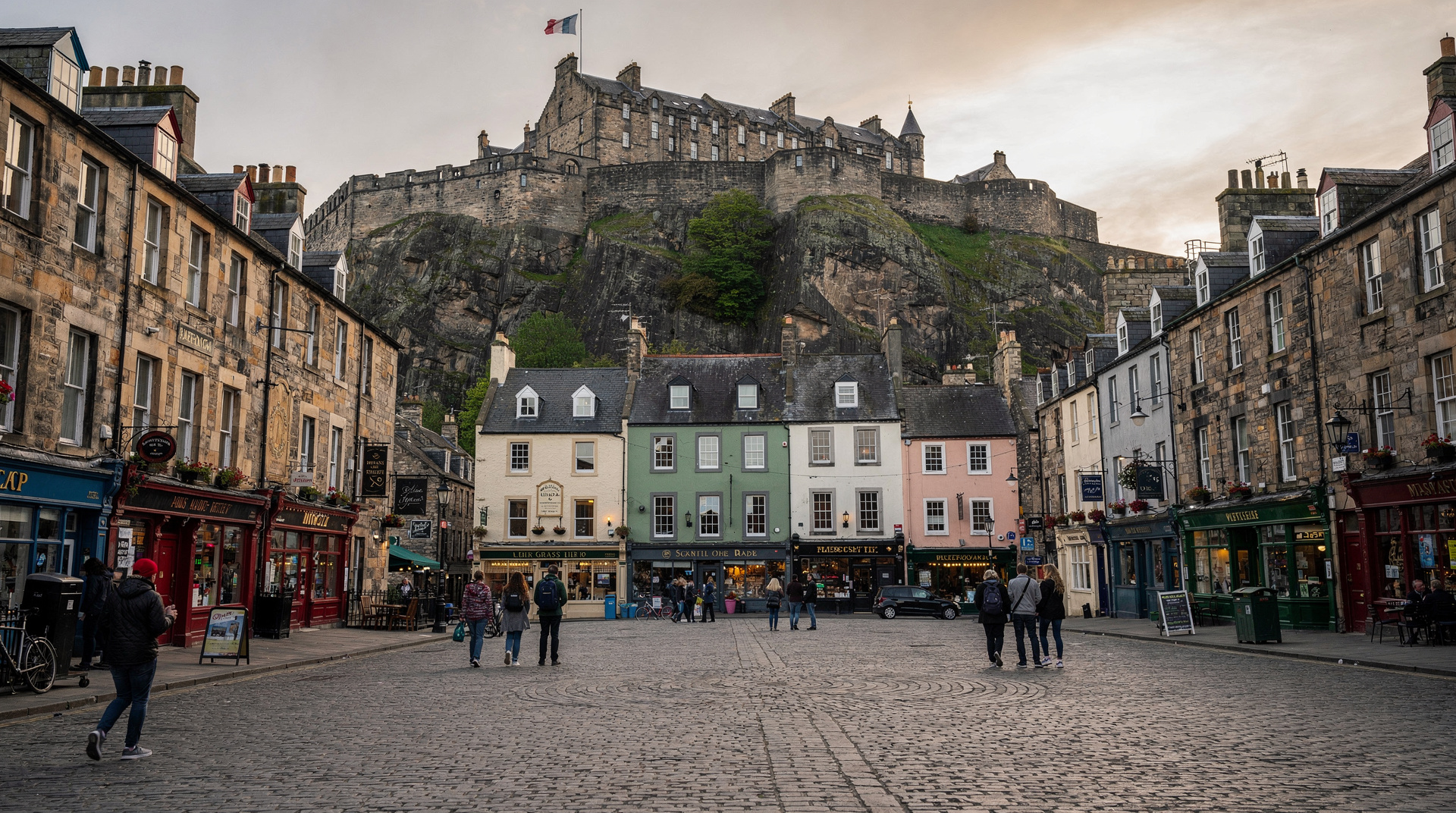
The Royal Mile is the axis but the Old Town extends well beyond it. Victoria Street, which curves down from the Lawnmarket to the Grassmarket below, is one of the most attractive streets in Edinburgh — the horseshoe of coloured shopfronts has inspired comparisons to Diagon Alley from Harry Potter, which is not entirely an exaggeration given J.K. Rowling wrote early sections of the books in this neighbourhood. See the Victoria Street guide for the connections.
The Grassmarket below the castle walls is a natural extension of any Royal Mile walk, reached via Victoria Street or the steep Vennel steps. It has more independent restaurants and bars than the Mile itself and gives a much better sense of everyday Edinburgh life.
At the top of the Mile, the esplanade of Edinburgh Castle connects directly to Castlehill. The full walk from castle gates to Holyrood gates and back takes around 45 minutes at a brisk pace, or two to three hours if you are stopping properly at the closes and buildings.
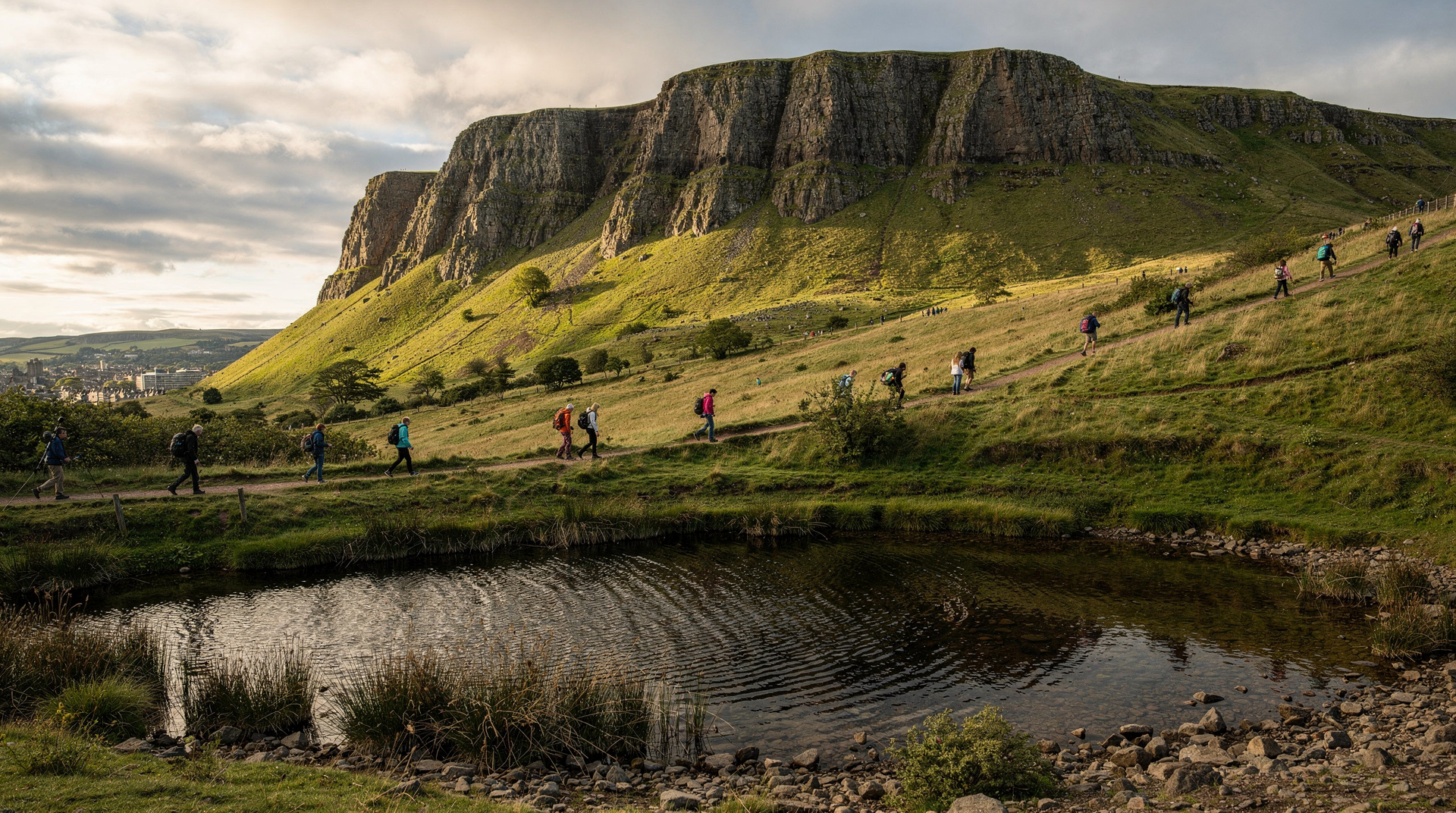
At the foot, the Palace of Holyroodhouse and Arthur’s Seat are the natural continuation. The volcanic hill behind the palace can be climbed in 45-90 minutes and gives a panoramic view of the city that puts the Royal Mile in its landscape context.
Comparing the Royal Mile guided tour options
| Tour | Focus | Best for |
|---|---|---|
| Royal Mile and Old Town walking tour | Full-length overview, key closes | First-time visitors wanting the general history |
| Secrets of the Royal Mile | Hidden details and stories | Repeat visitors or those who want more than the standard route |
| Edinburgh Castle and Royal Mile combo | Castle entry plus the street | Visitors wanting to combine two must-sees in one morning |
| Dark history Canongate walking tour | Witch trials, body-snatching, plague | Visitors who have already done the main walk and want the darker chapters |
| Royal Mile Ultimate tour | The most comprehensive single option | Visitors with limited time who want maximum ground covered in one tour |
For a genuine first visit, the general Old Town walking tour is the right starting point; the specialist options suit visitors adding depth on a second pass or with a particular interest. Visitors wanting the single most complete option can consider the Royal Mile Ultimate walking tour, which covers more ground and detail than the standard 90-minute version.
When to walk the Royal Mile
Early morning is genuinely transformative. Before 9am on any day, the Mile belongs to delivery vans, residents, and early-rising visitors. The cobblestones are wet, the light is low, and the street looks exactly as it should. The closes are quiet, the buskers are absent, and you can photograph St Giles’ Cathedral without a crowd in front of it. If you are a photographer or simply want to experience the street on its own terms, aim to be here by 8am.
August is the Royal Mile at its worst for independent visitors and its most vibrant for festival culture. During the Edinburgh Festival Fringe — the largest arts festival in the world, running the entire month of August — the Mile becomes a performance venue, with flyering, street shows, and the kind of density that makes progress genuinely slow. If you are here for the Fringe, embrace the chaos. If you are here for the history, September is calmer and the weather is nearly as good. See the Fringe guide and best time to visit Edinburgh for full context.
Evening is underrated. After 7pm in summer, the tour groups have dispersed and the street takes on a different character. The ghost tour operators start their rounds — if you want to do an evening underground vault or ghost walking tour, the Royal Mile is the natural starting point. See the ghost tours guide for which operators are genuinely worth booking and which are not.
Frequently asked questions about the Royal Mile
Is the Royal Mile worth visiting?
Yes, unconditionally — it is one of the most historically significant streets in Scotland and the physical embodiment of medieval Edinburgh’s character. The question is how you engage with it. Walking it passively between tourist shops is a missed opportunity. Walking it with a guide, or with the right preparation to understand what you are looking at, is an entirely different experience. The closes, the architecture, and the sheer density of history packed into 1.8 kilometres reward attention.
How long does it take to walk the Royal Mile?
The straight walk from Edinburgh Castle gates to Holyrood Palace gates takes about 20-25 minutes at a relaxed pace with no stops. With stops at the key closes, entry into St Giles’ Cathedral, and a few minutes in Canongate, allow 90 minutes to two hours. With a guided walking tour, allow two to two and a half hours including the guide’s commentary stops.
What is the best guided tour of the Royal Mile?
For a first visit, a tour covering the full length of the Mile with historical context is the most useful. The Secrets of the Royal Mile walking tour is one of the best-rated options, focusing on the stories and hidden details that most visitors walk past. For a combined castle and Royal Mile experience, the combo tour that handles both in sequence is efficient. For dark history, the Canongate dark history tour is the specialist choice.
Do I need to pay to walk the Royal Mile?
No. The street itself is free to walk at any time of day or night. Entry to the closes is mostly free. St Giles’ Cathedral charges £12 for visitors aged 16 and over (free for under-16s and Scottish residents). The Museum of Edinburgh is free. The paid attractions — Edinburgh Castle, Mary King’s Close, Holyrood Palace — are off the street itself. You could spend a very good half day on the Royal Mile spending nothing at all, provided you resist the pull of the overpriced cafés.
Where should I eat near the Royal Mile?
Not on the Royal Mile itself, if you can help it. Walk down Victoria Street to the Grassmarket for a much better range at lower prices. Deacon Brodie’s Tavern on the Lawnmarket is a tourist pub with history; the food is fine but unremarkable for the price. For genuinely good food within the Old Town, Ondine on George IV Bridge (seafood, mid-range) and The Witchery by the Castle (upmarket, atmospheric) are both better choices. The full restaurants guide has honest assessments of the options by neighbourhood.
Is the Royal Mile safe to walk at night?
Generally yes — it is a busy tourist and residential street with good lighting and regular foot traffic until late. As with any city centre, standard urban awareness applies: keep an eye on your belongings, especially during August when crowds make pickpocketing easier. The ghost tours that operate in the evening are a legitimate and enjoyable reason to be on the Mile at night.
What is the difference between the Royal Mile and the Old Town?
The Royal Mile is the main street that runs through the heart of the Old Town. Old Town is the broader medieval neighbourhood that extends on both sides of the Mile — down to the Grassmarket to the south, up to Princes Street Gardens to the north, and from the castle at the west to Holyrood at the east. Think of the Royal Mile as the spine and the Old Town as the whole body.
Top experiences
Bookable activities with verified prices and instant confirmation on GetYourGuide.