Edinburgh Castle
Plan your visit to Edinburgh Castle: what to see, how to beat the queues, honest ticket advice, and the best guided tours for 2026.
Edinburgh Castle: guided walking tour with entry ticket
Quick facts
- Best time to visit
- Weekday mornings, May–June or September
- Days needed
- Half day (3–4 hours)
- Getting there
- 10-min walk from Waverley station up the Royal Mile
- Budget per day
- £23.50–£36 entry; guided tours from £28
Scotland’s most visited landmark — and what makes it worth the trip
Perched on a volcanic plug of ancient basalt, Edinburgh Castle dominates the city’s skyline with an authority that no photograph quite captures. The rock it stands on has been fortified for at least three thousand years, making this one of the most continuously occupied strongholds in the world. Today it draws over two million visitors a year, making it Scotland’s most visited paid attraction — which means you need a plan if you want to experience it properly rather than shuffle through it in a crowd.
| Where | Top of the Royal Mile, Castlehill |
| Cost | £23.50–£36 entry; guided tours from £28 |
| Time needed | Half day (3–4 hours) |
| Getting there | 10-min walk from Waverley station up the Royal Mile |
| Best time | Weekday mornings, May–June or September |
This guide is honest about what is genuinely worth your time, what can be skipped without regret, and how to avoid the queues and inflated prices that catch too many first-time visitors off guard.
What to see inside Edinburgh Castle
The Crown Room: Scotland’s crown jewels and the Stone of Destiny
The single most important thing to see in the castle is the Crown Room, which houses the Honours of Scotland — the oldest surviving crown jewels in the British Isles. The crown, sword, and sceptre date from the early sixteenth century and were hidden under the floorboards of Kinneff church during the Cromwellian occupation before being returned to Edinburgh in 1660. They are displayed alongside the Stone of Destiny, the ancient coronation stone used for Scottish kings that Edward I took to Westminster in 1296 and which was returned to Scotland in 1996.
The queue for the Crown Room can stretch to 45 minutes on busy days. Go first thing in the morning — the doors open at 9:30 — or accept that you will be waiting. The experience itself takes about 20 minutes but is genuinely impressive: the jewels are real and the Stone of Destiny has a bluntly powerful presence that no replica could replicate.
St Margaret’s Chapel
At the far end of the castle esplanade, St Margaret’s Chapel is the oldest surviving building in Edinburgh, built around 1130 by King David I in memory of his mother. It is small — barely 15 people fit inside comfortably — but remarkable for its simplicity and age. Entry is free with your castle ticket, and because most visitors walk past it to reach the Crown Room, you often have it nearly to yourself.
The Great Hall and the Scottish National War Memorial
The Great Hall, built around 1511 for James IV, is an impressive timber-roofed space used for state occasions. Look up at the hammer beam ceiling — it is largely original. The adjacent Scottish National War Memorial, built in 1927, is one of the finest pieces of memorial architecture in Britain. The level of craftsmanship in the stained glass, ironwork, and sculpture is extraordinary, and the roll of honour records the names of over 150,000 Scottish soldiers who died in the First World War.
The One O’Clock Gun
Every day except Sunday, Christmas Day, and Good Friday, a single cannon shot echoes across Edinburgh at precisely 1pm. The tradition dates from 1861 and was originally a time signal for ships in the Firth of Forth. Today it is one of the city’s most recognisable rituals. If you are inside the castle when it fires, the noise is startling — stand near the Half Moon Battery for the best view of the gun crew.
The National War Museum
Tucked into the lower levels of the castle, the National War Museum covers 400 years of Scottish military history. It is significantly better than most visitors expect — detailed, thoughtful, and not triumphalist. The displays on Highland regiments, Scottish involvement in the British Empire, and the experience of ordinary soldiers are genuinely absorbing. Allow an hour if military history is your thing; skip it if you are on a tight schedule.
Mons Meg
The enormous fifteenth-century siege cannon called Mons Meg sits on the upper esplanade, drawing a crowd of people who want a photograph next to something impressively large. The gun itself is genuine — it was manufactured in Belgium in 1449 and served the Scottish crown for over a century before a barrel burst during a celebratory firing in 1681 put it permanently out of action. Worth a look; not worth queuing for.
How to get tickets and skip the queues
Edinburgh Castle’s entry fee in 2026 is £23.50 for adults and £11.50 for children (Historic Environment Scotland members enter free). These prices rise slightly every year and the castle no longer does meaningful discounts for booking in advance, so the main benefit of pre-booking is queue avoidance at the ticket desk rather than saving money.
The most efficient approach for most visitors is a guided tour that includes entry. A guided Edinburgh Castle walking tour with entry ticket combines the ticket with a knowledgeable guide who will take you to the key highlights in roughly two hours, with context that the standard audio guide does not match. Prices typically run £28–£36 per adult depending on group size and operator.
For visitors who want a deeper dive into the castle’s history specifically, the Edinburgh Castle history and heritage tour with tickets focuses more tightly on the medieval and early modern periods, which suits anyone with a particular interest in Scottish royal history, the Jacobites, or the Wars of Independence.
If your time is genuinely limited — say you have an afternoon flight from Edinburgh Airport and just want to see the Crown Jewels and the views — the Edinburgh Castle highlights tour with fast-track entry covers the essentials in around 90 minutes.
The Royal Mile runs from the castle esplanade all the way down to Holyrood Palace, and combining a castle visit with a castle and Royal Mile walking tour combo makes efficient use of a morning in the Old Town.
Practical logistics: when to visit and what to avoid
Worst times: Saturday and Sunday in August (Fringe season), bank holidays, and any day in July or August between 11am and 3pm. The castle esplanade hosts the Royal Edinburgh Military Tattoo during August, which means the area around the gate is disrupted and noisy even before the shows begin. If you are in Edinburgh for the Tattoo itself, that is one of the most spectacular events in Scotland — see the Tattoo guide for ticket strategy.
Best times: Weekday mornings in May, June, or September. The castle opens at 9:30am and the first hour is noticeably quieter than the rest of the day. Arriving at opening time and heading directly to the Crown Room before the first tour groups arrive is the single best tactical decision you can make.
Weather: Edinburgh Castle is mostly outdoors. The esplanade and the upper fortifications are entirely exposed to the wind, which can be brutal even in summer. Always bring a waterproof layer regardless of what the forecast says — Scottish weather changes quickly, and the castle sits at the highest point in the city. Good walking shoes are essential; the cobblestones on the upper levels are uneven.
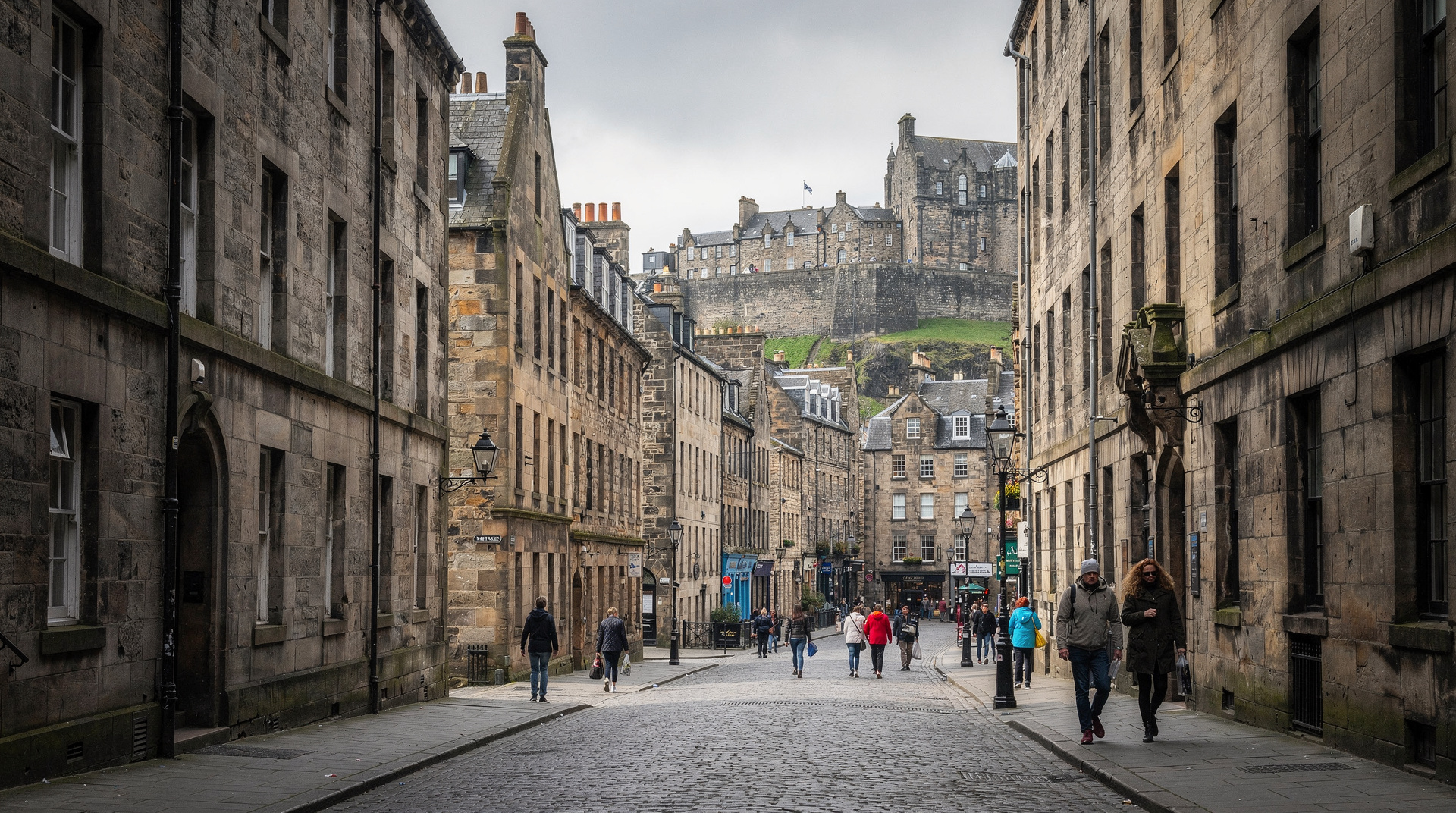
Photography: The best external views of the castle are from Johnston Terrace (to the south, with the castle lit above you), from the Grassmarket (looking steeply upward), and from Calton Hill (for the long view across the city with the castle on the horizon). Inside, the best photography opportunities are from the Half Moon Battery at the Crown Square level, where you get a clear sightline over the New Town rooftops toward the Firth of Forth.
Combining Edinburgh Castle with other Old Town attractions
Half a day at the castle is plenty for most visitors. The natural next step is to walk down the Royal Mile toward Holyrood — a route that takes you past some of the Old Town’s most interesting closes, wynds, and historic buildings. If the underground vaults are on your list, the entrance to the original underground tour is a short walk from the castle on the South Bridge. See the underground vaults guide for how to choose between the various operators.
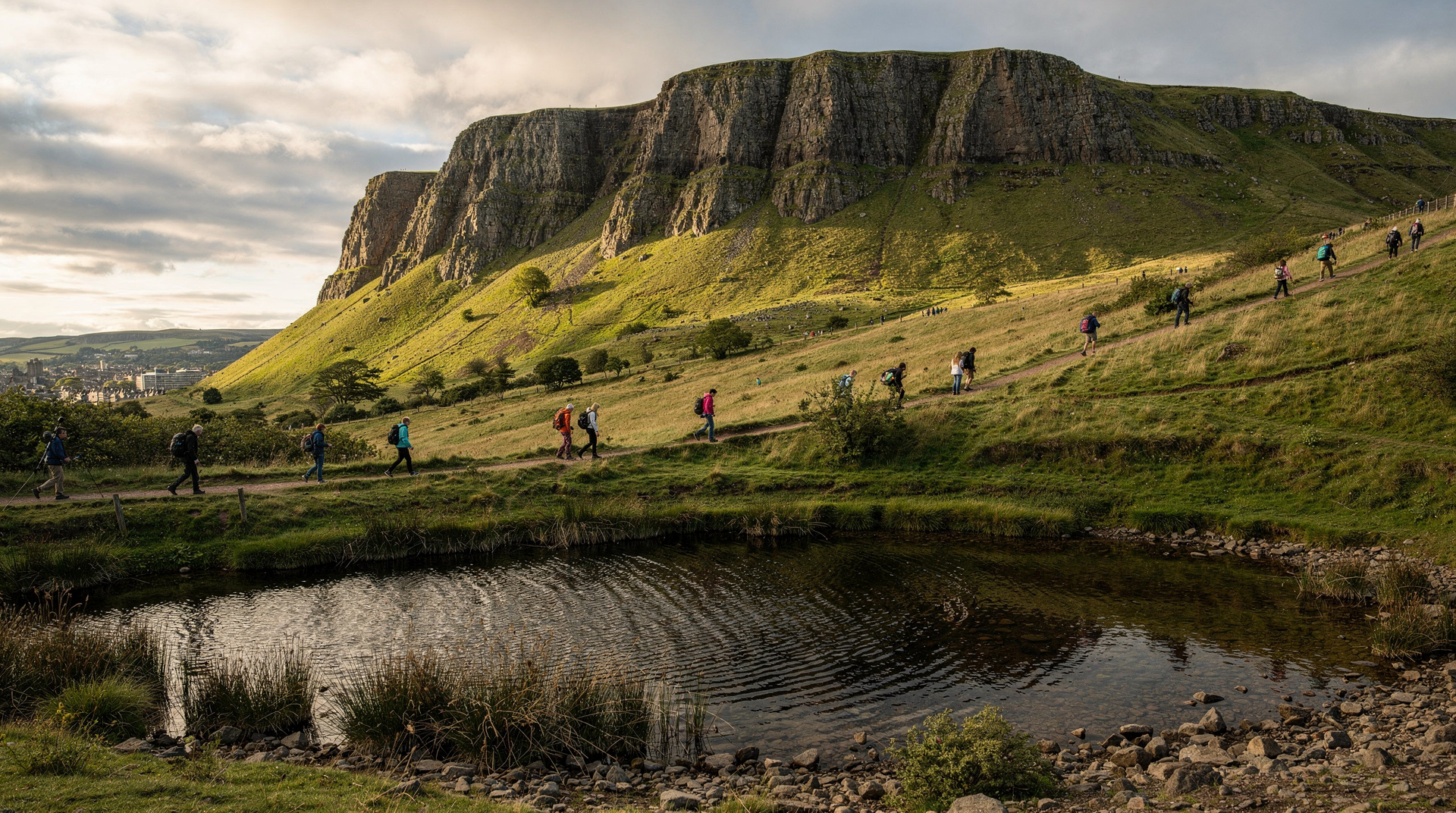
A full day combining the castle in the morning with the Palace of Holyroodhouse and Arthur’s Seat in the afternoon is the classic Edinburgh first-timer day. The two attractions anchor either end of the Royal Mile and together give a thorough picture of both royal Edinburgh and the city’s extraordinary volcanic landscape. Build in 90 minutes for Arthur’s Seat if you want to summit it — it is a proper hill walk, not a stroll.
For families with children, the castle pairs well with the Camera Obscura, which is a five-minute walk from the esplanade and keeps younger visitors engaged with its interactive optical illusions. The Edinburgh with kids guide covers the best family-friendly sequence for a multi-day visit.
If history is your main motivation, the Old Town contains enough material for a full two days without repeating yourself. The Old Town history guide provides the deeper context for what you are seeing as you walk from the castle down toward Canongate.
The honest view: what Edinburgh Castle is and is not
Edinburgh Castle is absolutely worth visiting — it is genuinely historic, the Honours of Scotland are arresting, and the views from the upper battlements over the city are exceptional. But it is also the most commercially packaged attraction in Scotland, and the entry fee is steep. Visitors who go in expecting Versailles or the Tower of London will be underwhelmed; visitors who go in understanding they are walking through a working military installation that has been continuously occupied for a thousand years will find it compelling.
The key mistake most visitors make is doing everything at the same pace. The Crown Room deserves a proper 20 minutes. The War Memorial deserves silence and attention. Mons Meg deserves a glance. The gift shop deserves to be skipped, or at least approached with the understanding that anything Royal Mile adjacent will be priced accordingly.
One more honest note: the castle café is overpriced and mediocre. Eat before you arrive or walk down to the Grassmarket afterward for significantly better options at lower prices.
Getting there and nearby
Edinburgh Castle is at the top of the Royal Mile, approximately a 10-minute uphill walk from Waverley Station. The entrance is via the esplanade on Castlehill. City Sightseeing hop-on hop-off buses stop at the esplanade on their main city route, making it easy to combine the castle with other stops on a bus-and-walk day. See the getting around Edinburgh guide for full transport options.
From Edinburgh Airport, the tram runs directly to the city centre (approximately £7.90, 30 minutes) and the walk from the tram terminus at the St Andrew Square end of Princes Street to the castle takes about 20 minutes on flat ground, then a steady uphill approach through the Old Town. The airport-to-city-centre guide covers all the options including bus and taxi.
For those arriving by train from London, see the trains from London to Edinburgh guide — Waverley is the terminus and you emerge right into the heart of the city.
Planning a full Edinburgh itinerary
If Edinburgh Castle is your first stop, the one-day Edinburgh itinerary builds an efficient route around it. For longer visits, the three-day Edinburgh itinerary integrates the castle into a broader programme that also covers New Town, Leith, and a day trip. Visitors with a specific interest in Scotland’s royal history might also consider the Edinburgh and Highlands five-day itinerary, which extends from the castle to Stirling, Loch Ness, and Glencoe.
Crowds and queues by season
| Season | Crowd level | Notes |
|---|---|---|
| Dec–Feb | Low | Shortest queues, but shorter opening hours and colder exposed esplanade |
| Mar–Apr | Moderate | Building toward spring, still manageable on weekday mornings |
| May–Jun | Moderate-high | Good weather odds without full peak-season crowding |
| Jul–Aug | Very high | Fringe and Tattoo season; queues can exceed 45 minutes for the Crown Room |
| Sep | Moderate | Crowds thin after the Fringe ends; often the best combination of weather and quiet |
| Oct–Nov | Low-moderate | Cooler, quieter, shorter days |
Weekday mornings beat weekend mornings in every season, and arriving at the 9:30am opening remains the single biggest lever you have over crowding, regardless of month.
Frequently asked questions about Edinburgh Castle
How long do you need at Edinburgh Castle?
Most visitors find two to three hours sufficient to see the key highlights: the Crown Room (20-30 minutes with queue time), the War Memorial (20 minutes), St Margaret’s Chapel (10 minutes), and the Great Hall (15 minutes), with time to walk the esplanade and enjoy the views. If you also want to visit the National War Museum in depth, allow four hours. A guided tour, which runs 90-120 minutes, will give you the structure to make the most of the time.
Is it worth booking a guided tour rather than using the audio guide?
Yes, for most visitors. The castle’s audio guide covers the physical spaces adequately but does not provide the historical narrative and context that a live guide brings. Guides who lead regular tours know where the queues form at different times of day, can explain connections between the exhibits that the audio guide leaves implicit, and often have personal detail about the castle’s history that makes the visit memorable. The cost premium over self-guided entry is typically £10-£15 per person and is genuinely worth it on a first visit.
What are the cheapest ways to visit Edinburgh Castle?
Historic Environment Scotland membership (£72 per adult for a year in 2026) pays for itself after two HES sites, which makes it worthwhile if you are visiting Stirling Castle, Skara Brae, or other properties on the same trip. Children under seven are always free. If you are visiting Edinburgh on a tight budget, note that the views of the castle from Princes Street Gardens, the Grassmarket, and Johnston Terrace are all free — see the Edinburgh on a budget guide for more options.
When is the One O’Clock Gun fired?
Every day except Sunday, Christmas Day, and Good Friday, at exactly 1pm. The gun is fired from the Mill’s Mount Battery on the north face of the castle. If you are inside the grounds when it fires, the sound carries significantly further than you might expect — it is audible across much of central Edinburgh and is a genuine Edinburgh institution. Arrive at the battery around 12:50pm to secure a view.
Can you see Edinburgh Castle from the outside without paying?
Absolutely, and many of the best views are from outside. Princes Street Gardens give a classic view of the castle on its rock above the gardens. The Grassmarket offers a dramatic upward angle. The Vennel staircase off the Grassmarket leads to a viewpoint looking back along the walls. And from the Calton Hill summit, you get the wide cityscape view that appears on most Edinburgh photography. None of these cost anything.
Is Edinburgh Castle suitable for visitors with mobility issues?
Partially. The castle has a steep internal roadway and many of the historic areas involve cobblestones and uneven surfaces that are challenging for wheelchairs and reduced-mobility visitors. A vehicle shuttle is available within the castle to reduce walking distances. The Crown Room and the Great Hall are accessible, but some viewpoints and lower fortifications involve steps with no alternative routes. Historic Environment Scotland’s website has a detailed accessibility guide with specific advice for each area.
Is the castle worth visiting in winter?
Yes, though the experience is different. Winter opening hours are shorter (9:30am-5pm, last entry 4pm, compared to 5pm in summer). The crowds are significantly smaller, especially on weekdays in January and February, which means the Crown Room queue may be just a few minutes. The castle looks particularly dramatic in low winter light, especially on crisp clear days when the snow-capped hills of the Pentlands are visible in the distance. Dress warmly — the upper esplanade in winter can be genuinely cold with wind chill.
Should I book a guided tour in advance?
For May–August and any weekend, yes — guided tours with entry can sell out, particularly around the Fringe and Tattoo. For quieter months (November–February, weekday visits), booking a day or two ahead is usually sufficient. Self-guided entry tickets are advisable to pre-book year-round to skip the ticket desk queue, even if you plan to explore independently rather than join a tour.
Top experiences
Bookable activities with verified prices and instant confirmation on GetYourGuide.