Edinburgh in three days: the complete itinerary
Edinburgh Castle: guided walking tour with entry ticket
Three days: enough to understand Edinburgh
Three days in Edinburgh gives you time to cover the essential sights without rushing, eat well, discover at least one neighbourhood you did not expect to love, and make a day trip into the wider Central Scotland landscape. This itinerary builds from the medieval core outward — Old Town first, Georgian New Town second, and then a day trip to Stirling Castle on day three that puts Edinburgh’s history into its broader Scottish context.
| Where | Old Town (day 1), New Town & Arthur’s Seat (day 2), Stirling (day 3) |
| Cost | around £140–235 per person, budget to mid-range |
| Time needed | 3 full days |
| Getting there | on foot in the city; direct train to Stirling (~50 min) |
| Best time | year-round; book the castle and Mary King’s Close ahead in summer |
The pacing is realistic rather than aspirational: this is what you can actually do comfortably, not an optimistic list you will fail to complete by 2pm on day one.
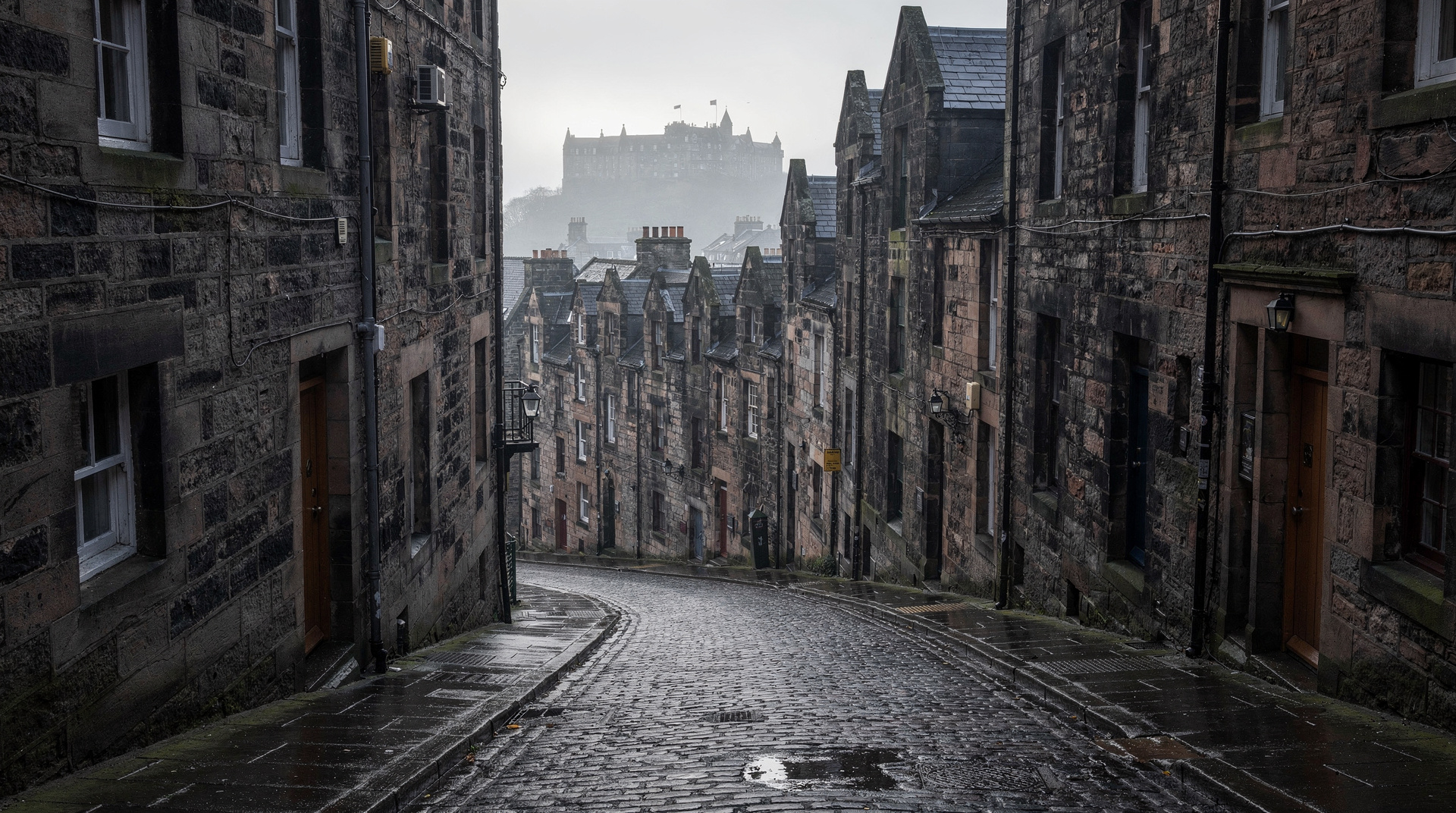
Three days is also enough to understand why Edinburgh’s character is so distinct from other British cities of similar size. The Old Town has been continuously inhabited since the twelfth century and its medieval street plan — the Royal Mile ridge, the closes running off it, the way the buildings were built vertically rather than horizontally because the ridge was surrounded by water on three sides — is legible in the modern city in a way that most medieval city centres are not.
The New Town, built when the Old Town was judged too squalid and overcrowded to continue expanding, is the counterpoint: rational, aspirational, Georgian. By day three, when you see Stirling Castle on its comparable volcanic plug at the western edge of the Forth Valley, you understand Edinburgh’s castle in a new way — both were built on the same geological logic, both commanded the same critical routes through central Scotland, and together they tell the story of the kingdom’s northern boundary in a way that neither site tells alone.
Day 1: Old Town and the Royal Mile
Morning: Edinburgh Castle
9:30am — Edinburgh Castle at opening time
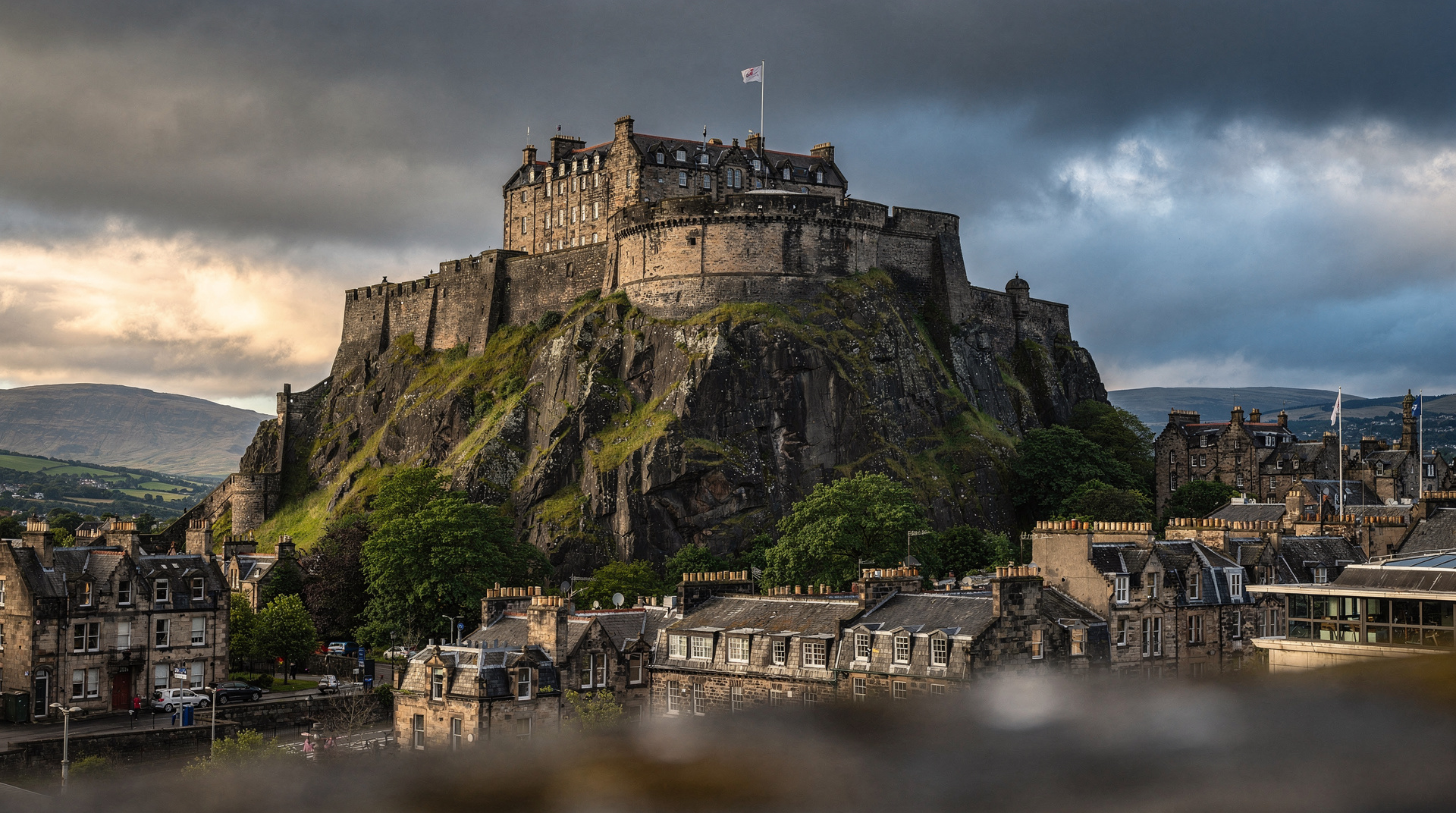
Begin at the top, literally. Edinburgh Castle opens at 9:30am and the first hour is significantly quieter than the rest of the day. Walk up from Waverley Station (10 minutes, steeply uphill) and aim to be at the ticket desk at 9:30.
A guided tour with castle entry is the most efficient approach: you get your ticket, skip the audio guide queue, and gain a guide who will take you to the Crown Room — the Honours of Scotland and the Stone of Destiny — before the first tour buses arrive. Self-guided entry is £18 per adult.
Key stops inside: Crown Room, Scottish National War Memorial, St Margaret’s Chapel, and the National War Museum if military history interests you. Allow 2–2.5 hours.
Cost: £18–36.
Mid-morning to afternoon: Royal Mile and Old Town
11:30am — Walk the Royal Mile
Exit the castle and begin the descent. The Royal Mile runs from the castle esplanade at the top to the Palace of Holyroodhouse at the bottom — one mile, mostly downhill, through the heart of the medieval city.
The Royal Mile guide covers individual buildings in detail, but the essential stops are:
- Gladstone’s Land (Lawnmarket, National Trust, £11): The best surviving seventeenth-century tenement interior in Edinburgh.
- St Giles’ Cathedral (High Street, £12 for visitors aged 16 and over): The mother church of Scottish Presbyterianism. The Thistle Chapel inside is extraordinary.
- Real Mary King’s Close (off the Royal Mile, entry £25): The underground preserved street beneath the High Street buildings. Pre-book this — it is one of the most genuinely atmospheric experiences in Edinburgh. The underground guide covers the comparison between this and the vaults tours.
1:00pm — Lunch in the Grassmarket
Walk south from the Royal Mile to the Grassmarket (five minutes downhill). This historical square has good independent pubs at prices significantly below the Royal Mile tourist strip. The White Hart Inn, established 1516, is one of the oldest pubs in Edinburgh and serves decent pub food. Budget £12–18.
Afternoon: Holyrood and Arthur’s Seat
2:30pm — Lower Royal Mile and Canongate
After lunch, continue down the Royal Mile to the Canongate. The Museum of Edinburgh in Huntly House (free) gives excellent context for the city’s history. Canongate Kirk has a small but interesting graveyard with the graves of Adam Smith and Robert Fergusson.
3:15pm — Palace of Holyroodhouse
The Palace of Holyroodhouse at the foot of the Royal Mile is the official Scottish royal residence. Entry is £17.50 in 2026. The State Apartments are impressive, and the ruined nave of Holyrood Abbey in the grounds is atmospherically desolate on a wet day.
4:30pm — Holyrood Park
After the palace, enter Holyrood Park through the gate behind the building and walk around Dunsapie Loch — a 45-minute circuit that gives you views over the city without the full Arthur’s Seat ascent. Save the summit for day two when you will have more energy.
Evening
6:30pm — Dinner and ghost tour
Return to the Old Town for dinner. Victoria Street and the Grassmarket offer the best atmosphere. After dinner, an underground vaults ghost tour at 7 or 8pm is the definitive Edinburgh evening experience — atmospheric, educational, and genuinely a bit unnerving. The Grassmarket guide covers dining options in more detail.
Day 2: New Town, Stockbridge, and Arthur’s Seat
Morning: Georgian New Town
9:30am — Scottish National Gallery
Start the day at the Scottish National Gallery on The Mound (free, opens 10am). One of the best free collections in Britain, with strong Scottish art and European masters. Allow an hour.
10:30am — Princes Street and New Town
Walk through Princes Street Gardens for the best free view in Edinburgh — the castle on its volcanic plug above the gardens. Then cross Princes Street into the New Town proper.
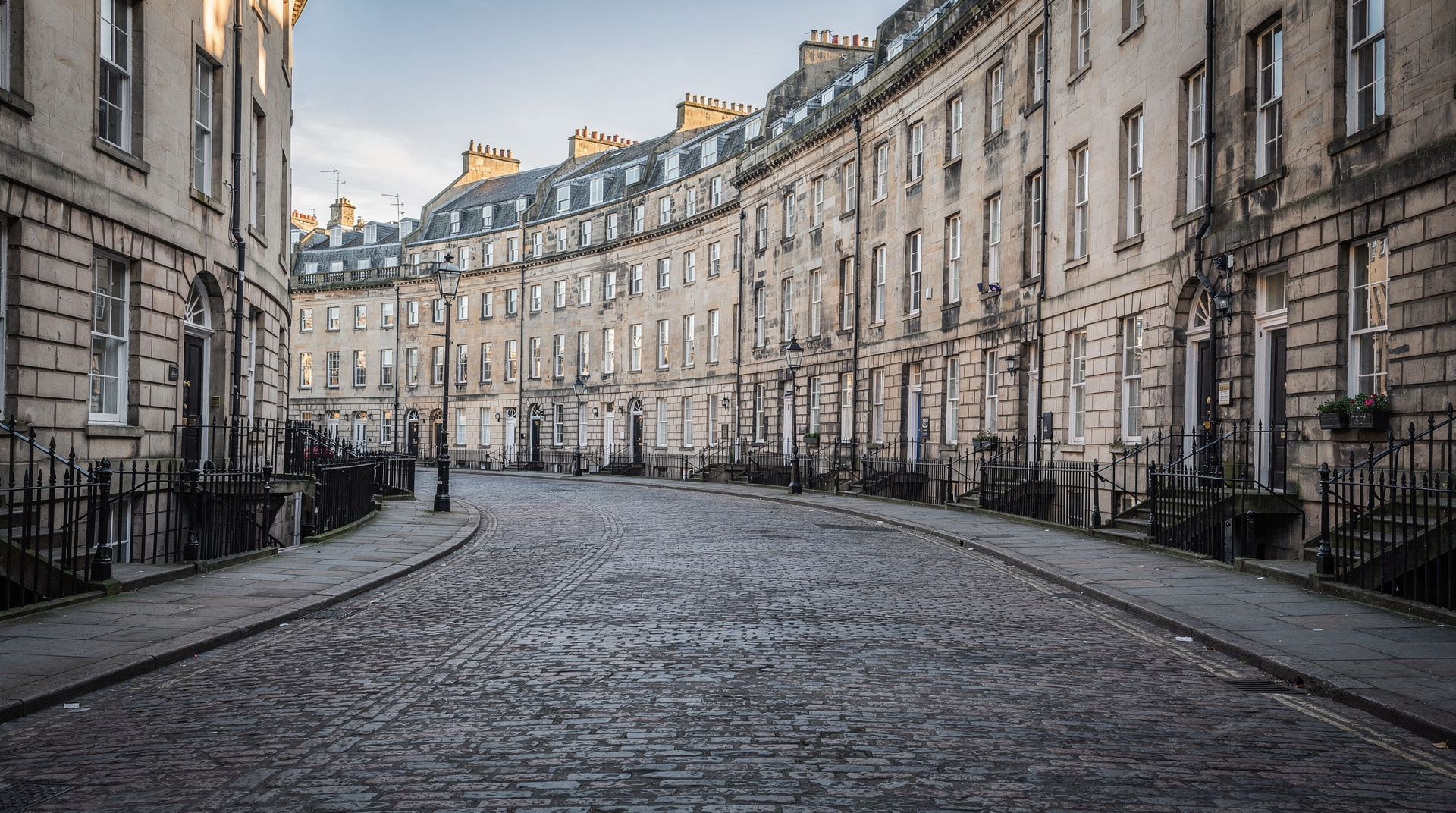
The New Town was built from 1765 to a planned grid by architect James Craig, and the result is the finest Georgian townscape in Britain outside of Bath. Charlotte Square at the western end is the masterpiece of Robert Adam’s New Town work; Moray Place and the Royal Circus are the most impressive later additions.
The Georgian House on Charlotte Square (National Trust, £13.50) shows how these interiors were originally furnished. Well worth 45 minutes.
A New Town and Dean Village walking tour adds excellent architectural and social history context if you want guided interpretation of the Georgian development.
12:30pm — Lunch in Stockbridge
Walk 20 minutes west from Charlotte Square to Stockbridge, Edinburgh’s most charming residential neighbourhood. Hamilton’s Bar and Kitchen on Hamilton Place does excellent Scottish pub food; The Scran and Scallie (gastropub from Tom Kitchin) is slightly more expensive but excellent. Budget £12–22.
Afternoon: Dean Village and Arthur’s Seat
2:00pm — Dean Village
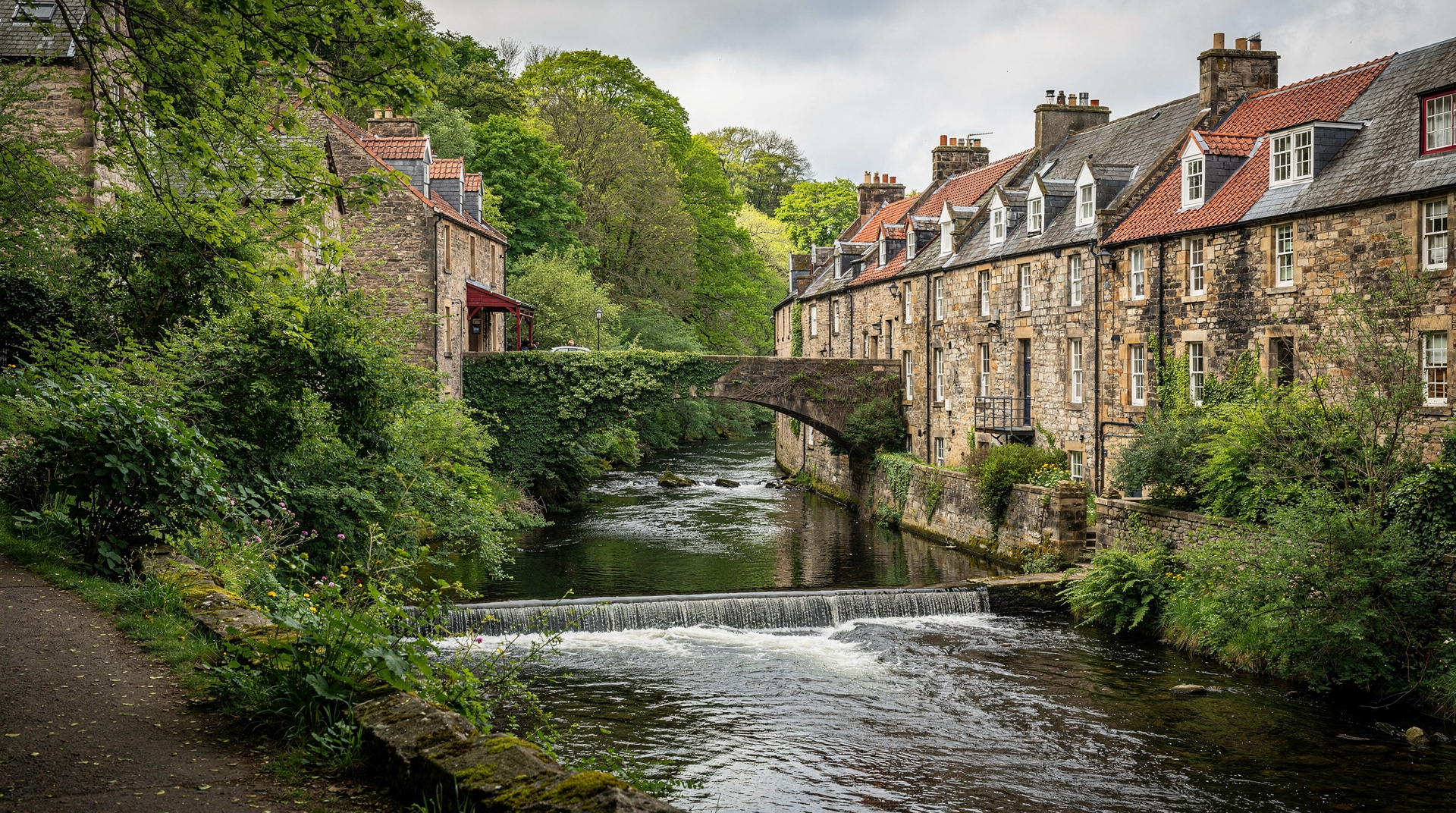
A 10-minute walk from Stockbridge along the Water of Leith leads to Dean Village — a nineteenth-century mill village that feels surprisingly rural for its central location. The walkway along the Water of Leith through here is one of Edinburgh’s best short walks.
3:30pm — Arthur’s Seat
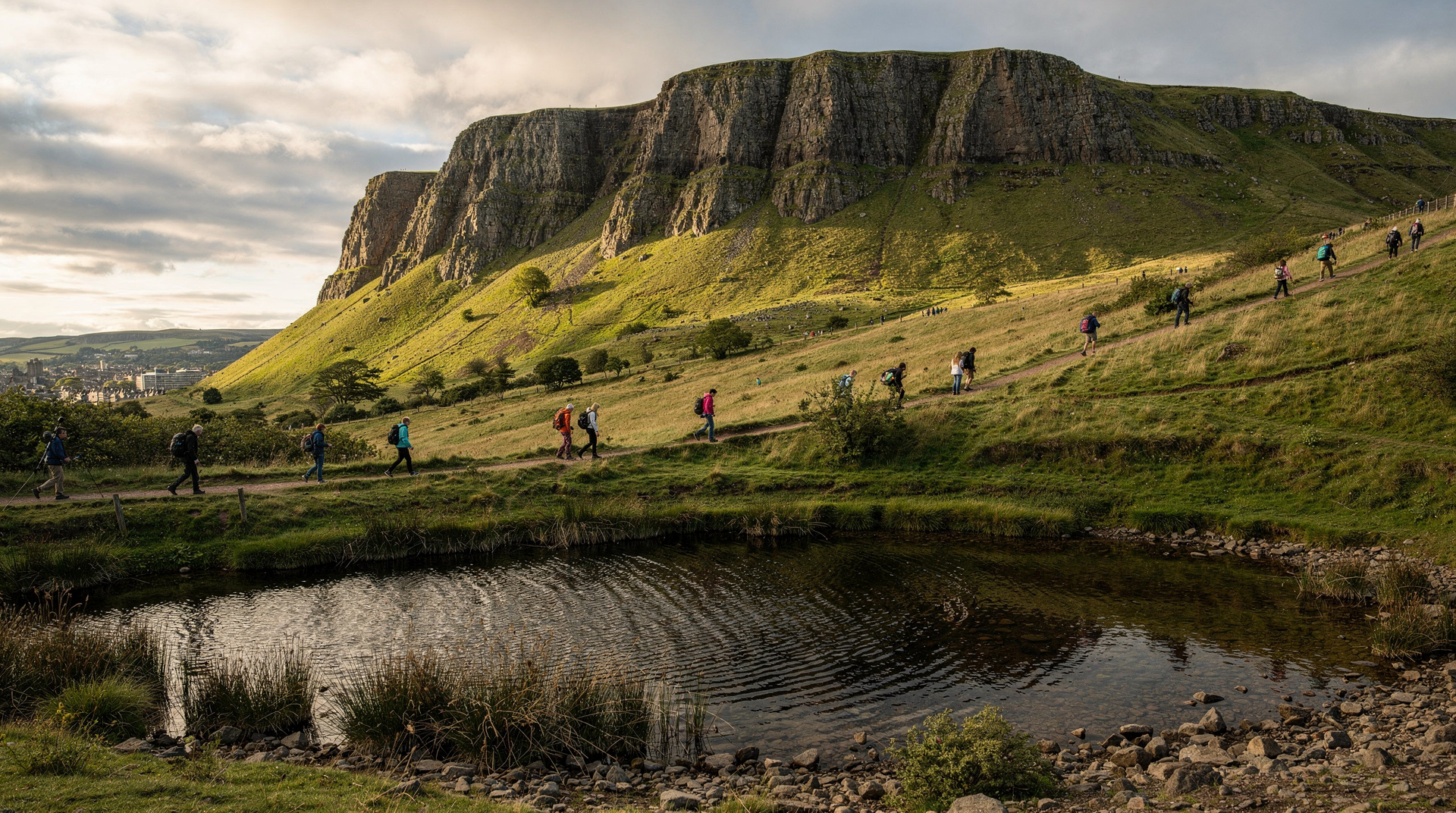
From Dean Village or the city centre, make your way to Holyrood Park for the Arthur’s Seat ascent. The standard route from the Holyrood Park visitor centre to the 251-metre summit takes 45–55 minutes at a comfortable pace. The views from the top extend over the entire city, out to the Firth of Forth, and — on clear days — to the hills of Fife and the Pentland Hills.
The path is well-marked but steep in places; wear shoes with grip. An Arthur’s Seat guided hike adds geological context to the volcanic landscape that shaped the city.
Allow two hours for the full circuit including summit time.
Cost: Free.
Evening
6:30pm — Dinner in New Town or Leith
Return to the New Town for dinner — George Street and Queen Street have a good range of restaurants. Alternatively, take the tram from St Andrew Square to Leith for Edinburgh’s best seafood on The Shore waterfront. See the Leith guide for restaurant recommendations.
Day 3: Day trip to Stirling
Why Stirling on day three?
Stirling Castle sits about an hour from Edinburgh by train (direct service from Waverley, approximately £10–14 return) and provides essential context for Scotland’s history that Edinburgh alone does not give you. The castle overlooks the site of the Battle of Stirling Bridge (1297), the town has strong connections to William Wallace and Robert the Bruce, and the approach to the castle up the medieval Old Town of Stirling is one of the great castle walks in Scotland.
If you prefer to extend your Edinburgh time rather than day-tripping, swap day three for the Highlands day or use the day to visit Leith if you skipped it on day two.
Getting to Stirling
Train from Edinburgh Waverley to Stirling takes approximately 50 minutes. Trains run roughly every 30 minutes. Return fare around £10–14 booked in advance.
Alternatively, a guided Stirling day tour from Edinburgh includes transport and a guide, which removes the logistics of navigating Stirling independently. A Stirling Castle, Loch Lomond and whisky tour extends the day to include Loch Lomond and a whisky distillery, making it Edinburgh’s best-value guided day trip.
Morning: Stirling Castle and the old town
Leave Edinburgh 9:00am — arrive Stirling 9:50am
Walk from Stirling station up the medieval old town to the castle — about 20 minutes on foot, steeply uphill, past the Church of the Holy Rude (where James VI was crowned in 1567) and the Old Town Jail.
Stirling Castle (Historic Environment Scotland, £18.50 adult) is in many ways Edinburgh Castle’s equal: the Great Hall is the finest late-medieval great hall in Scotland, the Royal Palace has been restored to its sixteenth-century painted decoration, and the views from the battlements over the Forth Valley include the Wallace Monument to the north and the site of Bannockburn to the south.
Allow 2–2.5 hours inside the castle.
12:30pm — Lunch in Stirling
The Stirling old town has several good cafes and pubs near the castle. The Hermann’s Restaurant on the Broad Street does reliable Scottish food. Budget £12–18.
Afternoon: Wallace Monument and Bannockburn
2:00pm — Wallace Monument
A 20-minute walk from the castle (or short taxi/bus ride), the Victorian Wallace Monument towers above the Forth Valley. Entry £12.20 adult. The climb up the tower is worthwhile for the views alone; the exhibits on William Wallace and the Wars of Scottish Independence are well done if not always historically balanced.
3:30pm — Bannockburn battle site
The 1314 battle site is a short bus ride or 30-minute walk from Stirling. The National Trust for Scotland’s Heritage Centre is closed for renovation until mid-2028, but the monuments and the battlefield remain open to the public. The battlefield itself is mostly open countryside.
5:00pm — Return train to Edinburgh
Allow 15 minutes to walk back to Stirling station for the return train. Journey time 50 minutes.
Evening in Edinburgh
6:30pm onwards — Final evening
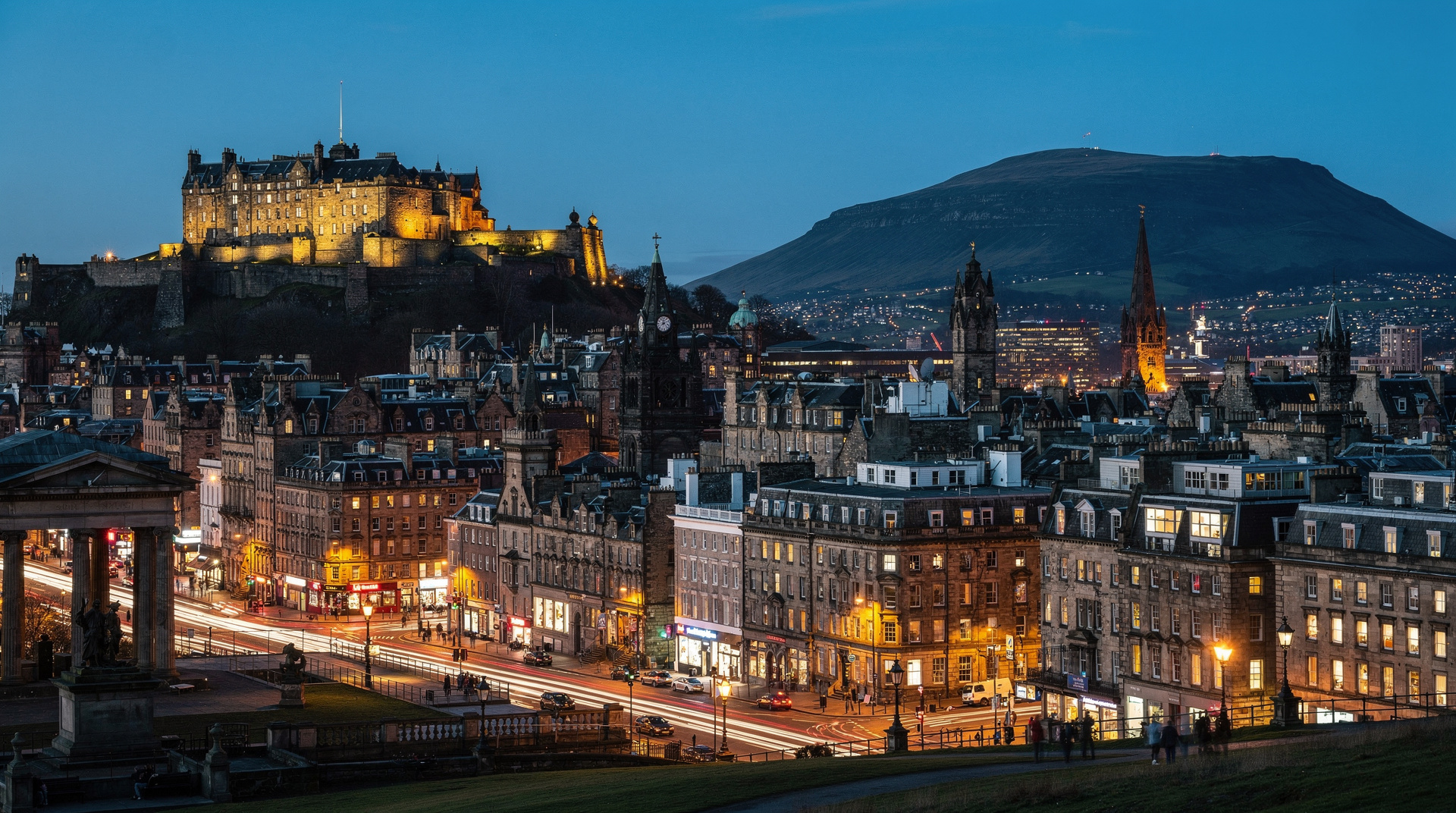
Use the last evening to revisit a favourite neighbourhood, try the restaurant you did not make it to earlier, or take the Calton Hill walk for the panoramic sunset view over the city. The Calton Hill is a 20-minute walk from Waverley and the sunset from the top across the New Town rooftops and out to the Firth of Forth is one of Edinburgh’s best free experiences.
What makes three days work well here
The three-day structure is the most efficient format for Edinburgh specifically because of the city’s geography. The first day covers the Old Town — the compact medieval ridge from castle to Holyrood — which requires sustained walking but not long distances. The second day covers the New Town, Stockbridge, Dean Village, and Arthur’s Seat, which involves more variety in mode (walking, tram, more walking) but similarly compact geography. The third day’s Stirling trip by train adds a genuinely different historical context without requiring a full Highland day-trip commitment.
The result is that you leave after three days having understood Edinburgh in its medieval, Georgian, and natural dimensions, and having placed it within the wider Scottish historical narrative via Stirling. That narrative arc — the castle at Edinburgh, the castle at Stirling, the landscape that connects them — is what makes three days more satisfying than two. See the five-day Highland itinerary if you want to push further north, or the Fife four-day itinerary if coastal east Scotland is your interest.
What to do with a spare hour or two
Three days planned tightly still leaves small pockets of slack — a train delayed at Stirling, a museum finished faster than expected, an early dinner reservation. Keep a short list of free, flexible fillers rather than defaulting to another whisky shop on the Royal Mile: the Writers’ Museum in Lady Stair’s Close (free, 20 minutes), a coffee in one of Stockbridge’s independent cafes, or simply sitting in Princes Street Gardens with the castle view. If you finish Stirling early on day three, the train back to Edinburgh runs roughly every 30 minutes, so an earlier return simply buys you more time for Calton Hill at golden hour rather than wasted waiting.
Doing it with kids or older relatives
The pacing above assumes a comfortable adult walking pace with some hills. Travelling with children or less mobile relatives, the two adjustments that matter most are the castle-to-Holyrood walk on day one (consider a bus back up from Holyrood rather than retracing the climb) and the Arthur’s Seat ascent on day two, which is genuinely steep in places — the Dunsapie Loch circuit from day one’s itinerary is a gentler substitute that still delivers good views without the full summit push. Stirling’s day trip works well for most ages since the train removes the need for a long car journey, though the walk up from Stirling station to the castle is a steady 20-minute climb with no shortcut.
Three-day budget summary
| Day | Major costs | Budget | Mid-range |
|---|---|---|---|
| Day 1 | Castle, lunch, Holyrood, dinner | £55 | £90 |
| Day 2 | Gallery, Georgian House, lunch, dinner | £30 | £65 |
| Day 3 | Stirling train + entries + lunch | £55 | £80 |
| Total | ~£140 | ~£235 |
Frequently asked questions about three days in Edinburgh
Is three days enough for Edinburgh and a day trip?
Yes. Three days is the minimum that lets you cover central Edinburgh properly and still make a meaningful day trip. Stirling is the best single day trip from Edinburgh — close enough to not waste the day in transit, historically rich enough to justify the journey.
Should I visit Stirling or St Andrews on a day trip?
Both are excellent but different. Stirling offers more dense history, a great castle, and the Wallace/Bruce narrative that contextualises Scottish history. St Andrews suits visitors specifically interested in golf, medieval ecclesiastical architecture, or the university town atmosphere. Both are around an hour from Edinburgh by train. See the St Andrews and Fife itinerary for a fuller treatment of the Fife route.
What is the best order for three days in Edinburgh?
Old Town on day one, New Town and Arthur’s Seat on day two, day trip on day three. This sequence moves from the most historically dense area (Old Town) to the more spacious Georgian grid, then out into the wider Scottish landscape. By day three you understand Edinburgh well enough to contextualise Stirling’s role in the nation’s story.
Can I visit Arthur’s Seat in three days?
Absolutely, and you should. The Arthur’s Seat ascent is one of the best urban hikes in Britain and the views from the summit repay the effort significantly. With three days, you have the time to do it properly — allow a full two hours for the circuit so you are not rushing.
Where should I stay for three days in Edinburgh?
The Old Town gives you walking access to the castle, Royal Mile, and Holyrood. The New Town is quieter and often slightly cheaper, with good access to the Georgian architecture on day two. Either area works. See the Edinburgh where to stay guide for hotel recommendations by neighbourhood and budget.
Is the day trip to Stirling easy without a car?
Yes. Direct trains from Edinburgh Waverley to Stirling run roughly every 30 minutes, take 50 minutes, and cost around £10–14 return. From Stirling station, the castle is a 20-minute walk uphill. The Wallace Monument and Bannockburn are accessible by local bus or short taxi. A guided tour from Edinburgh that handles transport and logistics is the easier option if you prefer that.
What can I skip if I have less than three full days?
Skip the interior of Holyrood Palace on day one (the exterior and Holyrood Park are free and nearly as rewarding) and skip the Wallace Monument or Bannockburn at Stirling if time is short. Edinburgh Castle, the Royal Mile, Arthur’s Seat, and Stirling Castle are the four non-negotiables. Everything else is a bonus.
Is this itinerary suitable for children or older relatives?
Mostly, with two adjustments. The Arthur’s Seat summit ascent on day two is genuinely steep, so substitute the gentler Dunsapie Loch circuit around the base if a full climb is not realistic for everyone in your group. On day one, consider a short bus ride back up from Holyrood rather than retracing the uphill walk to the Old Town. Stirling’s day trip works well for most ages since the train removes any long car journey, though the walk from the station to the castle is a steady climb.
What should I do if I finish an activity early?
Keep a short list of flexible fillers rather than defaulting to Royal Mile shopping: the free Writers’ Museum in Lady Stair’s Close, a coffee in Stockbridge, or simply sitting in Princes Street Gardens with the castle view. If Stirling finishes early on day three, trains run roughly every 30 minutes, so an earlier return buys extra time for the Calton Hill sunset walk instead.
Top experiences
Bookable activities with verified prices and instant confirmation on GetYourGuide.
Edinburgh Castle: guided walking tour with entry ticket
Edinburgh: guided hike to Arthur's Seat and Holyrood Park

Edinburgh: Stirling Castle, Loch Lomond & whisky tour
Edinburgh: Old Town history and tales walking tour
Edinburgh: walk Dean Village, New Town & Royal Botanics