Edinburgh, St Andrews, and Fife: 4-day slow travel itinerary
Edinburgh: St Andrews and fishing villages of Fife day tour
Edinburgh and Fife: two faces of Scotland’s eastern seaboard
The Kingdom of Fife — the peninsula between the Firth of Forth and the Firth of Tay — is one of Scotland’s most underrated destinations. An hour from Edinburgh by train, it offers a dramatically different experience from the capital: a rugged coastal path, medieval fishing villages that have barely changed in three centuries, the ancient university town of St Andrews, and some of the most beautiful golf courses in the world.
This four-day itinerary pairs two days in Edinburgh with two days exploring Fife. The pacing is deliberately unhurried — slow travel rather than maximum coverage. The aim is to understand both destinations properly rather than touching them lightly.
Getting to St Andrews from Edinburgh: The most scenic route is by train to Leuchars station (90 minutes from Edinburgh Waverley via the Forth Bridge, with views over the Firth of Forth), then a 10-minute bus or taxi to St Andrews. Alternatively, a guided day trip handles transport and provides interpretation of the route.
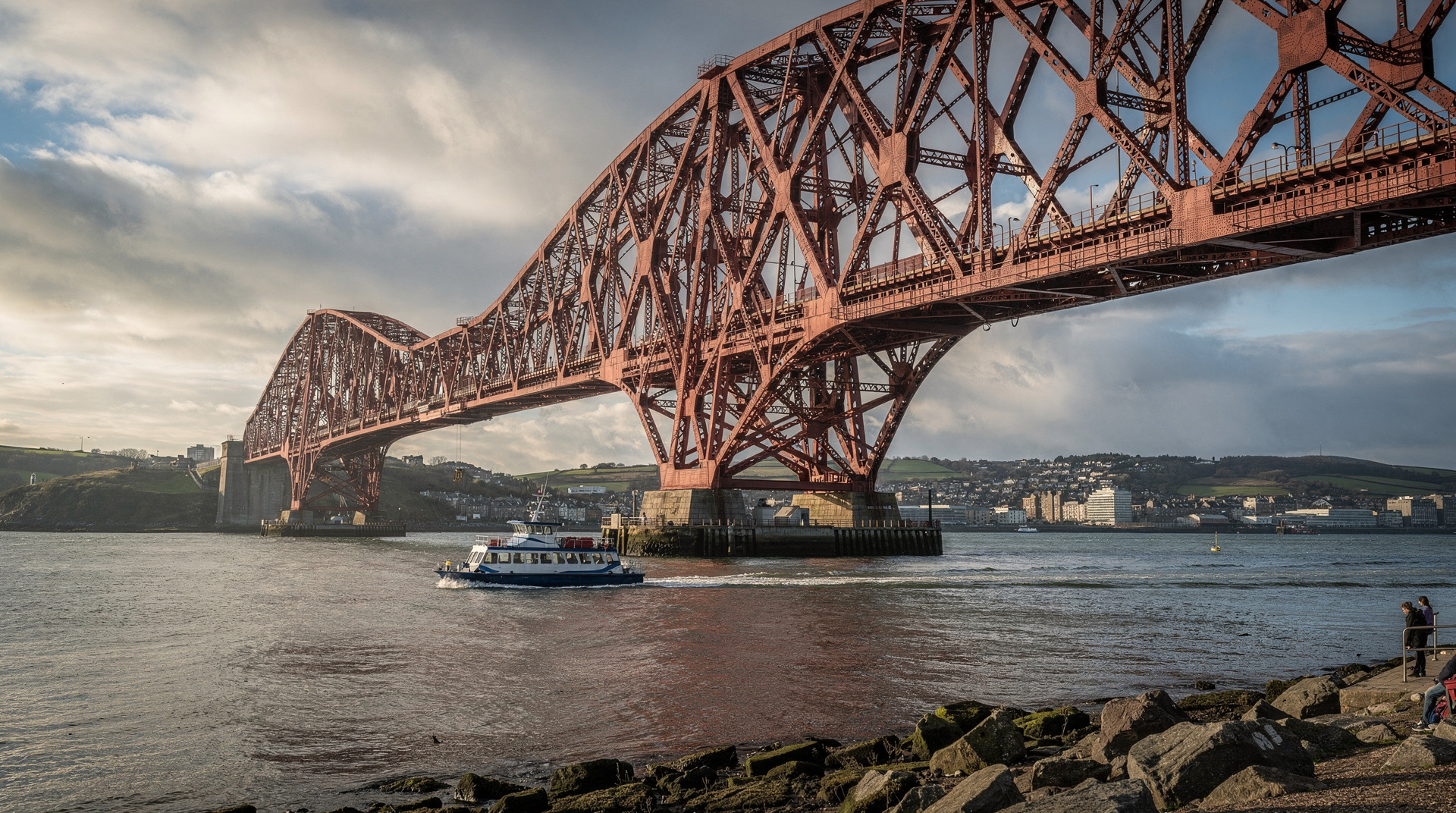
The connection between Edinburgh and Fife is deeper than geography. The Forth Rail Bridge — the 1890 Victorian cantilever that you cross on the train — is one of the great engineering structures in the world and a World Heritage Site. On a clear day, looking north from the bridge as the train crosses, you see the Firth of Forth stretching east to the North Sea, with the hills of Fife on the left and the Lothian coast on the right.
This is the moment when Fife stops being an abstract destination on a map and becomes a physical reality. The journey is worth making for this view alone. Beyond it, the Fife countryside — agricultural, coastal, dramatically different from the Highland landscapes that most visitors associate with Scotland — is its own reward. The East Neuk guide and the full St Andrews guide cover the two main Fife destinations in depth.
| Where | Edinburgh Old Town/New Town, St Andrews, East Neuk of Fife |
| Cost | around £255–500/person for 4 days, excl. accommodation |
| Time needed | 4 days |
| Getting there | Train from Edinburgh Waverley to Leuchars (~90 min) via the Forth Rail Bridge — see the trains to Edinburgh guide for onward connections |
| Best time | May–September for reliable coastal weather |
Four-day snapshot
| Day | Focus | Highlights |
|---|---|---|
| Day 1 | Edinburgh arrival | Old Town, Royal Mile, dinner |
| Day 2 | Edinburgh Castle and New Town | Castle, National Gallery, Leith dinner |
| Day 3 | St Andrews | Cathedral, Castle, Old Course, coastal walk |
| Day 4 | East Neuk of Fife | Crail, Anstruther, Pittenweem, optional Falkland Palace |
Day 1: Edinburgh arrival and Old Town orientation
Afternoon and evening: Old Town
Arrive into Edinburgh and spend the afternoon walking the Old Town. The Royal Mile from the castle esplanade to Canongate introduces the medieval core — the closes, the tenement buildings, and the mix of royal and ecclesiastical history that characterises Edinburgh more than any other British city.
For a first-evening introduction to Scottish culture, the food tour options include evening versions that combine Edinburgh’s Old Town atmosphere with Scottish food. Alternatively, book dinner at one of the Grassmarket or Victoria Street restaurants and walk the lit closes after dark.
Cost: Free to walk; dinner £15–30.
The slow travel philosophy behind this itinerary
This itinerary is structured for slow travel — a concept that, in practice, means spending two nights in St Andrews rather than returning to Edinburgh each day, eating at least one meal in a proper Anstruther fish and chips queue rather than a restaurant, and walking the Fife Coastal Path for long enough to understand why it is on every serious walker’s list. Slow travel is not passive; it requires more planning than the dash-through version because you need to book accommodation in smaller towns, coordinate transport on infrequent rural routes, and accept that some days have lower “productivity” in the tourist sense.
The reward: a four-day trip that produces coherent memories rather than a blur of ticked checkboxes. The East Neuk fishing villages are not dramatic in the way that the Highland glens are dramatic; their quality is subtler — the preservation of a working coastal culture, the scale and intimacy of the harbours, the quality of the light on the Fife coast. These things only become apparent if you spend enough time in them. One hurried morning is not enough. Two days in Fife, including a night in or near St Andrews, is. See the St Andrews guide and the East Neuk guide for detail on accommodation in both areas.
Day 2: Edinburgh Castle and the city highlights
Morning: Edinburgh Castle
9:30am — Edinburgh Castle
Begin the Edinburgh content with the castle. A guided castle tour with entry provides the historical context that makes the rest of the Edinburgh and Fife itinerary meaningful — Scotland’s royal history, the relationship between the Scottish monarchy and the church at St Andrews, and the Wars of Scottish Independence all connect to what you will see in Fife.
Allow two hours. Entry £18–36.
Afternoon: New Town and the Forth Rail Bridge view
1:30pm — New Town and Charlotte Square
After lunch in the Grassmarket, spend the afternoon in the New Town. Walk George Street, Charlotte Square, and the terraces of Moray Place. The National Gallery of Scotland (free) on The Mound is excellent for an afternoon visit.
4:00pm — Forth Bridge vista from Calton Hill
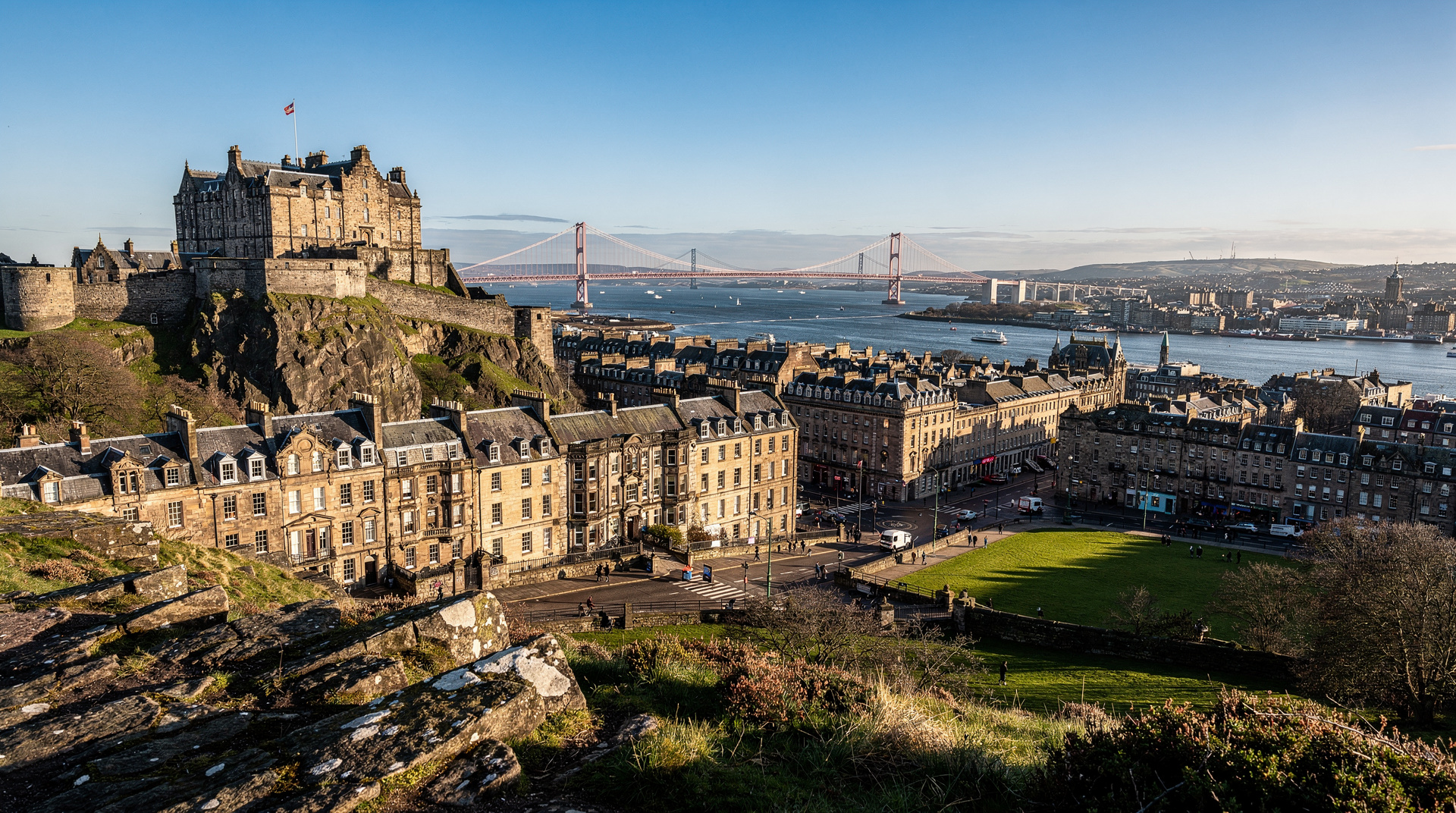
From Calton Hill, on a clear day, you can see the Forth Rail Bridge stretching across the Firth of Forth toward Fife. The bridge — a Victorian cantilever masterpiece, a World Heritage Site — is the most tangible connection between Edinburgh and Fife visible from the city. The view prepares you for crossing it by train the following day.
Evening: Leith dinner
Take the tram to Leith for dinner on The Shore. The Kitchin, Fishers Bistro, or one of the other excellent restaurants on Leith’s waterfront. Good preparation for two days of East Neuk seafood eating. Budget £18–30 per main.
Day 3: St Andrews
Morning: train via the Forth Bridge
8:30am — From Edinburgh Waverley
The 8:30am train from Edinburgh Waverley to Leuchars takes approximately 90 minutes via the Forth Rail Bridge and through the Fife countryside. The train journey itself is a significant experience — the crossing of the Forth Rail Bridge gives you a view of the 1890 engineering structure from inside it, with the Firth of Forth visible in both directions.
From Leuchars station, take the bus or taxi (10 minutes) to St Andrews town centre.
Alternatively, a guided St Andrews and Fife day trip handles transport and adds interpretive context. A St Andrews and fishing villages of Fife day tour combines St Andrews with East Neuk fishing villages and is the most efficient single-day option, or a small-group St Andrews and Fife tour if you prefer fewer fellow travellers and more flexibility on stops.
Morning: St Andrews Cathedral and town
10:00am — St Andrews Cathedral ruins
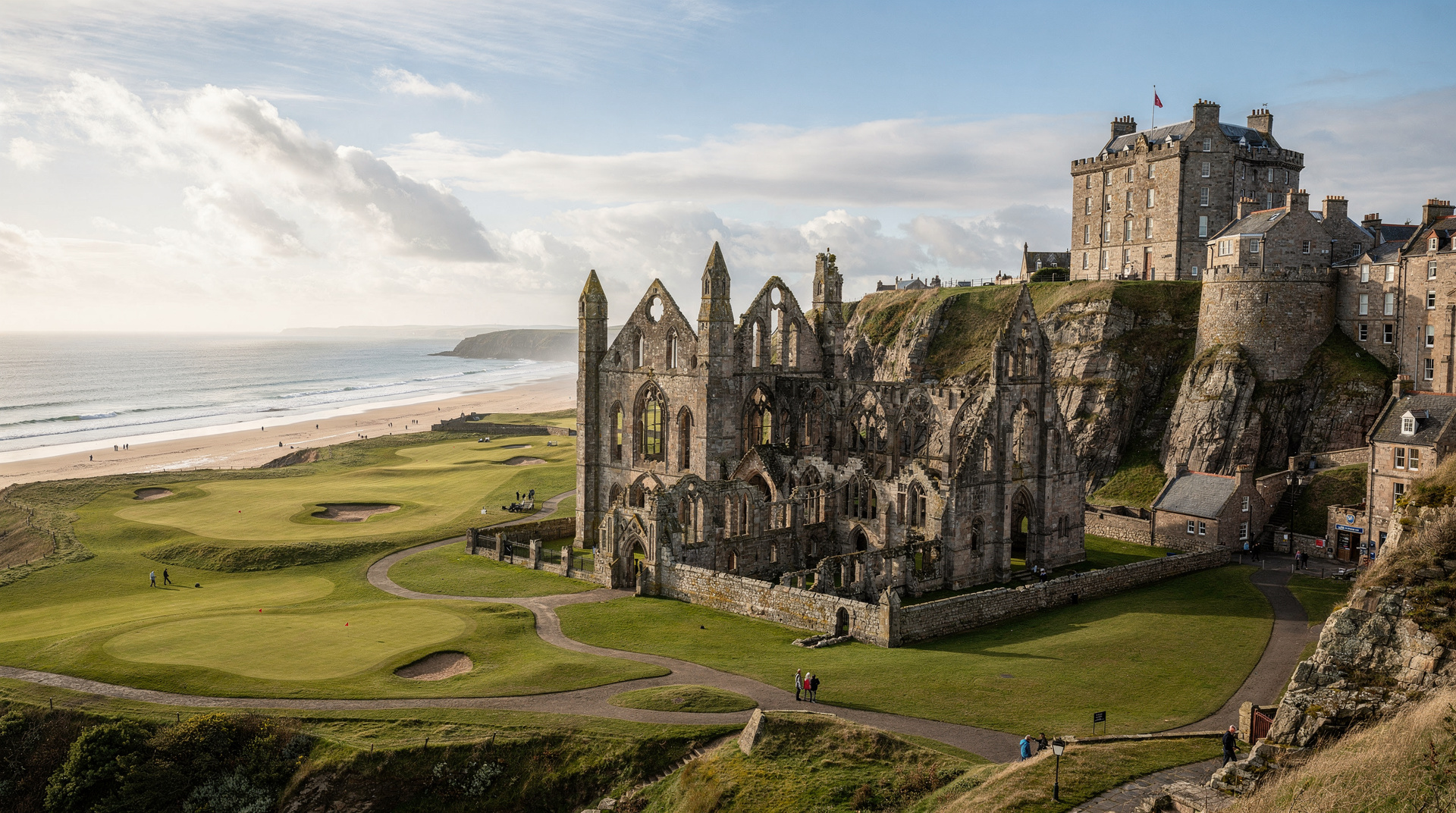
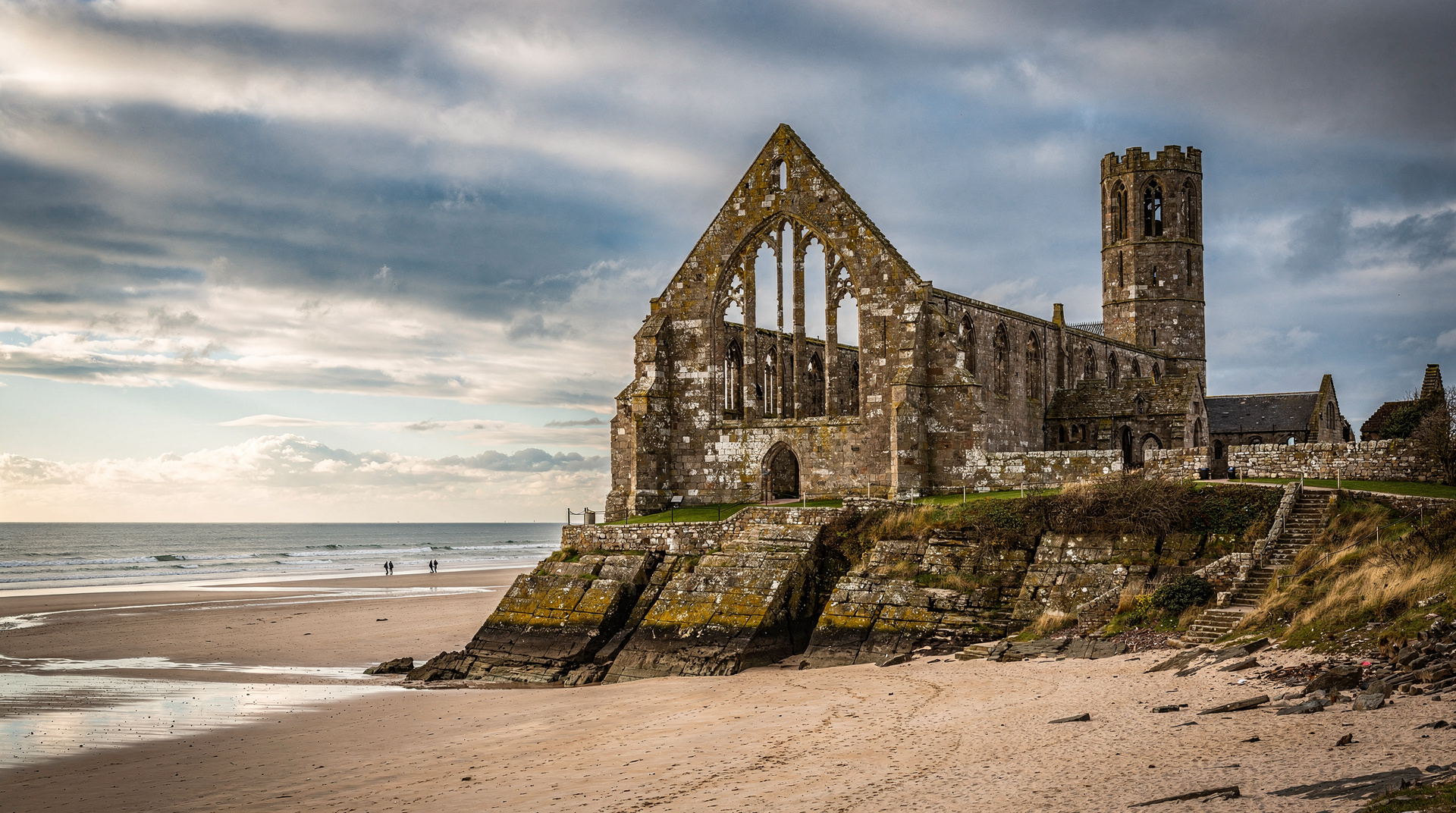
The ruins of St Andrews Cathedral are among the most striking in Scotland — once the largest cathedral in the country, abandoned at the Reformation in 1559 and now a dramatic roofless shell beside the sea. The Cathedral Museum (free; check the Historic Environment Scotland site for current opening) covers the history of the site and includes some important Pictish stone carvings. Climb St Rule’s Tower for excellent views over the town and coast.
The town of St Andrews is built on a medieval street plan radiating from the cathedral precinct. Market Street, North Street, and South Street retain much of their historic character.
11:30am — St Andrews Castle
A short walk from the cathedral, St Andrews Castle (Historic Environment Scotland, £10 adult online, £11 at the gate) is a ruined coastal fortification with a famous bottle dungeon — a medieval prisoner pit cut into the rock, with a tapered shape that made escape impossible. The castle also has a mine and counter-mine tunnel from a sixteenth-century siege that can be crawled through. Children and adults who like tight underground spaces will enjoy it.
1:00pm — Lunch in St Andrews
St Andrews has a good range of restaurants and cafes for a university town. The Vine Leaf on South Street does reliable Scottish cooking (mains £16–22). For something quicker, Taste (Market Street) does excellent coffee and lunch food.
Budget: £12–22.
Afternoon: the Old Course and coastal walk
2:00pm — The Old Course
The Old Course at St Andrews is the most famous golf course in the world. Non-playing visitors can walk the Himalayas putting green beside the first tee (free), and there is a public right of way across the course on Sundays when play is not scheduled. The Swilcan Bridge on the 18th hole is the most photographed golfing landmark in the world.
If you play golf, a ballot to play the Old Course is held three days in advance — walk-up entries are possible but not guaranteed. Fees are approximately £295 per round in peak season.
The British Golf Museum adjacent to the course (see the current price on the R&A World Golf Museum’s official site) is well done and genuinely interesting even for non-golfers — golf’s history as a Scottish invention is a more substantive story than it first appears.
3:30pm — Coastal walk: East Sands and the Coastal Path
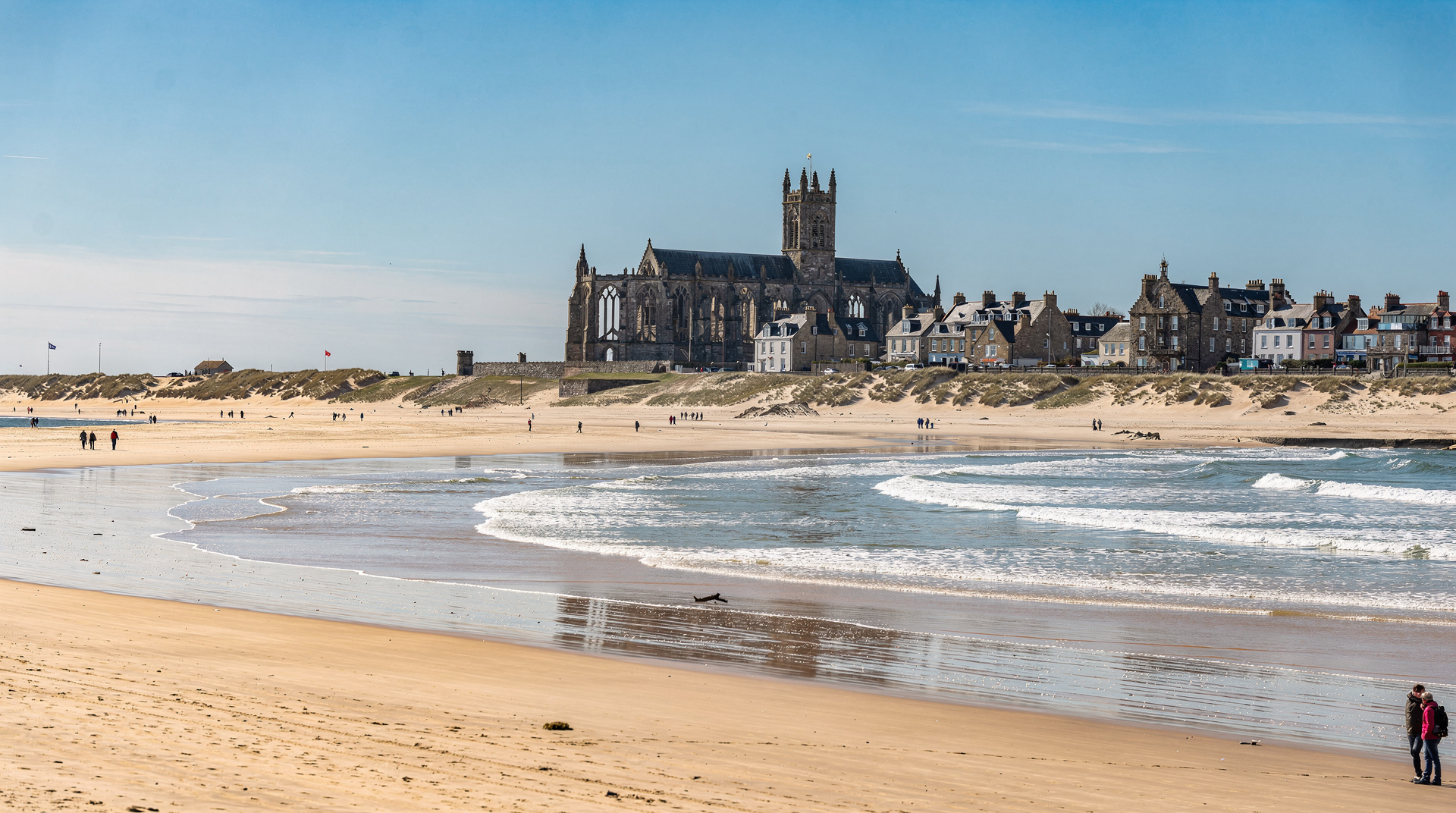
Walk from the town centre along East Sands beach toward the Coastal Path. The view back toward the town — the cathedral ruins, the castle tower, the grey stone buildings against the sea — is one of Scotland’s finest coastal townscapes. Walk as far as you have time for; the path continues south toward Kingsbarns and East Neuk.
Return to Edinburgh: 5–6pm train from Leuchars.
Day 4: East Neuk of Fife
Getting to East Neuk
The East Neuk of Fife — the string of fishing villages on Fife’s southern coast — is best reached by guided tour from Edinburgh or from St Andrews. Independent travel requires buses (infrequent) or a hire car. The St Andrews, Falkland Palace and East Neuk of Fife tour covers the villages comprehensively. Alternatively, the Fife Coastal Trail and St Andrews day trip focuses specifically on the coastal walking route.
Morning: Crail, Anstruther, and the fishing villages
The East Neuk villages
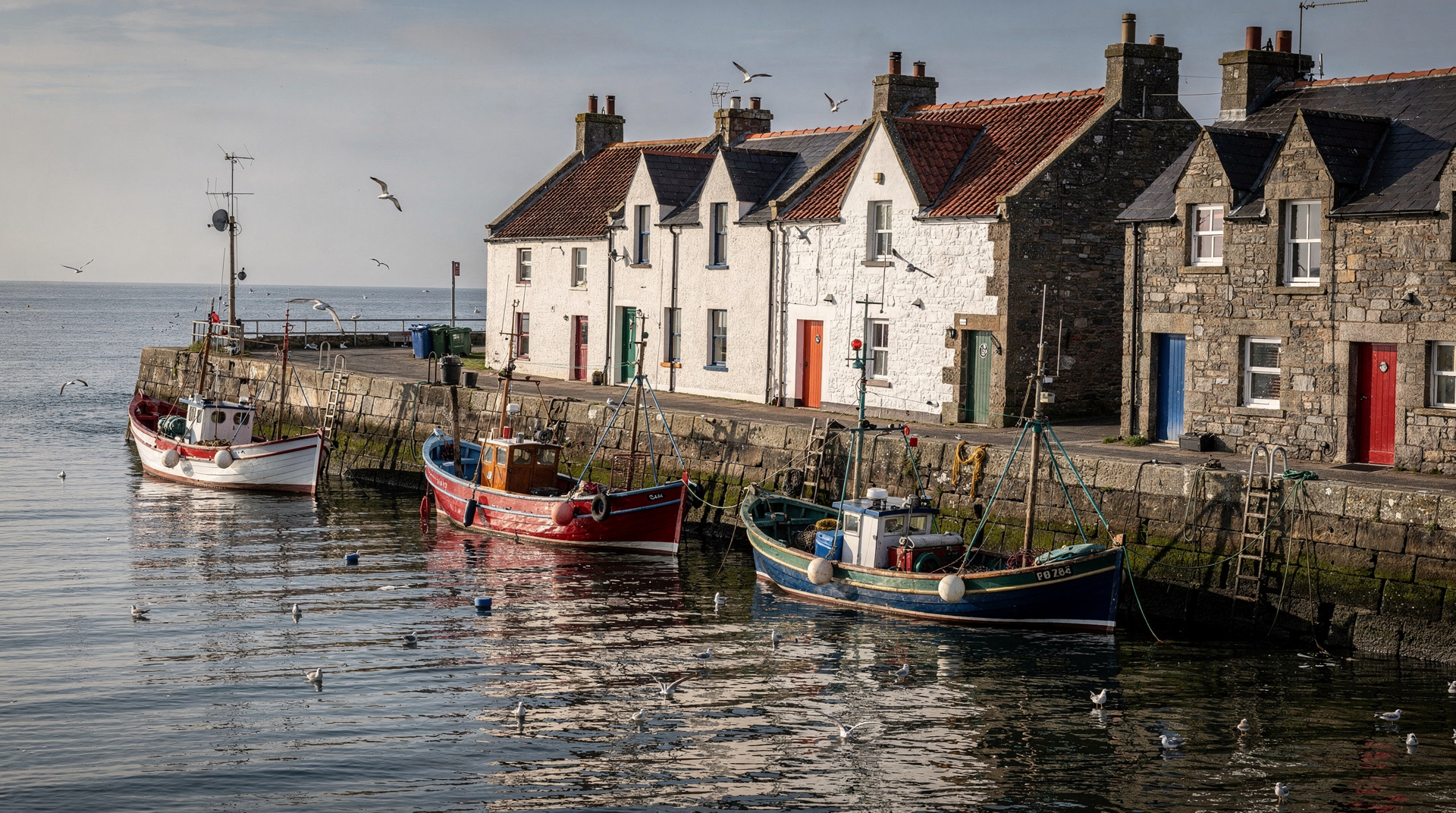
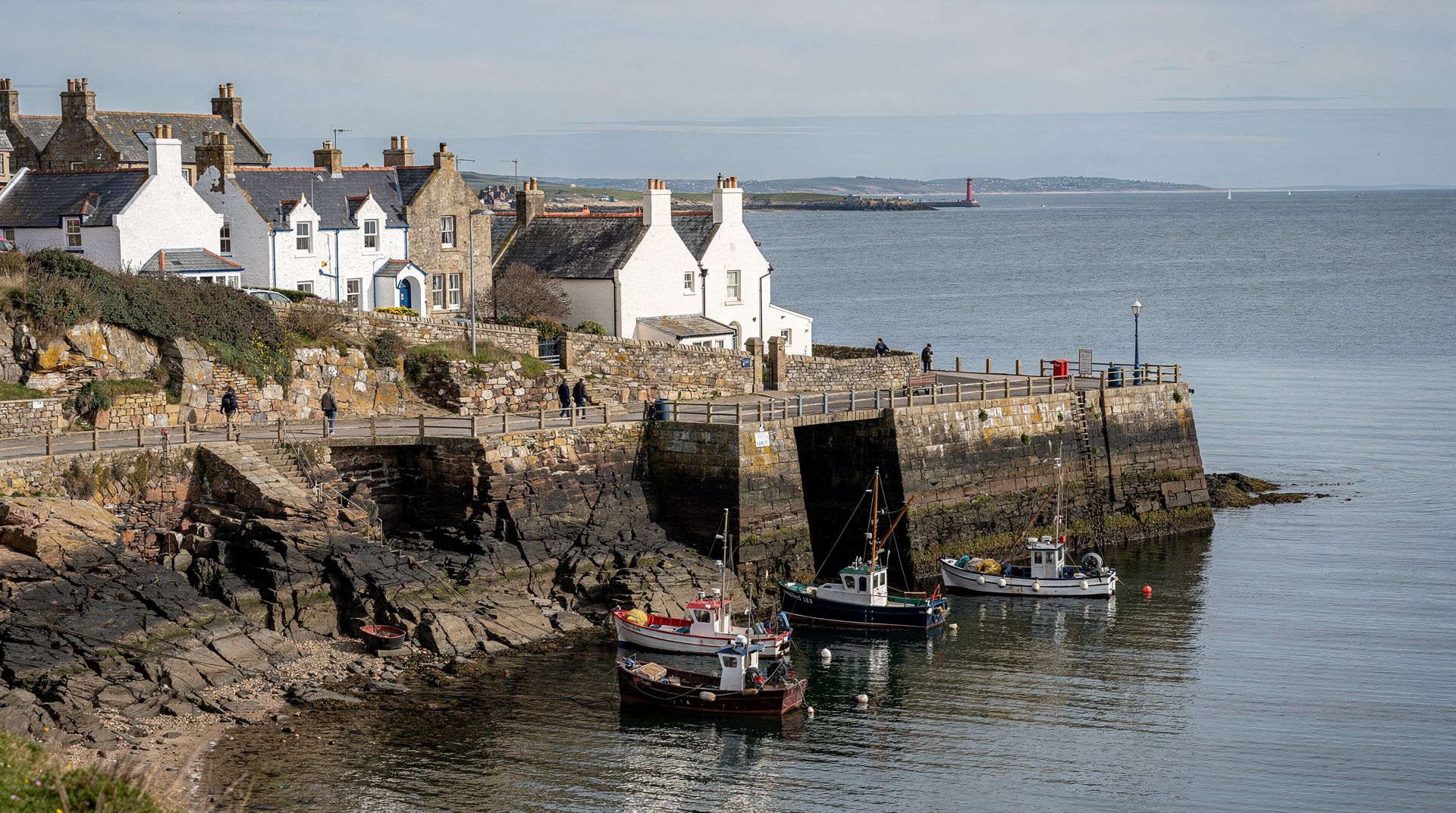
The East Neuk villages — Crail, Anstruther, Pittenweem, St Monans, Elie — are among the most beautifully preserved fishing settlements in Britain. Each has a distinctive character:
- Crail: The most photographed village, with a perfectly preserved harbour and crow-stepped gabled buildings that predate the twentieth century in almost every detail.
- Anstruther: The largest of the villages, with the Scottish Fisheries Museum (£11 adult) — the best museum in Scotland dedicated to the fishing industry and its communities. The fish and chips from the Anstruther Fish Bar are famously the best in Scotland.
- Pittenweem: Still a working fishing port where you can watch lobster boats unloading on weekday mornings.
- St Monans: The church sits literally on the waterfront rocks, with graves that have been eroded by centuries of North Sea weather.
Allow at least half a day to do the East Neuk justice. The villages are close together and the coastal path connecting them is one of the great short walks in Scotland.
Cost: Free to walk; museum £11; fish and chips at Anstruther £8–12.
Afternoon: Falkland Palace (optional)
Falkland Palace (National Trust for Scotland, £19 adult) sits inland in the Fife countryside, about 45 minutes by bus from the East Neuk. The Renaissance palace of the Scottish monarchs is the best-preserved example of its type in Scotland and the formal gardens are excellent in spring and summer. Mary Queen of Scots played at Falkland — it was one of her favourite royal residences.
Worth including if you have an interest in Scottish royal history; can be skipped if the coastal walking absorbs the day’s time.
Cost: £14 adult.
Afternoon return to Edinburgh
Return to Edinburgh by train from Ladybank or Cupar stations (connections to Edinburgh Waverley). Journey time approximately 90 minutes.
Final evening in Edinburgh
Use the final evening for any Edinburgh experiences still on the list. The Old Town at night, a whisky bar, or the underground vaults tour makes a good bookend to the four-day itinerary.
A reflection on the four-day route: the pairing of Edinburgh and Fife works because the two destinations complement each other without competing. Edinburgh is a capital city with all the complexity and density that implies; Fife’s East Neuk villages are the reverse — small-scale, quiet, coastal, unchanged.
Going from the Edinburgh Old Town on day two to Crail harbour on day four gives you the full range of what Scotland’s east coast has to offer. Visitors who spend four days in Edinburgh alone often leave feeling that they have missed something. This itinerary provides that something. See the Highland five-day itinerary if you want to extend the trip further north.
Comparing this route to a Highlands extension
Four days split between Edinburgh and Fife is not the only way to extend beyond a standard city break. If dramatic mountain and loch scenery matters more to you than coastal fishing villages and golf history, the Edinburgh Highlands 5-day itinerary covers Loch Ness and Glencoe instead, at the cost of an extra day and considerably more driving or coach time.
Fife has the advantage of being reachable entirely by train with no long transfers, which makes it the easier add-on if you are short on days or would rather not spend hours on a coach. For a shorter version of this same eastern-coast pairing, the St Andrews day trip guide covers a single-day visit if four days is more than you can spare, and the standard 3-day Edinburgh itinerary is the base to extend from if Fife is a later add-on rather than planned from the start.
Where to stay for the St Andrews and East Neuk nights
Staying overnight in St Andrews rather than day-tripping from Edinburgh both ways is what makes the slow-travel pacing work. St Andrews has a good range of guesthouses and small hotels on or near North Street and Murray Park, generally £90–160 per room per night outside of peak golf events. In the East Neuk itself, Anstruther and Crail both have small guesthouses and B&Bs, typically £80–140 per room, and staying here rather than in St Andrews puts you closer to the coastal path for an early start on day four.
Booking ahead matters more here than in Edinburgh — rural Fife has far fewer rooms overall, and options thin out quickly around the Open Championship and university graduation weeks. See the where to stay in Edinburgh guide for the Edinburgh nights of the trip.
Four-day budget
| Day | Key costs | Budget | Mid-range |
|---|---|---|---|
| Day 1 | Dinner | £15 | £28 |
| Day 2 | Castle + Gallery + Leith dinner | £50 | £80 |
| Day 3 | St Andrews (Cathedral + Castle + Golf Museum) | £35 | £55 |
| Day 4 | East Neuk (Fisheries Museum + food) | £25 | £40 |
| Transport (trains + tram) | £30 | £50 | |
| Accommodation (4 nights, per person) | £100 | £250 | |
| Total per person | ~£255 | ~£500 |
Frequently asked questions about Edinburgh, St Andrews, and Fife
Is St Andrews worth visiting from Edinburgh?
Absolutely. St Andrews is a 90-minute journey from Edinburgh and offers an entirely different experience: medieval ruins, a world-famous golf course, a beautiful coastal townscape, and good food. It is Edinburgh’s single best day trip for visitors interested in history and landscape rather than just scenery. See the full St Andrews visitor guide for detail.
How do I get from Edinburgh to St Andrews without a car?
Train from Edinburgh Waverley to Leuchars station (approximately 90 minutes, £10–16 return), then bus or taxi to St Andrews town centre (10 minutes). Trains run roughly hourly. Alternatively, guided day tours from Edinburgh handle all transport. The train journey across the Forth Rail Bridge is a significant experience in its own right. See the Edinburgh day trips to Fife guide for a full overview.
What is the East Neuk of Fife?
The East Neuk (Old Scots: “corner”) is the string of fishing villages on the south-east coast of Fife: Crail, Anstruther, Pittenweem, St Monans, and Elie. These villages retain medieval street layouts, seventeenth-century harbour buildings, and a character unchanged by mass tourism. The Fife Coastal Path connects them by a walking route along the cliffs. See the East Neuk guide for individual village detail.
Is St Andrews only for golf?
No. St Andrews has Scotland’s oldest university (founded 1413), the remains of one of the largest medieval cathedrals in Britain, a castle with a surviving mine and dungeon, excellent beaches, and a beautiful coastal town centre. Golf is the reason many international visitors come, but the town offers a full day’s interest for non-golfers. The combination of academic, ecclesiastical, and coastal character is unique in Scotland.
Can I walk between the East Neuk villages?
Yes. The Fife Coastal Path connects all the East Neuk villages along the clifftops and beach. The section from Crail to Anstruther takes about 3–4 hours at walking pace with stops. The path is well-marked, largely flat, and one of Scotland’s best coastal walks. Pack weatherproof clothing — the Fife coast is exposed and conditions change quickly. See the East Neuk of Fife guide and the Edinburgh Highlands itinerary for planning further afield.
When is the best time to visit St Andrews?
May to September for reliable weather and the best coastal conditions. The university term (October–June) gives the town a more animated atmosphere; July and August are busy with summer visitors. Golf is played year-round but conditions are most pleasant in spring and summer. The Old Course hosts the Open Championship periodically (next time in St Andrews: check the R&A website for the current schedule).
Can I fit St Andrews and the East Neuk into a shorter Edinburgh trip?
Yes, though it changes the character of the visit. A single guided day trip from Edinburgh can cover St Andrews town and one or two East Neuk villages in around 10–12 hours, which is far more efficient than this four-day route but loses the overnight stay and the unhurried coastal walking. See the St Andrews day trip guide if a full four days is not realistic for your itinerary.
Do I need a car for this itinerary?
No. Every stage — Edinburgh, the train to Leuchars/St Andrews, and the East Neuk — is reachable by train, bus, or guided tour. A car gives more flexibility for the East Neuk villages specifically, since rural bus services are infrequent, but it is not required if you book a guided tour or plan the coastal walk between villages instead of relying on buses.
Top experiences
Bookable activities with verified prices and instant confirmation on GetYourGuide.
Edinburgh: St Andrews and fishing villages of Fife day tour
Edinburgh: St Andrews & Fife's fishing villages small-group tour
Edinburgh: Fife Coastal Trail & St Andrews day trip
Edinburgh: St Andrews and the Kingdom of Fife tour
Edinburgh: St Andrews, Falkland Palace & East Neuk of Fife tour