St Andrews day trip from Edinburgh: complete guide
Edinburgh: St Andrews and fishing villages of Fife day tour
How do I do a day trip to St Andrews from Edinburgh?
Take the train from Edinburgh Waverley to Leuchars (50min), then the connecting bus to St Andrews (15min). Alternatively, drive 55 miles in about 1.5 hours. A full day allows the cathedral, castle, old course, and West Sands. Tours also combine St Andrews with East Neuk fishing villages.
Why St Andrews is worth a day from Edinburgh
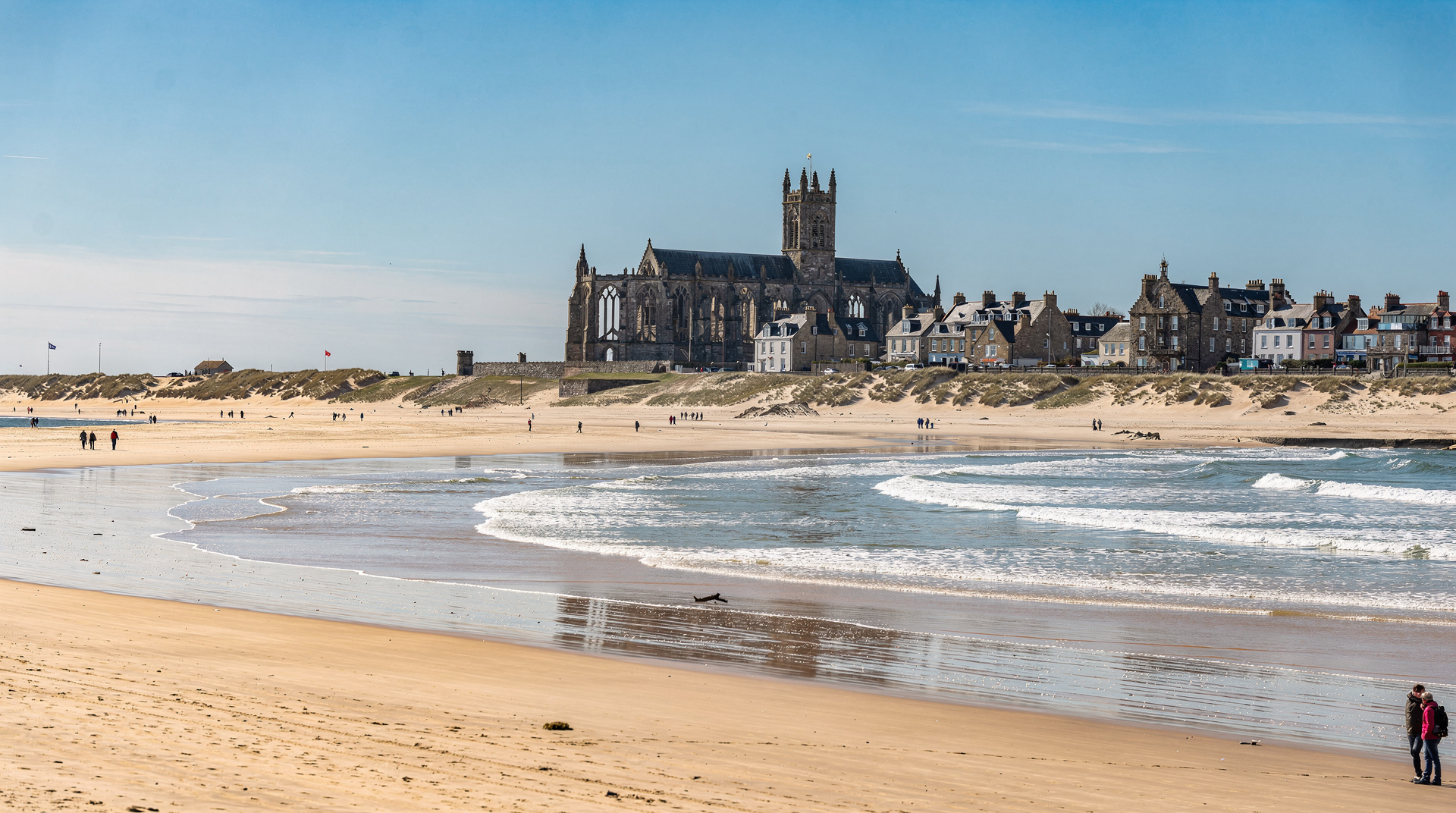
St Andrews sits on a headland above the North Sea, 55 miles north-east of Edinburgh, and manages to pack into a very small area three things that justify the journey independently: Scotland’s most historically important ruined cathedral, one of the oldest university buildings in Britain, and the home of golf. The town is medieval in layout, with three main streets converging at the cathedral ruins, and the seafront drops directly from the town edge to the West Sands — the beach used in the opening sequence of Chariots of Fire.
Unlike the Highland day trips, St Andrews does not require a hire car or a guided tour. The train from Edinburgh Waverley runs to Leuchars (50 minutes), and a connecting bus drops you in the town centre in another 15 minutes. The journey is one of the most straightforward day trips available from Edinburgh, and the town rewards three to five hours of exploration on foot.
If you have more time, combining St Andrews with one or two of the East Neuk fishing villages (Crail, Anstruther, Pittenweem) makes an excellent full-day circuit.
| Where | Fife coast, 55 miles north-east of Edinburgh |
| Cost | around £14-£22 return train; cathedral free, castle £10 online |
| Time needed | 3-4 hours minimum, full day with East Neuk |
| Getting there | train to Leuchars + bus, or around 1.5 hours by car |
| Best time | arrive at opening time to beat the 11am-2pm crowds |
See the St Andrews destination guide for a fuller sense of the town’s character beyond the day-trip logistics covered here.
Getting there from Edinburgh
By train
Edinburgh Waverley to Leuchars: approximately 50 minutes on ScotRail, with services running roughly every 30-60 minutes. From Leuchars station, the X60 bus to St Andrews takes 12-15 minutes. Return tickets typically cost £14-£22 depending on time of travel. First trains run from around 6am on weekdays; last return trains from Leuchars are late evening, giving plenty of flexibility.
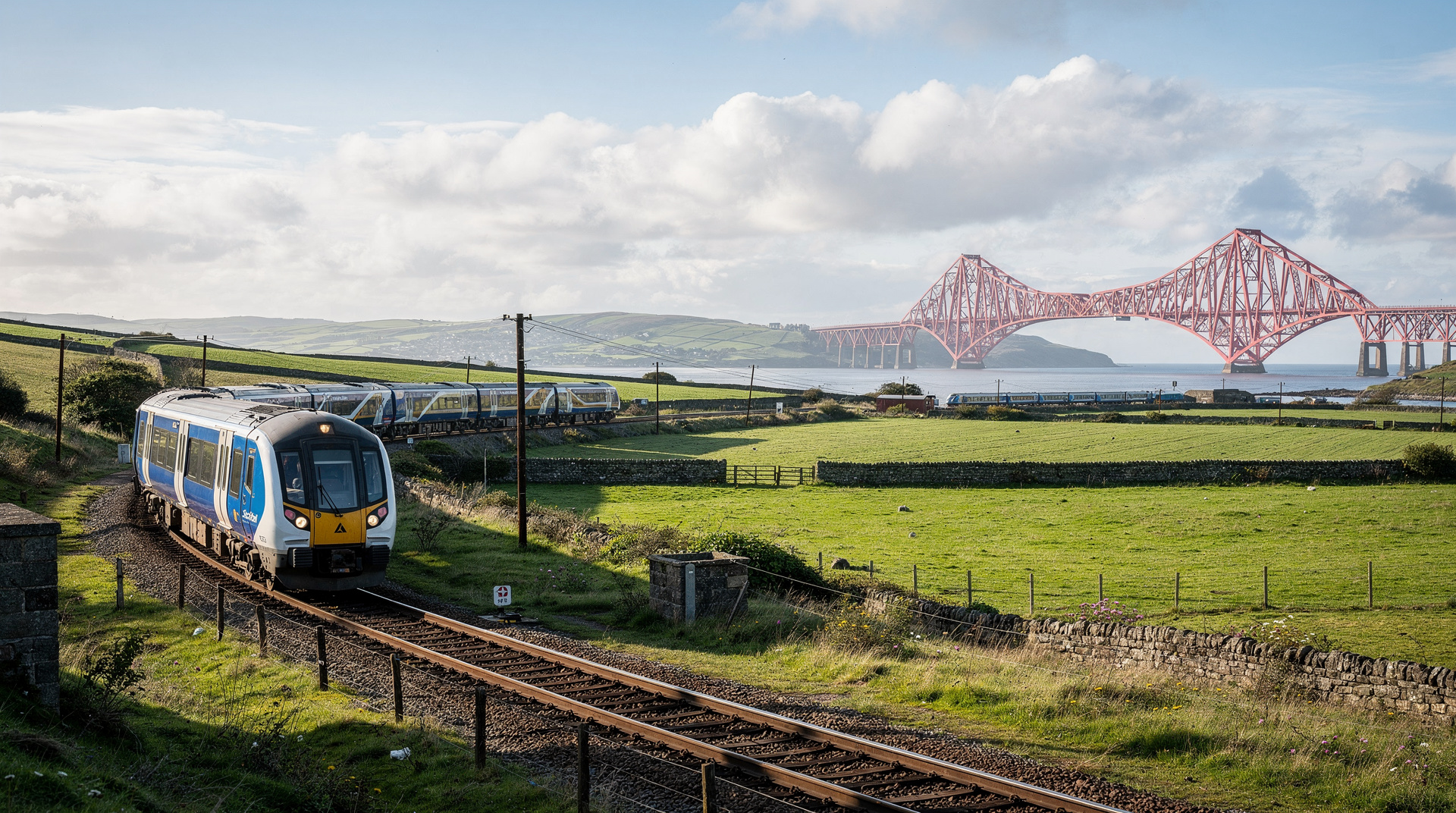
The train route follows the Forth Rail Bridge and runs through Fife — if you are sitting on the right side heading north, you get views of the Firth of Forth and the Lomond Hills. Worth the slightly longer wait on the platform.
By car
Edinburgh to St Andrews by road is approximately 55 miles, taking 1 hour 20 minutes to 1 hour 40 minutes via the Queensferry Crossing (M90) and then east on the A91 through Cupar. Parking in St Andrews is concentrated in the Kinness Burn car parks south of the town centre and at the East Sands. Both are pay and display; arrive by 10am in summer to find spaces easily.
By guided tour
The St Andrews and fishing villages of Fife day tour from Edinburgh combines the town with the East Neuk villages in a full-day circuit. This option suits visitors who want to cover more ground than the town alone, or those who prefer not to coordinate bus connections independently. The tour typically departs mid-morning from central Edinburgh and returns by early evening.
The St Andrews and Fife fishing villages small-group tour covers similar ground with a smaller group, which generally allows more flexibility at individual stops.
St Andrews takes half a day at most, and the coast north of it — Dunnottar on its sea stack, the cliffs beyond — is what turns the trip into a full one: a St Andrews, cliffs and Dunnottar Castle tour continues up that shoreline instead of turning back.
What to see in St Andrews
St Andrews Cathedral ruins
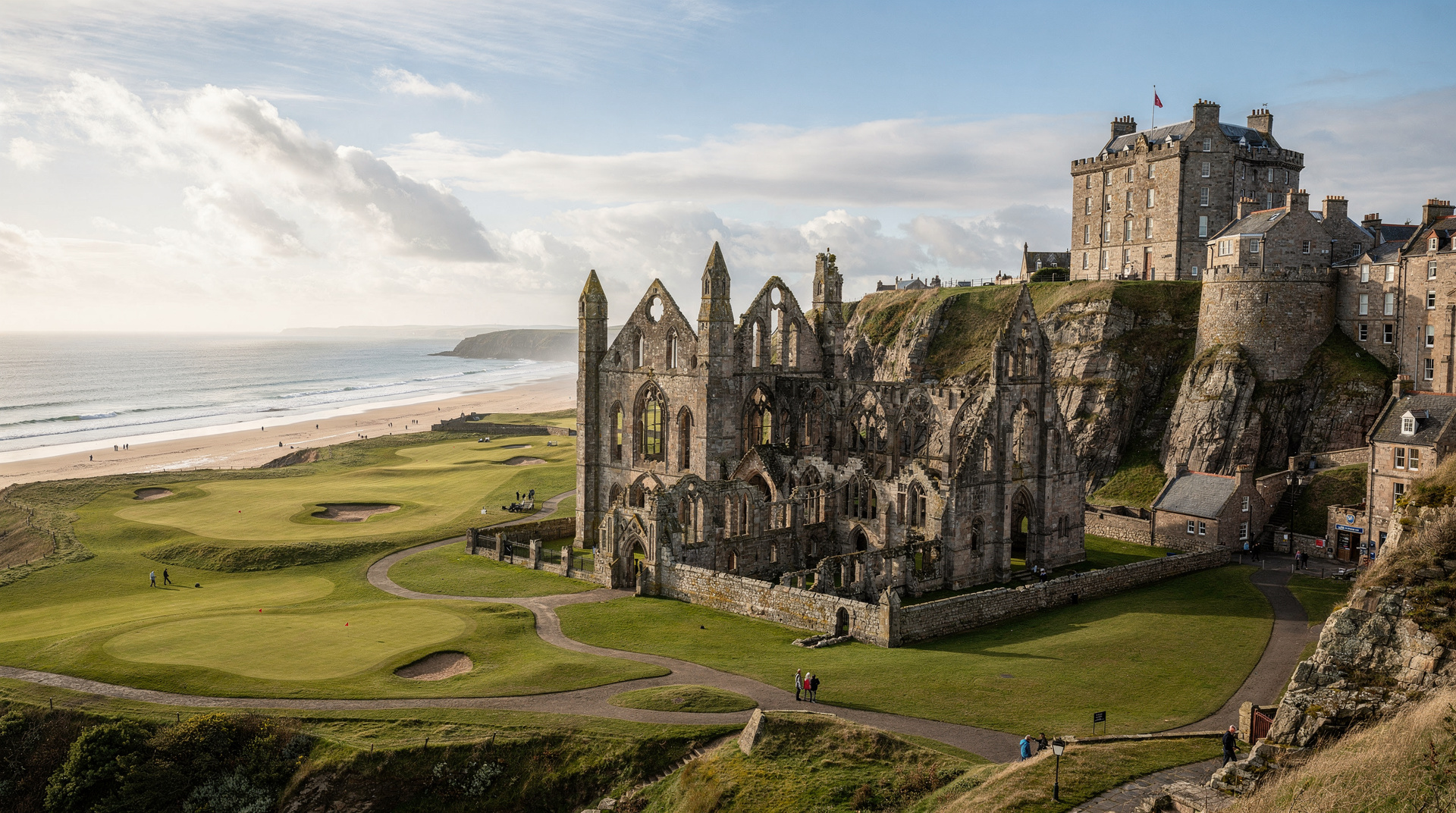
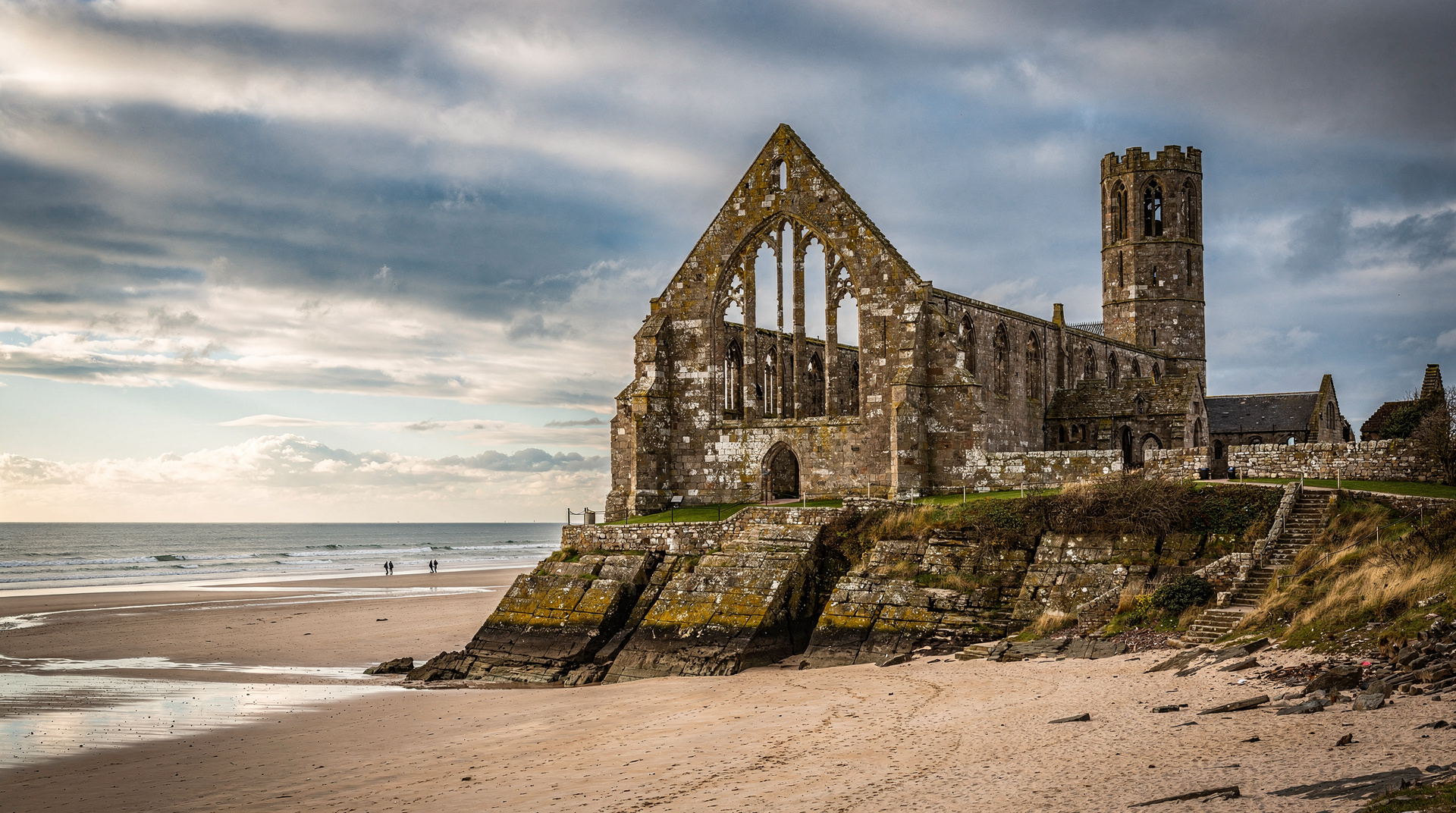
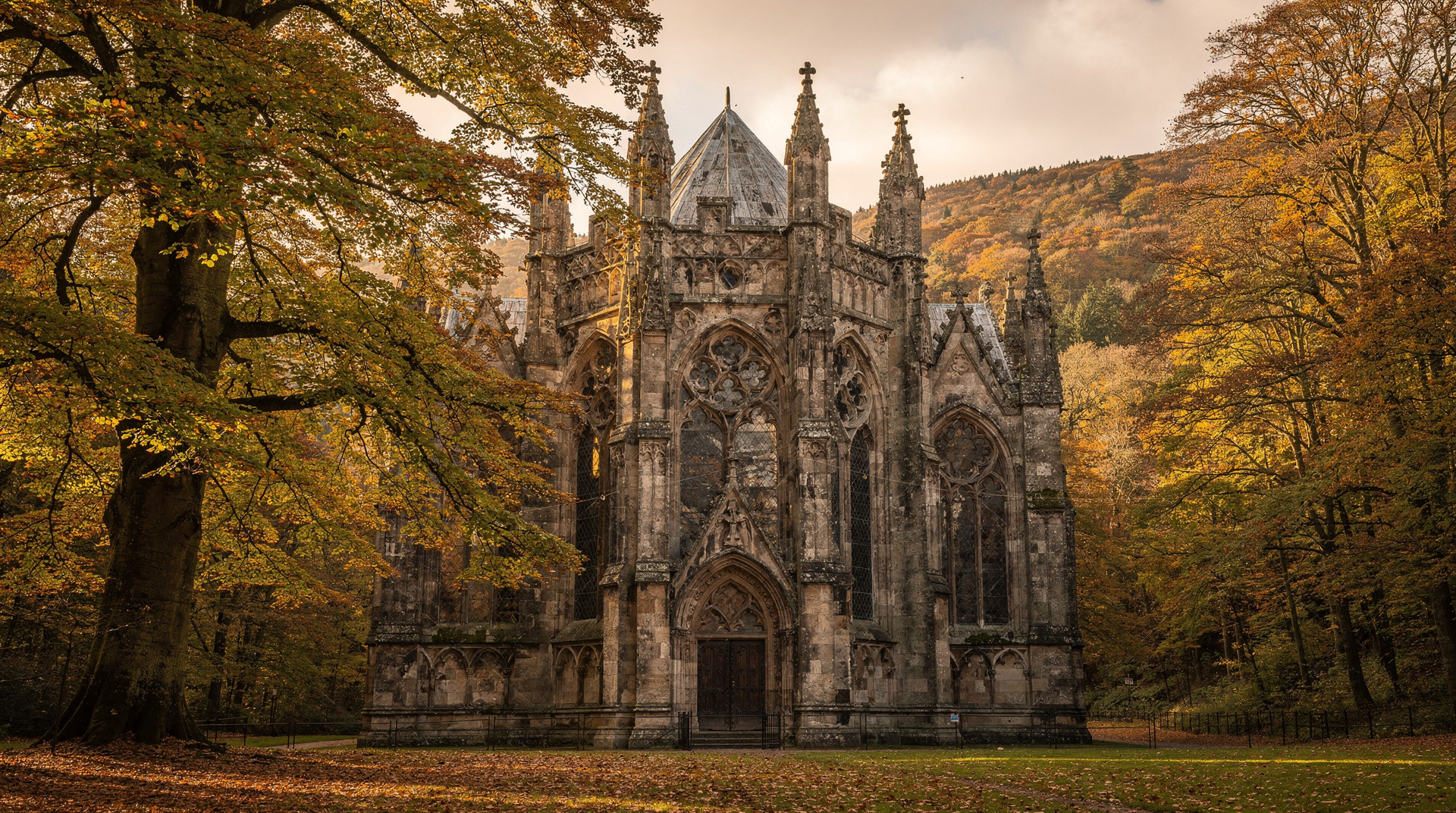
The ruins of St Andrews Cathedral sit at the eastern end of North Street, overlooking the sea. Before the Reformation destroyed it in 1559, this was the largest cathedral in Scotland and the centre of Scottish Christianity — the most powerful ecclesiastical site in the country. What remains are the east gable wall, the south precinct wall, and a scattering of architectural fragments, but the scale of the ruins gives a clear sense of the building’s original ambition: over 100 metres long, it would have dominated the medieval skyline visible from miles at sea.
The adjacent St Rule’s Tower (built circa 1130) is worth climbing for the views over the town and coast — 156 steps to a platform that gives a clear picture of how St Andrews is laid out. Entry to the cathedral grounds and tower is free (Historic Environment Scotland). Allow 45-60 minutes.
St Andrews Castle
A five-minute walk north of the cathedral, the castle sits on a rocky headland above the sea with a genuine siege history: Cardinal Beaton was murdered here in 1546, triggering a prolonged siege by Reformers. The underground bottle dungeon and siege mine (a tunnel dug by besieging forces, countered by a tunnel dug by the castle’s defenders — both survive) are genuinely compelling. Entry: £10 adults online (£11 at the gate), £5 for children aged 7-15. Allow 30-45 minutes.
The old course and golf history
The 18th hole green of the old course is visible from the town centre, with the Royal and Ancient Golf Club’s clubhouse framing the view to the right. Golf has been played on this ground since the 15th century; St Andrews is as close to a pilgrimage site as the sport has. Non-golfers can walk the footpath alongside the course (the West Sands path) and appreciate the setting without booking a tee time.
The British Golf Museum, opposite the clubhouse, gives a thorough account of the game’s history. Entry: see the current price on the R&A World Golf Museum’s official site. Worth an hour if you have any interest in the sport. If you want to actually play the old course, advance booking is required (the ballot for tee times is competitive); this is a specialist option for serious golfers.
The West Sands
The wide beach stretching north of the town is one of the finest in Fife — a long, flat expanse of pale sand with the town silhouetted behind and the North Sea horizon ahead. In summer it is popular with students and day visitors; outside peak season it is often near-empty. The coastal path continues north toward the Eden Estuary, which is an RSPB reserve with good birdwatching in autumn and winter.
St Andrews town and the university
Founded in 1413, St Andrews University is the oldest in Scotland and the third-oldest in the English-speaking world. The main quadrangle of St Salvator’s College on North Street is open to visitors; the chapel has a late-medieval interior and the memorial to Protestant martyr Patrick Hamilton (burned here in 1528) is marked in the cobblestones at the entrance. The town itself is pleasant for walking — small enough that you will cover most of it on foot without noticing, with good independent shops and cafés concentrated on Market Street and South Street.
A word on prices: St Andrews is a university town with a well-heeled visitor trade, and prices reflect this. Seafood and pub food are well-priced; the more tourist-oriented cafés on South Street are not. The Anstruther Fish Bar in the nearby fishing village of Anstruther (20 minutes south by car) is considered one of the best fish and chip shops in Scotland — worth combining if you are driving.
Combining St Andrews with the East Neuk
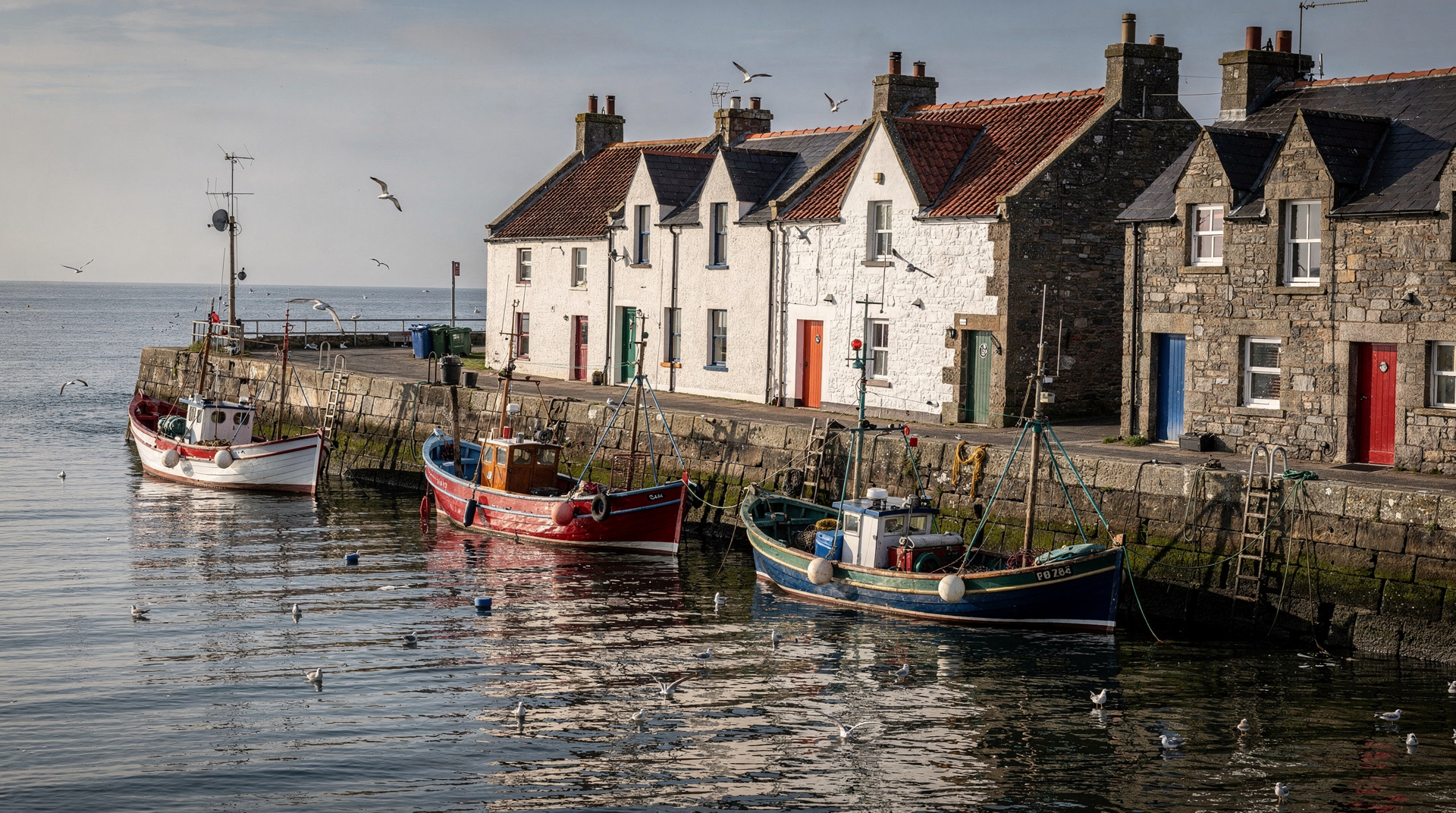
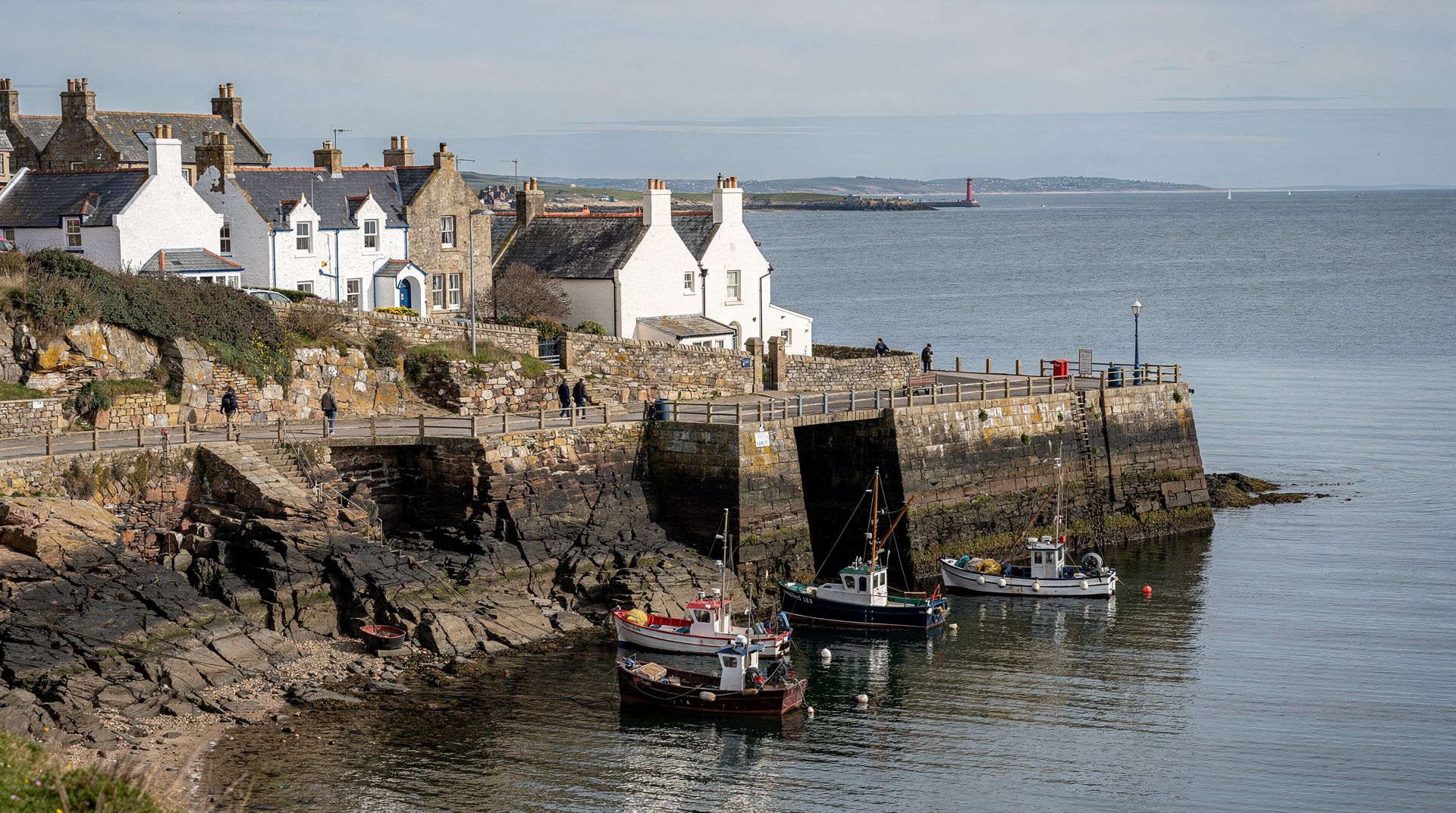
The East Neuk of Fife is the collection of small fishing villages along the Fife coast between St Andrews and Largo Bay. The villages — Crail, Anstruther, Pittenweem, St Monans, Elie — have retained their medieval harbour layouts and painted stone buildings remarkably well. Crail is the most photogenic, with a small harbour backed by crow-stepped gables. Anstruther has the Scottish Fisheries Museum (excellent, entry £11) and the fish and chip shop mentioned above.
By car from St Andrews: Crail is 10 miles south on the A917 coast road (20 minutes). Anstruther is 13 miles (25 minutes). The full coastal route from St Andrews through all the East Neuk villages to Elie takes about an hour without stops, longer with.
The St Andrews, Falkland Palace and East Neuk of Fife tour adds Falkland Palace (a Renaissance royal palace in a small inland town, formerly a favourite of the Stuart monarchs) to the coastal circuit — a worthwhile addition if you have a full day.
St Andrews and golf: what non-golfers need to know
Even if you have no interest in playing golf, understanding why St Andrews is significant to the sport adds depth to a visit.
Golf has been played on the linksland at St Andrews since at least 1552 — the provost of the town signed an agreement that year granting citizens the right to play on the links (low-lying coastal grassland). The Royal and Ancient Golf Club of St Andrews was founded in 1754 and acted as the governing body for golf worldwide until 2004. The 18th hole of the old course — the “home hole” — sits in the centre of town with the clubhouse at one end and the Swilcan Bridge (an ancient stone bridge over the Swilcan Burn) at the other. The bridge is where golfers have been photographed marking their final approach for over two centuries.
The links ground itself — seven public courses managed by the St Andrews Links Trust — occupies the coastal strip immediately north and west of the town. Walking along the West Sands beach, you look inland at golfers on the old course from the other side. The coastal path north of the old course gives the best casual view of the layout without needing to enter the course itself.
A note on crowd behaviour: The 18th green area is fenced during and around competitions; at other times it is accessible to foot traffic on public paths. It is not acceptable to walk on the course itself or to interfere with play. The Swilcan Bridge is accessible for photographs outside play times.
The University of St Andrews: what to see
St Andrews University (founded 1413) is woven into the fabric of the town — the main buildings are not a separated campus but integral parts of the medieval street grid. Several things worth seeing:
St Salvator’s College: Founded 1450, the college’s quad and chapel face North Street. The chapel has an excellent gothic interior and the tomb of Archbishop Kennedy (the founder). Outside the main gate, the initials “PH” are set into the cobblestones — the spot where Patrick Hamilton was burned as a Protestant martyr in 1528. Student folklore holds that stepping on the letters will cause you to fail your examinations; students walk around them.
The Scores: The cliff-edge road running east from the castle along the North Sea shore gives good views down to the rock pools and the sea below. St Andrews Aquarium (small but good for families with children) is on this road.
The West Port: The remaining medieval city gate at the south end of South Street, an 18th-century rebuild of an earlier gate. St Andrews was a walled city until the Reformation; the West Port is one of very few surviving elements of the medieval infrastructure.
The East Neuk in detail
The five main fishing villages of the East Neuk are each worth knowing about before choosing which to visit:
Crail: The most northern of the East Neuk villages, with a small harbour of considerable beauty — crow-stepped gabled buildings, stone piers, and lobster creels stacked along the quayside. The village has maintained more of its medieval character than the larger East Neuk settlements. Small café and lobster hut by the harbour.
Anstruther (Anster): The largest East Neuk village and the most visitor-ready. The Scottish Fisheries Museum (the best museum of its kind in Scotland, entry £11) gives an excellent account of Scottish fishing history from the Viking period to industrial trawling. The Anstruther Fish Bar on the main street is considered one of the best fish and chip shops in Scotland; queues are the norm at lunch.
Pittenweem: An active fishing port that has maintained a working character alongside its tourist appeal. The artist community based around Pittenweem Arts Festival (held annually in August) has given the village an arts identity. The 16th-century tolbooth and the harbour are the visual high points.
St Monans: Known for the windmill ruins on the point and the Parish Church of St Monan, positioned almost at the sea edge — one of the most dramatically situated churches in Scotland.
Elie: The southernmost of the East Neuk villages, with the best beach and the most gentrified character. The sailing club and the Ship Inn (which has a cricket pitch on the beach and runs impromptu matches in summer) give it a distinctive character.
For a full day covering the East Neuk and St Andrews, the best day trips guide sets the route in the context of other Edinburgh options.
Photographing St Andrews
St Andrews rewards photographers with a genuine range of subjects within a small area: the cathedral’s east gable framed against the sea, the Swilcan Bridge on the 18th hole, the crow-stepped harbour buildings of Crail and Anstruther if you extend into the East Neuk, and the long, flat expanse of West Sands at low tide with the town skyline behind.
Early morning light works particularly well for the cathedral ruins, since the low sun catches the remaining stonework at an angle that brings out its texture, and the crowds that build through the day have not yet arrived. The harbour villages of the East Neuk photograph best in the softer light of late afternoon, when the stone buildings take on a warmer tone than the flatter midday light gives them.
St Andrews vs other Edinburgh day trips
Visitors deciding between day-trip options often weigh St Andrews against Glasgow or Loch Lomond. The comparison is genuinely apples-to-oranges: Glasgow offers a second major Scottish city with a different character and excellent galleries and shopping; Loch Lomond delivers Highland scenery within a shorter drive than the true Highlands; St Andrews delivers concentrated medieval history, golf heritage, and a genuine beach in a single compact, easily walkable town. For visitors choosing only one, St Andrews suits those who want a slower, more contemplative day rather than a scenery-driven or city-hopping one.
Families and children in St Andrews
St Andrews works well for families, more so than some of the wilder Highland day trips. The West Sands beach gives children room to run, the St Andrews Aquarium on The Scores is a reliable indoor option if the weather turns, and the castle’s siege tunnels have obvious appeal for children old enough to enjoy a bit of atmospheric spookiness. The family day trips from Edinburgh guide includes St Andrews among its recommended options, with notes on pacing a day trip around younger children’s stamina — a genuine consideration given the train-plus-bus journey each way.
Fitting St Andrews into a wider Edinburgh itinerary
St Andrews works well as the day-trip component of a three-day Edinburgh visit — pair a morning in Edinburgh exploring the Old Town with an afternoon at Edinburgh Castle, then a day in St Andrews, then a day for New Town, Leith, and Arthur’s Seat.
If you are interested in Scottish history, the Edinburgh, St Andrews and Fife four-day itinerary builds in more time in Fife, including the East Neuk and Dunfermline Abbey (the burial site of Robert the Bruce). See also the best day trips from Edinburgh guide for how St Andrews compares with other options.
For Outlander fans, the area around St Andrews appears in various episodes, and the series makes use of Fife locations. The Outlander day trips guide covers film locations in the region.
Practical details
Opening hours: St Andrews Cathedral and Castle are open year-round (closed 25-26 December); winter hours (October to March) are 10am-4pm; summer (April-September) 9:30am-5:30pm.
Crowds: St Andrews is busy in summer (July-August) but rarely overwhelming — it is a working university town, not a pure tourist destination, and the visitors spread through the town rather than queuing at a single bottleneck. The cathedral and castle are most crowded between 11am and 2pm; arrive at opening time for a quieter experience.
Food: The best independent lunch options are on Market Street. The Doll’s House restaurant is well-regarded for lunch. For budget, the café in the British Golf Museum is serviceable. If visiting the East Neuk, the Anstruther Fish Bar is worth the detour.
UK ETA: Visitors affected by the UK Electronic Travel Authorisation requirement should ensure they have applied before travel. See the UK ETA guide.
Currency: All transactions in St Andrews are in pounds sterling (£), not euros. Card payment is universally accepted. See the Edinburgh currency guide.
Weather: Fife’s coastal weather can differ from Edinburgh’s, particularly wind off the North Sea at the West Sands and along the cathedral grounds. Check the Edinburgh weather guide before you travel and pack a windproof layer even on an otherwise mild day — the exposed cathedral and castle grounds catch the sea wind directly.
Frequently asked questions about the St Andrews day trip
Is St Andrews worth visiting as a day trip from Edinburgh?
Yes — St Andrews is one of Edinburgh’s best day trips, particularly for visitors interested in medieval history, golf, or simply a beautiful coastal town that feels authentically Scottish rather than touristy. It is compact enough to cover in half a day but rewarding enough that a full day is easy to fill.
Do I need a car for St Andrews?
No. The train to Leuchars plus the connecting bus gets you to the town centre in about 65-70 minutes total from Waverley, and St Andrews itself is extremely walkable. A car is useful if you want to combine the town with the East Neuk fishing villages, but not essential for the town alone.
Can I play golf at St Andrews?
Yes, but the old course requires advance booking via the ballot (apply online at least 48 hours ahead) and is heavily oversubscribed in summer. There are six public courses in the Links Trust complex with varying difficulty and price; the Strathtyrum Course is the most accessible for casual visitors. Greens fees start around £30-40 on the less famous courses and reach several hundred pounds for the old course.
How long should I spend in St Andrews?
Three to four hours covers the cathedral ruins, castle, golf museum, and a walk along West Sands comfortably. A full day allows you to add the East Neuk villages (car or tour required) and explore the town more thoroughly. Do not rush the cathedral ruins and castle — they reward time.
What is the best way to combine St Andrews with Edinburgh?
Make it a day trip on day two or three of your Edinburgh visit. Catch the 8am or 9am train from Waverley, spend the morning and afternoon in St Andrews, and return by early evening. Alternatively, book the East Neuk tour if you prefer a guided circuit that covers more ground.
Is St Andrews busy in summer?
More so than in winter, but not overwhelmingly so. July and August bring significant numbers of visitors but the town is large enough to absorb them without the queuing pressure of Edinburgh Castle or Loch Ness. The main bottleneck is the cathedral and castle between 11am and 2pm — arrive early or visit in the late afternoon.
Where should I stay if I want more than a day trip in St Andrews?
Most visitors base themselves in Edinburgh and day-trip, which this guide covers, but St Andrews itself has good accommodation if you prefer an overnight stay — useful around graduation weekends or golf tournaments when Edinburgh-day-trip crowds coincide with town events. See the where to stay in Edinburgh guide for the comparison if you are deciding between basing yourself in Edinburgh versus Fife for a longer Scotland trip.
Is St Andrews better as a half-day or full-day trip?
A half-day (3-4 hours) comfortably covers the cathedral, castle, and a walk along West Sands. A full day is worthwhile if you add the East Neuk villages or want unhurried time at the golf museum and university buildings — the town rewards a relaxed pace rather than a checklist approach.
Top experiences
Bookable activities with verified prices and instant confirmation on GetYourGuide.