Edinburgh weather guide: what to expect every month
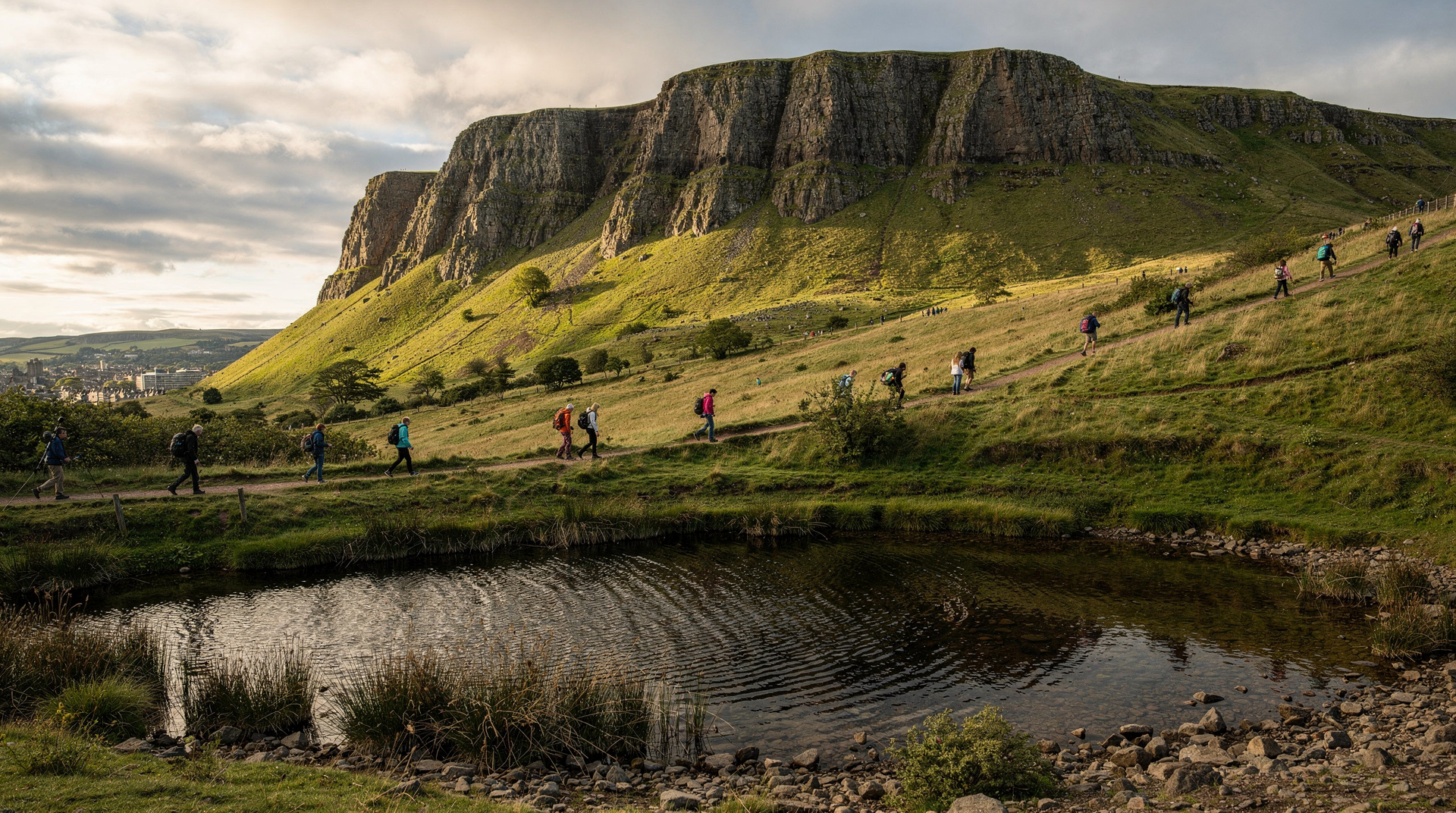
Edinburgh: guided hike to Arthur's Seat and Holyrood Park
What is the weather like in Edinburgh?
Edinburgh is cool and variable year-round. Summers average 14-18°C with long daylight; winters 3-8°C with short days. Rain can fall any month. A waterproof jacket is essential in all seasons. May-June and September have the best balance of warmth, daylight, and dryness.
| Coolest months | December-February, 3-8°C |
| Warmest months | June-August, 12-19°C |
| Driest months | April-July |
| Wettest months | October-January |
| Best balance | May-June, September |
| Essential item | Packable waterproof jacket, any month |
Understanding Edinburgh’s climate
Edinburgh sits on the east coast of Scotland at approximately 56°N — further north than Moscow, further north than Copenhagen, and nearly as far north as Juneau, Alaska. This matters for two reasons: the daylight extremes are significant (from 18 hours of light at midsummer to 7 hours at midwinter), and the climate, while moderated by the North Atlantic, is fundamentally northern.
Edinburgh’s east coast position makes it drier than the western side of Scotland (Glasgow and the Highlands west of Rannoch Moor receive nearly double Edinburgh’s rainfall). This relative dryness is one of Edinburgh’s practical advantages for visitors — you will encounter rain but not the near-constant wet of the western seaboard.
The central characteristic of Edinburgh weather is variability. All four seasons can occur in a single day: a crisp, sunny morning, a wet afternoon, a blustery early evening, and a clear cold night. This is not an exaggeration — locals operate with exactly this understanding and dress accordingly. Planning for weather variability, rather than hoping for a stable forecast, is the correct approach.
Edinburgh weather at a glance: the whole year in one table
| Month | Avg temp | Rain | Daylight | Crowd/value note |
|---|---|---|---|---|
| Jan | 2-7°C | Regular, ~55mm | 7-8h | Quietest, lowest prices |
| Feb | 3-8°C | Similar to Jan | 9-10h | Brightening, still quiet |
| Mar | 4-10°C | Variable | 11-12h | Good value, unreliable spring |
| Apr | 6-13°C | Lower | 13-14h | Mild, blossoms, Easter surge |
| May | 9-16°C | Drier | 15-16h | Best-value pleasant month |
| Jun | 12-18°C | Low-moderate | 17-18h | Finest month, long light |
| Jul | 13-19°C | Driest month | 17-18h | Peak summer, warmest |
| Aug | 13-19°C | Moderate | 15-17h | Fringe — crowds dominate, not weather |
| Sep | 11-16°C | Moderate | 13-15h | Local favourite, golden light |
| Oct | 8-13°C | Increasing | 10-12h | Good value, clocks change |
| Nov | 5-10°C | Regular | 8-9h | Transition to winter, markets open |
| Dec | 3-8°C | Moderate | 7-8h | Christmas atmosphere, shortest days |
This table condenses the month-by-month detail below into a single planning reference. For a broader view of when to visit beyond weather alone (crowds, festivals, prices), see the best time to visit Edinburgh guide.
Month-by-month weather breakdown
January
Temperature: 2-7°C average; down to -2°C in cold spells
Rain: Regular; around 55mm for the month
Daylight: 7-8 hours; sunset as early as 3:40pm early in the month
Snow: Occasional in the city; more reliable on the Pentland Hills
Character: Edinburgh’s coldest, darkest month. Grey, often wet, occasionally crisp and beautiful when frost or light snow arrives. Lowest tourist numbers; highest cosy-pub-with-whisky value.
February
Temperature: 3-8°C average
Rain: Similar to January; February is often the driest winter month
Daylight: 9-10 hours; sunset by 5:30pm by month’s end
Character: Gradually brightening. The first snowdrops appear in Princes Street Gardens in mild Februaries. Still cold but the arc toward spring becomes perceptible.
March
Temperature: 4-10°C average
Rain: Variable; transitional month
Daylight: 11-12 hours; sunset approaching 7:30pm by month’s end
Character: Spring is beginning but unreliable. Can deliver everything from glorious sunny walking days to late snowfall on the Pentlands. Daffodils usually appear in Princes Street Gardens in March. A good value month — fewer tourists, lower prices, but genuinely improving conditions.
April
Temperature: 6-13°C average
Rain: Edinburgh’s drier season begins; rainfall typically lower than winter
Daylight: 13-14 hours; sunset after 8:30pm
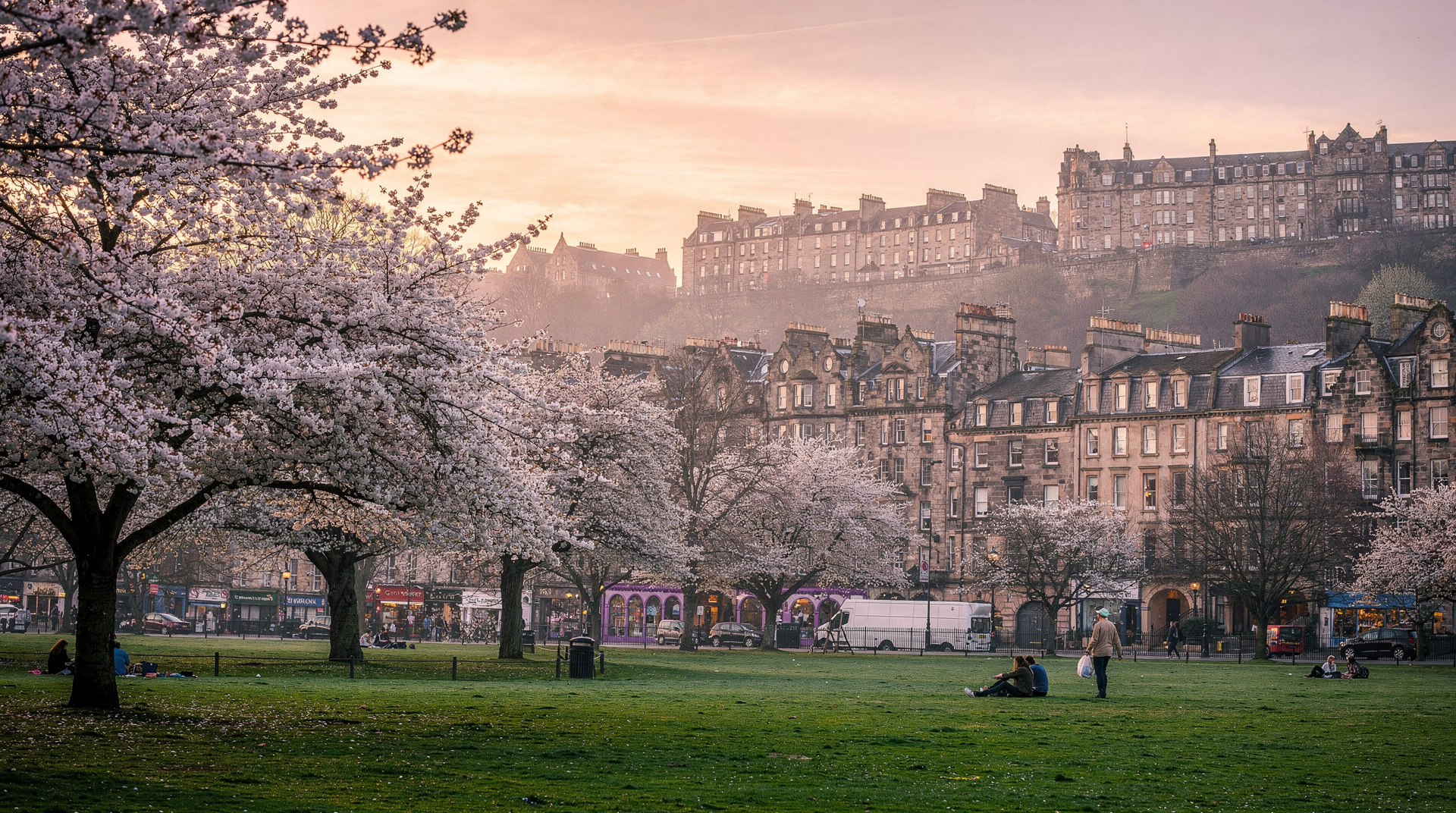
Character: Spring proper. Mild, increasingly sunny, with the city’s Georgian and Victorian parks looking their best. Easter brings a brief school holiday surge. Edinburgh’s blossoms (cherry trees in Meadows and throughout the New Town) are often at their best in mid-late April.
May
Temperature: 9-16°C average
Rain: One of Edinburgh’s drier months
Daylight: 15-16 hours; sunset approaching 9:30pm
Character: Edinburgh at its most reliably pleasant. The long evenings begin to be extraordinary — sitting outside a Stockbridge cafe at 8:30pm in full evening sunshine is specifically May Edinburgh. Crowds are building but manageable. Best value for the conditions: accommodation still reasonable, no Fringe premium.
June
Temperature: 12-18°C average
Rain: Low-to-moderate; June is often the sunniest month
Daylight: 17-18 hours; sunset past 10pm near the solstice (21 June)
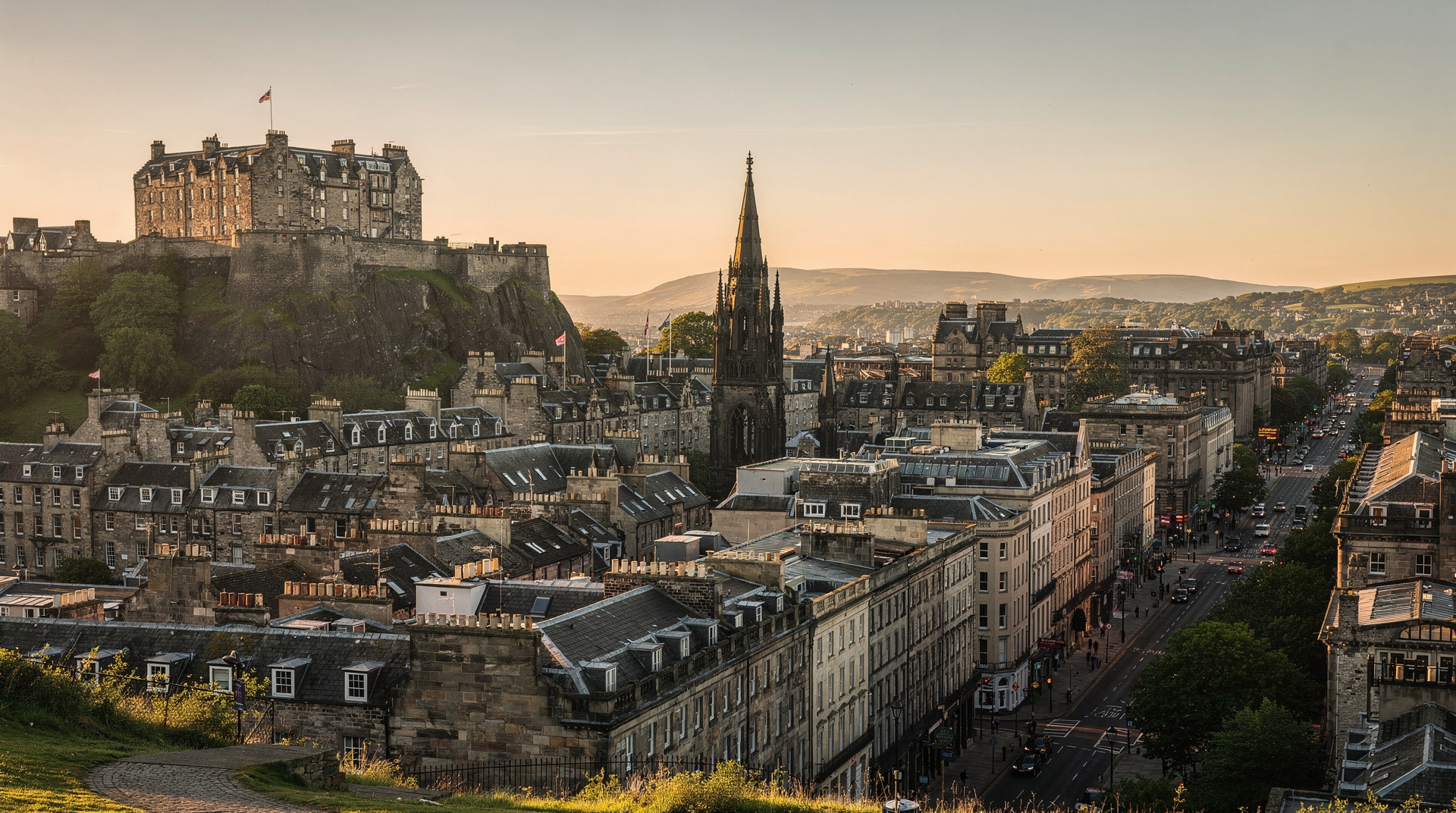
Character: Edinburgh’s finest month. The light quality in June, with the sun low in the sky even at midday and golden for extended periods, is unlike anything in southern Europe. The Beltane Fire Festival energy carries over from late April. An Arthur’s Seat guided hike in June, with the full panorama in extended evening light, is Edinburgh at its best. See the dedicated Edinburgh in summer guide for how to plan around the light.
July
Temperature: 13-19°C average
Rain: Edinburgh’s driest month on average
Daylight: 17-18 hours, decreasing toward the month’s end (sunset back to 9:30pm by 31 July)
Character: Peak summer. Edinburgh’s warmest month on average. Warm days (occasionally 20-22°C) alternate with cooler, cloudier periods. School holidays bring more families from late July. Fringe preparation begins the second half of the month.
August
Temperature: 13-19°C average
Rain: Moderate; August is not unusually rainy but occasional heavy showers occur
Daylight: 15-17 hours; sunset from 9pm falling to 8pm by month’s end
Character: The Fringe. Warm enough for outdoor street performances; long enough days for evening shows after a full day of sightseeing. August Edinburgh weather is often excellent but can include cool, wet spells. The general comment: weather is not August Edinburgh’s main variable — the Fringe is.
September
Temperature: 11-16°C average
Rain: Moderate; increasing slightly from August
Daylight: 13-15 hours; sunset from 8pm falling to 7pm
Character: Post-Fringe Edinburgh. Often the most golden month — clear autumn days with extended afternoon light, fewer crowds, the city quieter and more itself. September is the local favourite for good reason. The heather on the hills around Holyrood Park turns purple-brown in September. Day trips to the Highlands benefit from autumn colour in the glens.
October
Temperature: 8-13°C average
Rain: Increasing; autumn rain becomes more regular
Daylight: 10-12 hours; sunset from 7pm to 5pm
Character: Autumn proper. The clocks change at the end of October (back one hour for winter), which causes sunset to leap from about 6:30pm to 5:30pm overnight. October is good value — quiet, atmospheric, with Halloween events in the final week and the first signs of the Christmas market preparations.
November
Temperature: 5-10°C average
Rain: Regular; one of the wetter autumn months
Daylight: 8-9 hours; sunset from 5pm to 4pm
Character: Edinburgh’s transition to winter. Short, often grey days but the Christmas markets opening in mid-November add warmth. Edinburgh’s cobblestones in November rain can be slippery — proper footwear matters.
December
Temperature: 3-8°C average
Rain: Moderate; occasional frost
Daylight: 7-8 hours; shortest days of the year
Character: Christmas markets, Hogmanay preparations, and Edinburgh’s atmospheric winter darkness. Floodlit castle against a dark sky. Long warm evenings in pubs. The practical constraints (short days, cold, wet cobblestones) are offset by genuine seasonal atmosphere. The Edinburgh in winter guide and the Hogmanay guide cover the specific logistics of visiting in this window.
What Edinburgh weather means practically
Rain frequency
Edinburgh receives approximately 700mm of rain per year — spread fairly evenly across months but with drier summers (May-August) and wetter winters (October-January). This compares to London (600mm), Paris (640mm), and Glasgow (1000mm). Edinburgh is wetter than London and Paris but not dramatically so. What matters is frequency: rain in Edinburgh often comes in showers rather than sustained downpours, meaning a waterproof and the ability to duck into a cafe or attraction is the standard approach.
The waterproof rule: A packable waterproof jacket is the single most important item to bring to Edinburgh in any month. On sunny days it lives in your bag; on rainy days it transforms your experience from miserable to entirely fine.
The wind factor
Edinburgh is an exposed city — the castle sits at 130 metres above sea level, Calton Hill is 100 metres, and Arthur’s Seat reaches 251 metres. The wind on these elevated points is frequently strong and can make effective temperatures 5-8°C colder than the thermometer reading. “Feels like” temperature in Edinburgh is an important concept.
A clear, sunny day in October with a temperature of 10°C and a 30 km/h wind from the west will feel close to 4-5°C on the castle esplanade. Dress for wind chill, not just the air temperature.
Snow in Edinburgh
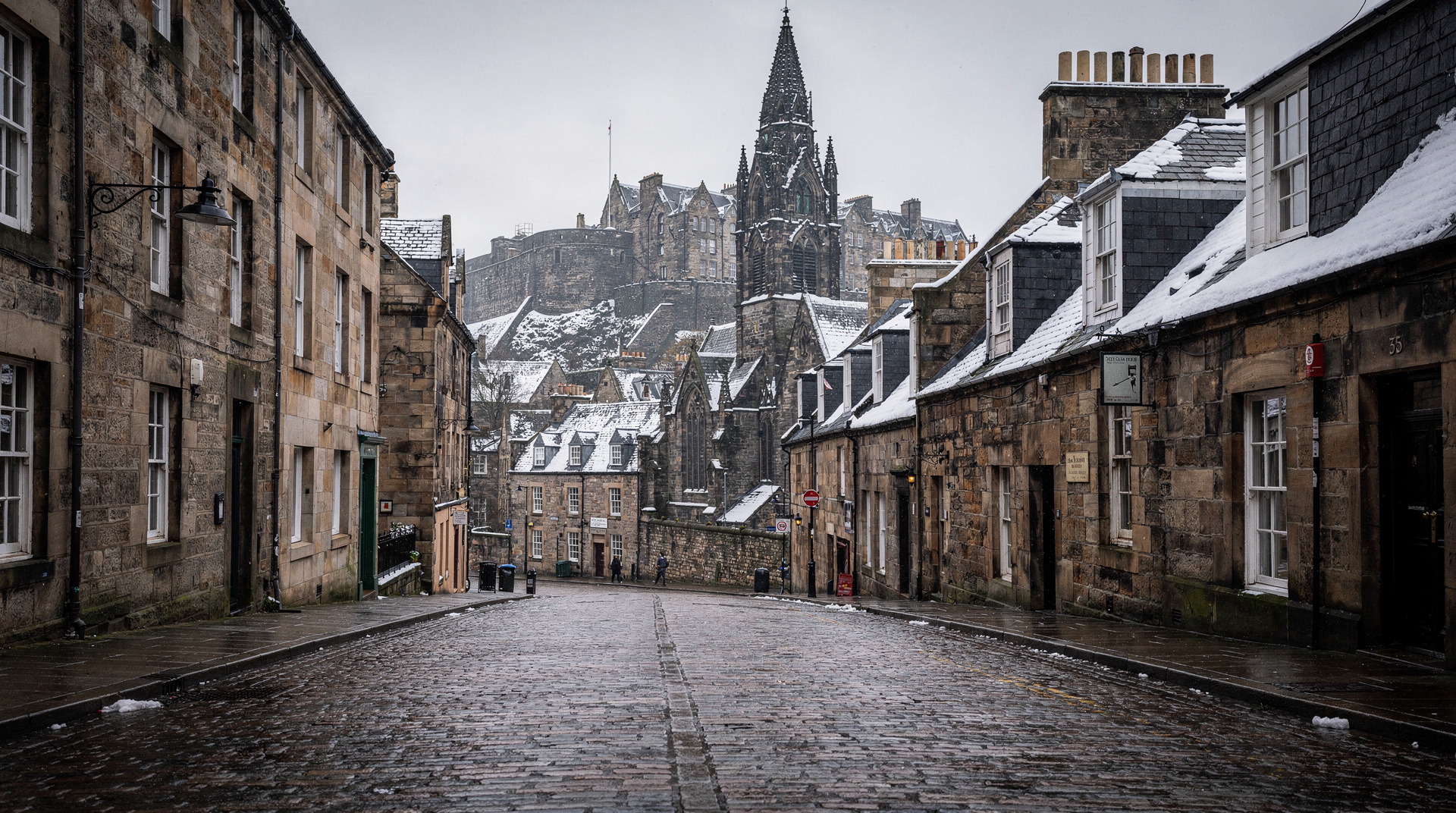
Snow falls in Edinburgh most winters, but significant accumulation in the city centre is not reliable. Typical city centre snowfall amounts to a few centimetres that may last a few days before melting. The Pentland Hills south of the city get more substantial and reliable snow. If you are visiting in January-February and snow falls, Edinburgh looks extraordinary — the castle on its rock with snow on the battlements is genuinely spectacular.
Snow on Edinburgh’s cobblestones is a significant safety consideration. The Old Town closes and the Royal Mile become treacherous in snow and ice. Wear boots with grip; be cautious on steep stairs (the closes connecting different levels of the Old Town can be particularly icy).
What to pack for Edinburgh by season
Spring (March-May):
- Waterproof jacket (essential)
- Warm mid-layer (fleece or light down)
- Comfortable walking shoes with grip
- Light gloves and hat for early spring
- Sunscreen for May
Summer (June-August):
- Lightweight waterproof (packable)
- T-shirts and light layers
- Light jumper or cardigan for evenings
- Walking shoes or trainers with grip
- Sunscreen (genuinely needed in June-July)
- Sunglasses
Autumn (September-November):
- Waterproof jacket (heavier than summer)
- Warm mid-layer
- Walking boots or good shoes with grip
- Warm hat and light gloves from October
- Scarf
Winter (December-February):
- Waterproof winter coat
- Warm hat, gloves, scarf (non-negotiable)
- Thermal base layer for outdoor activities
- Waterproof walking boots with grip (for cobblestones in ice/snow)
- Good warm socks
Weather and specific activities
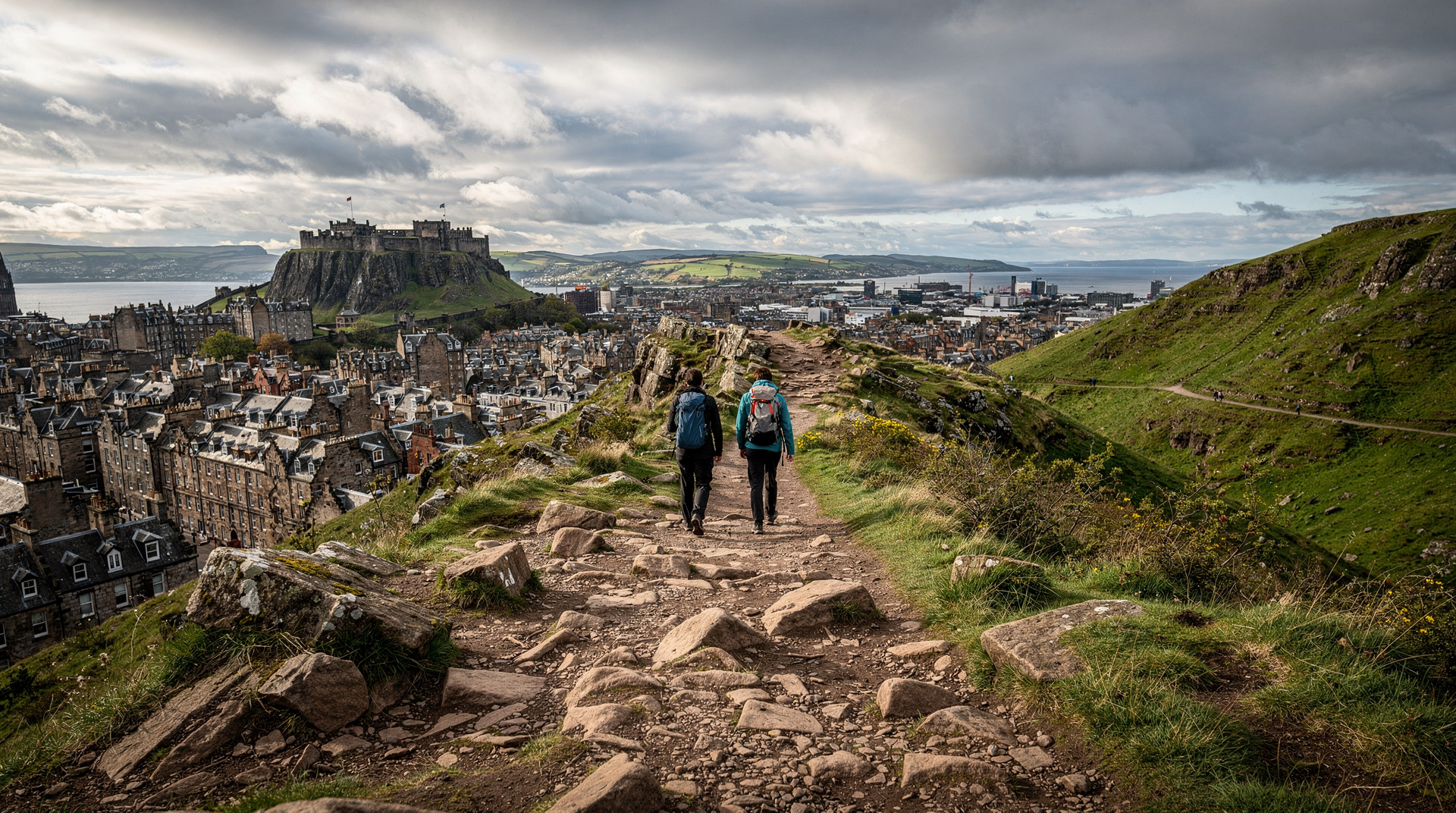
Arthur’s Seat: Can be done safely in any season with appropriate gear. The main risks are wind (strong enough in winter to affect balance on exposed sections) and icy paths in winter. The views are best on clear days; cloud and mist can entirely obscure the summit. In summer: go in the evening. In winter: go midday.
Castle visits: The castle esplanade is exposed and catches wind from all directions. Even in summer, the wind at the top of the castle can be cold. Always bring a layer, regardless of what the forecast says.
Day trips: The East Coast of Scotland (Edinburgh, Fife, East Lothian) has the driest weather in Scotland. Day trips west to the Highlands generally encounter more cloud and rain the further west you go. A clear day in Edinburgh does not guarantee clear weather at Loch Ness (3+ hours west); the Western Highlands have a different microclimate from the east. Check the Loch Ness day trip guide and the Glencoe day trip guide for what to expect once you’re west of the central belt.
Reading an Edinburgh forecast like a local
Edinburgh forecasts on standard weather apps can be misleading because they average conditions across the whole city, which spans sea level to over 250 metres in elevation within a few kilometres. A forecast of “light rain, 12°C” for Edinburgh can mean dry and mild on Princes Street while Calton Hill or Arthur’s Seat sit in cloud with driving rain and a noticeably lower “feels like” temperature. Locals check the forecast for “feels like” rather than air temperature, and treat any forecast beyond three days as a rough guide rather than a plan.
The Met Office app and the Norwegian yr.no service are both more reliable for Edinburgh’s microclimates than generic international weather apps, which tend to smooth out the city’s genuine hour-to-hour variability. If you are planning an outdoor day — a walk up Arthur’s Seat, a visit to the Royal Mile, or a day trip into the Highlands — check the morning of, not just the week before.
Frequently asked questions about Edinburgh weather
Does it rain a lot in Edinburgh?
Edinburgh is wetter than London but not dramatically so. Rain falls throughout the year, with summer (May-August) typically drier than autumn-winter. The key is that Edinburgh rain tends to come in showers rather than sustained downpours, and a waterproof jacket means it rarely ruins a visit. Days of continuous heavy rain exist but are the minority.
What is the hottest it gets in Edinburgh?
Edinburgh’s summer temperatures rarely exceed 22-24°C. Occasional heat waves (25-28°C) occur every few years — in 2023 Edinburgh saw brief spells above 25°C. These are the exception, not the rule. Edinburgh is cool by southern European summer standards.
Is Edinburgh colder than London?
Yes, by approximately 2-3°C on average throughout the year. Edinburgh’s latitude (56°N vs London’s 51°N) and its northern maritime position mean it runs consistently cooler. In winter, Edinburgh is noticeably colder than London and snow is more common.
What is Edinburgh’s windiest month?
January and February tend to be the windiest months, with Atlantic weather systems bringing strong westerly winds. Summer is generally calmer. However, Edinburgh can have windy days in any month — the exposed hilltops (castle, Calton Hill, Arthur’s Seat) amplify whatever wind is present.
Is the weather different in Edinburgh versus the Scottish Highlands?
Significantly different. Edinburgh’s east coast position makes it drier and sunnier than the Western Highlands. Inverness and the north are wetter; Glencoe and the west coast are substantially wetter (over 2000mm per year in places). A clear day in Edinburgh for a day trip to Glencoe may still involve rain in the glen itself. Factor this into expectations for Highland day trips.
Does Edinburgh ever get warm enough for outdoor dining?
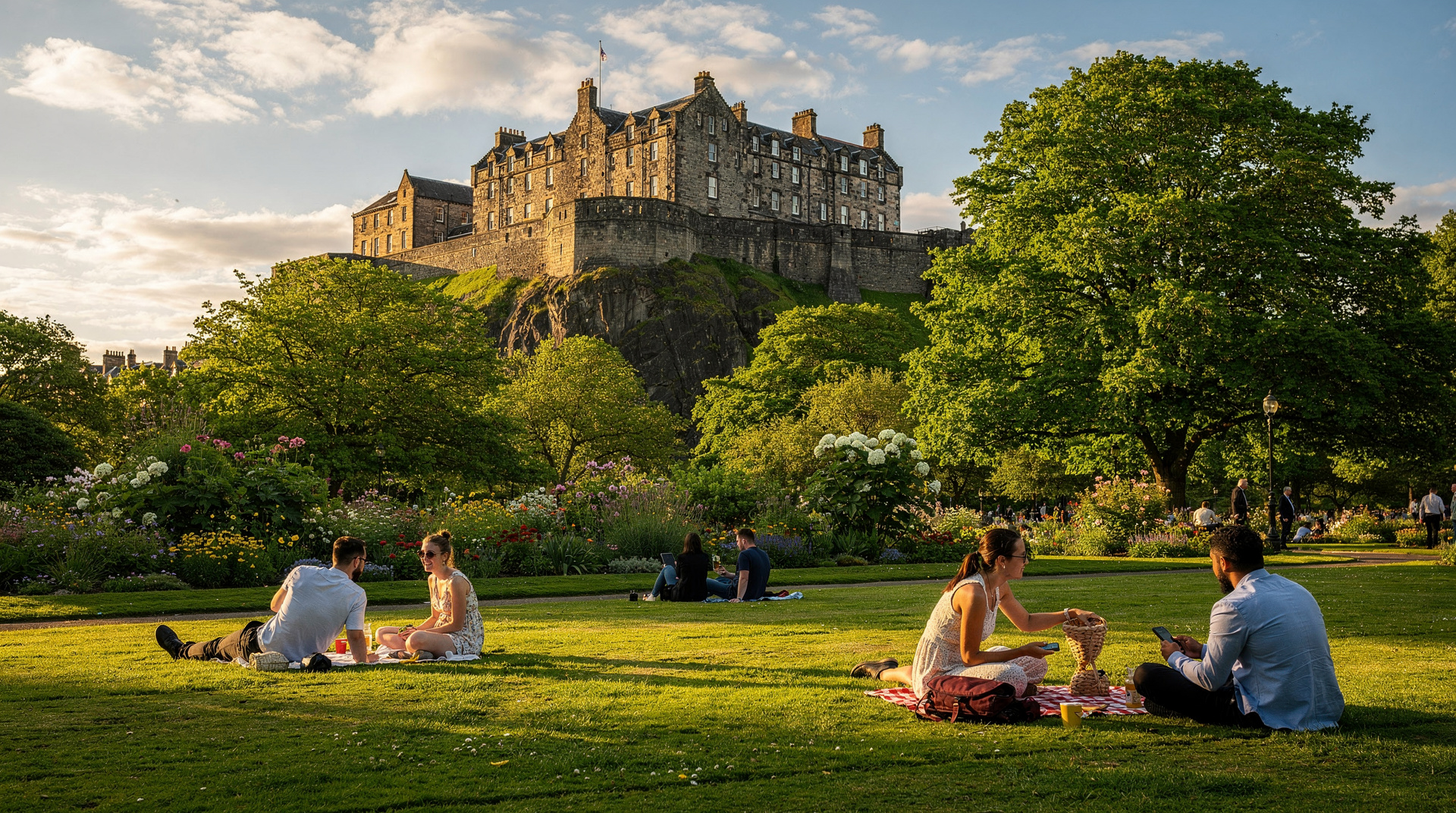
Yes — Edinburgh has a genuine outdoor cafe and restaurant culture from May through September. A warm, sunny June or July afternoon on a Stockbridge or Leith terrace is genuinely pleasant. The key is that “warm enough for outdoor dining” in Edinburgh typically means 14-18°C with a light layer handy — not 25°C shorts-and-sunglasses weather.
What should I pack if I only bring one bag?
A packable waterproof jacket, layers you can add or remove through the day, and comfortable shoes with grip for cobblestones. This combination handles the vast majority of Edinburgh weather scenarios in any season — see the month-by-month packing lists above for specifics.
Is Edinburgh weather worse than the rest of Scotland?
No — it is generally better. Edinburgh’s east coast position makes it one of Scotland’s driest and sunniest cities, comparable to or better than most of the country. Glasgow and the west coast receive substantially more rain, and the Highlands (particularly Glencoe and the far west) are wetter still. See the Edinburgh vs Glasgow guide for a fuller comparison.
Top experiences
Bookable activities with verified prices and instant confirmation on GetYourGuide.