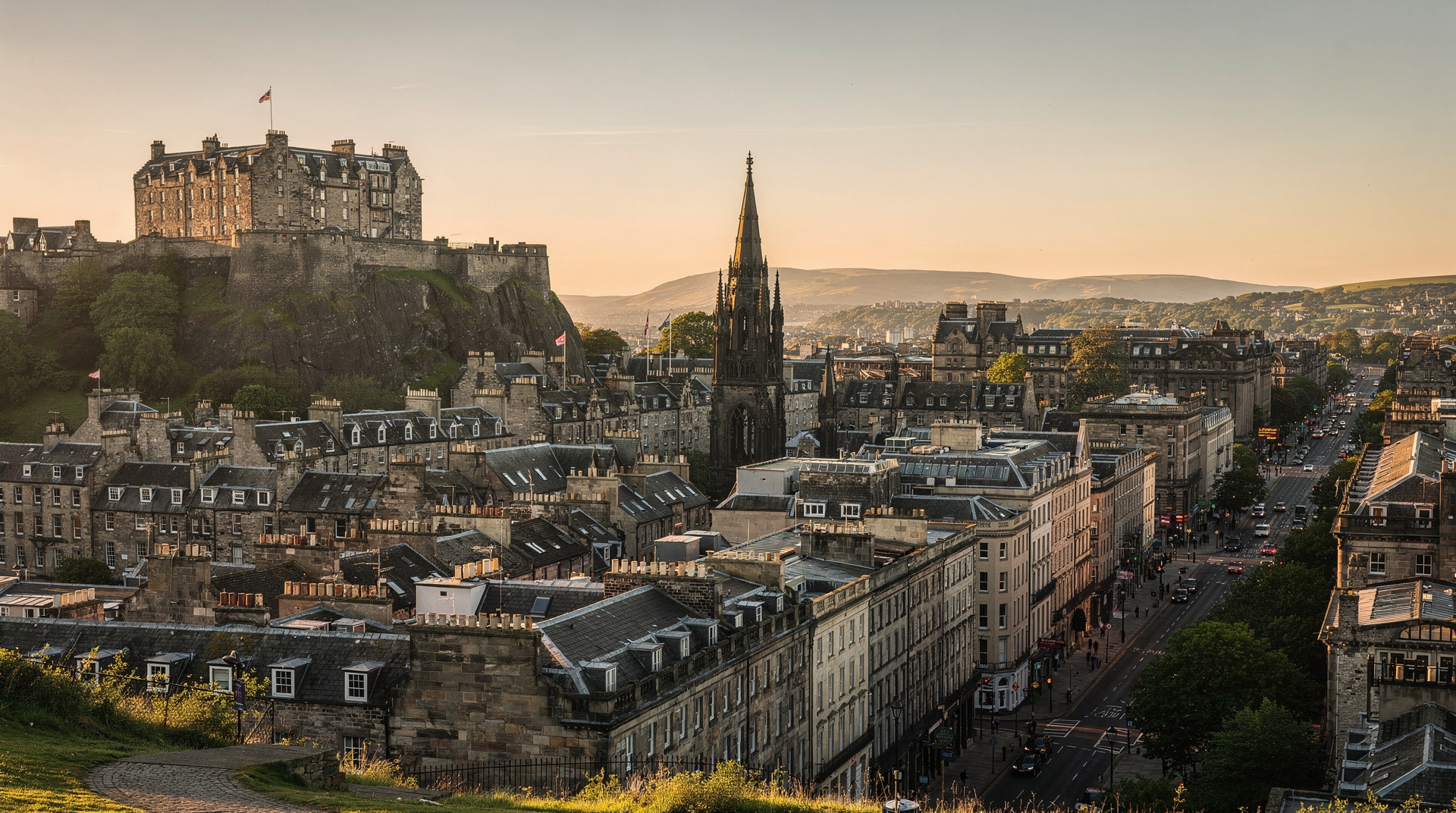
Edinburgh in summer: what to expect and how to plan
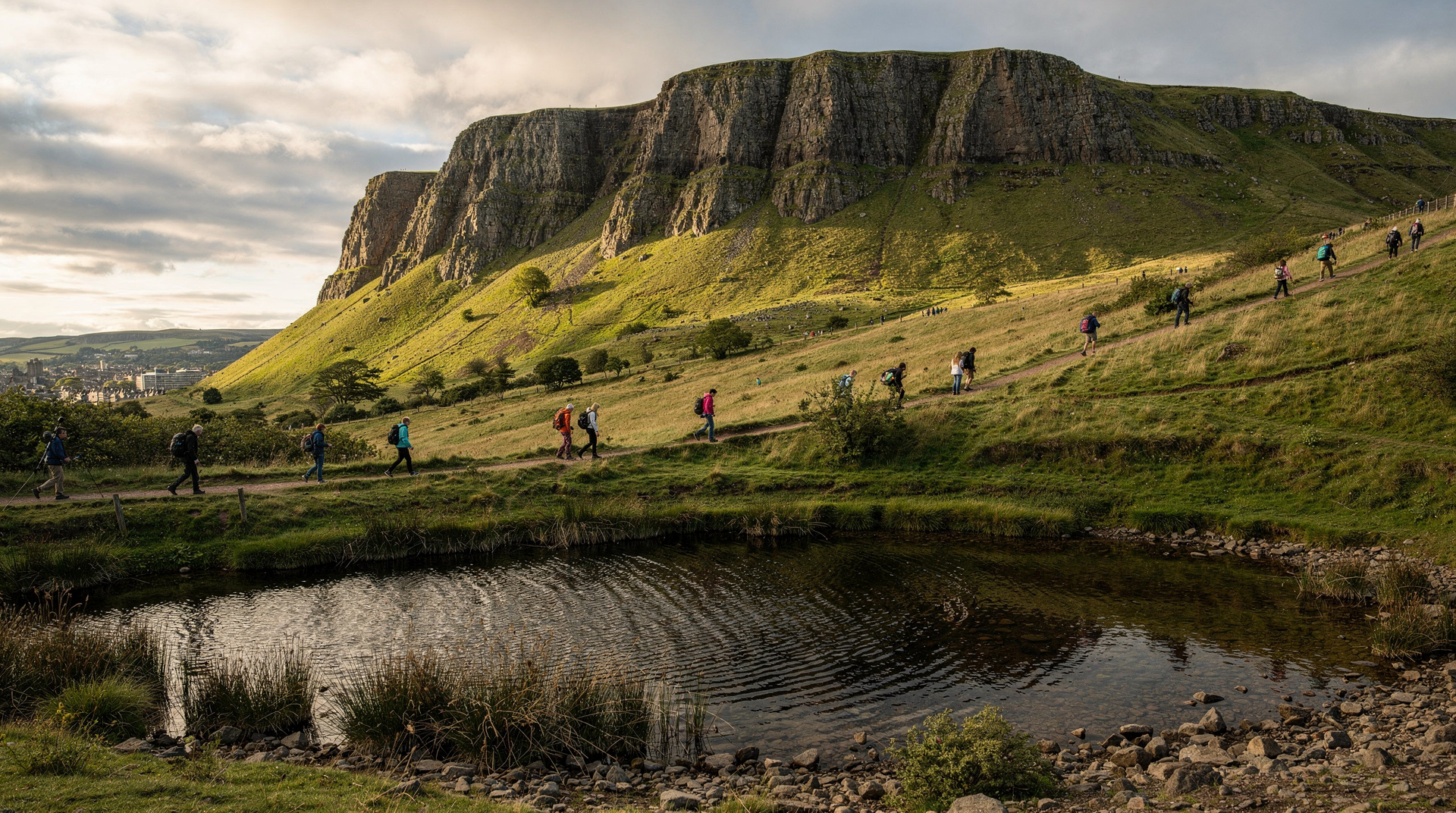
Edinburgh: Arthur's Seat sunset hike
What is Edinburgh like in summer?
Edinburgh in summer is vibrant and long-daylit, with excellent weather in June-July. August is dominated by the Fringe and Tattoo — extraordinary arts festival but very crowded and expensive. Plan well in advance for August; June and September are more relaxed alternatives.
| Where | city-wide; Royal Mile and Old Town busiest in August |
| Cost | mid-range hotel £120–£160 in June, £150–£250+ in August |
| Time needed | any length; 4-5 days covers a good summer visit |
| Getting there | train or flight into Edinburgh; walkable centre |
| Best time | June for weather-to-crowd balance, August for festival energy |
Edinburgh in summer: the full picture
Summer in Edinburgh peaks dramatically in August but runs across four months that each have a distinct character. June is arguably the finest month the city offers: long daylight, warm enough to sit outside, manageable crowds, and the whole summer ahead. July is busy and building toward the Fringe. August is the Fringe itself — the world’s largest arts festival, and a genuine phenomenon — combined with the Royal Edinburgh Military Tattoo. September is the post-Fringe calm that regulars treasure.
Understanding the difference between these months is the key to planning a summer visit that meets your expectations rather than colliding with them.
June — Edinburgh at its finest
June gives visitors the best of Edinburgh without the August premium. Weather averages 14-17°C with genuinely sunny days increasing toward the solstice. The daylight in June is extraordinary for anyone from southern Europe or elsewhere south of 55°N — sunset approaching 10pm on the longest days, with the sky remaining light well past that. The long evenings add hours to exploration that simply do not exist at other times of year.
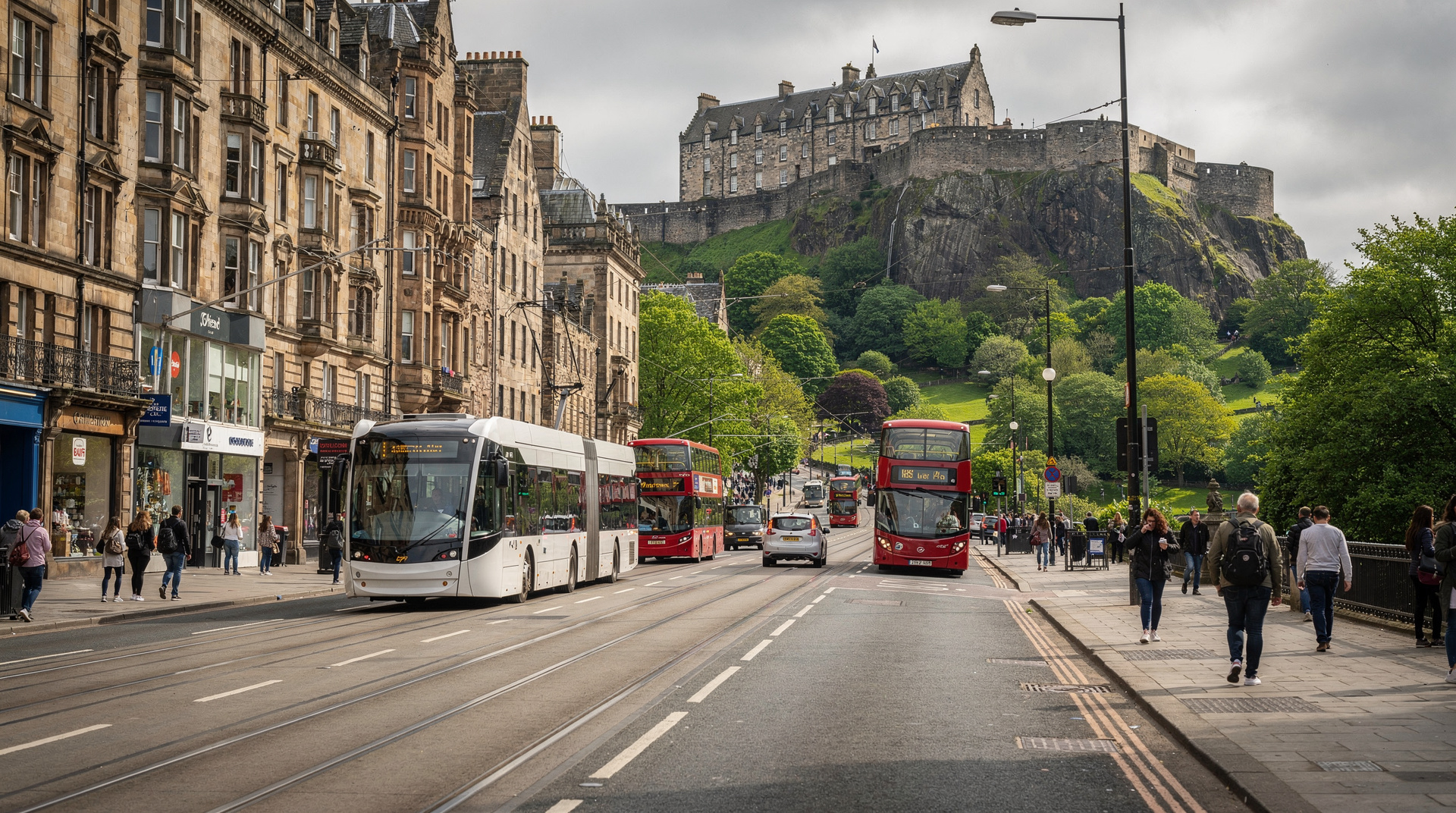
The Royal Mile in June is lively but navigable. Edinburgh Castle queues are busy but not August-level overwhelming. Day trips to the Highlands benefit from the best weather of the year and the most light — a June day trip to Loch Ness or Glencoe gives you both the Highland scenery and the evening light on the return that shorter-day months can’t match.
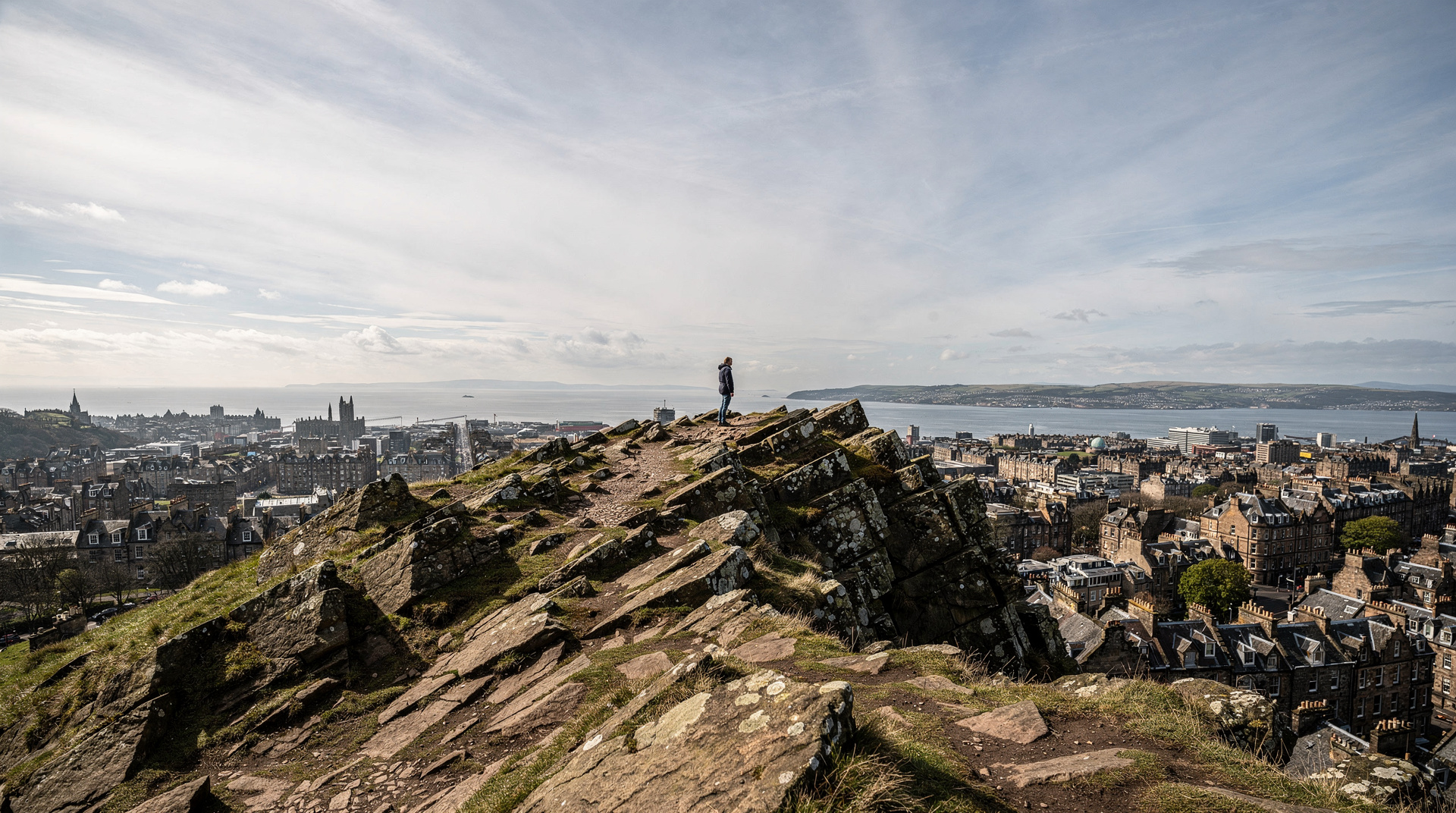
Arthur’s Seat in June: The summit hike in June is the most rewarding time of year. An Arthur’s Seat sunset hike in June, with sunset after 10pm, is one of Edinburgh’s finest experiences. The heather hasn’t browned, the light is golden, and the views extend on clear days to the Highlands. The Holyrood and Arthur’s Seat guide covers the routes.
Prices in June: Mid-range hotel rooms run £120-160. Accommodation is available without six-month-ahead booking. Restaurants can usually be booked a day or two in advance. The whole city feels generously open.
July — summer peak builds
July is Edinburgh’s second busiest month after August. English school summer holidays begin in the third week of July (Scottish council school holidays vary, often starting in late June). This means mid-July onward sees significantly more families and school-age visitors.
The practical differences from June:
- Hotel prices begin rising from mid-July, often reaching £150-250 for mid-range rooms
- Popular restaurants require further-ahead booking
- Edinburgh Castle queues are longer, particularly afternoons
- The August Fringe preparation begins — scaffolding and venue construction appears from mid-July
July weather is typically good — average 15-18°C, with warm sunny days interspersed with Scottish rain. It is the driest month in Edinburgh’s calendar on average. The long evenings (sunset after 9pm in early July) continue through the month.
The Fringe build-up: Many Fringe acts do preview performances in Edinburgh in July — often cheaper tickets, smaller audiences, and the chance to see shows before reviews appear. Checking the Fringe programme for July previews is a good budget strategy.
August — the Fringe and Tattoo
August in Edinburgh is a singular experience. The Edinburgh Festival Fringe, running from the first weekend of August to the last Sunday, is the world’s largest arts festival by number of performances. In a typical year: over 3,000 shows, 250-plus venues, and nearly 1,000 companies from across the world presenting comedy, theatre, dance, circus, opera, spoken word, and everything that falls between and outside those categories.
What the Fringe actually looks like:
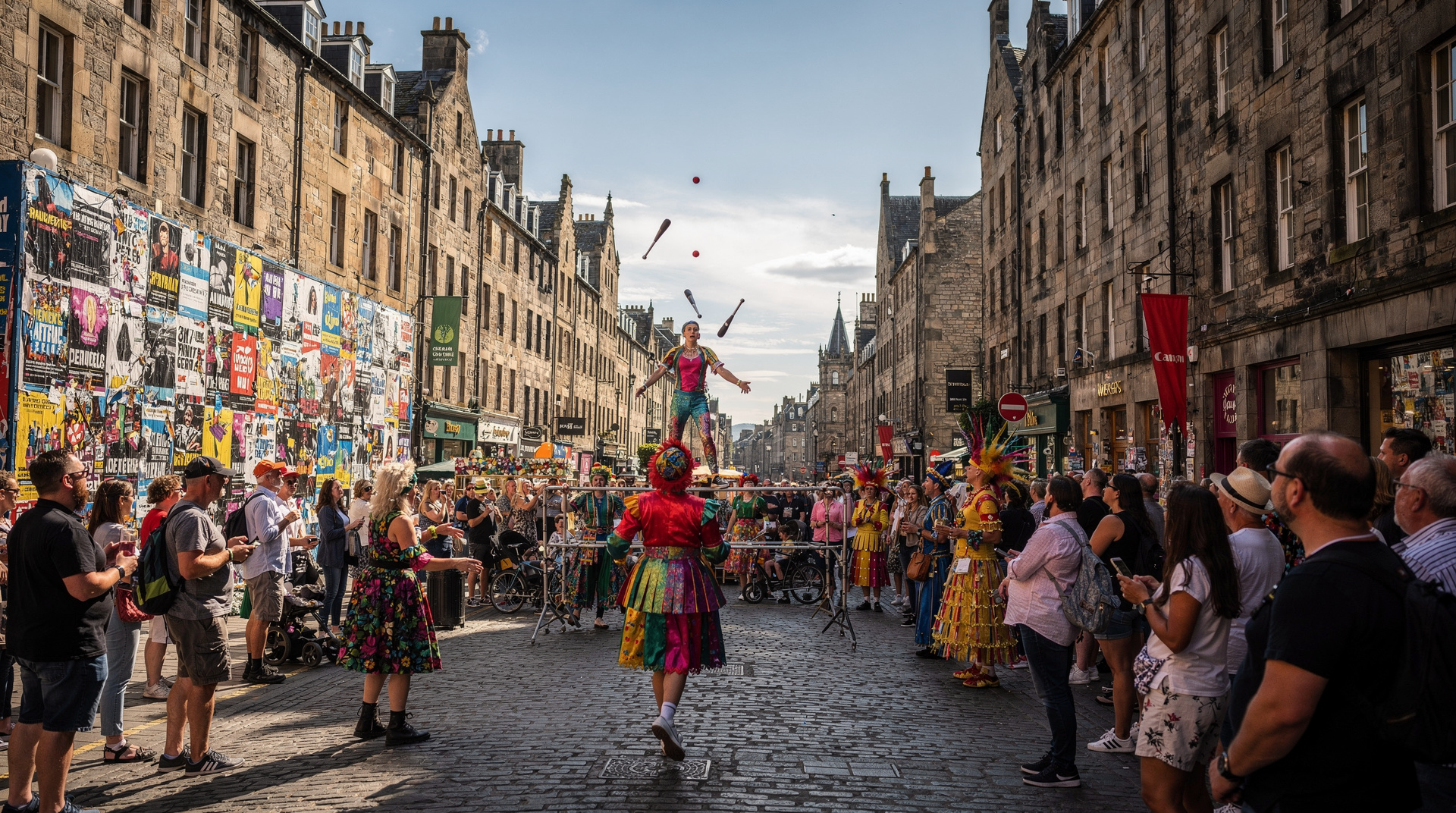
- The Royal Mile between the castle and the High Street becomes a performance space from late morning to early evening, with artists promoting their shows
- Every pub venue, church hall, converted basement, hotel function room, and purpose-built festival tent in a 2-km radius is hosting performances
- The Meadows has large-scale outdoor productions
- George Square, the Pleasance, the Assembly Hall, and the Underbelly are the main venue clusters
- Tickets range from free street shows to £25-35 for the most popular comedy acts; most Fringe shows are £8-15
The Royal Edinburgh Military Tattoo runs on the castle esplanade on most evenings in August. The Tattoo combines pipe bands, military displays from visiting nations, cultural performances, and dramatic lighting effects against the castle backdrop for 8,000 spectators per evening. It is genuinely spectacular — one of the most atmospheric outdoor events in Europe. Tickets sell out months in advance. See the Tattoo guide for booking strategy.
Other August festivals:
- Edinburgh International Festival (classical music, opera, theatre — the complement to the Fringe rather than a competitor)
- Edinburgh Art Festival
- Edinburgh Book Festival (Charlotte Square)
August logistics: A survival guide for Edinburgh in August covers the practical detail. The summary: book everything far in advance, budget for double normal prices, accept that the Royal Mile will be crowded, and embrace the density rather than fighting it.
What the crowds actually look like: On a Fringe Saturday afternoon, the Royal Mile from the castle esplanade to the High Street is genuinely difficult to walk quickly — it is packed with performers, audiences, and general foot traffic. Outside the immediate Fringe zone, the rest of Edinburgh (Stockbridge, Leith, the Southside, Portobello) is noticeably less dense. The strategy is to spend Fringe show time at venues and evenings in the city, not trying to navigate the Royal Mile at peak times.
The honest calculation for August visitors: An August Edinburgh trip done well costs approximately double the same trip in June, requires much earlier booking, and requires accepting the Fringe as a central organising principle rather than a background event. If you go for the Fringe deliberately — building a programme of shows, immersing in the festival culture — it is one of the world’s great travel experiences. If you go expecting a quiet Edinburgh city break with festival colour on the side, you will be frustrated.
Making the most of summer dining and activities
Eating in summer Edinburgh:
The summer months see Edinburgh’s outdoor seating come fully alive. The best outdoor terraces: the Gardener’s Cottage in the Royal Botanic Garden, several spots in Stockbridge along the Water of Leith, the Shore in Leith on warm evenings. Avoid Royal Mile restaurants year-round for reasons of price and quality; in summer the outdoor garden areas of Stockbridge and Leith are substantially more pleasant.
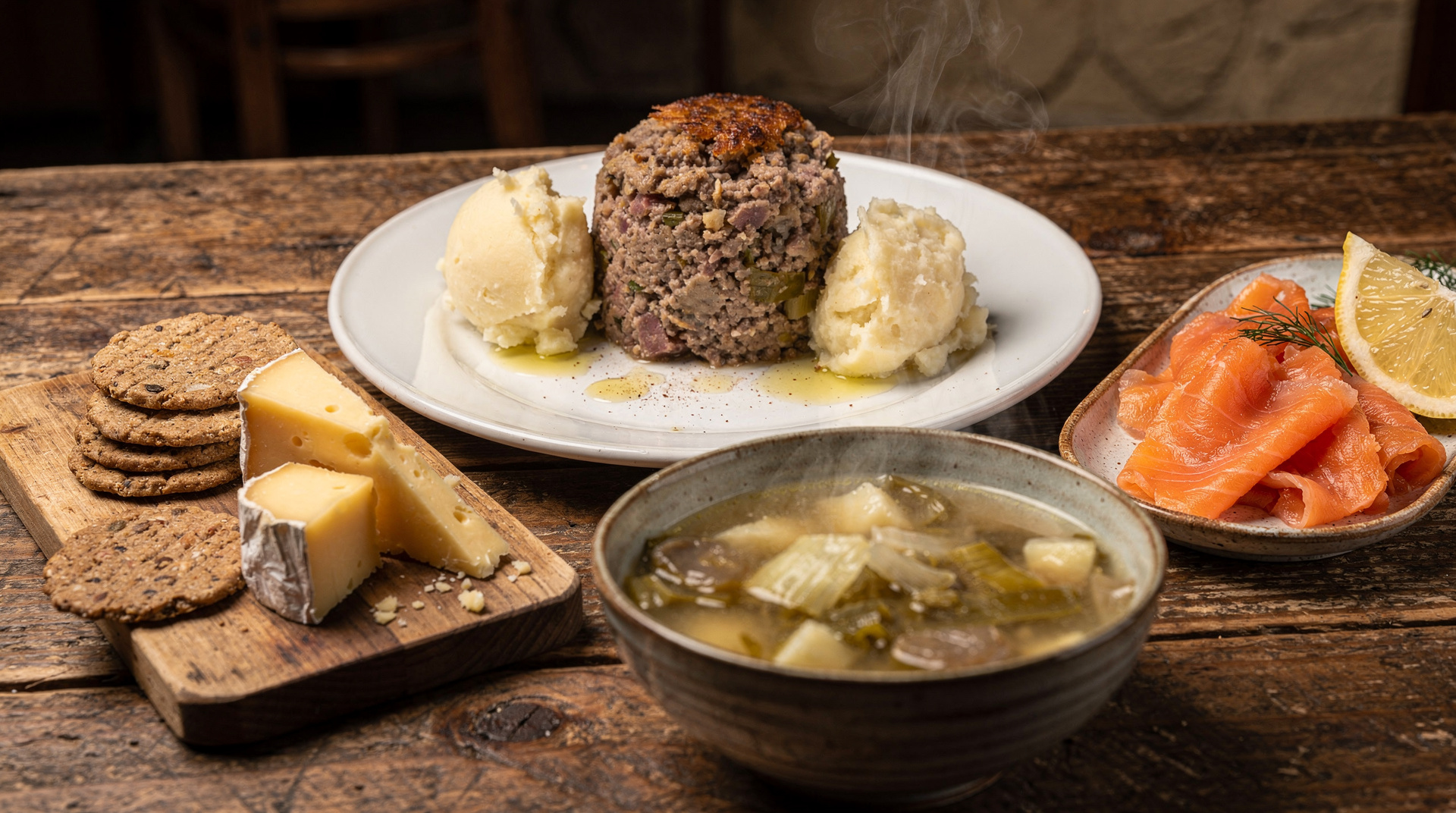
A food tour with haggis, Scotch, and local specialities in summer benefits from the long evenings and the general warmth — these tours walk the Old Town and are best in dry, light weather.
Outdoor activities:
Edinburgh’s long summer days are ideal for outdoor activities that are less practical the rest of the year. Cycling along the Water of Leith to Portobello beach in the evening, swimming at Portobello (the water is never warm, but it is swimmable), hiking the Pentland Hills on a summer morning — all of these work specifically because of the long daylight and improved weather probability.
Day trips in summer: June-August are the most popular months for Highland day trips and the busiest for the major Highlands sites (Loch Ness Monster Exhibition, Eilean Donan Castle). Tours depart daily and book up in advance. If Glencoe is a priority, consider a dedicated Glencoe day trip rather than the standard Loch Ness circuit which spends relatively little time in Glencoe specifically.
Summer packing and weather preparation
Clothes for Edinburgh summer: Edinburgh summer weather is variable regardless of month. A sunny 18°C morning can become a wet 12°C afternoon within hours. Required items:
- Light waterproof jacket (packable — you will carry it more than you wear it on good days)
- Walking shoes with grip
- A layer warmer than you think you need for evenings and for the castle esplanade
- Sunscreen (yes, genuinely — a clear Edinburgh summer day with long hours of lower-angle sunlight can burn)
- Sunglasses
Do not arrive in Edinburgh in summer expecting Mediterranean conditions. The long days are extraordinary; the temperature rarely breaks 22°C; rain can appear any afternoon.
Frequently asked questions about Edinburgh in summer
How busy is Edinburgh in summer?
Edinburgh in June and July is busy but manageable. August is a distinct category — at its peak Fringe weekends, the city centre (particularly the Royal Mile and the Fringe venue areas) is genuinely densely packed. Outside the immediate festival zone, Edinburgh is normal. Attractions, transport, and restaurants require more advance booking in August than any other month.
Is August worth visiting Edinburgh even without Fringe tickets?
Yes, but with caveats. The Fringe atmosphere permeates the whole city even if you have no show tickets — the street performances, the general energy, and the international crowd are all part of August Edinburgh. However, seeing at least a few Fringe shows (tickets available even without much advance planning for less popular acts) converts the experience from ambient to immersive.
When does the Edinburgh Fringe take place?
The Fringe runs from the first Friday in August through the final Sunday in August — typically 25 days. In 2026 the exact dates follow this pattern. The opening weekend and the final weekend are the busiest; mid-week attendance is slightly more relaxed.
Is Edinburgh cold in summer?
Relative to southern European summer, yes. Average summer temperatures in Edinburgh are 14-18°C. Genuinely warm days (22-24°C) occur but are not the norm. Evenings are cool even in July and August. The long daylight compensates for the modest temperatures, and Edinburgh’s architecture and landscape look remarkable in the specific quality of Scottish summer light.
What is the best outdoor experience in Edinburgh in summer?
Climbing Arthur’s Seat in the long evening light (after 7pm in June-July) is the finest free outdoor experience Edinburgh offers. The summit in good weather, with the city and the Firth of Forth spread below and the last sun touching the Pentlands, is an experience that stays with visitors. The guided Arthur’s Seat hike is worthwhile if you want geological and historical context on the way up.
Should I visit in June or wait for August?
It depends on what you want from the trip. Choose June if you want good weather, long daylight, manageable crowds, and half the cost of August — this is the better choice for most first-time visitors who want to actually see and enjoy the city rather than navigate a festival. Choose August specifically and deliberately if the Fringe and Tattoo themselves are the draw — in that case the crowds and cost are the price of admission to something genuinely unique, not a downside to tolerate.
Is Edinburgh in summer like England in summer?
Similar in that both are unpredictable, but Edinburgh runs several degrees cooler on average than southern England and the daylight hours are noticeably longer thanks to the higher latitude. Pack for both rain and sun regardless of which country’s summer you’re used to; Scottish summer weather changes within a single afternoon more often than a single week further south.
Are Edinburgh’s beaches worth visiting in summer?
Portobello beach (30-35 minutes by bus from the city centre) is Edinburgh’s main beach — a wide sandy shore on the Firth of Forth with a traditional seaside promenade. The water is cold (12-14°C even in August), but on a warm sunny day the beach is genuinely pleasant; see the Portobello beach guide for the full picture. North Berwick (35 minutes by train) has better beaches and excellent wildlife boat trips to Bass Rock. Neither is comparable to Mediterranean beaches, but as northern European seaside experiences they are worthwhile.
Month-by-month summer at a glance
| Month | Weather | Crowds | Best for |
|---|---|---|---|
| June | 14–17°C, long daylight | manageable | best overall balance |
| July | 15–18°C, driest month | building | Fringe previews, still calm |
| August | 15–18°C, variable | maximum | Fringe, Tattoo, festival energy |
| September | cooling, still mild | quiet again | post-Fringe calm |
For a deeper dive into how summer compares to the rest of the year, see the Edinburgh weather guide, which covers month-by-month averages beyond just June–September.
Walking and cycling routes that suit the long days
Summer’s extended daylight makes routes that would feel rushed in winter genuinely leisurely. The Water of Leith walkway — following the river from Balerno through Stockbridge and Dean Village down to Leith — is at its best in June and July, when the path is dry underfoot and the evening light lasts long enough to walk a substantial stretch after dinner. Combining a summer evening walk along the river with dinner in Stockbridge or a drink in Leith is one of the simplest and most rewarding ways to use the long days without booking anything at all.
Where to point the long summer days
Summer rewards a loose plan. Pair a morning in the Old Town with an afternoon somewhere quieter, and leave the evening open for the light. Calton Hill is an easy, low-effort viewpoint for the end of the day, and the Pentland Hills guide is the one to read if you want a proper half-day outdoors. If you are building a week around the weather, the best walks in Edinburgh give you plenty of options that cost nothing.
If this is your first visit, the how many days in Edinburgh guide helps you decide how much of the summer window to use, and the Edinburgh 3-day itinerary is a sensible template to bend around the weather. Those arriving in August specifically should also read the Fringe guide before committing to a programme, and the Edinburgh Fringe 4-day itinerary shows how the festival can structure a stay.
For getting between all of this, the getting around Edinburgh guide covers the practical side, and the Edinburgh blog post on fewer crowds is a useful companion if the August crush is putting you off.
Top experiences
Bookable activities with verified prices and instant confirmation on GetYourGuide.