Portobello beach guide
Edinburgh: Ricky's ultimate guided bike tour of the city
Is Portobello beach worth visiting from Edinburgh?
Yes, especially on a sunny day or for a relaxed afternoon. Portobello is a genuine sandy beach with a Victorian promenade, good independent cafés, and a seaside atmosphere that feels pleasantly removed from the tourist pressure of the Old Town. It is 3 miles from the city centre — about 20 minutes by bus.
Top-rated tours to book
Edinburgh’s seaside: genuinely charming or tourist disappointment?
Portobello is Edinburgh’s beach. That is both its entire identity and a phrase that requires some unpacking, because what a beach means in Edinburgh — a city in Scotland, on the southern shore of the Firth of Forth, at a latitude roughly equivalent to Moscow — is necessarily different from what the word suggests in Cornwall or the Algarve.
The beach at Portobello is about a mile of firm grey-golden sand facing north across the Firth of Forth toward the coast of Fife. The water is cold (averaging around 10-12°C in summer, reaching a maximum of perhaps 15-16°C in August). The Victorian promenade is substantial and well-maintained. The suburb behind the beach has independent cafés, a small amusement arcade, and a generally relaxed residential character. On a sunny afternoon in June or July it is genuinely lovely — the light over the Firth is warm, the beach is big enough to absorb the crowds without feeling packed, and the quality of the independent food and coffee scene has improved significantly in recent years.
The honest expectation setting: Portobello is an Edinburgh seaside experience, which means it is quite northern, occasionally magical, and often windier than it looks. It is not a substitute for a Mediterranean beach holiday. It is an excellent afternoon out from the city that gives a completely different perspective on Edinburgh and its geography.
| Where | 3 miles east of the city centre, on the Firth of Forth |
| Getting there | Bus (20-25min) or cycle path from Leith (20-25min) |
| Cost | Free — deckchair hire and Turkish Baths session extra |
| Time needed | Half a day is comfortable; a full day with Leith |
| Best time | June-August for warmth; Sept-Oct for light and quiet |
Getting to Portobello
By bus: Lothian Buses services 26, 42, and 45 run from the city centre to Portobello High Street or Brighton Place, a short walk from the beach. Journey time from the city centre is about 20-25 minutes. The bus is the easiest option for visitors staying in the Old Town or New Town. Buy a day ticket on the Lothian Buses app for unlimited travel.
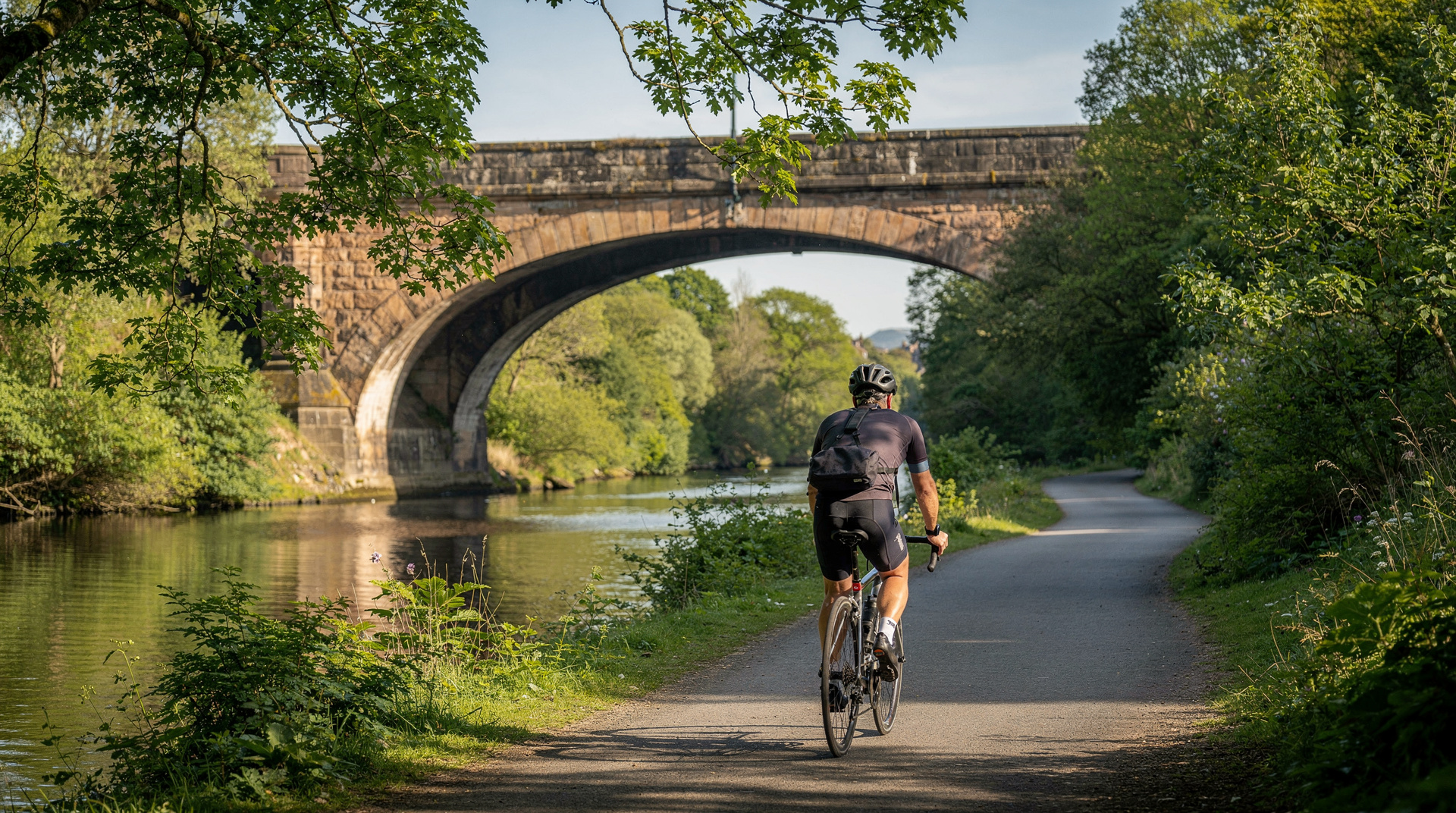
By cycling: The coastal cycle path from Leith Walk to Portobello is almost entirely flat and follows the seafront road for much of its length. The ride takes about 20-25 minutes from Leith. See the cycling in Edinburgh guide for bike hire options. An Edinburgh 3-hour bike tour that takes in Holyrood Park and Portobello combines the volcanic park and the seaside in a single morning.
By car: Portobello is about 20 minutes from the city centre by car, but parking on the promenade and surrounding streets can be limited on sunny weekends. Arrive before 11am or after 4pm to find a space without difficulty.
On foot: It is technically possible to walk from the city centre to Portobello (about 3 miles), but with bus options so convenient there is little reason to do so unless you enjoy long urban walks.
The beach itself
Portobello Beach runs approximately a mile from the mouth of the Figgate Burn in the south to the Seafield area in the north. The sand is firm and reasonably clean — regular water quality reports classify the swimming water as “good” for most of the season, though the Firth of Forth is tidal and conditions can change after heavy rain.
The beach is wide enough at low tide to feel spacious even on a busy summer weekend. Deckchair hire is available on the promenade in summer. There are beach volleyball nets in the central section of the beach, regularly used by local clubs and informal groups. Dogs are permitted on the beach year-round, which means it attracts a consistent population of dog walkers regardless of the weather.
Sea swimming. Wild swimming in the Firth of Forth has grown significantly in popularity since around 2020, and Portobello beach is now a well-established cold water swimming spot. The Portobello Sea Swimming Group, an informal community, swims year-round from the beach. For visitors curious about sea swimming in Scotland, this is a welcoming and not unreasonably dangerous introduction — the water is calm, the beach is accessible, and the community is friendly. The temperature in winter drops to around 5-7°C; most regular swimmers wear wetsuits but some do not.
The promenade and village
The Victorian promenade runs the length of the beach and is wide enough for families walking side by side, cyclists, and casual strollers to coexist without conflict. It has the slightly faded-glamour character of many British seaside promenades — the traditional amusement arcade near the pier is very much a late-twentieth-century relic — but the overall atmosphere is more “pleasant Edinburgh neighbourhood” than “struggling seaside resort.”
Portobello High Street, one block back from the promenade, has undergone a significant upgrade in the quality of its independent businesses over the past five years. Good cafés, a deli, an independent record shop, and several decent restaurants have replaced some of the less inspiring tenants. The Portobello Café (on the promenade itself) and the Hector’s (on Brighton Place) are both reliable for post-beach coffee.
The Turkish baths are part of Portobello Swim Centre, a Victorian municipal baths on the Promenade built in 1898–1901 and run by Edinburgh Leisure. They are an unusual and enjoyable experience for visitors interested in Victorian spa culture. They have been closed for maintenance at times, so check the Edinburgh Leisure website for current availability.
Sea temperature by month
| Month | Approx. sea temp | Swimming without wetsuit |
|---|---|---|
| February | 7-8°C | Not recommended |
| April | 9-10°C | Short dips only, experienced swimmers |
| June | 12-13°C | Manageable for confident swimmers |
| August | 15-16°C | The most comfortable month |
| October | 12-13°C | Cooling again, wetsuit advisable |
| December | 8-9°C | Cold-water swimmers only |
These are averages, and Scottish weather means any given week can run warmer or colder than the seasonal norm. Most casual visitors are happy with a paddle rather than a full swim outside the June-September window; the sea swimming community swims year-round regardless of temperature, generally in wetsuits below about 12°C.
Portobello in different seasons
Summer (June-August): The busiest and most obviously pleasant time. Beach cricket, volleyball, and spontaneous family gatherings happen on sunny weekends. The promenade fills with ice cream eaters and dog walkers. The water quality is at its best and the sea temperature reaches its annual maximum (not warm, but swimable without distress). August coincides with the Edinburgh Festival, which means the city has an unusually high visitor population — Portobello on an August weekend is busy by Edinburgh standards.
Spring (April-May): Quieter, with good visibility over the Firth. The light in May is exceptional — clear northern light over the water with the hills of Fife visible across the estuary. Fewer visitors and a more local, daily-life atmosphere.
Autumn (September-October): The best walking weather for the promenade: crisp air, long golden light in the afternoons, and gradually fewer crowds as the schools return in September. The sea swimming community is particularly active in September when the water has been warmed by the summer.
Winter: Bracing. Portobello in January or February, on a clear cold day with frost on the sand and low sun over the Firth, has a peculiarly beautiful quality. The cafés are warm and largely empty. The beach belongs to dog walkers and cold water swimmers. If you are in Edinburgh in winter and want an hour outside the Old Town, this is excellent.
Combining Portobello with other Edinburgh neighbourhoods
Portobello sits between Leith to the north and the southern Edinburgh suburbs. A good half-day combines a morning in Leith — visiting the Shore, perhaps the Royal Yacht Britannia, and one of the excellent restaurants on The Shore — with an afternoon walk along the coastal path to Portobello. The two neighbourhoods have a complementary character: Leith is more urban and foodie; Portobello is more suburban and beachy.
The cycling route between Leith and Portobello is one of Edinburgh’s best short bike rides: flat, coastal, and connecting two of the city’s most interesting neighbourhoods. See the cycling guide for details of the route and bike hire options.
For families, Portobello combines well with a morning at Arthur’s Seat or the lower walks in Holyrood Park — volcanic landscape in the morning, beach in the afternoon, which gives children and adults a varied and well-paced day.
Frequently asked questions about Portobello beach
Is the water clean enough to swim at Portobello?
In 2026, Portobello beach has a “good” water quality classification under the EU Bathing Water Directive (retained in Scottish law post-Brexit). This is the second-highest category. After heavy rainfall, temporary advisories may be issued due to runoff from the Figgate Burn. The Sepa website (Scottish Environment Protection Agency) publishes real-time water quality data for Portobello. Overall, the water is safe to swim in during normal conditions.
How cold is the sea at Portobello?
Cold. Monthly averages run from around 7-8°C in February (genuinely cold — limiting exposure time without a wetsuit) to a peak of about 15-16°C in August (uncomfortable for prolonged swimming without a wetsuit but manageable for short swims). Regular cold-water swimmers do swim year-round without wetsuits; most occasional swimmers prefer a wetsuit in anything below about 12°C.
Are there lifeguards at Portobello beach?
Portobello does not have permanent lifeguard provision for most of the year. In peak summer (roughly July-August, on weekends) there may be RNLI or council lifeguard presence, but this varies. Swim with awareness of tidal currents and do not swim alone. The Firth of Forth has tidal channels with stronger currents further offshore; the nearshore water at Portobello is generally calm.
Can I walk from Portobello to Musselburgh along the coast?
Yes, the coastal path continues from Portobello promenade through Joppa and into Musselburgh, roughly 2-3 miles further along the coast. Musselburgh has a racecourse, a town centre with cafés, and a bus back to Edinburgh (about 20 minutes). This extension makes a pleasant 4-5 mile round trip or a one-way walk with the bus return.
What are the best cafés near Portobello beach?
The promenade itself has a couple of seafront cafés. The best independent options are one block back on Portobello High Street — look for the Portobello Café, the Espy pub (good for beer and a sea view), and the various newer independents that have opened on Brighton Place. For a full meal, the options in nearby Leith (20-minute bus ride) are significantly better.
Is Portobello a good neighbourhood to stay in during Edinburgh Festival in August?
It is significantly quieter, cheaper, and less congested than the Old Town during the Fringe. Accommodation prices are lower, the beach is a genuine escape from the city’s August intensity, and bus connections to the Old Town are fast. The downsides are the commute to venues (20-30 minutes) and the lack of a walkable venue cluster nearby. For festival-goers who want an affordable base with somewhere to decompress after shows, Portobello is an underrated choice. See the Fringe guide for more accommodation strategy.
Is Portobello beach accessible for wheelchairs and pushchairs?
The promenade is flat and fully accessible, making it easier going than most of Edinburgh’s hilly Old Town. The sand itself is firmer at low to mid tide but there are no beach wheelchairs for hire on site, so plan around the promenade if mobility on sand is a concern. Public toilets near the main car park and several step-free High Street cafés support a comfortable visit.
Do I need a wetsuit to swim at Portobello?
Outside June to September, most visitors find the water too cold for a comfortable swim without one. In peak summer, confident swimmers manage short dips without a wetsuit, though “warm” is relative — the sea temperature by month table above gives a realistic picture. The established local sea swimming community swims year-round, mostly in wetsuits during the colder months.
Portobello’s history: how Edinburgh got a beach resort
Portobello’s name comes from a small fort built in 1742 by a sailor who had served at the Battle of Porto Bello (in what is now Panama), at which the British fleet defeated Spanish forces in 1739. The battle was briefly celebrated as a great victory, and the name Porto Bello was applied to several properties across Britain by returning sailors.
By the early nineteenth century, Portobello had developed as a seaside resort for Edinburgh’s growing population, with bathing machines (horse-drawn cabins wheeled into the sea for modest bathing), a pottery and tile industry exploiting local clay, and later a parade of Victorian entertainments along the seafront. At its Victorian and Edwardian peak, Portobello drew crowds from Glasgow by train and had an outdoor swimming pool (the largest in Europe at the time, opened in 1936, demolished in 1988) that attracted thousands on summer weekends.
The decline of British seaside tourism in the second half of the twentieth century affected Portobello as it affected every comparable resort — the cars arrived, then the cheap Mediterranean flights, and the summer crowds stopped coming. The recent revival of the neighbourhood has been led not by tourism but by Edinburgh residents: young families, artists, and independent business owners priced out of central Edinburgh who have invested in Portobello’s suburban character and its beach.
The Turkish Baths are part of Portobello Swim Centre on the Promenade, a purpose-built public baths built in 1898–1901 as a direct legacy of the Victorian resort period. According to Edinburgh Leisure, a session starts from £10.50 pay-as-you-go, but the baths have been closed for maintenance, so check the Edinburgh Leisure website before you go. The experience is recommended for anyone interested in Edinburgh’s social history as well as those who simply want a very good sauna.
What Portobello feels like at different times of day
Early morning (7-9am): The beach belongs to dog walkers, cold swimmers, and a few early runners. The light over the Firth of Forth at this time — particularly in summer when the sun rises early over the East Lothian hills — has a clarity and gentleness that is genuinely beautiful. The cafés on the High Street open from around 8am.
Midday in summer: The promenade is busy with families. The beach is moderately occupied — never truly packed, by British seaside standards, because the climate limits demand. The ice cream van near the roundabout on the promenade is a fixture.
Late afternoon: The golden-hour light over the Firth of Forth is best in the final 90 minutes before sunset. The beach on a clear September or October afternoon, with the light amber and the water reflecting it, is genuinely lovely. This is the best photography time and often the best swimming time (post-midday warming of the water, though “warming” is relative).
Evening: The promenade empties after sunset. The seafront pubs and restaurants fill with local residents having dinner. The Espy pub on Bath Street, with its seafront terrace, is the main evening destination.
Getting the most from a Portobello visit
The ideal Portobello visit combines two or three of these elements, matched to your interests:
For families: Morning beach time, lunch at the seafront or High Street cafés, optional ice rink visit at the prom, return by bus or cycling.
For walkers: Walk from Leith along the coastal path (about 3 miles), explore the High Street, extend to Musselburgh (3 more miles) and return by bus. Full day, flat, interesting.
For history: Turkish Baths session, walk the promenade understanding the resort history, explore the former pottery and tile-works area (now residential but with remaining industrial features visible in the street names).
For food and drink: Late morning start, coffee at an independent High Street café, lunch at the Espy or another seafront option, afternoon browse of the neighbourhood’s independent shops.
The two-day Edinburgh itinerary includes a Portobello afternoon as a complement to the morning at Arthur’s Seat.
Accessibility and practical notes
The promenade itself is flat, wide, and fully accessible for wheelchairs and pushchairs, making it one of Edinburgh’s more accessible outdoor attractions compared with the hilly Old Town. The beach surface is firmer sand that is generally manageable at low to mid tide, though beach wheelchairs are not available for hire on site — visitors with specific mobility needs should plan around the promenade rather than the sand itself.
Public toilets are available near the main promenade car park, and several of the High Street cafés are step-free. Buggies and wheelchairs travel easily on the Lothian Buses services that serve the area, and the coastal cycle path from Leith is flat throughout, suitable for hand cycles and adapted bikes as well as standard cycling.
Pairing Portobello with the rest of your trip
Portobello works best as a change of pace inside a longer stay rather than as a destination on its own. If you are still deciding how long to spend in the city, the how many days in Edinburgh guide helps you see where a slow seaside afternoon fits, and the Portobello destination page gives a shorter overview of the area.
Getting there is simple, and the trams and buses guide explains how the local network works if you have not used it before. For a wider view of the options, getting around Edinburgh covers walking, cycling and public transport side by side.
Families who would rather not plan the route themselves can join a guided family-friendly cycle along the coast, which keeps the pace relaxed and the logistics in someone else’s hands. More ideas for younger visitors are collected in the Edinburgh with kids guide.
If the weather turns, the Edinburgh weather guide is worth a look before you commit to a beach day, and the Edinburgh in the rain article offers indoor alternatives for the afternoon you swap out.
What to pack for a Portobello visit
Even on a promising forecast, Portobello rewards a layer or two more than you think you need — the wind off the Firth of Forth is a near-constant feature and drops the effective temperature noticeably compared with the sheltered Old Town streets. A windbreak or a solid beach towel, a warm layer for after any swimming, and sun protection for the (admittedly unpredictable) sunny stretches are all worth packing. If sea swimming is on the agenda, a wetsuit is strongly advisable outside the June-September window, and swim shoes help with the sometimes stony sections near the tideline.
Top experiences
Bookable activities with verified prices and instant confirmation on GetYourGuide.