Best walks in Edinburgh
Edinburgh: guided hike to Arthur's Seat and Holyrood Park
What is the best walk in Edinburgh?
Arthur's Seat (2-3 hours, moderate) is the single most rewarding walk: a proper hill summit 10 minutes from the Royal Mile with panoramic views. For a flat riverside walk, the Water of Leith from Dean Village to Stockbridge (45 minutes, easy) is the best city walk. The Pentland Hills are better for a full day.
Why Edinburgh is an exceptional city for walking
Edinburgh is a rarer kind of city. The UNESCO World Heritage Site status covers both the medieval Old Town and the Georgian New Town, and both districts are best understood on foot. But Edinburgh’s walking credentials extend well beyond its historical streets: within the city boundary there is a volcanic hill with a genuine summit (Arthur’s Seat), a river walk through wooded gorges (the Water of Leith), and a shoreline with a seaside promenade (Portobello). Within an hour by bus or car, there are significant hill ranges and a dramatic coastline.
This guide ranks Edinburgh’s best walks honestly, with realistic times, difficulty assessments, and access information. The walks are grouped by type — urban history, natural landscape, and full-day excursions — so you can match them to your time and fitness level.
| Best overall | Arthur’s Seat (2-3hrs, moderate, 10 min from the Royal Mile) |
| Best flat walk | Water of Leith, Dean Village to Stockbridge (45 min, easy) |
| Best view for least effort | Calton Hill (45 min circuit, easy) |
| Best full-day option | Pentland Hills or John Muir Way, North Berwick |
| Footwear | Grip-soled shoes for Arthur’s Seat and the Pentlands |
Best city centre walks
1. The Royal Mile top to bottom
Distance: 1.5 miles one way | Time: 1-2 hours | Difficulty: Easy | Start: Castle esplanade
The Royal Mile is one of the great urban walks in Europe not because of its architecture (though that is extraordinary) but because of the density of its history. Every close, wynd, and courtyard opens onto a story. Walking it from the castle to Holyrood Palace takes about 20 minutes if you do not stop, but the point is to stop: to duck into Riddle’s Court, look up at the sixteenth-century buildings on Lawnmarket, find the Makars’ Court behind the Writers’ Museum, and understand that this is a living medieval street rather than a museum exhibit.
The walk is genuinely better with a guide for a first visit. An Edinburgh Royal Mile secrets walking tour reveals closes, underground spaces, and historical details that self-guided walkers walk past entirely unaware. Once you know where to look, every subsequent visit has more depth.
The honest caveat: do not eat on the Royal Mile. The restaurants facing the street are among the most overpriced in the city. See the Royal Mile tourist traps guide for the full picture.
2. Old Town closes and the Grassmarket circuit
Distance: 2 miles circuit | Time: 1.5-2 hours | Difficulty: Easy (cobblestones) | Start: George IV Bridge
The medieval lanes — closes — that run off the Royal Mile descend steeply down the spine of the hill toward the Grassmarket below. The circuit takes you down one of the most atmospheric closes (Advocate’s Close, with its view back up to the castle, is the most photographed), through the Grassmarket itself (a former execution site, now a lively pub and restaurant area), and back up via Victoria Street, one of Edinburgh’s most distinctive pieces of Victorian street design.
The Grassmarket is worth a 20-minute pause: the White Hart Inn has been serving drink since at least 1516, and the pavement marks outside St Giles’ Cathedral on the Royal Mile indicate where condemned prisoners last stood. Edinburgh’s history is violent and visible if you know where to look.
3. New Town grid and Princes Street Gardens
Distance: 2-3 miles circuit | Time: 1.5 hours | Difficulty: Easy | Start: Waverley Bridge
James Craig’s planned New Town, laid out from the 1760s, is one of the finest examples of Georgian urban planning in Europe. The grid of Charlotte Square, George Street, and St Andrew Square, with its symmetrical facades and organised neoclassicism, is a deliberate contrast to the organic medieval patterns of the Old Town across the valley. Walking the length of George Street and then returning along Princes Street, with the castle on its rock visible the whole way, is one of the classic Edinburgh experiences.
Princes Street Gardens occupy the valley between Old Town and New Town, on the site of the former Nor’ Loch (drained in the eighteenth century). The gardens are free to enter and provide a green break in the middle of the city. In summer they host outdoor performances; in winter the Christmas markets (see the Christmas markets guide) fill the western garden.
Best natural landscape walks in Edinburgh
4. Arthur’s Seat from Holyrood Park
Distance: 3-4 miles circuit | Time: 2-3 hours | Difficulty: Moderate | Start: Scottish Parliament/Holyrood Visitor Centre
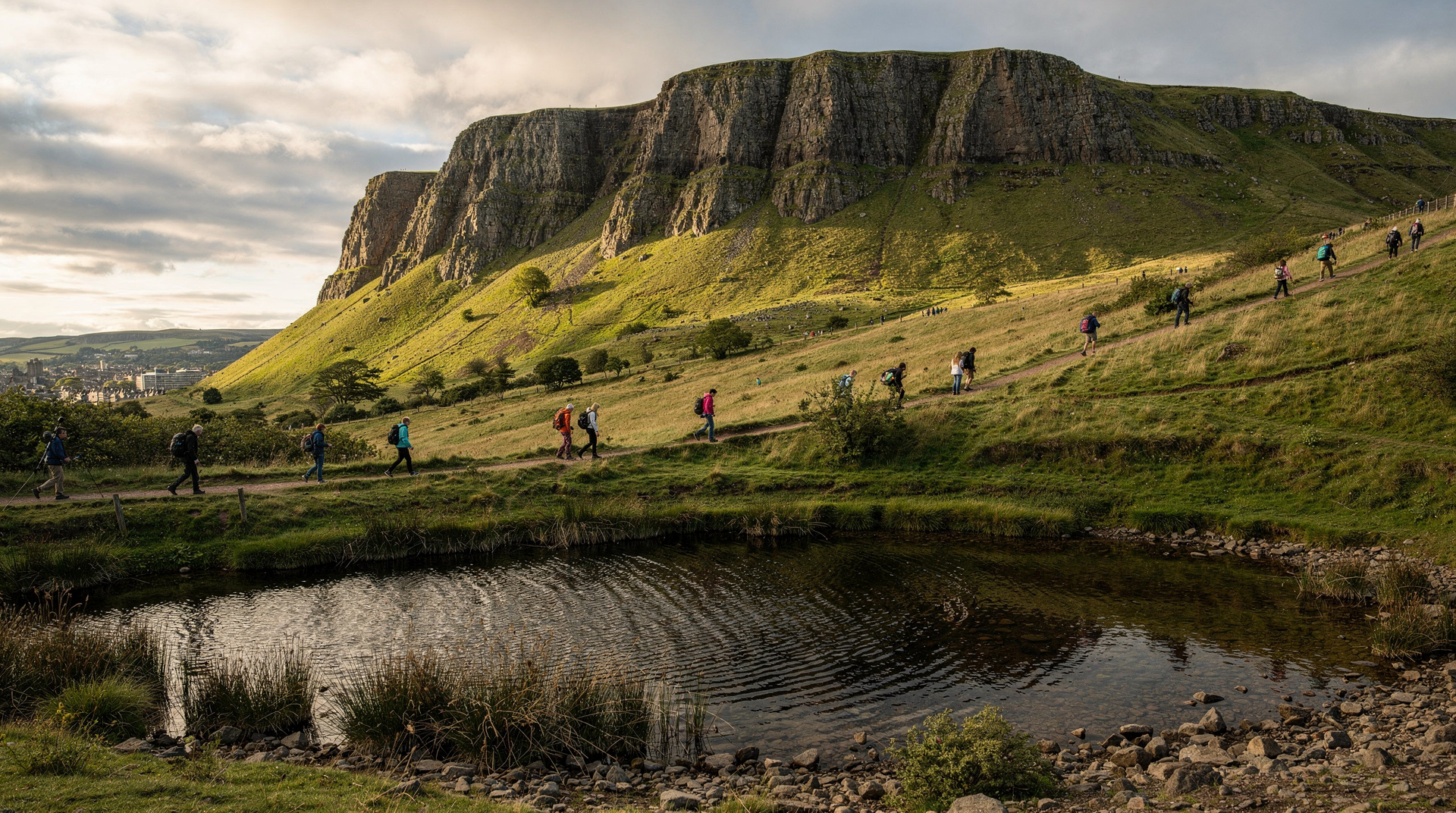
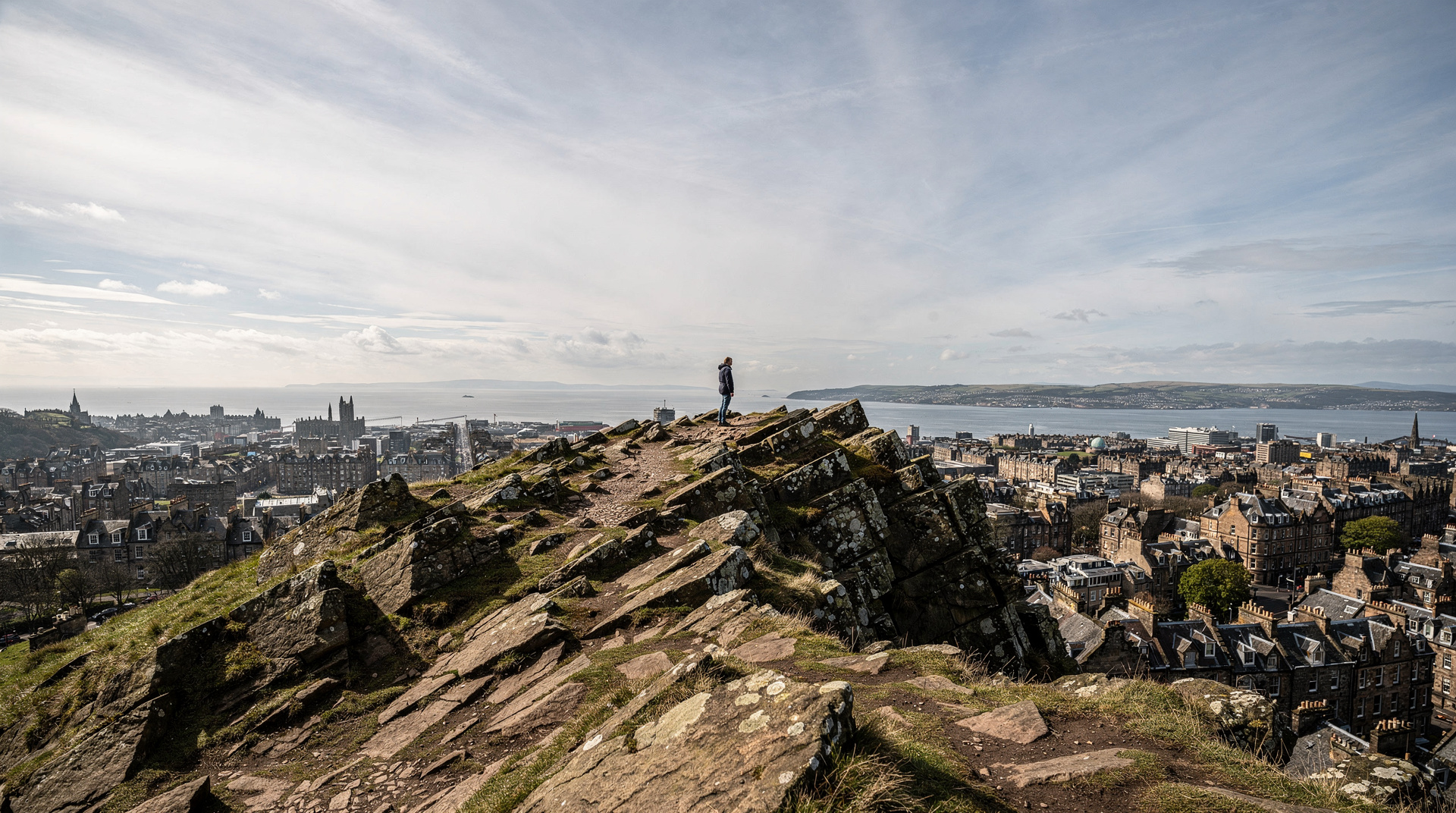
The most impressive thing about Arthur’s Seat is not the views from the summit — extraordinary as they are — but the fact that the walk begins ten minutes from the Royal Mile. A proper hill climb, complete with rocky scrambles and a 251-metre summit, within the city boundary: Edinburgh has nothing else quite like it.
The full guide is at Arthur’s Seat hiking guide, including route options, gear advice, and the best times to go. The summary: wear grip-soled shoes, allow 2-3 hours, and aim for a weekday morning for the quietest experience.
5. Water of Leith: Dean Village to Stockbridge
Distance: 1.5 miles one way | Time: 45 minutes | Difficulty: Easy | Start: Dean Village (15 mins walk from West End)
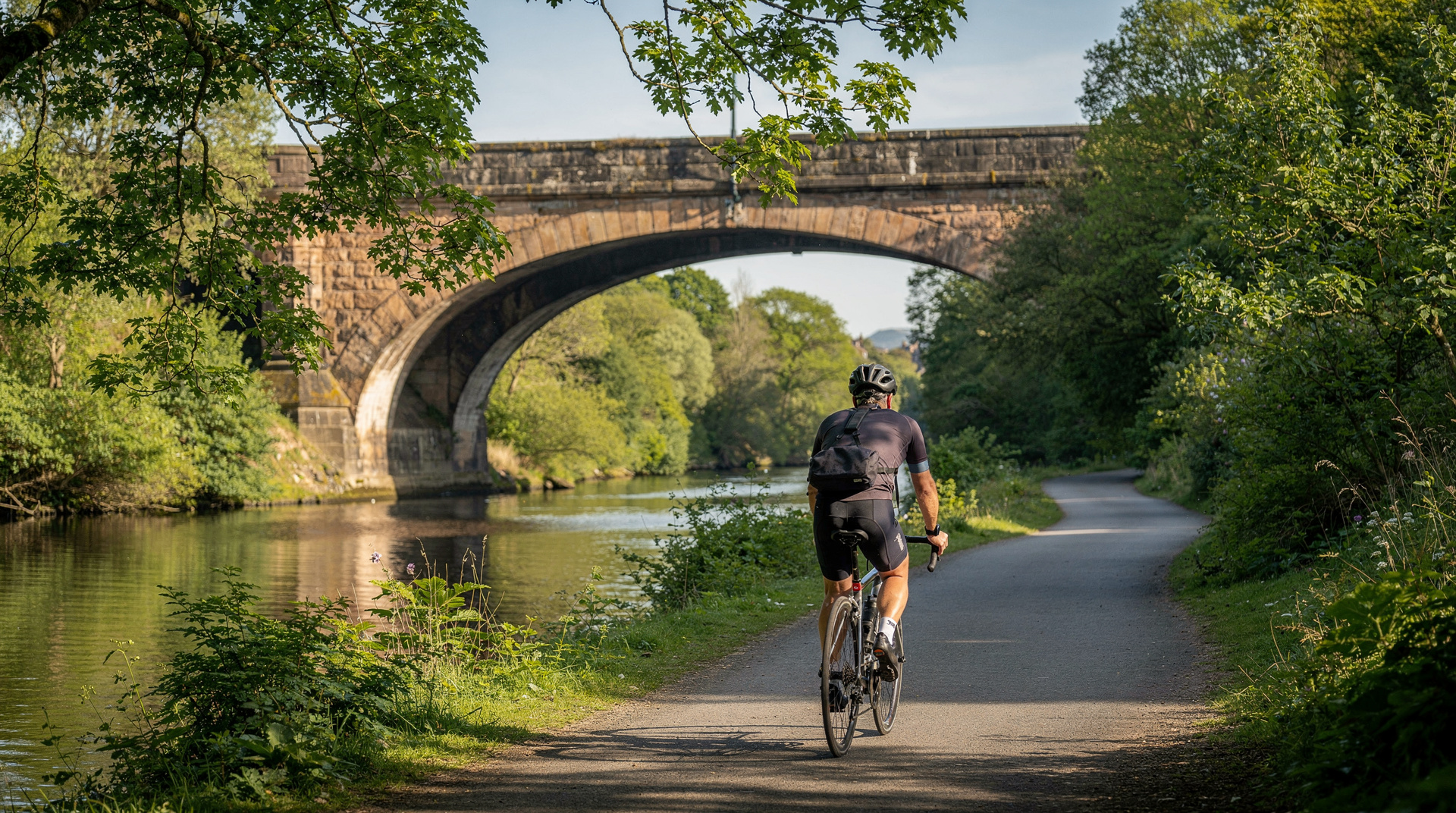
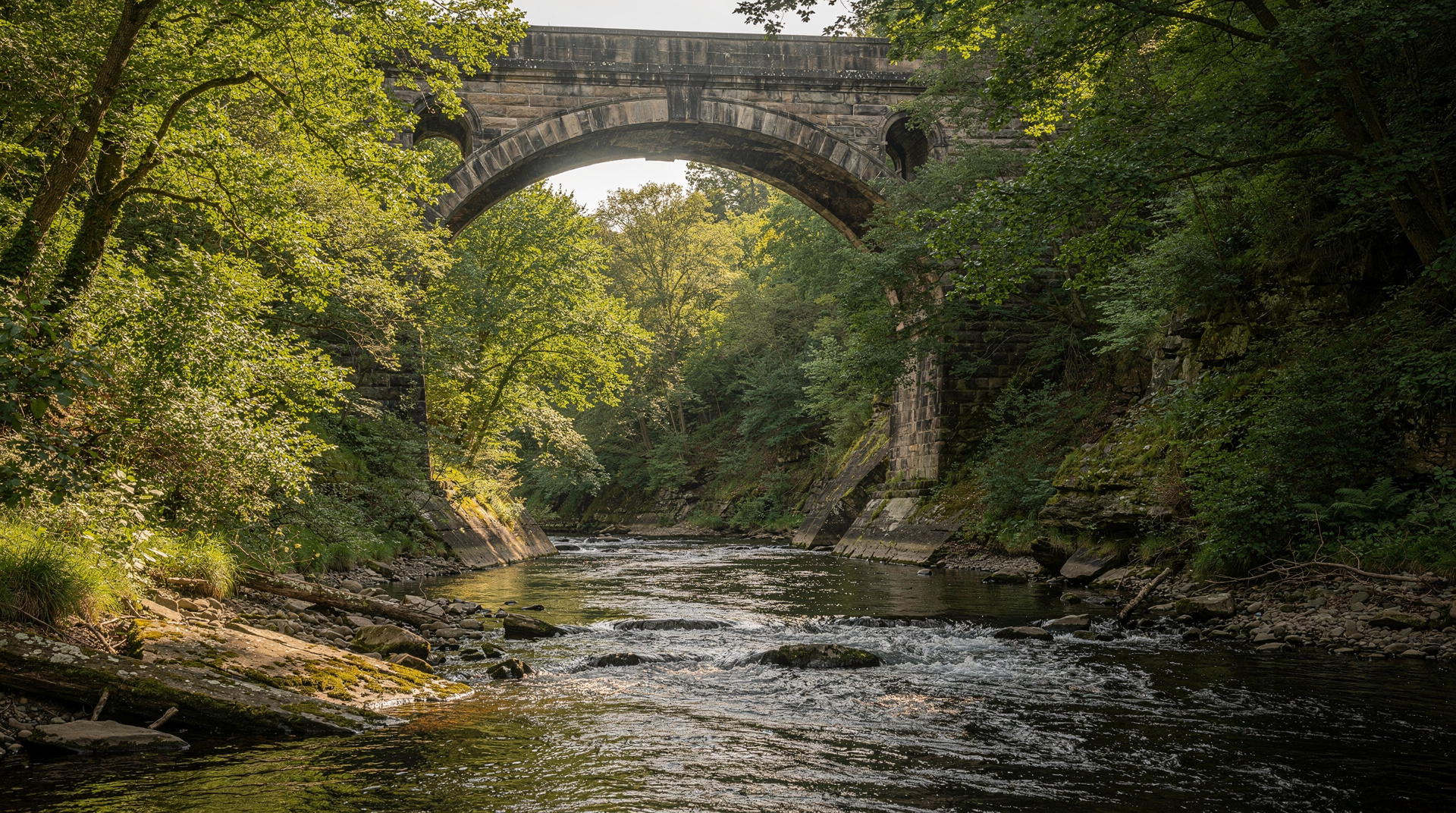
The most accessible stretch of Edinburgh’s riverside walk offers a wooded gorge walk that feels entirely separate from the urban environment above. Dean Village at the start is architecturally interesting in its own right; Stockbridge at the end has good cafés for a post-walk coffee. The full guide is at Water of Leith walkway guide.
6. Calton Hill circuit
Distance: 1 mile circuit | Time: 45 minutes | Difficulty: Easy | Start: Regent Road at the base
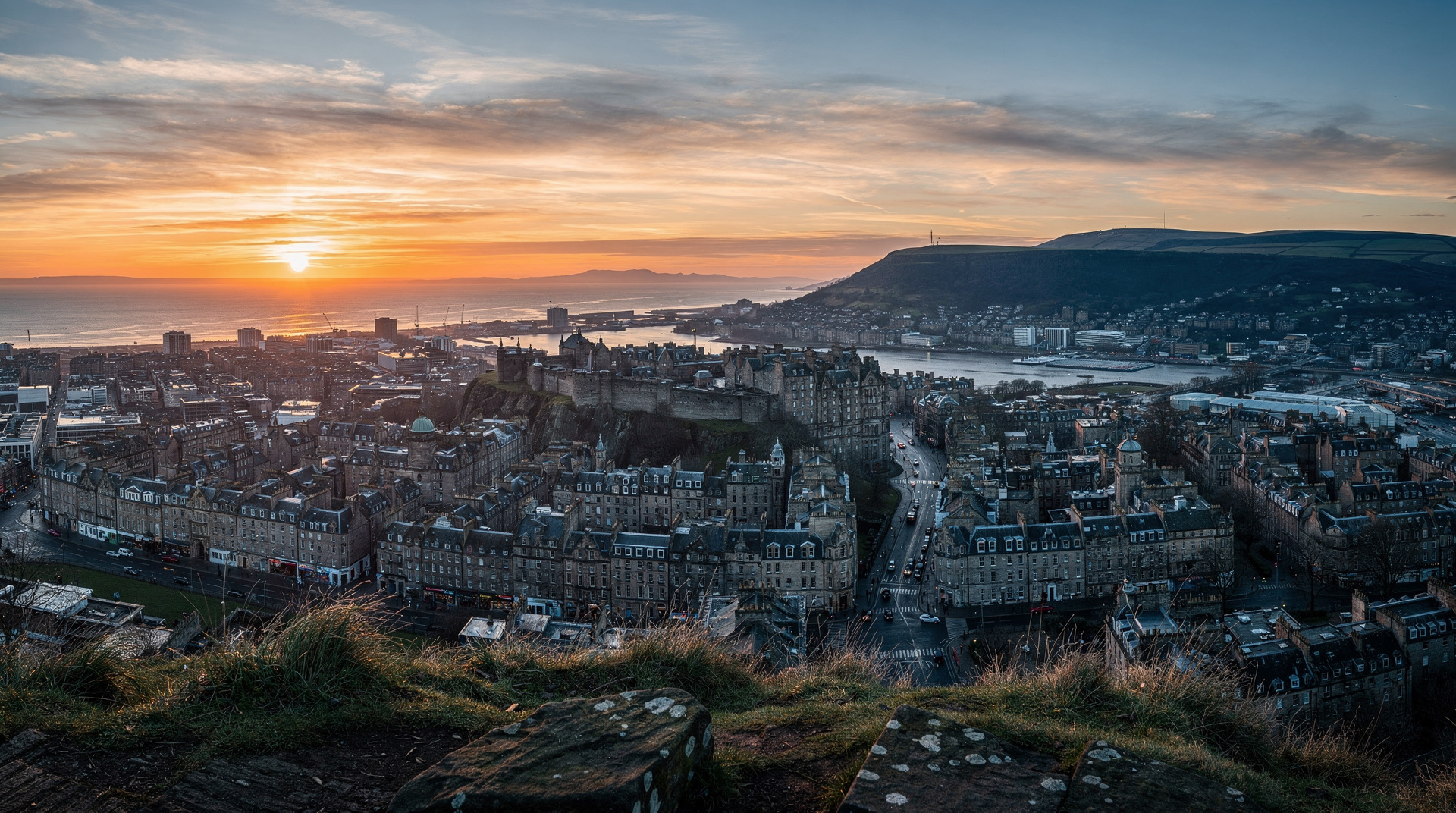
Calton Hill is the other Edinburgh volcanic summit, lower than Arthur’s Seat (100 metres) but with arguably the best all-round city view: from the top you see the castle on its rock, the Firth of Forth, Arthur’s Seat, and the Georgian New Town rooftops simultaneously. The summit is accessible in 15 minutes from the base and the circuit around the top passes the National Monument (Edinburgh’s unfinished Parthenon replica), the Nelson Monument, and the City Observatory.
The Calton Hill guide covers the monument history and the Beltane Fire Festival connections (see also the Beltane guide).
7. Portobello promenade
Distance: 2 miles along the seafront | Time: 45 minutes | Difficulty: Easy | Start: Portobello High Street
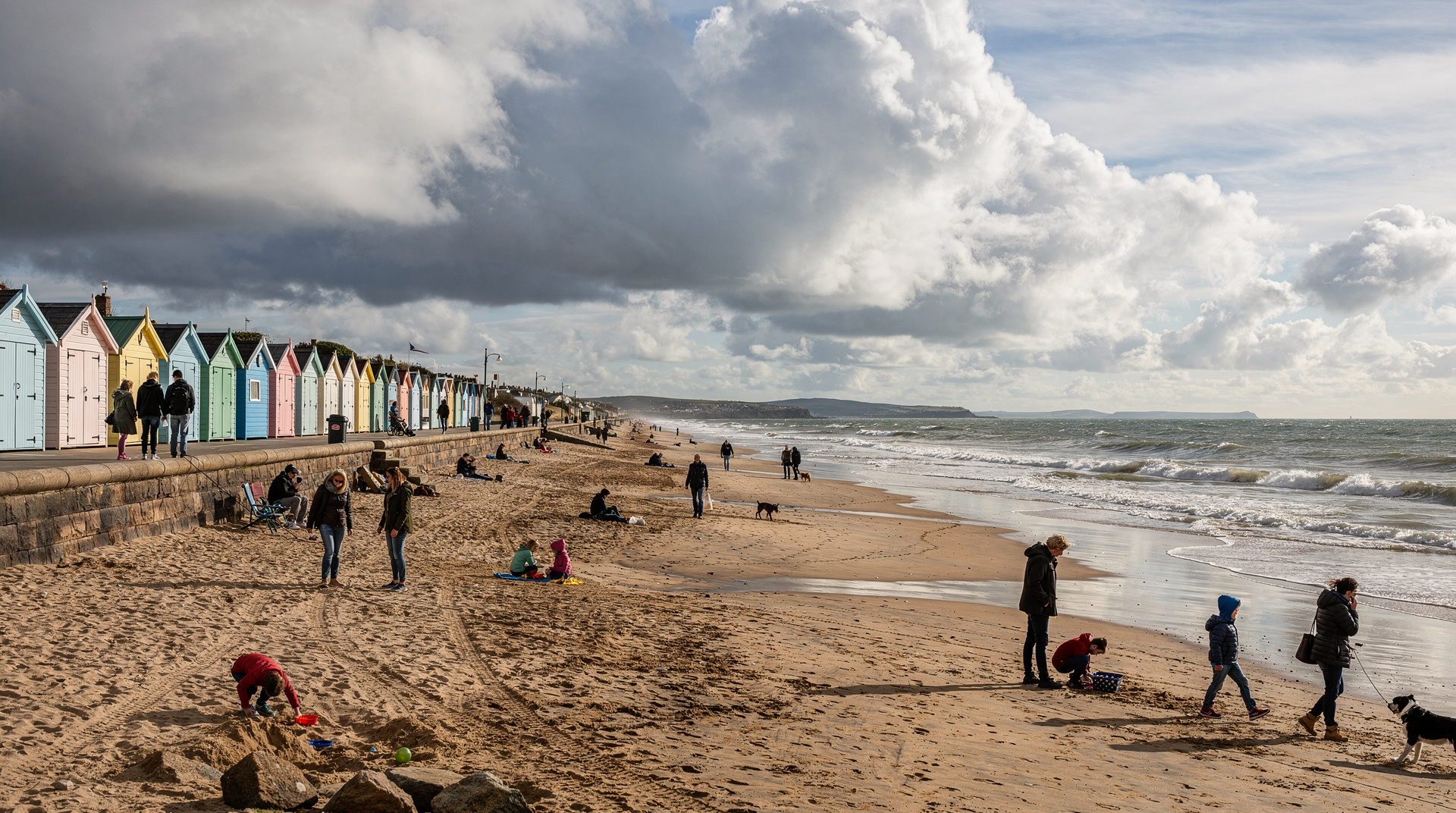
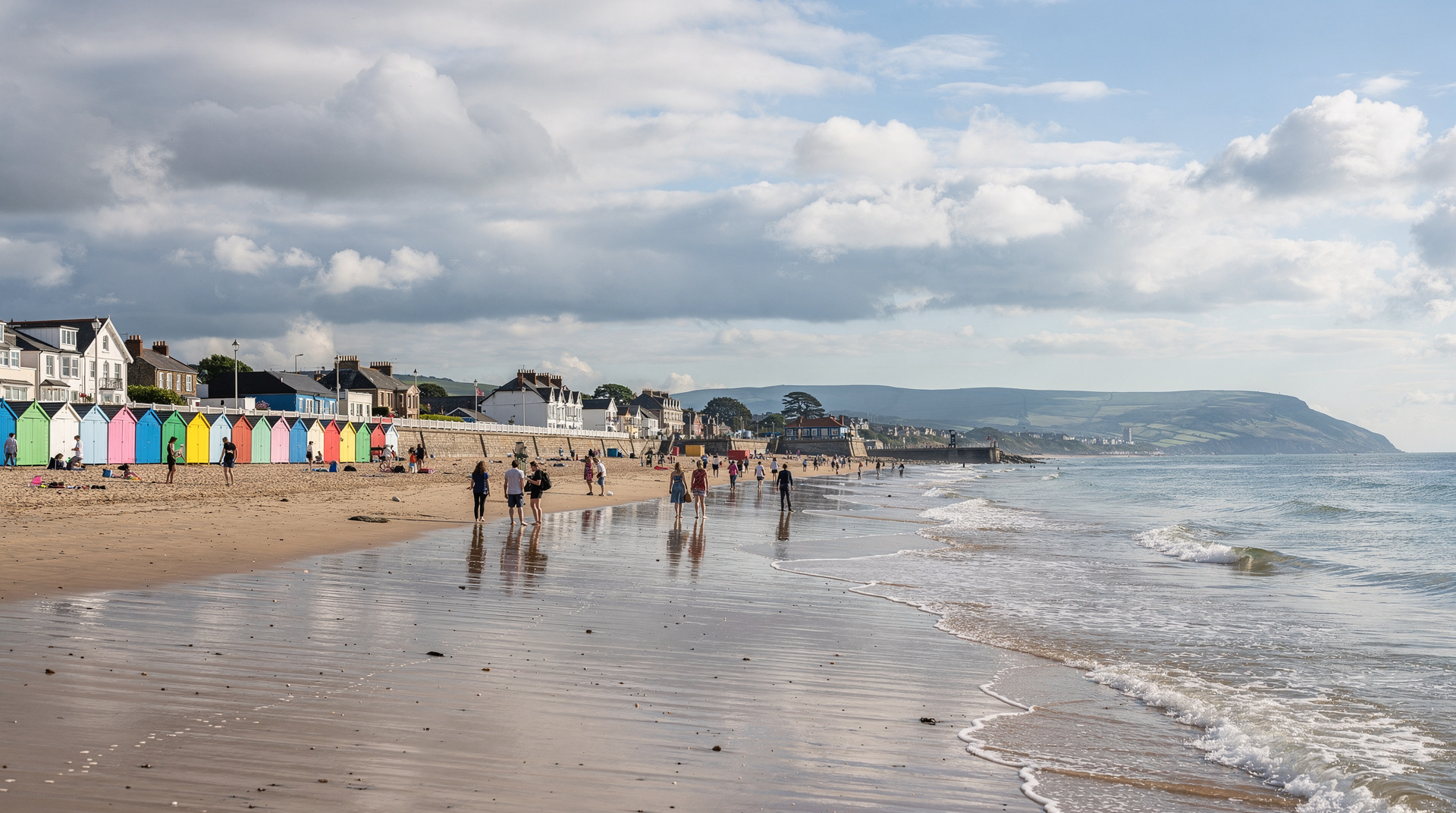
Edinburgh’s seaside suburb — only 3 miles from the city centre — has a Victorian promenade, a sandy beach, and a traditional seaside atmosphere that is genuinely charming on a good day (and characterfully grim on a wet one). The full guide is at Portobello beach guide.
Best half-day and full-day walks within striking distance
8. Pentland Hills: Glencorse Reservoir walk
Distance: 4 miles circuit | Time: 2 hours | Difficulty: Easy-moderate | Access: Bus from city (45 mins) or car (25 mins)
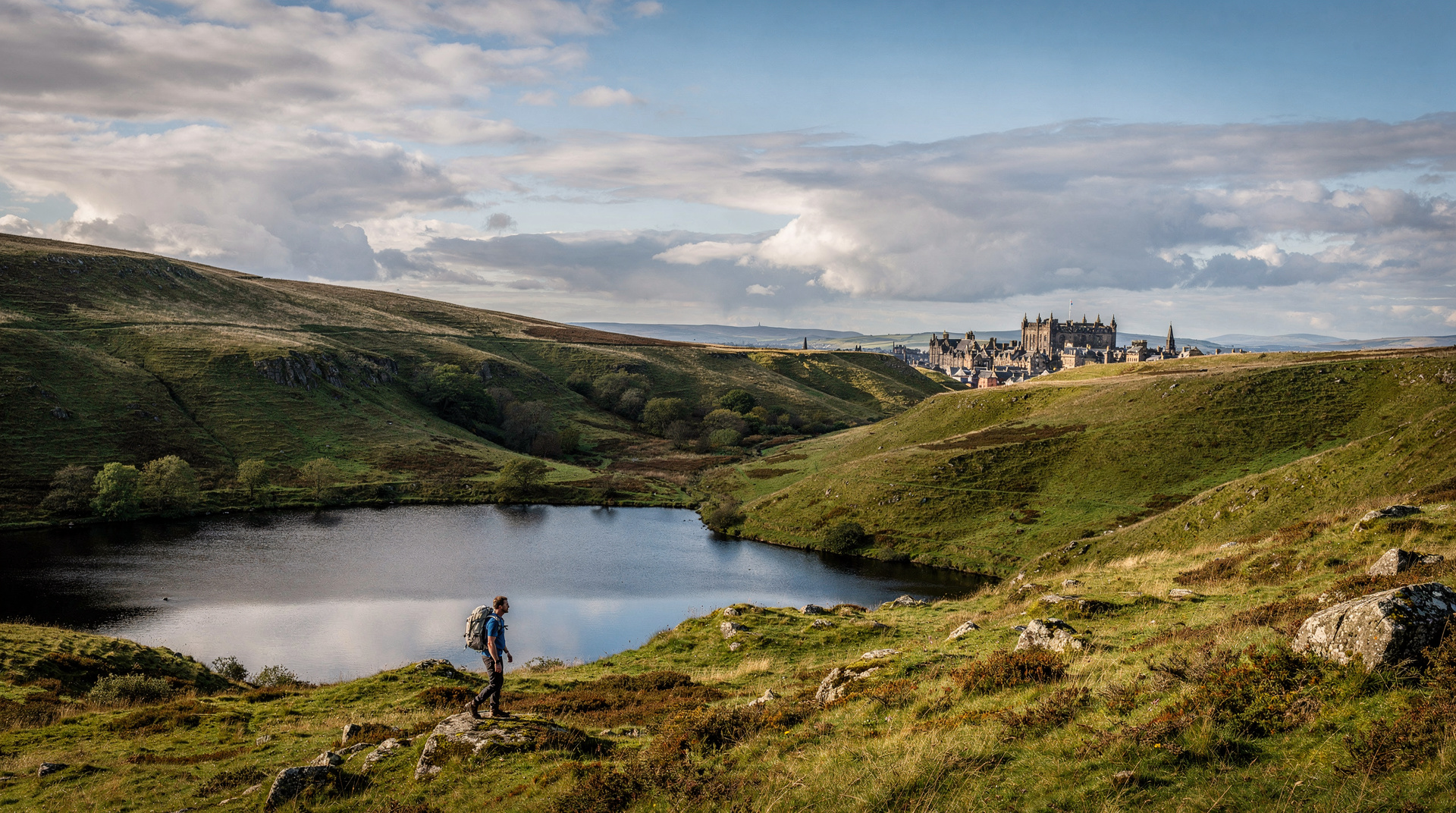
The most manageable Pentland Hills walk offers reservoir views, moorland atmosphere, and a taste of the larger hill landscape without requiring serious hill-walking fitness. The full range and harder routes are covered in the Pentland Hills guide.
9. John Muir Way: North Berwick coastal section
Distance: 5-8 miles | Time: 3-4 hours | Difficulty: Easy-moderate | Access: Train from Edinburgh to North Berwick (30 mins)
The section of the John Muir Way around North Berwick Law and along the East Lothian coast offers dramatic sea cliffs, Bass Rock views (with its famous gannet colony), and the ruins of Tantallon Castle. Take the train to North Berwick (about 30 minutes from Waverley), walk the coastal section, and return from a different point — or combine with the puffin boat trip covered in the North Berwick guide.
10. Rosslyn Glen gorge walk
Distance: 2-3 miles | Time: 1.5 hours | Difficulty: Easy | Access: Bus from Edinburgh or combine with Rosslyn Chapel visit
The glen below Rosslyn Chapel contains a beautiful wooded gorge of the North Esk river, entirely separate from the chapel’s famous Da Vinci Code associations. The gorge walk is free, requires no planning, and is particularly beautiful in autumn. It pairs well with a chapel visit as a half-day excursion from Edinburgh — see the Rosslyn Chapel guide for combined logistics.
Walking tours: when guided makes sense
Self-guided walking in Edinburgh is entirely feasible with a good map or navigation app. Guided tours add value most clearly in the Old Town, where the closes, underground spaces, and historical connections are genuinely difficult to appreciate without context. An Arthur’s Seat guided hike adds geological and mythological context to a walk that is rewarding in its own right — but the hill itself does not need a guide in the way that the Old Town’s human history does.
For a structured programme combining multiple Edinburgh walks, the two-day Edinburgh itinerary builds a logical sequence. The budget Edinburgh itinerary focuses specifically on walks and free attractions.
Planning your walks: practical notes
Footwear: For city walks, comfortable walking shoes are fine. For Arthur’s Seat and the Pentlands, walking shoes or boots with grip are essential — see individual guides for details.
Weather: Edinburgh’s weather is changeable in all seasons. A compact waterproof that fits in a bag weighs almost nothing and is useful regularly. The city walks are manageable in any weather; the hill walks are significantly more serious in strong wind and rain.
Maps: For city walks, Google Maps or Apple Maps are sufficient. For Arthur’s Seat and the Pentlands, the OS Explorer maps (map 350 for Edinburgh, 344 for the Pentlands) or the OS Maps app are recommended for anyone who wants to navigate off the main paths.
Walking Edinburgh with kids or limited mobility
Not every visitor wants or is able to tackle Arthur’s Seat, and Edinburgh’s flatter walks deserve equal billing rather than being treated as a consolation prize. Princes Street Gardens, the Water of Leith from Dean Village to Stockbridge, and the Portobello promenade are all smooth, largely flat, and suitable for pushchairs and most wheelchair users, with benches at regular intervals for anyone who needs to pause. The Royal Mile itself is cobbled and gently sloped rather than flat, which is manageable for most pushchairs but worth knowing in advance if wheels are involved — the closes running off it are steeper and less suitable.
For families specifically, a good half-day combination is Calton Hill (short, rewarding, a genuine payoff for a 15-minute climb that most children manage without complaint) followed by ice cream or lunch in the New Town, rather than attempting Arthur’s Seat with very young children. Arthur’s Seat is achievable with children from roughly age seven or eight who can manage a sustained uphill walk, but the rocky final section near the summit needs supervision. See the Edinburgh with kids guide for the fuller picture of family-friendly pacing across the city.
Walking in Edinburgh’s rain
Edinburgh’s reputation for rain is somewhat exaggerated but not invented — expect showery, changeable weather in any season, with genuinely dry spells more common than sustained downpours. The practical approach is to treat rain as a variable to plan around rather than a reason to cancel: the Old Town’s architecture is arguably more atmospheric under grey skies, and the closes and covered sections (Fleshmarket Close, parts of the Grassmarket) offer brief shelter without breaking a walking route entirely.
For genuinely wet days, the covered National Museum of Scotland and the Scottish National Gallery both sit directly on walking routes covered in this guide and make natural indoor pivots without abandoning the day’s plan. See the Edinburgh in the rain guide for a fuller rainy-day strategy.
Comparing the top walks at a glance
| Walk | Distance | Time | Difficulty | Best for |
|---|---|---|---|---|
| Arthur’s Seat | 3-4 miles | 2-3 hrs | Moderate | Views, a real summit close to the centre |
| Water of Leith (Dean Village-Stockbridge) | 1.5 miles | 45 min | Easy | Flat riverside, café stop |
| Calton Hill | 1 mile | 45 min | Easy | Best view-to-effort ratio |
| Royal Mile top to bottom | 1.5 miles | 1-2 hrs | Easy | History, closes and wynds |
| Portobello promenade | 2 miles | 45 min | Easy | Seaside atmosphere |
| Pentland Hills (Glencorse) | 4 miles | 2 hrs | Easy-moderate | A taste of proper hill country |
| John Muir Way, North Berwick | 5-8 miles | 3-4 hrs | Easy-moderate | Coastal cliffs, Bass Rock, Tantallon |
Frequently asked questions about walks in Edinburgh
What is the most impressive walk in Edinburgh for a first-time visitor?
Arthur’s Seat, without question. The combination of volcanic geology, genuine summit, panoramic views, and city-centre location is unique. Allow half a day and read the Arthur’s Seat guide for the route and timing advice.
Are there flat walks in Edinburgh for people who cannot manage hills?
Yes. The Water of Leith walkway from Dean Village to Stockbridge is almost entirely flat. The Portobello promenade is flat. Princes Street Gardens are flat. The John Muir Way coastal section near North Berwick has some gentle undulations but nothing severe. For wheelchair users or pushchair users, the main city-centre walks are manageable on smooth pavements; many of the natural landscape walks have sections that are not suitable.
How long does it take to walk from Edinburgh city centre to Arthur’s Seat?
From the Royal Mile (St Giles’ Cathedral area), walking to the base of Arthur’s Seat at the Holyrood Visitor Centre takes about 15-20 minutes via the Canongate. From there, add 45-60 minutes to the summit. Total from city centre to summit: about 75-90 minutes one way.
Can I walk between Edinburgh’s main attractions on foot?
Yes, very comfortably. Edinburgh’s main visitor areas are compact. Castle to Palace of Holyroodhouse: 20-minute walk down the Royal Mile. Castle to Calton Hill: 25 minutes via Princes Street and Waverley Steps. Holyrood to Arthur’s Seat summit: 60-70 minutes. New Town to Stockbridge (via Dean Village): 30-40 minutes.
Are there any free guided walks in Edinburgh?
Several organisations run free walking tours on a tip model, including the popular Sandeman’s New Europe tours. These typically cover the Old Town and Royal Mile and last 2-3 hours. The quality varies by guide but the tip model means guides are motivated to be good. Depart from the Royal Mile daily (check current times on their website).
What is the best walk in Edinburgh in winter?
Calton Hill on a clear winter morning is exceptional — the low sun over the Firth of Forth and the frost on the grass make the views particularly striking, and the crowds are a fraction of the summer peak. Arthur’s Seat in winter snow is unforgettable but requires good footwear and awareness of icy conditions near the summit. See Edinburgh in winter for the full seasonal picture.
Seasonal walking in Edinburgh: month-by-month
Understanding Edinburgh’s walking conditions through the year helps match walks to seasons:
January-February: The quietest period for all walks. Arthur’s Seat and Calton Hill are lightly visited, Princes Street Gardens are peaceful, and the Water of Leith has a bare-tree atmosphere that is unexpectedly beautiful. Cold and potentially icy on exposed routes; rewarding on clear days.
March-April: The city begins to wake up. The Water of Leith in April has wild garlic (ramsons) flowering in the Dean Village gorge — a wonderful combination of scent and white flowers under bare trees. The Pentlands in April are excellent: curlews calling, the first wildflowers appearing, the green of new growth replacing winter brown.
May-June: Edinburgh’s best walking months. Long days (sunset after 10pm in late June), mild temperatures, the city in its best green condition. Arthur’s Seat is busy but manageable; the Pentlands are in excellent condition. The Portobello promenade in early summer morning light is a particular pleasure.
July-August: Long days, highest crowds, occasional excellent weather. Arthur’s Seat is at its busiest. Festival Edinburgh is exhausting for walking — the Old Town pavements are barely navigable in the afternoons. Early mornings are the solution: the city before 9am in August is a different place from the mid-afternoon chaos.
September-October: The best autumn walking in Scotland. The Pentlands’ heather blooms purple in September. The Water of Leith in October has spectacular autumn colour. Portobello’s sea light is at its most atmospheric. Crowds have dropped significantly after the school return in September.
November-December: Shorter days but often clear and cold. The Christmas markets add a different dimension to the Princes Street Gardens walk. The city at dusk in December, lit for Christmas, has considerable visual appeal. Arthur’s Seat is quiet; the summit views on a clear December afternoon are exceptional.
Building a walking programme for longer Edinburgh stays
For visitors staying 4-7 days, a structured walking programme can cover the city systematically:
Day 1: Old Town closes and Royal Mile circuit (morning), Calton Hill (afternoon) — 2-3 miles total, easy.
Day 2: Arthur’s Seat via Holyrood Park (morning) — half day, moderate.
Day 3: Water of Leith: Dean Village to Stockbridge (morning), Stockbridge market if Saturday (1.5 miles easy).
Day 4: Day trip to Pentland Hills: Glencorse Reservoir walk (full morning, 4 miles moderate).
Day 5: Portobello coastal walk (2 miles, flat), extending to Musselburgh if energy permits.
Day 6+: John Muir Way coastal section from North Berwick (train, 30 minutes from Waverley, then 5-8 miles easy/moderate).
This programme covers Edinburgh’s full walking range — urban history, volcanic geology, riverside woodland, moorland hills, and coastal path — without repeating terrain or experience type. The three-day Edinburgh itinerary provides a more condensed version for shorter stays.
Top experiences
Bookable activities with verified prices and instant confirmation on GetYourGuide.