Rosslyn Chapel
Rosslyn Chapel from Edinburgh: the Da Vinci Code connection, the Green Man carvings, honest visitor expectations, and how to get there in 30 minutes.
Edinburgh: Rosslyn Chapel and the Scottish Borders small-group tour
Quick facts
- Best time to visit
- Weekday mornings to avoid weekend tour groups
- Days needed
- Half day
- Getting there from Edinburgh
- ~30 min by bus (Lothian Buses no. 37 from Edinburgh city centre)
- Budget per day
- £15–£40; chapel entry £12; café on site
What Rosslyn Chapel actually is — and what it is not
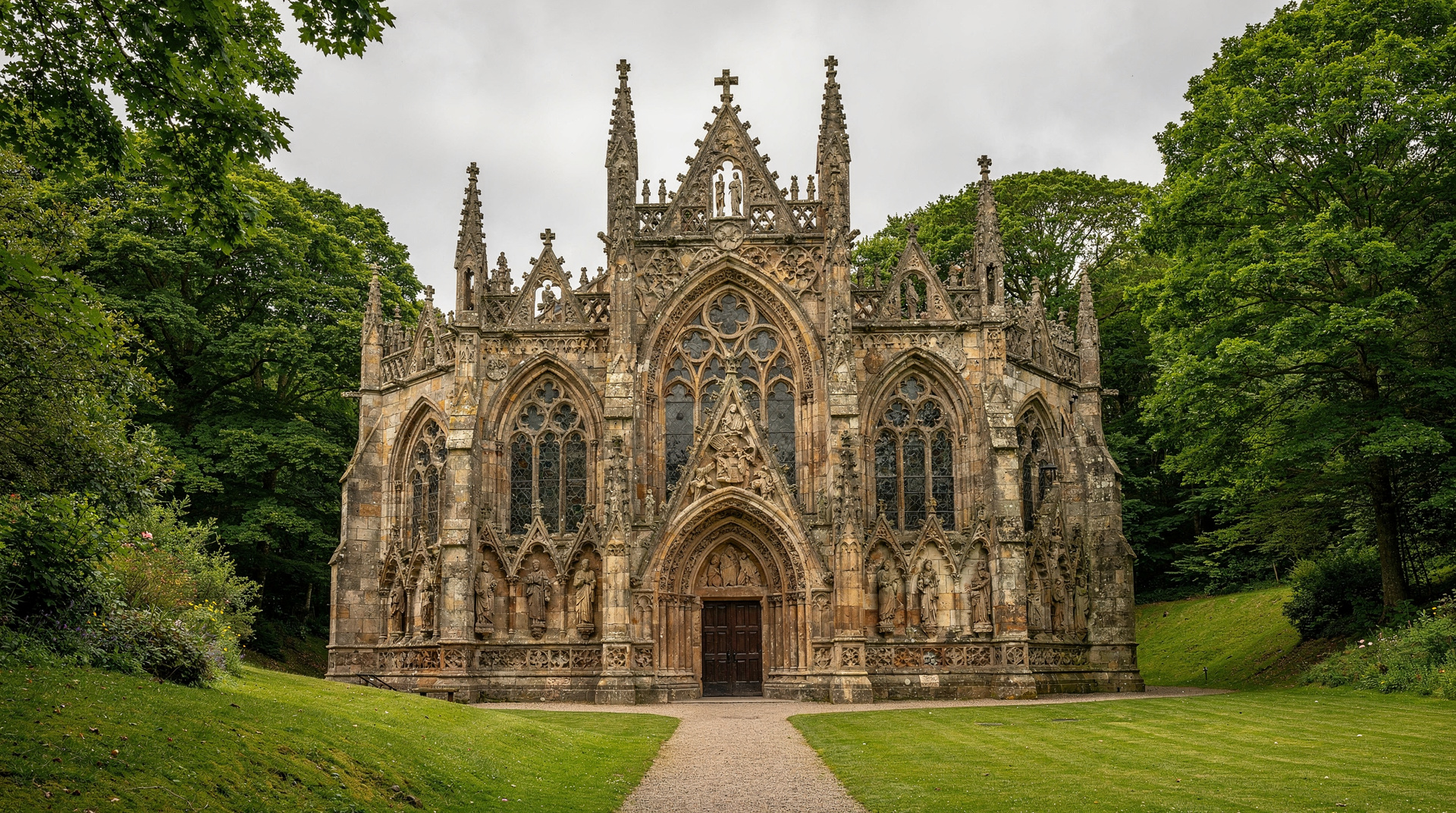
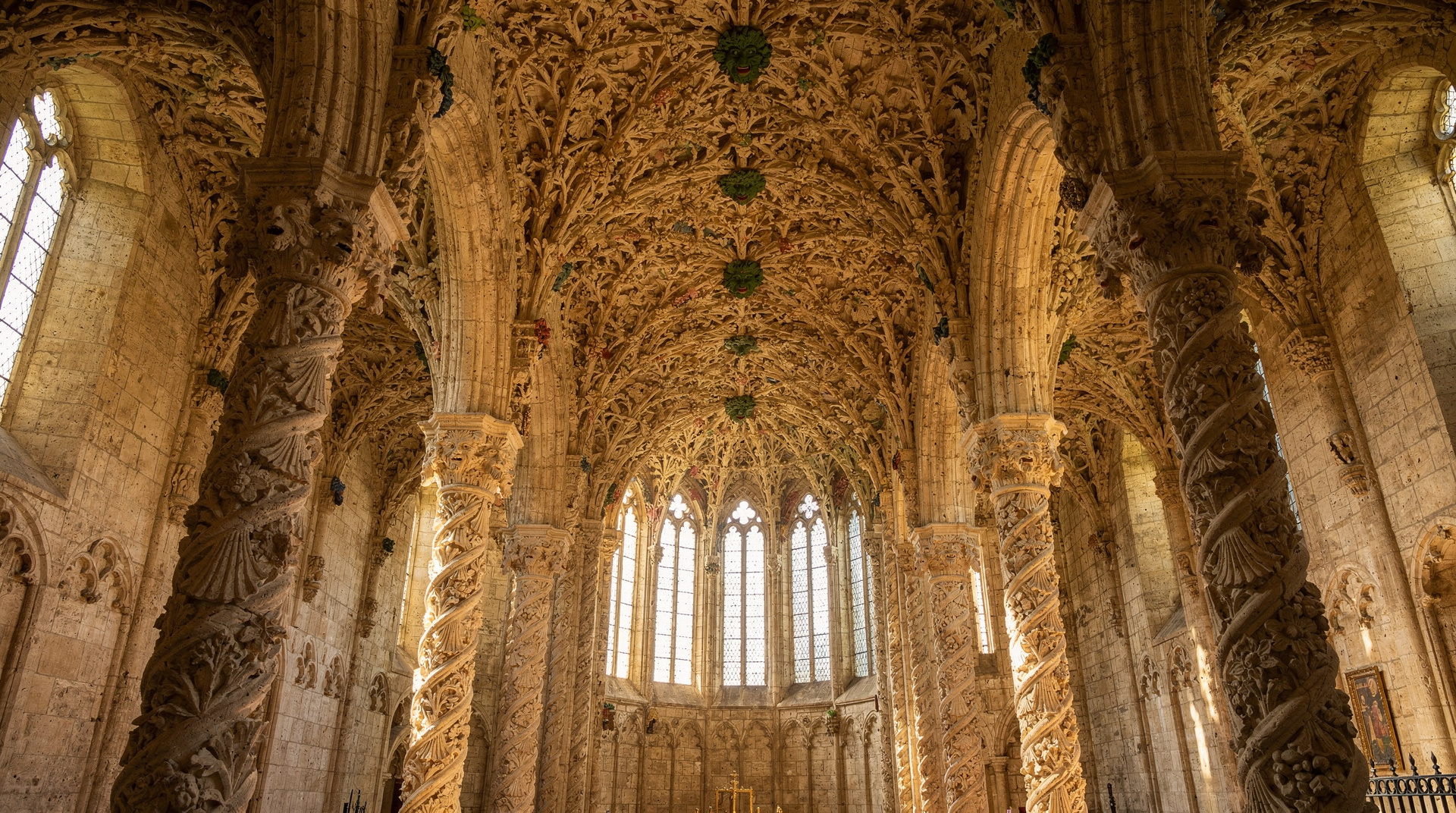
Rosslyn Chapel is genuinely one of the most astonishing pieces of medieval stonework in Britain. The interior carving density — every surface covered with botanical, symbolic, and figurative ornament, no two inches the same — represents the output of decades of skilled carving on a small but extraordinarily ambitious scale. The Apprentice Pillar alone, a column of intricate intertwined foliage spiralling upward from its base, is the kind of thing you look at for a long time without fully being able to account for how it was made.
Dan Brown’s 2003 novel and the 2006 film placed the chapel at the centre of a conspiracy about the Holy Grail and the Knights Templar. This has driven visitor numbers significantly and produced a cottage industry of tour operators promising to “decode” the chapel’s symbolism. The honest position: the conspiracy theories are entertainment, not history.
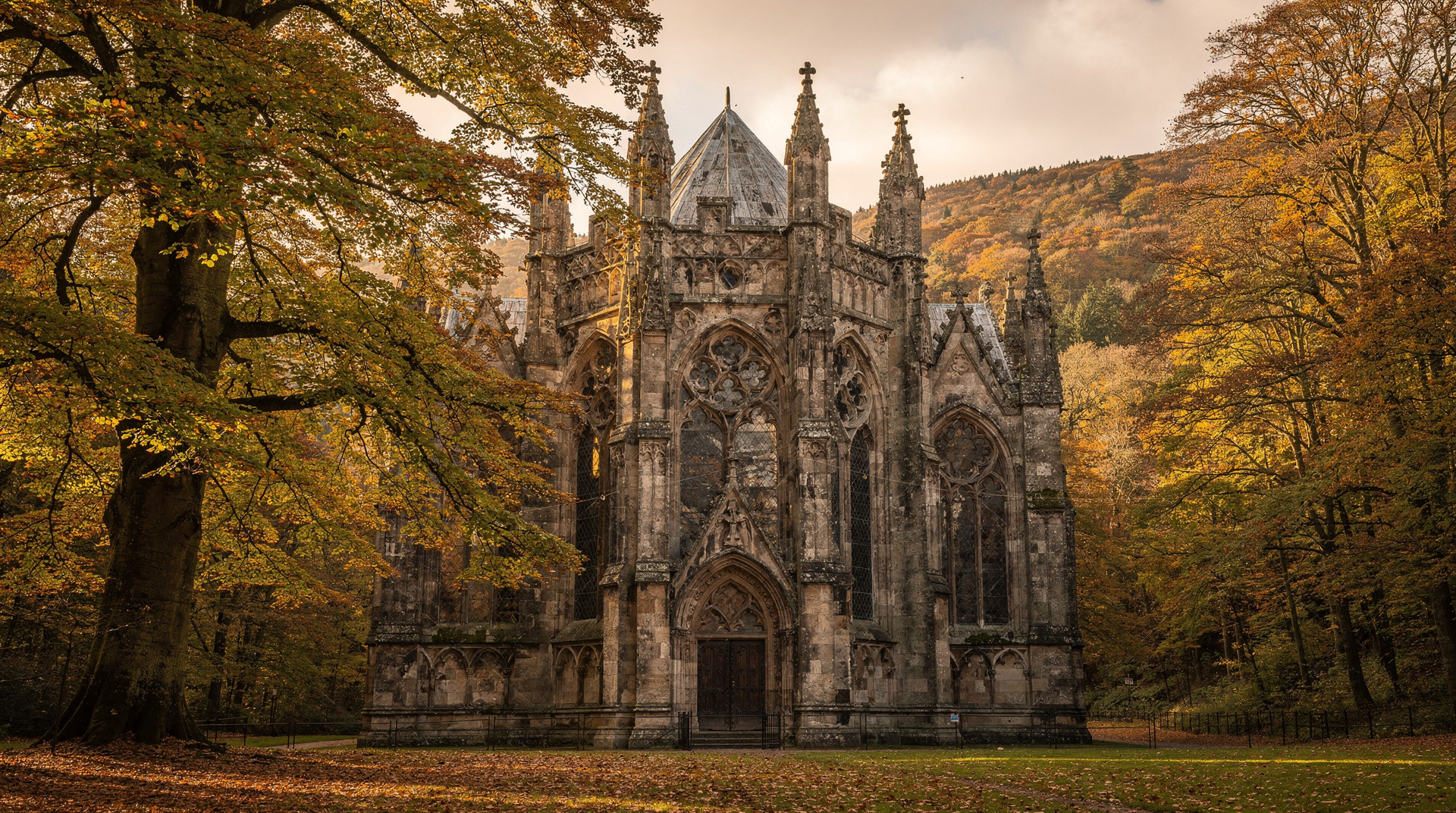
The chapel was built by William Sinclair, Earl of Orkney, beginning in 1446, as the collegiate chapel of a planned larger church that was never completed. It is a Catholic (later Episcopalian) place of worship with extraordinarily rich decorative ambition, now maintained by the Rosslyn Chapel Trust. There is no credible evidence of Templar connection or Holy Grail burial. What there is, without any of the mythology, is one of the most remarkable late-medieval interiors in Scotland.
Rosslyn Chapel is 30 minutes from Edinburgh by public bus. For most Edinburgh visitors, this is the closest day trip that genuinely merits the journey.
| At a glance | |
|---|---|
| Where | Roslin village, Midlothian, 7 miles south of Edinburgh |
| Time needed | Half day (2–3 hours including the glen walk) |
| Getting there | ~30 min by Lothian Buses no. 37, or 20–25 min by car |
| Typical cost | Entry £12; café on site; £15–£40 total for a half-day |
| Best time | Weekday mornings, year-round |
| Do not skip | The Apprentice Pillar and the 110+ Green Man carvings |
Getting from Edinburgh to Rosslyn Chapel
Lothian Buses route 37 runs from the city centre (George IV Bridge or Princes Street) to Roslin village, stopping at the bottom of the hill near the chapel. Journey time is around 30-35 minutes. Frequency is reasonable but not as high as Edinburgh city services — check the timetable before leaving. The bus stop is a five-minute walk from the chapel entrance.
By car from Edinburgh, the route via the A702 or Bypass is approximately 7 miles south — around 20-25 minutes. Parking is available at the chapel (small charge). The village of Roslin itself is a short walk from the chapel.
Guided tours from Edinburgh are also popular — the Rosslyn Chapel and Scottish Borders small-group tour combines the chapel with a drive through the Borders, giving historical context to both the chapel and the wider region. This is a good option if you want to make a fuller day of it rather than a half-day visit.
The chapel interior: what to look for
The interior of Rosslyn Chapel is small — about 22 metres long — and the density of carving means you need time to look at it properly rather than simply walk through. The key features:
The Apprentice Pillar stands at the southeast corner of the Lady Chapel at the far end. The legend attached to it — that an apprentice carved it while the master mason was away, and the master murdered him in jealousy on returning — is undocumented and almost certainly apocryphal, but the pillar itself is extraordinary. Eight dragons at its base appear to eat the roots from which the spiral foliage grows. It is the most photographed object in the chapel.
The Green Man carvings appear more than 110 times in the chapel — foliate heads with vegetation growing from the mouth, a motif appearing in churches across Europe but in unusually high concentration at Rosslyn. The meaning of the Green Man in a Christian context is genuinely debated by scholars; some see it as a survival of pre-Christian nature symbolism absorbed into Christian iconography, others as a straightforward decorative motif. The sheer number at Rosslyn is worth noting regardless of interpretation.
The Lady Chapel at the east end contains the oldest and most heavily carved sections. The Sinclair family tombs are also here.
The roof carving — an intricate carved ceiling of flowers, stars, and cross-shaped patterns — takes time to observe because you are looking directly upward. The chapel provides kneelers that can be used as headrests for this purpose.
Entry is £12 for adults in 2026 (£10 concessions, under-17s free). The price includes a short introductory talk from the staff on arrival and access to the visitor centre with a short film on the chapel’s history. Allow 60-90 minutes inside.
Roslin Glen and the surrounding area
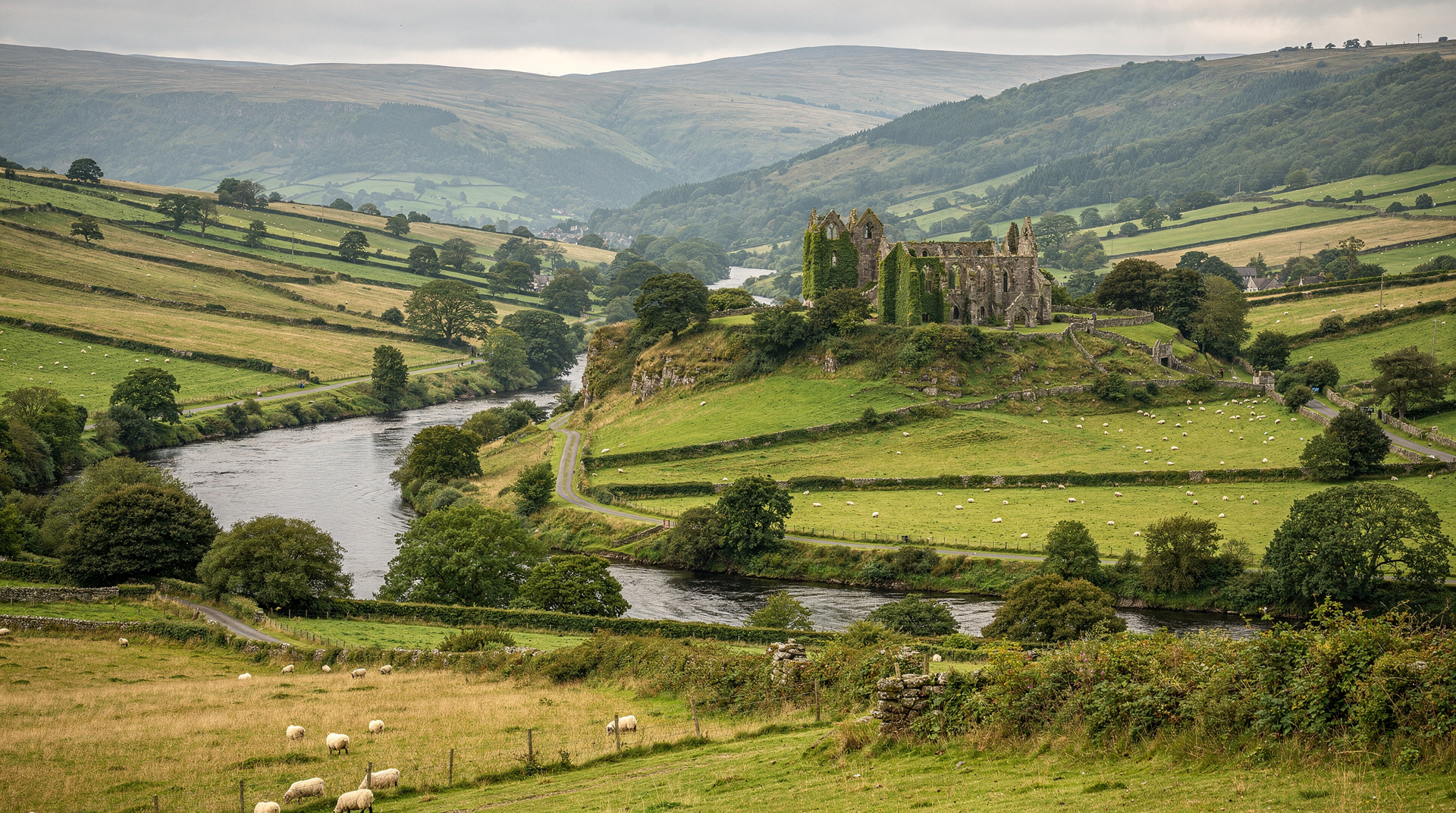
The village of Roslin sits at the edge of Roslin Glen Country Park, a wooded gorge through which the North Esk river runs. The glen is genuinely attractive and uncrowded, with several easy walking routes from the village down into the gorge and along the riverbank. Roslin Castle ruins (not open to enter but visible from the path) stand on a promontory above the glen. The walk from the chapel entrance to the riverbank and back takes about 45 minutes at an easy pace.
The combination of the chapel visit and a glen walk makes a comfortable half-day from Edinburgh without feeling rushed.
Honest assessment: managing Da Vinci Code expectations
If you are visiting primarily because of the film or novel, the chapel is worth visiting — but you will find a functioning Episcopalian church with extraordinary stonework, not a puzzle box of secret passageways and conspiracy encoded in carvings. The staff address the Da Vinci Code directly and good-humouredly; they have had fifteen years of practice. The Codebreakers’ Choice tour is specifically marketed to those with Da Vinci Code interest and gives a more detailed run-through of the various claims and their historical basis (or lack thereof).
The chapel is also worth visiting if you have zero interest in Dan Brown and genuine interest in medieval stonework, symbolic iconography, or late Gothic architecture. In that context, Rosslyn is genuinely one of the more remarkable things you can see in the Edinburgh region.
Combining with the Scottish Borders
Rosslyn Chapel sits at the northern edge of the Scottish Borders landscape. A half-day at the chapel can be combined with an afternoon drive south through Midlothian and into the Borders proper — the drive to Melrose (site of Melrose Abbey, where Robert the Bruce’s heart is buried) takes about 45 minutes from Roslin. This gives a natural progression from Rosslyn’s private Sinclair patronage to the Cistercian monastic tradition of the Borders.
The Scottish Borders guide covers Melrose, Jedburgh, and the wider Borders landscape for those wanting to extend the day. For more detail on the Glenkinchie distillery combination (also south of Edinburgh), the Rosslyn Chapel, Borders and Glenkinchie distillery tour combines chapel, whisky, and Borders scenery in a single guided day.
The Sinclair family and the politics of construction
The chapel was built by Sir William Sinclair (later St Clair), third Earl of Orkney, who began construction in 1446. Sinclair was one of the most powerful magnates in Scotland at that time: he held the earldom of Orkney and Shetland (both then still Norwegian territories, which passed to Scotland only in 1472), was Grand Admiral of Scotland, and had direct connections to the royal court. The chapel was conceived as the Lady Chapel of a much larger collegiate church that was never completed; what you see today is only the eastern end of the planned building.
The choice to cover every surface with carving was deliberate and extravagant. Contemporary collegiate churches elsewhere in Scotland had some decorative carving; Rosslyn has an order of magnitude more. The intention was almost certainly to demonstrate the Sinclair family’s wealth, European sophistication, and religious devotion simultaneously. The density of symbolic motifs — angels, Green Men, biblical narratives, musical angels, vegetation, geometric patterns — represents decades of skilled labour.
Sinclair died in 1484 without completing the full church. The existing chapel served as the family burial place and as a parish church from 1571. Rosslyn escaped significant Reformation damage, possibly because of the Sinclair family’s continued local influence.
Glenkinchie and the Lowland whisky connection
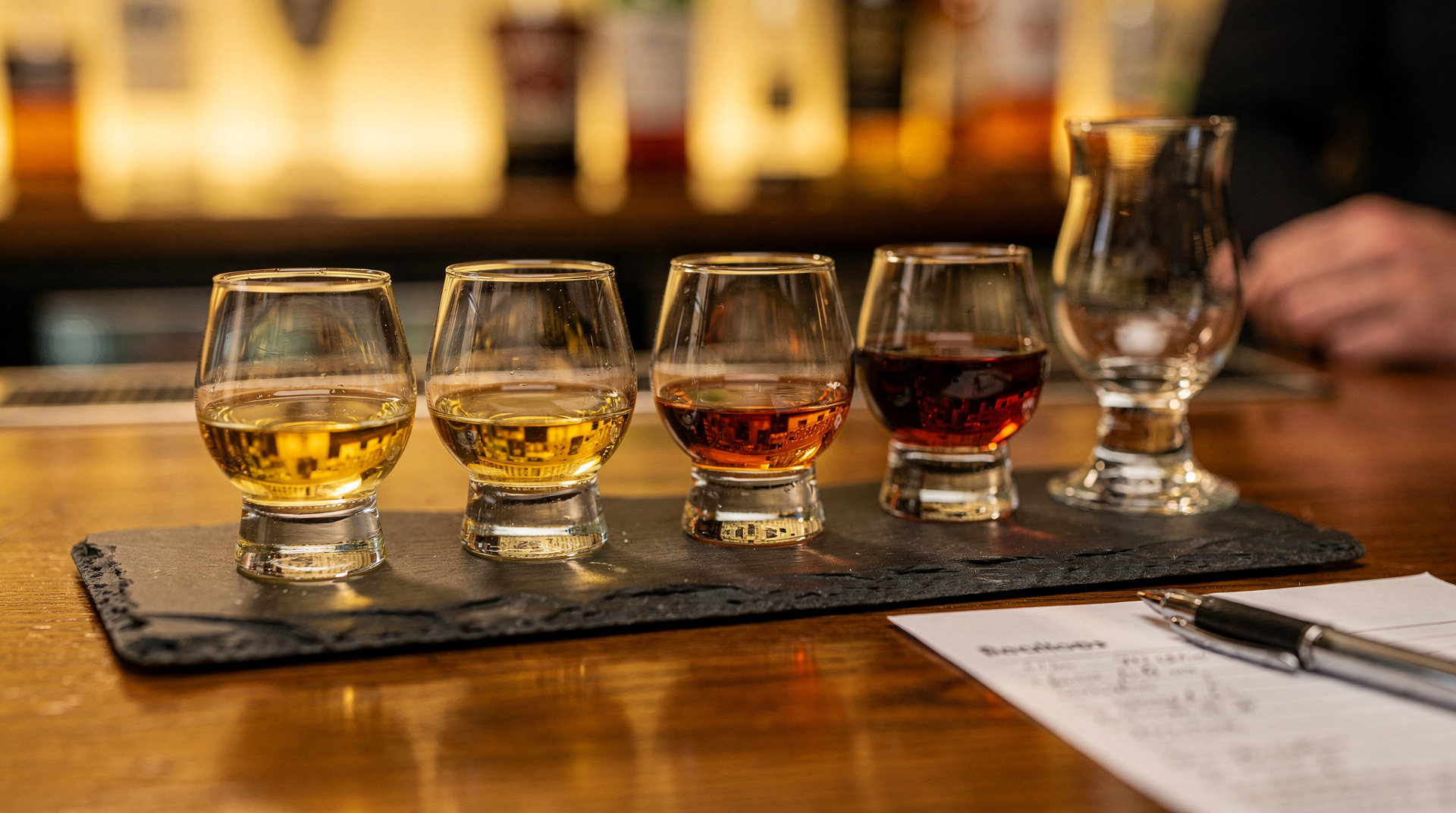
Glenkinchie Distillery, about 20 minutes east of Roslin near the village of Pencaitland, is the primary Lowland malt whisky distillery accessible from Edinburgh. Lowland malts are the lightest and most delicate style of Scotch — triple-distilled (like Irish whiskey), with a grassy, floral character very different from Speyside or Islay. Glenkinchie is a Diageo-owned distillery with a good visitor centre offering standard and premium tours and tastings.
The combination of Rosslyn Chapel and Glenkinchie makes a complete Midlothian day — medieval stonework and whisky tasting in an attractive countryside setting, all within 30-45 minutes south of Edinburgh. The distilleries near Edinburgh guide covers Glenkinchie and other accessible distilleries in detail.
Placing Rosslyn in Scottish history
Rosslyn sits at a historically interesting moment: built after the Wars of Independence (1296-1328) stabilised Scottish sovereignty, and before the Reformation (1560) swept away the Catholic devotional tradition that produced it. The carving style represents late medieval Catholic art at its most elaborate — a visual culture that was systematically destroyed elsewhere in Scotland by Protestant iconoclasm.
Edinburgh’s medieval churches were stripped in 1559-1560. Rosslyn, on the city’s periphery, survived. The fact that it is extraordinary is not coincidence — it was always intended to be extraordinary. It is one of the very few surviving examples of what a high-status Scottish medieval interior looked like at its richest, which is the real reason it matters, independent of any conspiracy theory.
Fitting Rosslyn into a wider Edinburgh trip
Rosslyn works best as a counterweight to the city’s busier sights. After a morning among the crowds of the Royal Mile or the queues at Edinburgh Castle, the quiet of the chapel and the glen makes a welcome change of pace. If you are still deciding how to shape your days, the two-day Edinburgh itinerary and the three-day itinerary show where a half-day out of town fits without squeezing the city sights.
If the novel and film are what brought you here, the Da Vinci Code at Rosslyn guide separates what the story invented from what the chapel really holds, and the Rosslyn Chapel guide goes deeper on the building itself. Walkers who enjoy the glen may also want the Pentland Hills guide, and anyone weighing up other half-day escapes can compare the scottish castles near Edinburgh before choosing.
For those without a car, the getting around Edinburgh guide explains how the city’s buses work, which helps when planning the route out to Roslin.
Comparing the guided tour options from Edinburgh
Rosslyn is combined with several different pairings depending on operator and interest. This is the honest breakdown:
| Tour | Pairs Rosslyn with | Best for |
|---|---|---|
| Rosslyn Chapel and Scottish Borders | A drive through the Borders landscape | Visitors wanting a fuller Midlothian/Borders day |
| Rosslyn Chapel entry ticket | Nothing — standalone entry | Independent visitors who only need the ticket |
| Rosslyn, Borders and Glenkinchie distillery | Lowland whisky tasting | Whisky-interested visitors wanting chapel plus distillery |
| Codebreakers’ Choice tour | Pentland Hills, Da Vinci Code detail | Visitors specifically drawn by the novel/film |
| Rosslyn and the Roman Border | Hadrian’s Wall | History-focused visitors wanting Rosslyn plus the Roman frontier in one day |
Most visitors without a car do best with the small-group Borders tour — it gives context beyond just the chapel gates without overloading a single day. The Rosslyn Chapel entry ticket is the right choice if you are driving yourself and only need guaranteed entry.
Practical information for 2026
Entry: £12 for adults, £10 concessions, under-17s free; book online in advance in peak summer to guarantee entry at your preferred time. Walk-in entry is usually possible on weekdays. Website: rosslynchapel.com.
Photography: Permitted inside without flash. The low light inside means a camera with reasonable low-light performance helps; phones are adequate near the windows.
Cafe: The visitor centre cafe serves decent soup and sandwiches. Convenient for lunch before or after the chapel visit.
Accessibility: The chapel interior is accessible at ground level. Glen paths have varying gradients; some sections are steep and uneven.
UK ETA: International visitors should check the UK ETA guide for entry requirements.
For a broader Edinburgh-region context, see the best day trips from Edinburgh guide and the Rosslyn Chapel day trip guide for full transport and timing detail.
The Rosslyn Chapel music connection
One of the more unusual claims made about Rosslyn Chapel is the “music boxes” theory — that the carved cubes projecting from the pillars in the Lady Chapel encode a musical score in their surface patterns. The theory, associated with Thomas and Stuart Mitchell, argues that the patterns correspond to Chladni sound figures (geometric patterns formed by vibrating metal plates). The Mitchells published a composition based on this theory in 2007 and the claim attracted considerable media attention.
The academic consensus is that the theory is not proven and the methodology is questionable. But the carved cubes themselves are real — there are 213 of them, covering the Lady Chapel pillars with a variety of geometric patterns — and they are distinctive enough that the musical theory, whether or not it holds up, draws attention to a feature of the chapel that might otherwise be overlooked. Look for the cubes specifically on your visit: they are different from the representational carvings elsewhere in the chapel and may have had a symbolic meaning that remains unrecovered.
Medieval symbolism and the Green Man tradition
The 110+ Green Man carvings at Rosslyn are the largest collection in any single building in the British Isles. The Green Man motif — a face with vegetation growing from the mouth, or a face formed from leaves — appears in churches across medieval Europe but in unusually high concentration here. The interpretations offered for the motif range from the secular (a common decorative workshop pattern) to the spiritual (survival of pre-Christian vegetation deity symbolism) to the liturgical (a metaphor for resurrection and new growth in a Christian context).
What is interesting about the Rosslyn Green Men is their variety: some are clearly vegetation growing from a human face, some are faces formed entirely of foliage, some are architectural rather than representational. They are distributed across the building without an obvious single program, which suggests they were not part of a unified iconographic scheme but accumulated across the decades of construction. For visitors interested in medieval symbolism, the Green Man trail through the chapel takes 20-30 minutes and rewards careful looking.
Frequently asked questions about Rosslyn Chapel
How far is Rosslyn Chapel from Edinburgh?
About 7 miles south of Edinburgh city centre, reachable in 30-35 minutes by bus (no. 37 from Princes Street) or 20-25 minutes by car. It is the most accessible day-trip destination from Edinburgh for the density of historical interest it offers.
Is the Da Vinci Code connection real?
The chapel is real; the conspiracy theory is not. Dan Brown’s novel and Ron Howard’s film used the chapel as a setting and invented connections to the Holy Grail and Knights Templar that have no historical basis. The chapel’s stonework is extraordinary and interesting entirely on its own historical terms.
How long should I spend at Rosslyn Chapel?
The chapel interior takes 60-90 minutes to see properly. Add 30-45 minutes for the visitor centre film and exhibition. If you also walk in Roslin Glen, allow another 45-60 minutes. A total of 3 hours is comfortable without rushing.
Is Rosslyn Chapel open year-round?
Yes. It is open Monday to Saturday 9am-5pm and Sunday 12pm-5pm, and closes only on Christmas Eve, Christmas Day and New Year’s Day. Check the Rosslyn Chapel Trust website before visiting.
Can I visit Rosslyn Chapel by public transport?
Yes. Lothian Buses route 37 runs from Edinburgh city centre (George IV Bridge) to Roslin village, stopping near the chapel. Journey time is around 30-35 minutes. Frequency is about every 20-30 minutes during the day.
What else is near Rosslyn Chapel?
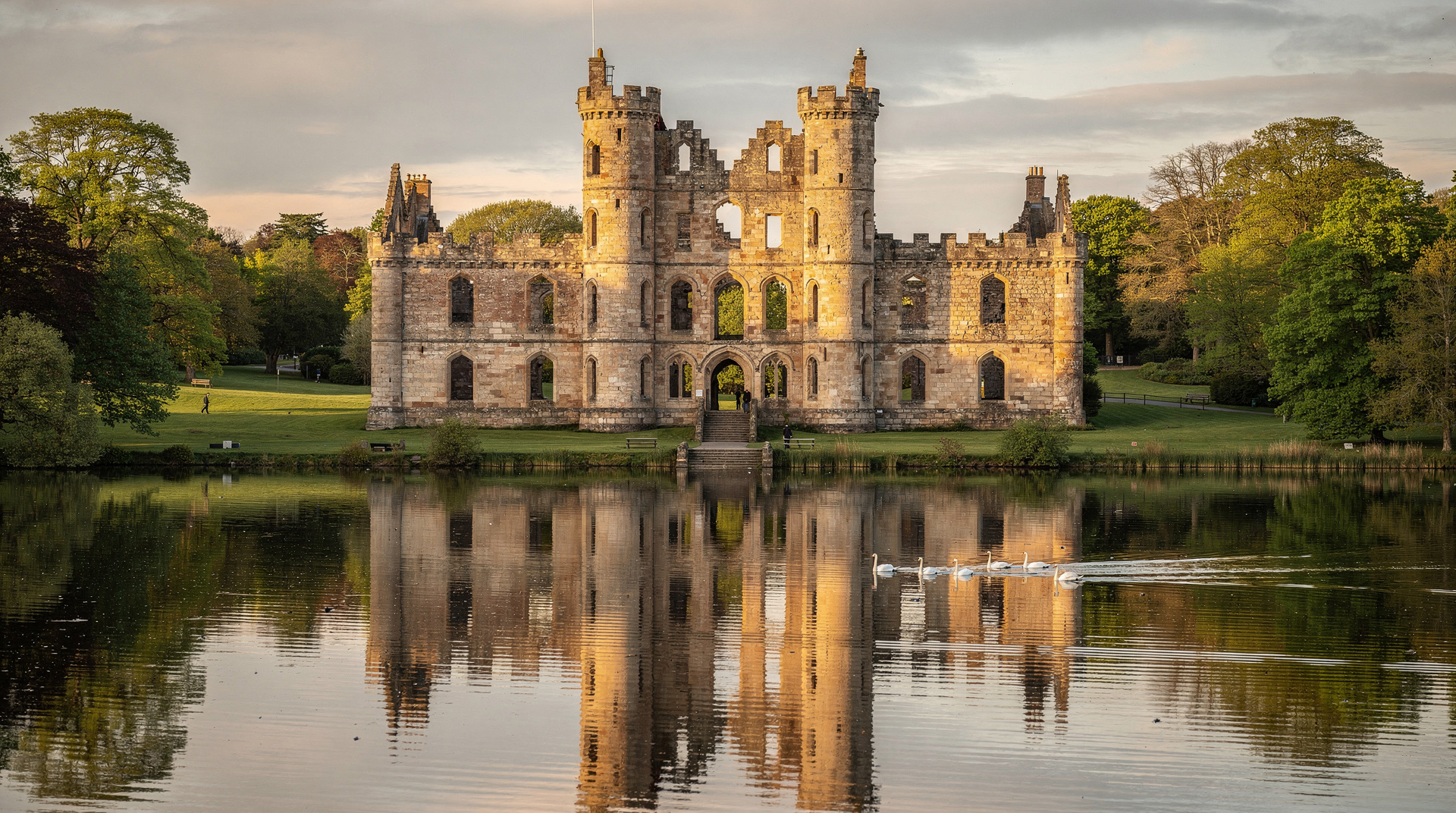
Roslin Glen Country Park is adjacent, offering a riverside walk. Glenkinchie Distillery, a Lowland malt whisky producer, is about 20 minutes east near Pencaitland — tours and tastings available daily (see the distilleries near Edinburgh guide). The Scottish Borders (Melrose, Jedburgh, Kelso) are 40-60 minutes south and make a natural extension of the day. Penicuik House (ruined 18th-century mansion, grounds free and accessible) is 3 miles west and worth a 30-minute stop if you have a car and enjoy Georgian architecture.
Is Rosslyn Chapel suitable for children?
Yes, with some preparation. Children who have seen the Da Vinci Code film or have an interest in medieval buildings will find plenty to engage with. The Green Man hunt — how many of the 110+ Green Men can you find in the chapel? — works well as a structured activity for older children. The visitor centre has display materials accessible to younger visitors. Roslin Glen Country Park immediately after the chapel visit provides good outdoor space and a riverside walk for children to run around after a period of quiet interior visiting. The glen is free and accessible in all weathers.
Top experiences
Bookable activities with verified prices and instant confirmation on GetYourGuide.