Linlithgow
Linlithgow from Edinburgh in 30 minutes: Mary Queen of Scots' birthplace, the ruined palace on the loch, and a peaceful half-day in West Lothian.
Edinburgh: Linlithgow, Falkirk, Lallybroch & Kelpie shuttle with guide
Quick facts
- Best time to visit
- Year-round; loch particularly beautiful in autumn
- Days needed
- Half day
- Getting there from Edinburgh
- ~30 min by train from Edinburgh Waverley to Linlithgow station
- Budget per day
- £20–£50; palace entry £10 online; town and loch free
A royal palace overlooking its loch
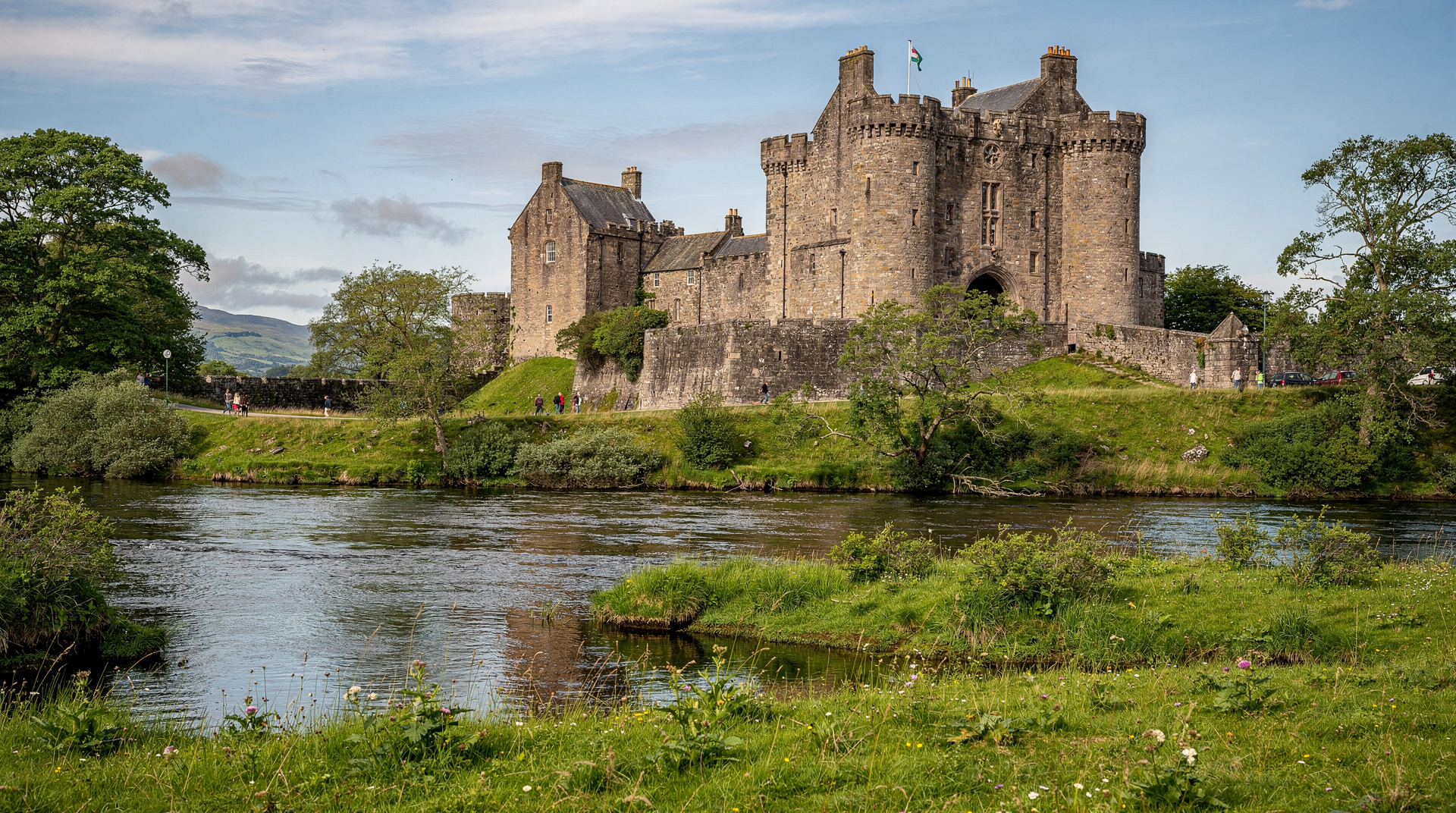
Linlithgow is one of those Scottish towns that rewards the small amount of effort required to visit it. Thirty minutes from Edinburgh by direct train, it has a ruined royal palace that is genuinely impressive in scale, a loch that makes the setting scenic and photogenic, and a manageable town that can be walked comfortably in a half-day without feeling crowded.
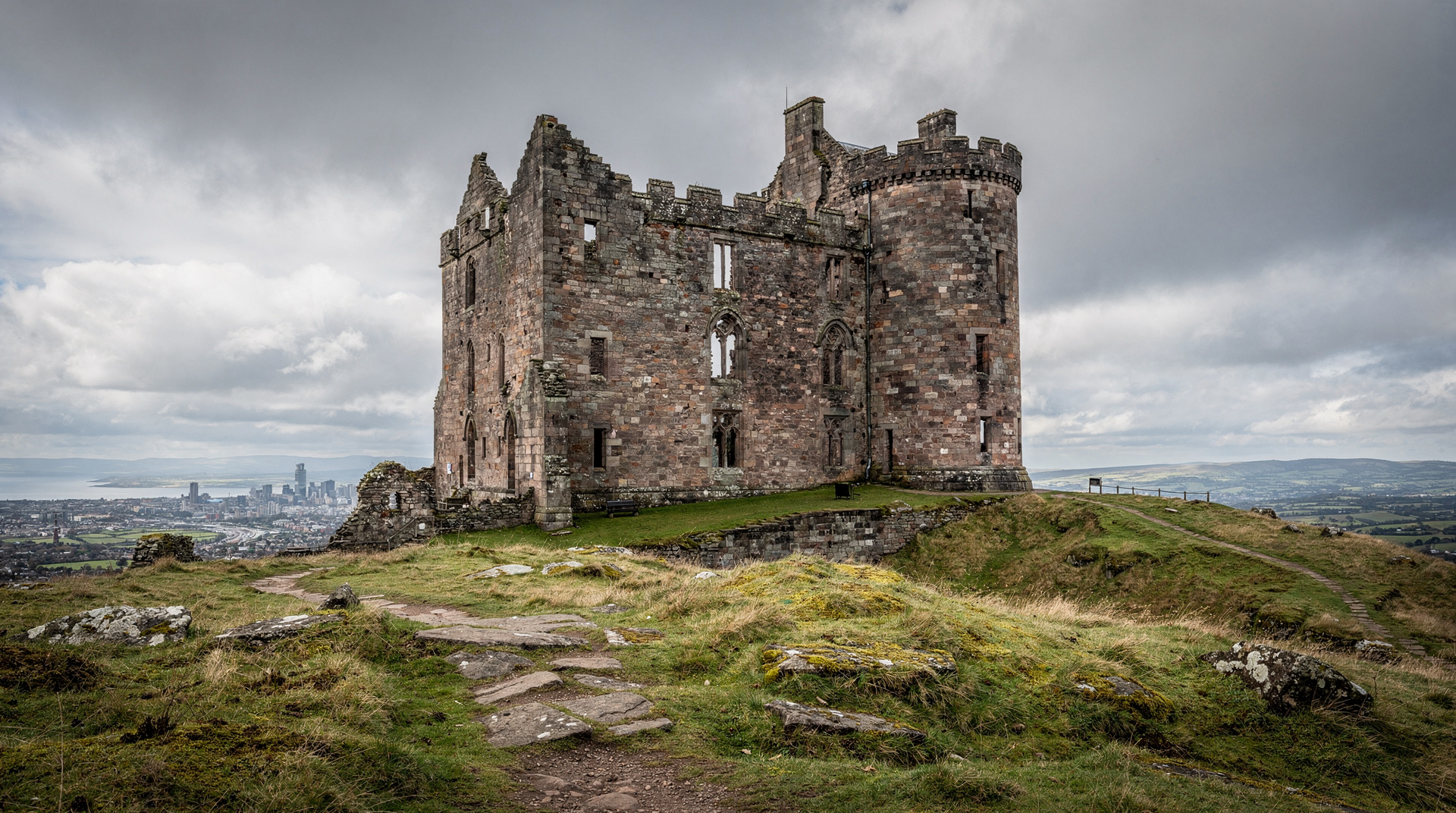
Linlithgow Palace is where Mary, Queen of Scots was born in December 1542, four days before her father James V died. It was also the birthplace of James V himself and was used regularly by the Scottish royal court from the 15th century through to the early 17th century. The building you see today is an open-roofed shell — it was damaged by fire in 1746 when Hanoverian troops were billeted there during the Jacobite aftermath — but the surviving walls and towers give a clear picture of the scale and ambition of the original: an impressive four-towered Renaissance palace around a central courtyard, with the loch and the town below it.
The palace is one of the most undervisited significant royal sites in Scotland, which is genuinely puzzling given how easy it is to reach from Edinburgh and how much survives.
The palace in detail
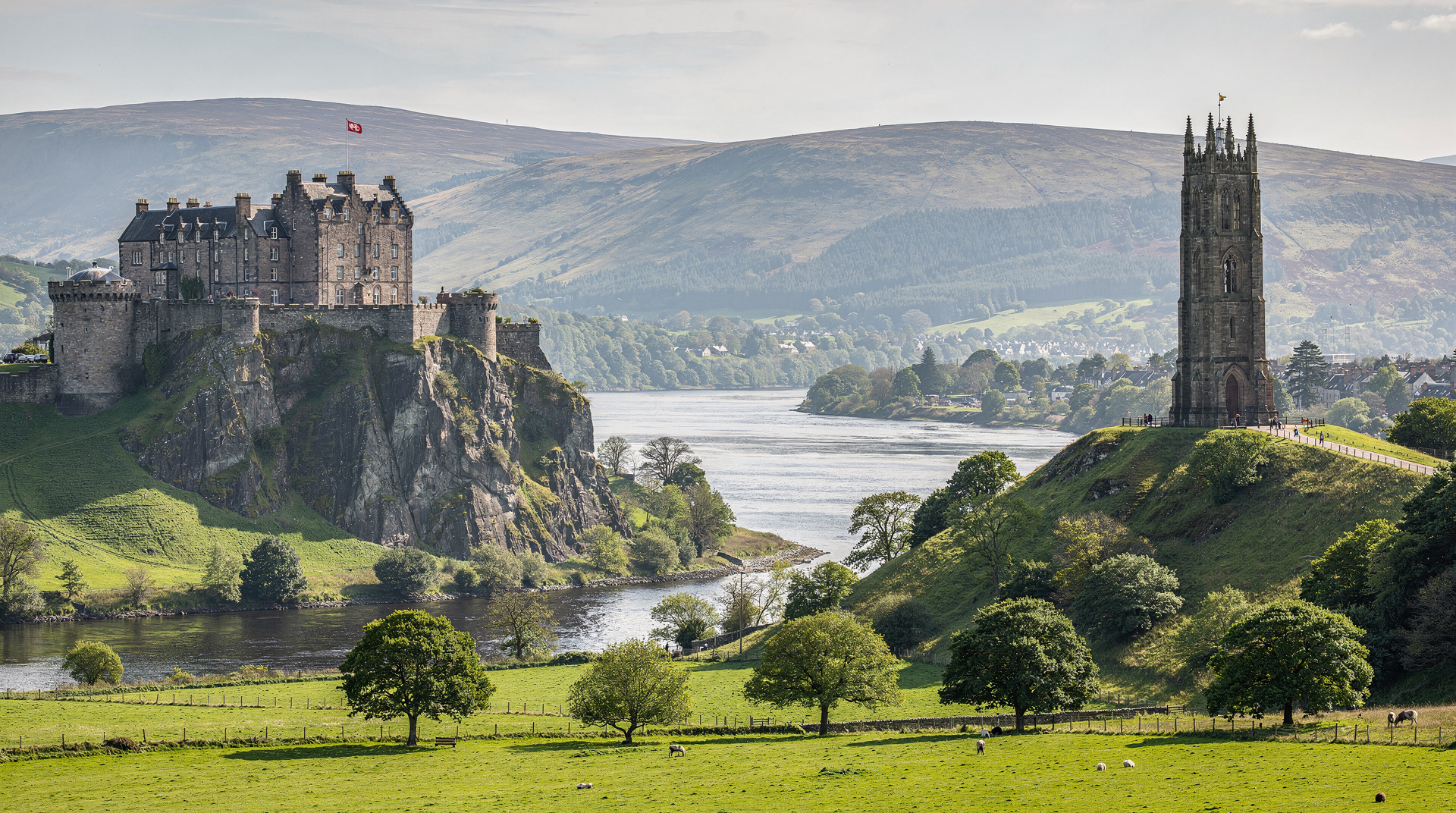
Linlithgow Palace sits on a promontory above Linlithgow Loch, connected to the main road by a short road past the adjacent St Michael’s Parish Church. The church is worth entering if it is open — it has a striking modernist crown of thorns spire added in 1964, controversial when built and now simply part of the Linlithgow skyline.
Entry to the palace is managed by Historic Environment Scotland. The four-storey range on the east side is the best preserved and includes the great hall, the chapel, and the royal apartments on the upper floors. The great hall, with its large fireplace and the remains of its carved stonework, gives the most complete impression of what the interior looked like in use. The central courtyard contains a decorative fountain — a 16th-century original, one of the finest Renaissance fountains in Scotland, restored and occasionally operational. Allow 60-90 minutes inside.
The views from the upper floors and the tower stairs across Linlithgow Loch are excellent. The loch itself, directly below the palace’s south-facing walls, is a Site of Special Scientific Interest with wildfowl including swans, grebes, and various duck species. The loch shore is walkable from the town.
Mary, Queen of Scots and the Stuart court
Linlithgow’s connection to Mary, Queen of Scots is the most historically resonant aspect of the visit. She was born here, left for France as a six-day-old in 1548 to be raised at the French court and eventually married to the Dauphin, and returned as an adult to a Scotland she barely knew. The palace she knew as a child has been a ruin since 1746, but the basic structure — four towers around a courtyard, the loch below — is recognisable.
For visitors following Mary’s story across Scotland, Linlithgow connects directly with Edinburgh (Holyrood Palace, where she held court after her return), Stirling Castle (where she was crowned, and where her son James VI was baptised), and Loch Leven Castle (where she was imprisoned before escaping). The Stirling guide covers the castle and its Mary connection; the Edinburgh Castle and Holyrood Palace guide cover the Edinburgh end.
Outlander filming connections
Linlithgow and the surrounding area feature in the Outlander television series, which filmed extensively in Scotland. Midhope Castle, about 5 miles east of Linlithgow near the Hopetoun Estate, was used as Lallybroch (the MacKenzie-Fraser home in the series). It is accessible on foot from the public road, though the interior is a private estate and not open.
The Linlithgow, Falkirk, Lallybroch and Kelpie shuttle tour from Edinburgh combines all the Outlander connections in this area — the palace, Midhope Castle/Lallybroch, and the Kelpies sculpture at Falkirk — in a single guided day. This is the recommended approach for Outlander fans who want to understand the filming locations in context without driving on unfamiliar Scottish roads. For a broader sweep of Outlander sites across a full day, the Outlander one-day experience tour covers Linlithgow alongside other filming locations further afield.
Guided tour vs independent visit: the Linlithgow calculation
Linlithgow is one of the easiest destinations near Edinburgh to visit entirely independently — the direct 30-minute train removes any need for a car or a guide, and the palace, church, and loch walk are all within a few minutes of the station. A guided tour becomes worthwhile specifically for the Outlander angle: Midhope Castle (Lallybroch) is on private land with no public transport access, so seeing it without a car realistically means either a taxi from Linlithgow station or a structured tour that includes the stop. For visitors without an Outlander interest, the train-and-walk approach is simpler and cheaper.
Falkirk and the Kelpies
Falkirk is about 10 miles east of Linlithgow and adds the Kelpies — two 30-metre-high steel horse-head sculptures by artist Andy Scott, representing the heavy horses that powered the Central Scotland industrial economy — and the Falkirk Wheel, the only rotating boat lift in the world, connecting the Union Canal and the Forth and Clyde Canal. Both are free outdoor attractions (the Wheel has a paid boat ride through the lift mechanism, worth doing for the engineering interest).
A half-day in Linlithgow and an afternoon in Falkirk makes a natural combined day trip from Edinburgh, particularly for families or those interested in Scottish industrial heritage alongside the royal history. The drive from Linlithgow to Falkirk takes about 20 minutes.
Getting from Edinburgh to Linlithgow
ScotRail runs direct trains from Edinburgh Waverley to Linlithgow, taking about 30 minutes. Services run roughly every 30 minutes during the day. The station is a 5-minute walk from the palace entrance. Return fares are typically around £8-£15 depending on timing.
By car from Edinburgh, the route west on the M9 is about 16 miles — allow 25-30 minutes. Parking is available in the town centre near the palace.
The Union Canal and Linlithgow’s industrial heritage
The Union Canal connects Edinburgh to the Forth and Clyde Canal at Falkirk and passes through Linlithgow, where a small Canal Museum sits at the basin on the edge of town. The canal opened in 1822 and carried coal, passengers, and goods between Edinburgh and the Forth estuary until railways made it economically redundant. The Linlithgow Union Canal Society runs horse-drawn boat trips along the canal in summer — a gentle and historically unusual way to see the countryside, and particularly suited to families with young children. The museum itself covers the engineering and social history of the canal network with good displays.
The Falkirk Wheel, about 10 miles east, reconnected the Union Canal with the Forth and Clyde Canal after decades of separation. Completed in 2002, it is a rotating boat lift — the only one of its kind in the world — that raises boats 35 metres between the two canals. The visitor centre and boat trips through the Wheel are free and paid respectively. Worth 90 minutes if engineering or industrial heritage is a priority.
Hopetoun House
Hopetoun House, about 5 miles east of Linlithgow on the south shore of the Firth of Forth, is one of the finest stately homes in Scotland. Designed initially by Sir William Bruce and expanded by William Adam and his sons in the early 18th century, the baroque main facade overlooking the Forth estuary is exceptional. The interior holds good collections of Old Masters, period furniture, and the kind of accumulated family portraits that give a house its character. Current entry prices are on the official Hopetoun House website; the parkland is accessible separately.
The red deer that graze freely in the parkland are a genuine wildlife attraction. On a clear day, the view from the terraces over the Firth of Forth to the Fife hills beyond is one of the finest prospects in the Edinburgh region. Hopetoun was also used extensively in Outlander filming — the house served as Versailles and Sandringham among other interiors in the series. Midhope Castle (Lallybroch) is on the same Hopetoun Estate, making the combination particularly worthwhile for Outlander visitors.
Hopetoun is open seasonally (typically Easter to September) rather than year-round, so check the current calendar before building it into a Linlithgow day — visiting outside the open season means the parkland and red deer remain viewable from public paths, but the house itself will be closed. Combined with Linlithgow Palace and the Kelpies, Hopetoun makes a rich but ambitious single day; most visitors find pairing it with just one of the other two more comfortable than all three.
Mary, Queen of Scots: the broader trail
Mary’s story is one of the most dramatic in European history, and the Scottish sites connected to it form a natural trail accessible from Edinburgh. Born at Linlithgow; crowned at Stirling Castle; held court at Holyrood; gave birth to James VI in Edinburgh Castle; imprisoned at Loch Leven; defeated at Langside; executed at Fotheringhay in England in 1587.
Linlithgow is the beginning of that story. The palace where she was born has been a ruin since 1746, but the scale of what survives — the four towers, the great hall, the loch setting — gives a physical sense of the court into which she was born. The fact that she left for France at six days old, never to return until she was 18 and a widow, is the central irony of her Scottish life: the kingdom she was meant to rule was also a country she barely knew.
For visitors following the Mary trail, the Edinburgh Castle guide covers the birth of James VI, and the Holyrood Palace guide covers her Edinburgh court. The Stirling guide covers the coronation site and later Stuart history.
Linlithgow Loch and wildlife
Linlithgow Loch, immediately south of the palace, is a Site of Special Scientific Interest and one of the better birdwatching lochs in the Lothians. The breeding season (April-June) produces great crested grebe, tufted duck, pochard, and mallard as well as the mute swans that are the most visible residents. In winter, the loch attracts whooper swans, goldeneye, and occasional diving ducks.
The loch perimeter walk (about 2.5 miles) is an easy and pleasant circuit that gives views of the palace from the south shore — the view of the four towers reflected in the loch is the most photographed view in Linlithgow. The path is mostly flat and surfaces are good. Allow 45-60 minutes at an easy pace.
The wetland margins at the western end of the loch also provide good dragonfly watching in summer, and the reed beds have attracted bittern in some winters — a rare event worth knowing about if you have a birding interest.
The Kelpies and the Falkirk connection
The Kelpies — the two 30-metre steel horse-head sculptures by Andy Scott at the Helix Park in Falkirk — are the most distinctive large-scale public artwork in central Scotland. They were completed in 2013 and represent the heavy horses that powered the Central Scotland industrial economy in the 18th and 19th centuries. The sculptures stand beside the Forth and Clyde Canal at the point where it connects to the Union Canal (the canal that runs through Linlithgow), and the combination of waterway engineering and sculptural spectacle at the same site is genuinely impressive.
Entry to the Helix Park and viewing the Kelpies from the outside is free. The interior of one Kelpie is accessible on a ticketed guided tour (£9 per adult) and gives a remarkable perspective on the scale of the structures from within. The Falkirk Wheel, the rotating boat lift connecting the two canals, is 2 miles from the Kelpies and completes a coherent Falkirk infrastructure day.
Combined with Linlithgow Palace (30 minutes west of Falkirk by car), a Linlithgow-Falkirk day gives a range of Scottish history spanning the medieval royal court to the industrial revolution to contemporary public art — an unusually wide range for a single day trip.
Linlithgow with children and accessibility
Linlithgow is a genuinely easy half-day for families: the loch perimeter walk is flat and stroller-friendly, the palace’s ground floor and courtyard are accessible (though the upper floors and tower stairs are not, being a medieval ruin), and the town centre is compact enough that tired legs are never far from a café. St Michael’s Church is step-free at ground level. Historic Environment Scotland provides accessibility information for the palace on its website — worth checking in advance if step-free access to specific areas matters, since the building’s ruined state means accessibility varies significantly between the ground floor and the towers.
Practical information for 2026
Palace entry: £10 for adults when booked online (£11 on the day); Historic Environment Scotland managed. Open April-September daily 9:30am-5pm; October-March daily 10am-4pm. Check hes.scot for current times.
St Michael’s Church: Free entry when open (usually daily 10am-4pm in season). The modernist spire is worth viewing from outside even if the interior is closed.
Linlithgow Canal Centre: Open summer months; horse-drawn boat trips run seasonally. Check locally for current times.
Eating: The town has several decent cafés and pubs. The Four Marys pub on High Street (named after Mary Queen of Scots’ ladies-in-waiting) is the atmospheric lunch option. The Champany Inn about 2 miles east of Linlithgow is one of Scotland’s best-regarded steakhouses — worth booking if you plan to end the day here.
Currency: Prices in pounds sterling (£). See the Edinburgh currency guide for exchange advice.
UK ETA: International visitors should check the UK ETA guide for entry requirements.
The 1746 fire and the end of royal Linlithgow
The palace’s destruction in 1746 is one of the more depressing episodes in Scottish heritage history. General Henry Hawley’s Hanoverian troops were billeted in the palace after the Battle of Falkirk (January 1746, one of the final Jacobite victories before Culloden). On the morning of 1 February 1746, fire broke out — almost certainly from soldiers leaving fires unattended — and swept through the building, destroying roofs and floors throughout. The outer walls survived, which is why the ruin retains its four-tower profile, but the interiors were gutted. The building was never repaired. It had been in decline as a royal residence since the court moved to London with James VI in 1603, and after 1746 it was simply abandoned.
The irony is that the palace had been refurbished as recently as 1618-24 (the north range, including the James V-period range that survives best) and was not in a state of structural decay when the fire occurred. The destruction was accidental, not deliberate — there is no evidence of the burning being intentional. The result, nonetheless, was that Scotland lost one of its finest Renaissance palaces to a domestic fire caused by careless soldiers.
The fate of Linlithgow Palace fits a pattern in Scottish heritage: many of the country’s most significant medieval and Renaissance buildings were lost not to war but to fire, neglect, and Reformation iconoclasm. The contrast with England, where more medieval architecture survived the Reformation intact (Canterbury, York Minster, Windsor), reflects the more violent character of the Scottish Reformation and the instability of the 16th-17th century border conflicts.
Frequently asked questions about Linlithgow
Why is Linlithgow important in Scottish history?
It was one of the principal residences of the Scottish royal court from the 15th century, and the birthplace of both James V and Mary, Queen of Scots in 1542. The palace was used regularly by Stuart monarchs and was one of the grandest royal residences in Scotland before its destruction by fire in 1746.
How do I get from Edinburgh to Linlithgow by train?
Direct trains from Edinburgh Waverley to Linlithgow take about 30 minutes. Trains run roughly every 30 minutes during the day. The station is a 5-minute walk from the palace. Return fares are around £8-£15.
Is Linlithgow Palace worth visiting?
Yes, particularly if you have an interest in Scottish royal history or are following Mary, Queen of Scots’ story. The palace is a substantial ruin with good surviving stonework, an excellent setting on the loch, and a loch view from the upper levels. It is less well-known than Stirling or Edinburgh Castles and significantly less crowded.
What is the connection to Outlander?
Midhope Castle near Linlithgow (the Hopetoun Estate) was used as Lallybroch in the series. The Outlander filming locations guide covers all the accessible sites near Edinburgh, including which are worth visiting for fans versus which require a specific Outlander interest.
Can I combine Linlithgow with other destinations in a day?
Yes. Falkirk (the Kelpies, the Falkirk Wheel) is 20 minutes east and makes a natural pairing. Stirling Castle is 30 minutes west. Dunfermline is accessible via the Forth Road Bridge. The combination of Linlithgow in the morning and Falkirk in the afternoon makes a good full day for families.
Is Linlithgow accessible for families and visitors with mobility restrictions?
Largely yes. The loch perimeter walk is flat and stroller-friendly, the palace’s ground floor and courtyard are accessible, and the town is compact and walkable from the station. The palace’s upper floors and tower stairs, being a medieval ruin, are not accessible to wheelchairs. Check the Historic Environment Scotland website for current detailed accessibility information before visiting.
Do I need a guided tour to visit Linlithgow, or is the train enough?
For the palace, loch, and town centre, the direct 30-minute train is entirely sufficient — no guide or car is needed. A guided tour becomes useful specifically for Outlander fans wanting to see Midhope Castle (Lallybroch), which sits on private land with no public transport access.
Top experiences
Bookable activities with verified prices and instant confirmation on GetYourGuide.