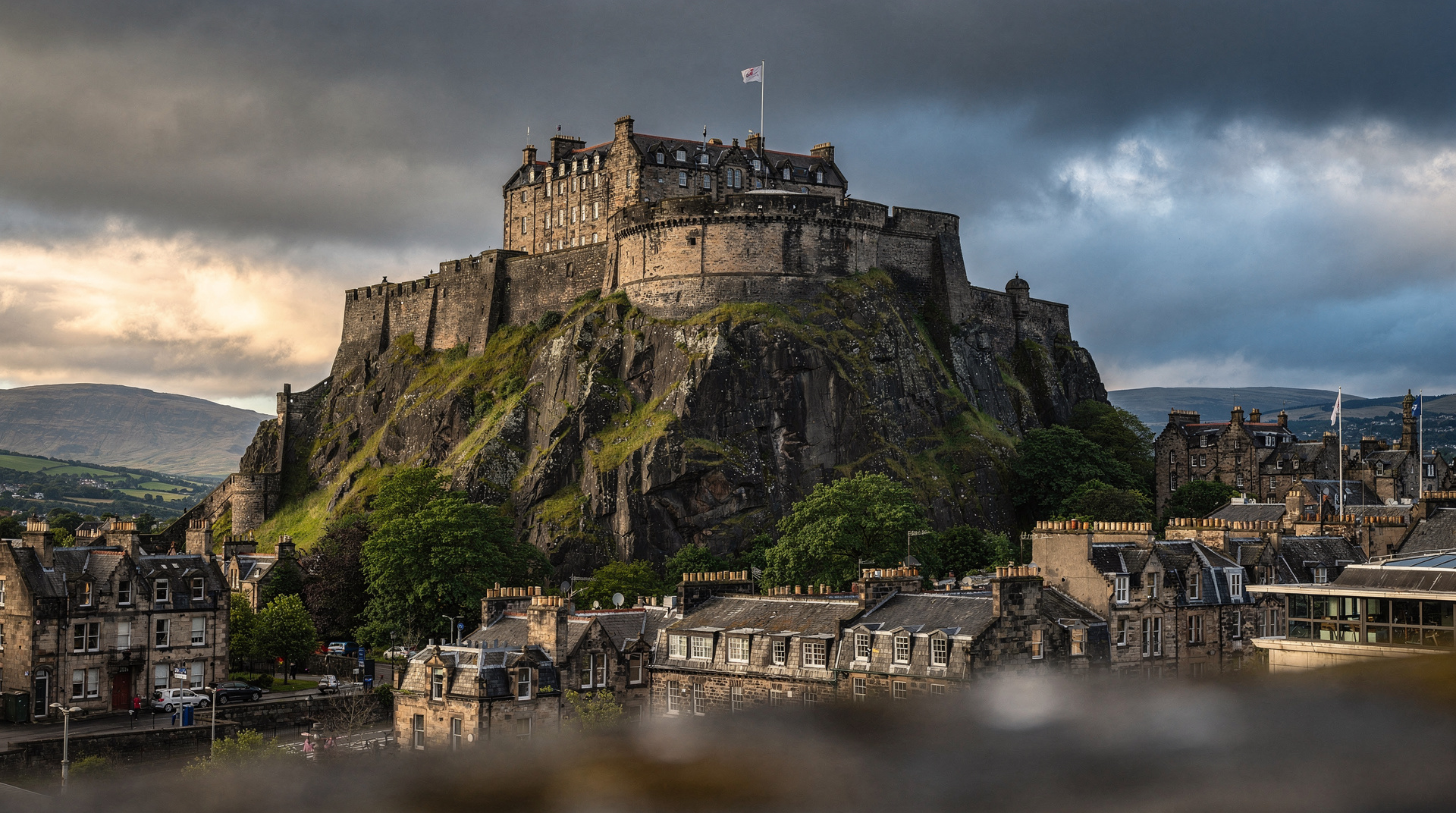
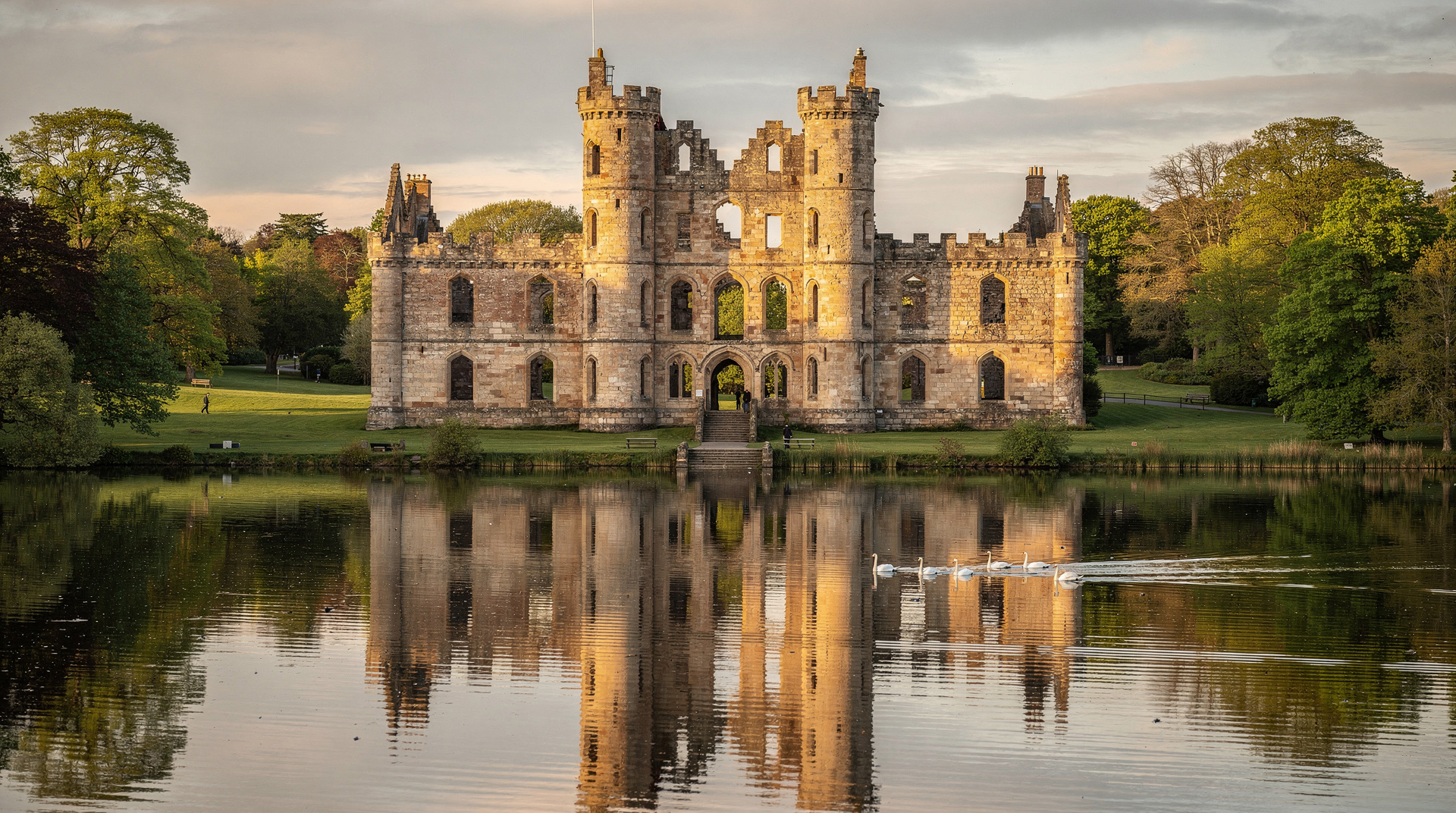
Scottish Borders
The Scottish Borders from Edinburgh: Melrose Abbey, Jedburgh, the Tweed valley, Hadrian's Wall, and honest advice on what to cover in a full day.
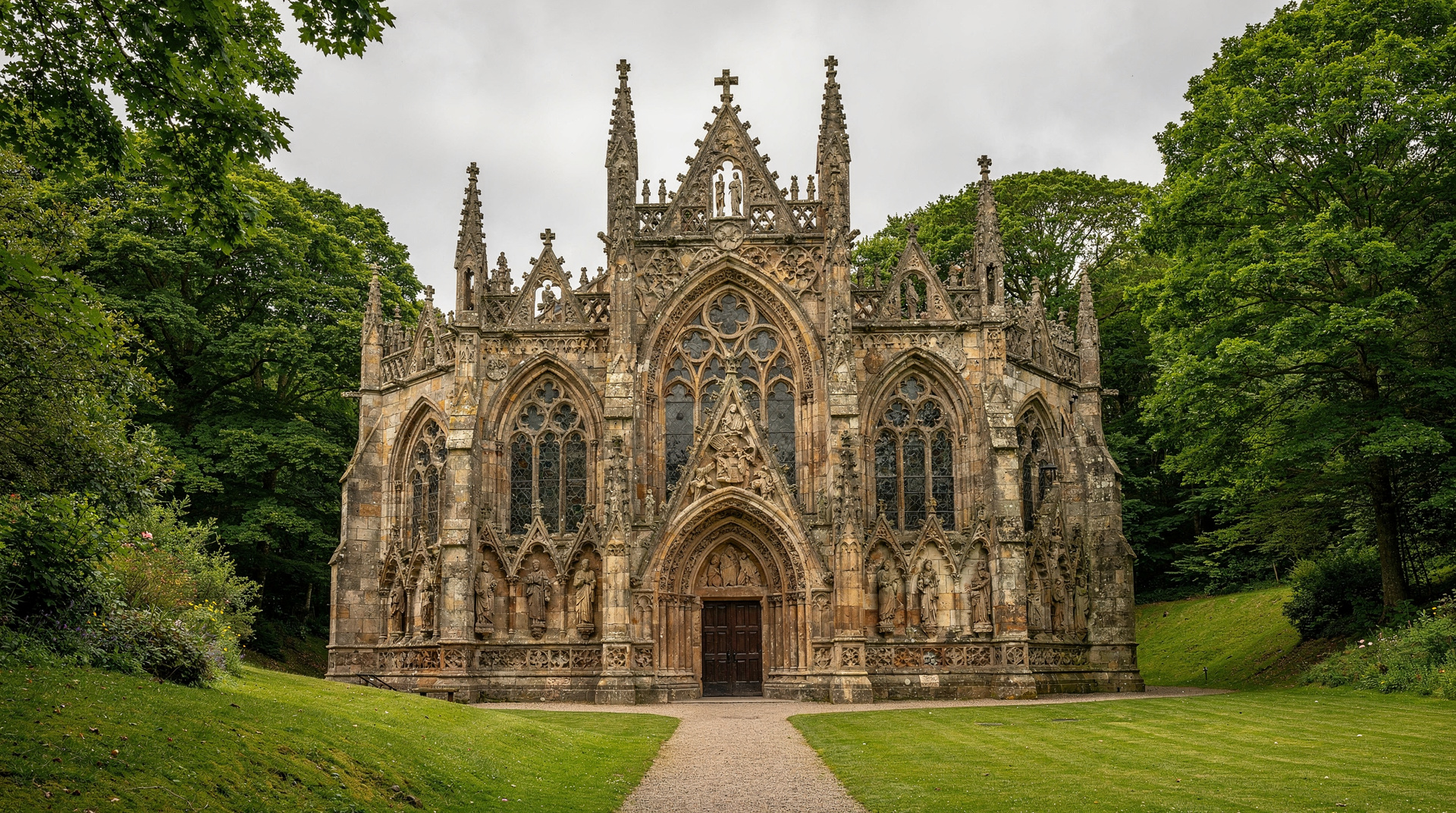
Edinburgh: Rosslyn Chapel and the Scottish Borders small-group tour
Quick facts
- Best time to visit
- May–October; spring for wildflowers, autumn for foliage
- Days needed
- 1 day (Melrose and Jedburgh); 2 days for Hadrian's Wall extension
- Getting there from Edinburgh
- ~1 hr to Melrose by car (A7/A68); some bus services available
- Budget per day
- £40–£90; abbey entries £7.50 each online; driving is the main cost
The unfashionable country with extraordinary abbeys
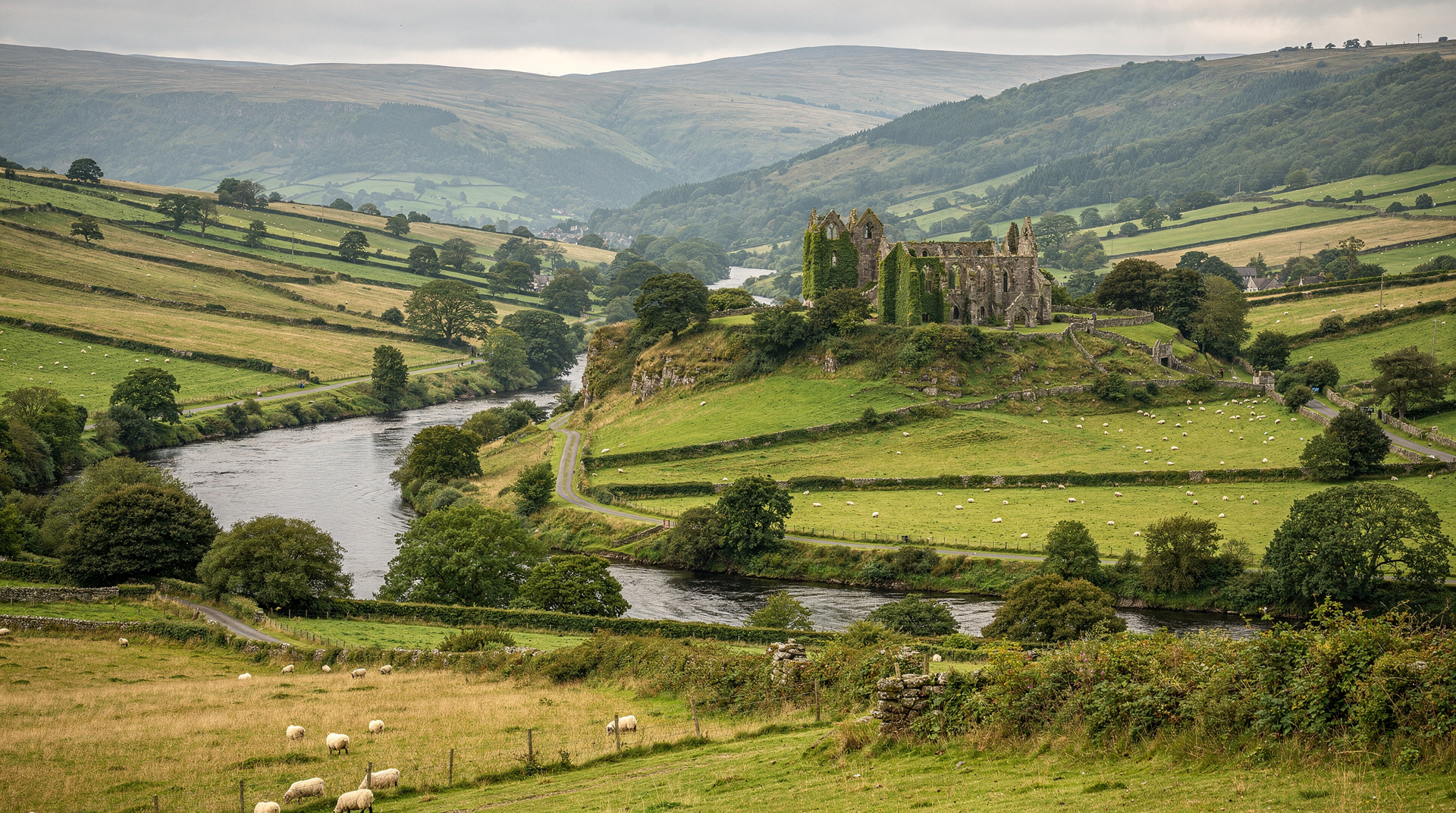
The Scottish Borders — the broad landscape of hills, rivers, and small market towns between Edinburgh and the English border — is one of the least-visited areas of Scotland relative to its historical interest. Most Edinburgh day-trip tourists head north to the Highlands, leaving the Borders to the Scots and the occasional Outlander fan looking for filming locations. This is, from the perspective of those who do go, excellent news: the four great Borders abbeys at Melrose, Jedburgh, Dryburgh, and Kelso are among the finest medieval ruins in Britain, and on a weekday outside July-August you will often have them nearly to yourself.
The Borders also means the Tweed valley — one of the great salmon rivers, running through a landscape of gentler hills than the Highlands, greener and more pastoral, with stone bridges and market towns that have their own character and history. And it means Hadrian’s Wall in its most accessible sections: the Roman frontier, 73 miles long, built from 122 AD on the orders of Emperor Hadrian to define the northern edge of the empire. The best-preserved sections are in Northumberland, just south of the Scottish border.
For Edinburgh visitors, the Borders is not the most obvious day trip — but for those interested in medieval history, archaeology, or landscape walking without Highland crowds, it is one of the most rewarding.
| At a glance | |
|---|---|
| Where | Rolling countryside between Edinburgh and the English border |
| Time needed | 1 day (Melrose and Jedburgh); 2 days with Hadrian’s Wall |
| Getting there | ~1 hr to Melrose by car; Borders Railway to Tweedbank (~55 min) |
| Typical cost | £40–£90; abbey entries £7.50 each online; driving is the main cost |
| Best time | May–October; spring for wildflowers, autumn for foliage |
| Do not skip | Melrose Abbey and, if time allows, Dryburgh’s riverside setting |
The four Border abbeys
The four Borders abbeys were founded between 1128 and 1150 by King David I as part of a deliberate Europeanisation of the Scottish church. They were wealthy and powerful institutions, repeatedly sacked by English armies during the 14th-16th centuries Wars of Independence and Border conflicts, and never fully recovered. The ruins are the result.
Melrose Abbey is the most visited and arguably the most significant. Robert the Bruce’s heart is buried here — when Bruce died in 1329, his physician Sir James Douglas took his heart to Spain to fulfil Bruce’s dying wish of crusade, was killed in battle with the Moors in 1330, and the heart was returned and buried at Melrose. A lead casket believed to contain the heart was found during excavations in 1921 and again in 1998. Entry is £7.50 when booked online (Historic Environment Scotland). The detail of the Perpendicular Gothic stonework — particularly the corbels carved with recognisable figures including a pig playing bagpipes — makes close inspection worthwhile.
Jedburgh Abbey in the Borders market town of Jedburgh is the most complete structurally — the north wall and tower stand almost to full height, giving the strongest impression of the original building. It was founded in 1138, and the nave arcading is particularly fine. Combined with the Mary, Queen of Scots House in Jedburgh town (the house where she fell ill during her visit in 1566), a Jedburgh visit gives a solid day.
Dryburgh Abbey near St Boswells is the most atmospheric: in a riverside setting on a bend of the Tweed, almost entirely enclosed in woodland, and quieter than the other three. Sir Walter Scott is buried here — which gives it a different kind of literary pilgrimage significance for those following Scottish literary history. Entry around £7.
Kelso Abbey in Kelso town is the most ruined — only a substantial but isolated section of the nave transept survives — but Kelso itself is one of the most attractive Borders towns, with a wide cobbled square. Worth stopping for an hour rather than specifically for the abbey ruin.
The four abbeys compared
If you cannot visit all four in one day, this is how they compare:
| Abbey | Condition | Known for | Worth a special trip? |
|---|---|---|---|
| Melrose | Substantial ruin, best-preserved stonework | Robert the Bruce’s heart; carved corbels | Yes — the default choice if visiting only one |
| Jedburgh | Most structurally complete, tower stands near full height | Nave arcading; paired with Mary Queen of Scots House | Yes, especially combined with Jedburgh town |
| Dryburgh | Atmospheric riverside ruin, wooded setting | Sir Walter Scott’s grave | Yes for the setting and literary pilgrimage |
| Kelso | Most fragmentary — a single surviving section | The town square around it, not the ruin itself | Only if already in Kelso for the town |
For a single-abbey day, Melrose is the strongest all-round choice; for a full Borders day with a car, Melrose plus Jedburgh covers the two most rewarding sites without over-extending the drive.
Hadrian’s Wall: the Roman frontier
Hadrian’s Wall is the most impressive Roman monument in Britain and one of the most significant in Europe. Built from 122 AD, it ran 73 miles from Wallsend near Newcastle to Bowness-on-Solway on the west coast, and was a complex military and customs frontier rather than simply a defensive wall.
The best-preserved sections are in Northumberland, roughly 40-60 miles south of Edinburgh. The UNESCO World Heritage Site section at Housesteads Roman Fort and the surrounding wall walk is the most accessible starting point — the fort itself includes a museum and the remains of the fort buildings including a granary, hospital, and latrine block. The wall walk east and west of Housesteads follows the original line and in places you walk on the original Roman foundations.
The Hadrian’s Wall and Scottish Borders small-group tour from Edinburgh combines the Roman wall with Borders scenery in a single guided day — this is the most efficient way to cover both if you do not have a car. The drive from Edinburgh to Housesteads is about 75 miles (approximately 1 hour 30 minutes via the A68 and A69).
The Rosslyn and the Roman Border day tour adds Rosslyn Chapel to the Hadrian’s Wall visit, making a double Scottish-historical day.
Sir Walter Scott’s country
The Scottish Borders has a strong literary association with Sir Walter Scott, who was born in Edinburgh but settled at Abbotsford, his large country house near Melrose, which he built between 1817 and 1825 and which is now open to visitors. Scott essentially invented modern Scottish national identity through his novels — Waverley, Rob Roy, Ivanhoe — and created the romanticised image of the Highlands and Borders that still shapes how Scotland is perceived internationally. Abbotsford is an interesting Victorian house with good collections; allow 90 minutes.
The Scott’s View viewpoint north of Melrose, over the Tweed bend toward the Eildon Hills, was Scott’s favourite view and is reached by a short drive or walk from the main road. The three Eildon Hills, which form a distinctive triple peak above Melrose, are of both mythological and archaeological significance: this was the seat of an Iron Age hillfort and is associated in legend with King Arthur and Thomas the Rhymer.
Getting from Edinburgh to the Scottish Borders
By car: The A68 south from Edinburgh via Dalkeith is the direct route to Jedburgh and the Tweed valley (about 50 miles to Jedburgh, 1 hour). The A7 via Galashiels and Hawick is the other main Borders route. A car is essentially required for visiting multiple abbey sites in a day.
By public transport: The Borders Railway (ScotRail) connects Edinburgh Waverley to Tweedbank (for Melrose, 10 minutes away by bus or taxi) in about 55 minutes. This makes Melrose accessible without a car. Bus connections to Jedburgh and Kelso are possible but require more time.
Guided day tours: The Rosslyn Chapel and Scottish Borders small-group tour is the most practical option for visiting the Borders without a car, combining Rosslyn Chapel with a drive through the Tweed valley.
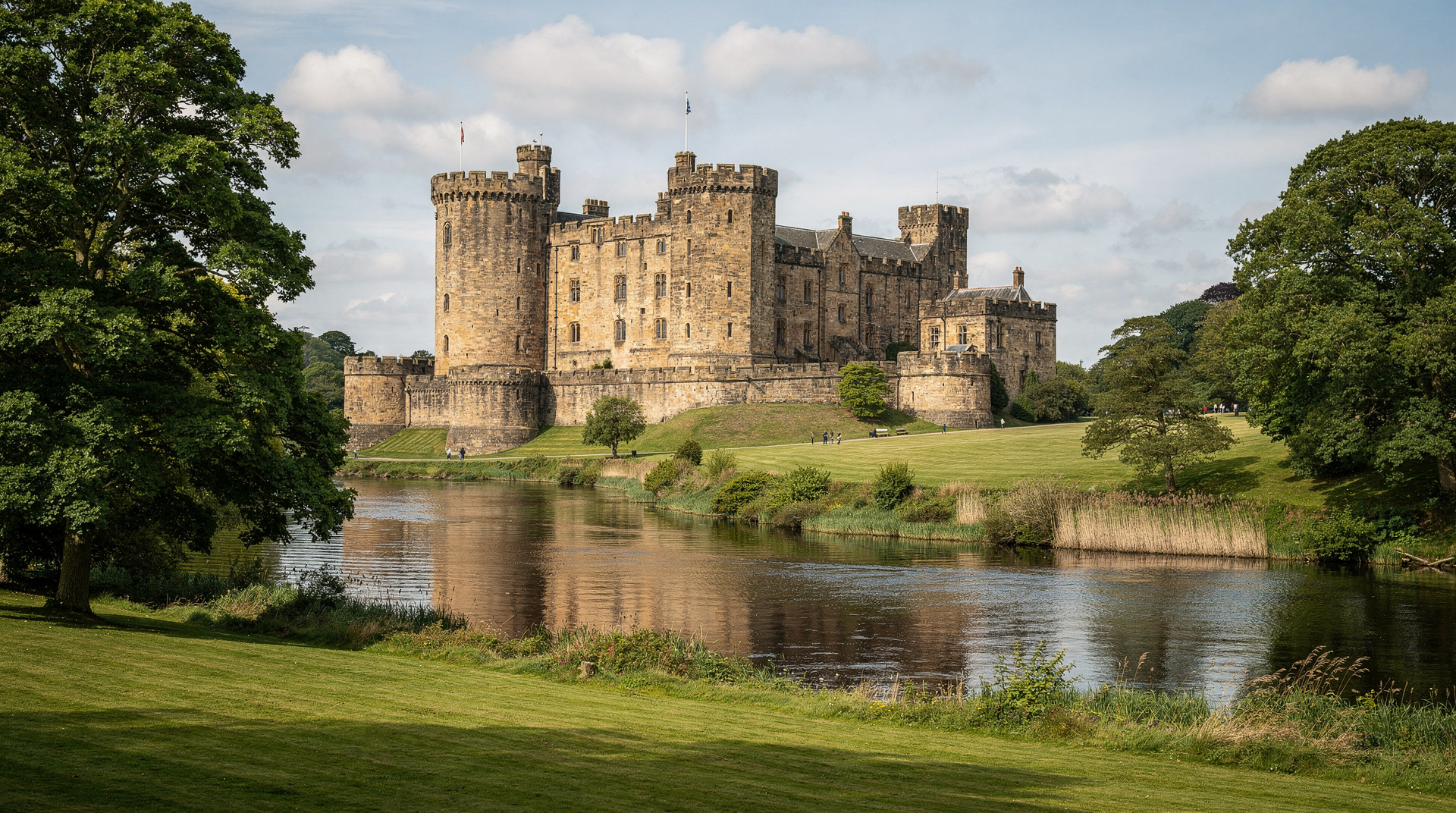
The Borders abbeys were built on a frontier that changed hands for three centuries, which is why they are ruins rather than cathedrals: an Alnwick Castle and Scottish Borders day tour puts the abbey ruins and the castle that outlasted them on the same day.
The textile towns and Borders culture
The Borders is not only medieval abbeys and Roman walls. The interior of the region — Hawick, Galashiels, Innerleithen, Peebles — has its own character based on the textile industry that dominated the area from the 18th century. Borders woollen and cashmere products are a legitimate heritage industry, not manufactured tartan-tat: the mills in Hawick have been producing cashmere and lambswool since the 1780s and some still operate today. The Peter Scott knitwear and Johnstons of Elgin factories at Hawick occasionally offer tours. Peebles on the Tweed is the most attractive Borders town for shopping — independent boutiques and a good high street alongside the river.
Jedburgh itself, beyond its abbey, is worth walking through: the medieval street plan is partly intact, and Mary, Queen of Scots’ House (actually a 16th-century fortified town house where she stayed during a November 1566 visit) is open as a museum. She fell seriously ill here after a riding accident in the muddy Border country, and contemporaries reported that she said she wished she had died at Jedburgh rather than lived for what came after — a comment made with 20 years of captivity and eventual execution still ahead of her. The museum is free.
Walking in the Borders
The Borders is walking country with very little of the congestion that affects Highland trails. The Southern Upland Way, Scotland’s first official long-distance footpath, crosses the region from Portpatrick on the west coast to Cockburnspath on the North Sea coast — 212 miles in total. Day sections in the Borders are accessible without completing the full walk.
The Eildon Hills above Melrose are a 90-minute circuit from the town and give panoramic views over the Tweed valley and across to the Cheviots. The summit is an Iron Age hillfort of significant size — the tribal capital of the Selgovae, a pre-Roman British tribe — and is associated in Border legend with King Arthur and the fairy kingdom under the hills. The walk begins from the Melrose town centre.
The River Tweed, one of Scotland’s great salmon rivers, can be followed on foot along sections of the Borders Abbeys Way (a 65-mile circular walking route connecting all four abbeys). Day walks from Melrose to Dryburgh (about 8 miles along the river bank) give the best combination of abbey visits and river scenery.
Practical information for 2026
Melrose, Jedburgh, Dryburgh abbeys: All Historic Environment Scotland managed, £7.50 per adult per site when booked online. HES Explorer Passes give free entry to multiple sites and work well across a Borders day combined with other Scottish heritage sites elsewhere.
Borders Railway: Edinburgh Waverley to Tweedbank, ~55 minutes, roughly every 30 minutes. The route through Midlothian is pleasant in itself and the Tweedbank station has a taxi rank for onward to Melrose (10 minutes).
Combining with Northumberland: The border is crossed south of Jedburgh on the A68. Alnwick Castle in Northumberland is a 50-minute drive from Jedburgh. See the Alnwick and Northumberland guide for the English side.
Currency: Pounds sterling throughout (Scotland and England both). See the Edinburgh currency guide for practical advice.
UK ETA: International visitors should check the UK ETA guide for entry requirements.
Frequently asked questions about the Scottish Borders
What are the best things to see in the Scottish Borders?
The four medieval abbeys (Melrose, Jedburgh, Dryburgh, Kelso) are the primary draw for most visitors. Abbotsford (Sir Walter Scott’s house), the Tweed valley scenery, Hadrian’s Wall, and the Eildon Hills walk are the other highlights. The town of Kelso has the best Borders market square.
Is Robert the Bruce really buried at Melrose?
His heart is, by strong historical evidence. The rest of his body is at Dunfermline (see the Dunfermline guide). The lead casket believed to contain the heart was rediscovered in 1998 during restoration work and reinterred in the abbey grounds, marked by a modern stone.
Can I visit the Scottish Borders without a car?
For Melrose, yes — the Borders Railway from Edinburgh gets you to Tweedbank (Melrose is 10 minutes away). For multiple abbey sites or Hadrian’s Wall in a single day, a car or guided tour is needed.
How far is Hadrian’s Wall from Edinburgh?
The best-preserved sections at Housesteads are about 75 miles south of Edinburgh — roughly 1 hour 30 minutes by car via the A68 and A69. The wall is in Northumberland and crosses the English border; it is usually combined with Borders scenery on guided day tours from Edinburgh.
What is the Borders best known for locally?
Rugby union (the Borders has a strong rugby tradition centred on the Melrose Sevens tournament, the oldest rugby sevens tournament in the world), textiles (Borders wool and cashmere manufacturing, still operating in Hawick), and the common ridings — annual festivals in the Borders towns marking traditional riding of the community boundaries. The Braw Lads’ Gathering in Galashiels and the Melrose Festival are the most accessible to visitors.
Kelso and the eastern Borders
Kelso, at the confluence of the Tweed and Teviot rivers, has the most beautiful town centre of the four abbey towns: a wide cobbled market square lined with Georgian buildings, a French-style town hall, and a range of independent shops and cafés that sustain a genuine local economy rather than being purely tourist infrastructure. The Kelso Abbey ruin is the smallest and most fragmentary of the four, but the view from the town square toward the ruined towers across the river is worth a photograph.
Floors Castle, on the edge of Kelso (open to visitors April-October), is the largest inhabited castle in Scotland, seat of the Duke of Roxburghe. The grounds and interior are open for tours; the garden walled section is particularly good in late spring. Entry around £12 for adults.
Across the River Tweed from Floors is Roxburgh Castle — not a managed site but an earthwork mound visible from the Kelso side, where James II of Scotland was killed in 1460 by an exploding cannon while besieging the castle from the English. The mound is freely accessible by foot from the riverbank.
Day trip logistics and route planning
The most coherent Scottish Borders day trip from Edinburgh follows this rough structure, adapted to your interests: leave Edinburgh by 9am on the A68 south; first stop Melrose (abbey, Scott’s View, Abbotsford if you allow time); drive east to Jedburgh (abbey, Mary Queen of Scots House); continue south on the A68 toward the Cheviots and Hadrian’s Wall if that is a priority (add 30-40 minutes each way), or loop west to Kelso for the late afternoon; return to Edinburgh via the A68 or A7. Total driving around 130-160 miles depending on routing, all on good roads.
For those wanting to combine the Borders with Rosslyn Chapel (30 minutes south of Edinburgh on the same A701 corridor that leads to Peebles and the western Borders), the Rosslyn Chapel guide covers that first stop. The full day would be Rosslyn in the morning and Melrose in the afternoon — a coherent arc through the medieval history of the Edinburgh hinterland.
The best day trips from Edinburgh guide places the Borders in context relative to other options. The three-day Edinburgh itinerary suggests the Borders or Rosslyn as a day-three day trip for visitors who have covered the main city attractions.
Borders food and what to eat
The Scottish Borders has its own food culture, less celebrated than Edinburgh’s but genuinely worth exploring. The regional specialities are rooted in the agricultural and pastoral economy: Border tarts (a pastry case filled with dried fruit, made across the Borders since at least the 17th century, each town claiming its own version), Selkirk bannock (a rich fruited yeast bread specific to Selkirk), and the herring dishes that historically came inland from the East Coast fishing ports.
For contemporary eating, Melrose has the most interesting options: Seasons Restaurant in Melrose is reliable for modern Scottish food; the Ship Inn at Earlsferry (across the Tweed if you are heading toward Kelso) and the Roxburghe Hotel near Kelso offer more formal dining. For a casual lunch on the road between abbey visits, every Borders town has a bakery selling excellent bridies (meat-filled pastries, the Borders variant of a pastie) and the café options in Melrose High Street are adequate.
The local beer is provided by the Broughton Brewery in Broughton (Peebles area) and the Tempest Brewing Company in Kelso — craft beer has taken root in the Borders, and both breweries’ products appear on tap in the better Borders pubs.
Currency and UK ETA for the Borders
The Scottish Borders, including the section that extends into Northumberland on the English side, uses pounds sterling throughout. There are no currency changes at the Scotland-England border. See the Edinburgh currency guide for practical exchange advice for non-UK visitors. International visitors should check the UK ETA guide for entry requirements before travelling.
Top experiences
Bookable activities with verified prices and instant confirmation on GetYourGuide.