Rosslyn Chapel day trip from Edinburgh: what to see and honest advice
Edinburgh: Rosslyn Chapel and the Scottish Borders small-group tour
How do I visit Rosslyn Chapel from Edinburgh?
Take bus 37A from Edinburgh city centre (40 minutes, no booking needed, runs hourly) or drive 7 miles south in 20 minutes. Entry to the chapel costs £12 for adults, with under-17s free (2026). Allow 1-1.5 hours on site. Easily combined with a Borders drive — or extend into a full day with a guided tour to Melrose and Jedburgh.
The honest case for Rosslyn Chapel
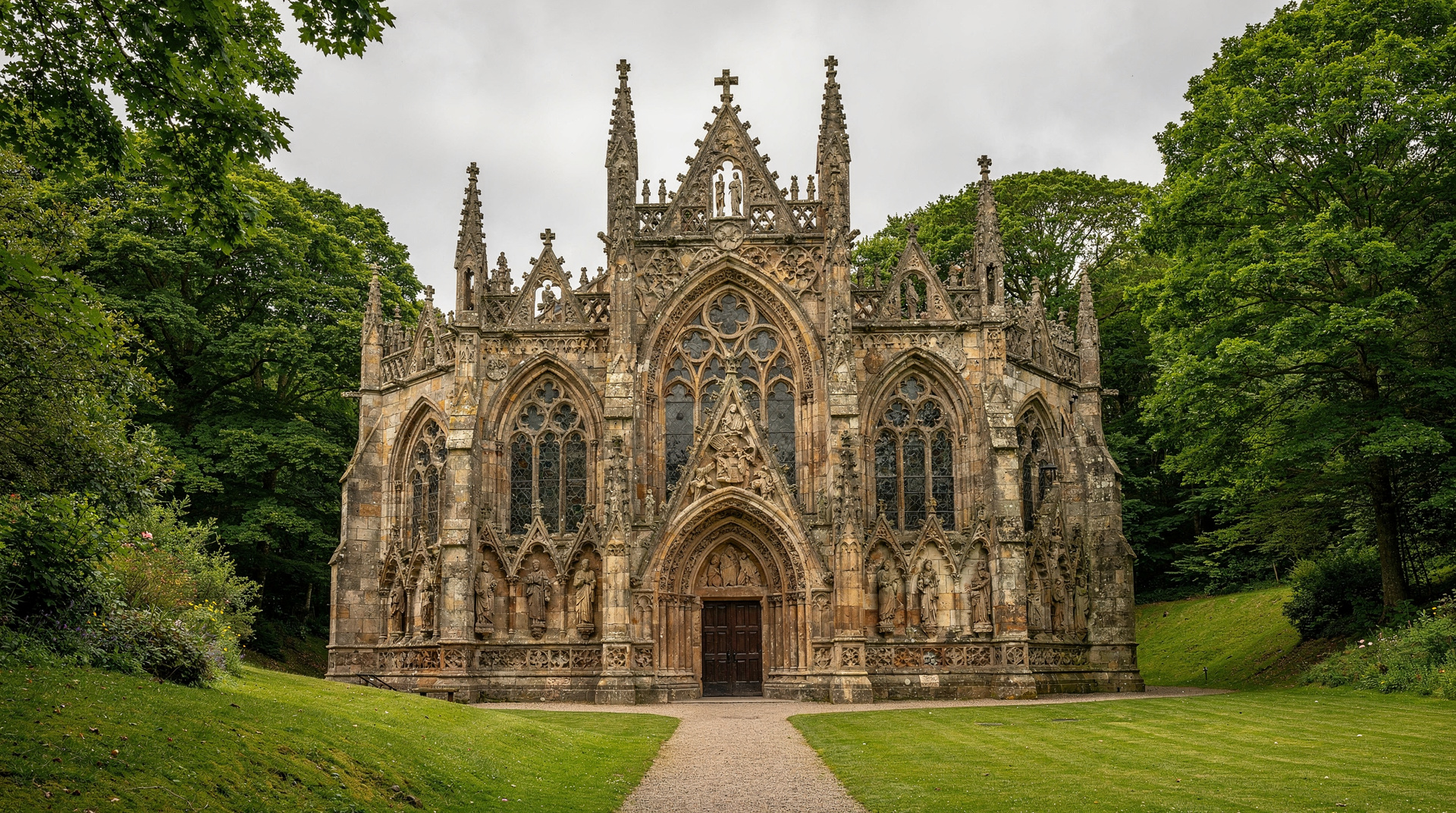
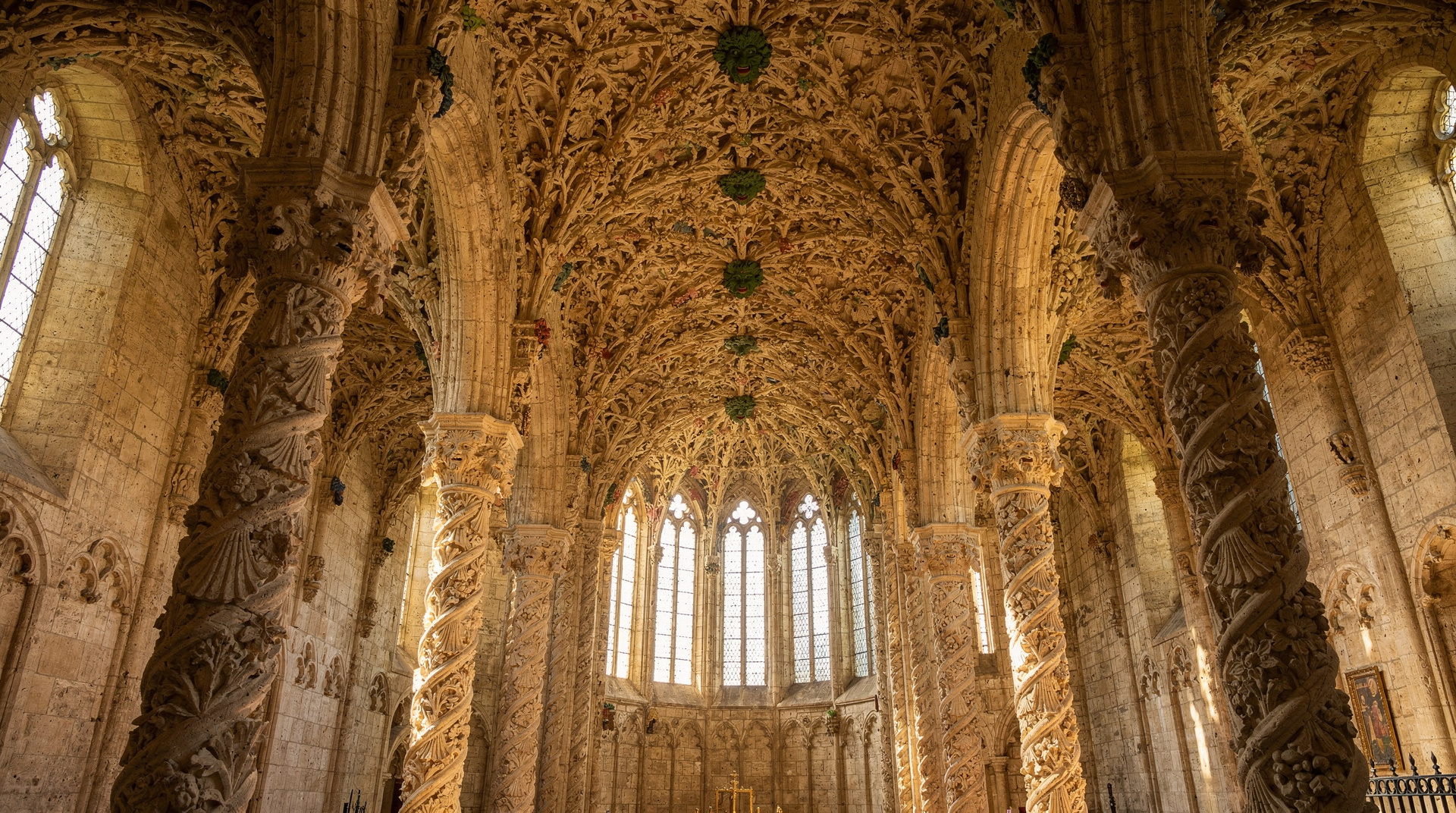
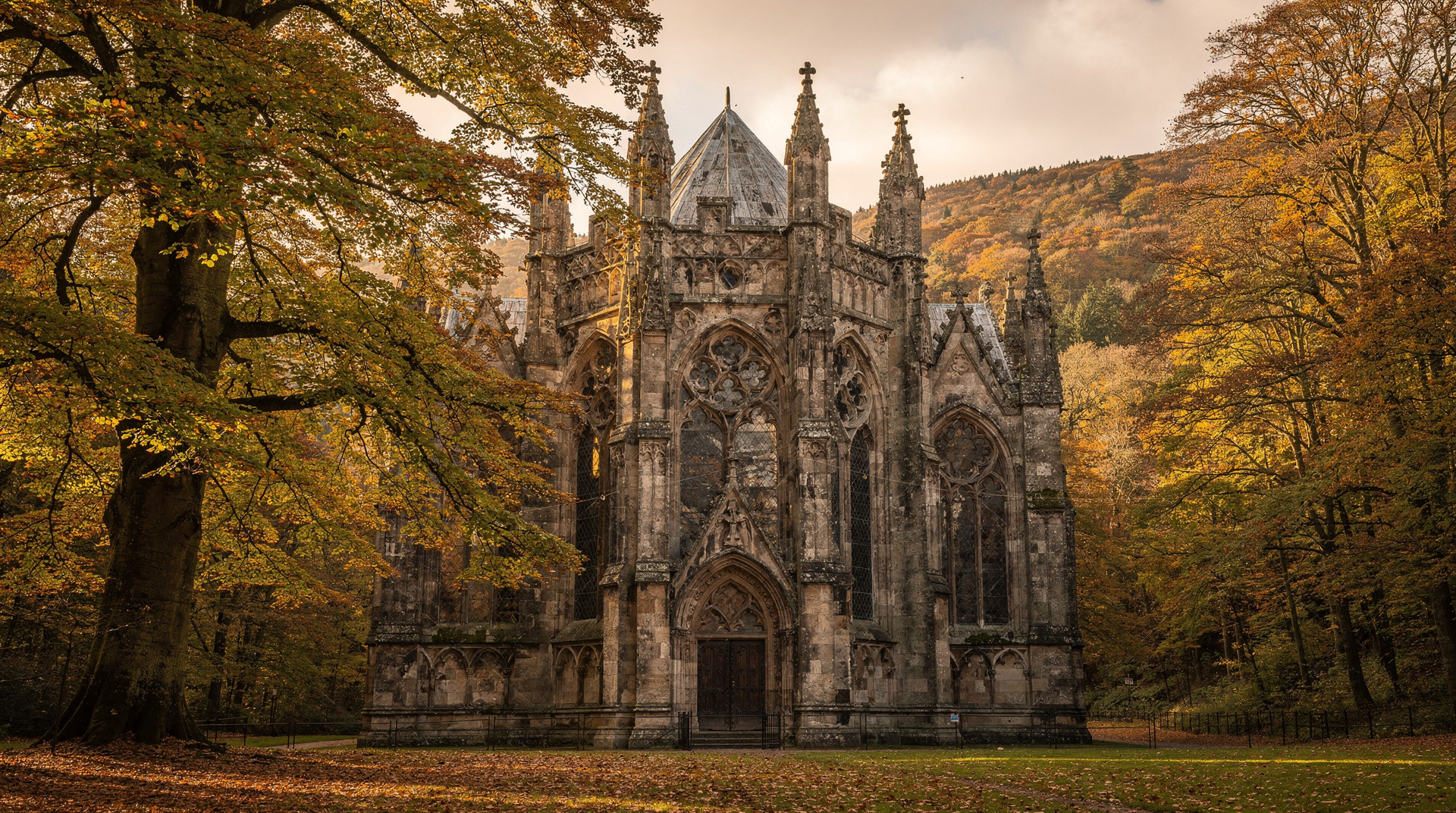
Rosslyn Chapel is small — about the size of a large English parish church — but the concentration of carved stonework inside it is extraordinary. Every surface that could receive decoration has been carved: columns, capitals, the arched ceiling, the window surrounds, the walls. The iconography is eclectic in the extreme, mixing Christian symbols with Green Man faces, foliage, angels, heraldic imagery, and geometric patterns in a way that has fed centuries of speculation about secret meanings.
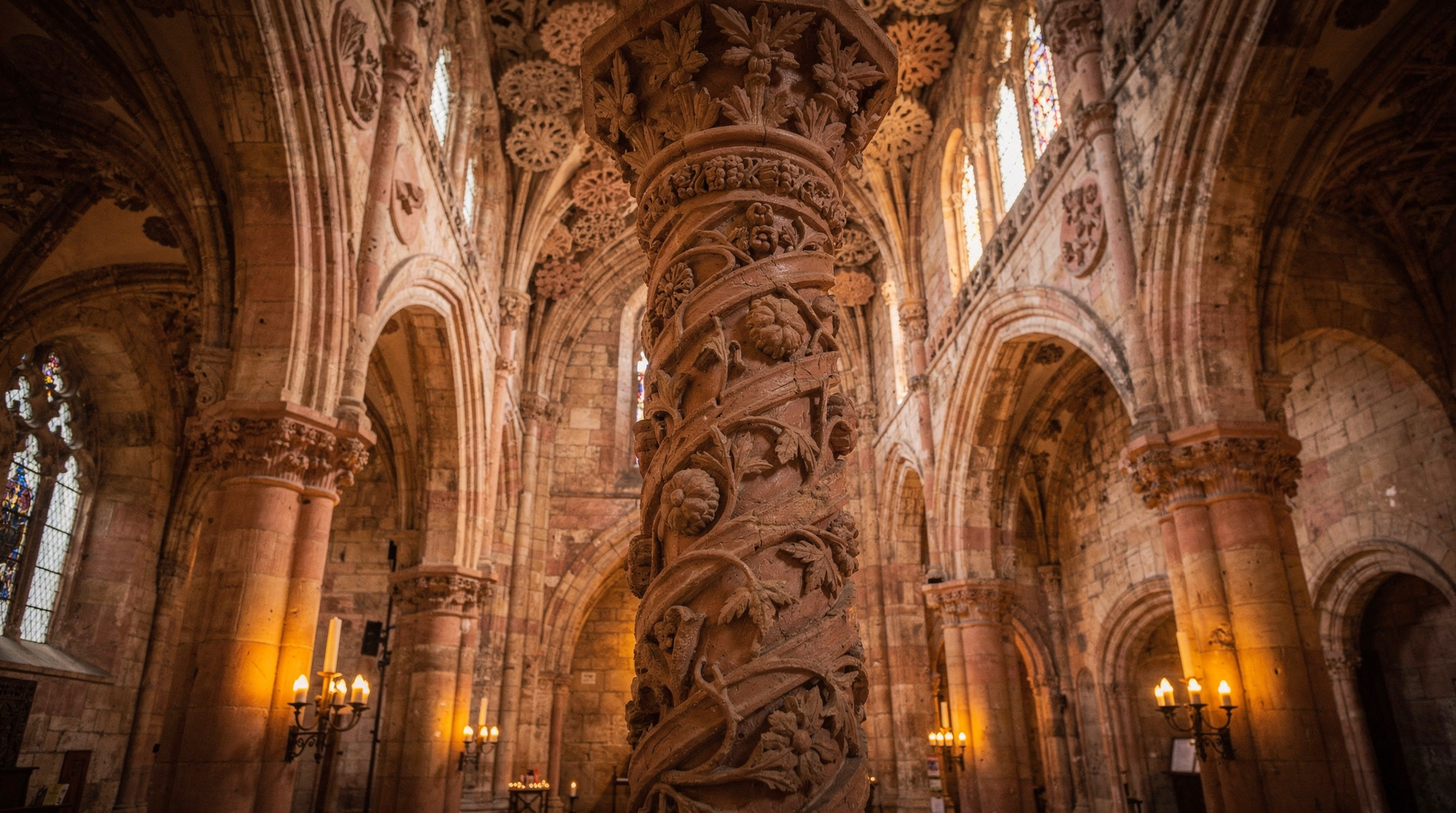
The Da Vinci Code made Rosslyn globally famous, and that familiarity is worth addressing directly: Dan Brown’s suggested significance for the chapel is fiction, but the chapel is genuinely remarkable independent of any conspiracy theory. The 15th-century stonework alone justifies the visit. The Apprentice Pillar — an elaborately carved column at the eastern end of the nave — is one of the most technically accomplished pieces of medieval carving in Scotland.
What makes Rosslyn particularly good as an Edinburgh day trip is the distance: seven miles south of the city centre, 40 minutes by bus, and easy to combine with a half-day in Edinburgh or a further drive into the Borders. It is Edinburgh’s closest worthwhile historical excursion.
| Where | Roslin village, 7 miles south of Edinburgh |
| Getting there | Bus 37A (40min) or car via A702 (20-25min) |
| Cost | £12 adult entry (£10 concessions, under-17s free) |
| Time needed | 1-1.5 hours; add 2-3 hours for the Pentlands or Borders |
| Best time | Before 11am or after 3pm to avoid coach parties |
Getting there from Edinburgh
By bus
Bus 37A runs from Edinburgh city centre (Princes Street) to Roslin village, stopping at the car park for Rosslyn Chapel. The journey takes 35-40 minutes and buses run approximately hourly. No booking required; this is a standard Lothian Buses service. Return tickets cost around £4-5. The bus service is reliable and the most straightforward option for visitors without a car.
Bus 37 also serves the route but takes a slightly different path; check the Lothian Buses app for the 37A specifically if timing is important.
By car
From Edinburgh city centre, drive south on the A702 through Fairmilehead and Loanhead to Roslin. The journey takes 20-25 minutes in normal traffic; postcode EH25 9PU for the chapel car park. Car parking at the site is managed separately from the chapel admission; check the Rosslyn Chapel website for current parking details.
By guided tour
The Rosslyn Chapel and Scottish Borders small-group tour from Edinburgh combines the chapel with a drive through the Borders, typically including Melrose Abbey and the Borders countryside. This makes a strong full-day excursion that extends the Rosslyn visit into a wider exploration of the Scottish Borders — a region that most Edinburgh visitors overlook entirely.
The Codebreakers’ Choice tour focuses specifically on Rosslyn’s alleged secrets and the Pentland Hills, with a guide who addresses the Da Vinci Code mythology in depth — enjoyable whether you believe any of it or not.
At the chapel
Entry and orientation
Entry to Rosslyn Chapel costs £12 per adult and £10 for concessions in 2026, and children under 17 go free (Rosslyn Chapel Trust website). The ticket includes entry to the small visitor centre / museum building adjacent to the chapel, which provides context on the building’s history and the carving programme. Allow 15 minutes there before entering the chapel itself.
Opening hours: Monday to Saturday 9am-5pm; Sunday 12pm-5pm. Visits run in 90-minute timeslots, and booking in advance is recommended. The chapel is closed on Christmas Eve, Christmas Day and New Year’s Day; check the Rosslyn Chapel Trust website before visiting.
The Apprentice Pillar
The most famous element of the chapel interior. Located at the south-east corner of the nave, the pillar is covered with spiralling foliage that winds up the full height of the column in a technically demanding carving that took extraordinary skill and time. The medieval legend attached to it — that an apprentice carved it while the master mason was away, the master returned and killed him in jealousy — is probably apocryphal but is so embedded in the chapel’s mythology that guides invariably tell it.
The carved ceiling
The ceiling of the Lady Chapel at the eastern end is covered with carved foliage, stars, and geometric patterns. The density of the decoration makes it almost overwhelming. Take time to read individual carved panels as well as looking at the overall effect — each section repays close attention.
The Green Man figures
Approximately 110 Green Man faces — the foliate head image of a face emerging from or composed of leaves — have been counted in the chapel carving. They appear at column capitals, at the junction of ceiling ribs, and on various architectural features throughout. The density of this image (found in medieval churches across Europe but rarely in such numbers in a single building) is one of the genuine mysteries of the chapel: what did the patron, Sir William Sinclair, intend by commissioning so many of them?
The underground sections
The chapel has an undercroft (crypt) beneath the choir that was used as a burial vault for the Sinclair family. It is accessible to visitors and has a different architectural character from the main chapel — simpler and more robust. Various theories about what is or was stored here have generated considerable literature; the reality is a well-preserved medieval burial crypt.
Combining Rosslyn with the Scottish Borders
The chapel alone is a half-day excursion from Edinburgh. Making it a full day requires driving south into the Borders.
Melrose Abbey: Approximately 35 miles south of Rosslyn on the A7, the ruins of Melrose Abbey (12th-century Cistercian, damaged repeatedly in Anglo-Scottish warfare) are among the finest medieval ruins in Scotland. The carving quality rivals Rosslyn; the pig playing bagpipes gargoyle is obligatory photography. Entry £7.50 online. Allow 45 minutes.
Dryburgh Abbey: A further 5 miles from Melrose, Dryburgh is quieter and more romantically overgrown than Melrose. Sir Walter Scott is buried here. Entry £7.50 online. Allow 30 minutes.
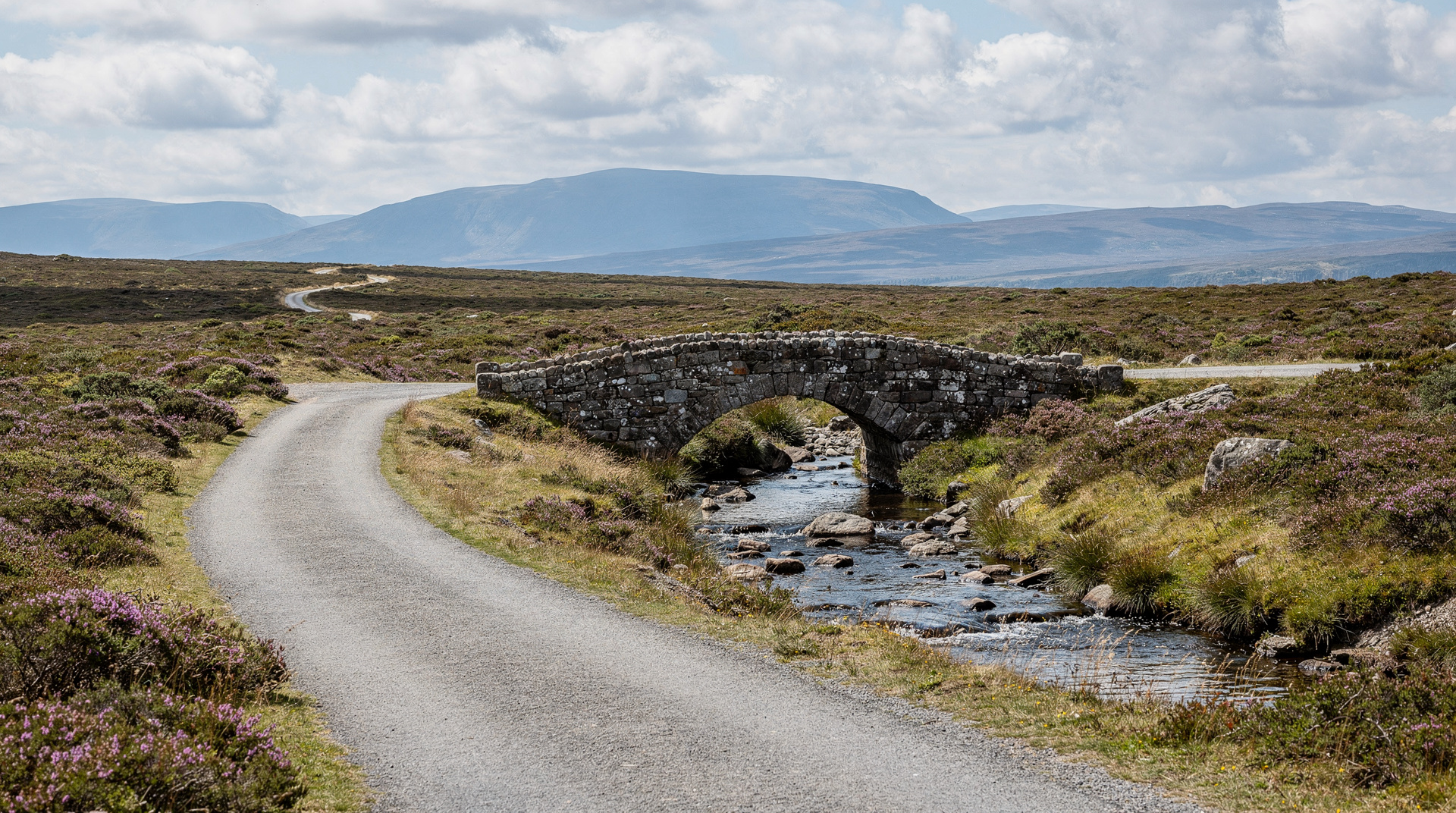
The Borders landscape: The valley of the River Tweed between Melrose and Galashiels is some of the most pleasant pastoral countryside in Scotland — rolling hills, well-maintained villages, and the occasional ruined tower house. The A68 road from Edinburgh through to Carter Bar (the Scottish/English border) is excellent driving.
The Rosslyn and the Roman border day tour extends south to Hadrian’s Wall, combining the chapel with a Roman history angle — a long but distinctive full-day circuit for those interested in both medieval and Roman Scotland.
Extending into the Pentland Hills
Rosslyn Chapel sits at the northern edge of the Pentland Hills — a range of gentle hills immediately south of Edinburgh that make one of the best urban fringes of any British city. The walking here is good: the hills are high enough (up to 579 metres at Scald Law) to give genuine views without requiring Highland gear, the paths are maintained, and the landscape is a pleasant mix of moorland and farmland.
The easiest approach from Rosslyn is to walk along the River North Esk north of the chapel to Bilston, then up onto the Pentland ridge path — a walk of about 2-3 hours return that requires only standard footwear in dry conditions. The views from the ridge give a clear perspective on Edinburgh below and the Firth of Forth beyond.
For walkers wanting a more structured route, the Pentland Hills Regional Park has a network of signposted trails from the main car parks at Hillend (the ski centre, south of Edinburgh on the A702) and Flotterstone (east of the hills). Hillend has an artificial ski slope that operates year-round and a chairlift that in summer gives good views with no hiking required.
The Pentland Hills and Rosslyn combination makes a good active half-day: bus to Roslin (40 minutes), chapel visit (1 hour), walk in the hills (2-3 hours), return bus from the Hillend car park.
The history of Rosslyn Chapel in context
Rosslyn Chapel was founded in 1446 by Sir William Sinclair, 3rd Earl of Orkney and 1st Earl of Caithness, as a collegiate church — a church served by a college of priests who would say masses for the soul of the founder and his family. The project was ambitious: the surviving chapel was intended to be only the choir (east end) of a much larger cruciform building that was never completed. The foundations of the nave and transepts are visible outside the east wall.
The Sinclair family were among the most powerful nobles in Scotland in the 15th century, with significant landholdings in Midlothian, Fife, and northern Scotland (hence the earldom of Orkney and Caithness). Sir William’s decision to commission such an elaborate building in such a remote location — the chapel is not in a town, it is in a small estate village — reflects the medieval custom of founding religious buildings as acts of piety and family commemoration rather than for a congregation.
The carving programme was directed by craftsmen whose origins are unknown; some stylistic analysis suggests Flemish influence in certain sections. The sheer volume of carving (every surface of the interior has been worked) reflects the original intent to cover the entire projected church, compressed into the surviving choir section.
The Reformation in Scotland (1559-60) resulted in the chapel losing its priestly college and falling into disuse for nearly a century. The Sinclair family retained ownership; Oliver Cromwell’s troops used the nave (the grass area outside the east wall) to stable horses during the 17th-century wars. The chapel was restored to active use in the 19th century and remains a functioning chapel of the Episcopal Church of Scotland.
What the conspiracy theories got wrong — and what is genuinely mysterious
The appeal of Rosslyn to conspiracy theorists (The Da Vinci Code, Holy Blood and the Holy Grail, various Masonic theories) comes from several genuine mysteries in the chapel:
The corn carvings: Some of the plant carvings in the chapel have been identified as maize and aloe — plants that were unknown in Europe before the 1490s Columbus voyages. Since the chapel was built in the 1440s, this seems impossible, and various exotic explanations have been proposed. The more prosaic explanation is that the carvings may represent stylised European plants, or that some later carving occurred. This has never been definitively resolved.
The “Apprentice Pillar” legend: There is no contemporary documentary evidence for the story of the master mason killing the apprentice in jealousy. The legend first appears in the 18th century. But the pillar itself is real and remarkable.
The buried Sinclairs: The chapel undercroft contains Sinclair burials and there is a tradition that earlier Sinclair earls were buried in full armour, unencoffined, in the vaults below the chapel. This has never been confirmed by excavation (the Sinclair family has declined archaeological investigation).
None of these genuine mysteries require the supernatural explanations of popular conspiracy theory. They remain interesting precisely because they have not been resolved by evidence.
Rosslyn and the Sinclair family legacy
The Sinclair (St Clair) family remains connected to Rosslyn today — the chapel is in the care of the Rosslyn Chapel Trust, established by the family, and the village of Roslin is still associated with the family’s Midlothian landholdings. The chapel is a functioning place of worship in the Scottish Episcopal Church.
Sir William Sinclair, the chapel’s founder, was one of the most powerful men in Scotland in the mid-15th century — Prince of Orkney (by title, through the Norwegian crown), Earl of Caithness, and Chancellor of Scotland. His decision to found a collegiate chapel at Rosslyn was consistent with the medieval tradition of noble patronage of religious buildings, both as an act of piety and as a dynastic monument. The scale and ambition of the carving programme reflects significant expense and construction spanning several decades.
The chapel was substantially restored in the 19th century by the 3rd Earl of Rosslyn, who commissioned repairs to the roof and other structural work. This restoration preserved the building but also introduced Victorian interventions that architectural historians debate. The exterior stonework visible today is partly 19th-century work rather than original 15th-century carving.
The family lost the earldom of Orkney in 1470 when Sir William’s son surrendered it to the Scottish Crown. The Caithness earldom continued. The Sinclair family maintained a Scottish presence through subsequent centuries, with various branches establishing themselves across Scotland. The chapel today is maintained by the Rosslyn Chapel Trust and is visited by approximately 175,000 people annually.
Honest notes on the Rosslyn experience
The Da Vinci Code mythology: Dan Brown’s novel claimed the chapel conceals the Holy Grail, the head of John the Baptist, a black Madonna, and the mummified body of Jesus. None of these claims have any historical or archaeological basis; the chapel was never excavated by the Knights Templar (who were dissolved 130 years before it was built). The chapel’s own guidebook and guides address this mythology directly and honestly. Go for the genuine medieval stonework; the conspiracy-theory version of the visit is a separate and optional layer of entertainment.
Crowds: Rosslyn receives significantly more visitors since The Da Vinci Code (2003) and The Da Vinci Code film (2006). The interior is small and can feel crowded when a coach party arrives. Visiting early (before 11am) or late (after 3pm) gives a more peaceful experience.
The surrounding village of Roslin: Small, with a pub (the Original Rosslyn Hotel, serviceable food) and limited other facilities. Bring food for a picnic if you plan to walk in the area.
See the Da Vinci Code Rosslyn guide for a full account of the fictional claims versus the historical reality.
Rosslyn versus the Borders abbeys: which to prioritise
| Rosslyn Chapel | Melrose Abbey | Dryburgh Abbey | |
|---|---|---|---|
| Distance from Edinburgh | 7 miles (40min bus) | ~42 miles (drive only) | ~47 miles (drive only) |
| Character | Small, densely carved 15th-century chapel | Large ruined 12th-century Cistercian abbey | Quiet, overgrown, romantic ruin |
| Entry | £12 | £7.50 online | £7.50 online |
| Time needed | 1-1.5 hours | 45 minutes | 30 minutes |
| Reachable without a car | Yes, easily | No — needs a tour or hire car | No — needs a tour or hire car |
For visitors without a car, Rosslyn alone is the realistic option — the Borders abbeys require driving or a guided tour. For those with a car or booking the Rosslyn and Scottish Borders tour, combining all three in one day is feasible and gives a genuinely comprehensive picture of medieval ecclesiastical architecture in southern Scotland, from Rosslyn’s obsessive density of carving to Melrose’s scale to Dryburgh’s quiet decay.
Practical tips for a smooth visit
Bring cash or a card for the small gift shop and the Roslin pub, since not every facility in the village accepts every payment method reliably. Mobile signal in the chapel itself can be patchy given the thick stone walls, so download any tickets or confirmation emails before you arrive rather than relying on retrieving them on site. If you are combining the chapel with a walk in the Pentland Hills, start with the chapel — arriving fresh in the morning avoids the early coach-party rush, and the hills are equally rewarding in the afternoon light.
For a broader view of how Rosslyn fits among Edinburgh’s day trip options, see the best day trips from Edinburgh guide, and for the Northumberland extension beyond the Borders, the Alnwick Castle day trip guide covers the next logical stop south.
Fitting Rosslyn into a wider Edinburgh trip
Rosslyn works best as one piece of a longer stay rather than a stand-alone outing. If you are still deciding how many days to give the city, the how many days in Edinburgh guide helps you see where a half-day at the chapel fits, and the 2-day Edinburgh itinerary and 3-day Edinburgh itinerary show how to balance the Old Town with an excursion out of the centre.
The chapel pairs naturally with the history you will already be seeing in town. After the carved stonework at Rosslyn, the Edinburgh Old Town history guide and the Edinburgh Castle guide put the Sinclair story into the wider picture of medieval Scotland. For the wider destination background, the Rosslyn Chapel destination page and the Scottish Borders destination page cover the area in more detail, while the Rosslyn Chapel guide goes deeper on the building itself.
If the Da Vinci Code is what first put the chapel on your list, the Outlander locations near Edinburgh guide and the Scottish castles near Edinburgh guide suggest other screen-and-story sites within easy reach. Travelling with a car-free plan is perfectly workable too: the Edinburgh trams and buses guide and the getting around Edinburgh guide explain how the local network works before you board the bus out to Roslin.
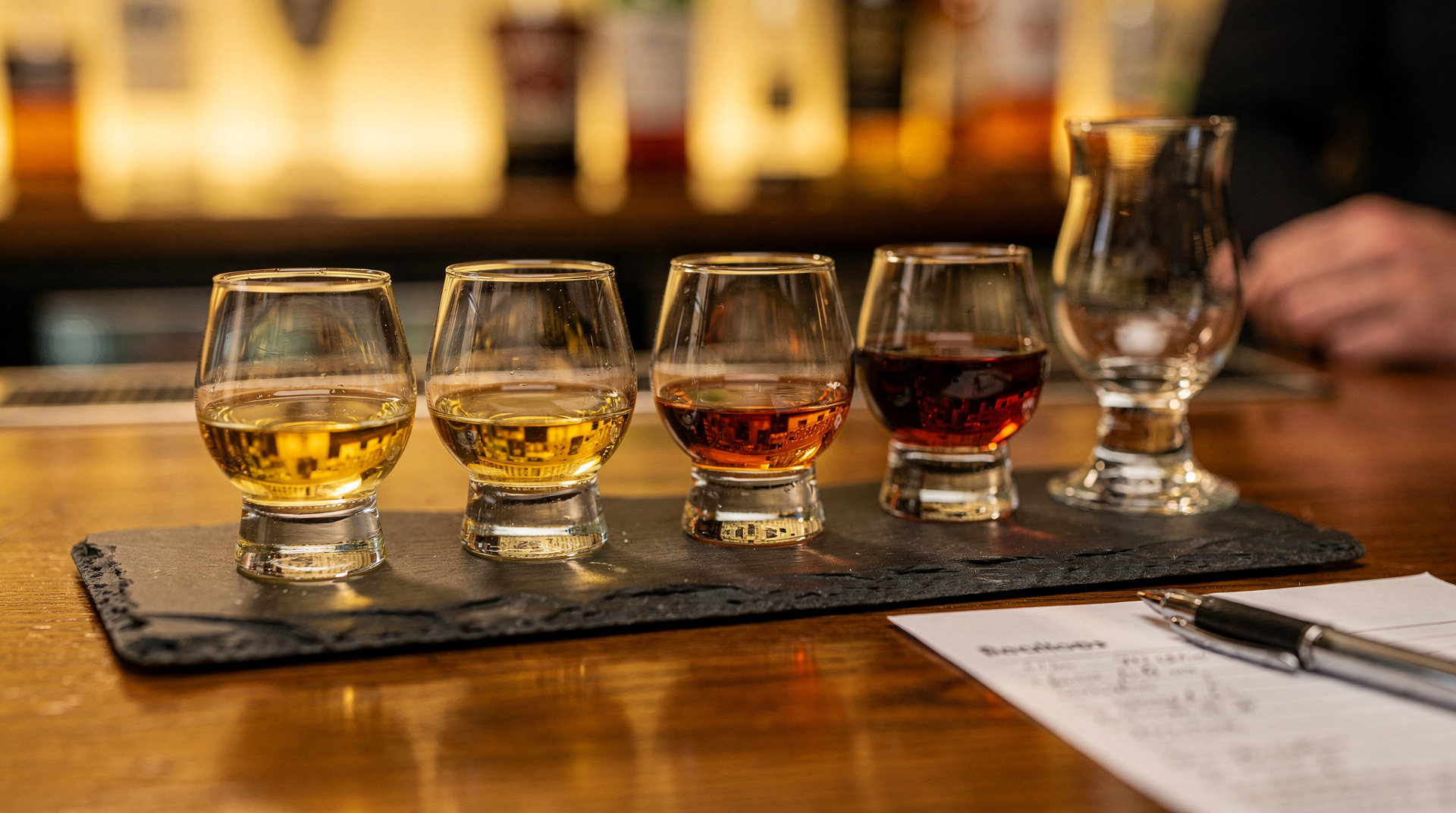
If you would rather skip the logistics, a ticket for the chapel itself keeps things simple when you are making your own way there, and a combined chapel and Lowland distillery outing suits anyone who wants a tasting added to the day. For whisky-minded readers, the distilleries near Edinburgh guide and the whisky day trips from Edinburgh guide go further.
Frequently asked questions about Rosslyn Chapel
Is Rosslyn Chapel worth visiting?
Yes — for the medieval carving alone, independent of any Dan Brown connection. The Apprentice Pillar and the carved ceiling are extraordinary and the chapel is unlike any other medieval building in Scotland. On a good day with the chapel not overwhelmed by tour groups, it is a genuinely moving experience.
How long does it take to see Rosslyn Chapel?
Allow 1 to 1.5 hours for the chapel and adjacent visitor centre. The chapel itself can be thoroughly explored in 45-60 minutes; the visitor centre adds 20-30 minutes for context. Do not rush the interior — the carving rewards sustained attention.
Can I visit Rosslyn Chapel on Sunday?
Yes, but opening hours are reduced: 12pm-5pm. Note that Sunday morning is reserved for church services and the building is not open to visitors during this time. Saturday hours are standard (9am-5pm).
Is there a connection between Rosslyn Chapel and the Knights Templar?
The historical connection is weak. The Sinclair family who built the chapel had some association with St Clair-sur-Epte in Normandy, but the Knights Templar were dissolved in 1312, and Rosslyn Chapel was not begun until 1446. The claims in The Da Vinci Code about Templar treasures buried at Rosslyn have no historical foundation. The chapel’s genuine strangeness and richness of symbolism do not require an invented mythology to be interesting.
How do I get to Rosslyn Chapel without a car?
Bus 37A from Princes Street in Edinburgh city centre runs to Roslin village, stopping near the chapel. Buses run approximately hourly; the journey takes 35-40 minutes. Return journey is from the same stop. This is the simplest option for visitors without a car.
Can I combine Rosslyn Chapel with Edinburgh in one day?
Yes — Rosslyn is close enough (40 minutes by bus) to be a morning or afternoon excursion that combines with a morning or afternoon in Edinburgh. A suggested order: Edinburgh Old Town in the morning (Edinburgh Castle, Royal Mile), bus to Rosslyn for the chapel in early afternoon, return Edinburgh for the evening. This makes good use of a single day.
Should I visit Rosslyn Chapel or the Borders abbeys if I only have one day?
If you do not have a car, Rosslyn is the only realistic option — it is the sole site in this comparison reachable by public transport from Edinburgh. With a car or a guided tour, all three (Rosslyn, Melrose, Dryburgh) are feasible in a single long day; see the comparison table above for how they differ in scale and character. For other close-in day trips from the city that pair well with a half-day at Rosslyn, see the North Berwick day trip guide.
Is Rosslyn Chapel accessible for visitors with mobility needs?
The main chapel floor is accessible, though the historic stone flooring is uneven in places. The undercroft crypt involves steps and is not wheelchair accessible. Contact the Rosslyn Chapel Trust ahead of your visit for specific accessibility guidance, as facilities have been gradually improved in recent years.
Top experiences
Bookable activities with verified prices and instant confirmation on GetYourGuide.