Pentland Hills guide
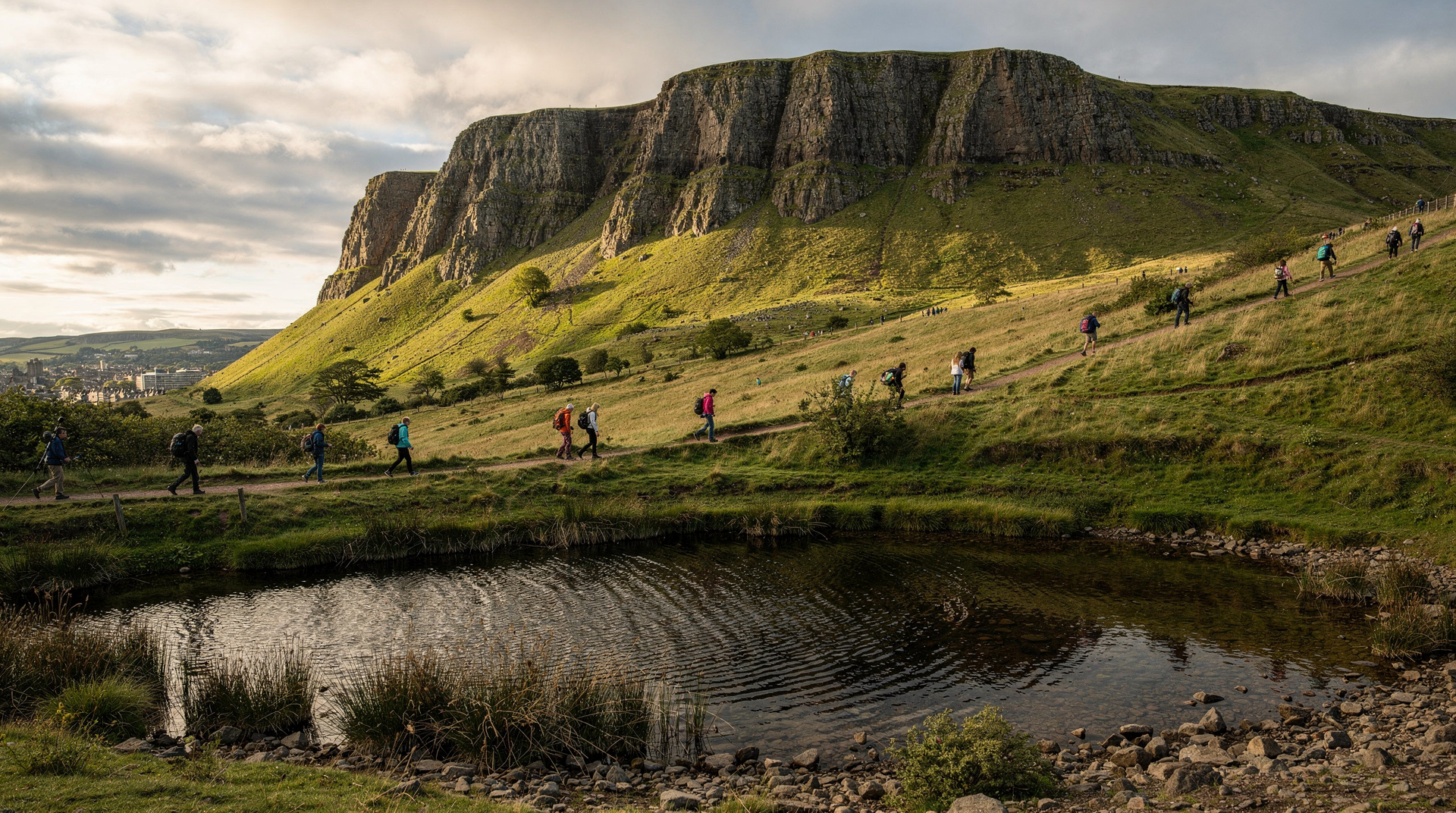
Edinburgh: guided hike to Arthur's Seat and Holyrood Park
How do you get to the Pentland Hills from Edinburgh?
The Pentland Hills are about 10 miles south of Edinburgh city centre. Lothian Buses service 16 reaches the Flotterstone car park (the main visitor centre starting point) from the city in about 45 minutes. By car it takes around 25 minutes via the A702.
The hills that Edinburgh walkers call their own
The Pentland Hills stretch roughly 16 miles from the southern suburbs of Edinburgh to the village of Dolphinton in South Lanarkshire, rising to 579 metres at their highest point (Scald Law). For Edinburgh residents, the Pentlands are the primary hill-walking destination: close enough for a half-day from the city centre, varied enough to reward repeated visits, and significant enough in scale that they feel genuinely wild even though the Edinburgh ring road is visible from some summits.
For visitors, the Pentlands are a less-visited alternative to Arthur’s Seat that offers bigger hills, longer routes, and a landscape that shifts from managed moorland to boggy plateau to reservoir-dotted valleys. If you have already climbed Arthur’s Seat and want something more serious, the Pentlands are the logical next step — and they feel far more remote than their distance from the city would suggest.
| Where | About 10 miles south of Edinburgh city centre |
| Getting there | Bus 16 to Flotterstone (~45min) or car via A702 (~25min) |
| Cost | Free access; Flotterstone parking ~£3/day |
| Time needed | 2 hours (reservoir walk) to 4-5 hours (Scald Law summit) |
| Best time | April-October; winter summits need proper hill gear |
The regional park
The Pentland Hills Regional Park covers 10,000 acres and is managed by Edinburgh and Midlothian councils. It is open to the public under the Scottish Outdoor Access Code, which means you can walk anywhere on the open land (respecting livestock, crops, and wildlife). The main visitor centre and car park is at Flotterstone near the A702, where there are toilets, an information board, and a seasonal café. A second access point at the Boghall Farm car park near Biggar Road is useful for routes on the eastern side of the hills.
Main walking routes from Flotterstone
The Scald Law ridge route
Scald Law (579m) is the highest point in the Pentlands and the most satisfying summit walk from Flotterstone. The route follows Glencorse Burn upstream before climbing steeply onto the ridge between Carnethy Hill (573m) and Scald Law. From the top, the views extend north over Edinburgh to the Firth of Forth and south over the Borders hills. On exceptionally clear days the Cairngorms are visible to the north.
The round trip from Flotterstone is about 8 miles and takes 4-5 hours with a reasonable pace. The terrain is mostly grassy moorland with some boggy sections that make waterproof boots essential after any rain. The final climb to Scald Law is steep but not technical.
The Glencorse Reservoir walk
A shorter and less strenuous option from Flotterstone follows the path to Glencorse Reservoir, a Victorian-era water storage reservoir that reflects the hills above it on calm days. The round trip is about 4 miles and takes 2 hours. It is suitable for moderately fit walkers without specialist equipment and is a good first Pentlands walk if you want to gauge the terrain.
The reservoir has literary interest: Robert Louis Stevenson was a regular visitor to the Pentlands in his childhood and referred to Glencorse in his letters and journals. The ruined church of St Katherine’s at the end of the reservoir is said to have inspired scenes in some of his work, though the connection is disputed.
The Bore Stone and Caerketton Hill
The northern end of the Pentlands, accessible from the suburb of Colinton (about 20 minutes on the bus from the city centre), offers a shorter and easier walk up Caerketton Hill (478m) with excellent views back over Edinburgh. The Bore Stone at the summit is a modest geological feature but the viewpoint is excellent: the city, the Firth, and on clear days the coast of Fife are all visible.
This walk takes about 2-3 hours return from Colinton and is suitable for families with older children.
Getting there from Edinburgh
By bus: Lothian Buses service 16 (from central Edinburgh, towards Carlops) stops near Flotterstone on the A702. Journey time is about 45 minutes. Check the Lothian Buses app for current timetables — frequency is roughly hourly.
By car: Take the A720 city bypass to Junction 2 (Lothianburn), then the A702 south for about 3 miles. The Flotterstone car park is signed on the right. Parking costs approximately £3 per day. The car park fills on sunny weekends in summer — arrive before 9am if possible.
By taxi or rideshare: A taxi from the city centre to Flotterstone costs approximately £20-25 and takes 20-25 minutes. This is a reasonable option if you are walking with a group.
When to visit
Spring and early summer (April-June) are excellent: the moorland is green, the reservoirs are full, and the days are long enough for afternoon walks. Curlews call over the moorland in spring — one of Scotland’s more affecting sounds.
Autumn (September-October) brings heather in bloom and excellent visibility. The higher summits can have early frosts from October; dress in layers.
Winter walking in the Pentlands is for experienced hill walkers only on the higher routes. Ice and snow on the upper ridges require crampons or micro-spikes and awareness of mountain conditions. The lower reservoir walks remain manageable throughout winter but the paths become muddy.
Summer weekends in August see the Pentlands very busy with Edinburgh residents escaping the Fringe crowds. Go on weekdays if possible.
What to bring
The Pentlands are real hills with real Scottish weather. Summer walkers are regularly caught out by rain and wind that develop within an hour. Essentials:
- Waterproof jacket and trousers
- Walking boots with ankle support (the terrain is boggy in places even in dry spells)
- Map or navigation app (OS Explorer 344)
- Food and water (no facilities on the higher routes; the Flotterstone café is seasonal and has limited hours)
- Emergency whistle and basic first aid kit for longer routes
The Pentlands versus Arthur’s Seat
If you are choosing between the two for a walking day, the key difference is: Arthur’s Seat is within the city, accessible without a car or long bus journey, and takes half a day. The Pentlands require travel time to reach, reward you with bigger hills and longer routes, and feel genuinely rural. Arthur’s Seat is the better choice for a first-time Edinburgh visitor or anyone short on time. The Pentlands suit walkers who want a full day out and are comfortable navigating on rough terrain.
See the Arthur’s Seat hiking guide for the full comparison of the two experiences.
Combining the Pentlands with other activities
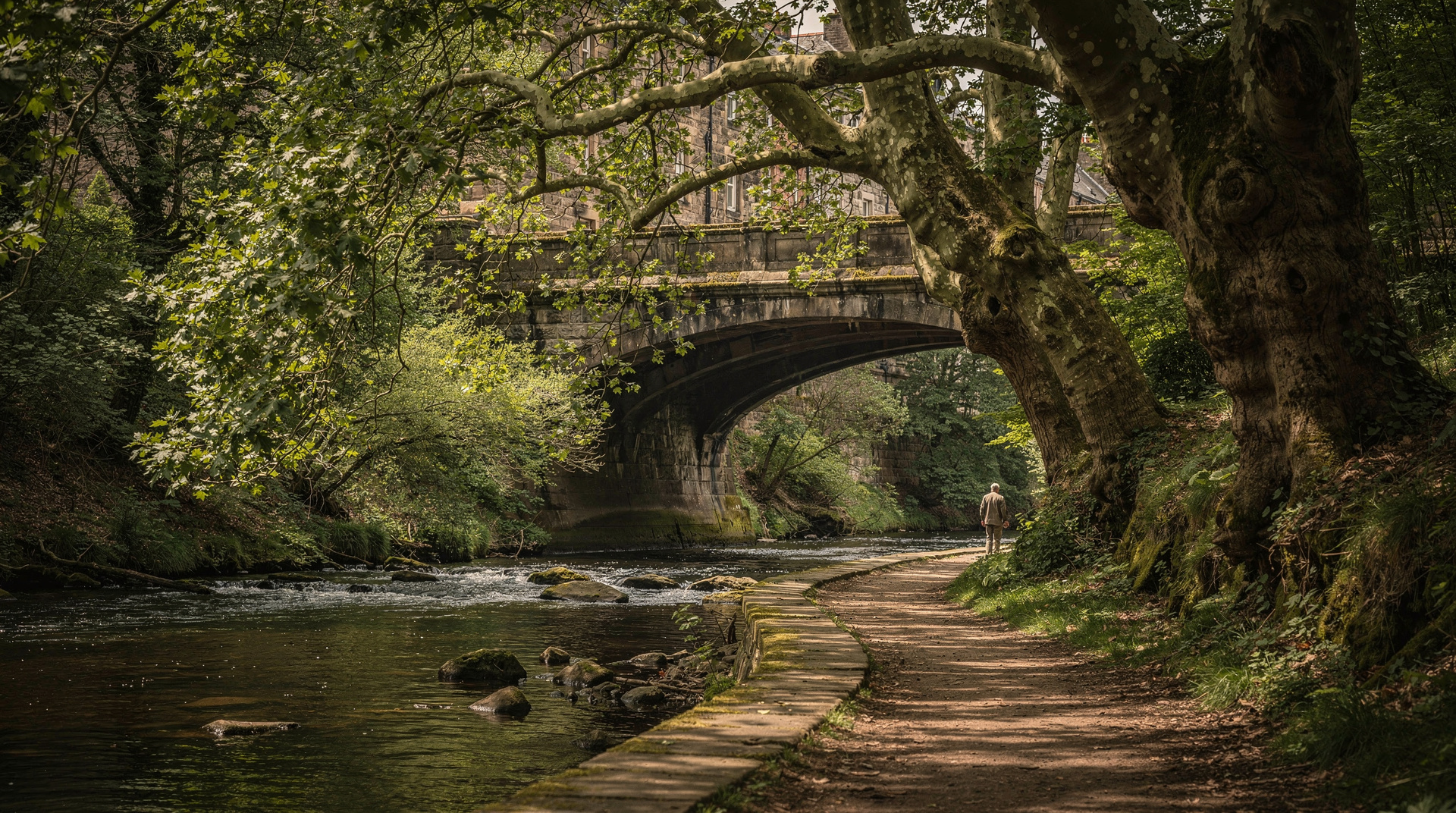
The Pentlands sit above the suburb of Colinton, which is connected to the city centre by the Water of Leith walkway via the Colinton Dell gorge section. Combining a morning in Colinton Dell with an afternoon on the lower Pentland slopes makes a good full day for serious walkers.
The village of Swanston at the base of the northern Pentland escarpment was Robert Louis Stevenson’s summer home as a child; his thatched cottage there (private property) is visible from the public footpath. It is a pleasant 20-minute walk from the Hillend ski centre car park.
The Hillend dry ski slope at the northeastern end of the park is a year-round skiing facility where Edinburgh residents learn to ski before (or instead of) going to the Alps. It has no particular appeal as a walking destination but is a useful landmark.
Frequently asked questions about the Pentland Hills
Are the Pentland Hills suitable for beginners?
The lower routes — Glencorse Reservoir, Caerketton Hill from Colinton, and the paths immediately above Flotterstone — are suitable for reasonably fit people without specialist hill-walking experience. The higher routes (Scald Law, Carnethy Hill, the full ridge) require a basic ability to navigate on open ground, appropriate clothing and footwear, and awareness that conditions can change quickly. If in doubt, begin with the reservoir walk and assess from there.
Is there parking at the Pentland Hills?
Yes, at Flotterstone (main visitor centre, charged at approximately £3 per day), at Hillend near the ski centre (free), and at several smaller lay-bys along the A702. On busy weekends the main car parks fill quickly; arriving before 9am or after 3pm avoids the worst of it.
Can you mountain bike in the Pentland Hills?
Yes. Several trails in the regional park are used by mountain bikers, and the park management tolerates cycling on most paths that are wide enough to accommodate it. Dedicated mountain bike trails exist at Bonaly, on the northeastern fringe of the park. The cycling in Edinburgh guide covers road and off-road cycling options near the city in more detail.
Are dogs allowed in the Pentland Hills?
Yes, under the Scottish Outdoor Access Code. Dogs must be kept on leads near livestock, which is common in the lower sections near farm land. On open moorland above the agricultural land, dogs can be off-lead. Be aware that grouse shooting takes place on some sections of the moorland in autumn.
What’s the best Pentland Hills walk for a first visit?
The Glencorse Reservoir walk from Flotterstone is the most rewarding for a first visit: manageable at 4 miles, scenically pleasing, and gives you a strong sense of the scale of the landscape without requiring significant hill-walking fitness. From the far end of the reservoir you can extend the walk by continuing up to the ridge if you want to take on a summit.
How does the Pentland Hills compare to other day walks from Edinburgh?
The Pentlands are the best option for walkers who want significant hills within an hour of Edinburgh. The other main options are the John Muir Way sections in East Lothian (flatter, coastal), the Lammermuir Hills further into the Borders (wilder, fewer access options), and the Lomond Hills in Fife (accessible by train to Markinch, about 1.5 hours). See the best day trips from Edinburgh for a broader overview of options including non-walking excursions.
Is there anywhere to eat at the Pentland Hills?
The Flotterstone Inn, opposite the main car park, is the main option for a proper meal before or after a walk. The Flotterstone visitor centre café is seasonal and offers only light refreshments. Beyond these two, there are no food facilities on the hill itself, so pack food and water for anything longer than the reservoir walk. Colinton, at the northern end of the park, has better café and pub options if you are finishing there instead.
Can you see the Pentland Hills without walking far?
Yes. The view from the Flotterstone car park itself, looking up Glencorse Burn toward Carnethy Hill and Scald Law, gives a genuine sense of the landscape’s scale without any walking at all. The Hillend dry ski slope’s chairlift (when operating) gives an easy elevated view over the northern Pentlands and the city beyond, requiring no hiking.
The Pentland Hills in literature and history
The Pentland Hills have a literary resonance in Scottish culture that extends well beyond their geography. Robert Louis Stevenson grew up with the hills as his playground and wrote about them with the particular intensity of someone for whom a landscape became inseparable from childhood. His essay “Memories and Portraits” includes some of the finest writing about the Pentlands, describing the view from the northern escarpment in terms that are still recognisable: the flat coastal plain, the Firth of Forth, the Kingdom of Fife beyond.
James Hogg, the Ettrick Shepherd, was familiar with similar Border hill country. Walter Scott walked the Pentlands. The hills have this quality of inspiring writers — perhaps because of their accessibility combined with their genuine wildness, a combination that produces the kind of reflective walking that generates prose.
The Battle of Rullion Green was fought on the Pentland slopes in 1666, between government forces and Covenanting rebels. The Covenanters — Presbyterians who refused to accept episcopal church government — were routed at Rullion Green and suffered significant casualties. A memorial stone at the battlefield site on the northeastern slopes of the hills marks the event. For visitors interested in Scottish religious and political history, this is a specific and often overlooked destination within the Pentland Hills Regional Park.
Swanston village, at the base of the northern escarpment, was Stevenson’s family’s summer retreat. The white-washed thatched cottages of the village are largely unchanged from Stevenson’s time, and the view from the village upward to the hills on a clear evening has the quality that makes the Pentlands genuinely photogenic. The village is accessible on foot from the Hillend ski centre car park.
Practical route planning
The Pentland Hills Regional Park publishes a series of suggested walking routes on their website and at the Flotterstone visitor centre. The most useful routes for visitors are:
Route 1 — Flotterstone to Glencorse Reservoir: 4 miles round trip, mostly flat, 2 hours. Suitable for most visitors without specialist equipment.
Route 2 — Flotterstone to Scald Law summit: 8 miles round trip, 580m ascent, 4-5 hours. Requires good footwear and awareness of weather. The finest summit walk in the Pentlands.
Route 3 — Caerketton Hill from Hillend: 2-3 miles round trip, 380m ascent, 2 hours. The most accessible summit route, starting from the bus-accessible Hillend area.
Route 4 — Colinton Dell and Pentland foothills: 4-5 miles circuit, modest ascent, 2-3 hours. Combines the beautiful gorge section of the Water of Leith at Colinton with the lower Pentland slopes. Accessible by bus from the city centre.
For guided walks in the Pentlands, local walking groups including Glenmore Lodge and various Edinburgh-based outdoor activity companies offer day programmes that provide navigation support and historical context. For independent walkers, the OS Maps app downloaded to a smartphone with offline capability is the most practical navigation tool.
Which route matches your day
| Route | Distance | Time | Fitness needed |
|---|---|---|---|
| Glencorse Reservoir | 4 miles | 2 hours | Low — good first Pentlands walk |
| Scald Law summit | 8 miles | 4-5 hours | Moderate-high — steep final climb, boggy sections |
| Caerketton Hill (Hillend) | 2-3 miles | 2 hours | Low-moderate — the most accessible summit |
| Colinton Dell circuit | 4-5 miles | 2-3 hours | Low — combines gorge walk with lower slopes |
If you have half a day and want a taste of the hills without commitment, choose Glencorse Reservoir. If you want a proper summit and have a full day and decent weather, Scald Law is the reward. If you are travelling by bus without a car and want a summit view for minimal effort, Caerketton from Hillend is the most efficient option.
Food and drink near the Pentlands
The Flotterstone Inn, immediately opposite the main car park, is the obvious pre- or post-walk stop — a proper Scottish pub with hearty food, useful after a cold or wet walk on the higher routes. It gets busy on sunny weekends, so booking ahead or arriving outside peak lunch hours helps. In Colinton, at the northern end of the hills, there are a couple of good cafés and a well-regarded pub on the main street, convenient for anyone finishing the Colinton Dell circuit. On the hill itself, there are no food or drink facilities beyond the seasonal Flotterstone café, so pack water and snacks for any route beyond the reservoir walk.
The Pentlands in different seasons
Spring is the most rewarding season for wildlife: curlews call over the moorland from March, skylarks are in full song above the ridge from April, and the lower slopes show the year’s first wildflowers (violets, early purple orchids) from late April.
Summer brings long days and the moorland in its most accessible state, but the grass can be dry and brown on the higher slopes in prolonged hot spells, which reduces the photographic quality. July and August see the highest visitor numbers from Edinburgh families.
Autumn is the peak season for many regular Pentland walkers. The heather on the higher moorland blooms purple in late August and September, creating a carpet of colour on the upper slopes. Red deer stags begin rutting in October — hearing them bellow across the moorland is one of Scotland’s atmospheric highlights.
Winter requires appropriate preparation for the higher routes but the views on clear days can be exceptional, particularly after overnight snowfall when the hills are white and the Firth of Forth and Edinburgh rooftops are visible in extraordinary detail.
Planning your Pentland Hills visit: logistics summary
Getting there without a car: Lothian Buses service 16 from the city centre (St Andrew Square, Princes Street, South Bridge) reaches the Flotterstone area in approximately 40-45 minutes. Service 10 reaches the Colinton area (access for Colinton Dell and the Caerketton approach) in around 30 minutes from the city centre. Both buses run roughly hourly; check the Lothian Buses app for real-time departures. For the Hillend approach to Caerketton Hill, bus services 4 and 15 reach the Hillend ski centre area in about 30-35 minutes.
Parking: Flotterstone car park (the main visitor centre location) charges approximately £3 per day and fills quickly on sunny weekends. The smaller car park at Hillend is free. Lay-bys on the A702 provide additional parking at no charge, with a slightly longer walk to the main trail heads.
Facilities: The Flotterstone visitor centre has toilets and a seasonal café. The café operates during peak season (roughly Easter to October); outside these times, no refreshment facilities are available on the hill itself. Bring food and water for any route longer than the reservoir walk.
Mobile signal: Coverage is generally good on the lower slopes but can be patchy on the higher ridges. Download offline OS maps before leaving Edinburgh for any routes above the reservoirs.
The getting around Edinburgh guide covers the Lothian Buses network and tickets in detail, including the day ticket options that cover the bus journey to the Pentlands and unlimited city travel for the day at a flat rate.
A note on navigation apps versus paper maps: offline OS Maps on a smartphone is the most practical tool for most visitors, but battery life and signal gaps on the higher ridges mean a backup — either a printed OS Explorer 344 map or a fully charged secondary device — is sensible for the Scald Law route specifically. The lower reservoir and Colinton routes are well-signed enough that navigation is rarely an issue.
Wildlife in the Pentland Hills
The Pentlands support a range of upland wildlife that rewards a slower, more observant pace of walking. Curlews and skylarks are the signature spring and summer sounds, best heard on the open moorland above Flotterstone from March through July. Red deer are present on the higher ground and are most visible — and most vocal — during the October rut, when stags can be heard bellowing across the hillsides at dawn and dusk.
Mountain hares, which turn white in winter, occupy the higher slopes and are occasionally spotted on the Scald Law ridge in snow conditions, though sightings are never guaranteed. Buzzards are a near-constant presence overhead, and short-eared owls hunt over the moorland at dusk in winter, an atmospheric sight for anyone finishing a late-afternoon walk. None of this wildlife requires special effort to see — walking quietly and pausing occasionally rather than maintaining a steady pace significantly improves the odds.
Combining the Pentlands with an Edinburgh city day
The most efficient two-experience Edinburgh day for walkers combines a morning in the Pentlands with an afternoon exploring the city. Take the first bus (around 8am) to Flotterstone, walk the Glencorse Reservoir circuit (4 miles, 2 hours), return to the city by lunchtime, and have the afternoon for the Old Town, Royal Mile, or a museum visit. This is entirely feasible and leaves you with both a genuine hill walk and a city experience in the same day.
For visitors who want to extend the Pentlands experience with an evening in Edinburgh’s outdoors, returning from the hills via Colinton connects to the Water of Leith walkway at Colinton Dell — so you can descend from the Pentlands and follow the river back into the city on foot, ending at Stockbridge or Dean Village for a post-walk meal.
Building a wider walking trip around the Pentlands
The Pentlands work best as one chapter in a longer stay rather than the whole plan. If your days in the city are limited, the one-day Edinburgh itinerary shows what a short visit can hold, and the hills are a trade-off against it. The best walks in Edinburgh guide lays out the other options, from the river path to the volcanic skyline, so you can choose a Pentlands day only if you want it.
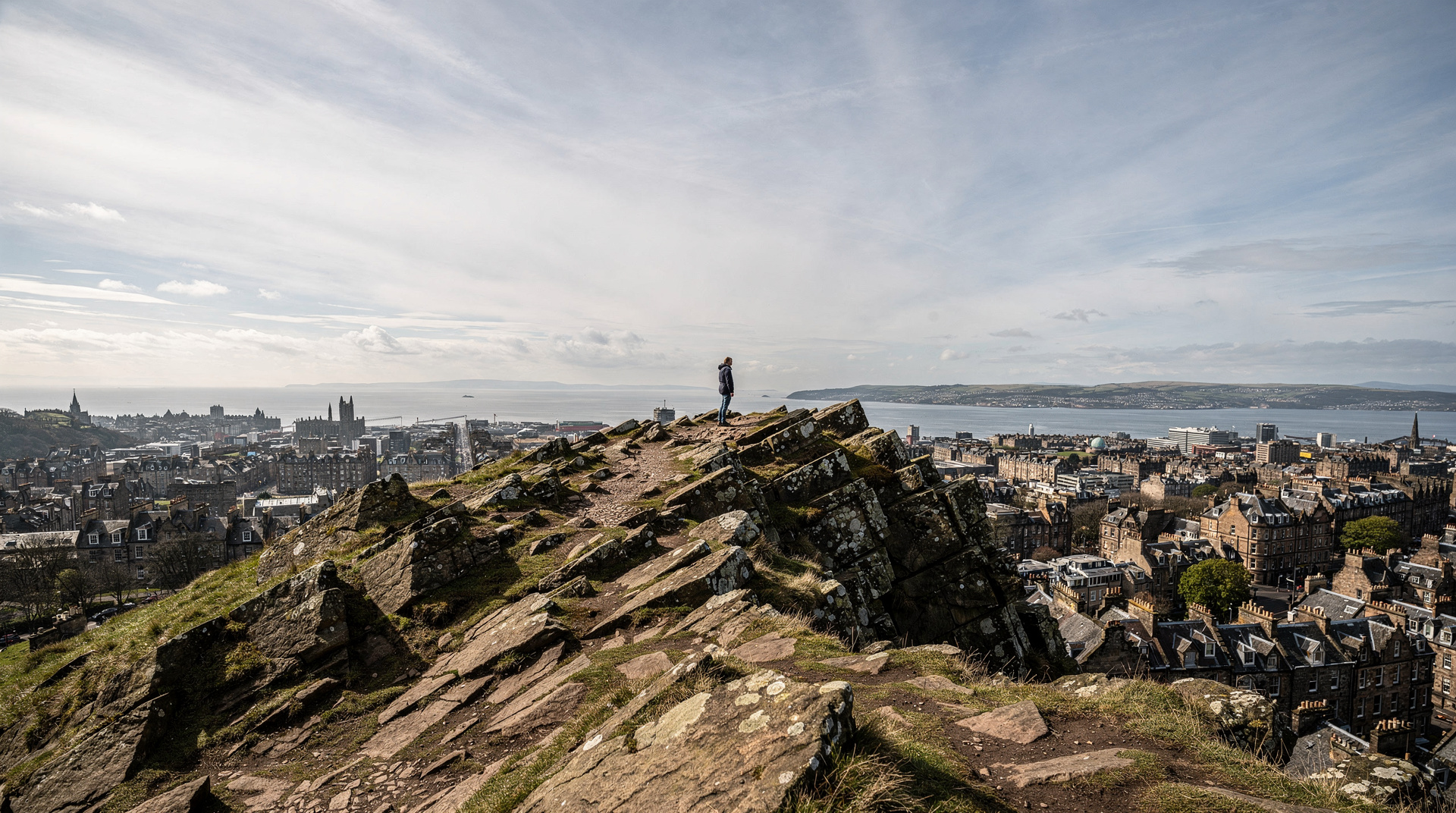
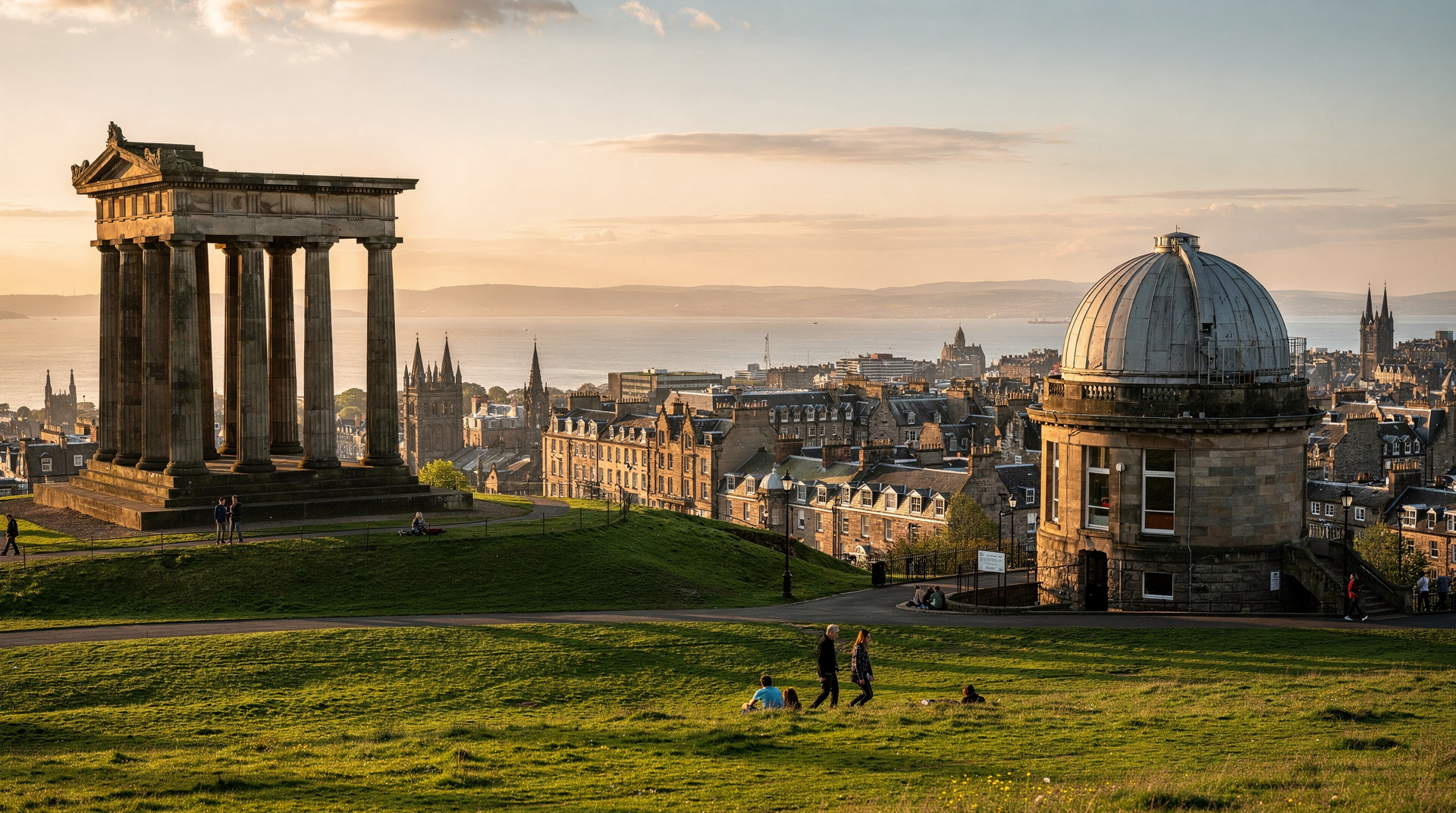
Many walkers warm up on Holyrood Park and Arthur’s Seat first. If you would rather not navigate alone on your first hill, a guided hike around Holyrood Park is a gentler way to gauge your pace and your appetite for steeper ground before you commit to the Pentland ridge. For a lighter city viewpoint after a hill day, Calton Hill gives a short evening climb with a wide outlook over the same skyline you saw from above.
Weather decides more Pentlands days than fitness does, so check the Edinburgh weather guide before choosing between the summit and the reservoir. If the forecast turns, the lower routes stay pleasant and the afternoon can move indoors.
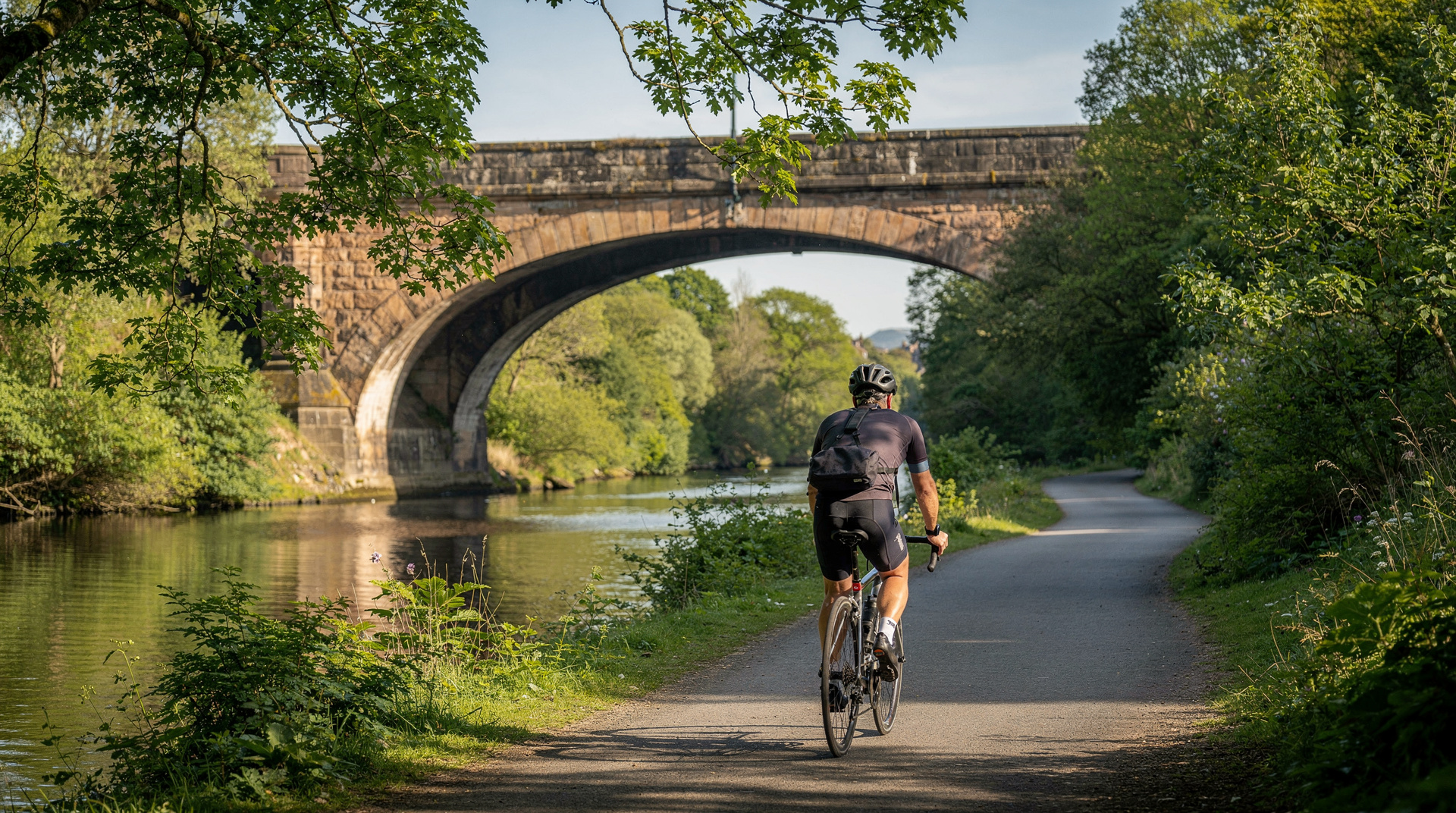
Prefer two wheels to two feet? The hills are part of Edinburgh’s wider cycling story, and a scenic guided bike ride around the city is a relaxed way to see the landscape without the boggy ground.
Walking with younger children is possible on the easier routes, and the Edinburgh with kids guide helps balance a hill morning against more child-friendly city plans. Finish a long day with a meal in Stockbridge, a natural stop at the end of the Water of Leith route.
Top experiences
Bookable activities with verified prices and instant confirmation on GetYourGuide.