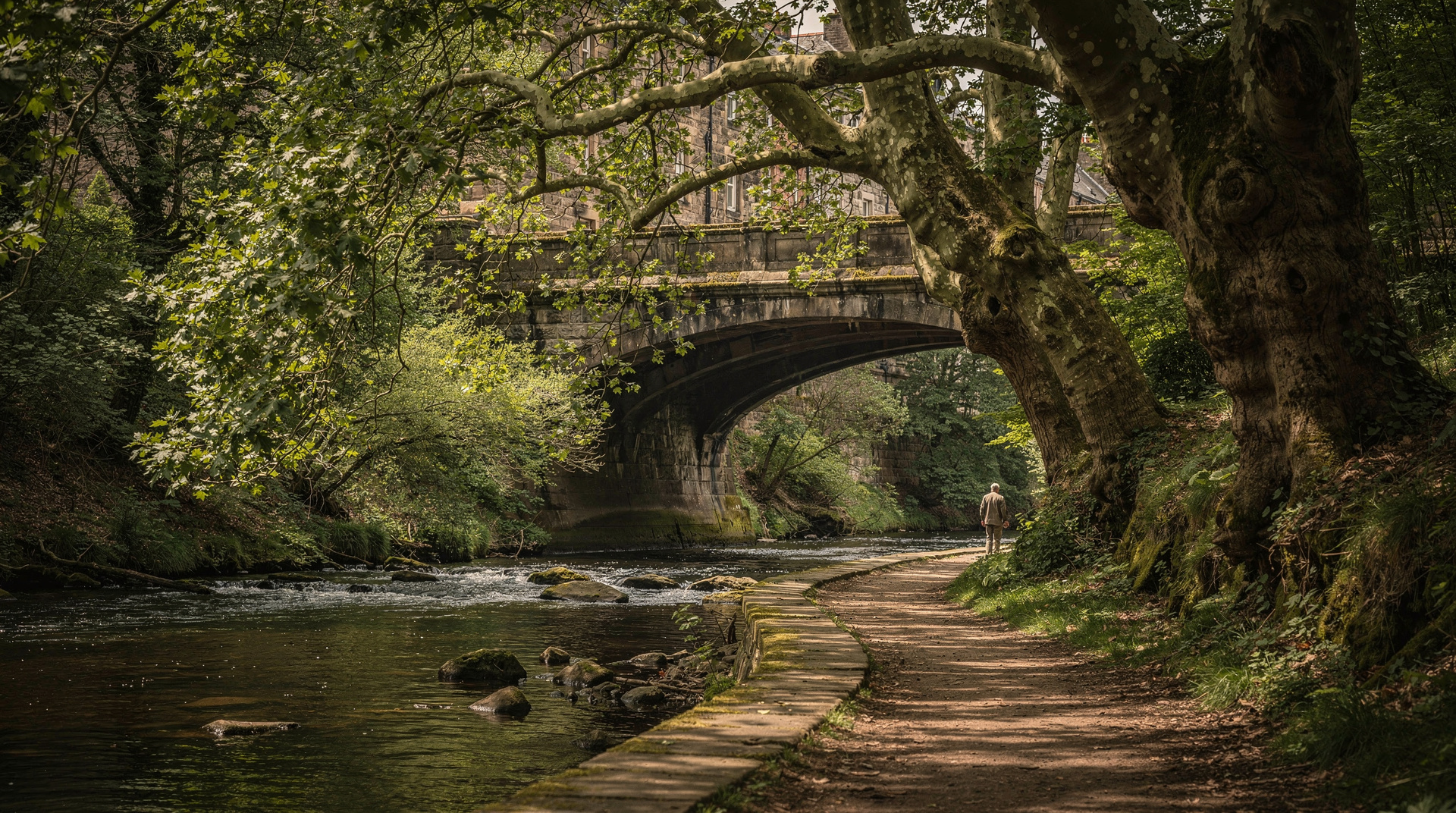
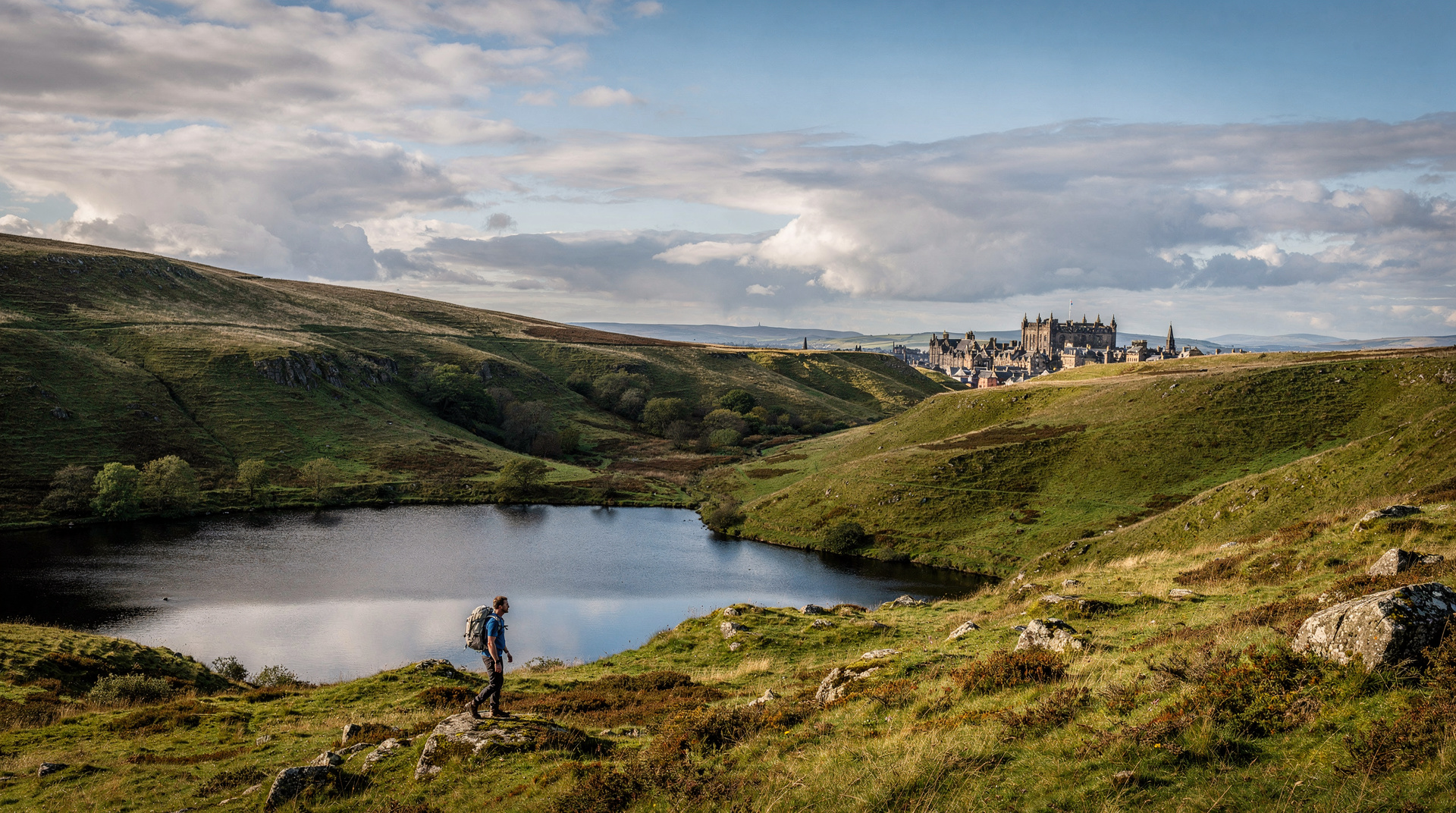
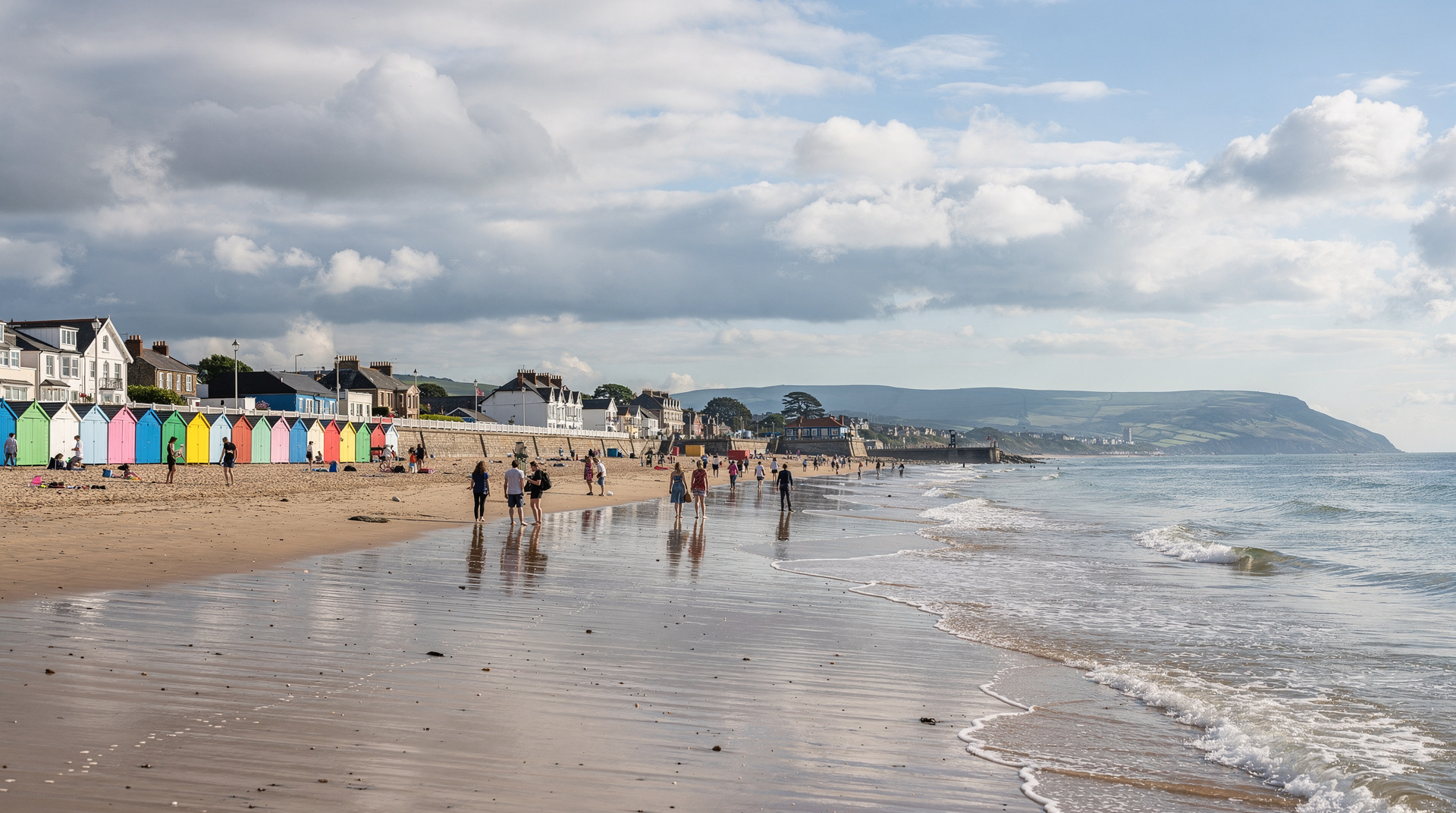
Water of Leith walkway
Edinburgh: scenic bike tour
How long is the Water of Leith walkway?
The full Water of Leith Walkway runs approximately 12 miles (19 km) from Balerno in the Pentland foothills to the port of Leith. Most visitors walk one of several shorter sections between 1 and 4 miles. The Dean Village to Stockbridge section takes about 30-45 minutes and is the most popular stretch.
Top-rated tours to book
Edinburgh’s green corridor through the city
The Water of Leith is a river. That sentence might seem obvious, but for many visitors it comes as a genuine surprise: Edinburgh, a city of volcanic rock, Georgian grandeur, and castle-crowned hills, also has a tree-lined river valley winding through its middle. The Water of Leith walkway follows this river for 12 miles from the village of Balerno in the Pentland foothills to the Shore at Leith, passing through some of Edinburgh’s most quietly beautiful neighbourhoods, including Dean Village, Stockbridge, and Canonmills.
This is not a dramatic mountain walk. There are no summit panoramas, no vertiginous edges, no volcanic geology. What the walkway offers instead is the rare urban experience of walking for hours beside moving water and under mature trees, moving through neighbourhoods at a pace that makes their character visible in ways that no bus route or taxi ride can match.
| Where | Balerno to Leith, passing through Dean Village and Stockbridge |
| Cost | Free |
| Time needed | 30-45 minutes for Dean Village to Stockbridge; 5-6 hours for the full 12-mile route |
| Getting there | Dean Village is 15 minutes’ walk from Princes Street |
| Best time | October-November for autumn colour; early morning for the quietest path |
Understanding the route
The full walkway from Balerno to Leith is 12 miles and takes 5-6 hours to walk at a steady pace. Most people walk it in sections, choosing a stretch that matches their time and interests. The route is mostly flat or gently sloping, with occasional steeper sections through gorge-like sections of the valley. The surface varies: some sections are well-maintained gravel paths, others are rougher, particularly in the upper reaches toward Balerno.
The walkway is signposted throughout with the Water of Leith Walkway blue logo, though the signage is patchy in places and a map or the Ordnance Survey app is useful for navigation. The Water of Leith Conservation Trust maintains the route and publishes free downloadable maps on their website.
The most popular section: Dean Village to Stockbridge
This short stretch — roughly a mile and a half — is the most visited part of the walkway and is genuinely one of Edinburgh’s hidden pleasures for visitors staying in the city centre. It takes about 45 minutes to walk at a relaxed pace and can be done as a loop by walking back along the streets above the valley.
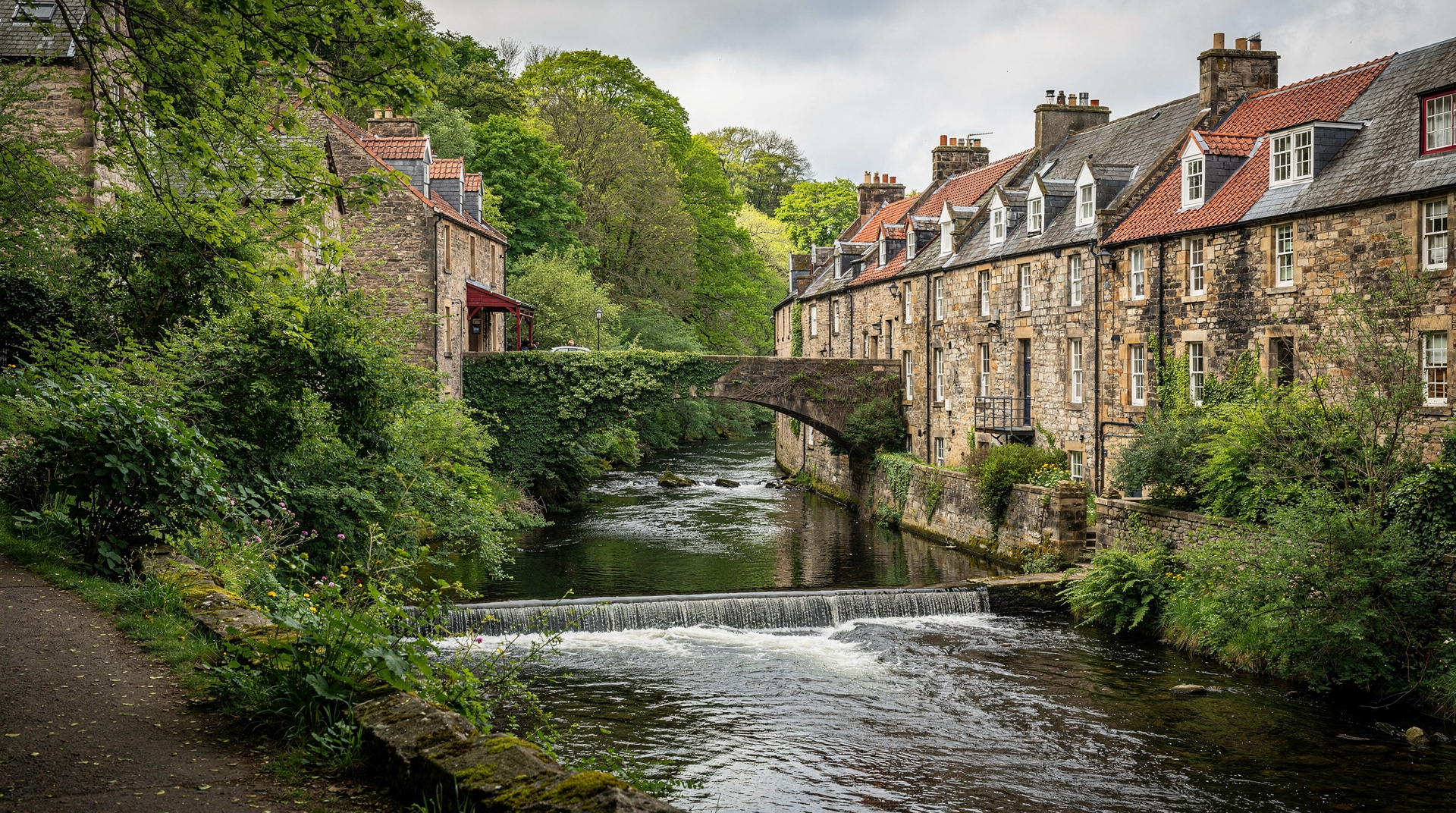
Dean Village is the starting point for most city-centre visitors. It sits about 15 minutes’ walk from Princes Street, at the bottom of a steep drop in the valley that insulates the old milling village from the streets above almost entirely. In the nineteenth century Dean Village was an industrial water-milling community; today it is residential, its former granaries and mills converted into expensive flats. The architecture — particularly Dean Bridge, designed by Thomas Telford in 1832, and the carved grain sheaves on the old Well Court building — is distinctive and photogenic in a way that few guidebooks describe adequately.
From Dean Village the path follows the river downstream through wooded gorge sections before emerging in Stockbridge, one of Edinburgh’s most appealing neighbourhoods. Stockbridge has excellent independent coffee shops, a Saturday farmers’ market (running year-round), and a noticeably relaxed character compared to the Old Town. It is a good place to end a morning walk with lunch.
The upper section: Balerno to Slateford
The upper walkway from Balerno to Slateford passes through the Pentland foothills before entering the city through Colinton Dell — a wooded gorge section that is one of the most dramatic stretches of the whole route. Colinton Dell is genuinely beautiful in autumn when the tree canopy turns gold and orange above the river. The old railway viaduct at Slateford spans the valley overhead, giving the section a slightly industrial picturesque quality.
This section is less visited by tourists but is very popular with Edinburgh families and dog walkers on weekends. The village of Juniper Green along the route has a good café. Balerno itself is a bus ride from the city centre — Lothian Buses service 44 from the city centre takes about 40 minutes.
The lower section: Canonmills to Leith
From Stockbridge the walkway continues through Canonmills and into the post-industrial lower reaches of the river before arriving at the Shore in Leith. This lower section is less scenic than the Dean Village-Stockbridge stretch — the valley flattens out and becomes more urban — but it completes the narrative of the river’s journey from the hills to the sea.
Arriving at the Shore in Leith at the end of the full walk has a particular satisfaction, especially if you then eat at one of the restaurants on The Shore and watch the Water of Leith flow the final few metres into the Port of Leith. The Leith neighbourhood guide covers the Shore’s restaurant scene in detail.
The Scottish National Gallery of Modern Art
The two National Galleries of Modern Art — Modern One and Modern Two — sit on the north bank of the Water of Leith between Dean Village and Stockbridge. They are free to enter (permanent collection) and are architecturally interesting in different ways: Modern One is a classical 1820s building; Modern Two was a former orphanage. The sculpture grounds between the two buildings overlook the river valley and include Charles Jencks’ striking earthwork Landform.
For visitors who combine the walkway with the galleries, the Dean Village to Gallery section alone (about 30 minutes’ walk) makes a coherent half-morning itinerary without needing to plan a longer walk.
When to walk the Water of Leith
Autumn (October-November) is unquestionably the best season. The mature trees — predominantly sycamore, ash, and beech — create a canopy of colour that transforms the gorge sections between Dean Village and Stockbridge into something close to spectacular. On a still October morning with low sunlight coming through the leaves, this stretch of urban river has genuine beauty.
Spring (April-May) brings flowering banks of wild garlic (ramsons) in the wooded sections, particularly around Dean Village, whose scent is distinctive and whose white flowers carpet the ground beneath the trees. Also look for kingfishers, which are regularly reported along the lower sections near Stockbridge.
Summer is pleasant but the walkway is at its busiest. Winter walking is fine on most sections but the path can be muddy and the Dean Village gorge section can have icy patches on cold days.
| Season | Conditions | Highlight |
|---|---|---|
| Spring (Apr-May) | Mild, occasional showers | Wild garlic and kingfishers near Stockbridge |
| Summer (Jun-Aug) | Warm, busiest on the path | Longest daylight for the full 12-mile route |
| Autumn (Oct-Nov) | Cool, best light | Gold and orange canopy through the gorge sections |
| Winter (Dec-Feb) | Cold, can be muddy or icy | Quietest path, especially on weekdays |
Accessing the walkway from the city centre
The most convenient access point for visitors staying in central Edinburgh is Dean Village, reached by walking down Queensferry Road from the West End and descending via Bell’s Brae to the valley floor (about 15 minutes from Princes Street). Alternatively, Stockbridge is accessible from the New Town via St Stephen Street or Raeburn Place.
For the Colinton Dell and upper sections, bus services from the city centre reach Slateford and Colinton in about 20-30 minutes. The getting around Edinburgh guide covers the Lothian Buses network in detail.
Combining the walkway with other Edinburgh highlights
The Water of Leith walkway connects naturally with a Stockbridge visit — the neighbourhood’s Saturday market, independent shops, and relaxed café culture make it an excellent half-day destination for anyone based in the city centre. The Dean Village alone is worth a 30-minute detour even for visitors who do not walk the full walkway.
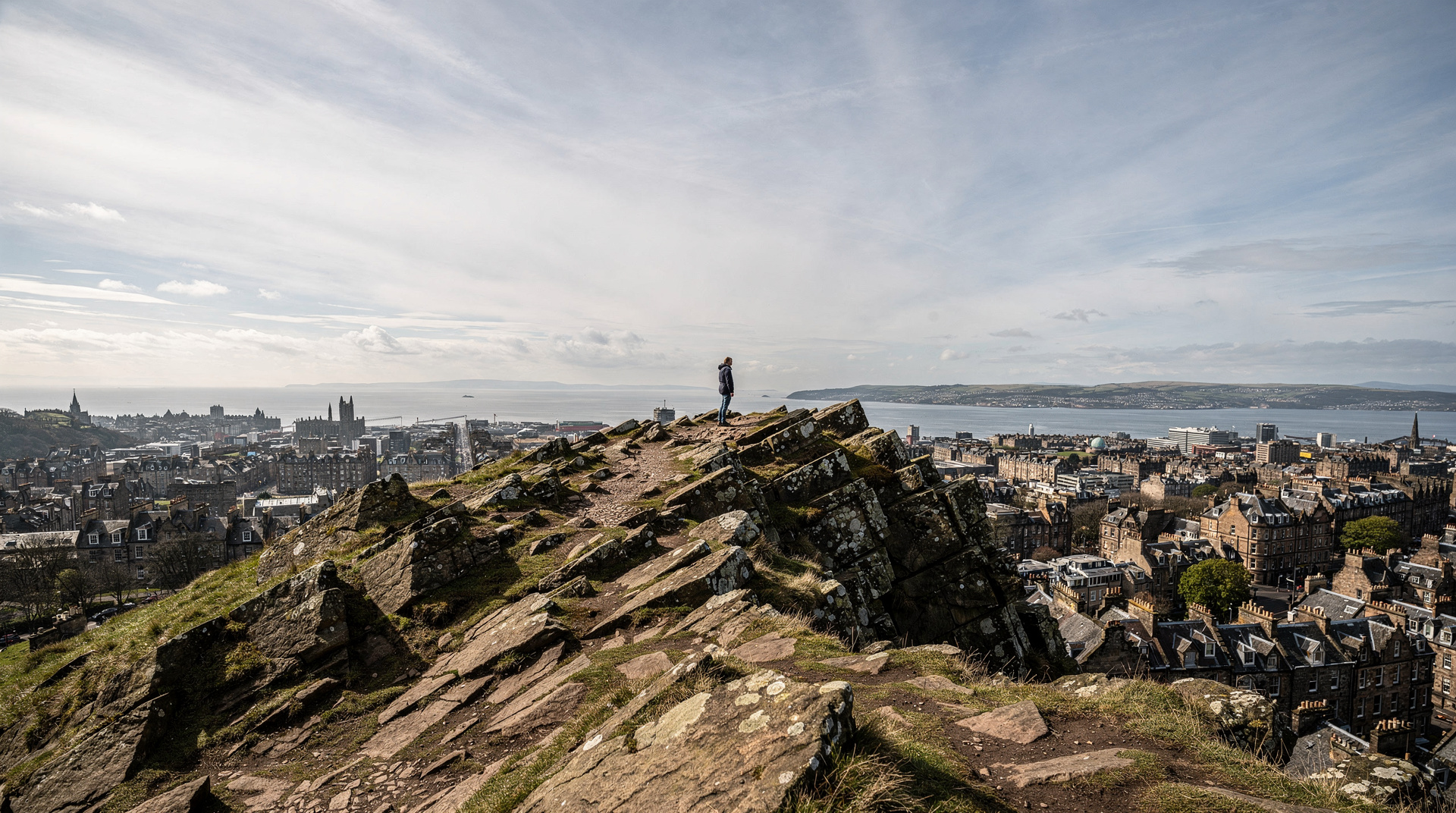
For visitors interested in a longer Edinburgh outdoors day, combining a morning walk along the Water of Leith with an afternoon at Calton Hill or the lower slopes of Arthur’s Seat (see the Arthur’s Seat hiking guide) gives a varied day that mixes woodland, river, and volcanic landscape.
The best walks in Edinburgh guide places the Water of Leith in the context of Edinburgh’s other walking options, including the Pentland Hills, the John Muir Way sections in East Lothian, and the short walking routes through the city’s parks.
An Edinburgh New Town, Dean Village and Circus Lane walking tour provides guided context for the architectural and historical interest of the Dean Village area for visitors who prefer a guided framework.
Practical information
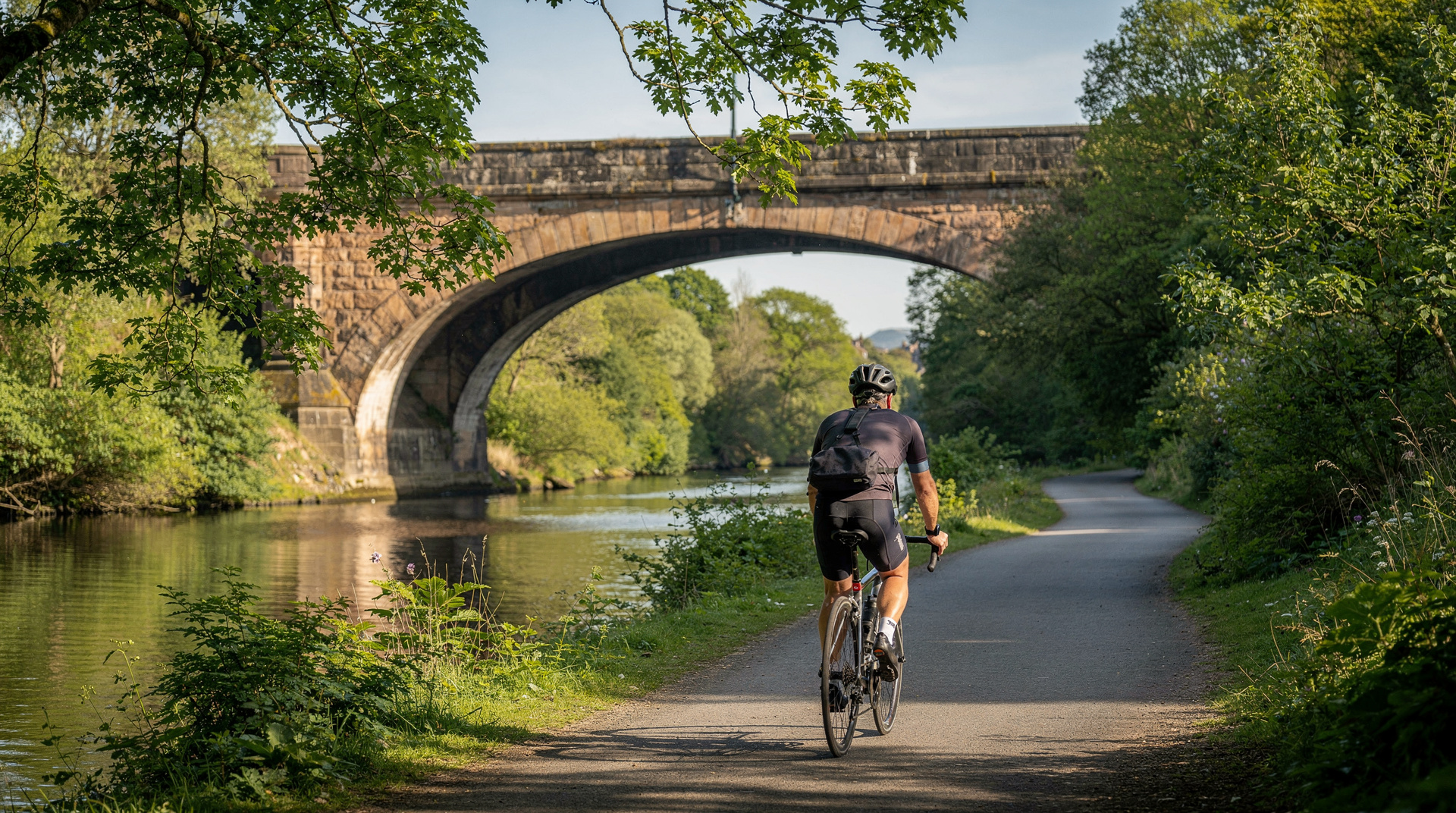
The walkway is free to use at all times. Dogs are welcome on leads through most sections (some sections near the nature reserve are signed with lead requirements). Cycling is permitted on some sections but the width and surface limits speed; the cycling in Edinburgh guide covers better dedicated cycling routes. Pushchairs and wheelchairs can manage the Dean Village to Stockbridge section on its better-maintained paths, though some rougher sections further from the city centre are unsuitable.
There are public toilets at Dean Village and at several points in Stockbridge. Cafés and pubs are plentiful in Stockbridge at the end of the most popular section.
Frequently asked questions about the Water of Leith walkway
How do I get from Dean Village to Stockbridge on the walkway?
From Dean Village, the path follows the north bank of the river downstream (eastward). It passes under Dean Bridge, continues through a wooded gorge section, and emerges in Stockbridge after about a mile and a half. The walk takes approximately 30-45 minutes at a comfortable pace. The path is well-signposted at Dean Village itself; follow the blue Water of Leith Walkway markers.
Is the Water of Leith walkway suitable for children?
The Dean Village to Stockbridge section is very suitable for children of most ages. The path is mostly flat, there are no dangerous drops, and the river itself is shallow (though fast-moving in wet weather). For the more rural sections toward Balerno and Colinton, the terrain is rougher and younger children may find sections tiring. Pushchairs can manage the main city sections but not the rougher upper sections.
Are there cafés along the Water of Leith walkway?
In Stockbridge, yes — there are numerous excellent independent cafés within a few minutes of where the path emerges near Raeburn Place. In Dean Village itself, options are very limited (primarily residential area). Along the upper sections toward Colinton and Juniper Green there are a few cafés in the villages. For a structured refreshment stop, plan the walk to end in Stockbridge.
Can I run the Water of Leith walkway?
Yes. The walkway is popular with runners, particularly the Dean Village to Stockbridge section and the Colinton Dell gorge. The surface is uneven in places, especially after rain, so trail running shoes are advisable over road shoes. Edinburgh runners typically combine the walkway with the path network through Holyrood Park for longer weekend runs.
Is the walkway safe to walk alone?
The main city sections — particularly Dean Village to Stockbridge and the Stockbridge to Canonmills stretch — are very well-used and feel entirely safe at all reasonable hours. More isolated sections toward Balerno should be treated with the same awareness you would bring to any rural path. As with any urban green space, avoid the less-populated sections after dark.
What wildlife can I see on the walkway?
The river supports a resident population of grey herons, which stand motionless in the shallows with characteristic patience. Kingfishers are regularly spotted near Stockbridge, particularly in the cooler months when the water is clearer. Dippers — small brown-and-white birds that bob on stones and walk underwater — are present throughout the upper sections. In spring, the wooded sections host breeding populations of blackcap, garden warbler, and common redstart.
Can I combine the Water of Leith walk with cycling in Edinburgh?
Yes, on the sections where cycling is permitted, though width and surface limit speed on some stretches. The cycling in Edinburgh guide covers dedicated cycling routes that connect well with parts of the walkway for a longer combined outing.
The Water of Leith in Edinburgh’s history
The Water of Leith has been central to Edinburgh’s economic history for centuries. Before steam power, the river provided the power for dozens of mills grinding grain, processing cloth, and cutting paper. At its industrial peak in the eighteenth and nineteenth centuries, the lower valley between Roseburn and Leith had more than seventy mills along its banks. The wealth this generated contributed significantly to Edinburgh’s New Town building programme — the merchant families who owned the mills were among those who financed the Georgian expansion of the city.
The mills are largely gone, replaced by housing and the conservation-minded rehabilitation of the riverbank that began in the 1990s. The Water of Leith Conservation Trust was founded in 1988 and has progressively restored and extended the walkway, planted native species along the banks, and worked to improve water quality in the river. The trust’s visitor centre at Slateford (the old landfill site) is worth a brief visit for anyone interested in the ecology and history of the river.
Dean Village itself was a milling community called Water of Leith Village until the nineteenth century. The carved grain motifs on the Well Court building — looking like heraldic wheat sheaves — are the visual legacy of this grain-milling identity. The building itself, a late-Victorian charitable housing development funded by the newspaper proprietor John Ritchie Findlay, is one of Edinburgh’s more unusual pieces of architecture: a Dutch-gabled court of working-class housing in a self-contained community that was architecturally ambitious for its social purpose.
What to pack for the walk
Even the popular Dean Village to Stockbridge section benefits from proper preparation: comfortable walking shoes with grip (the gorge sections can be slippery after rain), a light waterproof given Edinburgh’s changeable weather, and water if attempting more than the short city-centre stretch. For the longer sections toward Balerno or Colinton, a phone with the Water of Leith Conservation Trust’s downloadable map or the Ordnance Survey app is genuinely useful, since signage thins out away from the central sections and mobile signal can be patchy in the deeper gorge stretches.
A small amount of cash or a card is worth carrying for the cafés in Stockbridge, Juniper Green, or Colinton, none of which are guaranteed to be open outside normal daytime hours. In autumn and winter, a head torch is a sensible addition if you plan to be on any of the wooded sections after 4pm, since daylight fades quickly under the tree canopy even before it has fully set outside it. None of this is technical hiking gear — the walkway remains an urban and suburban path throughout — but the small preparations make a meaningful difference to comfort on the longer stretches.
Art and the Water of Leith
The Water of Leith corridor is one of Edinburgh’s best outdoor sculpture destinations. The grounds of the Scottish National Gallery of Modern Art contain significant permanent sculptures including Eduardo Paolozzi’s Vulcan and Charles Jencks’ Landform earthwork — a series of spiralling grass mounds and a crescent-shaped pool that descend to the river level. The Landform is best seen from the gallery building above, but it is also impressive from the walkway below.
Further downstream, in the section through Canonmills, a series of community art installations marks the river’s passage through residential Edinburgh. Less famous than the Modern Art gallery sculptures, these pieces are part of the Water of Leith Conservation Trust’s programme of cultural investment in the river corridor.
The photographer and printmaker Calum Colvin documented the Water of Leith extensively in work that is held in the Scottish National Portrait Gallery — if you visit the gallery before walking the river, the paintings provide a way of seeing the landscape with new eyes.
Planning your walk: a practical itinerary
For visitors with a morning to spare, the best structured walk is:
Dean Village to Stockbridge via the Radical Road: Begin at Dean Village (walk down Bell’s Brae from Queensferry Road). Follow the river downstream through the gorge section to the Gallery of Modern Art — allow 15 minutes for the sculpture grounds if interested. Continue to Stockbridge (arrive approximately 1-1.25 hours after starting). Coffee at one of the Stockbridge cafés. Optional extension: continue to Canonmills (30 minutes further) or return via the streets above the valley for a different perspective.
Colinton Dell round trip: Take bus 16 or 45 from the city centre to Colinton village. Walk through Colinton Dell gorge along the river upstream for 1-2 miles and return. 2-3 hours total. The gorge in this section is distinctly dramatic — steep wooded sides, fast-running water, and no urban intrusion. This is probably the most beautiful section of the entire walkway.
The two-day Edinburgh itinerary suggests combining the Water of Leith walk with a visit to Stockbridge market (Saturday only) for a very well-spent Edinburgh morning.
Cycling and guided alternatives
If walking the full 12 miles is more than you want on foot, a bike covers considerably more of the route in the same time, particularly on the sections where cycling is permitted. A scenic bike tour can combine river sections with other parts of the city in a single guided outing, which is a reasonable option for visitors short on time who still want the green, water-adjacent side of Edinburgh rather than only the castle-and-Old-Town circuit.
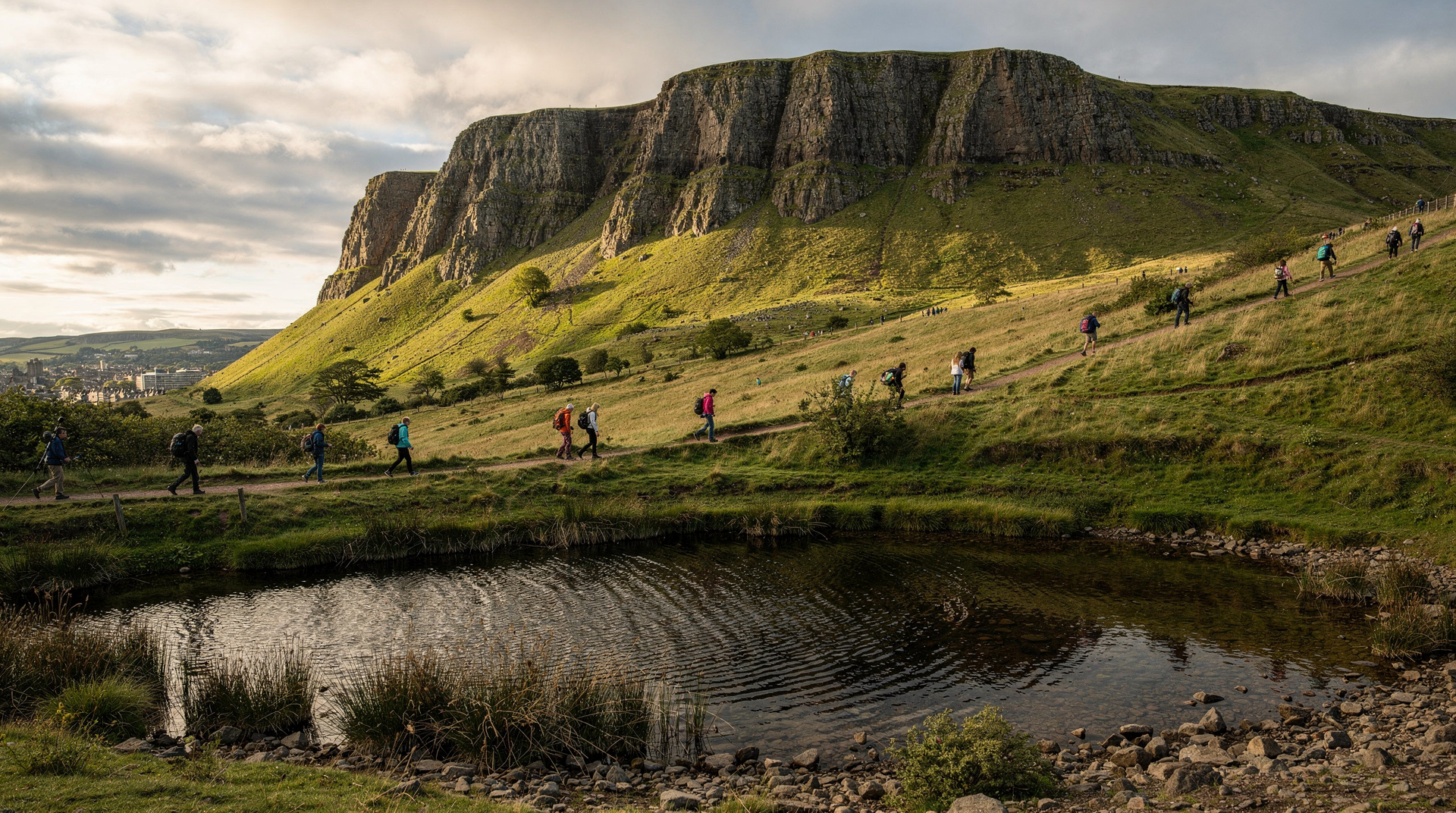
For visitors who want the volcanic-landscape contrast on the same day, pairing the walkway with a guided Arthur’s Seat hike gives a genuinely varied Edinburgh outdoors day — river valley in the morning, ancient volcano in the afternoon.
Top experiences
Bookable activities with verified prices and instant confirmation on GetYourGuide.