Cycling in Edinburgh
Edinburgh: 20-mile cycling loop tour
Is Edinburgh good for cycling?
Edinburgh is a mixed picture. The city centre has challenging hills and cobblestones, but several excellent cycling routes exist: the Union Canal towpath, the Portobello seafront, the Water of Leith corridor, and the Forth coastal route toward South Queensferry. Guided bike tours are a good way to get started without navigating independently.
What to know before you get on a bike in Edinburgh
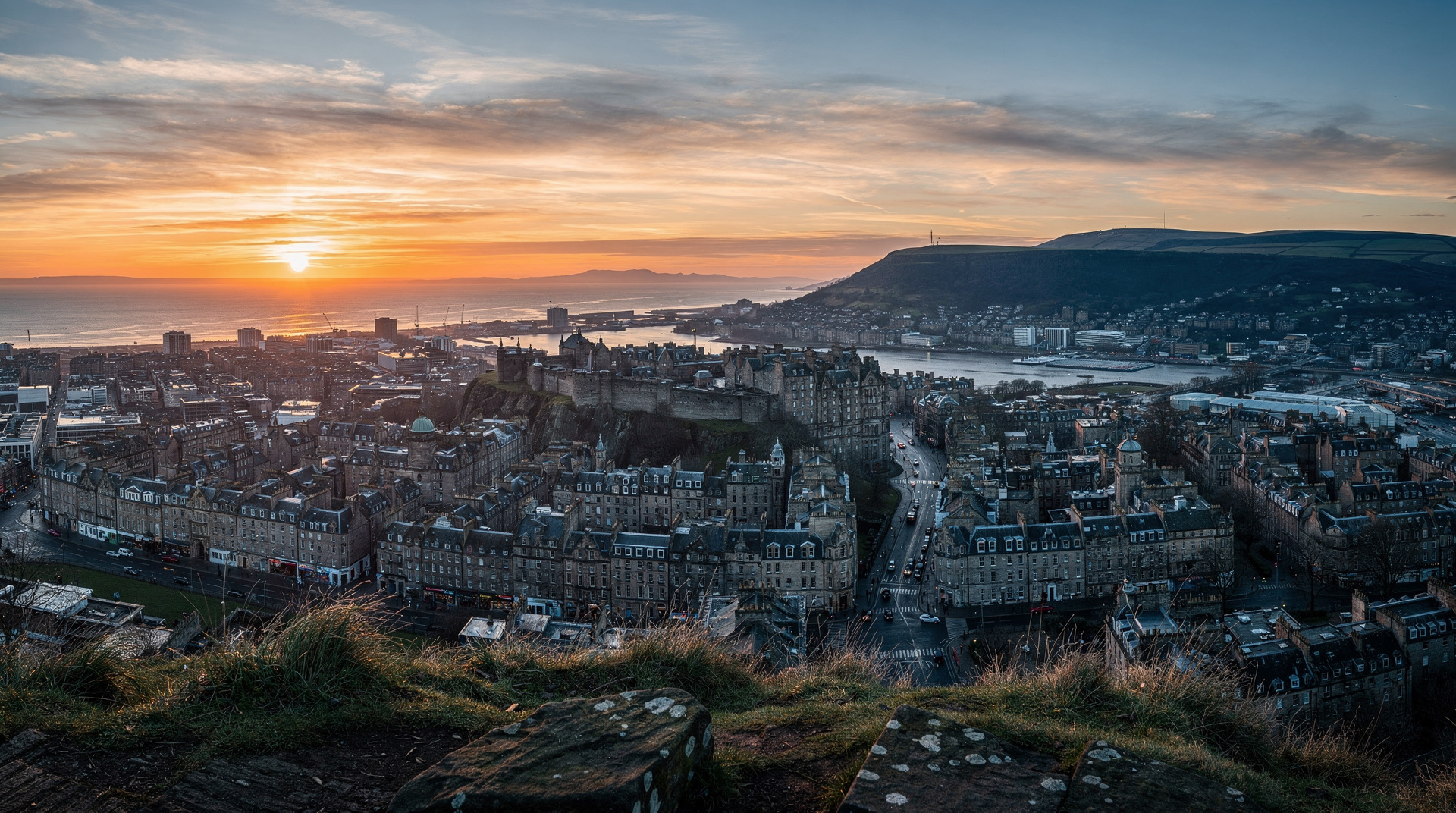
Edinburgh is not Copenhagen. The city’s hills, cobblestones, and narrow Old Town streets make self-guided cycling in the centre genuinely difficult for anyone who is not a confident urban cyclist. The Old Town is largely inaccessible by bike — the closes and steep closes are pedestrian only and much of the Royal Mile is cobbled. The New Town has better surfaces but one-way systems and bus lanes that require attention.
This is the honest picture. The more useful truth is that Edinburgh has some excellent cycling routes that avoid the problematic areas entirely, particularly along the coast, the canal, and the Water of Leith corridor. A visitor who takes a guided bike tour or uses a hire bike for a specific route — rather than trying to navigate the city centre by bike — will have a genuinely rewarding experience.
| Best routes | Union Canal towpath, Portobello seafront, Forth coast to South Queensferry |
| Avoid by bike | Old Town closes, Royal Mile cobbles, Cockburn Street/Candlemaker Row hills |
| Cost | Around £25-40/day standard hire, £40-60/day e-bike |
| Best for beginners | A guided tour rather than independent navigation |
| Helmets | Not legally required in Scotland but strongly recommended |
The best cycling routes
The Union Canal towpath
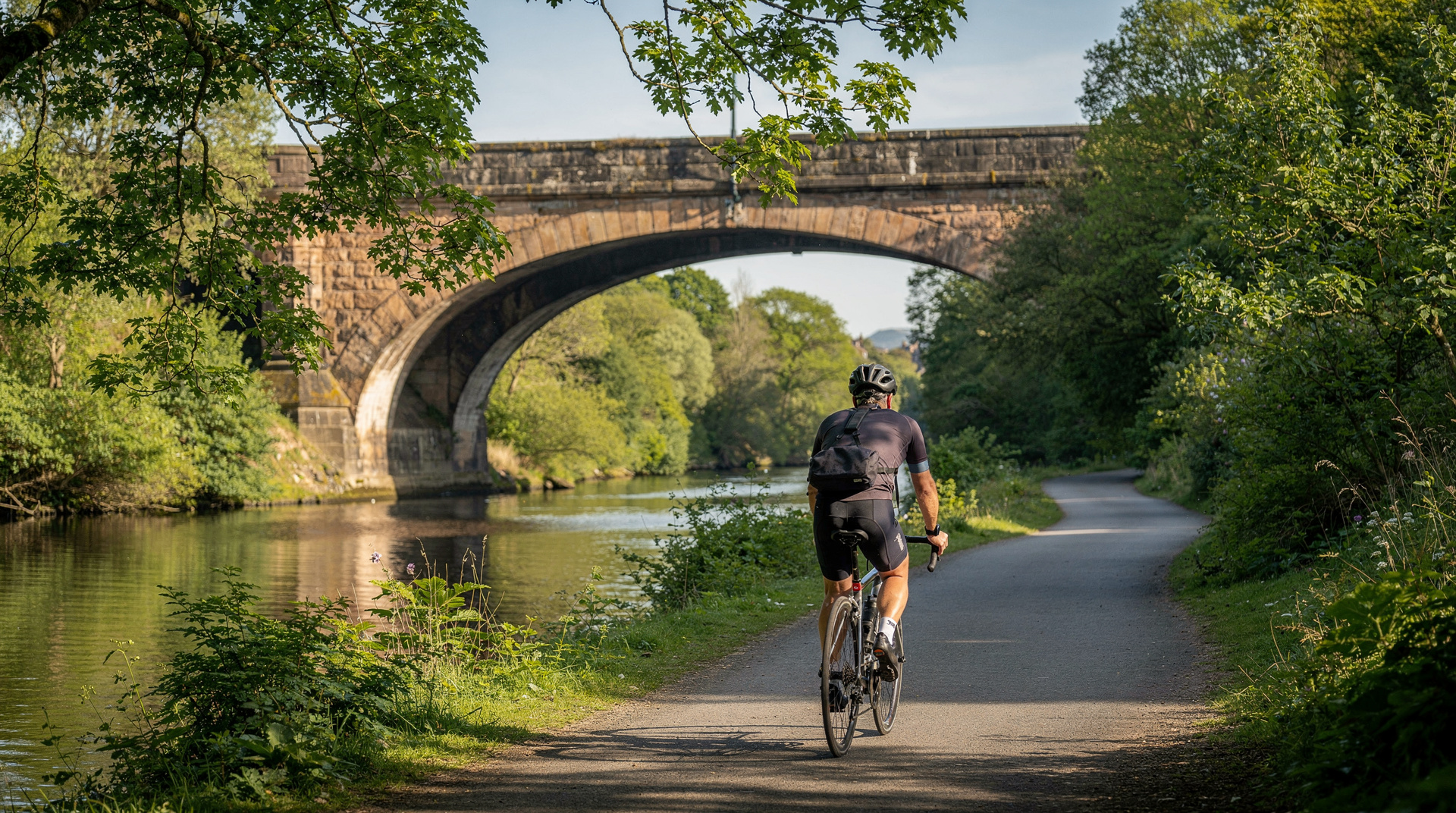
The Union Canal runs 31 miles from Edinburgh to Falkirk, where it connects with the Forth and Clyde Canal via the spectacular Falkirk Wheel (the world’s only rotating boat lift). The Edinburgh end of the canal is accessible from Fountainbridge (about 15 minutes’ walk west of Princes Street) and the towpath provides a flat, traffic-free cycling route all the way to Linlithgow (14 miles) and beyond.
For visitors, the section from Edinburgh to Ratho (about 8 miles, 1.5 hours each way on a leisure bike) is the most rewarding stretch. Ratho has an activity centre, a canal boat restaurant, and a pleasant village. The canal towpath surface varies — it is good near Edinburgh but rougher in places further out.
The Portobello coastal route
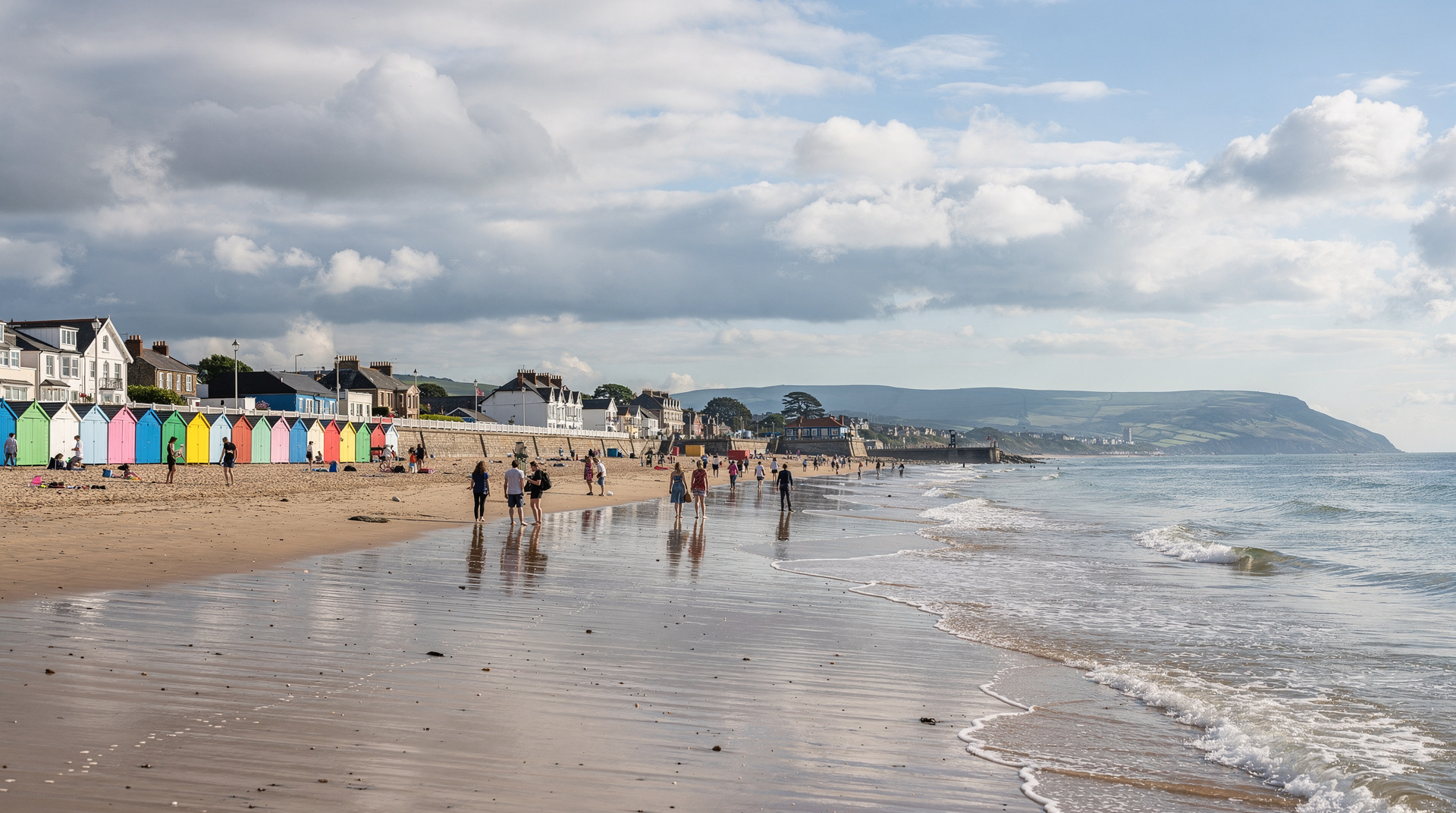
From the bottom of Leith Walk, a cycle path follows the seafront road past Seafield and out along the Portobello promenade, continuing toward Musselburgh. This is almost entirely flat, passes along the sandy beach, and gives a very different perspective on Edinburgh from the usual Old Town and Arthur’s Seat views. The full route from Leith to Musselburgh covers about 6 miles and is manageable for most casual cyclists.
The return can vary — either back along the coast or taking a different route through Portobello village itself.
Leith is a natural place to start or finish, and the Leith neighbourhood guide is worth a look for a coffee or a late lunch before or after the ride. If you would rather spend time on the sand itself, the Portobello destination page covers the village in more detail.
The Water of Leith corridor
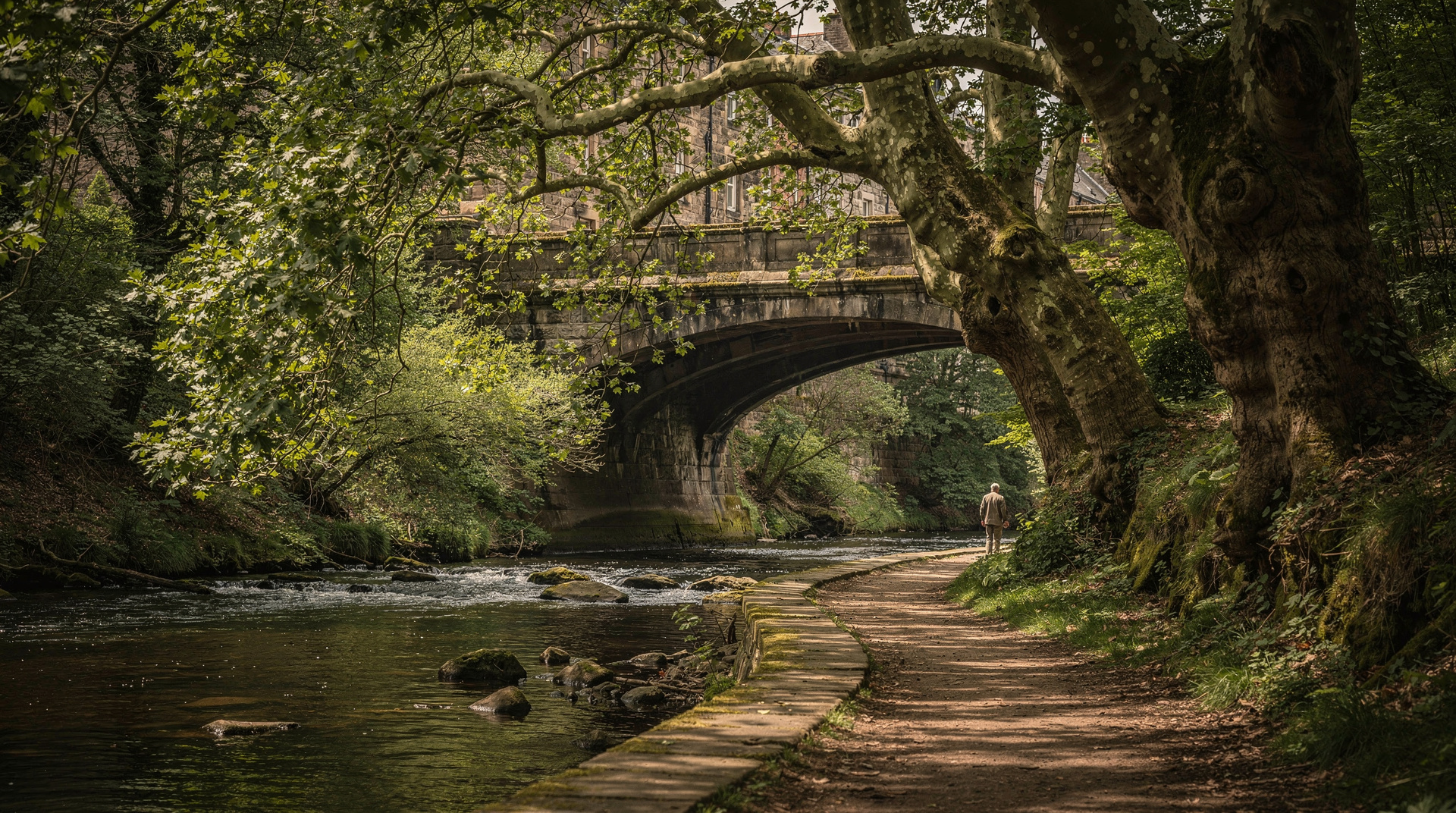
The Water of Leith walkway is also partly cycleable, though the width of the path limits speed and some sections are signed as pedestrian priority. The most suitable section for cyclists is between Balerno and Slateford, where the path is wider and less busy. The city-centre sections around Dean Village are narrow and best avoided on a bike during busy periods.
The Forth coastal route to South Queensferry
Edinburgh’s best cycling route for those willing to go beyond the city boundary is the coastal cycle path toward South Queensferry, roughly 12 miles from the city centre. The route passes Cramond, a village where the River Almond meets the Firth of Forth, and then along the coast to the village of South Queensferry directly beneath the three Forth bridges.
The Forth Road Bridge, the Forth Rail Bridge (the spectacular nineteenth-century cantilever structure, a UNESCO World Heritage Site), and the Queensferry Crossing are visible together from the waterfront at South Queensferry in a way that is genuinely impressive. The cycle back to Edinburgh can be varied by taking the train from Dalmeny station (one stop, a few minutes, bikes allowed).
Anyone who prefers to keep to the water on foot as well as by bike can find the walking side of this corridor in the Water of Leith Walkway guide, which helps you judge which stretches suit a bike and which are better left to walkers.
Guided bike tours
A guided tour is the practical solution for visitors who want to see Edinburgh by bike without the stress of independent navigation. The guides know the routes that avoid the worst hills and cobblestones, and the social format makes the logistics manageable.
An Edinburgh 3-hour bike tour taking in the city centre, Holyrood Park and Portobello covers three distinct environments — Old Town edges, volcanic park, and seaside promenade — in a single morning and is a particularly well-structured introduction to the city by bike.
The Edinburgh 5-hour bike tour to the coast and Forth Road Bridges covers the Forth coastal route described above and is the right choice for more experienced cyclists who want a longer day out with a spectacular destination.
For families, the family cycling options — including the Portobello seafront route — are the most appropriate. Children need to be at least 6-7 years old and comfortable on a bike for the guided tour options.
If you are still deciding between a bike tour and other ways of spending a day, the guide to which Edinburgh tour to book sets cycling alongside the other options so you can compare them honestly.
Bike hire in Edinburgh
Several bike hire operators are based in the city. The main options in 2026:
Biketrax (Lochrin Place, near the canal) is Edinburgh’s most established hire shop, with road bikes, hybrids, mountain bikes, and e-bikes. Day hire typically runs £25-£40 depending on bike type. They also hire cargo bikes and children’s bikes with trailers.
Edinburgh Bicycle Co-operative (Bruntsfield Place) offers hire alongside their retail and repair services. Friendly staff who can advise on routes for your fitness level and time available.
Cyclehire stands (Nextbike/Just Eat Cycles scheme) provide pay-as-you-go bikes from docking stations around the city. These are practical for short journeys but the bikes are heavy city bikes not suited to longer recreational rides. The app is straightforward; pricing is hourly.
E-bikes are increasingly available and make Edinburgh’s hills significantly more manageable. Most hire shops now have e-bike fleets; expect to pay £40-£60 per day.
Practical cycling notes
The Old Town hills are serious. The main approaches to the Royal Mile involve steep gradients — Cockburn Street and Candlemaker Row are both steep enough that most cyclists push rather than ride. Plan routes that avoid these unless you are fit.
Cobblestones. The Royal Mile surface is partly cobbled. This is manageable on wider tyres (hybrid or MTB) but punishing on road bike tyres. Avoid the central cobbled areas on thin tyres.
Helmets. Helmets are not legally required in Scotland but are strongly recommended, particularly for city riding. Good hire shops provide them with the rental.
Cycle lanes. Edinburgh has an expanding cycle network, though coverage is patchy and some lanes are narrow. The Meadows — a large park between the University and the Old Town — has good cycling paths and is a useful traffic-free cut-through. Leith Walk has a protected cycle lane.
Locking. Use a quality D-lock. Edinburgh has a bike theft problem, particularly in areas near the university. Lock to fixed street furniture rather than easily cut signs.
Cycling and Edinburgh’s hills: the honest assessment
The honest summary is this: the best of Edinburgh’s cycling is not in the historic centre but in the terrain around it. The canal, the coast, the Portobello seafront, and the Forth bridges route are all excellent. Trying to navigate the Old Town and New Town hills by hire bike without local knowledge is a recipe for exhaustion and frustration.
The two-day Edinburgh itinerary suggests combining walking in the Old Town with cycling on the coastal routes — using the right mode of transport for each environment. For anyone planning a longer stay, the getting around Edinburgh guide covers the balance between walking, buses, trams, and cycling.
Once the bike is returned, the Old Town is best explored on foot. The Royal Mile guide and the Old Town destination page are good starting points for a walking day that complements a day in the saddle.
Weather and seasonal cycling conditions
Edinburgh’s cycling season runs comfortably from April through October, with May, June, and September offering the best combination of daylight and dry weather for longer routes like the Forth coast run or the Edinburgh-Glasgow canal ride. Winter cycling is entirely possible on the flatter routes — the Portobello promenade and Union Canal towpath near the city are ridden year-round by regulars — but shorter daylight (as early as 4pm sunset in December) compresses the window for longer excursions, and coastal winds off the Forth can be sharp in January and February.
Rain gear that keeps hands and feet dry matters more than a heavy coat for cycling comfort; Edinburgh’s rain tends to be persistent drizzle rather than short, heavy downpours, which is more chilling over a multi-hour ride than a quick soaking.
The Edinburgh weather guide gives a fuller sense of what to expect in each season, and the best time to visit Edinburgh guide helps if you are still choosing your dates around cycling.
For visitors planning a specific longer route like South Queensferry or the Ratho canal run, checking the week’s forecast and choosing the drier day within a flexible Edinburgh stay makes a genuine difference to how enjoyable the ride is — these routes are exposed to Firth of Forth winds for significant stretches.
Choosing a route by ability and time available
| Route | Distance | Time | Difficulty | Best for |
|---|---|---|---|---|
| Portobello coastal route | 6 miles | 1-1.5 hrs | Easy, flat | Families, beginners |
| Union Canal to Ratho | 16 miles round trip | 3 hrs | Easy, flat | Casual cyclists wanting a full morning |
| Forth coast to South Queensferry | 24 miles round trip | 4-5 hrs | Moderate | Confident cyclists, spectacular views |
| Meadows/Innocent Railway shortcut | 2-3 miles | 30-45 min | Easy | Quick traffic-free city-centre crossing |
| Edinburgh to Glasgow (Union Canal) | 55 miles one way | 5-6 hrs | Long but flat | Fit cyclists wanting a full-day challenge |
Cycling as part of a longer Edinburgh stay
For visitors staying four or more days, cycling works best as a dedicated day rather than a way of getting between daily sights. A good pattern is to reserve one full day for a coastal or canal route — Portobello and back, or the fuller Forth coast run to South Queensferry — and to use walking and buses for Old Town sightseeing on the other days.
This avoids the common mistake of hiring a bike for the whole trip and then discovering that most of what you actually want to see (the Castle, the Royal Mile, Holyroodhouse) sits in the one part of the city where cycling is genuinely impractical. See the three-day Edinburgh itinerary for how a cycling day can slot into a broader visit without crowding out the Old Town’s main sights.
Frequently asked questions about cycling in Edinburgh
Can I take my bike on Edinburgh trams and buses?
Bikes are not permitted on Edinburgh’s trams during peak hours. Lothian Buses do not generally accommodate bikes, though folding bikes are allowed. The Lothian Buses and tram websites have current policies. For cycling combined with public transport, the ScotRail trains that leave from Waverley and Haymarket stations do allow bikes (booking required in advance on some services).
Is there cycling in Holyrood Park and Arthur’s Seat?
Cycling is permitted on Queen’s Drive, the road that loops around Holyrood Park. On Sundays the road is closed to motor vehicles and the loop is popular with cyclists. Off-road cycling within the park (on the hill paths themselves) is not formally permitted, though it happens. The Queen’s Drive loop is about 3.5 miles and is suitable for most cyclists.
Are e-bikes worth it for Edinburgh cycling?
For any cycling that involves the city’s hills, e-bikes make a significant difference to comfort and practicality. The cost premium over standard hire (roughly £15-20 per day extra) is worth it if hills are a concern. Several guided bike tour operators also offer e-bike options.
What is the best cycling route for families with children in Edinburgh?
The Portobello coastal route is the best family-friendly option: flat, scenic, and away from traffic for most of its length. The Meadows park also provides traffic-free cycling in a pleasant setting. For guided family cycling, the Edinburgh cycle tour to the coast (family friendly) is specifically designed for family groups.
How hilly is Edinburgh compared to other UK cities?
Edinburgh is among the hilliest UK cities, comparable to Bristol and significantly hillier than London, Manchester, or Leeds. The volcanic landscape that makes the Old Town so dramatic also makes cycling in it physically demanding. Anyone used to cycling in flat cities should adjust their expectations; anyone used to Bristol or Bath will feel at home.
Can I cycle from Edinburgh to North Berwick or St Andrews?
Both are possible cycling day trips for fit cyclists on road bikes. Edinburgh to North Berwick (25 miles each way) follows the East Lothian coast on quiet roads — a very pleasant day with a sea swimming stop in North Berwick. Edinburgh to St Andrews (50 miles via the Forth Road Bridge and across Fife) is a long day for most riders but follows mostly quiet roads. Return by train is straightforward from both destinations.
Longer cycling routes from Edinburgh
The National Cycle Network in and around Edinburgh
Sustrans’ National Cycle Network passes through Edinburgh and provides signed, largely traffic-free routes into the surrounding countryside. Route 1 (the North Sea Cycle Route) passes through Edinburgh heading north toward the Forth and into Fife. Route 75 (the Lochs and Glens South route) heads southwest along the Union Canal toward Glasgow, a ride of about 55 miles to Glasgow city centre on an almost entirely flat towpath.
The Edinburgh to Glasgow cycle route via the Union Canal is the finest long-distance cycling day in the Edinburgh region: 55 miles of almost entirely off-road, car-free cycling along the Union Canal towpath and the Forth and Clyde Canal, arriving at Glasgow city centre. The gradient is essentially flat the whole way. Allow 5-6 hours for fit cyclists; the train back from Glasgow takes 50 minutes. This is achievable as a day trip and is one of the best point-to-point cycling routes in Scotland.
The Innocent Railway Path is a short but historically interesting cycle path running from Holyrood Park (near the palace) through a Victorian railway tunnel and out to the Meadows. The railway (opened in 1831) was one of Scotland’s first; the tunnel under St Leonard’s is now a pedestrian and cycle path. The route connects Holyrood to the University area and makes a useful city-centre cycling shortcut.
The Forth Bridge route: a cycling highlight
The 5-hour guided bike tour to the Forth Road Bridges follows a coastal and estuary route that demonstrates what Edinburgh cycling is best at: flat or gently rolling terrain beside water, with destinations that reward the journey. The Forth Bridge (the red cantilever bridge, dating from 1890 and a UNESCO World Heritage Site) looks genuinely different from the road and cycle path of the adjacent Forth Road Bridge than it does from any other viewpoint — the scale is legible in a way that photographs rarely capture. South Queensferry village beneath the bridge has excellent cafés for a rest stop.
For independent cyclists, the coastal route from Edinburgh to South Queensferry follows the A904 from Cramond; the return can vary via the Queensferry Crossing cycling path (the new bridge has a dedicated cycle lane giving a very unusual Firth of Forth crossing experience) or the train from Dalmeny.
The Edinburgh cycling landscape: ongoing improvements
Edinburgh City Council has been investing in cycling infrastructure and the network of protected cycle lanes has expanded significantly since 2020. Leith Walk gained a protected lane; Princes Street has cycling provision; the main arterial routes into the New Town are increasingly signed for cyclists. The network is not yet comprehensive but is improving year on year.
The Meadows — a large park south of the Old Town, bordered by the University and Bruntsfield — functions as the cycling hub of south Edinburgh. Traffic-free paths cross the Meadows in multiple directions, making it a useful cut-through for cyclists moving between the University area, Bruntsfield, and the Old Town edges. On summer evenings the Meadows fills with cyclists, runners, frisbee players, and picnickers in a scene that feels distinctly Edinburgh.
For cyclists interested in advocacy and route updates, Spokes (the Lothian Cycle Campaign) publishes an excellent cycle map of Edinburgh and the surrounding area, updated annually. The map shows both on-road cycling routes and off-road paths, including many that are not signed and would be missed by visitors relying on general navigation apps.
Cycling events in Edinburgh
The Edinburgh to St Andrews Cycle Sportive attracts hundreds of participants in early summer for a timed ride of 50 miles across the Forth and through Fife. Entry is open to recreational cyclists and the route is supported with rest stops and mechanical assistance.
Critical Mass Edinburgh is a monthly informal group ride through the city centre, typically on the last Friday of the month. Participants of all abilities join for a route that varies each month, cycling en masse through Edinburgh’s streets. The ride is peaceful rather than confrontational and is a good way for visiting cyclists to experience Edinburgh cycling culture at its most communal.
Comparing Edinburgh’s cycling to other Scottish cities
Edinburgh and Glasgow are Scotland’s two major cycling cities, and they represent interestingly different cycling environments. Glasgow’s cycling infrastructure is generally more extensive and better connected in the city centre, and the terrain is flatter (though still hilly by UK city standards). Edinburgh has more iconic cycling routes on the periphery — the Forth coast route, the Union Canal, the Pentland approach roads — but a more challenging city centre.
Visitors who plan to use cycling as a primary mode of transport during their visit are better served in Edinburgh by the route-focused approach described in this guide: choose a specific route destination (South Queensferry, Portobello, Ratho via the canal) and treat cycling as an experience in itself rather than a navigation tool for getting between attractions. For attraction-to-attraction travel within the city, walking and buses are generally more practical. The Edinburgh trams and buses guide explains how those services work, and the Pentland Hills guide is worth a look for riders who want hillier terrain beyond the city.
The Edinburgh 20-mile cycling loop tour shows what structured guided cycling in Edinburgh can achieve: a coherent circuit that avoids the worst of the hill and cobblestone challenges while covering genuinely varied Edinburgh terrain. For visitors who want to cycle but do not want to navigate independently, this is the most efficient introduction.
Cycling and Edinburgh’s tourist attractions
A practical note for cyclists interested in combining riding with attraction visits: Edinburgh’s major tourist sites (Edinburgh Castle, Royal Mile, Palace of Holyroodhouse, National Museum) are all within the Old Town zone where cycling is impractical and often not permitted. Plan to leave the bike at a hire point or locked at a fixed point outside the Old Town before exploring on foot. The Meadows or the base of Holyrood Park are good bike-leaving points for Old Town access.
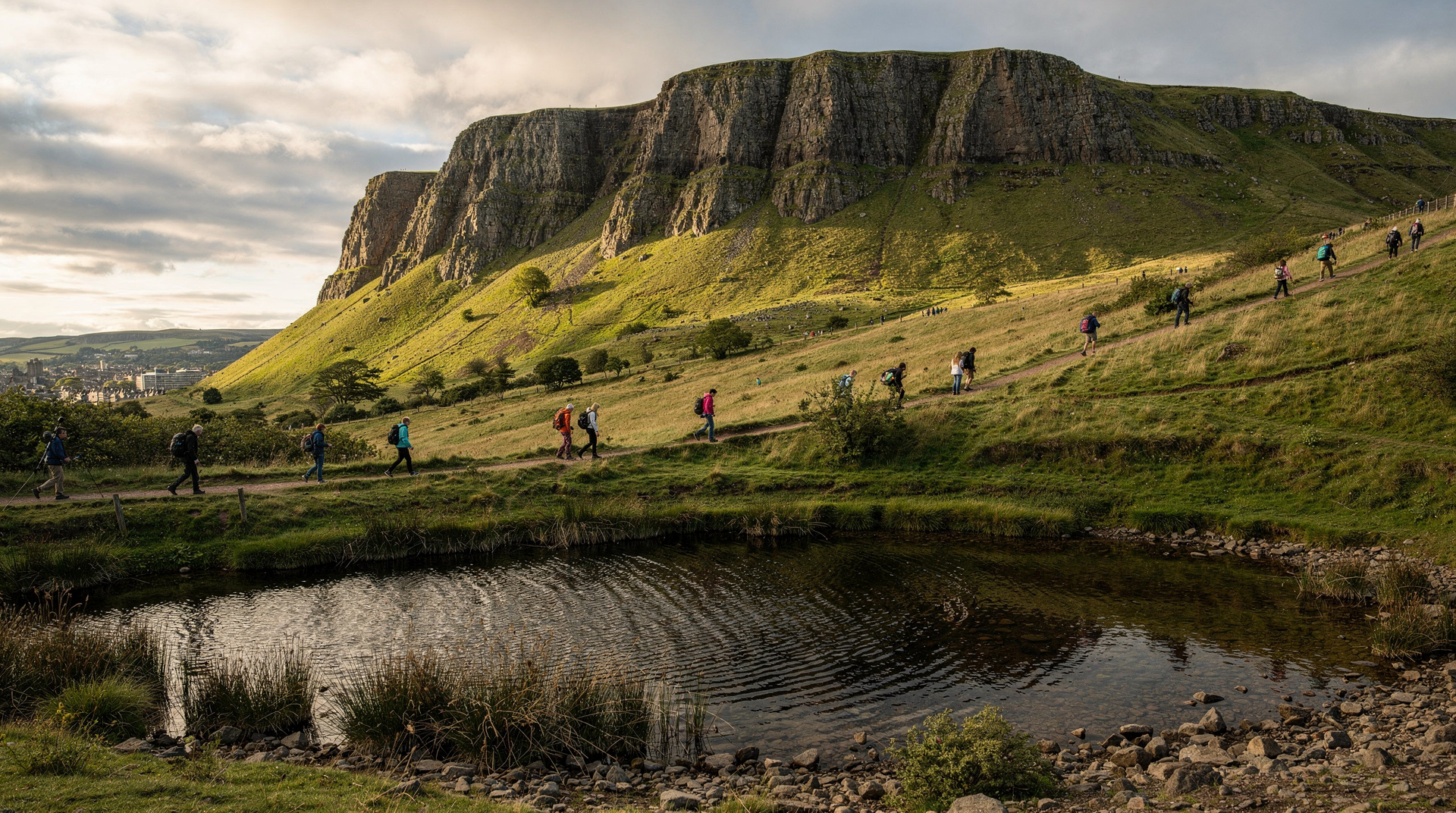
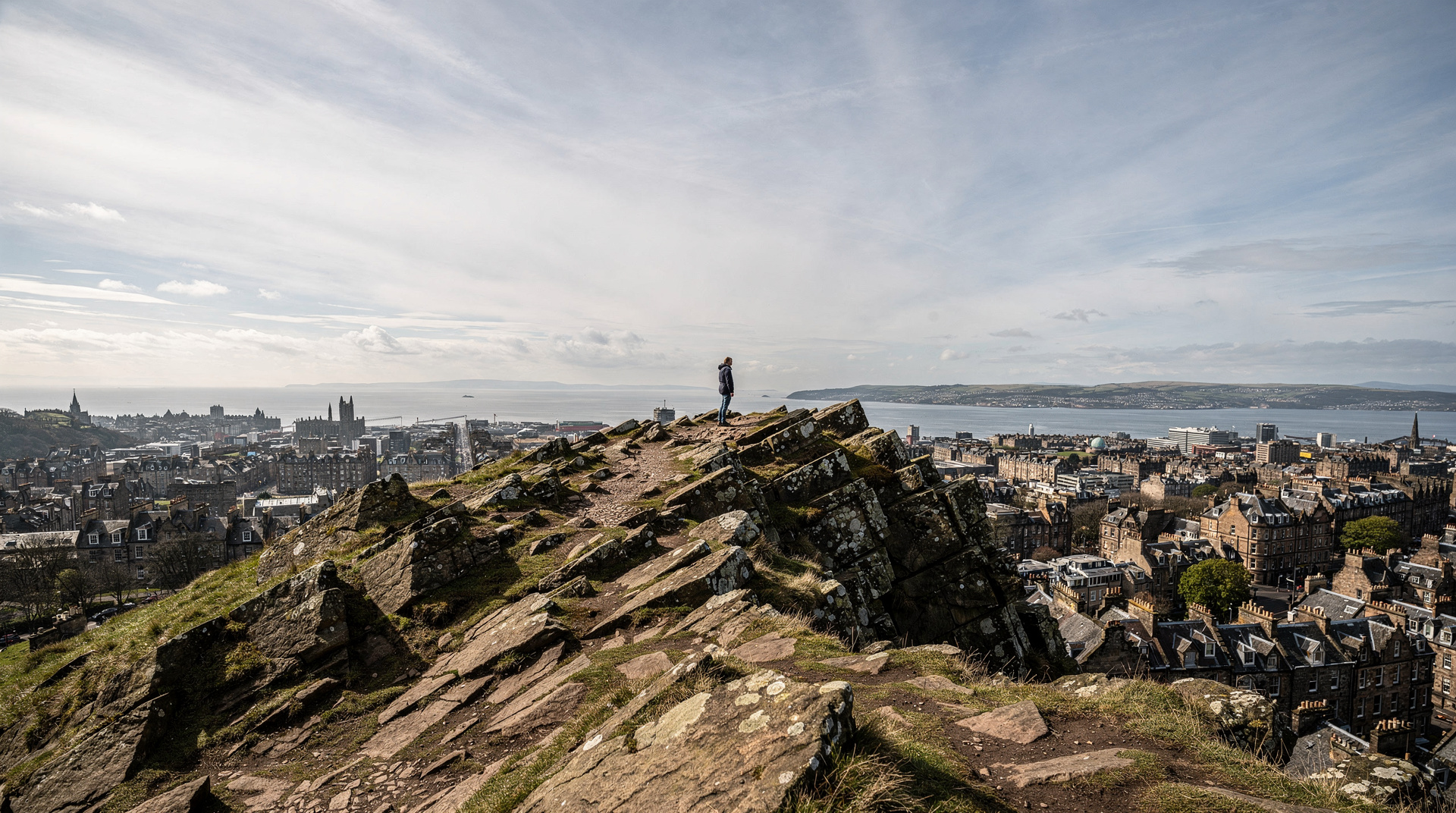
For Holyrood Park, the Arthur’s Seat area is accessible by bike (along Queen’s Drive to the base of the hill) and is worth combining with a Portobello cycling day — ride out along the coast to Portobello, continue to Holyrood Park, lock the bike, summit Arthur’s Seat on foot, and cycle back via the Innocent Railway Path. This gives an excellent combined day of cycling and walking that covers Edinburgh’s most distinctive natural landscapes. The Holyrood and Arthur’s Seat destination page and the Palace of Holyroodhouse guide are useful companions for planning the stop at the foot of the hill.
Cyclists heading out to the Forth coast may also like the North Berwick day trip guide and the St Andrews day trip guide, which cover the destinations mentioned above in more detail.
Top experiences
Bookable activities with verified prices and instant confirmation on GetYourGuide.