Dean Village
Dean Village: Edinburgh's hidden medieval mill village in a wooded river gorge, 10 minutes from Princes Street but feeling a world away.
Edinburgh: walk Dean Village, New Town & Royal Botanics
Quick facts
- Best time to visit
- Morning light; spring and autumn for foliage
- Days needed
- 2-3 hours
- Getting there
- 15-min walk from Princes Street or down from New Town
- Budget per day
- Free to visit; gallery entry £0–£10
The hidden valley that feels like a different century
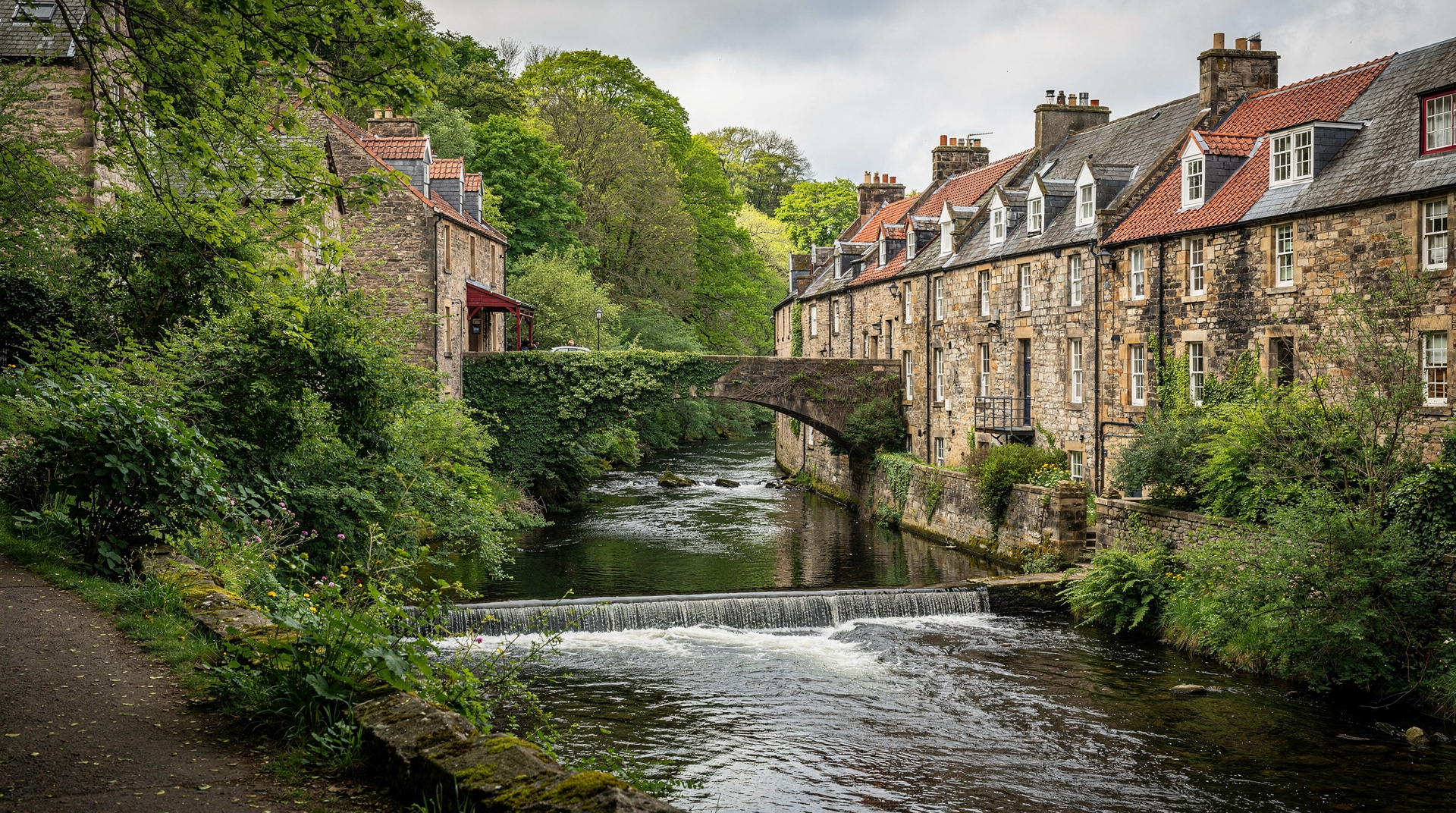
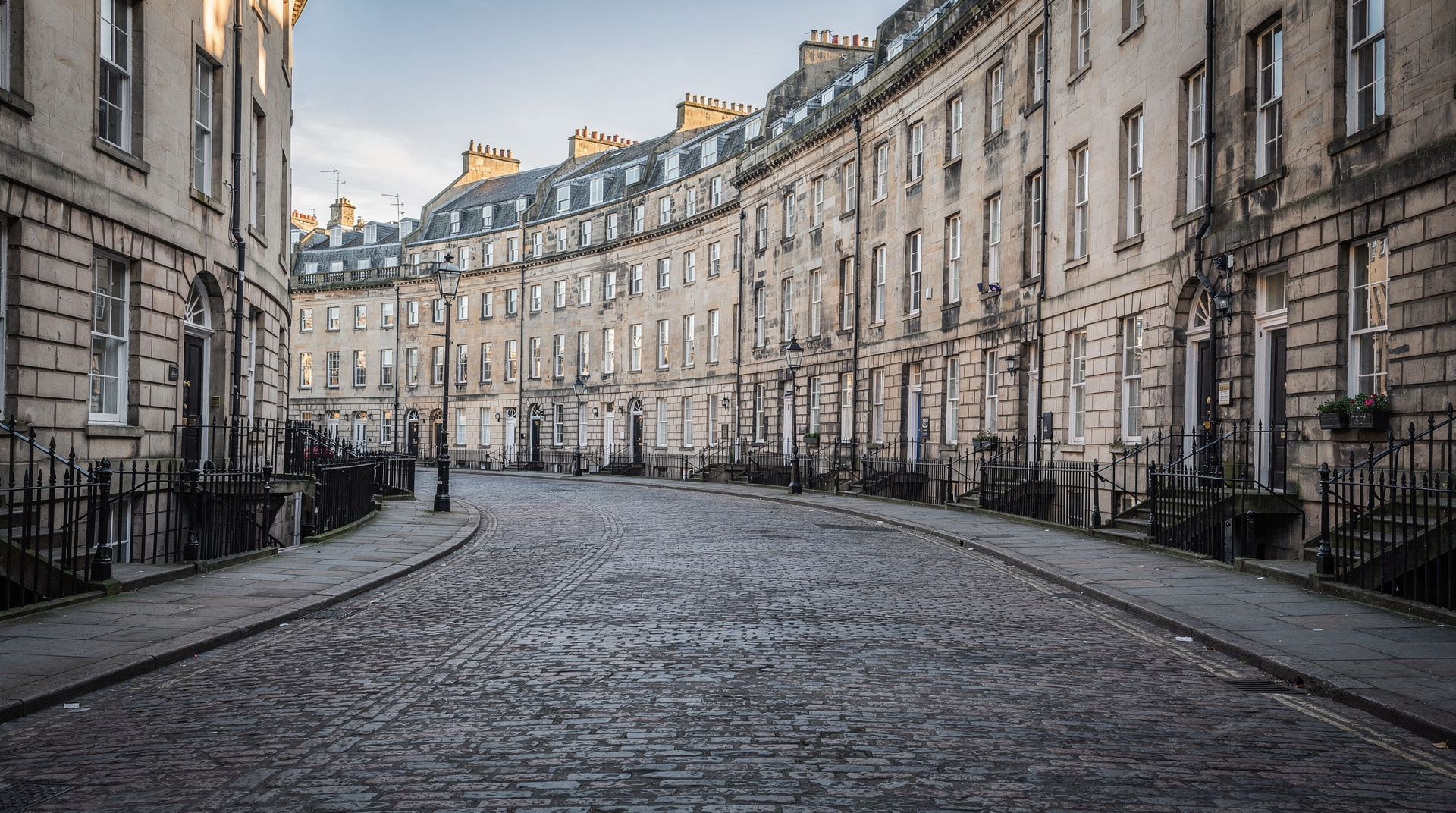
Ten minutes walk from the Georgian order of the New Town, down a steep wooded gorge, Dean Village sits in the valley of the Water of Leith as though time moved differently here. The mill buildings, stone bridges, and weir that give the village its character date from the eleventh century onwards — a medieval settlement that served Edinburgh’s milling needs for centuries before becoming a neglected backwater in the industrial era and then, from the 1970s onward, a carefully preserved residential enclave.
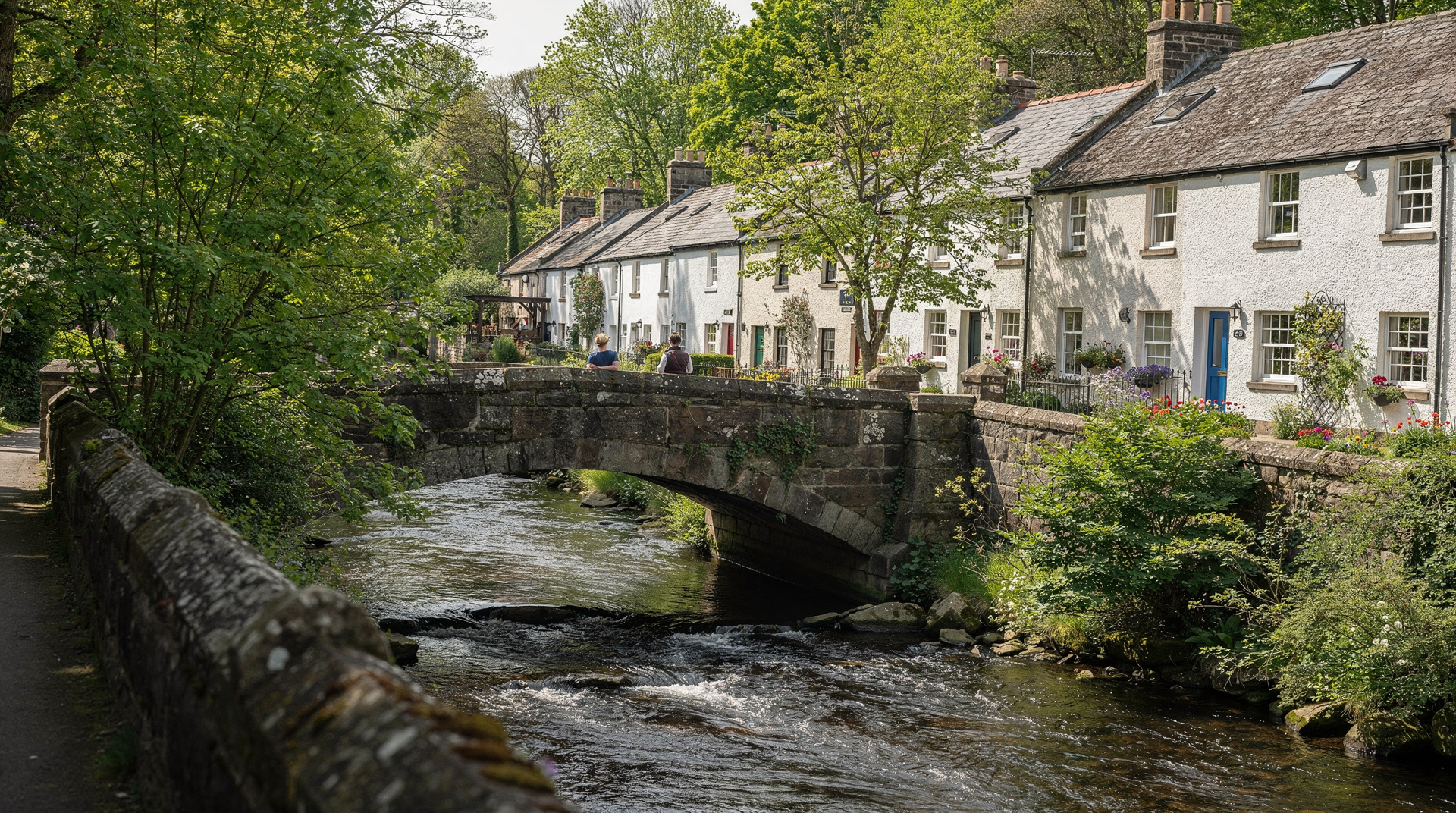
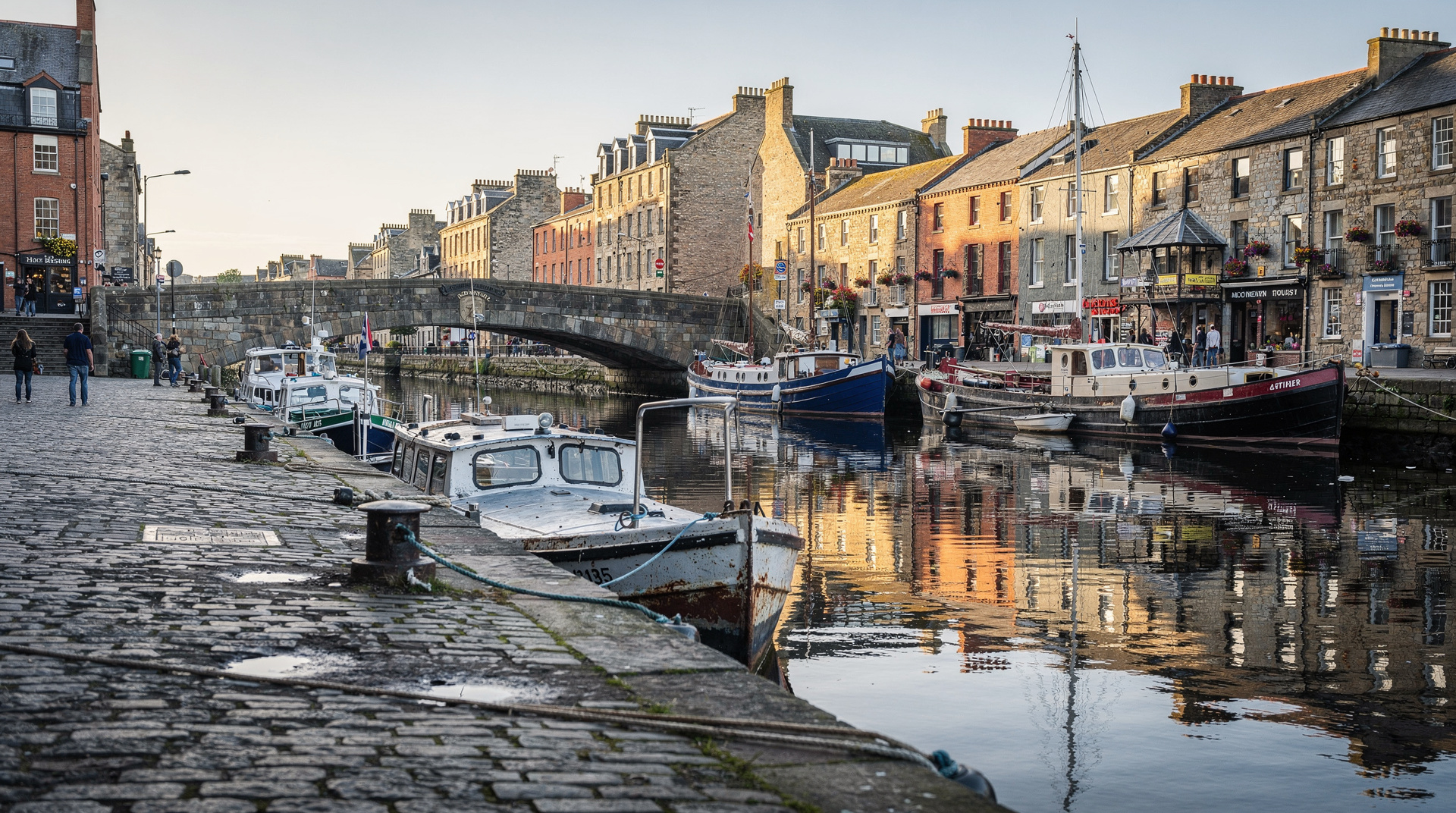
It is one of Edinburgh’s most photographed locations, and with good reason. The view from the Bell’s Brae bridge looking upstream at the stone mill buildings, their reflections broken by the weir, with woodland rising on both sides and the back of Randolph Cliff visible above — this is the kind of scene that could be in the Loire Valley or the Swiss Alps, not five minutes’ walk from Princes Street as the crow flies.
| Where | Water of Leith gorge, below the New Town |
| Cost | Free — no entry fee, no tickets |
| Time needed | 45 minutes for the classic view; 2–3 hours combined with Stockbridge |
| Getting there | ~15-min walk from Princes Street via Bell’s Brae |
| Best time | Weekday mornings; spring for blossom, autumn for colour |
The surprise factor is genuine. Most visitors to Edinburgh walk past the top of the gorge on their way around the New Town without realising what lies below. Dean Village is not a major attraction with queues and entry tickets; it is a place to walk, look, and feel the particular pleasure of a city that conceals things from you until you go looking.
What you are looking at: the milling history
Dean Village sits between the New Town above and Stockbridge downstream, and takes its name from the Dean of Guild — the official responsible for craft guilds in the medieval city. The milling community that grew up here was formally established under a charter in 1643, though mills had operated on the Water of Leith since at least the twelfth century. At its height, the village had eleven watermills producing grain for Edinburgh, which occupied the ridge above. The grain was transported up the slope by a system of paths and later a road — the Bell’s Brae that descends steeply from the New Town still follows its medieval line.
By the nineteenth century the mills were in decline as industrial milling superseded the small-scale operations, and the village fell into poverty and neglect. The buildings that survived into the twentieth century were in poor condition. The regeneration that began in the 1970s converted many of the old mill structures into residential apartments while preserving the exteriors, which is why Dean Village now has the physical character of an ancient settlement despite being inhabited by people who may well commute to tech offices in the morning.
Walking through Dean Village
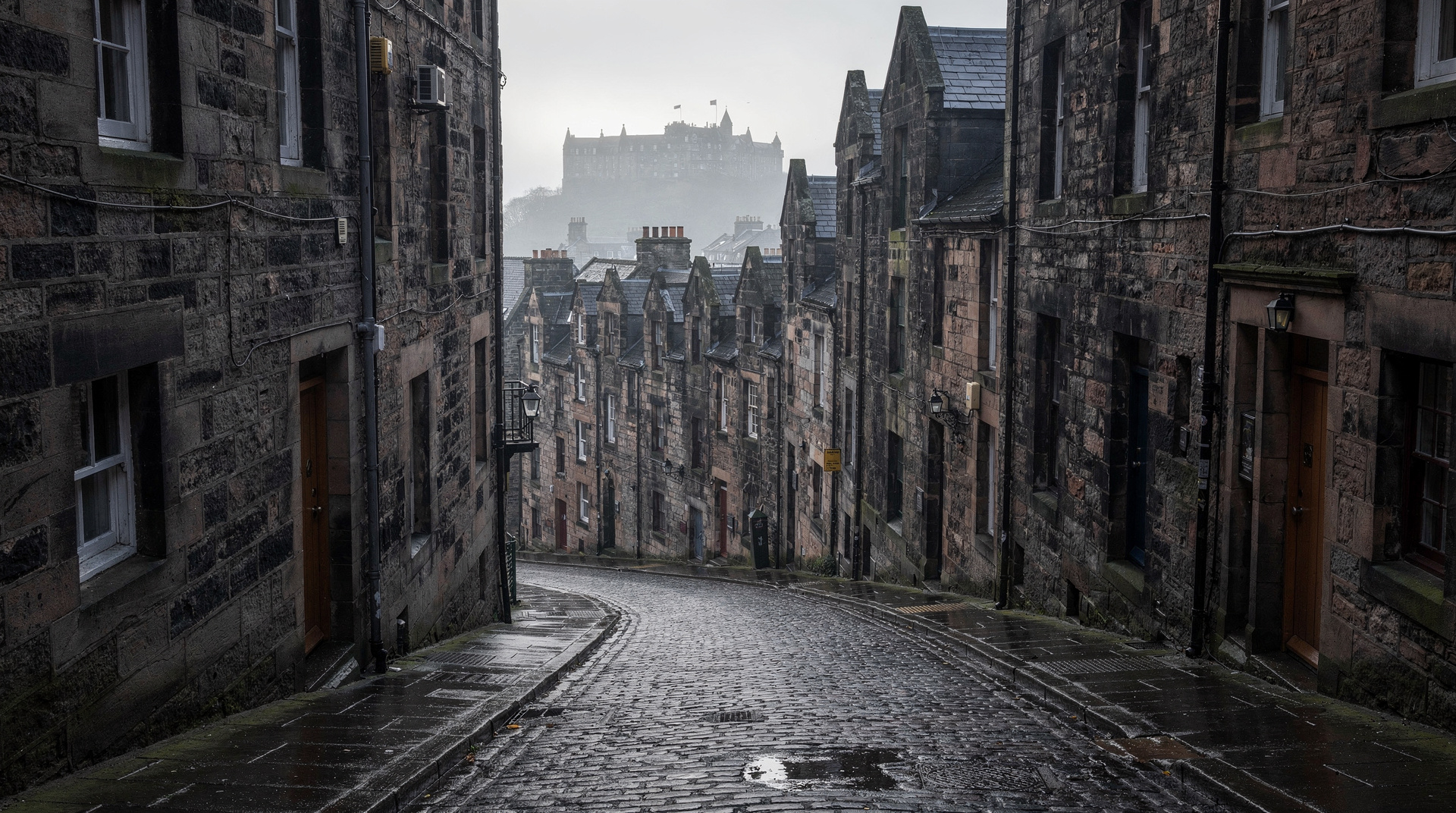
The main approach from the New Town is down Bell’s Brae from the western end of Queensferry Street. The descent is steep and the cobbles can be slippery when wet, but it takes less than 10 minutes and the change in atmosphere as you enter the gorge is dramatic.
At the bottom, the Water of Leith walkway follows the river in both directions. The village centre focuses on the stone bridge and the weir, with the old granary buildings and the converted mill structures on both banks. Walk slowly and look for the carved stonework on the old buildings — there are inscriptions from the baxters’ (bakers’) corporation and other medieval guild markers still visible if you look for them.
Continue east along the walkway (upstream, toward the Colonies) for a particularly attractive section of the river path through a wooded gorge. Continue west (downstream) toward Stockbridge, which you reach in around 20 minutes.
The most iconic photograph of Dean Village is taken from the Bell’s Brae bridge, looking upstream toward the weir. The best light is in the morning, when the sun reaches into the gorge from the east. In autumn, the trees turn gold and orange above the stone buildings, making this one of Edinburgh’s finest seasonal photography locations.
The Scottish National Gallery of Modern Art
A 10-minute walk from Dean Village along the Water of Leith, the Scottish National Gallery of Modern Art (Modern One and Modern Two) occupies two neoclassical buildings set in landscaped grounds. The collection covers twentieth-century and contemporary Scottish and international art, with particular strengths in early twentieth-century Scottish modernism, Dada and Surrealism, and the Scottish Colourists. Entry is free for the permanent collection; temporary exhibitions may have a ticket price.
The grounds are worth visiting independently of the galleries — the landscaping by Charles Jencks, created in 1999, features a spiral mound and a series of pools that interact with the architectural geometry of the buildings. It is one of the more unusual pieces of landscape design in Edinburgh and is easy to overlook on the way to the gallery itself.
Combining Dean Village with a longer walk
Dean Village is most naturally combined with a walk along the Water of Leith in one or both directions. The loop that many visitors follow: descend from the New Town to Dean Village, walk downstream to Stockbridge (20 minutes), browse the market or main street, then return to the city centre via the New Town grid. This takes around two to two-and-a-half hours and covers several of Edinburgh’s most characterful areas in sequence.
The New Town, Dean Village, and Circus Lane walking tour covers the architectural and historical context of both areas with a guide, including the dramatic contrast between the Georgian order above the gorge and the medieval character of the village below. It is a good introduction before exploring independently.
For photography specifically, the Edinburgh private photography tour can be tailored to include Dean Village and the Water of Leith as part of a wider Edinburgh photography route — ideal if you want local knowledge about light and angles.
Practical notes
Dean Village has no shops, cafes, or facilities of its own — it is a residential area that happens to be extraordinarily photogenic. Bring water and anything you need from the New Town before descending. The nearest cafes and restaurants are in Stockbridge, 20 minutes downstream.
The path through the village is accessible on foot but not straightforward for wheelchairs or pushchairs due to the steep descent from Bell’s Brae and the uneven riverbank path. An alternative approach from the Dean Bridge level is possible but requires care.
Dogs are common on the Water of Leith path; the village and walkway are popular with local dog walkers at all hours. Early morning on a weekday is the quietest time, and the light is usually better.
The Water of Leith and the gorge landscape
The gorge that Dean Village sits in is itself one of Edinburgh’s most interesting geological features. The Water of Leith has cut through a sequence of sandstone and volcanic rock over thousands of years, creating a valley that drops 15 to 20 metres below the surrounding streets in places. The effect is of a complete change of landscape within a few hundred metres — from the wide, gridded streets of the New Town above to a narrow wooded gorge with the feel of a rural riverbank.
The woodland that lines the gorge is mature enough to create genuine summer shade, and the bird life in the riverside trees is noticeably richer than the city above. Dippers work the weir; grey wagtails nest along the bank; and grey herons fish in the slower stretches. Otters have been recorded at several points along the Water of Leith, including near Dean Village, though they are most active at dawn and dusk and rarely seen by casual visitors.
The gorge is particularly beautiful in early spring, when the woodland comes into leaf and the snowdrops and then daffodils flower in the grass below the mill buildings. In autumn, the maples and beeches turn and the reflections in the weir pool become more complex with the added colour. Winter visits, while cold, have the advantage of seeing the structure of the valley and buildings more clearly once the leaves have fallen.
St Bernard’s Well
Continuing downstream along the Water of Leith from Dean Village toward Stockbridge, you reach St Bernard’s Well — a neoclassical pump room built in 1789 over a mineral spring that was popular in the eighteenth century for its supposed medicinal properties. The circular temple structure, with its Doric columns and the statue of Hygeia inside, sits directly on the riverbank in a position of theatrical unexpectedness. You round a bend on the path and the miniature Roman temple appears in a clearing.
The well is locked and not generally accessible to the interior, but the exterior is entirely visible from the path and is one of the most photogenic surprises on the Water of Leith walkway. It is about 15 minutes downstream from Dean Village, just before the path enters Stockbridge.
The Dean Cemetery
Above Dean Village on the western side of the gorge, the Dean Cemetery was established in 1845 as an alternative to the overcrowded city kirkyard. It is one of Edinburgh’s finest Victorian burial grounds — a large, park-like space with elaborate mausolea, portrait sculptures, and memorials to many of the figures who shaped Victorian Edinburgh. The architect William Playfair is buried here, as are William Henry Playfair’s contemporaries in architecture and law.
The cemetery is open to the public and is free to visit. It is less well-known than Greyfriars but architecturally more impressive in the scale and quality of its monuments. The views from the upper section back over the gorge are good, and the peaceful Victorian atmosphere is a contrast to the busyness of the tourist areas below.
Ravelston and the western New Town
Above Dean Village and the gorge, the area of Ravelston and Murrayfield forms part of Edinburgh’s prosperous western suburbs beyond the West End — large detached houses, private school grounds, and the Murrayfield Stadium. Murrayfield is Scotland’s national rugby ground, and on international match days the streets of the West End and beyond fill with supporters from both teams. The atmosphere before and after a Six Nations international at Murrayfield is one of Edinburgh’s more enjoyable crowd events — the Scottish rugby crowd is generally well-behaved and genuinely convivial.
The walk from Dean Village uphill through Ravelston to Murrayfield is about 20 minutes and is a very different Edinburgh from either the Old Town or the Georgian terraces — grand suburban villas, mature trees, and almost no tourists.
Belford Road and the Scottish National Gallery of Modern Art
Walking from Dean Village toward the National Galleries of Modern Art along Belford Road takes about 10 minutes. The gallery complex (Modern One and Modern Two) occupies two neoclassical buildings that were formerly a girls’ school and a hospital respectively. The Charles Jencks landscape between and around them — a spiral mound, triangular pools, and geometric earthworks that explore the relationship between art, science, and landscape — is worth walking through whether or not you enter the galleries.
The permanent collection in Modern One includes major works by Picasso, Matisse, and the German Expressionists alongside a strong holding of twentieth-century Scottish art — particularly the Scottish Colourists (Peploe, Cadell, Hunter, and Fergusson), who produced some of the most vivid and commercially appealing painting in British art between 1900 and 1930. Entry is free for the permanent collection.
The sculpture garden at the front of Modern One has pieces by Henry Moore, Eduardo Paolozzi, and others installed in a formal landscape that is pleasant to walk through and free to access at any time. The cafe at Modern Two is one of the better gallery cafes in Scotland.
A suggested Dean Village walk
A two-to-three-hour walk that makes the most of the area: start in the New Town at Charlotte Square, walk west along Queensferry Street, descend Bell’s Brae to Dean Village (10 minutes), walk through the village and along the Water of Leith upstream toward the Dean Cemetery (20 minutes), return to the village and continue downstream past St Bernard’s Well to Stockbridge (20 minutes), then return to the city centre via the New Town residential streets. This covers Dean Village, the Water of Leith, and the best of the northern New Town in a comfortable half-day.
For those with more time, continuing from Stockbridge to Leith via the Water of Leith walkway makes a full day’s riverside walk from the West End to the sea. The Water of Leith walkway guide covers the complete route with practical information about access, facilities, and points of interest along the full 24-mile path.
Frequently asked questions about Dean Village
Is Dean Village worth visiting?
Yes, if you want to see Edinburgh beyond the tourist corridor. It is one of the recommendations in the Edinburgh on a budget guide for the excellent free experience it provides — no entry fee, no guided tour required. It takes about two hours to visit properly — descending from the New Town, walking through the village, and continuing to Stockbridge or the Gallery of Modern Art. The experience of finding this enclosed medieval character five minutes from Princes Street is one of Edinburgh’s best surprises.
How do I get to Dean Village?
The easiest route is to walk from the western end of Princes Street or from the New Town. Take Queensferry Street west from Charlotte Square, then turn down Bell’s Brae on the right. The descent takes about 10 minutes. Alternatively, approach via the Water of Leith walkway from Stockbridge or from the Gallery of Modern Art direction.
Can I combine Dean Village with Stockbridge in a half-day?
Easily. Descend to Dean Village from the New Town, explore the village and walk along the river, then continue downstream to Stockbridge in about 20 minutes. Allow two to three hours for the combined walk with time to browse in Stockbridge. If visiting on a Sunday, the Stockbridge Market adds another dimension.
Is Dean Village good for photography?
It is one of Edinburgh’s best photography locations. The view from Bell’s Brae bridge looking at the weir and mill buildings is the classic shot. Morning light gives the best illumination into the gorge. Autumn adds colour from the trees, spring adds blossom. The Edinburgh photography guide covers the best angles and timing.
Is there anywhere to eat in Dean Village?
No. Dean Village itself has no food or drink facilities — it is residential. The nearest options are in Stockbridge (20 minutes downstream) or in the New Town above. Factor this into your planning if you are spending a morning in the area.
How does Dean Village connect to the rest of Edinburgh’s walking routes?
Dean Village sits at the junction of several useful routes. North via the Water of Leith leads to Stockbridge. South via the National Gallery of Modern Art connects to the West End. Up Bell’s Brae returns you to the New Town. Continuing north from Stockbridge along the Water of Leith eventually reaches Leith. The full route from Dean Village to the sea at Leith makes an excellent two-to-three-hour linear walk.
What is the Dean Cemetery and should I visit?
The Dean Cemetery is a large Victorian burial ground above Dean Village, established in 1845, with high-quality mausolea and memorials to significant Edinburgh figures. It is free to visit and considerably less crowded than Greyfriars. Worth including if you have a specific interest in Victorian funerary art or Edinburgh history. The walk from Dean Village takes about 10 minutes uphill.
How does Dean Village compare to Stockbridge as a destination?
They are complementary rather than alternatives. Dean Village is primarily a visual and atmospheric experience — there is nothing to buy or eat, just a remarkable piece of preserved medieval-industrial landscape. Stockbridge offers the market, independent shops, and cafes. The best visit combines both in sequence along the Water of Leith, starting at Dean Village and finishing in Stockbridge for lunch or coffee.
Is Dean Village crowded like the Royal Mile?
No, and that is a large part of its appeal. Unlike the Royal Mile or Edinburgh Castle, Dean Village sees a fraction of the foot traffic, since most visitors do not know it exists or assume it requires a special trip. Even in August during the Fringe, the gorge stays relatively quiet — it is one of the few genuinely peaceful spots this close to the city centre.
Top experiences
Bookable activities with verified prices and instant confirmation on GetYourGuide.