Edinburgh West End
Edinburgh's West End: Johnnie Walker, the Usher Hall, independent boutiques, and the quieter Georgian streets that most visitors overlook.
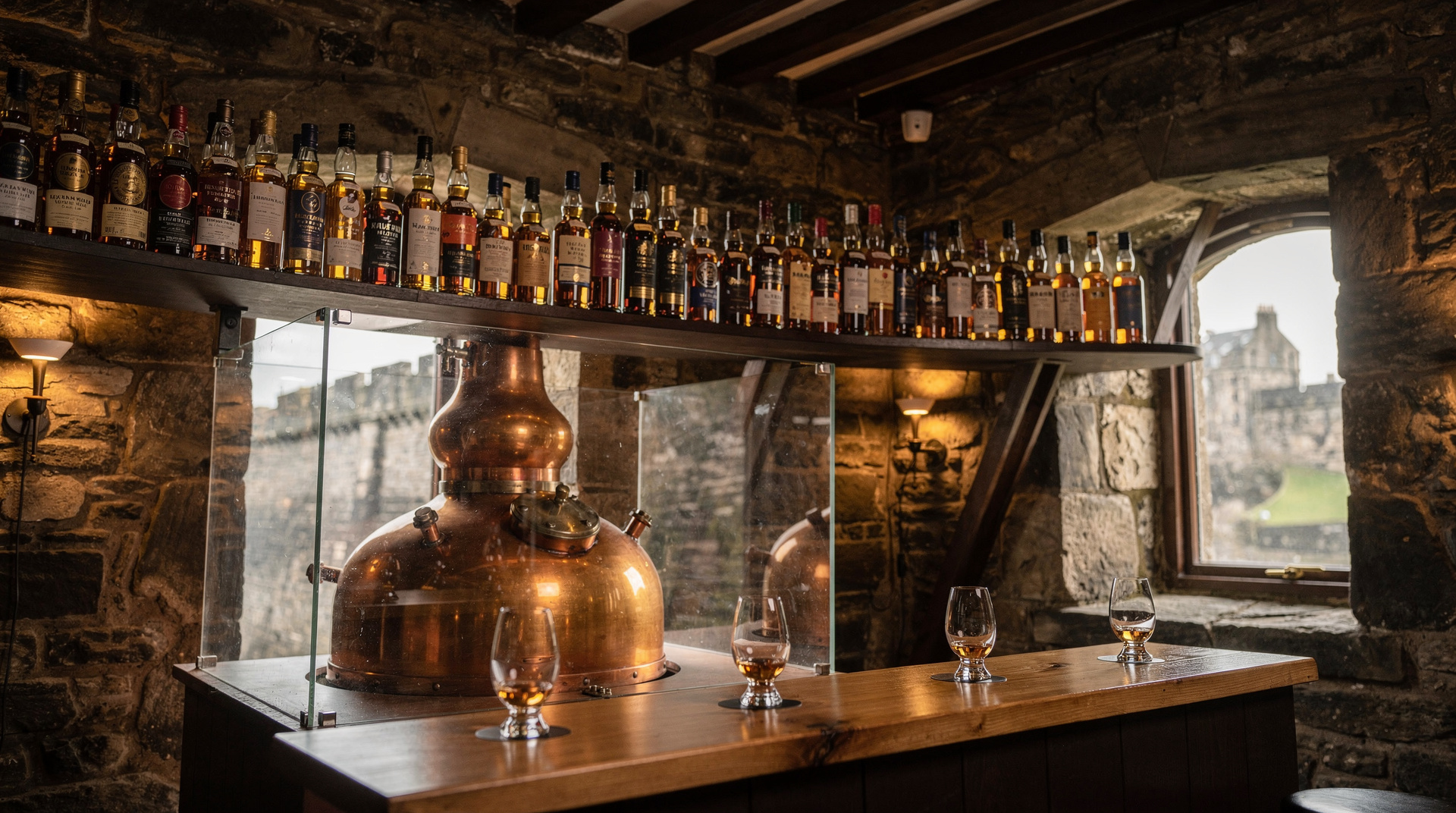
Edinburgh: the Johnnie Walker Signature Experience
Quick facts
- Best time to visit
- Year-round; evening for theatre and restaurants
- Days needed
- 2-3 hours
- Getting there
- 15-min walk from Waverley; tram to Haymarket
- Budget per day
- Johnnie Walker: current prices on the official site; restaurants £15–£40
The Edinburgh that visitors rarely reach — and why that is their loss
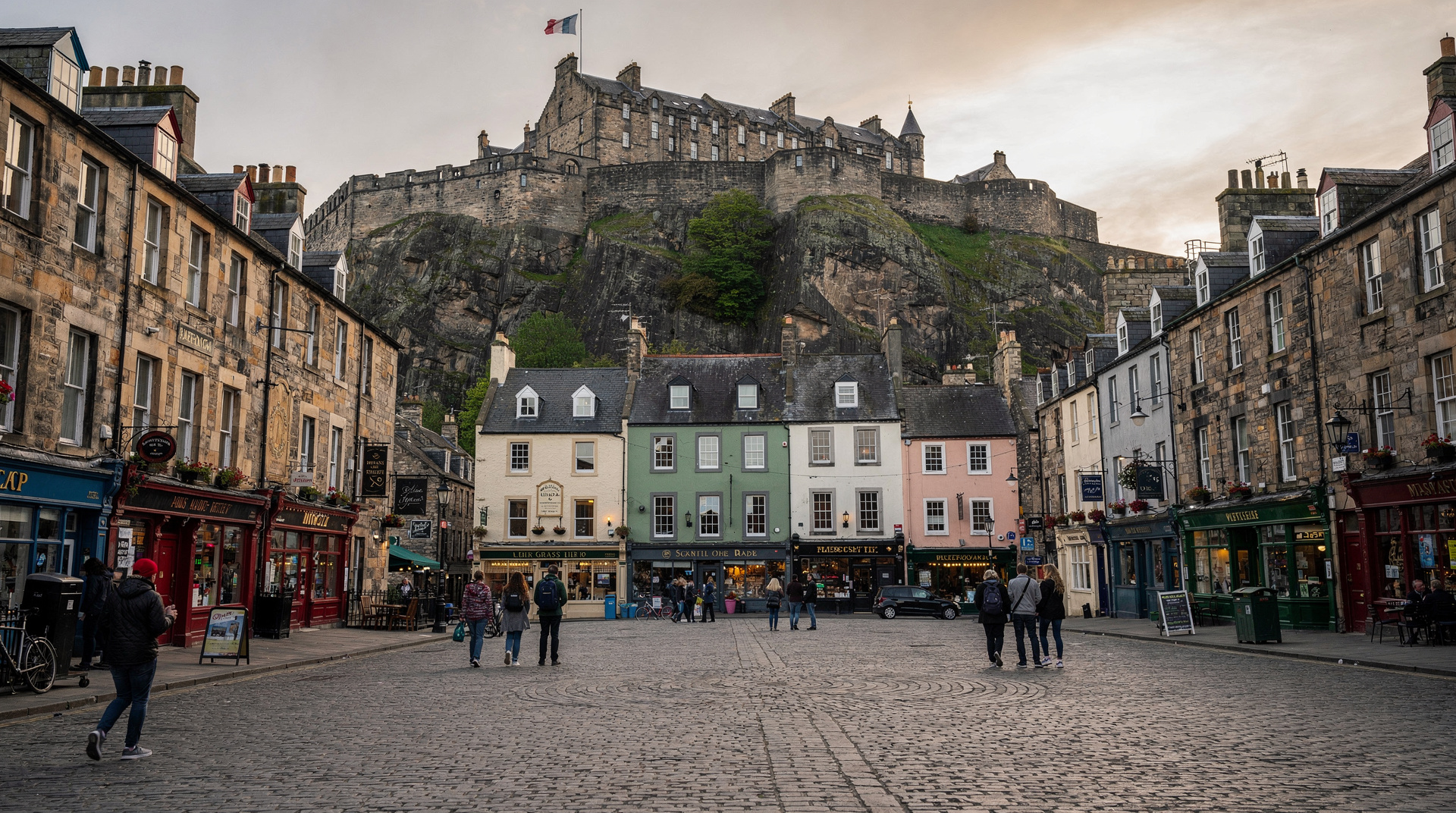
Edinburgh’s West End occupies the area between Charlotte Square and Haymarket, bounded to the south by the Grassmarket ridge and to the north by the Water of Leith valley. It lacks the dramatic geology of the Old Town and the monumental grandeur of the central New Town, but it has a character that is arguably more genuinely Edinburgh than either: a working residential neighbourhood with serious cultural institutions, excellent independent restaurants, and the kind of unhurried atmosphere that the tourist corridor has largely lost.
The West End is primarily of interest to visitors who want to experience Edinburgh as a city that people actually live in, or who have a specific reason to be there — the Johnnie Walker Princes Street experience, a concert at the Usher Hall, or a restaurant recommended by someone who knows Edinburgh well. It rewards exploration without being a destination in itself.
| Where | Between Charlotte Square and Haymarket |
| Time needed | 2-3 hours |
| Cost | Johnnie Walker: current prices on the official site; restaurants £15-40 |
| Getting there | 15-min walk from Waverley; tram to Haymarket |
| Best time | Year-round; evenings for theatre and dinner |
Johnnie Walker Princes Street
The most prominent visitor attraction in the West End is Johnnie Walker Princes Street, the flagship experience centre that Diageo opened in 2021 in a converted Victorian department store. The building occupies five floors and includes multiple bars, a restaurant with views across to the castle, and a series of immersive whisky experiences that range from the introductory Signature Experience to the exclusive Whisky Makers’ Dinner.
The Johnnie Walker Signature Experience is the standard entry point — a 90-minute journey through the history and flavour profiles of Scotch whisky, with tastings, interactive elements, and guides who genuinely know their subject. For comparison with other Edinburgh whisky attractions, see the Old Town’s Scotch Whisky Experience on Castlehill, which takes a more educational approach and covers multiple distilleries rather than a single brand.
See current prices on the official Johnnie Walker Princes Street website. It is not a substitute for visiting an actual distillery in the Highlands or Speyside, but as an Edinburgh introduction to Scotch — particularly for whisky beginners — it is well done, informative, and considerably more engaging than a basic tasting session.
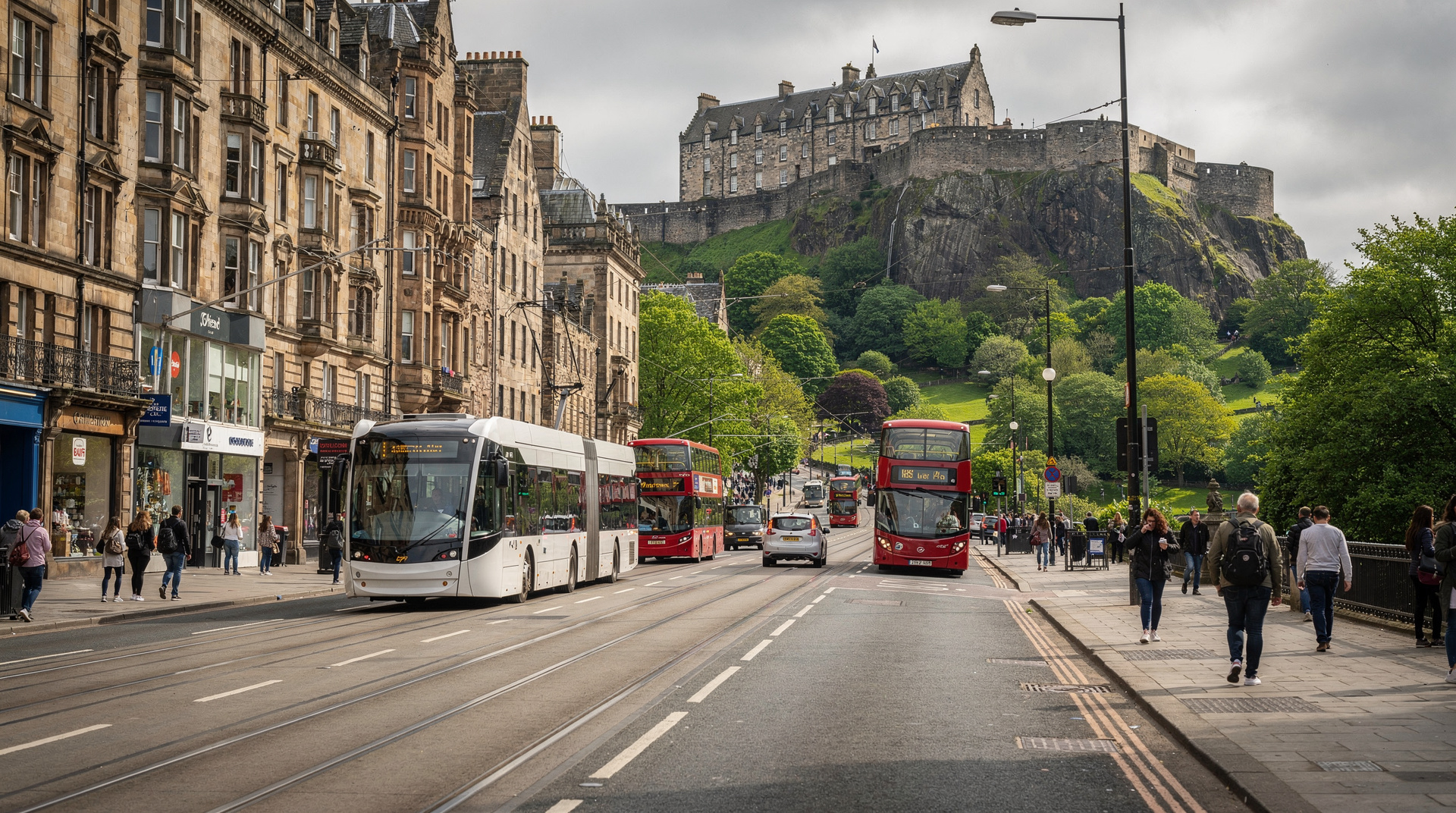
The rooftop bar has some of the best views of the castle from any interior space in the city, and is worth visiting independently of the experience tours if you are already in the West End.
The Usher Hall and cultural life
The Usher Hall on Lothian Road is Edinburgh’s principal concert hall, built in 1914 with a bequest from Andrew Usher, the whisky blender whose family fortune made him one of Edinburgh’s major philanthropists. The building has excellent acoustics and hosts the Royal Scottish National Orchestra alongside touring orchestras, opera companies, and popular music acts.
The performance programme is strong year-round, and attending a concert at the Usher Hall is one of Edinburgh’s more civilised evening options. The building itself is worth seeing — an Edwardian baroque structure with a distinctive dome that is one of the most recognisable on the Edinburgh skyline. Check the programme at the Usher Hall website; concerts sell out, particularly during the festival season.
Nearby, the Royal Lyceum Theatre on Grindlay Street is Edinburgh’s main repertory theatre company, with a programme that includes both Scottish premieres and classic work. The Traverse Theatre, adjacent to the Usher Hall, is Scotland’s dedicated new-writing theatre and one of the most important in Britain for new Scottish drama. Both are worth checking for programming during your visit.
The West End streets
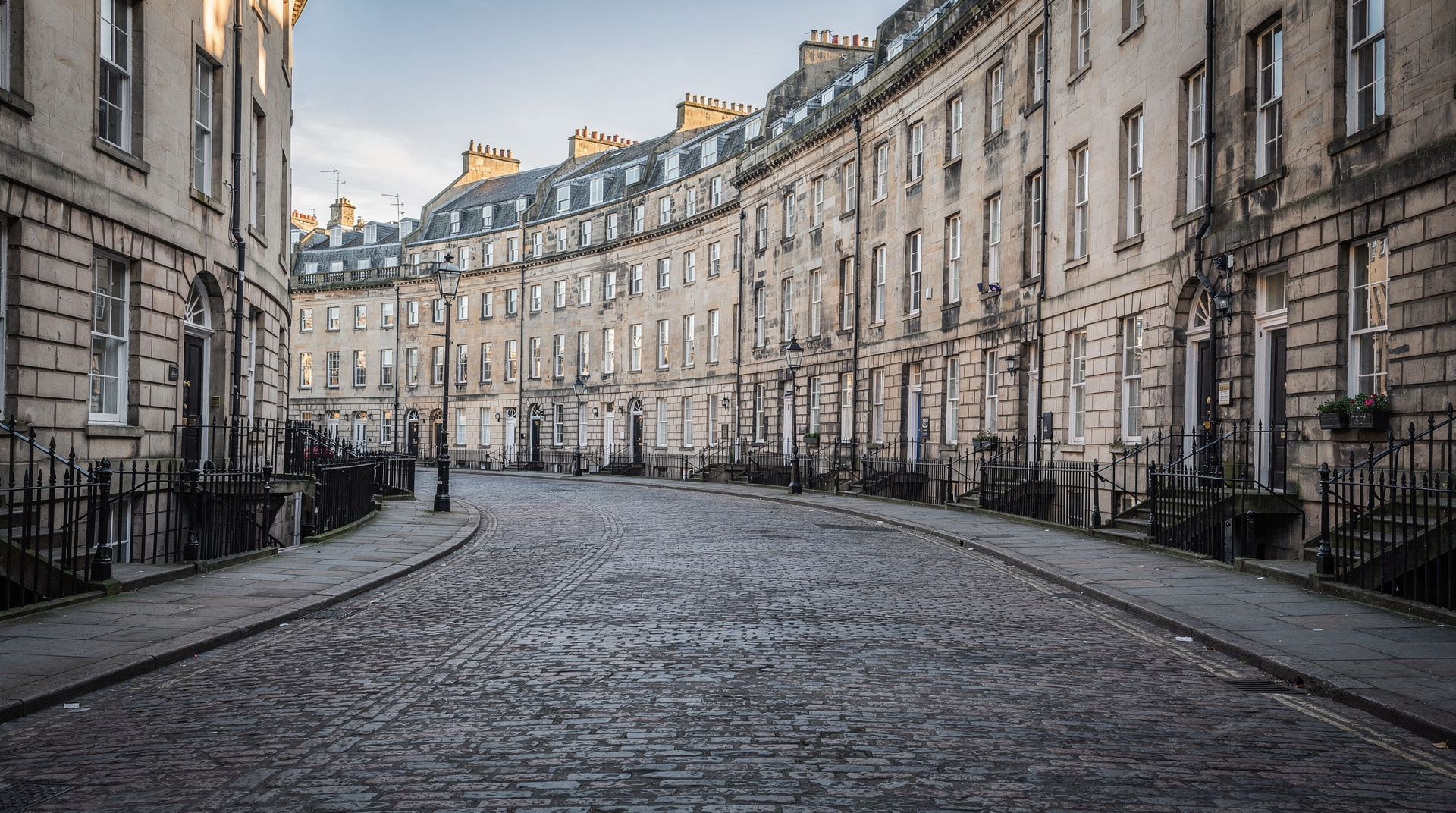
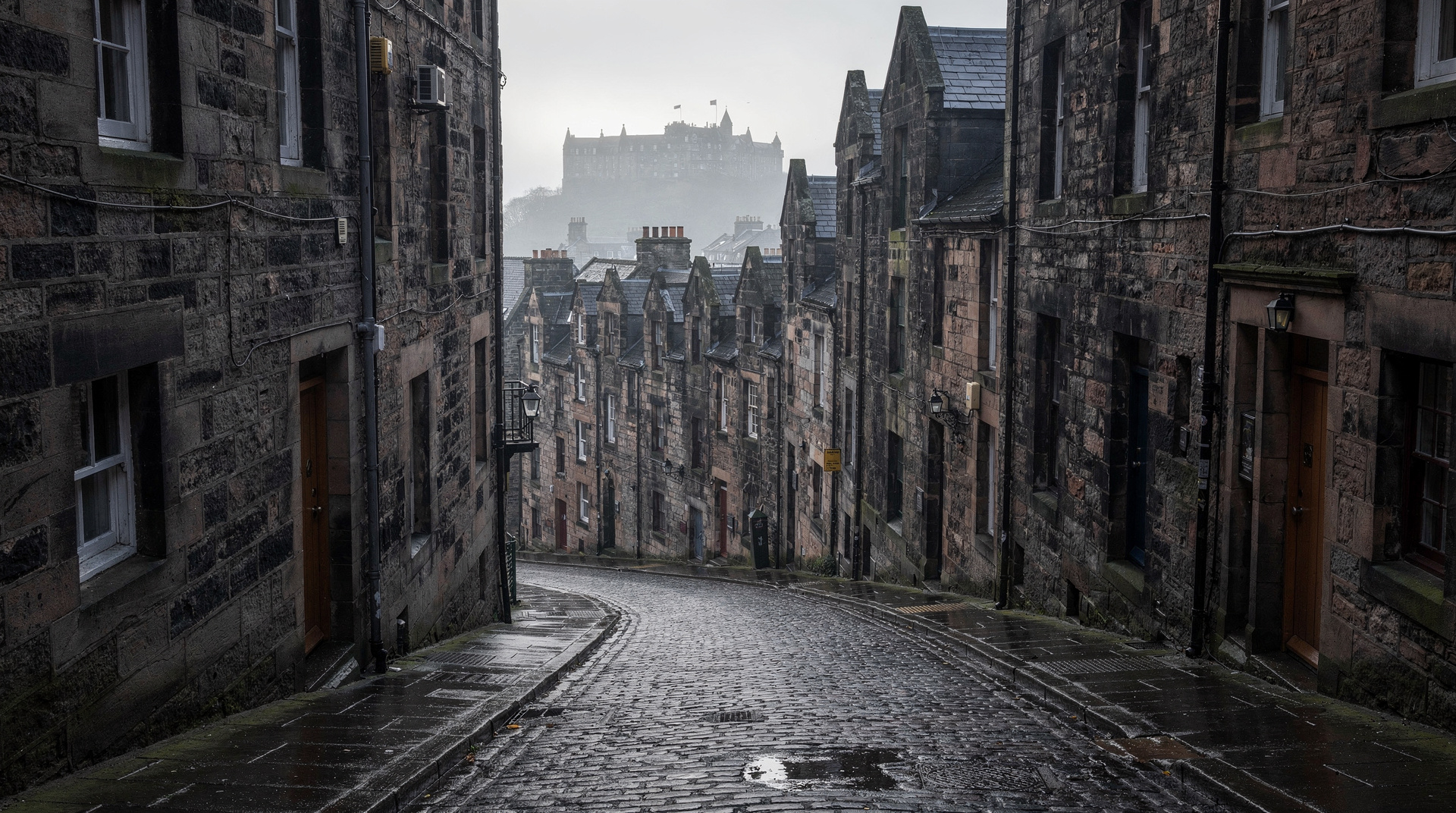
The residential streets of the West End — Drumsheugh Gardens, Coates Crescent, Grosvenor Crescent, and the crescents and terraces that fill the area between Queensferry Street and Haymarket — are among the finest later Georgian streets in Edinburgh. They were built mostly in the 1820s and 1830s, extending the New Town westward in a series of planned developments that are less well-known than the central New Town but architecturally of comparable quality.
Walking through these streets gives a sense of Edinburgh’s Georgian domestic life at a scale that the tourist centre has obscured. Manor Place and Melville Street, which lead from Charlotte Square toward Haymarket, are particularly handsome — wide streets with uniform stone facades, communal gardens, and a quiet that is striking given how close they are to Princes Street.
Haymarket and transport connections
Haymarket Station, at the western edge of the area, is Edinburgh’s second main railway station and the point where most city-bound trains call before continuing to Waverley. For visitors arriving from Glasgow or the west, Haymarket is often more convenient than Waverley. The tram stops here and connects to the city centre and airport.
The area around Haymarket is more everyday in character than the New Town proper — takeaways, convenience stores, and pubs alongside the station — but it has been improving, with several good independent restaurants opening in the streets to the north.
Connecting the West End to other areas
The West End is easily combined with the New Town as an extension of a half-day walk from Charlotte Square westward. It is also on the natural route between the city centre and Dean Village — Queensferry Street runs from Charlotte Square down to Dean Bridge, the bridge over the gorge that leads to Dean Village. If you are walking from Princes Street to Dean Village, a detour through the West End streets adds 20 minutes and considerable interest.
For the Grassmarket, the West End connects via the Lauriston Place and Teviot Place corridor, which passes the Edinburgh College of Art and several good pubs and cafes before descending to the Grassmarket area. This is also the route toward the Southside and Marchmont, making the West End a useful geographic pivot between the Old Town ridge and the south.
For visitors using Haymarket Station as their arrival point — whether coming from Glasgow or from Edinburgh Airport via Haymarket — the West End is the first Edinburgh neighbourhood they encounter. The getting around Edinburgh guide covers the options for arriving at Haymarket and moving toward the city centre, and notes that walking from Haymarket through the West End to Princes Street (about 20 minutes) is a pleasant introduction to Edinburgh that avoids the tourist-facing surface of the main shopping street.
The St Cuthbert’s and St John’s churches
At the western end of Princes Street, where Lothian Road meets the corner of the gardens, two parish churches face each other across the road. St John’s Episcopal Church, completed in 1818, is a substantial Gothic Revival building with an unusually rich interior and a churchyard that contains some of the most elaborate nineteenth-century memorials in Edinburgh. St Cuthbert’s Parish Church behind it, set lower in the gardens, occupies the site of a church that has stood here since the eighth century — the oldest Christian site in Edinburgh. Neither is a major tourist destination, but both are quietly impressive and free to enter.
The churchyard at St John’s has become notable in recent years for being where several significant Edinburgh figures are buried, and the cast-iron mortuary monuments have an elaborate Victorian quality that rewards close examination. The view from the churchyard uphill toward the castle is one of the few available from this lower elevation that frames the castle against the sky without any obstructions.
The Exchange and business district
The Exchange quarter, immediately west of the Usher Hall on Lothian Road and Morrison Street, represents Edinburgh’s attempt at a modern business district — office towers, the International Conference Centre, and hotels that cater largely to business travellers. It is not architecturally distinguished, but the Edinburgh International Conference Centre on Morrison Street is one of the busiest conference venues in Scotland and draws significant event tourism.
The area around the Exchange has a good concentration of chain hotels that are often better value than equivalents in the Old Town or on Princes Street, since they cater primarily to business travellers rather than leisure tourists. This makes the West End a reasonable choice for accommodation if proximity to the Old Town is not your primary criterion.
Dean Bridge and the approach to Dean Village
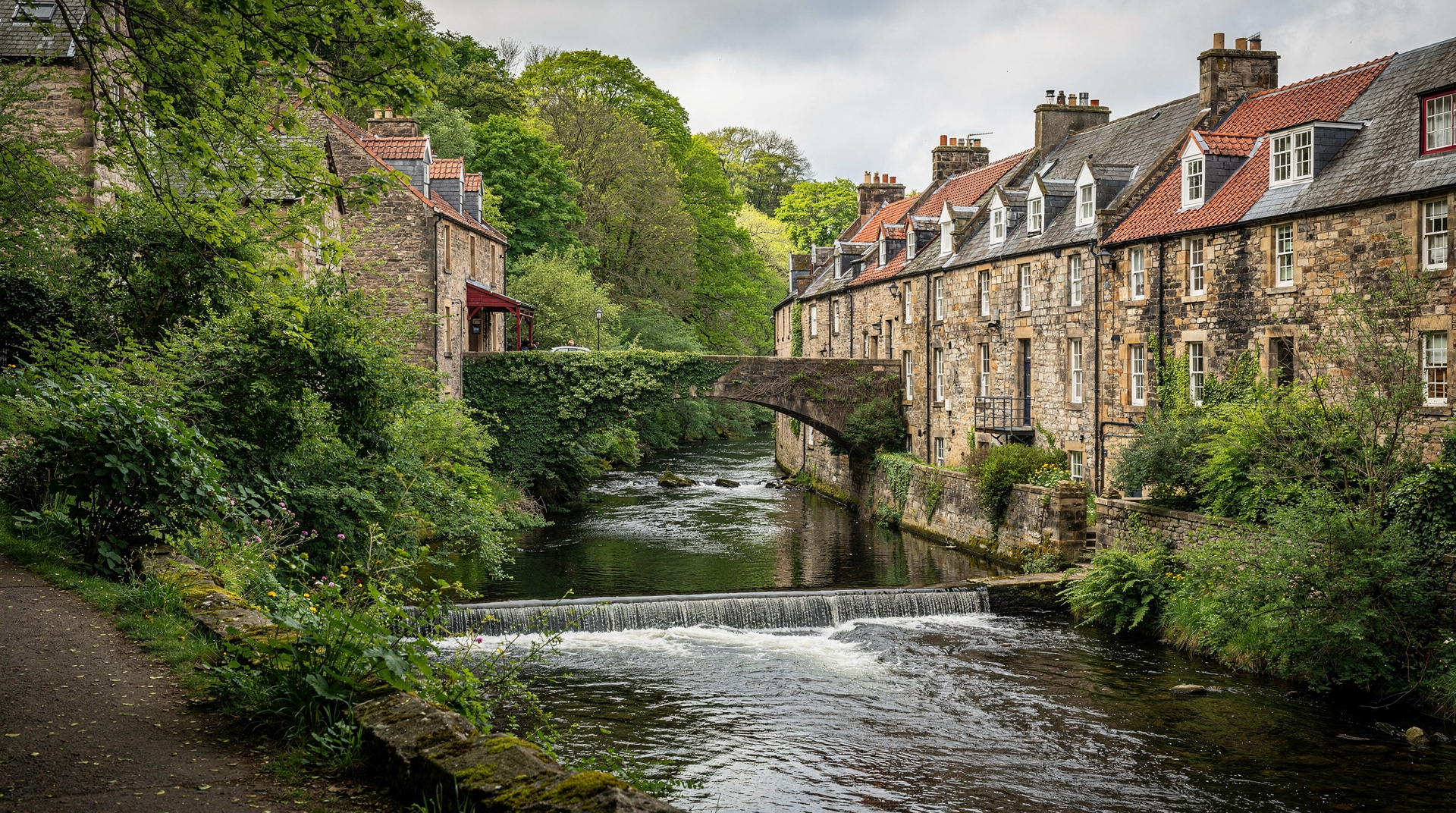
At the far western end of the West End, Queensferry Street descends to Dean Bridge — a graceful four-arched structure built by Thomas Telford in 1832 that spans the Water of Leith gorge at a height of around 30 metres. The bridge is the gateway from the West End to Dean Village below and to Stockbridge beyond.
Standing on Dean Bridge and looking down into the gorge gives one of Edinburgh’s most dramatic hidden views: the Water of Leith running through a wooded valley far below, the backs of the Ravelston Dykes houses visible above the trees, and the sense of a completely different landscape hidden within the city. The descent to Dean Village via Bell’s Brae begins just north of the bridge, and the walk down takes about 10 minutes.
The Doric columns of the Ann Street houses, visible from the Dean Bridge looking toward Stockbridge, are among the finest pieces of New Town residential architecture. Ann Street itself was developed from the 1820s and is consistently listed among Scotland’s most desirable addresses — each house set behind a garden, the street closed enough to feel private but publicly accessible.
Shandwick Place and the commercial West End
Shandwick Place, which runs west from the roundabout at the end of Princes Street, is the commercial main street of the West End — a mixture of banks, restaurants, cafes, and shops that caters to the local residential and office population. It is less interesting architecturally than the Georgian streets behind it, but it is where the day-to-day commerce of the West End happens and it gives a better sense of how Edinburgh functions as a city than anything on Princes Street.
The West End Village market, held in the churchyard of St John’s on certain Sundays, is a small but good craft and food market worth stopping at if it coincides with your visit. Check the West End Village website for dates.
Eating and drinking in the West End
The West End has a better restaurant scene than its low profile among tourists suggests. Timberyard on Lady Lawson Street is one of Scotland’s most acclaimed restaurants — a converted timber warehouse with a Nordic-influenced menu built around Scottish seasonal produce. It is expensive and requires booking well in advance but delivers food of genuine quality. The Grain Store on Victoria Street, which technically straddles the Old Town and West End area, has been a reliable quality option for many years.
For more casual eating, the streets around Tollcross — at the southeastern edge of the West End — have good Indian and South Asian restaurants that are priced for students and residents rather than tourists. Tollcross itself is scruffier than the Georgian West End but more useful for daily eating.
For whisky in the West End beyond Johnnie Walker, the Bon Vivant on Thistle Street (technically New Town but on the border) and the Voodoo Rooms on West Register Street have excellent selections and are within walking distance. The Scotch Whisky Experience on Castlehill — at the Old Town end of Princes Street — covers multiple Scotch whisky regions in a single introduction and is the most comprehensive multi-region tasting in central Edinburgh. See the Edinburgh whisky guide for a comparison of all the city-centre whisky options.
A suggested West End walk
A two-to-three-hour West End walk that covers the key areas: start at Charlotte Square (admire the north side, Robert Adam’s masterwork), walk west along Queensferry Street through the West End residential streets, detour to Dean Bridge and look into the gorge, return via Melville Street (the grandest street in the area, with its cathedral and uniform Georgian terraces), walk along Manor Place to Shandwick Place, stop at St John’s churchyard, then continue to the Johnnie Walker experience for a whisky. Return east along Princes Street.
This walk connects naturally to the New Town at its eastern end (Charlotte Square) and to Dean Village at its western end (Dean Bridge). For a full West End day, arrive at Haymarket by tram, walk through the residential West End to Dean Bridge, descend to Dean Village, return via Stockbridge and the northern New Town, ending at St Andrew Square. Allow four to five hours for this circuit at a comfortable pace.
This route covers the best of the West End in a comfortable half-day without needing any transport. It connects naturally to a walk through the New Town afterward, or to descent into Dean Village.
Charlotte Square in more depth
Charlotte Square, the western bookend of the New Town’s original design, is the work of Robert Adam and is widely regarded as one of the finest Georgian squares in Britain — a unified composition of townhouses arranged around a central garden, with the north side (Adam’s own design, completed after his death) considered the architectural high point.
Bute House, at number 6, is the official residence of Scotland’s First Minister, and the square hosts the Scottish Book Festival’s predecessor events and civic functions through the year. The private garden at the centre is generally not open to the public except during limited events, but the square is worth a slow circuit on foot regardless, particularly the north side’s uninterrupted run of facades.
Seeing the West End by vintage bus
For visitors who would rather sit than walk, or who are combining the West End with a wider first-day orientation of the city, the vintage bus tour with tea and gin passes through the West End’s Georgian crescents and Haymarket on its route, giving a relaxed introduction to the area’s architecture alongside a drink of choice. It suits visitors on a tight schedule or those who want the lay of the land before returning on foot for the restaurants and churches covered above.
Edinburgh Zoo: a Haymarket-adjacent option
Edinburgh Zoo sits about 2 miles west of the West End proper, on Corstorphine Road, and is reachable by tram from Haymarket or a short bus ride. It is not technically within the West End as defined in this guide, but it is the nearest major family attraction to Haymarket Station and is often combined with a West End morning by visitors travelling with children. The zoo covers over 80 acres on a hillside site and is known for its giant pandas (on loan from China until recent years) and its koala and penguin enclosures — the daily penguin parade, when conditions allow, is a long-running Edinburgh institution. Entry costs around £25-30 for adults in 2026; booking ahead online is recommended and often slightly cheaper than paying on the gate.
Comparing the West End’s two whisky experiences
| Johnnie Walker Princes Street | Scotch Whisky Experience (Old Town) | |
|---|---|---|
| Format | Single-brand deep dive | Multi-region introduction |
| Length | ~90 minutes | ~60-75 minutes |
| Price | See current prices on the official Johnnie Walker Princes Street site | Silver Tour £25 per adult |
| Best for | Brand storytelling, rooftop views | Comparing Scotch regions in one sitting |
| Location | West End (Princes Street) | Old Town (Castlehill) |
Frequently asked questions about Edinburgh’s West End
What is the West End known for in Edinburgh?
The West End is primarily known among Edinburgh residents for its theatres (Usher Hall, Royal Lyceum, Traverse), its collection of good independent restaurants, and the Johnnie Walker Princes Street whisky experience. It is quieter and more residential than the city centre and gives a better sense of how the city functions outside the tourist corridor.
Is the Johnnie Walker experience worth the money?
For whisky enthusiasts, the Signature Experience is good value — the guide quality is high, the tasting selection is well chosen, and the rooftop bar with castle views is a genuine bonus. For whisky beginners, it is an excellent introduction. For serious whisky drinkers who have visited distilleries before, the premium experiences offer more depth. For prices, see current prices on the official Johnnie Walker Princes Street site. See the Edinburgh whisky guide for comparison with other options.
What are the best restaurants in the West End?
Timberyard on Lady Lawson Street is the most acclaimed restaurant in the area, though expensive and requiring advance booking. For more accessible quality, the streets around Tollcross and the independent restaurants on Shandwick Place and Queensferry Street are good options. See the Edinburgh food guide for current recommendations.
Is Edinburgh Zoo worth combining with a West End visit?
If you are travelling with children and already near Haymarket, yes — it is a short tram or bus ride further west and makes a natural pairing with a West End morning. For visitors without children or with limited time, the West End’s Georgian streets, Johnnie Walker experience, and restaurants are a fuller use of the time than the zoo, which requires a half-day on its own to do properly.
Is there anything to see in the West End beyond Johnnie Walker?
The architectural walk through the residential streets is genuinely rewarding. Dean Bridge and the view into the gorge, the Usher Hall facade, St John’s churchyard, and Melville Street’s uniform Georgian terraces are all worthwhile independently of paid attractions. The West End is more about atmosphere and character than individual sights, but the atmosphere is genuinely good.
How do I get to the West End from the city centre?
Walk west along Princes Street (15 minutes from Waverley) or take the tram to Haymarket. The tram drops you at the western edge of the area. By bus, several routes serve Lothian Road and Shandwick Place, which form the eastern edge of the West End.
How does the West End compare to the New Town for a walking visit?
The New Town is grander and more photogenic. The West End is quieter and more residential, with better restaurants at lower prices. For a purely architectural walk, the New Town is superior. For a combination of architecture, good eating, and the whisky experience, the West End and New Town together make an excellent half-day that is considerably more interesting than either alone.
What is Timberyard and should I book in advance?
Timberyard at 10 Lady Lawson Street is one of Scotland’s most interesting restaurants — a converted nineteenth-century timber warehouse with exposed brickwork and a menu built around Scottish wild and foraged produce, with Nordic influences. It has held multiple AA rosettes and consistently appears in Scotland’s best restaurant lists. Booking is essential, typically two to three weeks ahead for weekend tables. It is not cheap — expect £50-80 per person with wine — but the quality justifies it for a special occasion.
Top experiences
Bookable activities with verified prices and instant confirmation on GetYourGuide.