Grassmarket
The Grassmarket: Edinburgh's historic market square with dramatic castle views, real-ale pubs, independent restaurants, and a dark past worth knowing.
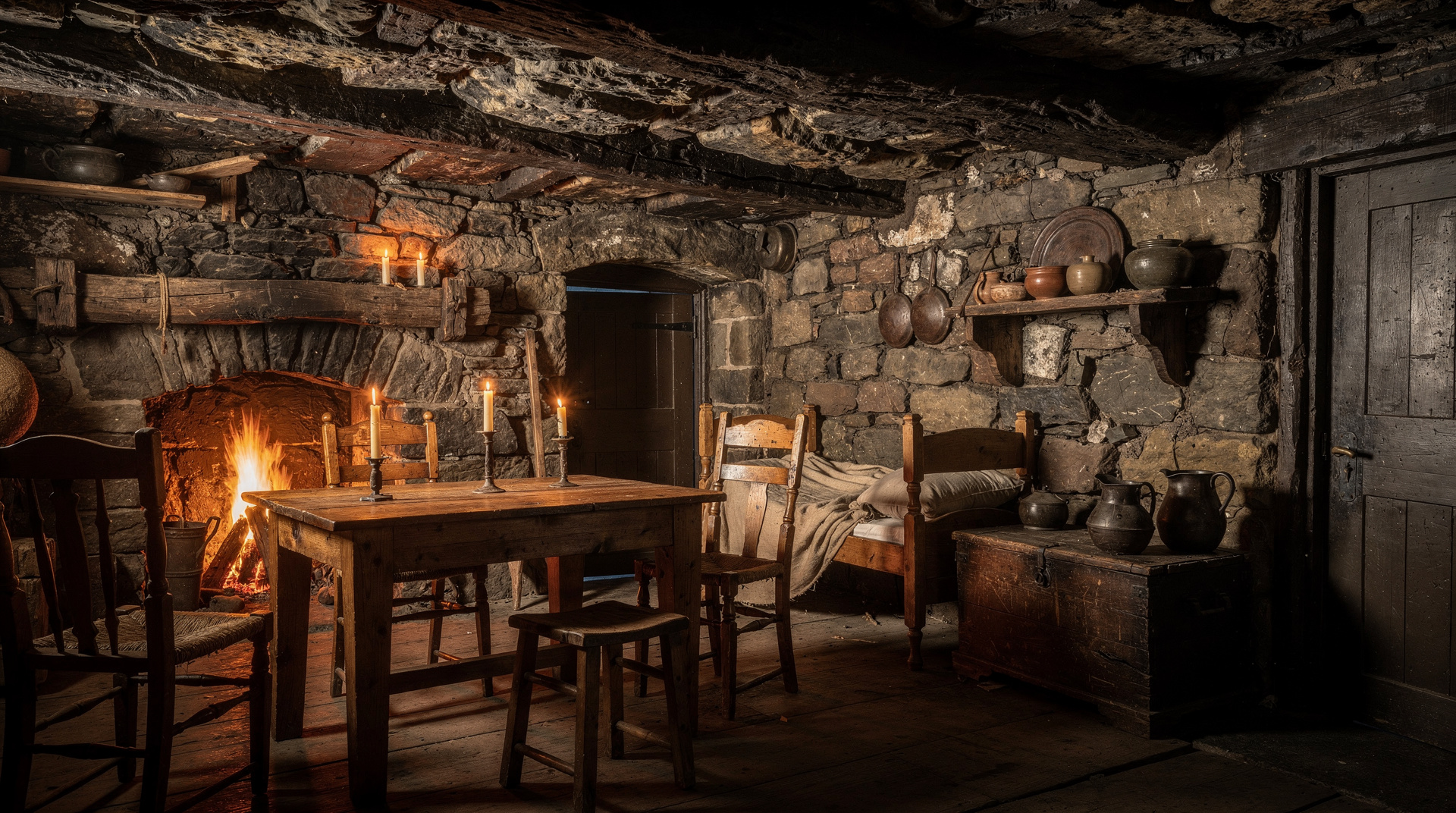
Edinburgh: the original underground tour
Quick facts
- Best time to visit
- Evening for pubs; daytime for markets and views
- Days needed
- 2-3 hours
- Getting there
- 10-min walk from the Royal Mile via Victoria Street or the Vennel
- Budget per day
- Pubs from £5; restaurants £12–£35
The square at the foot of the castle — history, pubs, and real character
The Grassmarket sits in a natural hollow at the base of the castle rock, its eastern end overlooked by the volcanic crag that Edinburgh Castle stands on and its long south wall by the Greyfriars Kirkyard ridge. For most of Edinburgh’s history it was the city’s main market space — cattle, horses, grain, and goods changed hands here from the twelfth century onward. It was also, less cheerfully, the primary place of public execution: the gallows stood at the east end, and the estimated 100 people hanged here between the seventeenth and eighteenth centuries included Covenanters, body snatchers’ victims, and common criminals.
Today the Grassmarket is one of Edinburgh’s most enjoyable squares for a few hours’ wandering — a mix of independent pubs and restaurants that serve locals as well as tourists, good views of the castle, and a concentration of dark history within a small area that makes it one of the more interesting places to spend an evening in the Old Town.
The castle view from the Grassmarket
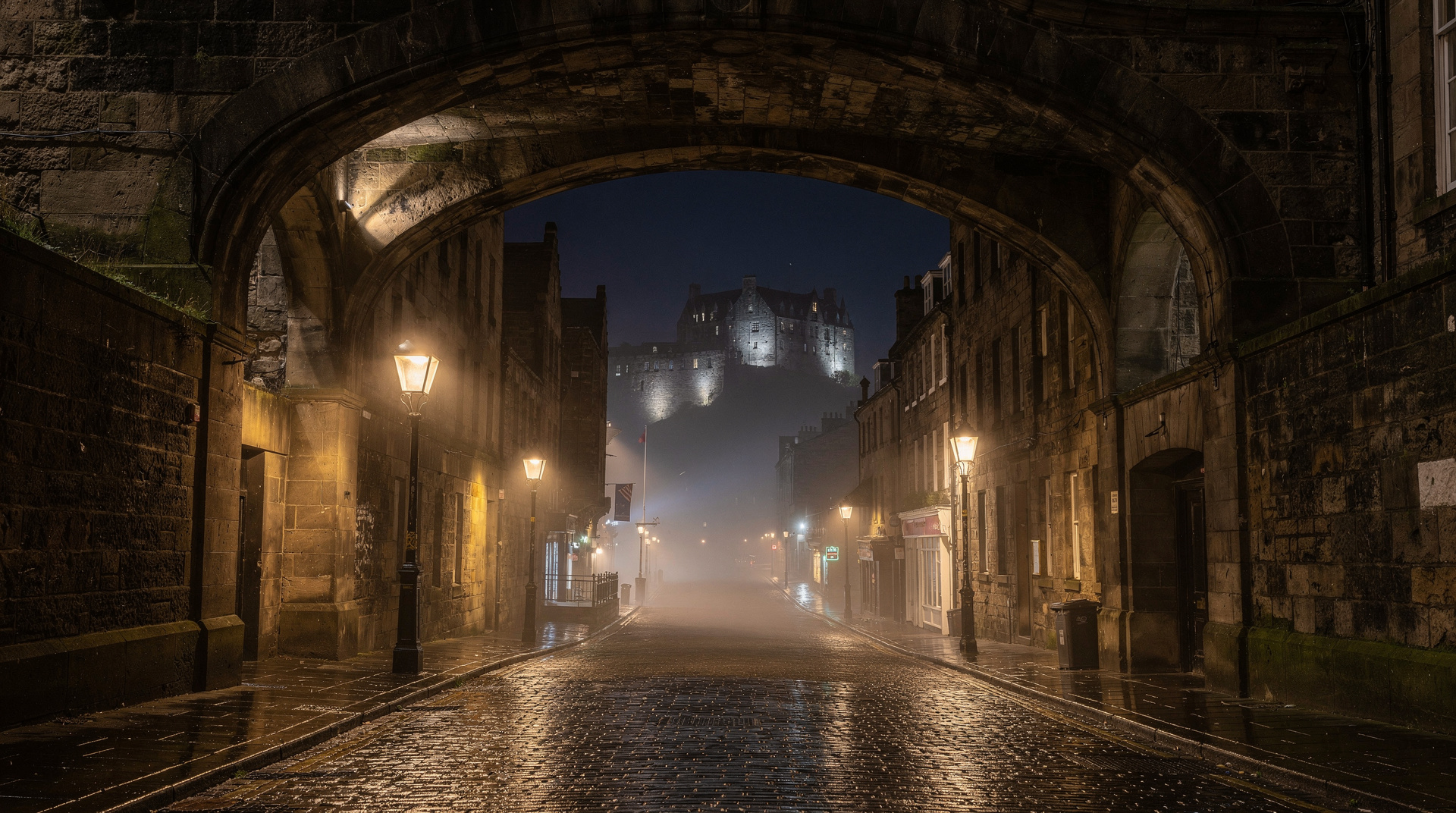
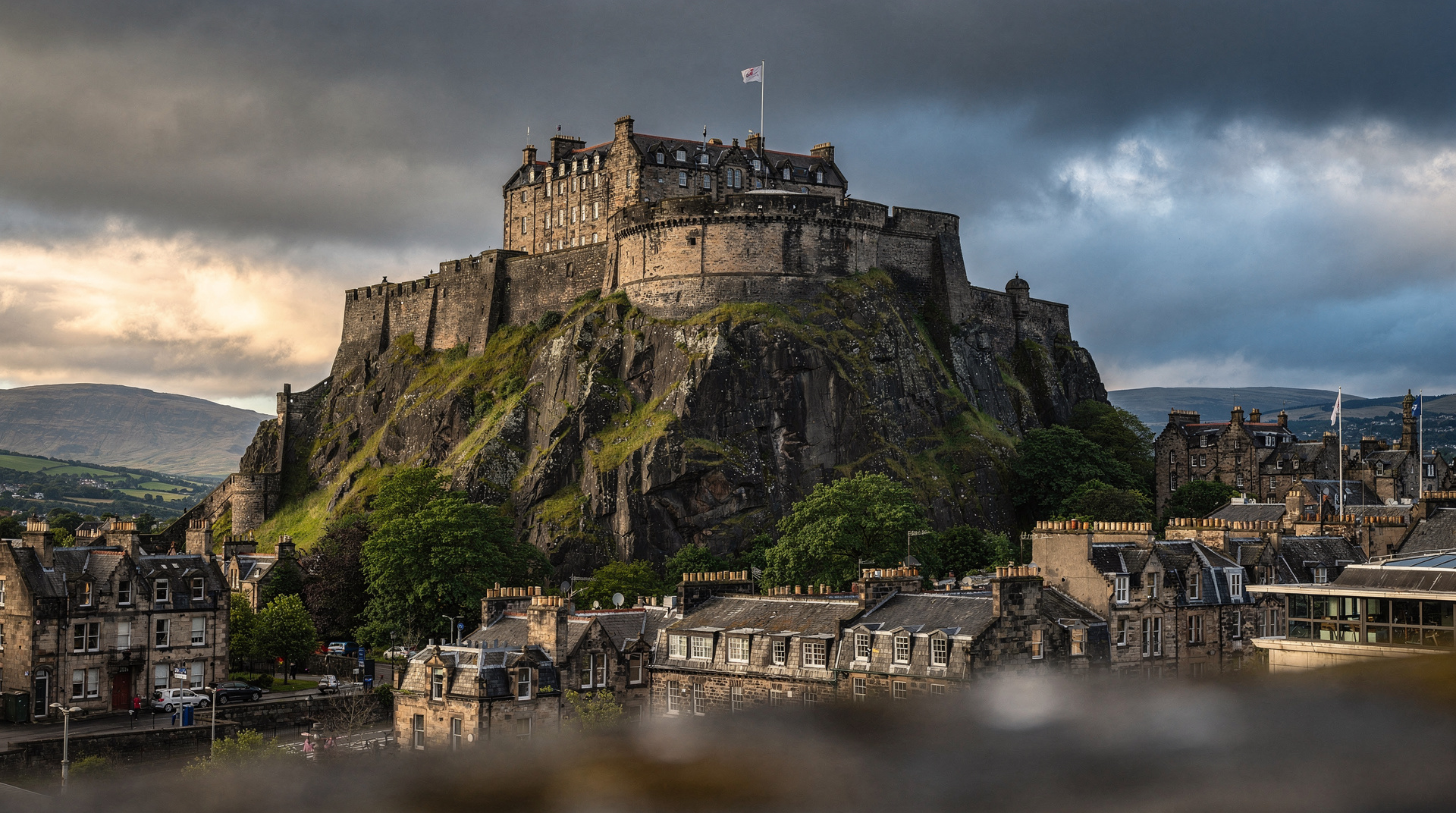
The view of Edinburgh Castle from the Grassmarket is one of the most dramatic in the city — a near-vertical cliff of ancient basalt with the castle walls above, the whole thing looming over the square in a way that you only understand when you are standing directly beneath it. This is the view that most photographers miss by being on Princes Street: the long-distance postcard shot is beautiful, but standing at the foot of the rock and looking directly up gives a sense of why this was considered an impregnable position for three thousand years.
The Vennel, a narrow staircase that climbs the ridge from the south side of the Grassmarket, leads to a viewpoint on the old Flodden Wall where the castle is framed against the skyline in a composition that is popular with photographers. This is one of Edinburgh’s best free views, entirely away from the tourist infrastructure of the Royal Mile, and worth the climb.
Victoria Street and the approach
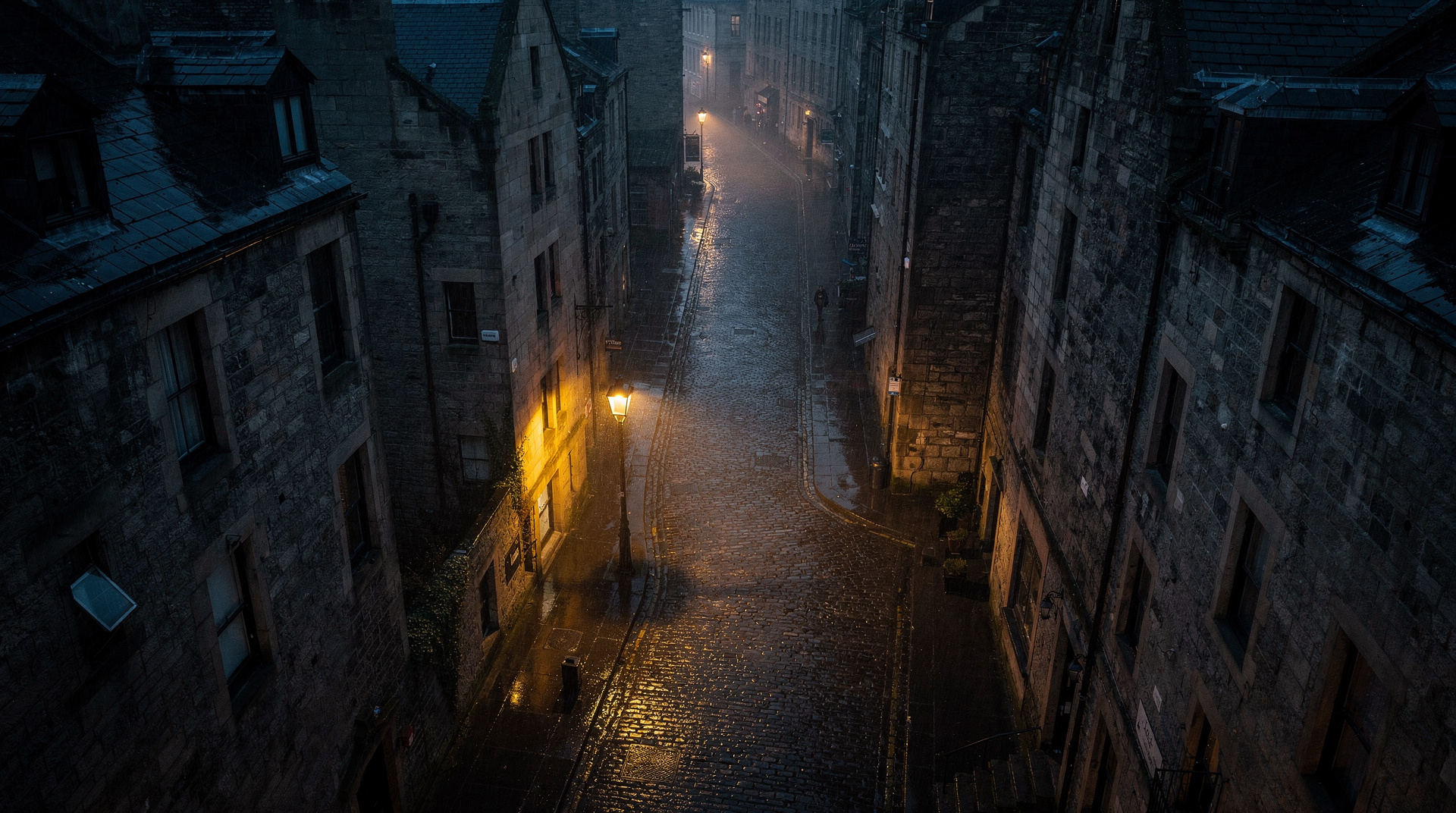
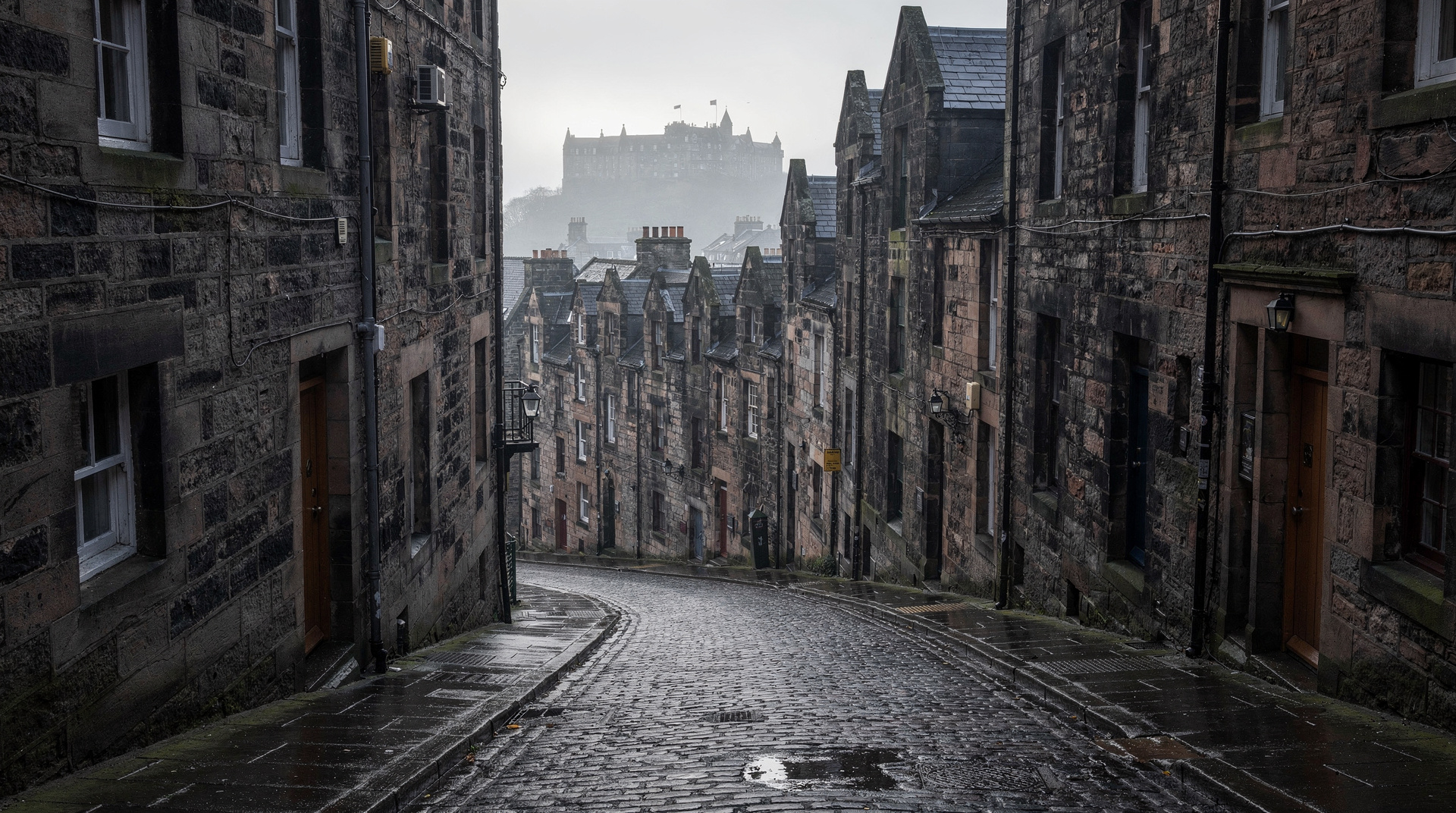
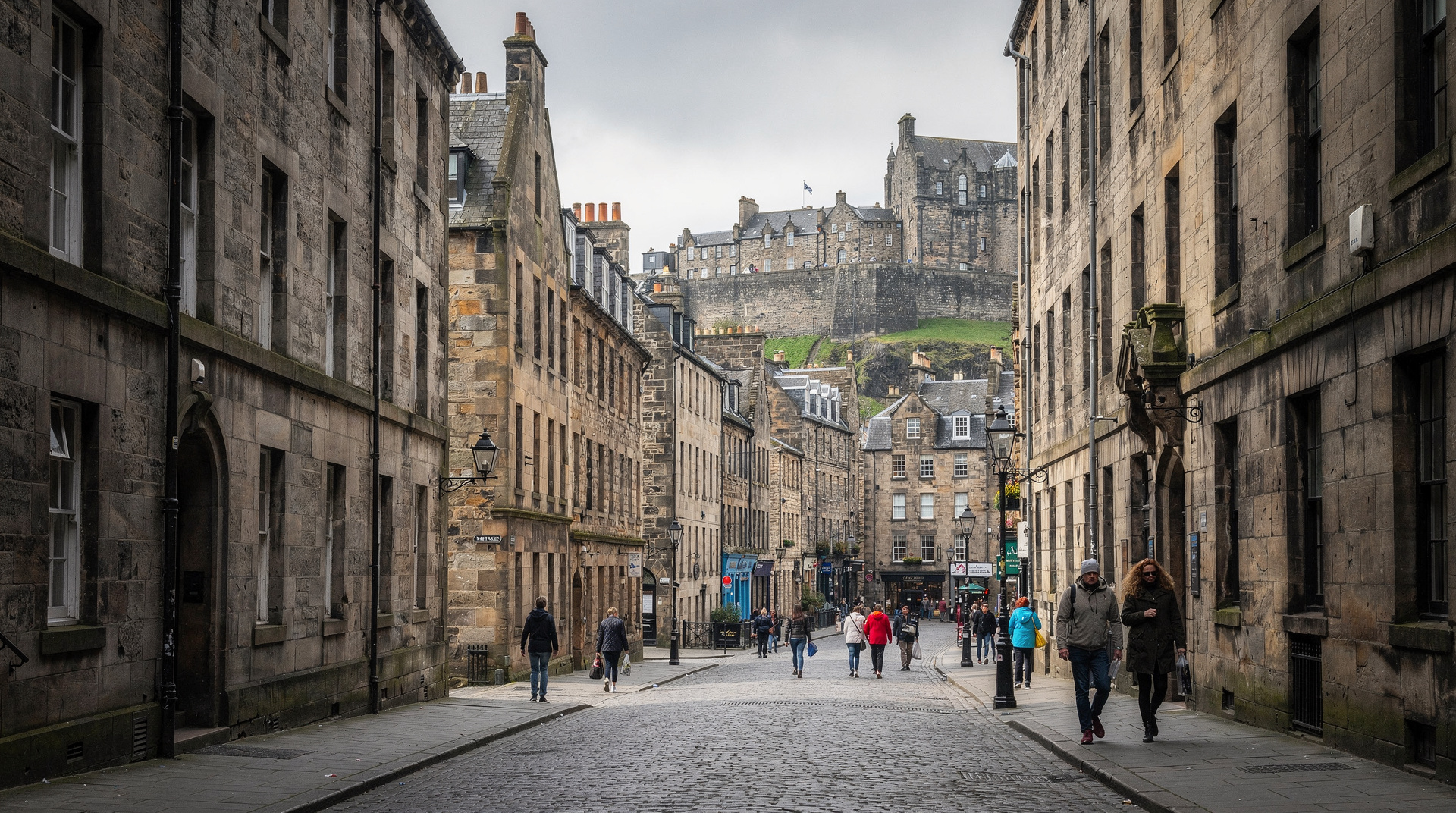
Victoria Street, which descends in a curving arc from the Lawnmarket to the Grassmarket, is one of Edinburgh’s most characterful streets — a two-level Georgian terrace with ground-floor shops and an elevated walkway above, the shopfronts painted in a range of colours that have made it one of the most photographed streets in Scotland. The curve of the street and the variety of the shopfronts are more interesting than anything on the Royal Mile, and the shops are a cut above the souvenir-shop model: specialist food, vintage clothing, and independent retailers.
At the bottom of Victoria Street, where it meets the Grassmarket, the transition into the square is abrupt and dramatic — the Victorian curves of the street give way suddenly to the wide rectangular space with the castle above.
The pubs and restaurants
The Grassmarket has one of Edinburgh’s better concentrations of real-ale pubs, and unlike the Royal Mile, most of them serve residents as well as tourists. The White Hart Inn, at number 34, has been a pub since at least 1516 and claims connections to Robert Burns, William Wordsworth, and Robert Louis Stevenson — the historical credentials may be embellished but the age is genuine. The Last Drop, named with deliberate gallows humour, occupies the site near the old execution ground.
Biddy Mulligans is a genuine Irish pub with live music at weekends. Maggie Dickson’s, named for an eighteenth-century woman who was executed and then revived — the Edinburgh ‘half-hangit Maggie’ story — is a large pub with a beer garden that is popular in summer. None of these are gastronomy destinations, but as pubs for a pint with atmosphere and genuine historical character, the Grassmarket delivers better than most of the Old Town.
For food beyond pub meals, the south side of the Grassmarket and the streets off it have several independent restaurants that are better value than anything on the Royal Mile. The area has become more interesting for dining over the past decade as the local resident population has grown.
The dark history and ghost tours
The Grassmarket’s execution history connects directly to Edinburgh’s broader dark-tourism offer. The body-snatching trade that fed Edinburgh’s medical schools in the early nineteenth century — the trade that Burke and Hare participated in before turning to murder — was partly centred on the Grassmarket. The various underground tours from the Old Town frequently pass through or reference the Grassmarket in their historical framing.
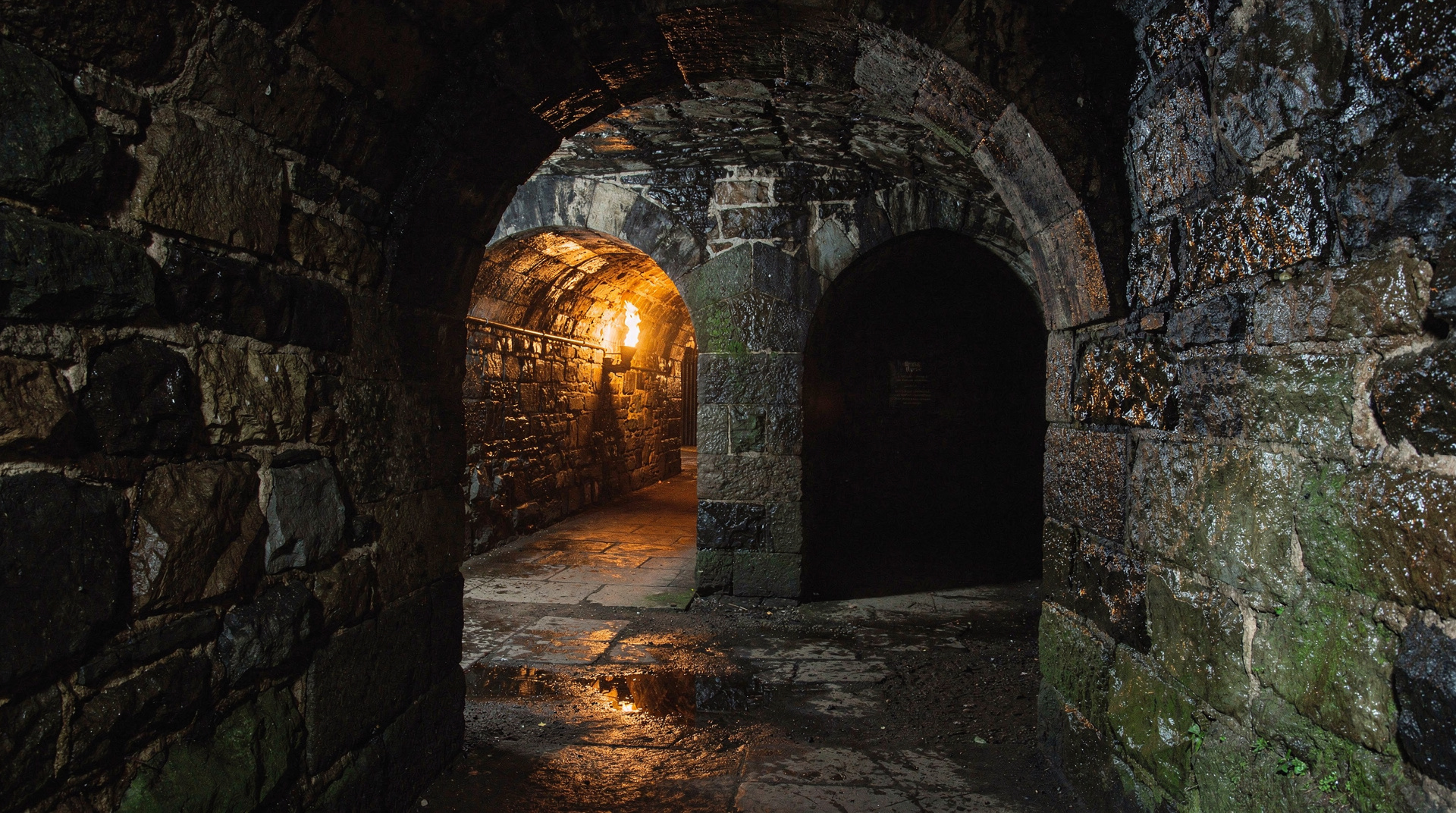
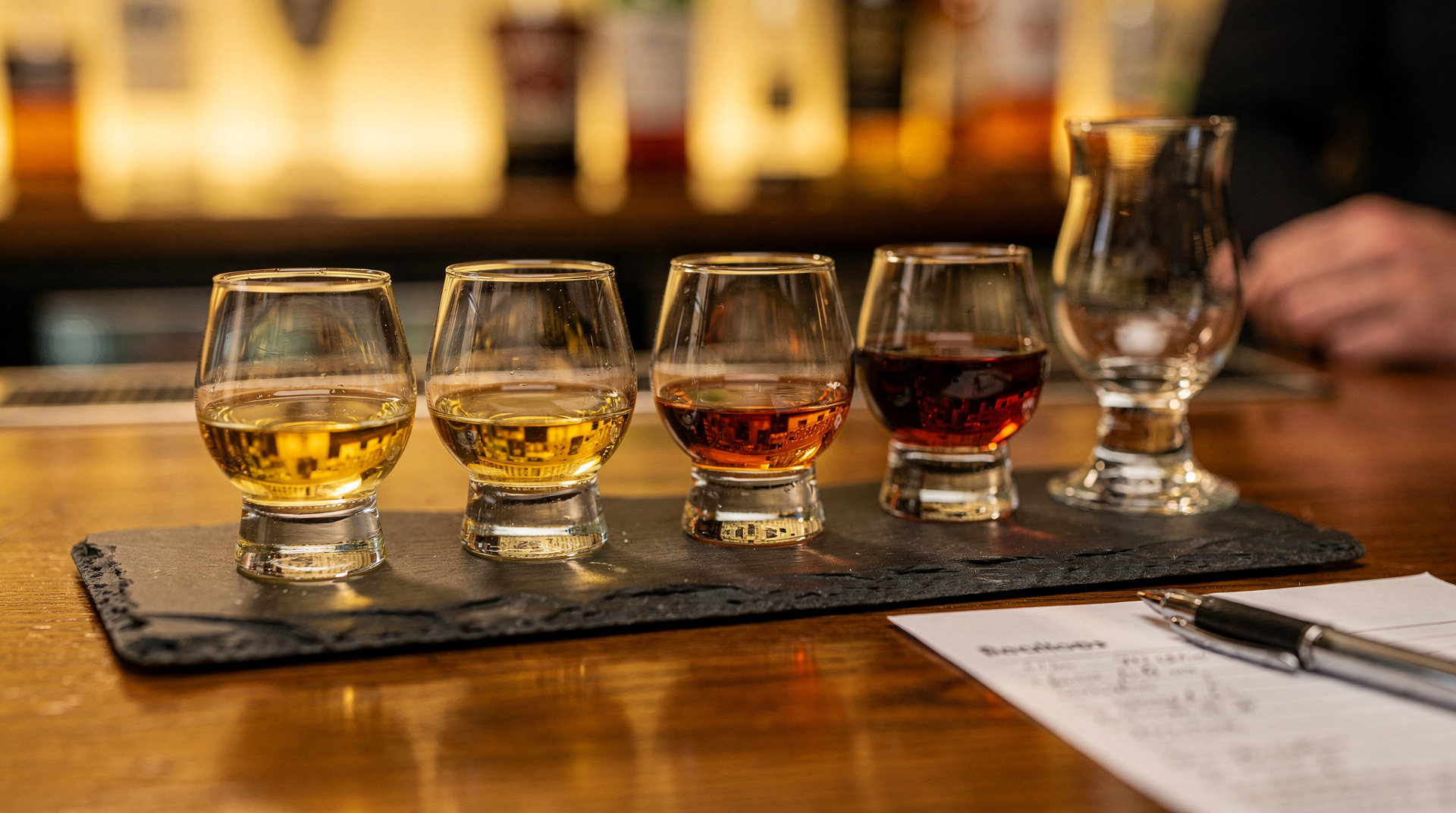
The Edinburgh original underground tour starts from the Grassmarket area and takes in the South Bridge vaults as part of a tour that includes historical context about the social history of the area. The underground vaults evening ghost tour with whisky is a particularly good combination — the Grassmarket pubs before the tour, then the vaults below, the whole experience grounded in the actual history of the area.
For a broader ghost-walking experience that covers the Grassmarket alongside other Old Town locations, the mysteries, witchery, and murders walking tour provides well-researched historical context alongside the atmospheric storytelling. The underground vaults guide compares all the major operators in detail. For visitors specifically interested in the vaults beneath the South Bridge rather than the Grassmarket’s own execution history, the Real Mary King’s Close tour covers a separate but complementary underground site further up the Royal Mile.
Where the Grassmarket fits for a first evening in Edinburgh
For visitors on their first night in the city, the Grassmarket is a genuinely good choice for an introductory evening: a short walk from most central accommodation, a castle view that needs no explanation, and pubs that welcome a mixed crowd of residents and visitors rather than feeling like tourist traps. Starting with a pint at the White Hart Inn or Maggie Dickson’s, then walking up the Vennel for the castle view at dusk, then either dinner in one of the south-side restaurants or an evening ghost tour, makes a coherent and unhurried introduction to the Old Town without needing to plan anything in advance.
Greyfriars and the kirkyard
A five-minute walk up the hill from the east end of the Grassmarket via Candlemaker Row, Greyfriars Kirkyard is the most historically significant burial ground in Edinburgh. The Southside and the university area begin immediately beyond it. The kirkyard contains the graves of figures central to Scottish history — the Covenanting martyrs, early advocates, and academics whose work shaped the Scottish Enlightenment. The seventeenth and eighteenth century tombstones are carved with extraordinary detail.
The Greyfriars Bobby connection — the Skye Terrier who supposedly guarded his master’s grave for 14 years — draws considerable visitor attention to the gate and the adjacent pub. The kirkyard itself, which is open to visitors at no charge, is more interesting than the Bobby story suggests.
The Cowgate: Edinburgh after dark
Running parallel to and below the Grassmarket, the Cowgate was historically the route along which cattle were driven to market (hence the name). Today it is Edinburgh’s main late-night entertainment corridor — a dense concentration of nightclubs, late-night bars, and live music venues that operate largely after midnight and are frequented by students and younger visitors.
The architecture of the Cowgate is remarkable in places: the elevated bridge of George IV Bridge passes overhead, creating a cavernous, dimly lit section beneath the bridge that is atmospheric by day and genuinely underground-feeling by night. The Underbelly, a major Fringe venue during August, occupies the Cowgate arches, and several of the underground bars here have been in operation for decades.
During the day, the Cowgate is quiet and the contrast between the medieval infrastructure and the late-night economy is striking. The Bar Kohl, Opium, and several other venues that are relevant at midnight are simply closed doors during daylight hours. Walking the Cowgate in the afternoon and understanding what happens there after dark gives a useful perspective on the Old Town’s layered social history — this is the modern equivalent of the medieval vice area, following roughly the same geography.
The Cowgate is also central to the August Fringe, when several of its arches convert into full-scale venues seating hundreds. The change between a quiet, half-empty street in June and a packed festival thoroughfare in August is one of the more striking seasonal transformations anywhere in Edinburgh, and worth experiencing at both ends of the year if your visits allow it.
Candlemaker Row and the approach to Greyfriars
Candlemaker Row, which climbs from the east end of the Grassmarket up toward Greyfriars, is one of Edinburgh’s most distinctive short streets. The name records the candlemakers’ guild that operated here from the seventeenth century, and the line of the street following the old city wall gives it a slightly defensive, inward-facing character even today.
The street has several independent shops and the famous Greyfriars Bobby statue sits at the top where Candlemaker Row meets George IV Bridge. The statue attracts constant photographing and its nose has been rubbed bright by visitors following the tradition of touching it for good luck — a tradition that the City of Edinburgh Council has periodically asked people to stop because it damages the bronze.
The Southside begins immediately beyond Greyfriars, and Candlemaker Row is one of the most natural routes between the Grassmarket and the university area.
West Port and Tollcross
West Port, at the western end of the Grassmarket, was the principal western gate of the old city — the arch that controlled entry and exit for travellers from the west. The gate itself is long demolished, but the street name and the slight sense of boundary still exists. The street leads toward Tollcross, which is where the West End, Old Town, and Southside converge and where some of Edinburgh’s better everyday eating and drinking options are concentrated.
Tollcross has the cinema (Odeon Lothian Road) and several good Indian and Chinese restaurants that serve students and local residents. It is entirely unpretentious and frequently underestimated by visitors who assume that everything worth eating in Edinburgh is in Leith or on the Royal Mile.
Events in the Grassmarket
The Grassmarket hosts several outdoor events during the year. The Edinburgh Farmers Market sets up on Castle Terrace, adjacent to the Grassmarket, every Saturday morning throughout the year and is the city’s primary farmers’ market — a consistently good source of Scottish produce. The Christmas market in December, which extends from the Grassmarket along the street to the castle esplanade, is one of the more enjoyable elements of Edinburgh’s increasingly elaborate Hogmanay and Christmas offer.
During the Fringe in August, the Grassmarket becomes a performance space in its own right — street performers, impromptu performances, and the general outdoor theatre of the festival. It is considerably more enjoyable as an evening location during the Fringe than the congested Royal Mile, and several of the nearby pubs host late-night Fringe events.
Practical logistics
The Grassmarket is a 10-minute walk from the Royal Mile via Victoria Street or through the Vennel from the south side. Evening visits are straightforward — the square is well-lit and busy — and the pubs are a better option for a first drink in Edinburgh than most of the Old Town alternatives. Weekend evenings in summer attract a young crowd, particularly later at night; if you want a quieter experience, weekday evenings are calmer.
Parking in the Grassmarket area is limited and Edinburgh’s one-way system makes driving in the Old Town more trouble than it is worth. The getting around Edinburgh guide covers the alternatives. For visitors without a car, the Grassmarket is easily walked from the castle via Johnston Terrace (10 minutes, all downhill), or from Calton Hill and the eastern New Town via the Royal Mile (20-25 minutes).
The historical executions and the hanging memorial
The executions that took place in the Grassmarket between the seventeenth and eighteenth centuries were public spectacles by design — the entire square could accommodate thousands of spectators, and prominent executions attracted large crowds from across Edinburgh. The Covenanting martyrs executed here in the 1660s and 1680s were among the most politically significant, and the small memorial plaque set into the cobbles near the east end of the square marks the approximate location of the gallows.
The most notorious execution in Grassmarket history was that of Maggie Dickson in 1724. Dickson was hanged for concealing the birth of a child, taken down, placed in a coffin, and was being transported for burial when she was discovered to still be alive — apparently revived by the movement of the cart. Under Scots law at the time, her sentence was deemed to have been served, and she was released. She subsequently lived for several decades and is commemorated by the pub that now bears her name at the east end of the square.
The Burke and Hare story, which intersects with Grassmarket history in the 1820s, is covered in depth in the Edinburgh dark history guide. William Burke was himself executed in the Lawnmarket rather than the Grassmarket, but the trade in bodies that he and William Hare operated centred on the Grassmarket lodging houses where their victims were found.
Johnston Terrace and the castle approach
Johnston Terrace, the street that runs along the south side of the castle rock between the Grassmarket level and the castle esplanade, offers one of the finest street-level views of the castle in Edinburgh. Walking along Johnston Terrace from the Grassmarket toward the esplanade gives a sustained view of the castle’s south face — the wall and towers rising directly above you — that is more dramatic than the more famous Princes Street Gardens view simply because of the proximity.
The terrace was cut through the rock in the 1820s as part of the improvement of access to the castle and passes through an area that was previously a warren of closes and tenements. The view from the middle of the terrace, at midday in summer, is one of the finest photographs you can take of the castle from ground level.
Combining Grassmarket with the Old Town day
The Grassmarket fits naturally into an Old Town day as the lunch or evening component. After spending the morning at Edinburgh Castle, walk down Victoria Street to the Grassmarket for lunch, then continue through the Grassmarket to Greyfriars Kirkyard in the afternoon before returning to the Royal Mile for an evening ghost tour. The Vennel viewpoint is best visited either in morning light or at dusk.
See the one-day Edinburgh itinerary for the recommended sequence that includes the Grassmarket as a lunch and evening stop. The two-day Edinburgh itinerary uses the second day to cover the New Town and Leith, with the Grassmarket still fitting neatly into day one.
Grassmarket by time of day
| Time | What it’s like | Best for |
|---|---|---|
| Morning (9am–12pm) | Quiet, cafés open, Farmers Market on Saturdays | Photography, the Vennel viewpoint, a calm coffee stop |
| Lunch (12–2pm) | Moderate footfall, restaurants filling | Independent restaurants on the south side |
| Afternoon (2–6pm) | Steady tourist traffic, shops busy | Victoria Street browsing, Greyfriars Kirkyard |
| Early evening (6–9pm) | Pubs filling, best castle light | The White Hart Inn, Maggie Dickson’s, castle photos at dusk |
| Late evening (9pm onwards) | Busy, younger crowd, ghost tours departing | Ghost tours, live music, weekend nightlife |
Weekday evenings are noticeably calmer than weekends if a quieter pub experience matters to you.
Frequently asked questions about the Grassmarket
What is the Grassmarket historically?
From the medieval period through to the nineteenth century, the Grassmarket was Edinburgh’s primary market for cattle, horses, and agricultural goods. It was also the city’s main public execution ground — the gallows stood at the east end of the square, and an estimated 100 people were executed here. The memorial stones in the cobbles near the east end mark the execution site.
What are the best pubs in the Grassmarket?
The White Hart Inn is the oldest and most historically interesting. Biddy Mulligans has the best atmosphere for live music. Maggie Dickson’s has the best beer garden for summer. None of them do particularly distinguished food, but all are good for a pint in a genuinely characterful environment that is considerably better than the tourist pubs on the Royal Mile itself.
Is the Grassmarket a good place to eat in Edinburgh?
Better than the Royal Mile, not as good as Leith or Stockbridge. The independent restaurants on the south side of the square and on the nearby streets offer reasonable value and decent quality. For the best food in the Old Town area, walk down to the Cowgate or look for the less-obvious places on the streets off the Grassmarket itself.
What is the Vennel viewpoint?
The Vennel is a narrow staircase on the south side of the Grassmarket that climbs the ridge and reaches a gap in the old Flodden Wall. From this gap, you get an unobstructed view of Edinburgh Castle and the Old Town skyline that is one of the best free viewpoints in Edinburgh. It is particularly good in late afternoon and evening light. Most visitors walk past the bottom of the stairs without noticing them.
Are there ghost tours starting from the Grassmarket?
Several ghost-tour operators meet in or near the Grassmarket, which makes it one of the natural starting points for evening dark-tourism activities. The Edinburgh ghost tours guide covers the main operators and helps you choose the right experience.
What is near the Grassmarket?
Edinburgh Castle is immediately above, visible from anywhere in the square. Greyfriars Kirkyard is a five-minute walk up the hill. Victoria Street and the Lawnmarket are at the top of the Victoria Street curve. The Cowgate, Edinburgh’s late-night entertainment corridor, runs parallel to the Grassmarket on the valley floor. The West End is a 10-minute walk along the road.
Is the Grassmarket a good place to stay in Edinburgh?
Yes, for visitors who want to be close to the Old Town’s main sights while avoiding the noise of the Royal Mile itself. Accommodation in and around the Grassmarket puts you within a 10-minute walk of the castle, the Royal Mile, and Greyfriars, and the square itself is well-lit and busy enough to feel safe at night. It is louder than accommodation in the New Town or Southside, particularly on weekend evenings, given the concentration of pubs.
What time is best to photograph Edinburgh Castle from the Grassmarket?
Late afternoon and early evening light works best on the castle’s south face, which the Grassmarket and Johnston Terrace both look directly onto. In summer, this means arriving after about 6pm for the warmest light without full darkness. The Vennel viewpoint, slightly elevated above the square, is particularly good at dusk when the castle is often floodlit.
Top experiences
Bookable activities with verified prices and instant confirmation on GetYourGuide.