Stockbridge
Discover Stockbridge: Edinburgh's most charming village neighbourhood with an independent Sunday market, antique shops, and the Water of Leith walkway.
Edinburgh: walk Dean Village, New Town & Royal Botanics
Quick facts
- Best time to visit
- Sunday for the market; year-round otherwise
- Days needed
- Half day
- Getting there
- 20-min walk from Princes Street; bus from city centre
- Budget per day
- Free to walk; brunch £10–£18, antiques variable
Edinburgh’s village inside the city
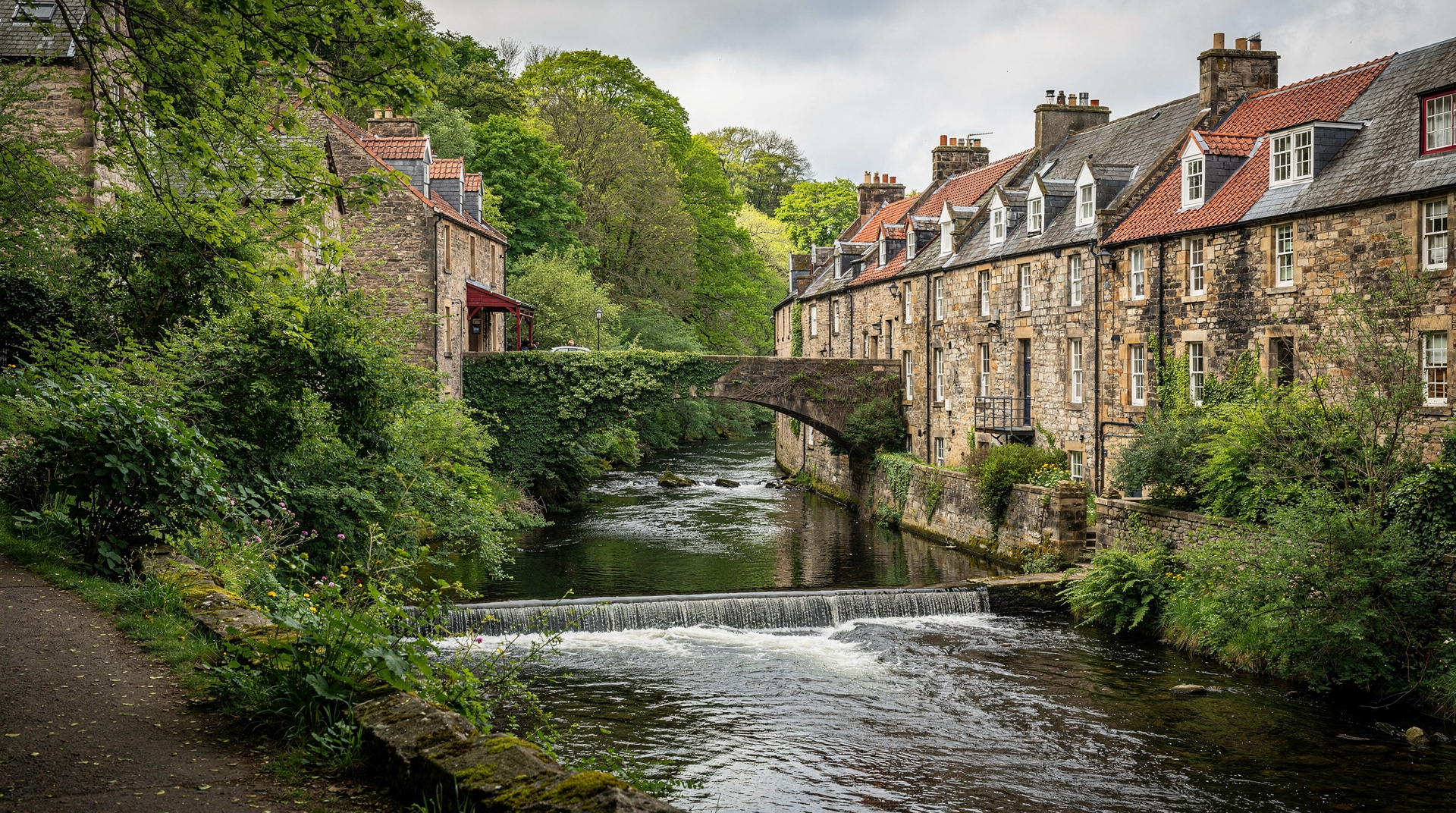
Stockbridge occupies a valley below the New Town, straddling the Water of Leith where the river runs through a wooded gorge before continuing north toward Leith and the sea. It was a separate village from Edinburgh until the nineteenth century, and it has never entirely lost that character. The main street feels more like a prosperous country town than a city neighbourhood — independent shops, unhurried cafes, and a Sunday market that draws people from across Edinburgh.
For visitors who want to see Edinburgh beyond the Royal Mile and castle corridor, Stockbridge is one of the most rewarding areas to spend an afternoon. It takes about 20 minutes to walk from the city centre, costs nothing to explore, and feels genuinely different from the tourist infrastructure of the Old Town.
| Where | Valley below the New Town, on the Water of Leith |
| Time needed | Around half a day |
| Cost | Free to walk; brunch £10-18, market variable |
| Getting there | 20-min walk from Princes Street; bus from centre |
| Best time | Sunday for the market; year-round otherwise |
Stockbridge in the context of Edinburgh’s neighbourhoods
Stockbridge is one of several neighbourhood destinations in Edinburgh that make most sense in the context of a wider city visit. It is not a starting point — visitors typically arrive here after the Old Town and castle, or as part of a northern New Town walking day. Its role is to show a different Edinburgh: residential, independent-minded, and genuinely comfortable.
If you have three or more days in Edinburgh, a half-day in Stockbridge combined with a morning at the New Town and an afternoon in Leith makes an excellent day outside the main tourist corridor. The tram from Leith back to the city centre closes the loop without retracing your steps. See the three-day Edinburgh itinerary for the sequence.
Raeburn Place and the main street
The commercial heart of Stockbridge runs along Raeburn Place and the continuation north toward Comely Bank. This is where the independent shops are concentrated: fine food shops, independent bookshops, jewellers, delis, and the kind of kitchen-supply shop that people make special trips to visit. The area has gentrified considerably over the past two decades and the prices reflect it, but the character remains that of a neighbourhood used by people who actually live there rather than a tourist destination.
The food and drink options in Stockbridge are consistently good. The Bell’s Diner on St Stephen Street is one of Edinburgh’s oldest independent burger restaurants, unpretentious and excellent. St Stephen Street itself, parallel to Raeburn Place, has a cluster of basement antique and vintage shops that reward browsing.
For coffee, Stockbridge has several independently owned cafes that are better than most of what is available in the tourist centre. Sunday morning brunch in Stockbridge — at one of the cafes on Raeburn Place or around the market — is one of Edinburgh’s most pleasant low-key experiences.
Stockbridge Market
On Sunday mornings from around 10am to 5pm, Stockbridge Market sets up around Saunders Street, a short walk down from the main shopping area. It is one of the best food markets in Scotland — local producers bringing cheese, bread, charcuterie, smoked fish, fresh vegetables, street food, and craft goods. The atmosphere is relaxed and genuinely local; this is not primarily a tourist market, and most of the people shopping are Edinburgh residents.
The market has been running since 2009 and has a loyal following. Arriving around 10:30am gives a good choice before the most popular stalls sell out. Take cash as well as a card — not all producers have card readers.
The Water of Leith walkway
The Water of Leith is a small river that runs 24 miles from Balerno in the Pentland Hills to the docks at Leith, cutting through several Edinburgh neighbourhoods along the way. The walkway that runs beside it is one of Edinburgh’s best assets: a traffic-free path through woodland and gardens that connects areas of the city that are awkward to reach otherwise.
From Stockbridge, the walkway runs east to Dean Village in about 20 minutes — a remarkably quiet woodland path that emerges in the medieval mill village below the New Town. Continuing from Dean Village, the path reaches the Scottish National Gallery of Modern Art in another 10 minutes.
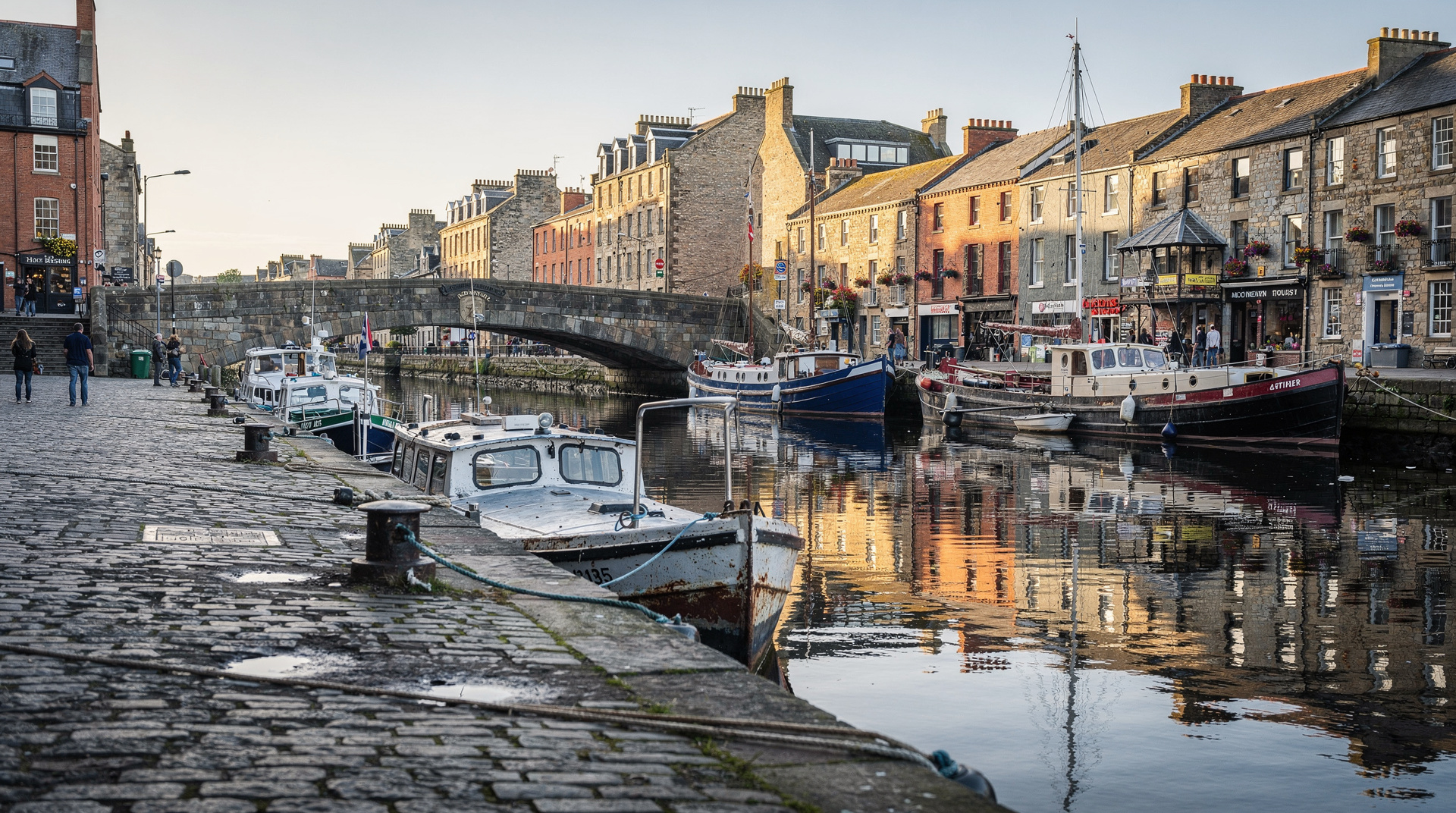
In the other direction from Stockbridge, the walkway runs north toward Canonmills and then toward Leith, eventually reaching The Shore and the docks. This section is less scenic than the Dean Village direction but provides a useful car-free route between Leith and the northern New Town.
An Edinburgh New Town, Dean Village, and Circus Lane walking tour covers the New Town and the nearby walkway areas with a guide, typically taking two hours and including Circus Lane — a cobbled mews lane behind the Royal Circus that many visitors describe as one of the most charming streets they have seen in Edinburgh.
Circus Lane and the northern New Town
Behind the Royal Circus — part of the second New Town, designed in the 1820s — lies Circus Lane, a cobbled mews lane of low stone buildings with window boxes, plant pots, and a quiet character that is entirely different from the formality of the New Town streets above. It is one of Edinburgh’s most photographed locations, and justifiably so.
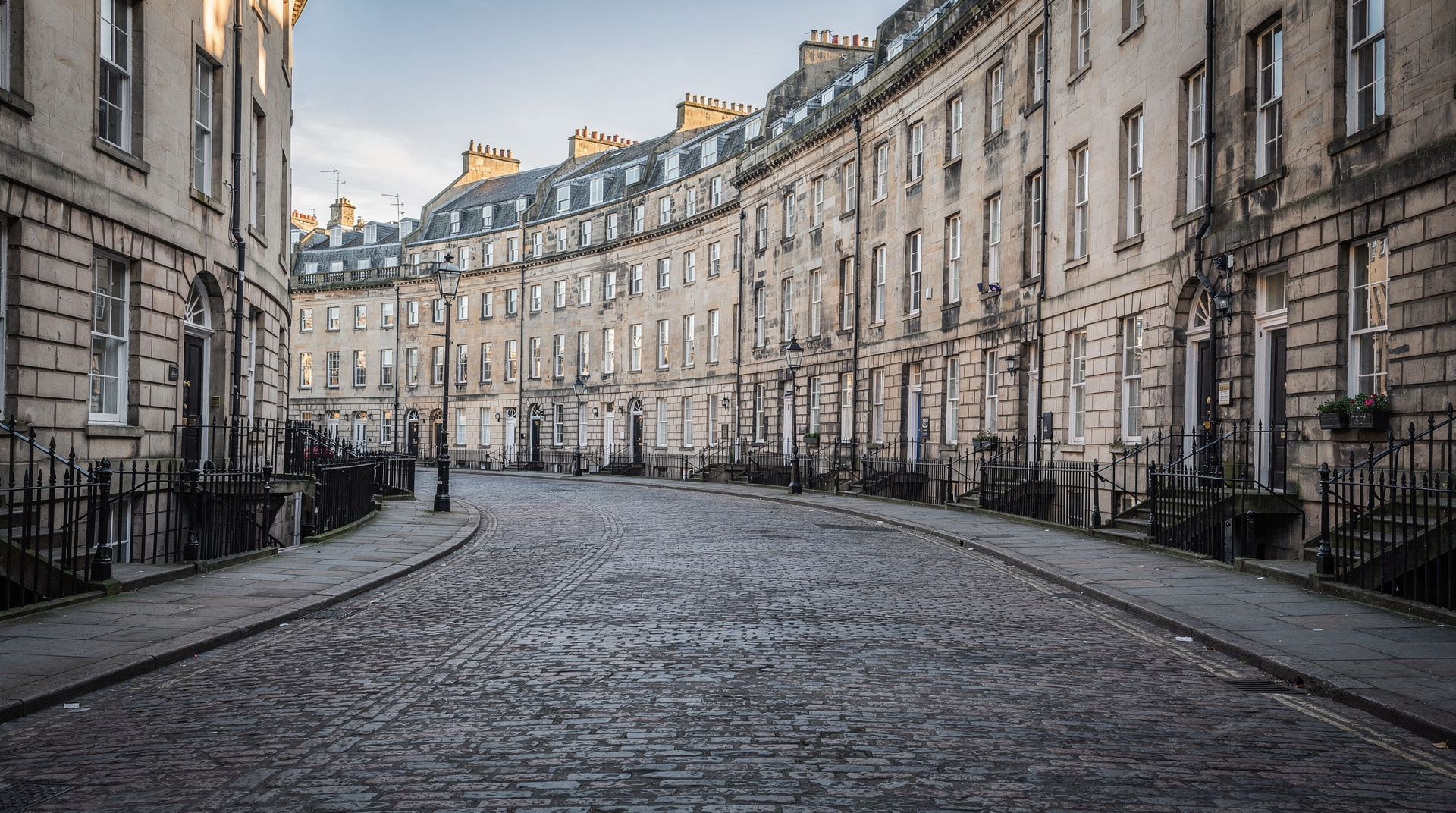
The Royal Circus itself, nearby, is one of the finest pieces of New Town architecture — an early nineteenth-century crescent of tall Georgian townhouses arranged in a half-circle, their facades unified by columns and pilasters in the Adam style. Walking through it gives a sense of the ambition of the New Town project at its height.
St Vincent Street and the residential New Town
Walking from Stockbridge uphill through the streets between Raeburn Place and the main New Town grid reveals Edinburgh’s residential character at its quietest and most handsome. Heriot Row — where Robert Louis Stevenson spent his childhood at number 17 — is one of the finest streets in the city: a long Georgian terrace with a communal garden and a view across to the northern New Town that has barely changed since the nineteenth century.
Howard Place, where the young Stevenson was born, and India Street, where James Clerk Maxwell spent his childhood, both connect to the Stockbridge area and are worth walking through for anyone interested in the literary or scientific history of Edinburgh’s New Town.
Combining Stockbridge with Dean Village and New Town
Stockbridge is most naturally combined with Dean Village and the New Town in a single half-day walk. The natural route: start in the New Town at Charlotte Square, walk east along George Street to St Andrew Square, then descend through the residential New Town to Stockbridge via the Circus area and Circus Lane, browse the shops or market on Raeburn Place, then continue along the Water of Leith to Dean Village.
The walk can be extended to Leith by continuing downstream from Dean Village — the full Water of Leith route from the West End to Leith is one of Edinburgh’s best long walks. This walk takes around two to three hours depending on how much time you spend in the market or shops.
For the full Water of Leith day — one of Edinburgh’s best long walks — the Water of Leith walkway guide covers the complete route from Balerno to Leith.
Cycling is also excellent in this area. The Edinburgh scenic bike tour covers a route through the less-visited parts of the city, and the Water of Leith path is one of the most enjoyable sections for cyclists as well as walkers.
Ann Street and the finest domestic Georgian architecture
A five-minute walk from the Stockbridge main street, Ann Street is often described as the most beautiful residential street in Edinburgh and among the most desirable addresses in Scotland. Built in the 1820s, it differs from typical New Town streets in one significant way: each house is set back behind a small front garden, breaking the continuous stone facade that defines most Georgian terracing and giving the street a more intimate, almost village quality.
The houses were built by the portrait painter Sir Henry Raeburn on land that formed part of his estate, and named for his wife. They are substantial Georgian townhouses — three storeys, well-proportioned windows, good stonework — but the gardens and the slightly lower scale make them feel domestic rather than monumental. Walking along Ann Street gives a sense of what successful Edinburgh professionals aspired to in the Regency period: private, leafy, and prestigious without being ostentatious.
The Royal Botanic Garden
A 10-minute walk from Stockbridge up Inverleith Row, the Royal Botanic Garden Edinburgh covers 28 hectares of extraordinary horticultural display. It was founded in 1670 as a physic garden for the study of medicinal plants and is now one of the world’s leading botanical institutions. Entry to the main garden is free; the glasshouses cost a small fee.
The garden is one of Edinburgh’s finest free attractions. The rock garden, the woodland garden, and the Chinese hillside are all exceptional, but the view back from the garden toward the Edinburgh skyline — with the castle, the Old Town spire cluster, and Arthur’s Seat all visible in alignment — is one of the most comprehensive panoramas of the city available from ground level.
In spring, the rhododendron collection and the cherry blossom walk are among the most spectacular in Britain. In summer, the borders around the herbaceous beds are at their most colourful. The garden is busy on sunny weekends but rarely overcrowded on weekday mornings.
St Stephen Street: vintage and antiques
St Stephen Street, parallel to Raeburn Place and running south from St Vincent Street, is the antique and vintage shopping street of Edinburgh. The basement shops and ground-floor spaces are occupied mostly by dealers in vintage clothing, second-hand books, vinyl records, specialist antiques, and the kind of interesting miscellany that rewards browsing without a specific purchase in mind.
The street has a slightly bohemian character that distinguishes it from the more polished boutiques of Raeburn Place, and the prices reflect the fact that the primary customers are local dealers and collectors rather than tourists. For vintage clothing, vinyl records, or unusual decorative objects, St Stephen Street is consistently Edinburgh’s most interesting shopping street outside the antique centres.
The Water of Leith interpretation
The Water of Leith Visitor Centre, located on Lanark Road in Balerno at the start of the walkway, provides context for the full 24-mile route. If you are planning to walk or cycle any significant section, the free maps available from the Visitor Centre are useful. In Stockbridge itself, there are information boards at several points along the river that explain the local ecology and history.
The river through Stockbridge is one of the most accessible and well-maintained sections of the walkway. Fishing is possible in places with an appropriate permit. The wildlife includes brown trout in the clearer stretches, dippers and grey wagtails along the banks, and the occasional heron standing motionless in the shallows.
The Colonies: an Edinburgh curiosity
On the south bank of the Water of Leith between Stockbridge and Canonmills, the Edinburgh Colonies are a series of small terraced houses built in the 1860s by the Edinburgh Co-operative Building Company. The design — two-storey terraces where the upper and lower flats are accessed from different ends of the building, with no shared stairwell — was pioneered as a way to give working-class families privacy and self-contained space within a high-density development.
The result is architecturally distinctive: neat rows of two-tone stone terraces with front doors at alternate levels, giving the streets a rhythm that is immediately recognisable once you know what you are looking at. Several colonies were built across Edinburgh, but the Stockbridge Colonies on Glenogle Road are among the best known and most photographed.
They are now expensive, popular with young professionals, and entirely unaffordable for the working-class families they were built to house — a common trajectory for planned working-class housing in desirable urban locations. Walking through them gives a picture of Victorian social policy made physical, and they are interesting even without the historical context.
Stockbridge across the seasons
Stockbridge holds up well in every season, which is one reason it rewards a return visit. In spring, the Royal Botanic Garden’s rhododendrons and the cherry blossom along the Water of Leith make the walk between Stockbridge and Dean Village particularly good. Summer brings the longest opening hours for the market and cafes, and the outdoor seating on Raeburn Place fills quickly on warm afternoons.
Autumn colours the Water of Leith gorge in a way that suits an unhurried walk more than a rushed one, and the antique shops on St Stephen Street feel especially fitting on a grey afternoon. Winter is quieter still — the market continues year-round, though smaller in the colder months, and a warm cafe on Raeburn Place after a cold riverside walk is one of Stockbridge’s more understated pleasures.
Goldenacre and Inverleith
Continuing north from Stockbridge, the neighbourhood of Goldenacre and Inverleith extends toward the Royal Botanic Garden and Edinburgh’s playing fields. Inverleith Park, immediately north of the Botanic Garden, is a large open park used for football, cricket, bowls, and general recreation by the northern New Town and Stockbridge communities. On a fine weekend morning it gives a picture of Edinburgh’s recreational life that is entirely separate from the tourist circuit.
The Stockbridge area as a whole — taking in the market, the main street, Ann Street, the Water of Leith, and the Botanic Garden — can fill a comfortable half-day or, with a slow lunch and full exploration, a full day. The three-day Edinburgh itinerary dedicates a full afternoon to Stockbridge and Dean Village combined.
A suggested Stockbridge half-day, hour by hour
A practical timing guide for a Sunday visit (the best day, for the market):
| Time | Activity |
|---|---|
| 10:00–10:30 | Arrive, browse Stockbridge Market at Saunders Street |
| 10:30–11:30 | Raeburn Place shops, coffee or brunch |
| 11:30–12:00 | Ann Street and the Circus Lane detour |
| 12:00–13:00 | Water of Leith walkway to Dean Village |
| 13:00–14:00 | Dean Village, then on to the Scottish National Gallery of Modern Art or back to the New Town |
On a non-Sunday, shift the first hour to St Stephen Street’s antique shops or the Royal Botanic Garden instead of the market, and the rest of the route holds. For visitors who prefer a guided introduction to the area first, the Edinburgh city highlights walking tour covers the wider city core and pairs well with a self-guided Stockbridge afternoon.
Where to stay near Stockbridge
Stockbridge itself has relatively few hotels — most visitor accommodation in the neighbourhood is self-catering flats or a handful of guesthouses on the quieter streets toward Comely Bank. This suits visitors who want a residential, non-touristy base with easy walking access to the New Town (15-20 minutes) while still being genuinely local in character. It is a reasonable alternative to staying in the Old Town for anyone prioritising quiet evenings and good neighbourhood restaurants over minimising the walk to the castle. The Edinburgh where-to-stay guide covers the area-by-area comparison in full.
Frequently asked questions about Stockbridge
Is Stockbridge a good place to eat in Edinburgh?
Yes, consistently one of the best areas outside Leith for independent restaurants and cafes. It is a neighbourhood where people actually live and eat regularly, which means the quality-to-price ratio tends to be better than tourist-area equivalents. Sunday brunch in particular is excellent. See the Edinburgh food guide for specific recommendations.
Where else can I find independent shopping in Edinburgh?
The Old Town’s Victoria Street and the Grassmarket area have good independent shops. The New Town’s Thistle Street is Edinburgh’s best boutique street. Stockbridge sits alongside these as the most genuinely local option — the customer base is primarily residents, which keeps prices and quality more honest than tourist-facing areas.
What time does the Stockbridge Market open?
The market runs on Sundays from approximately 10am to 5pm. For visitors interested in Scottish food culture more broadly, combining the market with the Edinburgh food guide gives a comprehensive picture of where locals shop and eat.
Is Stockbridge good for day-trip logistics?
Yes — Stockbridge is on the route between the New Town and Leith, making it a natural stop-off rather than a major detour. The Water of Leith walkway connects all three areas in a comfortable half-day walk that ends at The Shore in Leith with a waterfront lunch. Arriving between 10am and 11am gives the best selection. The market runs year-round; wet weather reduces the number of stalls somewhat but it is never entirely cancelled.
How do I get to Stockbridge from the city centre?
Walking takes about 20 minutes from Princes Street — head north from the city centre via Frederick Street or Hanover Street and descend the hill. Buses on the Stockbridge routes (23, 27, and others) run frequently from the city centre. There is no tram to Stockbridge.
Can you walk from Stockbridge to Dean Village?
Yes, the Water of Leith walkway connects the two in about 20 minutes on a flat, largely traffic-free path. The walk is pleasant in any weather, through wooded sections of the river valley. Continuing through Dean Village to the Scottish National Gallery of Modern Art takes another 10 to 15 minutes.
Is Stockbridge suitable for children?
The market and the Water of Leith path are both good for children. The river path is safe and interesting with occasional wildlife (ducks, herons, and occasionally otters). The antique shops and fashion boutiques on the main street are less obviously child-oriented, but the general environment is relaxed and unhurried.
Is it worth staying in Stockbridge instead of the Old Town?
For a first-time, short visit focused on the castle and Royal Mile, staying in the Old Town or New Town saves walking time. For a longer stay, or for visitors prioritising a quiet, residential base with good local restaurants, Stockbridge (or the streets toward Comely Bank) is a genuinely good alternative — expect mostly self-catering flats and a small number of guesthouses rather than large hotels.
What is Circus Lane and why is it famous?
Circus Lane is a cobbled mews lane behind the Royal Circus in the northern New Town. It is famous primarily for its photogenic character — low stone buildings, flower pots, cobblestones, and an atmosphere entirely different from the formality of the main New Town streets. It became widely known on Instagram and now attracts considerable photography traffic, but it remains a quiet residential lane that retains its atmosphere outside peak visiting hours.
Top experiences
Bookable activities with verified prices and instant confirmation on GetYourGuide.