Edinburgh photography spots: the complete guide
Photographing one of Europe’s most photogenic cities
Edinburgh was built to be looked at. The volcanic geology that shaped the Old Town’s dramatic topography, the Georgian formality of the New Town’s terraces, and the patchwork of closes and courtyards threading through the old city provide almost endless photographic material. The difficulty is not finding good subjects — it is navigating the crowds and knowing which light works where.
This guide covers the best photography locations in the city, the optimal times for each, and a few places that the standard round-up posts overlook.
| Best single spot | Calton Hill, sunrise or the hour before sunset |
| Least crowded time | Weekday mornings, 7-9am |
| Equipment worth carrying | Microfibre cloth, circular polariser for water shots |
| Free spots | Calton Hill, Victoria Street, Grassmarket, Greyfriars Kirkyard |
| Cost of a guided session | around £60-100 per person for a private photography tour |
Calton Hill: the classic Edinburgh panorama
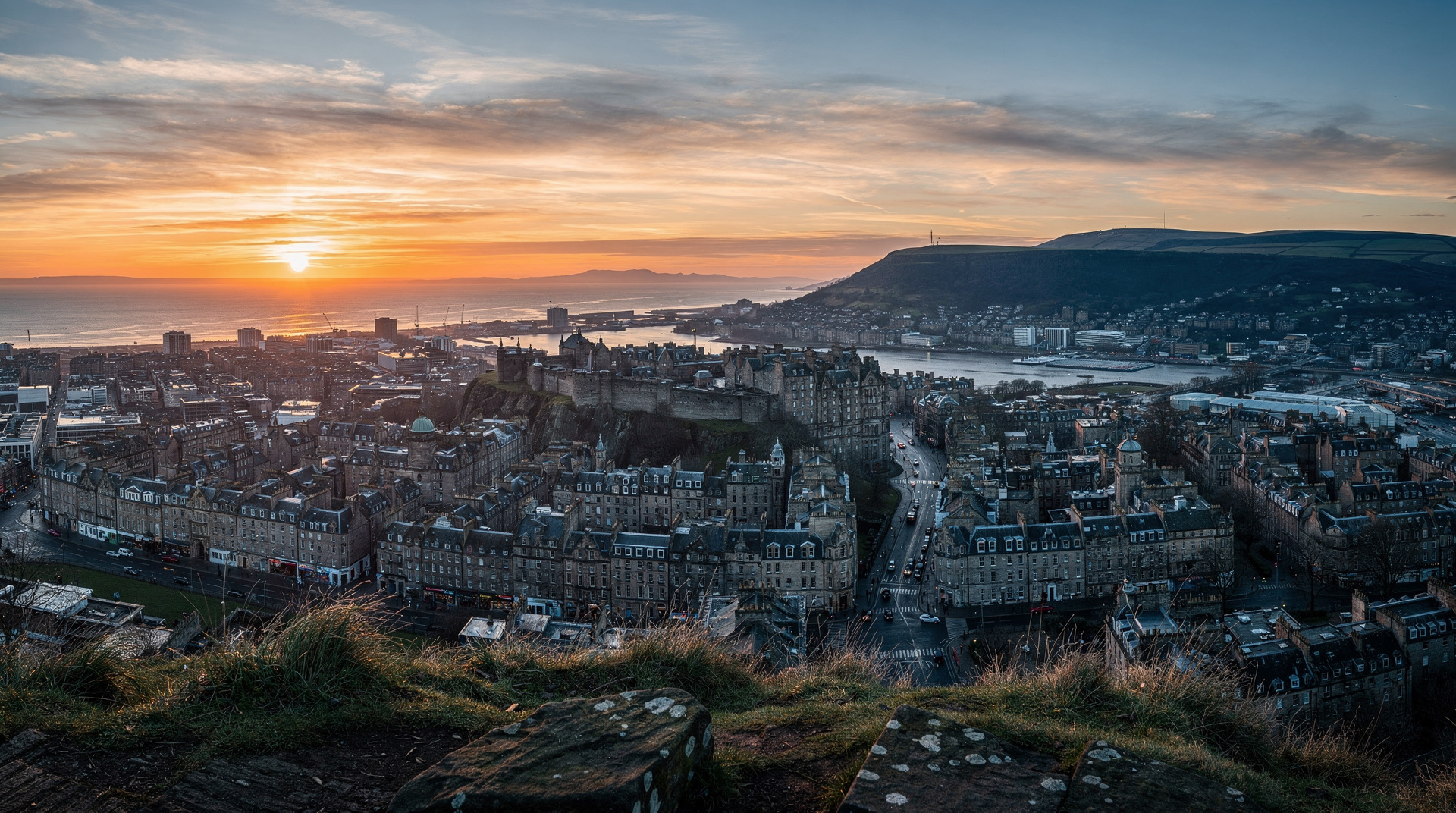
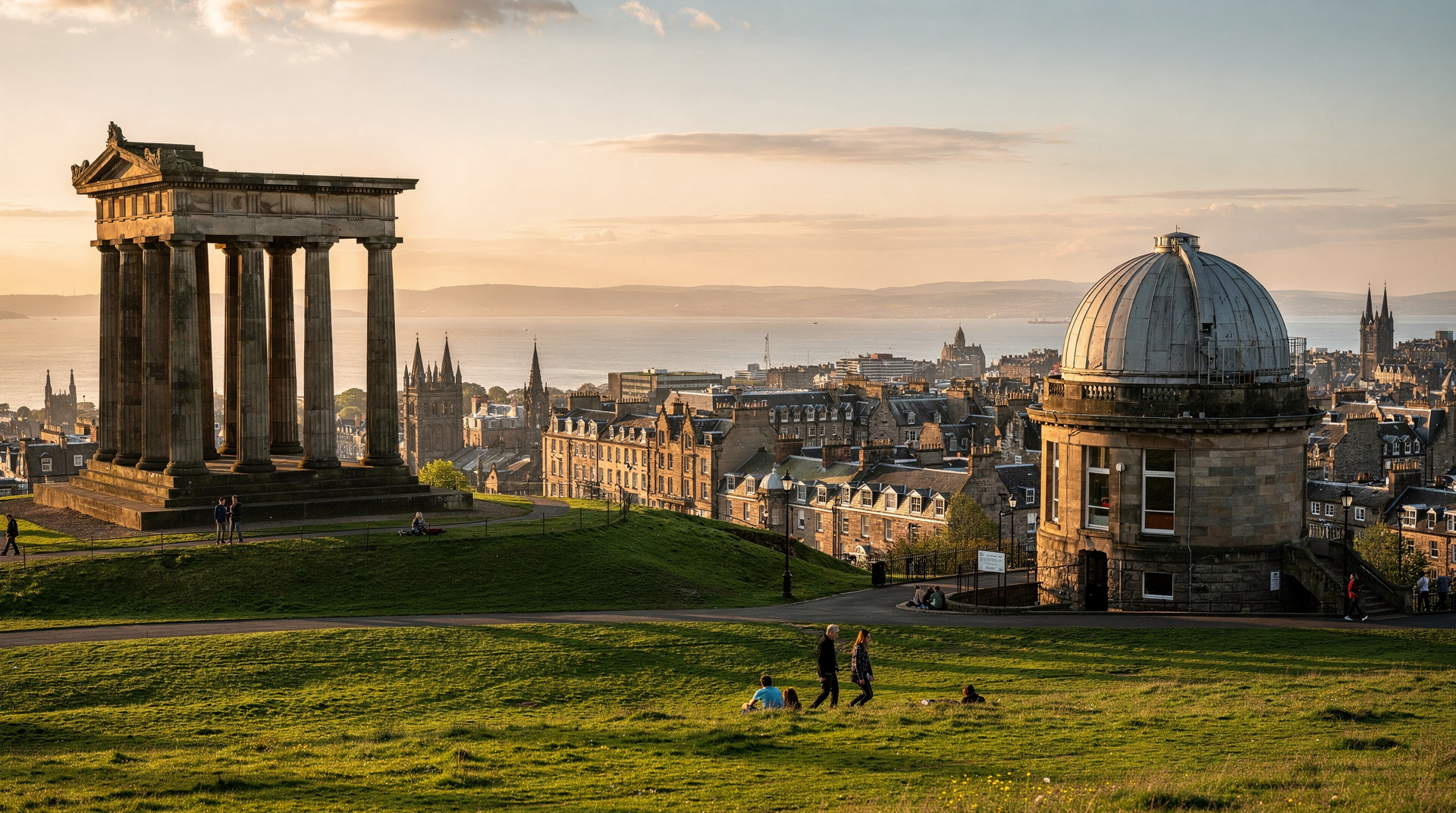
The view from the top of Calton Hill — Edinburgh Castle on its plug of basalt, Arthur’s Seat in the middle distance, the Forth glittering to the north — is the one that appears on every Edinburgh calendar. It is genuinely excellent, but timing matters enormously.
Best time: Sunrise in spring and autumn (roughly 5:30-7am), when the light comes from the east and illuminates the castle face directly, or the hour before sunset when the western sky goes orange behind the New Town skyline. Midday light is flat and the hill is crowded.
Access: Free, a ten-minute uphill walk from Princes Street. The summit is unmistakable.
Tip: The view of the Scott Monument from the Dugald Stewart Monument on the hilltop is one of the lesser-photographed angles — try it in early morning mist. The Calton Hill guide covers the full summit and its monuments.
Victoria Street: the curved street shot
Victoria Street’s curving double-storey frontage, with its brightly painted shopfronts and wrought-iron upper walkway, is one of the most popular subjects for Edinburgh photography. It is genuinely photogenic, but it is also one of the busiest pedestrian streets in the city.
Best time: 8-9am on a weekday, before most visitors are up. Or late evening in summer when the golden hour light hits the west-facing frontages.
Approach: Stand at the bend at the top of the street where it curves left, using the concave geometry to create foreground interest. A longer focal length (50-85mm) compresses the buildings beautifully.
Dean Village: mill architecture and reflections
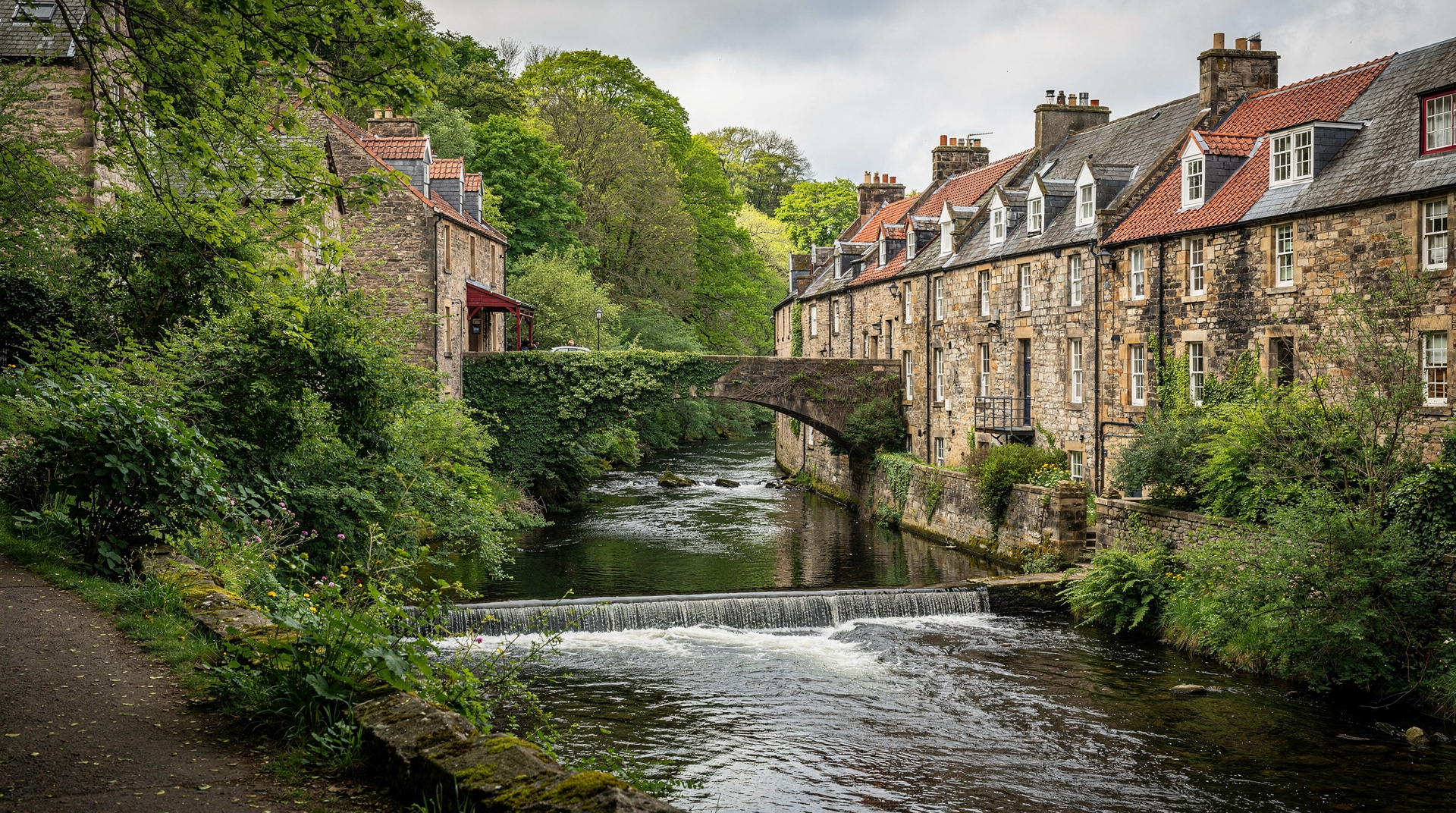
The former milling community at Dean Village, hidden below street level on the Water of Leith, works particularly well in reflective conditions — a still, overcast morning gives perfect mirrored reflections of the old buildings in the river.
Best time: Early morning before the dog walkers arrive. The light is softer on cloudy days than in direct sun, which creates harsh shadows between the buildings.
Access: Steps down from Queensferry Street (look for the bollards at the junction — the steps are easy to miss). See the Dean Village guide. Combine with the Water of Leith walkway toward Stockbridge for a variety of subjects in one session.
Circus Lane, Stockbridge
The cobbled mews lane with its pastel-painted former stables is most commonly photographed in spring when the wisteria and window boxes are in full bloom. The lane is narrow and north-facing, so direct sun only reaches it in high summer around midday.
Best time: Overcast light, or the twenty-minute window around sunset in June/July when the sky behind the southern end of the lane goes golden. The lane itself is best without people; visit on a weekday morning.
The Grassmarket: castle from below
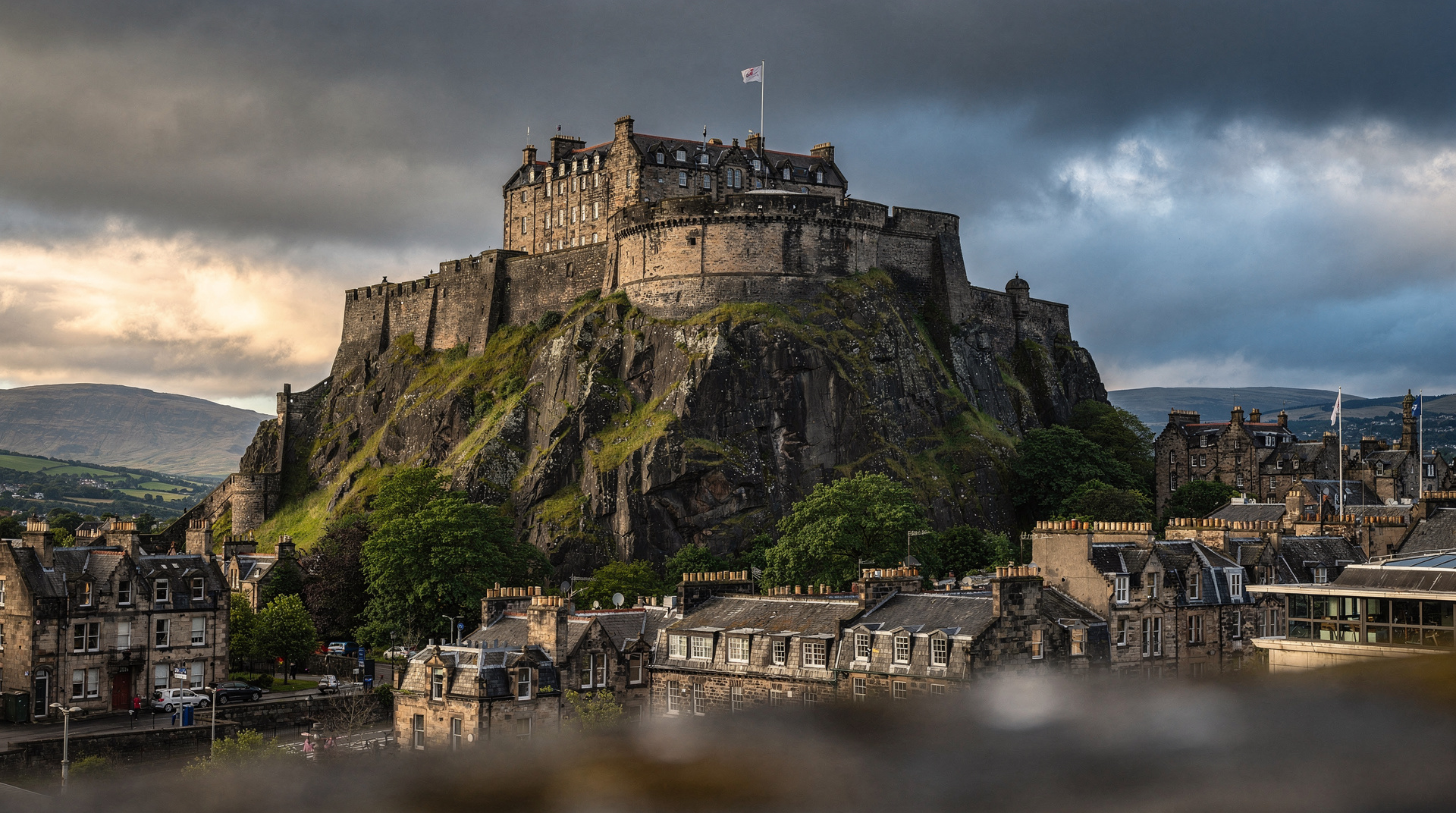
Looking up from the Grassmarket, the castle sits almost directly above you on its volcanic cliff — a dramatically steep perspective that is entirely different from the Princes Street Gardens view. The juxtaposition of pub signs, outdoor tables, and castle rock is a quintessentially Edinburgh composition.
Best time: Late afternoon in winter and spring, when the low sun illuminates the castle face. In summer the sun swings too far north for this angle to work well.
Greyfriars Kirkyard at dusk
The old kirkyard has genuinely atmospheric photographic potential in fading light — the leaning headstones, the gothic mausolea, and the view back toward the castle through the trees. It is accessible until dusk and free.
Note: Avoid using flash or tripods during ghost tour hours (most operators run evening tours from around 6pm). The kirkyard can be very crowded in August.
The Royal Mile from the Lawnmarket steps
There is a spot on the stairs between the Lawnmarket and the closes below the Edinburgh Assembly Hall where you can frame the castle at the end of the Royal Mile with the stone tenements narrowing to a point. It is best in the early morning before the tourist flow begins.
Signet Library courtyard (by arrangement)
The interior of the Signet Library on Parliament Square — all Neo-classical columns and soaring plasterwork ceilings — is one of the most dramatic interiors in the city. It is not generally accessible but is sometimes available for private events. The exterior courtyard is always open.
Arthur’s Seat: city and coast
From the summit of Arthur’s Seat on a clear day, you can see the bridges across the Forth, the Lothian coastline east to North Berwick Law, and the full sweep of the city below. It is genuinely the best elevated view in Edinburgh.
Best time: The first clear morning after several days of rain, when the air is washed clean. Sunrise on a summer morning gives extraordinary light on the city below.
Commitment required: Allow 1.5-2 hours for the ascent and descent. A guided hike with a proper mountain guide ensures you reach the true summit and find the best vantage points. See the Arthur’s Seat guide.
The Forth Bridge from North Queensferry
The Forth Bridge — the Victorian cantilever railway bridge, not the road bridge — is one of the most photographed structures in Scotland, and the view from North Queensferry directly below the south pier is the definitive angle. The 2-kilometre walk from North Queensferry railway station to the bridge takes 20 minutes along the shoreline.
Best time: Low tide on a clear morning, when the red ironwork reflects in the water below the pier.
Working with a local photographer
If you want to go deeper than the standard spots, a private photography tour with a local Edinburgh photographer covers locations that vary by season and light conditions, with practical guidance on camera settings and composition in the specific Edinburgh environment.
The difference between photographing Edinburgh and photographing it well is largely a question of light and timing — two variables a local guide understands in a way that no guide book can fully communicate.
Practical tips for Edinburgh photography
The weather changes faster in Edinburgh than almost anywhere in the UK. The best light often appears immediately after rain, when the wet cobblestones reflect the sky and the air clears. Carry a microfibre cloth for your lens. A circular polarising filter is useful on the Forth viewpoints to cut the glare off the water.
The closes off the Royal Mile create deep shade that can be fifteen stops darker than the street outside — bracket your exposures or shoot in RAW and recover in post. Many of the best interiors (museums, libraries, the Parliament) prohibit tripods but allow handheld photography; check before setting up.
For the best views in Edinburgh from a more panoramic perspective, see our dedicated guide to elevated viewpoints and rooftop access.
Old Town versus New Town: two different photographic subjects
The Old Town and New Town reward different approaches. The Old Town is vertical, cramped, and dramatic — closes, wynds, and the castle looming over everything, best worked with a wider lens and an eye for the way light falls into narrow gaps between tenements. The New Town’s Georgian terraces are the opposite: horizontal, formal, and best photographed with a longer lens that compresses the repeating façades along streets like Heriot Row. See the Old Town vs New Town guide if you are deciding which half of the city to prioritise on a short trip.
The Royal Mile: photographing it without the tourist-trap look
The Royal Mile is one of the most photographed streets in Scotland, and also one of the easiest to shoot badly — crowds, tartan shopfronts, and flat midday light produce the generic tourist-brochure version. Shoot early, before 8am, when the closes are empty and the cobbles are often still wet from overnight rain. The Royal Mile guide covers the closes worth ducking into, and the Royal Mile tourist traps guide is useful for knowing which shopfronts are worth photographing versus which are best avoided altogether.
Beyond the city: day-trip photography
For photographers with a car or willing to join a tour, the coastline and countryside beyond Edinburgh offer a different register entirely. North Berwick’s harbour and the volcanic profile of North Berwick Law make a strong contrast to the city shots, especially at low tide. See the North Berwick day trip guide for logistics if you want to combine it with a coastal photography session.
Frequently asked questions about photography in Edinburgh
Do I need a tripod for Edinburgh’s best photography spots? Rarely outdoors — most of the classic viewpoints (Calton Hill, Victoria Street, the Grassmarket) are handheld-friendly even at dawn or dusk with a reasonably fast lens. Tripods are more useful for the Forth Bridge and long-exposure water shots at Dean Village, and are prohibited in most museum and library interiors.
What is the single best time of year for Edinburgh photography? Late spring (May) and early autumn (September) balance long daylight hours, manageable crowds, and reliable enough weather for sunrise sessions. August has the best light discipline for street photography opportunities but the worst crowds of the year at every popular spot.