Old Town vs New Town Edinburgh: which to explore first
Edinburgh: walk Dean Village, New Town & Royal Botanics
Should you stay in Edinburgh's Old Town or New Town?
Old Town for atmosphere and proximity to the main sights; New Town for quieter streets, Georgian elegance, and a more local feel. Both are worth exploring regardless of where you stay — they are 15 minutes apart on foot. First-timers typically prefer Old Town; returning visitors often prefer New Town.
Two Edinburghs, side by side
Edinburgh has two distinct historic centres that lie immediately adjacent to each other, separated by the valley of Princes Street Gardens where the old Nor’ Loch once sat. The Old Town grew organically over centuries along a volcanic ridge — cramped, vertical, medieval in character. The New Town was built in a single planned phase from the 1760s onwards — wide streets, Georgian symmetry, a deliberately designed contrast to the chaos of the old city.
Understanding the difference between them transforms a visit to Edinburgh. Most tourists spend the majority of their time in the Old Town, often without realising the New Town exists as a complete architectural achievement in its own right. This guide explains both areas honestly — what they offer, what they lack, and how to make the most of each.
| Old Town | New Town | |
|---|---|---|
| Character | Medieval, vertical, atmospheric | Georgian, planned, elegant |
| Walking | Steep, cobbled | Flat, wider pavements |
| Best for | First-timers, proximity to sights | Quiet streets, returning visitors |
| Main flaw | Royal Mile is commercialised | Few dedicated attractions |
| Distance apart | around 5–20 minutes on foot | around 5–20 minutes on foot |
The Old Town: what it actually is
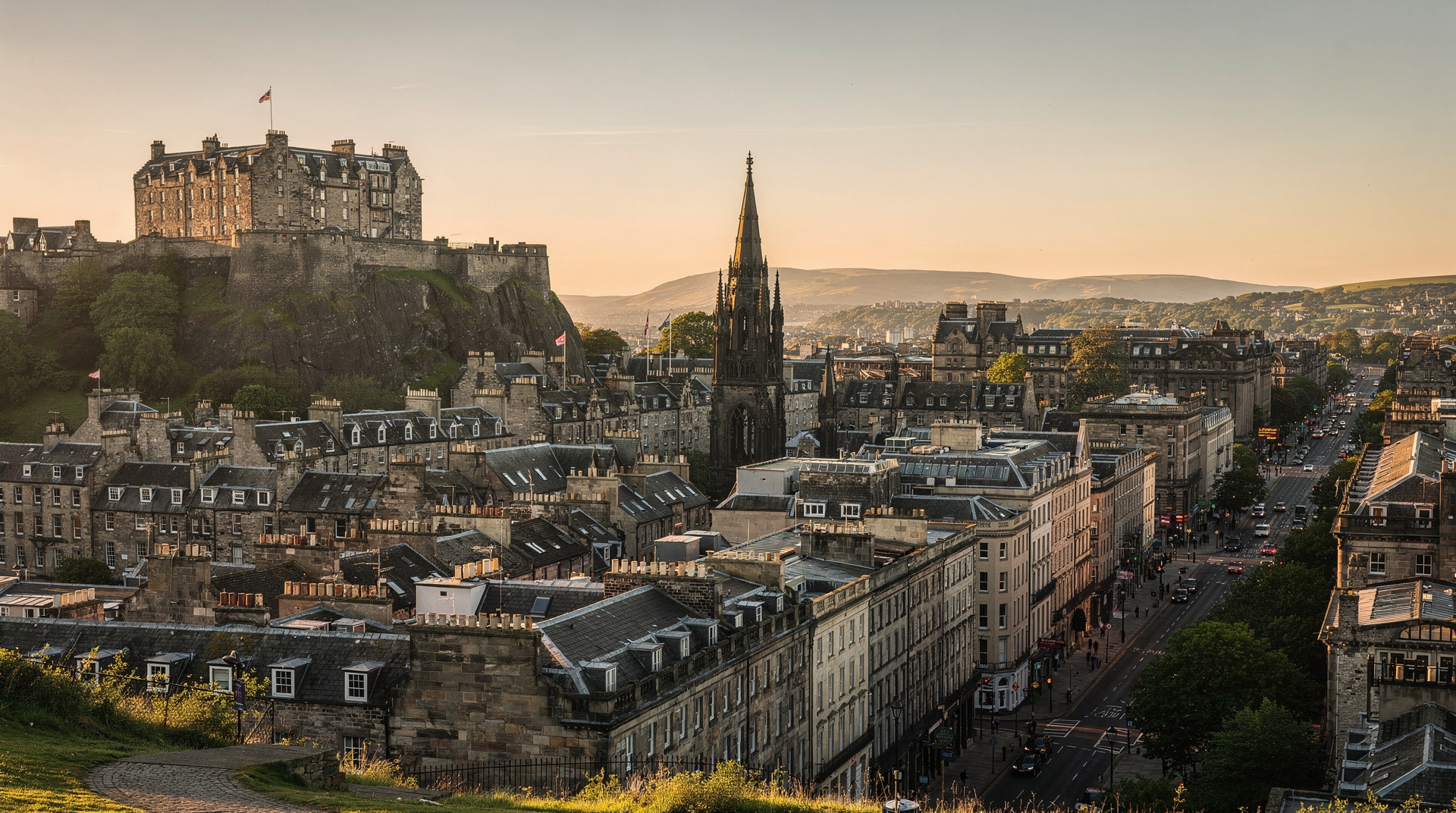
The Old Town occupies the ridge running from Edinburgh Castle at the top to the Palace of Holyroodhouse at the bottom — a distance of about a mile along the Royal Mile. The ridge is lined with buildings six, eight, and sometimes ten storeys high (tenements that were the skyscrapers of their age), with a dense network of closes and wynds running down the steep slopes on either side.
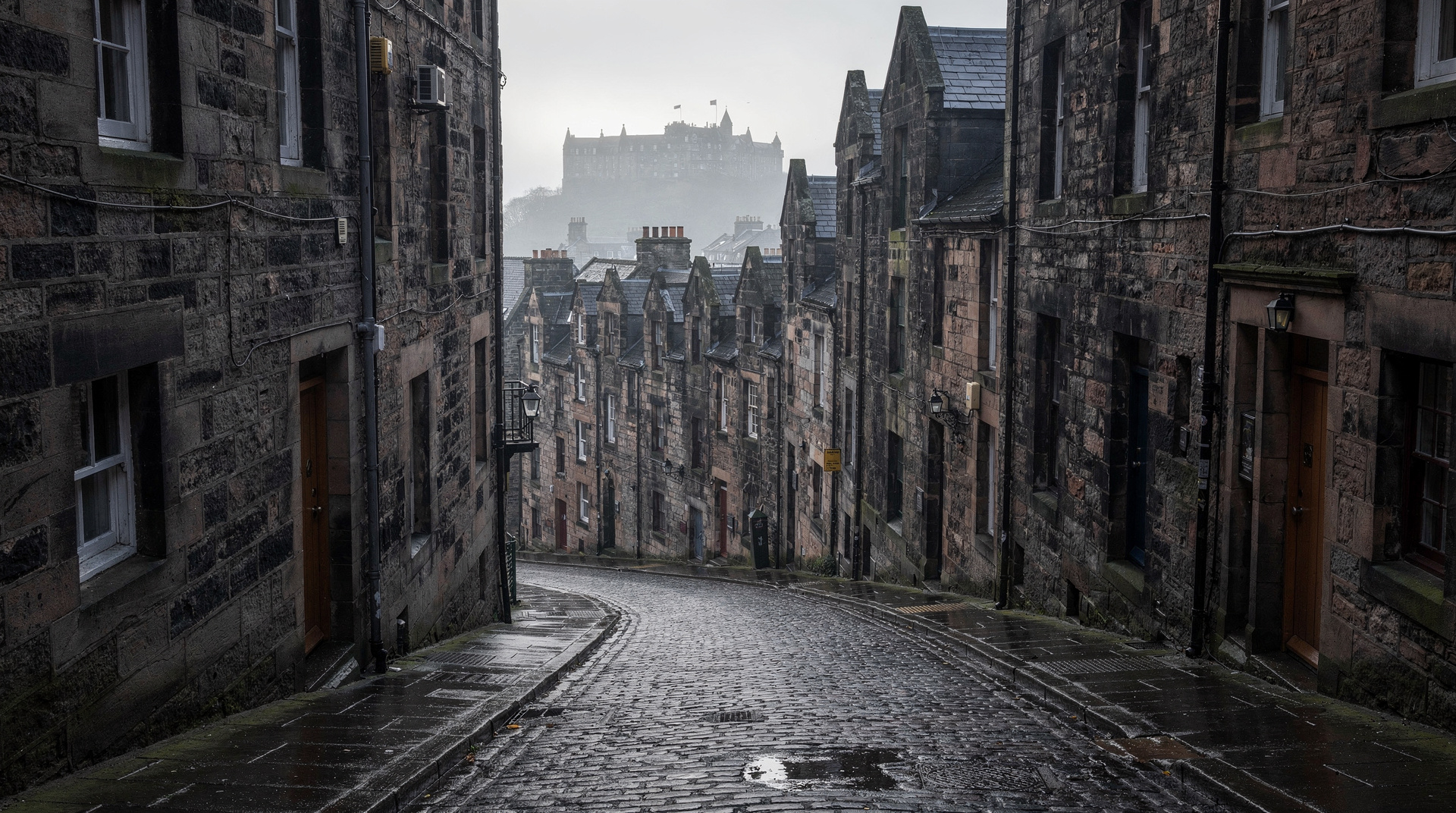
What the Old Town does well: The physical fabric of the Old Town is genuinely extraordinary. The closes — narrow alleyways that run between buildings — give access to hidden courtyards, external staircases, and fragments of medieval and early modern Edinburgh that have no equivalent in the rest of Scotland. Victoria Street, the Grassmarket, Greyfriars, and the Canongate each have a distinct character. The underground vaults, Mary King’s Close, and the ghost tour circuit all operate in this space. At night, particularly in autumn or winter with mist and the castle lit above, the Old Town has an atmosphere that is genuinely hard to replicate anywhere.
What the Old Town does not do well: The Royal Mile itself is thoroughly commercialised. Most of what fronts the main street between the castle and Holyrood is tourist shops (tartan, whisky, shortbread), mediocre restaurants at elevated prices, and coach party drop-off points. The closes and side streets are where the real character lives — the Royal Mile is a corridor through it, not the point of it. See the Royal Mile tourist traps guide and the guide to avoiding tartan tat shops for the specifics.
Getting around: The Old Town is steep and cobbled. Not ideal with a pushchair or for anyone with mobility issues, but manageable with appropriate footwear. The main sights are densely concentrated — Edinburgh Castle, Greyfriars, the National Museum, the vaults, and Holyrood are all within about 20 minutes’ walk of each other.
The New Town: what it actually is
The New Town was built following a design competition won by James Craig in 1766, and what was constructed over the following decades is one of the best-preserved examples of Georgian planned urban design anywhere in the world. The core of the New Town — roughly bounded by Queen Street, Princes Street, Charlotte Square, and St Andrew Square — is a UNESCO World Heritage Site alongside the Old Town.
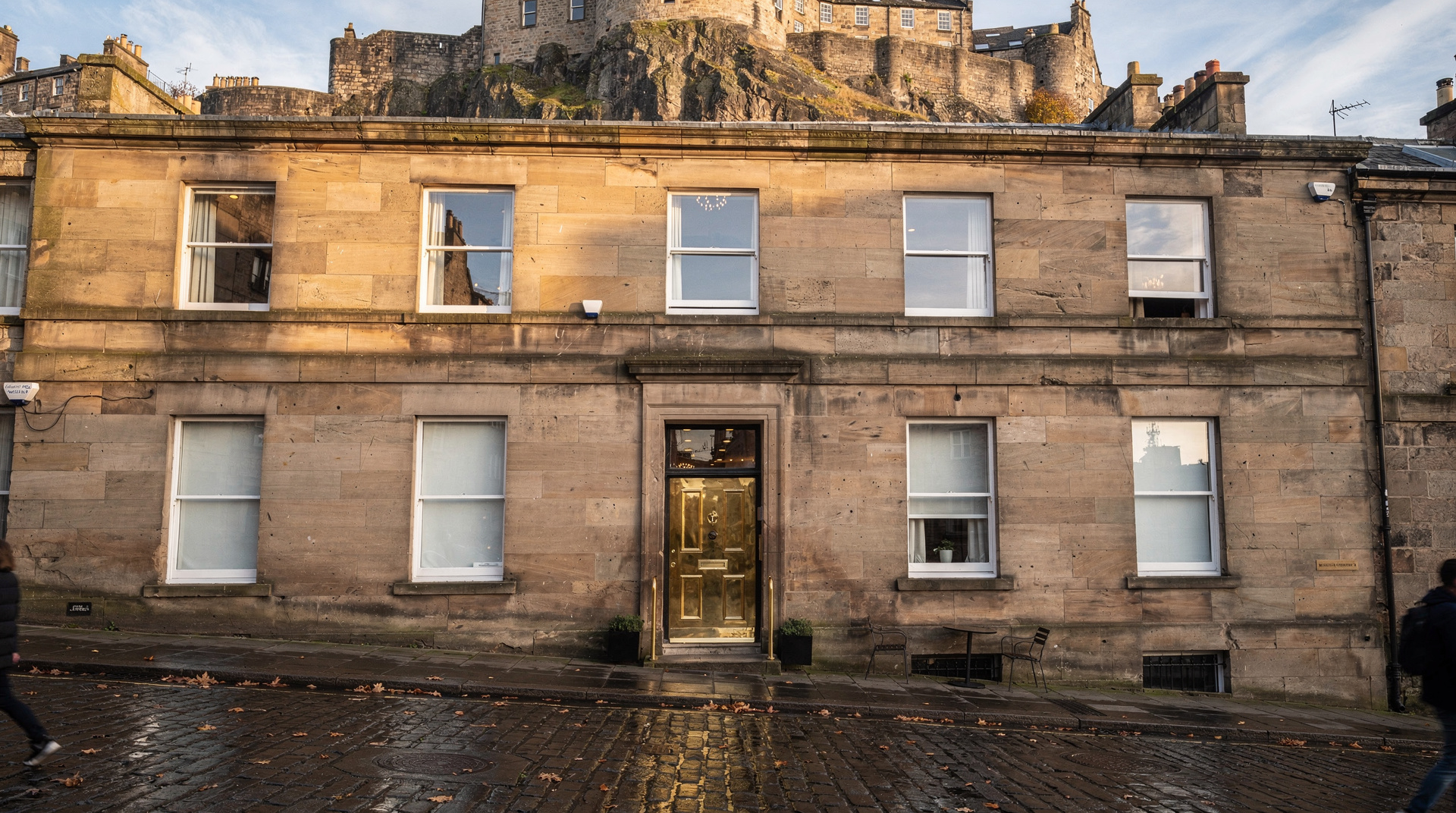
What the New Town does well: The architecture is consistently beautiful. Heriot Row (where Robert Louis Stevenson grew up), Moray Place (a circular private garden at the centre of a uniform crescent of Georgian town houses), and Charlotte Square are extraordinary streets to simply walk through. The Georgian House at Charlotte Square (National Trust for Scotland, £13.50 adults) shows what these town houses looked like when occupied. The New Town also has Edinburgh’s best independent shopping, concentrated around Thistle Street, William Street, and the side streets of the Georgian grid.
The New Town is noticeably quieter than the Old Town at ground level — wider streets, less foot traffic, more residential. This makes it a better area for comfortable walking, for sitting in cafes without the tourist crush, and for accommodation if you want quiet streets at night.
What the New Town does not do well: It lacks the dramatic topography and the dark atmospheric history of the Old Town. It is very beautiful but in a composed, symmetrical way that some visitors find cold compared to the medieval chaos of the old city. The Princes Street end of New Town (the shopping end) is generic and not particularly attractive — the character is in the streets behind it. There are relatively few specific tourist attractions in the New Town itself: the Scottish National Portrait Gallery on Queen Street is the main one.
Getting around: The New Town is substantially flatter than the Old Town and easier to walk. The main challenge is navigating between Old and New Town — from Princes Street up to the Royal Mile involves climbing either the Mound (steps) or the Lawnmarket end of Princes Street and then the steep closes or Johnston Terrace. It is walkable but gets steep.
The Royal Mile: tourist trap or authentic experience?
One of the most common misconceptions about Edinburgh is that the Royal Mile is Edinburgh’s heart. It is actually a tourist corridor running through the Old Town — and like most such corridors in European cities, it has been optimised for tourist spending rather than for authentic Edinburgh life.
The medieval closes and wynds running off it, the underground layers of the city, and the genuinely historic buildings (St Giles’ Cathedral, the Scottish Parliament, Holyrood Palace) are worth your time. The shops and restaurants fronting the main street, by and large, are not. See the Royal Mile tourist traps guide for a full rundown of what to avoid.
The New Town’s answer to the Royal Mile is Princes Street — which is also, frankly, not Edinburgh at its best. The real character of New Town life is in Thistle Street, the Stockbridge end of the Georgian grid, and the side streets that visitors on a short trip rarely discover.
Walking tours: the best way to understand both
The density of historical and architectural information in Edinburgh is hard to absorb independently. A good walking tour makes both the Old Town and New Town intelligible rather than just visually impressive.
An Old Town history and tales walking tour provides the narrative framework for understanding the closes, the social history of the tenement buildings, and what makes the Old Town unusual. The New Town, Dean Village and Circus Lane walking tour takes in the Georgian grid and the remarkably picturesque Dean Village (a former milling village that feels transplanted from a different century) — covering the New Town’s character more effectively than walking it alone.
Both tours typically run two hours and depart from points on or near the Royal Mile. See the guide to choosing an Edinburgh tour for comparisons across the different operators.
The contrast between the two towns is best felt by crossing between them repeatedly rather than touring each in turn, which is awkward on a fixed guided route: a self-guided escape tour city game lets you zigzag across the divide at your own pace.
Where to eat: Old Town vs New Town
This is where the gap between the two areas is most commercially relevant. The Royal Mile has Edinburgh’s highest concentration of mediocre, overpriced tourist food. The New Town — particularly the side streets — has Edinburgh’s best cafe culture and a strong independent restaurant scene.
Best eating in Old Town: Off the main street is the key. Greyfriars Place, Victoria Street, the Grassmarket, and the closes have genuinely good options. The Mosque Kitchen on Nicholson Street (technically Southside, adjacent to Old Town) offers outstanding value Scottish-Pakistani food for around £7-10 per person. The Elephant House on George IV Bridge has acceptable food and a famous Harry Potter connection. For a proper meal, see the where to eat in Edinburgh guide.
Best eating in New Town: Thistle Street, Multrees Walk, and the streets around Stockbridge have Edinburgh’s best independent restaurant and cafe concentration. For the honest picture on what the Royal Mile does to your food budget, see the eating on the Royal Mile guide.
Practically speaking: how to see both in a short visit
For a one-day visit, concentrate on the Old Town: castle, a close or two, Greyfriars, the underground vaults or Mary King’s Close. Cross to the New Town for dinner.
For a two-day visit: Old Town morning of day one (castle, Camera Obscura), New Town afternoon of day one (Princes Street Gardens, Charlotte Square, Stockbridge). Day two adds Holyrood, Arthur’s Seat, and either Dean Village or the National Museum.
For a three-day or longer visit, explore the areas around each — Stockbridge (New Town adjacent), Leith (east of New Town), Bruntsfield (south of Old Town), and the Water of Leith walkway connecting Leith through Stockbridge to the Dean Village.
See the two-day Edinburgh itinerary and the three-day Edinburgh itinerary for practical sequences.
The specific buildings worth knowing in each area
Old Town buildings to seek out:
Gladstone’s Land on the Lawnmarket (National Trust for Scotland, £11 entry) is a preserved seventeenth-century tenement flat that shows what Old Town life looked like when these buildings were residential. The decorated painted ceilings and period furniture give a sense of the density and colour of pre-industrial Edinburgh that the street gives no hint of.
Riddle’s Court (just off the Lawnmarket) is a restored sixteenth-century courtyard complex that formed part of the Edinburgh World Heritage Site. It is now a conference venue but the exterior courtyard is freely accessible and gives the best sense of a functioning Old Town close in its original form.
The Real Mary King’s Close, beneath the Royal Mile on the High Street, takes visitors through preserved seventeenth-century streets sealed beneath the City Chambers since the 1750s. This is one of Edinburgh’s most genuinely distinctive experiences and is covered in depth in the Mary King’s Close guide.
New Town buildings to seek out:
Charlotte Square is James Craig’s masterpiece within the New Town — a complete Georgian square with matching facades, a central garden, and the Georgian House on the north side (National Trust for Scotland, £13.50 adults). The Georgian House shows a Charlotte Square town house restored to its 1796 appearance, which is the single most direct way to understand what the New Town looked like and meant when it was built.
Moray Place is a circular private garden surrounded by one of Edinburgh’s most complete Georgian crescents. Not publicly accessible inside, but the exterior of the crescent viewed from Doune Terrace is extraordinary — the scale and uniformity of the Georgian project is fully apparent here.
Circus Lane, off Circus Place in Stockbridge, is a cobbled lane of mews houses that runs behind a Georgian crescent. It is consistently cited as Edinburgh’s most photographed street. Small-scale, intimate, and entirely different in character from both the Royal Mile and the grand Georgian streets.
The Water of Leith: connecting New Town to Dean Village to Leith
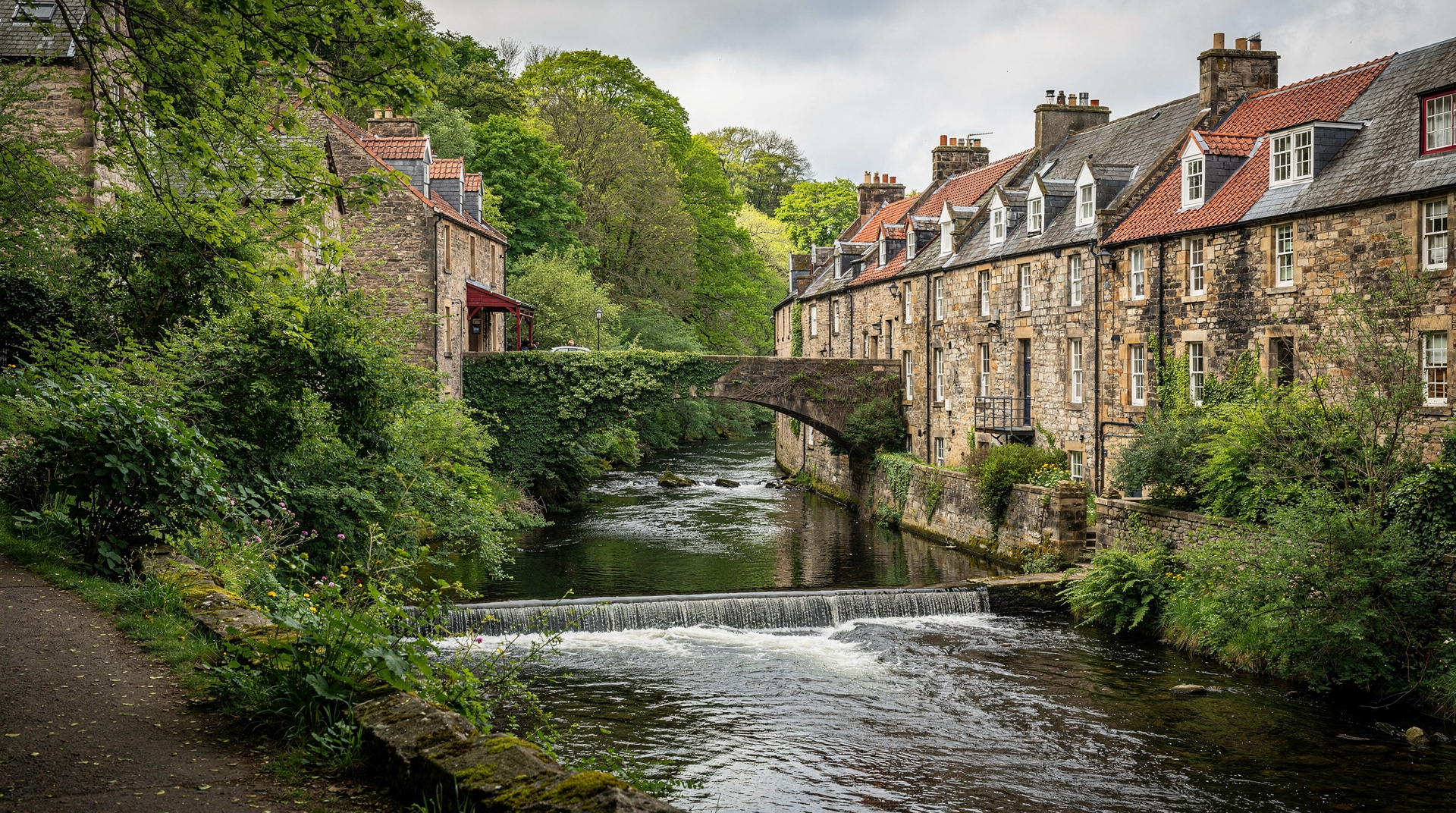
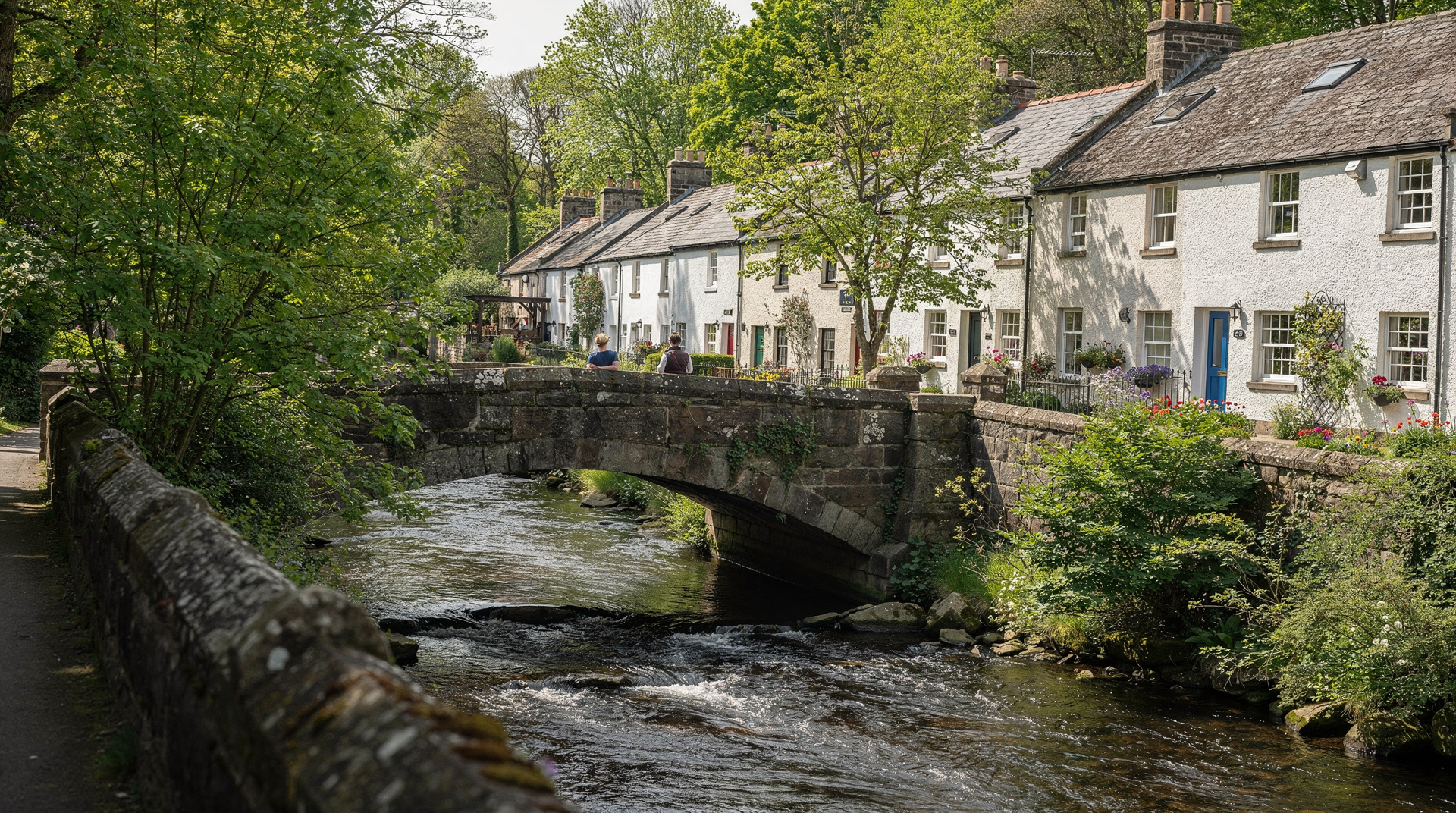
One of Edinburgh’s most rewarding walks connects the New Town to Dean Village to Stockbridge and ultimately down to Leith, following the Water of Leith — a small river that flows through the northern part of the city. The Dean Village section is particularly remarkable: a former milling village preserved in a steep-sided valley below the Dean Bridge, looking like it belongs in a different century from the Georgian streets directly above it.
The walk from Charlotte Square to Dean Village takes about 30 minutes on foot. From Dean Village to Stockbridge adds another 20 minutes. The full walk from the New Town to Leith’s Shore takes about 90 minutes at a leisurely pace and covers some of Edinburgh’s most diverse and least-visited terrain.
See the Dean Village guide for specifics on the village and the walk.
The hidden New Town: beyond Princes Street
Most visitors who spend time in the New Town do so on Princes Street — which is the commercial and shopping end of the Georgian development and arguably the least interesting part of it. The real New Town is north of George Street, in the quieter residential streets that James Craig’s plan laid out: Howe Street, Northumberland Street, Cumberland Street, and the lanes between them.
These streets have the New Town’s best independent shops (Thistle Street Lane has several), its best restaurants (the Stockbridge end has excellent options within reach), and its most complete Georgian streetscapes. Walking north from Princes Street through the grid rather than east-west along it gives a completely different picture of what the New Town is.
Where Old Town and New Town genuinely meet
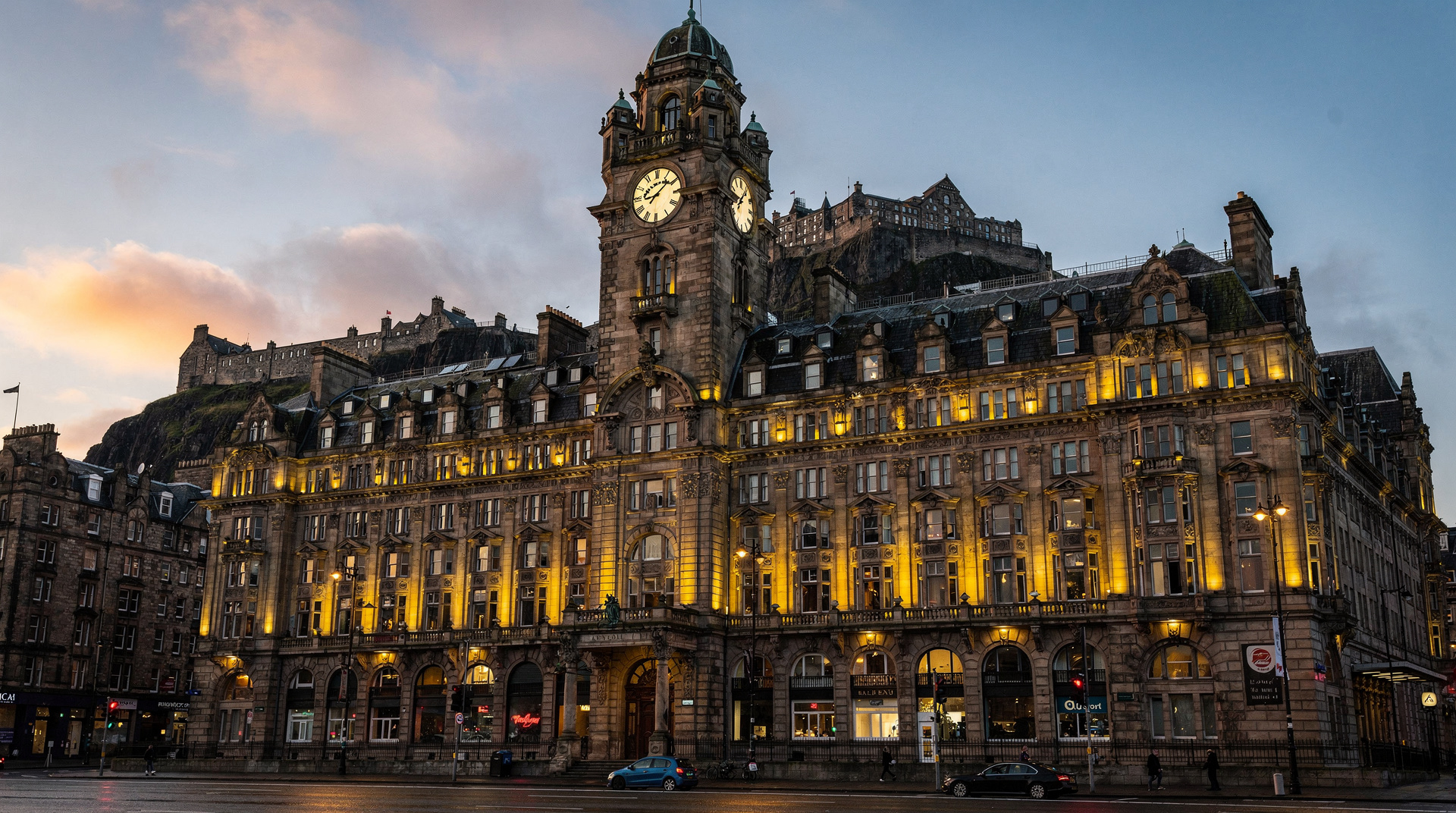
Princes Street Gardens — the valley between the two areas, where the Nor’ Loch once sat — is the most direct intersection. Walking from the Old Town to the New Town via the Mound (the artificial causeway across the valley built from the earth excavated during New Town construction) literally takes you through the geological and social divide. The view from the Mound looking east over the gardens, with the castle rock on one side and the Georgian skyline on the other, is one of Edinburgh’s most distinctive urban vistas.
The Scott Monument on Princes Street — a 61-metre Gothic tower commemorating Walter Scott, with 287 steps to the top (see the current price on the official Culture Edinburgh site) — sits on the New Town side of the Gardens but faces the Old Town. The view from the top, looking south into the closes and ridge of the Old Town while standing in the middle of Georgian Edinburgh, captures the physical relationship between the two areas better than any ground-level vantage point.
Photography: which area suits which light
Photographers often find the two areas need different approaches. The Old Town’s dramatic verticality and narrow closes reward late afternoon and evening light, when shadows in the closes deepen and the castle catches the last sun above the rooftops — the view from the Grassmarket looking up at the castle, or from the Vennel steps, are among Edinburgh’s most photographed compositions for good reason.
The New Town’s wide, symmetrical streets suit a different kind of image: the long, straight vistas down Great King Street or Howe Street work best with soft, even light, either early morning before traffic picks up or during golden hour when the Georgian sandstone takes on a warm tone the same stone looks flat and grey under harsh midday sun. The Edinburgh photography spots guide covers specific viewpoints in both areas in more depth.
Nightlife: another genuine difference
The two areas diverge as sharply after dark as they do architecturally. The Old Town — particularly the Cowgate and Grassmarket — is Edinburgh’s dense nightlife core: pubs, clubs, and late bars packed into the vaults and closes, loud and lively most nights of the week and genuinely raucous during the Fringe.
The New Town’s evening character is quieter and more restaurant-and-cocktail-bar oriented — George Street and the streets around it have a more polished, dinner-and-drinks scene rather than a late-night crawl. Neither is objectively better; the choice depends on what kind of evening you want. See the Grassmarket and Cowgate nightlife guide for the Old Town side of this and the best bars in Edinburgh guide for New Town options.
Shopping: Royal Mile souvenirs vs New Town style
Shopping is one of the clearest practical differences between the two areas. The Royal Mile’s shopfronts are dominated by tartan, whisky, and shortbread aimed squarely at first-time visitors — see the Royal Mile shopping guide on what to avoid for the specifics of navigating it without overpaying.
The New Town, by contrast, has Edinburgh’s strongest concentration of independent boutiques, particularly on Thistle Street and William Street, alongside the mainstream retail on Princes Street and Multrees Walk. For visitors who want to actually buy something Scottish-made rather than mass-produced tourist tartan, the New Town’s independents are consistently the better source. The Edinburgh shopping guide covers both areas together.
Which area to choose for a first Edinburgh visit
If forced to pick one area to prioritise on a short first visit, the honest answer remains the Old Town — it holds the castle, the Royal Mile’s genuine historic buildings, Greyfriars, and the closest concentration of must-see sights within a compact area. But treating the New Town as optional is a mistake many first-timers make and regret: even a single afternoon walking Charlotte Square, Heriot Row, and Circus Lane gives a completely different, equally valid picture of what Edinburgh is. The first-time visitor guide and the how many days in Edinburgh guide both help calibrate how much time to allocate to each area based on your total trip length.
Frequently asked questions about Edinburgh Old Town and New Town
Which is better for walking: Old Town or New Town?
New Town is physically easier — flatter, wider pavements, less cobblestone. Old Town is more atmospheric but genuinely steep and cobbled in places. Both require comfortable walking shoes. For visitors with mobility considerations, New Town is significantly more accessible, while the Old Town can be challenging in areas.
Is the Royal Mile the best place to see Edinburgh?
Not exactly. The Royal Mile is an important spine through the Old Town and contains several genuinely significant buildings (St Giles’ Cathedral, the Scottish Parliament, the start of the closes). But the best of Edinburgh is in the closes and wynds off the main street, the New Town’s Georgian grid, and the neighbourhoods of Stockbridge and Leith that most short-stay visitors never reach. See the Old Town history guide for what makes the area interesting beyond the tourist surface.
How long does it take to walk from Old Town to New Town?
From the Royal Mile to Princes Street is about 5 minutes on foot (via the Mound or the Lawnmarket steps). From the Royal Mile to Heriot Row (the heart of the Georgian New Town) is about 15-20 minutes walking via the Mound and then north through the Georgian grid. The two areas are genuinely very close together.
Are the closes in the Old Town open to the public?
Most closes are public rights of way and can be walked freely — they are not private. Some of the most famous closes (White Horse Close, Brodie’s Close, Advocates Close) are freely accessible during the day. Mary King’s Close, which is entirely below the Royal Mile, requires a ticket. The closes are safest and most atmospheric in daylight; at night some of the less-used ones should be treated with normal urban caution.
Which neighbourhood is better for accommodation?
Old Town for maximum proximity to the main sights, but noisier and often more expensive per square metre of room. New Town for quieter streets, more elegant surroundings, and often slightly better quality at equivalent prices. See the full accommodation guide for specifics.
Is the New Town worth visiting if I’m short on time?
Yes, even briefly. A single hour walking Charlotte Square, Heriot Row, and Circus Lane gives a genuinely different picture of Edinburgh from the Old Town’s medieval density, and it sits only 5-15 minutes’ walk from the Royal Mile. Skipping it entirely means missing half of what makes Edinburgh a UNESCO World Heritage city rather than just a castle-and-closes destination.
Which area has better nightlife?
They serve different moods rather than one being definitively “better.” The Old Town, especially the Cowgate and Grassmarket, is Edinburgh’s dense, loud nightlife core. The New Town’s George Street area is quieter and more restaurant-and-cocktail-bar oriented. Choose based on whether you want a lively pub crawl or a more polished evening out — see the Grassmarket and Cowgate nightlife guide for the Old Town option.
Top experiences
Bookable activities with verified prices and instant confirmation on GetYourGuide.