Royal Mile shopping: what to avoid (and what is worth buying)
Edinburgh: secrets of the Royal Mile walking tour
Is the Royal Mile worth shopping on?
Mostly no. The majority of Royal Mile shops sell identical tartan, whisky gift sets, and Highland cow merchandise at significant tourist premiums. Skip them. The exceptions: Cadenhead's Whisky Shop (genuine independent bottlings), Royal Mile Whiskies (excellent specialist selection), and I.J. Mellis Cheesemonger on nearby Victoria Street.
The honest picture: what the Royal Mile is for shoppers
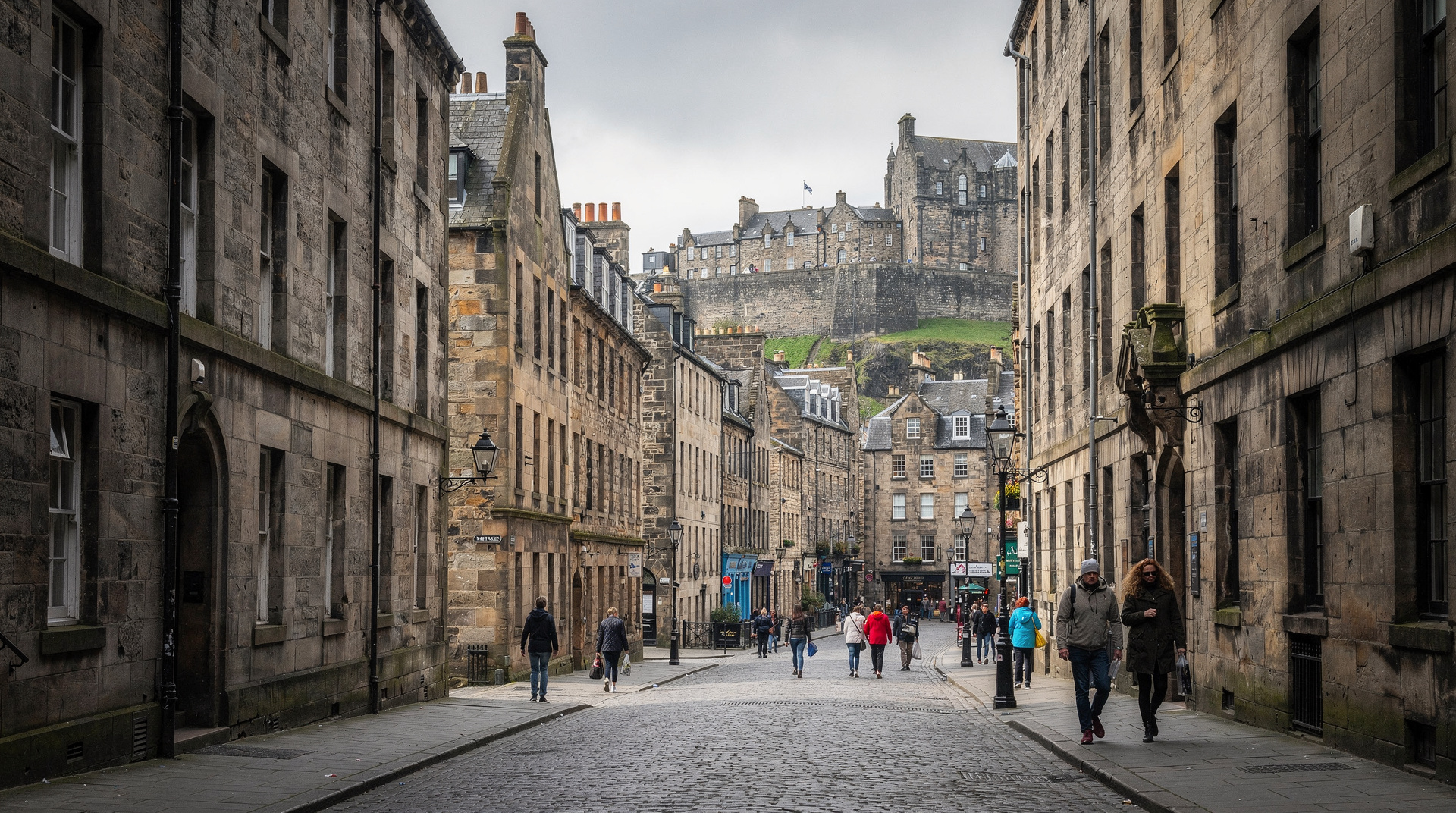
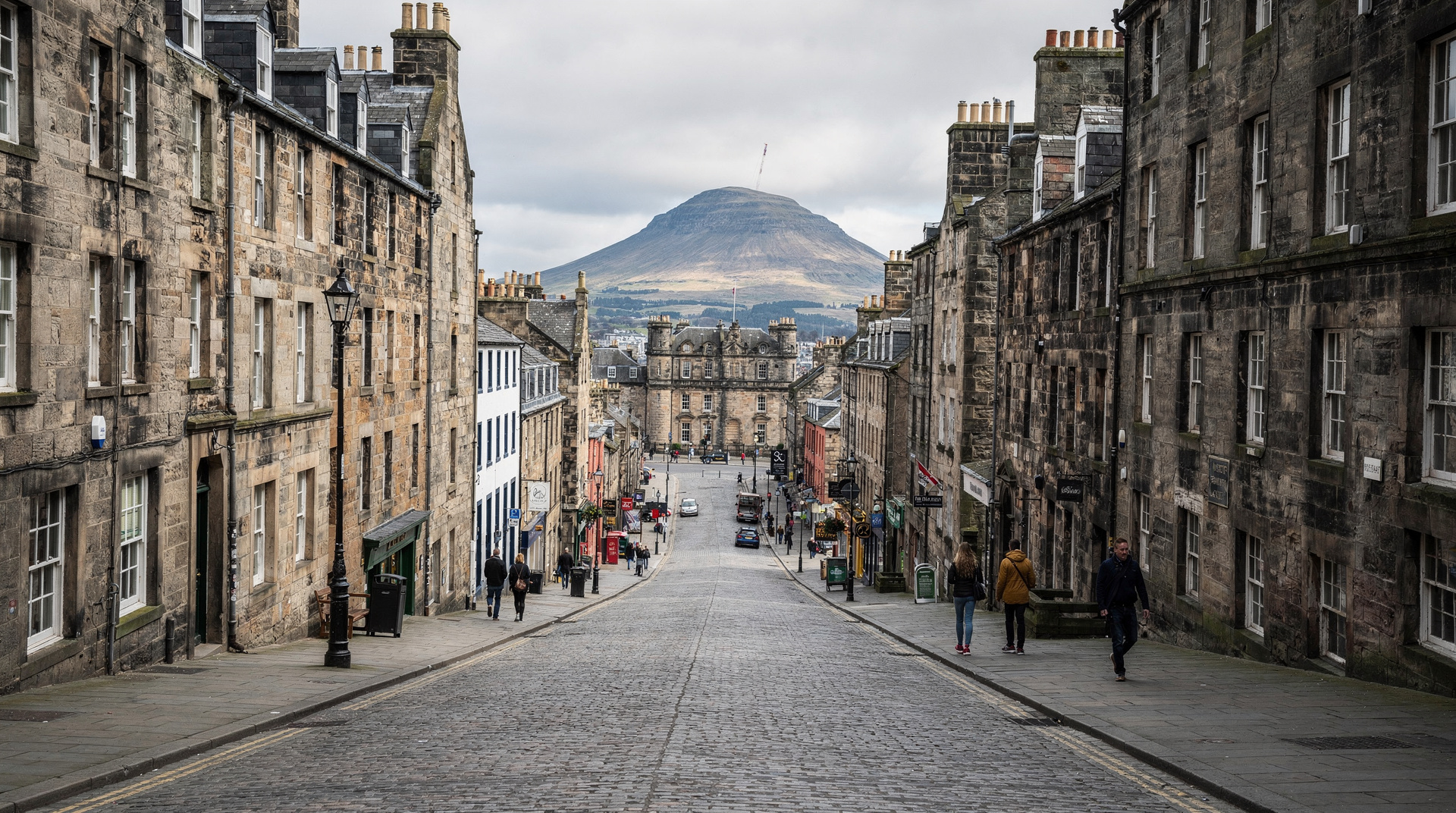
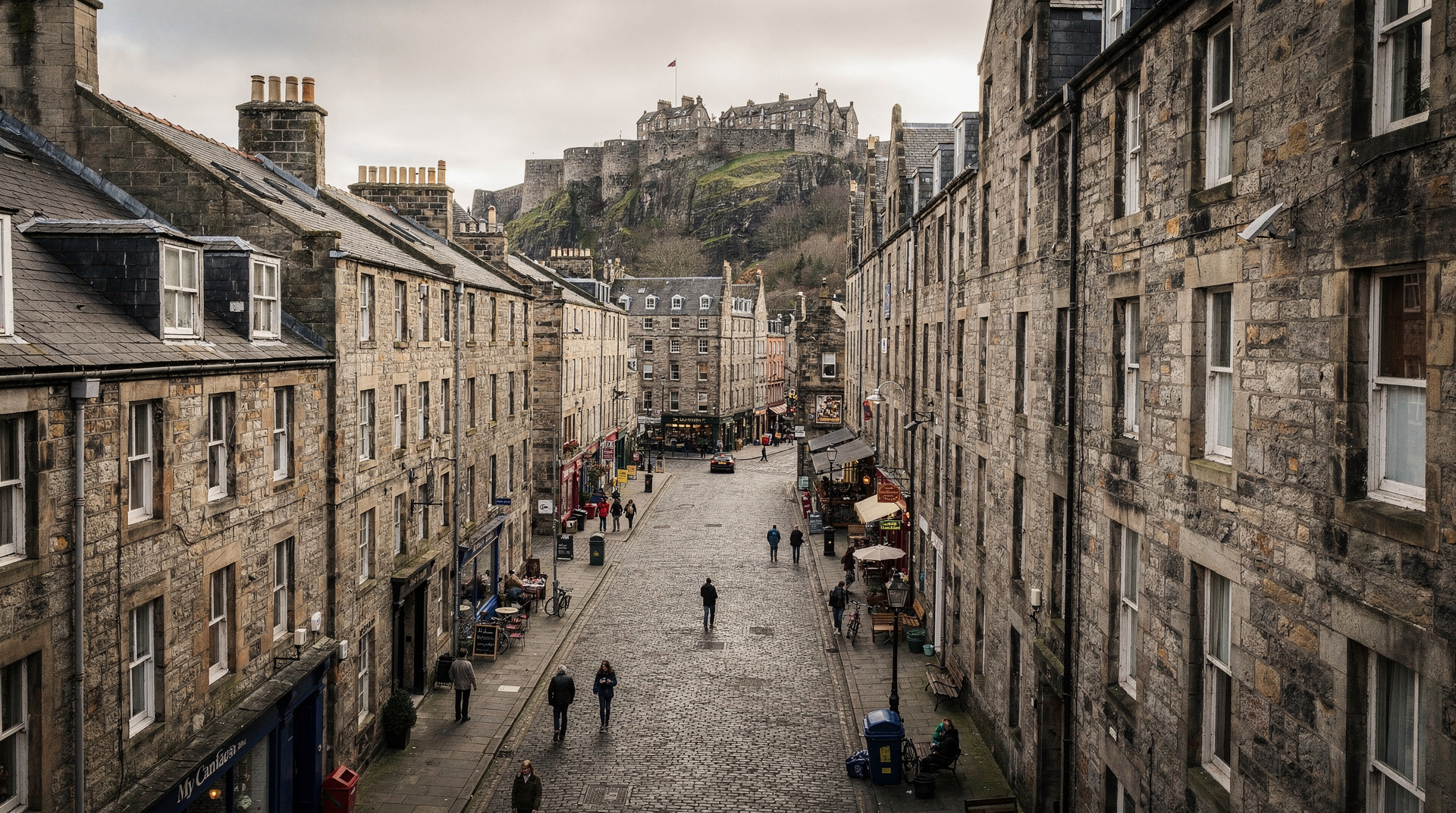
The Royal Mile runs from Edinburgh Castle to Holyrood Palace, a kilometre of one of the most historically significant streets in Scotland. It contains closes and courtyards that have been occupied for 500 years, churches with genuine medieval fabric, landmarks with deep connections to Scottish history. It also contains approximately 90 shops selling near-identical tartan merchandise, Highland-cow gifts, whisky chocolate, Nessie plush toys, and clan-crest keyring sets.
Being specific about what you should and should not buy here matters. Edinburgh’s tourist economy is substantial and the shops on the Royal Mile are optimised to extract money from visitors who have limited time and no local knowledge. This guide is written by people who have walked the street many times and are not paid by any of the retailers.
The bottom line: walk the Royal Mile for its history and atmosphere. Be very selective about where you spend money.
| Where | Castlehill to Canongate, plus nearby Victoria Street |
| Genuine buys | around £40-£80 wool tartan, £30+ Cadenhead’s whisky |
| Avoid | acrylic tartan, whisky gift-box sets, clan-finder trinkets |
| Best time to shop | weekday mornings, before tour groups arrive |
| Better alternative | Stockbridge, Victoria Street, Leith (15 minutes away) |
The tourist-trap pattern: what to watch for
The matching-tartan problem
There are approximately 30 shops on or immediately adjacent to the Royal Mile selling tartan products. In the summer of 2025, we counted four different shops within 150 metres of each other that were selling what appeared to be identical scarves, throws, and kilts at identical prices.
The products in many of these shops share a problem: the tartan is identified on the label as “100% acrylic” or a polyester-cotton blend rather than wool. Scottish tartan made from actual wool has a completely different texture, durability, and warmth from acrylic tartan. The acrylic version costs perhaps £4–£6 to produce and retails at £25–£45. The wool version is more expensive but is also a genuinely different product.
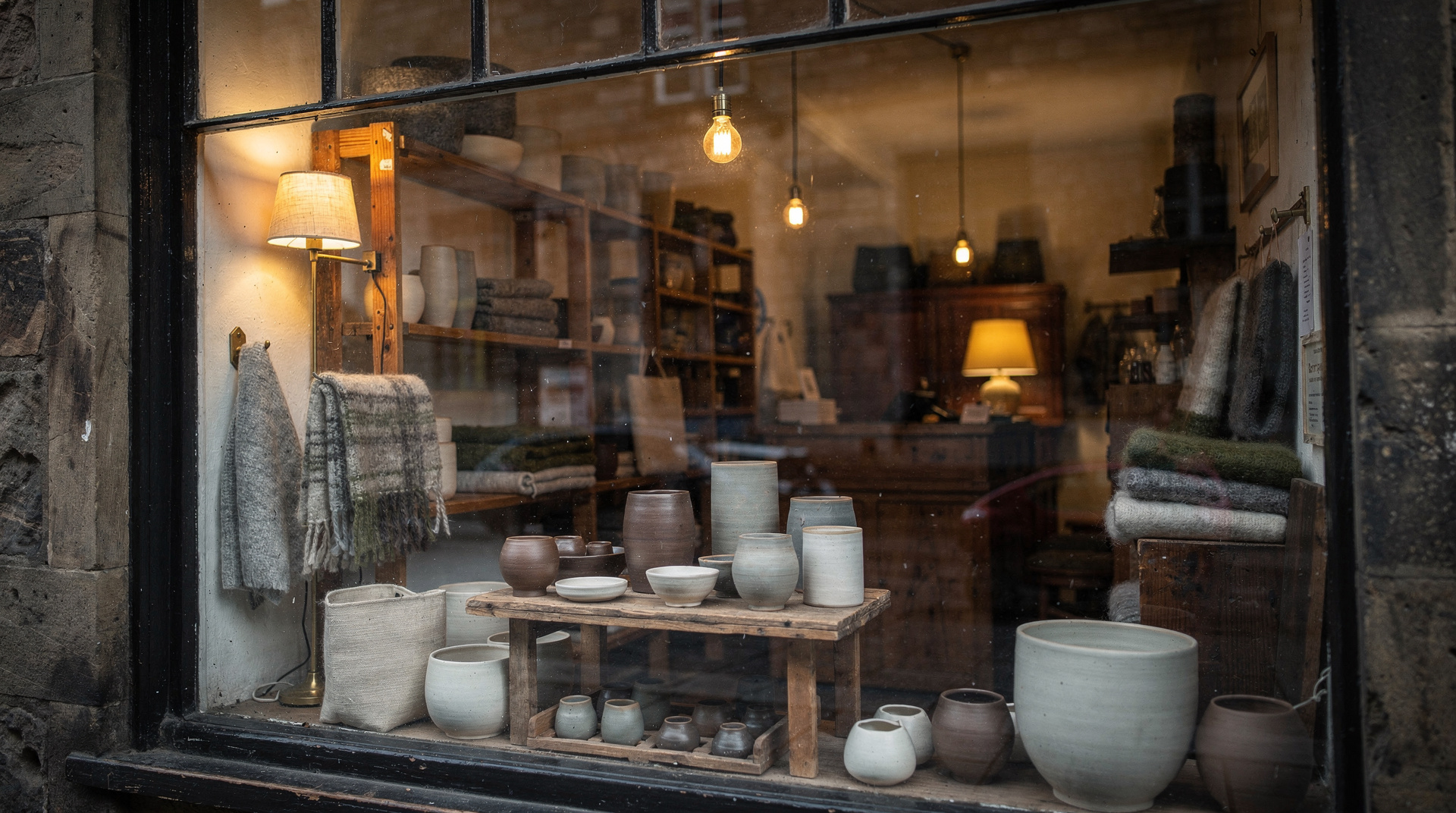
How to spot the difference: read the label for fibre content. Genuine wool tartan is labelled “100% wool” or “pure new wool.” It feels softer and heavier than acrylic. The price is higher — expect £40–£80 for a genuine wool tartan scarf — but you are getting something that will last for decades rather than a few washes.
The worst examples have “Made in Scotland” prominently displayed on the shop fascia while the products themselves have “Made in China” on the individual garment labels. The “Made in Scotland” refers to the shop, not the merchandise.
Whisky gift sets
The Royal Mile has around a dozen shops dedicated to whisky. Most of them sell: Famous Grouse, Johnnie Walker, Glenfiddich, and Glenlivet in standard, premium, and gift-box formats alongside flavoured whisky liqueurs, whisky-chocolate, whisky-marmalade, and whisky-shortbread combinations.
You will find these products in any supermarket in Scotland at substantially lower prices. You will find better and more interesting whisky at specialist retailers not located on the tourist corridor. The gift-box packaging adds £10–£20 to the price of a standard whisky with no improvement to the contents.
The exception: Cadenhead’s Whisky Shop at 172 Canongate and Royal Mile Whiskies at 379 High Street. Both stock genuine specialist selections and employ knowledgeable staff. Both represent real value compared to the generic gift-shop alternatives.
”Clan crest” and “family tartan” merchandise
The shops selling clan crests, family tartan finder services, and heraldic genealogy products represent a peculiar form of tourist-oriented mythology. The notion that every Scottish surname has a designated tartan associated with it, traceable to the Highland clan system, is largely a nineteenth-century invention — a romantic mythology that became commercially useful.
Some Scottish families genuinely do have clan connections and associated tartans. Most visitors looking up their surname in the clan tartan finder are being assigned a tartan from a much later date, often created specifically for retail purposes. The clan crest jewellery and framed clan history certificates are not fraudulent exactly, but they are not connected to genuine Scottish heritage in the way the marketing implies.
If genealogy or clan heritage is a genuine interest, the National Records of Scotland (Register House, Princes Street) is the authentic source for family history research. The ScotlandsPeople website gives access to genuine Scottish records.
Highland cattle merchandise
The fluffy Highland cattle (known as “coos” in Scotland) gift products — stuffed toys, calendars, mugs, tea towels — represent a benign category of tourist merchandise with no particular pretence of authenticity. If you want a small Highland-cow gift, the quality varies but none of it represents cultural misrepresentation. Budget accordingly: the same products are available in the Edinburgh Airport shops and in most Scottish supermarkets.
What is genuinely worth buying on the Royal Mile
Cadenhead’s Whisky Shop (172 Canongate)
Already mentioned: Scotland’s oldest independent bottler, selling single cask expressions bottled at natural strength directly from distilleries. This is the one whisky retail destination on the Royal Mile that serious whisky people recommend unreservedly. The selection is unlike anything in a generic tourist shop; the staff know their stock intimately.
Royal Mile Whiskies (379 High Street)
A genuinely specialist whisky retailer with a selection extending well beyond the standard supermarket range. Includes older vintages, small-producer expressions, and independent bottlings that make it a legitimate destination for whisky gifts. More convenient than Cadenhead’s for location (higher on the Mile, closer to the castle end); different in character (more retail-focused, less bottler-focused).
I.J. Mellis Cheesemonger (30a Victoria Street, seconds from the Grassmarket end of the Mile)
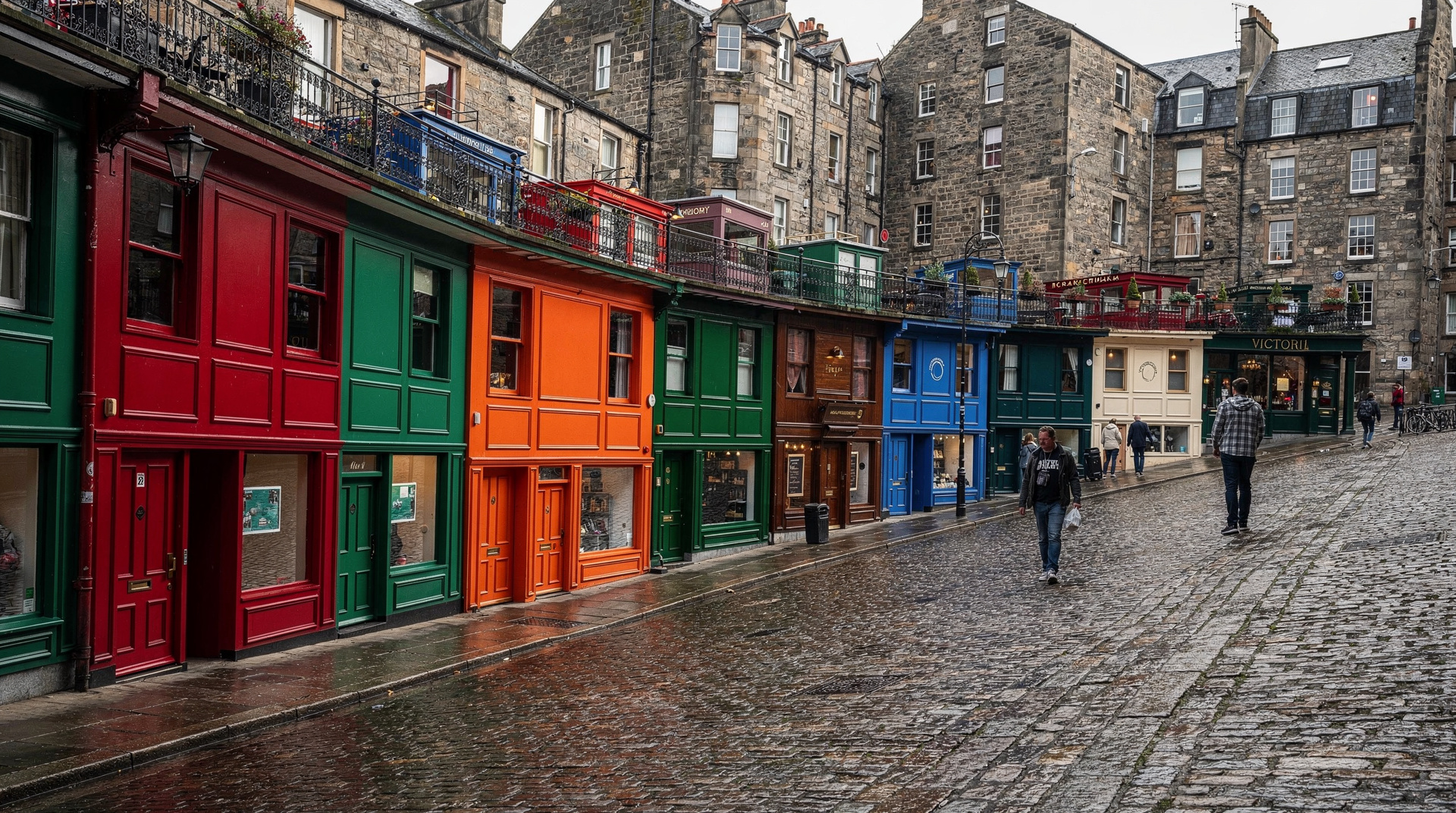
Technically Victoria Street rather than the Royal Mile itself, but close enough to include here. Scotland’s finest cheese shop with an exceptional range of Scottish and British cheeses. The Mull Cheddar, Anster, and Lanark Blue are all excellent and make good gifts that travel well when vacuum-packed.
Luckenbooth jewellery
The Luckenbooth brooch is a traditional Scottish piece of jewellery — a heart surmounted by a crown, historically a love token or a gift to a newborn. Genuine Luckenbooth brooches in silver or gold are made by Edinburgh silversmiths and represent authentic Scottish craft. Some Royal Mile jewellers sell genuine versions; look for hallmarked sterling silver and a maker’s mark. The tourist-shop versions in base metal with silver plating are obvious by their low weight and price.
Books and prints
Hamilton and Inches and several smaller bookshops and map shops on the Royal Mile sell antiquarian and historical prints of Edinburgh alongside the tourist guides. The quality of these varies but genuine antique Edinburgh prints and maps are a legitimate souvenir category and the Royal Mile is not a bad place to find them.
The Royal Mile beyond shopping: what is actually worth your time
This guide has focused on what to avoid in terms of spending money. But the Royal Mile itself — as a physical and historical space — is absolutely worth your time to walk.
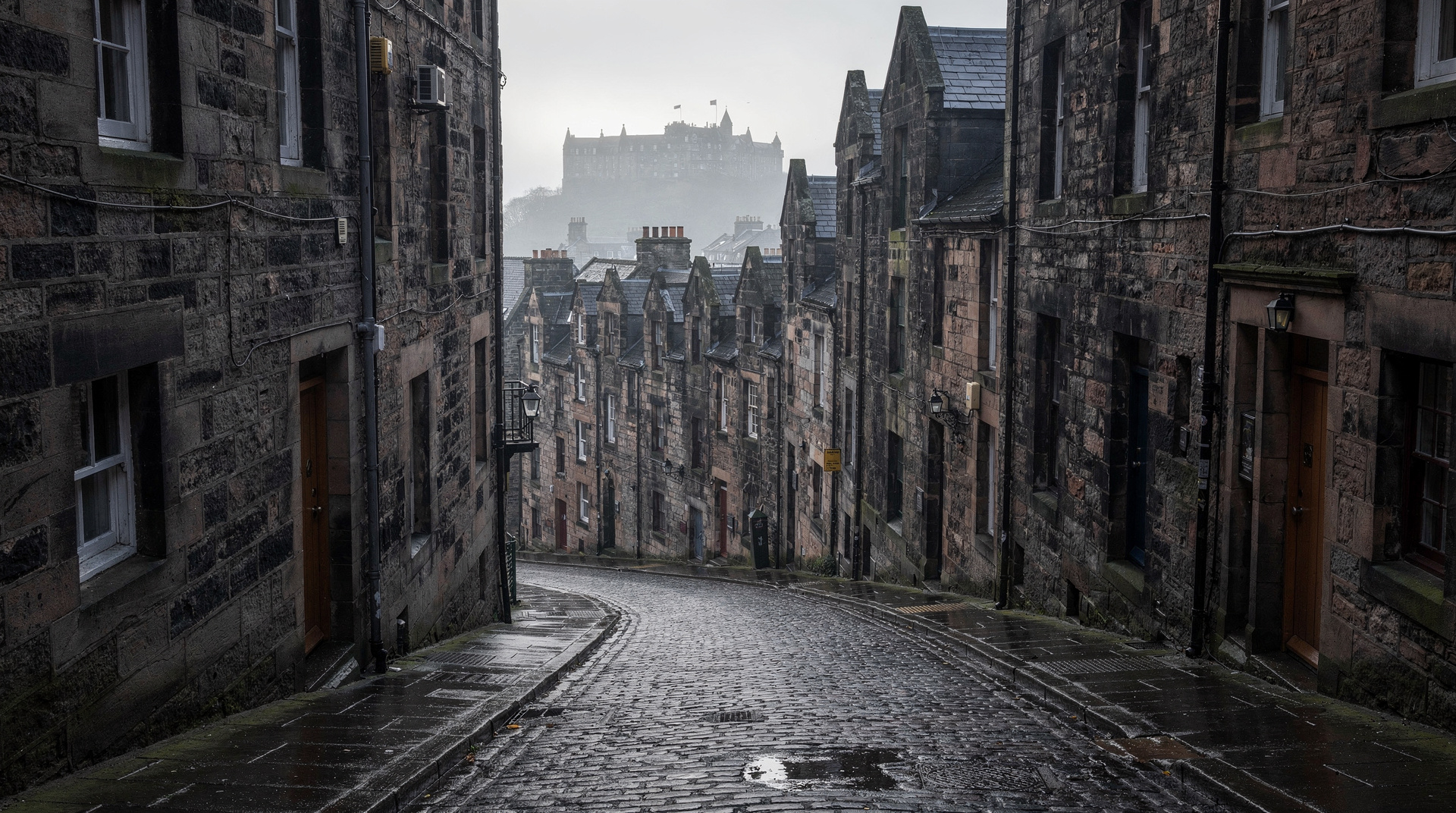
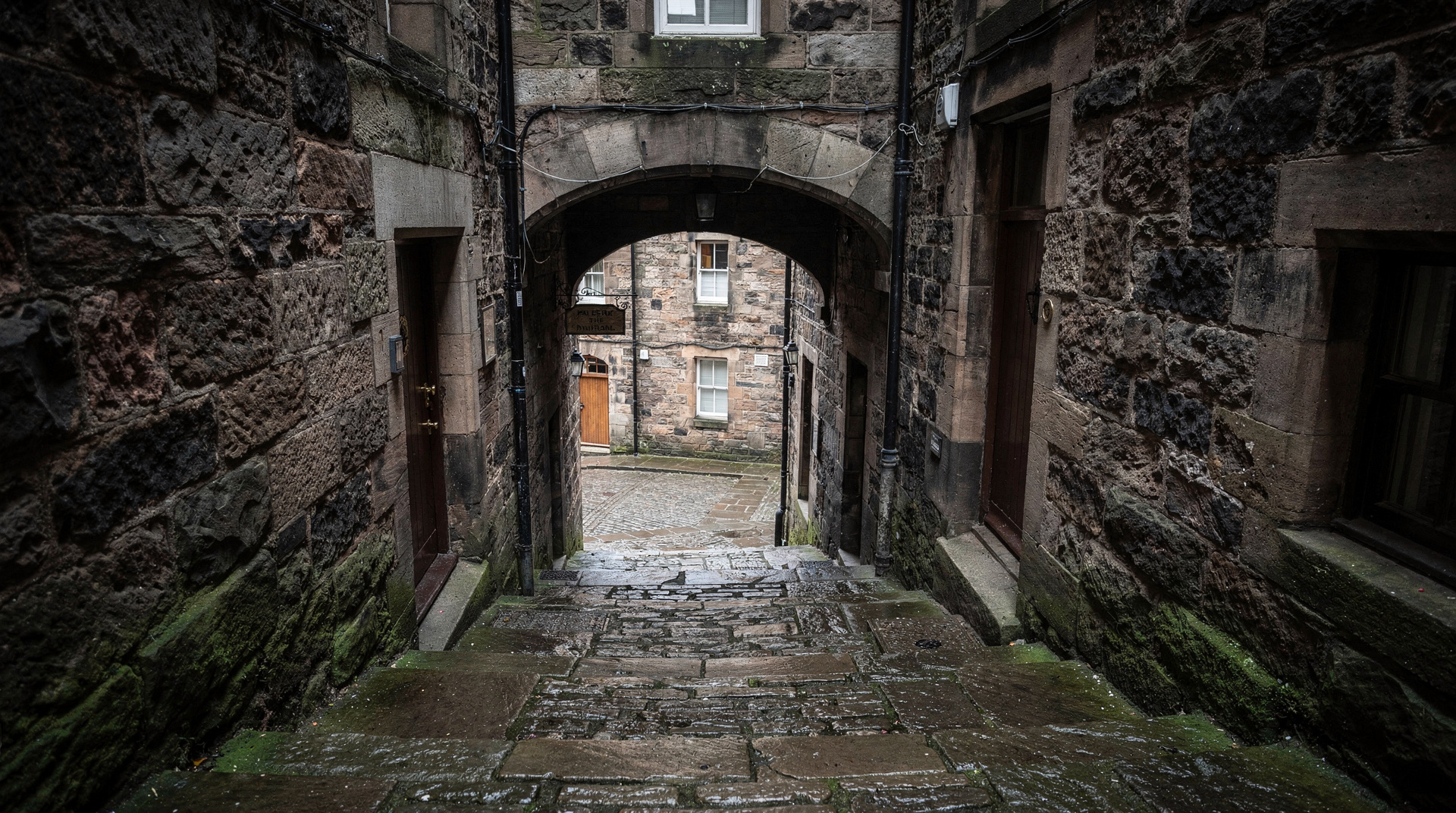
The closes that run off both sides of the Mile are some of Edinburgh’s most distinctive urban spaces. Advocates Close (on the north side, near St Giles’ Cathedral) connects the Royal Mile to the Cockburn Street level below through a narrow, steep staircase that feels genuinely medieval. Lady Stair’s Close (near the junction with the Mound) leads to the Writers’ Museum, a free museum dedicated to Robert Burns, Robert Louis Stevenson, and Sir Walter Scott that is one of Edinburgh’s most overlooked cultural attractions. Riddle’s Court (further west) contains a restored courtyard that represents Edinburgh town house architecture at its best.
St Giles’ Cathedral charges £12 for visitors aged 16 and over (free for under-16s and Scottish residents) and is architecturally significant — the Crown Steeple is a distinctive Edinburgh landmark, and the interior contains the Thistle Chapel, a remarkable piece of Edwardian Gothic craftsmanship completed in 1911. The St Giles’ Cathedral guide covers the history and what to look for inside.
The Real Mary King’s Close, below the City Chambers, is a tourist attraction worth considering: the preserved remains of a street and buildings that were built over in the seventeenth century and remained hidden for 300 years. It is commercial and theatrically presented, but the physical experience of the preserved underground spaces is genuinely interesting. The Real Mary King’s Close guide covers what you will see and whether it is worth the admission price.
What the Royal Mile tourist economy is doing
For visitors who want context for why the Royal Mile has become so heavily commercialised, the pattern is not specific to Edinburgh. Similar tourist-trap retail develops wherever there is a high-footfall historic street and a visitor base with disposable income and limited local knowledge: the area around Notre-Dame in Paris, certain parts of the Ramblas in Barcelona, large sections of central Amsterdam.
The Royal Mile’s particular version is shaped by the concentration of both the castle and Holyrood Palace at either end — both major paid attractions that funnel visitors into the street — and by the global popularity of Scottish themes (whisky, tartan, Hogwarts, Braveheart) that can be packaged into merchandise. The geography helps: the Royal Mile is the obvious and natural pedestrian route between the two major attractions, and there is no obvious alternative that maintains the same scenic quality.
The result is a street that is simultaneously one of the most historically interesting in Scotland and one of the most commercially aggressive in its tourism economy. Walking through it with this understanding makes the experience more interesting rather than less: you are watching a major piece of Edinburgh’s economic machine in operation.
Restaurants on the Royal Mile: the same warning applies
While this guide is about shopping, the same tourist-trap dynamics apply to restaurants. The restaurants with pavement menus and prominent tourist-tour logos immediately adjacent to Edinburgh Castle and on the main Royal Mile thoroughfare tend to serve mediocre food at premium prices. The honest guide to eating on the Royal Mile covers the restaurant situation in the same detail. For genuinely good food near the Old Town, the Grassmarket, Stockbridge, and Leith are the consistent recommendations.
The better food option in the immediate castle vicinity is the Scotch Whisky Experience’s Amber Restaurant, which is one of the few restaurants in the immediate castle area where the quality of both food and whisky justifies the location premium.
The honest shopping alternative: leave the Royal Mile
The full Edinburgh shopping guide covers the areas and shops that consistently offer better quality and value than the Royal Mile tourist circuit:
Stockbridge for food, independent boutiques, and Sunday market. Victoria Street for the independent shops that the Royal Mile aspires to be. Bruntsfield for neighbourhood retail without tourist premiums. Leith for food markets and an increasingly strong independent retail scene.
A 15-minute walk from the Royal Mile takes you to any of these areas. The shopping is better, the prices are lower, and the experience is more genuinely Edinburgh. The avoiding tartan tat shops guide goes deeper into spotting genuine wool and craft goods wherever you end up shopping, and the Royal Mile tourist traps guide covers the non-shopping traps — ghost tours, “genuine Scottish” photo ops, and overpriced attractions — that sit alongside the retail ones.
Whisky bars as a lower-commitment alternative to buying a bottle
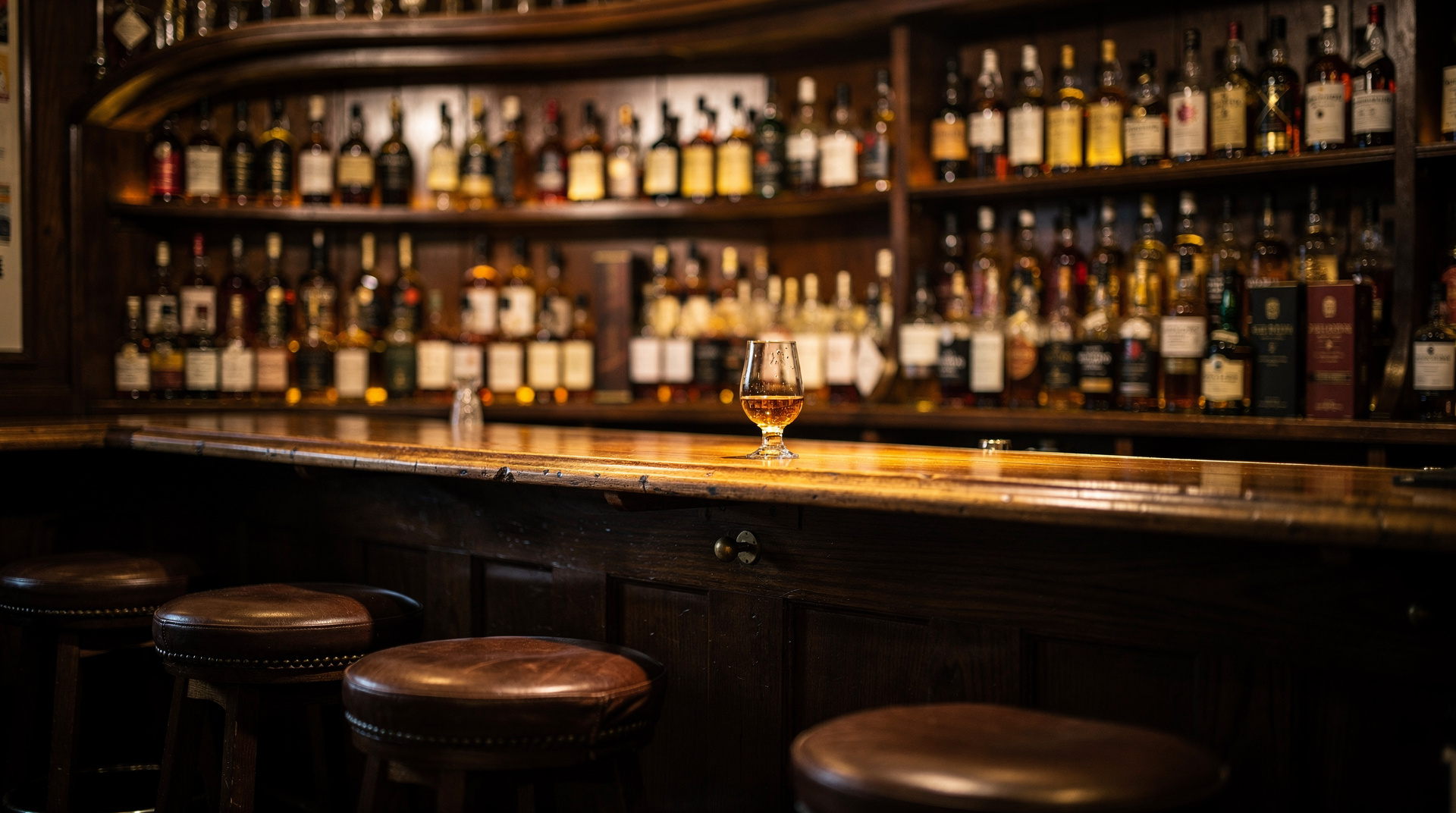
If you are not ready to commit to a bottle but want to taste something better than the standard supermarket range, Edinburgh’s specialist whisky bars are a genuinely good alternative to Royal Mile souvenir shopping. The best whisky bars in Edinburgh guide rounds up the venues where you can taste a range of independent bottlings by the dram before deciding whether a bottle is worth carrying home. It is also simply a better way to spend an evening than browsing gift-shop shelves, and several of the recommended bars are a short walk from the Royal Mile itself — see the Royal Mile guide for how to fit one into a walking route.
Restaurants on the Royal Mile: the same warning applies
While this guide is about shopping, the same tourist-trap dynamics apply to restaurants. The restaurants with pavement menus and prominent tourist-tour logos immediately adjacent to Edinburgh Castle and on the main Royal Mile thoroughfare tend to serve mediocre food at premium prices. The honest guide to eating on the Royal Mile covers the restaurant situation in the same detail. For genuinely good food near the Old Town, the Grassmarket, Stockbridge, and Leith are the consistent recommendations.
Organised Royal Mile walking tours: the good options
Walking the Royal Mile with a guide is a different proposition from shopping on it. The secrets of the Royal Mile walking tour covers the closes, the history, and the context that makes the street interesting — the kind of walk that helps you understand what you are looking at rather than spending money on merchandise. The Old Town walking tour covers a broader area that puts the Royal Mile in context.
Both are good investments if the Royal Mile history interests you. Neither will direct you toward the souvenir shops.
The economic geography of Royal Mile retail
Understanding why the Royal Mile has become so commercially exploitative requires understanding its economic geography. The street connects Edinburgh Castle (the most visited paid attraction in Scotland, with over two million visitors annually) to Holyrood Palace, and in doing so creates a captive audience of visitors who are already spending freely on entry tickets and are primed to buy souvenirs.
The economics for a Royal Mile retailer are clear: extremely high footfall, a visitor base with demonstrated willingness to spend money, and low price sensitivity because the typical visitor has no baseline to compare against (they do not shop in Edinburgh normally and will not return to price-compare). The result is that retail space on the Royal Mile commands premium rents that can only be sustained by high-margin product — tourist souvenirs at tourist prices.
The pattern is self-reinforcing. High rents select for retailers who can sustain them on tourist margins; this means generic souvenir shops because genuine specialist retailers (a working whisky retailer, a serious bookshop, a traditional craftsperson) cannot typically generate the per-square-foot revenue to justify the rents. The exceptions (Cadenhead’s, Royal Mile Whiskies) are notable precisely because they are exceptions to this economic logic.
This is not a phenomenon specific to Edinburgh. The same economic logic plays out on the Via Condotti in Rome, in the Marais district of Paris, and around Times Square in New York. The tourist areas of the most visited cities are almost uniformly overpriced because the tourist economy optimises for footfall rather than value. Edinburgh’s Royal Mile is no worse than the equivalent in other major European tourist cities; it is simply subject to the same pressures.
The difference in Edinburgh is that within a very short walk — down through the closes to the Grassmarket, along Victoria Street, or down the Canongate to Leith — you reach a different economic zone with genuinely local businesses and prices that reflect local rather than tourist purchasing power.
How to buy whisky as a genuine gift
Since whisky is the most common purchase intention for visitors on the Royal Mile, a specific guide to buying it well is worth including.
The hierarchy of whisky gift quality, from best to most generic:
Best: An independent bottling from Cadenhead’s — a single cask expression, natural strength, from a specific distillery with a specific story. The recipient is getting something genuinely unusual that probably cannot be found outside Edinburgh.
Very good: A specialist expression from Royal Mile Whiskies — an aged release, a distillery exclusive, or a small-producer expression chosen by staff who know the category.
Good: A distillery shop purchase from a visit to Glenkinchie or another distillery near Edinburgh — a distillery-exclusive expression that comes with the story of having been bought at the source.
Average: A standard retail expression (Glenfiddich 12, Glenlivet 15) in retail packaging from any reputable Edinburgh off-licence or supermarket. The quality is good but there is nothing specifically Edinburgh about it.
Avoid: Generic gift-set whisky from Royal Mile souvenir shops — a standard expression in unnecessarily ornate packaging at a significant premium.
The bottom line: spend £10 more at Cadenhead’s than you would at a tourist shop and you will give a significantly better gift and feel better about the purchase.
Shipping and carrying purchases home
If you buy a bottle of whisky at Cadenhead’s or Royal Mile Whiskies, both shops are used to international visitors and can advise on carrying it in checked luggage (wrap it well; a whisky-specific protective sleeve, sold in most whisky shops, is a worthwhile few pounds). Some specialist retailers on and near the Royal Mile can also arrange shipping for larger or fragile purchases, though shipping costs for a single bottle rarely make sense compared to simply packing it carefully. For wool textiles and Harris Tweed, weight rather than fragility is the main packing concern — a good tweed jacket or heavy blanket adds real bulk to a suitcase, so factor that into how much you buy if you are travelling with hand luggage only.
Shopping during festival season and Christmas
The Royal Mile’s retail character shifts with the calendar. During August’s Fringe and Tattoo season, footfall multiplies and even the generic souvenir shops do brisk trade, but service quality at the smaller specialist shops can suffer under the volume — Cadenhead’s and Royal Mile Whiskies in particular can be genuinely busy, so allow time if you want unhurried advice from staff.
In December, the wider Old Town shifts toward Christmas markets rather than Royal Mile retail specifically; the Edinburgh Christmas markets guide covers the seasonal stalls, which sell a different (and often more interesting) range of crafts and food than the year-round Royal Mile shopfronts. Quieter months — spring and autumn weekdays — are consistently the best time to shop the Royal Mile itself without crowds pushing you past the shops you actually wanted to browse.
Frequently asked questions about Royal Mile shopping
Is there anything unique to buy on the Royal Mile?
Yes: Cadenhead’s whisky (genuinely unique independent bottlings), genuine Luckenbooth brooches from quality jewellers, and potentially antique prints or maps. Everything else is available elsewhere in Edinburgh at lower prices or better quality.
Are the whisky shops on the Royal Mile overpriced?
The generic tourist-shop whisky (gift sets, flavoured whisky liqueurs, standard distillery expressions in fancy packaging) is more expensive on the Royal Mile than in supermarkets or specialist retailers. Cadenhead’s and Royal Mile Whiskies are exceptions where the prices reflect the product’s actual quality and rarity.
How do I identify genuine Harris Tweed?
Look for the Orb Mark certification symbol — a globe with a Maltese cross and the words “Harris Tweed” — on a label attached to the fabric. This is the legal trademark of the Harris Tweed Authority and guarantees the fabric was handwoven in the Outer Hebrides. Without this mark, it is not Harris Tweed regardless of what the shop sign says.
Are the clan tartan shops worth visiting?
If you have genuine Scottish ancestry and clan connection that you want to explore, Clan Armstrong Trust, the Scottish Tartans Authority, and the National Records of Scotland are more reliable sources than the tourist-shop clan-finder services. If you want tartan as an aesthetic souvenir, look for wool rather than acrylic and consider the quality of the weave before the claimed ancestry.
What is the best souvenir to buy in Edinburgh?
A bottle of whisky from Cadenhead’s or Royal Mile Whiskies, bought with the guidance of knowledgeable staff. It represents genuinely what Scotland does uniquely well, it travels, and it will be drunk with pleasure rather than displayed on a shelf gathering dust. For non-drinkers: Scottish shortbread from Walkers, Scottish cheese vacuum-packed from Mellis, or a quality wool textile from a legitimate Scottish producer.
Do prices vary much between shops selling the same souvenirs?
Surprisingly little, given how many shops sell near-identical stock. Generic tartan and gift-shop whisky are priced within a narrow band across the whole street, since most of these shops source from the same handful of wholesalers. The exceptions are the specialist shops — Cadenhead’s, Royal Mile Whiskies, I.J. Mellis — where price differences reflect genuinely different, better-sourced products rather than the same goods marked up differently. If a price looks noticeably lower than its neighbours for what appears to be the same tartan or whisky gift set, check the fibre content or bottle size closely before assuming it is a bargain — it is more often a smaller size or lower-grade material than a genuine discount.
Is it worth shopping on the Royal Mile at all, or should I skip it entirely?
Walk it for the history, but treat any shopping there as opportunistic rather than planned. If Cadenhead’s or Royal Mile Whiskies happens to be on your route and whisky interests you, stop in. For everything else — clothing, general souvenirs, gifts — the Edinburgh shopping guide will point you toward better value a short walk away.
Top experiences
Bookable activities with verified prices and instant confirmation on GetYourGuide.