The Real Mary King's Close: complete visitor guide
Edinburgh: the Real Mary King's Close guided tour
Is the Real Mary King's Close worth visiting?
Yes, for most visitors — it is a genuinely unique underground attraction with excellent guided tours and well-preserved historical spaces. At around £19 per adult, it is slightly expensive but delivers strong value. Book in advance: it sells out weeks ahead in summer. Allow 75 minutes for the tour.
Edinburgh’s buried streets and why they matter
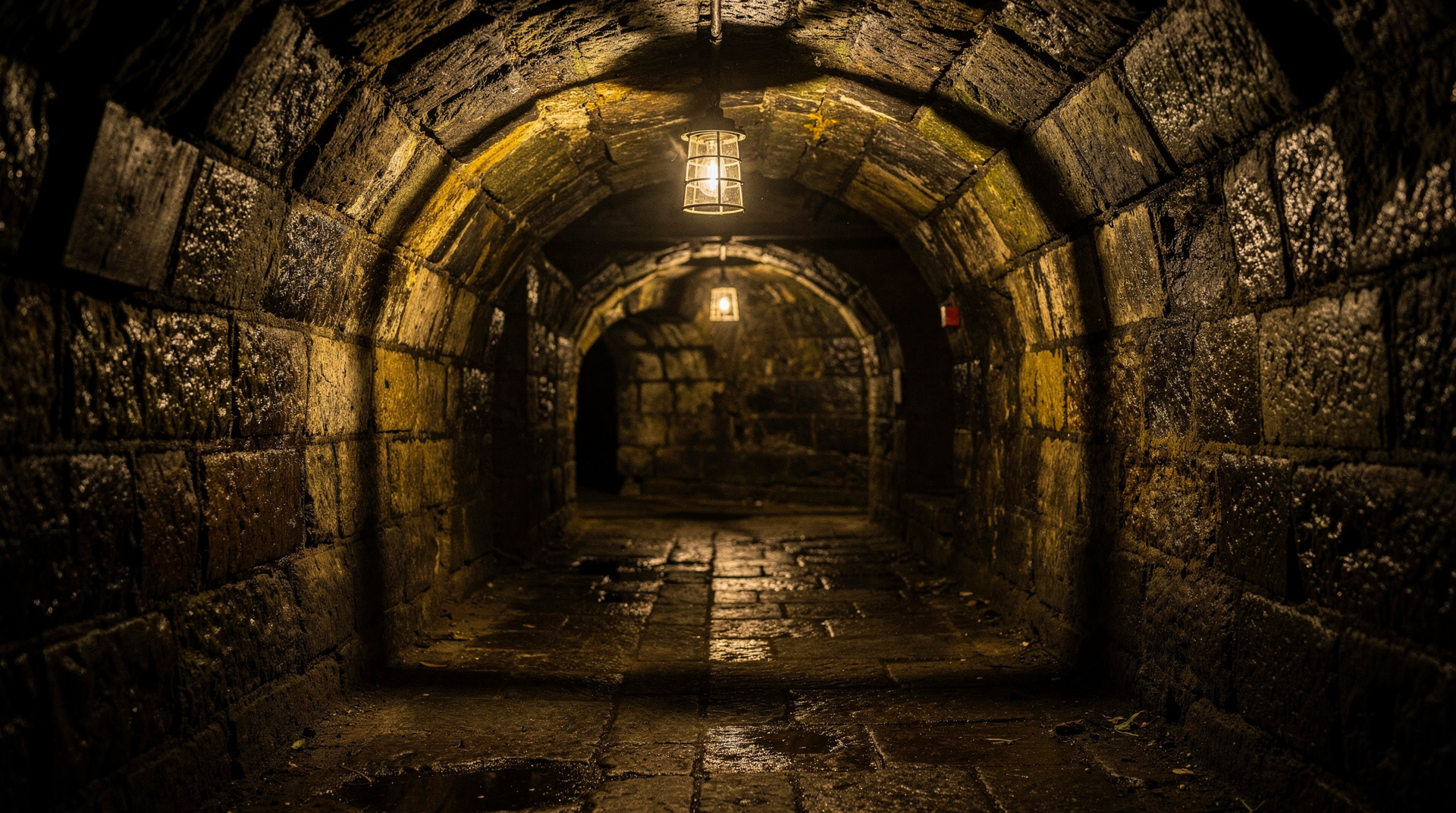
Beneath the Royal Mile, preserved within the foundations of the building now known as the City Chambers, lies one of Edinburgh’s most extraordinary secrets: a network of medieval streets, sealed off in the seventeenth century when the city built over them, and preserved in near-original condition for nearly three hundred years. This is the Real Mary King’s Close, and it represents a form of accidental time capsule found almost nowhere else in Europe.
The story begins with Edinburgh’s chronic housing shortage. By the early seventeenth century, the Old Town was already vastly overcrowded, its narrow closes packed with tenements rising seven or eight storeys. When the city decided to build a new Royal Exchange (now the City Chambers) in the 1750s, the solution to the steep slope of the site was to incorporate the existing street-level buildings into the foundations — sealing off the lower floors and building on top. The closes — Mary King’s Close, Warriston’s Close, and several others — became a subterranean layer of the city.
What makes this remarkable is not just the preservation, but the quality of it. Unlike the South Bridge vaults, which were purpose-built and relatively barren, Mary King’s Close preserves actual rooms, actual fireplaces, actual domestic spaces that were inhabited and then simply sealed. The texture of seventeenth-century Edinburgh life is embedded in the stone.
| Where | Royal Mile, entrance at 2 Warriston’s Close |
| Cost | Around £19 adult (2026) |
| Time needed | 75-minute guided tour |
| Booking | Strongly recommended — sells out weeks ahead in August |
| Best time | Weekday mornings for shorter queues |
What the tour covers
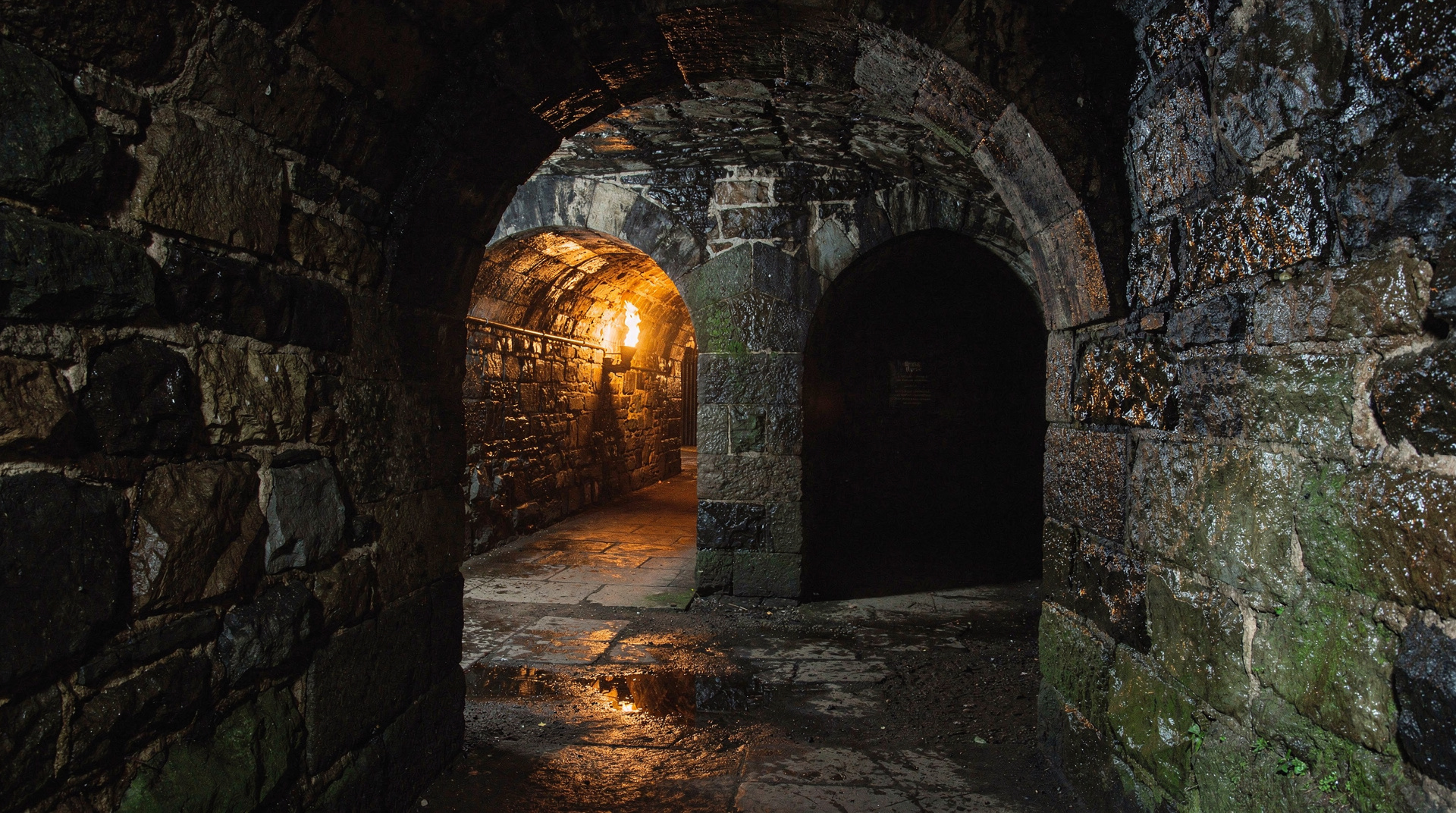
The Real Mary King’s Close guided tour runs approximately 75 minutes and is entirely guided — there is no self-guided option. Groups of around fifteen people are taken by a costumed guide through the preserved sections of the close, including:
The close itself: The narrow medieval street, still at its original floor level, with evidence of the buildings that once fronted it. The guide explains the social geography of who lived where — the higher your floor, the higher your social status, which was the opposite of modern apartment logic and a direct consequence of the smell rising from the street below.
Domestic rooms: Several preserved rooms from the sealed-off buildings, including one with surviving plasterwork and a hearth that would have been used for both heating and cooking. These spaces communicate the scale of seventeenth-century Edinburgh life — the rooms are small, dark, and functional in a way that no amount of museum interpretation can fully convey.
The plague connection: Mary King’s Close is closely associated with Edinburgh’s plague outbreaks, particularly the 1645 epidemic that devastated the city. The guide covers the plague history in detail, including the controversy over whether the close was sealed with its inhabitants still inside — a story that has been largely debunked by historians but which continues to circulate.
The ghost of Annie: The most famous paranormal aspect of the close is a small child’s ghost named Annie, whose story dates from a visit by Japanese psychic Aiko Gibo in 1992. Gibo reported sensing a distressed child who had lost her doll, and left a toy doll in the room. Since then, visitors have added hundreds of dolls, toys, and trinkets to a corner of the room, creating an unexpectedly affecting installation that is simultaneously superstitious and touching.
For visitors who want to combine their Mary King’s Close visit with a broader Old Town underground experience, the Mary King’s Close tour with afternoon tea adds a post-tour afternoon tea element that makes for a more extended experience — useful if you want to linger in the area after your tour.
The honest assessment
Mary King’s Close is one of Edinburgh’s better attractions and one of the few underground experiences in the city that is run with genuine curatorial care. The guided tours are consistently rated as informative and entertaining, and the preservation of the original spaces is authentically impressive.
However, a few honest caveats are worth noting:
It is polished in a way the South Bridge vaults are not. Mary King’s Close has been carefully managed since 2003 and the visitor experience is professional and well-lit. If you are expecting the raw, damp atmosphere of the South Bridge vaults, you may find it more museum-like than anticipated. This is not a criticism — it is a difference in character.
The plague story is partly mythology. The narrative that Mary King’s Close was sealed with people inside during the plague has been thoroughly challenged by historians, who point out that the records do not support it. The guided tours are generally honest about this ambiguity, but the plague angle has been so central to the attraction’s marketing that some visitors feel misled if they research it afterwards.
The ghost content is mild. If you are booking Mary King’s Close expecting an intense ghost experience, you will be disappointed. The tour has a haunted history angle, but it is primarily a history experience. The South Bridge vaults terror tour is the right choice if scares are the priority.
How to book and what to expect on arrival
Online booking is strongly recommended and often essential — Mary King’s Close sells out weeks ahead during August and can book out days ahead throughout the summer. Walk-up tickets are available if tours have not sold out, but this is not a reliable strategy in season.
Meeting point: The entrance is on the Royal Mile, through the archway at Warriston’s Close (the address is 2 Warriston’s Close, High Street, Edinburgh). It is easy to miss — look for the signage on the Royal Mile itself rather than trying to find a standalone building. The entrance is not particularly prominent.
Tour times: Tours run throughout the day from approximately 10am to 9pm (later in summer). The evening tours (after 5pm) are slightly more atmospheric as the light changes, but the content is identical to daytime tours.
Photography: Photography is permitted throughout the tour, but the lighting is low and flash is not always helpful. A phone camera is sufficient. A fast lens or a phone with a good low-light mode will get noticeably better results than flash photography, which tends to flatten the atmosphere the low lighting is designed to create.
Accessibility: The tour involves uneven surfaces, some low ceilings, and steps. Wheelchair access is not available for the full tour due to the historic structure. Contact the attraction directly if you have specific accessibility requirements — they can sometimes accommodate individual needs.
Group size and pacing: Tours run with groups of around fifteen visitors, small enough that the costumed guide can address individual questions without the tour dragging, but large enough that you should expect to be moving as a unit rather than lingering independently in any one room. If you want more time in a particular space — the doll-filled Annie room is the one most visitors want to pause in — ask the guide directly; most will allow a brief extra moment if the schedule permits.
Comparing Mary King’s Close to the South Bridge vaults
Both are underground Edinburgh experiences, but they are quite different in character:
| Mary King’s Close | South Bridge vaults | |
|---|---|---|
| Character | Museum-quality, polished | Raw, atmospheric |
| Historical significance | Original medieval street | Purpose-built storage chambers |
| Ghost focus | Mild, incidental | Central to several tours |
| Guided format | Costumed actor-guides | Standard guides (most operators) |
| Suitable for children | Yes, 10+ | Depends on tour type |
| Price | ~£19 | £16–£22 depending on tour |
Both are worth visiting if dark tourism and underground Edinburgh are priorities. If you can only do one: Mary King’s Close is better for those who prioritise historical authenticity and accessible storytelling; the South Bridge vaults are better for those who want raw atmosphere and the genuine scare experience.
The archaeology of Mary King’s Close
What makes Mary King’s Close significant beyond its popular legend is the quality of the archaeological and documentary record. The streets were sealed in the 1750s rather than demolished, which means the physical fabric of the seventeenth-century buildings was preserved rather than removed. Over several decades of managed visitor access since the 1990s, the archaeological work in the Close has revealed a remarkably detailed picture of how people lived in early modern Edinburgh.
The surviving hearths, for instance, tell us about cooking and heating practices — the hearths in Mary King’s Close are not decorative but functional, and the deposits around them give archaeologists information about what was burned and what was cooked. The floor levels show evidence of multiple occupancy phases, with different families leaving different deposits over time. The plasterwork in the better-preserved rooms shows evidence of lime washing and simple decoration — these were not bare stone interiors but finished domestic spaces.
The documentary record is equally valuable. The Edinburgh town council records from the seventeenth century contain references to the residents of Mary King’s Close — their occupations, their rental agreements, their disputes and legal proceedings. This means we know more about specific people who lived in these streets than in almost any comparable preserved urban environment of the period. Mary King herself is documented: a merchant widow who held property on the close in the 1630s, and whose name attached to the street suggests she was a significant figure in the immediate community.
How the attraction compares to historic sites across Scotland
For visitors placing Mary King’s Close within a broader Scottish heritage visit, some context is useful. The attraction is managed by a commercial company but the underlying site is genuine and archaeologically significant in ways that Purpose-built attractions are not. It compares most closely with the National Museum of Scotland (free, directly nearby) in terms of the quality of historical interpretation, though the Close offers a physical immersion experience that the museum format cannot replicate.
In terms of Edinburgh-specific sites, the Edinburgh Castle provides the major historic attraction experience; Mary King’s Close provides intimate underground Edinburgh; the South Bridge vaults provide raw atmosphere. All three together give a comprehensive picture of different aspects of Edinburgh’s history.
The National Museum of Scotland, three minutes’ walk from the Close entrance, has excellent exhibits on seventeenth-century Scottish life that contextualise what you will see underground. Combining a museum visit with the Close tour is a productive sequence — museum in the morning for context, Close in the afternoon for immersion.
For visitors planning a wider Scotland itinerary, Mary King’s Close compares favourably with other Scottish underground attractions. The vaults at South Bridge are the closest equivalent; similar underground experiences exist at some Scottish castle sites (Stirling Castle’s prison vaults) but none preserve domestic street fabric in the same way. See the best day trips from Edinburgh guide for the wider Scotland context.
Getting the most from a visit to the Royal Mile area
Mary King’s Close sits on the Royal Mile, within easy walking distance of nearly all of Edinburgh’s major Old Town attractions. A sensible half-day combining the Close with other underground and dark tourism sites would include the South Bridge vaults in the morning and Mary King’s Close in the afternoon — or vice versa. Allow at least 30 minutes between the two to absorb what you have seen.
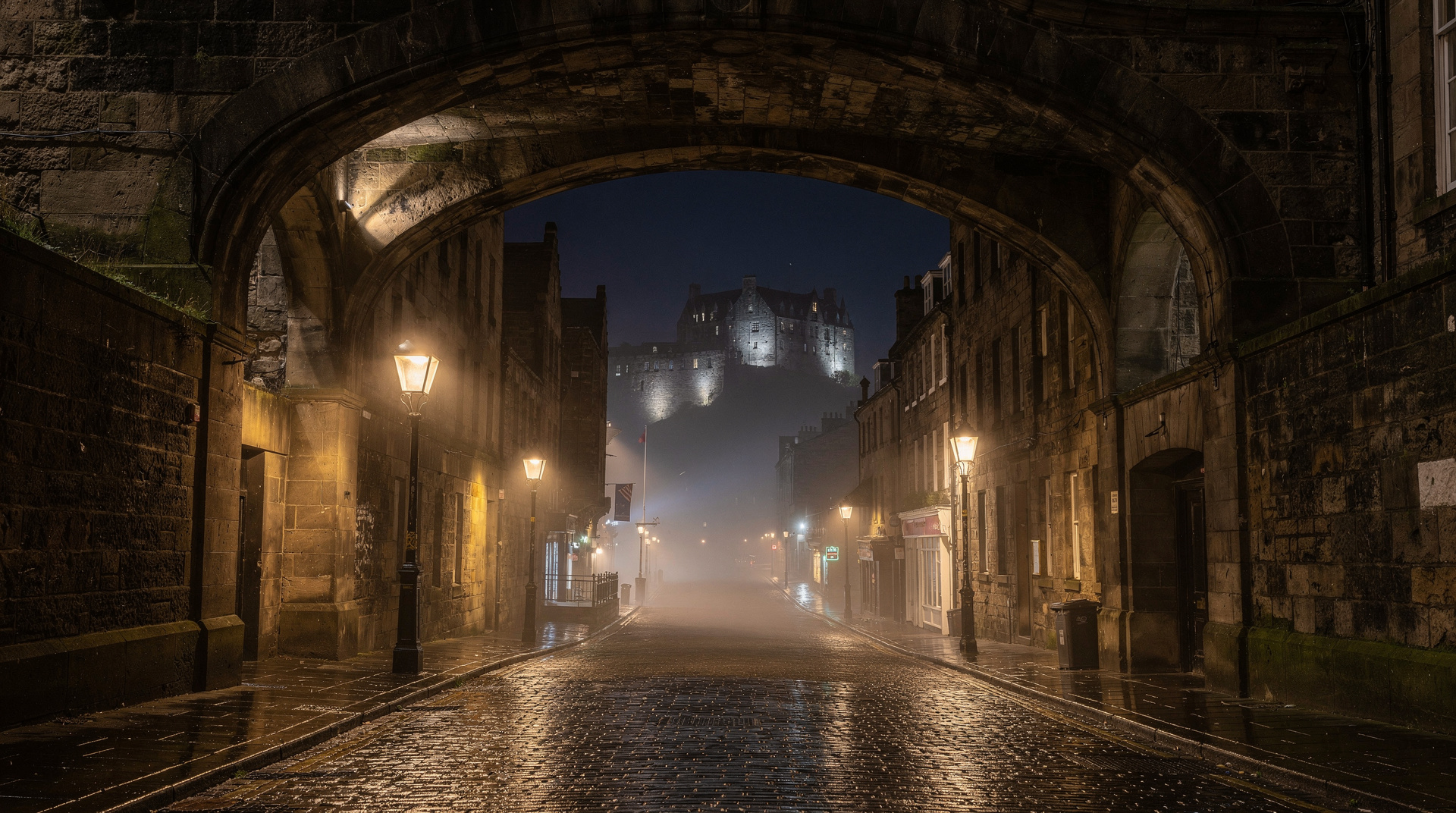
The Edinburgh Castle is a ten-minute walk uphill, and the combination of castle in the morning, Mary King’s Close in the afternoon, and a ghost tour in the evening is a classic Edinburgh first-timer day that covers a great deal of the city’s history in an engaging sequence.
For a comprehensive overview of all of Edinburgh’s dark tourism sites, the haunted Edinburgh map guide provides a spatial overview of what is clustered where, which is useful for planning an efficient route. The dark and haunted Edinburgh two-day itinerary turns this into a detailed day-by-day plan.
What to do near the attraction
The Royal Mile immediately outside Mary King’s Close is lined with cafes, pubs, and restaurants. Most of them are overpriced tourist traps — see the eating on the Royal Mile guide for which to avoid and where to go instead. For a post-tour drink or meal, the closes and side streets between the Royal Mile and the Grassmarket have significantly better value options than the main drag.
The Grassmarket, a five-minute walk down the Vennel steps from the Royal Mile, has several good pubs and independent restaurants in a historically significant space — the public gallows stood here until the eighteenth century, making it a fitting continuation of the dark tourism day.
What to do before and after your visit
Before: The National Museum of Scotland on Chambers Street (five minutes’ walk) has good contextual material on seventeenth-century Edinburgh life. Spending 30-45 minutes in the Scottish history galleries before your Close tour will make the guide’s commentary significantly more meaningful.
After: The most natural next stop is the Royal Mile itself — you emerge from the Close at street level and are immediately at the heart of Old Town Edinburgh. Walking downhill toward Canongate covers the full length of Edinburgh’s most historically dense street. See the Old Town guide for the best stops along the way.
If dark tourism is your primary interest, the South Bridge vaults are a 15-minute walk through the Old Town closes. The vaults provide a contrast to Mary King’s Close — rawer, less polished, more atmospherically intense. The combination of both in a single day is worthwhile but somewhat repetitive if done back-to-back; spreading them across two visits or building in an afternoon gap gives each attraction its proper weight.
The Grassmarket, accessible down the Vennel steps from the Lawnmarket end of the Royal Mile, is a good choice for lunch or dinner after a morning Mary King’s Close tour. Several good pubs and independent restaurants, at prices more reasonable than the tourist traps immediately on the Royal Mile.
The Close and Edinburgh’s layers of history
Mary King’s Close preserves a specific moment in Edinburgh’s history — the mid-seventeenth century — but the Old Town it sat within has been continuously occupied for over a thousand years, and layers of that history are visible in different ways throughout the neighbourhood.
The very oldest layer is the geology: the Royal Mile runs along the spine of a volcanic crag that was the natural defensive site for the earliest settlement. The pattern of the medieval street — the Royal Mile as the spine, the closes running off it like the ribs of a fish — is determined by this geology in a way that has constrained Edinburgh’s development ever since.
The layers above the medieval street plan are visible in the architecture as you walk the Royal Mile: a seventeenth-century tenement here, a Georgian insertion there, a Victorian commercial building, a twentieth-century civic development. Mary King’s Close preserves a single layer of this accretion at street level. The Old Town history guide covers the full sequence of Edinburgh’s urban development in accessible detail.
For visitors interested in the archaeology of Edinburgh specifically — what excavations under the Old Town have revealed about pre-medieval occupation, Roman-era material, and the evidence of Viking presence — the National Museum of Scotland’s Scottish history galleries provide the most complete overview available in Edinburgh. The Close’s own interpretation deals primarily with the seventeenth century; the museum contextualises it within the longer sequence.
Edinburgh’s plague history beyond the Close
Mary King’s Close is the most visited site associated with Edinburgh’s plague history, but the epidemics that struck the city — most severely in 1645 — affected the whole of the overcrowded Old Town, not just this one street. Edinburgh’s plague response included the isolation of the sick in Foul Bourns (temporary huts on the Burgh Muir, now the Meadows and Bruntsfield), a burgh-funded system of plague doctors and cleansers, and strict quarantine measures for the closes considered most affected.
The population loss in 1645 was severe — some estimates suggest as much as a quarter of the city’s inhabitants died within a matter of months. Understanding this broader civic context, rather than treating Mary King’s Close as an isolated horror story, gives the tour’s plague content more weight: what happened here was part of a citywide catastrophe, not an isolated local tragedy.
Best time of day and booking strategy
| Time slot | Queue length | Atmosphere |
|---|---|---|
| Morning (10am-12pm) | Shortest | Standard, well-lit |
| Early afternoon (12-3pm) | Busiest | Most crowded, especially with school groups in term time |
| Late afternoon (3-5pm) | Moderate | Good balance of shorter queues and daylight outside |
| Evening (6pm onward) | Shortest | Most atmospheric — lower natural light filtering in |
For visitors prioritising a quieter, less rushed tour, morning or evening slots are the better choice. Families with children may prefer the mid-afternoon slots despite the crowds, since energy levels are often higher than first thing or late in the day. Whichever slot you choose, book online in advance — walk-up availability in summer is unreliable, and the tour cannot be joined mid-way if you arrive late.
Frequently asked questions about the Real Mary King’s Close
How old is Mary King’s Close?
The close dates from the early to mid seventeenth century. Mary King herself — thought to be a merchant widow who owned property on the close — was documented in the 1630s. The buildings that fronted the close were incorporated into the foundations of the Royal Exchange (later the City Chambers) when construction began in 1753, effectively sealing the lower portions. The preserved spaces visitors see today date primarily from the seventeenth century.
Was Edinburgh really built on a city of the dead?
The dramatic version of this story — that Edinburgh’s underground is riddled with sealed plague streets and buried communities — is an exaggeration, but it has a kernel of truth. The Old Town’s topography, built on a narrow ridge with steep valleys on either side, meant that as the city grew upward and outward, earlier street levels were often built over rather than demolished. Mary King’s Close is the best-preserved example, but it is not unique; several other Old Town basements and foundations preserve older street-level fabric.
Is the Annie doll story true?
The story of the psychic Aiko Gibo and the child ghost Annie is documented in that it actually happened — Gibo did visit in 1992 and did describe sensing a distressed child. Whether her account reflects a genuine paranormal experience is not something any responsible guide will confirm. What is unambiguously true is that the room now contains hundreds of dolls and toys left by subsequent visitors, which creates its own unexpectedly moving effect regardless of what you believe about the original story.
Can you book a private tour?
Private tours are available and can be arranged through the Mary King’s Close website. They are considerably more expensive than the standard tour but allow for a customised experience and the option to explore specific areas in more depth. Worth considering for groups with a particular interest in the history.
What is the best time of day to visit?
Evening tours (6pm and later) have a slightly better atmosphere due to the reduced natural light filtering into the close and a more focused audience. However, the content is identical at all times of day, and morning or early afternoon tours have shorter overall queues in the visitor centre. The main advantage of the evening tours is atmosphere rather than content.
How does the admission price compare to other Edinburgh attractions?
At around £19 per adult (2026 prices), Mary King’s Close is priced similarly to Edinburgh Castle’s general admission and slightly above the South Bridge vaults tours. For the quality and uniqueness of the experience, it is good value. See the Edinburgh on a budget guide for a comparison of admission prices across the city’s main attractions.
What is the least crowded time to visit Mary King’s Close?
Morning slots (10am-12pm) and evening slots (6pm onward) both have shorter queues than the busy early-afternoon period, when school groups and coach parties are most likely. Evening tours have the added benefit of a slightly more atmospheric feel, though the content shown is identical throughout the day. See the booking strategy table above for the full breakdown by time slot.
Is Mary King’s Close suitable for claustrophobic visitors?
It requires some caution. The tour involves low ceilings, narrow passages, and enclosed underground rooms for the full 75 minutes with no early-exit option once the group has moved past the entrance. Visitors with significant claustrophobia should consider whether the confined, dimly lit spaces will be manageable — the guides are used to the question and can advise on what to expect, but there is no shortened or more open alternative route through the site.
Top experiences
Bookable activities with verified prices and instant confirmation on GetYourGuide.