Haunted Edinburgh: a map and guide to the dark sites
Edinburgh: mysteries, witchery and murders walking tour
What are the most haunted places in Edinburgh?
The South Bridge vaults, Greyfriars Kirkyard's Covenanters' Prison, Mary King's Close, and the closes and wynds of the Old Town around the Canongate. Edinburgh's dark sites are concentrated in a compact area of the Old Town walkable in a single day, with free and paid options.
Edinburgh’s dark geography: concentrated and walkable
Edinburgh’s reputation as one of the most haunted cities in the world rests on a specific and well-grounded foundation: a compact medieval city built on layers of its own history, where centuries of execution, plague, religious persecution, and urban poverty have left physical traces in surviving architecture and documented historical record. Unlike many “haunted city” claims that rest almost entirely on folklore, Edinburgh’s dark history is verifiable, and many of the sites associated with it are physically accessible today.
The good news for visitors is that almost all of Edinburgh’s most significant dark tourism sites are clustered in a walkable area of the Old Town — roughly the zone bounded by Edinburgh Castle to the west, the Canongate to the east, the Grassmarket to the south, and the Royal Mile to the north. This guide maps the key sites, what each offers, and how to sequence a visit for maximum coverage and minimum backtracking.
| Where | Old Town: Castle Esplanade to the Grassmarket, Cowgate and Greyfriars |
| Cost | Free sites (Greyfriars, closes) to around £25 for the underground vaults |
| Time needed | A full day for the highlights; two days for full depth |
| Getting there | All zones connected on foot within the Old Town |
| Best time | Evening for ghost tours; early morning for the free sites without crowds |
Zone 1: the Castle and Canonball House area
Edinburgh Castle’s dungeons
The castle’s lower levels held prisoners for centuries, and the vaulted chambers used as military prisons in the eighteenth and nineteenth centuries are accessible as part of the standard castle visit. The most historically significant prisoners were French soldiers taken during the Napoleonic Wars — their graffiti is still visible on the walls of the French Prison. The castle is paid admission (£23.50+ per adult in 2026), but the prison cells are included in general entry. See the Edinburgh Castle guide for full visitor details.
Canonball House
The building at the top of the Royal Mile, just below the castle esplanade, has a cannonball embedded in its west gable. The traditional explanation — that it was fired from the castle during the 1745 Jacobite siege — has been challenged by historians who suggest it was actually placed there as a marker for a water supply scheme. The ambiguity makes it a fitting introduction to the Old Town, where official history and popular legend are rarely the same thing.
Zone 2: The Royal Mile and its closes
Advocates’ Close and Mary King’s Close
The Royal Mile is studded with narrow closes — alleyways that once ran between the tenements down to lower streets. Several of these closes preserve fragments of their original buildings, and the most significant from a dark tourism perspective is the one that became Mary King’s Close, now an attraction in its own right beneath the City Chambers. The entrance is on the Royal Mile itself, and the guided tour takes you underground into the preserved medieval street. About £19 per adult; essential booking required.
The Heart of Midlothian
Set into the cobblestones of the Royal Mile outside St Giles’ Cathedral is the Heart of Midlothian, a heart-shaped mosaic marking the site of the old Tolbooth prison — Edinburgh’s primary place of execution and imprisonment from the fifteenth to the eighteenth century. Tradition holds that Edinburghers spit on the Heart as they pass, which is either a gesture of contempt for the prison where their ancestors suffered or simply something locals do to confuse tourists depending on who you ask. The Tolbooth was demolished in 1817; Walter Scott used it as the setting for his novel The Heart of Midlothian.
Canongate and its gallows history
The lower Royal Mile — the Canongate — was the main execution route, and several of the closes running off it were associated with Edinburgh’s most notorious historical events. Dunbar’s Close Garden (free to enter, on the south side of the Canongate) preserves the atmosphere of a seventeenth-century Edinburgh garden in a space that was once surrounded by death on all sides.
Zone 3: The South Bridge vaults
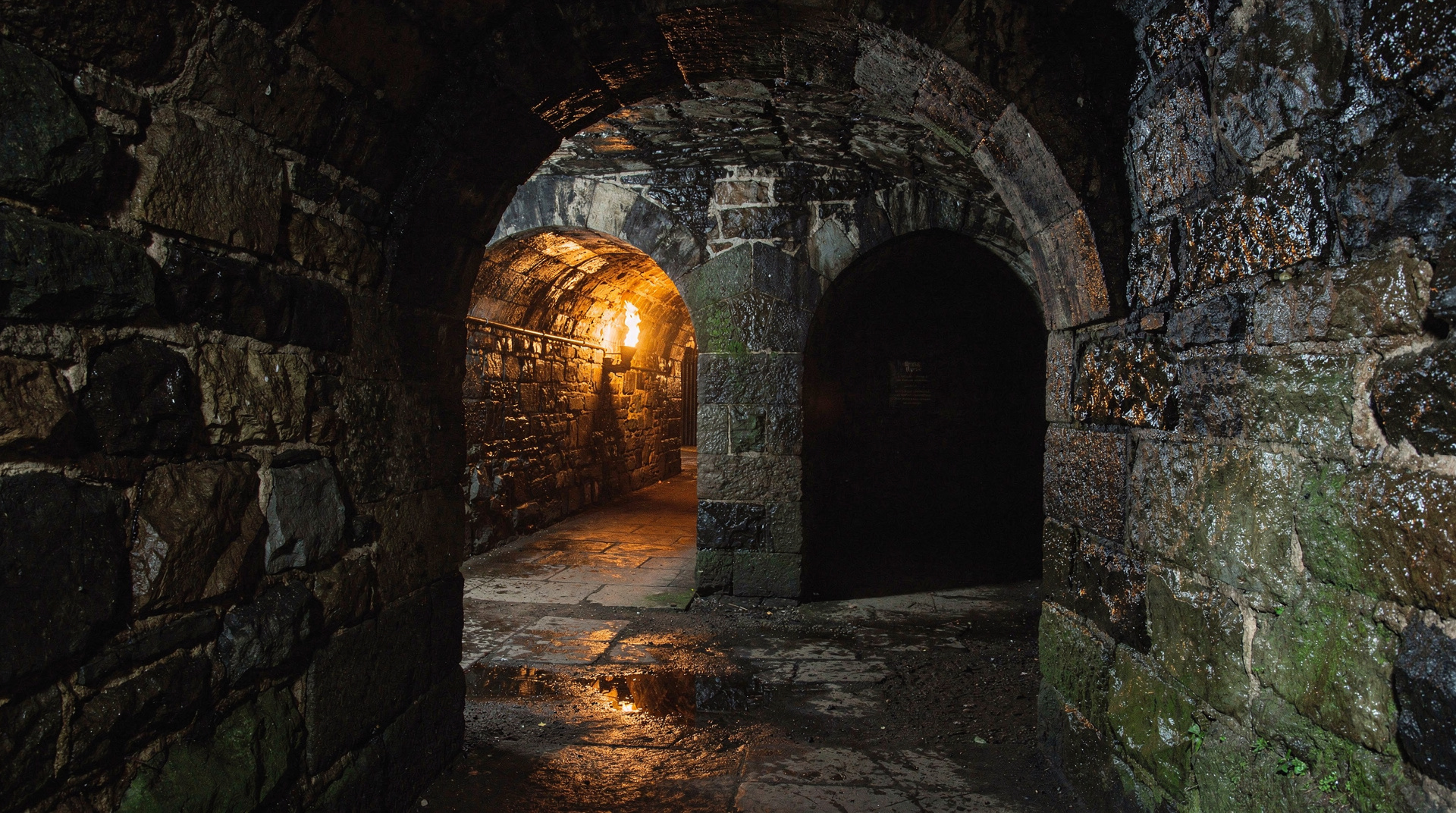
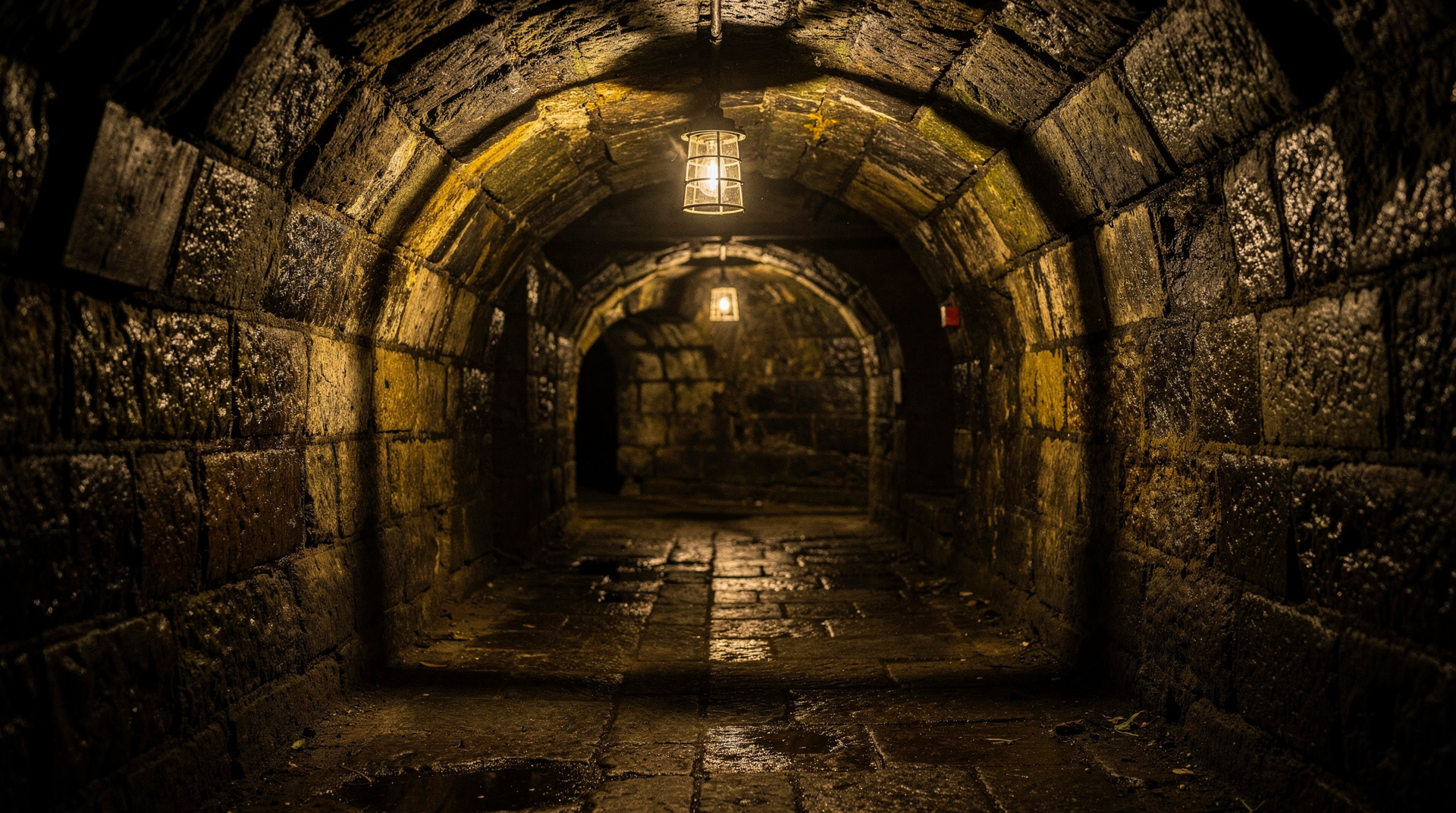
The primary dark tourism site in Edinburgh and the most atmospherically intense. The South Bridge, completed in 1788, conceals beneath its road surface a network of vaulted chambers that were used as slum housing and then sealed for over a century. The vaults are accessed only through guided tours — see the underground vaults guide for a full breakdown of operators and tour types.
The mysteries, witchery and murders walking tour is a good above-ground option that covers the South Bridge area and the sites associated with the witchcraft executions and the Old Town’s violent history. For underground access, the original underground tour by Mercat Tours is the best entry point.
The vaults entrance is on Niddry Street, off the Cowgate — a two-minute walk from the South Bridge itself. The surrounding area (the Cowgate and the Grassmarket) is covered in the next zone.
Zone 4: the Grassmarket and Cowgate
The Grassmarket gallows site
The Grassmarket was Edinburgh’s primary place of public execution from the medieval period until 1784. The gallows stood at the east end, roughly where a small memorial plaque now marks the ground. Over three hundred people were executed here, including Covenanters, criminals, and at least one person whose conviction was almost certainly wrongful. The plaque is easy to miss — it is set into a paving stone near the east end of the square.
The Grassmarket itself is now one of Edinburgh’s better nightlife and dining areas, which creates an interesting contrast — the site of mass public execution is now lined with pubs. Several of these pubs have their own dark histories, including the White Hart Inn, which claims (with reasonable historical evidence) to be Edinburgh’s oldest surviving pub and was used by the bodysnatchers as a recruitment ground.
The Cowgate plague connection
The Cowgate, running below the South Bridge and the George IV Bridge, was one of the primary plague-affected areas of Edinburgh in the early modern period. The lowness of the Cowgate — effectively a valley between the Old Town ridge and the Greyfriars area — meant it trapped miasma and, in contemporary understanding, was particularly susceptible to the diseases associated with poor air quality. The medieval understanding was superstitious; the correlation with actual mortality was probably real.
Zone 5: Greyfriars Kirkyard
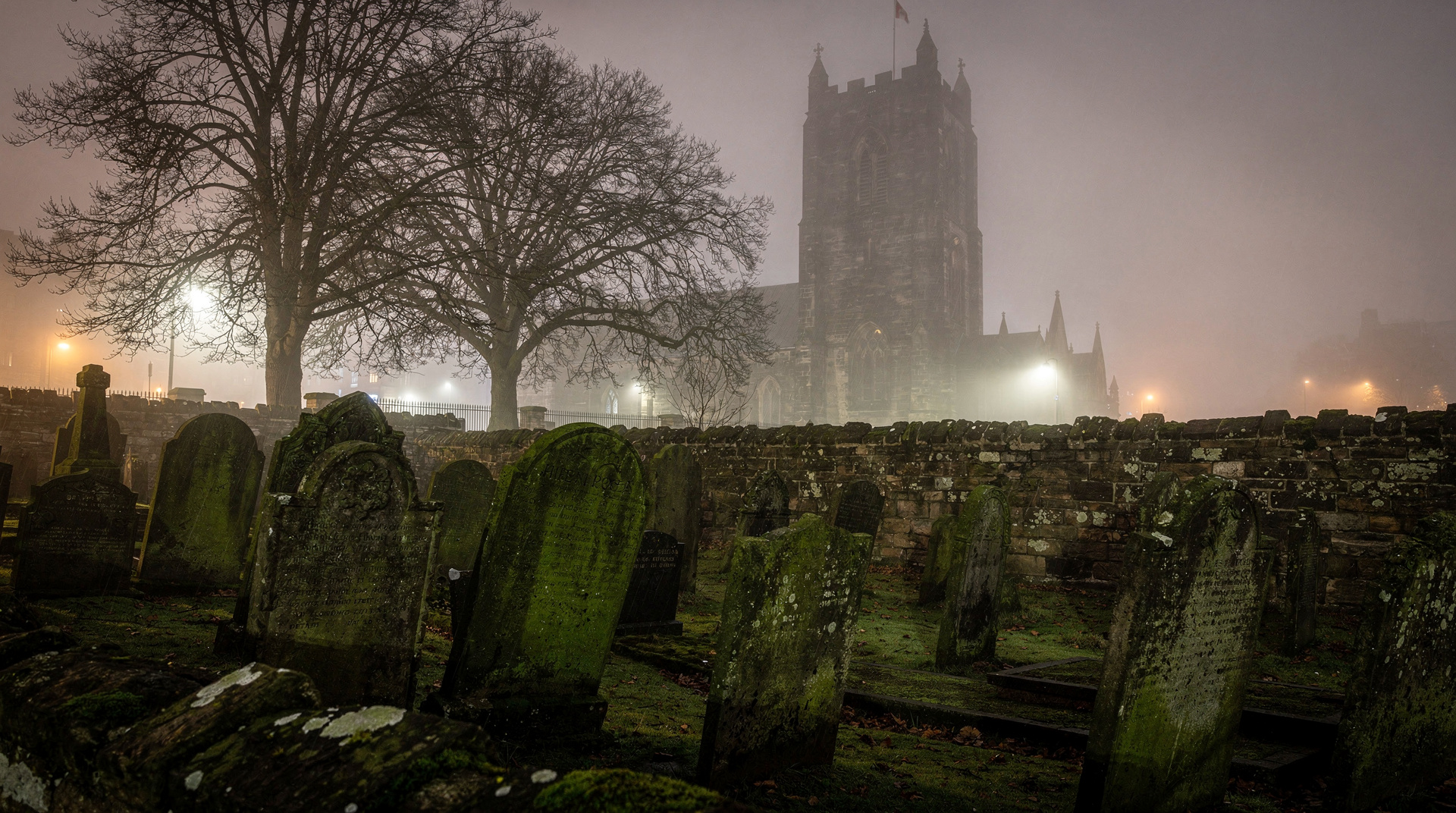
The most atmospherically rich free site in Edinburgh. Greyfriars Kirkyard is free to enter during daylight hours, and even without a paid guided tour it contains enough historical material — the Covenanters’ Prison walls, the mortsafes, the notable graves, the Mackenzie Mausoleum — for a rewarding 45-minute self-guided visit.
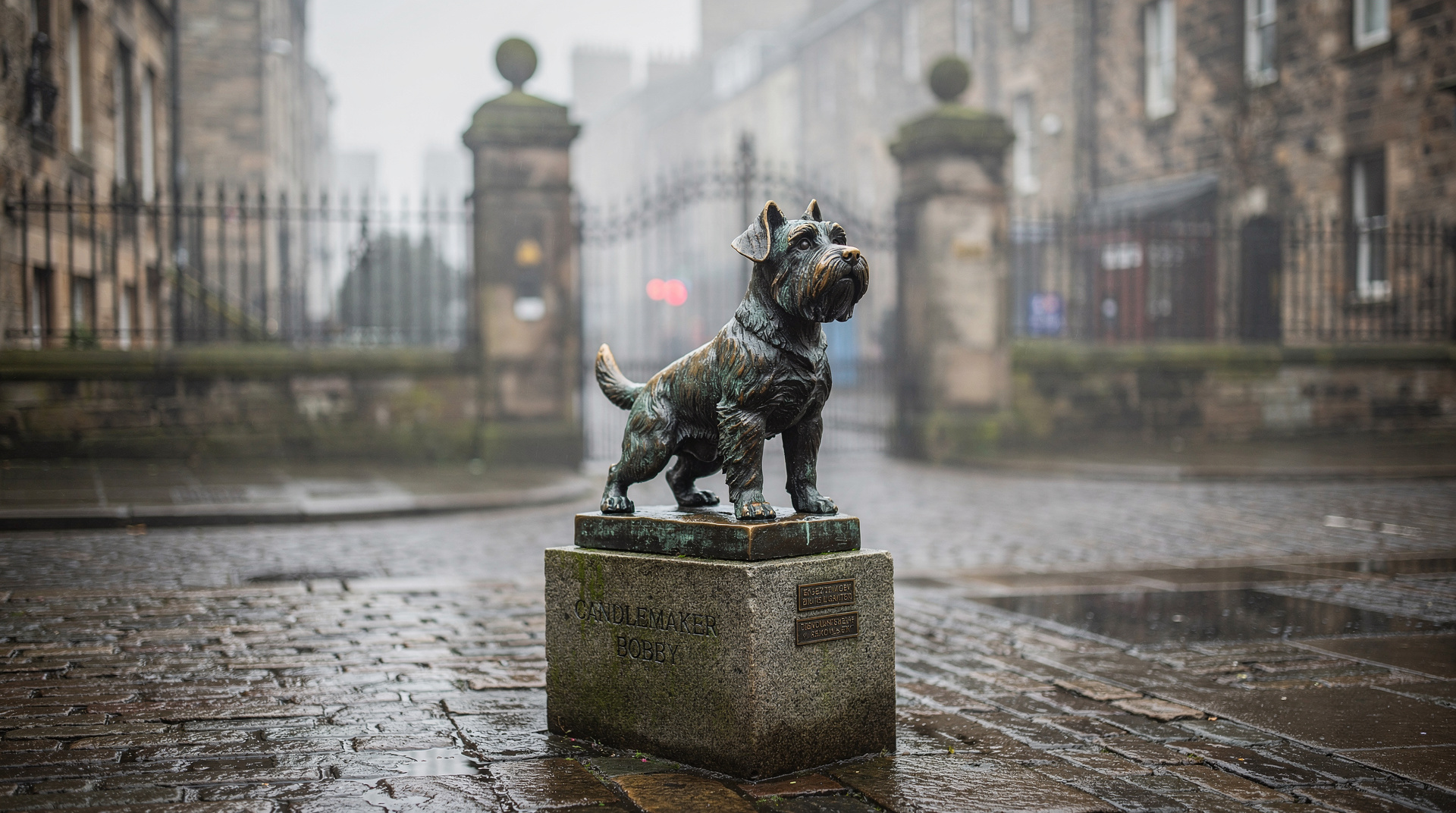
The guided tour (or a combined vaults and graveyard tour) adds access to the Covenanters’ Prison section and the well-documented haunting history associated with the Mackenzie Poltergeist. See the Greyfriars Bobby and bodysnatchers guide for the full history.
Evening visits to the Kirkyard (still possible in summer due to the long Scottish evenings) are significantly more atmospheric than daytime visits. The combination of Victorian stonework, mature yew trees, and long shadows in the late-evening light is genuinely impressive.
Zone 6: Surgeon’s Square area
The Anatomy Lecture Theatre
The area around the old Surgeons’ Square, south of the Royal Mile, is where Edinburgh’s medical school operated during the bodysnatching era. The building on Old Surgeons’ Hall dates from the seventeenth century and is now part of the Royal College of Surgeons’ Surgeons’ Hall Museums. The museum has a section specifically addressing the history of bodysnatching and the Burke and Hare murders, including preserved anatomical specimens and artefacts from the murders. Admission is modest and it is significantly less known than other Edinburgh dark tourism sites — worth seeking out for the genuine historical content.
The Burke and Hare connection to this area is direct: the bodies of their victims were carried through these streets to the anatomy schools. See the Burke and Hare story for the full account.
Planning a dark tourism day in Edinburgh
A logical sequence for covering the key sites in a single day:
Morning (9:30am-1pm): Start at Edinburgh Castle’s prison cells, then walk down the Royal Mile. Stop at the Heart of Midlothian, visit Mary King’s Close (pre-book for a 10am tour), and walk through the Old Town closes.
Afternoon (1:30pm-5pm): Greyfriars Kirkyard for self-guided exploration, then the National Museum of Scotland (free, excellent, covers the bodysnatching era and the witch trials in depth). Walk through the Grassmarket and Cowgate.
Evening (7pm onwards): Underground vaults tour — either the historical daytime tour if you prefer that end, or the evening ghost tour with whisky or the late-night terror tour for maximum atmosphere.
This sequence covers all the major sites in logical geographic order without requiring a car or significant transit. The dark and haunted Edinburgh two-day itinerary extends this to two days if you want more depth at each site.
The National Museum of Scotland: dark history in free form
The National Museum of Scotland on Chambers Street, three minutes from Greyfriars Kirkyard, is one of Edinburgh’s best free attractions and contains significant dark history material that many visitors overlook in favour of the paid underground experiences. The museum has collections covering:
The bodysnatching era: Instruments associated with anatomy and surgery from the early nineteenth century, with documentary material on the trade in cadavers that produced Burke and Hare.
The witch trials: Documentary and material culture from the Scottish witchcraft prosecutions, including some of the most precise statistical work on who was prosecuted and why.
Jacobite history: The 1745 rising and its aftermath, including objects associated with Bonnie Prince Charlie and the Highland regiments that fought at Culloden. This provides essential context for visitors interested in the religious persecution that preceded the Jacobite period.
Medieval Edinburgh: Reconstructions and artefacts from the medieval city that contextualise what you see in Mary King’s Close and the South Bridge vaults.
The museum is free, well-curated, and offers at least two hours of meaningful content even for visitors primarily focused on the paid dark tourism sites. If you are spending more than one day in Edinburgh, building in a museum visit on the morning before an afternoon underground tour is a consistently productive sequence.
Beyond the Old Town: dark history across Edinburgh
Edinburgh’s dark history extends beyond the Old Town, though the Old Town contains the densest concentration. Some sites worth knowing about:
Calton Hill execution ground: Before the Castle Esplanade became the primary execution site, the Calton Hill area was used for various forms of public punishment. The hill today is one of Edinburgh’s best free viewpoints — see the Calton Hill guide for the full picture.
Holyrood and the palace dungeons: The Palace of Holyroodhouse has its own dark history — it was the site of the murder of David Rizzio, Mary Queen of Scots’ secretary, in 1566, stabbed 56 times in the queen’s presence. The room where the murder occurred is preserved and visible on the standard palace tour.
Leith and its dark past: The port of Leith, now a regenerated waterfront neighbourhood, was Edinburgh’s primary point of contact with the Atlantic trade — including the trade in enslaved people in which Scottish merchants participated. See the Leith guide for the full history of the port.
Planning for different visitor profiles
History-focused visitors: Prioritise the daytime underground vault tour and Mary King’s Close for depth, Greyfriars for free content, and the National Museum for context. An evening ghost walking tour adds the atmospheric layer. This sequence covers the history without requiring any specific tolerance for theatrical scares.
Scare-seeking visitors: The late-night vaults terror tour is the primary destination. Combine with a Greyfriars ghost tour for the outdoor scare experience. The ghost tours guide covers which operators deliver the best scare-to-substance ratio.
Families with older children: The Edinburgh Dungeon is the most child-appropriate entry point — theatrical, age-rated, and explicitly designed for family groups. The daytime Mary King’s Close tour works well for children aged ten and over. Greyfriars is suitable for most ages.
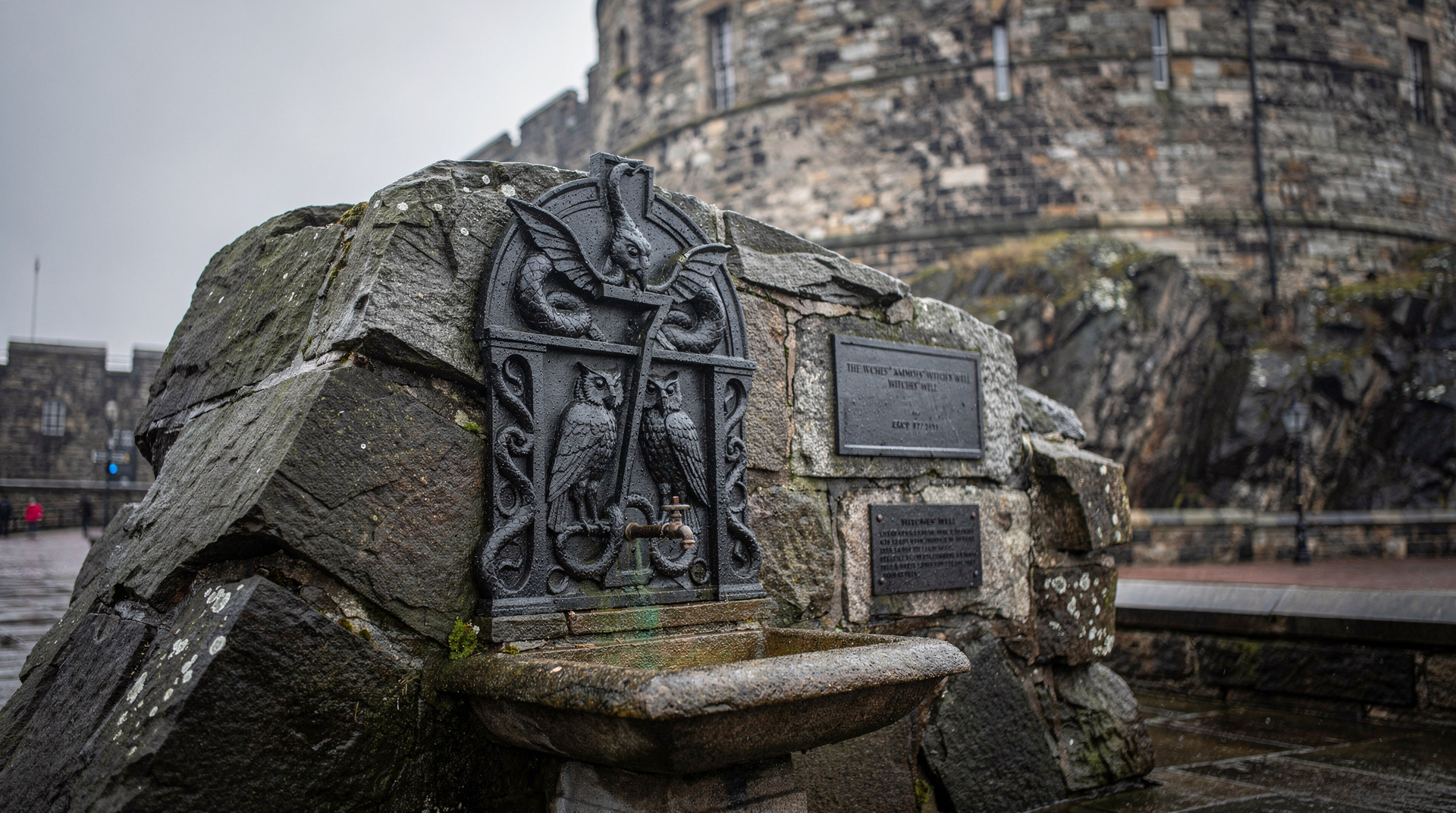
Budget visitors: Greyfriars Kirkyard, the Heart of Midlothian plaque, the Witches’ Well on the Castle Esplanade, and the National Museum of Scotland are all free and together cover a substantial proportion of Edinburgh’s dark history. See the Edinburgh on a budget guide for the complete free itinerary.
Free dark tourism sites
Not everything requires admission. The following are all free:
- The Heart of Midlothian (paving stone on the Royal Mile)
- Greyfriars Kirkyard main section (open daylight hours)
- The Grassmarket gallows plaque
- The Old Town closes and wynds
- Dunbar’s Close Garden
- St Giles’ Cathedral (£12 for visitors aged 16 and over)
- The exterior view of Mary King’s Close entrance
- The National Museum of Scotland (free, excellent dark history content)
Edinburgh’s dark history as a coherent narrative
One of the things that makes Edinburgh’s dark history particularly compelling is its internal coherence — the major episodes are linked by recurring themes that illuminate each other.
The witch trials (sixteenth to eighteenth centuries), the Covenanting persecution (seventeenth century), and the bodysnatching era (early nineteenth century) are all expressions of the same underlying dynamic: Edinburgh’s institutions — whether ecclesiastical courts, royal legal apparatus, or medical schools — operated systems that produced mass harm through the consistent application of their own internal logic.
The church courts executed hundreds of people for witchcraft because the theological framework predicted that witches existed and the legal process produced confessions that confirmed it. The Privy Council imprisoned Covenanters because the political framework required the elimination of organised religious dissent. The medical schools created a market for cadavers that the legal supply could not meet, inevitably generating a black market.
In each case, the institutional framework was functioning — not breaking down, but working as designed. The harm was produced not by failure but by success: the witch trial system was remarkably efficient at producing convictions; the Covenanters’ Prison held its prisoners with brutal effectiveness; the anatomy schools trained excellent surgeons. The dark history of Edinburgh is partly a history of institutions doing exactly what they were designed to do.
This makes Edinburgh’s dark history relevant beyond the supernatural and the sensational. The ghost tours and underground attractions are the accessible entry point, but the serious historical content — documented in the National Museum of Scotland, interpreted at Mary King’s Close, visible in the mortsafes at Greyfriars — rewards engagement on its own terms.
Getting the most from a dark tourism visit
Sequencing matters: The sites reinforce each other most effectively when visited in a logical order. The most productive sequence is typically: historical context (National Museum of Scotland) followed by preserved space (Mary King’s Close or the underground vaults) followed by outdoor atmosphere (Greyfriars, the Old Town closes) followed by evening ghost tour.
Avoid overloading a single day: Edinburgh’s dark tourism circuit is dense enough that trying to do everything in one day produces a numbing effect. The dark and haunted Edinburgh two-day itinerary is the right framework for serious engagement with the material.
The free sites are not lesser sites: Greyfriars Kirkyard, the Old Town closes, the Witches’ Well, and the Heart of Midlothian are free, historically significant, and atmospherically powerful. The paid underground experiences are worthwhile, but the free sites together tell a story that the paid attractions supplement rather than replace.
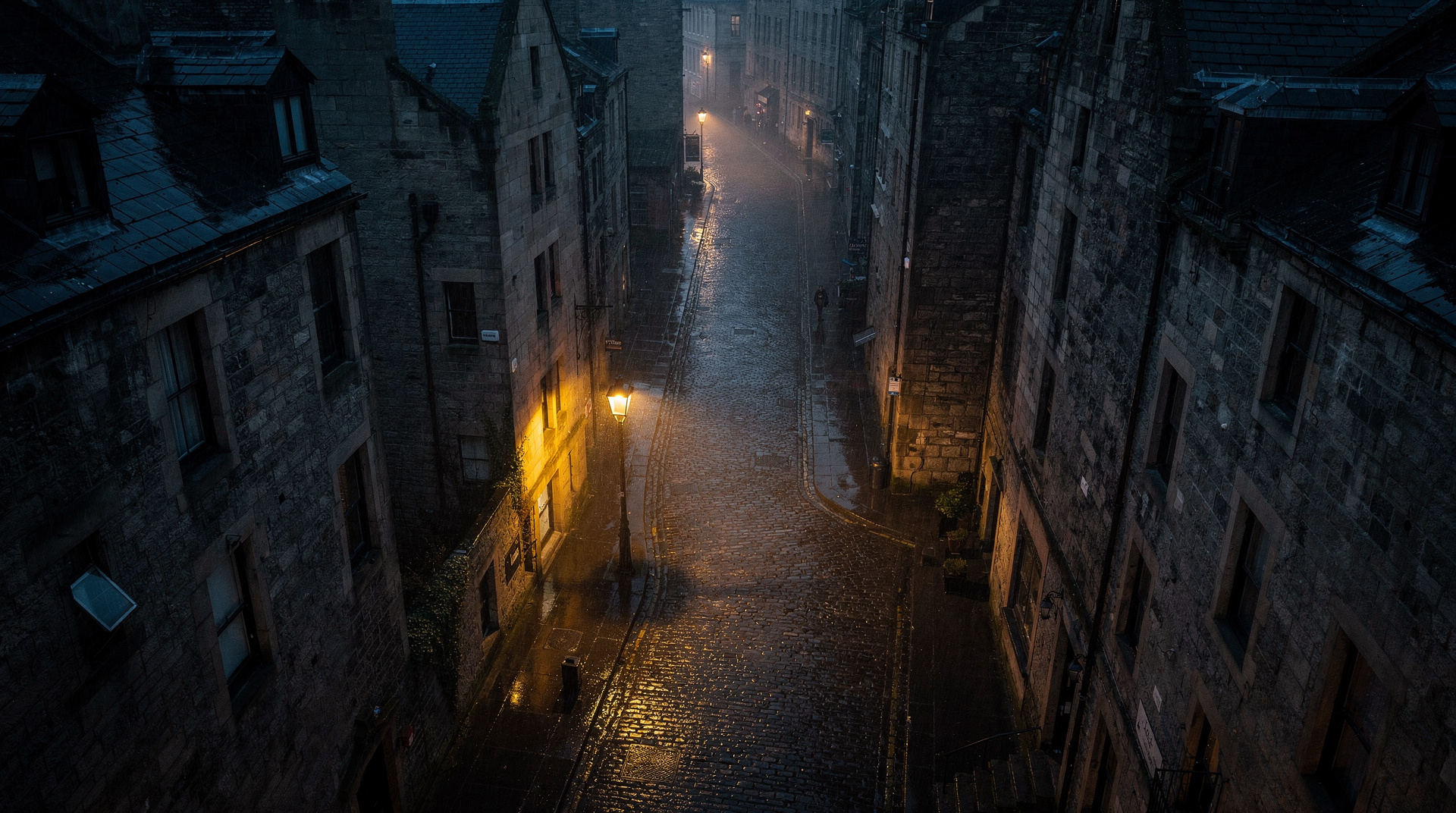
Evening visits have a different character: The Old Town at 9pm in summer, when the light is finally fading and the tourist rush has subsided, is the most atmospheric time to walk the closes. The closes that were the settings for witch trials, bodysnatchers, and plague are narrow, dark, and ancient regardless of whether you have paid anyone. Walk them yourself.
Comparing the zones at a glance
| Zone | Cost | Time needed | Best for |
|---|---|---|---|
| Castle dungeons | Included in castle entry (£23.50+) | 30–45 minutes | Napoleonic Wars history |
| Royal Mile closes & Mary King’s Close | Free (closes) to around £25 (Mary King’s) | 1–2 hours | Preserved medieval streets |
| South Bridge vaults | Around £15–£25 depending on tour | 45–75 minutes | The single best dark-history experience |
| Grassmarket & Cowgate | Free to walk | 30–60 minutes | Execution history plus modern nightlife |
| Greyfriars Kirkyard | Free; guided tour around £12–£18 | 45–90 minutes | Best free dark-history site |
| National Museum of Scotland | Free | 1–2 hours | Context for everything else on this list |
Booking evening ghost tours: what to know before you commit
Edinburgh has dozens of ghost tour operators, and the quality gap between the best and the weakest is considerable. A few honest points worth knowing before booking: tours that lean heavily on jump-scares and actors in costume tend to sacrifice historical depth for theatre, while tours led by guides with a genuine background in local history tend to be calmer but more substantive. Neither approach is wrong, but they are different products, and knowing which one you are booking avoids disappointment. The best ghost tours guide reviews the main operators against this distinction directly.
Practical timing also matters. Evening tours in summer start later because it stays light until 9–10pm, which changes the atmosphere considerably compared with a winter tour starting in full darkness at 6pm. If atmosphere matters more to you than convenience, a winter evening tour is genuinely more effective — the darkness starts working in the tour’s favour from the first stop rather than the last.
Weather and seasonal considerations for a dark tourism day
Edinburgh’s weather affects an outdoor-heavy itinerary like this one more than most city sightseeing. The Grassmarket gallows plaque, the Old Town closes, and much of the walk between zones are outdoors, and Scottish rain arrives without much warning at any time of year. A waterproof jacket is worth carrying regardless of the forecast. Winter has the advantage of early darkness, which suits the evening ghost tours particularly well, but daylight hours for the free daytime sites are correspondingly shorter — the Kirkyard and the closes may close as early as 4pm in December.
Summer gives you more daylight for the free sites but the evening tours start later and the queues for paid attractions like Mary King’s Close and the underground vaults are longer, particularly in July and August during the Fringe. See the best time to visit Edinburgh guide for how this fits the wider seasonal picture beyond dark tourism specifically.
For visitors combining this with other Old Town sightseeing
Dark tourism sites overlap heavily with Edinburgh’s standard sightseeing circuit, which makes combining them straightforward rather than requiring a dedicated detour. Edinburgh Castle, the Royal Mile, and Greyfriars are all stops most visitors make anyway; the dark-history layer simply adds context and a handful of specific detours (the vaults, Mary King’s Close) to a walk you would likely do regardless. The first-time Edinburgh guide covers how to blend dark tourism into a broader first visit without over-indexing on the macabre at the expense of the New Town, Arthur’s Seat, and the other reasons people fall in love with the city.
Safety and practical sense for evening visits
Edinburgh’s Old Town is well used by tourists and locals alike in the evening, and the dark tourism circuit is not a safety concern in the way the name might suggest. That said, a few practical points apply to any evening walking activity: the cobblestones throughout the Old Town are uneven and become genuinely slippery when wet, so footwear matters more here than on flat modern pavements.
Closes and wynds are narrow and can feel isolating if you wander off the beaten route alone late at night — sticking to the well-used routes between named sites is sensible if you are exploring solo rather than on a guided tour. Guided tours, by design, keep the group together and the guide knows the terrain, which removes most of the navigation risk that comes with self-guided evening exploration of the closes.
Frequently asked questions about haunted Edinburgh
Is Edinburgh really the most haunted city in Britain?
The claim is repeated by virtually every ghost tour operator in Edinburgh and is unverifiable by definition. What is documentable is that Edinburgh has a higher density of well-documented dark historical events per square kilometre than most comparable cities, a remarkable concentration of accessible historic sites where those events occurred, and a long tradition of serious paranormal investigation that has produced some of the most consistent and documented haunting claims in Britain. Whether that makes it “the most haunted” depends on your definitions.
Can you self-guide Edinburgh’s dark tourism sites?
Largely yes. The Grassmarket, Greyfriars Kirkyard, the Old Town closes, and the exterior of all the main sites are free and accessible without a guide. The interiors of Mary King’s Close and the South Bridge vaults require guided tours for access. A self-guided walk covering the exterior sites takes two to three hours and costs nothing.
What is the best single dark tourism experience in Edinburgh?
For most visitors, the South Bridge vaults provide the best single experience — the combination of genuine history, authentic atmosphere, and accessible guided tours makes it the standout. Mary King’s Close is close behind for historical substance. Greyfriars is the best free option.
Are there any dark tourism sites outside the Old Town?
The Surgeons’ Hall Museums near the Old Surgeons’ Square provide a medical dark history perspective that the Old Town sites do not cover. The West Port area (near the Grassmarket) is associated with the Burke and Hare murders. Beyond Edinburgh, Rosslyn Chapel in the Lothians and the atmospheric ruins of Tantallon Castle in East Lothian provide dark history in a wider geographic context.
Should I book a ghost tour or explore the free sites myself?
Both, ideally. The free sites — Greyfriars, the Heart of Midlothian, the Old Town closes — are genuinely rewarding self-guided, and cost nothing. The interiors of Mary King’s Close and the South Bridge vaults are only accessible on guided tours, so if those interest you, budget for at least one paid tour alongside a self-guided walk of the free sites.
Is Edinburgh’s dark history more or less disturbing than other Scottish cities?
Edinburgh’s dark history is probably more concentrated and better documented than Glasgow’s, but Glasgow has its own significant dark heritage (particularly the necropolis and the history of industrial poverty). The difference is partly in what has been preserved and interpreted: Edinburgh’s compact Old Town has kept its historic fabric in a way that allows the dark history to feel present in a way that Glasgow’s more extensively redeveloped city centre does not.
Top experiences
Bookable activities with verified prices and instant confirmation on GetYourGuide.