Greyfriars Bobby, bodysnatchers, and Edinburgh's darker graveyard history
Edinburgh: Greyfriars Kirkyard tour
Is Greyfriars Kirkyard worth visiting in Edinburgh?
Yes — Greyfriars is one of the most historically significant cemeteries in Scotland, free to enter, and genuinely atmospheric. Go for the Covenanters' Prison, the bodysnatchers' history, and the remarkable concentration of notable graves. Greyfriars Bobby's statue is nearby but the dog story is simpler than the graveyard's real history.
More than a loyal dog: what Greyfriars actually is
The small bronze terrier outside Greyfriars Kirkyard entrance is Edinburgh’s most photographed monument per square centimetre, and the legend attached to it — of a Skye terrier named Bobby who guarded his owner’s grave for fourteen years — is genuinely touching. But Greyfriars Bobby is the sentimental curtain draped over a graveyard whose real history is considerably darker and far more interesting.
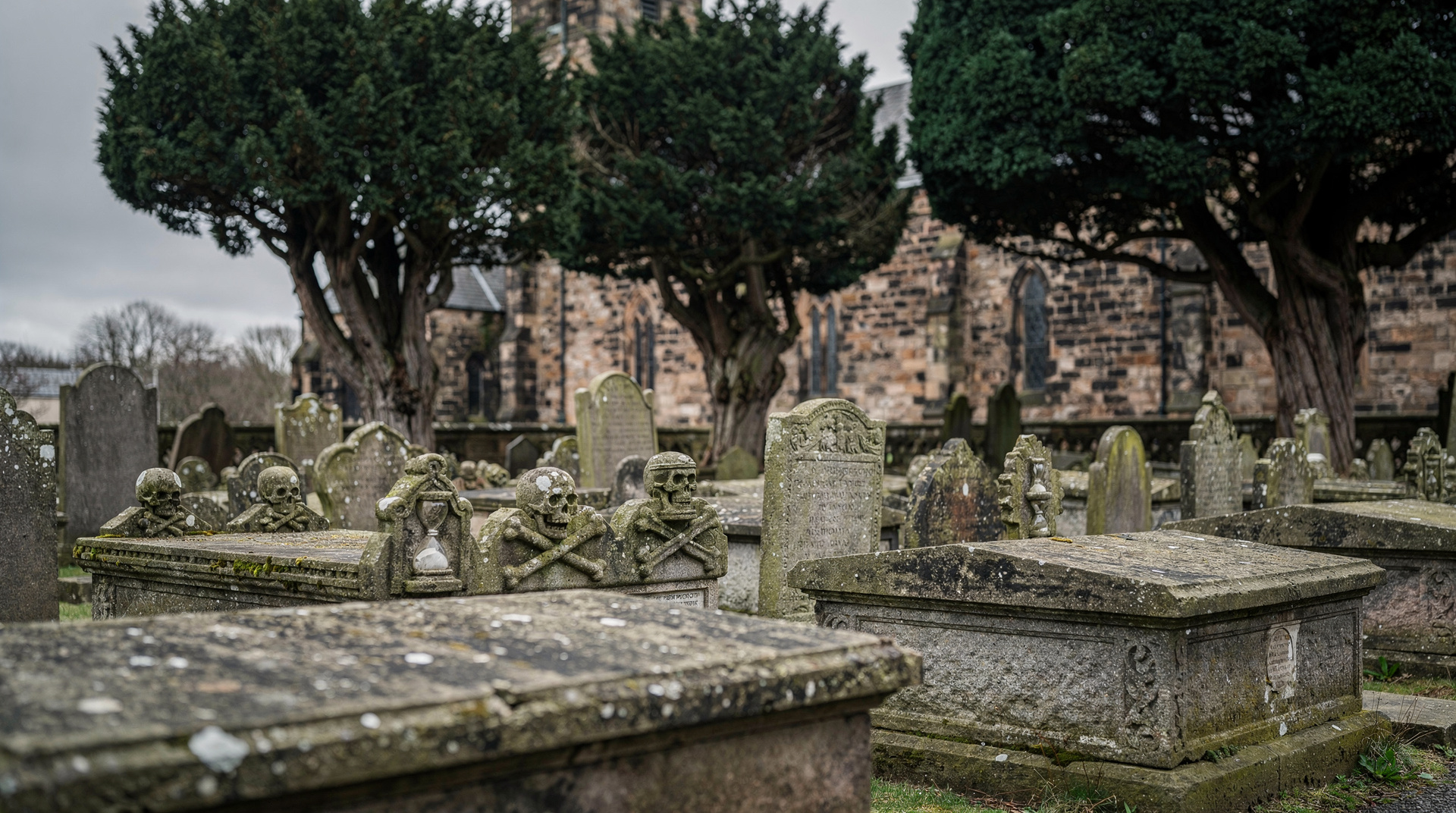
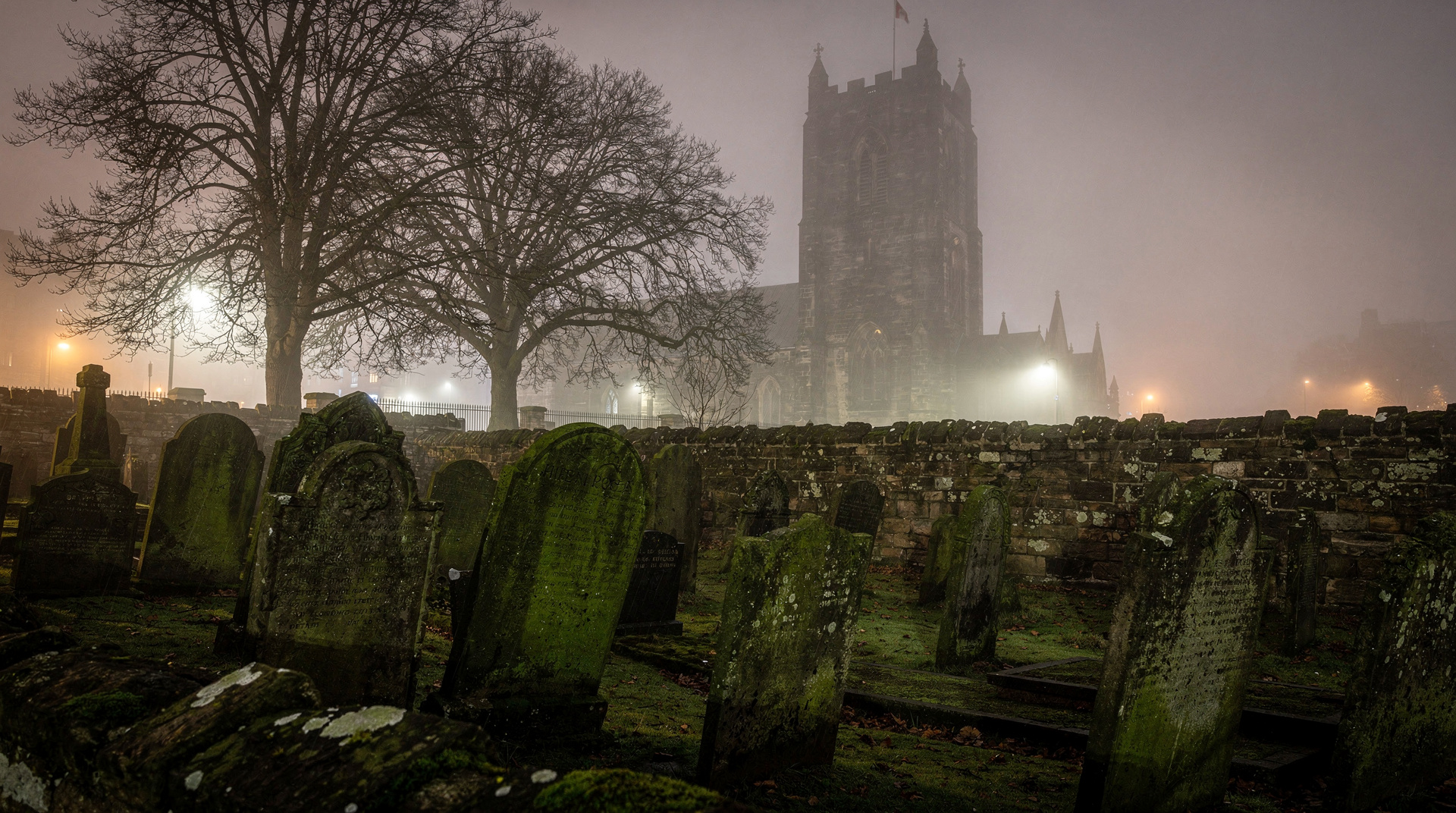
Greyfriars Kirkyard, established in 1562 on the grounds of a former Franciscan friary, was for centuries one of Edinburgh’s primary burial grounds. In that span of time it accumulated graves that span the full range of Scottish history: the framers of the National Covenant, the victims of political execution, the grave of a notorious seventeenth-century prosecutor, the resting places of architects and philosophers, and an enclosed section that served as an outdoor prison so brutal it produced documented cases of death by exposure and starvation. The graveyard also became one of the primary hunting grounds for the bodysnatchers who supplied Edinburgh’s medical schools with cadavers in the early nineteenth century.
The combination of documented history, credible haunting claims, and free admission makes Greyfriars one of the best value historical sites in Edinburgh.
| Where | Candlemaker Row, off the Royal Mile, five minutes from Greyfriars |
| Cost | Free to enter; guided Covenanters’ Prison tour around £10–£14 |
| Time needed | 30–45 minutes self-guided; around 90 minutes with the guided tour |
| Getting there | Five-minute walk from the Grassmarket, ten from the Royal Mile |
| Best time | Early morning for quiet, or an evening ghost tour for atmosphere |
The National Covenant and the Covenanters’ Prison
In 1638, in the nave of Greyfriars Kirk, thousands of Scots signed the National Covenant — a declaration that committed signatories to resist the religious reforms being imposed by King Charles I, who wanted to bring the Church of Scotland into closer alignment with the Church of England. The Covenant became a founding document of Scottish Presbyterian identity and launched decades of religious and civil conflict.
The Covenanters’ Prison, in the southwest corner of the churchyard, dates from 1679, when General George Monck had it built to confine over a thousand Covenanting prisoners taken after the Battle of Bothwell Brig. The conditions were catastrophic: the prisoners were kept in an open field with minimal shelter through a Scottish winter, given inadequate food and water, and subjected to interrogation and execution. Around four hundred died in custody; the survivors were transported to the American colonies or executed. The area enclosed by the prison walls is still there, locked and accessible only on guided tours.
The presiding figure over this period was Sir George Mackenzie, the Lord Advocate who prosecuted the Covenanters. He is buried in a mausoleum at the eastern edge of the Kirkyard — the building with the rounded roof that stands notably apart from the other monuments. This is the source of the “Mackenzie Poltergeist” that has given Greyfriars its modern haunting reputation.
The Mackenzie Poltergeist
In 1998, a homeless man broke into the Mackenzie Mausoleum seeking shelter. By most accounts he fell through a rotten floorboard into a chamber containing human remains. Within weeks, visitors began reporting unexplained experiences near the mausoleum: being thrown to the ground, hair pulled, bruised with no apparent cause, losing consciousness. A local paranormal investigator documented over three hundred separate incidents over the following decade.
The reports continued persistently enough that the Kirkyard authorities locked the Covenanters’ Prison section in 2004. It was reopened in 2014 and access is now restricted to organised tours. Whether or not one believes in poltergeists, the concentration and consistency of reported incidents around a single location is statistically remarkable, and the historical circumstances that would generate a genuine haunting — mass imprisonment, deliberate cruelty, and a presiding figure whose grave sits at the centre of the controversy — could hardly be better arranged.
The official Greyfriars Kirkyard tour provides access to the Covenanters’ Prison section along with the historical context for the Covenant, the persecution of the Covenanters, and the haunting claims. For the ghost tour angle, several evening tours also include Greyfriars as a stop on walking circuits that combine the Kirkyard with the South Bridge vaults and other Old Town dark sites.
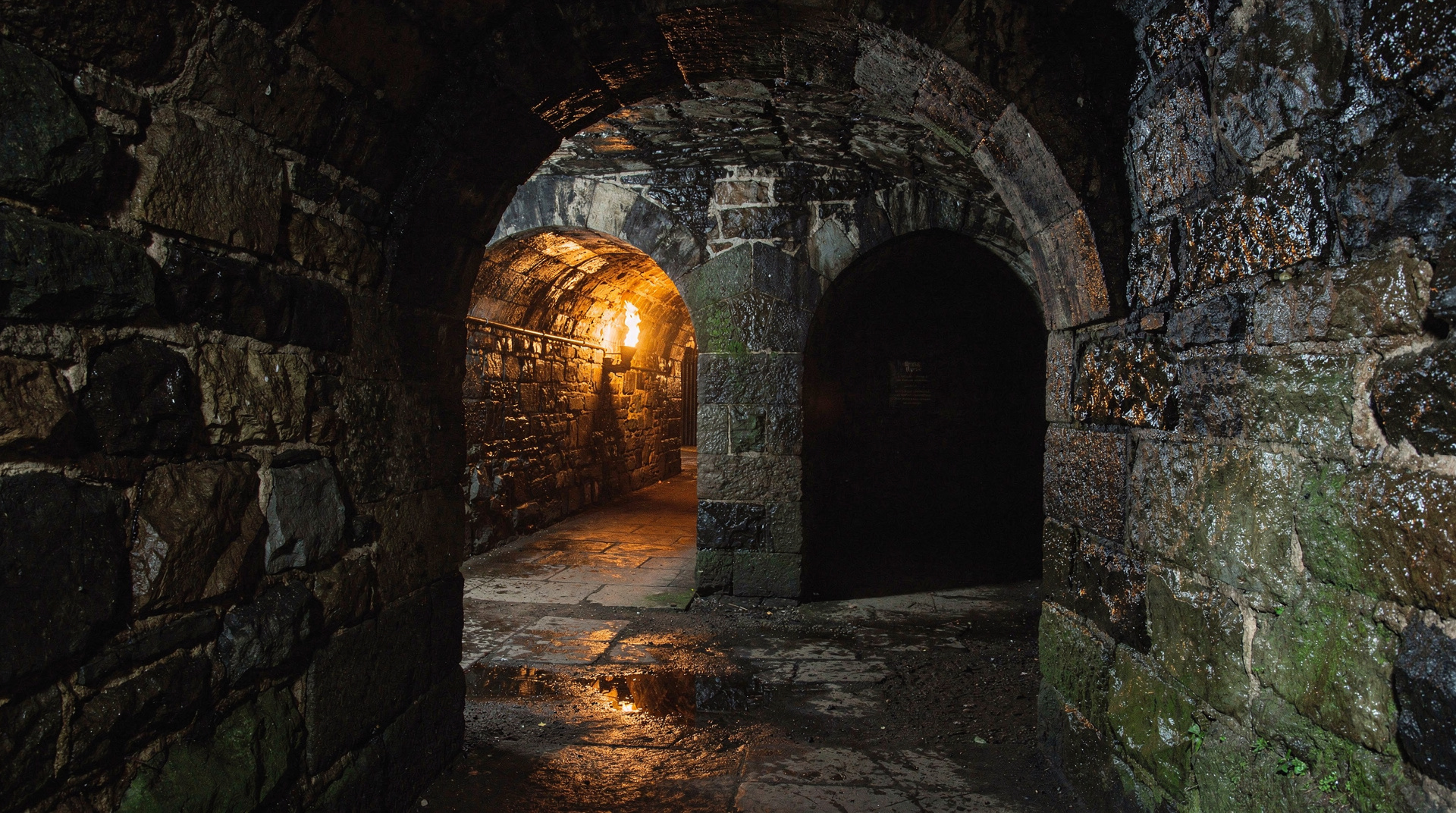
For a combined vaults and graveyard experience, the haunted underground vaults and graveyard tour covers both the South Bridge vaults and Greyfriars in a single evening, which is an efficient way to experience Edinburgh’s two most atmospheric dark tourism sites in one outing.
Bodysnatching in Edinburgh
The demand for fresh cadavers from Edinburgh’s medical schools reached crisis levels by the early nineteenth century. The city was one of the world’s leading centres of medical education, with hundreds of students needing practical anatomy experience. The legal supply of bodies — executed murderers — was wholly inadequate. The gap was filled by bodysnatchers, known in Scotland as “resurrection men,” who exhumed recently buried corpses and sold them to the anatomy schools.
Greyfriars Kirkyard was a primary target. The proximity of the graveyard to both the medical school on Surgeons’ Square and the dense population of the Old Town made it a logical hunting ground. In response, the community began employing watchers — men paid to guard new graves at night until the body was too decomposed to be useful. Mortsafes — iron cages bolted over graves to prevent excavation — began appearing in the graveyard in the 1820s. Several mortsafes are still visible in Greyfriars today, one of the most tangible physical remnants of the bodysnatching epidemic anywhere in Scotland.
The demand for bodies eventually produced Burke and Hare, who took the trade to its logical extreme by murdering victims rather than waiting for natural deaths. See the Burke and Hare guide for the full story — it is one of Edinburgh’s most extraordinary true crime narratives.
Greyfriars Bobby: the real story and the mythology
The statue of a small Skye terrier near the Kirkyard entrance is one of Edinburgh’s most visited spots, and the story attached to it is simple enough to have become world-famous: Bobby was the dog of John Gray, a police constable buried in Greyfriars in 1858, and the dog remained beside the grave for fourteen years until his own death in 1872.
The story is broadly true, though less sentimentally simple than the legend suggests. Several historians have pointed out that the Bobby who attended Gray’s grave in the early years of the story may not be the same dog who appeared in photographs in the 1860s and was celebrated in the press. Bobby may have been, in part, a succession of dogs rather than a single animal — kept near the Kirkyard by locals who found the story useful for attracting visitors. This does not entirely undermine the narrative; a dog genuinely did frequent the graveyard, and the original attachment to John Gray’s grave appears to be documented. But the fourteen-year unbroken vigil of legend may be embroidered.
The grave of John Gray is marked in the Kirkyard, and a small plaque identifies it. The statue of Bobby is at the corner of Candlemaker Row and George IV Bridge, a couple of minutes’ walk from the Kirkyard entrance. Both are free to visit.
The notable graves of Greyfriars
Greyfriars contains an extraordinary density of historically significant burials. Among the most visited:
James Craig: The architect who designed Edinburgh’s New Town in 1766, creating one of the finest planned city extensions in Europe, is buried in Greyfriars in an unmarked location — a curious anonymity for one of the city’s most transformative figures.
William McGonagall: The Victorian poet often cited as the worst poet in the English language is buried in the Kirkyard. His grave draws its own small pilgrimage of ironic admirers.
George Buchanan: The sixteenth-century humanist, tutor to Mary Queen of Scots and later to James VI, is buried here. Buchanan was one of the most significant scholars of his era and his influence on Scottish education was enormous.
John Gray and Greyfriars Bobby: Both man and dog (Bobby is buried just inside the gate) rest in the Kirkyard, maintaining the symmetry of the legend.
Greyfriars in the context of Edinburgh’s dark history
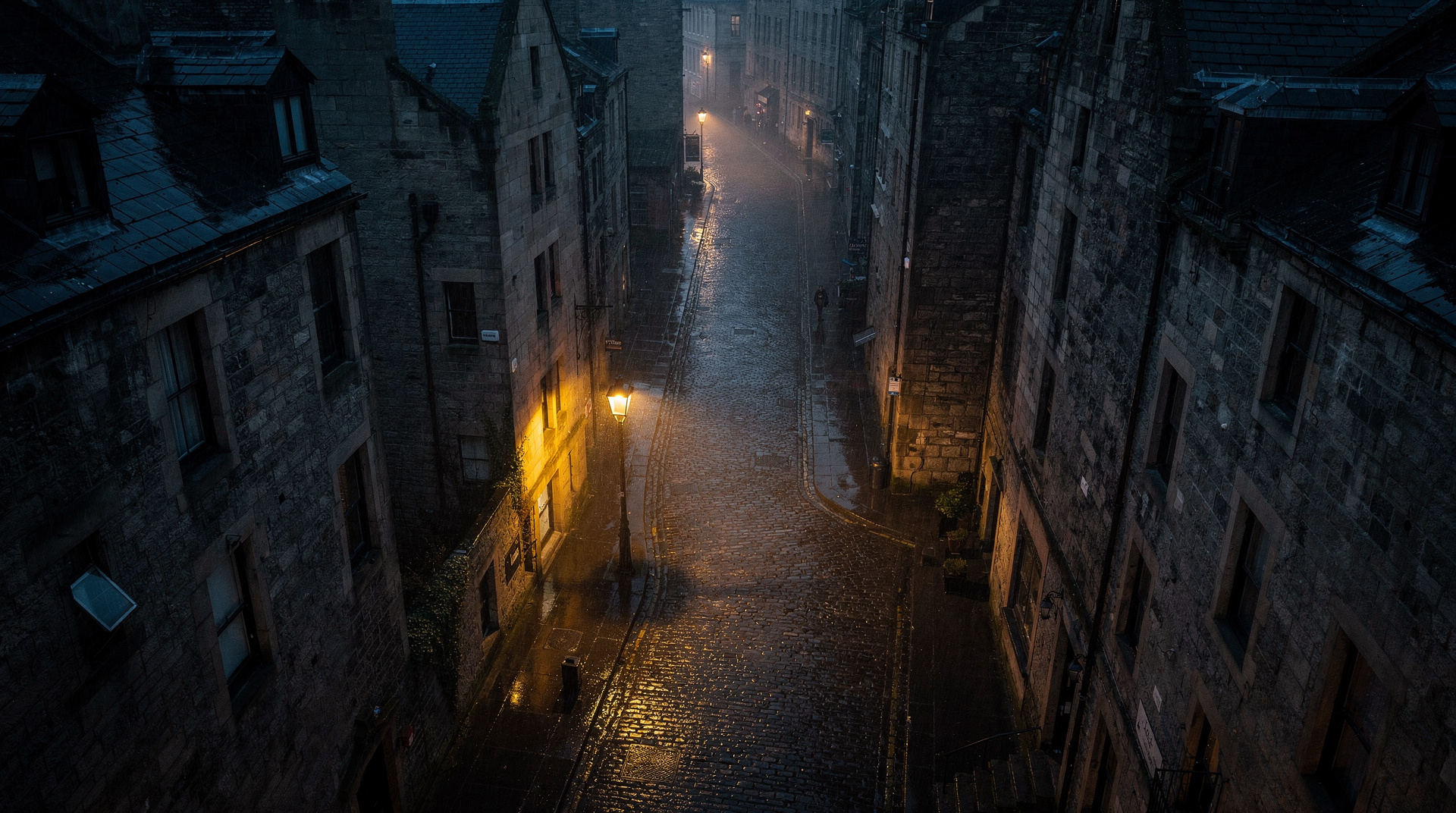
Greyfriars sits at the intersection of several of Edinburgh’s most significant historical threads. The Covenanters’ persecution runs through the later seventeenth century; the bodysnatching epidemic runs through the early nineteenth; the witch trials, though not centred on Greyfriars itself, overlap with the same legal and ecclesiastical apparatus that prosecuted the Covenanters. See the witches of Edinburgh guide for the parallel thread of institutional violence that the Kirk’s courts exercised over women accused of witchcraft.
The dark and haunted Edinburgh two-day itinerary integrates Greyfriars into a broader programme that also covers the South Bridge vaults, Mary King’s Close, and several of the best ghost walking tours. If dark tourism is your primary reason for visiting Edinburgh, this itinerary provides an efficient sequence that avoids backtracking and ensures you experience the sites in a logical order.
For visitors with a specific interest in the bodysnatching history, the Burke and Hare story provides the culminating episode — the Edinburgh murders that finally forced legal reform of the anatomy system. The Surgeons’ Hall Museums on Nicholson Street, a short walk from Greyfriars, holds Burke’s skeleton and is an undervisited dark tourism site with extraordinary historical content.
How Greyfriars fits into an Old Town day
Greyfriars is most naturally combined with the southern Old Town rather than the Royal Mile tourist circuit. A logical sequence for a half-day:
Late morning: Start at the Edinburgh Castle esplanade, walk down the Royal Mile to the Lawnmarket, then cut south on Candlemaker Row to Greyfriars. The walk takes about 20 minutes.
At Greyfriars: Allow 45 minutes for the main Kirkyard (the Bobby statue, notable graves, mortsafes, and the Covenanters’ Prison exterior). If you have booked the guided tour, allow 90 minutes total.
After Greyfriars: The National Museum of Scotland (free) is three minutes’ walk and has excellent exhibits on the bodysnatching era, the Jacobites, and Scottish history more broadly. The Grassmarket is five minutes south, with good pubs and the site of the old public gallows.
Evening: The haunted Edinburgh map guide identifies several evening ghost tour options that include Greyfriars as a stop, including combined vaults-and-graveyard tours that work particularly well after dark.
The literary Edinburgh connection
Greyfriars has an unusual density of literary associations. Robert Louis Stevenson, born in Edinburgh in 1850 and a contemporary of the bodysnatching era’s aftermath, drew on the atmosphere of the Kirkyard and the city’s underground spaces for works including “The Body Snatcher” (1884). Walter Scott, who grew up in Edinburgh in the later eighteenth century, knew the Kirkyard well and incorporated elements of its history into several novels, including references to the Covenanters that run through Old Mortality. Ian Rankin’s Inspector Rebus series uses the modern Old Town extensively, and several Rebus novels reference Greyfriars and the surrounding area.
The connection between Edinburgh’s literary culture and its dark history is not coincidental. The city that produced Scott, Stevenson, and later Arthur Conan Doyle and Iain Banks had, in its compact medieval quarter, an unusually concentrated supply of genuine historical horror. Writers who grew up in Edinburgh absorbed the bodysnatchers, the witch burnings, and the sealed underground streets as part of their city’s living memory rather than as distant history. The same civic culture produced both the Scottish Enlightenment’s rational philosophy and the Gothic horror tradition — a tension that is still visible in the Old Town’s architecture and history.
Visiting Greyfriars: practical information
The Kirkyard is free to enter and open during daylight hours. Opening days for Greyfriars Kirk itself vary, so check the Greyfriars Kirk website before you go. The Covenanters’ Prison section requires a guided tour for access.
From the Royal Mile, Greyfriars is a five-minute walk down Candlemaker Row from the Lawnmarket end. From the Grassmarket, it is a short walk uphill. The nearby Old Town is walkable from all directions, and Greyfriars makes a natural stop on any Old Town historical circuit.
The area immediately around the Kirkyard — the Grassmarket to the south, George IV Bridge to the north — contains several good pubs and independent cafes. The National Museum of Scotland is a three-minute walk away and makes a natural companion to a Greyfriars visit.
Photography: The Kirkyard is free to photograph throughout. The mortsafes and the exterior of the Mackenzie Mausoleum are the most dramatically photogenic elements for visitors interested in the dark history angle. The gate and Bobby’s statue outside photograph well in early morning light before the tourist groups arrive.
Night visits: The Kirkyard closes at dusk (variable with the season, but typically between 4pm in winter and 9pm in midsummer). Evening guided ghost tours provide access after normal hours in some cases — check with individual operators about access arrangements.
Combining with the budget Edinburgh visit: Greyfriars is one of Edinburgh’s best free attractions. The guided Covenanters’ Prison tour is the only element that costs money; the main Kirkyard, the Bobby connection, the mortsafes, and the notable graves are all freely accessible.
Best time of day and year to visit
| Time | Atmosphere | Notes |
|---|---|---|
| Early morning (8–9am) | Quiet, near-empty, best for photography | Before the tour groups and the Bobby-statue crowds arrive |
| Midday | Busy, especially near the entrance and statue | Coach and walking-tour groups cluster here |
| Late afternoon | Moderate, good light on the monuments | A comfortable window for a self-guided visit |
| Evening (with guided tour) | Atmospheric, access to the locked Covenanters’ Prison | The only time you can enter the enclosed section |
| Winter | Quiet, closes earlier (around 4pm) | Fewer visitors, but check closing time before you go |
| Summer | Busiest, open until around 9pm | Long evenings make an after-dinner visit possible |
The Kirkyard rewards a second visit at a different time of day more than most Edinburgh attractions — the atmosphere at 8am, with mist still on the grass and nobody else around, is genuinely different from the midday version most visitors see.
The Kirkyard today: a living space, not just a museum
It is easy to talk about Greyfriars purely in terms of its dark history and forget that it functions, day to day, as a quiet green space in the middle of the Old Town. Local office workers eat lunch on the benches near the entrance. The Kirkyard’s resident cats — a loose, informally cared-for colony that has lived among the gravestones for years — are a fixture that regular visitors come to recognise. Greyfriars Kirk itself still holds services, and the building’s interior, when open, is a calm counterpoint to the graveyard’s more sensational reputation.
This everyday layer matters for how you should plan a visit. Greyfriars is not a theme-park version of Edinburgh’s dark past; it is a functioning churchyard that happens to contain an extraordinary concentration of history. Treating it with the same quiet respect you would bring to any cemetery — lower voices, no walking on graves, no disturbing the cats or the flowers left at Bobby’s grave — is both good manners and, by most accounts from regular visitors, part of what keeps the atmosphere genuine rather than commercialised.
Combining Greyfriars with the wider dark Edinburgh circuit
Greyfriars rarely works best as an isolated stop. The haunted Edinburgh map guide places it within the fuller network of the city’s dark tourism sites — the South Bridge vaults, Mary King’s Close, and the Old Town closes — and shows how to sequence a day or two without backtracking across the city.
For visitors whose interest runs specifically to the witch trials and the ecclesiastical courts that operated alongside the Covenanters’ persecution, the witches of Edinburgh guide covers the parallel legal machinery in detail, and the Edinburgh Old Town history guide gives the broader medieval and early modern context that makes sense of why so much of this history is concentrated in such a small area. For a walking-focused day that takes in Greyfriars alongside Edinburgh’s best free viewpoints and closes, the best walks in Edinburgh guide is a useful companion.
Frequently asked questions about Greyfriars Bobby and the Kirkyard
Is Greyfriars Kirkyard free to visit?
The main Kirkyard is free to enter during daylight hours. The Covenanters’ Prison section requires a guided tour. Greyfriars Kirk charges a small suggested donation. The guided tour of the Kirkyard costs around £10-£14 per person and covers both the main graveyard and the Covenanters’ Prison section.
Is the Mackenzie Poltergeist genuinely dangerous?
The reports are consistent and well-documented for a haunting claim, but no visitor has been seriously injured. The most commonly reported experiences are being touched, bruised, and in some cases losing consciousness for brief periods. The Kirkyard authorities treat the claims seriously enough to restrict unsupervised access to the Covenanters’ Prison section, which suggests they take some responsibility for visitor wellbeing in that area. Whether this reflects a genuine hazard or liability management is a reasonable question.
Where exactly is Greyfriars Bobby’s grave?
Bobby’s grave is just inside the Kirkyard gate, marked with a small granite stone that reads “Greyfriars Bobby — Died 14th January 1872 — Let his loyalty and devotion be a lesson to us all.” The statue of Bobby is outside the Kirkyard at the corner of Candlemaker Row and George IV Bridge.
Are mortsafes still visible in Greyfriars?
Yes — several iron mortsafes remain in the Kirkyard, typically identifiable as heavy iron frames fitted over grave slabs. The largest and best-preserved examples are in the eastern section of the graveyard. They are genuinely striking objects: the desperation of the families who commissioned them — paying significant sums to protect their dead from the bodysnatchers — is evident in the weight and craftsmanship of the ironwork.
How long do you need at Greyfriars?
A self-guided visit to the main Kirkyard takes 30-45 minutes if you read the historical panels and find the notable graves. Adding the guided tour of the Covenanters’ Prison extends this to about 90 minutes. Combined with a visit to the adjacent National Museum of Scotland, a half-day is comfortably filled.
What is the best time of day to visit Greyfriars Kirkyard?
Early morning, around 8–9am, before the tour groups and coach parties arrive, gives the quietest and most atmospheric visit. Midday is the busiest period, particularly around the Bobby statue and entrance. Evening guided tours offer a different, darker atmosphere and are the only way to access the locked Covenanters’ Prison section.
Is Greyfriars suitable for children?
The main Kirkyard is entirely suitable for children interested in history or the Bobby story. The guided ghost tour of the Covenanters’ Prison section has more disturbing content and is better suited to children aged twelve and over. The Mackenzie Poltergeist narrative involves some genuinely unsettling material — use judgement about what is appropriate for younger children.
Top experiences
Bookable activities with verified prices and instant confirmation on GetYourGuide.