The witches of Edinburgh: history, trials, and where to find the sites
Edinburgh: mysteries, witchery and murders walking tour
How many witches were executed in Edinburgh?
Scotland executed an estimated 2,500-4,000 people for witchcraft between 1563 and 1736 — more per capita than almost anywhere else in Europe. Edinburgh was a particular centre of prosecution, including James VI's personally directed witch hunts. The Witches' Well on the Castle Esplanade memorialises the castle hill burnings.
Scotland’s witch trials in context
Scotland executed more people per capita for witchcraft than almost any country in Europe. The best current estimates suggest between 2,500 and 4,000 people were killed under the Witchcraft Act of 1563 — enacted by the Scottish parliament the same year that Mary Queen of Scots returned from France — before the act was repealed in 1736. To put that in perspective, England, a much larger country, executed fewer than 500 people for witchcraft over the same period.
| Where | Castle Esplanade (main execution site), Old Town |
| Key memorial | The Witches’ Well, Castle Esplanade |
| Cost to visit sites | Free (Witches’ Well, Tolbooth marker) |
| Best guided option | Old Town dark history / ghost walking tour |
| Time needed | 30-45 min self-guided; 1.5-2 hrs with a tour |
Edinburgh was at the centre of this prosecution culture. The city was the seat of both the privy council and the church authorities that initiated prosecutions; it was where James VI — whose personal obsession with witchcraft gave the trials their most intense period — held court; and it was where several of Scotland’s most notorious witch trials were conducted. The Castle Esplanade, immediately in front of Edinburgh Castle, was the primary execution site, where hundreds of people were burned at the stake in iron braziers.
Understanding this history is essential for making sense of what you will hear on Edinburgh’s ghost tours and dark tourism circuit. Almost every tour that covers the Old Town will mention the witch trials; fewer give the historical context that makes those mentions meaningful.
Edinburgh’s position in Scottish history
The Scottish witch trials cannot be understood without some context on Edinburgh’s role in early modern Scotland. As the capital and the seat of both crown and church, Edinburgh was where the legal apparatus of persecution was organised.
The Edinburgh Castle and the Palace complex at Holyroodhouse were the centres of royal authority; the Parliament House on the Royal Mile and the ecclesiastical courts of the Kirk were where prosecutions were authorised and reviewed. When James VI personally directed interrogations in 1590-91, he did so in rooms a short walk from where thousands of tourists now visit each day.
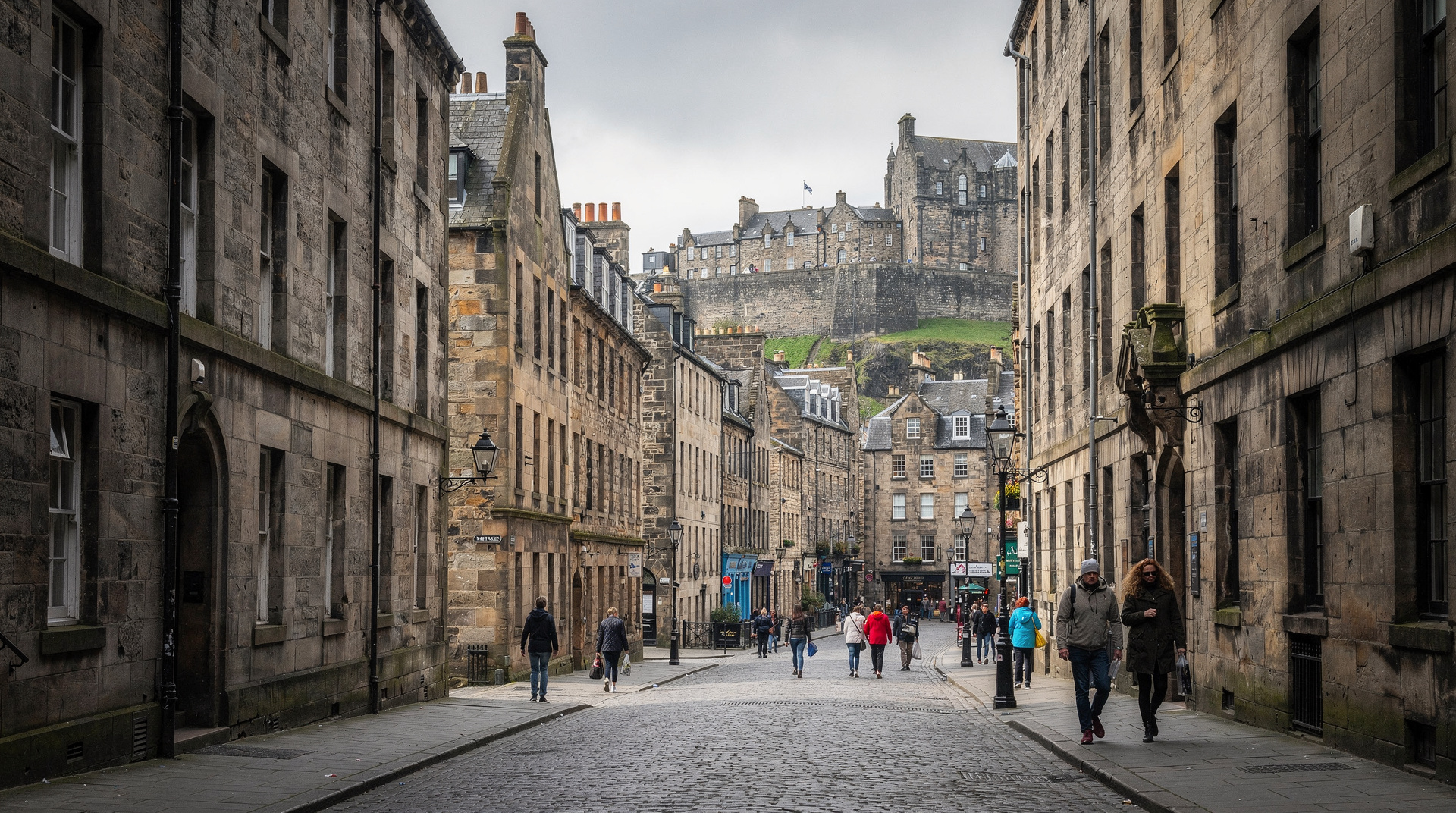
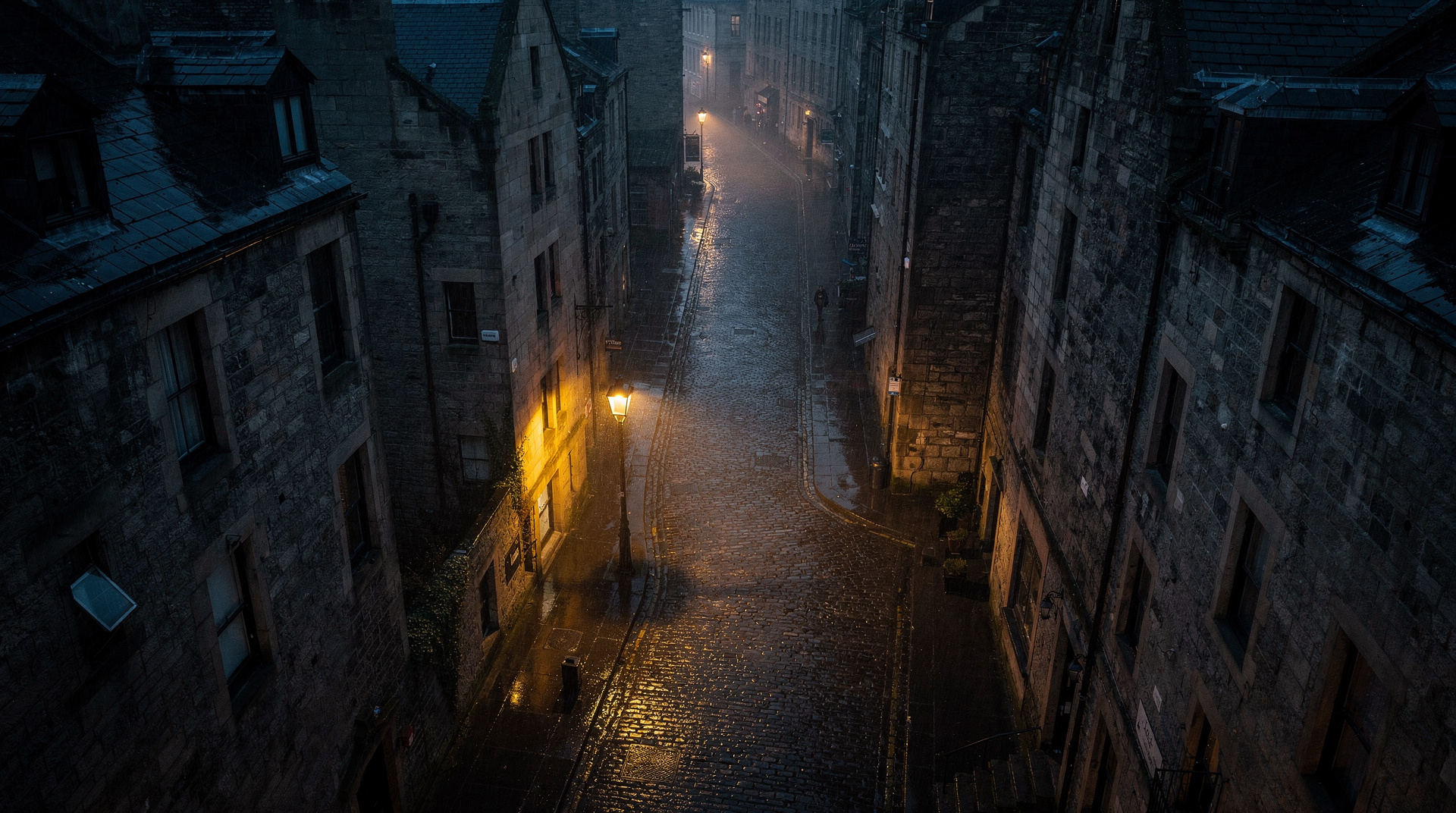
The Old Town of Edinburgh — the medieval closes and wynds that still survive largely intact — was the setting for the day-to-day operation of the witch trial system. Accused people were held in the Tolbooth prison on the Royal Mile, interrogated in the legal chambers nearby, and executed on the Castle Esplanade. The physical landscape of the trials is almost unchanged in its essential geography, which is part of why Edinburgh’s dark tourism has such a distinctive character.
Key dates at a glance
| Year | Event |
|---|---|
| 1563 | Witchcraft Act passed by the Scottish parliament |
| 1590-91 | North Berwick witch trials, directed in part by James VI |
| 1597 | James VI publishes Daemonologie |
| 1644 | Agnes Finnie tried and executed in Edinburgh |
| 1727 | Last legal witchcraft execution in Scotland (Janet Horne, Dornoch) |
| 1736 | Witchcraft Act repealed |
| 1894 | The Witches’ Well erected on the Castle Esplanade |
| 2022 | Scottish parliament issues formal apology |
The Witchcraft Act and what it meant
The Witchcraft Act of 1563 made witchcraft a capital offence in Scotland. The act reflected a broader European panic about diabolism — the belief that witches had made pacts with the Devil and were actively working against Christian society — but Scotland applied it with particular severity. Where England’s witch trials were conducted by relatively pragmatic secular courts that required a reasonably high evidentiary threshold, Scotland’s prosecutions were driven by a combination of ecclesiastical zeal, popular panic, and in the peak period of the 1590s, royal direction from James VI himself.
The typical accused witch in Scotland was not a crone living on the margins of society, though that stereotype existed. The accused were often middle-aged women of moderate social standing, sometimes targeted through neighbour disputes or accusations made under torture. Torture was legal in Scottish witch trials and routinely applied: sleep deprivation, the “witch’s bridle” (an iron mask that prevented sleep), and physical torture extracted confessions that implicated others, creating chains of accusation that could consume whole communities.
The North Berwick witch trials and James VI
The most dramatic episode in Edinburgh’s witchcraft history began in 1590 with the North Berwick witch trials — a series of prosecutions that James VI attended in person and which shaped his view of witchcraft for the rest of his life.
The trials began with the confession of a servant girl who accused her mistress of witchcraft. Under torture, further confessions spread to implicate a circle of over a hundred people. The accusations escalated to claim that witches had gathered in the church at North Berwick (about 30 miles from Edinburgh) to make a wax image of the king and cast spells to raise storms to sink the ship bringing James and his new bride, Anne of Denmark, back from Copenhagen.
James VI took personal charge of some of the interrogations. He found the confessions sufficiently convincing to write a book on the subject — Daemonologie, published in 1597 — that set out his understanding of witchcraft, demonology, and the appropriate response of a Christian monarch to the threat of diabolism. When James became James I of England in 1603, he brought this obsession with him; it influenced the legal framework that enabled the Salem witch trials and eventually inspired elements of the witchcraft narrative in Shakespeare’s Macbeth, which was written partly to flatter the new king.
The North Berwick trials resulted in the execution of at least twenty people, including the landowner Francis Stewart, Earl of Bothwell, who was accused — possibly for political reasons — of masterminding the conspiracy.
The Castle Esplanade executions
The principal execution site for Edinburgh’s witchcraft convictions was the Castle Esplanade, the flat area in front of the main castle gate. Executions here typically involved strangling the condemned person at the stake (as a mercy, theoretically) before lighting the fire — the burning of the body after death rather than alive was the standard Scottish practice, though this mercy was not always extended.
The number executed on the Esplanade over the period of the witch trials is difficult to establish precisely, but credible estimates suggest between two hundred and three hundred individuals were burned here, predominantly women but including a significant minority of men. The scale of this number, in an area that is now a tourist gathering point, is difficult to hold in the imagination.
The Witches’ Well: On the north side of the Castle Esplanade, set into the wall near the castle gate, is a small ornamental fountain known as the Witches’ Well. It was erected in 1894 and commemorates the people executed here for witchcraft. The fountain features a bronze depiction of a two-faced female figure — representing both the malicious aspect of the alleged witch and the innocence of those wrongly convicted. It is easy to miss because it is small and partially obscured, but it is the primary permanent memorial to the witch trials in Edinburgh.
Agnes Finnie and the Potterrow witch
Agnes Finnie was an Edinburgh shopkeeper who was accused of witchcraft in 1644, tortured, and executed. Her case is well documented and representative of how the prosecution system worked at its most ruthless. Finnie was accused by neighbours who blamed her for various misfortunes — sickness, failed pregnancies, the death of a child. Under interrogation, she confessed to having made a pact with the Devil and to causing the deaths alleged against her. She was executed on the Castle Esplanade.
What makes Finnie’s case notable is the quality of the surviving documentation. Her trial records allow historians to reconstruct the logic of the accusation in detail: the initial complaint, the gathering of supporting testimonies, the use of torture to elicit confession, and the execution as civic event. She was a real person with a documented life before the accusation, and following the evidence of that life gives the witch trials a human specificity that statistics cannot.
The last Edinburgh witch execution
The witch trials in Scotland gradually declined from the late seventeenth century as scepticism spread through educated society and the legal procedures were reformed to make prosecution more difficult. The last legal execution for witchcraft in Scotland occurred in Dornoch in 1727 — an old woman named Janet Horne, convicted of transforming her daughter into a pony and riding her to the Devil. The Witchcraft Act was repealed nine years later in 1736.
Edinburgh’s last documented witch trial occurred somewhat earlier. By the 1720s, prosecution had become rare enough that the cases attracted public attention and some scepticism. The shift in elite opinion away from witch prosecution was driven by Enlightenment thinking — Edinburgh’s own intellectual tradition — which made the city simultaneously the place where witchcraft prosecution had been most intense and one of the places where the intellectual framework that ended it was developed.
Connecting witchcraft history to Edinburgh’s dark tourism
The ghost tours of Edinburgh almost universally cover the witch trials, typically focusing on the Castle Esplanade executions and the sensational North Berwick trials. The mysteries, witchery and murders walking tour covers the witchcraft history in the context of a broader Old Town dark history walk, and is one of the better walking tours for combining the witch trial narrative with other aspects of Edinburgh’s violent past.
The dark history Canongate walking tour covers the Royal Mile’s association with executions and religious persecution, including the witch trial context.
For visitors specifically interested in the women’s history angle of the witch trials — the overwhelming targeting of women, the social dynamics that produced accusations, and the recent movement for formal apology and memorial — the Jacobites and Edinburgh guide provides broader context for the religious and political tensions that drove the prosecutions.
Mary King’s Close and the witch trial connection
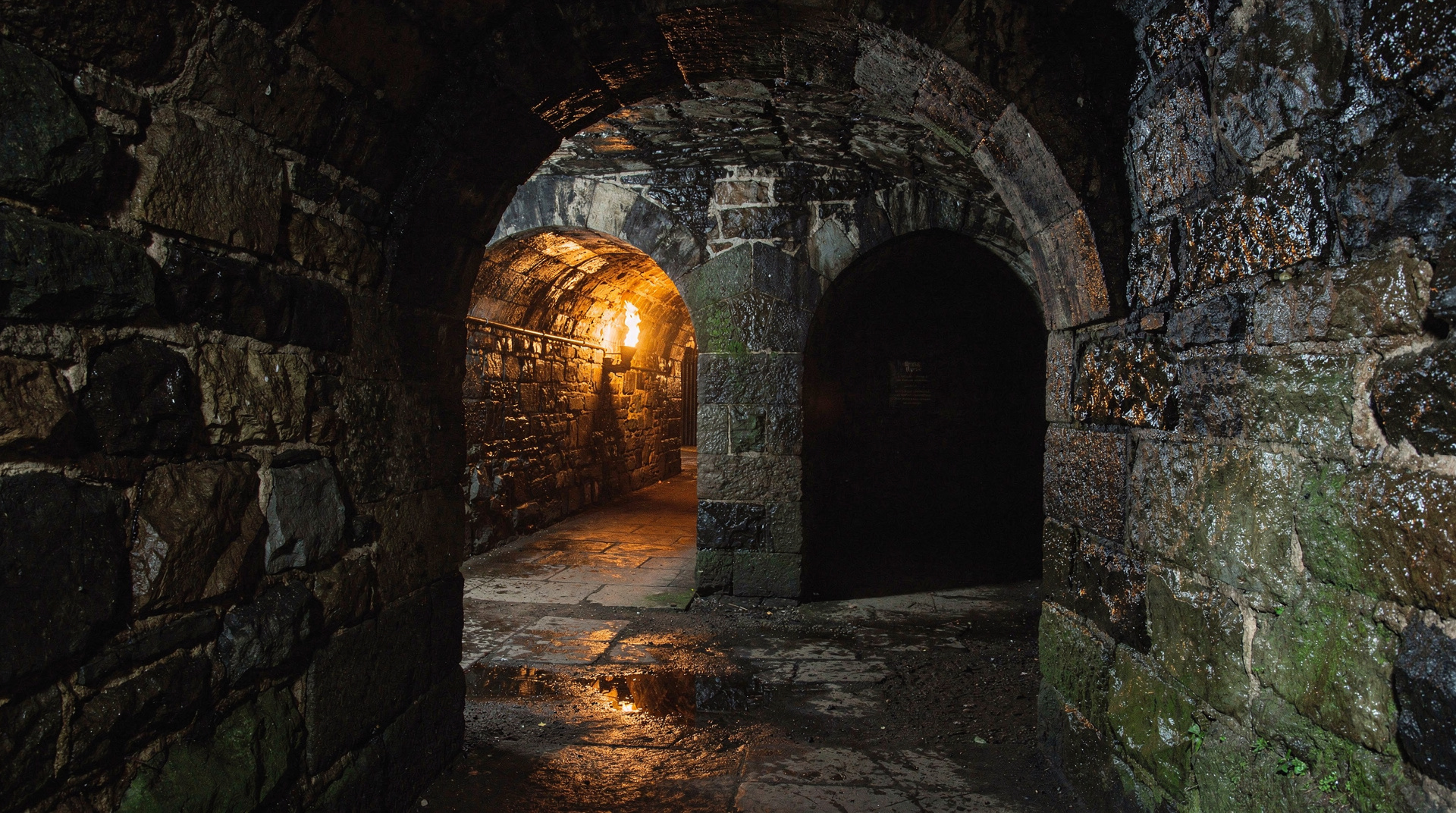
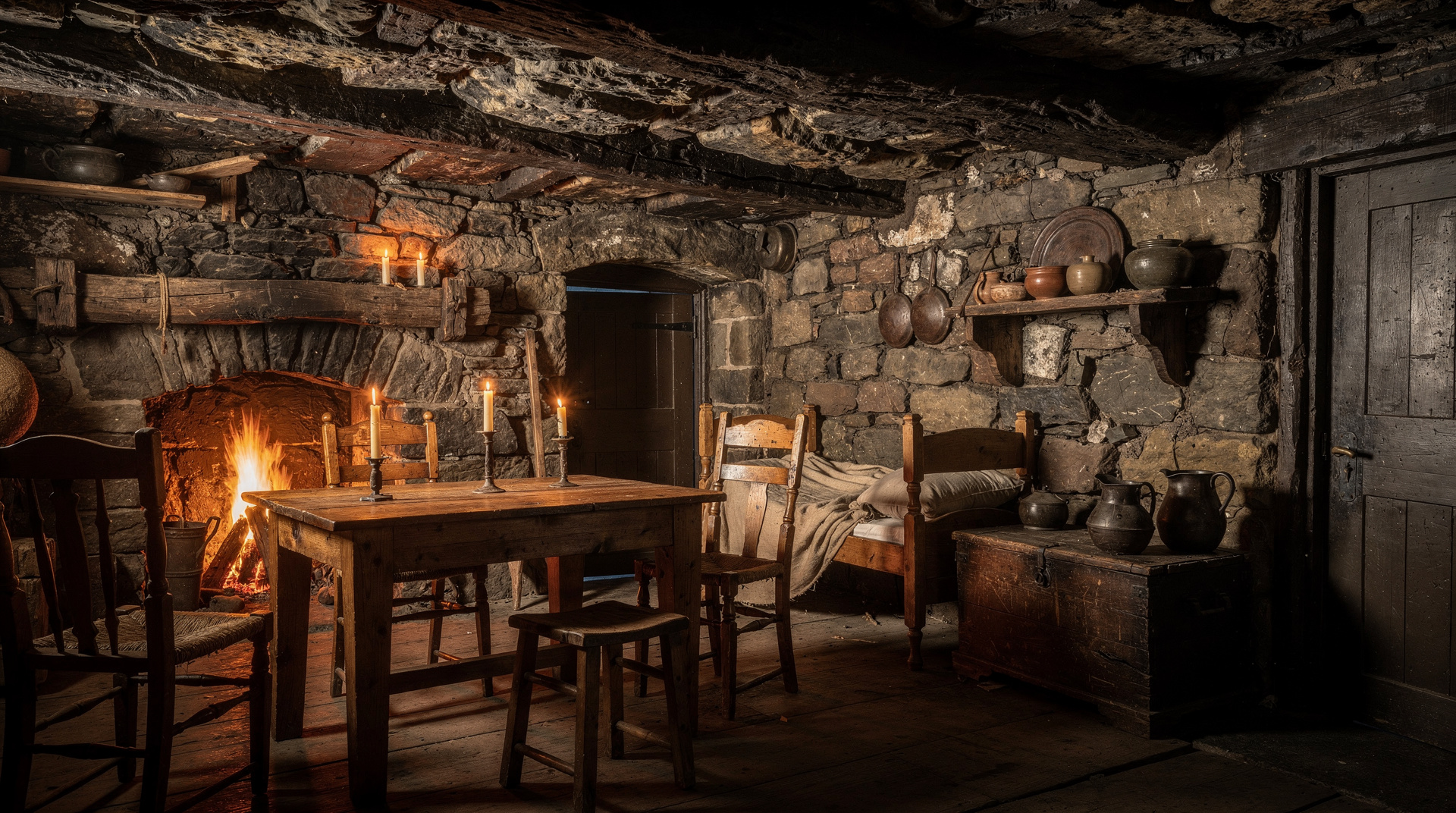
Mary King’s Close, the sealed-off close beneath the City Chambers on the Royal Mile, is one of Edinburgh’s most visited underground attractions, and its guided tours frequently touch on the witch trials as part of the close’s broader plague and poverty history.
While the close itself was not a primary witch trial site, its position in the heart of the Old Town — a few minutes’ walk from both the Tolbooth site and the Castle Esplanade — makes it a useful stop for visitors building a fuller picture of how ordinary Edinburgh residents experienced the institutional pressures of the period, witch trials included. Mary King’s Close guided underground tour covers this history alongside the close’s own story.
Visiting with a guide versus self-guided
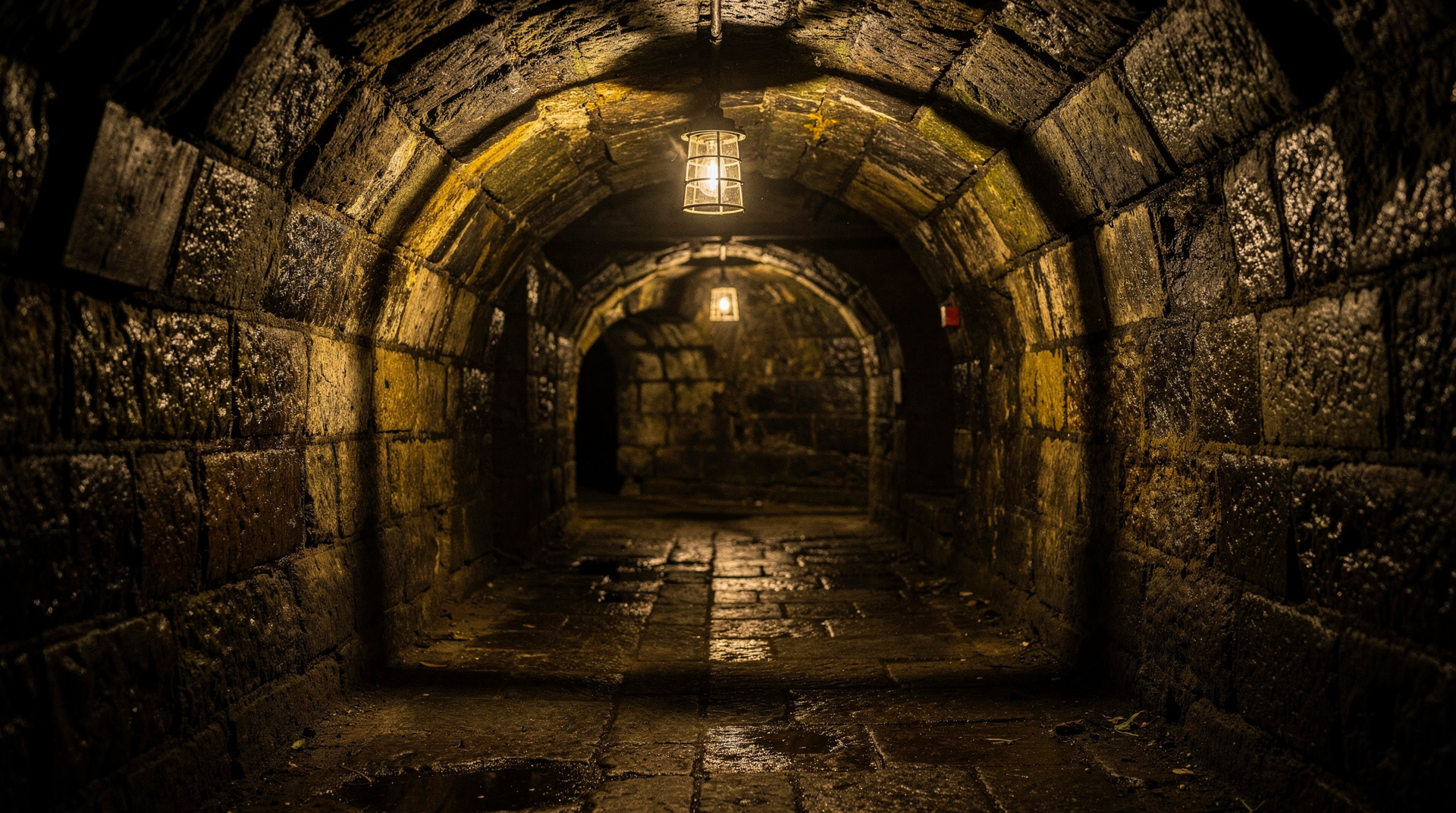
The witch trial sites can be visited entirely for free and self-guided in under an hour, following the route described below. A guided option adds context that is easy to miss walking past on your own — specifically, the connections between the Tolbooth, the Parliament Close courts, and the execution site that a knowledgeable guide can draw together in a way a plaque cannot. The original underground Edinburgh vaults tour is not specifically a witch trial tour, but it covers the same period of Old Town institutional history — plague, poverty, and punishment — and pairs naturally with a self-guided walk to the Witches’ Well and Castle Esplanade on the same day.
Self-guided is a reasonable choice if: you’ve already read this guide and just want to see the sites and the Witches’ Well in person.
A guided tour is worth it if: you want the fuller narrative connecting the trials to the underground vaults, Mary King’s Close, and the rest of Edinburgh’s dark history in a single, well-sequenced walk.
The mechanics of accusation: how trials actually worked
Understanding how witchcraft prosecutions actually operated clarifies why so many people were executed and why women were so disproportionately targeted. A typical Scottish witchcraft case began not with church courts but with community accusation — a neighbour, a rival, someone with a grievance, attributing a misfortune to a specific person’s supernatural malice. The initial accusation might be anything from sickness in livestock to failed milk, a difficult childbirth, or the death of a child.
Once an accusation was made, the legal process took over with a logic that made acquittal very difficult. Accused persons were typically imprisoned and subjected to sleep deprivation — a legal form of torture in Scotland — which produced confessions. These confessions almost invariably implicated others, because the theological framework assumed that witches operated in covens and that any given witch must have associates. Each confession thus produced new accusations, and the trials spread in waves through communities.
The accused were rarely the most vulnerable members of society in the way the popular image suggests. Many accused witches were women of middle age and moderate social standing — women who were visible enough to be named but not powerful enough to deflect accusation. The social dynamics that made a woman more likely to be accused include property disputes with neighbours, reputation for unusual knowledge (midwifery, herbal medicine), social isolation, and the misfortune of living near someone who suffered a loss and needed an explanation.
Edinburgh’s specific role in the witch trial system
Edinburgh was the administrative centre of the Scottish witch trial system in multiple senses. The Privy Council in Edinburgh authorised commissions to try witches in the localities; the Court of Justiciary in Edinburgh heard appeals and major cases; and the witchcraft law itself was enacted by the Edinburgh-based Scottish parliament. When James VI personally directed interrogations in 1590-91, he did so partly in Edinburgh and partly at Holyrood.
The concentration of institutional power in Edinburgh meant that the city’s witch trials were often the most visible and politically charged. The North Berwick trials of 1590-91, directed by James VI and involving accusations against the Earl of Bothwell, were explicitly political as well as religious — the accusation of attempting to sink the king’s ship through witchcraft was treasonous as well as blasphemous. Edinburgh was where the stakes of witch prosecution were highest.
The Edinburgh Castle complex, the Privy Council chambers near the Royal Mile, and the courts in Parliament Close were all sites where the legal machinery of witch prosecution operated. Walking the Royal Mile past St Giles’ Cathedral — the kirk whose minister John Knox had helped establish the Calvinist framework that made witch prosecution theologically imperative — and continuing to the Castle Esplanade where the executions took place gives a physical sense of how compact and centrally organised the prosecution system was.
What Edinburgh can teach about mass hysteria and institutional violence
The Scottish witch trials are sometimes taught as an example of mass hysteria — communities in the grip of supernatural panic executing innocent people. This framing is not entirely wrong, but it understates the degree to which the trials were institutionally organised and legally rational within their own framework.
The people who prosecuted witches were not primarily panicked villagers. They were lawyers, ministers, and royal officials applying a coherent theological and legal framework. The confessions they extracted under torture were taken seriously because the framework predicted exactly what the confessions described. The institutional apparatus of the Scottish church and state was functioning — efficiently, by its own standards — when it executed hundreds of people for witchcraft.
This has direct relevance to how we think about institutional violence more generally. Edinburgh’s Old Town contains evidence of several such institutional failures operating simultaneously: the witch trials, the bodysnatching era, the treatment of the Covenanters. In each case, functioning institutions produced mass harm through the consistent application of their own internal logic. The haunted Edinburgh guide provides the spatial context for these overlapping histories.
For visitors specifically interested in the legal history, the Parliament House on the Royal Mile (adjacent to the Court of Session, which still operates) and the Advocates’ Library are the surviving institutional remnants of the legal system that conducted the trials.
The modern campaign for justice
In 2022, the Scottish parliament formally apologised for the execution of people accused of witchcraft under the Witchcraft Act of 1563 to 1736. First Minister Nicola Sturgeon said that those executed were “overwhelmingly women” who had been “killed, tortured, and dehumanised.” The apology followed years of campaigning by historians and activists, and it raised questions about a formal memorial of appropriate scale — larger and more prominent than the existing Witches’ Well on the Esplanade.
As of 2026, the campaign for a permanent national memorial to the victims of the witch trials continues. The question of where such a memorial should be sited — the Esplanade itself is the obvious location, but it belongs to Historic Environment Scotland and has complicated layers of usage — has not been resolved.
Where to learn more in Edinburgh
The National Museum of Scotland (free, on Chambers Street near the Grassmarket) has some of the strongest available material on the Scottish witch trials available in a museum context — statistical work on who was prosecuted, documentary evidence, and contextual material on the social dynamics of the trials. It is significantly more substantive on this topic than most visitors expect and is worth building into any dark tourism visit.
The ghost tours of Edinburgh almost universally cover the witch trials, with the Castle Esplanade executions and the North Berwick trials featuring on virtually every tour. The dark and haunted Edinburgh two-day itinerary integrates the witch trial sites into a broader programme that also covers the underground vaults, Greyfriars, and Mary King’s Close.
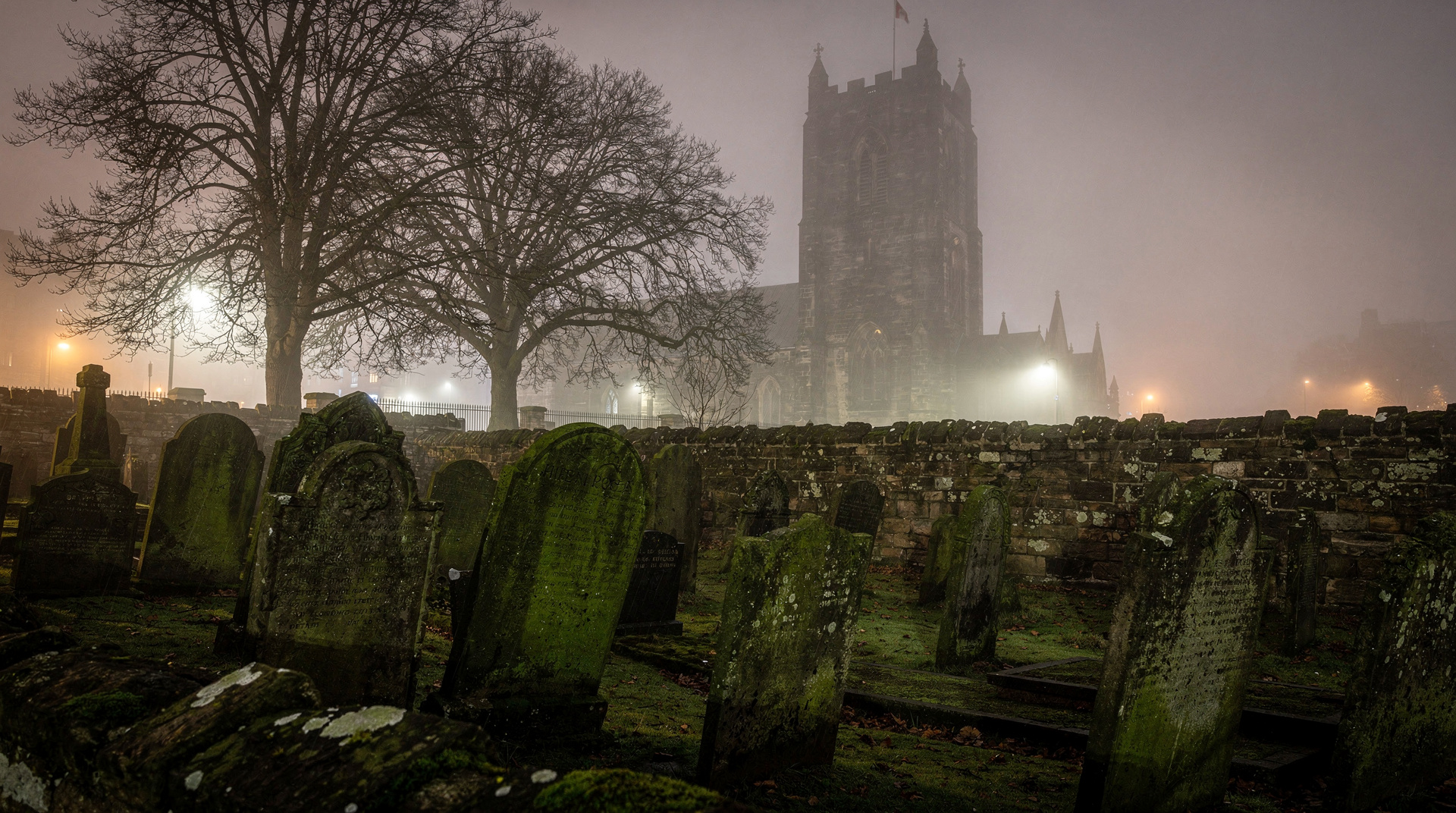
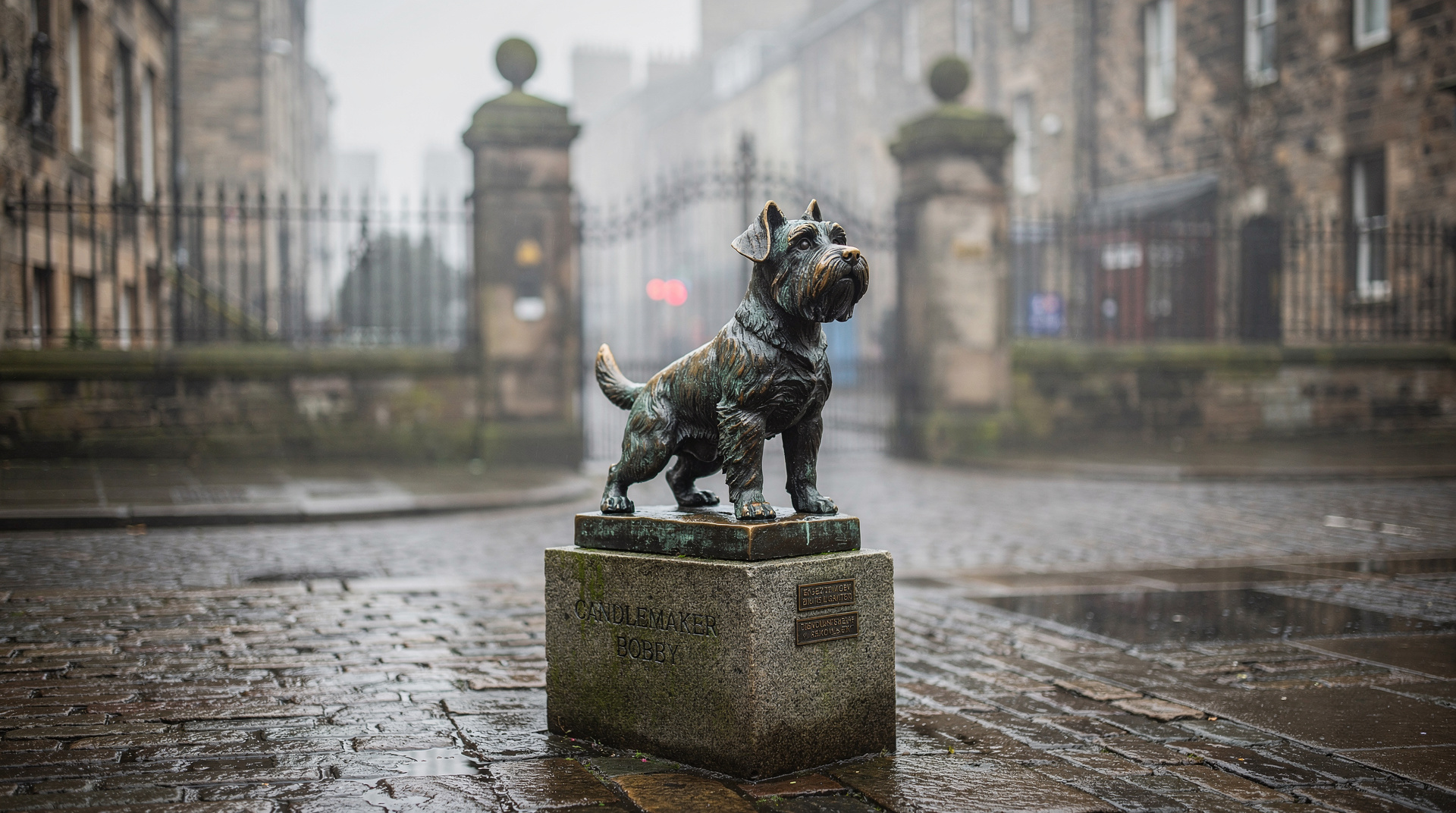
Greyfriars Kirkyard, a short walk from the Castle Esplanade, is worth combining with a witch trial visit even though its own dark history — the Covenanters’ Prison and the Greyfriars Bobby story — is a separate strand of Edinburgh’s past. See the Greyfriars Kirkyard guide and the Greyfriars Bobby and bodysnatchers guide for the detail. For the underground element of the Old Town’s dark history more broadly, the underground vaults guide and the Mary King’s Close guide cover the two most-visited subterranean attractions.
Visiting the witch trial sites
The key sites are all in the Old Town and accessible on foot:
The Witches’ Well: Castle Esplanade, north wall near the castle gate. Free, always accessible.
St Giles’ Cathedral: Several of the trial documents and some of the convicted witches’ connections pass through the Cathedral’s history. The Cathedral is open to visitors with a suggested donation.
The old Tolbooth site: The Heart of Midlothian paving marker on the Royal Mile indicates where the Tolbooth prison stood, where many accused witches were held before execution. Free.
The Parliament House area: Near St Giles’, the old Parliament Close is where many of the trial proceedings were formally authorised by the Scottish privy council.
Frequently asked questions about Edinburgh’s witch trials
Why were so many more people executed for witchcraft in Scotland than England?
Several factors combined: the stronger influence of Calvinist theology in Scotland, which took demonism more literally; the legal system’s acceptance of torture to extract confessions; the personal involvement of James VI, who was obsessed with the subject; and the structure of Scottish church courts, which were more aggressive prosecutors than the secular courts that handled English cases. Edinburgh, as the seat of both crown and church, was at the intersection of all these forces.
Were any men executed for witchcraft in Edinburgh?
Yes, though women were the overwhelming majority — approximately 85% of those executed in Scotland overall were women. Several men were executed during the North Berwick trials, and the Earl of Bothwell was accused (though never convicted). The male executions tended to occur during specific panics and conspiracy theories, while the female prosecutions reflected a more persistent social tendency to attribute unexplained misfortune to women.
Where is the Witches’ Well exactly?
On the north wall of the Castle Esplanade, near the main gatehouse, at roughly head height above a water trough. It is a small bronze fountain plaque, easy to miss if you are not looking for it. If you stand at the top of the Esplanade facing the castle gate and walk to the left toward the wall, you will find it within thirty seconds of looking.
Is there a national memorial to the witch trial victims?
The Witches’ Well is the only permanent memorial in Edinburgh as of 2026. The Scottish parliament’s 2022 formal apology was accompanied by discussion of a larger memorial, but no site has been confirmed or construction begun. The campaign for a more prominent memorial continues — searches for “Scottish Witch Memorial” will find the current status of the campaign.
How does the witchcraft history connect to the bodysnatchers?
Both episodes reflect the same underlying social dynamic: the vulnerability of ordinary people to institutional violence in a society where legal protections for individuals were weak. The witch trials targeted primarily women of modest means who had no effective defence against accusations backed by torture. The bodysnatching era targeted primarily the poor, whose graves had no mortsafes and whose families lacked the resources to pay graveyard watchmen. The Edinburgh that produced both was a city of extraordinary intellectual achievement and simultaneous institutional brutality — a tension that runs through its dark tourism circuit. See the Burke and Hare story for the bodysnatching parallel.
Can I visit the witch trial sites for free?
Yes. The Witches’ Well, the Heart of Midlothian marker for the old Tolbooth site, and the Parliament Close area are all free and accessible at any time as part of a self-guided walk down the Royal Mile. Only the guided tours and the indoor attractions (Mary King’s Close, the underground vaults) charge admission.
How long does it take to see the witch trial sites?
A self-guided walk covering the Witches’ Well, the Tolbooth marker, and the Parliament Close area takes 30-45 minutes at an easy pace. Add a guided walking tour (90 minutes to two hours) or a visit to the National Museum of Scotland for a fuller half-day dedicated to the topic.
Top experiences
Bookable activities with verified prices and instant confirmation on GetYourGuide.