Burke and Hare: Edinburgh's most infamous murders
Edinburgh: mysteries, witchery and murders walking tour
Who were Burke and Hare and what did they do?
William Burke and William Hare were Irish immigrants in Edinburgh who murdered at least 16 people in 1827-1828, selling the bodies to anatomist Robert Knox to supply his medical school. The case exposed the illegal trade in cadavers and led directly to the Anatomy Act of 1832. Burke was convicted and hanged; Hare turned king's evidence.
How Edinburgh’s murder epidemic began with a dead lodger
William Burke and William Hare did not set out to become murderers. Their descent into serial killing began, as these things often do, with a pragmatic calculation: in the winter of 1827, a lodger at Hare’s boarding house in Tanner’s Close, off the West Port, died of natural causes, still owing four pounds in unpaid rent. To recover the debt, Hare and Burke — both recent Irish immigrants working as labourers — removed the corpse from its coffin (substituting bark for weight) and sold it to Dr Robert Knox, a popular anatomy lecturer who paid seven pounds and ten shillings without asking questions.
This transaction, conducted through Knox’s assistant, would have remained an unremarkable episode in the city’s well-established trade in stolen corpses. But Knox was willing to buy fresh bodies in quantity, at rates considerably above what the bodysnatchers who supplied him could reliably earn by waiting for deaths to occur naturally. Burke and Hare drew a conclusion that other suppliers had not made explicit: a fresh murder victim was easier to obtain than a disinterred corpse, attracted no suspicion as long as no one looked for the body, and commanded the same price.
Over the next twelve months they murdered sixteen people, most of them vulnerable individuals — older women, a sex worker, a disabled boy nicknamed “Daft Jamie” who was well known in the neighbourhood — lured to Hare’s lodging house and killed by a method that became known as “burking”: pressing down on the victim’s nose and mouth while holding the body down, suffocation without leaving marks that would have concerned an anatomist examining the body for purchase.
| Where | West Port, Grassmarket, Surgeons’ Square — all walkable Old Town sites |
| Key site today | Surgeons’ Hall Museums, Nicolson Street (£10 adults, £5.50 children aged 5-15, open daily 10am-5pm) |
| Timeline | November 1827-October 1828 (16 murders); Burke hanged 28 January 1829 |
| Best way to explore | A guided Old Town dark history walking tour, or self-guided via Surgeons’ Hall |
| Pairs well with | Greyfriars Kirkyard mortsafes, the South Bridge vaults |
Edinburgh in the 1820s: the city Burke and Hare knew
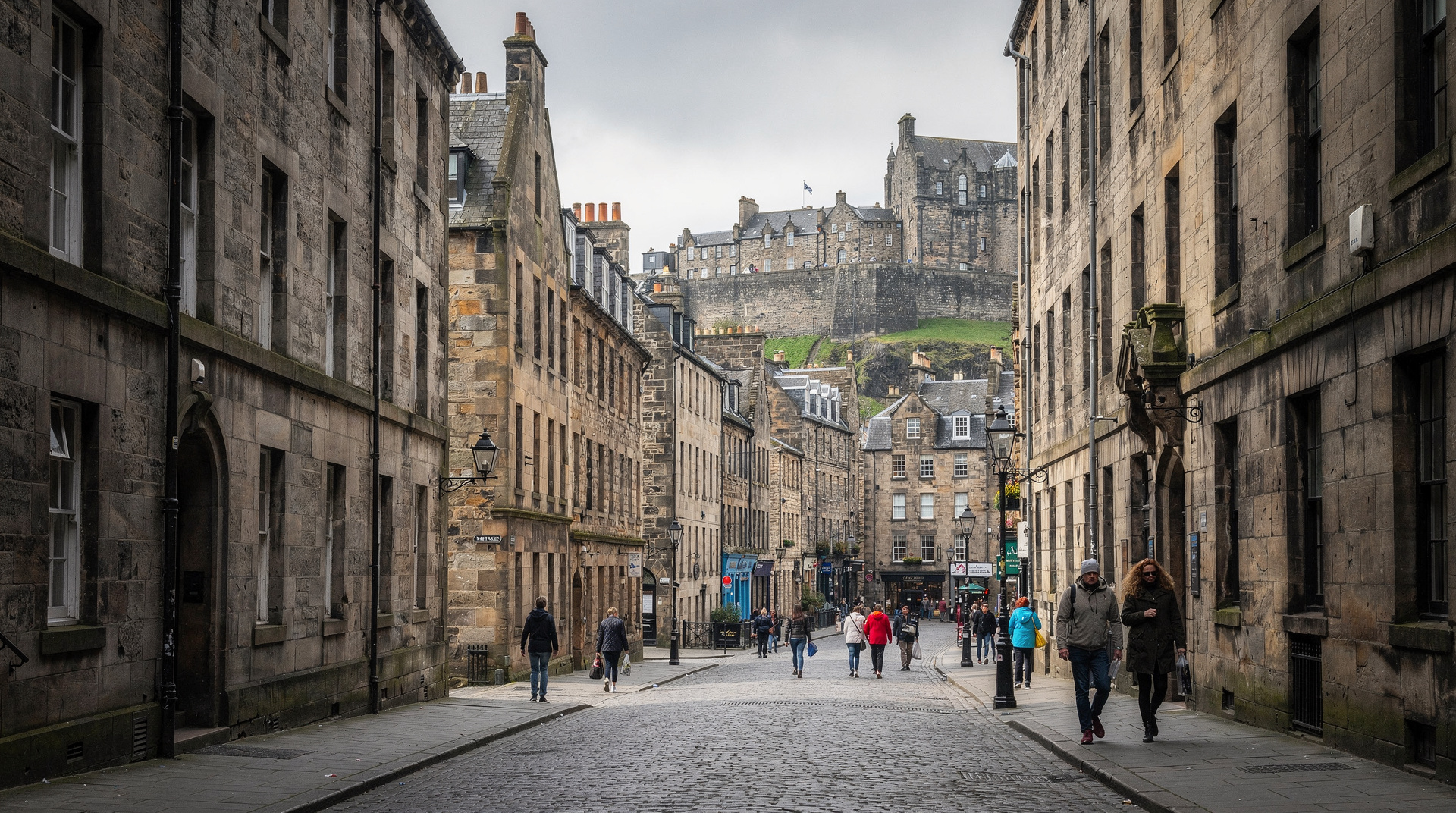
Burke and Hare arrived in Edinburgh in the 1820s at a specific moment in the city’s development. The New Town — James Craig’s elegant Georgian grid — was largely complete and housing Edinburgh’s professional and mercantile classes in conditions of unprecedented comfort. The Old Town, meanwhile, was still the densely overcrowded medieval city that had housed Edinburgh’s population for centuries, with conditions worsened by the influx of Irish immigrants (including Burke and Hare themselves) seeking work in Scotland’s expanding industrial economy.
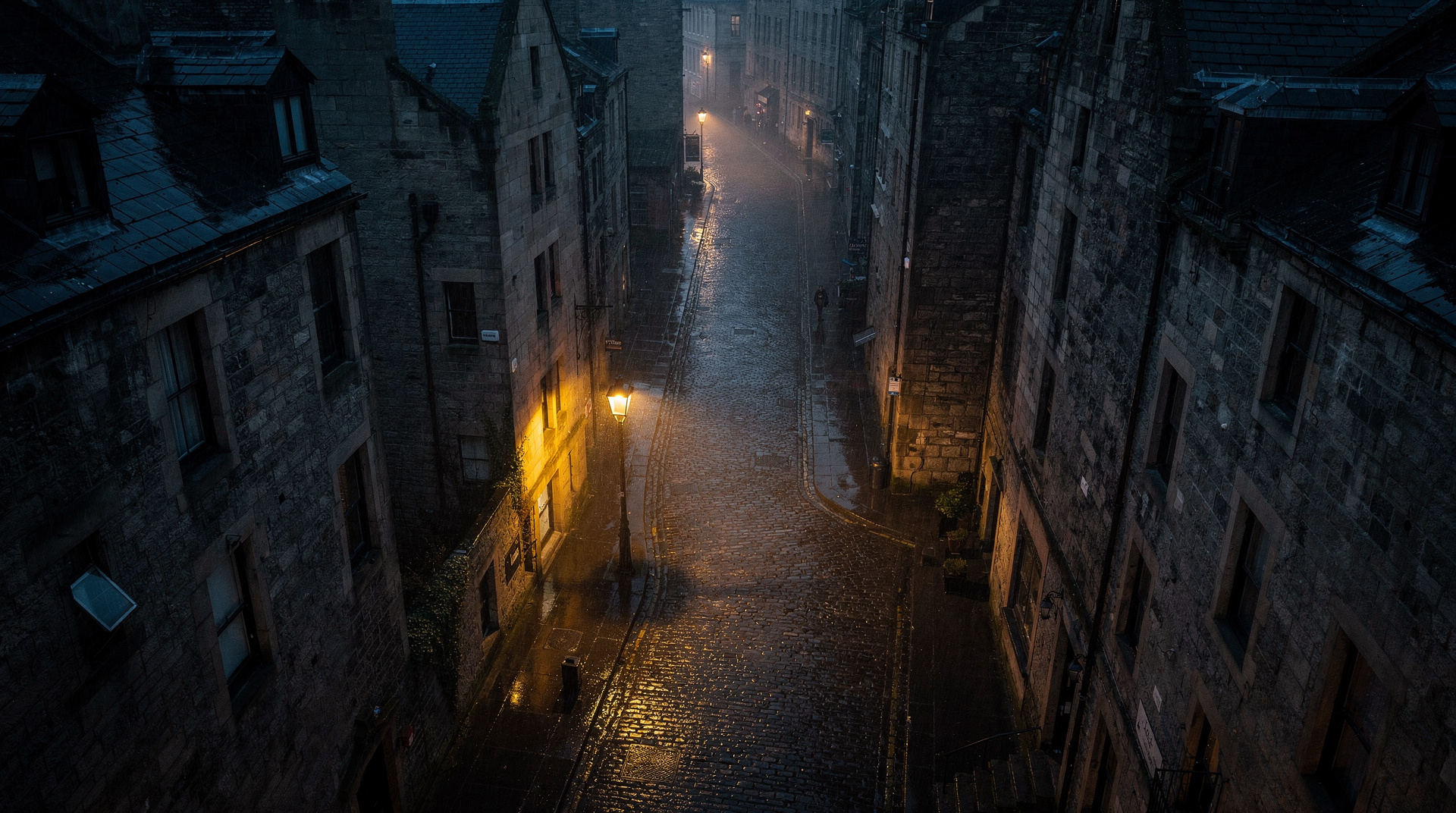
The Grassmarket where the murders occurred was the transition zone between these two Edinburghs — a space that had once been the city’s principal market and execution ground but by the 1820s was becoming the base for casual labour, lodging houses, and the marginal population that neither the New Town nor the established Old Town wanted. Burke and Hare’s victims were people from this same precarious world, whose disappearance would not immediately trigger investigation.
The Royal Mile, a few minutes’ walk from the murder sites, was already becoming the main thoroughfare of what would eventually become Edinburgh’s tourist circuit. The contrast between the Royal Mile’s civic architecture and the squalor of the West Port closes a few streets to the south was one of Edinburgh’s most visible social contradictions. See the Old Town history guide for the full account of this period.
The West Port murders: how they operated
The geography of the Burke and Hare murders is concentrated in a small area of Edinburgh’s Old Town, easily walkable today. Hare’s lodging house on Tanner’s Close stood in the West Port area, south of the Grassmarket — the same neighbourhood that contained several of the city’s pub crawl circuit, making it easy to lure strangers to drink with the promise of affordable lodgings. The victims were typically brought to the house after being plied with drink, and killed when they were too intoxicated to resist.
The bodies were then packed into boxes or tea chests and delivered to Knox’s anatomy rooms on Surgeons’ Square, roughly a fifteen-minute walk away through the Old Town. Knox paid on delivery and appears to have asked no questions about the origins of the bodies, though this was standard practice in an era when no legal supply of cadavers existed and all anatomy lecturers operated in a grey market. Whether Knox suspected or knew that the bodies were murder victims rather than stolen from graves has been debated ever since.
The victims included:
- Abigail Simpson, a pensioner from Gilmerton
- Mary Paterson, a young woman whose beauty was noted by Knox’s students
- “Daft Jamie” Wilson, a disabled teenager well known on the streets of Edinburgh
- Mary Docherty (also recorded as Campbell), whose murder triggered the investigation
The investigation and trial
The murders were discovered almost by accident. In October 1828, two lodgers at Hare’s house found the body of Mary Docherty hidden under a bed and reported it to the police. Burke and Hare were arrested, and the anatomy rooms were searched. Hare turned king’s evidence and was granted immunity from prosecution. Burke was convicted and sentenced to death; his companion Helen McDougal was freed on a “not proven” verdict.
William Burke was hanged on 28 January 1829 in front of a crowd estimated at 25,000 people — one of the largest public executions Edinburgh had seen. His execution was followed by a grim irony: his body was handed to the University of Edinburgh for public dissection, exactly as the bodies of his victims had been treated. His skeleton remains on display at the Surgeons’ Hall Museums to this day, along with his death mask and a wallet made from his tanned skin — a ghoulishness that says as much about Victorian attitudes to criminal bodies as about the crimes themselves.
What happened to Hare and Knox
William Hare was released following Burke’s conviction and immediately became a target for public fury. Attempts were made on his life before he could leave Edinburgh. He was reportedly bundled onto a coach to Dumfries and from there disappeared from documented history. Various claimed sightings circulated for years — including accounts of a blind beggar in London believed to be him — but no verified record of his subsequent life exists.
Dr Robert Knox faced no criminal charges, but public opinion was less forgiving than the law. His lectures were disrupted by protests; effigies were burned outside his house; his medical career in Edinburgh was effectively over. He moved to London in 1842 and continued working as a physician and anatomist, but never recovered the prominence he had in Edinburgh before 1829. He died in 1862 with his reputation permanently compromised.
The Anatomy Act and the lasting impact
The Burke and Hare case created a public and parliamentary crisis that had been building for years. The illegal body trade was an open secret of Edinburgh’s medical establishment, and the murders made it impossible to continue pretending the system was acceptable. Within three years, the Anatomy Act of 1832 had transformed the legal framework: hospitals and workhouses could now donate the bodies of unclaimed patients to anatomy schools, ending the financial incentive for body theft and eliminating the market that had driven Burke and Hare’s killings.
The Act also required the licensing of anatomy schools, ended the exclusive supply from executed criminals, and created the modern framework for body donation that persists in modified form to this day. Burke and Hare, in their gruesome way, had forced a reform that the medical establishment’s own lobbying had failed to achieve.
Where to find the Burke and Hare story in Edinburgh
Surgeons’ Hall Museums: The most substantive collection of Burke and Hare material in existence. Burke’s skeleton, death mask, a wallet made from his skin, and contextual material about the anatomy trade are all on display. The museum is in Nicolson Street, a short walk from the South Bridge, and is significantly undervisited given the quality and historical significance of what it contains. Admission is around £8.
The West Port area: Tanner’s Close itself has been demolished and the West Port has been extensively redeveloped, but the area around the Grassmarket and the West Port retains the scale and character of the neighbourhood where the murders occurred. Several pubs claim connection to the Burke and Hare story, with varying degrees of historical accuracy.
Greyfriars Kirkyard: The context for the bodysnatching trade that Burke and Hare exploited is visible in Greyfriars in the form of the mortsafes — iron frames bolted over graves to prevent exhumation — installed in the 1820s in direct response to the fear of the body trade. See the Greyfriars and bodysnatchers guide for the full context.
Ghost tours: The Burke and Hare story features prominently in Edinburgh’s ghost tour circuit. The mysteries, witchery and murders walking tour covers the murders in the context of the Old Town’s violent history, and the Edinburgh Dungeon has a theatrical presentation of the Burke and Hare episode. For historical depth rather than theatrical presentation, the Surgeons’ Hall Museums are the better choice.
Edinburgh’s anatomy school and its broader context
Edinburgh’s position as one of Europe’s premier medical schools in the eighteenth and early nineteenth centuries was built on a tradition of hands-on anatomical teaching that was genuinely progressive by the standards of the time. The university attracted students from across Britain and beyond; the lectures of anatomists like Knox were popular and influential. The body trade that fed this system was an institutional failure, not an individual moral failure — the entire system required cadavers that the law could not provide, and the informal supply chain existed because everyone who benefited from it preferred not to ask questions.
The Burke and Hare case forced Edinburgh and Britain to confront this institutional hypocrisy. The parallel with the witch trials is instructive: in both cases, Edinburgh’s institutions — whether the church courts of the sixteenth century or the anatomy schools of the nineteenth — operated systems that produced violence through their structural requirements, and remained blind to that violence until a crisis made it visible. The witches of Edinburgh guide covers the earlier episode of this same institutional tendency.
The social geography of the murders
The West Port area where the murders occurred was, in 1827-1828, a particular kind of Edinburgh neighbourhood — one of the transitional zones between the Old Town’s dense overcrowding and the more respectable streets to the south. Tanner’s Close stood near the foot of the West Port, a short walk from the Grassmarket where the city’s public executions had taken place until 1784. The lodging houses of this area served itinerant workers, seasonal labourers, and the marginal population of the city’s lower economy.
Burke and Hare occupied a specific niche in this social geography: Irish immigrants at a time when Irish immigration to Scotland was generating significant social tension. Their ability to lure victims relied on the combination of cheap alcohol, the anonymity of the lodging house, and the vulnerability of people who had no fixed address and no one who would reliably notice their absence. Most of the victims were people for whom disappearance was plausible — the elderly, the visibly poor, those known to wander.
The area has been extensively redeveloped since the nineteenth century. The West Port today retains some of the scale of the original street but little of the physical fabric. A blue plaque marks the approximate site of Tanner’s Close, though the building itself is long gone. Walking the area with the knowledge of the murders changes the experience of a neighbourhood that might otherwise feel unremarkable — the Edinburgh that Burke and Hare inhabited was a city of extraordinary contrasts, where the intellectual brilliance of the Enlightenment medical school existed in close proximity to the brutal poverty that supplied it.
Connecting the story to Edinburgh’s medical history
The Burke and Hare case cannot be understood in isolation from Edinburgh’s position as the world’s leading centre of medical education in the early nineteenth century. The University of Edinburgh’s medical faculty attracted students from across Britain and from North America and continental Europe; the lectures of anatomists like Knox were standing-room events. The demand for bodies was a structural feature of a system that everyone acknowledged was operating illegally but that no one with power had been willing to reform.
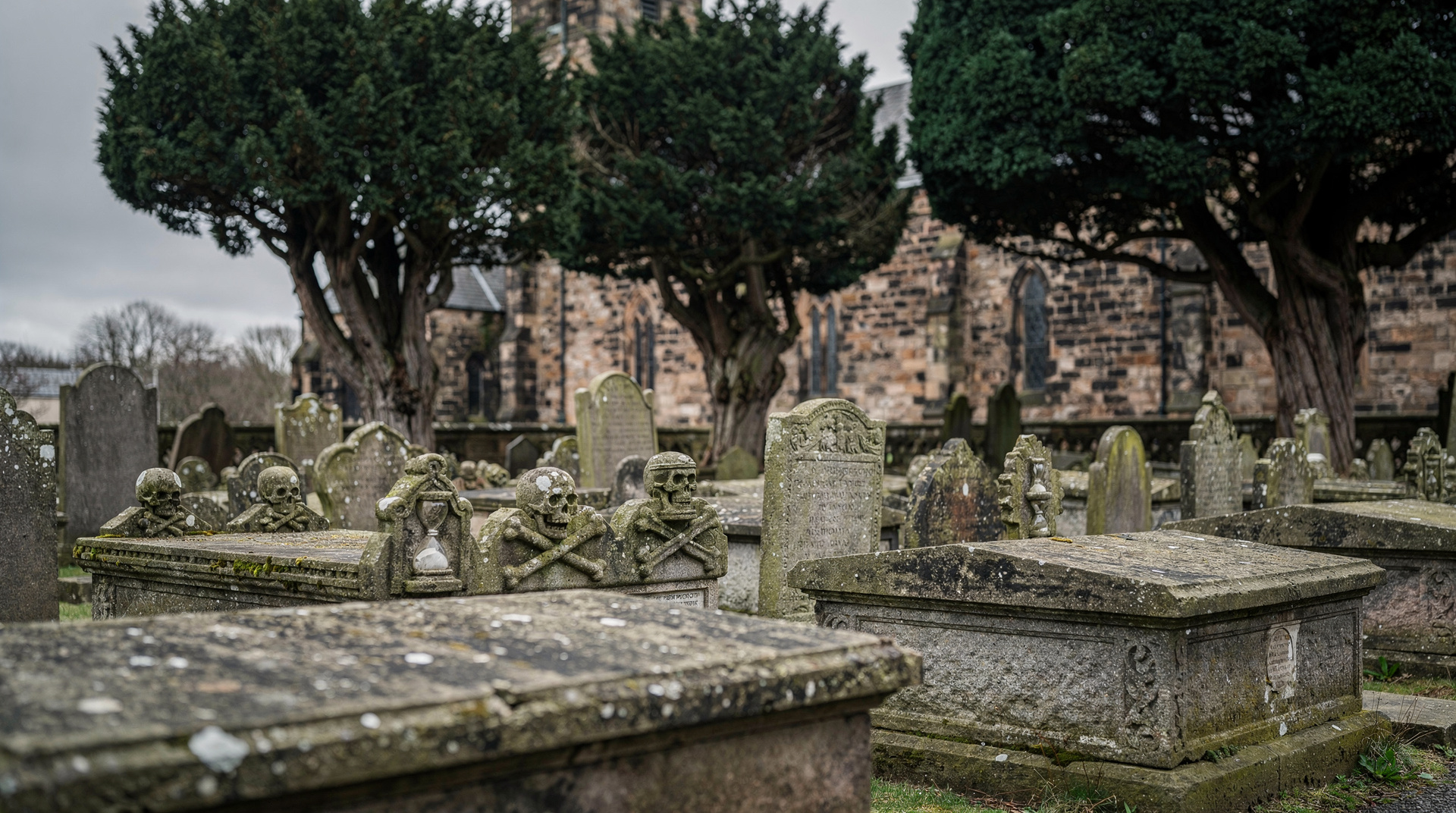
The connection to Greyfriars Kirkyard is direct and visible. The mortsafes — iron frames bolted over graves — that can still be seen in the Kirkyard today were installed in direct response to the bodysnatching epidemic that Burke and Hare’s case culminated. The mortsafe at Greyfriars is one of the most physically tangible reminders of what the demand for cadavers meant to ordinary Edinburgh families: real money spent on real iron, installed by people who knew that without protection their relatives’ bodies would be dug up and sold.
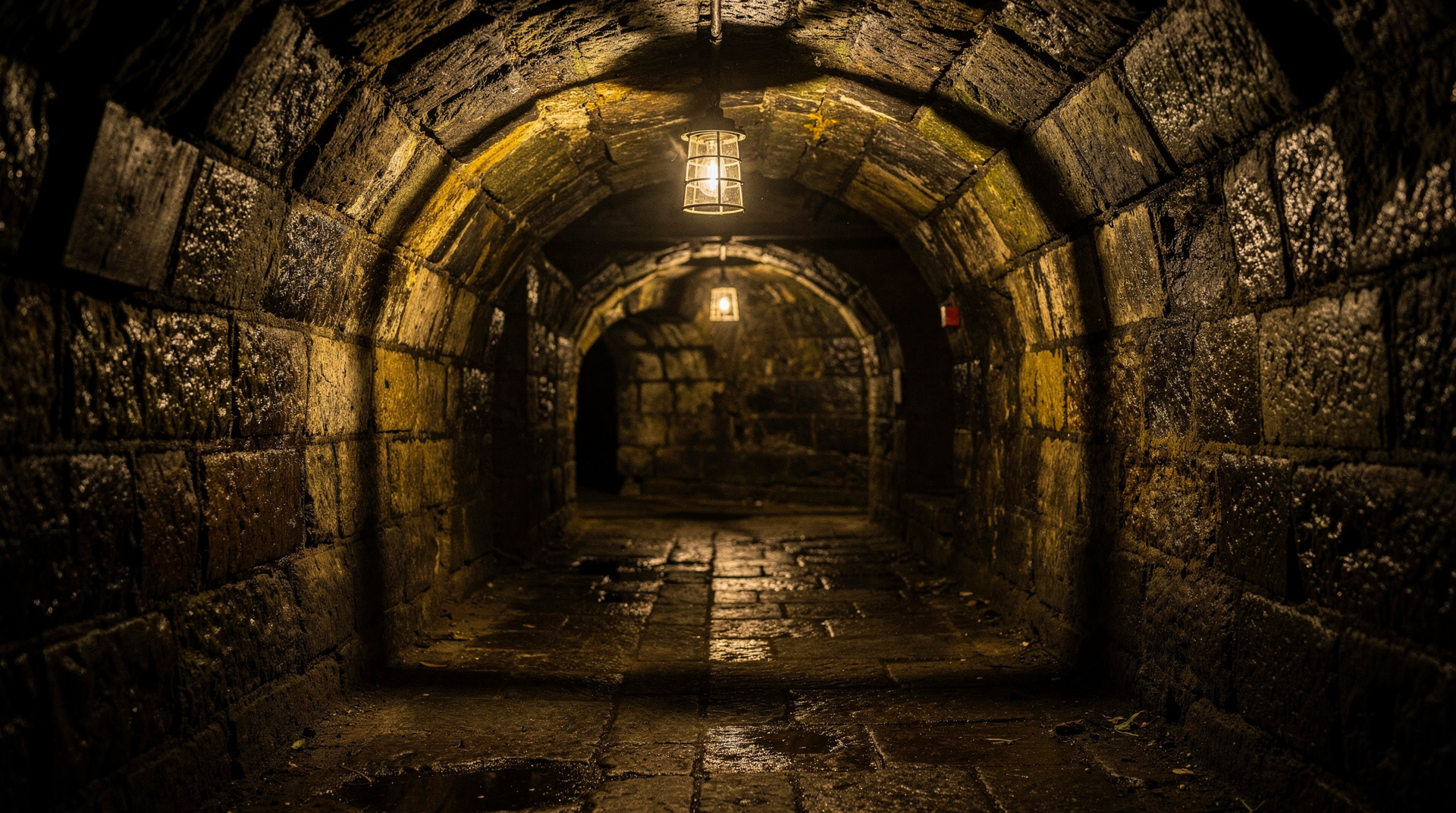
The South Bridge vaults have their own connection to the bodysnatching era. The sealed underground chambers were, in the period when they were inhabited, part of the same social ecosystem that produced Burke and Hare’s victims — poor, marginal, living in cramped and difficult conditions where death and disease were common. The vaults’ history and the Burke and Hare story illuminate the same Edinburgh.
Visiting the sites today
Surgeons’ Hall Museums: The most important site for Burke and Hare material. Located on Nicholson Street, a short walk from the South Bridge and Old Town. Burke’s skeleton, death mask, and several objects related to the case are on permanent display in the Pathology Museum. The museum is significantly undervisited given the quality and historical significance of what it contains. Admission around £8; closed on some weekdays — check opening hours before visiting.
West Port and the murder site area: The site of Tanner’s Close (now approximately at 10-12 Tanner’s Close/West Port) is marked. The surrounding area has a plaque. The walk from here through the Grassmarket and up to the Old Town gives a sense of the physical geography of the murders — the distance from the lodging house to the anatomy school is short, reinforcing how brazen the operation was.
The Grassmarket: The old execution ground, where the public gallows stood until 1784, is a few minutes’ walk from the West Port murder sites. The Grassmarket was Edinburgh’s most public space for dealing with criminals; Burke was hanged not here but on the Lawnmarket (the gallows had moved by 1829), and the crowd of 25,000 gathered to watch his execution was one of the largest the city had seen.
For a guided experience that covers the bodysnatching history in its Old Town context, the ghost tours guide identifies tours that include this material. The mysteries, witchery and murders walking tour covers the Burke and Hare murders directly as part of a broader Old Town dark history walk. For a more theatrical approach, the dark history Canongate walking tour covers the same geographical area with a focus on the Canongate’s violent history.
The cultural afterlife of Burke and Hare
The murders entered popular culture almost immediately. Robert Louis Stevenson, who grew up in Edinburgh in the 1850s and 1860s, absorbed the story from his childhood and wrote “The Body Snatcher” (1884), a horror story directly inspired by the anatomy school trade. Dylan Thomas adapted the Burke and Hare story for a 1953 film script. At least three major film adaptations have been made in the twentieth and twenty-first centuries, reflecting the story’s persistent hold on the imagination.
The broader connection to the language is worth noting: “to burke” entered the English language as a verb meaning to suppress or stifle — derived from the method of murder Burke employed — and remains in current use. The body of a man most remembered for smothering victims lives on in a figure of speech about silencing.
The wider resurrection trade Burke and Hare exploited
Burke and Hare are Edinburgh’s most infamous bodysnatchers, but they operated within an established criminal economy that predated them by decades and continued, in modified form, elsewhere in Britain after their case became notorious. “Resurrection men” — professional grave robbers who exhumed recently buried bodies and sold them to anatomy schools — worked in most major British cities with a medical school, including London, Glasgow, and Aberdeen.
Edinburgh’s version of the trade was particularly well organised because the city’s medical school was Europe’s most prestigious, generating consistent demand that outstripped the legal supply of cadavers (which in law came only from executed criminals, a dwindling and unreliable source as capital punishment for lesser offences declined).
The resurrection trade generated its own countermeasures well before Burke and Hare turned to murder. Mortsafes, watch towers in graveyards, and mortuary societies that paid for grave-watching all developed in the 1810s and 1820s in direct response to genuine, widespread bodysnatching — Burke and Hare’s crime was an escalation of an existing fear, not its origin.
What made their case different, and what made it a national scandal rather than a local nuisance, was the shift from stealing already-dead bodies to manufacturing fresh ones through murder. This distinction is central to why the case forced legislative change where decades of straightforward grave robbery had not: exhuming the dead was a property crime against the living relatives, distressing but survivable as a social problem; murdering the living to sell their bodies was a different order of threat that Parliament could not continue to ignore.
Glasgow experienced its own bodysnatching scares in the same period, and the west of Scotland’s anatomy schools operated under similar grey-market conditions to Edinburgh’s. The Anatomy Act of 1832 addressed the problem nationally rather than just in Edinburgh, which is part of why the Burke and Hare case is taught as a turning point in British medical and legal history rather than treated as a purely local Edinburgh curiosity.
Visitors interested in the broader phenomenon rather than just the Burke and Hare specifics can see the physical evidence of this fear across several Edinburgh graveyards beyond Greyfriars — mortsafes and watch-houses survive in reduced numbers at other Old Town burial grounds, though Greyfriars remains the most accessible and best-preserved example for a casual visit.
Fact versus dramatised versions: what to expect from different formats
The Burke and Hare story is told in Edinburgh through several formats that vary considerably in historical accuracy, and it is worth knowing what you are getting before you book:
| Format | Historical accuracy | Tone | Best for |
|---|---|---|---|
| Surgeons’ Hall Museums | High — primary artefacts and records | Sober, clinical | Visitors who want the real history |
| Guided walking tours | Generally good, some dramatic licence | Narrative, atmospheric | A first orientation to the story and sites |
| Edinburgh Dungeon | Low — theatrical entertainment | Comic-horror, jump-scare | Family entertainment, not historical accuracy |
| Films and novels | Variable, often fictionalised | Dramatic | Background context, not primary source |
None of these formats is wrong to choose — they serve different purposes. The mistake is expecting theatrical presentations to be historically rigorous, or expecting the museum to be entertaining in the way a ghost tour is.
Frequently asked questions about Burke and Hare
Were Burke and Hare the only body suppliers to Edinburgh’s anatomy schools?
No. The legal body trade in Edinburgh was supplied by dozens of resurrection men (bodysnatchers) who dug up recent graves and sold the corpses to anatomy schools. Burke and Hare were unusual not in selling bodies but in murdering their victims to supply them — virtually all other suppliers worked with natural deaths. The trade was extensive enough to have generated the mortsafe industry at Greyfriars and other Edinburgh graveyards.
Why was Hare never convicted?
Hare turned king’s evidence — agreed to testify for the prosecution against Burke in exchange for immunity from prosecution. This was a legal mechanism available in Scots law at the time, and the prosecution’s case against Burke was strong enough without needing Hare’s conviction. The public reaction to his release demonstrated how unpopular this legal bargain was, and he had to be smuggled out of Edinburgh to prevent being killed.
Is Knox’s anatomy room still standing?
The building on Surgeons’ Square where Knox lectured was demolished, but the area around it is still accessible and several of the surrounding buildings date from the period. The Surgeons’ Hall Museums, in the Royal College of Surgeons building on Nicolson Street, is the appropriate place to connect physically with the anatomy school context — it contains the original equipment, specimens, and the material from the Burke and Hare case.
What were the names of all sixteen victims?
The precise number of victims is debated — sixteen is the most commonly cited figure, but some historians argue for slightly more or fewer depending on how evidence is interpreted. The names of nine confirmed victims are documented in the trial records and contemporary accounts; others were identified retrospectively through circumstantial evidence. The most notable were Abigail Simpson, Mary Paterson, James Wilson (Daft Jamie), and Mary Docherty, whose discovery triggered the investigation.
Was Burke’s execution publicly witnessed?
Yes — the execution was a major public event, drawing an estimated 25,000 spectators to the Lawnmarket area of the Royal Mile. By the standards of early nineteenth-century Edinburgh, it was one of the largest gatherings the city had seen. After the hanging, medical students reportedly shouted “Knox!” — calling for the anatomist to be held to the same account as the man who had supplied him with bodies.
Top experiences
Bookable activities with verified prices and instant confirmation on GetYourGuide.