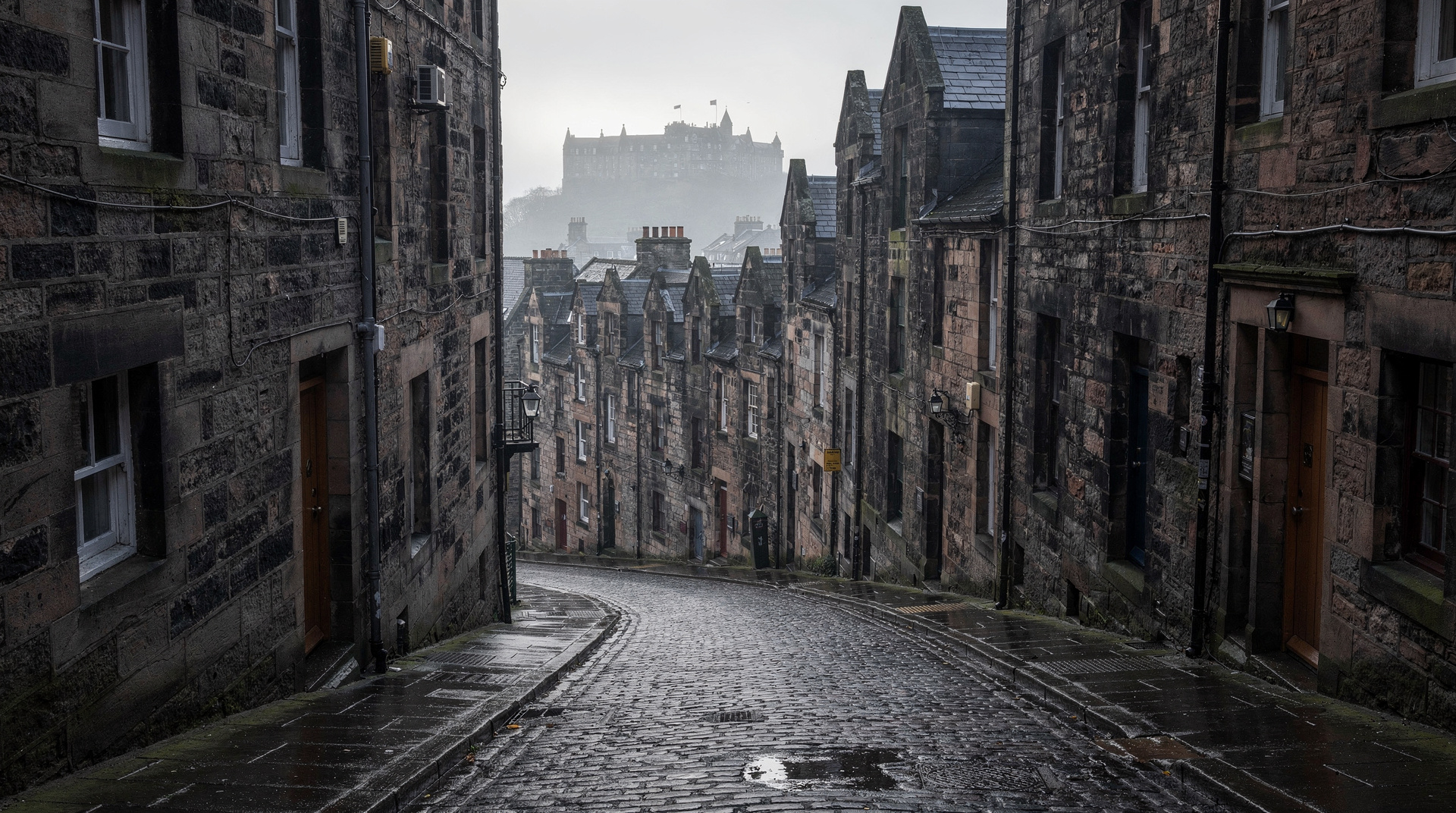
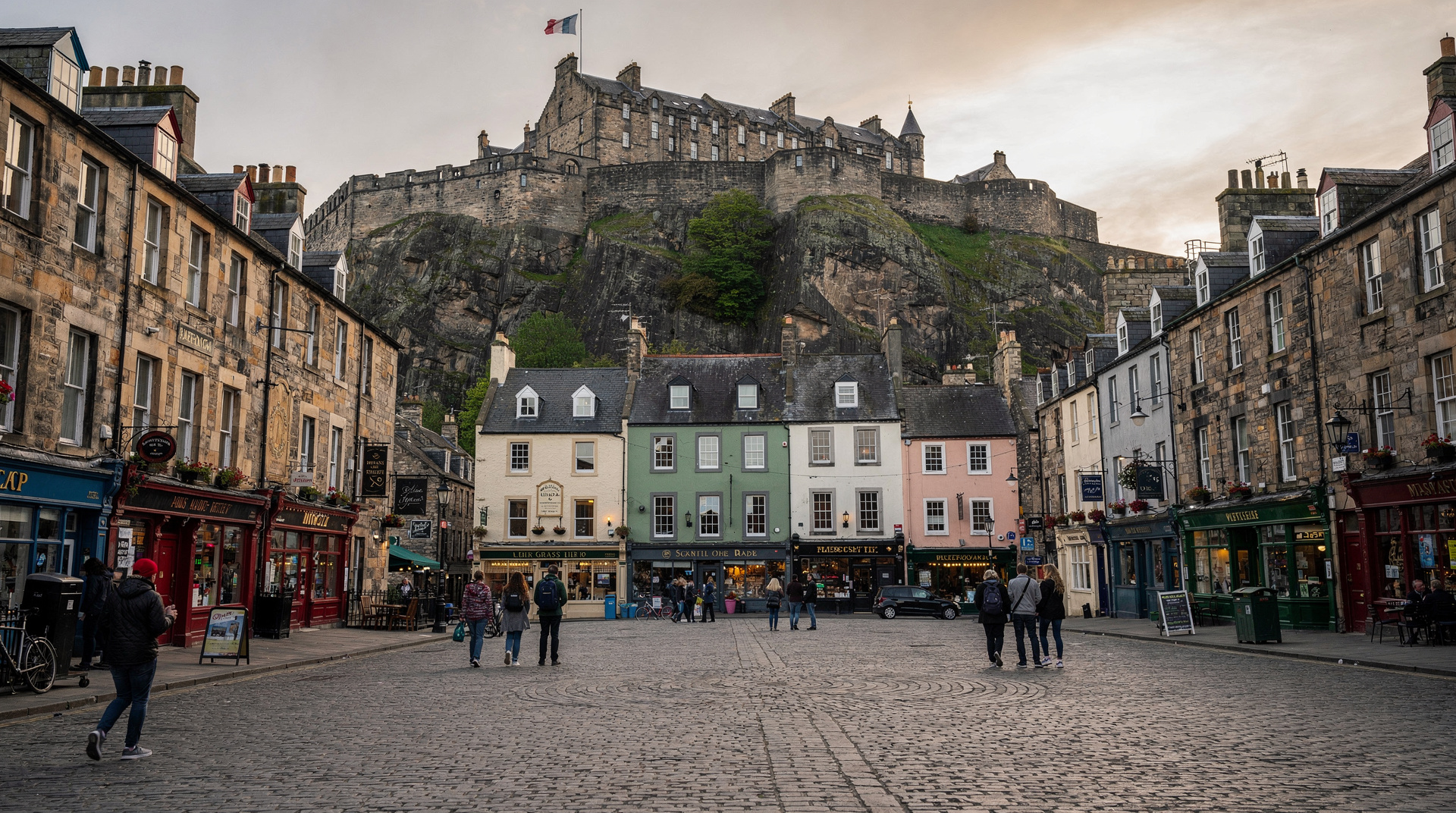
Dark and haunted Edinburgh: 2-day dark tourism itinerary
Edinburgh: the original underground tour
Edinburgh’s dark history is neither invented nor embellished
Edinburgh has more genuine dark history per square mile than almost any city in Britain. The medieval Old Town was a place of extraordinary urban density — tenements 14 stories high, no sanitation, a mix of wealthy and destitute inhabitants sharing the same closes. The city’s history of plague, execution, body-snatching, religious persecution, and political violence is real and well-documented, and the attractions that draw on it are often more accurate than you might expect.
This itinerary separates the genuine from the theatrical. The underground vaults are real — preserved streets beneath the South Bridge, inhabited by the destitute in the eighteenth and nineteenth centuries. Mary King’s Close is real — a street preserved beneath the Royal Mile. The Grassmarket executions are real — Edinburgh’s public gallows stood there from the sixteenth century. The ghosts are optional.
An honest note on ghost tours: Edinburgh has more ghost tours than any city in Britain, and the quality varies enormously. This itinerary picks the ones that are genuinely atmospheric and historically grounded rather than just theatrically scary. The vaults guide covers the operator comparison in detail.
| Where | Old Town, Grassmarket, Greyfriars, South Bridge vaults |
| Cost | around £145–190 per person for two days, all entries and meals |
| Time needed | 2 full days, mostly on foot |
| Getting there | walkable from any Old Town or city-centre base |
| Best time | year-round; book evening tours ahead in August (Fringe crowds) |
Why Edinburgh’s dark history is worth taking seriously: the city’s geography created conditions that concentrated poverty, disease, and violence in ways that most European cities of the same period did not experience. The Old Town ridge, surrounded by water, could not expand horizontally — it could only build upward. Tenements of 14 or more storeys, shared wells, no sewerage system, and overcrowding that modern urban planners would find barely credible: this was the Edinburgh that produced both the Scottish Enlightenment and the worst mortality statistics of any major British city.
The intellectual and the squalid existed simultaneously, often in the same building. Understanding this paradox is central to understanding Edinburgh’s character — the city’s dark history is not a separate layer added for tourists but the foundation that the more comfortable tourist Edinburgh rests upon. The Edinburgh dark history guide provides the full context.
Day 1: Underground Edinburgh — the vaults and Mary King’s Close
Morning: Mary King’s Close
9:30am — The Real Mary King’s Close
Mary King’s Close is the best dark tourism attraction in Edinburgh for those who want genuine history rather than atmosphere theatre. The original close — a street running at an angle off the High Street — was built over in the 1750s when the Royal Exchange (now the City Chambers) was constructed above it. The close was not buried but simply sealed at the upper floor level, and significant sections survive substantially intact beneath the modern building.
The guided tour of Mary King’s Close takes approximately 60 minutes and covers several different levels of the underground street, from a seventeenth-century plague-era room to a later nineteenth-century tenement section. The connection to the 1645 plague outbreak is historically documented; the guide interpretation varies in quality but the physical space is extraordinary.
Book the Real Mary King’s Close guided tour in advance — it sells out, particularly in summer. Entry approximately £18 per adult.
Allow 90 minutes including queuing time.
Cost: £18 adult.
Midday: the Old Town’s dark topography
11:30am — Walk the closes and wynds
After Mary King’s Close, walk the Royal Mile with particular attention to its dark history:
- The Mercat Cross (opposite St Giles’ Cathedral): The site of proclamations, protests, and executions. Edinburgh’s historical public life centred here.
- Deacon Brodie’s Tavern (Lawnmarket): Named for William Brodie, an eighteenth-century Edinburgh cabinet-maker and town councillor who was a respectable figure by day and a burglar by night. His double life inspired Robert Louis Stevenson’s Strange Case of Dr Jekyll and Mr Hyde.
- Flodden Wall remnants: The wall built in haste after the Scottish defeat at Flodden in 1513, fearing English invasion. Sections survive on the Vennel.
- The Last Supper close (Canongate): Local legend has it that several of the figures in a 1590s painting of the Last Supper are identifiable as Edinburgh citizens — including Judas as a known usurer of the period.
1:00pm — Lunch near the Grassmarket
The White Hart Inn on the Grassmarket was the last port of call for William Burke (of Burke and Hare) before his arrest — serving lunch here is a genuinely minor piece of dark tourism. Mains £12–18.
Afternoon: Greyfriars Kirkyard
2:15pm — Greyfriars Kirkyard
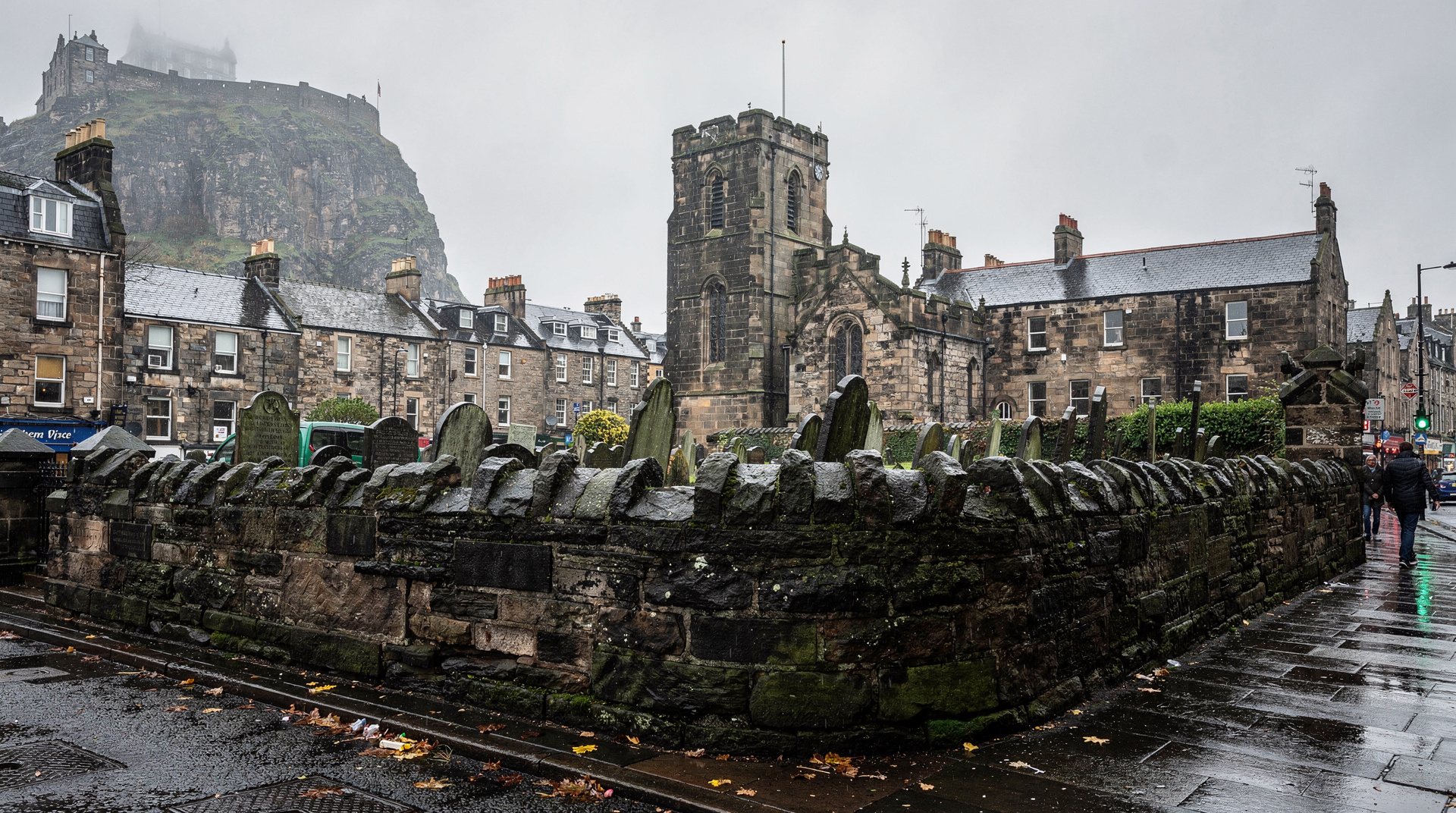
Greyfriars Kirkyard is the most historically significant churchyard in Edinburgh and the location of multiple dark history threads:
- The Covenanters’ Prison: A walled section at the south end of the kirkyard where 1,200 Covenanting prisoners were held in the open air following the Battle of Bothwell Bridge in 1679. Several hundred died of cold, starvation, or disease. The prison is still there, still enclosed, still atmospheric.
- The Mortsafe: Iron cages over some graves, used in the early nineteenth century to protect recently buried bodies from the body-snatchers who supplied Edinburgh’s anatomy schools with material. Burke and Hare were the most notorious of these bodysnatchers.
- Mackenzie’s tomb: The mausoleum of George “Bloody” Mackenzie, the prosecutor who imprisoned and executed Covenanters. The tomb is the centre of a series of paranormal incidents reported since 1998. The Greyfriars ghost tour specifically focuses on documented phenomena around this tomb.
- Historical graves: William McGonagall (Victorian poet), James Craig (designer of the New Town).
Entry to the kirkyard is free. Allow 45 minutes to walk it properly.
Cost: Free.
Afternoon: Old Town Underground Historical Tour
3:30pm — Old Town underground historical tour
For a daytime underground experience, the old town underground historical tour covers the history of Edinburgh’s underground spaces with less theatrical horror and more documentary accuracy than the evening ghost tours. This suits visitors who want the genuine history of the vaults without the jump scares.
The original underground vaults tour is Edinburgh’s longest-established vault experience — the vaults beneath the South Bridge arches, which were used as storage, workshops, and eventually as accommodation for the city’s destitute between the 1780s and the 1820s. The preserved spaces, with their low ceilings and exposed stone, convey the conditions of the Edinburgh poor more vividly than any museum exhibit.
The daytime tour is less crowded than the evening ghost version and emphasises the social history. Allow 90 minutes.
Cost: Approximately £14–18 per person.
Evening: late-night vaults and ghost tour
7:30pm — Evening underground vaults ghost tour
After dinner in the Grassmarket, the evening underground vaults tour is the definitive Edinburgh dark tourism experience. The combination of genuine historical spaces, low lighting, and guide storytelling creates an atmosphere that the daytime tour cannot match.
For genuine intensity, the late-night vaults terror tour runs at 10pm and uses the genuine darkness of the vaults rather than theatrical lighting — not for the easily frightened.
For a combination of ghost tour and whisky, the underground vaults evening ghost tour with whisky pairs the tour with Scottish whisky drams at intervals — a distinctively Edinburgh combination.
Cost: £14–20 per person.
How to pace two days of dark Edinburgh without it becoming oppressive
A practical note on managing the dark tourism content: two consecutive days of plague, murder, body-snatching, and ghost tours is intense. The itinerary alternates between the genuinely historical (Mary King’s Close, Surgeons’ Hall) and the more theatrical (Edinburgh Dungeon) to prevent tonal fatigue. The daylight hours are spent in spaces that are dark by history rather than by design; the evenings add atmospheric darkness through the vaults and ghost tours.
The contrast between the morning sightseeing in the Grassmarket or Old Town — which looks entirely normal in daylight — and the evening underground tours creates the most effective Edinburgh dark tourism experience because you have walked the same streets at surface level and then see what is underneath them. If you do Mary King’s Close in the morning and the underground vaults in the evening, you begin to feel the layered quality of Edinburgh’s underground topography in a way that a single experience cannot produce.
Eat properly between experiences. Both days include substantial walking and several emotionally intense environments. Edinburgh has excellent food in all price ranges across the Old Town, and the Grassmarket is always a reliable lunchtime destination within walking distance of everything on this itinerary.
Day 2: Burke and Hare, the Grassmarket, and the history of death
Morning: Scotland’s Museum of Anatomy
9:30am — Surgeon’s Hall Museums
Surgeons’ Hall on Nicolson Street houses three interconnected museums including the History of Surgery Museum, which covers Edinburgh’s extraordinary eighteenth and nineteenth-century role in the development of modern medicine. The body-snatching era (1827–28), when William Burke and William Hare murdered 16 people to sell their bodies to anatomy professor Dr Robert Knox, is documented with evidence from the original trial. See the Edinburgh dark history guide for the full context.
Burke’s skeleton is in the museum — the poetic justice of a body-snatcher becoming a medical display was not lost on Edinburgh’s public. His skin was tanned into book covers and his death mask is in the adjacent Pathology collection.
Entry approximately £8 adult. Allow 90 minutes.
Cost: £8.
Midday: the Grassmarket’s history of execution
11:30am — Grassmarket execution history
The Grassmarket was Edinburgh’s place of public execution from the late medieval period until 1784. The Grassmarket Cross (now marked by a small memorial near the east end of the square) was where the gallows stood. Notable executions here include:
- Maggie Dickson (1724): Hanged for concealing a pregnancy and the death of a child, but survived the hanging and lived for decades afterward — the “half-hangit Maggie” whose story explains the pub of the same name on the Grassmarket.
- The Last Grassmarket Execution (1784): Edinburgh’s public executions moved to the Lawnmarket thereafter.
The Vennel staircase at the west end of the Grassmarket leads to the best view of the castle south wall — the same view that condemned prisoners would have had from the gallows.
1:00pm — Lunch at Maggie Dickson’s
The pub named for Edinburgh’s most famous execution survivor does adequate pub food at reasonable prices (mains £12–18). The dark history framing is entirely appropriate.
Afternoon: Edinburgh Dungeon and Burke and Hare walking tour
2:30pm — Edinburgh Dungeon
The Edinburgh Dungeon on Haymarket is a theatrical walk-through horror experience covering Scottish dark history — witches, the Black Death, Burke and Hare, Sawney Bean, and the Jacobite rising. See the Edinburgh Dungeon review for an honest assessment of the experience. The experience is deliberately over-the-top with live actors, special effects, and jump scares. It is designed to entertain rather than educate, and is honest about this.
For visitors on a dark tourism itinerary, the Dungeon is better approached as entertainment with historical framing rather than serious documentary content. The Burke and Hare sequence is well done and genuinely creepy. Entry approximately £22–26 per person; book in advance.
Cost: £22–26.
4:30pm — Walk the body-snatching route
The route Burke and Hare used to transport bodies from Tanner’s Close (near the Grassmarket) to Dr Knox’s anatomy school on Surgeon’s Square (near today’s Infirmary Street) covers some of the most atmospheric Old Town streets. The walk takes about 20 minutes and is described in detail in the Burke and Hare history guide.
Evening: ghost walking tour
7:00pm — Ghost walking dark secrets tour
The Edinburgh mysteries, witchery and murders walking tour covers the Old Town’s history of violence, religious persecution, and supernatural lore in a 90-minute walking tour that uses historical storytelling more than theatrical effects. This is Edinburgh’s best ghost walk for visitors who want genuine history rather than jump scares.
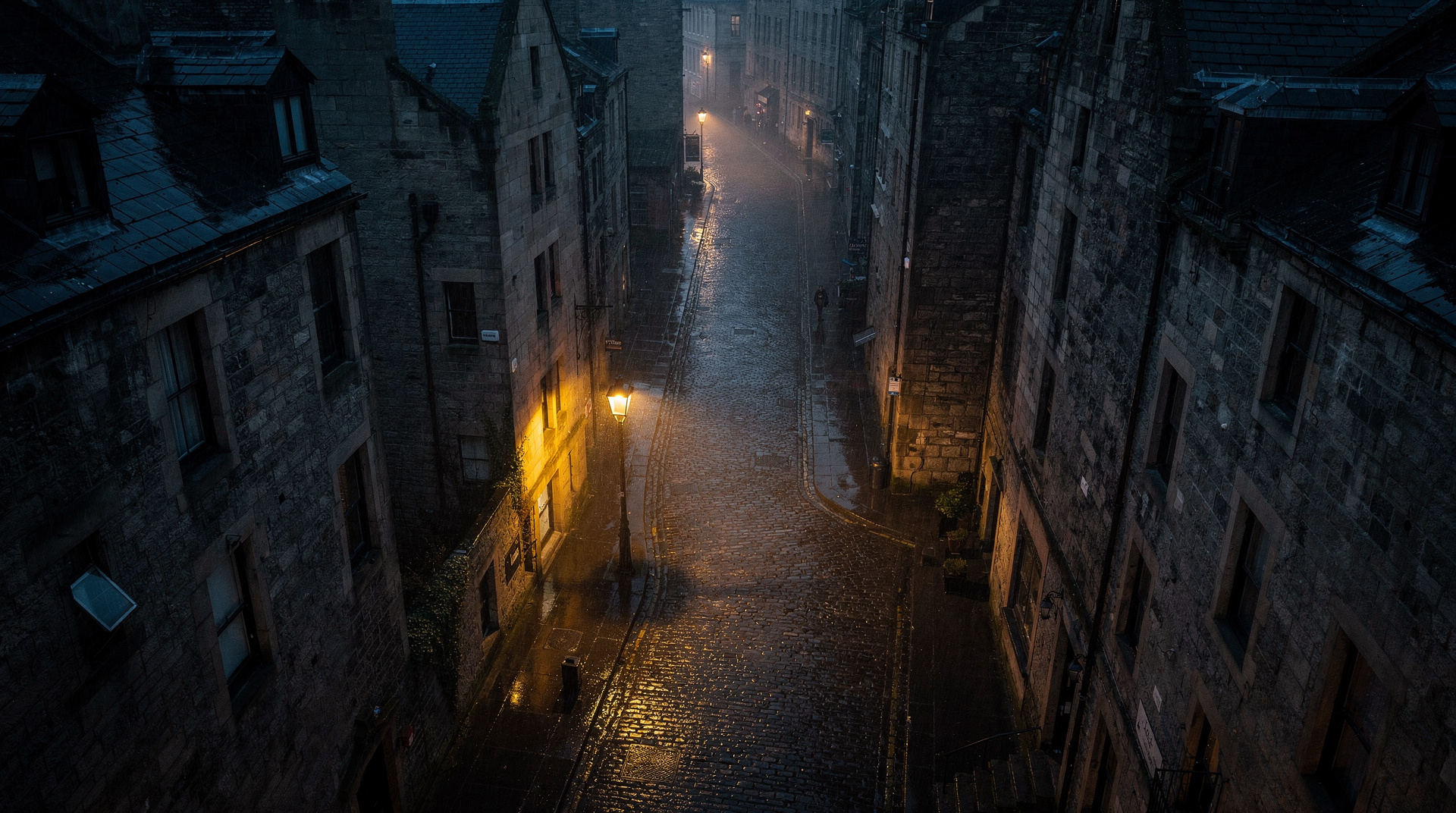
The combination of the evening walk through empty closes, the flickering lamp-lit atmosphere, and a guide who knows the historical substance behind the ghost stories makes this the definitive Edinburgh dark tourism evening.
Cost: £12–18 per person.
Two-day dark tourism budget
| Item | Cost |
|---|---|
| Mary King’s Close | £25 |
| Old Town underground tour | £14–18 |
| Greyfriars Kirkyard | Free |
| Evening vaults terror tour | £18–20 |
| Surgeons’ Hall | £10 |
| Edinburgh Dungeon | £19–£24 |
| Ghost walking tour | £12–18 |
| Meals (2 days) | £50–80 |
| Total per person | ~£145–190 |
Booking order and how to avoid a wasted evening
The two attractions most likely to sell out are Mary King’s Close and the evening vaults ghost tours, particularly through the summer and during August’s Fringe crowds — book both a few days ahead rather than turning up on the day. The Edinburgh Dungeon and Surgeons’ Hall Museums have more flexible capacity and can usually be booked the morning of, or even walked up to outside peak season.
If you can only pre-book two things, make them the Mary King’s Close morning slot and whichever evening vaults tour suits your tolerance for genuine darkness — the late-night vaults terror tour for maximum intensity, or the gentler ghost-and-whisky combination for a calmer evening. Both days work equally well starting from a base in the Old Town or a short walk away, since almost everything on this itinerary sits within 20 minutes on foot of the Royal Mile.
Alternatives if two days feels like too much darkness
Not everyone wants two consecutive days of plague, murder, and body-snatching. If you would rather spread the dark history across a broader trip, fold Mary King’s Close and one evening vaults tour into the standard Edinburgh 2-day itinerary and skip the Dungeon and the second ghost walk — you get the two genuinely essential dark-history experiences without the tonal fatigue of a fully dedicated dark tourism weekend. Families with children, or anyone visiting with a low tolerance for jump scares, should read the Edinburgh Dungeon review before booking, since it is considerably more theatrical than Mary King’s Close or the daytime vaults tour.
Frequently asked questions about dark tourism in Edinburgh
Is Edinburgh’s dark history genuine or invented for tourists?
Largely genuine. Edinburgh’s record of plague outbreaks, public executions, body-snatching, religious persecution, and extreme urban poverty is historically well-documented. The ghost stories overlay real events and real locations. The quality of interpretation varies between operators — the best tours (Mary King’s Close, the Surgeons’ Hall Museums) are historically accurate; some of the purely theatrical ghost experiences are entertainment rather than history.
Which is better, Mary King’s Close or the underground vaults?
They are different experiences. Mary King’s Close is a specific preserved historical street with documented history from the sixteenth century onward. The underground vaults are a different type of space — arches beneath the South Bridge, used as storage and eventually as overcrowded accommodation. Mary King’s Close has better historical interpretation; the vaults have more atmospheric space. Both are worth doing; if you have time for only one, choose based on whether you prioritise history (Mary King’s Close) or atmosphere (vaults).
Are Edinburgh’s ghost tours actually scary?
The better ones are genuinely atmospheric rather than merely theatrical. The Greyfriars ghost tour specifically focuses on the documented phenomena around the Mackenzie mausoleum, which have a different quality from the more performative tours. The late-night vaults terror tour uses genuine darkness and tight spaces rather than jump scares. Whether you find any of this frightening depends on your tolerance for dark spaces and unsettling stories.
How does Edinburgh’s dark tourism compare to other cities?
Edinburgh’s combination of genuine historical events — plague, mass execution, body-snatching, religious persecution — with well-preserved physical spaces (Mary King’s Close, the vaults, Greyfriars Kirkyard) makes it an unusually rich dark tourism destination. The quality of interpretation is generally higher than comparable attractions in London or York because the spaces are more authentically preserved. The standard Edinburgh two-day itinerary covers the mainstream sights; this dark tourism itinerary covers what sits beneath them.
What was the Edinburgh body-snatching era?
Edinburgh in the early nineteenth century had the most prestigious medical school in Britain — and a shortage of legal cadavers for anatomy instruction. Body-snatchers (“resurrectionists”) dug up fresh graves to supply the anatomy schools. William Burke and William Hare took this further by murdering people to order for Dr Knox. The 1828 trial and execution of Burke ended the period; the Anatomy Act of 1832 subsequently provided legal cadavers and ended the practice. The Surgeons’ Hall Museums cover this history in detail.
Is Greyfriars Kirkyard actually haunted?
This depends on your prior beliefs about ghosts. What is documented: since 1998, visitors to the Covenanters’ Prison section of the kirkyard have reported being pushed, scratched, and knocked unconscious near the Mackenzie mausoleum in numbers that are statistically unusual. Sceptical explanations involve hyperventilation, psychological suggestion, and infrasound from the nearby road tunnel. Believers attribute it to the poltergeist of George Mackenzie. The Greyfriars guided ghost tour presents the documented incidents and leaves visitors to draw their own conclusions.
What is the most historically accurate dark tourism attraction in Edinburgh?
Mary King’s Close is the best combination of genuine historical space and accurate interpretation. The Surgeons’ Hall Museums are more academic but cover Edinburgh’s body-snatching history with original evidence. The Museum of Edinburgh in Huntly House has good coverage of plague, poverty, and crime without the ghost-tour framing.
Is this itinerary suitable for a family with children?
Parts of it are, but not all. Mary King’s Close, Greyfriars Kirkyard by day, and the Surgeons’ Hall Museums are suitable for older children with an interest in history, though some content (plague deaths, execution, body-snatching) is grim. The Edinburgh Dungeon and the late-night vaults terror tour use jump scares and genuine darkness and are better suited to teenagers and adults. Families wanting a lighter version should read the Edinburgh Dungeon review first and consider swapping the evening terror tour for the gentler ghost-and-whisky option.
Should I book Mary King’s Close or the evening vaults tour first?
Book both as early as you can, ideally a few days ahead — they are the two attractions on this itinerary most likely to sell out, particularly in summer and during the Fringe. If you can only secure one in advance, prioritise Mary King’s Close, since its guided slots are more tightly capacity-controlled than the evening ghost tours, which sometimes have last-minute availability.
Top experiences
Bookable activities with verified prices and instant confirmation on GetYourGuide.
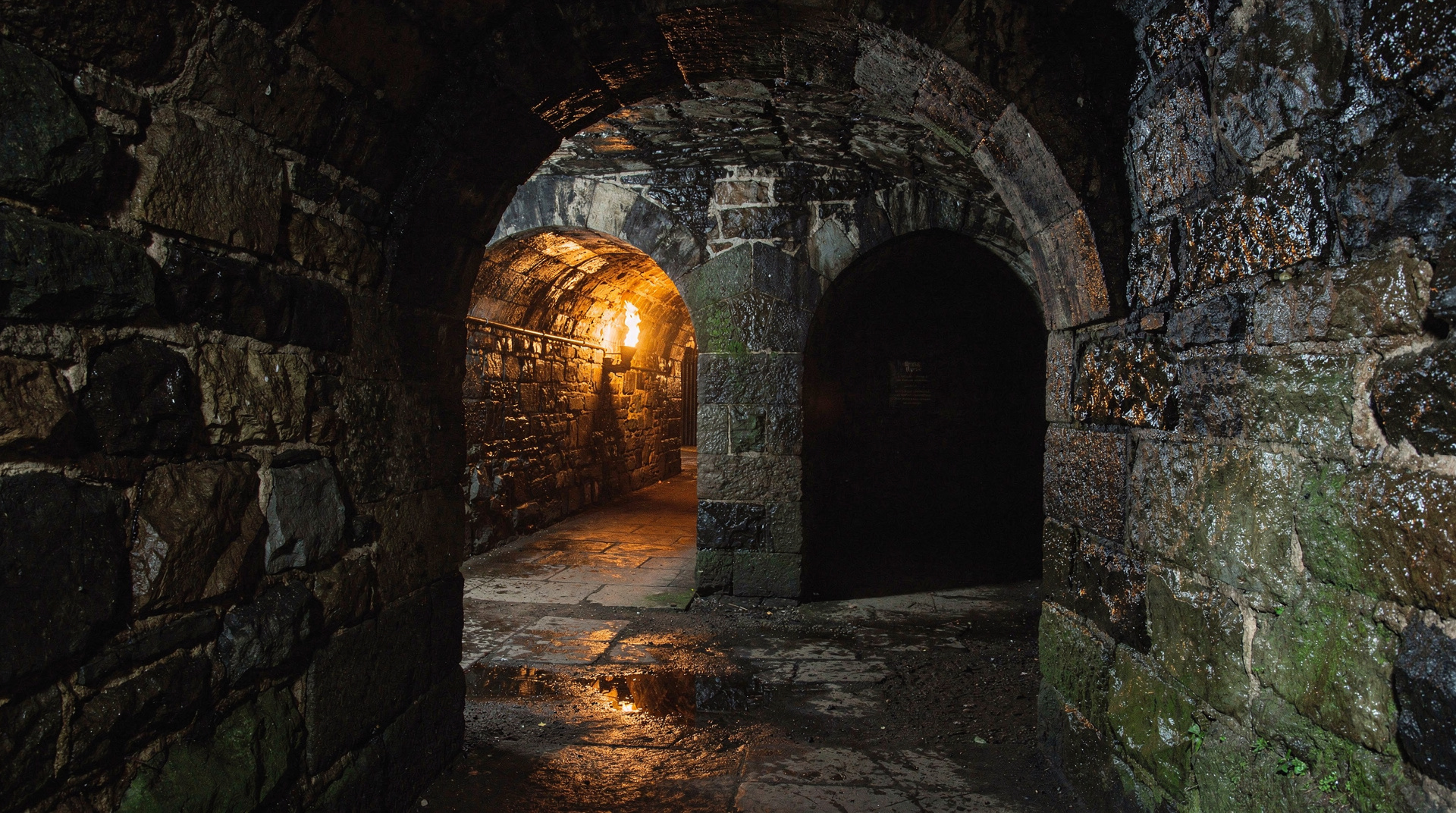
Edinburgh: the original underground tour
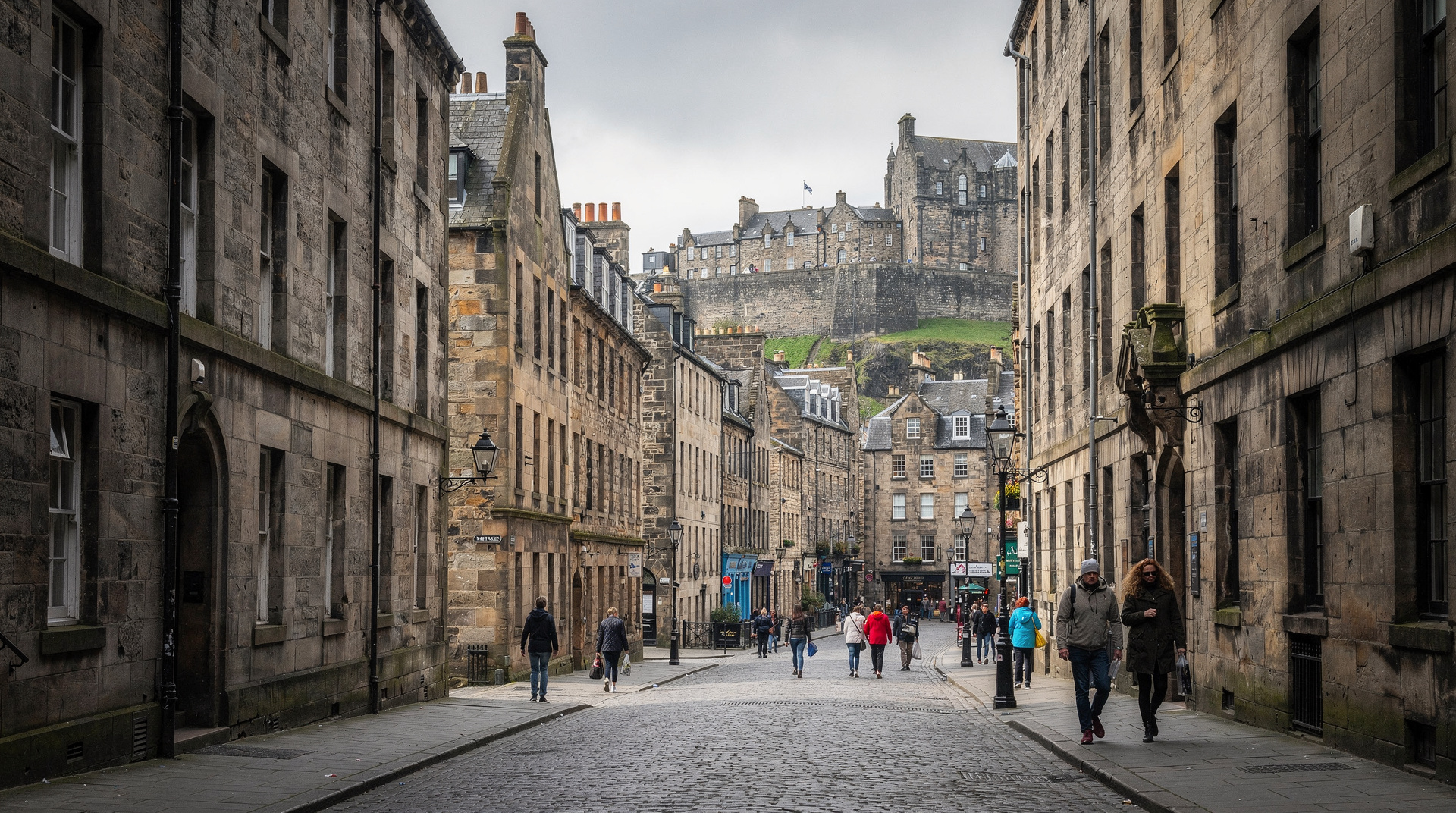
Edinburgh: late-night underground vaults terror tour
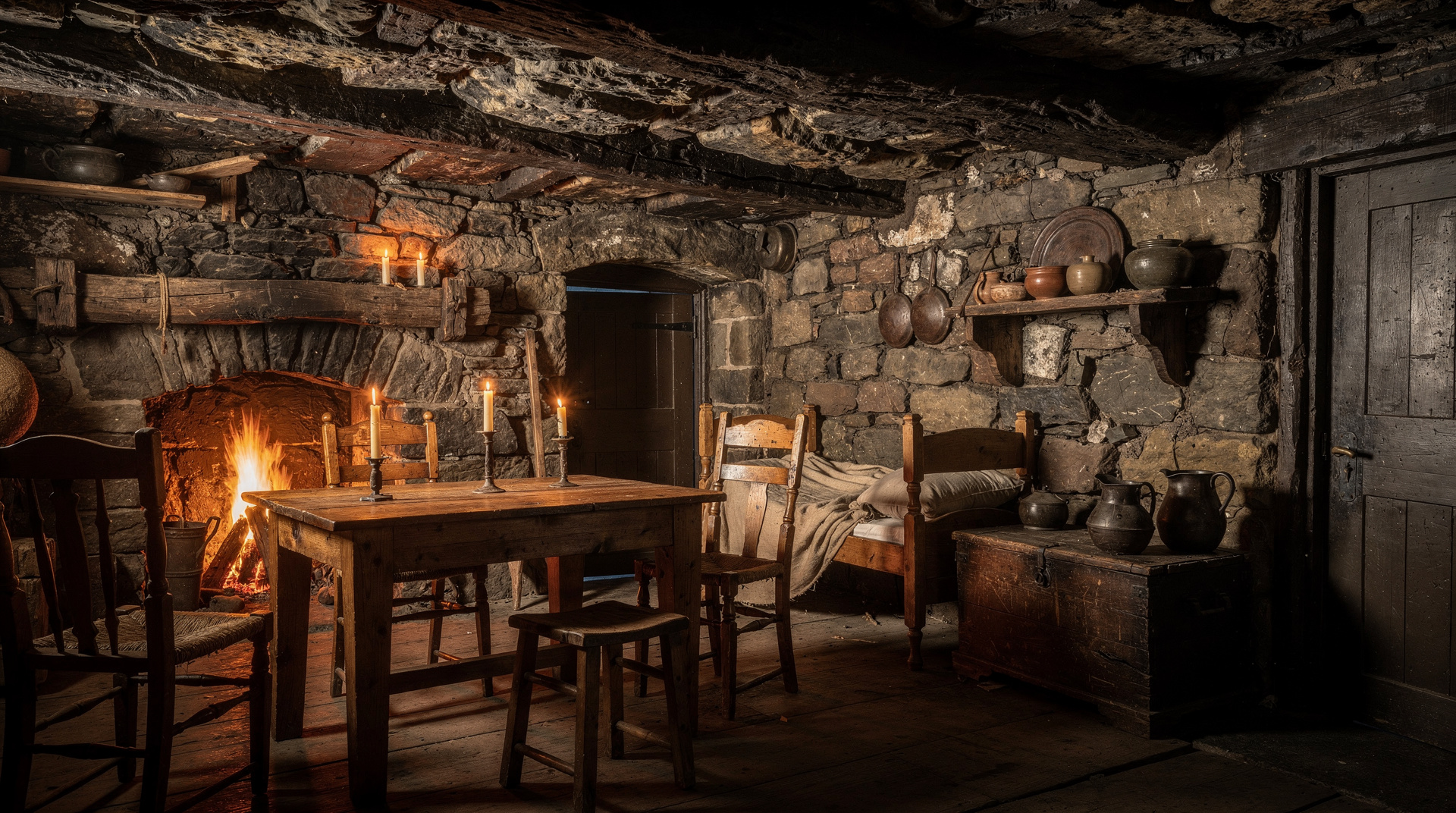
Edinburgh: the Real Mary King's Close guided tour
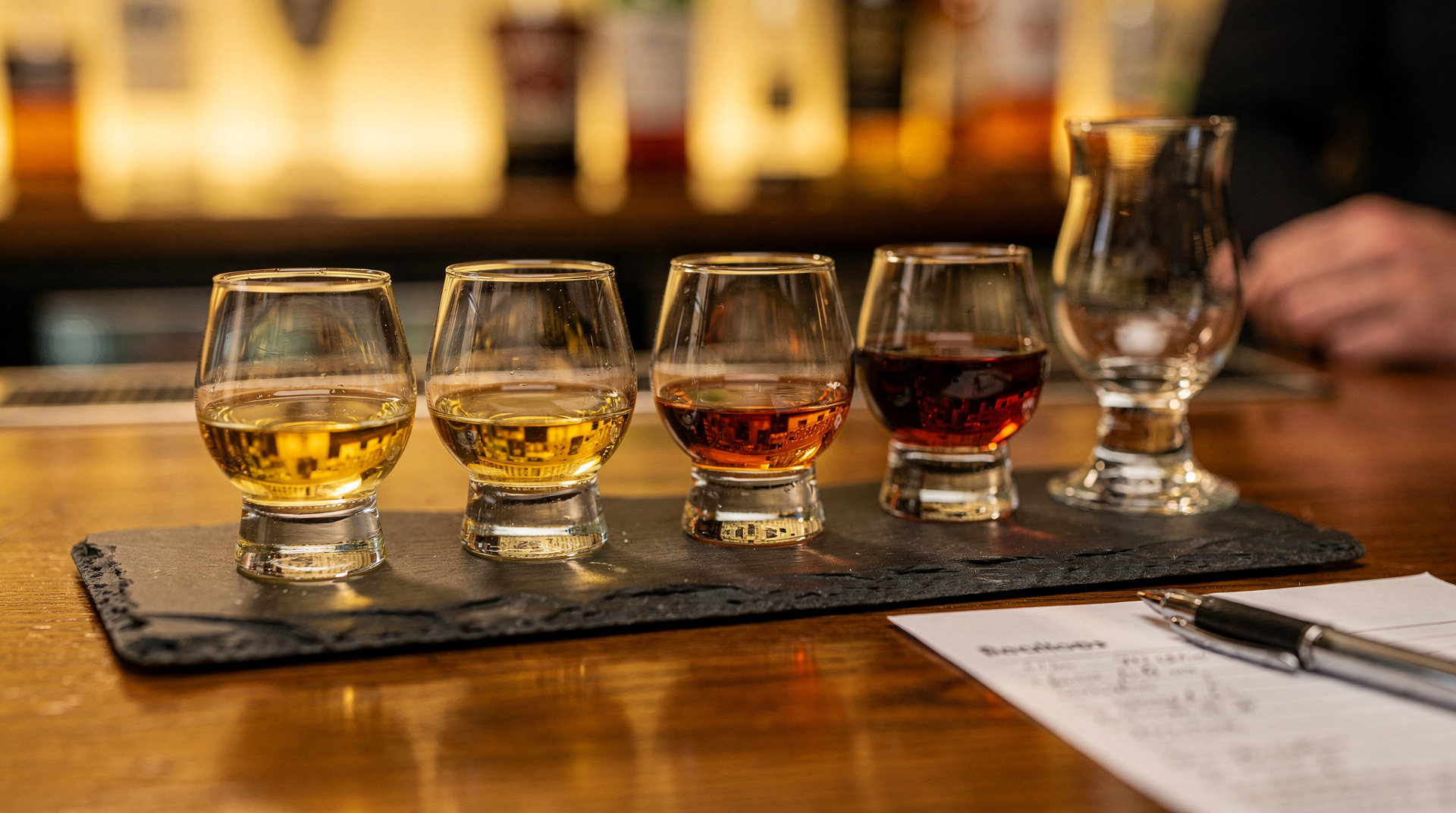
Edinburgh: underground vaults evening ghost tour with whisky
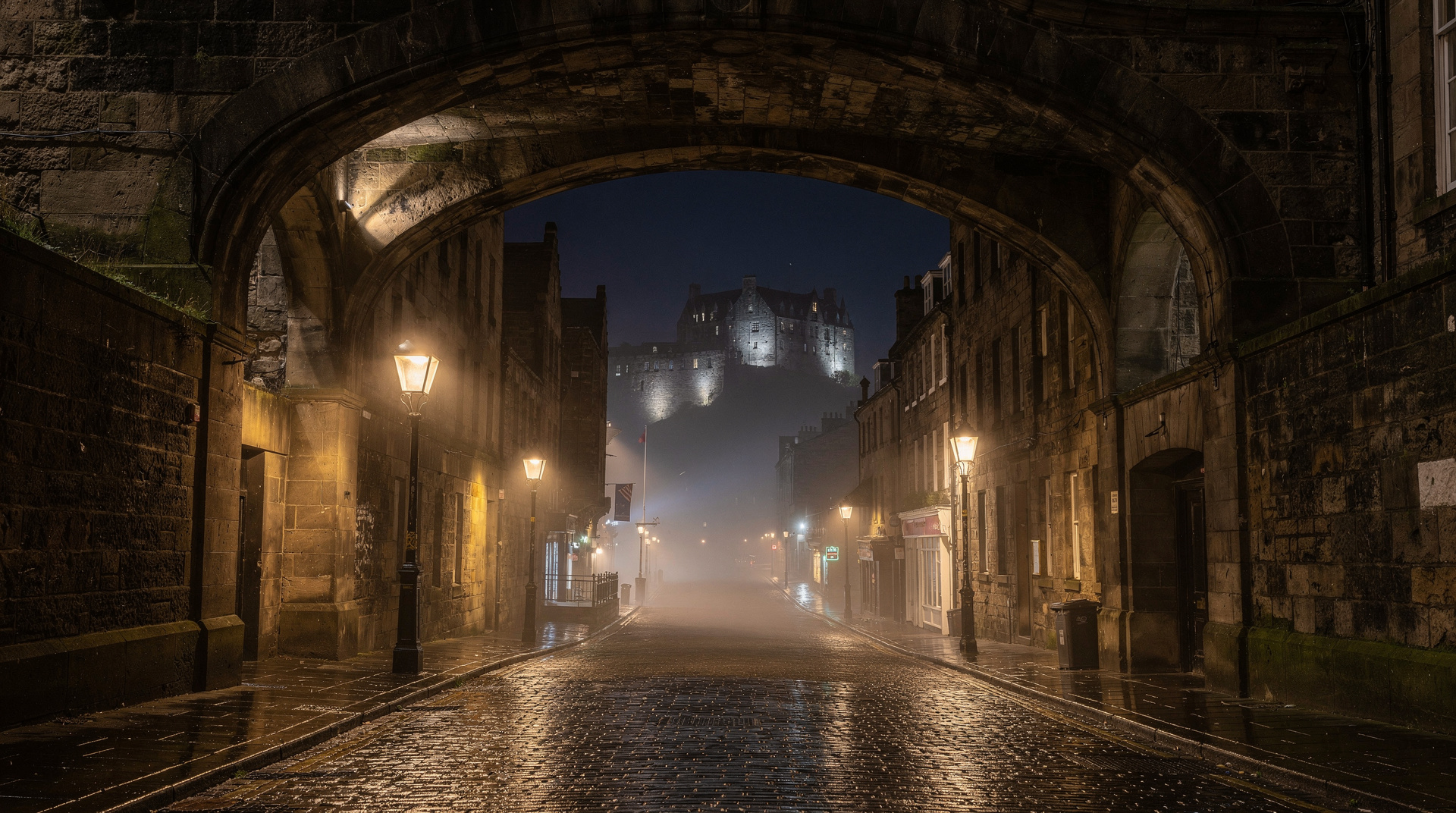
Edinburgh: mysteries, witchery and murders walking tour