Harry Potter Edinburgh: 2-day film fan itinerary
Edinburgh: Harry Potter magical guided walking tour
Edinburgh’s real Harry Potter connections
Edinburgh’s connection to Harry Potter is genuine but sometimes overstated. J.K. Rowling wrote significant portions of the early novels while living in Edinburgh, and the city’s medieval streetscape, atmospheric closes, and specific locations did influence the world she created. The connections are real — but they require some honest navigation.
This itinerary covers what the connections actually are, which locations are genuinely relevant versus which have been retrofitted by marketing, and how to extend the Harry Potter experience to Alnwick Castle in Northumberland — which actually appeared in the films as Hogwarts.
An honest note upfront: Edinburgh Castle was not a filming location for Harry Potter. Edinburgh did not appear in the films at all — J.K. Rowling wrote here, and the city’s character influenced her imagination, but the films were made in England (Alnwick, Oxford, Gloucester) and at Leavesden Studios. A guided Edinburgh Harry Potter tour focuses on the writing connections and inspirations, not filming locations.
The context that matters: Rowling moved to Edinburgh in 1993 as a single mother, living in the Leith area and later Marchmont. She was writing on a low income in a city that suited her mood and her imagination — the medieval closes, the volcanic skyline, the layered history of a city that felt simultaneously ancient and modern. The first Harry Potter novel was published in 1997. By the time the second and third books appeared, she was still living in Edinburgh and the city’s character was already embedded in the world she had built. This is the genuine story — not a marketing construct but an actual creative relationship between a writer and the city she chose to live in during the years that shaped her most important work.
| Where | Old Town, Royal Mile, Alnwick (Northumberland) |
| Cost | around £110–165/person for 2 days, excl. accommodation |
| Time needed | 2 days |
| Getting there | Walkable Edinburgh centre; train or guided tour to Alnwick (~90 min) |
| Best time | Year-round for Edinburgh; May–September for Alnwick’s broomstick training and gardens |
Two-day snapshot
| Day | Focus | Highlights |
|---|---|---|
| Day 1 | Edinburgh writing connections | Victoria Street, Greyfriars, Elephant House, walking tour |
| Day 2 | Alnwick Castle day trip | Real Hogwarts filming location, broomstick training, Alnwick Garden |
Day 1: Edinburgh’s Harry Potter writing connections
Morning: the writing haunts
9:30am — Victoria Street and the Grassmarket
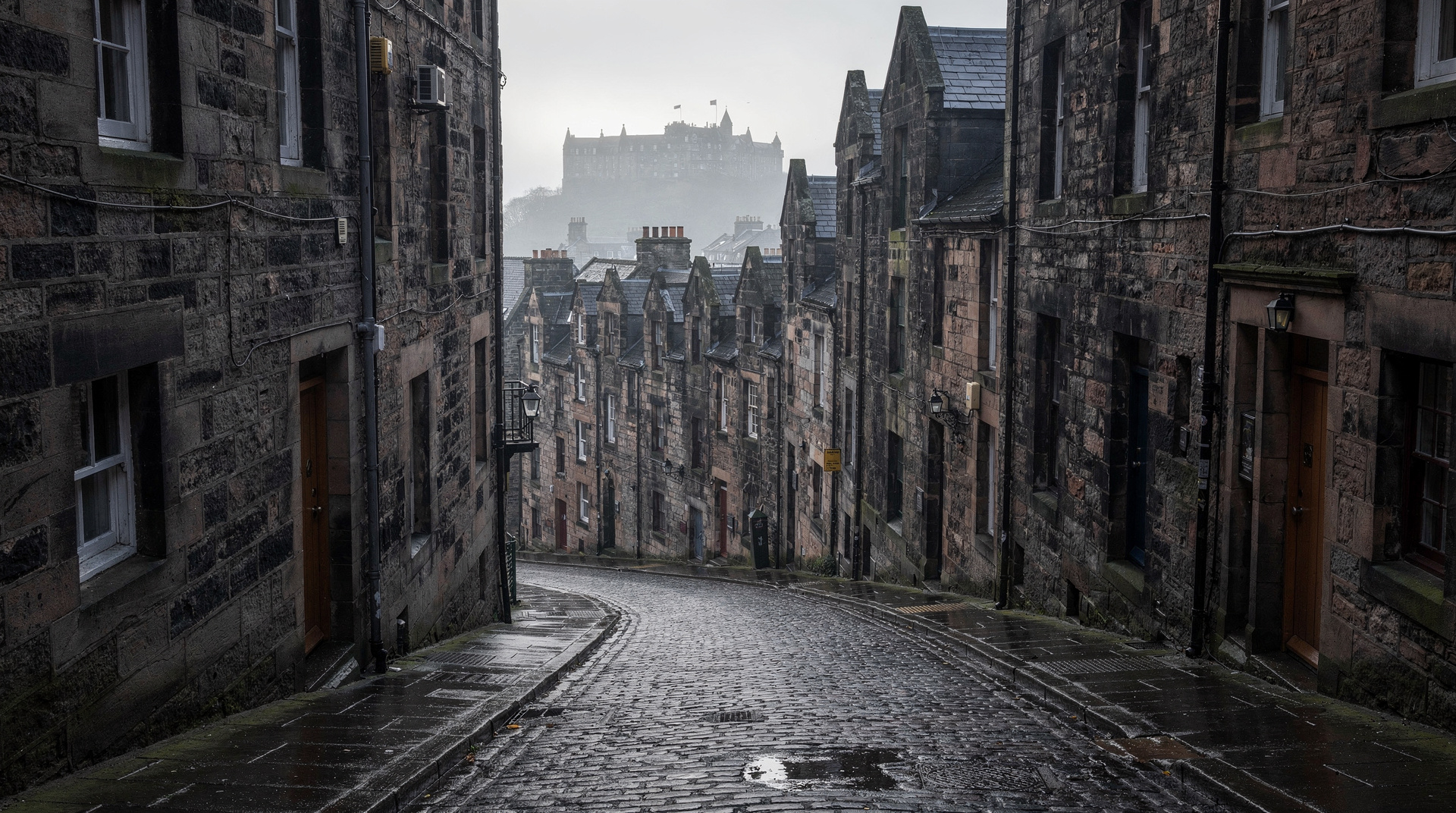
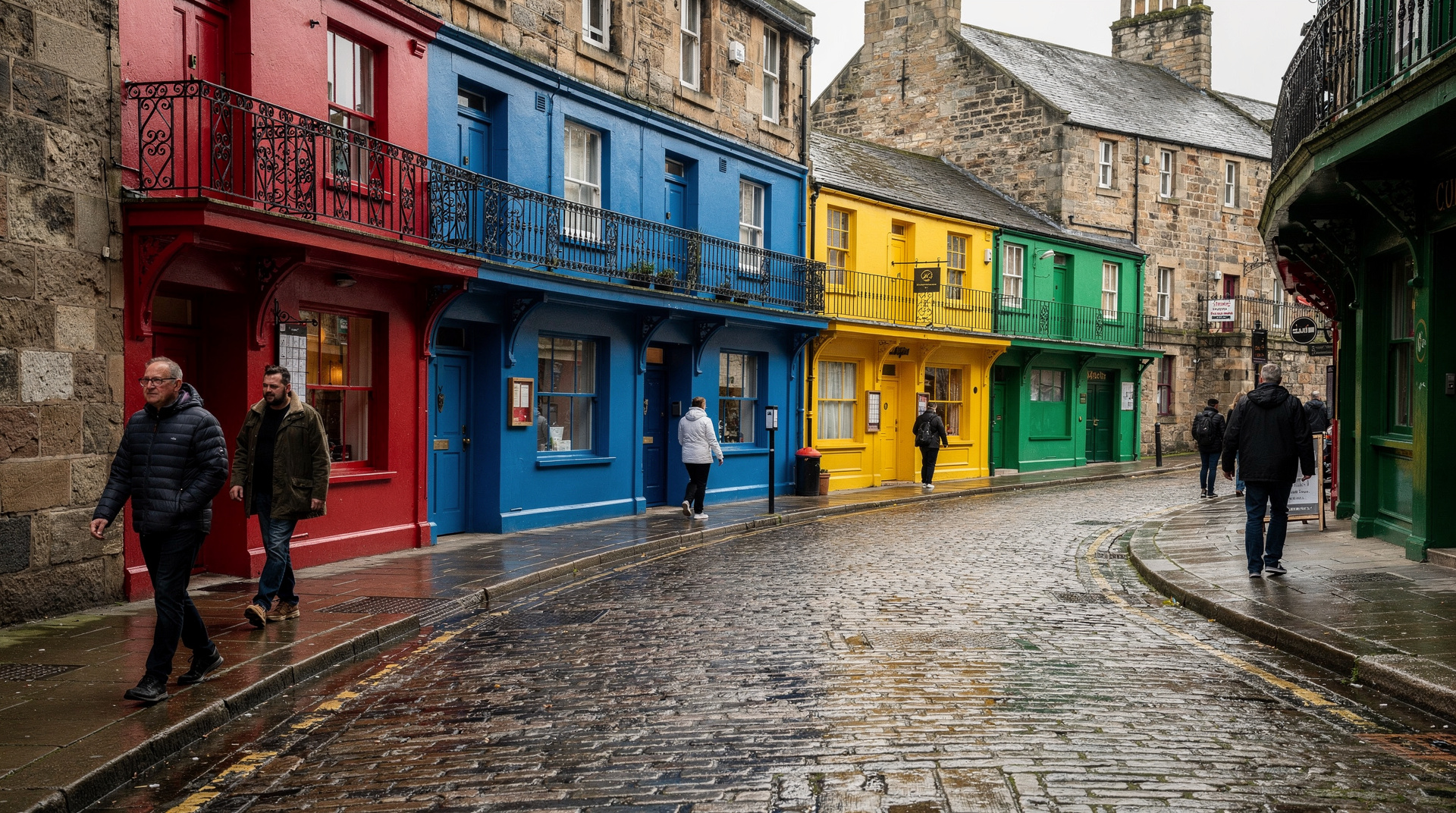
Begin on Victoria Street, off the Lawnmarket at the top of the Royal Mile. This curving medieval street with its coloured shopfronts is widely cited as the primary inspiration for Diagon Alley — and looking at it, the comparison is convincing. The street curves gently, the buildings lean in, and the independent specialist shops (a cheese shop, an art supply store, a magic and novelty shop) have a character that maps well onto Rowling’s imagined wizard shopping street.
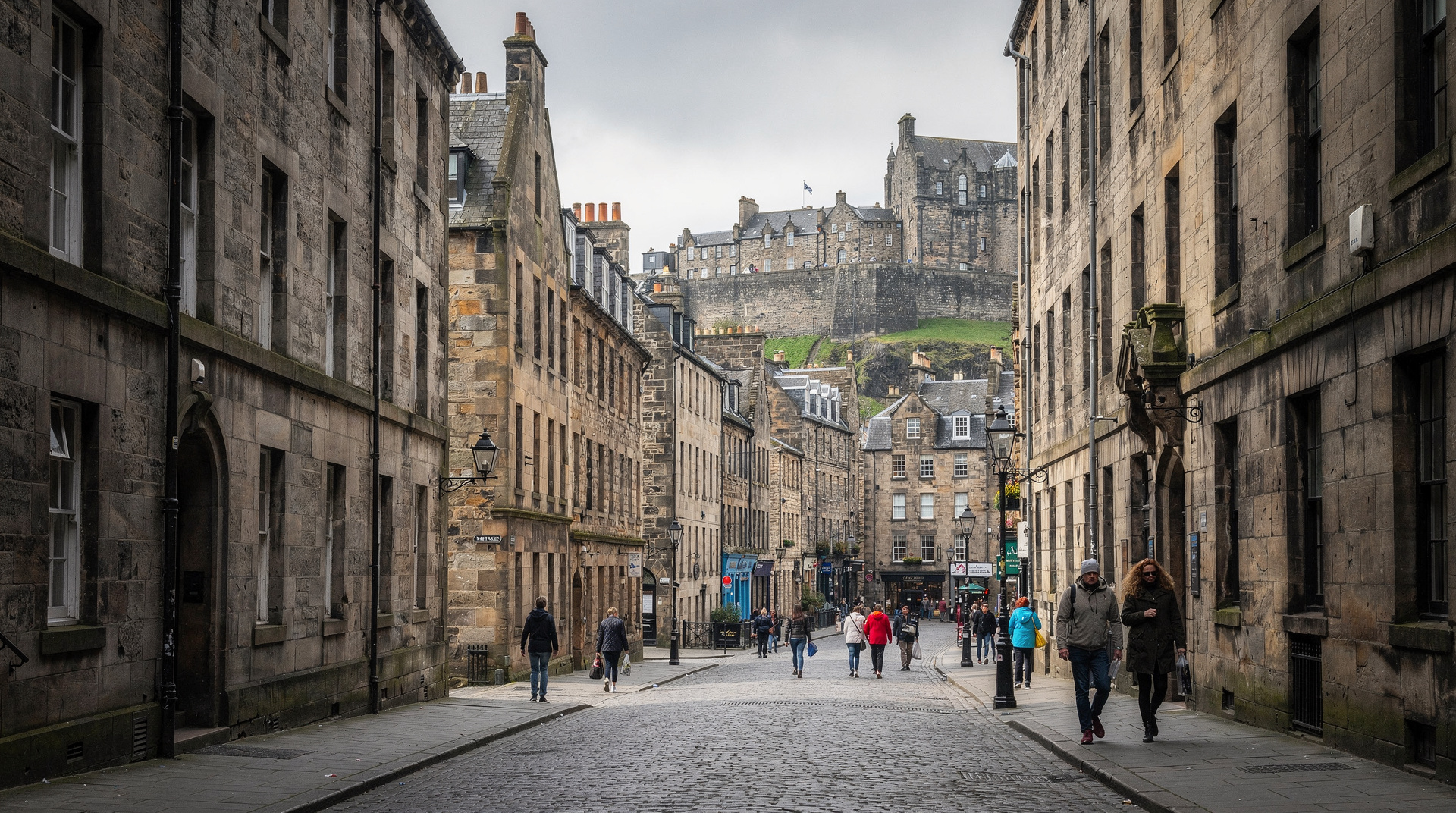
The Grassmarket below is equally atmospheric — a wide square enclosed by old buildings with the castle looming above. The combination of the square’s historic use as a site of public executions and its current character as an independent pub and restaurant district gives it the layered quality that Edinburgh’s Old Town generally shares with Rowling’s world-building.
10:30am — Greyfriars Kirkyard
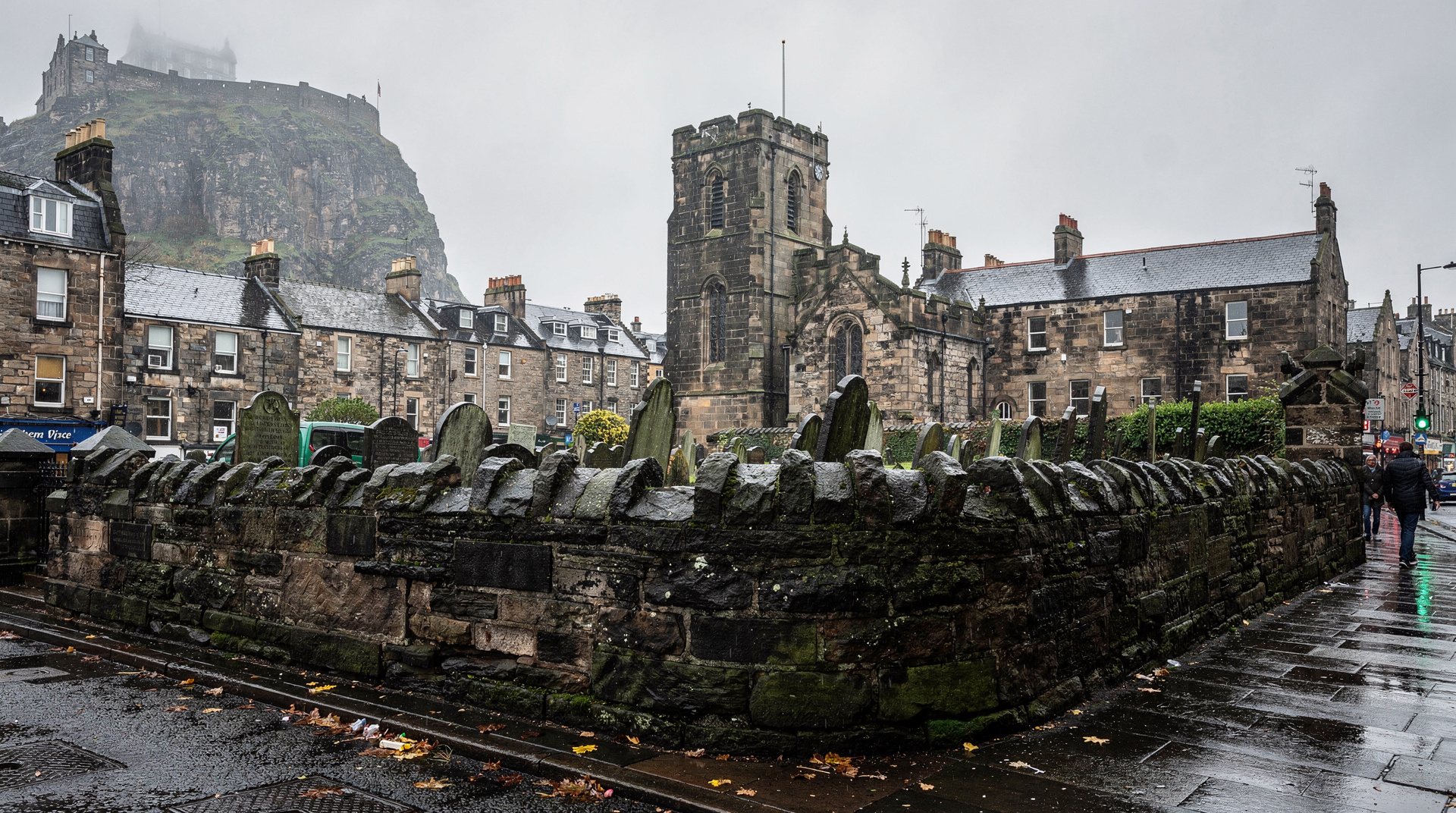
Walk five minutes from the Grassmarket to Greyfriars Kirkyard, the churchyard that is central to Edinburgh’s Harry Potter mythology. The names on the gravestones here include Thomas Riddell (a possible inspiration for Tom Riddle / Voldemort), William McGonagall (a Victorian poet widely believed to have inspired Professor McGonagall’s name), and others with apparent Potter resonance.
The evidence is genuine: Rowling walked these streets and read these gravestones during the period she was writing. Whether the names were direct inspirations or coincidences is a matter of ongoing, friendly debate.
Entry to the kirkyard is free. The small Greyfriars Bobby statue at the gate is worth seeing regardless of any Potter connection.
11:30am — The Real Mary King’s Close
A short walk from Greyfriars along the Royal Mile, the Real Mary King’s Close is an underground preserved street beneath the High Street buildings. While not directly connected to Harry Potter, the preserved seventeenth-century street — dark, low-ceilinged, atmospheric — has the character of a Rowling setting. Entry is £18 per adult; book in advance.
Midday: the Elephant House
1:00pm — The Elephant House (historical interest)
The café on George IV Bridge where J.K. Rowling reportedly wrote parts of the early Harry Potter novels while living in poverty as a single mother in Edinburgh. The Elephant House markets itself heavily on this connection and has become something of a pilgrimage site — the toilet walls are covered in fan writing.
Honest assessment: the café is pleasant and the castle view from the upstairs window is genuine. Whether Rowling wrote primarily here or at other cafes in Edinburgh is debated by those who care about such things. It is worth visiting as a piece of literary history; just do not expect an immersive Hogwarts experience.
Budget lunch: £10–16.
Afternoon: Harry Potter walking tour
2:30pm — Guided Harry Potter walking tour
For the full Edinburgh Harry Potter experience, a Harry Potter magical guided walking tour is the most efficient way to connect the locations — the guide provides the specific links between Edinburgh’s streets and Rowling’s writing that would take you hours to research independently. The tour typically covers the Royal Mile, the closes, Greyfriars, and Victoria Street over 90 minutes.
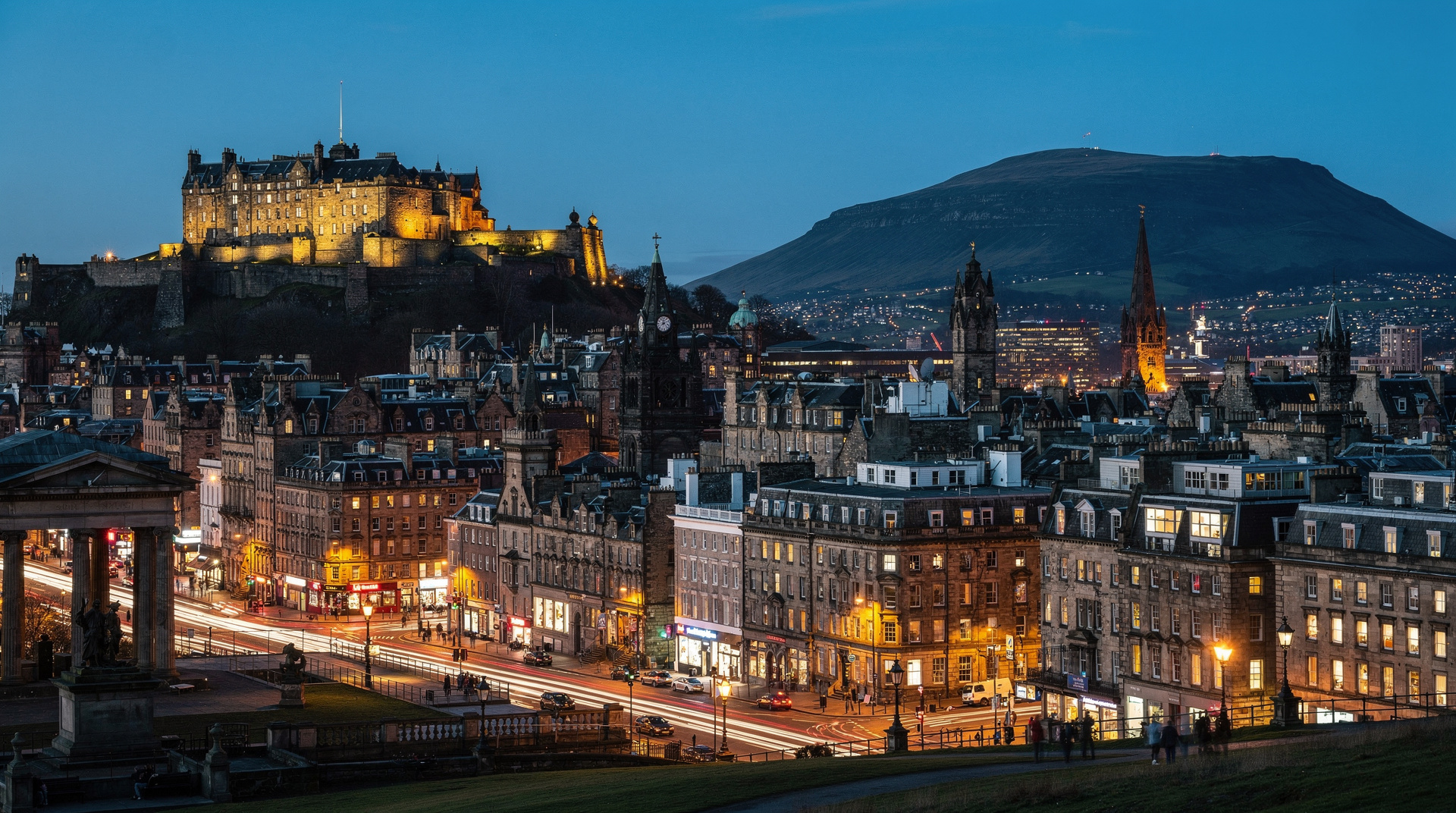
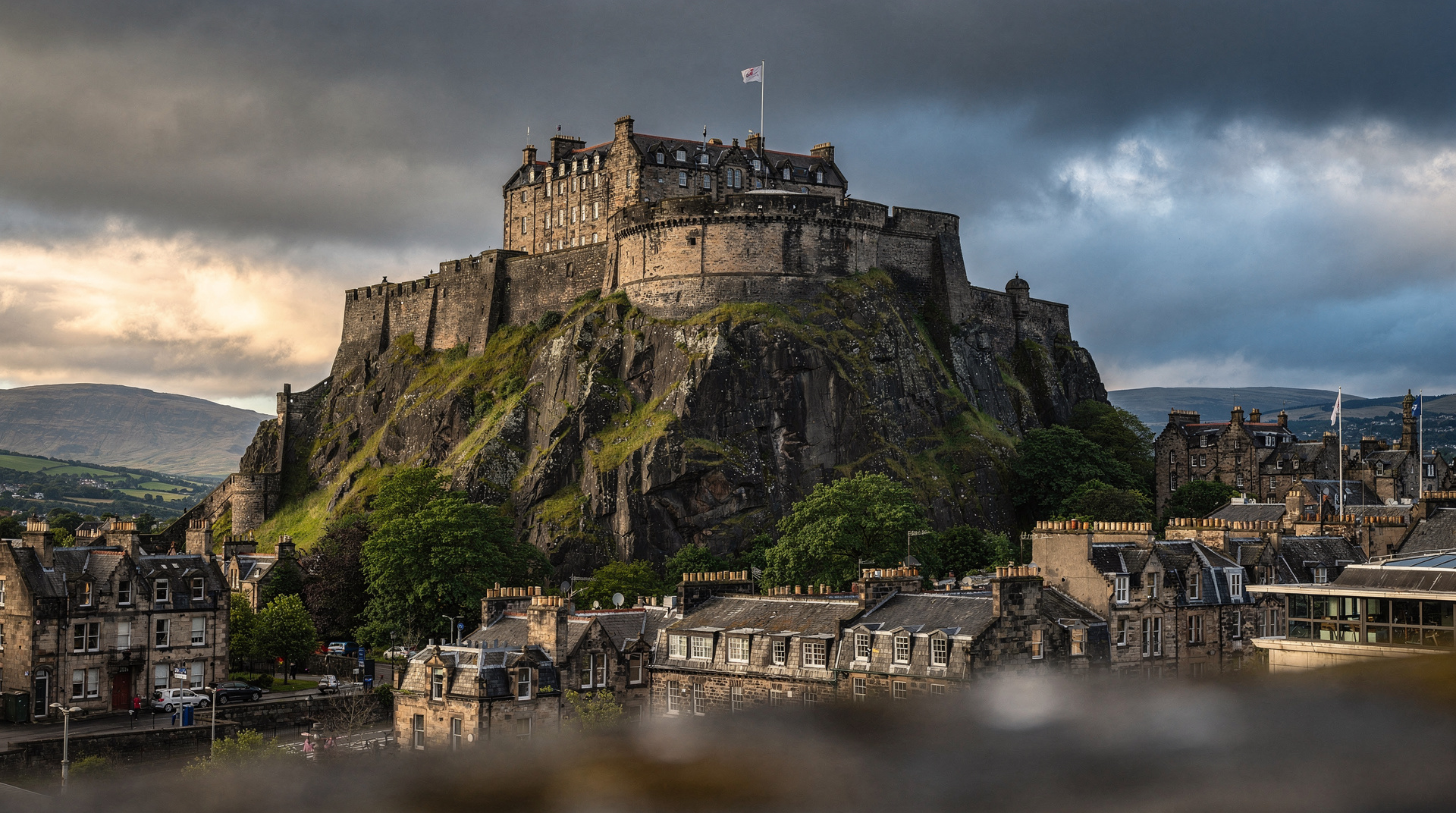
A Harry Potter tour with Edinburgh Castle entry combines the walking tour with castle admission for a fuller half-day. The castle’s connection to Rowling’s imagination — the military castle on a volcanic rock, the Scottish royal history, the sense of a living fortress — is genuine even if the castle itself did not appear in the films.
A Harry Potter tour with Holyrood Palace entry is a good alternative for visitors who have already done the castle or want the royal history angle instead. For a more personalised pace, a private Harry Potter tour lets you linger at Greyfriars or Victoria Street for longer than a group tour allows.
Cost: Walking tour £12–20; tour with castle entry £28–40.
Evening
6:30pm — Old Town dinner and the night atmosphere
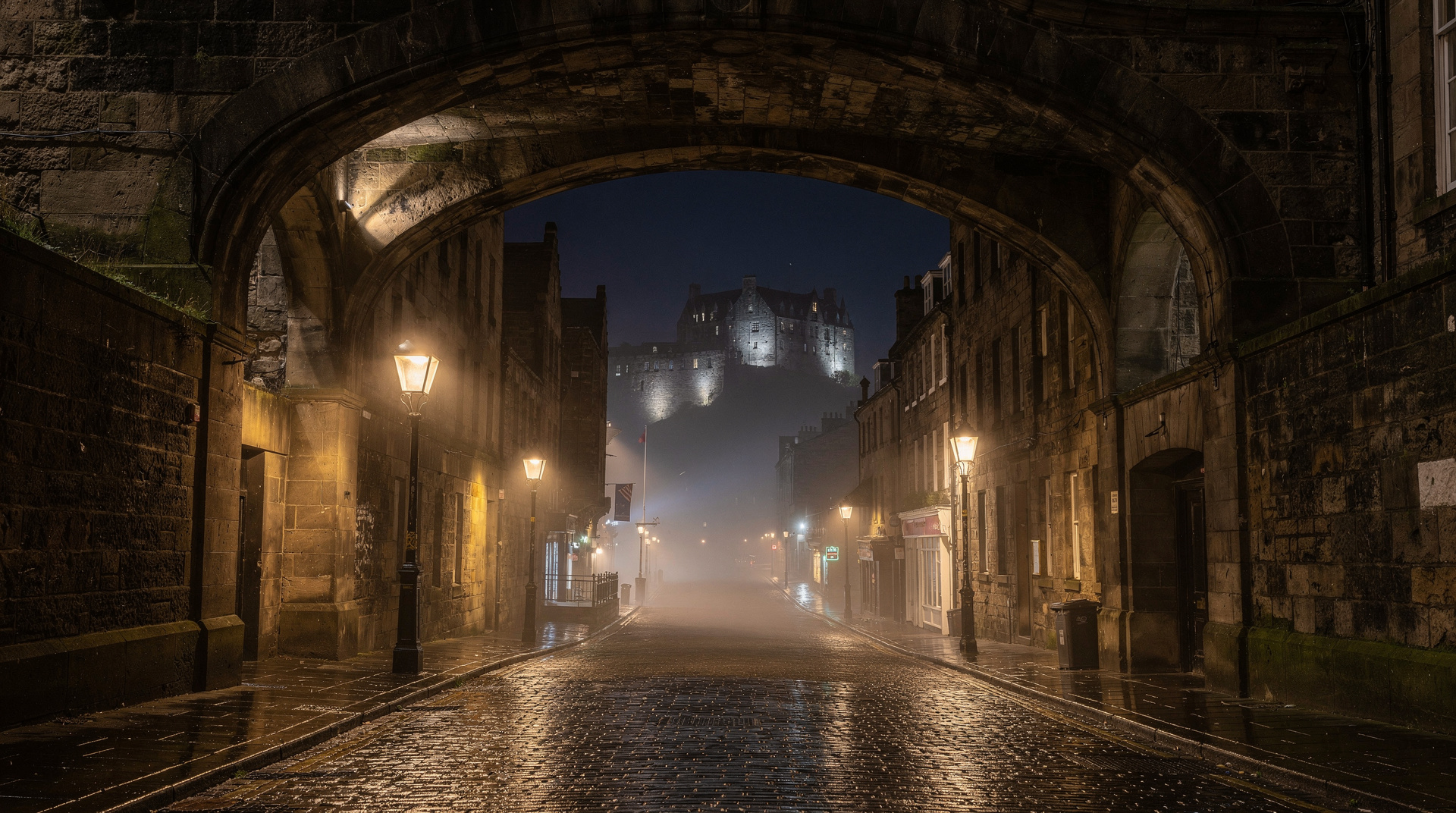
The closes and the Royal Mile at night, when the tourist bustle has quieted, have exactly the atmosphere that draws visitors here for Harry Potter reasons in the first place. A walk down the closes after dinner — with the gas lamps, the cobblestones, the sudden gothic architecture — is free and more atmospheric than many of the ticketed experiences.
Suggested evening route:
Start at the top of the Royal Mile and walk slowly down toward the Grassmarket, dipping into the closes as you go. Lady Stair’s Close leads to the Writers’ Museum (closed after 5pm, but the close itself is always accessible). The entrance to Advocates’ Close, a few steps further down, opens onto a stone stairway with one of the best nighttime views of the Grassmarket below. Turn up the Vennel staircase at the west end of the Grassmarket for a view of the castle south wall illuminated against the night sky.
None of this costs anything. The entire walk from the top of the Royal Mile to the Grassmarket takes 30–40 minutes at a slow pace with stops. At the end, the pubs on the Grassmarket are the natural finishing point.
For dinner: the Grassmarket area has good options at reasonable prices. The Magnum on Albany Street (New Town) is worth the 15-minute walk for genuinely good Scottish cooking at moderate prices (mains £15–22).
A note on Harry Potter merchandise:
The Royal Mile between the castle esplanade and the High Street has multiple shops selling Harry Potter merchandise — scarves, wands, Sorting Hat replicas, House accessories. Prices are tourist-market standard (expensive); the selection is what you would find at any licensed retailer. Aha Ha Ha on Candlemaker Row (five minutes from the Royal Mile) is the most interesting independent option with a broader novelty selection alongside the Potter items.
Other Edinburgh writing connections worth knowing:
The Royal Mile area has produced an extraordinary concentration of Scottish literary talent. The Writers’ Museum in Lady Stair’s Close (free) is dedicated to Robert Burns, Walter Scott, and Robert Louis Stevenson — three writers whose work defined Scotland’s literary reputation long before Rowling arrived. The Grassmarket connection to Stevenson is particularly interesting: his character of Deacon Brodie — Edinburgh cabinet-maker and burglar, the original Jekyll and Hyde — came from a real figure whose story Stevenson absorbed from the city’s folklore.
Walking the same streets with these multiple literary layers in mind gives the Old Town a depth that any single-author focus would miss. If Harry Potter is your primary reason for visiting, the city will exceed your expectations; if you leave with some curiosity about the other writers whose imaginations Edinburgh shaped, it will exceed them further.
What to manage about Edinburgh’s Harry Potter marketing
A practical note before day two: the Edinburgh tourist industry has been quite aggressive about marketing Harry Potter connections, not all of which are as robust as claimed. Some shops and tour operators on the Royal Mile advertise “Harry Potter Edinburgh” experiences that are essentially standard Old Town tours with the Potter framing added afterward. The Elephant House café — genuine in terms of writing history — markets itself as “the birthplace of Harry Potter” which is debatable; Rowling wrote in multiple locations.
The genuine connections are: Victoria Street’s architectural resemblance to Diagon Alley (real and visually convincing), Greyfriars Kirkyard’s gravestone names (documented, though the direct inspiration is Rowling’s own to confirm), and the Elephant House as one writing location (genuine). Everything else is largely inference. Alnwick, by contrast, is unambiguous — the castle appears on screen, clearly visible, in the first two films. For film fans, Alnwick is the more satisfying destination precisely because the connection is direct and verifiable. See the Edinburgh Harry Potter guide for the fully documented version of each connection.
Day 2: Alnwick Castle — the actual filming location
Getting to Alnwick
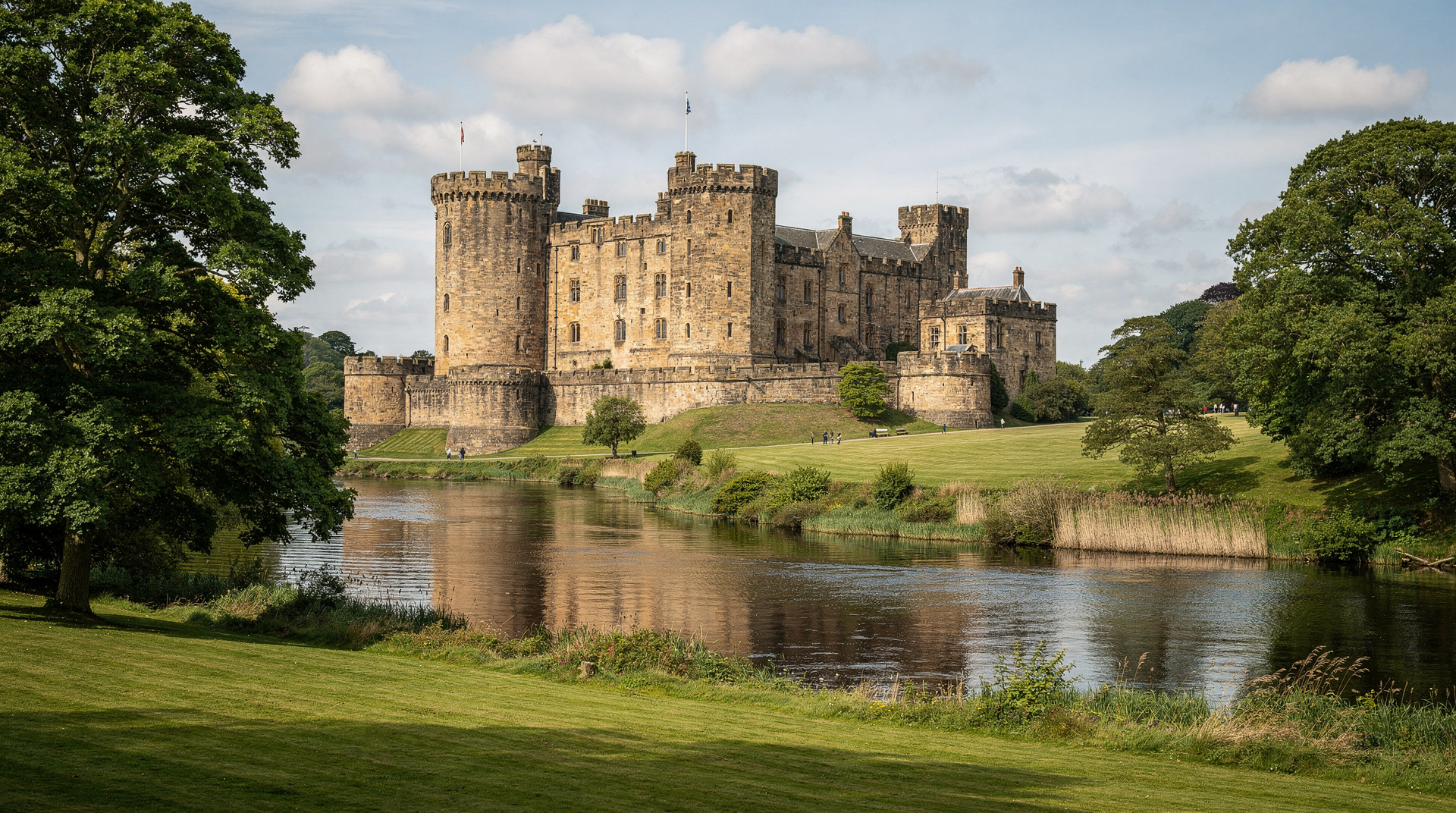
Alnwick Castle in Northumberland, England, is 50 miles south of Edinburgh — about 90 minutes by train to Alnmouth, then a 15-minute taxi or bus to Alnwick, or a direct guided tour from Edinburgh.
The most convenient option is a guided day trip: an Edinburgh: Harry Potter Alnwick Castle and Scottish border tour handles transport and combines Alnwick with the Scottish Borders scenery on the journey south. A half-day version focusing specifically on Alnwick can also be combined with a morning in Edinburgh before departure.
Alternatively, the castles and broomsticks tour combines Alnwick with Bamburgh Castle on the Northumberland coast — a good option for those who want to maximise the day in England.
Morning: Alnwick Castle
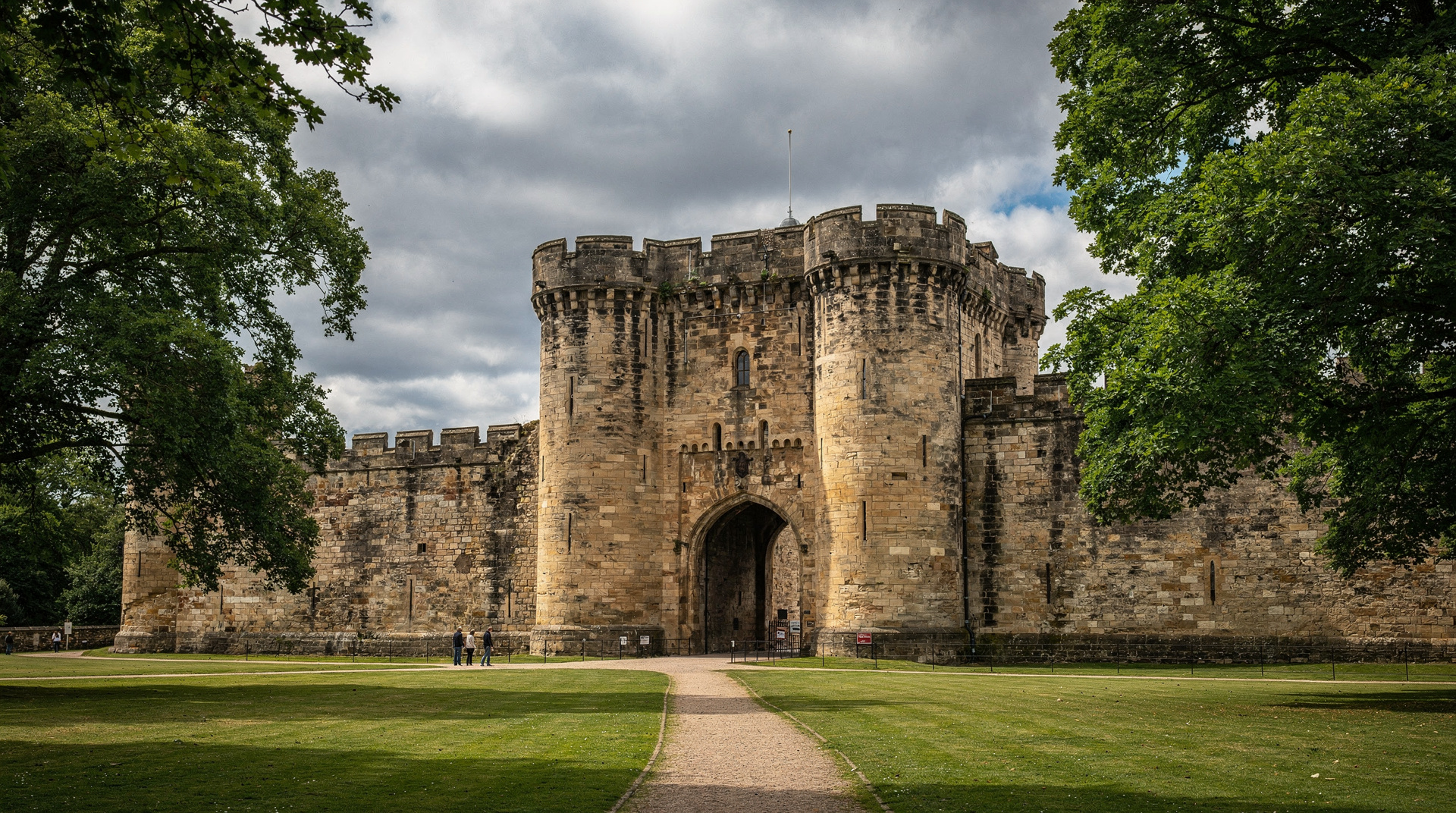
Alnwick Castle is the most important Harry Potter filming location you can visit in the Edinburgh area. The exterior of the castle and the outer bailey appear in Harry Potter and the Philosopher’s Stone and Chamber of Secrets as the grounds of Hogwarts, including the scene where Harry first learns to fly a broomstick.
The castle is also genuinely impressive as a medieval fortress and ducal seat — owned by the Percy family, Dukes of Northumberland, since the fourteenth century, and also used as a filming location for Downton Abbey.
In summer, Alnwick Castle offers broomstick training sessions in the outer bailey — a theatrical activity that is particularly popular with children and adults who have a high tolerance for fun. The standard entry price is approximately £18 for adults, £11 for children.
The Alnwick Garden, adjacent to the castle, contains the famous Poison Garden (plants that can kill you, behind locked gates) and a large tree house. It is worth an hour if you have the time.
Allow three to four hours at Alnwick.
Cost: Castle entry £23.50 adult, £11 child; garden extra.
Afternoon: return to Edinburgh
Return to Edinburgh by afternoon train from Alnmouth (direct to Edinburgh Waverley, approximately 90 minutes) or return with the guided tour.
Afternoon in Edinburgh: final Old Town walk
If you return to Edinburgh by 4pm, use the late afternoon for any missed Edinburgh experiences. Calton Hill for the panoramic view costs nothing and takes 30 minutes. The underground vaults tour at 7pm makes an excellent final evening activity.
For fans who want to maximise the Harry Potter film connections, it is worth noting that Oxford (Bodleian Library = Hogwarts library), Gloucester Cathedral (cloisters = Hogwarts corridors), and Lacock Abbey also appeared significantly in the films — but these require separate journeys from Edinburgh.
Other filming-location day trips from Edinburgh
Alnwick is the most convenient genuine filming location from Edinburgh, but it is not the only Northumberland and Borders scenery worth combining with the trip. If you have a third day, the wider Scottish Borders region has its own castles and abbeys that pair naturally with an Alnwick day, and several tour operators combine the two.
For film fans specifically interested in the Outlander connections rather than Harry Potter, see the separate Outlander day trips guide — a different set of filming locations entirely, mostly around Doune Castle and the Highlands rather than Northumberland. The best day trips from Edinburgh guide covers the full range if Alnwick does not fit your dates.
Combining this trip with the rest of Edinburgh
If two days feels tight for both the Harry Potter content and a fuller sense of the city, consider extending to the standard 3-day Edinburgh itinerary and treating the Potter locations as a half-day insert on day one rather than the whole day. Families travelling with younger Harry Potter fans who also want broader child-friendly content should look at the Edinburgh with kids itinerary, which covers the Camera Obscura and Portobello beach alongside the castle.
Two-day Potter budget
| Item | Budget | Mid-range |
|---|---|---|
| Day 1: HP walking tour | £12 | £20 |
| Day 1: Mary King’s Close | £25 | £25 |
| Day 1: Elephant House lunch | £10 | £16 |
| Day 2: Alnwick guided tour | £45 | £65 |
| Day 2: Alnwick entry | included | included |
| Dinners (2) | £24 | £44 |
| Total per person | ~£110 | ~£165 |
Frequently asked questions about Harry Potter in Edinburgh
What are the real Harry Potter locations in Edinburgh?
The genuine Edinburgh Harry Potter connections are: Victoria Street (widely cited inspiration for Diagon Alley), Greyfriars Kirkyard (gravestone names including Riddell and McGonagall), and the Elephant House café where Rowling wrote. Edinburgh did not appear in the films. The best filming locations accessible from Edinburgh are at Alnwick Castle, 90 minutes south in Northumberland.
Is Edinburgh Castle connected to Harry Potter?
Edinburgh Castle did not appear in the Harry Potter films. The castle did influence J.K. Rowling’s sense of Edinburgh and of Scotland’s medieval history, but the Hogwarts castle in the films was a composite of Alnwick, Gloucester Cathedral, Oxford’s Bodleian Library, and CGI. See the Edinburgh Castle guide for the castle’s genuine historical story, which is extraordinary without any fictional overlay.
Is the Alnwick Castle broomstick training worth doing?
Yes, with appropriate expectations. The broomstick training in the outer bailey of Alnwick Castle is a theatrical activity where participants learn to “fly” with a broomstick (it is a comedy performance, not a lesson). It is genuinely fun, particularly for children and adults who engage with it on its own terms. It adds about an hour to the castle visit.
Can I do the Harry Potter Edinburgh tour without a guide?
You can walk the key locations independently — Victoria Street, Greyfriars Kirkyard, and the Elephant House are all easy to find and free to visit (Greyfriars is free; the café costs the price of a coffee). However, a guided tour adds specific knowledge about the links between individual locations and the books that you would otherwise miss. The Edinburgh Harry Potter guide covers the independent walking route in detail.
Are there Harry Potter shops in Edinburgh?
Several shops on the Royal Mile sell Harry Potter merchandise. Aha Ha Ha on Candlemaker Row is the best independent one. There is no official Warner Bros. shop in Edinburgh — the official Harry Potter Studio Tour is at Leavesden in Hertfordshire. The various Royal Mile shops sell standard merchandise rather than anything exclusive.
How far is Alnwick Castle from Edinburgh?
Approximately 50 miles south — about 90 minutes by train to Alnmouth station, then 15 minutes to Alnwick town by taxi or bus. Alternatively, guided tours from Edinburgh handle transport and can be booked as a day trip. The journey through the Northumberland countryside is pleasant in its own right. See the Borders and Northumberland day trips guide for other day-trip options in the same direction. The two-day Edinburgh itinerary covers the mainstream Old Town if you want to extend your visit.
Are there other Harry Potter filming locations near Edinburgh besides Alnwick?
Not within easy day-trip range. Alnwick is the closest genuine filming location to Edinburgh. Oxford, Gloucester Cathedral, and Lacock Abbey — the other significant UK filming locations — are all several hours further south, closer to London than to Edinburgh, and would need a separate trip. For film tourism closer to Edinburgh, the Outlander locations around Doune Castle and the Highlands are a better fit; see the Outlander day trips guide.
Is the Harry Potter theme worth building a whole trip around, or just part of one?
For most visitors, part of one. Edinburgh’s genuine Potter content — Victoria Street, Greyfriars, the Elephant House, an optional walking tour — fills a satisfying half-day to full day, and Alnwick adds a second full day if the film connection matters to you. Beyond that, the itinerary is really an Edinburgh city break with a Potter framing, so pairing it with the standard 2-day itinerary or the 3-day itinerary makes more sense than trying to stretch Potter content across several more days.
Top experiences
Bookable activities with verified prices and instant confirmation on GetYourGuide.
Edinburgh: Harry Potter magical guided walking tour
Edinburgh: Harry Potter tour with entry to Edinburgh Castle
Edinburgh: Harry Potter Alnwick Castle & Scottish border tour
Edinburgh: Harry Potter wizarding walking tour (private)
Edinburgh: castles and broomsticks (Bamburgh & Alnwick)