Harry Potter in Edinburgh: the complete locations guide
Edinburgh: Harry Potter magical guided walking tour
What are the best Harry Potter locations to visit in Edinburgh?
Victoria Street (widely cited as Diagon Alley inspiration), the Elephant House cafe where Rowling wrote, Greyfriars Kirkyard for the Tom Riddle and McGonagall graves, and the view from Calton Hill that inspired Hogwarts. Allow a half-day self-guided walk; a guided tour adds context and story connections.
Edinburgh and Harry Potter: real connections and reasonable speculation
Edinburgh’s relationship with Harry Potter is genuine but complicated. J.K. Rowling did write significant portions of the first book in Edinburgh cafes, the city’s architecture and atmosphere undeniably influenced the series, and several specific Edinburgh locations have credible connections to elements of the wizarding world. But the Harry Potter tourism industry has also expanded these connections well beyond what the evidence supports, and distinguishing between the documented and the speculative requires some work.
This guide covers both categories honestly — the connections that are well-documented and the ones that are popular but unverified — and provides practical guidance for visiting whether you book a guided tour or walk the route yourself.
| Where | Old Town: George IV Bridge, Victoria Street, Greyfriars, Grassmarket |
| Cost | Free to walk; guided tours around £15–£18 per adult |
| Time needed | 2–3 hours self-guided; add a half-day for Alnwick Castle |
| Getting there | All sites within a 15-minute walk of each other in the Old Town |
| Best time | Autumn or early spring for atmosphere and thinner crowds |
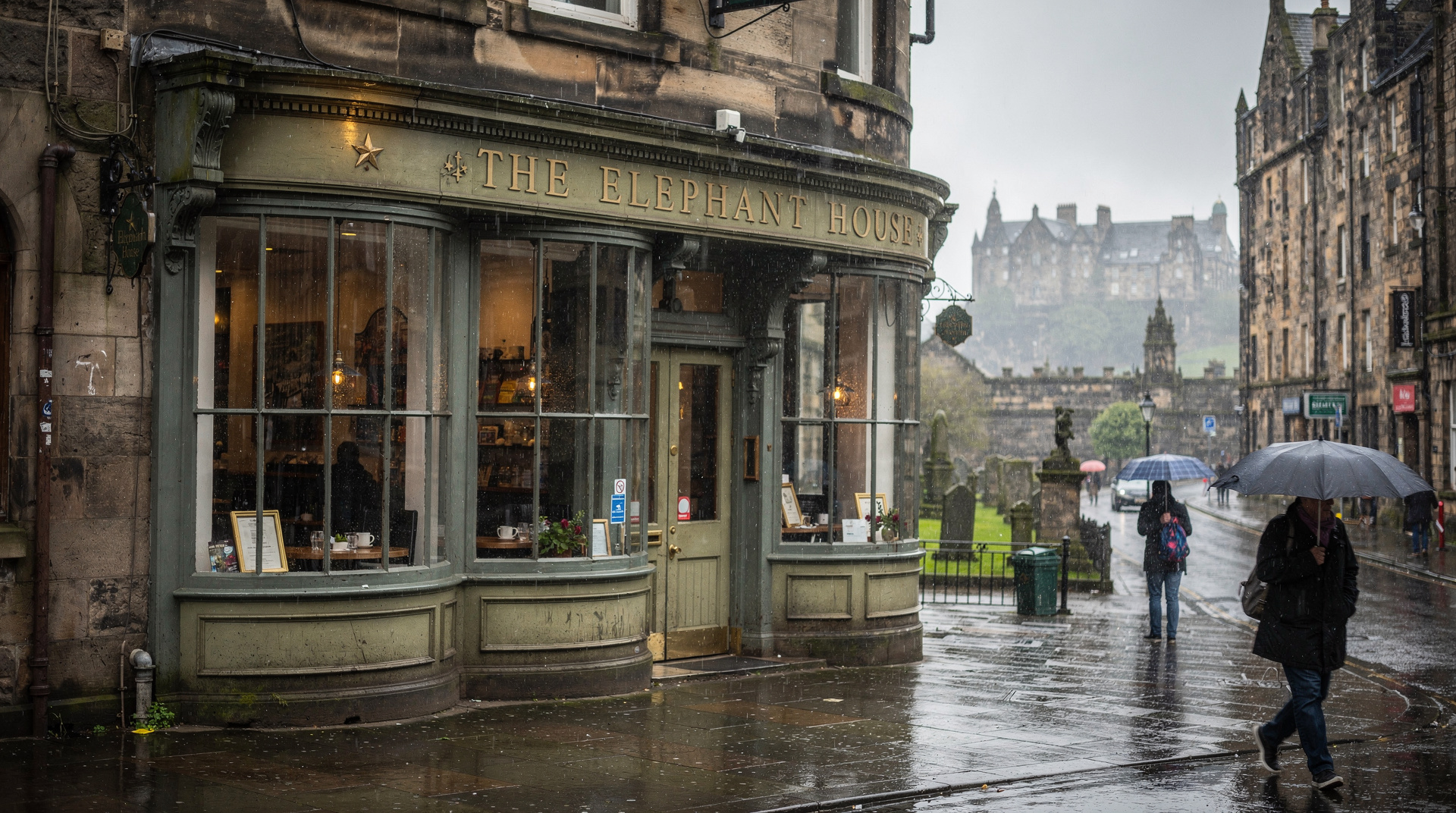
The Elephant House: where the story began
The Elephant House cafe on George IV Bridge is the most significant Harry Potter site in Edinburgh and one of the few with a genuinely documented connection. Rowling has confirmed in interviews that she wrote portions of the early Harry Potter books in the back room of the Elephant House, which had the combination of cheap coffee, warmth, and a spectacular view of Edinburgh Castle that made it a useful working space for a single mother with no home office.
The cafe was extensively damaged by fire in 2021 and underwent a lengthy reconstruction. As of 2026 it has reopened, though the interior has been significantly changed from the version Rowling used. The back room windows looking out to the castle still give the same view. See the Elephant House guide for current opening hours, the history, and what to expect from a visit.
One honest note: the Elephant House was not the only place Rowling wrote in Edinburgh, and some accounts suggest it was less central to the writing process than the popular narrative implies. Nicholson’s Cafe (now a Chinese restaurant called Spoon on Nicholson Street) was also a writing spot. The Elephant House has embraced the Harry Potter connection most fully, which means it is more commercially oriented than some visitors expect — there is a gift shop, and the toilets are famously covered in fan messages.
Greyfriars Kirkyard: the graves that echo in the books
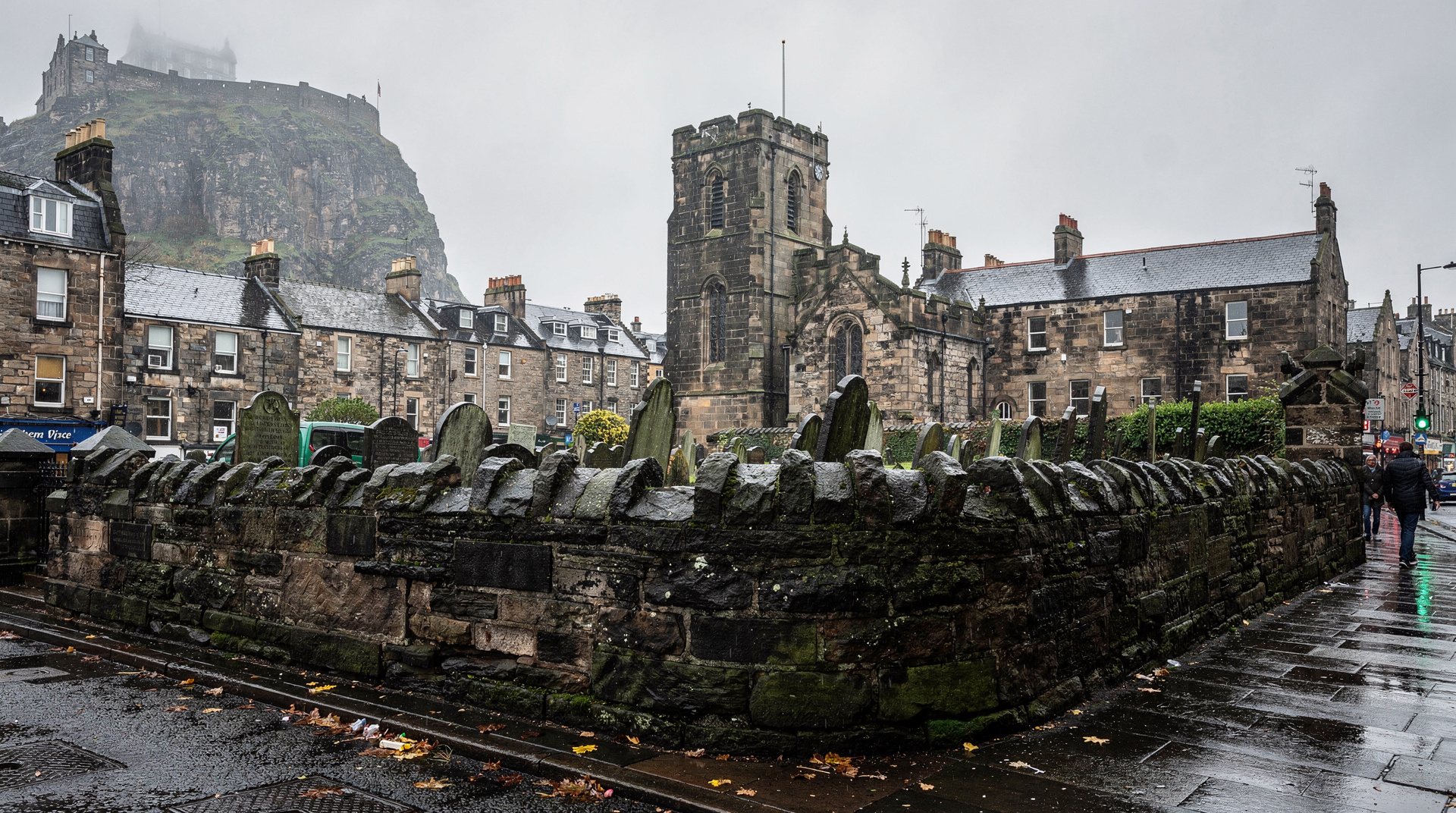
Greyfriars Kirkyard contains two headstones that have become required stops on every Harry Potter tour: the grave of Thomas Riddell (variously spelled Riddle), and a monument to one William McGonagall. The similarity of these names to Tom Riddle (Lord Voldemort’s birth name) and Professor McGonagall is obvious and has fuelled significant tourist interest.
Rowling has neither confirmed nor denied that these graves inspired the character names. Given that she lived in Edinburgh and used the Elephant House, whose windows look toward Greyfriars, it is plausible that she visited the Kirkyard. But the connection to the character names remains speculative — Riddle is a common enough surname, and she could have found it elsewhere.
What is not in dispute is that the graves exist, that they are accessible as part of the free Greyfriars Kirkyard visit, and that finding them is a satisfying experience for Harry Potter fans regardless of whether Rowling consciously borrowed the names. The Riddell grave is in the main Kirkyard section; the McGonagall monument is nearby. Both are well signposted by local tour operators though not officially marked as Harry Potter sites.
The Greyfriars Kirkyard guide covers the much richer actual history of the cemetery beyond the Harry Potter connection — a history that is arguably more interesting than any fictional parallel.
Victoria Street: Edinburgh’s Diagon Alley
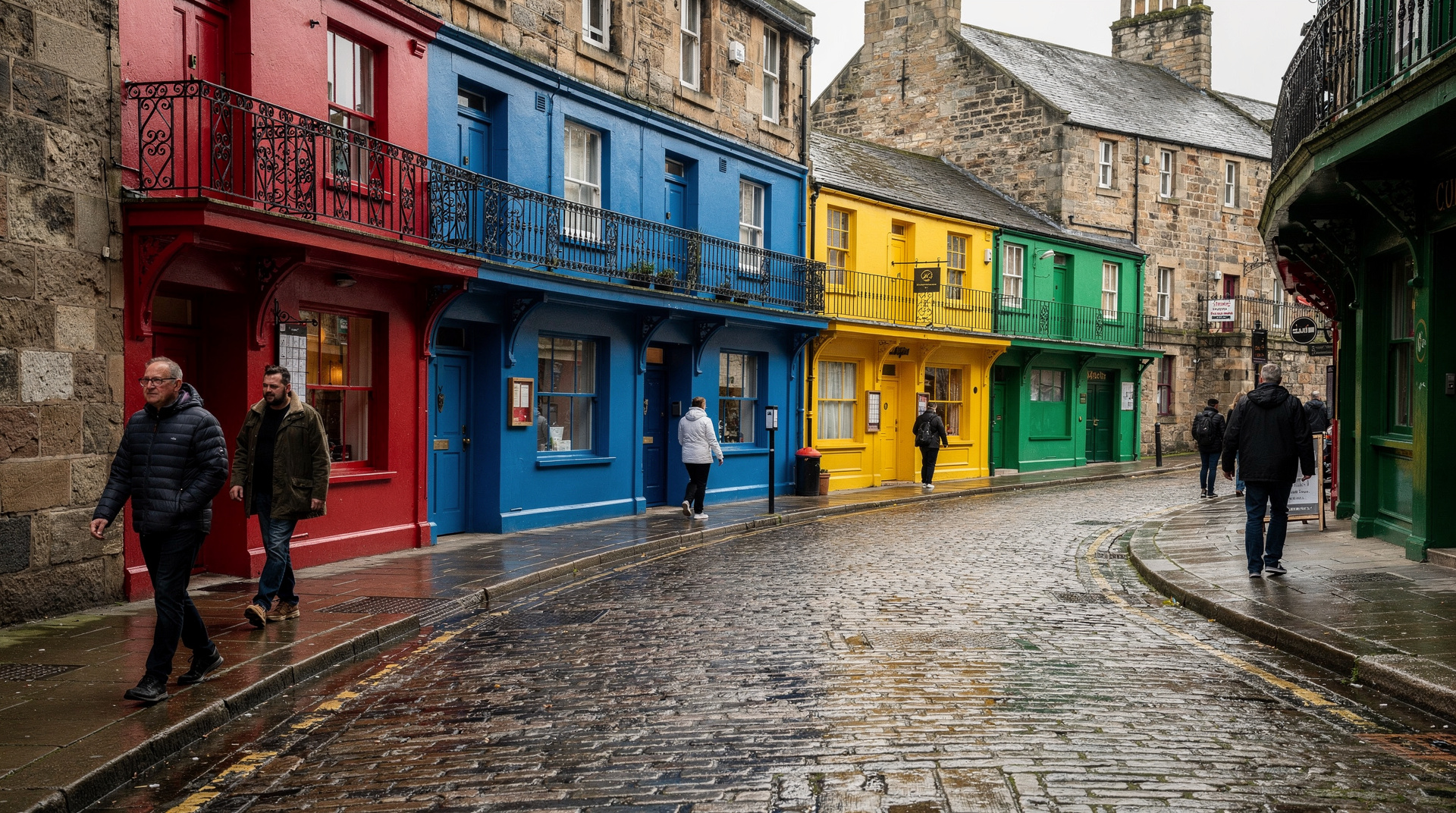
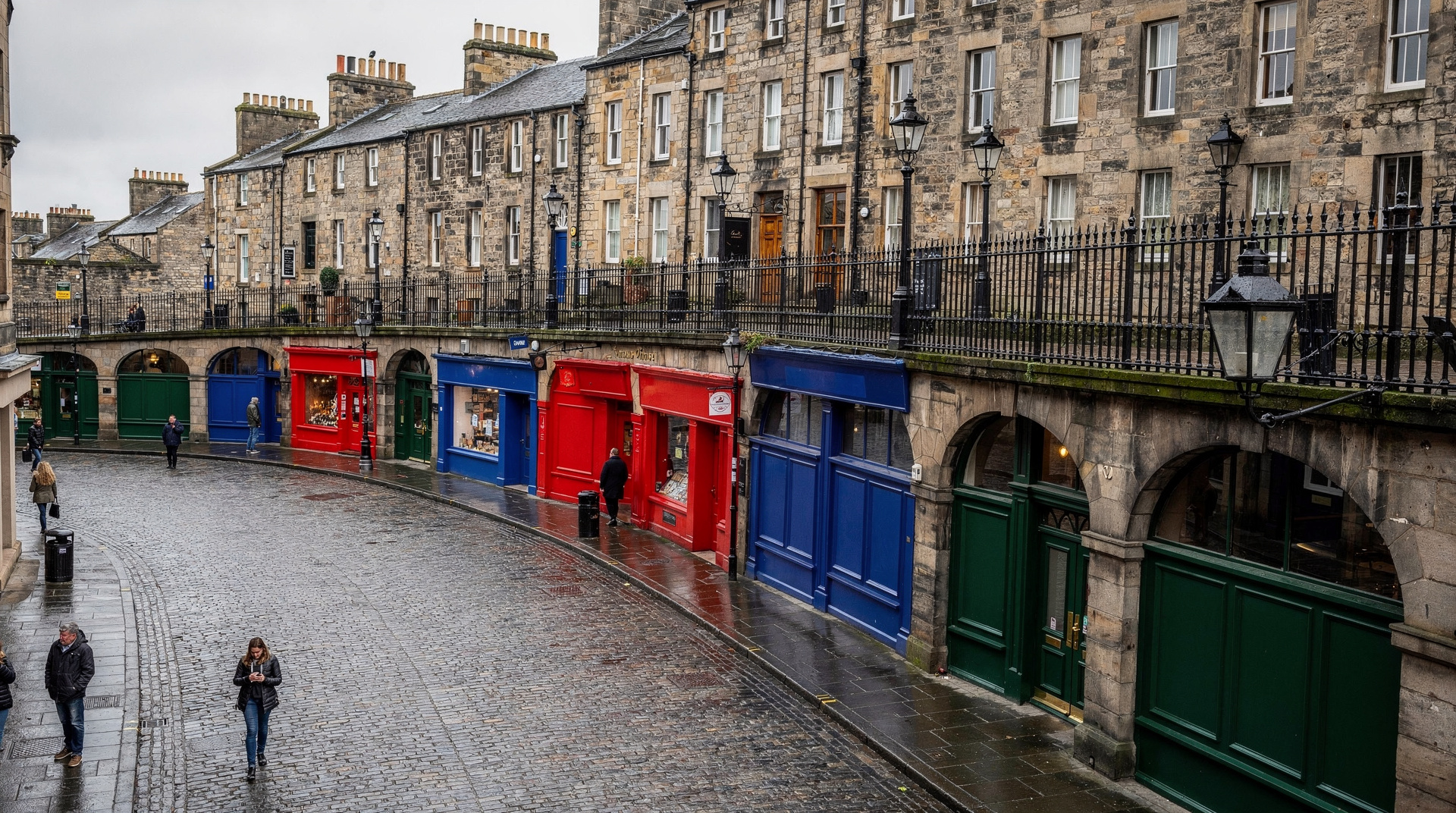
Victoria Street, a curved cobblestoned street descending from George IV Bridge to the Grassmarket, is the most visually convincing Harry Potter location in Edinburgh. The arrangement of colourful, bow-fronted shops climbing up a curved lane, with a terrace street running above and the general sense of a hidden passage in a medieval city, genuinely resembles the descriptions of Diagon Alley in the books.
Rowling has never directly confirmed that Victoria Street inspired Diagon Alley. But she has said that Edinburgh’s geography influenced her sense of the wizarding world’s spaces, and the resemblance is close enough to be worth the visit regardless of the precise connection. See the Victoria Street and Diagon Alley guide for a street-by-street breakdown of the connections and the best shops to visit.
Victoria Street is entirely free to walk — no tickets required. It connects naturally to a circuit of the Old Town that includes Greyfriars and the Grassmarket.
George Heriot’s School: the Hogwarts that wasn’t
George Heriot’s School, visible from the Grassmarket, is the building most often cited as the visual inspiration for Hogwarts. The school is a seventeenth-century Edinburgh institution with towers, turrets, and a quadrangle that closely resembles descriptions of Hogwarts in the books. It is not open to the public for casual visits, but it is visible from the road and from the Grassmarket below.
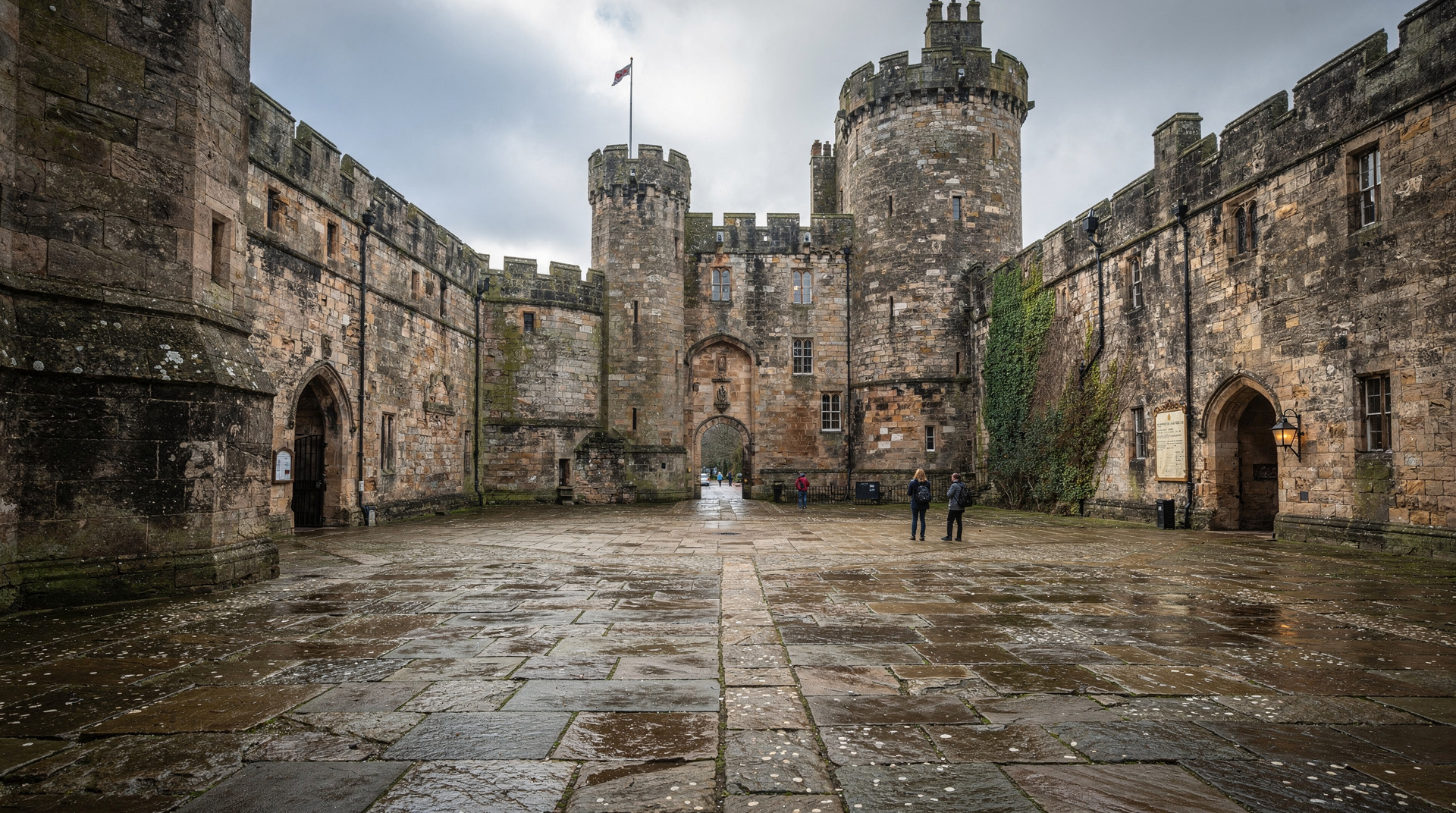
The connection to Hogwarts is not confirmed by Rowling. The building most directly used for Hogwarts in the films is Alnwick Castle in Northumberland, with some scenes at Gloucester Cathedral, Christ Church Oxford, and other locations. But George Heriot’s, combined with Edinburgh Castle on its volcanic rock, plausibly forms a composite that influenced Rowling’s imagined architecture.
Edinburgh Castle: a Hogwarts connection?
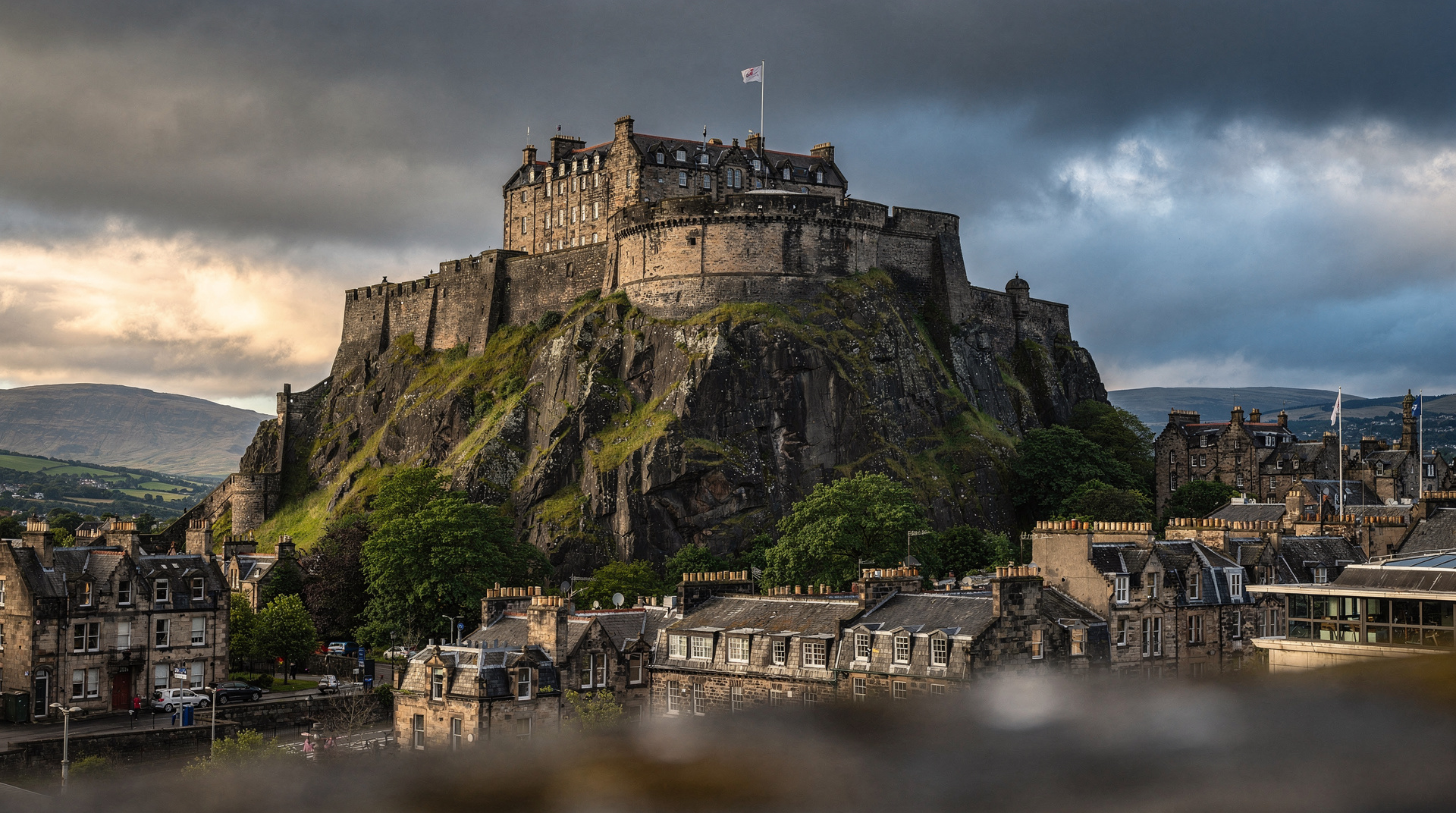
Edinburgh Castle sits on a volcanic plug of dark basalt rock, dominant in the city’s skyline, and it is visible from the Elephant House, from Greyfriars, and from much of the Old Town. Whether this specific castle inspired Hogwarts is unclear, but the experience of living in Edinburgh with the castle constantly in view would inevitably shape a fantasy writer’s sense of what an improbable architectural landmark looks like.
For visitors who want to combine Harry Potter tourism with castle admission, the Harry Potter tour with entry to Edinburgh Castle provides a guided walk of the Harry Potter connections in the Old Town followed by admission to the castle. This combination is efficient for first-time visitors who want both the film tourism and the historical attraction covered in a single morning.
Guided Harry Potter tours: which to book
Edinburgh has several Harry Potter walking tours, and the quality varies considerably. The best ones use trained guides who know both the Harry Potter material and the genuine history of Edinburgh that surrounds it — the most interesting tours make the point that the real history is at least as remarkable as the fiction.
The Harry Potter magical guided walking tour is the standard Edinburgh Harry Potter tour and is consistently well-reviewed for its balance of Potter content and genuine historical context. It covers Victoria Street, the Elephant House, Greyfriars, George Heriot’s School, and several other sites on a two-hour walking circuit of the Old Town. At around £15-£18 per adult, it is good value for the content.
For families or groups who prefer privacy, the Harry Potter wizarding walking tour (private) covers the same route with a dedicated guide. This is more expensive but allows the tour to be paced around the group’s interest, which is particularly useful with children who want to spend longer at specific sites.
The Harry Potter Edinburgh two-day itinerary sequences the Edinburgh sites with a day trip to Alnwick Castle, which has the most direct film connection of any UK location. See the Alnwick Castle Harry Potter guide for details.
The itinerary for Harry Potter visitors
Edinburgh makes excellent sense as a Harry Potter destination primarily because the general atmosphere of the city is so strongly aligned with the aesthetic of the books: medieval closes, volcanic geography, a castle on a rock, a history dense with dark events. Even visitors who walk the Old Town without specifically looking for Harry Potter connections will find much that resonates with the atmosphere Rowling created.
For visitors specifically planning a Harry Potter itinerary, the Harry Potter Edinburgh two-day itinerary sequences the Edinburgh sites with a day trip to Alnwick Castle, which has the most direct film connection of any location reachable from Edinburgh. The first day covers the Old Town walking circuit including Victoria Street, the Elephant House, and Greyfriars; the second day is the Alnwick day trip. This two-day structure is efficient and avoids the common mistake of trying to cover everything in a single afternoon.
The Alnwick Castle guide covers the broomstick training sessions and the Harry Potter filming connections in detail. Alnwick is approximately two hours from Edinburgh by car or train.
Edinburgh in the context of British film tourism
Edinburgh’s Harry Potter connections sit within a broader British film tourism landscape that includes the Warner Bros. Studio Tour near London (the most complete Harry Potter experience available), Alnwick Castle, Gloucester Cathedral, Christ Church Oxford, and the Jacobite Steam Train route in the West Highlands (the train crosses the Glenfinnan Viaduct, used in the films as the Hogwarts Express crossing). Visitors planning a multi-destination UK trip around Harry Potter should understand that Edinburgh provides the book-origin story; the film locations are spread across England with some overlap in Scotland for the Hogwarts Express scenes.
The Outlander locations guide is worth reading alongside this guide for visitors interested in Scottish film tourism more broadly — Outlander’s filming locations are predominantly in central Scotland and are in many cases historically significant in ways that overlap with the Harry Potter story’s Scottish context.
For visitors who want to understand the literary Edinburgh that produced Rowling alongside Robert Louis Stevenson, Arthur Conan Doyle, and the Scottish Enlightenment writers, the Edinburgh bookshops and literary culture guide covers the city’s extraordinary literary density. The National Library of Scotland on George IV Bridge, near the Elephant House, holds manuscripts and first editions relevant to Edinburgh’s literary history.
Self-guided Harry Potter walk
The main Edinburgh Harry Potter sites can be covered in a self-guided walk of about two to three hours:
- Start at the Elephant House on George IV Bridge for coffee and the original writing-spot atmosphere.
- Walk south along Candlemaker Row to Greyfriars Kirkyard — find the Riddell grave and the McGonagall monument.
- Return along George IV Bridge and take the stairs down to Victoria Street — walk the full length from George IV Bridge down to the Grassmarket.
- Continue through the Grassmarket and up the Vennel steps for a view of the castle skyline.
- Walk back up to the Royal Mile via the West Bow and browse the closes.
All of this is free except the Elephant House coffee. The Greyfriars Kirkyard is free to enter. A guided tour adds the narrative thread connecting these sites and some additional stops that the self-guided walk misses.
Planning your Harry Potter visit: seasons and logistics
The Harry Potter walking tours run year-round, but the Old Town is most atmospheric in autumn and early spring when the crowds are thinner and the low light creates exactly the kind of dramatic shadows the books evoke. August is the busiest month (Edinburgh Fringe) when the streets are packed and tour groups multiply — the Harry Potter sites are accessible but the atmosphere is diminished by volume of people. See the best time to visit Edinburgh guide for the full seasonal breakdown.
For accommodation near the Harry Potter sites, staying in or near the Old Town puts you within walking distance of everything. The Elephant House is on George IV Bridge; Greyfriars is five minutes from there; Victoria Street is on the same walk. A base in the Old Town means you can walk the Harry Potter circuit at any time of day, including early morning before the tour groups arrive. See the where to stay in Edinburgh guide for Old Town accommodation options at various price points.
What Edinburgh’s Harry Potter industry doesn’t always mention
The Harry Potter tourism industry in Edinburgh is commercially successful enough to have generated some content drift — claims about connections that are not well-documented, shops selling Harry Potter merchandise with no genuine association to the books, and tours that stretch the Edinburgh-Rowling connection beyond what the evidence supports. A few honest clarifications:
The Elephant House did not produce the series: Rowling wrote portions of the early books here, but also wrote in her flat and various other Edinburgh locations. The cafe became famous for the connection and has leaned into it commercially.
The film locations are mostly elsewhere: The Harry Potter films were predominantly shot at locations in England — Alnwick Castle, various English cathedrals, the studios at Leavesden. Edinburgh’s connections are primarily to the books, not the films.
George Heriot’s is not confirmed as Hogwarts: The visual resemblance is real but the connection is speculative. Rowling has not named it as an inspiration.
Harry Potter Edinburgh for first-time visitors
First-time visitors to Edinburgh who are also Harry Potter fans face a pleasant problem: there is so much to see in Edinburgh that the Harry Potter sites compete with an extraordinary density of other historical and cultural attractions. A few principles for prioritising:
If you are visiting Edinburgh for the first time on a short trip (one to two days), do not organise your entire visit around the Harry Potter sites. Edinburgh’s Edinburgh Castle, the Old Town closes, Arthur’s Seat, and the New Town Georgian architecture are the primary reasons people love the city. The Harry Potter sites are a worthwhile addition, not a substitute.
If you have three or more days, the Harry Potter circuit fits comfortably alongside the standard Edinburgh programme. The Elephant House, Victoria Street, and Greyfriars are all clustered in the same part of the Old Town that you would visit for other reasons — they are not detours but enhancements to a natural route.
If Harry Potter is your primary motivation for visiting Edinburgh specifically, then the itinerary needs to be structured differently. Start with the Old Town Harry Potter circuit on day one; take the Alnwick Castle day trip on day two; add the Outlander locations if you want a third day of film tourism. This gives a coherent film tourism programme without sacrificing the genuine Edinburgh experience.
See the how many days do you need in Edinburgh guide for a longer discussion of how to allocate time across Edinburgh’s attractions.
How confirmed is each connection? An honest comparison
| Site | Connection | Confirmed by Rowling? |
|---|---|---|
| The Elephant House | Rowling wrote here | Yes, confirmed in interviews |
| Greyfriars graves (Riddell, McGonagall) | Possible name inspiration | No, speculative |
| Victoria Street | Possible Diagon Alley inspiration | No, speculative |
| George Heriot’s School | Possible Hogwarts inspiration | No, speculative |
| Edinburgh Castle | General atmospheric influence | No, speculative |
| Alnwick Castle (day trip) | Actual film location | Yes, factual film record |
This table is worth keeping in mind while walking the Old Town circuit: the emotional reward of visiting Victoria Street or Greyfriars does not depend on Rowling having explicitly confirmed the connection, but honest expectations avoid the disappointment of finding a plaque that overstates the certainty.
Shopping for Harry Potter souvenirs honestly
The commercial layer around Edinburgh’s Harry Potter tourism is substantial, and quality varies enormously. Victoria Street has several shops selling official and unofficial Harry Potter merchandise, ranging from licensed Warner Bros. products to generic wizard-themed tat with no real connection to the books beyond a pointed hat.
The Elephant House gift shop sells items tied specifically to the cafe’s own history rather than generic branding, which makes it a more meaningful purchase for visitors who want a souvenir connected to a documented location rather than a speculative one. For a broader view of where Edinburgh’s souvenir shopping is worth your money, the Edinburgh shopping guide and the avoiding tartan tat guide both cover the same honesty-first approach applied to gift shopping more broadly.
Photographing the Harry Potter sites
Victoria Street photographs best from the George IV Bridge end looking down, ideally in the early morning before the shops open and the street fills with visitors — the curved cobbles and colourful shopfronts are the whole appeal, and empty street gives a cleaner shot. The Elephant House’s castle-view windows are only accessible if you buy something, but the view itself, looking out toward Edinburgh Castle across the graveyard, is one of the more evocative Harry Potter-adjacent photographs available in the city. Greyfriars Kirkyard photographs well in the low, angled light of early morning or late afternoon, which also happens to be when the crowds around the Riddell and McGonagall graves are thinnest.
Combining Harry Potter with Edinburgh’s wider literary history
Rowling did not write in a vacuum. Edinburgh has one of the densest concentrations of literary history of any UK city, and placing the Harry Potter story within that broader context makes the visit more interesting rather than less. The Edinburgh bookshops and literary culture guide covers Robert Louis Stevenson, Arthur Conan Doyle, Walter Scott, and the modern crime writers who followed them, several of whom also drew on the same closes, graveyards, and Old Town atmosphere that shaped the Harry Potter books. Understanding this wider context is part of what separates a thoughtful Harry Potter visit from a purely transactional photo-stop tour.
Frequently asked questions about Harry Potter in Edinburgh
Did JK Rowling live in Edinburgh when she wrote Harry Potter?
Yes. Rowling moved to Edinburgh in 1993 following her divorce, and wrote much of Harry Potter and the Philosopher’s Stone while living in Edinburgh as a single parent. She later moved to a larger house in Edinburgh and still maintains a connection to the city. The poverty of her early Edinburgh years is part of the Harry Potter origin story — she has described using cafes like the Elephant House partly because they were heated and she could nurse a coffee for hours.
Is Victoria Street actually Diagon Alley?
Victoria Street is the closest real-world parallel to Diagon Alley that Edinburgh offers, and the resemblance is genuine. Rowling has confirmed that Edinburgh’s geography influenced her writing without specifically naming Victoria Street as the model for Diagon Alley. The connection is widely accepted as plausible but not officially confirmed. It is still worth visiting as an atmospheric and genuinely beautiful Edinburgh street.
Are there any Harry Potter filming locations in Edinburgh itself?
Edinburgh was not used as a filming location for the Harry Potter films, which were shot almost entirely in England. The Edinburgh connections are to the books rather than the films. Alnwick Castle in Northumberland, about two hours south of Edinburgh, is the closest filming location — see the Alnwick guide for details.
How long does a Harry Potter walking tour of Edinburgh take?
Guided walking tours typically run two to two and a half hours. A self-guided walk covering the main sites takes around two to three hours depending on how much time you spend at each stop. Adding the Edinburgh Castle visit extends this to a full half-day.
Are the Elephant House and Victoria Street worth visiting if I’m not a big Harry Potter fan?
Yes. Both are genuinely attractive Edinburgh locations regardless of the Harry Potter connection — the Elephant House has one of the best castle views of any Old Town cafe, and Victoria Street is one of the prettiest curved streets in the city. The Harry Potter association is a bonus reason to visit rather than the only one.
What is the best time of year for a Harry Potter tour?
The tours run year-round, but the Old Town is at its most atmospheric in autumn and winter when the light is low and the closes are quiet. August (Edinburgh Fringe) brings large crowds that make the outdoor sections of the walk more congested. The weather is most pleasant in May, June, and September.
Top experiences
Bookable activities with verified prices and instant confirmation on GetYourGuide.