Edinburgh's bookshops and literary heritage: a reader's guide
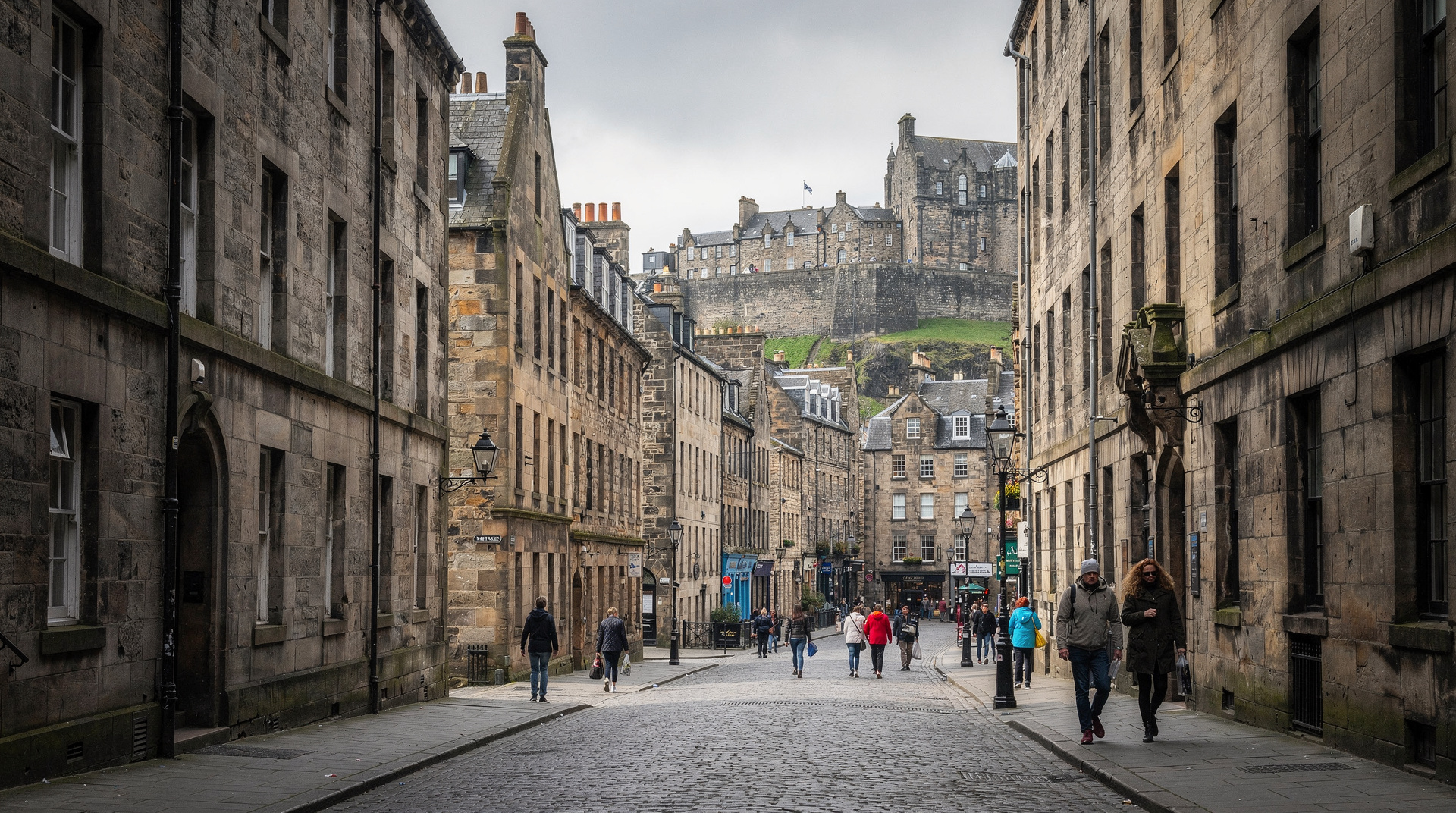
Edinburgh: Royal Mile Old Town walking tour
What makes Edinburgh a literary city, and where should book lovers go?
Edinburgh was the first UNESCO City of Literature, home to Robert Burns, Walter Scott, Robert Louis Stevenson, Arthur Conan Doyle, Muriel Spark, and J.K. Rowling. Key stops are the Writers' Museum (free), the Scottish Storytelling Centre, and Topping and Company on George Street. The Old Town is dense with literary connections within walking distance.
Edinburgh and books: a city shaped by its writers
In 2004, Edinburgh became the first city in the world to be designated a UNESCO City of Literature — a recognition of not just its historical literary output but its sustained commitment to books as a living part of city life.
The case for the designation was strong: a city that produced Walter Scott (who essentially invented the historical novel as a genre), Robert Louis Stevenson (Jekyll and Hyde, Treasure Island), Arthur Conan Doyle (Sherlock Holmes, born at 11 Picardy Place in Edinburgh’s New Town), James Boswell, David Hume, Adam Smith, Muriel Spark (The Prime of Miss Jean Brodie, set explicitly in 1930s Edinburgh), Ian Rankin (the Rebus detective series), Alexander McCall Smith, and J.K. Rowling — who wrote the first Harry Potter novels in Edinburgh cafés while living in the city in the 1990s.
The literary geography of Edinburgh is dense and walkable. Within the Old Town alone, you are never far from a building associated with a writer, a graveyard where one is buried, or a street that appears in a novel. This guide maps the essential stops for literary visitors and identifies the best bookshops for browsing and buying.
| Where | Old Town (Royal Mile, Greyfriars) and New Town (George Street, Charlotte Square) |
| Cost | Writers’ Museum free; Scott Monument climb (see the official Culture Edinburgh site for the current price); Book Festival events free–£20 |
| Time needed | Half a day for the walking route; longer in August with the Book Festival |
| Getting there | Entirely walkable within the Old Town and New Town |
| Best time | Any season for the walking route; August for the Book Festival |
Best bookshops at a glance
| Bookshop | Location | Specialism |
|---|---|---|
| Topping and Company | George Street, New Town | Best general stock, café, events |
| Lighthouse Books | West Nicolson Street, Southside | Radical politics, social theory |
| Armchair Books | West Port, near Grassmarket | Chaotic second-hand, rare finds |
| McNaughtan’s Bookshop | East London Street | Antiquarian, serious collectors |
| Edinburgh Books | Victoria Street | Second-hand, tourist-accessible |
The Writers’ Museum: free and excellent
The Writers’ Museum at Lady Stair’s House, off the Lawnmarket on the Royal Mile, is Edinburgh’s dedication to its three most internationally significant literary figures: Robert Burns, Walter Scott, and Robert Louis Stevenson. A free admission museum in a seventeenth-century merchant’s house, it holds manuscripts, first editions, portraits, personal possessions, and ephemera that connect these three writers to the city that made them.
The Burns collection includes the poet’s writing desk and his manuscript of Ae Fond Kiss, one of the finest love songs in English or Scots. The Scott collection has personal items, letters, and first editions. The Stevenson rooms cover the writer’s Edinburgh childhood, his travels, and the literary output that ended with his early death in Samoa at 44.
The museum is small and manageable in about an hour. The courtyard outside, Makars’ Court, has paving stones inscribed with quotations from Scottish writers across the centuries — itself a pleasant five minutes of reading.
Opening hours: 10am–5pm Monday to Saturday; noon–5pm Sunday.
Greyfriars Kirkyard: where literary history is buried
Greyfriars Kirkyard, five minutes from the National Museum of Scotland, contains the graves of several significant Edinburgh historical figures alongside the famous Bobby (the Skye terrier whose grave marker has been rubbed shiny by generations of touching hands). For literary visitors, the graveyard matters for the connection to J.K. Rowling: she reportedly visited Greyfriars Kirkyard when developing Harry Potter, and the gravestone of Thomas Riddell there — along with the nearby gravestone of William McGonagall (Scotland’s most celebrated bad poet) — is often cited as an inspiration for Voldemort’s birth name.
Whether the Riddell connection is biographical or retrospective myth-making is debated, but the graveyard is genuinely atmospheric and historically significant quite apart from the Potter connection. The full literary and dark tourism dimensions are covered in the Greyfriars Kirkyard guide.
The Harry Potter connections: what is real
The Harry Potter connections to Edinburgh are genuine but frequently overstated by tourist operators.
The Elephant House (21 George IV Bridge) is the most famous of Rowling’s writing cafés and has leaned heavily into the connection. Rowling did write here; she also wrote at Nicholson’s Café (now closed) and at home. The back window view toward Edinburgh Castle and Greyfriars is striking and worth visiting for the view. The coffee is adequate rather than remarkable.
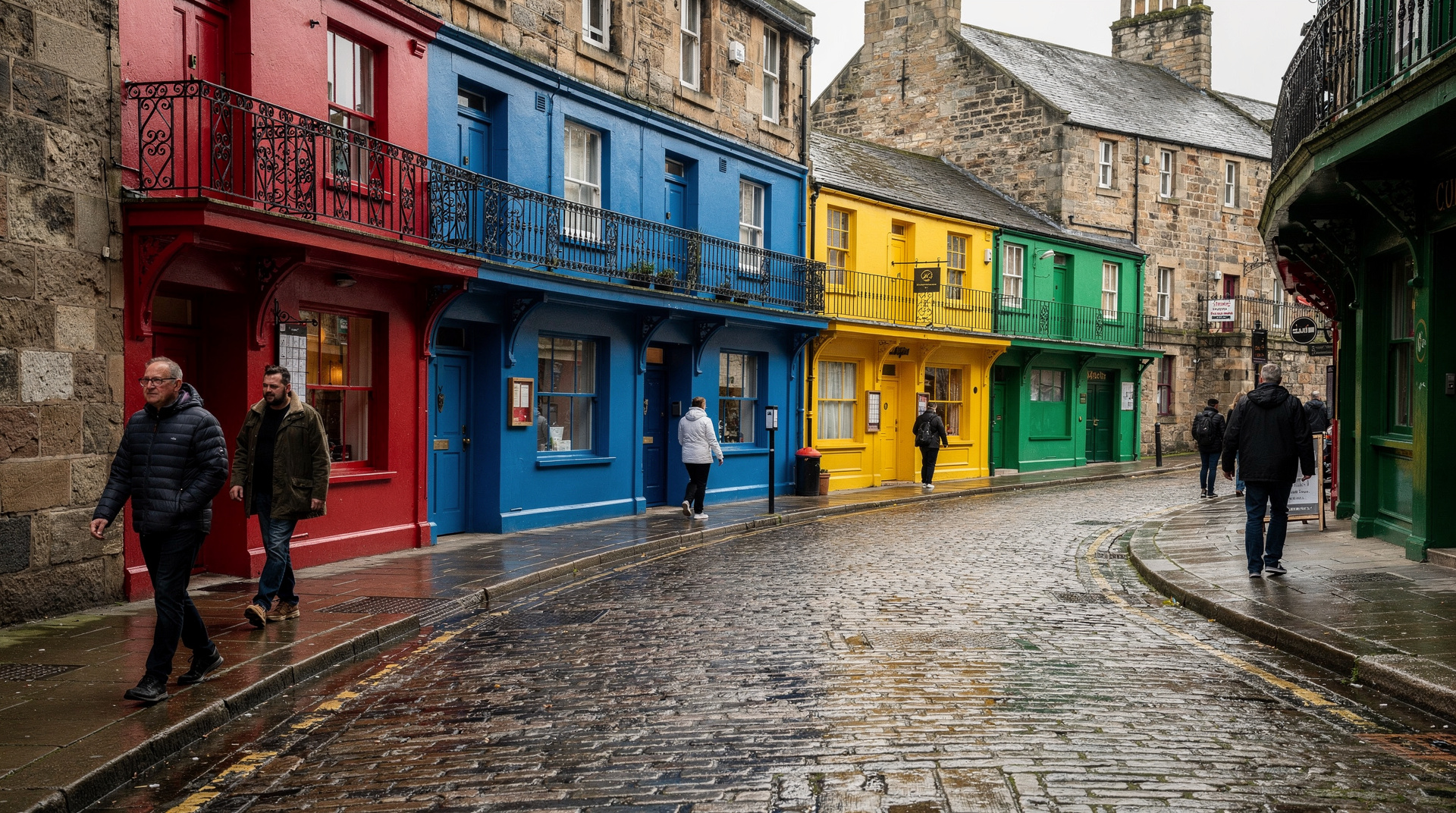
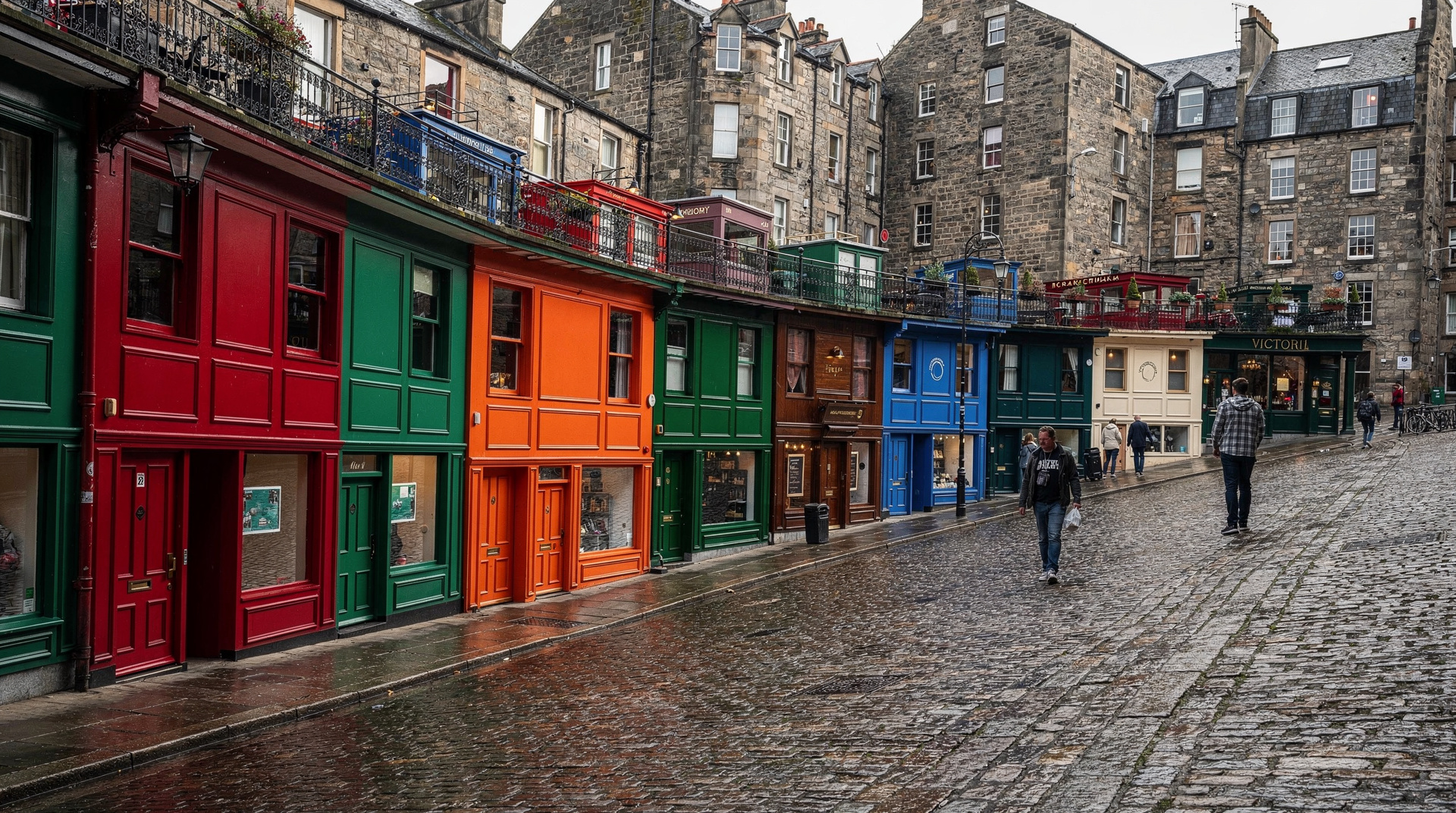
Victoria Street — the curved, two-level street off George IV Bridge — is frequently cited as the inspiration for Diagon Alley. The street is genuinely beautiful in the old-Edinburgh manner; whether it specifically inspired Rowling is unverifiable. It is worth walking regardless.
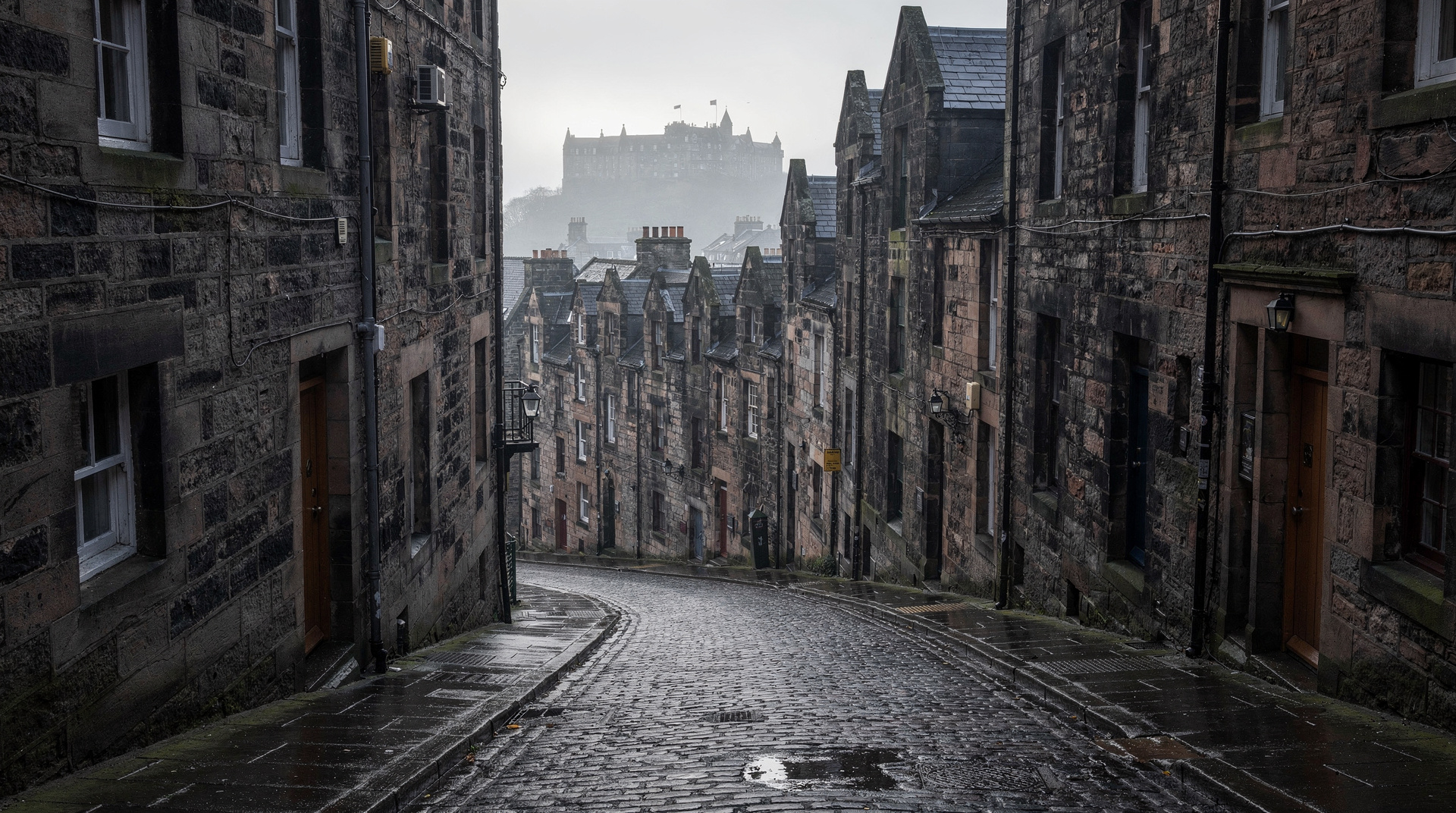
Candlemaker Row (near Greyfriars) leads past independent shops and toward the kirkyard in a way that has a slightly magical character on a misty Edinburgh morning.
For the full Harry Potter walking tour experience, the Edinburgh Harry Potter magical guided walking tour covers the main connections with historical context and storytelling that makes them more than just locations on a map.
Conan Doyle was born and trained in Edinburgh, and the surgeon he based Holmes on taught at the university here, which makes the city the character’s origin rather than his setting: a Sherlock Holmes adventure works from that biographical fact.
Robert Louis Stevenson’s Edinburgh
Robert Louis Stevenson was born at 8 Howard Place, Inverleith, in 1850 and grew up largely at 17 Heriot Row, New Town, where the family lived from 1857. Both addresses are private residences and not open to the public, but walking past them with the awareness of who grew up there changes both streets.
Stevenson left Edinburgh as a young man and returned reluctantly, finding the climate and the Presbyterian social atmosphere oppressive. But Edinburgh is present in his work throughout: the double nature of the city — respectable Georgian New Town facade over the Old Town’s dark history — is explicitly the inspiration for The Strange Case of Dr Jekyll and Mr Hyde (1886). The dual city as metaphor for split psychology is one of the most productive ideas Edinburgh ever generated.
The Museum of Edinburgh on the Canongate (near Holyrood) has a small but well-curated Stevenson section, including a reconstruction of his boyhood room.
Walter Scott: Edinburgh’s great novelist
Walter Scott transformed Edinburgh’s self-image through his fiction — his novels established the romantic Highland image that Scotland still trades on internationally, and his advocacy for the ceremonial return of the Scottish Regalia (the Honours of Scotland) to Edinburgh Castle shaped what visitors come to see.
The Scott Monument (East Princes Street Gardens) is Edinburgh’s most visible memorial to any writer — a 61-metre Gothic spire housing a marble statue of Scott at its base, with statuettes of characters from his novels in 64 niches. You can climb to the top (200 narrow steps; see the current price on the official Culture Edinburgh site) for views that include the castle, Calton Hill, Arthur’s Seat, and the Firth of Forth. On a clear day, it is spectacular.
Scott’s house, Abbotsford, is near Melrose in the Scottish Borders — a day trip from Edinburgh and worth it for visitors with a serious Scott interest. The Rosslyn Chapel and Borders day trip guide covers this area.
Arthur Conan Doyle: Sherlock Holmes’s Edinburgh roots
Doyle was born in Edinburgh in 1859 and trained as a doctor at the University of Edinburgh, where he encountered Dr Joseph Bell — the forensic diagnostician whose methods directly inspired Sherlock Holmes. A blue plaque marks his birthplace at 11 Picardy Place (now the junction of Picardy Place and York Place, New Town), and a bronze statue of Holmes stands outside the pub nearby.
The connections between Bell’s clinical reasoning and Holmes’s deductive method are well documented and are part of what makes Edinburgh’s claim to the Sherlock Holmes legacy more than incidental. Bell’s approach to diagnosis — systematic, detail-focused, unwilling to accept conventional explanation — is Edinburgh Enlightenment thinking applied to medicine.
The Old Town history guide covers the medical and scientific Edinburgh that produced both Bell and the Doyle connection.
Pairing books with art and coffee
Edinburgh’s literary culture doesn’t exist in isolation from its wider cultural life. The Edinburgh for art lovers guide covers the National Galleries and smaller art spaces that pair naturally with a bookshop crawl, and the National Museum of Scotland guide is a short walk from several of the bookshops listed below if you want to combine literary and historical browsing in one visit. Given how many of Edinburgh’s writers worked in cafés, it’s also worth pairing a bookshop visit with a proper coffee stop — the Edinburgh coffee guide covers the independent cafés near the Old Town bookshop cluster.
Best independent bookshops
Topping and Company, George Street
The Edinburgh branch of Topping and Company at 9 George Street (New Town) is the best general independent bookshop in Edinburgh and among the best in the UK. The stock is wide and thoughtfully curated, the staff recommendations are reliable, and the in-store café makes extended browsing genuinely comfortable. The bookshop’s events programme — author readings, signings, discussions — runs throughout the year and is particularly strong during the Edinburgh International Book Festival.
Lighthouse Books, West Nicolson Street
Lighthouse Books at 43-45 West Nicolson Street (Southside) is Edinburgh’s most politically engaged bookshop — the stock focuses on radical politics, social theory, feminism, anti-racism, and environmental writing, with a café attached that serves Brew Lab coffee. The atmosphere is welcoming rather than excluding, and the books are chosen by people who have read them.
Armchair Books, West Port
Armchair Books at 72-74 West Port, near the Grassmarket, is the antithesis of the curated independent — a chaotic, floor-to-ceiling second-hand bookshop that requires patience and rewards it. The stock changes continuously and includes academic remainders, fiction, Scottish local history, and occasionally remarkable rare finds at ordinary prices. The atmosphere is unimproved by commercial consideration and all the better for it.
McNaughtan’s Bookshop, East London Street
McNaughtan’s at 3a East London Street is Edinburgh’s best antiquarian and second-hand bookshop for serious bibliophiles — a proper specialist dealer in older and valuable books alongside a good general second-hand stock. The building itself is wonderful: a book-crammed Georgian flat with narrow stairs and walls of shelves.
Edinburgh Books, Victoria Street
Edinburgh Books on Victoria Street (on the famous curved street) sells second-hand and antiquarian books in a setting that is exactly right for the subject. Smaller than McNaughtan’s and more tourist-accessible due to the location, but the stock is genuine and the prices fair.
The Edinburgh International Book Festival
The Edinburgh International Book Festival, held every August in Charlotte Square Gardens (New Town), is the world’s largest annual literary festival, running alongside the Fringe. Over 800 events, 900 authors, and 200,000 attendees over two weeks. Events range from free author talks in the gardens to intimate ticketed discussions with the world’s most significant writers.
If you are in Edinburgh in August, even a single afternoon in the Book Festival tent — with a coffee, a queue for a signing, and an hour listening to a writer you admire — is a Edinburgh experience of a different quality from most tourist activities.
See the Edinburgh Fringe guide for how to coordinate a Book Festival visit with the broader August festival landscape.
A literary walking route
A compact walking route linking Edinburgh’s literary landmarks in the Old Town and New Town:
- Writers’ Museum (Lady Stair’s House, off Lawnmarket) — start with the Burns/Scott/Stevenson collection
- Makars’ Court (outside the museum) — quotations in the paving
- Greyfriars Kirkyard (10 minutes’ walk) — Riddell gravestone, McGonagall, historical atmosphere
- The Elephant House (21 George IV Bridge) — Potter café, back window view
- Victoria Street (off George IV Bridge) — alleged Diagon Alley inspiration
- Scott Monument (Princes Street Gardens) — Gothic memorial, climbable
- Heriot Row (New Town, 15 minutes from Princes Street) — Stevenson’s boyhood home
- Picardy Place (New Town, 10 minutes from Heriot Row) — Conan Doyle birthplace and Holmes statue
The Royal Mile Old Town walking tour covers much of this ground with a guide who brings the stories alive. The Old Town history and tales tour provides deeper historical context for the literary connections.
Contemporary Edinburgh literature: beyond the heritage
Edinburgh’s literary reputation rests heavily on its historical figures, but the contemporary scene is also strong. The city’s current literary community includes several internationally published authors, a thriving small press scene, and a series of literary events that run year-round rather than just in August.
Ian Rankin continues to produce Rebus novels set in Edinburgh, most recently featuring Siobhan Clarke alongside the retired detective. Rankin’s Edinburgh is a working-class, politically complicated city a long way from the heritage tourism version, and his novels function as a counter-narrative to the tartanised picture of Scotland that fills the Royal Mile souvenir shops.
Alexander McCall Smith (No. 1 Ladies’ Detective Agency, but also the Edinburgh-set 44 Scotland Street series) is another internationally prominent Edinburgh resident writer. The 44 Scotland Street novels, set in a New Town tenement flat, provide a gentle comedy of contemporary Edinburgh manners that is genuinely useful as a city guide in fiction form.
Ali Smith, James Robertson, and Janice Galloway are among the Scottish writers based in or strongly associated with Edinburgh whose work has won major international prizes in recent years. The literary culture the city supports is serious rather than merely nostalgic.
The Edinburgh International Book Festival in depth
The Book Festival runs for two weeks in August at Charlotte Square Gardens and is more than just author readings. The full programme includes:
- Events for children and young people at the separate Children’s Programme (Charlotte Square gardens has a dedicated children’s area)
- Panel discussions on political, social, and cultural questions
- First-book events showcasing debut novelists and poets
- Significant public intellectual figures alongside literary ones
- Free outdoor events in the gardens themselves (weather permitting)
The ticket pricing is democratic — major author events are typically £10–£15, small discussion events £7–£10, and some garden events are free. A day pass allows entry to the garden and free events without paying for specific programme items.
The Book Festival’s bookshop (run by Edinburgh Books) is the best single point of sale for books by festival authors in Scotland during August, and the queues for signings after major events can run to an hour for the most popular writers.
UNESCO City of Literature: what the designation means in practice
Edinburgh’s City of Literature designation is not purely honorary. The organisation Books from Scotland, the Scottish Book Trust, and the Edinburgh UNESCO City of Literature Trust run year-round programmes that include:
- The Edinburgh International Book Festival
- The capital’s school visits programme connecting authors with students
- Translation fellowships bringing international writers to Edinburgh
- The Edinburgh Literary Pub Tour (a theatrical walking tour of literary history combining actors and pubs)
The Edinburgh Literary Pub Tour (not to be confused with standard pub crawls) is specifically worth mentioning here: actors perform scenes from Scottish literature while walking a circuit of Old Town pubs that have literary connections. It runs Thursday through Sunday evenings and is one of Edinburgh’s better theatrical experiences as well as a good pub evening.
Muriel Spark’s Edinburgh
Muriel Spark (1918–2006) is the Edinburgh literary figure most specifically embedded in the city’s social landscape. Born in Bruntsfield, educated at James Gillespie’s High School (the model for the Marcia Blaine School in The Prime of Miss Jean Brodie), Spark’s connection to Edinburgh is both biographical and literary in a way that most Edinburgh writers’ connections are not.
The Prime of Miss Jean Brodie (1961) is set in the Edinburgh of the 1930s, and the city it describes — the New Town’s Georgian respectability, the School’s strict social codes, the eruption of Italy and fascism into the confined world of the educated Edinburgh girl — still resonates with the city’s physical reality. Walking through Bruntsfield, Morningside, and the Meadows with the novel in mind produces a particular version of Edinburgh that no guidebook covers.
The Spark centenary in 2018 produced several commemorative exhibitions; a permanent memorial in the form of a plaque near her childhood home in Bruntsfield was installed in the years following.
Edinburgh’s independent publishing scene
Edinburgh has a disproportionately strong independent publishing scene for a city of its size. Notable publishers based in or strongly associated with Edinburgh include:
Canongate Books (14 High Street, Edinburgh) is one of the UK’s most significant independent publishers, responsible for publishing Yann Martel’s Life of Pi and a range of internationally important Scottish and international authors. Their offices on the High Street are in the heart of the Old Town.
Birlinn is Edinburgh’s main publisher of Scottish history, biography, and reference — if you want to buy serious books about Scotland’s history, architecture, or natural world, Birlinn’s list is where to look.
Polygon publishes literary fiction and poetry, with a particular commitment to Scottish authors.
These publishers make Edinburgh a city where books are produced as well as read, which contributes to the density of the literary culture in a way that purely retail or academic book culture would not.
Fitting the literary route around Harry Potter tourism
Many visitors arrive with Harry Potter specifically in mind rather than Edinburgh’s broader literary heritage, and the two overlap without being identical. The Harry Potter Edinburgh guide covers the film and book locations in full detail, including sites beyond the literary walking route above (such as Balmoral Hotel’s Rowling-signed door and the wider filming locations).
If your time is limited, prioritise the Elephant House and Victoria Street from that guide alongside the Writers’ Museum and Greyfriars Kirkyard from this one — the combination covers both the genuine Rowling connection and Edinburgh’s deeper literary history in a single afternoon. For buying a specific edition or literary souvenir afterwards, the Edinburgh shopping guide covers where to find better options than the generic Royal Mile gift shops.
Frequently asked questions about Edinburgh’s literary heritage
Did J.K. Rowling write Harry Potter in Edinburgh?
Yes, at least in part. Rowling lived in Edinburgh during a financially difficult period in the early-to-mid 1990s and wrote sections of the first books in Edinburgh cafés, notably the Elephant House and Nicholson’s (now closed). The later books were written after commercial success allowed her to write at home. Edinburgh’s presence in the series — the castle, the Gothic architecture, the school setting — is real rather than incidental.
Can I visit Arthur Conan Doyle’s birthplace?
The building at 11 Picardy Place where Doyle was born no longer exists — it was demolished during road-widening. A bronze statue of Sherlock Holmes stands near the original location. The University of Edinburgh medical school, where Doyle trained, is near Teviot Row and has a small historical display about the university’s medical alumni.
Is Walter Scott’s house open to visitors?
Abbotsford, Scott’s elaborate country house near Melrose in the Scottish Borders, is open to visitors (the house is open from 1 March to 31 December; adult entry to the house and gardens is £16.20). It is about an hour’s drive from Edinburgh. The house was designed by Scott himself and is an extraordinary monument to one man’s literary imagination and historical obsessions.
What is the Edinburgh International Book Festival?
It is the world’s largest annual literary festival, running for two weeks in August in Charlotte Square Gardens. Over 800 events with major writers from around the world. Tickets for individual events cost from free (some garden events) to around £15–£20. The festival runs simultaneously with the Fringe, making August Edinburgh’s most intense cultural period.
Are Edinburgh’s bookshops worth visiting even if I do not want to buy?
Yes. Topping and Company has a genuinely excellent café. Armchair Books is worth an hour simply for the experience of a proper old-fashioned second-hand bookshop. The Writers’ Museum is free and brief. The literary walking route is enjoyable regardless of shopping intent.
How long does the full literary walking route take?
Allow half a day (around 3-4 hours) to do the eight-stop route at an unhurried pace, including time inside the Writers’ Museum and a coffee stop. It can be compressed to about 90 minutes if you skip the New Town extension (Heriot Row and Picardy Place) and stay within the Old Town.
Is there a guided option for the literary route rather than doing it self-guided?
Yes. The Royal Mile Old Town walking tour and the Old Town history and tales tour both cover much of this ground with a guide, and are a good option if you’d rather have the stories narrated than read them from a guidebook. See the guided tours linked earlier in this guide for booking.
Do I need to buy tickets in advance for the Book Festival?
For the most popular author events, yes — tickets for major names sell out, sometimes within days of the programme being announced in June. Smaller discussion events and first-book showcases are more likely to have availability closer to the date. Free garden events do not require advance tickets but can still fill up on busy days, so arrive with some buffer time if a specific free event matters to you.
Which bookshop is best for buying a gift with an Edinburgh literary connection?
Topping and Company has the widest general stock and reliable staff recommendations if you want something contemporary. For something with more character, a second-hand find from Armchair Books or Edinburgh Books on Victoria Street — an old Scott or Stevenson edition, for instance — makes a more distinctive gift than a mass-market paperback bought at the airport.
Top experiences
Bookable activities with verified prices and instant confirmation on GetYourGuide.