Edinburgh shopping guide: where to actually buy things worth taking home
Edinburgh food tour: devour Edinburgh like a local
Where should you shop in Edinburgh?
Stockbridge for independent food and boutique shopping. Victoria Street for quirky independent shops. Bruntsfield for neighbourhood retail without tourist prices. The Royal Mile for last-resort souvenirs — but read the honest guide first to avoid the overpriced tartan tat.
Shopping in Edinburgh: what is actually worth buying
Let us begin with an honest overview of what Edinburgh does well in terms of shopping. Scottish produce — whisky, Harris Tweed, cashmere and wool textiles, shortbread, smoked salmon, cheese — is genuinely excellent and represents real value compared to buying equivalent items through international retail. Edinburgh is also a good city for secondhand and antiquarian books, independent design, and contemporary Scottish craft.
What Edinburgh does not do well is the generic souvenir market. The concentration of near-identical tartan-and-Highland-cow shops along the Royal Mile is one of the more brazen tourist-trap operations in the UK, and navigating it without wasting money requires some forewarning. See the Royal Mile shopping: what to avoid guide for the full picture.
This guide covers the good shopping: areas, categories, and specific shops worth the detour.
| Where | Stockbridge, Victoria Street, Bruntsfield, Leith |
| Avoid | Generic tartan/whisky shops on the Royal Mile |
| Best for | Whisky, cashmere, Harris Tweed, food, books |
| Hours | Most shops 9-10am to 6-7pm; Sunday shorter |
| VAT refunds | None available since 2021 |
The best shopping areas
Stockbridge
Stockbridge, a 15-minute walk northwest from Princes Street, is Edinburgh’s finest neighbourhood retail district. The high street (Raeburn Place and St Stephen Street) has a concentration of independent shops, delis, cafés, and boutiques that reflects a well-off but genuinely local neighbourhood rather than a tourist zone.
For food and drink: Coco of Bruntsfield sells excellent handmade chocolates; the Real Foods wholefood shop has an exceptional range of Scottish produce; Herbie’s of Edinburgh is Edinburgh’s best independent deli for cheese, charcuterie, and specialty pantry items. Stockbridge Market on Sundays (10am–5pm, Saunders Street) is one of Edinburgh’s best weekly markets for artisan food, craft, and vintage.
For clothing and interiors: Stockbridge has a cluster of independent boutiques along St Stephen Street and Raeburn Place that stock contemporary Scottish design alongside British and European labels. Woollen and knitwear shops here sell genuinely made-in-Scotland items at prices that, while not cheap, reflect the actual production cost rather than the tourist location premium.
Getting there: 20-minute walk from Princes Street via Queen Street, or 10-minute bus ride (buses 23 and 27 from the city centre).
Victoria Street and the Grassmarket
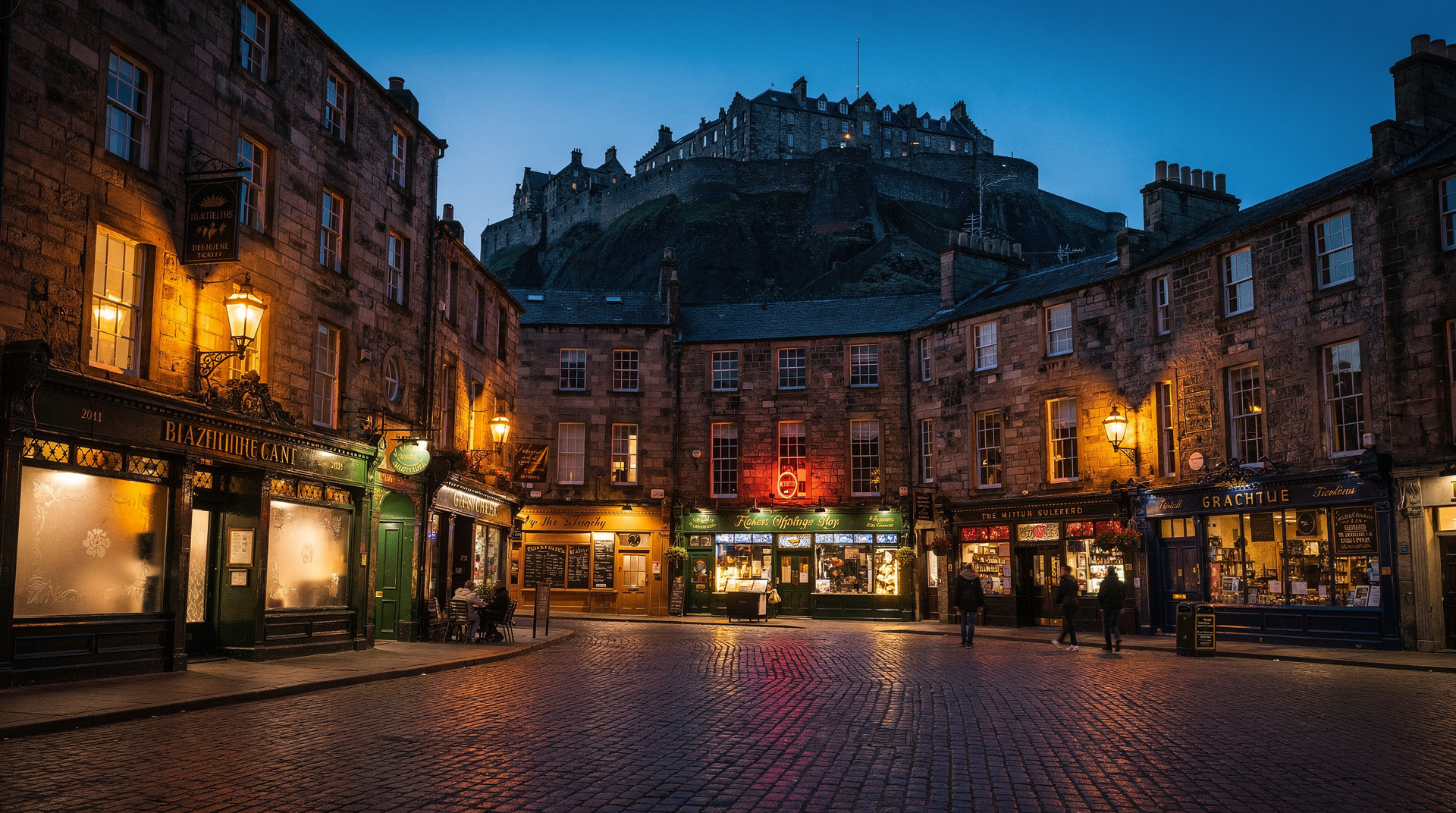
Victoria Street curves downhill from George IV Bridge to the Grassmarket, and its concentration of independent shops is one of Edinburgh’s most pleasant retail streets. The colourful tenement-fronted buildings house: a magic and fantasy shop (Forbidden Planet), a specialist cheese shop, a whisky retailer, a tearoom, a chocolate shop, and several independent clothing boutiques — all without a chain or a corporate logo in sight.
For whisky: the independent whisky retailers on Victoria Street often stock smaller-producer expressions not available in the supermarkets or the Royal Mile souvenir shops. Good for the whisky-interested shopper who wants something genuinely interesting rather than a Famous Grouse gift set.
The Grassmarket market (Saturdays): The Saturday market in the Grassmarket square runs from around 10am to 4pm with food, craft, vintage clothing, and artisan produce stalls. A good morning’s browsing, particularly combined with a walk through Victoria Street.
Bruntsfield
Bruntsfield runs south from the Meadows through a residential neighbourhood of Georgian and Victorian townhouses. The main shopping street (Bruntsfield Place) is a working neighbourhood high street without tourist shops: an excellent independent wine shop (Corks), a good bookshop (McNaughtan’s, though the main branch is in the New Town), several quality cafés, the Drinkmonger craft spirits shop already noted in the whisky guide, and various independent fashion and homewares boutiques.
Bruntsfield is not on most tourist itineraries, which is precisely why it is worth visiting for shopping. Prices reflect the local-serving character rather than a tourist premium.
Getting there: 25-minute walk from Princes Street via the Meadows, or buses 11, 15, and 16 from the city centre.
Leith
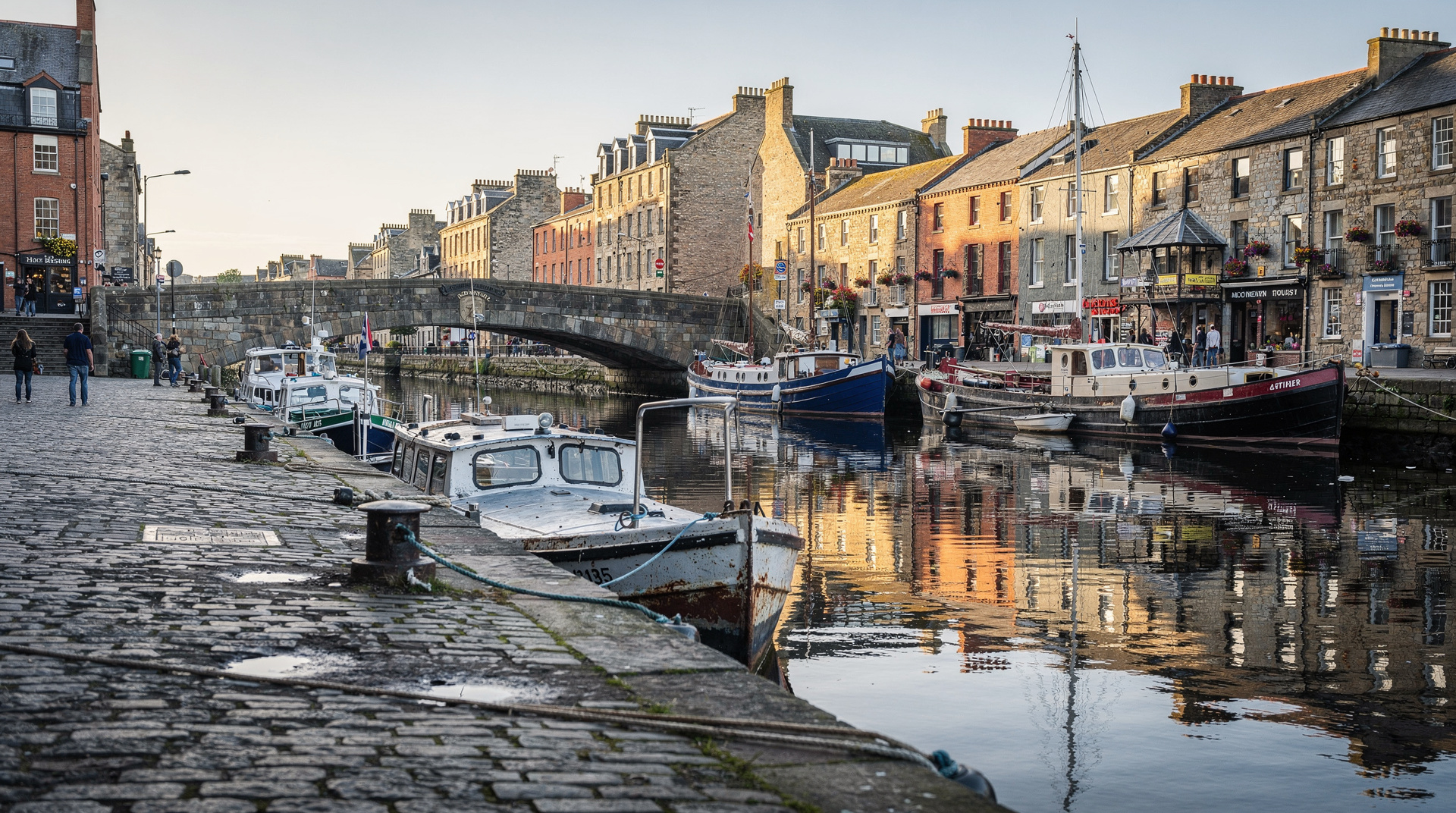
Leith’s independent retail scene has grown significantly in the past decade, concentrated around The Shore and Great Junction Street. The Leith Farmers’ Market (Saturday mornings on Dock Place) is one of the best food markets in Edinburgh. The independent shops along The Shore and Leith Walk increasingly rival Stockbridge for quality without the same level of visitor traffic.
For Scottish food: I.J. Mellis Cheesemonger on Victoria Street has a Leith branch too, with an exceptional selection of Scottish, British, and European cheeses. The Leith branch is less crowded than the Victoria Street original.
Getting there: Tram from Princes Street to Newhaven, or buses 22 and 35 from Hanover Street.
The Royal Mile (selective)
Not everything on the Royal Mile is overpriced tourist tat — but enough is that the generic suggestion to “explore the Royal Mile for shopping” will cost you. The honest guide to what to avoid on the Royal Mile is essential reading before you shop here. The summary: bypass the matching-tartan shops and the identical whisky/haggis gift sets; seek instead the genuine producers.
What is worth buying on the Royal Mile:
Cadenhead’s Whisky Shop (172 Canongate): Scotland’s oldest independent bottler. Genuine quality, expert staff. The one whisky shop on the Royal Mile consistently recommended by people who know whisky.
I.J. Mellis Cheesemonger (30a Victoria Street, and also Stockbridge): Scotland’s finest cheese shop, stocking Scottish cheeses alongside excellent European selections. The raw-milk cheddar and the aged Arran are particularly good.
Armstrong’s Vintage (83 Grassmarket): Edinburgh’s best vintage clothing shop, running since 1840 (the claim is plausible — the family has been trading in the Old Town for generations). Extensive, genuinely vintage, unpretentious.
Raeburn Fine Wines & Whiskies (21 Comely Bank Road, Stockbridge): Not on the Royal Mile itself, but nearby and worth the 10-minute walk to Stockbridge for the selection and the expertise.
What to buy: category guide
Whisky
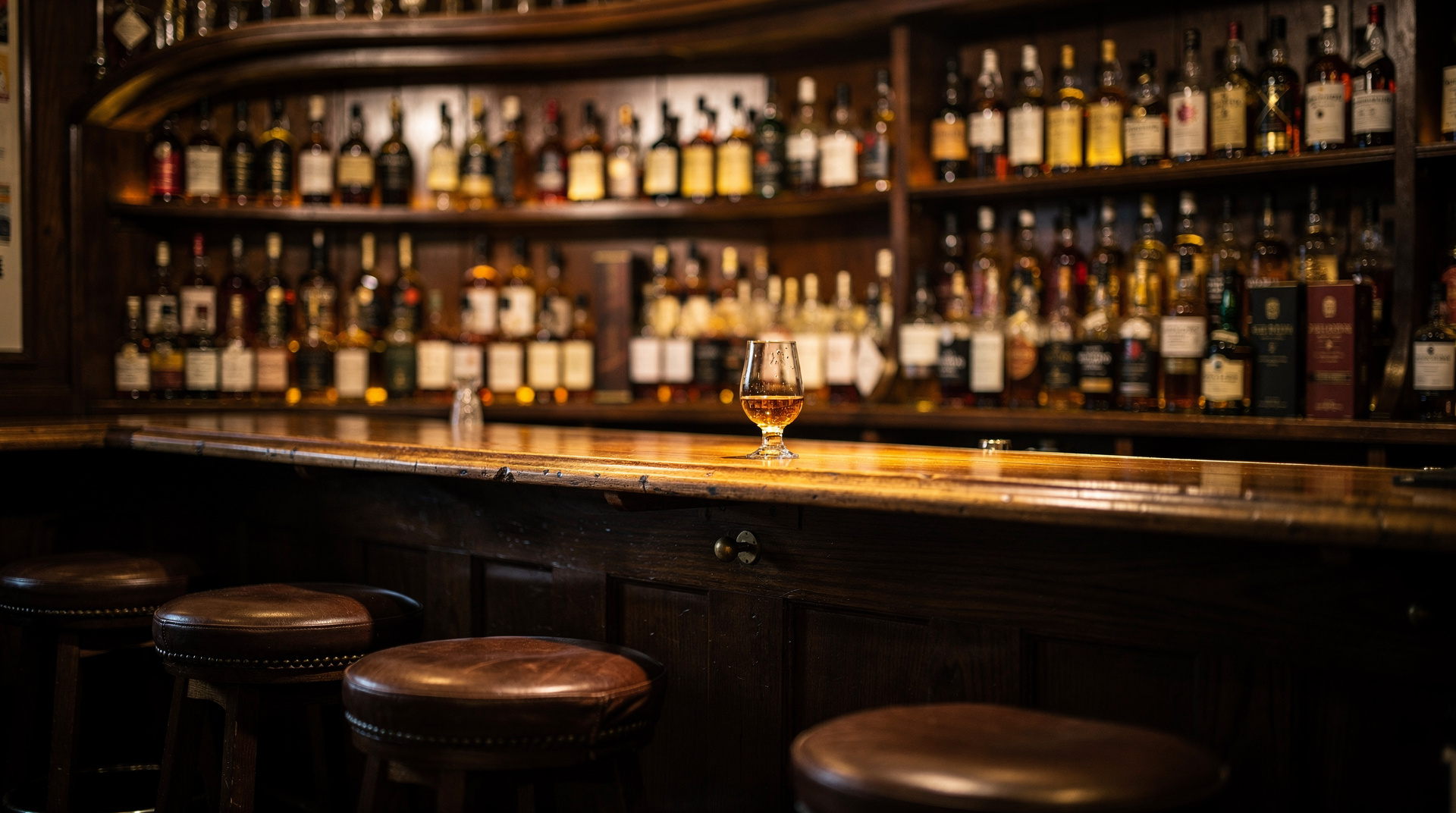
The best whisky retail in Edinburgh is at independent bottlers and specialist retailers rather than tourist-shop blended-Scotch-in-a-shortbread-tin territory. Cadenhead’s (Canongate), Drinkmonger (Bruntsfield), Raeburn Fine Wines (Stockbridge), and Royal Mile Whiskies (379 High Street) are the four specialist retailers worth seeking. Royal Mile Whiskies is the one exception to the general Royal Mile retail principle — it has a genuinely excellent selection.
Tweed and wool
Harris Tweed is a woven fabric produced on the islands of the Outer Hebrides to a protected geographic designation — it must be handwoven by islanders in their own homes. It is robust, distinctive, and genuinely Scottish. Edinburgh sells it at several stockists; the Edinburgh Woollen Mill and Geoffrey (Tailor) on the Royal Mile sell it alongside kilts and other Highland dress. For Harris Tweed in contemporary rather than traditional cuts, the Edinburgh-based designers Totty Rocks and Vanessa Arbuthnott (available at several stockists) are worth looking at.
Cashmere from Scottish mills (particularly the Borders producers — Johnstons of Elgin, Peter Scott) is excellent value compared to equivalent cashmere sold in other European cities. Look for “made in Scotland” labels; much of what is sold in tourist shops as “Scottish cashmere” is manufactured in China or elsewhere and merely marketed as Scottish.
Food
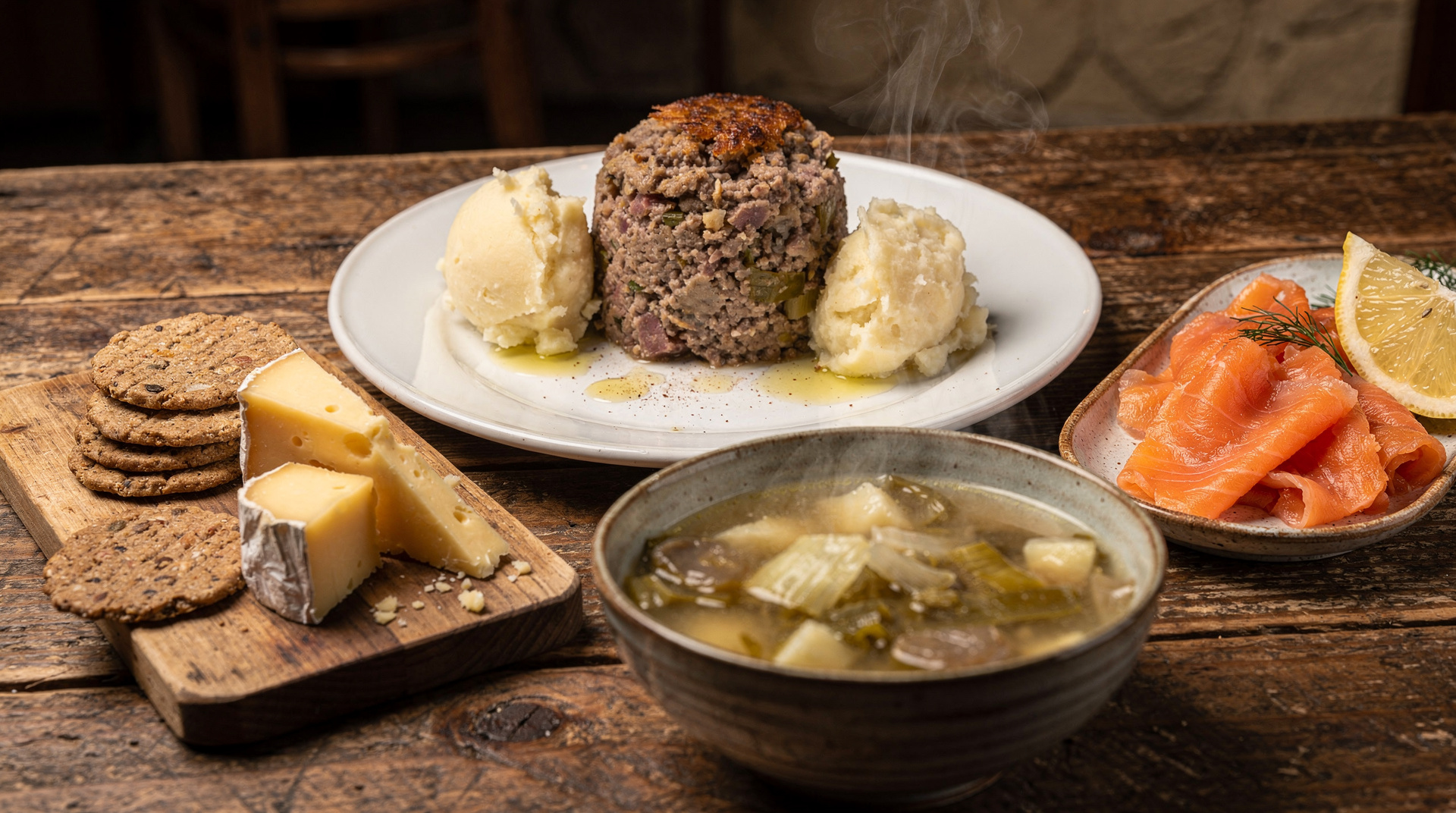
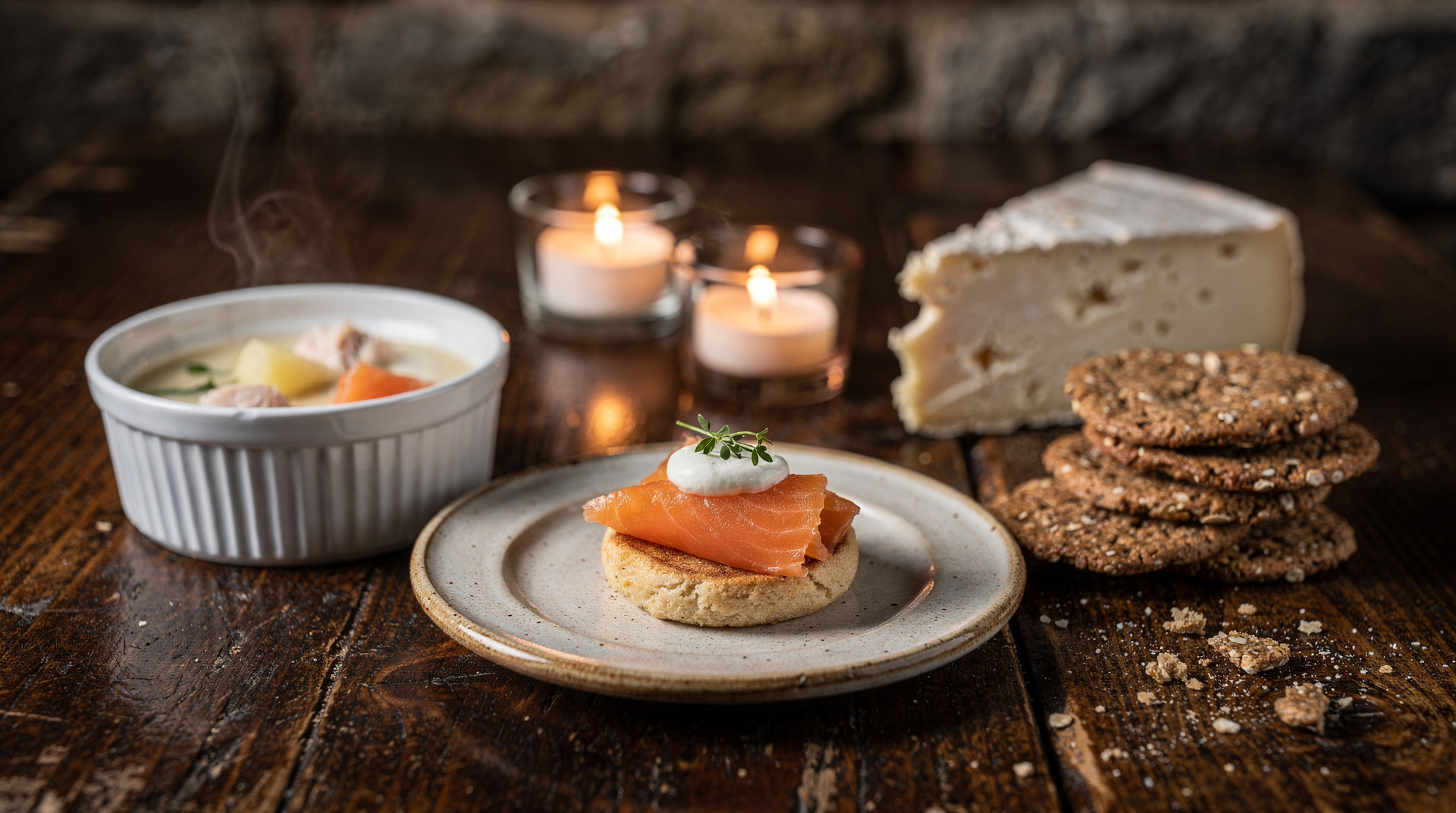
Scottish smoked salmon (look for wild-caught if available, otherwise farmed Scottish rather than Norwegian), Scottish cheeses (Mull Cheddar, Arran Mature Cheddar, Lanark Blue), shortbread from quality producers (Walkers is the best known for good reason; the upmarket tins make reasonable gifts), Scottish oatcakes, and Dundee marmalade are all products that travel well and represent genuine Scottish food culture rather than generic souvenir food.
The Stockbridge and Bruntsfield delis and the I.J. Mellis cheese shop are the best sources for the food category. Avoid pre-packed grocery-shop versions of the same products.
Books
Edinburgh is genuinely a literary city — the birthplace of Robert Louis Stevenson, Arthur Conan Doyle, and J.K. Rowling among others, and a city with a strong independent bookshop culture. McNaughtan’s Bookshop on Dundas Street (New Town) specialises in secondhand and antiquarian books; Lighthouse Bookshop (West Nicholson Street) is an excellent independent with a strong Scottish literature section; Topping and Company (Blenheim Place) is a handsome recent addition with intelligent curation.
Scottish craft and contemporary design
Beyond the traditional categories of whisky and wool, Edinburgh has a growing scene in contemporary Scottish craft and design that is worth knowing about for visitors looking for more distinctive souvenirs.
Jewellery: Edinburgh has several jewellery designers working in Scottish silver and gold with distinctively Scottish motifs and forms. Hamilton and Inches on George Street is the traditional fine jeweller; Alchemia on the Royal Mile does contemporary design; and several Stockbridge boutiques carry work from Scottish-based designers. The Luckenbooth brooch mentioned in the Royal Mile shopping guide is the most specifically Edinburgh piece of jewellery design.
Ceramics and glass: The Edinburgh College of Art and nearby School of Art produce graduates who go on to work as ceramicists, glassblowers, and textile designers. Several shops in Stockbridge, Leith, and the New Town carry work from Scottish craft producers, ranging from studio pottery to handblown glass. The National Museum of Scotland shop carries well-curated Scottish craft alongside the usual museum merchandise.
Art prints and photography: Edinburgh is one of the most photographed cities in Britain and several galleries and print shops sell limited-edition prints by Scottish photographers and artists. Scottish Gallery on Dundas Street is the most established commercial gallery for contemporary Scottish art. Street-level print shops in Stockbridge and around the Grassmarket sell affordable prints of Edinburgh’s most distinctive architectural subjects.
Food gifts: Beyond the whisky and cheese categories, Scottish food gifts worth considering: tablet (a distinctively Scottish confection, harder and more crumbly than fudge, made from butter and sugar), Edinburgh shortbread from artisan producers (Shortbread House of Edinburgh, Walker’s), Scottish heather honey, smoked salmon from sustainably sourced Scottish fisheries, and Arbroath smokies (smoked haddock produced in Arbroath under protected geographic designation).
Understanding Scottish textile quality
The wool and tweed category deserves more explanation because the quality variation is significant and the tourist-facing marketing often obscures rather than clarifies what you are buying.
Harris Tweed: As noted elsewhere, must bear the Orb Mark of the Harris Tweed Authority. Handwoven on the Outer Hebrides islands. Genuinely durable, genuinely weather-resistant, genuinely Scottish. Expect to pay £40–£80 for a scarf, £150–£300 for a jacket.
Scottish cashmere: The Borders towns (Hawick, Jedburgh) produce genuine cashmere knitwear from Scottish mills. Look for brand names Johnstons of Elgin (mill in Elgin and factory shop), Peter Scott, Pringle (under its current Scottish revived ownership), and Turnbull and Asser’s Scottish range. Much of what is sold as “Scottish cashmere” in Edinburgh tourist shops is manufactured elsewhere. Check the label.
Shetland wool: Shetland produces a distinctive two-ply wool used for traditional Fair Isle patterned knitwear. Genuine Shetland Fair Isle knitwear is made in Shetland and is a protected tradition. The Shetland Textile Museum in Lerwick is the authoritative source; genuine pieces appear in a handful of specialist Edinburgh retailers.
Lambswool: Less prestigious than cashmere but genuinely warm and durable when made from Scottish fleece. Edinburgh Woollen Mill and Pringle sell lambswool products; quality varies significantly. Run the garment between your palms — quality lambswool should feel smooth and slightly springy, not scratchy.
Shopping on a budget
Edinburgh’s charity shops (Oxfam, BHF, and the locally-run shops in Marchmont and Bruntsfield) carry an unusually high quality of secondhand clothing and books reflecting the demographics of the neighbourhoods — well-worn cashmere, Scottish wool, and paperback literary fiction at £1–£5 per item.
For the Edinburgh on a budget guide which covers free activities and money-saving logistics more broadly.
Department stores and high street shopping
For mainstream shopping — international brands, high street chains, department stores — Edinburgh’s primary shopping destination is Princes Street and the St James Quarter (reopened 2021 after comprehensive redevelopment).
St James Quarter: The large new development at the eastern end of Princes Street includes John Lewis, a good food hall with Scottish producers represented, and a mix of premium and high-street brands. The architecture is controversial in Edinburgh terms (a curved copper-clad structure that is very visible from the New Town) but the retail offer is good, particularly the John Lewis food hall.
Princes Street proper: Marks and Spencer, Primark, and the remaining department store units. Less interesting than it was before the St James Quarter drew the premium retailers east.
George Street: Edinburgh’s smart shopping street, with a mix of independent boutiques, jewellers, and premium brands. No dedicated department store but a concentration of the kinds of shops that fill the gap between independent and chainstore retail. Mulberry, Hugo Boss, and Reiss have stores here; Scottish jewellers Hamilton and Inches are at number 87.
Multrees Walk (between St Andrew Square and St James Quarter): Harvey Nichols, Louis Vuitton, and a handful of other luxury retailers in a short pedestrianised strip between the two squares. Worth walking through even if you are not buying.
For the best independent shopping specifically, the route from Victoria Street (via the Grassmarket) through Stockbridge via Dean Village covers the most interesting independent retail in Edinburgh in a single walk of about 45 minutes.
Shipping and carrying purchases home
Bulky purchases — Harris Tweed jackets, cased whisky bottles, framed art prints — raise the practical question of how to get them home. Most Royal Mile and Stockbridge whisky retailers can arrange export shipping for larger orders, which is worth asking about if you are buying more than a bottle or two, since airline liquid and weight limits add up quickly.
For clothing and textiles, several of the better shops (particularly the Harris Tweed and cashmere specialists) offer international shipping at checkout, which is often more convenient than carrying bulky items through the rest of a multi-stop trip. Keep receipts for anything valuable in case of customs questions on arrival at your destination, and check your airline’s checked-baggage allowance before buying anything genuinely heavy.
Seasonal shopping: markets and Christmas
Edinburgh’s retail calendar has a clear seasonal rhythm worth knowing about if your visit lines up with it. The Christmas Market on Princes Street (late November to early January) adds seasonal stalls to the New Town, though regular shoppers note it has become more generic in recent years compared to the neighbourhood markets.
The Stockbridge and Grassmarket markets run reliably every weekend year-round regardless of season, making them the more consistent choice if a market visit is a priority rather than an incidental extra. Summer (June-August) sees extended hours at some independent shops to capture the longer daylight and higher visitor numbers, while January sales across the department stores and high street chains on Princes Street can offer genuine discounts on mainstream brands, though the independent shops rarely discount as heavily.
Fitting shopping into the rest of your trip
Shopping works best as a thread running through your days rather than a day of its own. If you only have a short stay, the one-day Edinburgh itinerary and the two-day itinerary leave natural gaps for a browse, and the guide to how many days to spend in Edinburgh helps you decide how much room to leave.
Several of the best shopping streets double as sightseeing areas. Stockbridge, the Grassmarket and Leith each reward a slow wander as much as a purchase, and the comparison of the Old Town and the New Town explains why the two halves of the city feel so different when you are browsing. For bookish souvenirs, the guide to Edinburgh’s bookshops goes deeper than the short list above, and the advice on avoiding tartan tat shops is worth a read before you hand over money for anything wrapped in plaid.
If whisky is the main thing you want to bring home, pair your shopping with the whisky tasting guide so you know what you like before you buy a bottle. And if you are watching your spending, the money and currency guide covers paying for things in the city, which is useful to read before you start comparing prices.
Guided food and shopping experiences
For visitors who want an introduction to Scottish produce with an expert rather than working it out alone, a guided food tour is an efficient way to taste and buy in the same afternoon. The Edinburgh food tasting tour with a local guide takes in several of the shops and producers mentioned above, with tastings included. For a more focused whisky and cheese introduction, the Edinburgh cheese crawl with a local guide is a good pairing if you are planning to buy cheese or whisky to take home and want guidance on what is genuinely worth the shelf space in your luggage.
Shopping in Stockbridge and Dean Village together
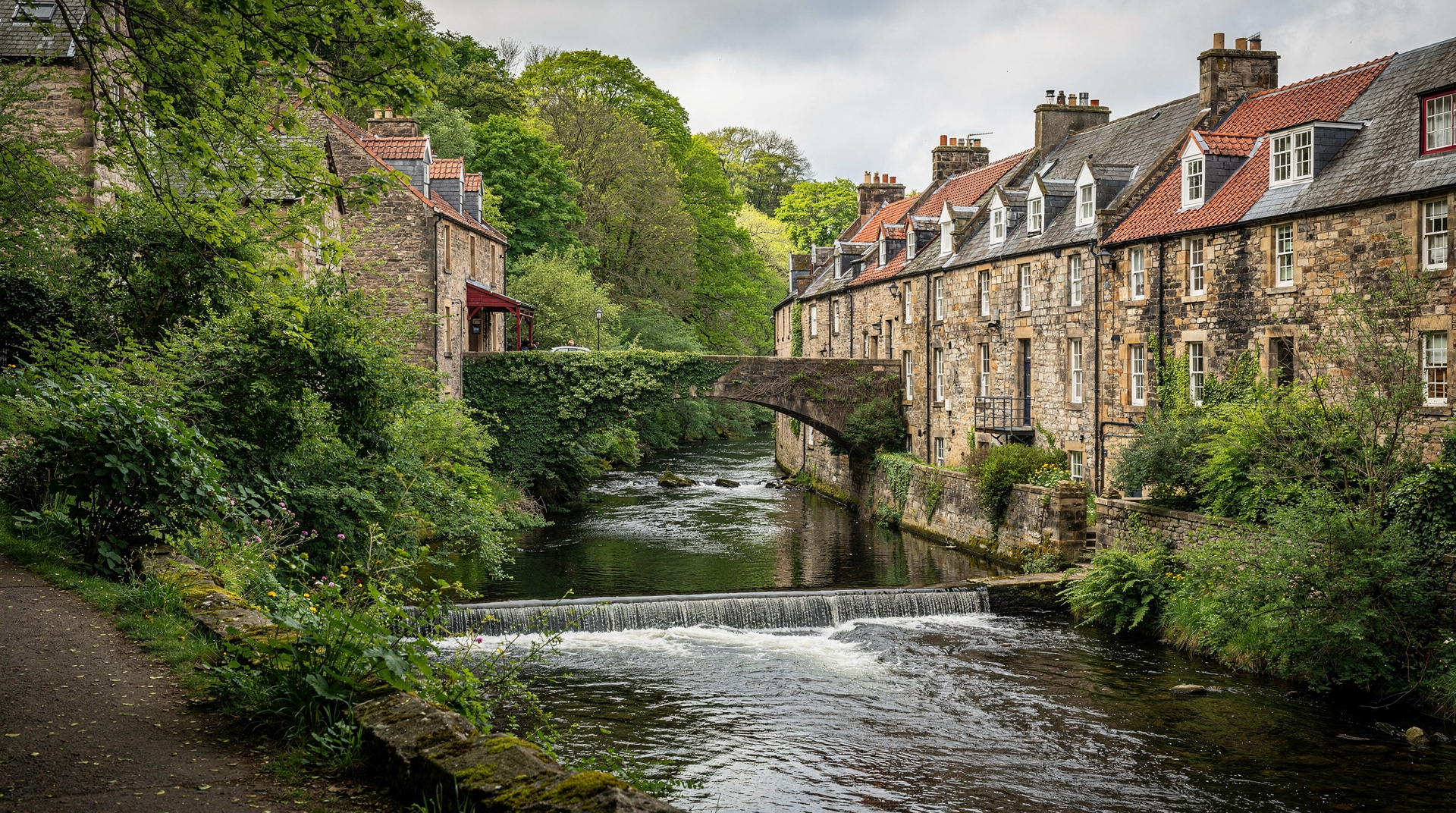
Stockbridge pairs naturally with a walk through Dean Village, the former milling village a short walk along the Water of Leith. Combining the two makes one of Edinburgh’s most pleasant half-days: browse Stockbridge’s boutiques and food shops in the morning, walk the Water of Leith Walkway to Dean Village for the architecture and photography, then loop back via the New Town. The New Town and Dean Village walking tour covers this route with historical commentary if you prefer a guided version. See the Water of Leith Walkway guide for the full route on foot.
A note on VAT refunds
Non-UK visitors from outside the European Union were previously eligible for VAT refunds on purchases in the UK. However, the UK ended its Tourist Tax Refund scheme for departing travellers in 2021. As of 2026, there is no VAT refund scheme available to visitors leaving the UK. This affects the value calculation for expensive purchases — factor in the full price with VAT when comparing Edinburgh prices to home-country prices.
Duty-free purchasing for items bought in the UK is still available if you are departing from an international airport and flying outside the UK; Edinburgh Airport has a duty-free zone post-security. Whisky in particular is considerably cheaper in the airport duty-free than in city retail, though the selection is more limited.
Frequently asked questions about shopping in Edinburgh
Is tartan an authentic Scottish souvenir?
Yes, but the Royal Mile version of tartan — cheap polyester in generic patterns, manufactured outside Scotland — is not. Genuine Harris Tweed (with the orb mark), and tartan woven by Scottish mills, is worth buying. The certificate of authenticity on Harris Tweed products is legally required and a genuine guarantee of origin.
Where is the best place to buy whisky as a gift in Edinburgh?
Cadenhead’s on the Canongate for something genuinely interesting and independent. Royal Mile Whiskies (High Street) for a broader selection. Drinkmonger in Bruntsfield for intelligent curation. All three will wrap for travel and advise on the best expressions within a given budget.
Are Edinburgh markets worth visiting?
Yes. The Stockbridge Sunday Market and the Grassmarket Saturday market are both genuinely good for artisan food, local craft, and secondhand goods. The Christmas Market on Princes Street (November to early January) is the most famous but has become increasingly generic. The farmers’ markets at Castle Terrace (Wednesday) and Leith (Saturday) are the best for Scottish food produce.
Can you take Scottish food back as a gift internationally?
Most Scottish food products — shortbread, whisky, cheese (vacuum-packed), oatcakes, marmalade — travel as aircraft hold luggage without restriction within the UK and EU. International restrictions vary by country; check your destination country’s customs rules for meat products, raw-milk cheese, and liquids. Whisky must be packed in checked hold luggage if flying.
What are the shopping hours in Edinburgh?
Most shops in central Edinburgh open 9–10am and close 6–7pm Monday to Saturday. Sunday hours are typically noon to 5pm for independent shops; major retail stores tend to open 11am to 5pm. Markets run on Saturdays and Sundays with morning–afternoon hours.
Is it cheaper to buy whisky in Edinburgh or at the airport?
Airport duty-free is usually cheaper for standard blended and popular single malt bottles, since it is free of UK duty and VAT for international departures. For rarer independent bottlings from shops like Cadenhead’s, city retail is often the only place you will find them at all, so the comparison matters less than availability.
Can I combine shopping with the Royal Mile history and sights in one day?
Yes. The Royal Mile’s worthwhile shops (Cadenhead’s, I.J. Mellis, Armstrong’s Vintage) sit alongside the historic sites covered in the Old Town history guide, so a single day combining the two works well — shop in the morning before the crowds build, then focus on the history and sights in the afternoon.
Top experiences
Bookable activities with verified prices and instant confirmation on GetYourGuide.