Edinburgh for art lovers: galleries, studios and the full cultural circuit
Edinburgh: all the highlights walking tour
Is Edinburgh a good city for art lovers?
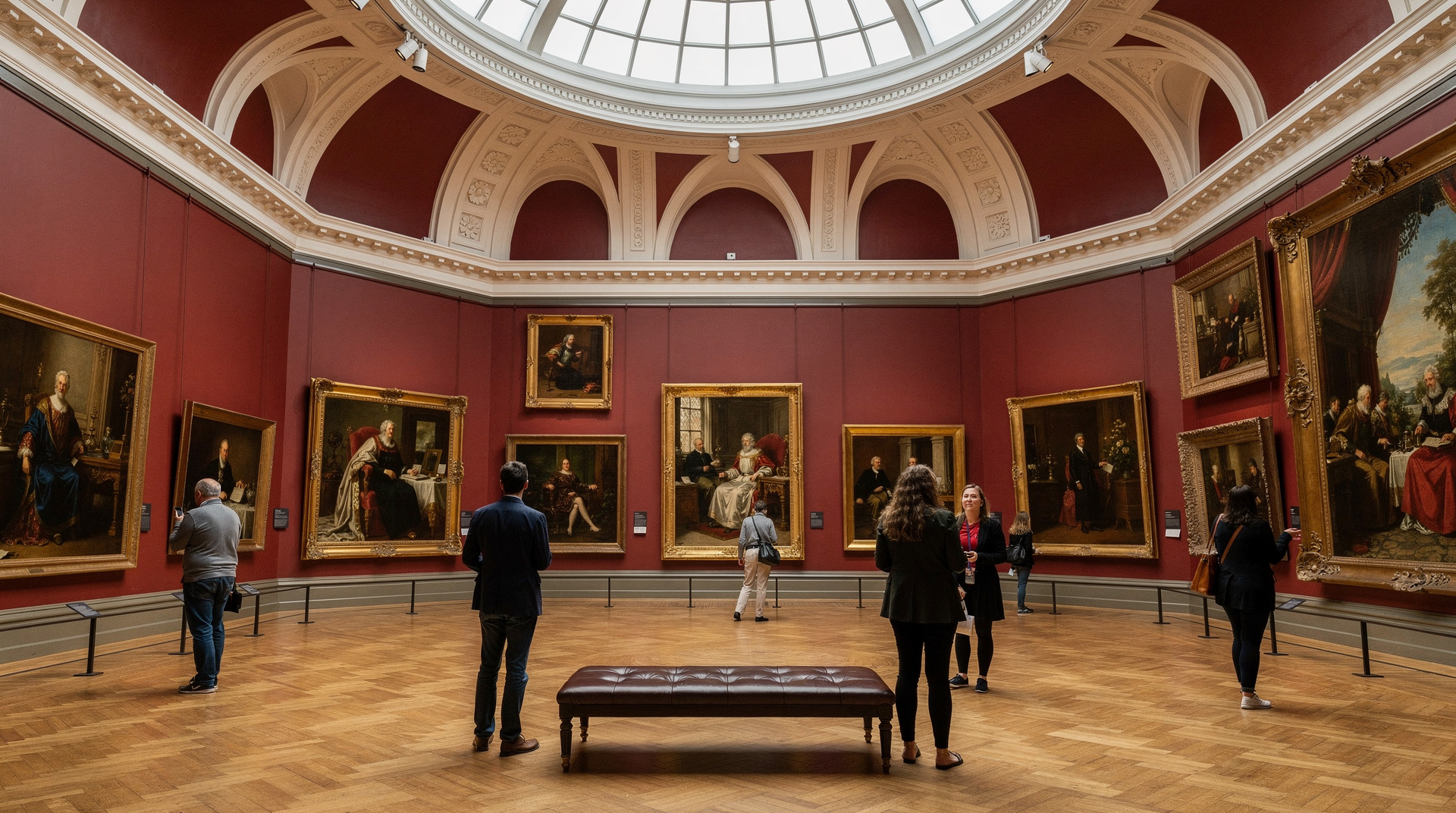
Edinburgh has four free National Galleries of Scotland covering old masters, portraits, modern and contemporary art. It also has a strong commercial gallery scene in Dundas Street, an August festival with hundreds of visual art exhibitions, and direct connections to Scottish painters from Raeburn through the Colourists to contemporary artists. Yes, it is excellent for art.
| Where | The Mound, Queen Street, Belford Road, Dundas Street (New Town) |
| Cost | free permanent collections; around £10–£15 for major temporary shows |
| Time needed | half a day minimum, 2 full days for the complete circuit |
| Getting there | walkable between the Mound and New Town galleries; bus or 35-min walk via Dean Village to Modern Art |
| Best time | quiet weekday mornings outside August; August adds the Art Festival on top |
Edinburgh’s art landscape
Edinburgh is not primarily thought of as an art city in the way that Florence, Amsterdam, or even Glasgow is — it is known first as a historical and literary capital. But the city has a genuinely rich art landscape that rewards visitors who look for it: four major free national galleries, a commercial gallery scene that has been active for over a century, a concentration of artists’ studios in the New Town and Leith, and every August a festival period that turns the city into one of the most intense visual arts environments anywhere in Europe.
The Scottish painting tradition — from Raeburn’s eighteenth-century portraiture through the Scottish Colourists to the contemporary scene — is one of the underrated pleasures of Edinburgh art. You do not need to be a specialist to find it compelling, because the work is accessible and often beautiful, and the connections between the paintings and the landscapes, light, and social world you are currently experiencing in the city are immediate and legible.
This guide covers the full art landscape for visitors with one day, two days, or a sustained interest in going deeper.
The four National Galleries of Scotland
All four galleries are free to enter for permanent collections. Together they constitute one of the most extensive national art collections in Europe relative to the country’s size.
Scottish National Gallery (The Mound)
The main collection building holds European painting from the late medieval period to Post-Impressionism alongside the most important Scottish painting collection in the world. The must-see works have their own guide — see the Scottish National Gallery guide for the full picture.
For art lovers, the essential visit priorities are: the Dutch and Flemish masters (Vermeer, Rembrandt, Rubens), the Spanish rooms (Velázquez’s An Old Woman Cooking Eggs), and the Scottish galleries, particularly the Colourists. A focused two-hour visit covers the highlights.
Scottish National Portrait Gallery (Queen Street)
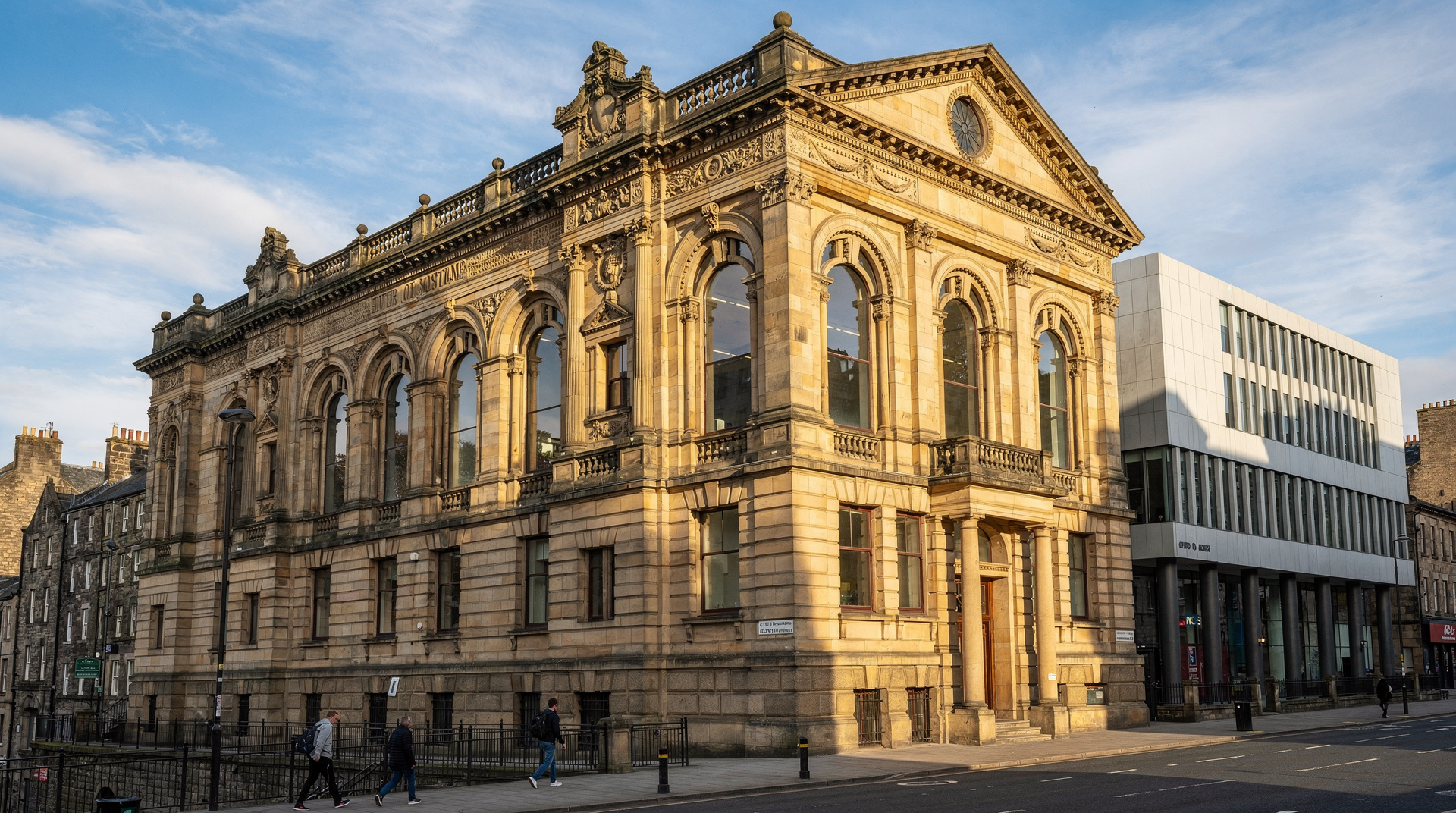
The Portrait Gallery at 1 Queen Street, at the east end of the New Town, is housed in a spectacular Victorian Gothic building by Rowand Anderson — a red sandstone structure with a friezeportrait gallery of famous Scots running around the exterior. The interior has a grand hall with a mural programme that covers Scottish history through allegory.
The portraits themselves span from Mary Queen of Scots to Nicola Sturgeon, covering six centuries of Scottish public life through the faces of the people who shaped it. For visitors with a historical interest, the Portrait Gallery and the National Museum of Scotland together tell the same story in different forms. The gallery also holds a strong photography collection and presents some of Edinburgh’s best temporary photography exhibitions — see the Edinburgh photography spots guide for where the city itself photographs well.
Do not miss: The early modern portraits of the Scottish court (James V, Mary Queen of Scots), Allan Ramsay’s eighteenth-century portraits, and the Nasmyth portraits of the Enlightenment circle.
Scottish National Gallery of Modern Art (Belford Road)
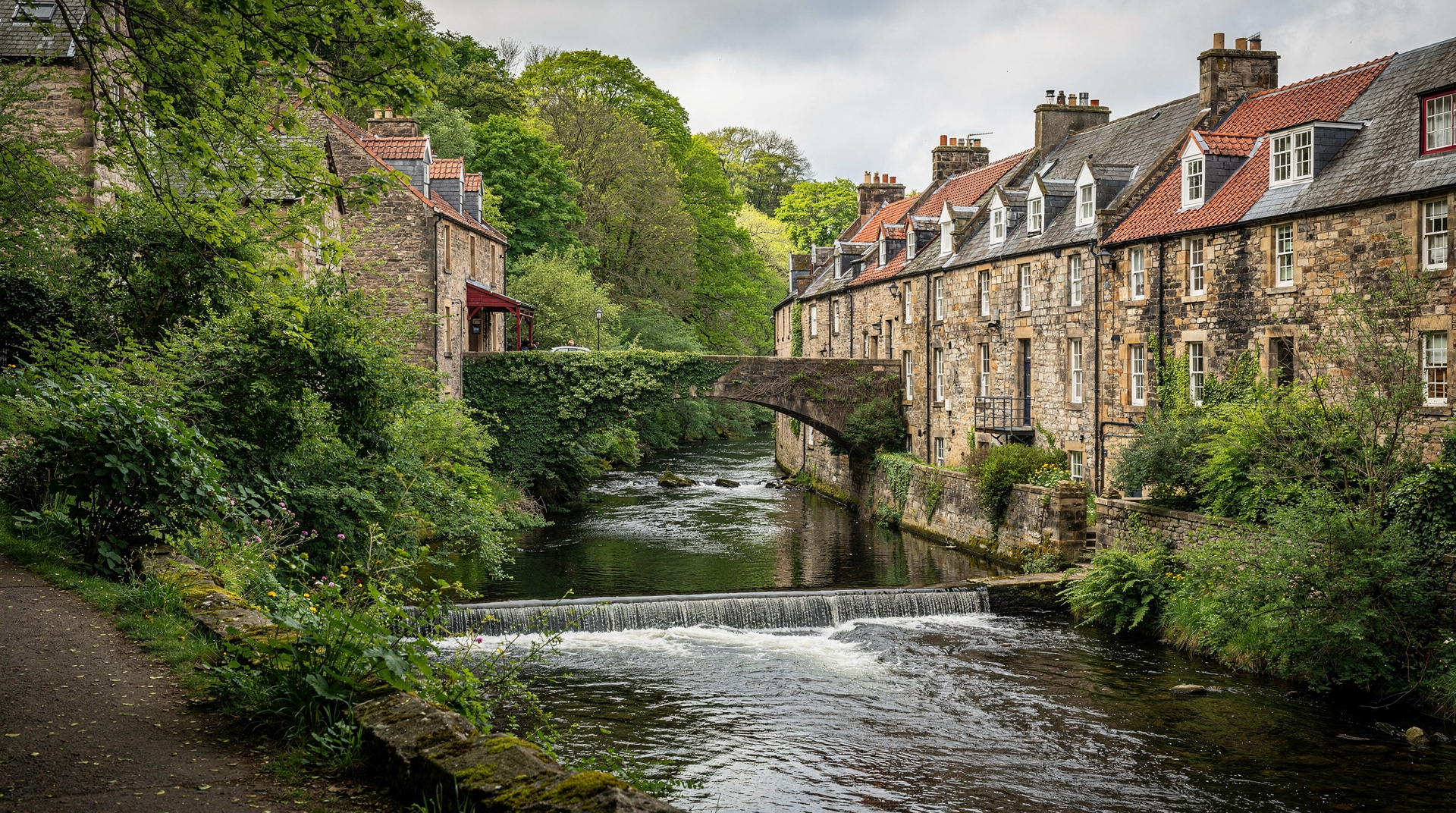
The Modern Art gallery occupies two buildings — Modern One and Modern Two — in a parkland setting off Belford Road, about a 25-minute walk from Princes Street through Stockbridge and Dean Village, or a short bus ride. The walk through Dean Village is worth it in its own right.
Modern One holds the main collection: Scottish and international art from 1900 to the present, with particular strength in Surrealism (the gallery holds a significant collection of Surrealist works assembled from the 1960s onward), Pop Art, and contemporary Scottish art. The permanent Eduardo Paolozzi collection includes the large-scale mosaics originally created for the Tottenham Court Road Tube station — a gift from the artist to Scotland.
Modern Two (across the road, in a former orphanage building) is more focused on installation, sculpture, and large-scale work that needs the space the historic building provides. It also holds the most significant single group of works by the Scottish sculptor Eduardo Paolozzi.
The landscaped grounds between the buildings include sculptures by Henry Moore, Barbara Hepworth, and others — a sculpture park that can be visited independently of the gallery buildings.
Allow: Two hours minimum across both buildings; three hours if you want to explore the grounds properly.
Royal Scottish Academy Building (The Mound)
Adjacent to the Scottish National Gallery and connected via the underground Weston Link, the RSA building hosts major temporary exhibitions by the Royal Scottish Academy (founded 1826) and by visiting international shows. Entry to RSA exhibitions is charged separately from the National Gallery. The spring and summer Annual Exhibition is the main event in the RSA’s calendar — a survey show of contemporary Scottish art in all media.
Commercial galleries: the Dundas Street corridor
Edinburgh’s commercial gallery district is concentrated around Dundas Street in the New Town, which has the highest density of art galleries in Scotland outside London:
The Scottish Gallery (16 Dundas Street), founded in 1842, is Edinburgh’s oldest commercial gallery and one of Scotland’s most important dealers in historical and contemporary Scottish art. The programme balances established names (the Colourists appear regularly in exhibitions) with contemporary Scottish artists.
Open Eye Gallery (34 Abercromby Place) focuses on accessible contemporary Scottish art across painting, ceramics, and jewellery. The atmosphere is genuinely welcoming rather than intimidatingly commercial.
Gallery Heinzel (15 Dundas Street) shows a focused programme of contemporary Scottish and international painting, with a particular commitment to representation-based work.
The Collective (Calton Hill) is Edinburgh’s main gallery for contemporary art with an international curatorial perspective — less specifically Scottish than the Dundas Street galleries and more engaged with the international art conversation. The location on Calton Hill, in a converted City Observatory, gives it a spectacular setting. See the Calton Hill guide for directions.
Artists’ studios and open studio events
Edinburgh has a substantial artists’ community, largely invisible to ordinary visitors. Two events open this community to the public:
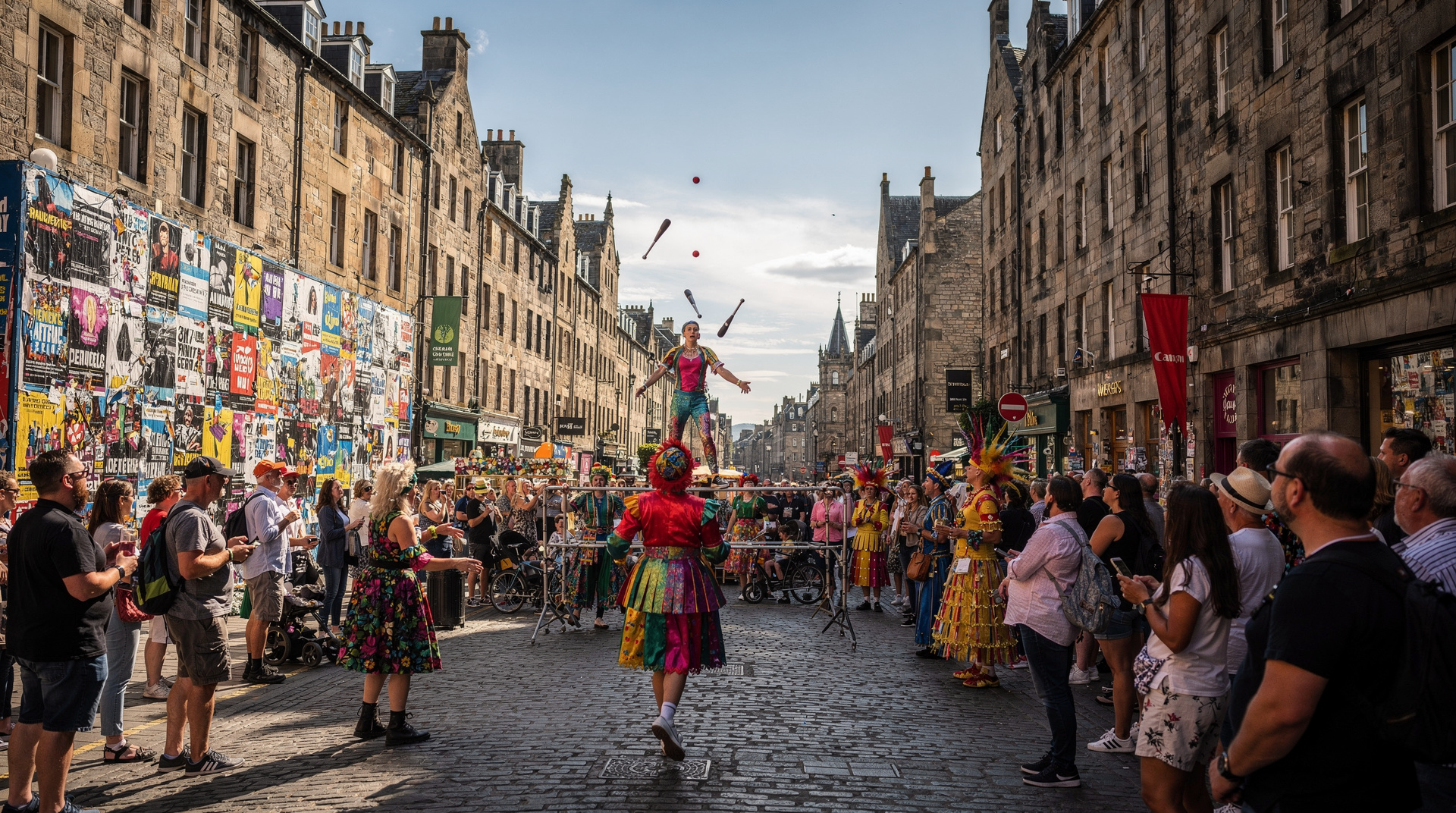
Edinburgh Art Festival (August) runs alongside the Fringe and Book Festival and presents the largest concentration of visual art events in Edinburgh’s year — hundreds of exhibitions across all of the city’s galleries, commercial spaces, and artist-run venues simultaneously. It is coordinated rather than competitive, making it possible to plan an art-focused August itinerary that covers everything from the National Galleries’ flagship temporary shows to one-room studio exhibitions in Leith. The festival website publishes a full programme in July.
Edinburgh Open Studios (usually September-October) opens artists’ studio spaces to the public for two weekends. It is the best annual opportunity to see where Edinburgh artists actually work and to buy directly. The Edinburgh Sculpture Workshop (in Newhaven near Leith) and the various studio complexes in the North Edinburgh area are particularly good.
Edinburgh’s art in the landscape
A specific Edinburgh experience that does not require entering any gallery: the relationship between the paintings and the landscapes they represent is often immediately navigable. You can look at Raeburn’s Reverend Walker skating on Duddingston Loch in the Scottish National Gallery, then walk to Duddingston Loch (about 40 minutes from the gallery, or a short bus ride) and stand at essentially the same spot. The same relationship holds for many of the landscape paintings in the collection — the Firth of Forth, Calton Hill, the Bass Rock as seen from North Berwick, the Pentland Hills from the south.
The most specific version of this experience is Duddingston Village, at the foot of Arthur’s Seat: an eighteenth-century village that has changed remarkably little since Raeburn painted it, with the same loch, the same church tower, and (in winter) the possibility of the same ice.
Walking art into the city: public sculpture
Edinburgh’s public sculpture is significant and walkable. Key pieces:
The Scott Monument (Princes Street Gardens) — the Gothic tribute to Walter Scott, with 64 sculptural niches.
Greyfriars Bobby (Candlemaker Row) — the bronze terrier, small and touching, rubbed smooth by touching.
The Kelpies (near Falkirk, 30 minutes from Edinburgh) — Andy Scott’s 30-metre horse head sculptures on the Forth-Clyde Canal. Not in the city but visible from the M9 motorway and one of Scotland’s most significant recent public art commissions. Day tripping is covered in the Stirling day trip guide.
The Paolozzi mosaics at the Modern Art gallery and in various Edinburgh locations.
Guided art experiences
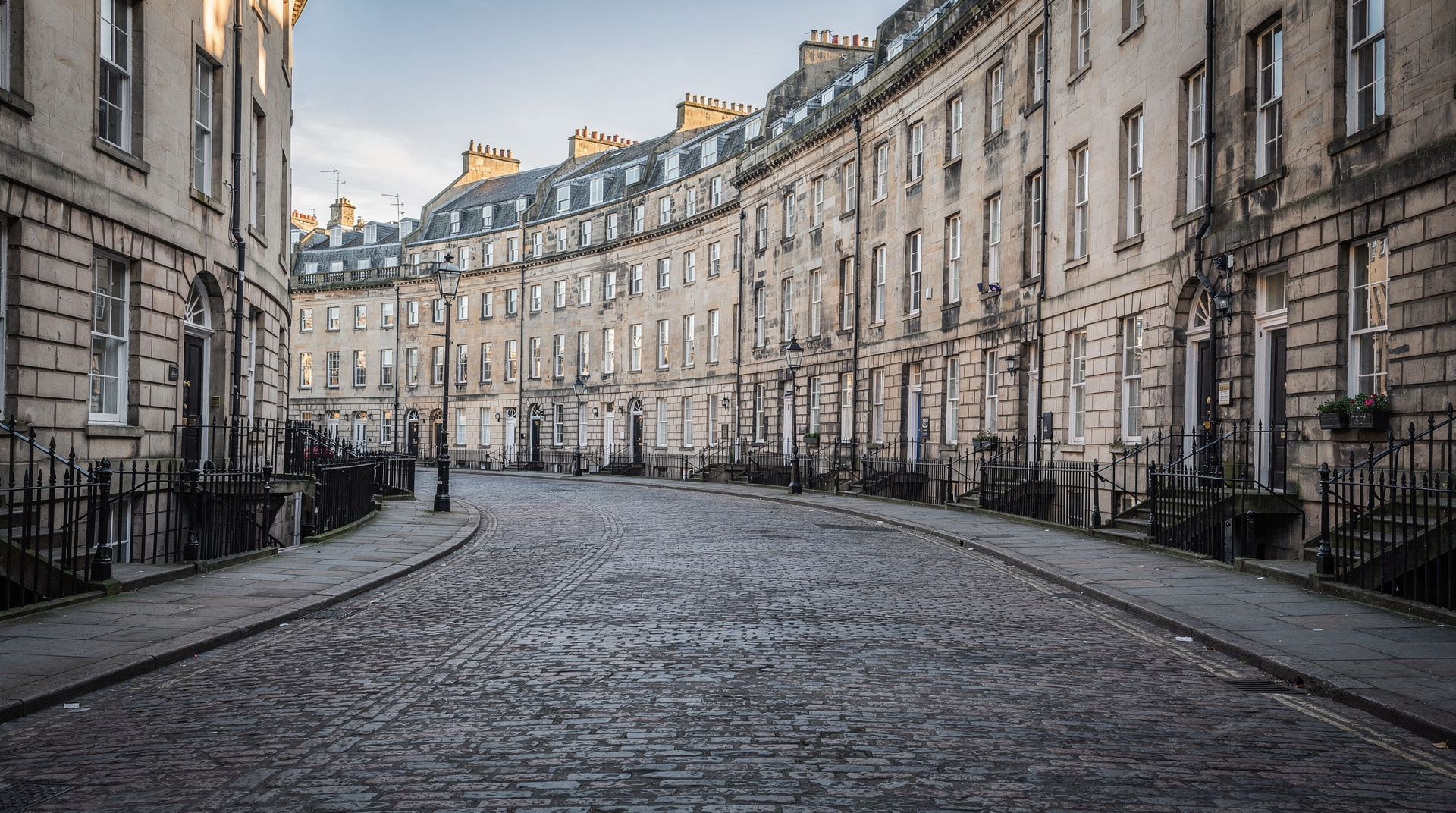
For visitors who want a structured introduction to Edinburgh’s art geography, the Edinburgh all the highlights walking tour passes the main gallery buildings and provides context for the cultural landscape. The New Town, Dean Village and Circus Lane walking tour covers the gallery corridor neighbourhood in depth, including the Georgian architecture that provides the backdrop to the commercial gallery district.
For a genuinely tailored art visit — if you want to spend time with a guide who knows the specific collections or the contemporary scene in depth — the private custom tour with a local guide allows you to specify your interests and get a genuinely personalised programme.
Planning an art-focused Edinburgh visit
One day: Scottish National Gallery (two hours) and Scottish National Portrait Gallery (one to two hours) are walkable from each other via Princes Street. Both are free. Leave time for the galleries’ cafés.
Two days: Add the Gallery of Modern Art on day two (allow half a day including the walk via Dean Village). Add a Dundas Street commercial gallery circuit on the same afternoon.
During August: Edinburgh Art Festival adds hundreds of exhibitions — the official programme is essential planning material. Allow at least a full day dedicated to the festival exhibitions beyond the National Galleries.
For the contemporary scene: Visit the Collective on Calton Hill, the Dovecot Studios (Infirmary Street) which is a working tapestry studio and gallery, and the City Art Centre (Market Street) which is Edinburgh’s civic gallery.
The two-day Edinburgh itinerary covers how to build a general visit around these cultural priorities.
The Scottish Colourists: Edinburgh’s most accessible art movement
The Scottish Colourists — Samuel John Peploe (1871–1935), Francis Campbell Boileau Cadell (1883–1937), John Duncan Fergusson (1874–1961), and George Leslie Hunter (1877–1931) — are the movement that anchors Edinburgh’s claim to a major contribution to twentieth-century painting. Working in the first three decades of the century, they absorbed the lessons of Cézanne, Matisse, and Fauvism and applied them to Scottish subjects with a directness that produced genuinely new work.
Peploe’s still lifes — roses, tulips, daffodils against coloured backgrounds — are simultaneously the most accessible and the most technically assured works in the movement. The control of warm and cool colour, the building of form through colour planes rather than line, the balance of decoration and structure: these are mature technical achievements that can be enjoyed at the level of pure visual pleasure before any technical analysis.
Cadell’s Edinburgh interiors are a different kind of achievement. He painted the New Town drawing rooms of his social circle — elegant women in fashionable clothes, afternoon light through large windows, the material culture of Edwardian and inter-war Edinburgh upper-middle-class life — with a combination of Matisse-influenced colour and specific observational detail that makes them both beautiful and historically specific. They are the most direct images of Edinburgh’s New Town as a living social world that painting has produced.
Both Peploe and Cadell painted extensively on the Isle of Iona — the Inner Hebridean island off the coast of Mull — and the transition from their Edinburgh interiors to their Iona seascapes and landscapes is one of the pleasures of the Scottish National Gallery’s hang of their work. The Scottish light, particularly the crystalline light of the western islands, was the specific quality that energised Colourist painting and is directly legible in the work.
Eduardo Paolozzi: Edinburgh’s most significant modern sculptor
Eduardo Paolozzi (1924–2005) was born in Leith to Italian immigrant parents and became one of the most significant British sculptors of the twentieth century, a founding figure of Pop Art before Pop Art had a name, and the creator of the mosaics that covered Tottenham Court Road Tube station (now partially relocated to Edinburgh’s Gallery of Modern Art).
The Scottish National Gallery of Modern Art has the largest institutional collection of Paolozzi’s work in the world, spread across both Modern One and Modern Two. The work spans the full range of his practice: the early Brutalist assemblages made from found industrial material, the screenprints that predate Warhol’s use of similar photomechanical techniques, the large bronze sculptures, and the Tottenham Court Road mosaics.
Understanding Paolozzi’s specific contribution requires the gallery’s collection — his work does not travel well in reproduction. Visiting the Gallery of Modern Art specifically to see the Paolozzi holdings is genuinely worthwhile for visitors with an art history background.
Dovecot Studios: tapestry as fine art
Dovecot Studios at 10 Infirmary Street (Old Town) is Edinburgh’s most unusual cultural institution: a working tapestry studio that produces large-scale commissioned works in a tradition that extends back to the Edinburgh College of Art in 1912. The studio currently operates from a Victorian swimming pool building that has been converted to provide the tall ceilings required for major tapestry work.
The Dovecot runs a gallery space that is free to visit and presents both historical and contemporary tapestry alongside related fine art. It also runs a programme of exhibitions, events, and educational workshops. The combination of watching tapestry-making in progress (when the weavers are working) and seeing the finished work displayed as art is a genuinely unusual Edinburgh experience that most visitors miss.
The Edinburgh Art Festival: the August phenomenon
The Edinburgh Art Festival runs annually in August alongside the Fringe and the International Festival. It is not a single venue or programme but a coordinated network of exhibitions across all of Edinburgh’s galleries, commercial spaces, artist-run venues, and public spaces. The scale is genuinely impressive: over forty major venues, hundreds of events and exhibitions, and a temporary public art programme that places commissions in parks, streets, and unexpected locations across the city.
The Art Festival’s website publishes a comprehensive programme guide in late July each year, and planning an art-focused August visit around it — combining the National Galleries’ flagship temporary shows with commercial gallery programme highlights and the artist-run spaces that use the August concentration to launch their most ambitious work — produces a rich cultural itinerary.
For first-time visitors during August, the practical challenge is prioritisation. The Art Festival programme is generous to the point of being overwhelming. A useful approach is to identify two or three anchor exhibitions (typically the major National Gallery temporary show, one commercial gallery programme exhibition, and one artist-run space show) and treat the rest as serendipitous discovery during walks through the city.
Art buying in Edinburgh: the market
Edinburgh has a genuine art market, most visible in the Dundas Street gallery corridor and at Bonhams’ Edinburgh saleroom (22 Queen Street), which handles Scottish art at auction regularly. The prices for works by recognised Scottish artists — Colourists, Peploe and Cadell especially — have risen substantially over the past decade as the market has recognised their quality. Work by living Scottish artists ranges from accessible (affordable prints from Dundas Street galleries, around £100–£500) to significant (major paintings from established Scottish contemporary artists, £5,000–£50,000 at auction).
The Edinburgh Open Studios in autumn (usually October) is the best opportunity to buy directly from artists at studio prices, which are typically thirty to forty per cent below gallery retail. If you are interested in buying art in Edinburgh, the Open Studios calendar should be your first reference.
A note on photography and sketching in the galleries
Non-flash photography is generally permitted in the permanent collection galleries at all four National Galleries of Scotland, though restrictions apply to specific loaned works and most temporary exhibitions — check the signage at the entrance to each room rather than assuming a blanket policy. Sketching is welcome and even encouraged; several galleries provide stools for visitors who want to draw from the collection, a tradition that goes back to the galleries’ founding purpose as teaching institutions for the Edinburgh College of Art. If a quiet sketching session is part of your plan, weekday mornings outside school holidays are markedly less busy than weekend afternoons.
Art with children: what actually works
Edinburgh’s National Galleries are more child-friendly than their grand buildings suggest. The Scottish National Gallery and the Portrait Gallery both run free family trails and activity sheets during school holidays, and the Gallery of Modern Art’s sculpture-filled grounds off Belford Road give children room to move between looking at art — a genuine advantage over gallery visits that require quiet, contained attention throughout.
A one-hour visit with a specific trail or scavenger-hunt focus works far better with children than an open-ended wander. For a broader family itinerary that fits an art stop alongside Edinburgh’s other child-friendly sights, see the Edinburgh with kids guide and the Edinburgh with kids three-day itinerary.
How the galleries compare for a first visit
| Gallery | Focus | Time needed | Best for |
|---|---|---|---|
| Scottish National Gallery | Old masters to Post-Impressionism | ~2 hrs | first-time visitors, Colourists |
| Portrait Gallery | Scottish faces and history | 1–2 hrs | history-minded visitors |
| Gallery of Modern Art | 1900–present, Paolozzi, sculpture grounds | 2–3 hrs | contemporary and sculpture fans |
| RSA Building | Major temporary exhibitions | ~1 hr | whatever the current show is |
| Dundas Street galleries | Commercial, Scottish contemporary | ~1–2 hrs | buying or browsing |
If you can only manage one gallery, the Scottish National Gallery gives the broadest and most accessible introduction. If you have a second slot, the Gallery of Modern Art rewards the extra travel time with the Paolozzi collection and the sculpture grounds.
Frequently asked questions about Edinburgh’s art scene
Are all the National Galleries of Scotland free?
Yes, permanent collections are free at all four galleries. Temporary exhibitions may charge admission — typically £10–£15 for major shows. Check each gallery’s website for current programmes.
How do I get from the Scottish National Gallery to the Gallery of Modern Art?
The most pleasant route is through Stockbridge and Dean Village — about 35 minutes walking, following the Water of Leith south from Stockbridge. Alternatively, the 13 Lothian Bus from Princes Street goes to Belford Road. The walk is recommended if weather allows: Dean Village is one of Edinburgh’s most photographed spots.
Is Edinburgh’s art scene stronger in summer or winter?
August is the most intense period due to Edinburgh Art Festival overlapping with the Fringe. But the permanent collections are best in winter when they are quieter. The Scottish National Gallery in November on a Tuesday morning, with just a few visitors, is as good as any gallery experience in Europe. September has the Autumn Open Studios. There is no bad time — just different things on offer.
What is the best gallery for contemporary Scottish art?
For established contemporary Scottish work: the Scottish Gallery (Dundas Street) and the RSA exhibitions. For more experimental contemporary: the Collective (Calton Hill) and Stills (Cockburn Street), which focuses on photography and lens-based practice. During August, the Edinburgh Art Festival venues collectively provide the best snapshot.
Can I buy art in Edinburgh?
Yes. The Dundas Street galleries all run active commercial programmes. Edinburgh Open Studios (autumn) allows direct purchase from artists’ studios. The Scottish Gallery is the most established source for secondary market Scottish art; the Open Eye Gallery is the most accessible for mid-market purchases.
Is Edinburgh’s art scene good for children?
Yes, more than the grand buildings suggest. Free family trails run at the Scottish National Gallery and Portrait Gallery during school holidays, and the Gallery of Modern Art’s sculpture grounds give children space to move. See the Edinburgh with kids guide for how to fit an art stop into a family itinerary.
How does Edinburgh’s art scene compare to a literary tour of the city?
They complement each other well rather than compete. Edinburgh’s visual art tradition runs through specific painters and named collections; its literary reputation (Scott, Stevenson, Rowling, the UNESCO City of Literature status) runs through bookshops, statues, and sites around the Old Town. The Edinburgh bookshops and literary guide covers that side, and a single day can reasonably combine a morning gallery visit with an afternoon literary walk.
Top experiences
Bookable activities with verified prices and instant confirmation on GetYourGuide.